
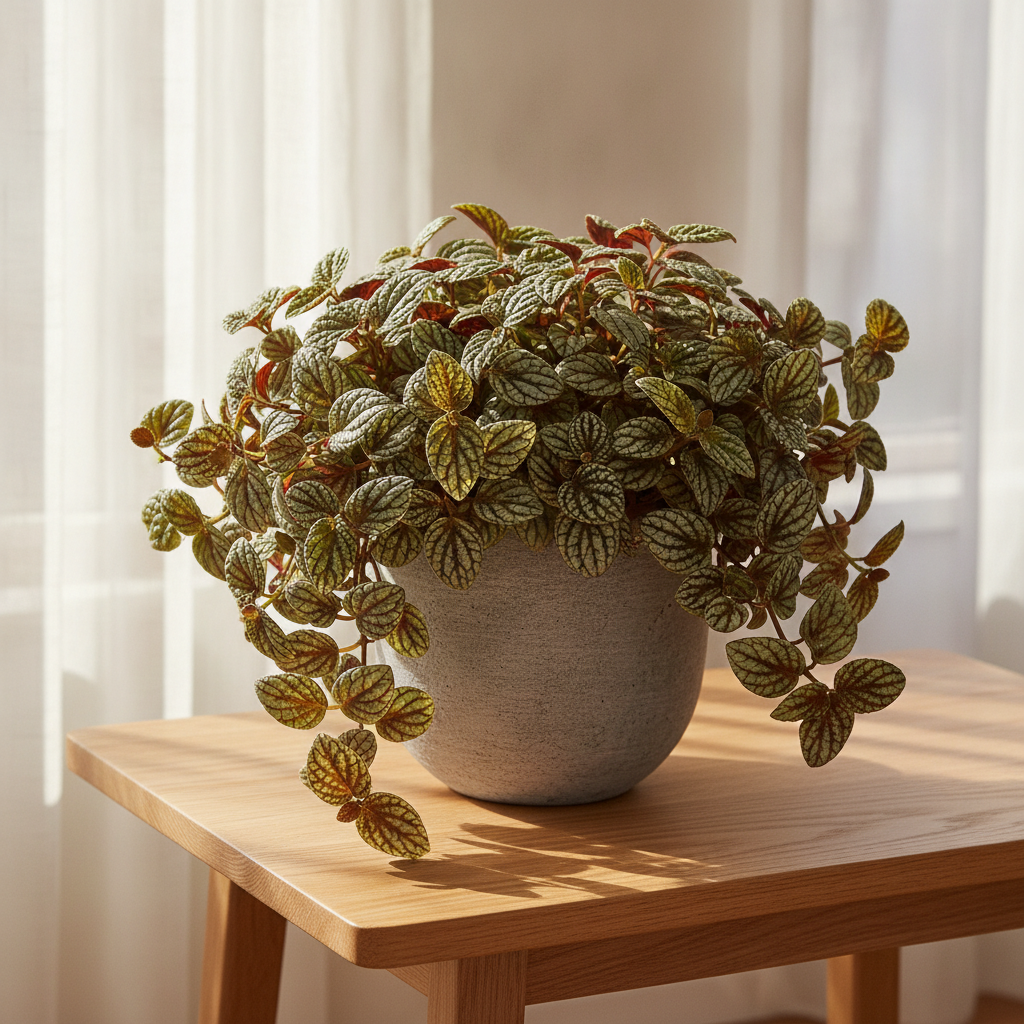
Few small houseplants pack as much visual texture into a single leaf as the Silver Tree Pilea. Each puckered, oval leaf is stamped with a broad silver band down the centre and quilted like hammered metal, the surface catching light in a way that flat, glossy foliage never quite manages. Known botanically as Pilea spruceana, this compact member of the nettle family (Urticaceae) hails from the humid understorey of Central and South America, where it creeps along the forest floor in dappled shade. Gardeners also know it as the Norfolk Friendship Plant, a nod to the old habit of pinching off a cutting to pass along to a friend.
The Silver Tree has a reputation as a slightly fussy plant, and that reputation is only half deserved. It will forgive a good deal of ordinary neglect, but the gap between a plant that merely survives and one that truly thrives comes down to a handful of details: steady humidity, bright but filtered light, and a watering rhythm that never lets the roots sit wet. This guide walks through every one of those details, from reading the soil to dividing a mature clump, so you can keep the silver markings vivid and the growth bushy rather than leggy.
Contents
- Quick Reference
- Why Silver Tree Pilea Makes a Characterful Houseplant
- Light Requirements
- Watering & Humidity
- Soil, Potting & Repotting
- Fertilising
- Propagation
- Pests & Diseases
- Popular Varieties
- Frequently Asked Questions
Quick Reference: Silver Tree Pilea at a Glance
| Light | Bright, indirect light; tolerates medium light but silver markings fade in gloom |
| Watering | Keep lightly and evenly moist; let the top 2 to 3 cm (1 inch) dry between waterings |
| Temperature | 18 to 27 °C (64 to 81 °F); keep above 13 °C (55 °F) |
| Humidity | Moderate to high, ideally 50 to 60 percent or more |
| Fertiliser | Balanced feed at half strength, every 4 weeks in spring and summer |
| Toxicity | Non-toxic to cats, dogs and humans |
Why Silver Tree Pilea Makes a Characterful Houseplant
The appeal of the Silver Tree Pilea starts with the foliage and rarely needs to look any further. The leaves are small, seldom more than 4 to 6 cm (1.5 to 2.5 inches) long, but the deeply textured surface and the silver central stripe give the plant a jewel-like quality that reads well even from across a room. Set against the bronze to olive base colour and the faintly reddish undersides, the effect is closer to a piece of embossed metalwork than a typical green houseplant. Because it stays low and bushy, reaching only around 20 to 30 cm (8 to 12 inches) tall, it slots neatly onto a shelf, a windowsill or a plant stand where a larger specimen would overwhelm the space.
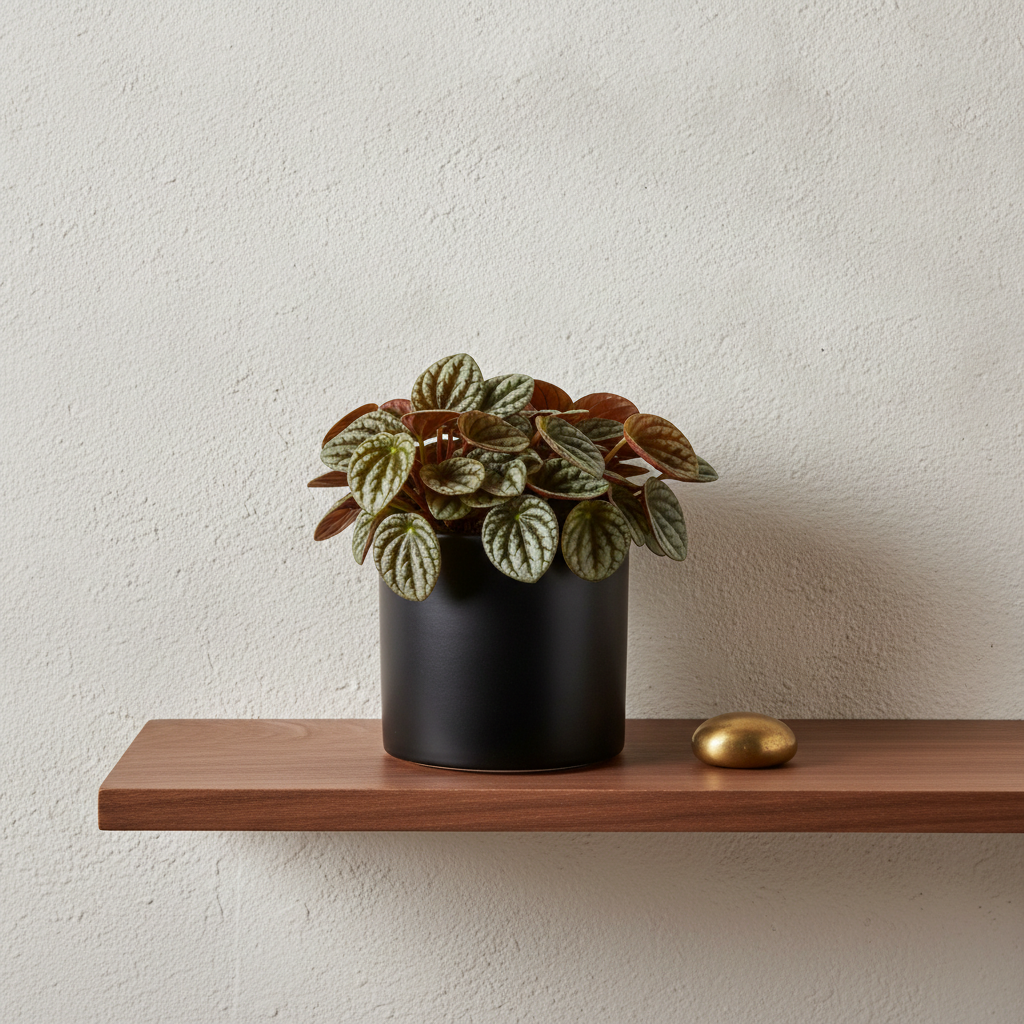
Beyond looks, this is a genuinely rewarding plant for someone who enjoys tending rather than simply owning. It grows quickly when it is happy, roots almost embarrassingly easily from cuttings, and responds visibly to good care by pushing out fresh, brightly marked leaves. It is also one of the more accommodating members of its genus when it comes to household air, tolerating ordinary indoor conditions better than its cousins in the Calathea and Maranta world. Add the fact that it is completely safe around pets and children, and the Silver Tree earns its place as a plant you can put almost anywhere without a second thought.
Important — Toxicity: Pilea spruceana is listed as non-toxic to cats, dogs and humans. Curious pets that nibble a leaf are unlikely to come to harm, though as with any plant, large quantities may cause mild stomach upset, so it is still worth discouraging grazing.
Light Requirements
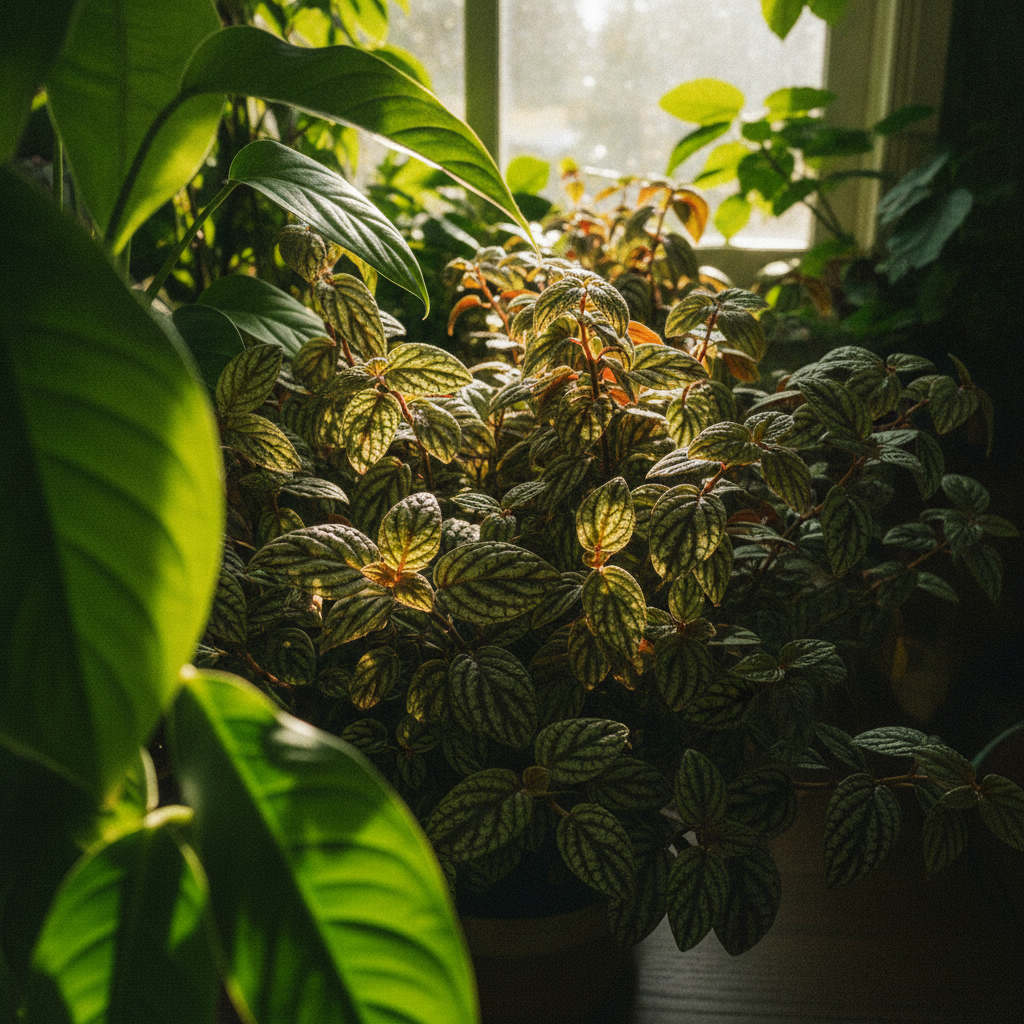
Light is the single biggest lever you have over how good a Silver Tree Pilea looks. In its native forests the plant grows in the filtered light of the understorey, shielded from direct sun by the canopy above but still receiving plenty of ambient brightness. Recreating that indoors means aiming for bright, indirect light: a spot that feels well lit for reading throughout the day, but where the sun itself never lands squarely on the leaves for long stretches.
Given the right light, the plant grows compact and densely branched, and the contrast between the silver bands and the darker leaf tissue stays crisp. Too little light and the story changes: the stems stretch and flop as they reach for the window, the gaps between leaves widen, and the silver markings dull toward a flat green. This is the most common reason a Silver Tree looks disappointing, and happily it is also the easiest to fix simply by moving the plant closer to a good source of light.
Light Levels Explained
The terms used to describe indoor light can be vague, so it helps to anchor them to rough measurements and everyday locations. The table below sets out how a Silver Tree Pilea responds across the range from full sun to deep shade.
| Light Category | Approx. Level | Typical Location | Outcome |
|---|---|---|---|
| Direct sun | Over 50,000 lux | On an unshaded south-facing sill | Leaves scorch and bleach; avoid |
| Bright indirect | 10,000 to 20,000 lux | Near an east window or a metre back from a south one | Ideal; compact growth, vivid markings |
| Medium | 5,000 to 10,000 lux | Interior of a bright room | Acceptable; slightly slower, still healthy |
| Low | 1,000 to 5,000 lux | Away from windows, north aspect | Leggy growth, fading silver |
| Very low | Under 1,000 lux | Hallways, dim corners | Decline over time; not viable long term |
Window Orientation and Placement
South-facing window: The brightest option in the northern hemisphere, and usually too intense right at the glass. Set the plant a metre (3 feet) back, or diffuse the light with a sheer curtain, and it will be very happy. Direct midday sun on bare leaves is the main risk here.
East-facing window: Often the sweet spot. Gentle morning sun followed by bright ambient light for the rest of the day suits the Silver Tree perfectly, and the early rays are rarely strong enough to scorch.
West-facing window: Workable, but the afternoon sun can be harsh in summer. A little setback or a light curtain takes the edge off and prevents the leaf margins from crisping.
North-facing window: The dimmest aspect. A Silver Tree will hang on here, but expect slower, looser growth and muted markings. If north light is all you have, consider supplementing with a grow light.
Pro Tip — Rotate for Even Growth: Because the plant leans steadily toward its light source, give the pot a quarter turn each time you water. This keeps the growth symmetrical and stops one side going bald while the other bushes out.
How Light Affects Leaf Colour
The silver banding that gives this plant its name is not a fixed feature; it is a response to good conditions. In bright, indirect light the contrast between the reflective silver tissue and the bronze-green background is at its strongest, and the quilted texture stands out in relief. Move the plant into gloom and it gradually invests less in that pigmentation, producing greener, flatter leaves with less definition. If your Silver Tree has lost its sparkle, the first thing to check is almost always whether it is getting enough light rather than any question of feeding or watering.
Warning — Direct Sunlight: A few hours of unfiltered summer sun can bleach the silver markings to a papery beige and leave dry brown patches where the leaf tissue has burned. Sunscald does not heal, so damaged leaves must be removed. Introduce any increase in light gradually over a week or two.
Artificial Lighting
The Silver Tree responds well to supplementary lighting, which makes it a good candidate for rooms that lack a bright window or for the darker months of the year. A basic full-spectrum LED grow light positioned 30 to 45 cm (12 to 18 inches) above the plant, run for around 10 to 12 hours a day, is more than enough to keep growth compact and the markings vivid. Because the plant is small, even a modest desk-style grow lamp does the job without a large setup.
Seasonal Adjustments
Light levels indoors swing more than most people realise between summer and winter. A spot that offers perfect bright, indirect light in July may drop to marginal levels by December as the sun sits lower and daylight shortens. It pays to move the plant closer to the window through autumn and winter, then ease it back again in spring as the light strengthens. Watch the new growth: tightly spaced, well-marked leaves mean the light is right, while stretched, pale ones are a signal to move it brighter.
Watering & Humidity
Watering is where most Silver Tree Pileas are won or lost. The plant has fine, relatively shallow roots and thin leaves, which means it dislikes both extremes: it will collapse quickly if left bone dry, yet it rots just as readily if the soil stays soggy. The goal is steady, light moisture, never a swamp and never a drought, and getting into that rhythm is the key to a plant that stays lush rather than lurching between wilting and recovery.
When to Water
Rather than watering on a fixed calendar, water by feel. Push a finger into the soil and water when the top 2 to 3 cm (about 1 inch) has dried but the layer below still feels faintly cool and damp. In a bright spot during the growing season this typically works out to roughly once or twice a week, but the only reliable guide is the soil itself, since pot size, temperature and light all shift the pace.
In autumn and winter, growth slows and the plant uses far less water, so stretch the interval accordingly and let a little more of the pot dry before you reach for the watering can. The soil should never dry out completely, though, as the thin leaves have little reserve and will wilt and crisp at the edges if the rootball goes fully dry. A plant that flops dramatically will usually perk up within an hour of a thorough drink, but repeated wilting stresses it and costs you leaves.
Pro Tip — Lift the Pot: Learn the weight of the pot when freshly watered and again when it needs water. Lifting it becomes a two-second check that is far more reliable than the surface look of the soil, which can appear dry on top while still wet at the roots.
How to Water Correctly
- Check the soil first by pushing a finger in to confirm the top 2 to 3 cm has dried.
- Water at the soil surface, aiming for the base of the plant rather than over the foliage, using room-temperature water.
- Continue until water runs freely from the drainage holes, which ensures the whole rootball is moistened evenly.
- Let the pot drain completely for a few minutes so no excess collects at the bottom.
- Empty the saucer or cover pot; never leave the plant standing in water.
- Wait until the top layer dries again before repeating, adjusting the interval with the season.
Signs of Overwatering vs. Underwatering
| Symptom | Overwatering | Underwatering |
|---|---|---|
| Leaf colour | Yellowing, often lower leaves first | Dull, then browning at the edges |
| Leaf texture | Soft, limp, translucent patches | Crisp, papery, curling inward |
| Soil | Stays wet for days, may smell sour | Dry throughout, pulling from the pot sides |
| Roots | Brown, mushy, foul-smelling | Dry and brittle but pale and firm |
| Stem base | Blackened, soft, collapsing | Thin and shrivelled but intact |
Warning — Root Rot: Persistently wet soil starves the roots of oxygen and invites rot, which is the most frequent killer of this plant. If the base turns soft and the soil smells sour, unpot immediately, trim away any brown mushy roots with clean scissors, and repot into fresh, barely moist mix. Caught early, the plant often recovers.
Humidity Requirements
As a forest-floor plant, the Silver Tree Pilea appreciates more humidity than the average living room provides. It does best in the range of 50 to 60 percent or higher, and while it tolerates ordinary household air better than a fussy calathea, dry conditions take a visible toll over time. Kitchens and bathrooms, with their naturally higher moisture, are often the happiest homes for it.
The signs of air that is too dry are easy to read: brown, crispy leaf edges and tips, some leaf curling, and a general lack of vigour in new growth. These symptoms are most common in winter, when central heating strips moisture from the air, and they are worth acting on before they spread across the whole plant.
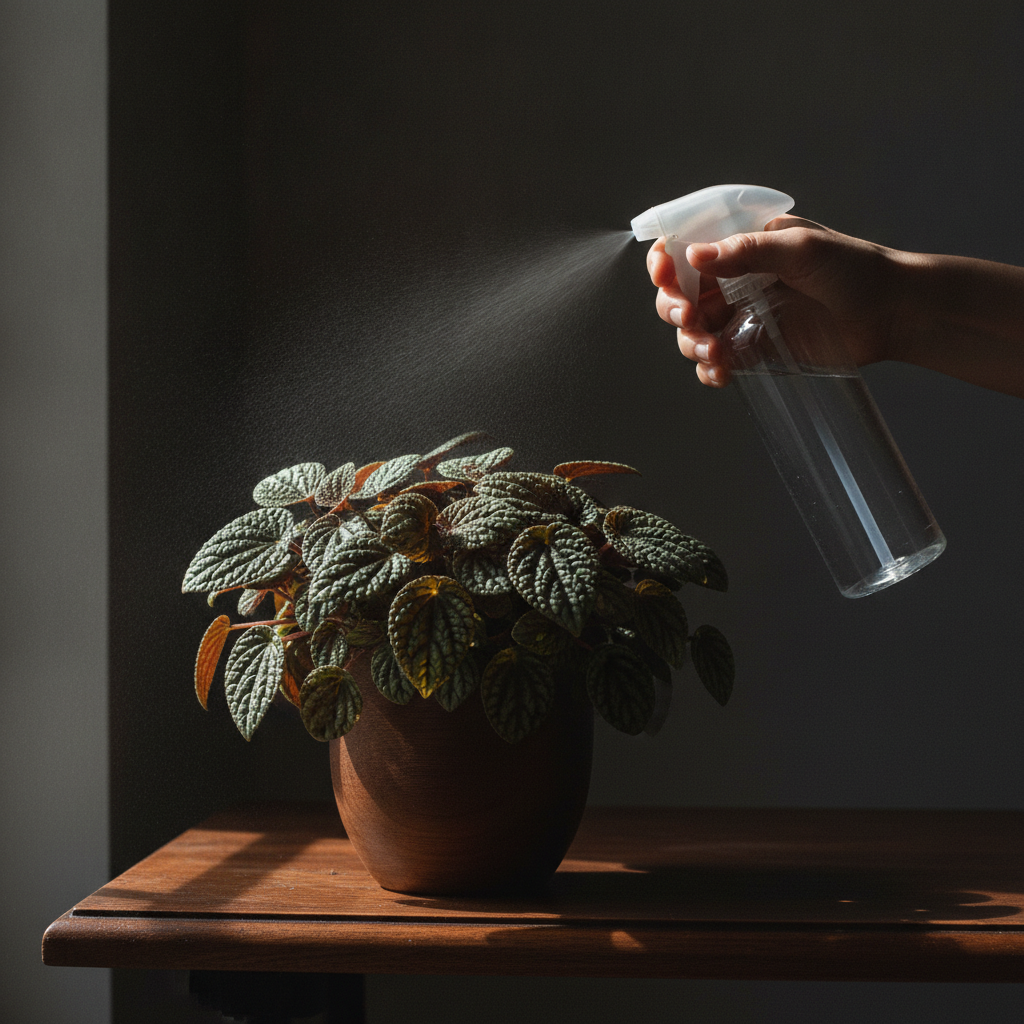
Raising humidity is straightforward. Grouping plants together creates a moister microclimate as they transpire, and standing the pot on a tray of pebbles topped up with water lifts the local humidity without wetting the roots. A small room humidifier is the most effective and consistent solution if dry air is a persistent problem. Light misting gives a brief boost and helps keep the foliage clean, though on its own it is a short-lived measure rather than a cure.
Water Quality
The Silver Tree is moderately sensitive to the minerals and chlorine found in hard tap water, which can accumulate in the soil and contribute to brown leaf tips over time. If your water is very hard or heavily treated, filtered water, collected rainwater, or tap water left to stand overnight so the chlorine dissipates are all gentler options. Always use water at room temperature, as cold water straight from the tap can shock the roots.
Soil, Potting & Repotting
The right growing medium solves half the watering problem before it starts. Because the Silver Tree Pilea wants consistent moisture but hates waterlogging, it needs a soil that holds some water while draining freely and staying airy around the roots. A dense, heavy compost that stays sodden is a direct route to root rot, while a mix that is too coarse dries out faster than the fine roots can cope with.
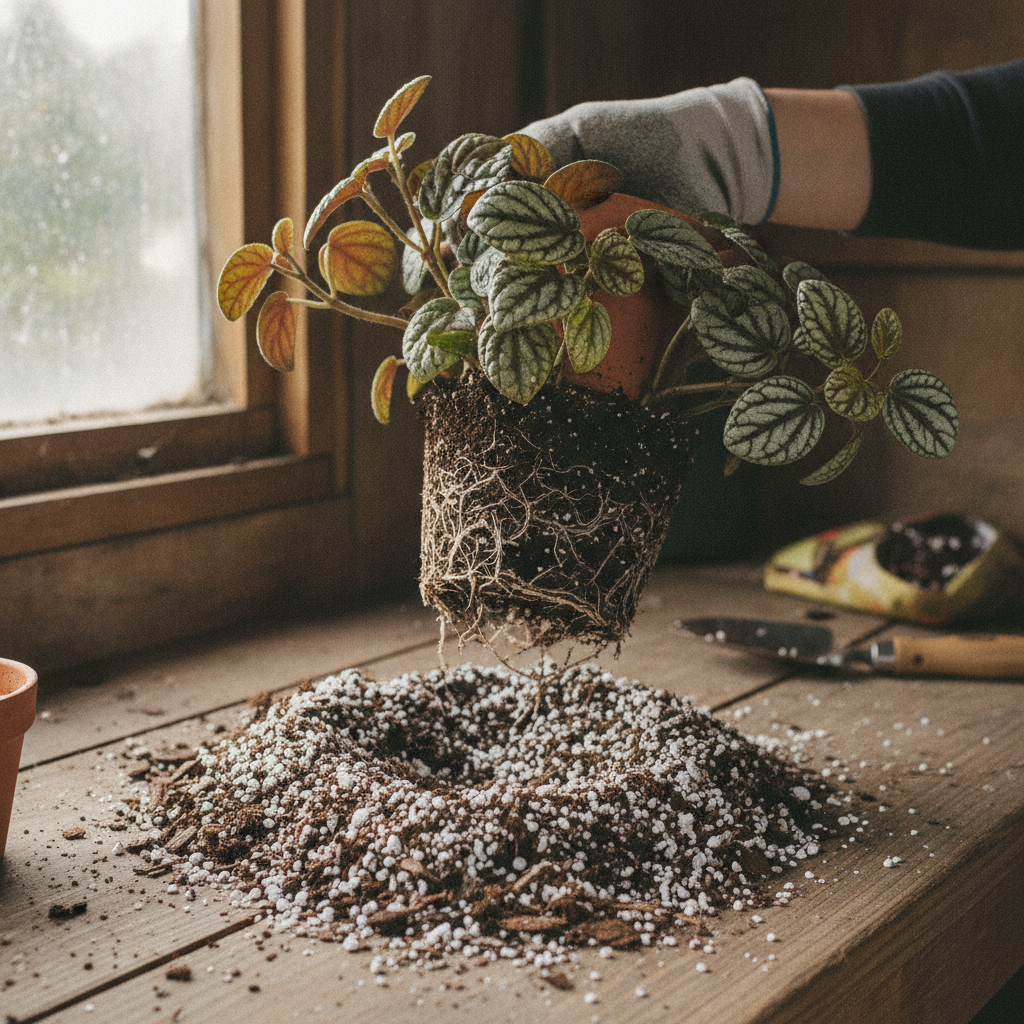
Ideal Soil Composition
Aim for a light, humus-rich mix based on a good peat-free houseplant compost or coco coir, opened up with plenty of drainage material. The base compost supplies moisture retention and nutrients, while perlite and a little fine bark create the air pockets the roots need. The proportions below give a reliable starting point.
| Component | Proportion | Function |
|---|---|---|
| Peat-free houseplant compost or coco coir | 50 percent | Holds moisture and supplies nutrients |
| Perlite | 30 percent | Improves drainage and aeration |
| Fine orchid bark | 10 percent | Adds structure and air pockets |
| Worm castings or leaf mould | 10 percent | Gentle organic feed and moisture buffer |
The Silver Tree prefers a slightly acidic to neutral soil, roughly pH 5.5 to 6.5, which most peat-free and coir-based mixes fall comfortably within. There is no need to test or adjust pH under normal circumstances; simply refreshing the mix every year or two keeps it in the right range.
Pro Tip — Quick Mix Recipe: No time to fuss? Take two handfuls of ordinary houseplant compost to one generous handful of perlite, mix well, and you have a serviceable Silver Tree mix in under a minute. The perlite is the part you should never skip.
Choosing the Right Pot
Because this is a small, shallow-rooted plant, it rarely needs a large pot, and it actually prefers to be a touch snug rather than swimming in soil. A pot that is too big holds a reservoir of wet compost the roots cannot reach, and that lingering moisture is exactly what invites rot.
Drainage holes are non-negotiable. Whatever container you choose, it must have holes in the base so excess water can escape. Decorative pots without drainage can be used as an outer cover, but the plant itself should sit in a nursery pot that drains freely, lifted out to water and returned once it has stopped dripping.
Pot material: Terracotta is a safe choice because its porous walls let the rootball breathe and dry more evenly, which suits a plant prone to overwatering. Glazed ceramic and plastic hold moisture longer, so if you use them, lean a little harder on the free-draining mix and be more cautious with the watering can.
Pot size: Move up only one size at a time, typically from a 9 cm to a 12 cm pot (3.5 to 5 inches) and so on. A shallow half-pot or bulb pan works well given the plant’s spreading, low-rooted habit.
When to Repot
A Silver Tree Pilea generally needs repotting every one to two years, or whenever you see roots emerging from the drainage holes, the soil drying out unusually fast, or the plant looking cramped and top-heavy. Spring is the ideal time, as the plant is moving back into active growth and recovers quickly. Repotting is also a natural moment to refresh tired soil and to divide an overgrown clump if you want more plants.
How to Repot: Step-by-Step
- Water the plant lightly a day ahead so the rootball holds together and the roots are less brittle.
- Ease the plant out by tipping the pot and supporting the base of the stems, rather than pulling on the foliage.
- Gently tease apart the outer roots and brush away a little of the old, spent soil from the sides.
- Add fresh mix to the base of the new pot, then position the plant at the same depth it sat before.
- Backfill around the rootball with fresh mix, firming lightly so there are no large air gaps.
- Water thoroughly to settle the soil, then let it drain fully and return the plant to its usual spot.
- Hold off on feeding for four to six weeks while the roots re-establish.
Warning — Transplant Shock: Some wilting or a paused growth spurt in the days after repotting is normal. Resist the urge to water heavily or feed to compensate, as this only stresses recovering roots. Keep the plant warm, out of direct sun, and in barely moist soil until new growth appears.
Fertilising
The Silver Tree Pilea is a light feeder, and a modest, regular supply of nutrients keeps it producing well-marked leaves without pushing soft, weak growth. It draws most of what it needs from a decent potting mix, so fertiliser is best thought of as a top-up during the active months rather than a heavy diet.
The cardinal rule with this plant is restraint. Its fine roots are easily scorched by concentrated feed, and overfertilising causes far more problems than the occasional missed dose ever will. Diluting to half the recommended strength and feeding on a gentle schedule gives you all the benefit with none of the risk.
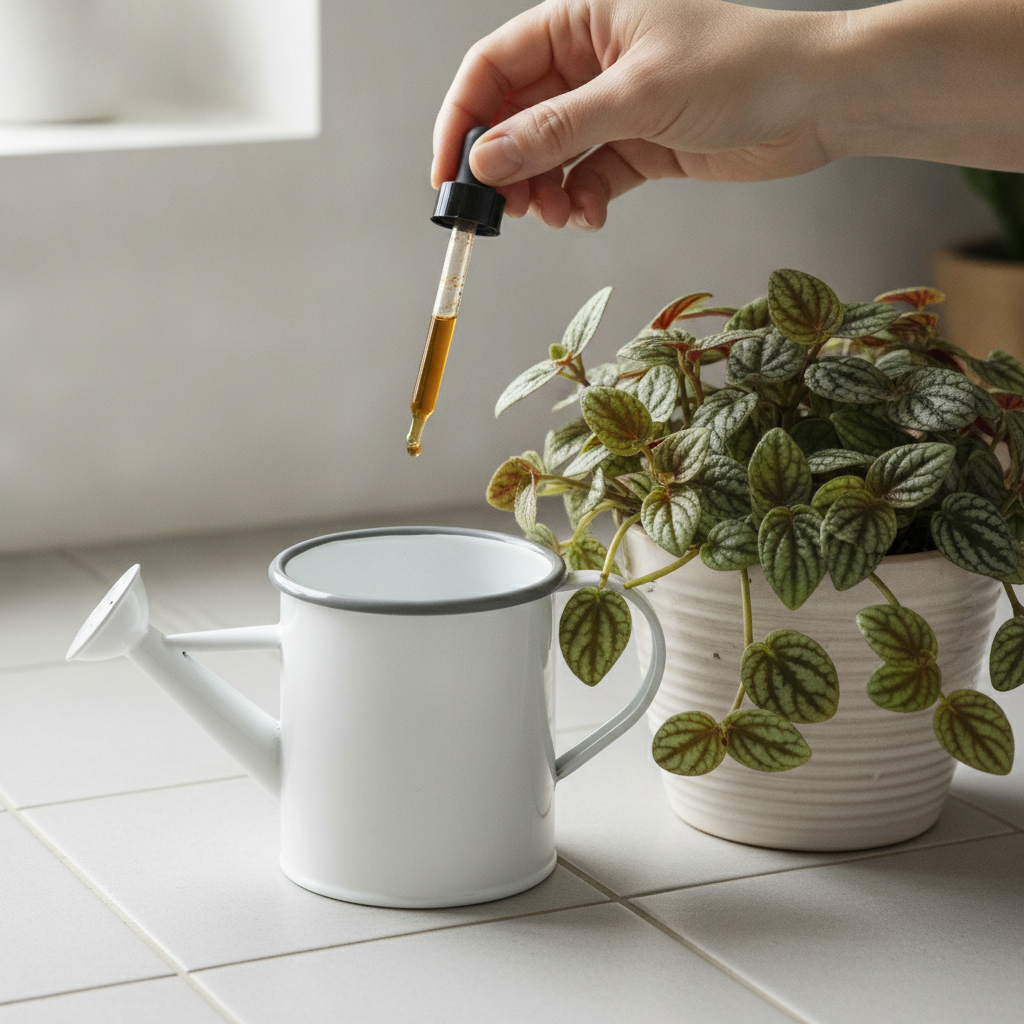
Understanding Plant Nutrients
A balanced fertiliser supplies the three major nutrients in roughly equal measure, along with the secondary and trace elements that keep foliage healthy. For a foliage plant like the Silver Tree, nitrogen is the most important of the three, as it drives leaf growth and rich colour, but a plant fed only nitrogen soon shows deficiencies elsewhere. The table below summarises what each key nutrient does and how a shortage shows up.
| Nutrient | Symbol | Primary Function | Deficiency Symptoms |
|---|---|---|---|
| Nitrogen | N | Leaf and stem growth, green colour | Pale, yellowing older leaves; stunted growth |
| Phosphorus | P | Root development and energy transfer | Dull leaves, poor rooting, purple tints |
| Potassium | K | Overall vigour and water regulation | Brown leaf edges, weak stems |
| Calcium | Ca | Cell wall strength | Distorted or hooked new growth |
| Magnesium | Mg | Core of the chlorophyll molecule | Yellowing between the veins of older leaves |
| Iron | Fe | Chlorophyll production | Yellowing between veins of new leaves |
Types of Fertiliser
Liquid fertilisers: The easiest choice for a small plant, as they mix into the watering can and let you control the dose precisely. A balanced liquid houseplant feed diluted to half strength is ideal for the Silver Tree.
Slow-release granular: Coated granules release nutrients gradually over several months and are convenient, but they offer less control and can occasionally over-concentrate near the fine roots. If you use them, apply at the low end of the recommended rate.
Organic fertilisers: Worm castings worked into the top of the soil, or a diluted seaweed or fish-based feed, release nutrients gently and are very forgiving. They suit this plant well and reduce the risk of the salt build-up that synthetic feeds can cause.
Feeding Schedule
Feed every four weeks or so through spring and summer, when the plant is actively growing. As growth slows in autumn, taper off, and stop altogether through winter, when the plant is resting and cannot use the extra nutrients. A dormant plant fed regularly simply accumulates unused salts in the soil, which does more harm than good.
Pro Tip — Feed a Moist Pot: Always apply liquid feed to soil that is already slightly damp, never bone dry. Fertiliser hitting dry roots can burn them, whereas moist soil disperses the nutrients evenly and gently.
How to Fertilise
- Dilute a balanced liquid houseplant fertiliser to half the strength stated on the label.
- Water the plant lightly first if the soil is dry, so the feed does not contact dry roots.
- Apply the diluted solution evenly across the soil surface until it just begins to drain.
- Let the pot drain fully and discard any run-off rather than letting it sit in the saucer.
- Every couple of months, flush the pot with plain water to wash out accumulated salts.
Warning — Salt Build-Up: A white crust on the soil surface or around the pot rim, together with browning leaf tips, points to fertiliser salts accumulating in the mix. Flush the pot thoroughly with plain water two or three times, letting it drain fully between each pass, and ease back on feeding.
Propagation
Propagating the Silver Tree Pilea is one of the real pleasures of growing it, and the reason it earned the name Friendship Plant. It roots so willingly that even a beginner can turn one plant into several, whether to fill out a pot, replace an ageing specimen, or hand a cutting to a friend. The two most dependable methods are stem cuttings and division, and both are quick and forgiving.
The best time to propagate is spring or early summer, when the plant is growing strongly and cuttings root fastest. That said, given warmth and decent light, this Pilea will oblige at almost any time of year. Taking cuttings also doubles as useful maintenance, since pinching out growing tips encourages the parent plant to branch and stay bushy.
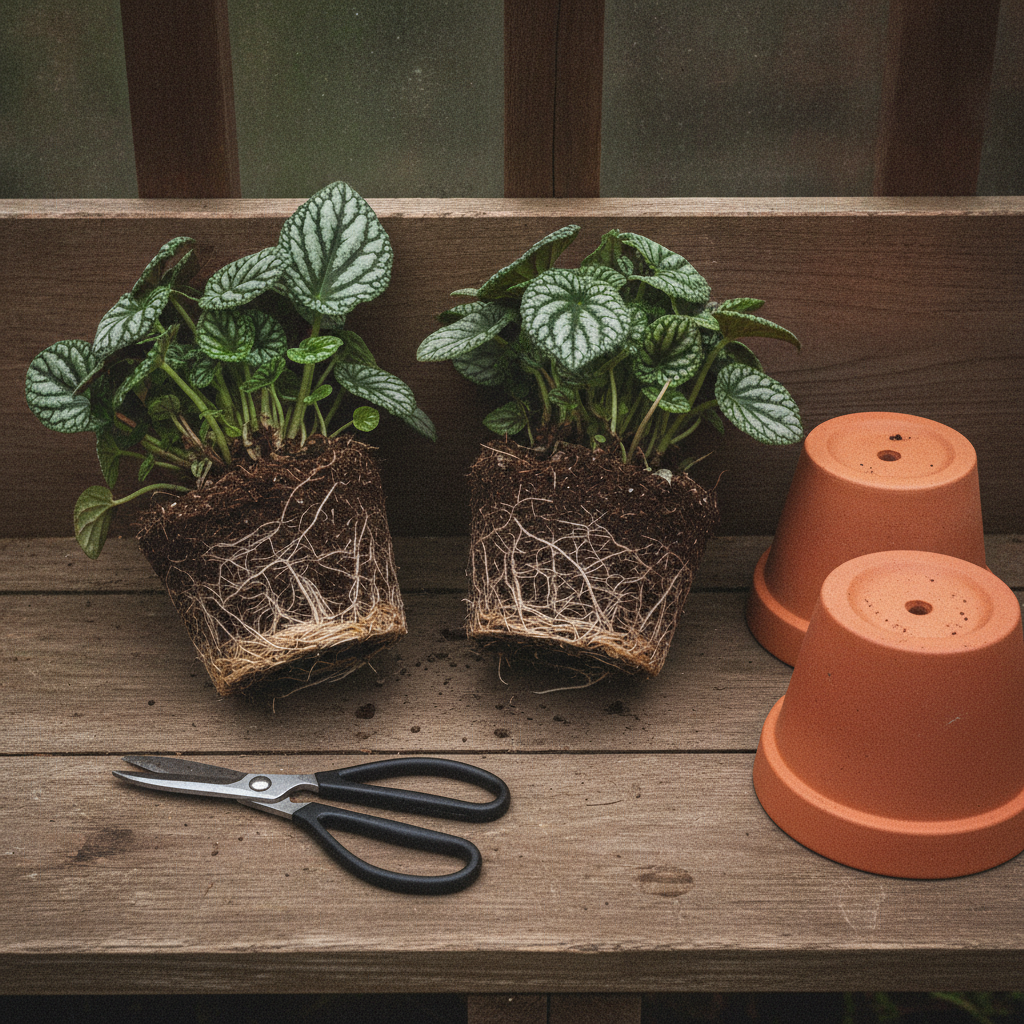
Understanding Nodes
The key to rooting stem cuttings is the node, the slightly swollen point on the stem where leaves and side shoots emerge. Nodes contain the dormant cells that develop into new roots, so every cutting must include at least one, and ideally two. A cutting taken with no node below the leaves will sit in water indefinitely without ever rooting, so learning to spot them is the single most useful propagation skill.
Stem Cuttings: Step-by-Step
Stem tip cuttings are the fastest and most reliable route to new Silver Tree Pileas, and they root readily in either water or moist soil.
- Choose a healthy stem tip 5 to 8 cm (2 to 3 inches) long with several leaves and at least one node below them.
- Cut just below a node with clean, sharp scissors or a blade, and remove the lowest pair of leaves.
- Place the cutting in a small jar of water with the node submerged and the remaining leaves above the surface, or insert it directly into moist propagating mix.
- Keep it warm and in bright, indirect light, changing the water every few days if rooting in water.
- Roots usually appear within one to three weeks; once water roots reach 2 to 3 cm, pot the cutting into soil.
- Keep newly potted cuttings evenly moist and humid for the first couple of weeks while they settle.
Pro Tip — Pot in Clusters: Root three or four cuttings together and pot them as a group rather than singly. A cluster fills out into a full, bushy plant far quicker than a lone cutting and disguises the bare stems while they establish.
Division: Step-by-Step
A mature, clumping Silver Tree can be split into two or more plants at repotting time. Division gives you instantly established plants rather than waiting for cuttings to root, and it rejuvenates a crowded, tired pot in the process.
- Water the plant a day beforehand, then slide the whole rootball out of its pot.
- Gently tease the soil away from the roots so you can see the natural clumps and crowns.
- Separate the plant into sections by hand where possible, using a clean blade only for stubborn joins, making sure each section has both roots and healthy top growth.
- Pot each division into its own container of fresh, free-draining mix at its original depth.
- Water in lightly and keep the divisions warm, humid and out of direct sun while they recover.
Troubleshooting Propagation
| Problem | Likely Cause | Solution |
|---|---|---|
| Cutting rots in water | No node submerged, or stale water | Recut below a node; change water every few days |
| No roots after a month | Too cold or too dark | Move somewhere warmer and brighter |
| Cutting wilts in soil | Low humidity while rooting | Cover loosely with a clear bag to hold moisture |
| Roots but no new growth | Normal settling-in pause | Be patient; keep warm, bright and lightly moist |
Pests & Diseases
A healthy, well-cared-for Silver Tree Pilea is reasonably resistant to trouble, but its soft, thin leaves and love of humidity make it attractive to a handful of common houseplant pests and prone to a few moisture-related diseases. The best defence is vigilance: most problems are easy to deal with when caught early and much harder once they take hold.
Make a habit of inspecting the plant whenever you water, paying particular attention to the undersides of leaves and the leaf axils where stems meet, since these are the spots pests colonise first. Isolating any new plant for a couple of weeks before it joins your collection also goes a long way toward keeping infestations from spreading.
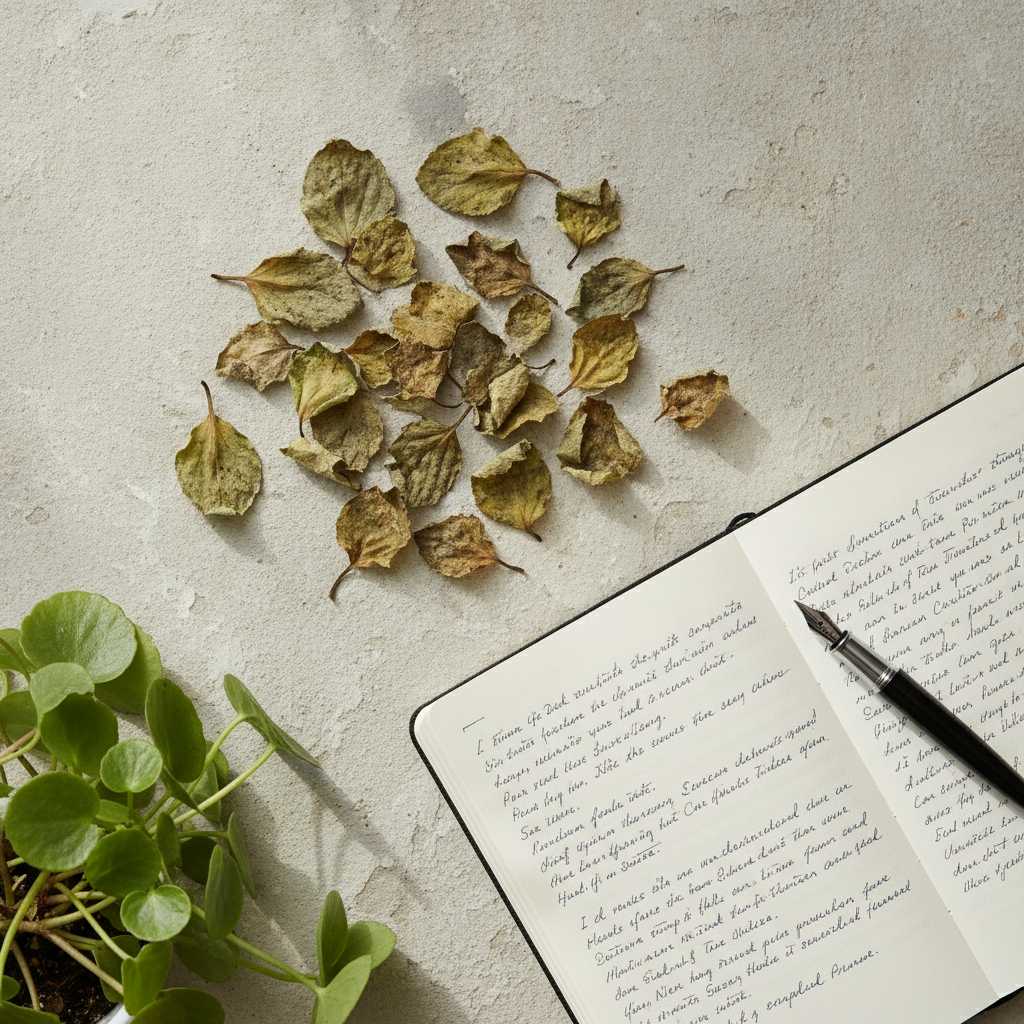
Common Pests
Spider Mites (Tetranychus urticae)
These tiny sap-suckers thrive in warm, dry air and are one of the more likely pests to trouble a Silver Tree kept in low humidity. They cause fine yellow stippling across the leaves and spin delicate webbing between stems and leaf undersides. A heavy infestation leaves the foliage looking dusty and bleached.
Treatment: Rinse the plant thoroughly, then treat with insecticidal soap or neem oil every five to seven days for several weeks. Raising the humidity makes the environment far less hospitable and helps prevent their return.
Mealybugs (Pseudococcus longispinus)
Mealybugs appear as small, white, cottony blobs tucked into leaf axils and along stems. They feed on plant sap and excrete sticky honeydew, which can lead to sooty mould, and a colony left unchecked will steadily weaken the plant.
Treatment: Dab each insect directly with a cotton bud dipped in isopropyl alcohol, then follow up with neem oil or insecticidal soap. Check weekly, as their waxy coat protects eggs from a single treatment.
Fungus Gnats (Bradysia species)
Small black flies drifting up from the soil are fungus gnats, whose larvae live in consistently damp compost and feed on organic matter and fine roots. They are more a nuisance than a serious threat, but they signal that the soil is staying too wet.
Treatment: Let the top layer of soil dry out more between waterings, use yellow sticky traps to catch the adults, and top-dress with a fine layer of grit to break the breeding cycle.
Common Diseases
Root Rot (Pythium and Phytophthora species)
By far the most serious threat to this plant, root rot sets in when the soil stays waterlogged and the roots suffocate, allowing opportunistic fungi to move in. Above ground it shows as yellowing, wilting foliage that does not respond to watering, and a soft, discoloured stem base.
Treatment: Unpot the plant, cut away all brown, mushy roots with sterile scissors, and repot into fresh, free-draining mix in a clean pot. Water sparingly until recovery is clear, and take healthy cuttings as insurance if the damage is severe.
Botrytis Blight (Botrytis cinerea)
Also called grey mould, botrytis appears as a fuzzy grey growth on leaves and stems, usually in cool, damp, poorly ventilated conditions. It tends to attack tired or damaged tissue first before spreading into healthy growth.
Treatment: Remove affected leaves promptly, improve air circulation around the plant, and avoid wetting the foliage when watering. Reducing humidity temporarily and spacing plants further apart usually halts its spread.
Pest and Disease Summary
| Pest / Disease | Identification | Treatment |
|---|---|---|
| Spider mites | Yellow stippling, fine webbing | Rinse, neem oil, raise humidity |
| Mealybugs | White cottony clusters in axils | Alcohol swab, then neem oil |
| Fungus gnats | Small black flies from the soil | Dry soil out, sticky traps, grit top-dress |
| Root rot | Wilting, soft blackened base | Trim roots, repot, water sparingly |
| Botrytis blight | Fuzzy grey mould on tissue | Remove affected parts, improve airflow |
Prevention Strategies
The overwhelming majority of pest and disease problems trace back to stressed plants and poor conditions, so good routine care is your strongest preventative. Correct watering, adequate humidity, decent airflow and clean tools between plants together prevent most trouble before it starts. A vigorous plant simply shrugs off the low-level pressure that a struggling one succumbs to.
Wiping the leaves occasionally does more than keep them looking their best; it removes dust that can harbour mites and lets you spot the earliest signs of an infestation. Quarantining new arrivals, avoiding waterlogged soil, and removing dead or yellowing leaves promptly round out a low-effort regime that keeps the Silver Tree healthy for years.
Pro Tip — Neem as Routine: A light monthly spray of diluted neem oil, applied in the evening out of direct sun, works as a gentle deterrent that keeps most sap-sucking pests from ever settling in. Prevention is far easier than clearing an established colony.
Popular Varieties
The Silver Tree Pilea itself is a selected form of Pilea spruceana, and the plant sold under that name is prized for its especially bold silver banding and quilted texture. A small number of closely related cultivars and cousins share its habit and care needs, and they are often grouped together in shops under the friendship plant umbrella.
Because these plants are grown for foliage rather than showy flowers, the differences between them come down to leaf colour, the strength of the silver markings, and overall size. All of them enjoy the same bright, indirect light, careful watering and moderate humidity, so choosing between them is largely a question of which leaf pattern appeals to you most.
| Variety | Leaf Appearance | Light Needs | Growth Rate | Availability |
|---|---|---|---|---|
| ‘Silver Tree’ | Bronze leaf with a broad silver central band, heavily quilted | Bright indirect | Moderate to fast | Common |
| ‘Norfolk’ | Coppery-bronze with silver markings between the veins | Bright indirect | Moderate | Common |
| Pilea involucrata ‘Moon Valley’ | Bright green, deeply textured, bronze veins | Bright indirect | Fast | Common |
| Pilea involucrata (friendship plant) | Quilted green with bronze flush | Bright indirect | Fast | Common |
| Pilea ‘Silver Cloud’ | Almost fully silvered leaf surface | Bright indirect | Moderate | Less common |
Featured Varieties
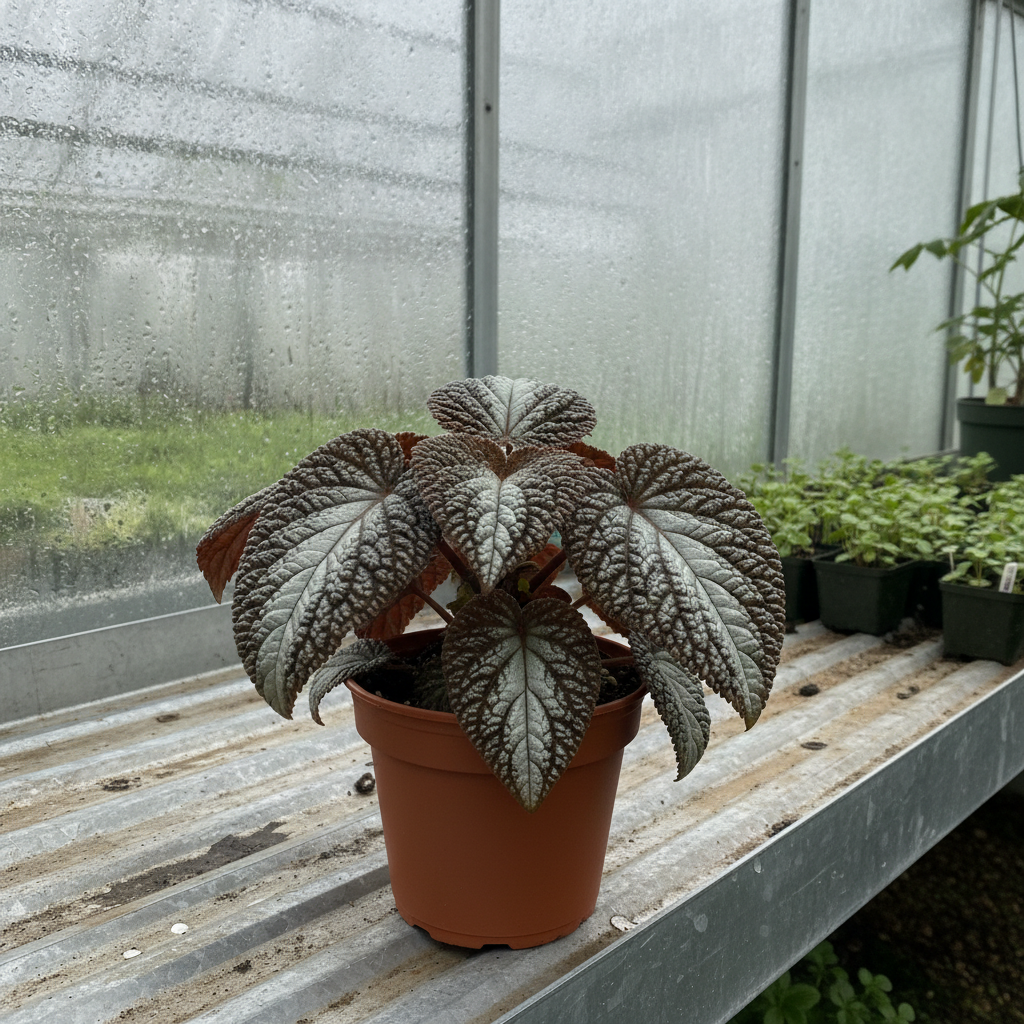
‘Silver Tree’
The classic form and the one most people mean by the name. Its bronze to chocolate leaves carry a wide, unbroken silver stripe down the centre and a deeply hammered surface that catches the light beautifully.
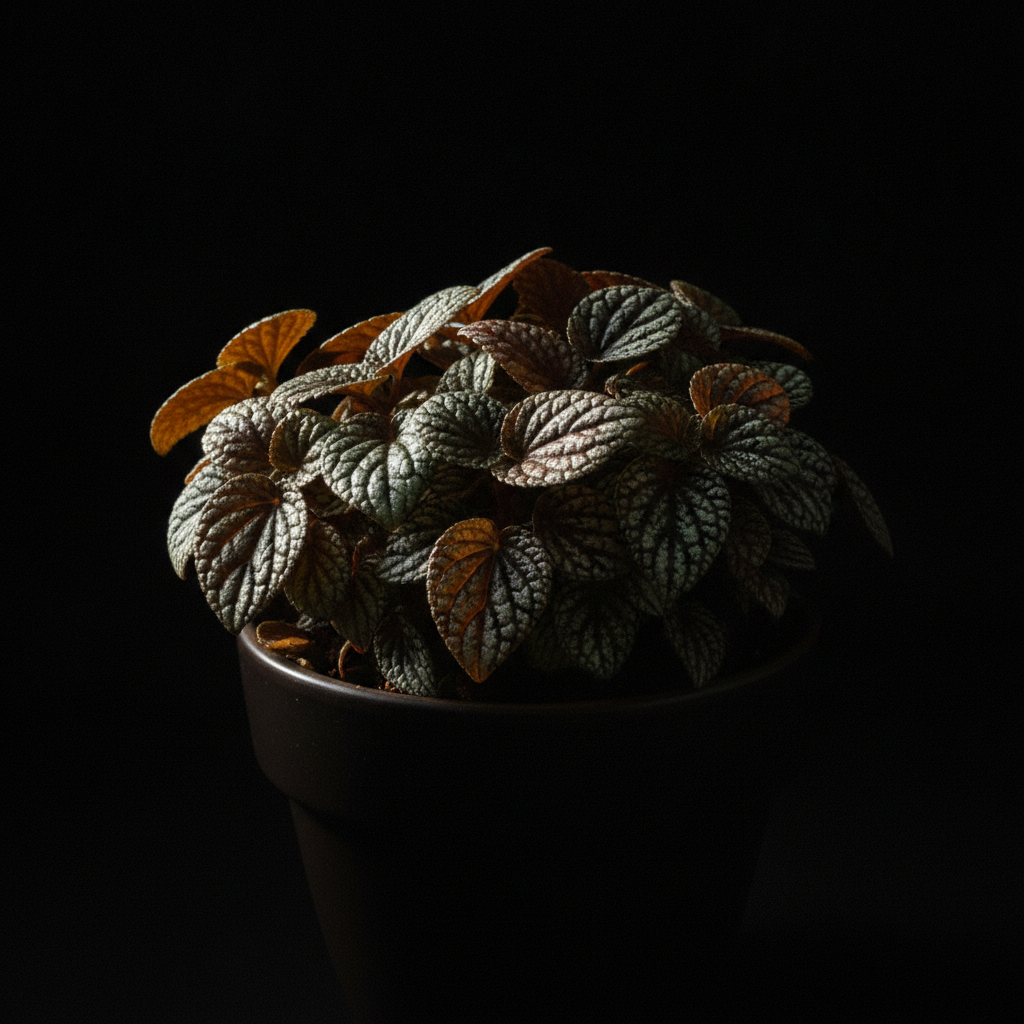
‘Norfolk’
A slightly more compact cousin with coppery-bronze foliage overlaid by shimmering silver markings that pool between the veins rather than forming a single band. It stays neat and dense, ideal for a small pot.
Variety Profiles in Detail
‘Silver Tree’ (Pilea spruceana ‘Silver Tree’)
This is the benchmark for the species. The broad central silver band is at its most vivid in bright, indirect light, and the strongly puckered surface gives the leaf real depth and dimension. It branches freely when tips are pinched, forming a rounded, bushy mound that makes an excellent tabletop or shelf plant.
‘Norfolk’ (Pilea spruceana ‘Norfolk’)
Often sold alongside ‘Silver Tree’ and easily confused with it, ‘Norfolk’ leans more toward copper tones with the silver spread across the leaf as a network rather than a single stripe. It is a touch more compact and shares exactly the same care requirements, making it an easy companion piece.
‘Moon Valley’ (Pilea involucrata ‘Moon Valley’)
A close relative rather than a true spruceana cultivar, ‘Moon Valley’ trades silver for vivid apple green with dramatic bronze-to-chocolate veining and an even more crinkled surface. It grows faster and larger, but thrives on the same conditions, so it pairs naturally with the Silver Tree in a grouped display.
Choosing the Right Variety for Your Space
For maximum silver sparkle, ‘Silver Tree’ is the obvious pick, while ‘Norfolk’ suits anyone who prefers warmer copper tones and a more compact plant. If you have brighter conditions and want faster, fuller growth, the green-and-bronze ‘Moon Valley’ delivers plenty of texture with a little more forgiveness. Since all of these plants share the same needs, the happiest approach is often to grow two or three together, where their contrasting leaf patterns amplify one another and the grouped foliage helps hold the humidity they all enjoy.
Frequently Asked Questions
Why are the silver markings on my Silver Tree Pilea fading?
Fading silver almost always means too little light. The reflective banding is a response to bright, indirect conditions, so move the plant closer to a good window or add a grow light, and the contrast will return on new growth over the following weeks.
Why is my Silver Tree Pilea getting leggy?
Leggy, stretched stems with wide gaps between leaves are the classic symptom of insufficient light. Increase the brightness, and pinch out the growing tips to encourage the plant to branch and bush out. The cuttings you remove can be rooted to fill the pot further.
Why are the leaf tips and edges turning brown?
Brown, crispy edges usually point to low humidity, though inconsistent watering, mineral build-up from hard water, or fertiliser salts can all contribute. Raise the humidity, keep the soil evenly moist, and flush the pot occasionally with plain water to rule out salt build-up.
Is the Silver Tree Pilea safe for cats and dogs?
Yes. Pilea spruceana is non-toxic to cats, dogs and humans, which makes it a reassuring choice for households with curious pets. A pet that nibbles a leaf is unlikely to suffer more than mild, temporary stomach upset at worst.
How often should I water my Silver Tree Pilea?
Water when the top 2 to 3 cm (1 inch) of soil has dried, which often works out to once or twice a week in the growing season and less in winter. Always go by the feel and weight of the pot rather than a fixed schedule, as conditions change the pace considerably.
Why is my Silver Tree Pilea drooping?
Drooping is most often a sign the plant is thirsty, and a thorough watering usually revives it within an hour. If the soil is already wet, however, drooping can indicate the opposite problem of overwatering and root rot, so check the soil moisture before reaching for the watering can.
How do I keep my Silver Tree Pilea bushy?
Give it bright, indirect light and pinch out the growing tips regularly. Each pinch prompts the plant to branch from the nodes below, producing a fuller, denser shape, and the removed tips root easily if you want to bulk up the pot with extra plants.
Does the Silver Tree Pilea flower?
It can produce small, insignificant greenish or pinkish flowers, but they are inconspicuous and easily missed. This plant is grown entirely for its striking foliage, so the lack of showy blooms is no loss, and many growers simply pinch off flower spikes to keep the plant’s energy focused on leaves.
Why is my Silver Tree Pilea losing its lower leaves?
Some loss of the oldest lower leaves is natural as the plant ages and stems lengthen. Rapid or widespread leaf drop, though, usually signals a watering problem, cold draughts, or a sudden change in conditions. Check for consistency in watering and keep the plant away from cold windows and heating vents.
How big does a Silver Tree Pilea get?
It stays small, typically reaching around 20 to 30 cm (8 to 12 inches) in height with a similar spread. Its compact, low-growing habit is part of the appeal, making it perfectly suited to shelves, windowsills and grouped displays where larger plants would not fit.






