
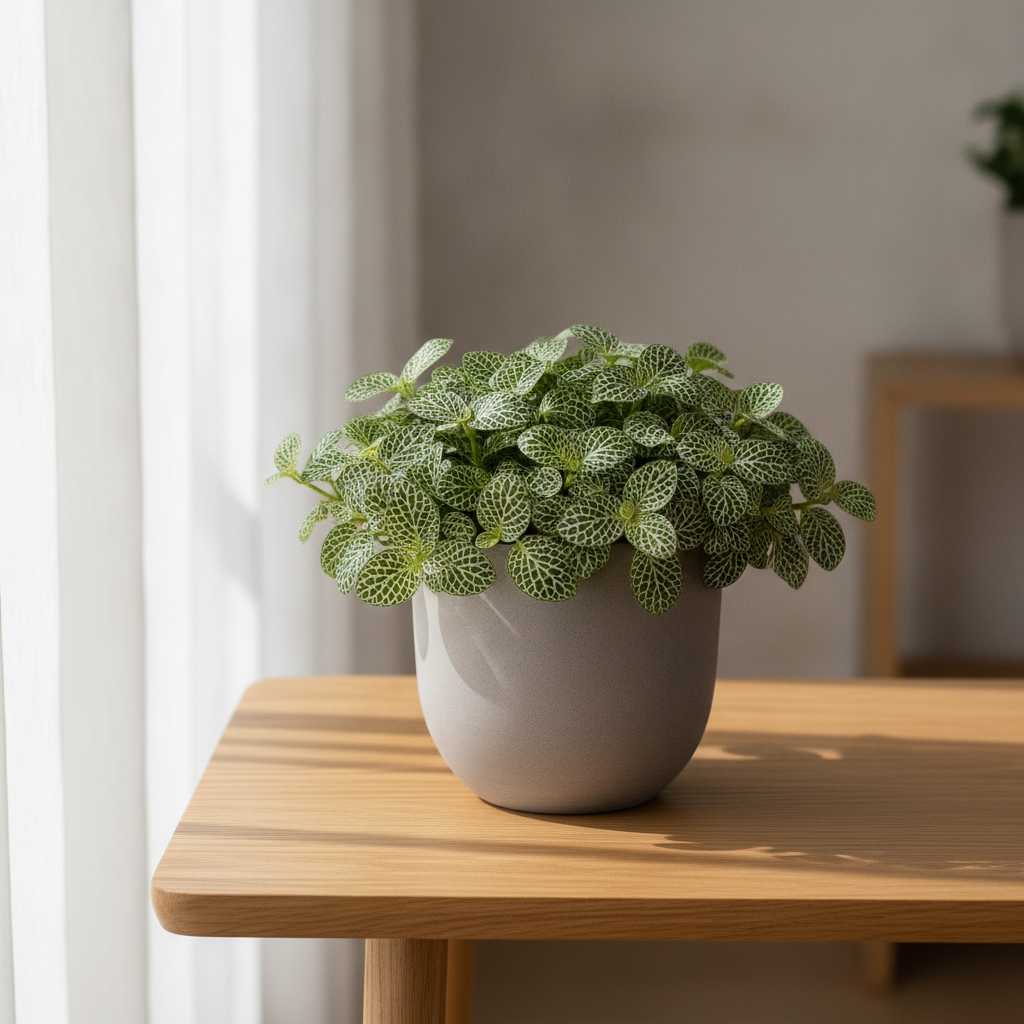
Few houseplants wear their needs as openly as the fishnet plant. When the soil dries out a shade too far, the whole plant collapses into a dramatic swoon, leaves flat and limp as if it has given up entirely, only to spring back to full turgor within an hour or two of a drink. That theatrical honesty, paired with foliage laced in a fine web of silver, white or crimson veins, has made Fittonia albivenis one of the most recognisable small foliage plants in cultivation. Understanding the difference between merely keeping it alive and helping it truly flourish comes down to reading those signals and getting ahead of them.
In This Guide
- Quick Reference
- Why the Fishnet Plant Makes a Rewarding Houseplant
- Light
- Watering
- Soil
- Fertilising
- Propagation
- Pests and Problems
- Varieties
- Frequently Asked Questions
Quick Reference
| Botanical name | Fittonia albivenis (syn. Fittonia verschaffeltii, Fittonia argyroneura) |
| Common names | Fishnet plant, nerve plant, mosaic plant, painted net leaf |
| Family | Acanthaceae |
| Origin | Tropical rainforest understorey of Peru and the wider Andes and Amazon basin |
| Mature size | Around 10 to 15 cm (4 to 6 in) tall, spreading 30 cm (12 in) or more |
| Light | Bright, indirect light; tolerates medium light; no direct midday sun |
| Water | Keep evenly moist; water when the surface just begins to dry; never let it dry out fully |
| Humidity | High, ideally 50 to 60 per cent or more; struggles in dry air |
| Temperature | 18 to 26 degrees C (64 to 79 degrees F); avoid below 15 degrees C (59 degrees F) |
| Soil | Light, moisture-retentive, well-draining peat or coir based mix |
| Feeding | Dilute balanced feed roughly monthly during active growth |
| Propagation | Stem tip cuttings in water or moist mix; division |
| Toxicity | Non-toxic to cats and dogs; considered pet safe |
| Difficulty | Moderate; forgiving of missed watering but demanding on humidity |
Why the Fishnet Plant Makes a Rewarding Houseplant
The fishnet plant earns its many common names from a single striking feature: a dense, contrasting network of veins spread across small oval leaves like fine netting or a mosaic inlay. Depending on the cultivar, that tracery runs silver-white, soft pink, or vivid rose to crimson, set against a deep matte green blade. Because the plant stays low and creeping rather than tall, it reads as a living carpet or a tumble of foliage over a pot rim, and a single well-grown specimen can hold its own on a desk, shelf, or bathroom windowsill where a larger plant would overwhelm the space.
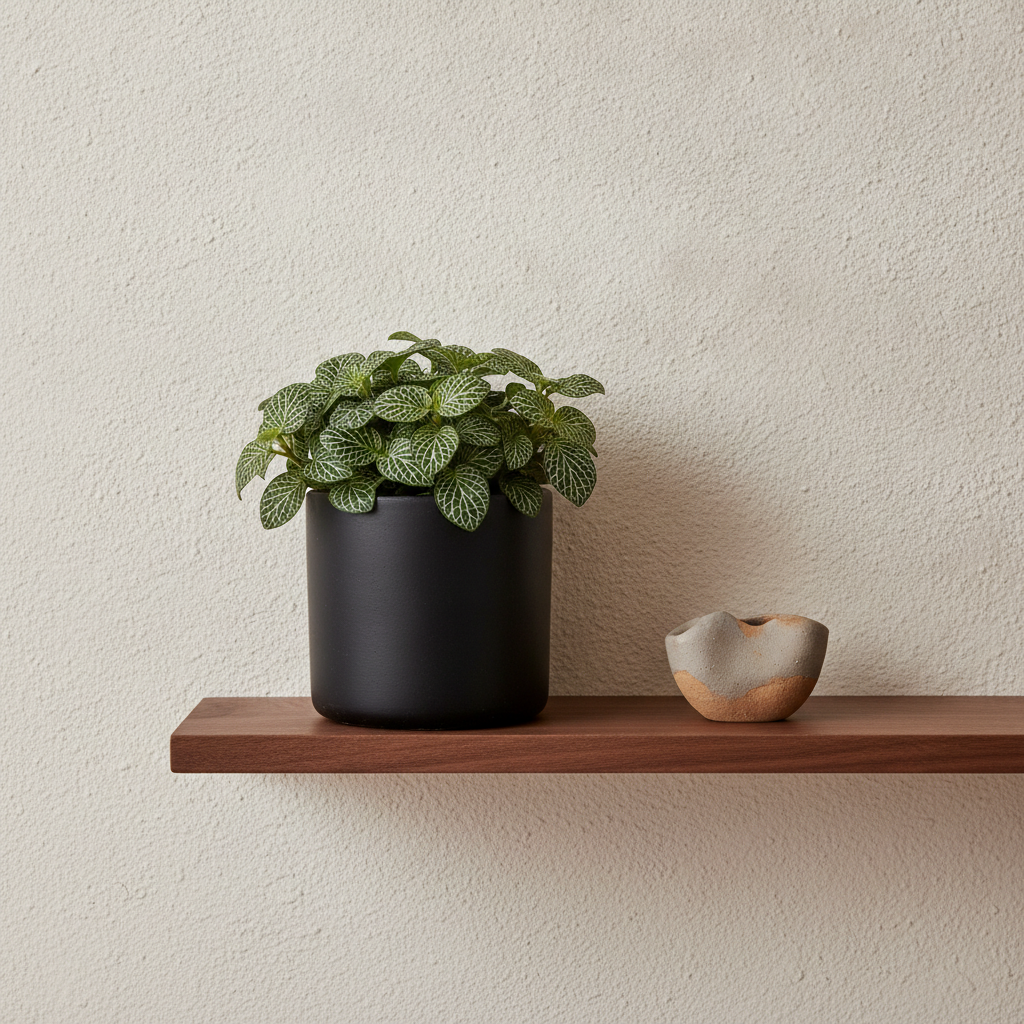
It belongs to the family Acanthaceae and comes from the humid, shaded floor of South American rainforests, chiefly in Peru. That heritage explains nearly everything about how it behaves indoors. On the forest floor it lives beneath a thick canopy, so it evolved for gentle, filtered light rather than direct sun. Surrounded by constant moisture and warmth, it never developed the drought defences of a succulent, which is why it faints so readily when the soil dries. To survive, a fishnet plant needs little more than steady moisture and warmth. To truly thrive, with dense growth, bold vein contrast, and the occasional flush of small, insignificant flower spikes, it wants the warm, humid, evenly bright conditions that echo its origins.
There is a genuine practical bonus for many households: the fishnet plant is listed as non-toxic to cats and dogs, so it can share a home with curious pets without the worry that attends aroids and lilies. Combined with its love of humidity, this makes it a natural choice for a bright bathroom, a kitchen windowsill, a terrarium, or a grouped display where several plants raise the ambient moisture for one another.
Light
Bright, indirect light is the sweet spot for a fishnet plant. In its native understorey it receives sun that has been softened and scattered by layers of canopy above, so a position a little back from a bright window, or directly at a window screened by a sheer curtain, mimics those conditions well. An east-facing sill with gentle morning light is close to ideal, as is a spot a metre or so inside a south or west window where the fierce midday rays never land directly on the leaves.
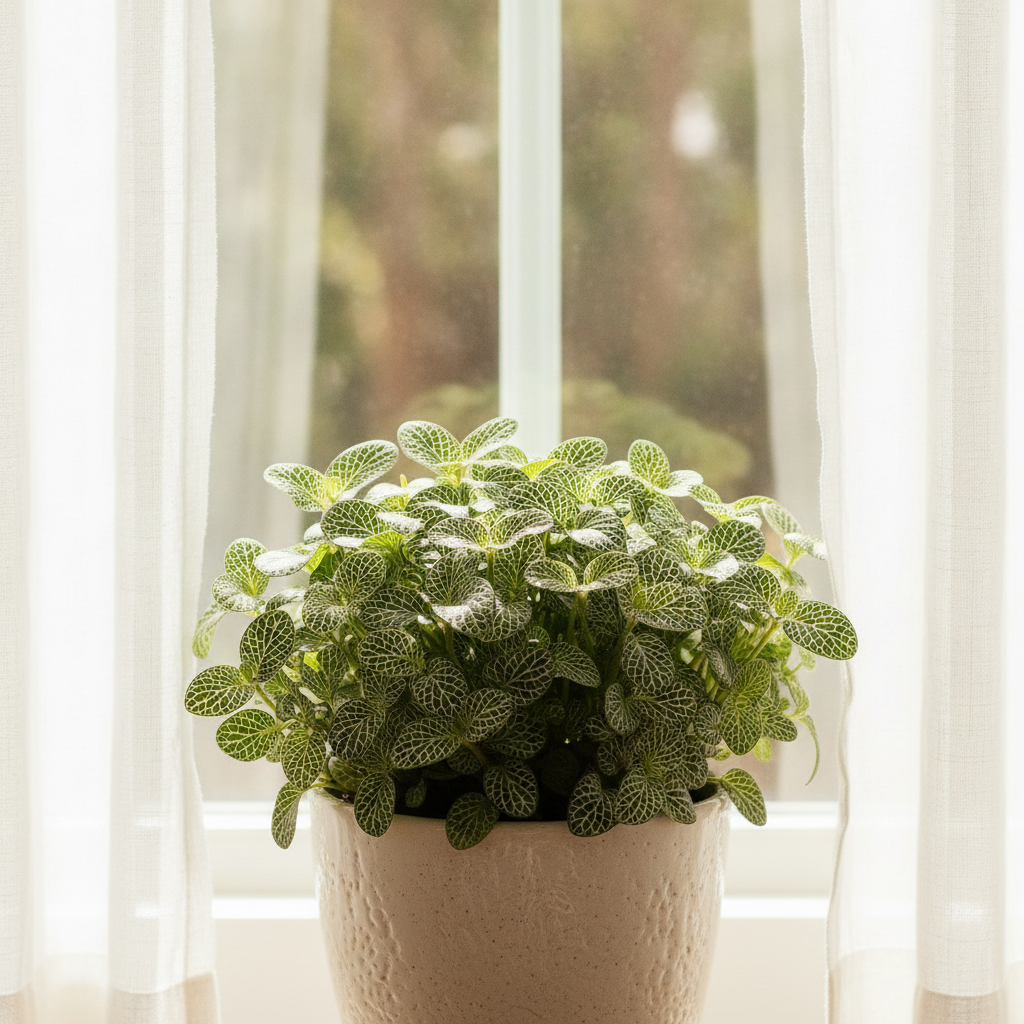
Too much direct sun is the more common mistake. Harsh light scorches the thin leaves, bleaching them and leaving dry brown patches that will not recover, and it also drives up water loss to the point where the plant faints several times a day. The opposite extreme brings its own quiet decline. In light that is too dim the plant survives but grows leggy, stretching its stems and spacing its leaves further apart while the vein contrast fades and the whole plant loses the crisp patterning that is its main appeal. If your fishnet plant is reaching toward the window and losing colour, it is asking for a brighter, though still indirect, position.
Pro Tip – Rotate for even growth: Because the plant grows toward light, give the pot a quarter turn each time you water. This keeps the mound symmetrical rather than lopsided and stops the back of the plant thinning out.
Fishnet plants also respond well to full-spectrum LED grow lights, which makes them a good candidate for a north-facing room, an office desk away from windows, or a display cabinet. A modest grow light running for ten to twelve hours a day is more than enough to keep growth compact and colour saturated.
Watering
Watering is where the fishnet plant demands the most attention, and also where it is the most communicative. The goal is soil that stays consistently, lightly moist, never bone dry and never waterlogged. In practice this means checking the pot every couple of days and watering as soon as the very top of the mix begins to feel dry to the touch, well before the deeper soil dries out. During warm, bright spells in spring and summer this can mean watering two or three times a week; in the cooler, darker months the plant slows down and needs noticeably less.
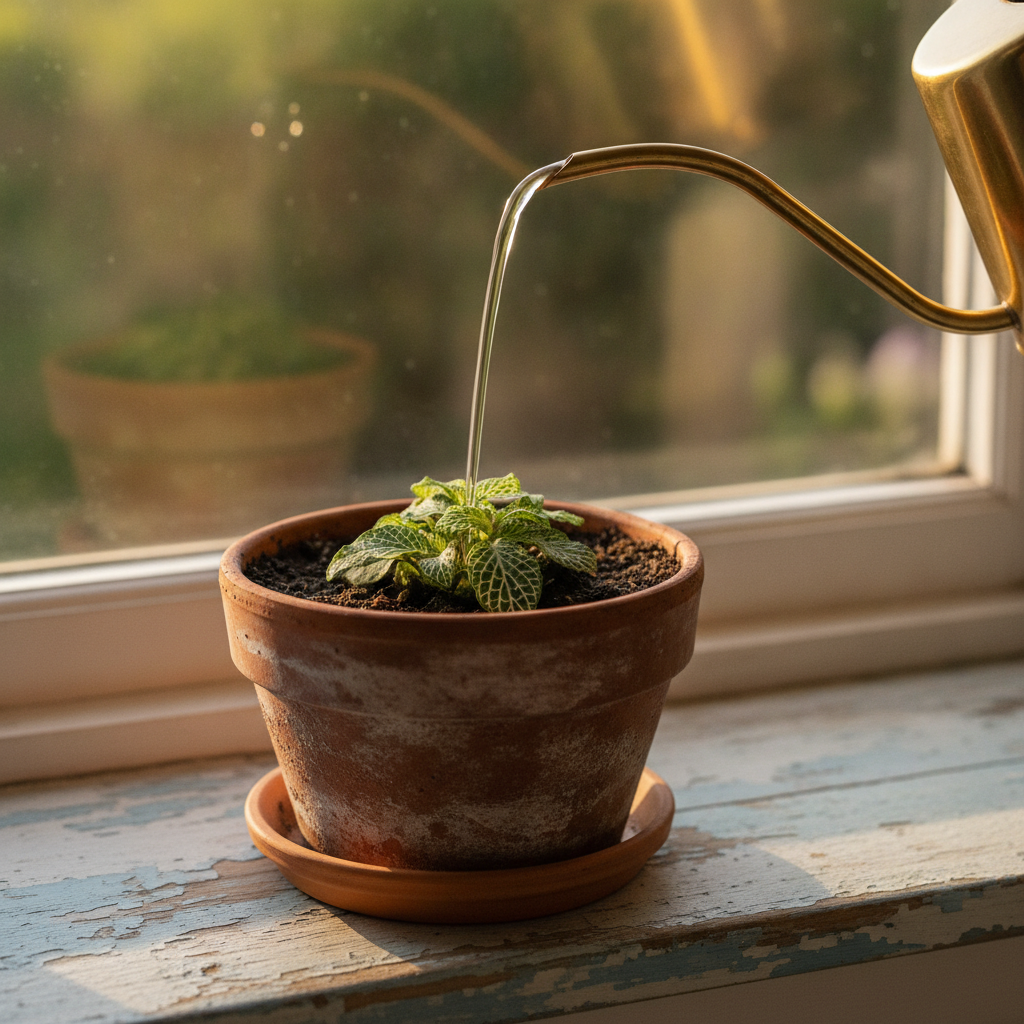
When you do water, water thoroughly. Take the plant to the sink and let tepid water run through until it drains freely from the bottom, then allow it to finish draining before returning it to its spot. This flushes the mix evenly and prevents the dry pockets that form when a moisture-loving plant is given only small, shallow sips. Room-temperature water is kinder than cold water straight from the tap, which can shock the roots of a tropical plant.
The famous fainting act deserves a clear word. A wilted fishnet plant is genuinely thirsty, and a good soak will usually revive it within an hour or two, so it can feel like a convenient built-in alarm. It is not one to rely on. Every faint is real stress, and a plant allowed to collapse repeatedly will start to shed its lower leaves and weaken over time. Treat a faint as a warning that your watering rhythm has slipped, not as the normal cue to water, and aim to intervene before the drama begins.
Warning – Overwatering is the quieter killer: Because this plant loves moisture, it is easy to swing too far. Soil kept sodden with no chance to breathe leads to yellowing lower leaves, a mushy base, and root rot, which is far harder to reverse than a simple faint. Moist but draining, never swampy, is the target.
Humidity works hand in hand with watering. In the dry air of a centrally heated room the leaf edges turn crisp and brown and the plant faints more often, so raising humidity to 50 to 60 per cent or higher eases the whole watering burden. A pebble tray, a nearby humidifier, grouping plants together, or simply growing it in a naturally humid bathroom or kitchen all help. An enclosed terrarium takes the guesswork out entirely and is arguably the single easiest way to grow a fishnet plant well.
Soil
The right soil is one that resolves the plant’s central tension: it must hold moisture reliably yet still drain and breathe so the fine roots never suffocate. A light, peat or coir based houseplant mix forms a good foundation, opened up with a handful of perlite for aeration and, if you have it, a little fine orchid bark or worm castings to add structure and gentle nutrition. The result should feel spongy and moisture-retentive in the hand but never dense or claggy.
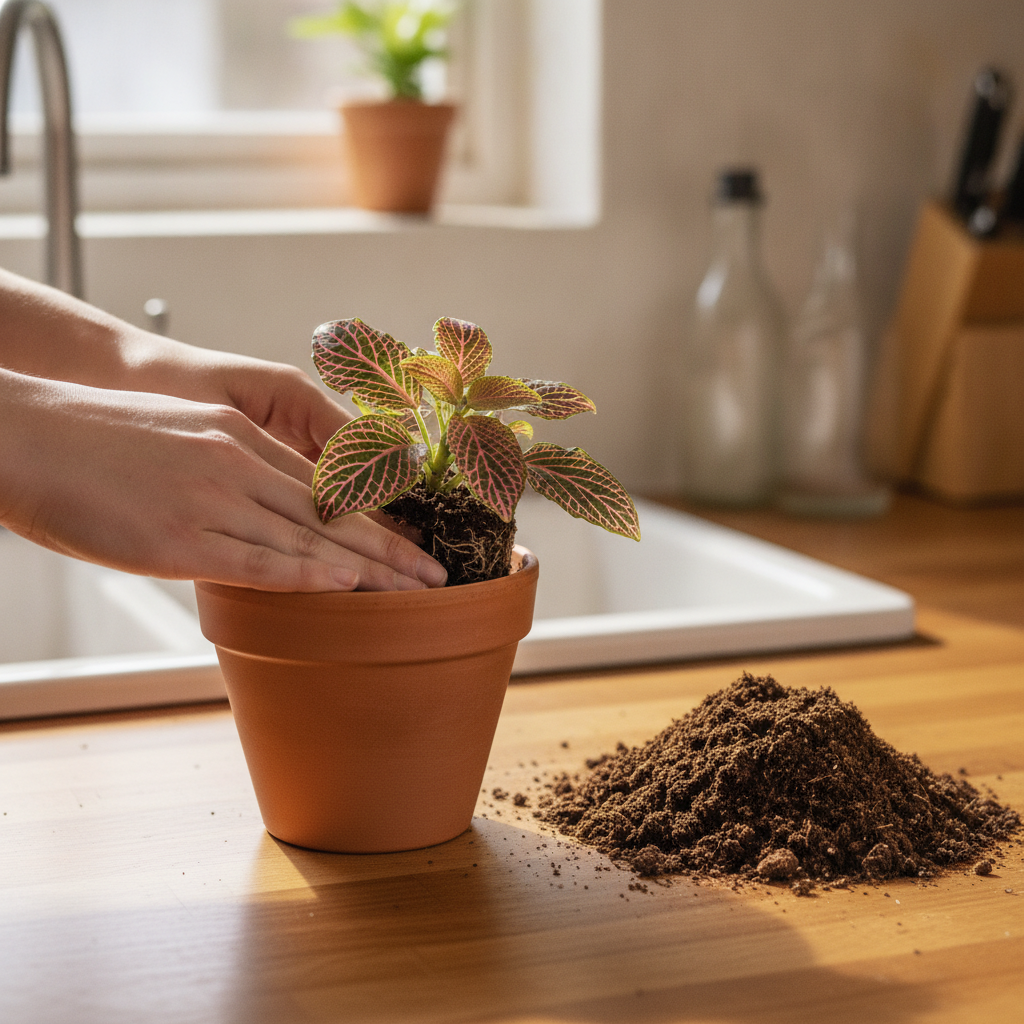
Fishnet plants have shallow, modest root systems and are happy in small pots, which also helps prevent the surrounding soil from staying wet for too long. Choose a container only slightly larger than the root ball, and make sure it has drainage holes; a decorative cover pot with no drainage is a common route to root rot because water pools invisibly at the base. Because the plant creeps and stays low, a wide, shallow pot often suits it better than a deep one and shows off its spreading habit.
Repotting every one to two years in spring is usually enough, either to refresh tired mix or to move up a single pot size once roots fill the current one. Spring, at the start of the active growing season, is the least stressful time to disturb the roots. When you repot, take the opportunity to trim any leggy stems and refresh the top layer of soil, and expect the plant to sulk briefly before settling in.
Fertilising
The fishnet plant is not a heavy feeder, and its small size means it needs only modest, regular nutrition to keep pushing out fresh, well-coloured leaves. During the active growing season of spring and summer, a balanced liquid houseplant fertiliser diluted to roughly half the recommended strength and applied about once a month gives steady results without risk. Some growers prefer to feed at a quarter strength with most waterings instead, which suits a plant that is watered so frequently and keeps nutrient levels gentle and even.
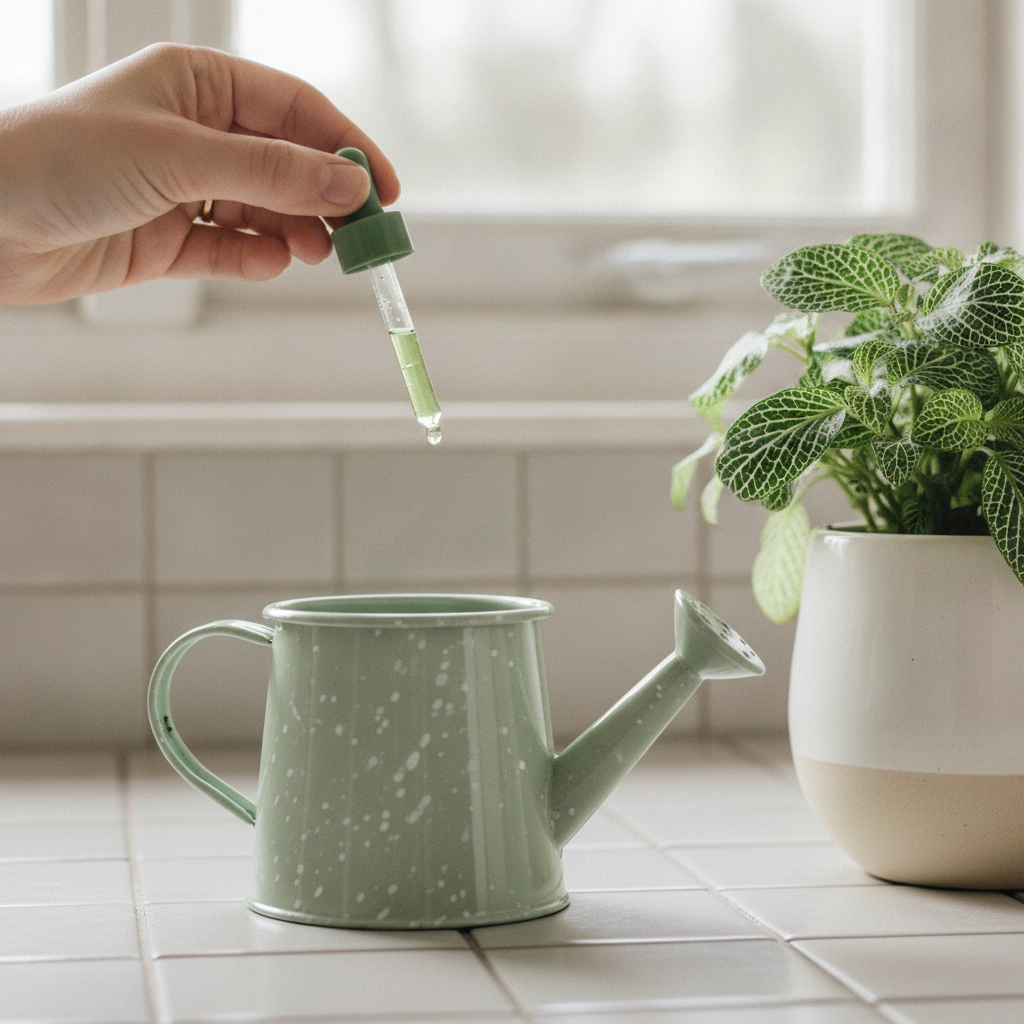
Always apply fertiliser to soil that is already moist rather than to a dry root ball, which helps prevent the salts from scorching the roots. Over-feeding is a real hazard with a plant this modest: too much fertiliser builds up as mineral salts in the soil and shows itself as brown, crisped leaf tips and edges, which are easy to mistake for a humidity problem. If you suspect a build-up, flush the pot thoroughly with plain water to leach the excess away and hold off feeding for a while.
As light levels and temperatures fall in autumn, growth naturally slows, and feeding should taper off with it. Through the depths of winter, when the plant is barely growing, it is best to stop fertilising altogether and resume only when you see new growth resume in spring.
Propagation
One of the quiet pleasures of the fishnet plant is how easily it multiplies. It roots readily from stem tip cuttings, so the same pinching that keeps a plant bushy also supplies a steady stream of new plants. The best time to take cuttings is spring or early summer, when the plant is growing strongly and will root fastest, though a warm, humid propagation setup will succeed at almost any time of year.
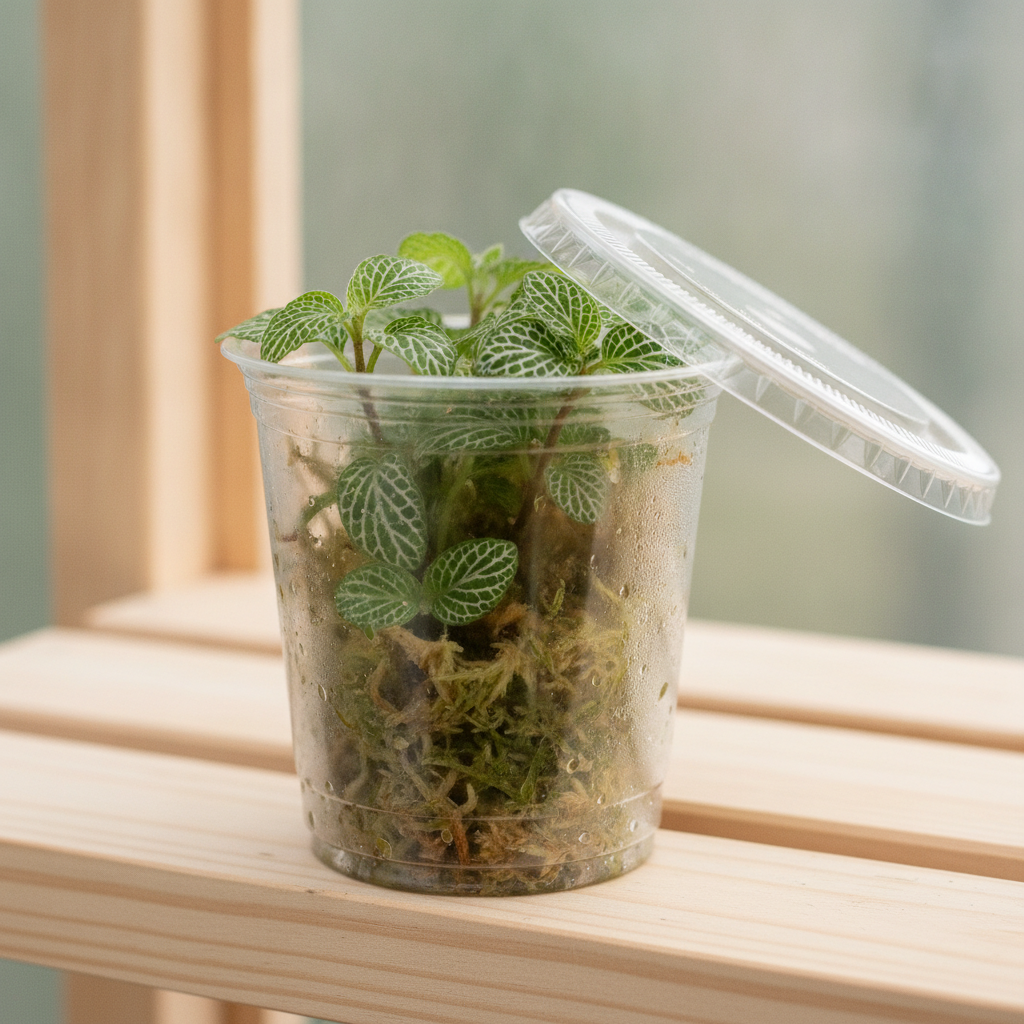
To take a cutting, snip a healthy stem tip about 5 to 8 cm (2 to 3 in) long just below a node, the small joint where leaves emerge, and remove the lowest pair of leaves to expose that node. From there you have a choice of methods.
- Place several cuttings in a glass of water with the bare node submerged, set it in bright indirect light, and refresh the water every few days. Fine white roots usually appear within one to two weeks.
- Alternatively, nestle the cuttings into damp sphagnum moss or a light, moist propagation mix, then cover with a clear dome, bag, or the lid of a deli cup to trap humidity.
- Keep the setup warm and bright, opening it briefly every day or two for fresh air, and check that the moss or mix stays evenly damp.
- Once roots reach 2 to 3 cm (about 1 in), pot the cuttings up into small containers of the usual moist, well-draining mix, planting several together for a fuller look.
- Keep newly potted cuttings especially humid and out of direct sun for the first couple of weeks while they establish, then ease them into normal care.
Larger, mature plants can also be divided at repotting time by gently teasing the root ball into two or more clumps, each with roots and top growth, and potting them separately. Whichever method you use, high humidity during establishment is the single biggest factor in success, which is exactly why cuttings often root almost effortlessly in an enclosed terrarium.
Pests and Problems
A healthy, well-watered fishnet plant is not especially prone to pests, but the warm, moist conditions it enjoys can attract a few common offenders, and its thin leaves are quick to show any distress. Regular inspection, especially of the leaf undersides and the axils where leaves meet stems, catches most trouble early.
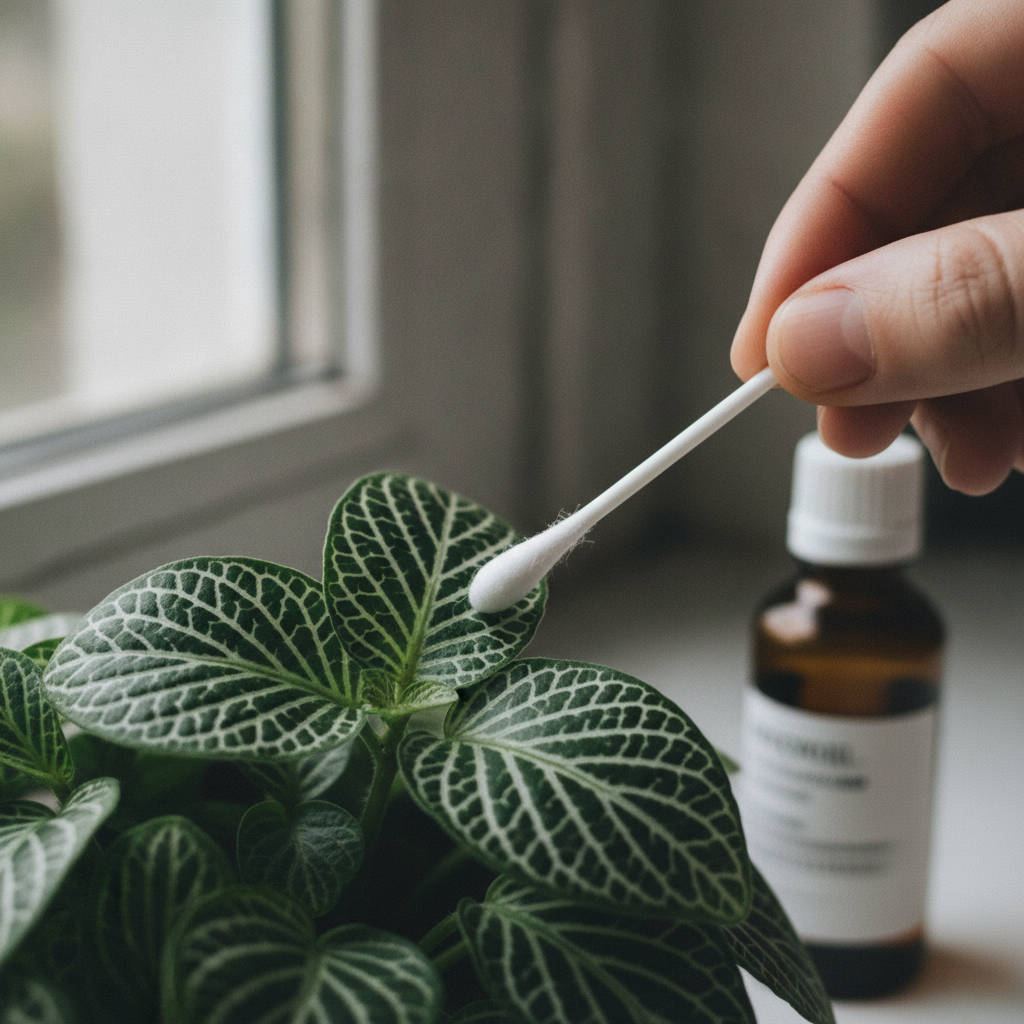
Fungus gnats are the pest most often linked to this plant, drawn to the consistently damp soil it requires. The adults are a nuisance rather than a serious threat, but their larvae feed on roots in large numbers. Letting the very top of the soil dry slightly between waterings, topping the surface with a thin layer of grit, and using yellow sticky traps to catch the adults will usually break the cycle. Mealybugs, which appear as small cottony white tufts in the leaf axils, and aphids, which cluster on soft new growth, can be dabbed with a cotton bud dipped in diluted isopropyl alcohol or treated with insecticidal soap or neem oil. Spider mites are the sign of air that has become too dry; fine webbing and a stippled, dull look to the leaves call for both raised humidity and treatment.
Most complaints about the fishnet plant, though, are cultural rather than pest driven, and each has a clear cause. Crispy brown leaf edges point almost always to air that is too dry, and sometimes to a build-up of fertiliser salts. Sudden collapse is simple thirst, remedied by a thorough soak and a tighter watering routine. Yellowing lower leaves and a soft, mushy base signal overwatering and the onset of root rot, which calls for drier conditions and, if it has taken hold, repotting into fresh mix after trimming away any blackened roots. Leaves that pale and lose their vein contrast while the stems stretch are asking for brighter, though still indirect, light. Read together, these signals make the plant far easier to keep than its fussy reputation suggests, because it tells you exactly what it needs.
Varieties
Almost all of the fishnet plants sold today are forms of the single species Fittonia albivenis, historically split into two groups that are still useful shorthand for what a plant looks like. The Argyroneura group carries silver and white veining, while the Verschaffeltii group carries pink to red. Within those two camps, breeders have selected a wide range of named cultivars that differ in vein colour, leaf size, and how boldly the pattern is drawn.
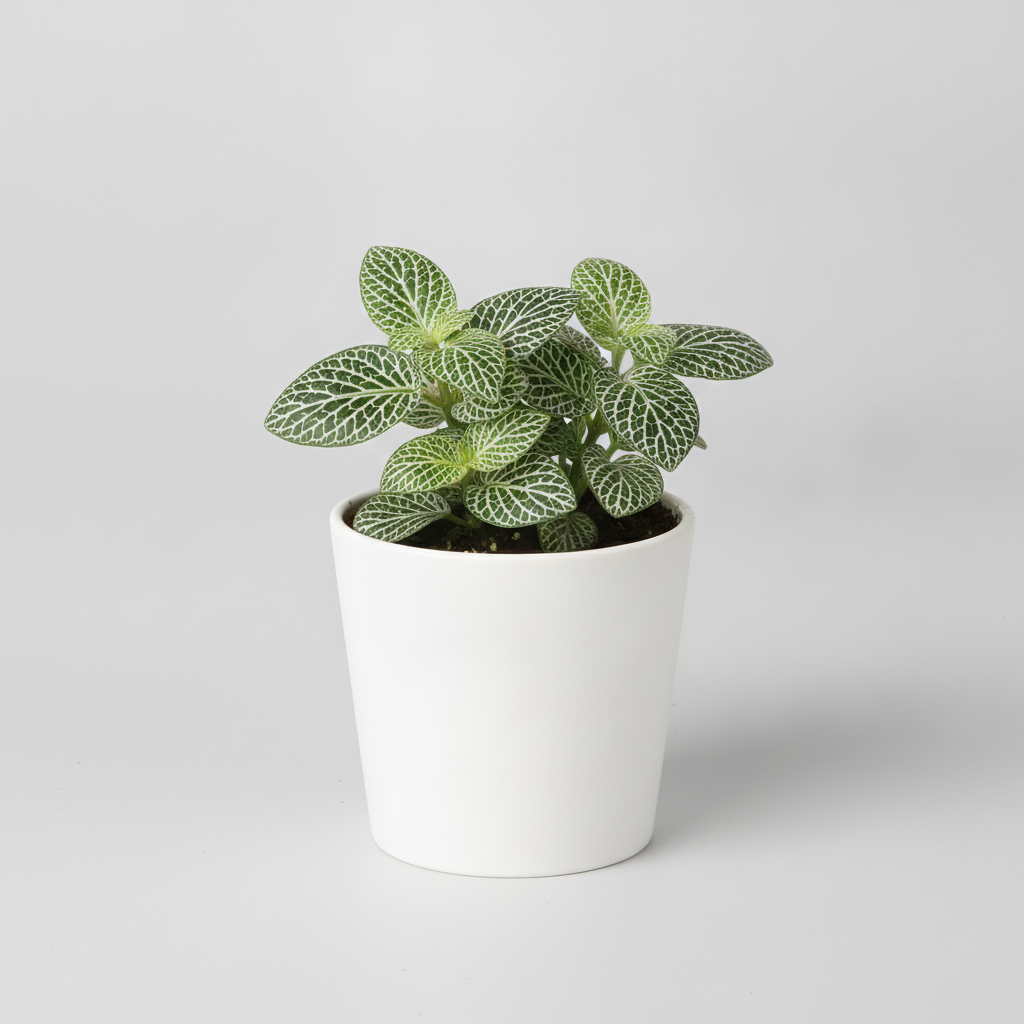
‘White Anne’ (Argyroneura group) is the archetypal fishnet plant, with deep green oval leaves overlaid by a dense, bright network of silvery-white veins. The high contrast makes it a favourite for terrariums and for brightening shaded corners, where the pale netting seems to glow. It is vigorous and readily available, and a good first choice for anyone new to the species.
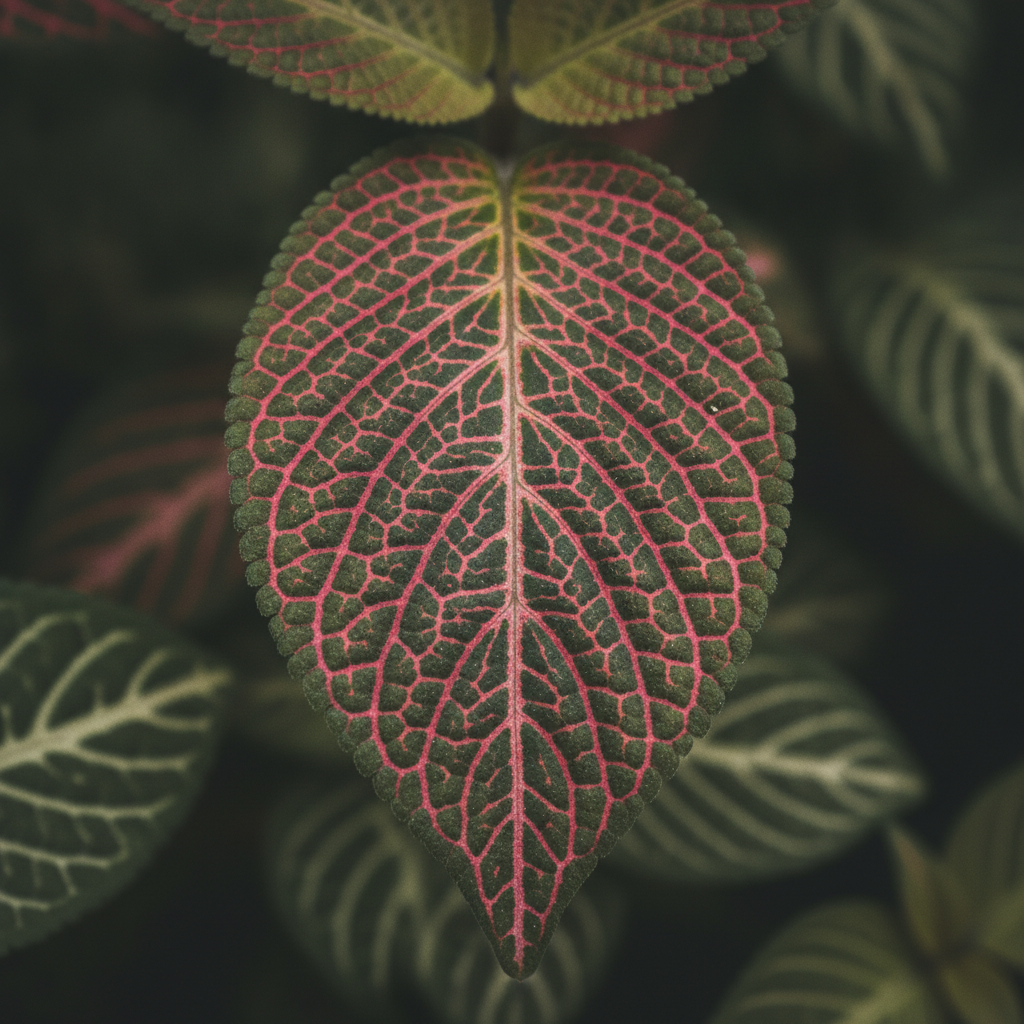
‘Red Vein’ (Verschaffeltii group) swaps the cool silver netting for warm tones, threading olive-green leaves with vivid pink to crimson veins that often deepen in brighter, though still indirect, light. Sometimes sold as ‘Red Anne’ or under the Verschaffeltii name, it brings a jewel-like richness and pairs strikingly with the white-veined forms in a mixed planting or terrarium.
Beyond these two mainstays, look out for ‘Frankie’ and ‘Pink Angel’ with their broad blush-pink veining, the compact small-leaved ‘Mini’ or ‘Superba’ selections that stay especially tidy, and dramatic novelties such as ‘Black Star’, which pushes the veining toward deep purple-red. All share the same care requirements, so you can mix cultivars freely in a single display and enjoy the interplay of silver, pink, and crimson netting without complicating your routine.
Frequently Asked Questions
Why does my fishnet plant keep fainting?
A dramatic collapse means the soil has dried out too far. A thorough soak with tepid water almost always revives the plant within an hour or two. If it faints often, your watering rhythm has slipped or the air is too dry; water a little sooner and raise humidity so the plant is not pushed to that point in the first place.
Is the fishnet plant safe for cats and dogs?
Yes. Fittonia is listed as non-toxic to both cats and dogs, which makes it one of the safer choices for a home with pets. As with any plant, it is still wise to discourage nibbling, since a large mouthful of foliage can upset any animal’s stomach.
Why are the leaf edges turning brown and crispy?
Crispy edges are the classic sign of humidity that is too low for this rainforest plant, common in centrally heated rooms. Raise humidity with a pebble tray, a humidifier, grouping, or a bathroom position. A build-up of fertiliser salts can cause the same symptom, so flush the pot with plain water occasionally and feed sparingly.
Can I grow a fishnet plant in a terrarium?
It is one of the best possible terrarium plants. An enclosed glass container holds the warmth and high humidity it craves, keeps the soil evenly moist, and all but eliminates the fainting problem. Its small, creeping habit also suits the scale of most terrariums perfectly.
How do I make my fishnet plant bushier?
Pinch or trim the stem tips regularly, especially any that are growing long and bare. Each cut encourages the plant to branch from lower down, producing denser, fuller growth, and the removed tips root easily as new cuttings. Bright indirect light also keeps growth compact rather than stretched.
Does the fishnet plant flower?
It can produce small spikes of insignificant white to pale yellow flowers, but they are unremarkable and the plant is grown almost entirely for its foliage. Many growers pinch the flower spikes off so the plant channels its energy into leaves and stays compact.






