
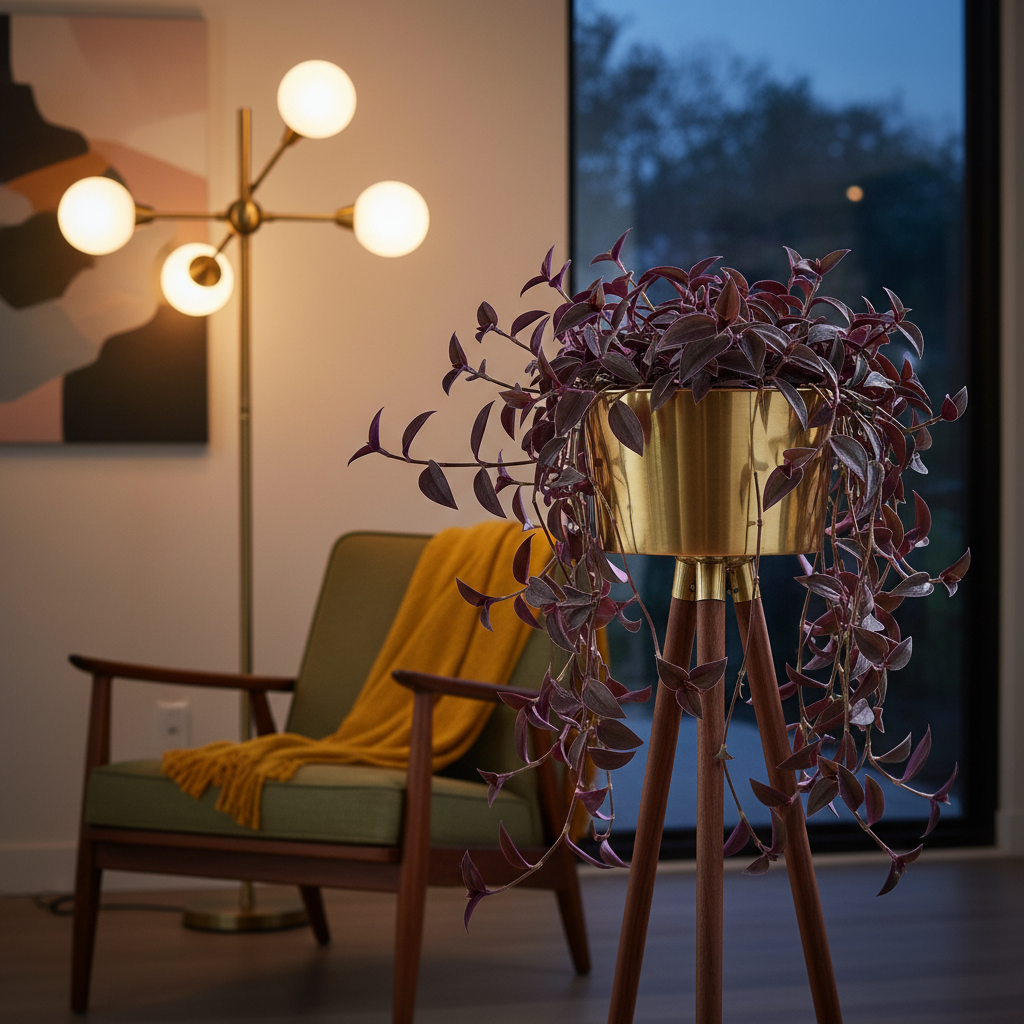
Purple heart, known botanically as Tradescantia pallida, is one of the most recognisable trailing houseplants in cultivation, prized for its long, fleshy stems clothed in narrow lance-shaped leaves of an almost unreal violet-purple. Native to the Gulf Coast region of eastern Mexico, it was originally described in 1907 as Setcreasea purpurea, and many garden centres still sell it under that older name, alongside common labels such as purple queen, wandering Jew (a name now broadly discouraged) and simply purple wandering plant. In its native range it sprawls across rocky scrubland in full sun, which explains both its drought tolerance and its tendency to colour up most intensely when exposed to bright light.
Indoors, purple heart has the kind of forgiving constitution that makes it a frequent recommendation for beginners, yet it rewards careful growers with denser stems, deeper colour and the occasional flush of small three-petalled pink flowers at the tips. The difference between a plant that merely survives and one that thrives almost always comes down to light, water and the willingness to prune for shape rather than letting the stems grow leggy. This guide covers every aspect of Tradescantia pallida care, from light placement and watering rhythm through soil composition, propagation, common pests and the popular cultivars available to home growers.
Contents
- Quick Reference
- Why Purple Heart Makes a Brilliant Houseplant
- Light Requirements
- Watering and Humidity
- Soil, Potting and Repotting
- Fertilising
- Propagation
- Pests and Diseases
- Popular Varieties
- Frequently Asked Questions
Quick Reference: Purple Heart at a Glance
| Botanical name | Tradescantia pallida (formerly Setcreasea purpurea) |
| Family | Commelinaceae (spiderwort family) |
| Light | Bright indirect to direct sun; at least 4 hours of strong light a day for deep colour |
| Watering | Allow the top 2 to 3 cm (1 inch) of soil to dry between waterings; less in winter |
| Temperature | 18 to 27 degrees C (65 to 80 degrees F); tolerates brief dips to 7 degrees C (45 degrees F) |
| Humidity | 40 to 60 percent; tolerates average room humidity without issue |
| Soil | Well-draining peat or coco-based mix with added perlite or coarse sand |
| Fertiliser | Balanced liquid feed at half strength every 4 to 6 weeks during growth |
| Mature size | Stems trail 40 to 60 cm (16 to 24 inches), occasionally to 90 cm (36 inches) |
| Growth rate | Fast in good light and warmth |
| Toxicity | Sap can irritate skin; mildly toxic to cats, dogs and humans if ingested |
| Lifespan | Indefinite if propagated; individual stems naturally renew over several years |
Why Purple Heart Makes a Brilliant Houseplant
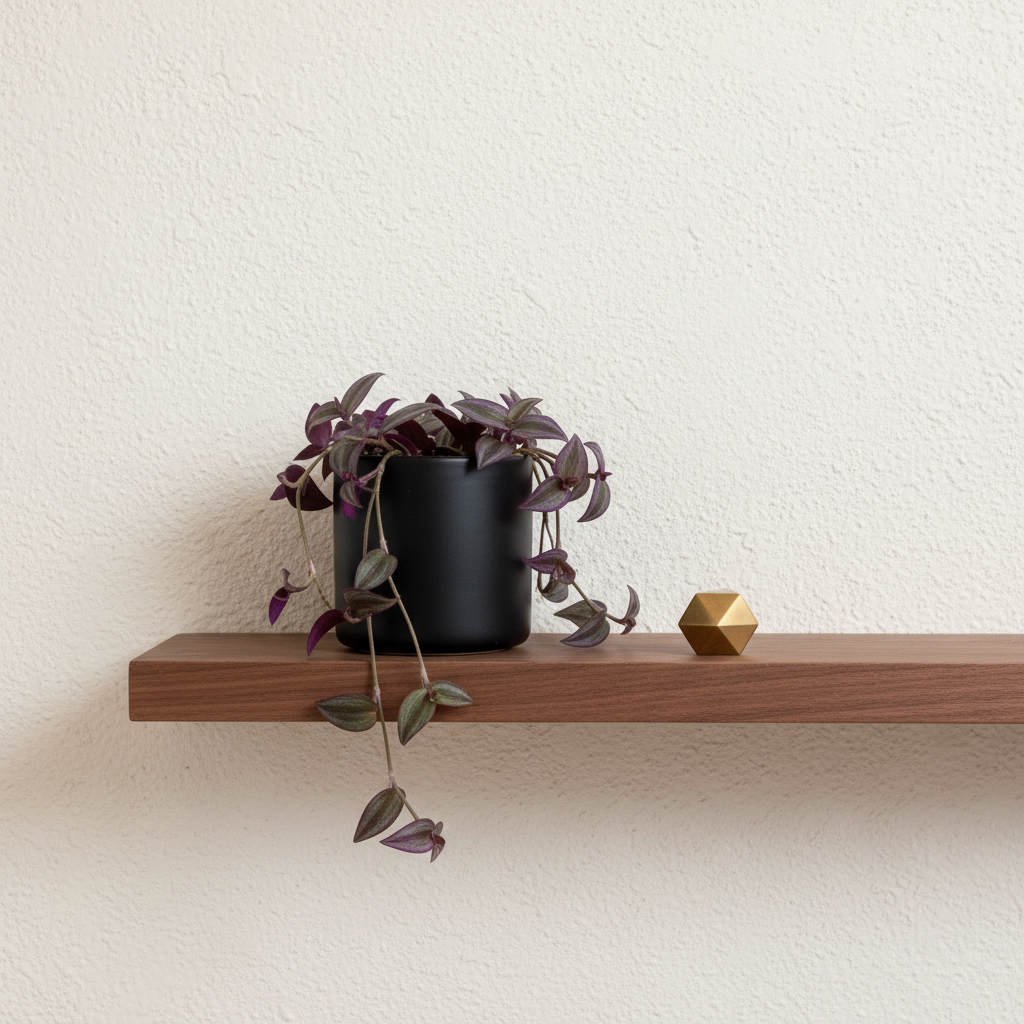
Few houseplants offer the visual punch of a well-grown purple heart. The colour is not a subtle tint but a true saturated violet, almost iridescent in raking light, and unusual enough among indoor foliage plants that a single specimen on a shelf often does the work of three more conventional greens. It pairs beautifully with brass, walnut, terracotta and chalky plaster surfaces, and because the stems trail rather than reach upward, the plant suits hanging baskets, tall pots, plant stands and the edges of bookshelves equally well. The leaves are velvety to the touch, with fine silvery hairs along the margins that catch the light and soften the edges of the colour.
Beyond the aesthetics, Tradescantia pallida is extraordinarily forgiving. It tolerates dry indoor air, recovers gracefully from short periods of drought, and can be cut back hard and regrown from the smallest fragment of stem. NASA’s 1989 Clean Air Study placed several Tradescantia relatives among the most effective plants for removing common indoor air pollutants such as benzene and formaldehyde, and while modern researchers caution that real-world air-cleaning benefits from a few pots are modest, the plant’s vigorous growth and high leaf surface area do contribute. For practical purposes it is the look, the speed and the ease of propagation that win people over, with new cuttings rooting in a glass of water in under a week and a fresh hanging basket producible from a single trim.
Important — Toxicity: The sap of Tradescantia pallida contains calcium oxalate crystals and irritant compounds that can cause contact dermatitis in sensitive people. Wash hands after pruning, and keep the plant out of reach of cats, dogs and small children. Ingestion can cause mouth irritation, drooling and digestive upset in pets but is rarely life-threatening.
Light Requirements
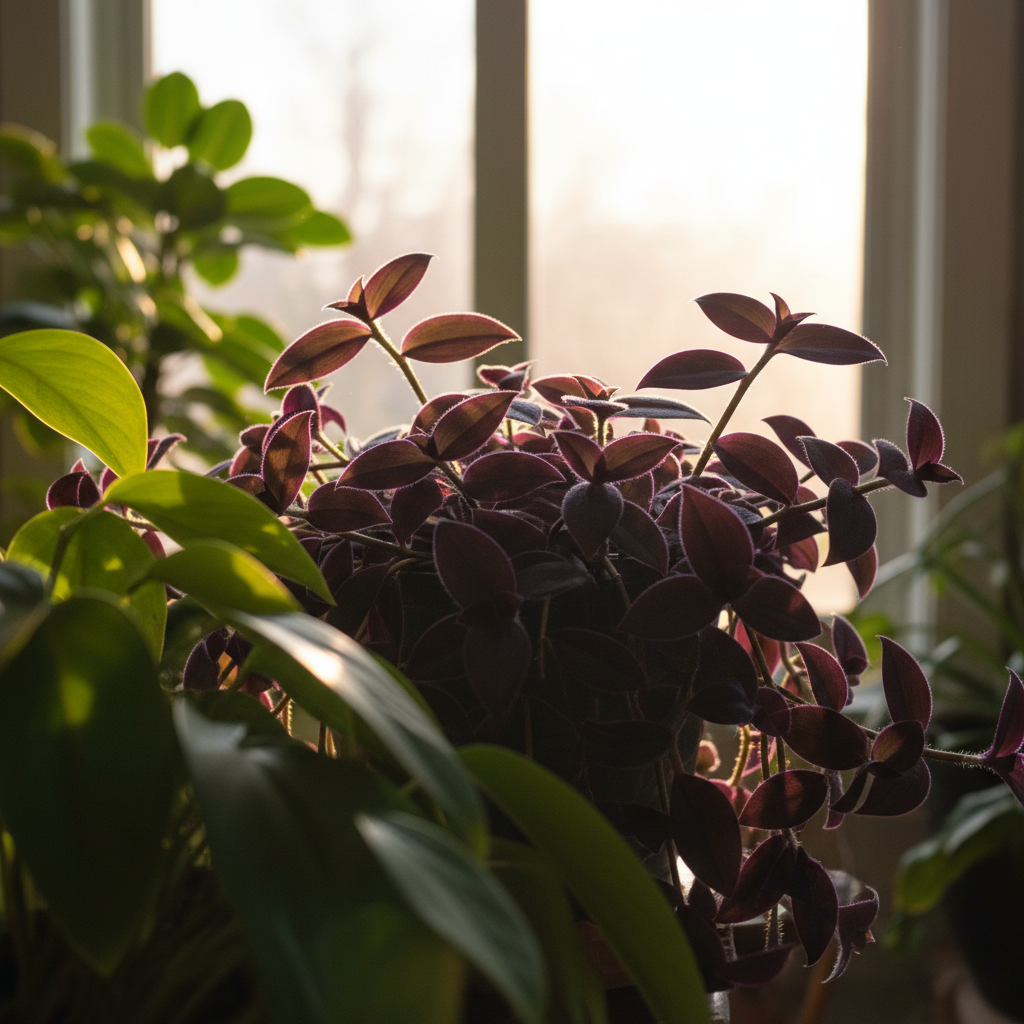
Light is the single most important factor in growing a purple heart that lives up to its name. The famous deep violet pigmentation is the plant’s natural sunscreen, a response to ultraviolet exposure that protects the leaf tissue from intense light. When a purple heart is grown in dim conditions, it does the sensible thing and stops producing that costly pigment, reverting to a washed-out olive green with only faint violet hints at the leaf edges. Move the same plant into a sunny window and within a few weeks the new growth will emerge fully purple, and the older leaves will deepen in tone as well.
The ideal indoor placement is within a metre (3 feet) of an east, south or west-facing window, where the plant receives several hours of direct sun balanced by indirect light through the rest of the day. Purple heart can tolerate more direct sun than most foliage houseplants, and in cooler climates it will happily sit on a sunny windowsill year-round. In hot summer climates, screen midday south-facing sun with a sheer curtain to prevent scorched patches on the most exposed leaves.
Light Levels Explained
Houseplant care guides often describe light in vague language such as “bright” or “low”, which is unhelpful when the room you are placing the plant in has its own specific conditions. The table below maps the common categories to approximate light levels in lux, and indicates the outcome you can expect from purple heart in each.
| Light Category | Approx. Level | Typical Location | Outcome |
|---|---|---|---|
| Direct sun | 20,000 to 50,000 lux | Sunny south-facing windowsill | Compact, intensely purple growth; occasional flowers |
| Bright indirect | 5,000 to 20,000 lux | Within a metre of a sunny window or directly in front of an east window | Strong colour, healthy trailing growth |
| Medium | 1,000 to 5,000 lux | Two to three metres back from a window | Open growth, muted purple with green undertones |
| Low | 250 to 1,000 lux | Far corner of a well-lit room | Leggy stems, leaves mostly green with violet tinges |
| Very low | Below 250 lux | Windowless interior | Survival only; loss of colour and rapid decline |
Window Orientation and Placement
South-facing window: The first choice in most northern latitudes. Place the pot directly on the windowsill or within 60 cm (24 inches) of the glass. In summer at lower latitudes, pull the plant back slightly or filter the midday light with a sheer curtain.
East-facing window: Excellent for purple heart. Morning sun is gentle enough that the plant can sit on the sill all year, and the cooler afternoon light prevents overheating. Expect strong colour and steady growth.
West-facing window: A good option that produces vivid colour, although the harsher afternoon sun in summer can scorch the leaves closest to the glass. Use a light sheer curtain in July and August if you live somewhere with intense afternoon sun.
North-facing window: Marginal. A purple heart will survive on a north sill but will likely lose much of its colour and grow leggy. If a north window is the only option, supplement with a small grow light to keep the colour strong.
Pro Tip — Rotate Weekly: Purple heart grows toward the light quickly, and an unrotated plant will lean dramatically within a fortnight. Give the pot a quarter turn each time you water to keep the growth even on all sides.
How Light Affects Leaf Colour
The pigment responsible for purple heart’s colouring is anthocyanin, the same group of compounds that gives red cabbage, blueberries and autumn maple leaves their colour. Anthocyanins act as a sunscreen for the photosynthetic machinery beneath, absorbing ultraviolet wavelengths that would otherwise damage chlorophyll. The brighter the light, the more anthocyanin the plant produces, and the deeper the violet becomes. In dim conditions the plant invests less in pigment and the underlying green of chlorophyll dominates, which is why a purple heart moved from a nursery greenhouse to a dim bedroom will fade within a month.
Temperature also influences colour. Cool nights followed by bright sunny days produce the most intense purple, which is why outdoor specimens in autumn often look richer than the same plant in midsummer heat. Indoors you can mimic this effect by placing the plant near a cool window during the autumn and winter months.
Warning — Direct Sunlight: Purple heart tolerates more sun than most foliage houseplants, but a plant moved suddenly from low light to a hot south-facing windowsill can develop pale bleached patches on the most exposed leaves. Acclimatise over 7 to 10 days, increasing direct exposure by an hour or two each day, to give the plant time to build up its protective pigments.
Artificial Lighting
Purple heart responds well to full-spectrum LED grow lights, which can replace or supplement natural light entirely. A 20 to 30 watt LED panel positioned 30 to 45 cm (12 to 18 inches) above the plant, run for 12 to 14 hours a day, will keep the colour rich and the growth compact in even a windowless room. Choose a panel with a colour rendering index above 90 if you want the violet to look as vivid as it does in daylight; cheap blurple-only panels will support growth but make the foliage look murky.
Seasonal Adjustments
In winter, even south-facing windows offer only a fraction of the light intensity available in summer, and purple heart often pales noticeably during the darkest weeks. There is no need to intervene aggressively; reduce watering to match the slower growth and accept that new winter growth may be less saturated. As the days lengthen in late February and March the colour will return on its own. If you grow your plant outdoors in summer, bring it inside well before the first frost (purple heart is hardy only to about 7 degrees C / 45 degrees F) and place it in the brightest available window to ease the transition.
Watering and Humidity
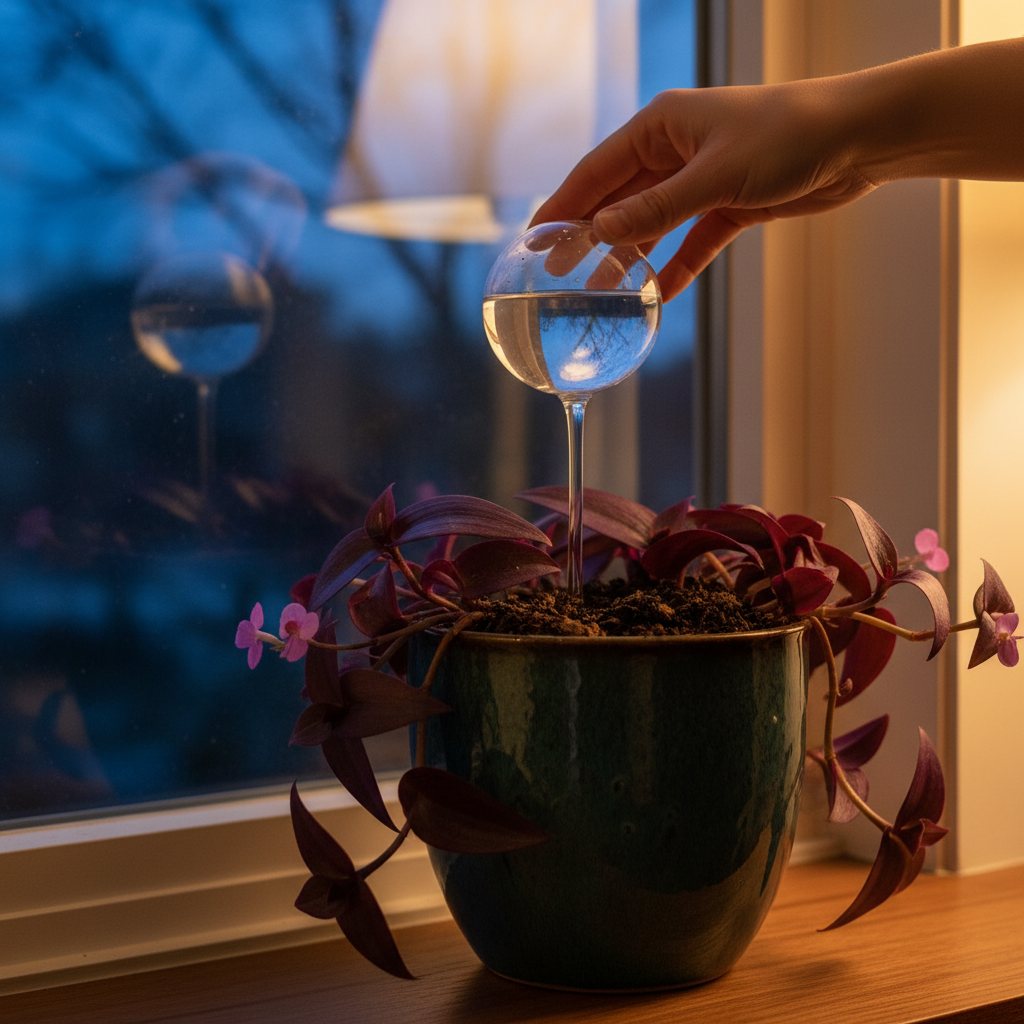
Purple heart belongs to the small group of houseplants that lean more toward succulent than tropical in their water needs. The fleshy stems store moisture, the leaves are mildly waxy, and the plant evolved on rocky, free-draining ground where rainfall comes in bursts rather than as steady moisture. The most common mistake new owners make is treating it like a typical leafy tropical and watering on a fixed weekly schedule, which keeps the roots constantly damp and eventually causes them to rot. The right approach is to water thoroughly, let the top of the soil dry out, and only then water again.
When to Water
The simplest reliable rule is to allow the top 2 to 3 cm (about 1 inch) of soil to dry between waterings. In a warm bright room with active growth, this typically means watering every 7 to 10 days during spring and summer. In a cooler room or during winter dormancy, the gap may stretch to two or three weeks. Always check the soil with a finger rather than relying on the calendar; the exact frequency depends on pot size, light, humidity and ambient temperature, all of which fluctuate.
The leaves themselves are a useful indicator. A well-hydrated purple heart has firm, upright stems and plump leaves that snap crisply if you bend one. As the plant approaches thirst the stems begin to droop slightly and the leaves lose a touch of their gloss, becoming visibly limp before any wilt is obvious. This soft droop is the perfect moment to water; if you wait beyond that point the plant will recover but may shed a few of its older leaves.
Pro Tip — The Lift Test: Lift the pot just after watering and note how heavy it feels, then lift it again before each subsequent watering. A clearly lighter pot means it is time to water; a still-heavy pot means wait. This works far better than any moisture meter and costs nothing.
How to Water Correctly
- Take the plant to the sink or place it on a saucer that will catch run-off.
- Pour water slowly and evenly over the soil surface, working around the base of the stems rather than splashing the foliage.
- Continue until water flows freely from the drainage holes for several seconds. This ensures the entire root ball is moistened, not just the top layer.
- Let the pot drain completely for 10 to 15 minutes before returning it to its decorative cover or saucer.
- Tip away any water that has collected in the saucer; purple heart will not tolerate sitting in standing water.
- Wait until the top of the soil has dried out again before the next watering.
Signs of Overwatering vs. Underwatering
| Symptom | Overwatering | Underwatering |
|---|---|---|
| Leaf colour | Yellowing, often starting at the base; older leaves go first | Pale and faded, with crispy brown tips appearing on the oldest leaves |
| Leaf texture | Soft, mushy, sometimes translucent | Limp at first, then dry and papery |
| Soil | Persistently wet, may smell sour or musty | Pulls away from the sides of the pot; bone dry several centimetres down |
| Roots | Brown or black, slimy, slipping out of their skins | White but thin and sparse; the root ball is dry and dusty |
| Stem base | Soft, dark, may collapse | Firm but shrivelled and slightly wrinkled |
Warning — Root Rot: Once root rot is established in a purple heart it spreads quickly through the fleshy stems. If you notice mushy stem bases or a sour smell from the soil, lift the plant out of the pot immediately, trim back to healthy white root and firm green stem, and re-root the salvageable tip cuttings in water. A waterlogged purple heart is harder to save than to start fresh from cuttings.
Humidity Requirements
Purple heart is admirably tolerant of dry indoor air. The waxy leaf surface and slightly fleshy structure protect against moisture loss in ways that more typical tropical foliage cannot match, so the plant grows perfectly well at the 30 to 50 percent humidity typical of centrally heated homes. There is no need to mist, run a humidifier or huddle the pot with other plants to raise local humidity.
Symptoms of genuinely problematic dryness, such as crispy brown leaf margins on multiple leaves at once, are far more often caused by underwatering or by exposure to a draft from a heating vent than by ambient humidity. Look at your watering routine and the plant’s placement first before assuming the air is too dry.
If your home is unusually dry in winter (below 25 percent), a pebble tray or small humidifier nearby will help, but more for the benefit of any neighbouring tropicals than for the purple heart itself. Avoid direct misting of the foliage; the fine silvery hairs along the leaf margins trap moisture and can encourage fungal spotting if leaves stay damp overnight.
Water Quality
Tap water is fine for purple heart in almost all locations. Unlike sensitive species such as calathea or carnivorous plants, it is not noticeably bothered by chlorine, chloramine or moderate hard-water mineral content. In areas with very hard water, occasional flushing with rainwater or distilled water helps prevent slow salt accumulation in the soil. Let cold tap water stand for an hour to come up to room temperature before pouring it onto the soil; ice-cold water on warm fleshy stems can cause spotting on the lower leaves.
Soil, Potting and Repotting
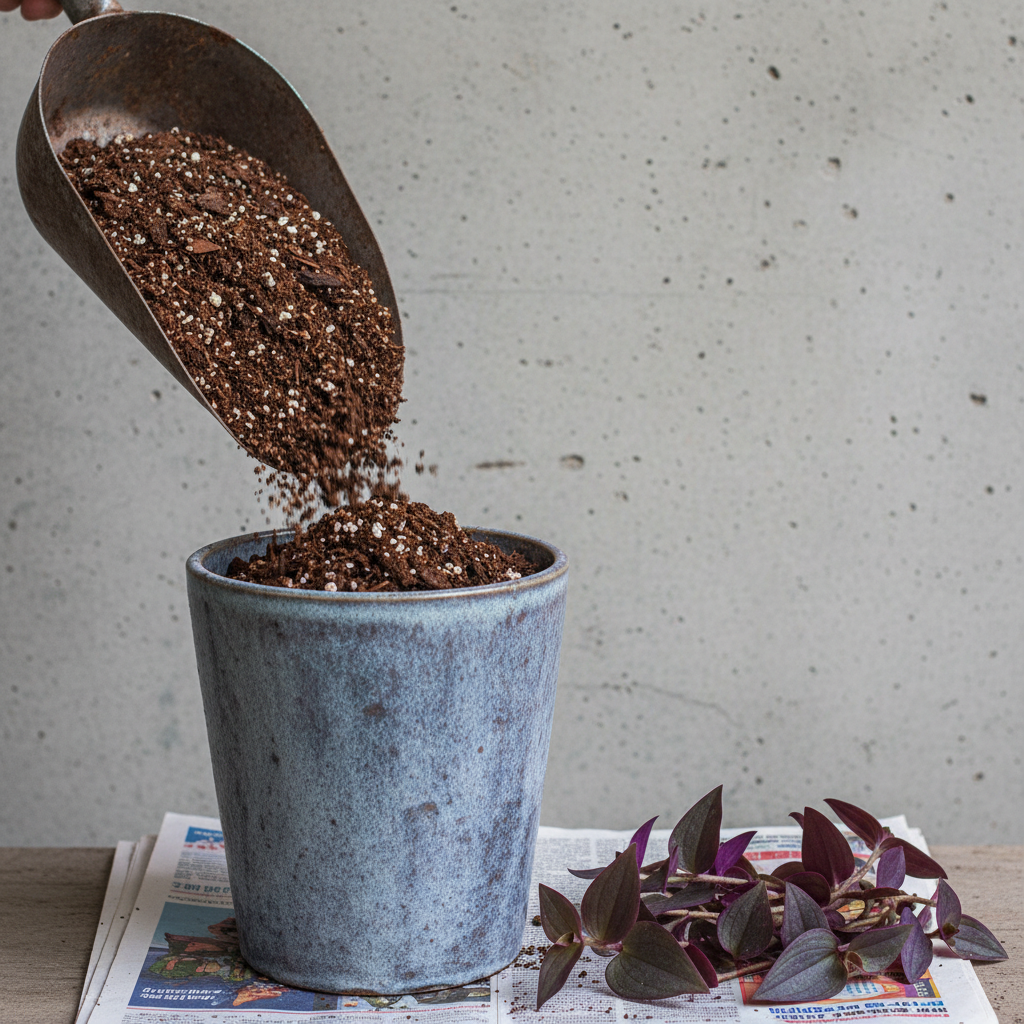
Soil for purple heart needs to do two things equally well: hold enough moisture to support the plant between waterings, and drain freely enough that the roots are never sitting in saturated mix. A standard houseplant compost straight from the bag is usually a touch too retentive, so the simplest reliable approach is to take a quality peat-based or coco-coir-based compost and amend it with a generous handful of perlite, pumice or coarse horticultural sand.
Ideal Soil Composition
The goal is a mix that crumbles between your fingers when moist rather than clumping into a dense ball. A simple proven recipe combines a houseplant or general-purpose compost as the base, perlite or pumice for drainage and aeration, and a small amount of coarse sand or fine bark for structure.
| Component | Proportion | Function |
|---|---|---|
| Quality houseplant compost (peat or coco-based) | 3 parts | Holds moisture and provides nutrients |
| Perlite or pumice | 1 part | Improves drainage and root aeration |
| Coarse horticultural sand | 0.5 part | Adds weight and prevents compaction |
| Optional: worm castings | 0.5 part | Slow-release nutrition and beneficial microbes |
Purple heart is unfussy about soil pH. Anywhere between 5.5 and 7.5 is acceptable, which covers virtually every bagged compost on the market. There is no need to test or adjust pH for ordinary indoor cultivation.
Pro Tip — Quick Mix Recipe: If you only want to remember one ratio, mix two parts standard houseplant compost with one part perlite. This single tweak transforms a too-retentive bagged mix into one that drains briskly enough for purple heart, peperomias, succulents and most aroids.
Choosing the Right Pot
Pot choice has a surprisingly large effect on how often you need to water and how vigorously the plant grows. Purple heart appreciates being slightly snug in its container; an oversized pot holds more soil than the roots can use, which slows drying and increases rot risk.
Drainage holes are non-negotiable. Never plant purple heart directly into a decorative pot without drainage. The simplest setup is a plastic nursery pot with multiple drainage holes set inside a slightly larger decorative cover pot, which you remove for watering and replace once the plant has drained.
Pot material: Terracotta is the traditional choice because the porous walls breathe and help excess moisture evaporate from the sides; this is ideal in a humid climate or for growers prone to overwatering. Glazed ceramic, plastic and resin pots retain moisture longer and are better in dry climates or for growers who tend to forget to water. Any of these will work; choose the one that matches your watering habits.
Pot size: When potting on, choose a container only 2 to 3 cm (1 inch) larger in diameter than the current pot. A purple heart will fill a slightly small pot with roots within a season and flush out a generous amount of new top growth in response; an oversized pot leads to slow root growth and a sulky-looking plant.
When to Repot
Purple heart needs repotting less often than its rapid top growth suggests. Plan on every 18 to 24 months under typical indoor conditions, or sooner if you see roots circling tightly at the bottom of the pot or emerging from the drainage holes. Spring is the best time to repot, just as new growth is accelerating, which gives the plant the longest possible window to settle into the fresh mix.
How to Repot: Step-by-Step
- Water the plant lightly the day before repotting so the root ball holds together but is not soggy.
- Prepare the new pot by adding a layer of fresh mix to the bottom, enough that the top of the root ball will sit about 2 cm (0.75 inch) below the rim.
- Squeeze the sides of the old pot to loosen the root ball, then turn the plant upside down and ease it out, supporting the stems with one hand.
- Gently tease apart any circling roots at the bottom and sides with your fingers, removing the worst of the old soil.
- Place the plant in the new pot and backfill around the root ball with fresh mix, pressing gently to eliminate air pockets without compacting the soil.
- Water thoroughly to settle the mix, top up with a little more compost if it sinks, and return the plant to its usual spot.
- Hold off on fertiliser for at least 4 weeks to let the roots recover and explore the new mix.
Warning — Transplant Shock: Purple heart usually shrugs off repotting, but expect a brief slump in the days afterward. A few lower leaves may yellow and drop. Resist the urge to compensate by watering more often; the cause is root disturbance, not thirst, and extra water will only delay recovery.
Fertilising
Purple heart is a moderate feeder, more demanding than a cactus but less so than a Monstera or a banana. In its native habitat the plant grows in lean rocky soils and rebuilds biomass quickly from cuttings rather than from sustained heavy feeding, which means it responds well to small frequent doses of dilute liquid fertiliser and resents heavy concentrated applications.
Overfeeding is more common than underfeeding. A purple heart that is fertilised every week at full label strength will grow rapidly but produce soft, leggy stems with diluted colour, and salts will gradually build up in the soil until the leaf tips start to brown. A more restrained schedule produces better-looking plants and far fewer problems over the long run.
Understanding Plant Nutrients
Plant fertiliser labels show three numbers, the N-P-K ratio, which is the percentage by weight of nitrogen (N), phosphorus (P) and potassium (K). Nitrogen drives leafy growth, phosphorus supports roots and flowering, and potassium contributes to overall vigour and stress tolerance. For purple heart, a balanced ratio such as 10-10-10 or a slightly nitrogen-leaning ratio such as 20-15-15 works equally well; a nitrogen-heavy ratio (such as 30-10-10) tends to produce floppy stems with paler colour, which is the opposite of what you usually want.
| Nutrient | Symbol | Primary Function | Deficiency Symptoms |
|---|---|---|---|
| Nitrogen | N | Leaf growth, chlorophyll production | Uniform pale yellowing of older leaves; slow growth |
| Phosphorus | P | Root development, flowering, energy transfer | Dull, slightly purple-tinged older leaves; weak roots |
| Potassium | K | Overall vigour, water regulation, disease resistance | Brown leaf margins, weak stems prone to bending |
| Calcium | Ca | Cell wall structure, new tip growth | Distorted or stunted new growth; pale leaf tips |
| Magnesium | Mg | Centre of the chlorophyll molecule | Yellowing between leaf veins on older leaves |
| Iron | Fe | Chlorophyll synthesis, enzyme function | Yellowing between veins on the youngest leaves |
Types of Fertiliser
Liquid fertilisers: The most common choice for indoor plants. They mix with water and are easy to apply in precise dilute doses. For purple heart, a balanced liquid feed diluted to half the recommended label strength gives excellent results without risk of burn.
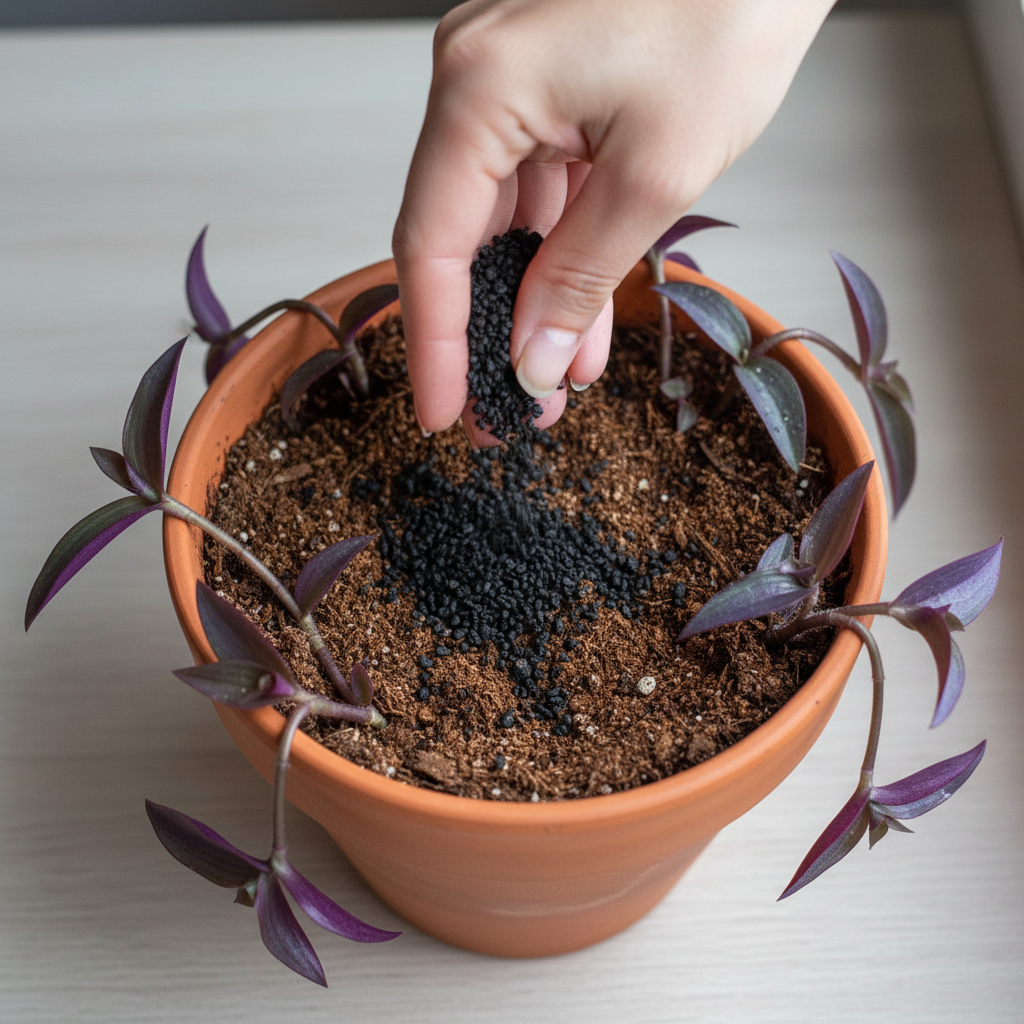
Slow-release granular: Coated prills that release nutrients gradually over 3 to 6 months. A single light application in spring covers the entire active growing season and removes the need to remember a feeding schedule. Apply at half the recommended rate, since purple heart grows in a smaller pot than the typical garden plant the label assumes.
Organic fertilisers: Worm castings, diluted seaweed extract, or fish emulsion all work well. They release nutrients more slowly than synthetic fertilisers and build healthier soil biology over time. A 1 cm (0.5 inch) top-dressing of fresh worm castings in spring and again in midsummer often replaces all other feeding entirely.
Feeding Schedule
From early spring to early autumn, when daylight is long and the plant is actively growing, apply a half-strength balanced liquid feed once every 4 to 6 weeks. Skip feeding entirely from October to February in temperate climates, when the plant slows and any extra nutrients will simply accumulate as salts in the soil. Resume gradually in March as the days lengthen and you notice new growth at the stem tips.
Pro Tip — Half Strength, Twice as Often: If you prefer a more regular rhythm, dilute to quarter strength and feed with every second watering during the growing season. The plant takes up nutrients more efficiently in small doses than in occasional large ones, and the risk of fertiliser burn drops to almost zero.
How to Fertilise
- Water the plant first with plain water to moisten the root ball; fertiliser applied to bone-dry soil is far more likely to burn the roots.
- Mix the fertiliser with water at the recommended dilution, or weaker, in a clean watering can or jug.
- Pour the solution evenly over the soil surface until a small amount begins to drain from the bottom of the pot.
- Discard any excess that collects in the saucer rather than letting the plant sit in it.
- Note the date so you can keep a sensible interval between feeds; over-fertilising is one of the most common causes of leaf-tip browning in purple heart.
Warning — Salt Build-Up: If you see crusty white deposits on the soil surface or around the rim of the pot, salts have accumulated to harmful levels. Flush the pot once every 6 months by running plain lukewarm water through the soil for several minutes, letting it drain fully, and then resuming normal care. This single step prevents most chronic leaf-tip browning.
Propagation
Purple heart is one of the easiest houseplants in the world to propagate. Almost any piece of stem with a node will root within a week or two given water and warmth, and the resulting plants are genetically identical to the parent. This generosity is why purple heart is so often passed between friends and family rather than bought, and why a single small grocery-store pot can become a hanging basket, two windowsill displays and three gift jars within a single season.
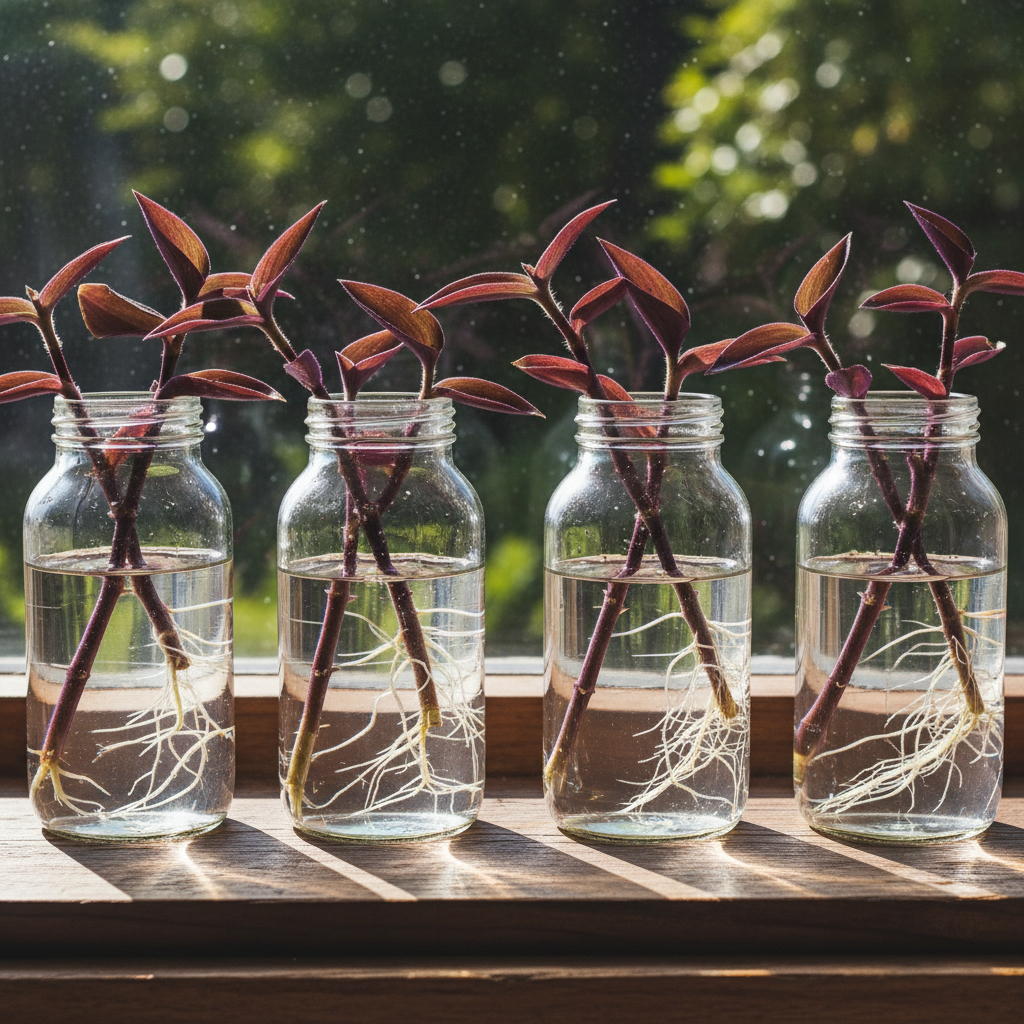
The two methods that work reliably are water propagation, where cuttings are rooted in a jar of water before being potted on, and direct soil propagation, where cuttings are pushed straight into damp potting mix to root in place. Water rooting is more visually rewarding and lets you watch the white roots emerge, while soil propagation produces stronger root systems that adapt faster when the new plant settles into its permanent pot.
Understanding the Node
The single most important concept in cutting-based propagation is the node. A node is the slightly thickened point on a stem where leaves emerge and where new roots are produced. On a purple heart stem the nodes are easy to spot as small swellings every 2 to 4 cm (about an inch) along the length. Every cutting you take must include at least one node, and ideally two, with the lower node positioned in water or soil and the upper node bearing leaves above. A piece of stem cut between nodes will not root; it will simply rot.
Water Propagation: Step-by-Step
Water propagation is the more popular method because it is visual, almost foolproof, and works year-round as long as the room is warm enough.
- Choose a healthy stem with several leaves and at least three or four nodes along its length.
- Cut just below a node with clean sharp scissors or pruners, taking a piece 8 to 15 cm (3 to 6 inches) long.
- Strip the leaves from the bottom node or two, leaving 2 or 3 leaves at the top of the cutting. This prevents leaves from rotting underwater.
- Place the cutting in a clear glass jar of room-temperature water with the lower nodes submerged and the leaves clear of the surface.
- Set the jar in a warm spot with bright indirect light. Avoid direct hot sun, which can cook the cutting through the glass.
- Change the water every 5 to 7 days to keep it fresh and prevent algae build-up.
- Roots should appear within 7 to 14 days. When the new roots are 3 to 5 cm (1 to 2 inches) long, the cutting is ready to pot up into a small container of free-draining mix.
- Water the newly potted cutting and keep the soil consistently moist for the first two weeks while the water roots adapt to soil.
Pro Tip — Multiples in One Pot: Pot up five or six rooted cuttings together in a single pot rather than potting each one separately. The resulting plant looks full and finished from day one, rather than spending six months filling out from a single thin stem.
Soil Propagation: Step-by-Step
Soil propagation is even simpler, especially when you want to bulk out an existing plant or thicken a hanging basket without ever using a jar.
- Prepare a small pot of damp (not wet) free-draining potting mix.
- Take cuttings exactly as for water propagation, 8 to 15 cm long with the lower leaves stripped.
- Optionally dip the cut end in rooting hormone powder; this is unnecessary for purple heart but speeds rooting slightly.
- Use a pencil or chopstick to make a hole in the soil, push the cutting in so that one or two nodes are buried, and gently firm the soil around it.
- Place the pot in bright indirect light and keep the soil lightly moist but never soggy for the first two weeks.
- A gentle tug after 3 to 4 weeks will tell you if roots have formed; resistance means success.
Troubleshooting Propagation
| Problem | Likely Cause | Solution |
|---|---|---|
| Stem rots in water before rooting | Leaves left below water line; water too warm or stagnant | Strip all leaves below the water; change water weekly; move to a cooler bright spot |
| Cutting wilts in water | Too few or too thin nodes; cutting taken from very old woody stem | Take a longer cutting from younger growth with thicker stems |
| Soil cutting collapses | Soil kept too wet, or cutting placed in low light | Reduce watering, move to brighter light, take fresh cuttings if needed |
| Slow or no root development | Cool ambient temperature (below 18 degrees C / 65 degrees F) | Move to a warmer location or use a small heated propagation mat |
Pests and Diseases
Purple heart is a robust houseplant with relatively few serious pest problems, partly because the slightly waxy leaf surface deters many sucking insects and partly because the plant’s vigorous growth typically outpaces minor damage. When problems do appear they are almost always the familiar indoor cast of spider mites, mealybugs, aphids and fungus gnats, and they nearly always show up because something else in the environment is suboptimal: dry stagnant air, an under-lit windowless corner, or persistently wet soil.
The first line of defence is observation. A weekly look at the underside of a few leaves and the soil surface, taking thirty seconds, catches almost every infestation while it is still small enough to treat with a damp cloth and an isolation period rather than a chemical spray. The plant’s vigorous growth means cuttings can replace damaged stems quickly, so even a serious infestation rarely results in the loss of a plant entirely.
Common Pests
Spider Mites (Tetranychus urticae)
Spider mites are tiny arachnids, about half a millimetre long, that congregate on the undersides of leaves and pierce the cells to feed on sap. They thrive in hot, dry indoor environments and are usually noticed first as a fine pale stippling on the upper leaf surface and very thin webbing in the leaf axils. On purple heart the stippling shows up as small bleached dots against the violet, often most visible on the older lower leaves.
Treatment: Rinse the foliage thoroughly in the shower or sink to physically dislodge the mites, then treat with insecticidal soap or a diluted neem oil spray (5 ml per litre of water plus a drop of mild liquid soap as an emulsifier). Repeat every 5 to 7 days for three treatments to break the egg cycle. Raising humidity around the plant by grouping it with others or running a small humidifier nearby makes the environment less attractive to mites.
Mealybugs (Pseudococcus spp.)
Mealybugs are soft-bodied scale insects that hide in leaf axils, along stems and in the crowns of the plant. They look like small tufts of white cotton wool, and excrete a sticky honeydew that attracts sooty mould. Purple heart’s fleshy stems with their many leaf joints offer good hiding spots, so check carefully around every node.
Treatment: Dab each visible bug with a cotton bud dipped in 70 percent isopropyl alcohol, which dissolves the protective waxy coating and kills the insect on contact. For larger infestations, spray the entire plant with insecticidal soap or diluted neem oil and repeat weekly until no new bugs appear for two consecutive weeks. Isolate the plant from neighbours during treatment to prevent spread.
Aphids (Aphidoidea spp.)
Aphids occasionally colonise the soft new growth at the tips of purple heart stems, especially on plants that summer outdoors. They cluster on the youngest shoots and flower buds, causing distortion and stunting. Most aphid species on houseplants are pale green or black, both of which contrast clearly with the violet foliage and are easy to spot.
Treatment: Knock them off with a strong jet of water from the shower or kitchen tap; this alone is often enough on a vigorous plant. For persistent infestations, follow up with insecticidal soap or diluted neem oil. Trimming back badly affected stem tips and propagating from cleaner sections lower down the plant is often faster than treating heavily infested growth.
Fungus Gnats (Bradysia spp.)
Fungus gnats are small black flies whose larvae live in the top layer of damp potting mix, feeding on organic matter and occasionally on tender roots. The adults are a nuisance rather than a serious threat, but heavy larval populations can weaken seedlings and freshly potted cuttings.
Treatment: Let the top 2 to 3 cm of soil dry out completely between waterings, which kills the larvae and breaks the breeding cycle. Yellow sticky traps catch the adults; a layer of horticultural grit or sand on the soil surface prevents new eggs being laid. For persistent problems, drench the soil with a Bacillus thuringiensis israelensis (BTI) solution, which targets the larvae without harming the plant or beneficial insects.
Common Diseases
Root Rot (Pythium and Phytophthora spp.)
Root rot is by far the most serious disease affecting purple heart, and almost always traces back to overwatering or to a heavy soil mix that stays saturated between waterings. The fungal-like organisms responsible thrive in low-oxygen waterlogged conditions and attack roots from the tips inward, eventually killing the plant from the bottom up.
Treatment: Once detected, act immediately. Lift the plant out of its pot, wash off all the old soil under running water, and inspect the roots. Healthy roots are white or pale tan and firm; rotten roots are brown or black, mushy and may slip off in your fingers. Trim away every rotten root with sterilised scissors, repot into fresh free-draining mix in a clean pot, and reduce watering frequency dramatically while recovery is underway. If more than half the roots are gone, take stem cuttings from the healthy top of the plant and start over.
Botrytis Grey Mould (Botrytis cinerea)
Botrytis is an opportunistic fungus that takes hold on damaged or senescing tissue in cool damp conditions, producing a characteristic fuzzy grey mould on affected leaves and stems. On purple heart it most often appears on stems and leaves that have stayed wet overnight, or on plants kept too close together in still humid air.
Treatment: Remove and discard all affected tissue with sterilised scissors, going well into healthy growth below the visible mould. Improve air circulation by spacing the plant away from its neighbours and, if necessary, running a small fan in the room. Avoid misting and water at the soil surface only. A copper-based fungicidal spray can be used as a last resort but is rarely necessary if the underlying conditions are corrected.
Pest and Disease Summary
| Pest / Disease | Identification | Treatment |
|---|---|---|
| Spider mites | Fine pale stippling, thin webbing in leaf axils | Shower, neem or insecticidal soap weekly for 3 treatments |
| Mealybugs | White cotton-wool tufts in nodes and stem joints | Cotton bud with 70 percent alcohol; spray with soap for larger infestations |
| Aphids | Clusters of small pale or black insects on new growth | Strong water jet; follow up with neem oil if needed |
| Fungus gnats | Small flies around the soil; larvae in damp top layer | Let topsoil dry, use yellow traps, BTI drench for severe cases |
| Root rot | Mushy black roots, yellowing lower leaves, soft stem base | Repot into fresh dry mix; trim rotten roots; reduce watering |
| Botrytis grey mould | Fuzzy grey patches on stems or leaves in cool damp conditions | Remove affected tissue, improve airflow, stop misting |
Prevention Strategies
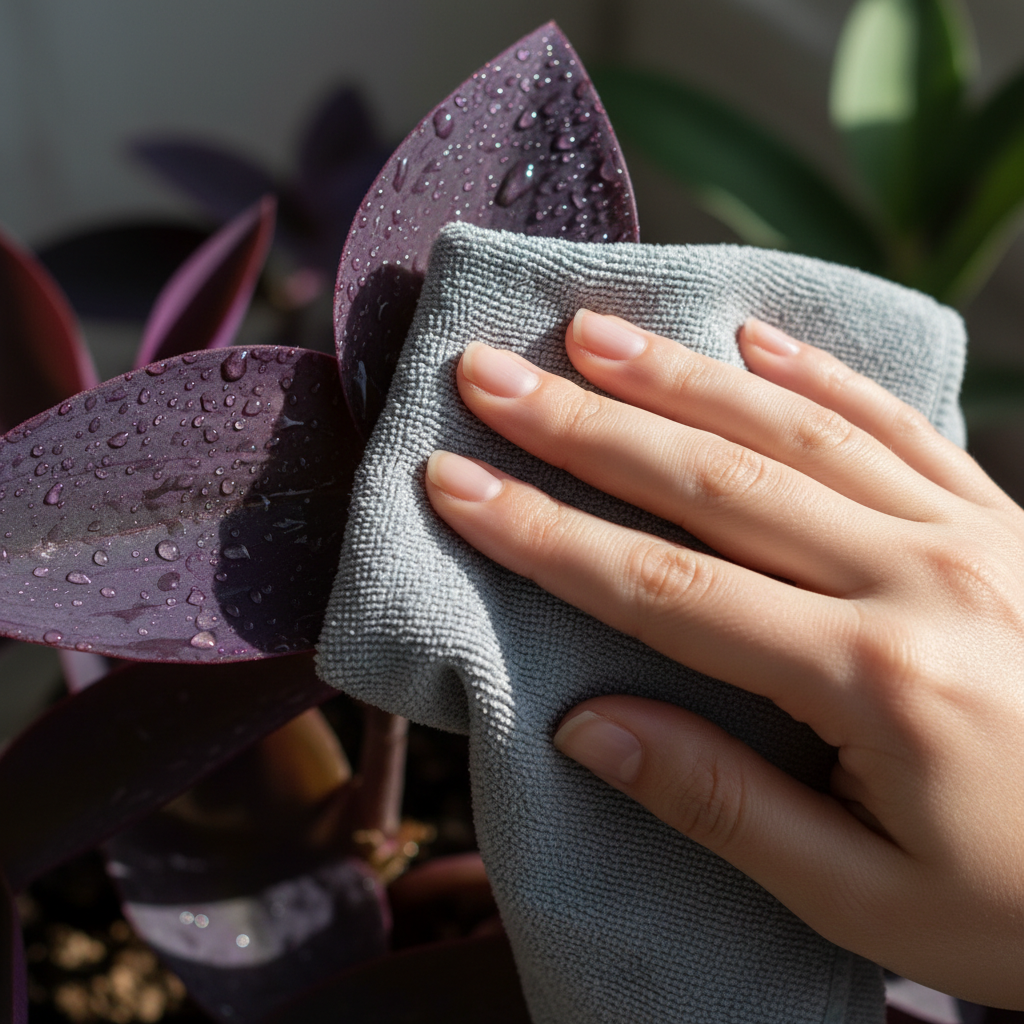
The most effective prevention is a healthy plant in a stable environment. Adequate light, restrained watering, free-draining soil and a regular gentle wipe of the foliage with a damp cloth keep nearly all pests below the threshold of visible damage. New plants brought into the home should be inspected carefully and ideally quarantined for two to three weeks before being placed near established plants.
Air circulation matters more than humidity. A still corner of a room with overlapping plant foliage is an ideal environment for both fungal disease and crawling pests; the same plant in a slightly more open spot with gentle air movement will rarely have problems. Where space is limited, a small clip-on fan running on low for a few hours a day makes a noticeable difference.
Pro Tip — Quarantine New Arrivals: A two-week isolation period for any new houseplant, away from the rest of your collection, prevents the single most common cause of pest outbreaks: bringing them home from a nursery. Inspect carefully, water normally, and only integrate the new plant once you are confident it is clean.
Popular Varieties
Most plants sold as “purple heart” or “purple queen” in garden centres are the species Tradescantia pallida in its classic deep-violet form, but plant breeders have selected a handful of cultivars that differ in leaf colour, habit and flower display. The named cultivars are usually slightly more compact and a touch more refined than the species, although the wild type remains the most vigorous and the easiest to find.
It is also worth noting the close relatives within the wider Tradescantia genus that are often sold alongside T. pallida and confused with it. Tradescantia zebrina has striped silver-and-purple leaves, T. fluminensis is mostly green with white variegation, and T. spathacea (“Moses-in-the-cradle”) has stiff upright rosettes rather than trailing stems. None of these is a true variety of purple heart, but all share its easygoing care and willingness to root from cuttings.
| Variety | Leaf Appearance | Light Needs | Growth Rate | Availability |
|---|---|---|---|---|
| T. pallida ‘Purpurea’ | Deep aubergine-purple, narrow lance-shaped | Bright indirect to direct sun | Fast | Very common |
| T. pallida ‘Pale Puma’ | Dusty violet to pewter, with strong silver sheen | Bright indirect | Moderate | Specialist nurseries |
| T. pallida ‘Kartuz Giant’ | Larger leaves, deeper purple, more upright habit | Bright indirect to direct sun | Fast | Specialist nurseries |
| T. pallida ‘Variegata’ | Purple with pink and cream variegation | Bright indirect | Moderate | Rare; collector item |
| T. pallida ‘Pink Stripes’ | Bright pink stripes overlaying violet base | Bright indirect to direct sun | Moderate | Increasingly available |
| T. pallida ‘Edna’s Gold’ | Chartreuse-gold new growth maturing to muted purple | Bright indirect | Moderate | Rare |
Featured Varieties
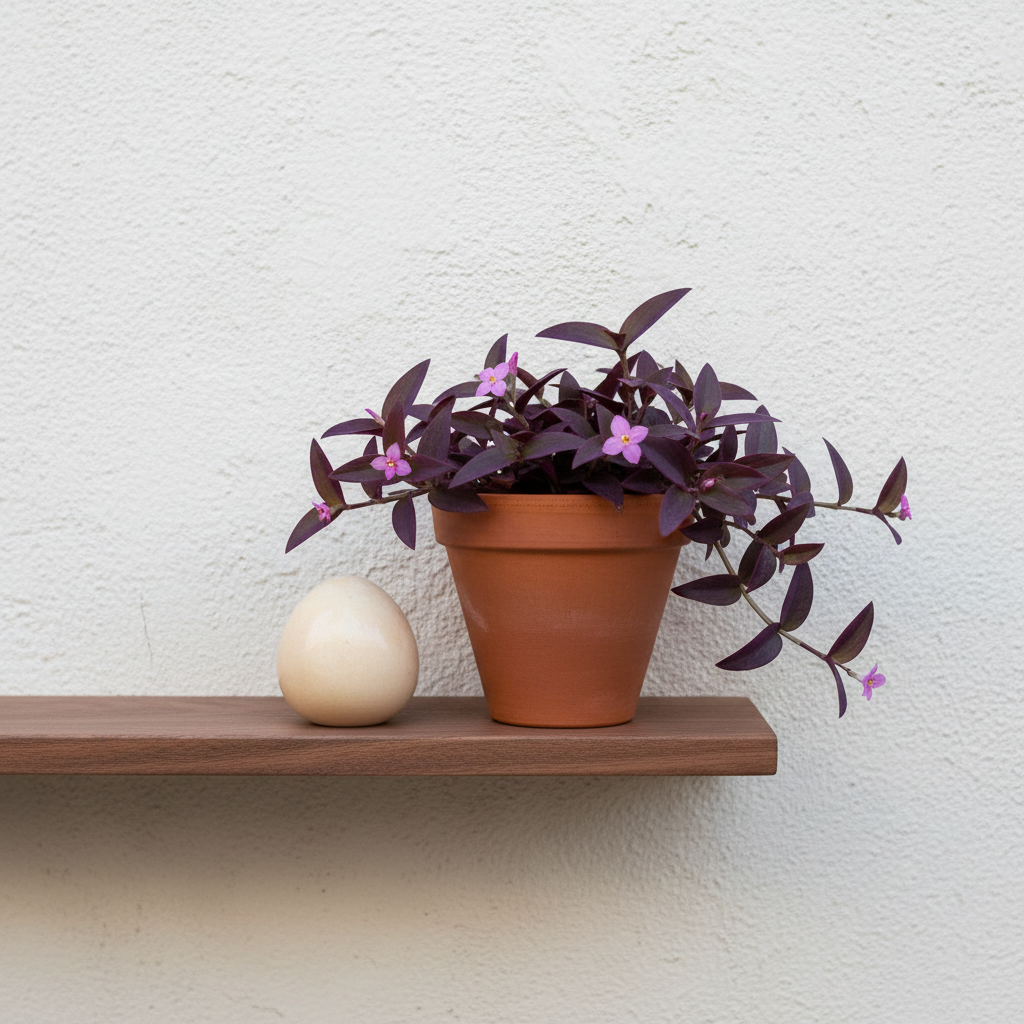
‘Purpurea’
The classic and most widely grown form, sold simply as “purple heart” in most garden centres. Long arching stems clothed in narrow lance-shaped leaves of saturated aubergine-purple, with small three-petalled pink flowers appearing at the stem tips through summer in bright conditions. The benchmark by which all other cultivars are judged.
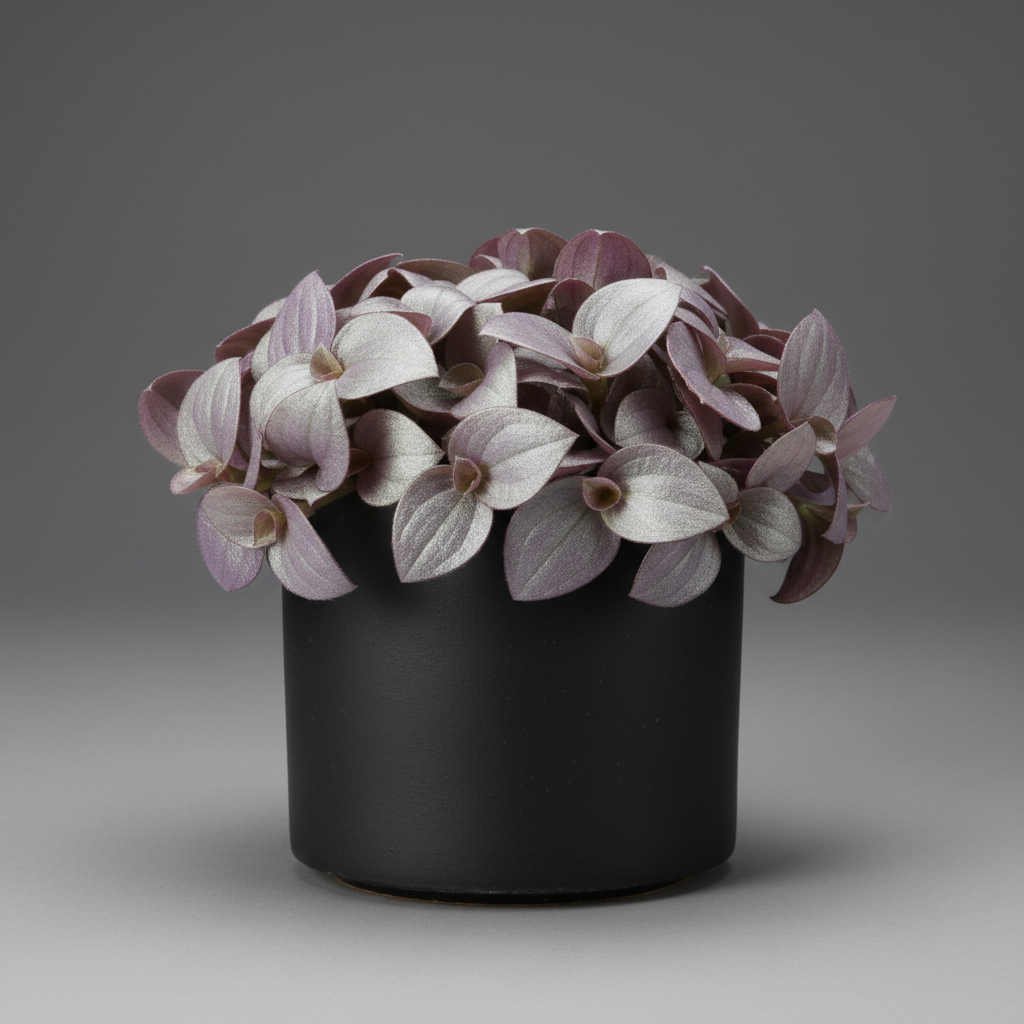
‘Pale Puma’
A more compact, refined cultivar with shorter broader leaves in a softer dusty-violet to pewter tone. The fine silvery hairs along the leaf margins are unusually prominent, giving the whole plant a faintly metallic sheen that catches the light. Slower-growing and less floppy than ‘Purpurea’, making it well suited to small pots and shelf displays.
Variety Profiles in Detail
‘Purpurea’ (Tradescantia pallida ‘Purpurea’)
‘Purpurea’ is the original cultivated form of Tradescantia pallida, selected for its uniformly intense violet colouring across the entire plant. Mature stems trail to 60 cm (24 inches) or more in a hanging basket, and the plant can be cut back hard at any time without harm. In a sunny windowsill it produces clusters of three-petalled flowers in shades of pale pink to magenta, each lasting only a day but appearing in succession over several weeks in midsummer. This is the variety most often passed between gardeners and the one almost guaranteed to be available at any major garden centre.
‘Pale Puma’ (Tradescantia pallida ‘Pale Puma’)
‘Pale Puma’ is a more recent introduction prized for its restrained colour palette. The leaves are about a third shorter than those of ‘Purpurea’ and noticeably broader, in a muted dusty-violet tone overlaid with a pronounced silvery bloom. The overall effect is closer to a stained-pewter than a true purple, which makes it an excellent choice where the saturated tone of the classic form would clash with surrounding decor. Less vigorous than ‘Purpurea’, it benefits from slightly more attentive watering and feeding to stay full and bushy.
‘Kartuz Giant’ (Tradescantia pallida ‘Kartuz Giant’)
An upscale selection with notably larger leaves than the species (up to 12 cm / 4.7 inches long) and a more upright stance, eventually producing self-supporting clumps rather than long trailing stems. The colour is at least as deep as the classic ‘Purpurea’ and often a touch more glossy. A good choice when you want the purple-heart look at a larger scale, particularly in a tall floor planter or as a centrepiece in a mixed container display.
‘Pink Stripes’ (Tradescantia pallida ‘Pink Stripes’)
A striking variegated selection in which the violet leaf base is overlaid with bright pink longitudinal stripes that run the length of each leaf. The pink colouring intensifies in bright light and softens in lower conditions, giving the plant a different look depending on placement. Slightly slower-growing than the plain form and worth treating with a touch more care, but otherwise identical in cultivation requirements.
Choosing the Right Variety for Your Space
For most growers the classic ‘Purpurea’ remains the right choice: it is widely available, the cheapest of all forms, and offers the most saturated and reliable colour. Choose ‘Pale Puma’ if you want a softer palette or are working in a small space where the slower habit is an advantage. ‘Pink Stripes’ suits collectors looking for something more unusual on a shelf, and ‘Kartuz Giant’ is the variety to seek if you need a substantial floor-level display rather than a trailing pot. In all cases the care requirements are essentially identical, so feel free to choose on aesthetics alone.
Frequently Asked Questions
Why is my purple heart turning green?
Loss of purple colour is almost always a light problem. The plant produces its violet anthocyanin pigment in response to bright light, and reverts to a washed-out green when light levels fall below what it needs. Move the plant closer to a window, ideally one that offers at least a few hours of direct sun, and the new growth will return to its proper colour within a few weeks. Older leaves that have already faded will not redarken; trim them off once new coloured growth has come in.
Why is my purple heart leggy?
Long stretches of bare stem between leaves, with leaves clustered only at the tips, indicate insufficient light. The plant is stretching toward whatever light it can find. Move it to brighter conditions and prune the leggy stems back to within a few centimetres of the soil; the cut stems will quickly produce branching new growth that fills out the pot. The trimmed pieces, of course, can be rooted in water for new plants.
Is purple heart safe around cats and dogs?
Not entirely. The sap contains calcium oxalate crystals and other irritant compounds that can cause skin reactions in sensitive people and digestive upset in pets if the leaves are chewed. The plant is not deadly, but it is unpleasant enough that cats and dogs typically lose interest after the first taste. If you have curious pets, place the plant out of reach on a shelf or in a hanging basket rather than at floor level.
How often should I prune?
Prune whenever the plant looks leggy or starts to lose its shape. There is no season-specific best time; purple heart responds vigorously to pruning at any point in the active growing season. A more aggressive cut once a year in spring, taking the stems back to within 5 to 10 cm (2 to 4 inches) of the soil, produces the bushiest and most attractive regrowth. Use the trimmings to root new plants or to bulk out the parent pot.
Can I grow purple heart outdoors?
Yes, in mild climates. Tradescantia pallida is hardy to about 7 degrees C (45 degrees F) and will live as a perennial groundcover in USDA zones 8 to 11. In colder regions it makes an excellent summer container plant for patios and balconies, where it relishes the brighter outdoor light and produces its richest colour. Bring it inside before the first autumn frost; an unexpected cold night below freezing will turn the stems black and end the plant for the year.
Why is my purple heart drooping?
A slight droop with otherwise healthy-looking leaves usually means the plant is thirsty. Water thoroughly and the stems will firm up within a few hours. A droop combined with yellowing or mushy leaves at the base, however, indicates overwatering and incipient root rot; in that case let the soil dry out completely, check the roots and reduce watering frequency going forward. Persistent drooping with no obvious cause may simply mean the plant is too large for its pot and needs repotting, or that several stems have grown too long and need cutting back.
Does purple heart bloom indoors?
Yes, given enough light. Small three-petalled flowers in shades from pale pink to bright magenta appear at the stem tips during summer, each lasting only a day but produced in succession over several weeks. Plants in dim conditions rarely bloom indoors; place the pot on a bright south or west-facing windowsill from May through September if flowering matters to you. The flowers are not the main attraction of the plant, but they add a charming seasonal accent to an already striking foliage display.
Can I grow purple heart in water permanently?
Yes, with caveats. Cuttings root quickly in water and can be kept growing in a glass vase for many months. For long-term water culture, change the water weekly, add a few drops of dilute hydroponic fertiliser monthly, and accept that the plant will grow more slowly than its potted equivalent. It will not flower in water and will eventually decline after a year or two compared with a soil-grown specimen, but for short-term display in a transparent vessel it works beautifully.
Why are the tips of the leaves turning brown?
Brown leaf tips on purple heart almost always indicate one of three things: salt build-up from over-fertilising, chronic underwatering between thorough soakings, or exposure to cold drafts from an air conditioner or open window. Flush the soil thoroughly to clear out accumulated salts, review your watering rhythm to make sure you are watering deeply rather than splashing the surface, and check the plant’s position for any unwelcome cold air movement. The browned tips will not recover but new growth should be clean.
How long does a purple heart live?
Individual stems live for several years before naturally giving way to younger growth, but the plant as a whole is effectively immortal because it propagates so easily from cuttings. Most growers refresh their plants every two to three years by taking cuttings and starting over in a fresh pot, which keeps the display dense and well-coloured. Treated this way, a purple heart you bought twenty years ago can still be in your home today, just regenerated through countless rooted cuttings.






