
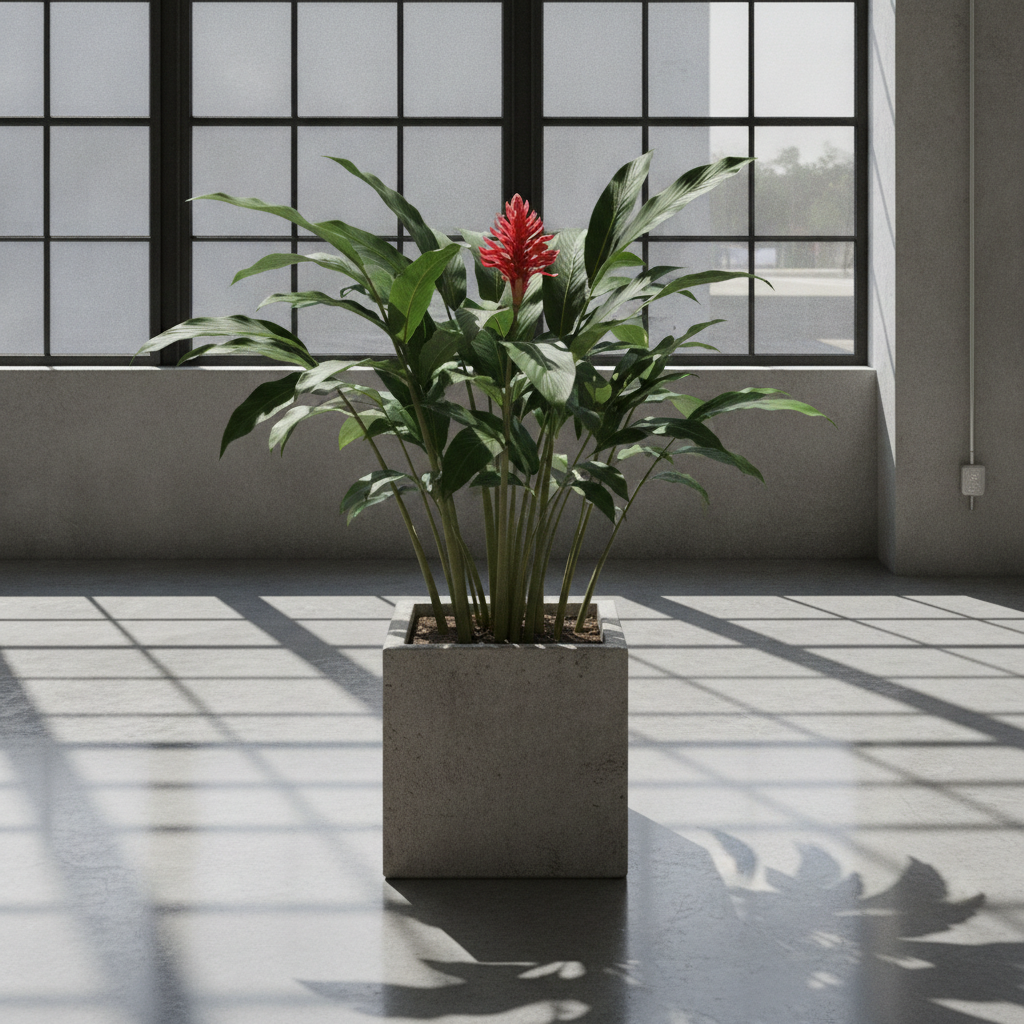
Few plants announce themselves with as much theatre as the torch ginger. Rising on a bare stalk straight from the ground, its flower head looks less like a bloom and more like a lit torch, a tight cone of glossy, waxy bracts in fire-engine scarlet or soft porcelain pink. Behind it stands a wall of tall, leafy stems that can turn a corner of a warm garden into something close to jungle. Etlingera elatior is grown across Southeast Asia both as an ornamental and as a kitchen staple, and while it asks for space, warmth and moisture in generous measure, growers who can meet those demands are rewarded with one of the most spectacular flowers in the plant world.
This guide covers everything you need to grow torch ginger well, whether in a tropical garden bed, a large conservatory pot or a warm sunroom. The running theme throughout is the gap between merely keeping the plant alive and actually coaxing it to thrive and flower, because with this species that gap is unusually wide.
On this page
- Quick reference
- Why grow torch ginger
- Light
- Watering
- Soil and potting
- Fertilising
- Propagation
- Pests and problems
- Varieties
- Frequently asked questions
Quick reference
| Common names | Torch ginger, ginger flower, red ginger lily, torch lily, bunga kantan, philippine wax flower |
| Botanical name | Etlingera elatior |
| Family | Zingiberaceae (the ginger family) |
| Origin | Tropical Southeast Asia (Indonesia, Malaysia, Thailand) |
| Light | Bright light with some direct sun; full sun to light shade outdoors |
| Water | High; keep the soil consistently moist, never dry |
| Humidity | High, ideally 60 per cent or above |
| Temperature | 20 to 30 degrees Celsius (68 to 86 Fahrenheit); protect from anything below 13 degrees Celsius (55 Fahrenheit) |
| Soil | Rich, fertile, moisture-retentive loam with plenty of organic matter |
| Fertiliser | Heavy feeder; feed regularly through the growing season |
| Mature size | Leafy stems 3 to 6 metres (10 to 20 feet) outdoors; smaller and rarely flowering in containers |
| Toxicity | Non-toxic; the flower buds are edible and widely used in cooking |
| Propagation | Rhizome division |
| Difficulty | Easy to keep leafy where it is warm; hard to flower outside the tropics |
Why grow torch ginger
Torch ginger belongs to the same botanical family as culinary ginger and turmeric, and like its relatives it grows from a spreading underground rhizome. What sets Etlingera elatior apart is scale and drama. In its native range it forms dense clumps of upright leafy pseudostems, the false stems built from tightly wrapped leaf sheaths that are so characteristic of the ginger family, and these can climb to the height of a two-storey building. The flower, however, is the reason gardeners fall for it. Rather than appearing among the foliage, it pushes up on a separate leafless stalk directly from the rhizome, opening into a torch-shaped head of thick, waxy bracts that feel almost artificial to the touch.

There is a practical side to the plant too. Across Malaysia, Singapore, Indonesia and Thailand the young flower buds, known in Malay as bunga kantan, are prized in the kitchen. Thinly sliced, they lend a bright, aromatic, faintly sour note to laksa, rojak, Nyonya curries and countless regional dishes. This dual identity as both showpiece and ingredient is part of what makes torch ginger so beloved where the climate suits it.
It is worth being honest about expectations from the outset. Torch ginger is a genuinely tropical plant that resents cold, dryness and cramped roots. Outdoors in a frost-free climate it is close to unstoppable. Grown in a container in a temperate region it will usually survive as a handsome foliage plant but flower only rarely, if at all, because it struggles to reach the size and root run it needs to bloom. If you approach it as a bold leafy specimen for a warm conservatory, with flowering as a welcome bonus rather than a guarantee, you are far less likely to be disappointed.
Pro Tip — Give it room to run: Torch ginger flowers best from an established clump with a large, undisturbed rhizome. Frequent repotting or dividing resets that clock. If your goal is flowers, plant it out in warm ground or into the largest container you can manage and then leave it alone.
Light
Light is one of the biggest levers on how well torch ginger performs. In the wild it grows in clearings, along stream banks and at the sunny margins of forests, so it is adapted to strong, bright conditions rather than deep shade. To simply survive, the plant will accept moderate light and will still put out leaves, but the foliage tends to be sparser and the stems more drawn and floppy. To thrive and stand any chance of flowering, it wants a great deal of light, including several hours of direct sun each day.
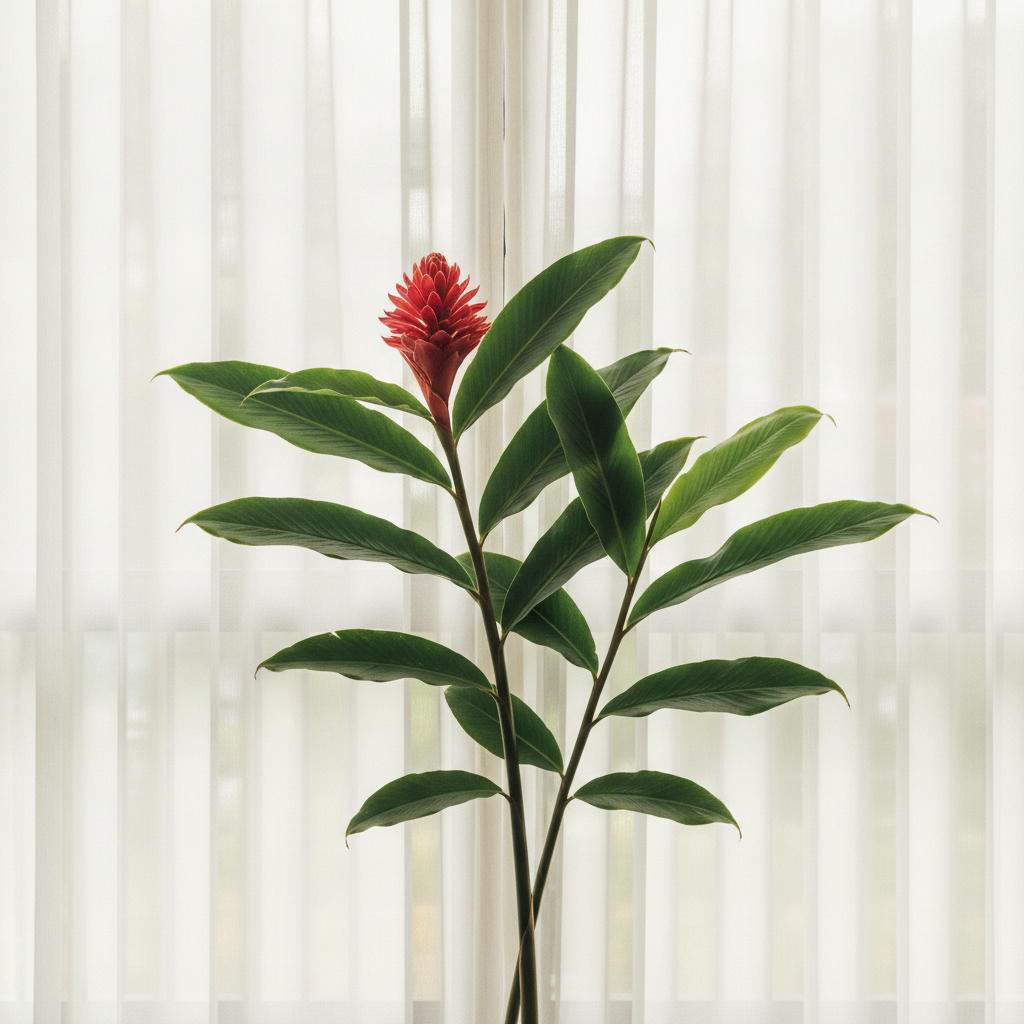
Outdoors in the tropics and subtropics, plant it in full sun to very light shade. In hotter, drier regions a little shade during the fiercest afternoon hours helps prevent leaf scorch and reduces water stress, but do not overdo it, as too much shade trades away the flowering you are hoping for. Indoors or under glass, place it directly in front of your brightest window, ideally one facing the sun for most of the day, and consider supplementing with a full-spectrum grow light through the darker months. A plant that is not getting enough light will tell you: growth slows, new leaves emerge smaller, and the whole clump leans toward the nearest source of brightness.
If you move a container-grown torch ginger outside for the summer, acclimatise it gradually. Two weeks of increasing exposure, starting in dappled shade and working up to full sun, prevents the foliage from bleaching or burning when it meets unfiltered sunlight for the first time in months.
Watering
If there is a single rule that governs torch ginger, it is this: keep it wet. This is a plant of humid, high-rainfall habitats, often growing where the soil is permanently damp, and it has almost no tolerance for drought. Where many houseplants punish overwatering, torch ginger punishes neglect. Allowing the rootball to dry out even once can cause leaf edges to brown, whole stems to collapse and, in a container, the plant to check its growth for weeks.
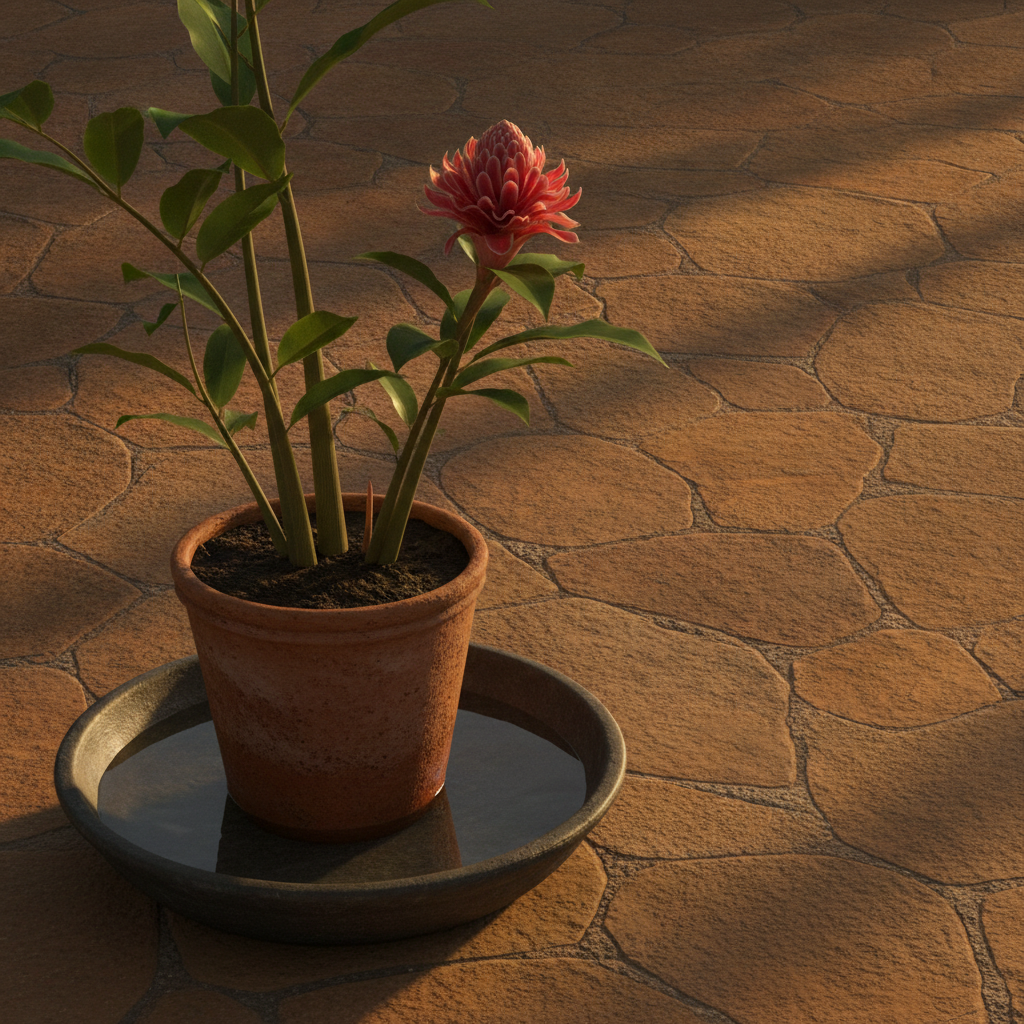
Aim to keep the soil consistently moist to the touch at all times during active growth. In warm, bright conditions a vigorous plant in a container may need watering daily, sometimes twice a day in high summer. Unlike a succulent or an aroid, torch ginger will happily sit in a saucer that holds a little water, and standing it in a shallow tray of water during the hottest weather is a legitimate technique rather than a mistake. That said, it does still prefer oxygen at the roots, so a permanently stagnant, airless bog is not ideal. The sweet spot is soil that is reliably damp and rich, in a pot that drains freely enough to refresh the water rather than letting it turn sour.
Growth slows in the cooler, darker months, and the plant’s thirst drops with it. Ease back on watering over winter so the soil stays just moist rather than saturated, because cold, wet, stagnant conditions are the one combination that can rot the rhizome. Think of it as a seasonal dial: generous and frequent through the warm growing season, restrained but never bone dry through the rest.
Warning — Never let it dry out: Torch ginger does not recover gracefully from drought. A single missed watering in hot weather can brown the foliage and set the plant back for weeks. If you travel often, set up a self-watering reservoir or ask someone to keep the soil damp while you are away.
Soil and potting
The ideal growing medium for torch ginger reflects the two things it wants most: moisture and fertility. Aim for a rich, loamy mix, heavy in organic matter, that holds water well without becoming a lifeless, compacted sludge. A blend based on good-quality potting compost, bulked up with well-rotted manure or garden compost and lightened with a little coir and coarse material, gives roots the combination of moisture, nutrients and air they respond to. This is one of the few tropical plants where you can lean toward water retention rather than sharp drainage.
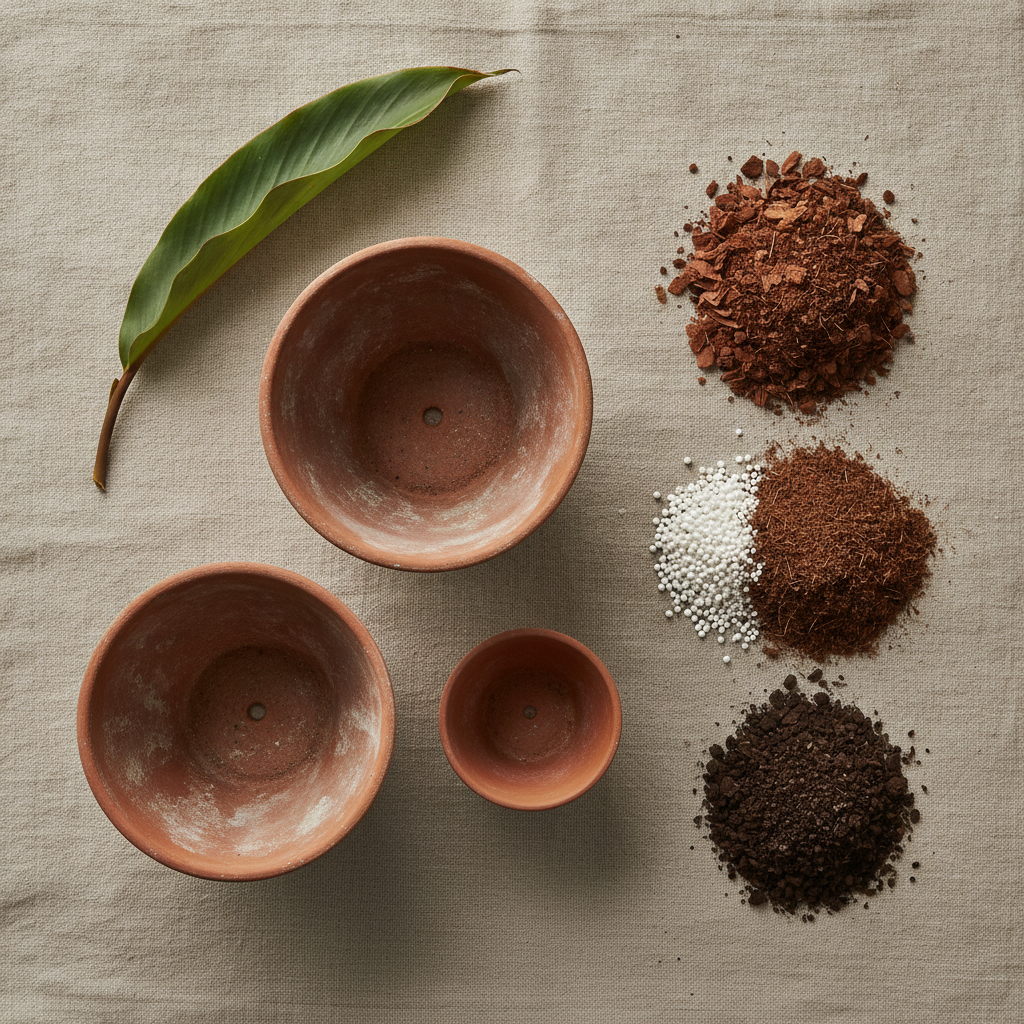
Container size matters enormously with this species. The rhizome spreads outward as the clump matures, and a pot that is too small physically limits how large and how floriferous the plant can become. Choose the biggest, deepest, sturdiest container you can accommodate, and favour a heavy material such as thick glazed ceramic or concrete, because a tall, leafy torch ginger in a light plastic pot is easily toppled. Make sure there are drainage holes so that excess water can escape, even though the plant likes to stay wet.
Repot or top up the compost each spring as growth resumes. If you are chasing flowers, resist the urge to move the plant into a fresh pot too often, since disturbing and dividing the rhizome sets back the mature clump that flowering depends on. Instead, refresh the top few centimetres of compost annually and only pot on when the roots have genuinely filled the container. When you do repot, do it at the start of the warm season so the plant can re-establish quickly.
Fertilising
Torch ginger is a hungry plant. The sheer volume of leaf and stem it produces in a season has to be paid for somehow, and in a container that means a steady supply of nutrients from you. A plant that is merely surviving will limp along on whatever the compost holds, but one that is thriving needs feeding in earnest throughout the growing period.
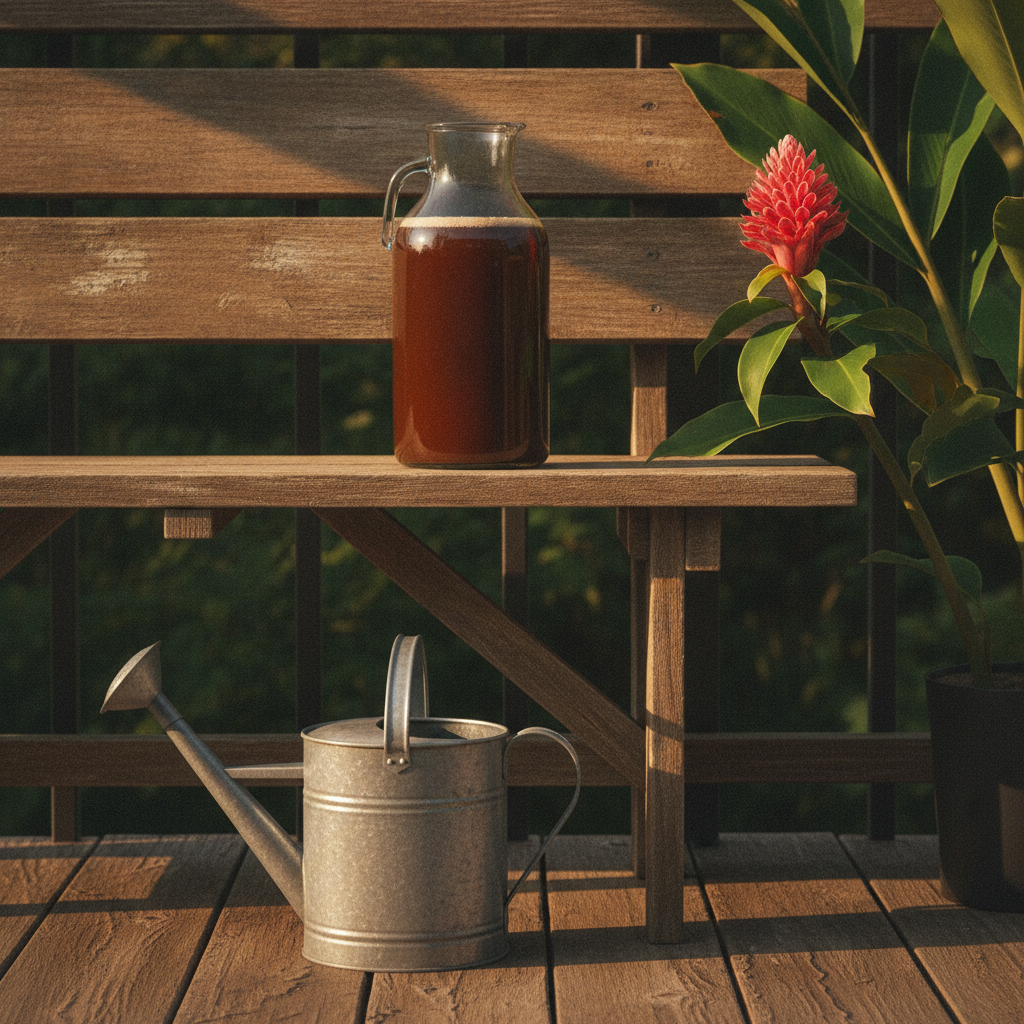
Through spring and summer, feed every two to four weeks with a balanced liquid fertiliser diluted to the strength recommended on the packet. As the plant matures and you begin hoping for flowers, shifting to a feed slightly higher in potassium, of the kind sold for tomatoes or flowering plants, can help support blooming. Torch ginger also responds well to rich organic inputs, so a mulch of well-rotted manure or compost around the base in the growing season, or a regular drench of dilute compost tea, keeps the heavy feeding going in a gentler, slow-release form. Taper feeding off as light levels fall in autumn and stop altogether over winter, when the plant is not growing actively and unused fertiliser salts can build up in the soil.
As with any heavy feeder grown in a pot, flush the soil thoroughly with plain water every couple of months during the feeding season. Letting water run freely through the container for a minute or two washes out accumulated mineral salts that would otherwise scorch the roots and brown the leaf tips.
Propagation
Torch ginger is propagated by division of its rhizome, the same underground stem from which the leafy shoots and flower stalks arise. This is the reliable, straightforward method and the one virtually every grower uses. Seed is possible where plants set fruit, but seedlings are slow and germination is erratic, so division is almost always the better route. The best time to divide is at the start of the warm growing season, when the plant has the energy and conditions to re-establish quickly.
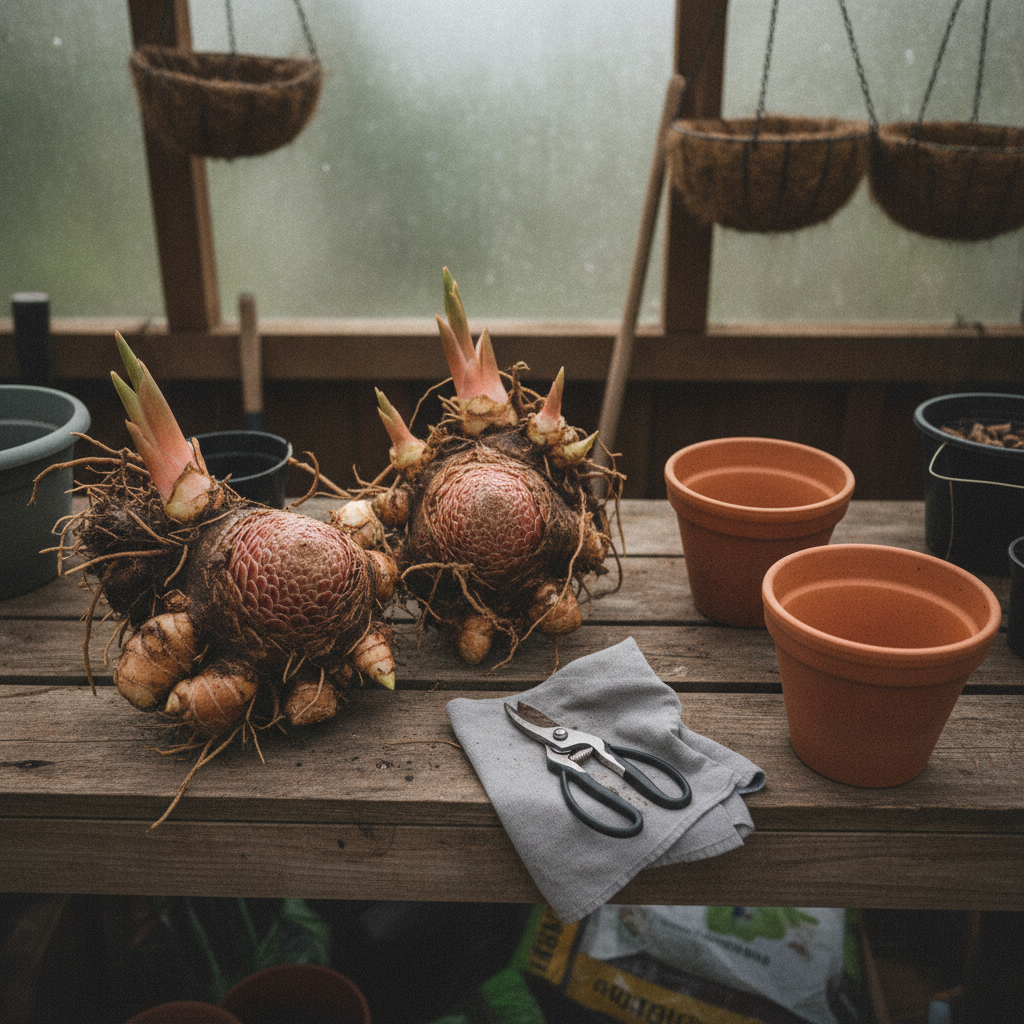
To divide an established clump, follow these steps:
- Water the plant a day beforehand so the roots and rhizome are well hydrated and less prone to stress.
- Lift the whole plant from its pot, or dig around an in-ground clump, and gently shake or wash away enough soil to see the rhizome and where the individual shoots join it.
- Using a clean, sharp knife or spade, cut the rhizome into sections, making sure each division carries at least one healthy leafy shoot and a good portion of roots. Larger divisions establish and flower far sooner than tiny ones.
- Dust the cut surfaces if you wish and let them dry for an hour or two to reduce the risk of rot.
- Pot each division into a large container of rich, moisture-retentive mix, or plant directly into warm ground, setting the rhizome at roughly the depth it sat before.
- Water in thoroughly and keep the new division warm, humid, brightly lit and consistently moist while it settles and pushes out fresh growth.
Be patient after dividing. A fresh division spends its first season rebuilding roots and foliage, and it will typically be a year or more before a divided plant is large enough to consider flowering. This is exactly why growers chasing blooms are reluctant to divide a mature clump more often than necessary.
Pests and problems
Grown in the warm, humid, bright conditions it enjoys, torch ginger is a robust plant that shrugs off most trouble. The problems that do arise are usually a direct consequence of conditions drifting away from that ideal, and reading them as feedback is the quickest way to keep the plant healthy.
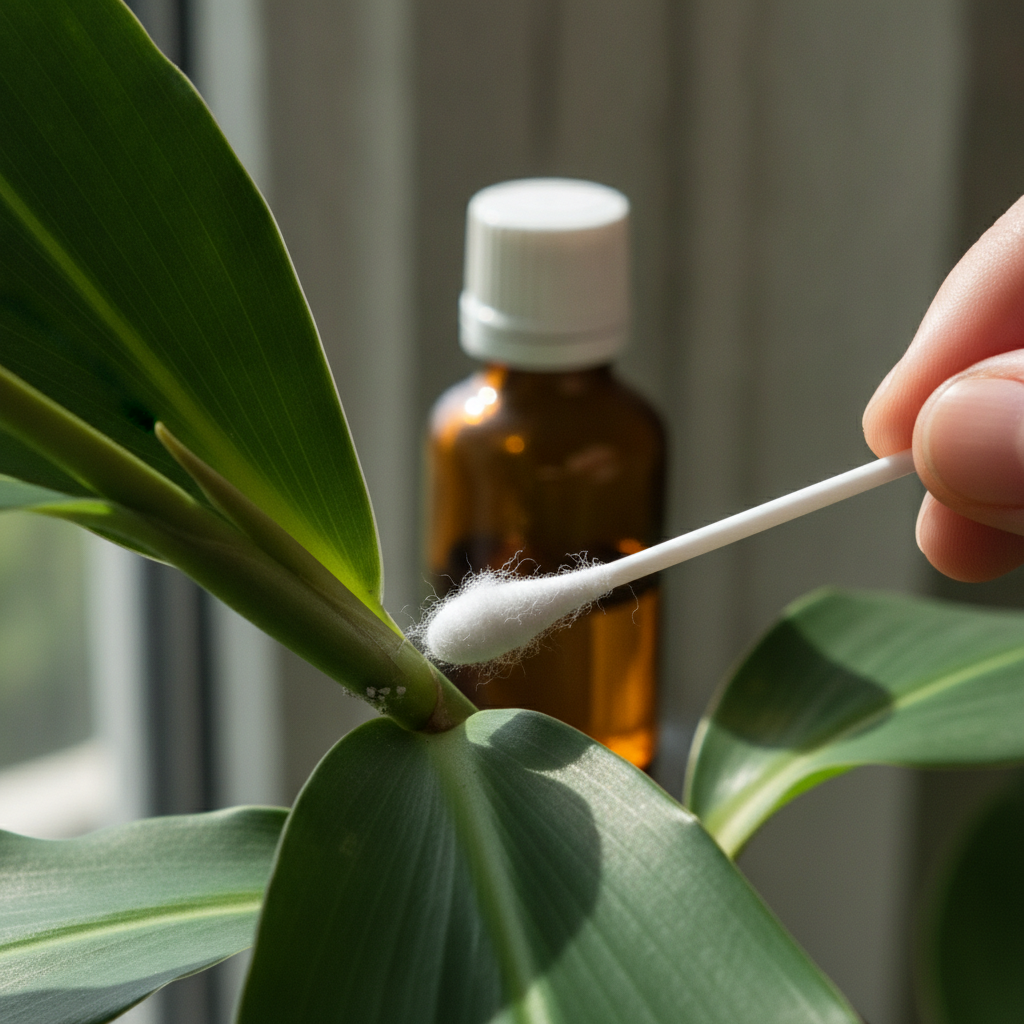
Under glass or indoors, where humidity is often lower than the plant would like, the usual sap-sucking pests can appear. Spider mites are the most common and thrive in dry air, showing up as fine stippling on the leaves and delicate webbing between them; raising humidity and rinsing the foliage discourages them. Mealybugs may cluster in the leaf axils as small white cottony spots, and can be dabbed away with a cotton bud dipped in diluted isopropyl alcohol or treated with an insecticidal soap. Aphids and scale occasionally turn up too and respond to the same gentle, persistent treatment. Inspect the undersides of leaves regularly, because early intervention is far easier than tackling an established infestation.
Cultural problems tell their own story. Brown, crispy leaf edges almost always mean the plant has been too dry, too exposed to hot sun without enough water, or scorched by a build-up of fertiliser salts. Yellowing lower leaves in a container often point to underfeeding in such a hungry plant, or to waterlogged, airless soil in cold conditions. A plant that refuses to flower is usually simply too young, too small, too cool or too short of light rather than diseased. The most serious risk is rhizome rot, which comes from cold and stagnant wet soil in combination, so the winter regime of easing back on water while keeping the plant warm is your best insurance against it.
Pro Tip — Read the leaves: Crispy brown edges mean too dry or too much sun and salt; soft yellowing lower leaves mean hungry roots or cold, sodden soil. Torch ginger rarely gets sick without a reason, so treat symptoms as a prompt to adjust water, feeding, warmth or light.
Varieties
Torch ginger is grown in a handful of colour forms, distinguished mostly by the shade and shape of the bracts that make up the torch. The two most widely grown are the classic red and the softer pink, both sharing the same tall, leafy habit and the same cultural needs.
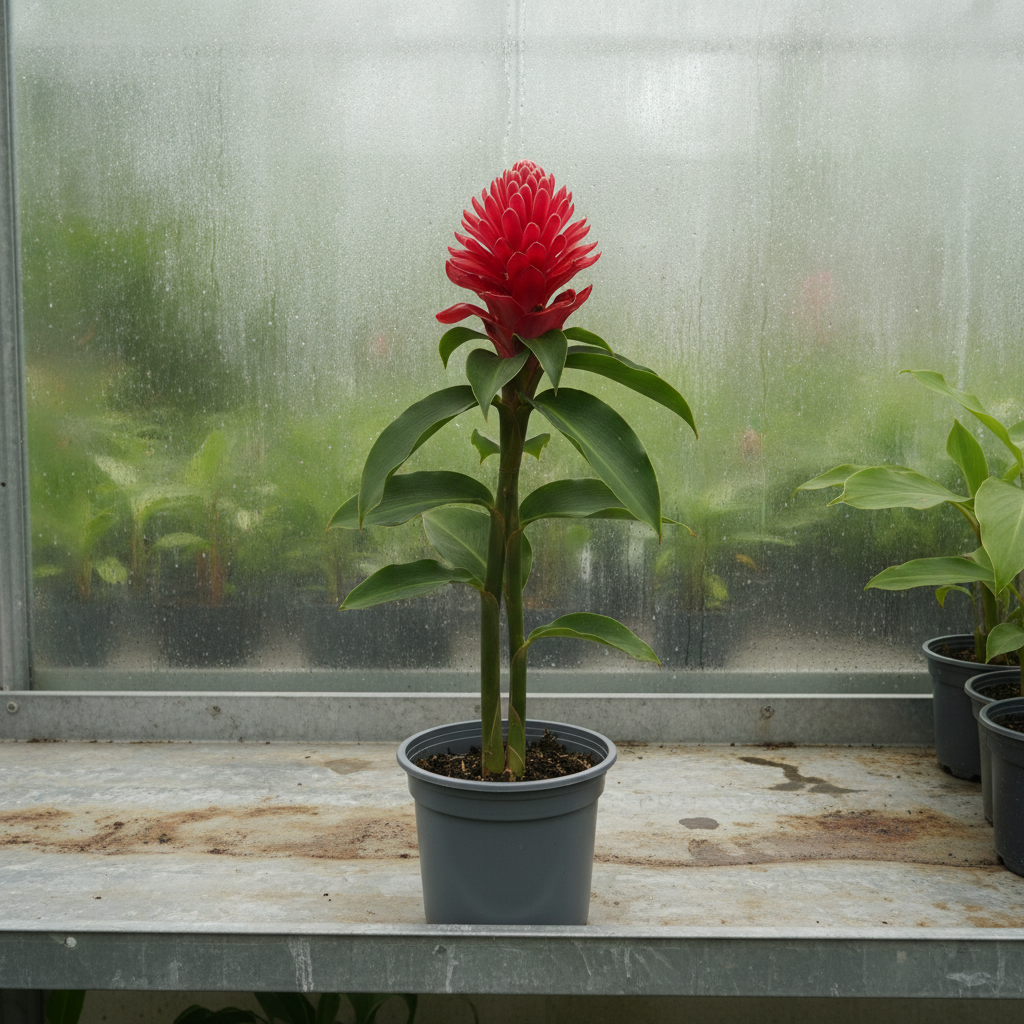
Red Torch Ginger. The best-known form and the one most people picture, carrying a bold torch of glossy, waxy crimson-red bracts in a tight cone atop a long bare stalk. It is the classic ornamental across Southeast Asia and the form whose buds are most often used in the kitchen.
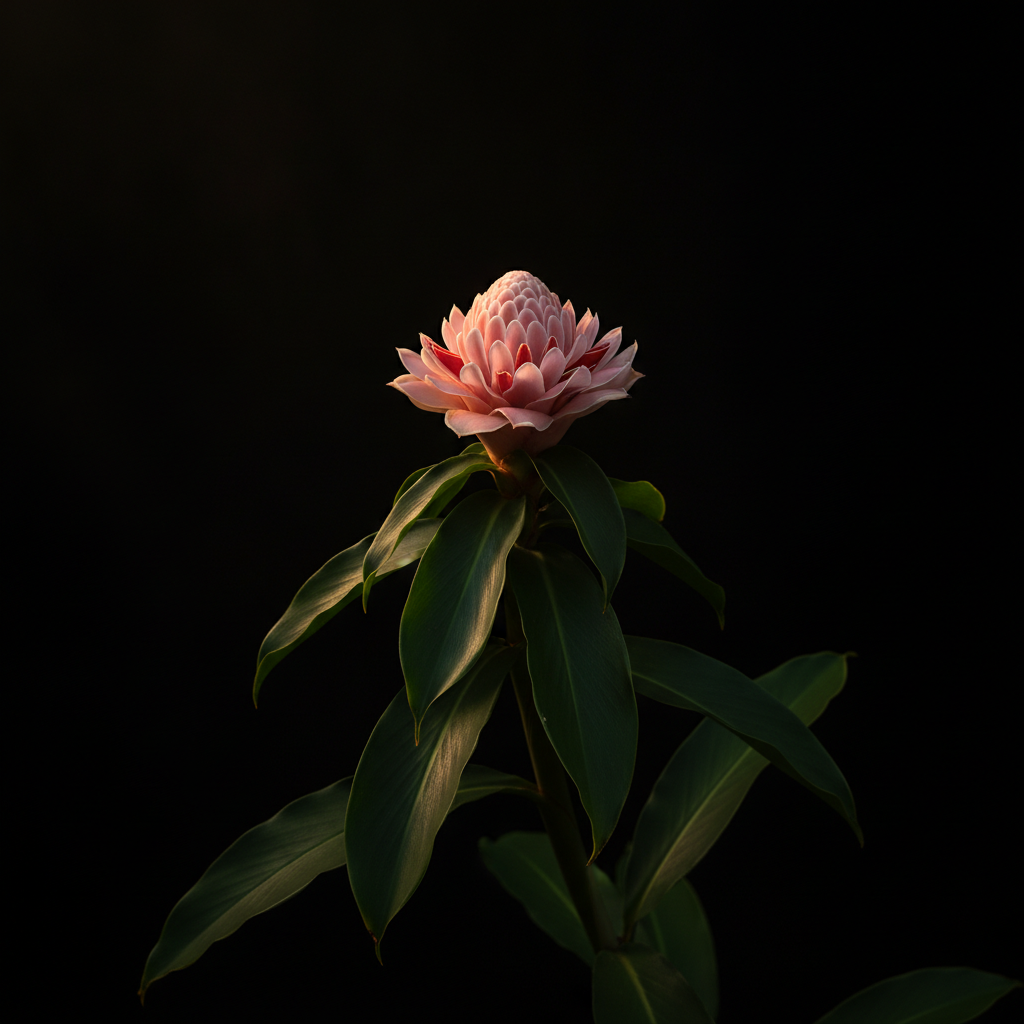
Pink Torch Ginger. A softer, more delicate form, sometimes sold as the porcelain torch ginger, with pale rosy-pink waxy bracts that open in a rounded, whorled head. It has the same stature and demands as the red but a gentler, more romantic presence.
Beyond these you may occasionally encounter deeper wine-red selections and other subtle colour variations offered by specialist tropical nurseries. Whichever form you grow, the care is identical, so choose on the strength of the flower colour you find most appealing.
Frequently asked questions
Why won’t my torch ginger flower?
The most common reasons are that the plant is too young, too small or grown in conditions that are too cool and too dim. Torch ginger flowers from mature, established clumps with a large rhizome and plenty of warmth, moisture and light. In a container in a temperate climate it may never reach the size it needs, which is why growers outside the tropics often keep it as a foliage plant and treat any flower as a bonus. Giving it maximum light, generous feeding, constant moisture and, above all, time and room to build a large clump gives you the best chance.
Is torch ginger safe for pets and people?
Yes. Torch ginger is non-toxic, and its flower buds are in fact a well-loved culinary ingredient across Southeast Asia. The real hazard is not toxicity but size, since a mature plant is large and vigorous. It makes a safe choice around curious pets and children, with the usual sensible caution that no plant is meant to be eaten in quantity as a novelty.
Can I grow torch ginger indoors?
You can grow it indoors as a striking foliage plant, provided you can give it the brightest possible position, high humidity, steady warmth and constant moisture, along with a very large pot. What is difficult indoors is flowering, because the plant rarely reaches the size and conditions that trigger blooms. A heated conservatory, sunroom or greenhouse suits it far better than a typical living room, and even then flowers are the exception rather than the rule.
How big does torch ginger get?
Outdoors in ideal tropical conditions the leafy stems can reach anywhere from 3 to 6 metres (10 to 20 feet), forming a dense clump several metres across, with flower stalks rising up to around 1 to 2 metres (3 to 6 feet). In a container the plant stays considerably smaller, but it is still a large specimen and needs both floor space and a heavy pot to remain stable.
How cold can torch ginger tolerate?
Not very. It is a true tropical plant, generally reliable outdoors only in frost-free climates, roughly USDA hardiness zones 10 to 12. It suffers below about 13 degrees Celsius (55 Fahrenheit) and will be damaged or killed by frost. In cooler regions it must be grown under cover and kept warm through winter, never allowed to sit cold and wet, which is the combination most likely to rot the rhizome.
How often should I water torch ginger?
Often enough that the soil never dries out. In warm, bright weather that can mean watering daily, and a vigorous container plant may even need water twice a day in high summer. The plant tolerates sitting in a little water and enjoys consistently damp, rich soil. Reduce watering over winter so the soil stays merely moist rather than saturated, since cold and waterlogged conditions together are the main cause of rot.
Torch ginger is not a plant for every home, and it asks more in the way of space, warmth and water than most. But for a warm garden, a spacious conservatory or a heated greenhouse, few plants deliver the same lush foliage and, given time and generous conditions, the same extraordinary flaming torch of a flower. Treat it as the tropical giant it is, keep it fed, watered and warm, and it will reward you handsomely.






