
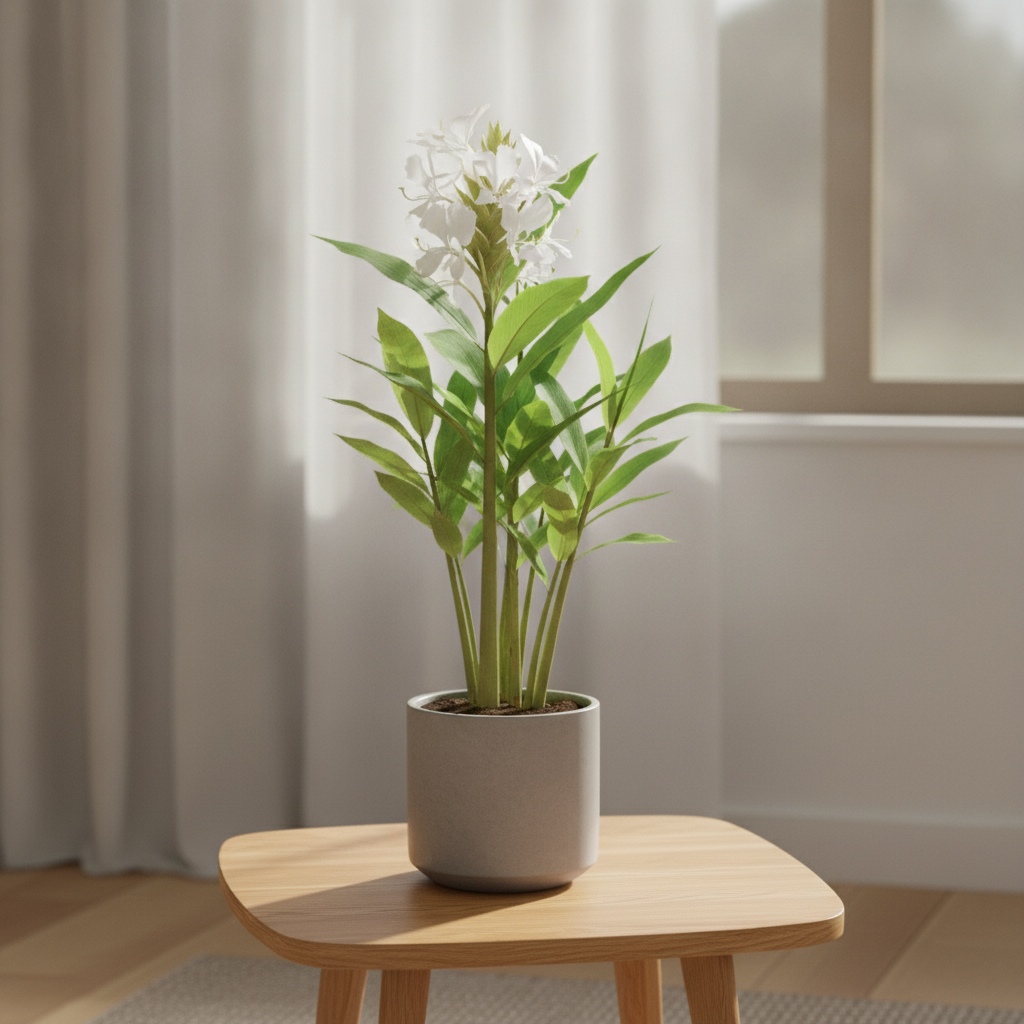
Few plants announce themselves by scent before sight, but the white ginger lily does exactly that. On a warm late-summer evening a single flowering stem can perfume an entire courtyard with a rich, sweet fragrance often compared to jasmine and gardenia combined. Known botanically as Hedychium coronarium and commonly as butterfly ginger or butterfly lily, this rhizomatous perennial belongs to the ginger family, Zingiberaceae, and hails from the humid foothills of the Himalayas, eastern India, southern China and mainland Southeast Asia. It is celebrated enough to serve as the national flower of Cuba, where it is called the mariposa blanca.
As a container and conservatory plant it has a reputation for being dramatic rather than difficult. Give it warmth, generous water and plenty of food and it rewards you with lush, reed-like foliage over a metre tall and clusters of pure white, orchid-like blooms. Neglect those three things and it simply sulks, refusing to flower or dying back early. This guide walks through everything that separates a ginger lily that merely survives in a pot from one that thrives and flowers reliably year after year, from reading its light and water needs to dividing its thick rhizomes into new plants.
Contents
- Quick Reference
- Why White Ginger Lily Makes a Rewarding Houseplant
- Light Requirements
- Watering & Humidity
- Soil, Potting & Repotting
- Fertilising
- Propagation
- Pests & Diseases
- Popular Varieties
- Frequently Asked Questions
Quick Reference: White Ginger Lily at a Glance
| Light | Bright light with several hours of direct sun; the sunniest spot you can offer indoors |
| Watering | Keep the soil consistently moist through the growing season; never let it dry out fully when in active growth |
| Temperature | 20 to 30 degrees C (68 to 86 degrees F) when growing; rest the rhizome cool but frost-free in winter |
| Humidity | Moderate to high, ideally above 50 per cent |
| Fertiliser | A heavy feeder; feed every two weeks during spring and summer |
| Toxicity | Generally regarded as non-toxic to people and pets; the rhizome is even used in some traditional cooking, though it is not an ornamental plant to be eaten casually |
Why White Ginger Lily Makes a Rewarding Houseplant
The main reason gardeners chase the white ginger lily is the fragrance. Its flowers release volatile compounds so potent that a stem cut and brought indoors will scent a room, and outdoors the perfume carries on the evening air far beyond the plant itself. In its native range the flowers are traditionally strung into garlands and worn in the hair, and the scent is the reason it has been carried around the tropical and subtropical world. That single quality alone earns it space on a bright balcony or in a warm conservatory.

Beyond the scent, the plant is a fast and generous grower. From a fleshy underground rhizome it throws up leafy pseudostems, each clad in long lance-shaped leaves arranged in two neat ranks, and in a single warm season a modest clump can reach 1.2 to 2 metres (4 to 6 feet) tall. That vigour makes it forgiving of the occasional mistake, because a healthy rhizome holds enough energy to push out fresh growth even after a setback. It also means a single purchased plant quickly becomes several, since the rhizome spreads and divides with almost no encouragement. For anyone who wants a large, lush, tropical-looking specimen without waiting years, few plants deliver as quickly.
Important — Toxicity: The white ginger lily is not listed among the plants known to be toxic to cats, dogs or humans, and its rhizome is used in some regional cuisines and traditional remedies. Even so, it is grown here as an ornamental, not a food crop, so discourage pets and children from chewing the foliage, and wash hands after handling sap-covered cut stems.
Light Requirements
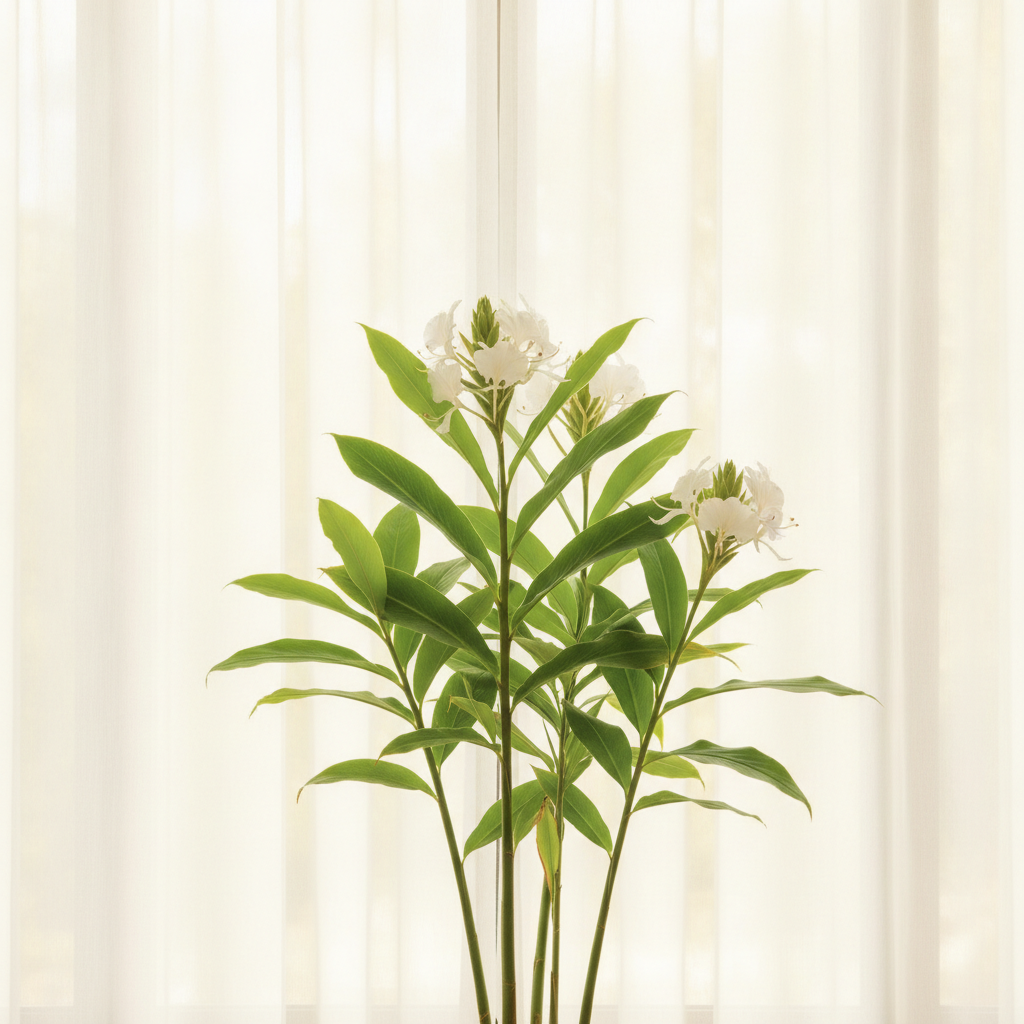
Light is the single biggest factor deciding whether your ginger lily flowers or merely produces leaves. In the wild it grows in open, sunny clearings, along stream banks and at woodland edges where it receives strong, unfiltered light for much of the day. To bloom it needs to build up a large reserve of energy across the growing season, and that only happens with plenty of light.
Indoors, treat it as a sun-lover and give it the brightest position you have. A spot that receives four or more hours of direct sun, tempered only slightly through glass, suits it perfectly. In lower light it will still grow foliage, sometimes quite lush foliage, but the stems become leggy and weak and flowering falls away to nothing. If your only bright window is limited, the plant is an excellent candidate for spending the warm months outdoors on a sunny patio, where the extra light dramatically improves both growth and bloom.
Light Levels Explained
The table below translates the usual houseplant light categories into what they mean for a ginger lily specifically, so you can judge a position at a glance.
| Light Category | Approx. Level | Typical Location | Outcome |
|---|---|---|---|
| Direct sun | 20,000 lux and above | Right in a south-facing window or outdoors | Best growth and reliable flowering |
| Bright indirect | 10,000 to 20,000 lux | Just back from a bright window | Good foliage, flowering possible but reduced |
| Medium | 5,000 to 10,000 lux | East window or a metre from a bright one | Leggy growth, rarely flowers |
| Low | 1,000 to 5,000 lux | North window, interior wall | Weak, stretched, no flowers |
| Very low | Below 1,000 lux | Deep interior, windowless room | Decline; unsuitable |
Window Orientation and Placement
South-facing window: This is the ideal indoor position in the northern hemisphere. The ginger lily welcomes as much light as a south window can deliver, and the direct sun helps drive flowering. Only in the fiercest midsummer glare against the glass might the leaf tips scorch, in which case a very light sheer curtain at midday is enough.
East-facing window: A good second choice. Gentle morning sun followed by bright light for the rest of the day keeps the plant healthy, though flowering may be lighter than in a south window.
West-facing window: Also workable, offering strong afternoon sun. Watch that the combination of hot afternoon light and dry indoor air does not desiccate the leaf margins, and keep the soil reliably moist.
North-facing window: Too dim for this plant. Foliage may hang on for a while but it will stretch, weaken and never flower. Reserve north windows for shade-tolerant plants and place the ginger lily elsewhere.
Pro Tip — Summer Holiday Outdoors: Once nights stay reliably above 12 degrees C (54 degrees F), move the pot outside to a sunny, sheltered spot for the summer. Acclimatise it over a week, starting in dappled shade, to avoid sunburn, then let it bask. The outdoor light and airflow will transform its vigour and greatly improve the odds of flowering.
How Light Affects Flowering
Unlike variegated foliage plants, where light governs leaf colour, the ginger lily’s relationship with light is almost entirely about flowers. The plant flowers on mature stems in late summer and autumn, and it can only build stems strong enough to bloom if it has banked plenty of light and food beforehand. A plant kept too dark will pour what little energy it has into stretching toward the window, leaving nothing over for buds. If your ginger lily grows lush but never flowers, insufficient light is the first thing to correct.
Warning — Direct Sunlight: Although this is a sun-loving plant, a specimen that has spent winter indoors has soft, unhardened leaves. Moving it straight into blazing summer sun will scorch it, leaving bleached or brown patches. Always harden it off gradually over a week or two before exposing it to full outdoor sun.
Artificial Lighting
Because it is a large, high-light plant, the ginger lily is not the easiest subject for grow lights, but supplementary lighting can help maintain a plant through a dim winter or boost a specimen in a room short on natural light. Use a powerful full-spectrum LED positioned above the canopy and run it for 12 to 14 hours a day during the growing season. Bear in mind that lighting a plant this tall evenly is difficult, and results rarely match a genuinely sunny window or a summer outdoors.
Seasonal Adjustments
The ginger lily has a strong seasonal rhythm. Through spring and summer it wants maximum light to fuel rapid growth and flowering. As autumn closes in and temperatures drop, growth naturally slows and older stems die back after flowering. In winter the plant may go partly or fully dormant, and its light needs fall accordingly. During this rest period a cool, bright spot is fine, but do not worry if the top growth dies back entirely, as the rhizome simply waits underground for spring.
Watering & Humidity
If light governs flowering, water governs sheer size. The white ginger lily is a thirsty plant that grows naturally beside streams and in damp ground, and during the growing season it drinks heavily. This is one of the few container plants where the usual houseplant advice to let the soil dry out is largely reversed: through spring and summer the aim is to keep the mix consistently and evenly moist, never letting it dry to the point where the leaves wilt.
When to Water
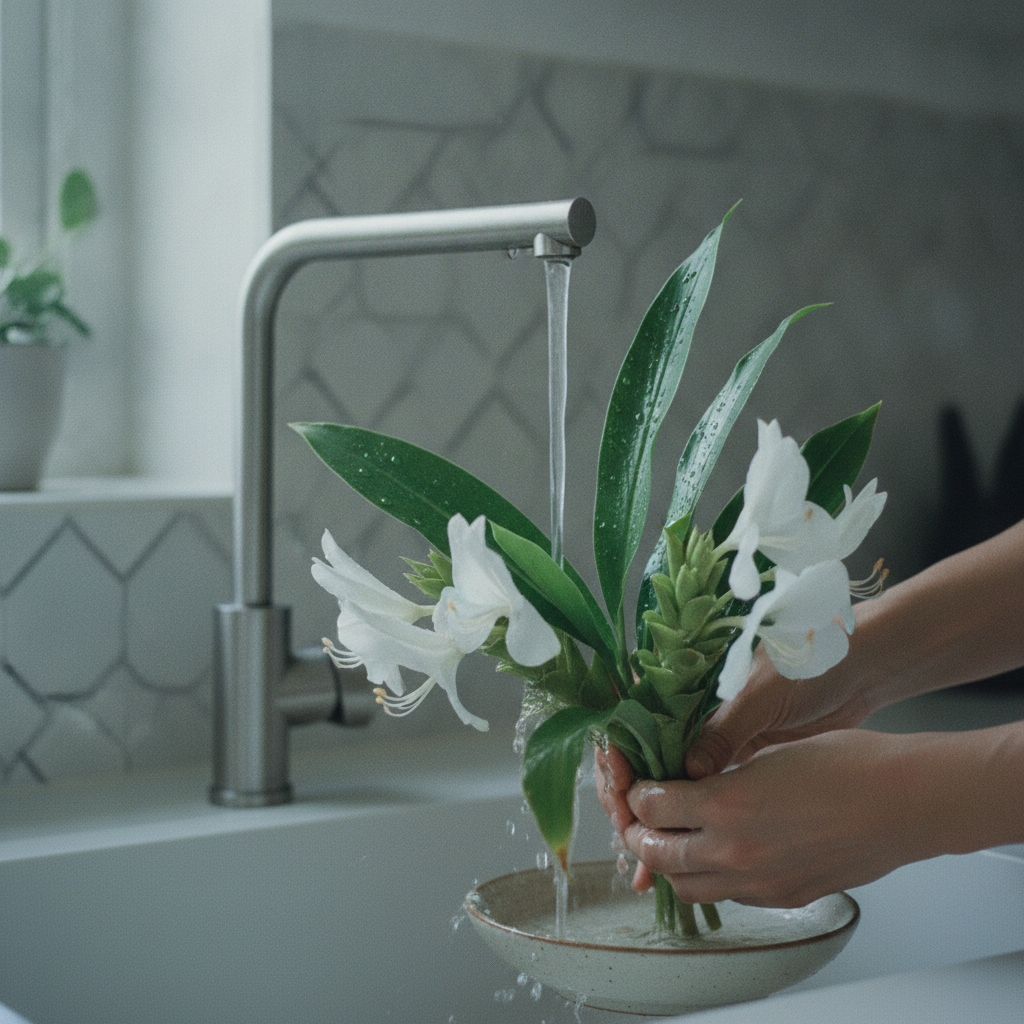
In the growing season, check the plant every couple of days. Feel the soil surface, and as soon as the top centimetre begins to feel less than moist, water thoroughly. In hot weather a vigorous, pot-bound ginger lily in strong light may need watering daily, especially if it is standing outdoors. The large leaf area transpires a great deal of moisture, so demand rises steeply on warm, bright, breezy days.
The picture changes completely in winter. As the plant slows or dies back, its water needs collapse. Reduce watering sharply through autumn and, if the top growth has died back to the rhizome, keep the soil only barely damp, watering just enough to stop the rhizome shrivelling. A dormant rhizome sitting in cold, wet soil is the classic route to rot, so err on the dry side while it rests.
Pro Tip — Read the Season, Not the Calendar: Rather than watering on a fixed schedule, match watering to what the plant is doing. Full leaves and active growth mean water freely; slowing growth and dying stems in autumn mean taper off; a bare dormant rhizome means keep it nearly dry until spring shoots appear.
How to Water Correctly
- Water at the base of the plant, directing the flow onto the soil rather than over the crown of stems.
- Add water steadily until it flows freely from the drainage holes, ensuring the entire root ball is wetted, not just the surface.
- Let the pot drain completely for a few minutes so no water is left standing at the roots.
- Empty any saucer or cache pot after draining; the plant likes moisture but not permanently waterlogged roots.
- In peak summer, check again the same evening or the next morning, as a large plant in sun can empty a pot surprisingly fast.
Signs of Overwatering vs. Underwatering
| Symptom | Overwatering | Underwatering |
|---|---|---|
| Leaf colour | Yellowing lower leaves, often widespread | Dull green fading to brown at edges and tips |
| Leaf texture | Soft, limp, sometimes translucent | Crisp, dry, curling and papery |
| Soil | Stays wet for days, may smell sour | Pulls away from the pot sides, bone dry |
| Rhizome | Soft, brown, mushy, foul-smelling | Firm but shrunken and wrinkled |
| Stem base | Blackened, collapsing at soil level | Wilting stems that recover after watering |
Warning — Root Rot: The one situation the ginger lily cannot forgive is cold, saturated soil, particularly in winter. If the rhizome turns soft, brown and smelly, lift it, cut away all rotten tissue back to firm, pale flesh, dust the cuts, and repot the healthy portion into fresh, barely-moist mix.
Humidity Requirements
Coming from humid, subtropical habitats, the ginger lily appreciates moisture in the air as well as in the soil. Moderate to high humidity, ideally above 50 per cent, keeps the large leaves fresh and prevents the brown, papery edges that develop in very dry rooms. Average household humidity is usually tolerable during the warm months, but the dry air of a centrally heated winter room can be hard on the foliage.
The most common symptom of air that is too dry is browning along the leaf margins and tips, sometimes accompanied by a slightly crisped, curled edge. This is cosmetic rather than fatal, but it spoils the lush look and can invite spider mites, which thrive in dry conditions.
To raise humidity, group the plant with others, stand the pot on a wide tray of damp expanded clay or pebbles kept topped up with water, or run a room humidifier nearby during the heating season. Misting offers only a brief lift and is less effective than these steadier methods, though it does no harm.
Water Quality
The ginger lily is not especially fussy about water quality and generally copes well with ordinary tap water. In areas with very hard water, mineral salts can accumulate in the soil over time and contribute to leaf-tip browning, so an occasional thorough flush of the pot, or the use of collected rainwater when convenient, helps keep the root zone sweet. Let cold tap water reach room temperature before using it, as a shock of icy water is unwelcome to a warmth-loving plant.
Soil, Potting & Repotting
The ginger lily wants a growing medium that manages a careful balance: rich and moisture-retentive enough to satisfy its appetite, yet open enough that the rhizome never sits in stagnant water. Because the plant is such a heavy feeder and drinker, a pure, dense soil that stays sodden will rot the rhizome, while a fast-draining cactus-style mix will dry out far too quickly for its liking.
Ideal Soil Composition
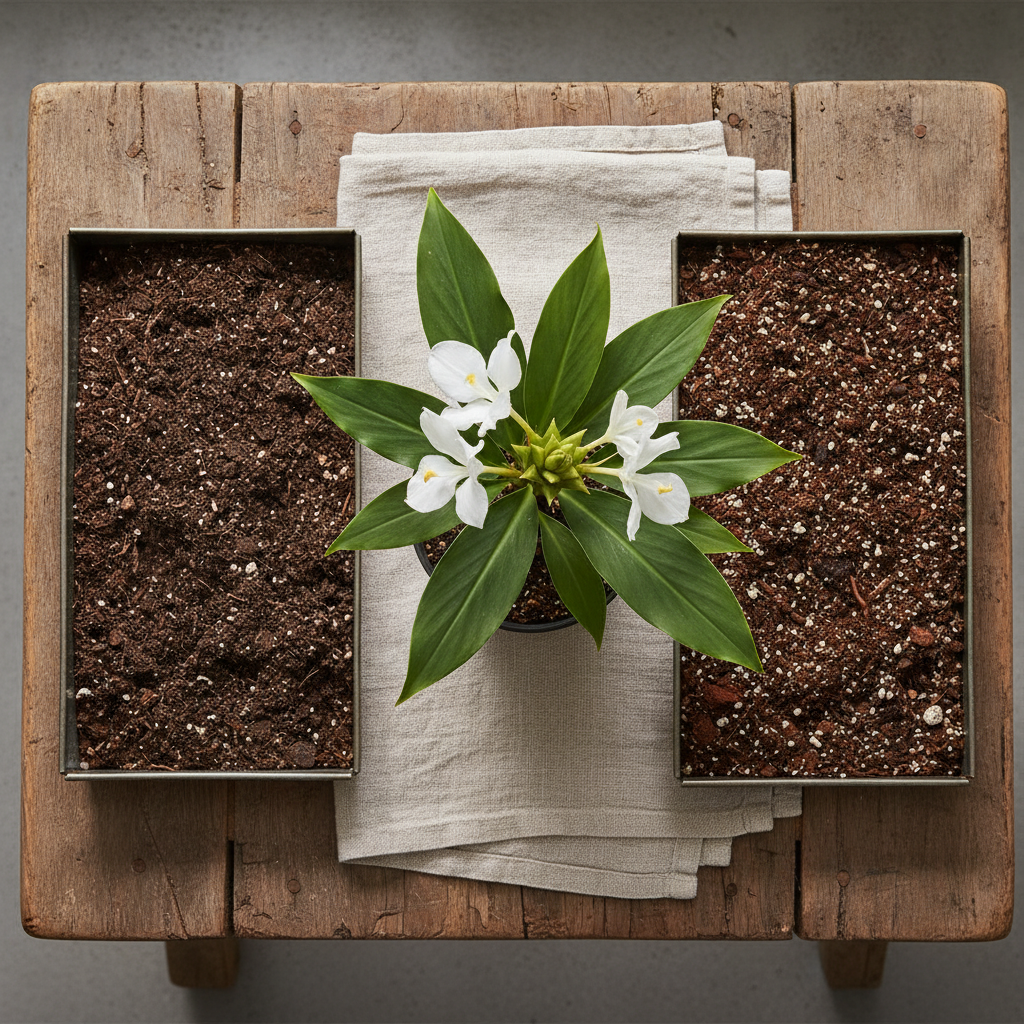
A good base is a quality general-purpose potting compost enriched with organic matter and opened up with a little grit or perlite for drainage. The goal is a fertile, water-holding but free-draining mix that mimics the damp, rich ground of a stream bank.
| Component | Proportion | Function |
|---|---|---|
| Quality potting compost | Around 60 per cent | Base structure, nutrients and moisture retention |
| Composted bark or coir | Around 20 per cent | Holds moisture while keeping the mix open |
| Perlite or coarse grit | Around 15 per cent | Improves drainage and prevents compaction |
| Worm castings or compost | Around 5 per cent | Slow, gentle feeding for a hungry plant |
The ginger lily prefers a slightly acidic to neutral soil, roughly pH 6.0 to 7.0, which most general composts sit comfortably within. There is no need to chase an exact figure, but avoid strongly alkaline conditions, which can lock up iron and cause yellowing between the leaf veins.
Pro Tip — Quick Mix Recipe: For a reliable blend, combine three large scoops of good potting compost, one scoop of composted bark or coir and one scoop of perlite, then stir through a generous handful of worm castings. This gives the moisture-retentive yet open medium the rhizome loves.
Choosing the Right Pot
Because a ginger lily quickly becomes a large, top-heavy plant, the pot has to do two jobs: house a spreading rhizome and keep a tall specimen from toppling. Choose a wide, sturdy, heavy container rather than a tall narrow one, as the rhizome runs sideways just below the surface rather than plunging deep.
Drainage holes are non-negotiable. Whatever container you choose must have generous drainage. Given how much water this plant receives, a pot without holes will hold a reservoir at the base that rots the rhizome within weeks. If you love a decorative cache pot without holes, plant into a functional inner pot and lift it out to drain after every watering.
Pot material: Heavy materials such as glazed ceramic or thick terracotta add welcome ballast for a plant that can reach head height. Terracotta breathes and dries faster, which suits winter but means more frequent summer watering; plastic and glazed pots hold moisture longer, which is handy in the thirsty growing months. Either works if you adjust watering to suit.
Pot size: Give the rhizome room to run, but not an ocean of spare compost that stays wet. A pot a few centimetres wider than the current rhizome mass is about right, stepping up gradually as the clump fills out. A vigorous plant will often need dividing before it needs a dramatically larger pot.
When to Repot
Ginger lilies are fast enough that most benefit from annual attention in early spring, just as new shoots begin to emerge. Signs it is time include roots and rhizome crowding the surface or pushing at the pot walls, the clump lifting itself out of the container, water running straight through an exhausted, root-filled mix, or simply a plant that has clearly outgrown its home over the previous season. Spring repotting also offers the perfect moment to divide the rhizome and refresh the compost at once.
How to Repot: Step-by-Step
- Water the plant a day before, then in early spring slide the whole root ball out of its pot, laying tall stems down gently on a bench.
- Tease away the old, spent compost from around the rhizome and roots, and inspect the rhizome for any soft or rotten sections.
- Trim off dead roots and any mushy rhizome pieces with clean, sharp secateurs, cutting back to firm, pale flesh.
- Part-fill the new pot with fresh mix and settle the rhizome so it sits just below the surface, roughly at the depth it grew before.
- Fill around it with fresh compost, firming gently to remove large air pockets without compacting the mix hard.
- Water thoroughly to settle everything in, then place the plant in bright, warm conditions and resume normal care as growth accelerates.
Warning — Transplant Shock: Repot in spring as the plant wakes, not in autumn as it slows. Disturbing the rhizome heading into dormancy leaves it sitting in fresh, damp soil with no active growth to use the moisture, which greatly increases the risk of rot over winter.
Fertilising
Of all the common container plants, the ginger lily is among the hungriest. Its explosive seasonal growth and heavy flowering draw enormous amounts of nutrients from the soil, and a plant that is starved will grow small, pale and reluctant to bloom. Feeding generously through the growing season is not optional if you want the full, lush, flowering display.
The counterpart to that appetite is timing. All that feeding belongs to spring and summer, when the plant is in active growth. As autumn arrives and the plant slows toward dormancy, feeding must stop, because a resting rhizome cannot use the nutrients and unused fertiliser salts simply build up in the soil.
Understanding Plant Nutrients
Fertilisers are labelled with an N-P-K ratio, standing for nitrogen, phosphorus and potassium, the three nutrients plants use in the largest quantities. Nitrogen drives leafy growth, phosphorus supports roots and flower formation, and potassium underpins overall vigour and bloom quality. For a plant grown for both bold foliage and flowers, a balanced feed through most of the season, tilting toward higher potassium as buds approach, gives the best of both.
| Nutrient | Symbol | Primary Function | Deficiency Symptoms |
|---|---|---|---|
| Nitrogen | N | Leafy green growth and stem development | Pale, yellowing older leaves; stunted growth |
| Phosphorus | P | Root growth and flower formation | Poor flowering, dull leaves, weak roots |
| Potassium | K | Overall vigour, flower quality, water regulation | Browning leaf edges, weak blooms |
| Calcium | Ca | Cell wall strength and new growth | Distorted, weak young shoots |
| Magnesium | Mg | Core of the chlorophyll molecule | Yellowing between the veins of older leaves |
| Iron | Fe | Chlorophyll production in new growth | Yellowing between veins of the youngest leaves |
Types of Fertiliser
Liquid fertilisers: The most practical choice for such a demanding plant, because you can feed little and often and match the dose to how fast it is growing. A balanced liquid houseplant or general-purpose feed diluted and applied every two weeks in the growing season suits it well.
Slow-release granular: Useful as a backbone of steady feeding. A slow-release granular fertiliser mixed into the compost at repotting in spring feeds gently for months, and can be topped up with liquid feed during peak growth for the extra push this plant appreciates.
Organic fertilisers: Given how greedy it is, the ginger lily responds beautifully to organic richness. Worm castings, well-rotted compost worked into the mix, and dilute organic feeds such as compost tea or seaweed suit its appetite and improve the soil life at the same time.
Feeding Schedule
Begin feeding as new growth appears in spring and continue every two weeks with a balanced liquid feed through spring and summer. As buds form in mid to late summer, a feed slightly higher in potassium encourages stronger, longer-lasting flowers. Taper feeding off through early autumn and stop altogether once the plant slows and begins to die back, resuming only when fresh shoots return the following spring.
Pro Tip — Feed the Growth, Not the Rest: The single best feeding habit for a ginger lily is to be generous while it grows and disciplined while it rests. Heavy feeding in summer builds the reserves for next year’s flowers; any feeding in winter simply salts the soil around an idle rhizome.
How to Fertilise
- Water the plant lightly first if the soil is dry, so the feed never hits parched roots.
- Dilute a balanced liquid fertiliser to the strength recommended on the label, or slightly weaker if in doubt.
- Pour the diluted feed evenly over the soil until it just begins to drain, ensuring the whole root zone is reached.
- Every month or so, water with plain water alone to flush any accumulating salts through the pot.
Warning — Salt Build-Up: Even a hungry plant can be over-fed. A white crust on the soil or pot rim, and brown, scorched leaf edges despite adequate watering, point to fertiliser salt build-up. Flush the pot thoroughly with plenty of plain water and hold off feeding until the plant recovers.
Propagation
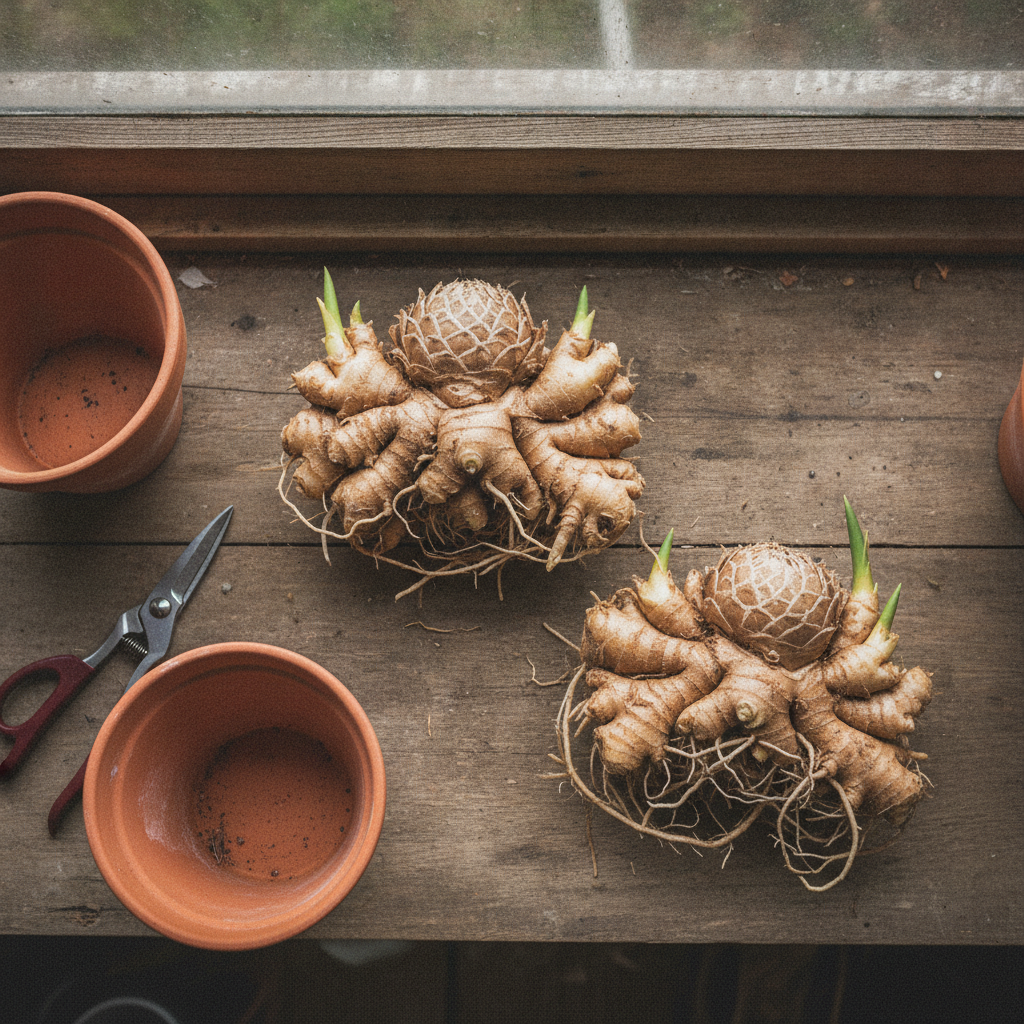
Propagating a white ginger lily is refreshingly simple, because the plant does most of the work itself. Unlike vining houseplants that root from leaf or stem cuttings, the ginger lily multiplies through its rhizome, the thick, fleshy underground stem that stores its energy and spreads sideways to form ever-larger clumps. Dividing that rhizome is the standard and by far the most reliable method.
The best time to divide is early spring, at the same moment you would repot, when the plant is waking and each division has a full growing season ahead to establish. A single healthy clump can usually be split into two, three or more new plants, each capable of flowering within a season or two.
Understanding the Rhizome
The rhizome is the key to everything. It is a horizontal, segmented underground stem, knobbly and firm, from which both roots and leafy shoots arise. Along its length are growth points, often visible as pinkish or pale buds, and each viable division must carry at least one of these along with a portion of root. Understanding that the rhizome, and not any leaf or cutting, is the engine of propagation makes the whole process straightforward.
Division: Step-by-Step
Division is the primary method and suits every grower, from beginner to expert. Done in spring, it is almost foolproof.
- Lift the whole plant from its pot in early spring and gently shake or wash away enough soil to see the rhizome clearly.
- Identify natural divisions in the clump, looking for sections that each carry at least one growth bud or shoot plus healthy roots.
- With a clean, sharp knife or secateurs, cut the rhizome into pieces, making each division a generous chunk rather than a tiny sliver.
- Dust the cut surfaces with a little cinnamon or sulphur, or simply let them air-dry for an hour, to reduce the risk of rot.
- Pot each division into its own container of fresh, moist mix, setting the rhizome just below the surface.
- Water in, place somewhere warm and bright, and keep the soil lightly moist until new shoots confirm the division has taken.
Pro Tip — Bigger Divisions Flower Sooner: Resist the temptation to split the rhizome into as many tiny pieces as possible. Larger divisions carrying several buds and plenty of stored energy establish faster and are far more likely to flower in their first season than small, weak fragments.
Growing from Seed: Step-by-Step
Seed is a secondary and much slower route, of interest mainly to the curious, since named plants come true and flower far sooner from division. When pollinated, the flowers can produce seed pods that split to reveal bright orange arils around the seeds.
- Collect ripe seed from split pods and sow it fresh, as viability falls quickly with storage.
- Sow into a warm, moist seed compost, barely covering the seed, and keep the tray at around 25 degrees C (77 degrees F).
- Maintain steady warmth and humidity, covering the tray to hold moisture, and be patient as germination can be slow and erratic.
- Once seedlings have a few leaves and are handling well, pot them on individually and grow them on in bright, warm conditions.
Troubleshooting Propagation
| Problem | Likely Cause | Solution |
|---|---|---|
| Division rots after potting | Cut surfaces stayed wet; soil too soggy | Dry and dust cuts before potting; keep mix only lightly moist |
| No new shoots for weeks | Division too small or done while dormant | Be patient; divide in spring using larger, budded pieces |
| Division wilts and shrivels | Too few roots, or air too dry | Keep warm and humid; ensure each piece has roots attached |
| Seed fails to germinate | Old seed or too cool | Use fresh seed and steady warmth around 25 degrees C |
Pests & Diseases
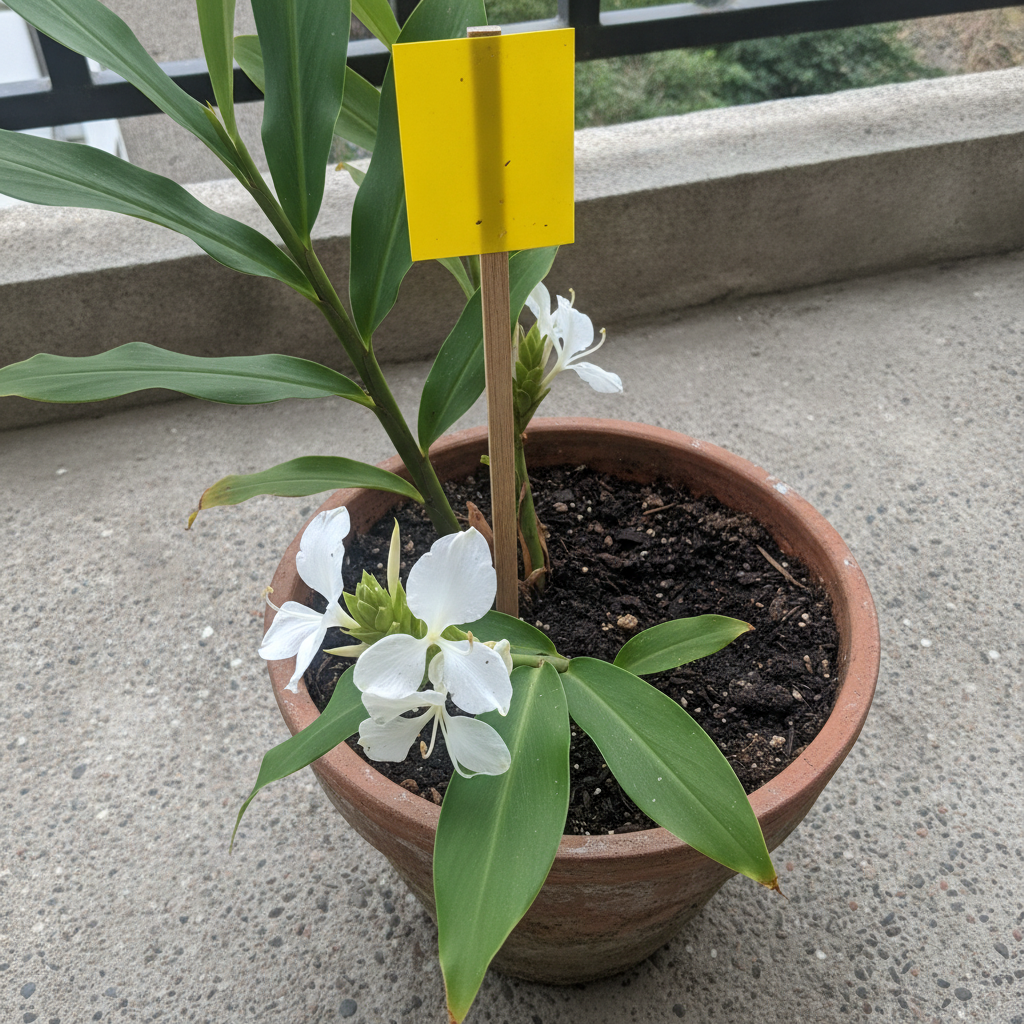
The white ginger lily is a robust plant with relatively few pest problems, especially when grown well in bright, airy conditions. Its tough, aromatic foliage deters some of the pests that plague softer houseplants. That said, no plant is immune, and the usual indoor culprits can still appear, particularly on plants stressed by dry air, poor light or overwatering.
As always, prevention and early detection beat cure. Inspect the plant regularly, paying attention to the undersides of leaves and the tender new growth where pests gather first, and deal with any infestation while it is small and localised.
Common Pests
Spider Mites (Tetranychus urticae)
The most likely pest on an indoor ginger lily, especially in the dry air of a heated room. These tiny mites suck sap from the undersides of leaves, leaving fine pale stippling and, in bad cases, delicate webbing between leaves and stems. Raised humidity is both a deterrent and part of the cure.
Treatment: Rinse the foliage thoroughly, including leaf undersides, then treat with insecticidal soap or neem oil, repeating every five to seven days until clear. Raising humidity around the plant discourages their return.
Aphids (Aphidoidea)
Soft-bodied green, black or pink insects that cluster on tender new shoots and flower buds, sucking sap and secreting sticky honeydew. Heavy infestations distort new growth and can spoil developing blooms.
Treatment: Dislodge light infestations with a firm spray of water, then follow up with insecticidal soap or neem oil on any survivors. Check flower buds carefully, as aphids love to hide among them.
Mealybugs (Pseudococcidae)
Small, white, cottony insects that gather in leaf axils and along stems, feeding on sap and weakening the plant. They spread slowly but can be stubborn once established in the crowded base of a leafy clump.
Treatment: Dab individual mealybugs with a cotton bud dipped in isopropyl alcohol, then treat the wider plant with neem oil or insecticidal soap and repeat until no new insects appear.
Common Diseases
Rhizome and Root Rot (Pythium and Fusarium species)
By far the most serious threat to a container ginger lily, caused by cold, waterlogged soil, particularly over winter. The rhizome turns soft, brown and foul-smelling, shoots collapse at the base, and left unchecked the whole clump can be lost.
Treatment: Lift the plant, cut away all soft, discoloured rhizome back to firm, healthy tissue, dust the cuts, and repot the sound portion into fresh, barely-moist, free-draining mix. Prevent recurrence by easing off water in winter and ensuring excellent drainage.
Leaf Spot (various fungal pathogens)
Brown or tan spots, sometimes with yellow halos, appearing on the leaves in persistently damp, stagnant conditions or where water sits on the foliage. More disfiguring than dangerous, but a sign that airflow and watering habits need attention.
Treatment: Remove affected leaves, improve air circulation, and water at the base rather than over the foliage so the leaves stay dry. Persistent cases can be treated with an appropriate fungicide.
Pest and Disease Summary
| Pest / Disease | Identification | Treatment |
|---|---|---|
| Spider mites | Pale stippling and fine webbing under leaves | Rinse, raise humidity, neem or insecticidal soap |
| Aphids | Clusters on new shoots and buds, sticky honeydew | Water spray, then insecticidal soap or neem |
| Mealybugs | White cottony tufts in leaf axils | Alcohol swab, then neem or insecticidal soap |
| Rhizome and root rot | Soft, brown, smelly rhizome; collapsing shoots | Cut out rot, repot in dry free-draining mix |
| Leaf spot | Brown spots with yellow halos on leaves | Remove leaves, improve airflow, water at base |
Prevention Strategies
The healthiest ginger lily is the best-defended one. A plant grown in strong light, watered correctly for the season and fed through summer builds tough tissue that shrugs off most trouble. Good airflow around the leaves, whether from an open window in summer or simply not crowding the plant into a stagnant corner, does more than almost anything to prevent both mites and fungal spotting.
Quarantine any new plant for a couple of weeks before it joins the collection, inspect regularly while watering, and keep the base of the plant clear of fallen, decaying leaves where pests and disease can shelter. Most importantly, respect the winter rest and keep the rhizome on the dry side, since the overwhelming majority of serious losses come from rot, not from insects.
Pro Tip — Neem as Routine Defence: A light monthly spray of diluted neem oil over the foliage, applied in the evening or out of direct sun, works as a gentle preventive that keeps mites, aphids and mealybugs from ever gaining a foothold.
Popular Varieties
The plain species, Hedychium coronarium, is the classic white ginger lily and remains the most widely grown for its unbeatable fragrance. Beyond it lies a whole genus of related Hedychium species and hybrids in shades of white, cream, yellow, orange and coral, along with a handful of selected forms of the white species itself. Together they let you extend the ginger lily theme well beyond a single colour.
When choosing, weigh eventual height, flower colour and, above all, fragrance, as scent varies noticeably across the group. The white species and its close selections remain the most powerfully perfumed, while some of the brighter hybrids trade a little fragrance for showier colour.
| Variety | Flower Appearance | Light Needs | Growth Rate | Availability |
|---|---|---|---|---|
| Species (H. coronarium) | Pure white, butterfly-shaped, intensely fragrant | Bright, sun | Fast | Common |
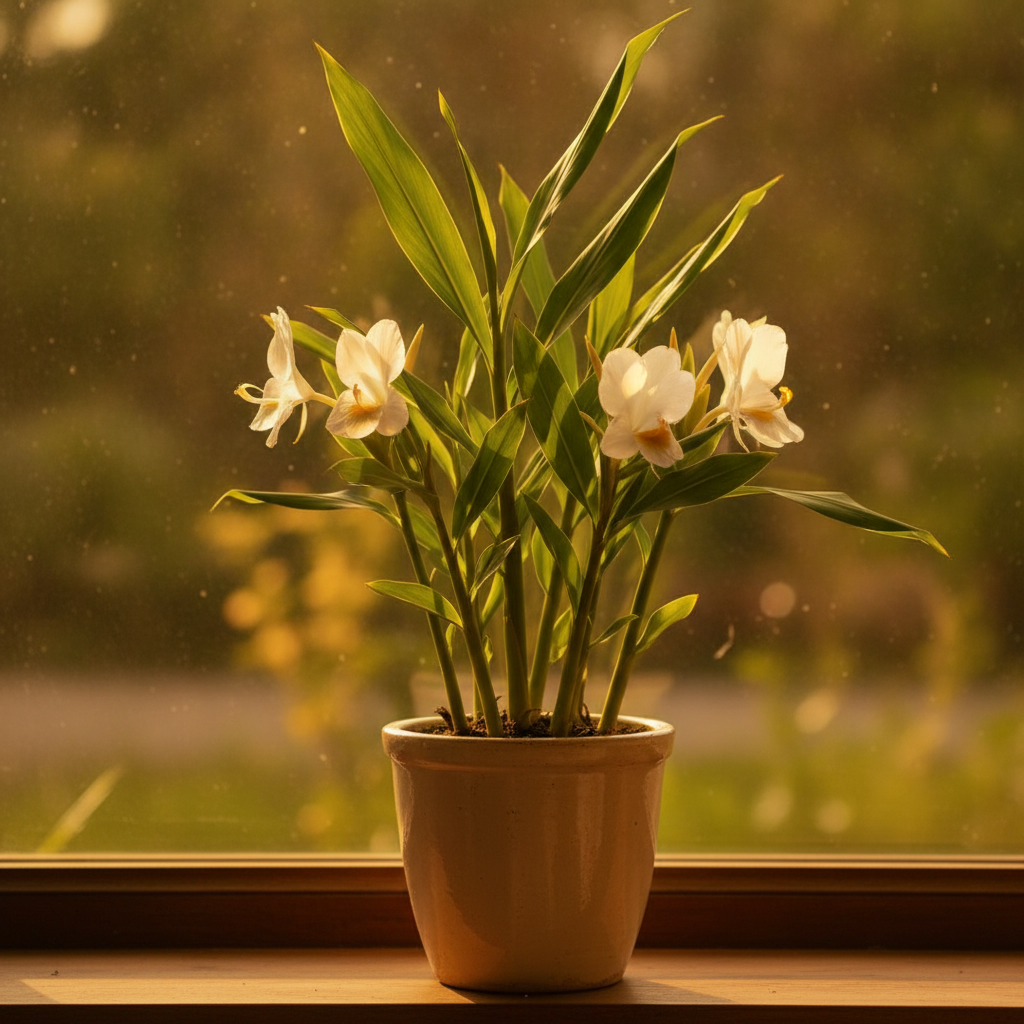
| ‘Gold Spot’ | White with a golden-yellow throat blotch | Bright, sun | Fast | Occasional |
| ‘Dr Moy’ | Cream flowers, cream-speckled variegated leaves | Bright | Moderate | Uncommon |
| Kahili ginger (H. gardnerianum) | Lemon-yellow spikes with red stamens | Bright, sun | Fast | Common |
| Scarlet ginger (H. coccineum) | Coral to red flower spikes | Bright, sun | Fast | Occasional |
| ‘Tara’ | Vivid orange, hardy hybrid | Bright, sun | Fast | Occasional |
Featured Varieties
‘Gold Spot’
A selected form of the white species carrying the same pure white, butterfly-shaped flowers, each set off by a golden-yellow blotch at the throat. It keeps the celebrated fragrance while adding a warm flash of colour at the heart of every bloom.
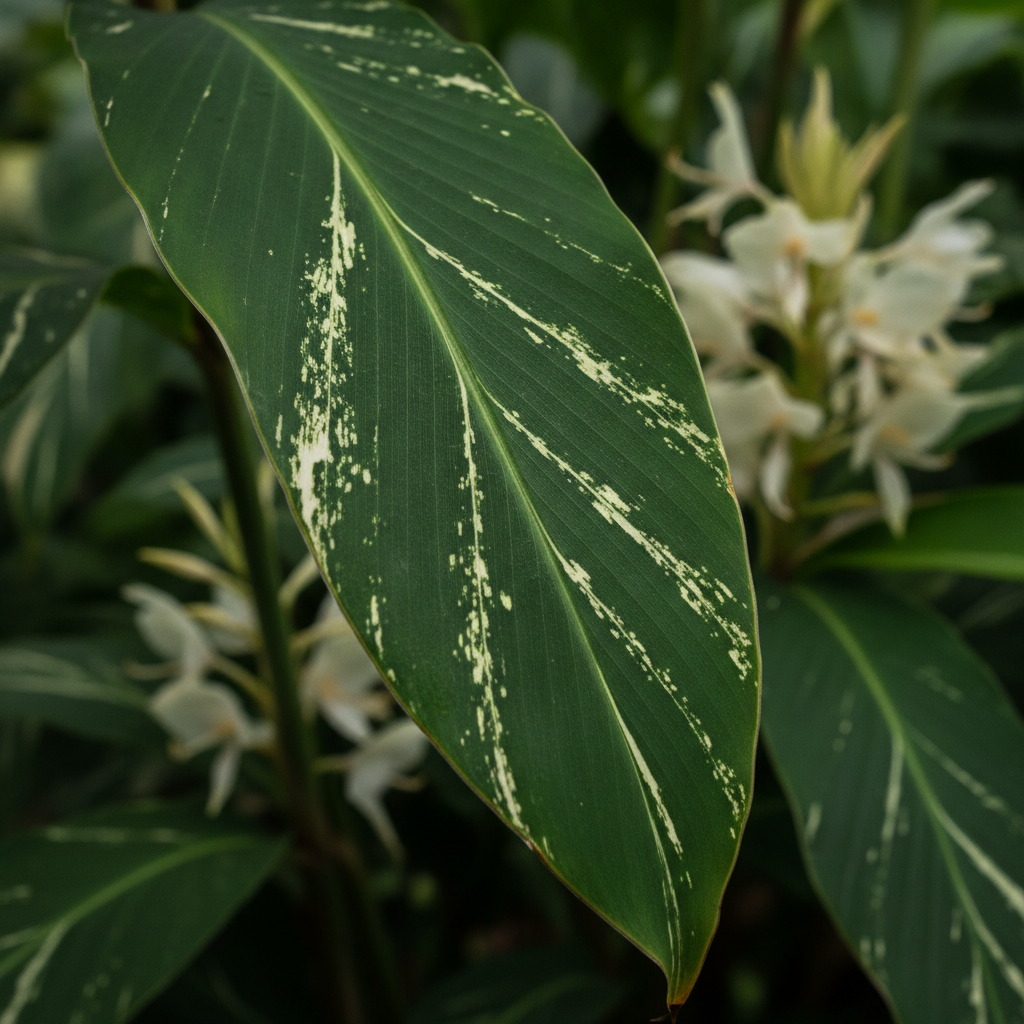
‘Dr Moy’
A striking variegated Hedychium whose green leaves are streaked and speckled with creamy white, so the plant earns its place on foliage alone. Pale, fragrant flowers are a bonus atop the boldly patterned stems, making it a favourite where leaf interest matters as much as bloom.
Variety Profiles in Detail
White Ginger Lily (Hedychium coronarium)
The original and still the benchmark. Tall green pseudostems carry lance-shaped leaves in two ranks and are topped in late summer with heads of pure white, orchid-like flowers whose perfume is the whole reason the plant travelled the tropical world. Vigorous, generous and easy in a warm, bright, well-watered position, it is the variety most people mean when they say ginger lily.
Kahili Ginger (Hedychium gardnerianum)
A spectacular relative bearing tall, cylindrical spikes of lemon-yellow flowers with long, showy red stamens. Just as vigorous as the white species and equally fragrant, it makes a bolder colour statement, though gardeners in frost-free climates should note it is considered invasive in some regions and is best confined to a container.
Scarlet Ginger Lily (Hedychium coccineum)
Grown for warm coral to red flower spikes that bring a different palette to the ginger lily group. It shares the family’s love of warmth, light and moisture, and among its forms are some of the hardier Hedychiums, useful for gardeners pushing the plant outdoors in milder temperate gardens.
Choosing the Right Variety for Your Space
If fragrance is your priority, nothing beats the plain white species or its close selections such as ‘Gold Spot’. If you want colour and drama and have the room for a large plant, the yellow Kahili ginger or a coral coccineum form delivers a bolder show. Where foliage interest matters, the variegated ‘Dr Moy’ earns its keep even between flowering. Whichever you choose, remember that all share the same essentials: a big pot, strong light, generous summer water and food, and a cool, dry winter rest. Match those and any member of the ginger lily clan will thrive.
Frequently Asked Questions
Why won’t my white ginger lily flower?
The usual reason is too little light, followed closely by too little food. Ginger lilies flower only on strong, mature stems built up over a full season of bright light and generous feeding. Move the plant to the sunniest spot you have, ideally outdoors for the summer, feed it every two weeks through the growing season, and be patient, as a young or recently divided plant may take a season to reach flowering size.
My plant died back completely in winter. Is it dead?
Almost certainly not. The white ginger lily is a herbaceous perennial that naturally dies back to its rhizome when temperatures fall, resting through winter before resprouting in spring. Keep the rhizome cool but frost-free and the soil only barely damp, and watch for fresh shoots as warmth returns. Winter die-back is normal behaviour, not a sign of a problem.
How big does a white ginger lily get in a pot?
In a container with good care it typically reaches 1.2 to 2 metres (4 to 6 feet) tall in a season, a little less than it might in open ground but still an imposing plant. The rhizome also spreads sideways to fill the pot, which is why regular division keeps it manageable and vigorous.
Is the white ginger lily toxic to cats and dogs?
Hedychium coronarium is not listed among the plants known to be toxic to cats and dogs, and its rhizome is even used in some regional cooking and traditional medicine. It is still an ornamental rather than a food plant, so it is sensible to stop pets chewing the foliage, but it is not considered a poisonous houseplant.
Can I grow it outdoors permanently?
In warm climates, roughly USDA zones 8 and above, it can stay outdoors year-round, with the rhizome surviving mild winters underground, especially if mulched. In cooler regions it is best grown in a pot that spends summer outside and winter in a frost-free place. Note that in some warm climates it spreads aggressively and is regarded as invasive, so container growing is often the responsible choice.
Why are the leaf edges turning brown?
Brown, crispy leaf edges usually point to air that is too dry, soil that has been allowed to dry out too far, or a build-up of fertiliser salts. Raise the humidity around the plant, keep the soil evenly moist through the growing season, and flush the pot occasionally with plain water to clear excess salts. A little edge-browning on older leaves is normal and nothing to worry about.
How often should I divide my ginger lily?
Every two to three years is typical, or whenever the clump has clearly filled its pot and growth or flowering starts to decline. Divide in early spring as new growth begins, giving each new section a generous piece of rhizome with at least one growth bud. Regular division keeps the plant vigorous and gives you extra plants to grow on or share.
When does the white ginger lily flower?
Flowering usually comes in late summer and into autumn, once the plant has built up a full season of strong growth. The blooms open in succession over several weeks, filling the evening air with their signature fragrance, before the flowered stems fade and the plant begins its slide toward winter dormancy.






