
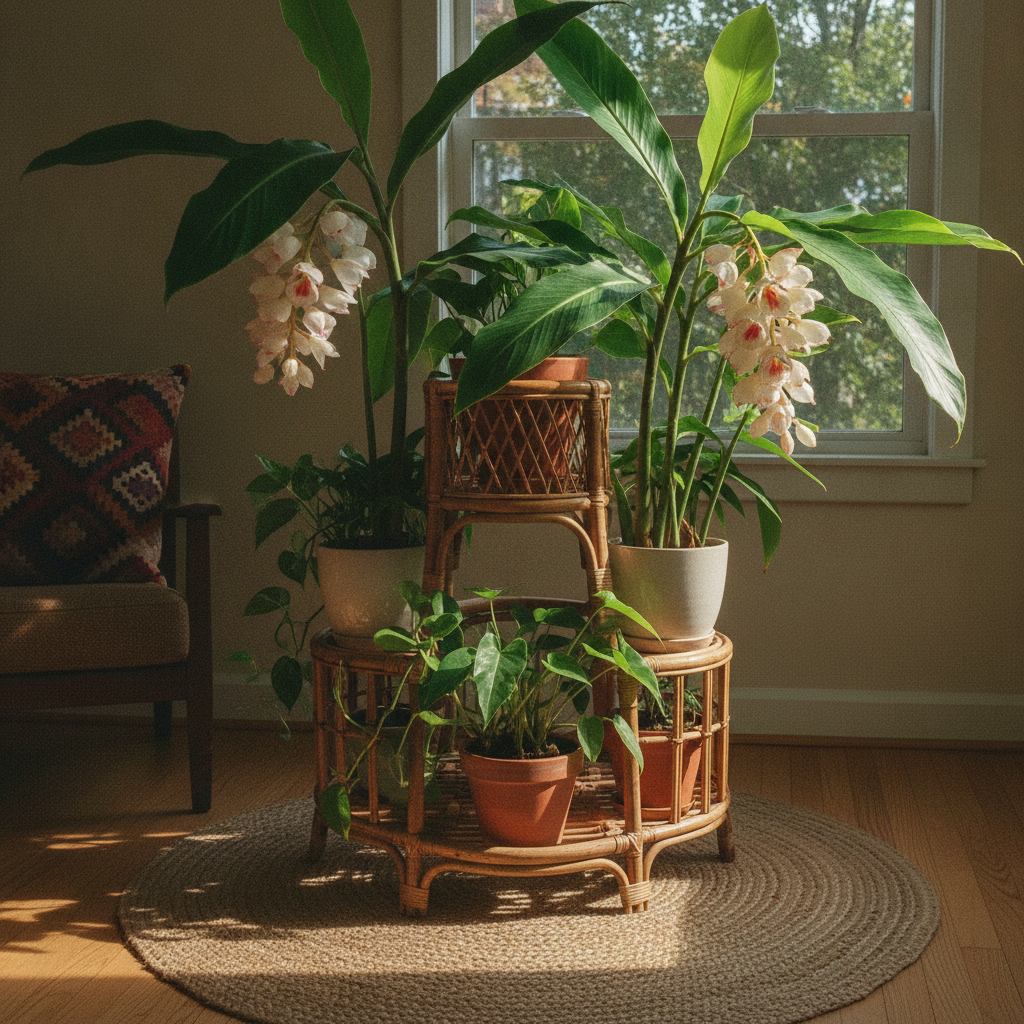
Few houseplants carry their tropics quite as convincingly as shell ginger. Crush a leaf of Alpinia zerumbet and the room fills with a warm, spicy-sweet scent somewhere between cardamom and citrus, a reminder that this is a true relative of culinary ginger. Grown well, it throws up tall, arching canes clothed in glossy, sword-shaped foliage and, on mature plants, pendulous sprays of waxy buds that look uncannily like pink-tipped seashells before they crack open to reveal a frilled yellow-and-red throat. It is a plant that rewards patience: survival is easy, but the difference between a shell ginger that merely persists in a corner and one that arches, gleams and flowers comes down to light, moisture and warmth.
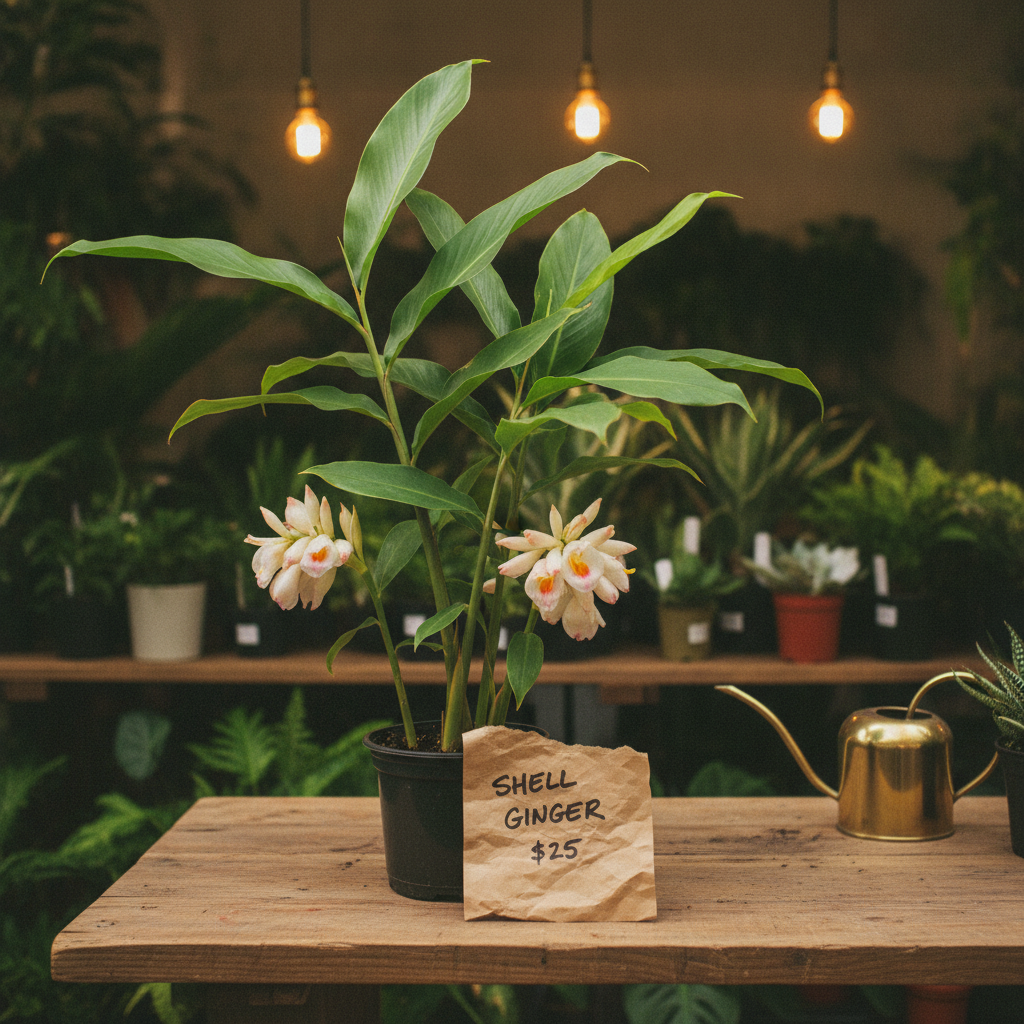
Quick Reference
The essentials at a glance. Read the sections below for the reasoning behind each figure, because shell ginger is one of those plants where the “why” matters as much as the “what”.
| Botanical name | Alpinia zerumbet |
| Common names | Shell ginger, variegated ginger, pink porcelain lily, light galangal |
| Family | Zingiberaceae (the ginger family) |
| Light | Bright indirect light, with some direct morning sun tolerated and welcomed |
| Water | Keep the mix consistently moist; never let the rootball dry out completely |
| Humidity | High, 50 per cent and above; loves 60 per cent or more |
| Temperature | 18 to 25 degrees Celsius (64 to 77 Fahrenheit); protect from anything below 10 degrees Celsius (50 Fahrenheit) |
| Soil | Rich, moisture-retentive but free-draining loam |
| Feeding | Every two to four weeks in spring and summer; a hungry plant |
| Mature size indoors | 1 to 1.5 metres (3 to 5 feet); up to 2 to 3 metres (6 to 10 feet) outdoors |
| Propagation | Rhizome division |
| Toxicity | Non-toxic to cats, dogs and people; the leaves are traditionally used to wrap food |
| Difficulty | Easy to keep alive, moderate to grow well and flower |
Why Grow Shell Ginger as a Houseplant
Shell ginger earns its place indoors on the strength of its foliage long before it ever flowers. The leaves are large, lance-shaped and high-gloss, held on cane-like pseudostems that arch outward as they lengthen, giving even a young plant a lush, fountain-like silhouette that reads as instantly tropical. Run a leaf between your fingers and the aromatic oils release that distinctive spicy fragrance, the same compounds that have made the plant a fixture of daily life across its native range in the Ryukyu Islands of Japan, Taiwan and southern China, where the leaves are used to wrap mochi and other foods and are brewed into a tea associated with longevity.
Then there are the flowers, which give the plant its common name. On mature specimens, arching flower stalks hang with clusters of rounded buds, glossy white and flushed with pink at the tip, so waxy and perfectly formed that they genuinely resemble small seashells or pieces of porcelain. Each opens to reveal a ruffled lip splashed in yellow and streaked with red, a startlingly ornate reward. The catch, and it is an important one to understand up front, is that shell ginger flowers on second-year canes. A cane needs a full season to mature before it can bloom the following year, which is why plants that are cut back hard every winter, or kept too small and dark, rarely flower indoors. Growing shell ginger well is partly about giving it the light and warmth it needs, and partly about the patience to leave its old growth standing.
Pro Tip — Handle the leaves: Whenever you tend your shell ginger, gently bruise a lower leaf and breathe in. Beyond being one of the plant’s real pleasures, the scent is a quick vitality check. Healthy, well-watered foliage is intensely aromatic; a plant that has been stressed by drought or cold often smells muted.
A final point in its favour: shell ginger is genuinely non-toxic. Because the leaves have a long history of wrapping food and flavouring tea, this is one large, dramatic tropical you can grow without worrying about curious cats, dogs or children. That combination of safety, fragrance and architectural presence is rare, and it is why the plant has quietly become a favourite among growers with the space and the humidity to indulge it.
Light
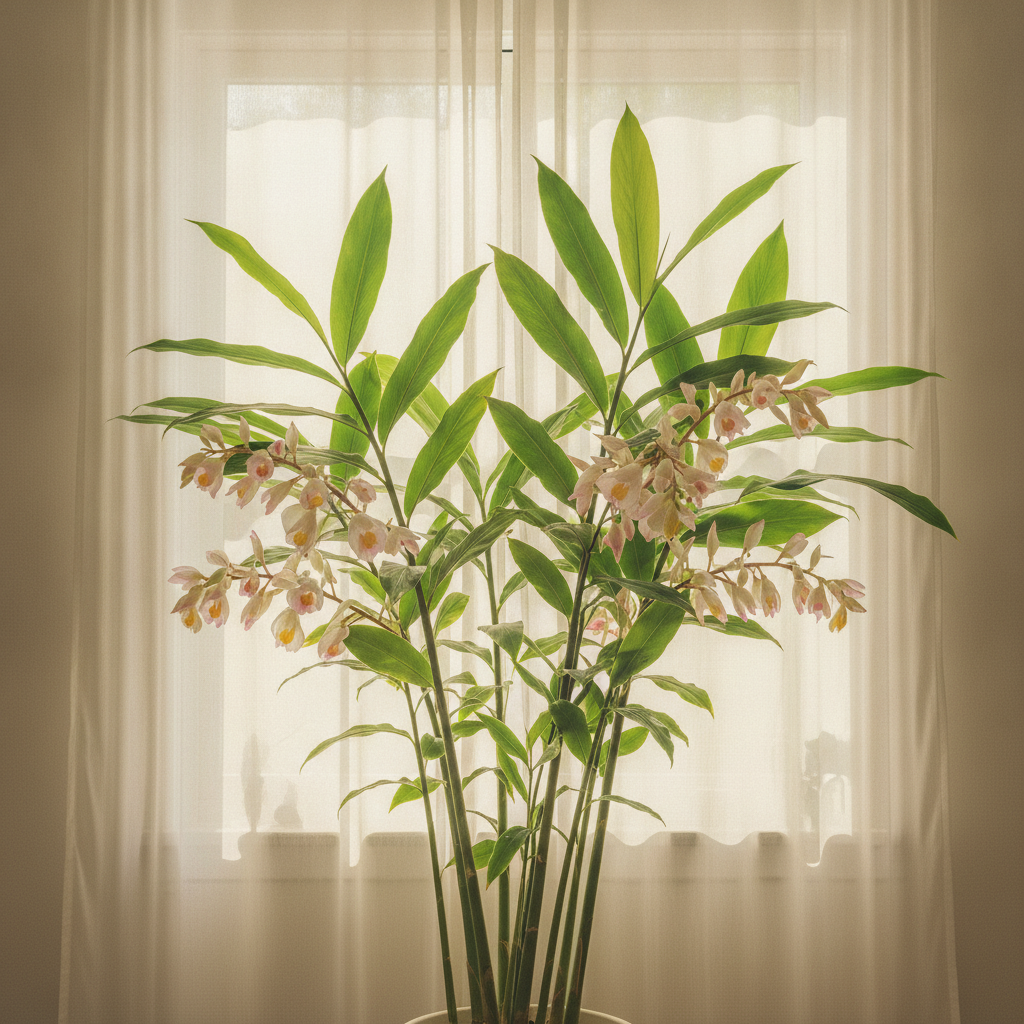
Light is the single biggest lever you have over how a shell ginger grows indoors. In the wild it grows at forest edges and in open, sunny clearings, so it is adapted to a great deal of light, far more than most people give a houseplant. The practical target indoors is bright, indirect light for most of the day, with a few hours of gentle direct sun, ideally from a morning-facing window, being not just tolerated but positively beneficial. An east or lightly shaded south window is close to ideal; a spot right up against a bright window that gets sun for part of the day will give you the strongest, most compact growth.
The way a shell ginger fails in low light is unmistakable. Canes stretch and become weak and floppy, unable to hold themselves upright, and the space between leaves widens so the plant looks sparse rather than full. Variegated forms suffer a particular penalty: their gold striping fades toward plain green as the plant scrambles to make up for the missing light with more chlorophyll. If your plant is leaning hard toward the window, telling you it wants more, move it closer and rotate it a quarter-turn every week or two so it grows evenly rather than one-sided.
Harsh, unfiltered midday sun through glass in the height of summer is the one thing to guard against, since it can scorch pale patches on the leaves, particularly on variegated plants whose lighter tissue has less protective pigment. The fix is simple: a sheer curtain to soften the strongest hours, or a step back from the glass. If flowering is your goal, understand that it is essentially impossible without generous light. A shell ginger kept in a dim corner will stay alive and green for years but will almost certainly never produce those shell-like blooms.
Pro Tip — Summer outdoors: If you have a sheltered patio or balcony, shell ginger loves spending the warm months outside in a bright spot with a little shade from the fiercest sun. A summer outdoors, with its far higher light levels, does more to build flowering-sized canes than any amount of indoor coaxing. Acclimatise it gradually over a week to avoid shock, and bring it back inside well before nights drop below 10 degrees Celsius (50 Fahrenheit).
Watering
Shell ginger is a thirsty plant, and this is where it parts company with the drought-tolerant succulents and dry-loving aroids that dominate many collections. As a moisture-loving marginal that in nature often grows in damp, rich ground near water, it wants its mix to stay consistently, evenly moist throughout the growing season. The rootball should never be allowed to dry out completely; a shell ginger that dries to a crisp will brown at the leaf tips and edges quickly and can lose whole canes. At the same time, the roots and rhizomes will rot if they sit in cold, stagnant water, so the aim is steady moisture, not a swamp.
In practice, water thoroughly whenever the top two to three centimetres (about an inch) of mix begins to feel just barely dry to the touch, letting water run right through the pot until it drains from the bottom, then emptying the saucer so the plant is never left standing in it. During the active growth of spring and summer, and especially for a large plant in bright light and warm air, this may mean watering several times a week. The larger the plant relative to its pot, the faster it will drink, so do not be surprised if a well-grown specimen needs attention far more often than your other houseplants. Rainwater or filtered water is appreciated but not essential.
In winter, when light and warmth drop and growth slows, ease back noticeably. Let the surface dry a little more between waterings and reduce the frequency, keeping the mix only lightly moist rather than actively wet, which guards against rot during the cool, dim months. Never let it go bone dry even then, but a resting plant needs far less than a growing one.
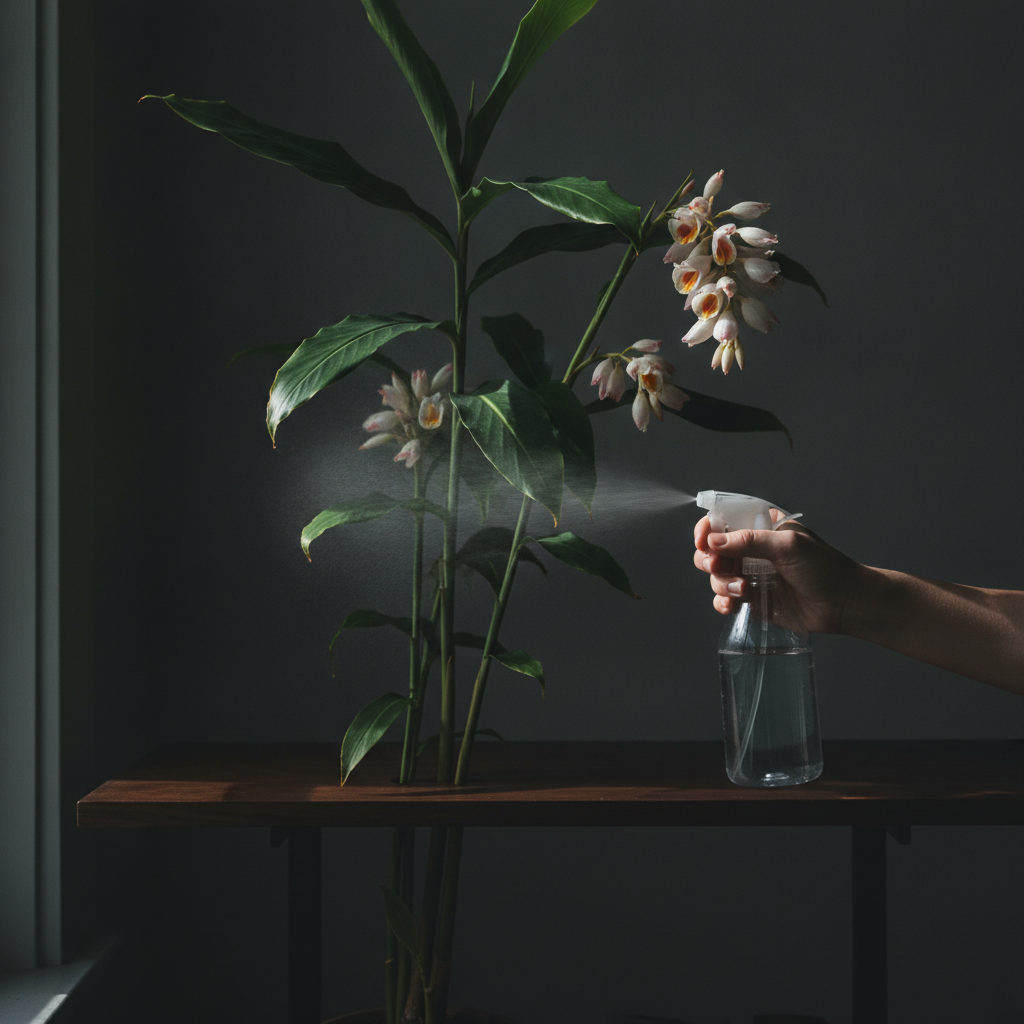
Humidity is inseparable from watering for this plant. Shell ginger craves a moist atmosphere and shows its displeasure in dry indoor air, particularly during winter heating, by developing crisp brown leaf edges and becoming a magnet for spider mites. Aim for 50 per cent relative humidity as a floor and 60 per cent or more if you can manage it. A room humidifier is the most reliable way there; grouping it with other plants, standing the pot on a wide tray of pebbles topped up with water, or simply keeping it in a naturally humid room such as a bright bathroom all help. Occasional misting is pleasant and freshens the foliage but evaporates too fast to change the ambient humidity in any lasting way.
Warning — Cold water shock: Water a warm-growing tropical like shell ginger with tepid or room-temperature water, never straight from a cold tap. A shock of cold water to warm roots can cause leaf spotting and check growth. Letting a can stand overnight before use solves this and also allows any chlorine to dissipate.
Soil
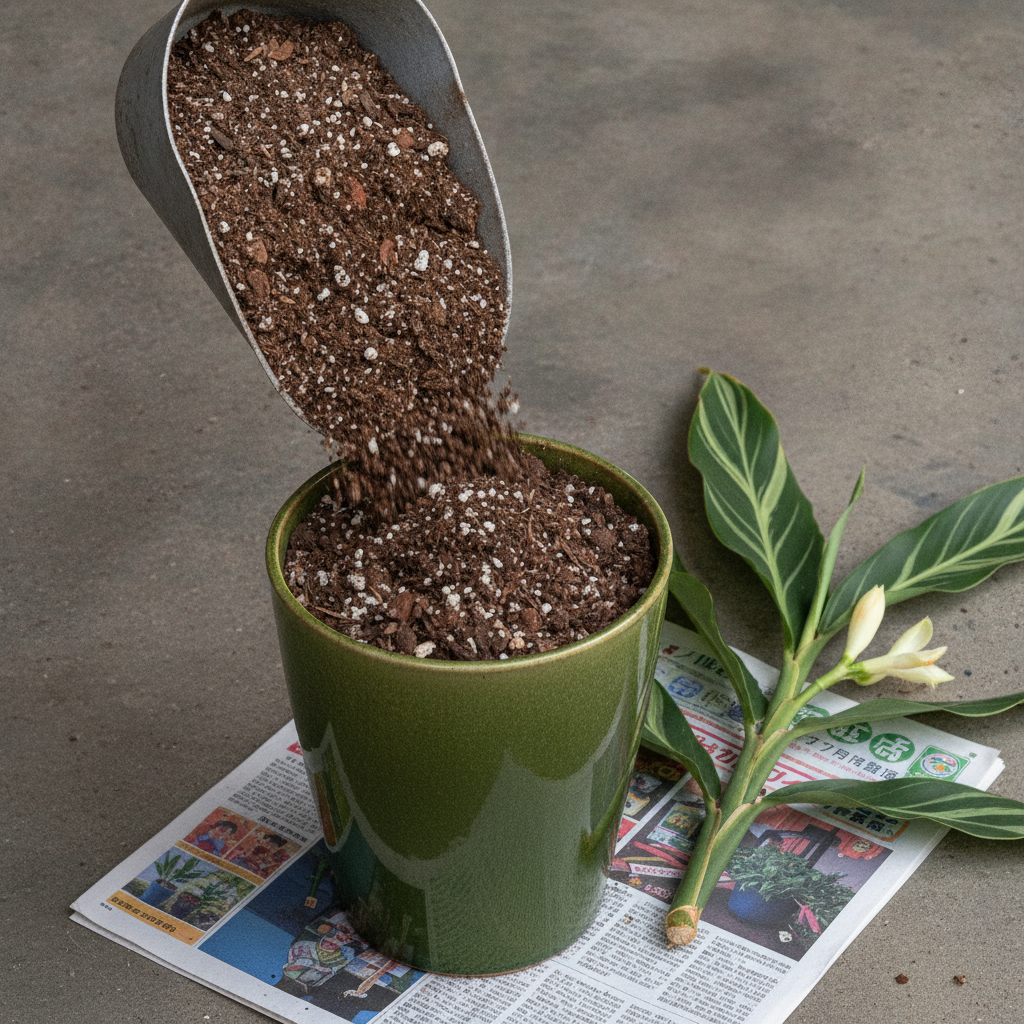
The soil for shell ginger has to perform a balancing act that follows directly from its watering needs. It must hold moisture well, because the plant hates to dry out, yet it must also drain freely enough that the fleshy rhizomes never sit in saturated ground, because that is the fast route to rot. The way to satisfy both demands at once is a mix that is rich and moisture-retentive but structurally open, so water passes through while the organic matter stays damp.
A reliable recipe is a good-quality peat-free houseplant or general potting compost as the base, blended with something to hold moisture and feed the plant, such as coco coir or well-rotted compost, and something to open the structure and guarantee drainage, such as perlite or coarse horticultural grit, at roughly a quarter to a third of the total volume. The finished mix should feel loose and springy in the hand, dark and moisture-holding but never dense or claggy. A little worm compost or slow-release organic matter worked in at potting time suits this hungry plant well. Whatever you use, the pot must have drainage holes; this is not a plant to grow in a sealed cachepot without a way for excess water to escape.
Shell ginger grows vigorously and its rhizomes spread outward to fill the pot, so it appreciates being potted on. Expect to move it up a pot size roughly every year or two in spring, choosing a container only one size larger each time and always with generous drainage. A plant that has filled its pot with a dense mat of rhizomes will dry out alarmingly fast and struggle to take up nutrients, so if watering has suddenly become a daily chore and growth has stalled, congestion is the likely cause and repotting is the cure. Repotting is also the natural moment to divide an overgrown clump, which is covered below.
Fertilising
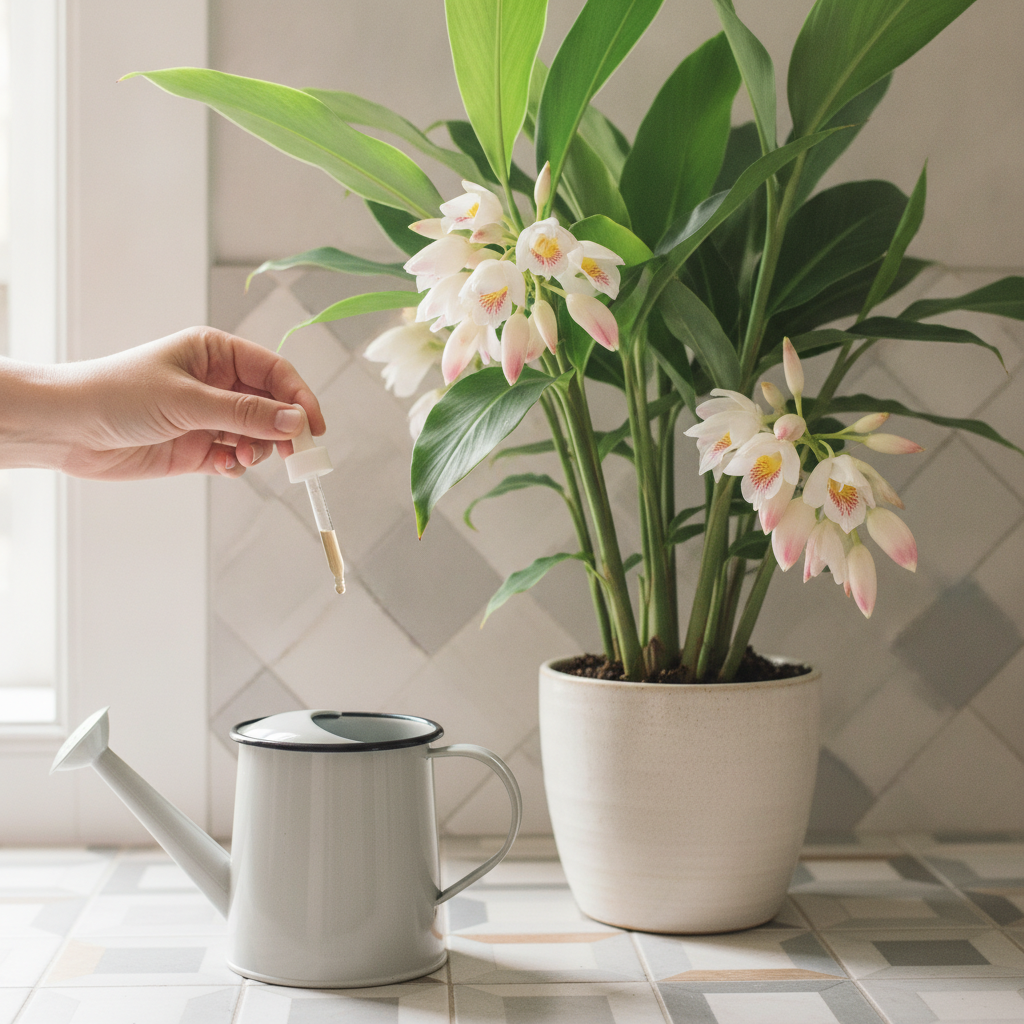
Gingers are famously hungry plants, and shell ginger is no exception. To fuel the tall canes and broad leaves it produces in a single season, it needs a steady supply of nutrients through the active growing months. From spring, as new growth begins, until the end of summer, feed every two to four weeks with a balanced liquid houseplant fertiliser diluted to the strength recommended on the label. A feed with a little extra potassium, or a fertiliser aimed at flowering plants, is worth using on mature specimens once they are large enough to bloom, as potassium supports flowering, but a balanced general feed keeps a foliage plant lush and green.
Always apply liquid feed to already-moist soil rather than a dry rootball, since fertiliser salts drawn into dry roots can scorch them. If you prefer a lower-maintenance approach, a slow-release granular fertiliser worked into the top of the mix in spring will drip-feed the plant over several months, and a top-dressing of worm castings or well-rotted compost is a gentle organic alternative that also improves the soil. Whatever the method, the guiding principle is that a fast-growing plant given plenty of light and water will genuinely use the nutrients, so during the growing season it is hard to over-feed a healthy shell ginger within sensible limits.
Stop feeding entirely from autumn through winter. As light levels fall the plant slows down and cannot use the nutrients, so continuing to feed simply allows unused fertiliser salts to build up in the soil, which can burn the roots over time. If you ever see a white crust forming on the soil surface or the pot rim, that is salt accumulation; flush it out by watering thoroughly several times, letting plenty of water run through and drain away, to leach the excess before resuming feeding in spring.
Pro Tip — Feed for flowers: If you are working toward blooms on a mature plant, keep the light high and the feeding consistent through spring and summer, and lean on a potassium-rich or flowering-plant fertiliser rather than a high-nitrogen one. Too much nitrogen pushes lush leaves at the expense of flowers, which is fine if foliage is all you want but counterproductive if you are chasing those shells.
Propagation
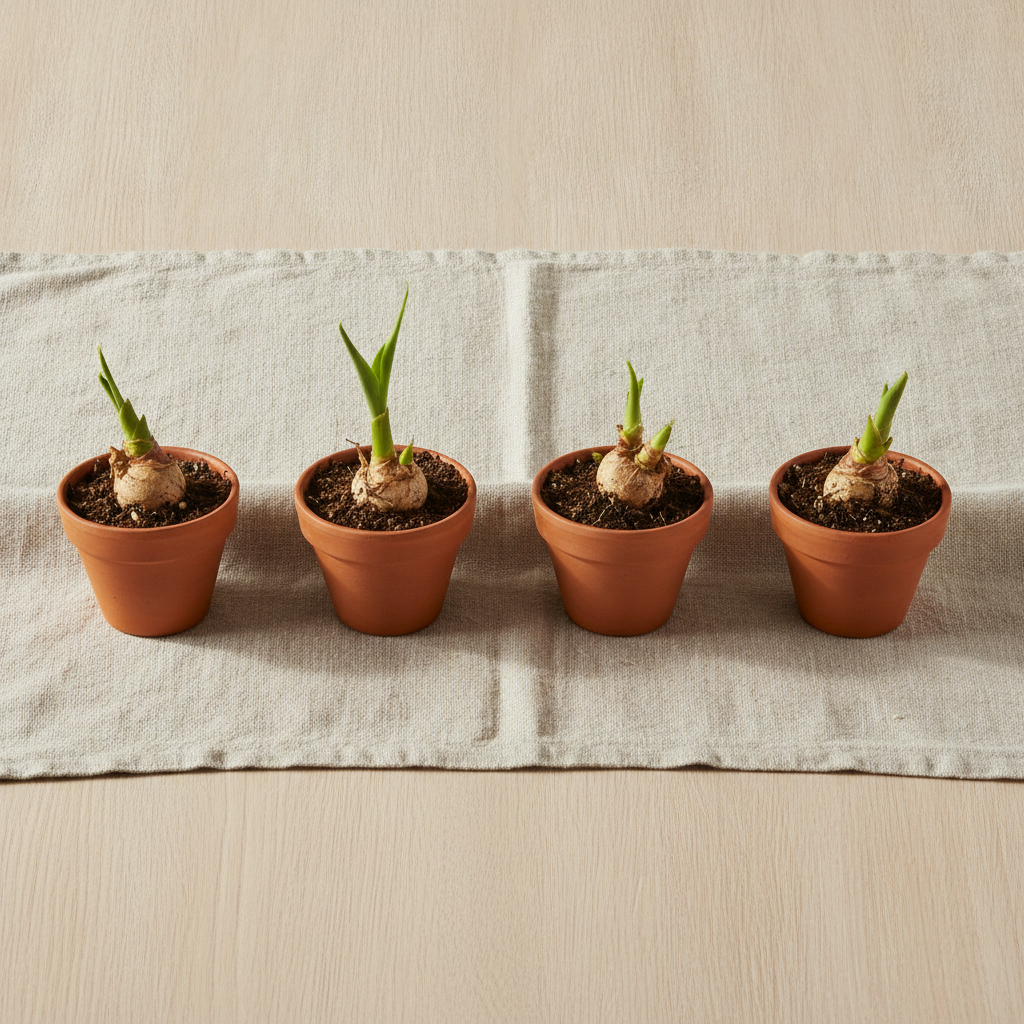
Shell ginger is propagated by dividing its rhizome, the thick, knuckly underground stem from which the canes and roots grow. This is the only reliable method for the home grower: unlike some houseplants, it will not root from a leaf or a simple stem cutting, because new growth comes from buds on the rhizome itself. The good news is that division is straightforward, has a high success rate, and doubles as a way to keep a vigorous clump from outgrowing its space. Spring, as the plant is coming into active growth and can recover quickly, is the ideal time, and combining it with a routine repotting makes the whole job efficient.
To divide a plant, follow these steps:
- Water the plant a day beforehand so it is well hydrated and the rootball slides out cleanly. Ease the whole plant out of its pot and lay it on its side.
- Gently tease and brush away enough of the old mix to expose the rhizome mass. You should be able to see the thick, horizontal rhizomes with roots below and canes rising above.
- Identify natural divisions. Look for sections that each carry at least one healthy cane or a visible growth bud along with a good clump of attached roots. Aim for divisions that are not too small, since a generous piece establishes far faster than a mean sliver.
- Separate the sections. Many clumps pull apart by hand at the joints. Where the rhizome is too tough, cut cleanly through it with a sharp, sterilised knife or secateurs, making sure each piece keeps both roots and at least one cane or bud.
- Pot each division into its own container of fresh, rich, free-draining mix, setting the rhizome at the same depth it sat before and firming the soil gently around the roots.
- Water each division in well and place it somewhere warm with bright, indirect light and good humidity. Keep the mix consistently moist while it re-establishes, and hold off on feeding for four to six weeks until you see new growth signalling that fresh roots are active.
Expect a divided plant to sulk briefly, perhaps dropping or yellowing a leaf or two as it redirects energy into rooting, and then to push new shoots from the rhizome within a few weeks in warm conditions. Keep humidity up during this recovery period to reduce stress on the foliage while the root system re-establishes. Divisions grow quickly once settled, and a healthy piece can become a substantial plant again within a season or two.
Pests and Problems
Shell ginger is not especially pest-prone, but the conditions that stress it, chiefly dry air, open the door to the two problems worth watching for. By far the most common is spider mites, which thrive in the warm, dry indoor air of a centrally heated room and are drawn to a shell ginger whose humidity has been allowed to drop. They are tiny and easy to miss until the damage shows: fine pale stippling or a faded, dusty look across the leaves, and in a bad infestation, delicate webbing in the leaf axils and along the undersides. Because they hate humidity, the single most effective preventive measure is keeping the air around the plant moist. If mites appear, rinse the foliage thoroughly, wiping both sides of the leaves, and treat with insecticidal soap or a horticultural oil such as neem, repeating every few days to break the breeding cycle, while raising the humidity to make the plant a less welcoming host.
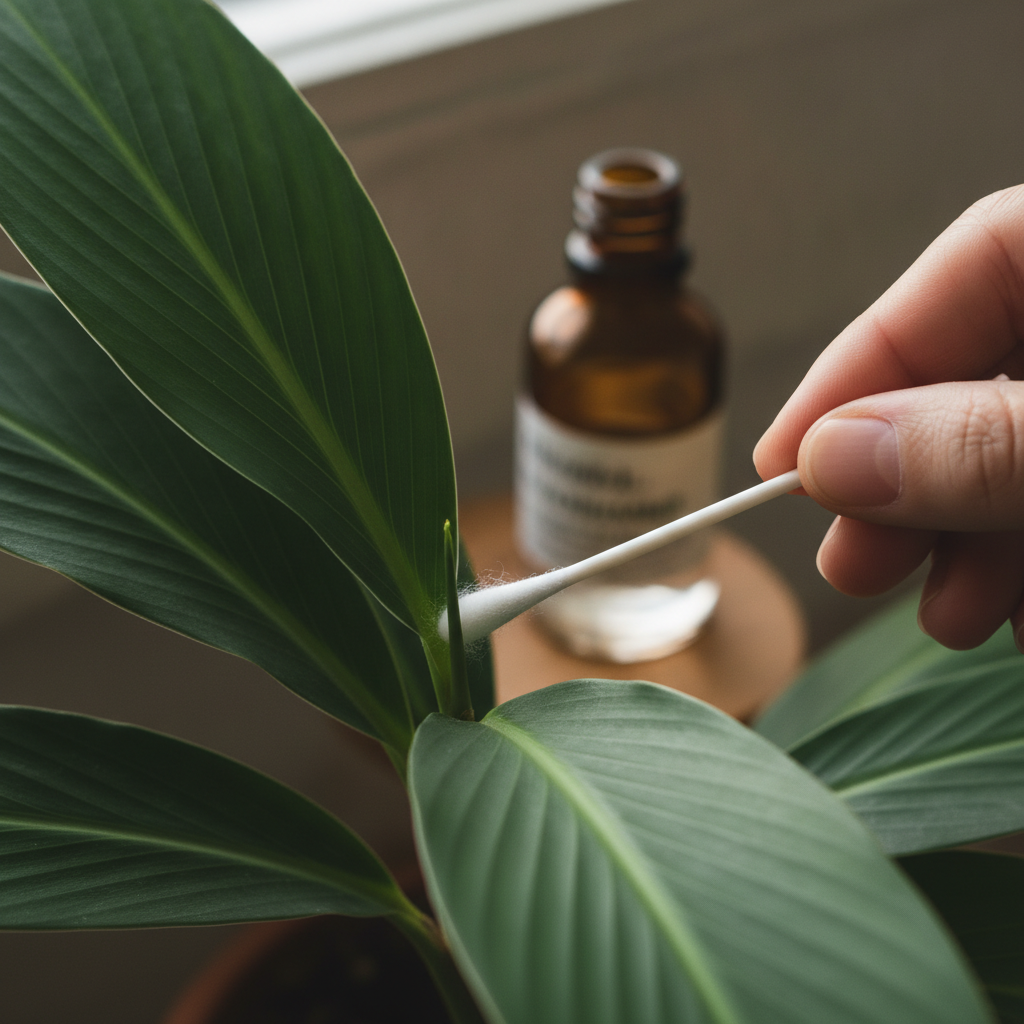
Less commonly, you may find mealybugs, small white cottony insects that tuck into the sheltered joints where leaf meets cane. Dab them off with a cotton bud dipped in diluted isopropyl alcohol, and follow up with insecticidal soap if more appear. Scale insects, which look like small brown limpets stuck to stems and leaf undersides, turn up occasionally and are dealt with the same way. In all cases, catching the problem early, while it is a few insects rather than a colony, makes treatment far easier, so inspect your plant, undersides included, whenever you water.
Most of the non-pest troubles you will meet trace back to watering and air. Brown, crispy leaf tips and edges are the classic signature of air that is too dry or a plant that has been allowed to dry out too far between waterings; raise the humidity and keep the moisture more consistent. Widespread yellowing lower leaves, especially paired with a soggy, sour-smelling mix, point to overwatering and the beginnings of root rot, in which case you should ease off, improve drainage and, if it has gone far, unpot the plant to cut away any blackened rhizome and repot into fresh mix. Some yellowing of the oldest leaves is simply natural ageing and nothing to worry about. Faded variegation and weak, stretched canes are light problems rather than pests, solved by moving the plant brighter. And a plant that is otherwise healthy but simply refuses to flower is almost always telling you it needs either more light, more maturity, or that its second-year canes were cut away before they had the chance to bloom.
Warning — Winter cold and draughts: Shell ginger is a warm-climate plant that resents cold. Keep it away from icy windowpanes, unheated porches and cold draughts in winter, and never let it sit below about 10 degrees Celsius (50 Fahrenheit) indoors. Sudden chilling causes leaf yellowing, spotting and collapse, and while established rhizomes can survive a brief cool spell, sustained cold will set the whole plant back badly.
Varieties
The straight species, with its plain glossy green leaves, is a handsome foliage plant in its own right, but two forms in particular are what most people bring home. Both share the same easy-going care described above; they differ only in appearance and, in the case of the dwarf, in size.
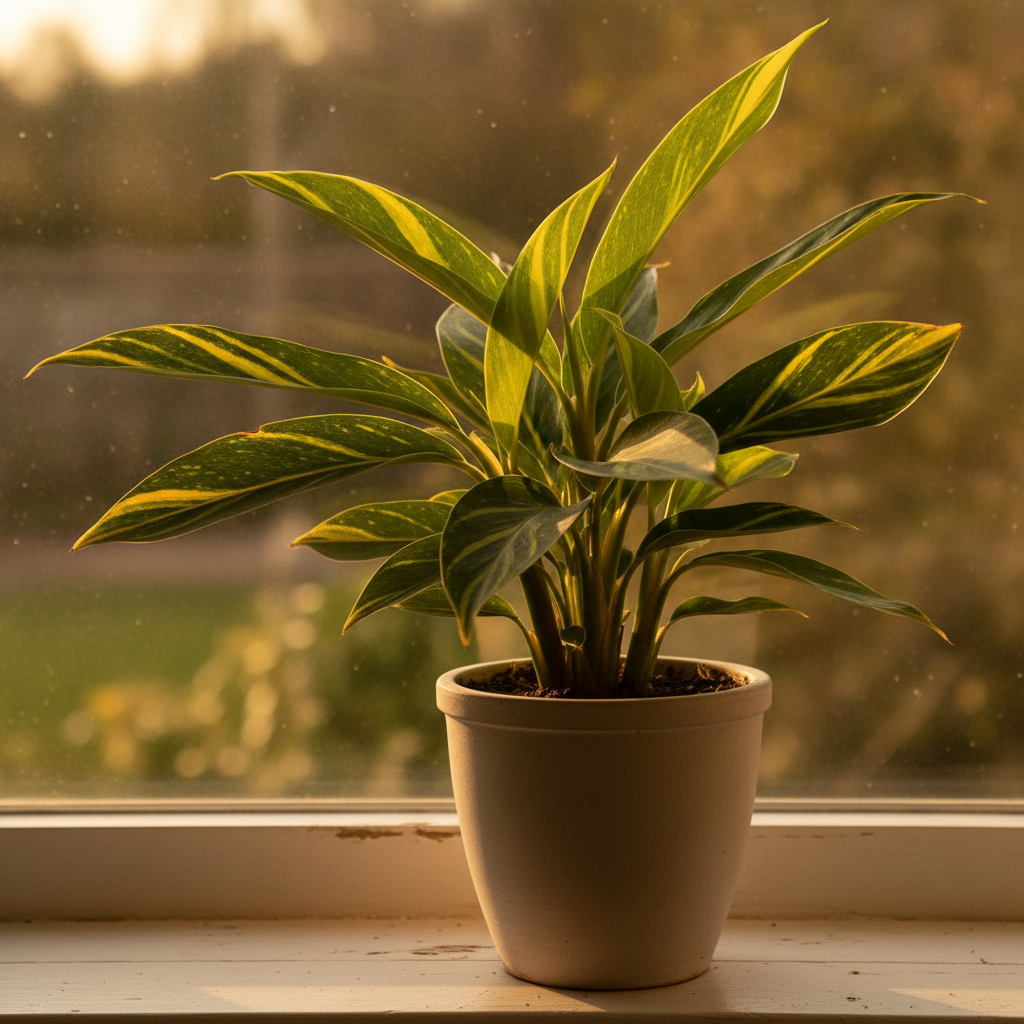
Variegated Shell Ginger (‘Variegata’)
The showstopper of the group and the reason “variegated ginger” is a common name in its own right. Its glossy green leaves are boldly striped and brushed lengthwise with bands of golden-yellow, so that a well-grown plant in good light seems to glow. The variegation is brightest and most stable when the plant gets plenty of light; in dim conditions the gold fades toward green. It tends to stay a touch more compact than the plain species indoors, which, combined with its colour, makes it the most popular form for the home.
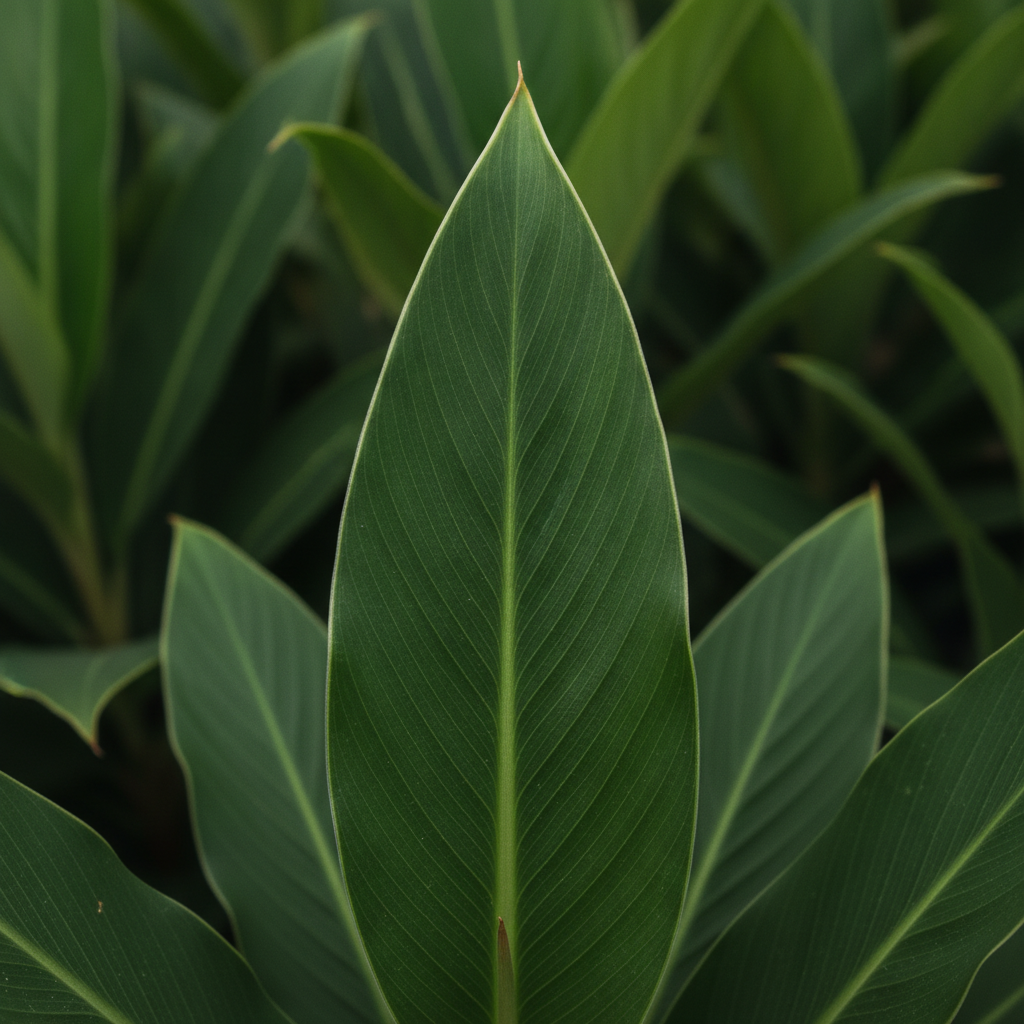
Dwarf Shell Ginger
For those short on ceiling height, dwarf selections keep the same lance-shaped leaves and aromatic character in a smaller, bushier package, typically reaching around 60 to 90 centimetres (2 to 3 feet) rather than towering. The compact habit makes the dwarf far easier to accommodate as a tabletop or shelf plant, and it flowers on shorter canes, which can make blooms a slightly more realistic prospect in a confined indoor space. Some dwarf forms are plain green while others carry a degree of variegation.
Frequently Asked Questions
Is shell ginger safe for cats and dogs?
Yes. Alpinia zerumbet is considered non-toxic to cats, dogs and people. The leaves have a long culinary tradition, being used to wrap foods and brew into a herbal tea across the plant’s native range, which makes it one of the safer large tropicals to keep in a home with pets or children. As with any plant, discourage pets from chewing on it, since fibrous foliage can cause mild stomach upset in quantity, but there is no toxicity to worry about.
Why won’t my shell ginger flower indoors?
This is the most common frustration with the plant, and it usually comes down to one of three things. First, light: shell ginger needs a great deal of bright light to bloom, more than most indoor spots provide, so a plant in a dim corner will stay green but flowerless. Second, maturity: it flowers only on canes that are in their second year of growth, so a young or small plant simply has not built flowering-sized canes yet. Third, and the one growers most often trip over, pruning: if you cut the plant back hard each year you remove the very canes that would have flowered. Give it the brightest spot you can, a summer outdoors if possible, let it grow large, and leave last year’s canes standing, and flowering becomes far more likely, though it is never guaranteed in a container indoors.
How big does shell ginger get indoors?
Outdoors in the ground shell ginger can reach 2 to 3 metres (6 to 10 feet), but confined to a container and kept indoors it is more usually 1 to 1.5 metres (3 to 5 feet), and can be kept smaller by growing a dwarf form or by dividing the clump regularly to limit its vigour. It is nonetheless a substantial, arching plant that wants floor space and room to spread, so it suits a bright corner or a large window far better than a crowded shelf.
Why are the leaf tips turning brown?
Crispy brown tips and edges almost always mean the air is too dry, the plant has been allowed to dry out too far between waterings, or both. Shell ginger is a humidity-loving plant that struggles in the dry air of a heated room in winter. Raise the humidity with a humidifier, a pebble tray or a more humid room, keep the mix consistently moist rather than letting it swing between soaked and bone dry, and use tepid water. Existing brown tips will not turn green again, but new growth will come in clean once conditions improve.
Should I cut back my shell ginger for winter?
Generally, no, not if you hope to see flowers. Because blooms form on second-year canes, cutting everything back removes next year’s flowering wood. Instead, simply remove any individual canes that have flowered and died, or leaves that have yellowed or browned, and leave the healthy standing canes alone. Reduce watering and stop feeding over winter to let the plant rest, and resume normal care in spring. Only cut a cane right down if it is dead or damaged.
Can shell ginger grow in low light?
It will survive in medium or lower light for a long time, but it will not thrive there. In too little light the canes stretch and flop, growth becomes sparse, variegation fades and flowering is off the table entirely. If your only available spot is on the dim side, a shell ginger will persist as a green foliage plant, but to get the lush, sturdy, well-coloured growth the plant is capable of, and any hope of blooms, you need to give it the brightest position you can manage.






