
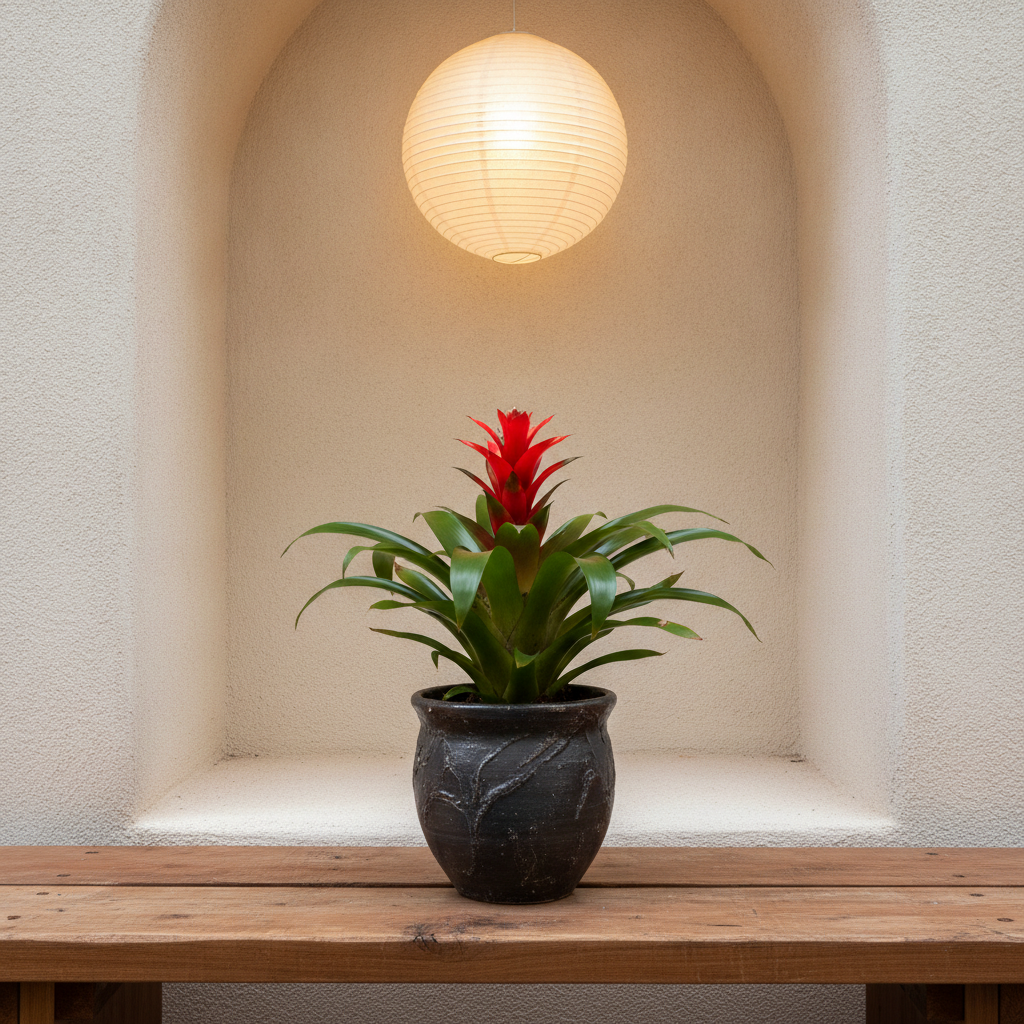
Few houseplants announce themselves as boldly as the Red Guzmania, a rainforest bromeliad crowned with a torch of glossy scarlet bracts that can hold their colour for three to four months at a stretch. Botanically it is Guzmania lingulata, a member of the pineapple family (Bromeliaceae) native to the humid understorey of Central and South America, where it grows not in the ground but perched on the trunks and branches of trees. Gardeners also know it as the Scarlet Star, and it has become one of the most widely sold flowering houseplants in the world precisely because that vivid central plume asks so little in return for so much visual reward.
Understanding this plant means understanding one simple fact: the colourful “flower” is not really a flower at all but a rosette of modified leaves, and the whole plant lives its life around a central watering cup formed by its overlapping foliage. Get that cup and the light right, and a Guzmania is close to unkillable. Misread it as an ordinary potted plant to be watered at the roots and left in a sunny window, and it will sulk, brown at the tips and rot at the base. This guide covers the full picture, from the biology of a tank bromeliad to the day-to-day rhythm of watering, feeding, potting and, crucially, coaxing the next generation of pups once the mother rosette has bloomed and begun its slow, natural decline.
Contents
- Quick Reference
- Why Red Guzmania Makes a Rewarding Houseplant
- Light Requirements
- Watering & Humidity
- Soil, Potting & Repotting
- Fertilising
- Propagation
- Pests & Diseases
- Popular Varieties
- Frequently Asked Questions
Quick Reference: Red Guzmania at a Glance
| Light | Bright, indirect light; no direct midday sun |
| Watering | Keep the central cup topped up with soft water; keep the mix lightly moist but never soggy |
| Temperature | 18 to 27 degrees Celsius (64 to 81 Fahrenheit); never below 13 degrees Celsius (55 Fahrenheit) |
| Humidity | High, ideally 60 per cent or more; tolerates average household levels |
| Fertiliser | Very light feeder; quarter-strength balanced feed once a month in spring and summer |
| Toxicity | Non-toxic and pet-safe for cats, dogs and humans |
Why Red Guzmania Makes a Rewarding Houseplant
The Red Guzmania earns its place on windowsills and coffee tables through a rare combination of drama and durability. Its scarlet inflorescence is one of the longest-lasting displays in the houseplant world, frequently staying bright for a full season and sometimes longer, which means a single plant delivers months of colour rather than the fleeting week or two of many flowering species. Below that crown sits a tidy, symmetrical rosette of arching green leaves rarely more than 30 to 45 centimetres (12 to 18 inches) across, making it compact enough for small flats yet substantial enough to anchor a shelf or side table.
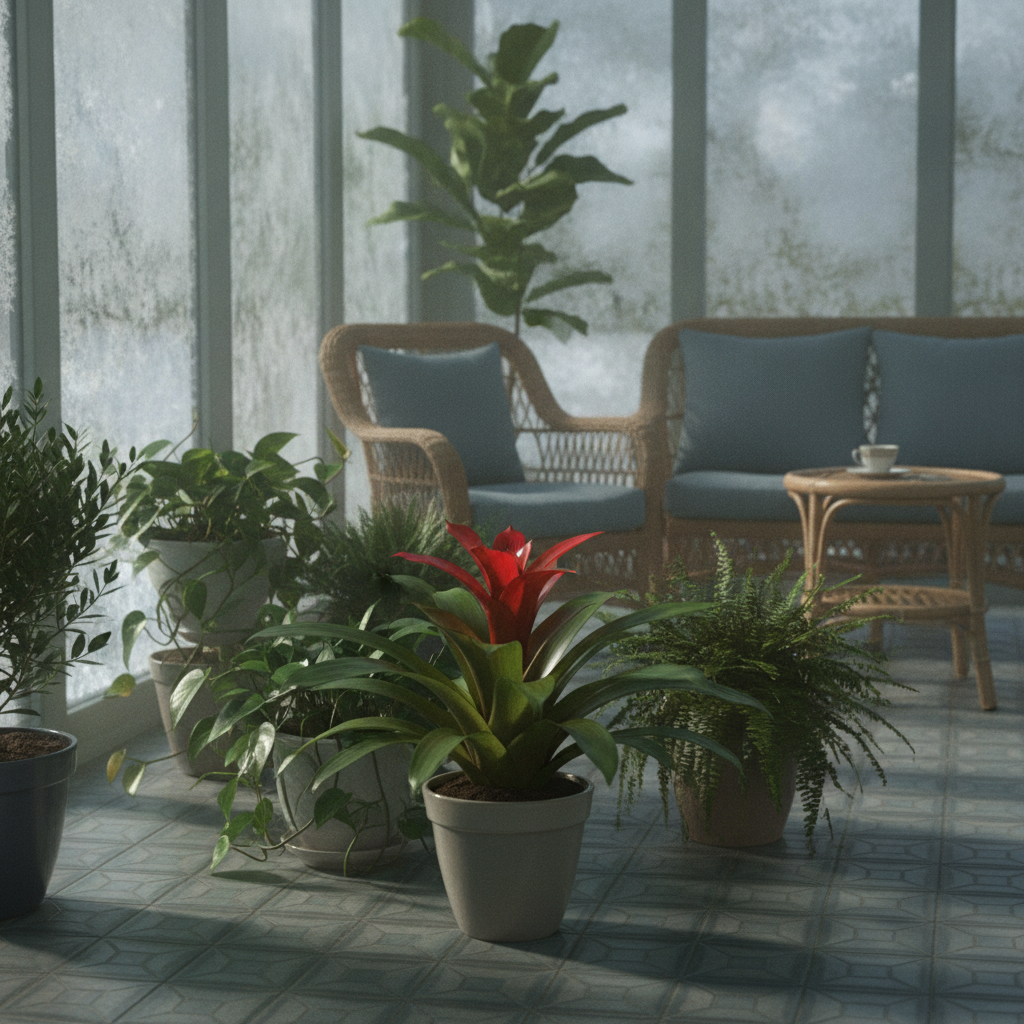
Just as important for the anxious plant owner, the Guzmania is genuinely forgiving. As an epiphyte it has evolved a shallow, undemanding root system and stores its own water reserve in the central cup, so it shrugs off the occasional missed watering far better than a thirsty fern or calathea would. It carries no toxic compounds, unlike many popular aroids, which makes it a sound choice for households with cats, dogs or small children. And because it thrives in the bright but sun-shielded conditions typical of an average living room, it rarely demands the specialist positioning that trickier plants require. The difference between merely surviving and truly thriving comes down to a handful of habits, chiefly how you manage that cup, which the rest of this guide sets out in detail.
Important — Toxicity: Guzmania lingulata is listed as non-toxic to cats, dogs and humans, so it poses no poisoning risk if a leaf is nibbled. The leaf edges are soft rather than sharp, but as with any plant it is still sensible to discourage pets from chewing the foliage, since fibrous plant matter can cause mild stomach upset in sensitive animals.
Light Requirements
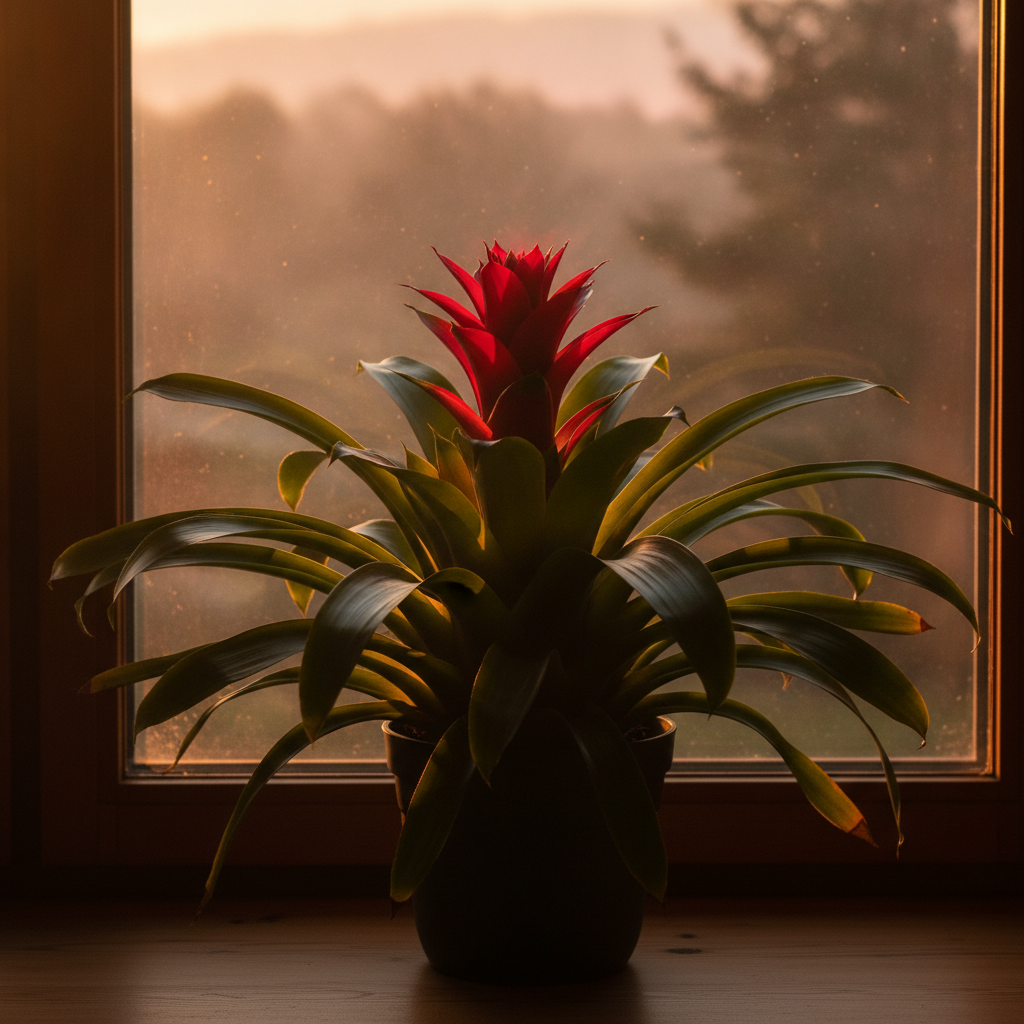
In the wild, a Red Guzmania spends its life clinging to a branch beneath the rainforest canopy, bathed in bright but heavily filtered light that reaches it through layers of leaves overhead. Recreating that dappled brightness indoors is the single most important thing you can do for the plant after managing its water. Guzmanias want light that is generous in quantity but soft in quality, the kind found a metre or two back from a bright window rather than pressed against the glass.
The ideal position is one that receives plenty of ambient daylight but shields the rosette from any direct beam of sun, particularly the harsh light of late morning through mid afternoon. Under those conditions the leaves stay a deep, even green and the coloured bract holds its saturation. Too little light and the plant grows lax and pale, its bract fading prematurely; too much direct sun and the foliage bleaches and scorches. Reading the plant is straightforward once you know what to look for.
Light Levels Explained
Houseplant light is often described in vague terms, so the table below translates the usual categories into approximate brightness levels, typical locations and the outcome you can expect for a Guzmania in each.
| Light Category | Approx. Level | Typical Location | Outcome |
|---|---|---|---|
| Direct sun | Over 50,000 lux | On a south-facing sill in summer | Leaves bleach and scorch; avoid |
| Bright indirect | 15,000 to 40,000 lux | A metre from an east or west window | Ideal; rich colour and firm rosette |
| Medium | 8,000 to 15,000 lux | Interior of a bright room | Acceptable; slower, still healthy |
| Low | 2,000 to 8,000 lux | North room, well back from glass | Survives but bract fades faster |
| Very low | Under 2,000 lux | Hallway or windowless corner | Decline; leggy, dull, prone to rot |
Window Orientation and Placement
South-facing window: The brightest exposure in the northern hemisphere and generally too intense at the glass. Place the Guzmania two to three metres back, or diffuse the light with a sheer curtain, so the rosette receives brightness without a direct beam.
East-facing window: Close to perfect. The plant enjoys gentle, cool morning sun followed by bright ambient light for the rest of the day, which suits its rainforest sensibilities well.
West-facing window: Also good, provided the plant is set back a little to escape the strongest late-afternoon rays, which can be surprisingly fierce in summer and may mark the leaves.
North-facing window: Usable in summer and workable year round for a plant that is already in colour, though the light may be too weak to encourage strong growth or good bract colour in a young plant over winter.
Pro Tip — Rotate for Symmetry: A Guzmania grows toward its light source, and because the rosette is so symmetrical any lean quickly becomes obvious. Give the pot a quarter turn each time you top up the cup to keep the plant balanced and the crown centred.
How Light Affects Bract Colour
The scarlet crown is the whole point of a Red Guzmania, and light governs how long and how vividly it holds. Bright indirect light keeps the bracts saturated and firm, while insufficient light causes them to pale toward orange or dull pink and to droop sooner. Once a bract begins to fade there is no reviving it, since each rosette blooms only once, but good light throughout the display maximises the months of colour you get. It also matters for the next generation: pups raised in bright conditions produce stronger, more richly coloured inflorescences of their own when their turn to bloom arrives.
Warning — Direct Sunlight: A few hours of direct summer sun can permanently scorch a Guzmania, leaving pale bleached patches and crisp brown edges that never recover. If you notice the green fading to a washed-out yellow-green, move the plant further from the glass immediately rather than waiting to see whether it settles.
Artificial Lighting
Guzmanias respond well to supplementary light, which makes them good candidates for offices and darker interiors. A standard full-spectrum LED grow light positioned 30 to 45 centimetres (12 to 18 inches) above the rosette for 10 to 12 hours a day provides ample energy. Because the plant is naturally adapted to filtered light rather than blazing sun, even a modest fixture is usually enough to keep foliage green and the cup functioning, and it can carry a plant comfortably through the short days of winter.
Seasonal Adjustments
Light intensity indoors can drop by half or more between summer and midwinter, so a spot that was perfect in July may leave the plant hungry for brightness in January. Move the Guzmania closer to the window as the days shorten, then ease it back again in spring as the sun climbs and strengthens. Watch the leaves through the transition: firm, deep-green foliage means the balance is right, while soft, stretching growth signals a need for more light.
Watering & Humidity
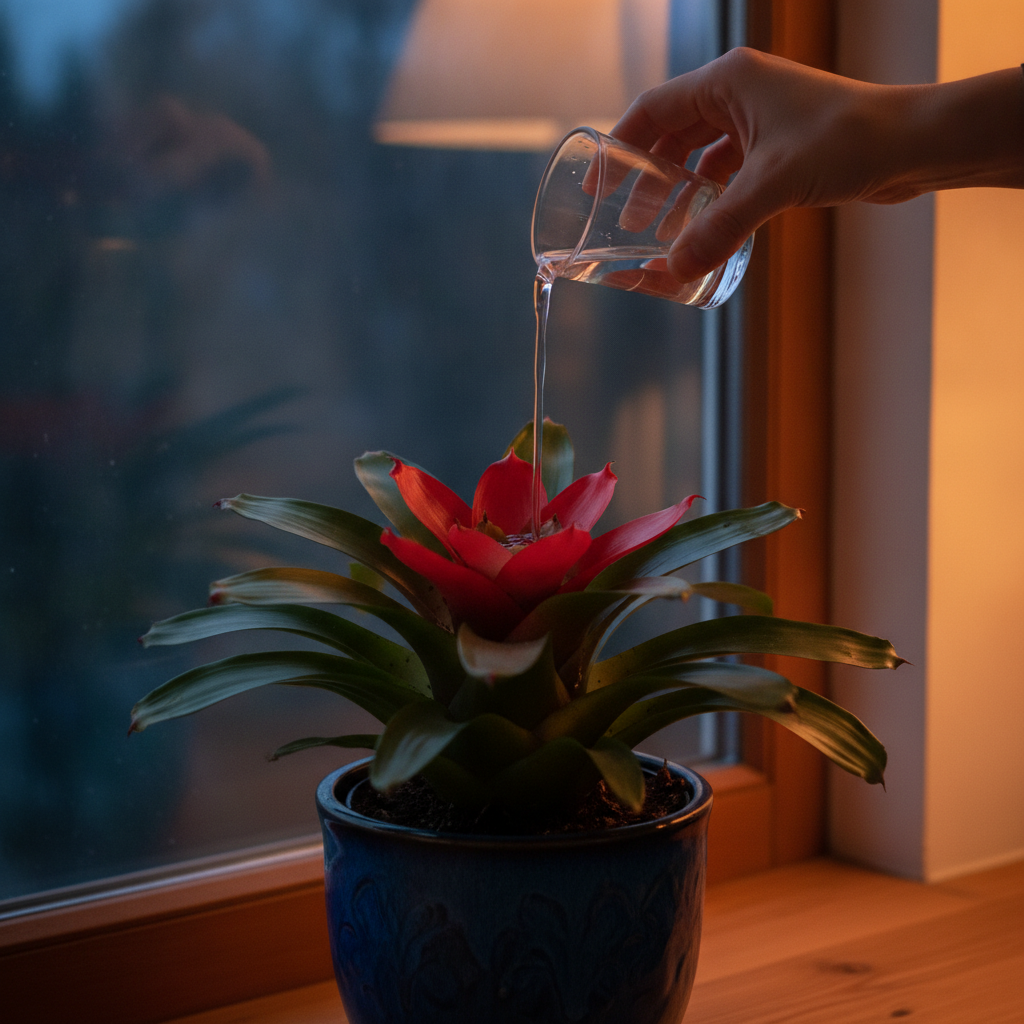
Watering is where the Guzmania parts company with almost every other houseplant, and where most people go wrong. As a tank bromeliad it draws the bulk of its moisture not through its roots but through the reservoir formed by its tightly overlapping leaves, the “cup” or “tank” at the centre of the rosette. The roots exist mainly to anchor the plant and to take up a little water and nutrient; they are not built to sit in constantly wet soil. Water the cup, keep the mix only lightly moist, and you have the plant’s needs almost entirely covered.
When to Water
Keep 2 to 3 centimetres (about 1 inch) of water sitting in the central cup at all times during the growing season, topping it up as it evaporates or is taken up. Alongside this, allow the top of the potting mix to dry between waterings and add just enough moisture at the roots to prevent the medium becoming bone dry, roughly once a week in warm months and less often in winter.
The one habit that keeps a Guzmania healthy over the long term is flushing the cup. Water standing in the tank grows stagnant and can harbour bacteria and mosquito larvae, and mineral residue accumulates as it evaporates. Every one to two weeks, tip the plant gently to empty the old water, rinse the cup with fresh soft water, and refill. This single routine prevents the crown rot that claims more Guzmanias than any other cause.
Pro Tip — Empty the Cup When It Blooms: Once the plant is in full colour, some growers keep the cup only lightly filled or empty it entirely and rely on soil and humidity instead, since a mature rosette in decline is more prone to rot. If the crown ever smells sour, empty and rinse it at once.
How to Water Correctly
- Use room-temperature soft water: rainwater, distilled or filtered water is far kinder than hard tap water.
- Pour a slow stream into the centre of the rosette until 2 to 3 centimetres of water sits in the cup.
- Add a little water to the potting mix as well, just enough to keep it from drying out completely.
- Every one to two weeks, tip the plant to drain the old cup water, rinse, and refill with fresh water.
- Empty any water that collects in the saucer beneath the pot so the roots never stand in it.
- In winter, reduce root watering and keep only a shallow film of water in the cup.
Signs of Overwatering vs. Underwatering
| Symptom | Overwatering | Underwatering |
|---|---|---|
| Leaf colour | Yellowing at the base, browning centre | Dull green fading to straw |
| Leaf texture | Soft, mushy near the crown | Thin, curled, papery tips |
| Central cup | Sour smell, cloudy water | Dry and empty for long spells |
| Roots | Blackened, slimy, foul-smelling | Dry, brittle, shrunken |
| Stem base | Rotting, plant loosens in pot | Firm but shrivelled rosette |
Warning — Root and Crown Rot: A soggy potting mix combined with stagnant cup water is the fastest route to killing a Guzmania. If the base of the rosette turns soft and brown or the plant wobbles loose in its pot, the crown is rotting. Empty the cup, remove any mush, cut back on watering sharply, and hope the plant has already set pups you can rescue.
Humidity Requirements
As a rainforest native the Guzmania appreciates humidity, ideally 60 per cent or more, though it copes with average household air better than many tropical plants thanks to its water-storing cup. In a dry, centrally heated room the leaf tips are the first thing to suffer, browning and crisping when the air falls consistently below about 40 per cent.
The most reliable warning sign of insufficient humidity is a rim of brown along the leaf edges and tips, sometimes accompanied by a general loss of gloss. Bathrooms and kitchens, with their naturally moister air, are often the happiest rooms for a Guzmania, and grouping it with other plants creates a beneficial microclimate.
To raise humidity, stand the pot on a wide tray of pebbles topped up with water so the base sits above the waterline, run a small humidifier nearby in winter, or cluster several plants together. Occasional misting of the foliage does little harm and freshens the leaves, but it is no substitute for genuine ambient humidity and should never be relied upon alone.
Water Quality
Guzmanias are noticeably sensitive to the minerals and chlorine in hard tap water, which build up in the cup and can leave leaves marked and tips scorched. Wherever possible, use rainwater, distilled water or water filtered by reverse osmosis, especially for the central tank where residues concentrate as the water evaporates. If only tap water is available, letting it stand overnight allows some chlorine to dissipate, and flushing the cup regularly limits the accumulation of dissolved salts.
Soil, Potting & Repotting
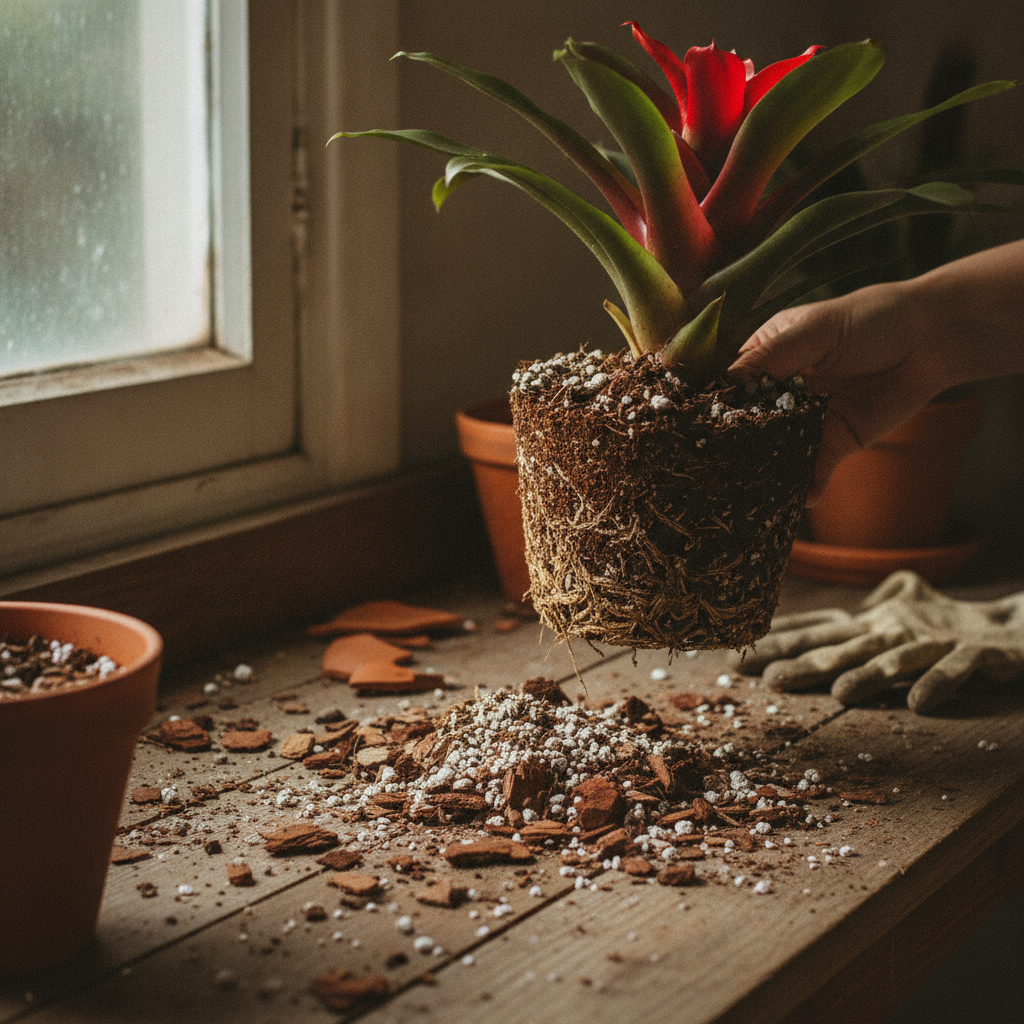
Because the Guzmania is an epiphyte, its relationship with soil is unusual. In nature it has no soil at all, its roots gripping bark and moss rather than earth. Potted indoors, it needs a medium that mimics that airy, fast-draining anchorage: something that holds a little moisture but drains almost instantly and never compacts into a dense, waterlogged mass around the delicate roots.
Ideal Soil Composition
The best medium for a Guzmania is a loose, chunky blend built around orchid bark, closer to an orchid mix than a standard houseplant compost. A purpose-made bromeliad or orchid mix works straight from the bag, or you can blend your own from the components below to achieve the same free-draining, well-aerated structure.
| Component | Proportion | Function |
|---|---|---|
| Orchid bark (fine to medium) | 50 per cent | Provides open structure and air around the roots |
| Perlite or pumice | 20 per cent | Sharpens drainage and prevents compaction |
| Coco coir or peat-free compost | 20 per cent | Holds light, even moisture |
| Sphagnum moss or leaf mould | 10 per cent | Retains a touch of humidity at the roots |
Guzmanias prefer a slightly acidic root environment, in the region of pH 5.0 to 6.0, which a bark-based mix naturally provides. This mild acidity helps the roots take up the small quantities of nutrients they need and is another reason to avoid alkaline hard water, which nudges the medium in the wrong direction over time.
Pro Tip — Quick Mix Recipe: If you want a simple, reliable blend, combine two parts orchid bark, one part perlite and one part peat-free compost or coco coir. It drains almost as fast as you pour water through it, which is exactly what these roots want.
Choosing the Right Pot
Guzmanias have small, shallow root systems and are notably top-heavy once the tall bract emerges, so pot choice is a balance between stability and not over-potting. A container that is too large holds excess moisture the roots cannot use, while one that is too small tips over under the weight of the crown.
Drainage holes are non-negotiable. Whatever pot you choose must drain freely from the base, since even a short spell of standing water at the roots invites rot in a plant this sensitive. If you love a decorative cover pot without holes, use it only as an outer sleeve and lift the inner nursery pot out to drain after watering.
Pot material: Terracotta is excellent because its porous walls wick away excess moisture and its weight counterbalances the tall inflorescence, lending welcome stability. Plastic and glazed ceramic work well too, provided you are disciplined about drainage and do not overwater.
Pot size: A pot 10 to 13 centimetres (4 to 5 inches) across suits most Guzmanias for their entire adult life. Resist the urge to move them into anything much larger; these plants genuinely prefer to be snug.
When to Repot
A Guzmania rarely needs repotting for the sake of its roots, and because each rosette blooms only once and then declines, many plants never require it at all. The main reasons to repot are to replace a mix that has broken down and gone soggy, to settle a newly bought plant into fresh medium, or to pot up separated offsets. Where possible, disturb the plant while it is in active growth in spring or summer rather than during the cooler months.
How to Repot: Step-by-Step
- Water the plant lightly a day beforehand so the rosette is turgid and the mix holds together.
- Ease the plant out of its pot, supporting the base of the rosette rather than pulling on the leaves.
- Gently tease away the old, spent medium from the shallow roots, taking care not to snap them.
- Part-fill the new pot with fresh bark-based mix and set the plant at the same depth it grew before.
- Fill in around the roots, firming lightly so the plant is stable but the mix stays open and airy.
- Settle the medium with a little water at the roots, then top up the central cup with soft water.
- Return the plant to bright indirect light and hold off on feeding for a few weeks while it re-establishes.
Warning — Planting Depth: Never bury the base of the rosette below the surface of the mix. Planting a Guzmania too deep traps moisture against the crown and causes it to rot. The point where the leaves emerge should sit at or just above soil level.
Fertilising
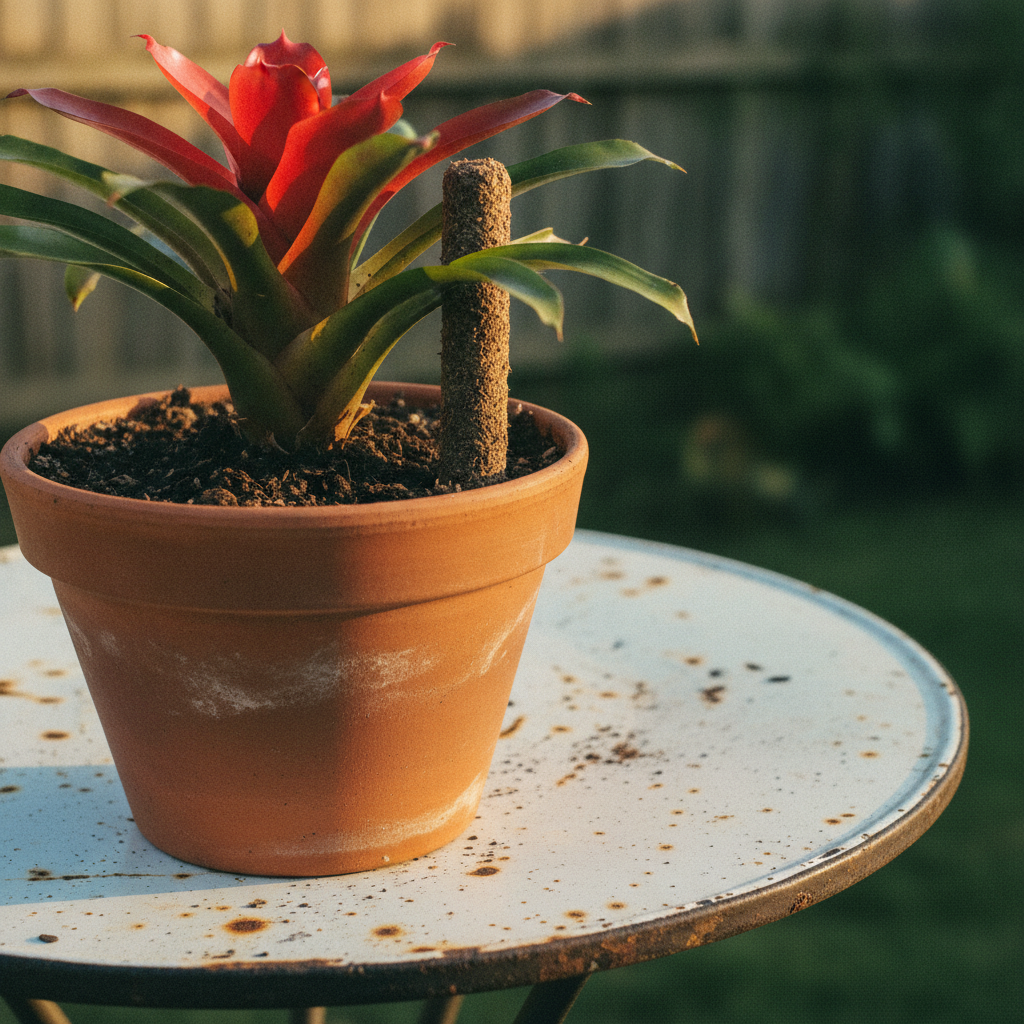
Guzmanias are among the lightest feeders in the houseplant world. Adapted to scavenge minute traces of nutrient from rainwater and decaying debris washing over them in the canopy, they need only the gentlest feeding and are easily harmed by too much. The guiding principle is restraint: a little, well diluted, occasionally.
It also helps to accept what feeding can and cannot do. Fertiliser will not make an existing rosette bloom again, since each rosette flowers a single time, nor will it intensify a bract that has already begun to fade. What it does is build strong, vigorous pups that go on to flower well themselves, so feeding is really an investment in the next generation.
Understanding Plant Nutrients
Fertilisers are labelled with three numbers, the N-P-K ratio, showing the percentages of nitrogen, phosphorus and potassium. Beyond these, plants draw on secondary nutrients and trace elements. For a Guzmania a balanced, dilute feed covers everything it needs; the table below explains what the main nutrients do and how a shortage shows itself.
| Nutrient | Symbol | Primary Function | Deficiency Symptoms |
|---|---|---|---|
| Nitrogen | N | Leaf growth and green colour | Pale, slow, weak foliage |
| Phosphorus | P | Root development and flowering | Poor pups, dull growth |
| Potassium | K | Overall vigour and stress resistance | Yellow edges, weak plant |
| Calcium | Ca | Cell wall strength | Distorted new leaves |
| Magnesium | Mg | Core of the chlorophyll molecule | Yellowing between leaf veins |
| Iron | Fe | Chlorophyll production | Pale new growth, green veins |
Types of Fertiliser
Liquid fertilisers: The easiest choice for a Guzmania because you control the concentration precisely. Use a balanced houseplant feed diluted to a quarter of the recommended strength, applied to the moist potting mix during the growing season.
Slow-release granular: Convenient but harder to control, and easy to overdose a plant this sensitive. If used at all, apply at half the stated rate and keep the granules well away from the central cup and the base of the rosette.
Organic fertilisers: Gentle options such as heavily diluted worm-casting tea or a weak seaweed feed suit the plant’s low appetite well and carry little risk of scorching, making them a forgiving choice for cautious growers.
Feeding Schedule
Feed only during the active growing months of spring and summer, roughly once a month, and always at a quarter strength. Stop entirely in autumn and winter when growth naturally slows. A mature plant already in full colour needs no feeding at all; save your attention for young, actively growing rosettes and developing pups, which are the ones that will actually use it.
Pro Tip — Keep Feed Out of the Cup: Never pour concentrated fertiliser into the central tank, where it can burn the tender crown and encourage algae. If you wish to feed through the cup, use only a very dilute solution and flush the tank with plain water a day or two later.
How to Fertilise
- Dilute a balanced liquid houseplant feed to a quarter of the recommended strength.
- Make sure the potting mix is already slightly moist so the feed does not shock dry roots.
- Apply the diluted solution to the mix, keeping it off the crown and out of the central cup.
- Feed no more than once a month, and only from spring through late summer.
- Every few months, flush the mix with plain water to wash away any accumulated salts.
Warning — Salt Build-Up: Over-feeding leaves a crust of mineral salts in the mix and cup that scorches leaf tips and damages roots. Brown, crisp tips on a well-watered plant often point to too much fertiliser rather than too little water. When in doubt, feed less.
Propagation
Propagation is not merely a way to make more Guzmanias; it is how you keep one at all. Every Guzmania is monocarpic, meaning each rosette flowers only once in its life and then, over the following months, slowly dies. Before it goes, though, it produces offsets known as pups around its base, and raising these is the natural continuation of the plant rather than an optional extra.
This makes the Guzmania quite unlike a plant you propagate from cuttings on a whim. The mother plant hands you her successors on her own schedule, and your job is simply to recognise when the pups are ready and to separate and pot them with care. Done well, a single supermarket Guzmania can become an unbroken succession of flowering plants for years.
Understanding Pups and the Mother Plant
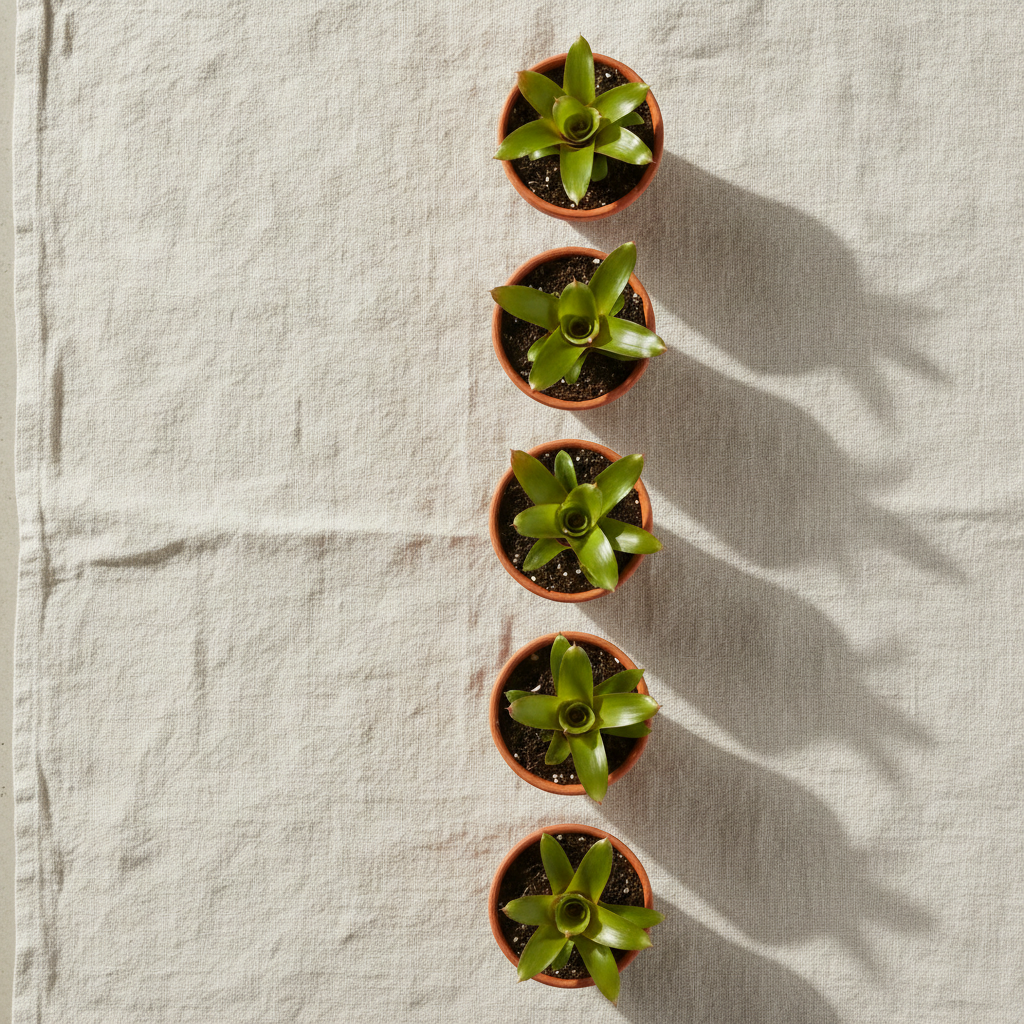
After the bract has coloured and slowly faded, the mother rosette diverts its energy into producing one or several pups from its base, small replicas that emerge between the outer leaves. As the mother declines the pups swell and develop their own roots. The key to success is patience: a pup separated too early has too little root and rarely survives, while one left until it is roughly one third to one half the size of the mother, ideally with a few roots of its own, transplants easily and grows away quickly.
Separating Pups: Step-by-Step
Dividing pups is the standard and by far the most reliable method of propagating a Guzmania. Wait until each offset is well developed, then separate it cleanly from the spent mother.
- Wait until the pup is one third to one half the size of the mother and shows some roots of its own.
- Ease the whole plant out of its pot so you can see clearly where pup meets mother.
- With a clean, sharp knife, cut the pup away at the point of attachment, keeping any roots intact.
- Let the cut surface dry and callus for a few hours to reduce the risk of rot.
- Pot the pup into a small container of fresh bark-based mix, setting it just deep enough to stand upright.
- Keep the mix lightly moist and put a little water in the pup’s small central cup as it forms.
- Place in warm, bright indirect light and be patient; new plants establish over several weeks.
Pro Tip — Let Them Cluster: You do not have to separate pups at all. Left in place as the mother fades, they will grow on into a fuller, multi-headed clump that can look spectacular and flower in waves. Division simply gives you more individual plants to spread around or share.
Growing Pups On: Step-by-Step
Once separated, a pup needs a stretch of steady, warm growing before it reaches blooming size. This stage is where light feeding and good light pay off in the strength of the eventual bloom.
- Keep the young plant warm, ideally 20 to 25 degrees Celsius (68 to 77 Fahrenheit), and humid.
- Provide bright indirect light to build a strong, deep-green rosette.
- Maintain a shallow film of soft water in the developing cup and keep the mix lightly moist.
- Feed once a month at quarter strength through spring and summer to encourage vigorous growth.
- Expect a pup to take one to three years to mature and produce its own coloured bract.
Troubleshooting Propagation
| Problem | Likely Cause | Solution |
|---|---|---|
| Pup rots after separation | Cut kept too wet or planted too deep | Let the cut callus; pot shallowly in airy mix |
| Pup fails to root | Separated before it was large enough | Wait until it is at least a third of the mother’s size |
| No pups appear | Plant too young or too stressed | Keep it healthy and warm; pups follow flowering |
| Pup grows very slowly | Low light or too cool | Increase warmth and brightness; feed lightly |
Pests & Diseases
Guzmanias are relatively resistant to pests, and a healthy, well-positioned plant is seldom troubled. When problems do arise they tend to be one of a small handful of sap-sucking insects that shelter among the tightly packed leaf bases, or a rot brought on by overwatering rather than any insect at all. Vigilance and good culture prevent almost all of it.
The tightly overlapping leaf axils that make the plant so distinctive also give pests a snug place to hide, so inspection means looking down into the crown and between the leaf bases, not just over the top of the foliage. Catching an infestation early, while it is still confined to a few insects, makes it far easier to clear.
Common Pests
Scale Insects (Coccidae)
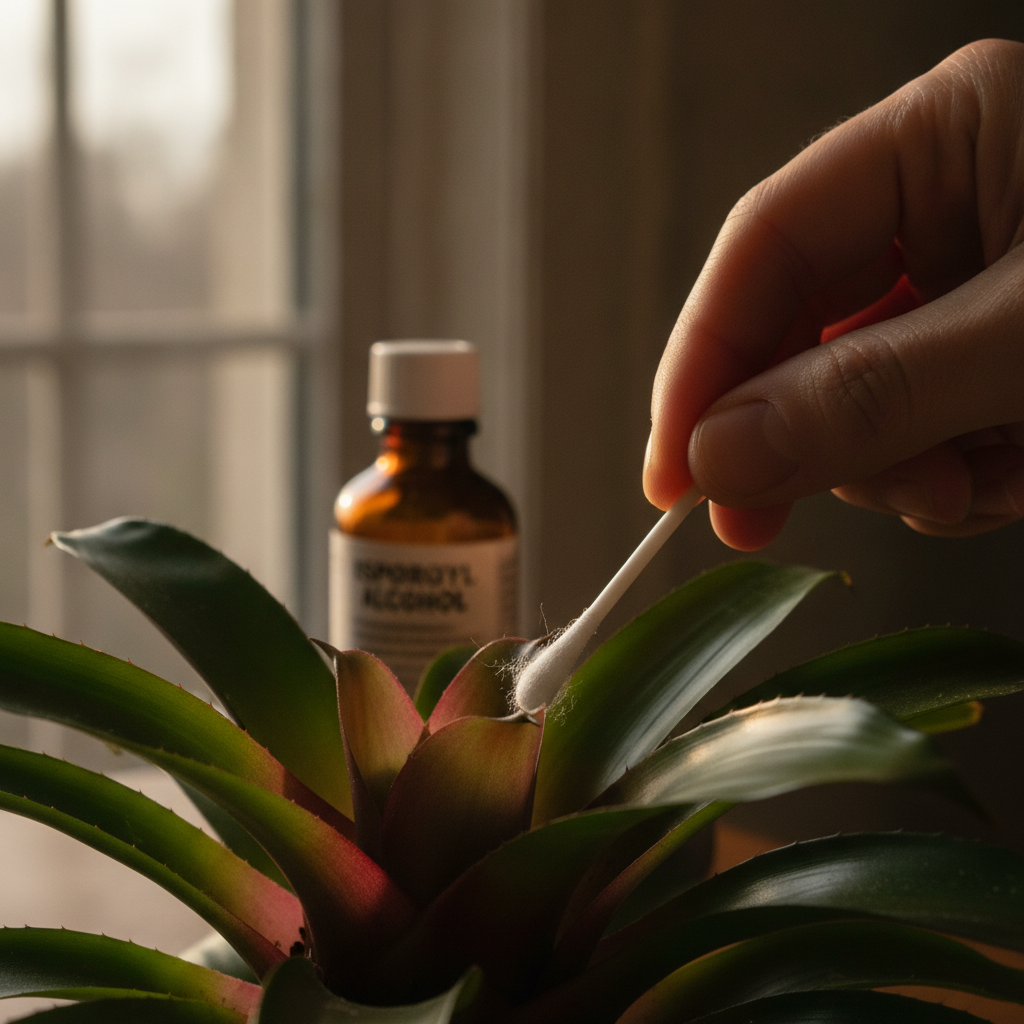
Scale appear as small, flat brown discs clinging to the leaves and, most often, tucked into the sheltered leaf axils. They feed on sap, weakening the plant and leaving behind sticky honeydew that can turn into sooty mould. A light infestation is easy to miss until the discs multiply.
Treatment: Dab each scale with a cotton bud dipped in diluted isopropyl alcohol to lift it away, then wipe the area clean. For heavier outbreaks, treat with a horticultural oil or insecticidal soap, repeating every week or two until no new scale appear.
Mealybugs (Pseudococcidae)
Mealybugs look like small tufts of white cotton wool and gather in exactly the same protected leaf axils, sucking sap and secreting honeydew. Their waxy coating makes them slightly water-resistant, so they can persist if not treated thoroughly.
Treatment: Touch each cluster with an alcohol-dipped cotton bud, which dissolves the waxy coat and kills the insect. Follow up with insecticidal soap or neem oil across the whole plant, and check the crown carefully since mealybugs love to hide deep in it.
Aphids (Aphidoidea)
Aphids are small green, black or pinkish insects that cluster on soft new growth and on the emerging inflorescence, distorting tender tissue as they feed. They reproduce quickly and can build up in numbers within days.
Treatment: Rinse them off with a gentle stream of water, then treat any survivors with insecticidal soap. Because aphids breed so fast, check again after a few days and repeat if necessary until the new growth stays clean.
Common Diseases
Crown and Root Rot (Pythium and Phytophthora)
By far the most serious threat to a Guzmania, crown rot sets in when water sits too long around the base of the rosette or the mix stays waterlogged. The crown softens, browns and eventually collapses, and the plant loosens in its pot as the roots die. It is far easier to prevent than to cure.
Treatment: At the first sign, empty the cup, cut away any soft, discoloured tissue with a clean blade and drastically reduce watering. Improve drainage and airflow. If the crown is already collapsing, focus on rescuing any healthy pups, which can be separated and grown on.
Fungal Leaf Spot (various fungi)
Leaf spot shows as brown or black patches, sometimes ringed with yellow, usually where water has sat on the foliage in stagnant, poorly ventilated conditions. It is rarely fatal but disfigures the leaves and can spread if left unchecked.
Treatment: Remove affected leaves, improve air circulation and avoid wetting the foliage in cool, still conditions. A copper-based fungicide can help halt a persistent case, but better ventilation usually solves the problem on its own.
Pest and Disease Summary
| Pest / Disease | Identification | Treatment |
|---|---|---|
| Scale insects | Flat brown discs in leaf axils | Alcohol swab, then horticultural oil |
| Mealybugs | White cottony tufts in the crown | Alcohol swab, then neem or soap |
| Aphids | Clusters on new growth and bracts | Rinse off, then insecticidal soap |
| Crown and root rot | Soft brown base, loose plant | Empty cup, cut rot, dry out, save pups |
| Fungal leaf spot | Brown or black ringed patches | Remove leaves, improve airflow |
Prevention Strategies
Prevention with a Guzmania comes down to a few consistent habits. Refresh the water in the central cup regularly so it never turns stagnant, keep the potting mix on the dry side of moist, and ensure the plant has decent air movement around it rather than sitting in a still, damp corner. Together these deny both pests and rot the conditions they need to take hold.
Quarantine is worth the small effort too. Any new plant brought into the home should be kept apart from your others for a couple of weeks and inspected closely, since bromeliads sold in busy garden centres can arrive already carrying scale or mealybugs deep in the crown where they are easy to overlook.
Pro Tip — Inspect the Axils: When you top up or flush the cup, take a few seconds to peer down between the leaf bases with a torch. The sheltered axils are where scale and mealybugs first appear, and spotting one or two early saves you a full-blown infestation later.
Popular Varieties
The Red Guzmania sold in shops is usually Guzmania lingulata or one of its many named cultivars, and breeders have selected forms ranging from compact scarlet stars to tall, deep-burgundy torches. The species is also frequently crossed and grouped with close relatives, so the same care applies across a wide and colourful family.
Colour is the main point of difference between varieties, spanning fiery red, orange, yellow, pink and near-purple, along with differences in size and how upright or open the bract sits. The table gathers the most widely available forms, and the featured cards below profile two of the best known.
| Variety | Leaf & Bract Appearance | Light Needs | Growth Rate | Availability |
|---|---|---|---|---|
| ‘Minor’ (Scarlet Star) | Compact rosette, bright scarlet star | Bright indirect | Moderate | Very common |
| ‘Amaretto’ | Taller, deep wine-red bract | Bright indirect | Moderate | Common |
| ‘Rana’ | Broad orange-red torch | Bright indirect | Moderate | Common |
| ‘Empire’ | Large, vivid red inflorescence | Bright indirect | Moderate | Common |
| ‘Ostara’ | Slim orange bract, tall stem | Bright indirect | Moderate | Occasional |
| ‘Hope’ | Soft yellow to lime bract | Bright indirect | Moderate | Occasional |
| Guzmania sanguinea | Flat rosette flushed red, no tall stem | Bright indirect | Slow | Specialist |
Featured Varieties
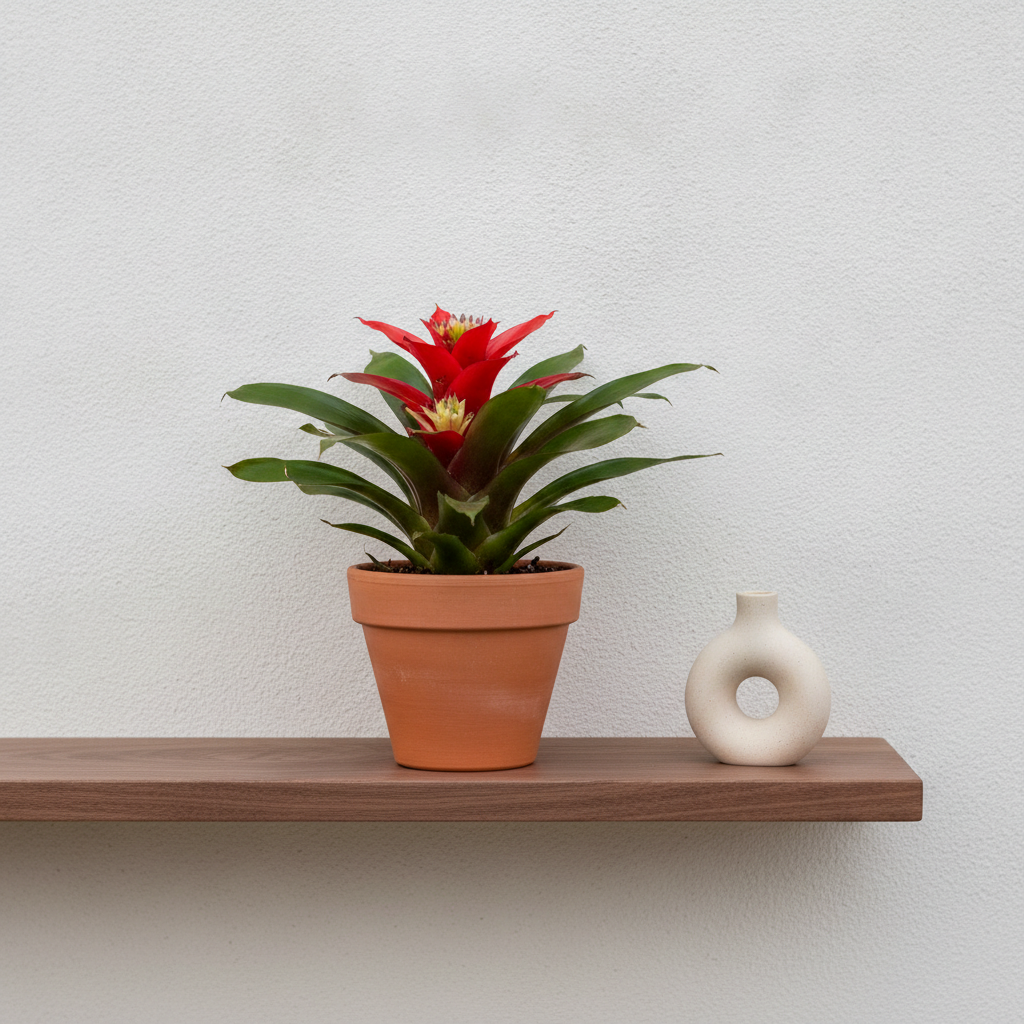
‘Minor’ (Scarlet Star)
The most widely sold form, compact enough for a small windowsill and topped with a neat, star-shaped crown of vivid scarlet bracts. Its tidy proportions and reliable colour make it the classic introduction to the species.
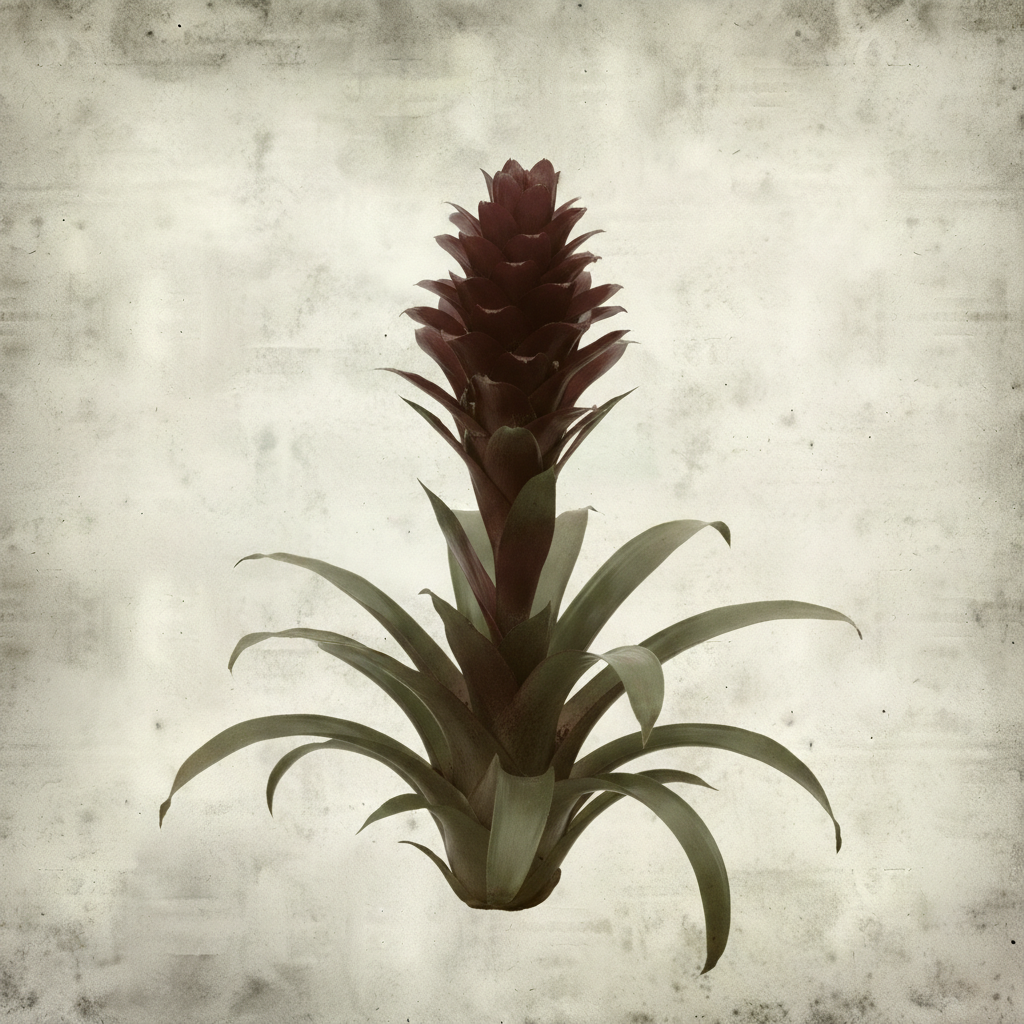
‘Amaretto’
A taller, more dramatic cultivar whose inflorescence deepens from red to a rich wine-burgundy as it matures. It makes a striking statement plant and holds its darker colour beautifully in good indirect light.
Variety Profiles in Detail
‘Minor’ Scarlet Star (Guzmania lingulata ‘Minor’)
A dwarf selection of the species rarely exceeding 30 centimetres (12 inches) across, ‘Minor’ is the Guzmania most people first meet. Its compact rosette and bright, long-lasting scarlet star suit small spaces perfectly, and it pups readily, making it an easy plant to keep going year after year.
‘Amaretto’ (Guzmania ‘Amaretto’)
Prized for its unusually deep, wine-red inflorescence, ‘Amaretto’ is a taller hybrid that reads almost burgundy in lower light. It has the same undemanding care as the species but rewards a brighter position with the fullest, darkest colour.
Guzmania sanguinea (Guzmania sanguinea)
A distinctive relative that dispenses with the tall stem altogether, instead flushing its whole flat rosette a brilliant red at flowering time, with the small flowers nestled in the centre. Slower and more specialist, it appeals to collectors who want something beyond the familiar torch shape.
Choosing the Right Variety for Your Space
Because every Guzmania shares the same easy-going care, the choice really comes down to colour and scale. For a small sill or desk, the compact ‘Minor’ is hard to beat; for a bolder statement on a shelf or side table, a taller cultivar such as ‘Amaretto’ or ‘Empire’ brings more presence. Match the bract colour to your room, remember that all of them eventually fade and hand over to pups, and you can enjoy a rolling display of colour from a single plant lineage for years.
Frequently Asked Questions
Why is my Guzmania’s red flower turning brown?
This is almost always natural rather than a sign of trouble. The colourful bract lasts several months but eventually fades and browns as the rosette reaches the end of its single flowering cycle. Once it does, the plant turns its energy to producing pups at the base, which become your next generation of plants.
Will my Guzmania flower again?
No, each individual rosette flowers only once and then slowly dies. However, it produces offsets before it goes, and each of those pups will grow up to flower in its turn, so the plant effectively renews itself. A mature pup typically takes one to three years to reach blooming size.
Should I water the soil or the central cup?
Primarily the cup. Keep a few centimetres of soft water in the central rosette and only lightly moisten the potting mix, letting its surface dry between waterings. Flush and refill the cup with fresh water every one to two weeks to keep it from going stagnant.
Is Red Guzmania safe for cats and dogs?
Yes. Guzmania lingulata is non-toxic to cats, dogs and humans, which makes it one of the safer colourful houseplants for a home with pets. It is still wise to discourage chewing, since any fibrous foliage can cause mild stomach upset if eaten in quantity.
How much light does a Guzmania need?
Bright but indirect light is ideal, the kind found a metre or two back from an east or west window. Avoid direct midday sun, which scorches the leaves, and steer clear of dim corners, where the plant grows weak and the bract fades early.
Why are the leaf tips turning brown?
Brown, crisp tips usually point to low humidity, hard water or a build-up of fertiliser salts. Raise the humidity around the plant, switch to rainwater or distilled water, and feed only sparingly at quarter strength. Flushing the mix occasionally clears accumulated salts.
When and how do I remove the pups?
Wait until each pup is roughly one third to one half the size of the mother and has begun to form its own roots. Cut it away cleanly at the base with a sterile knife, let the cut callus for a few hours, and pot it into fresh bark-based mix. Alternatively, leave the pups in place to form a fuller clump.
Does a Guzmania need special soil?
It needs a very free-draining, airy medium rather than ordinary potting compost. A bromeliad or orchid mix works well, or you can blend orchid bark with perlite and a little coco coir. The roots are shallow and epiphytic, so anything dense or water-retentive risks rot.
What temperature does it prefer?
Warm, steady conditions between 18 and 27 degrees Celsius (64 to 81 Fahrenheit) suit it best. Keep it away from cold draughts and never let it drop below about 13 degrees Celsius (55 Fahrenheit), as chilling damages the foliage and encourages rot.
Can I grow Guzmania without any soil, like an air plant?
It can be mounted and grown epiphytically on bark, much as it grows in the wild, but this demands high humidity and frequent attention to the cup and roots. For most homes a small pot of open, bark-based mix is far more forgiving and gives the same healthy, colourful plant with much less effort.






