
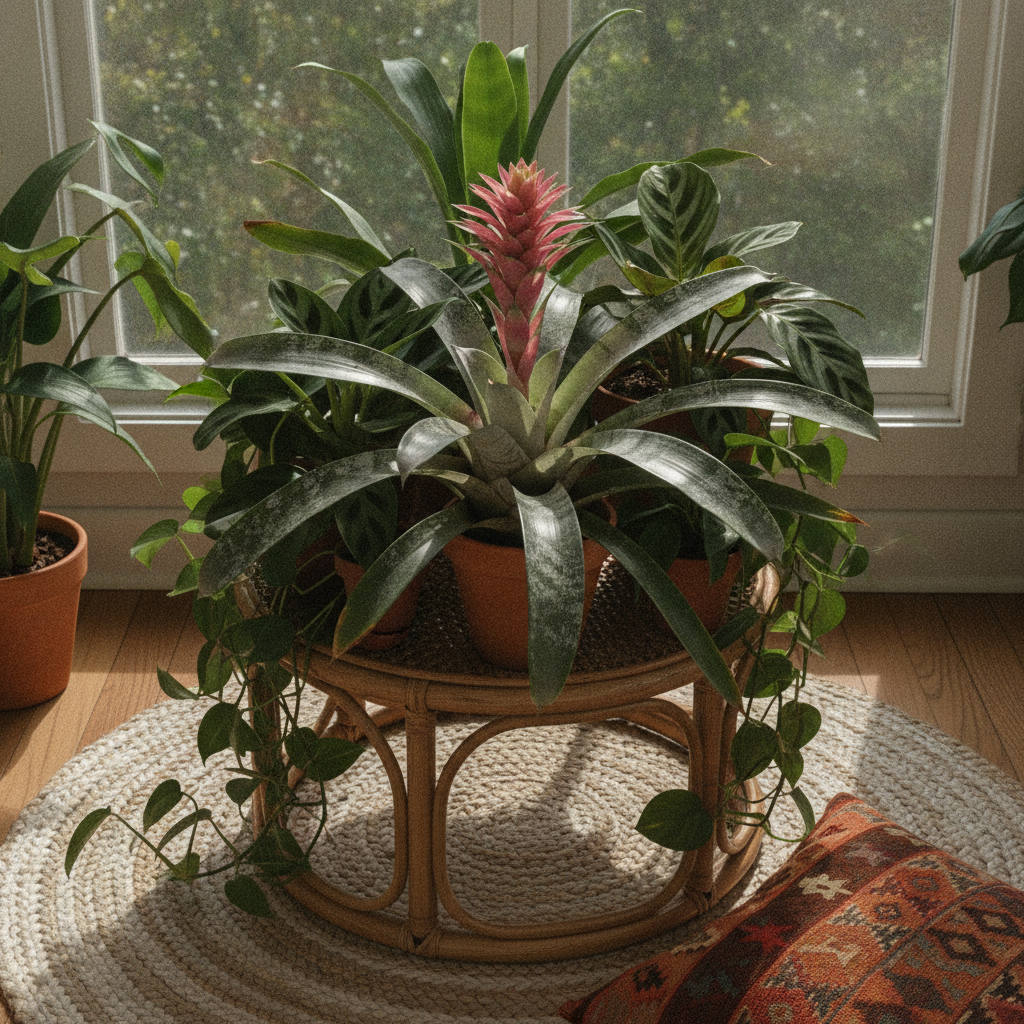
Few houseplants announce themselves quite as confidently as the silver vase bromeliad. Its broad, arching leaves are dusted with a chalky silver bloom and banded in ghostly white, curving outward to cradle a watertight cup at the centre. From that cup, a mature plant throws up a bristling rose-pink bract that can hold its colour for months. Botanically it is Aechmea fasciata, a tank-forming epiphyte from the Atlantic rainforests of Brazil, and understanding that wild origin is the key to keeping it well: this is a plant that drinks from its centre, feeds through its leaves, and asks very little of its roots.
The good news for nervous growers is that the silver vase bromeliad is genuinely forgiving. It survives neglect, tolerates the dry air of centrally heated rooms better than most tropical foliage, and is one of the few statement houseplants that is completely non-toxic to cats and dogs. The difference between a plant that merely survives and one that thrives comes down to a handful of habits that run counter to ordinary houseplant instinct. This guide walks through every one of them.
- Quick reference
- Why the silver vase bromeliad makes a good houseplant
- Light
- Watering
- Soil
- Fertilising
- Propagation
- Pests and problems
- Varieties
- Frequently asked questions
Quick reference
| Botanical name | Aechmea fasciata |
| Common names | Silver vase bromeliad, urn plant, urn bromeliad |
| Plant family | Bromeliaceae |
| Native range | Atlantic coastal rainforest of south-east Brazil |
| Light | Bright, indirect light; some gentle morning sun tolerated |
| Water | Keep the central cup topped up; keep the mix barely moist |
| Humidity | Moderate to high, ideally 50 to 60 per cent |
| Temperature | 15 to 27 degrees C (59 to 81 degrees F) |
| Soil | Very free-draining, bark-based epiphyte or orchid mix |
| Fertiliser | Weak, dilute feed in the growing season; light feeder |
| Mature size | Around 45 to 60 cm (18 to 24 in) tall and wide |
| Growth rate | Slow |
| Toxicity | Non-toxic to cats, dogs and people |
| Propagation | Offsets, known as pups, after flowering |
| Difficulty | Easy to moderate |
Why the silver vase bromeliad makes a good houseplant
The silver vase bromeliad earns its place indoors on three counts: it is architecturally striking, it is remarkably tolerant of the conditions most homes actually offer, and it is safe around pets and children. The rosette of silvery leaves reads as sculptural even when the plant is not in flower, and the powdery coating that gives the species its common name is not a cosmetic accident. Those tiny grey scales, called trichomes, are specialised water- and nutrient-absorbing structures that let the plant harvest moisture and minerals straight from the air and from whatever collects in its cup. In the wild, Aechmea fasciata grows lodged in the forks of trees rather than in the ground, so it evolved to live off rain, mist and falling debris rather than rich soil.
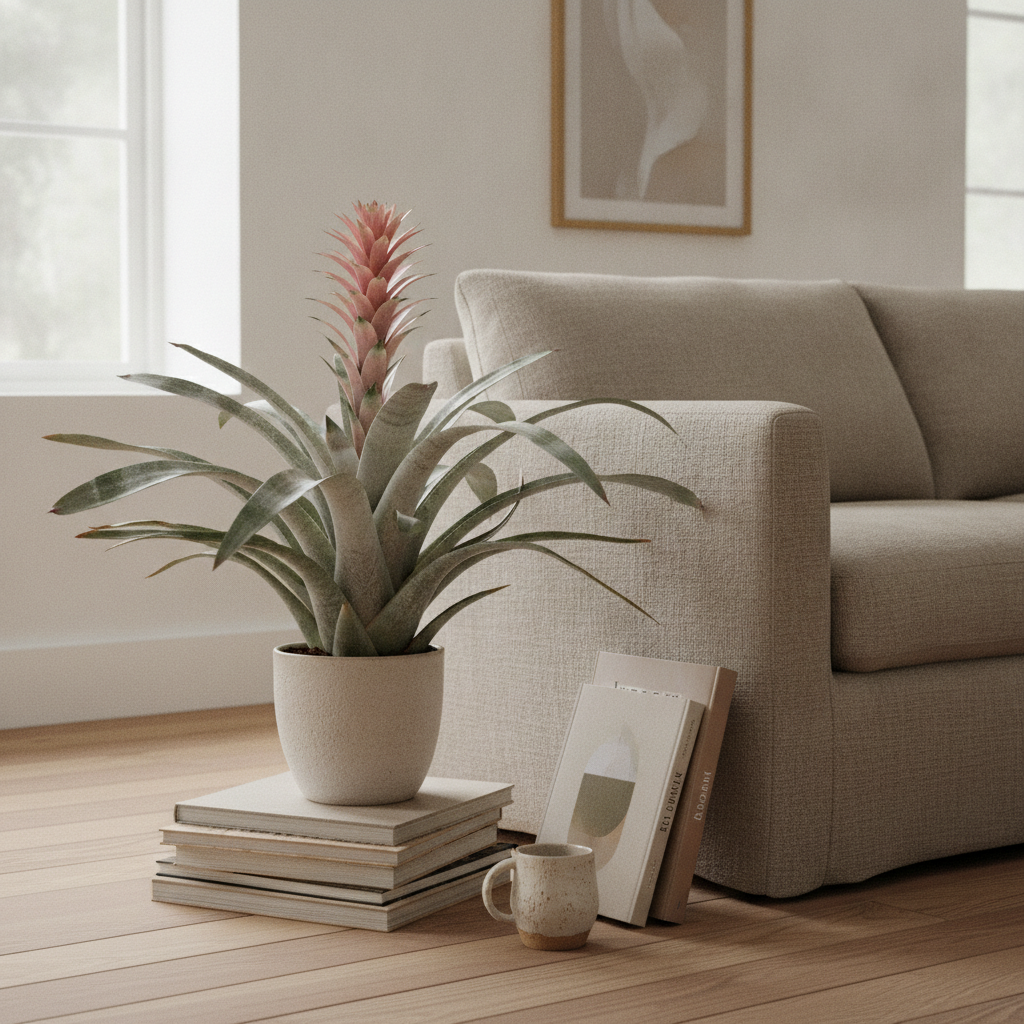
That epiphytic biology explains why the plant is so forgiving of the average living room. Dry indoor air that scorches a calathea barely troubles a bromeliad whose leaves are built to sip humidity. A missed watering matters far less to a plant that keeps a reservoir at its heart. And because the root system is small and functions mainly as an anchor, the silver vase bromeliad is happy in a modest pot and rarely needs repotting. It is a plant that rewards a light touch, which is exactly why it suits people who travel, forget, or simply prefer not to fuss.
There is one quirk worth knowing from the outset. Each rosette flowers only once in its life. After the pink bract fades, that individual rosette will slowly decline over the following year or two. This is not a failure of care; it is the plant’s natural cycle. Before it goes, it produces offsets around its base, and those pups become the next generation. Understanding this rhythm turns what looks like a dying plant into an ongoing, self-renewing display.
Light
Light is the single biggest lever you have over how a silver vase bromeliad looks. Give it bright, indirect light and the leaves stay stiff, silvery and well banded; starve it of light and they stretch, soften, and lose the crisp cross-banding that makes the plant worth growing. The silvery scurf is itself a clue to the plant’s preferences. Bromeliads carrying heavy silver coatings evolved in brighter, more exposed positions than their plain-green relatives, so Aechmea fasciata wants noticeably more light than a fern or a pothos.
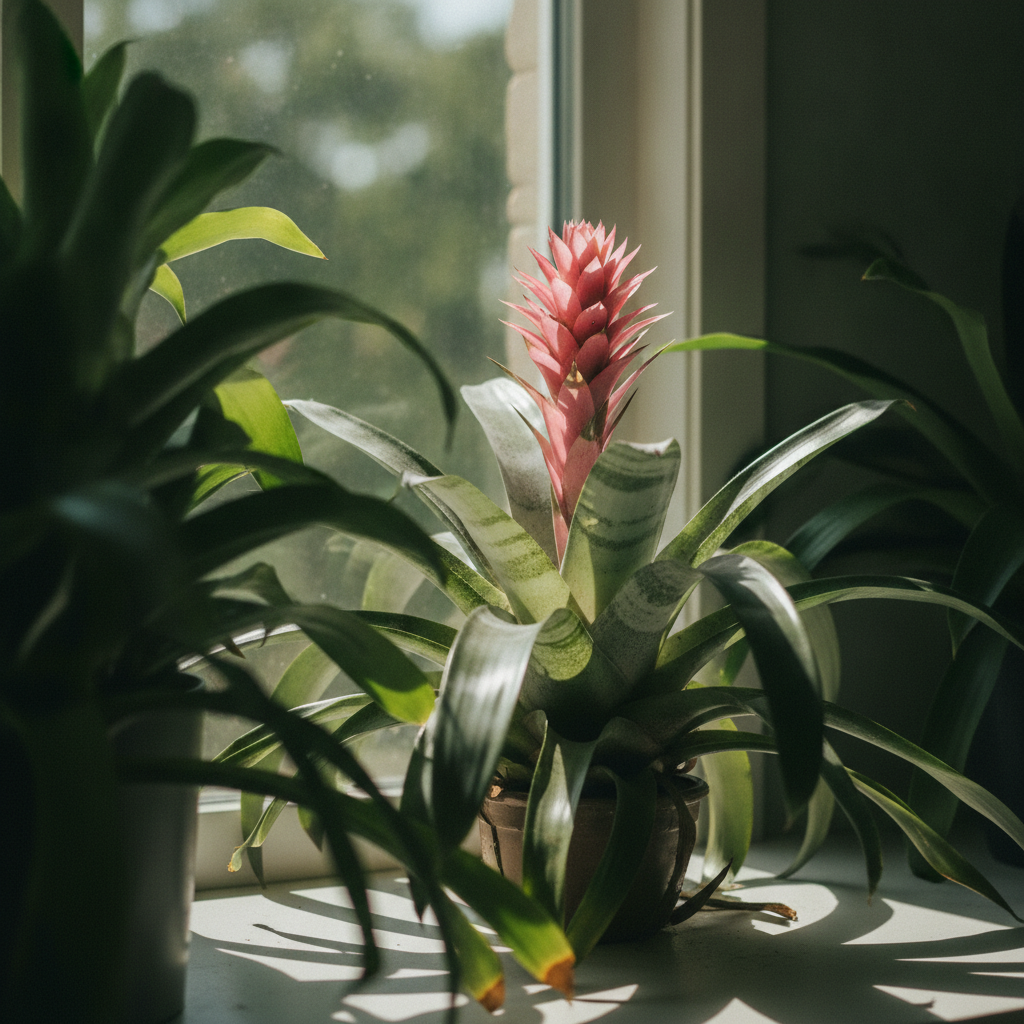
An east-facing window is close to ideal, offering gentle morning sun that the plant handles comfortably. A position a metre or so back from a south- or west-facing window works well too, where the light is strong but the harshest midday rays are diffused by a sheer curtain or filtered through other plants. The species can acclimatise to a few hours of direct sun if introduced to it gradually, and outdoors in a warm climate it appreciates dappled shade. What it cannot do is thrive in a dim corner. In low light the rosette becomes loose and floppy, the colour fades toward flat green, and the plant is far less likely to ever produce a bract.
Warning — Sudden sun scorches: A bromeliad moved abruptly from a shop shelf into full midday glare can develop pale, papery burn patches within days. Increase light over a week or two rather than all at once, and the leaves will thicken and colour up instead of bleaching.
If your only bright spot still leaves the plant reaching, a full-spectrum LED grow light on a timer for ten to twelve hours a day will keep the rosette compact through the darker months. Rotating the pot a quarter turn each week also helps, since bromeliads lean toward their light source and an unrotated plant gradually grows lopsided.
Watering
Watering a silver vase bromeliad is where most newcomers go wrong, because it breaks the usual houseplant rule of pouring water onto the soil. The primary reservoir is the central cup, or tank, formed by the overlapping leaf bases. That cup should be kept roughly a quarter to halfway full at all times. The plant absorbs the bulk of its water and dissolved nutrients through the specialised cells lining this well, not through its modest roots.
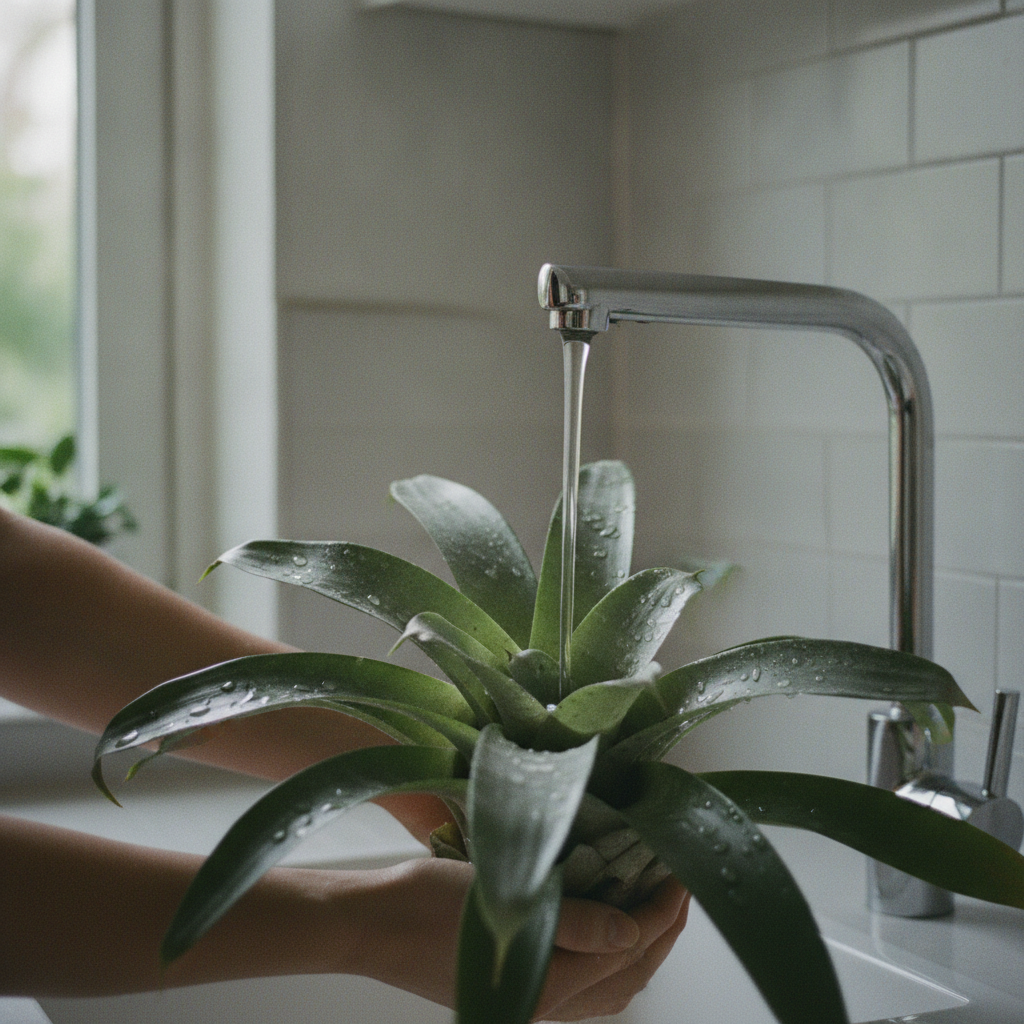
Water quality matters more here than for almost any other houseplant, because the cup holds standing water in constant contact with living tissue. Hard tap water leaves chalky mineral deposits and its dissolved salts can scorch the sensitive leaf bases over time. Wherever possible use rainwater, distilled water or filtered water at room temperature. Just as important, the water in the cup must not be allowed to stagnate. Every week or two, tip the old water out and refill with fresh. Flushing the cup this way prevents the build-up of salts and rotting debris, and it stops the tank becoming a breeding site for mosquitoes or a reservoir of bacteria that can cause the centre to rot.
The potting mix, meanwhile, wants very different treatment. Because the roots exist mainly to anchor the plant, they rot quickly if kept wet. Let the mix dry out almost completely between waterings, then moisten it lightly. In practice, keeping the cup topped up and giving the mix a small drink perhaps once every week or two in summer and less in winter is plenty. If in doubt, err on the side of a drier pot and a fuller cup. During the coldest, darkest weeks, keep only a shallow amount of water in the tank to reduce the risk of rot when growth has all but stopped.
Pro Tip — The finger and the cup: Treat the two watering points as separate jobs. Check the cup every few days and keep it fresh and topped up. Check the soil separately with a finger, and only add a little to the mix once the top few centimetres feel dry. Confusing the two is the most common cause of a rotted crown.
Soil
The guiding principle for bromeliad soil is drainage above all. An epiphyte that naturally clings to bark has no use for the dense, moisture-retentive compost sold as general houseplant soil, which around these roots simply stays wet and invites rot. What the silver vase bromeliad wants is a loose, open, airy medium that holds a little moisture but drains freely and lets air reach the roots.
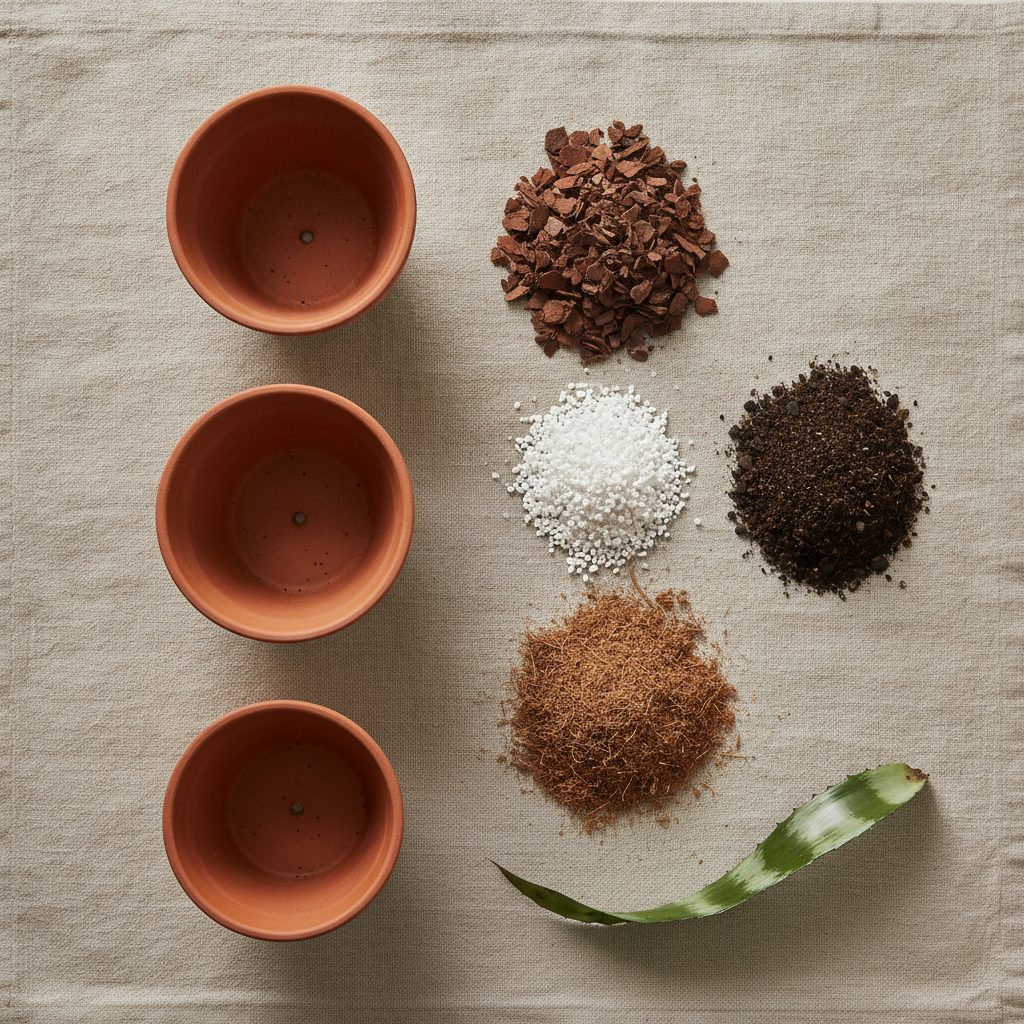
A commercial orchid mix works straight from the bag and is the simplest option. If you prefer to blend your own, a reliable recipe is roughly equal parts orchid bark, perlite and a moisture-holding component such as coco coir or a peat-free multipurpose compost. The bark and perlite keep the structure open and fast-draining, while the coir holds just enough moisture to stop the mix drying to dust. Some growers add a handful of coarse sand or fine grit for extra weight, which helps because a top-heavy rosette in a light, airy mix can be prone to toppling.
Pot choice follows the same logic. Use a container only slightly larger than the root ball, with generous drainage holes, and resist the urge to pot up into something bigger to make the plant look more settled. A large volume of mix around a small root system stays wet and works against the plant. Terracotta suits bromeliads well because its porous walls wick away excess moisture. Because the roots grow so slowly, a silver vase bromeliad may never need repotting during the life of a single rosette; you are more likely to be repotting pups than moving a mature plant on.
Fertilising
Silver vase bromeliads are light feeders, and it is far easier to harm one with too much fertiliser than with too little. In the wild the plant subsists on the trickle of nutrients washed out of decaying leaves and bird droppings, so its needs are modest. Through the warmer growing months, from spring into early autumn, a very dilute balanced liquid feed at roughly a quarter of the strength you would give a leafy houseplant, applied about once a month, is ample.
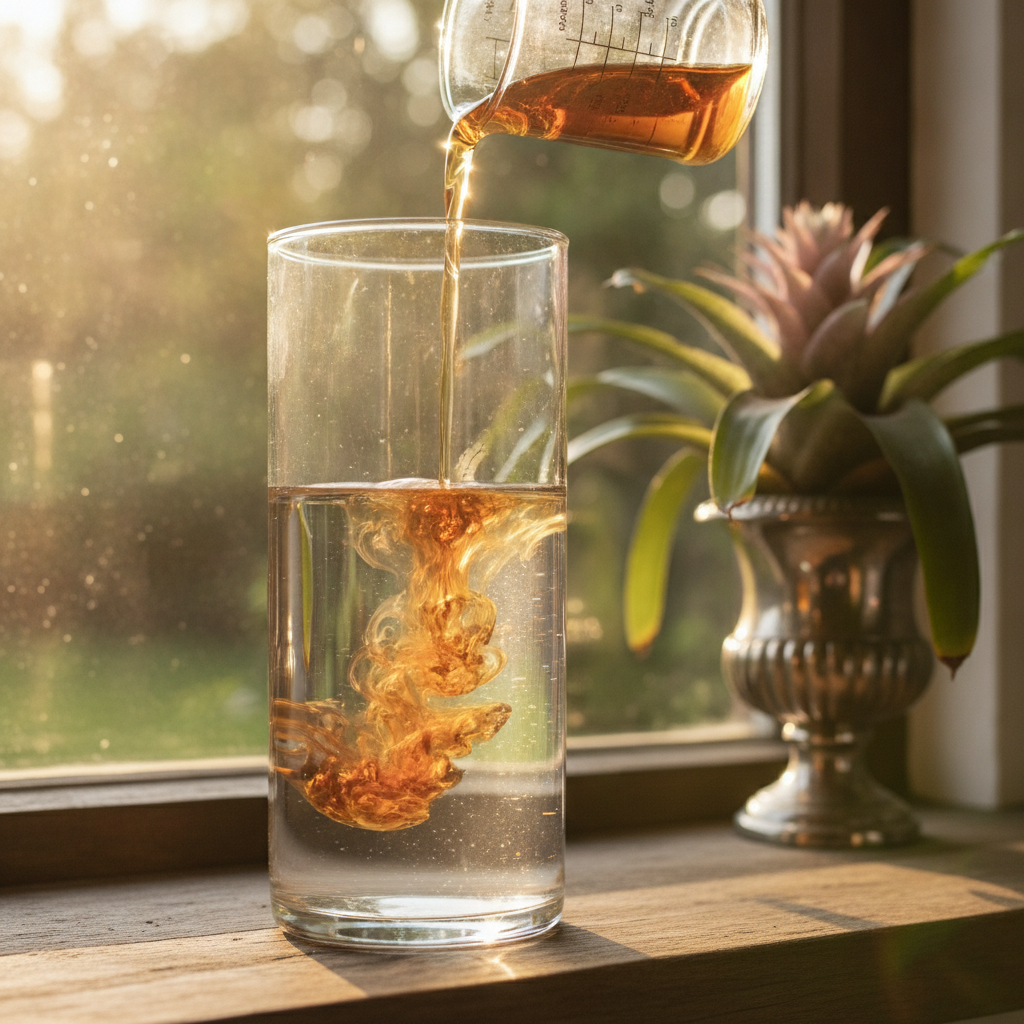
How you apply the feed matters. The most natural method is to add the diluted solution to the soil or to mist it lightly over the leaves, where the trichomes can absorb it. Some growers put weak feed directly into the central cup, and this can work, but it should be done cautiously and at extra-dilute strength, because concentrated fertiliser sitting in the tank can burn the tender leaf bases. If you do feed through the cup, flush it out with fresh water a day or two later rather than letting the solution linger.
Warning — Keep copper away: Bromeliads are unusually sensitive to copper, which is toxic to them even in small amounts. Avoid fertilisers or fungicides containing copper, and do not let water drip onto the plant from copper pipes or copper-containing pots. Stick to a plain, balanced feed with no copper additives.
Stop feeding altogether over winter, when growth pauses. And keep expectations realistic: fertiliser will not coax a bract from a rosette that has already flowered, nor will heavy feeding speed up a plant that is naturally slow. Its job is simply to keep the foliage healthy and to support the pups as they develop.
Propagation
Propagation is not optional with a silver vase bromeliad; it is how the plant carries on. Because each rosette flowers only once and then gradually dies, the offsets it produces are the only way to keep a specimen going year after year. Fortunately the plant does almost all the work itself. As the mother rosette begins to fade after flowering, small pups emerge around its base, drawing on the parent’s reserves as they grow.
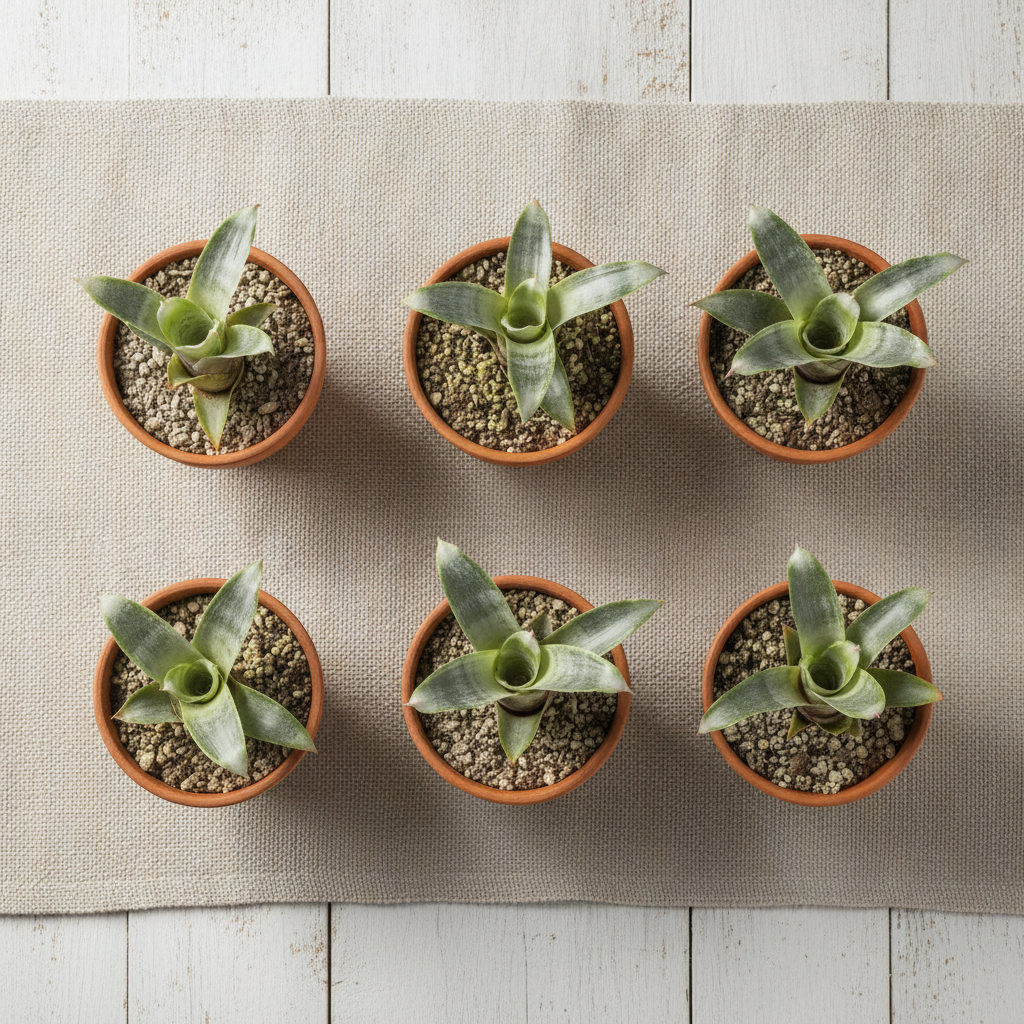
Patience is the whole skill here. Leave the pups attached until each is around a third to a half the size of the parent and has begun to form its own small central cup. A pup removed too early, before it has developed roots of its own, is far less likely to establish. When a pup is ready, follow these steps.
- Water the plant lightly a day beforehand so it is not stressed, and gather a clean, sharp knife and a small pot with fresh, free-draining bromeliad mix.
- Ease the whole plant out of its pot so you can see where the pup joins the mother, or work around the base in situ if the pup is easy to reach.
- Cut the pup away cleanly at the point of attachment, taking any roots it has already made. A little of the mother’s base tissue on the pup is fine.
- Let the cut surface air-dry for a few hours to callous over, which reduces the chance of rot.
- Pot the pup so its base is just held in the mix, no deeper. Bromeliads planted too deep rot easily. Stake it lightly if it will not stand on its own.
- Keep a little water in the new pup’s cup, keep the mix barely moist, and place it in bright, indirect light. Roots and stability develop over the following weeks.
A pup raised this way typically takes two to three years to reach flowering size. If you would rather leave nature to it, you can simply let the pups grow on in the original pot, removing the spent mother once it has fully browned, and the container will refill itself with the next generation.
Pro Tip — The apple trick: A mature pup that stubbornly refuses to flower can often be nudged into bloom with ethylene gas. Empty the cup, enclose the whole plant in a clear bag with a ripe apple or banana for a week or so, then remove it. The fruit gives off ethylene, and a bract commonly appears within a couple of months.
Pests and problems
The silver vase bromeliad is not especially pest-prone, but a few troubles recur often enough to be worth recognising early. Most problems trace back to water: either too much of it around the roots and in a stagnant cup, or the wrong kind sitting in the tank.
Scale insects are the most common pest, appearing as small brown, limpet-like bumps along the leaves that can be scraped off gently or dabbed with a cotton bud dipped in diluted isopropyl alcohol. Mealybugs, which look like tiny tufts of cotton wool tucked into the leaf axils, respond to the same treatment. Because bromeliads react badly to copper and to some harsh chemical sprays, manual removal and alcohol are safer first resorts than reaching for a strong insecticide. If a soap or horticultural oil spray is used, test it on one leaf first and keep it out of the central cup.
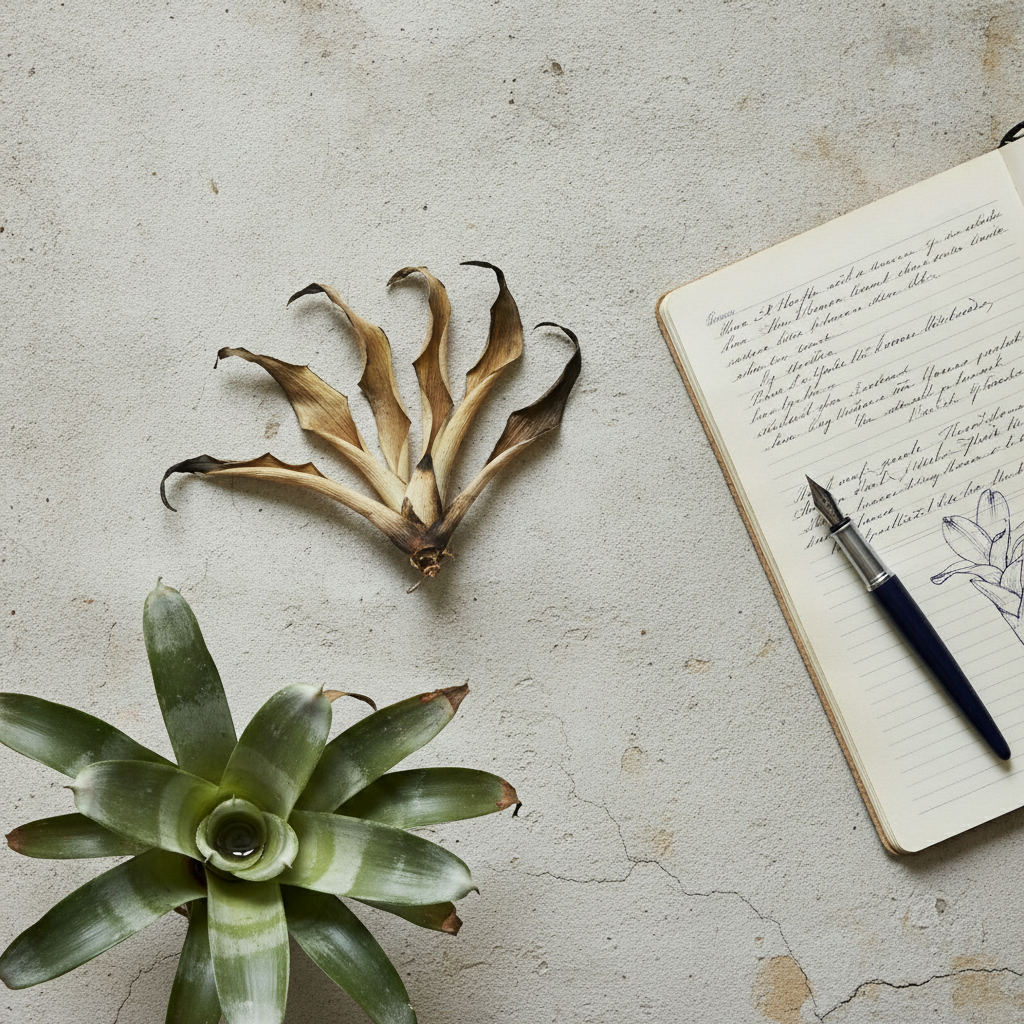
The most serious issue is crown or root rot, which shows as a mushy, browning centre or a rosette that pulls loose from the mix at a touch. It is almost always caused by soggy soil, stagnant tank water, or water left in the cup during a cold spell. Prevention is straightforward: drain the pot freely, refresh the cup regularly, and keep the tank shallow in winter. Once the crown has rotted the mother cannot be saved, but healthy pups can usually be salvaged and grown on.
Cosmetic complaints are common and usually easy to read. Brown, crispy leaf tips point to dry air or mineral build-up from hard water; raise the humidity and switch to rainwater. Pale, bleached patches signal sunburn from too much direct sun. A soft, stretched, fading rosette means too little light. And a browning, tired-looking plant that has recently flowered is simply following its natural cycle rather than suffering. Reading these signals correctly saves a lot of unnecessary worry.
Varieties
Most silver vase bromeliads sold as houseplants are the straight species, but a couple of named forms turn up regularly and are worth seeking out if you want a particular look. All share the same easy care.
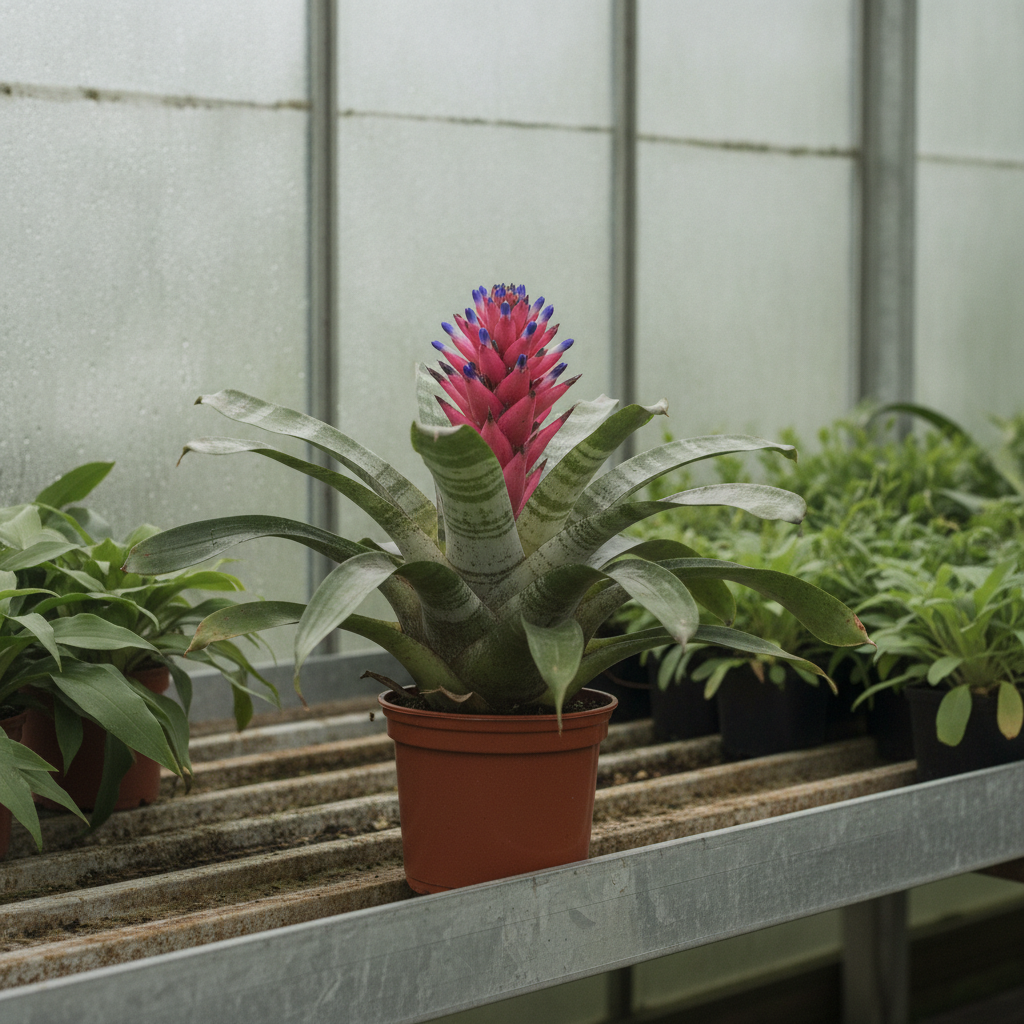
Aechmea fasciata ‘Primera’
The commercial standard and the form most people picture when they think of the plant. ‘Primera’ has the classic broad, silver cross-banded leaves and a large, vivid rose-pink pyramidal bract studded with small blue-purple flowers. It is bred for a reliable, showy bloom and a robust, symmetrical rosette.
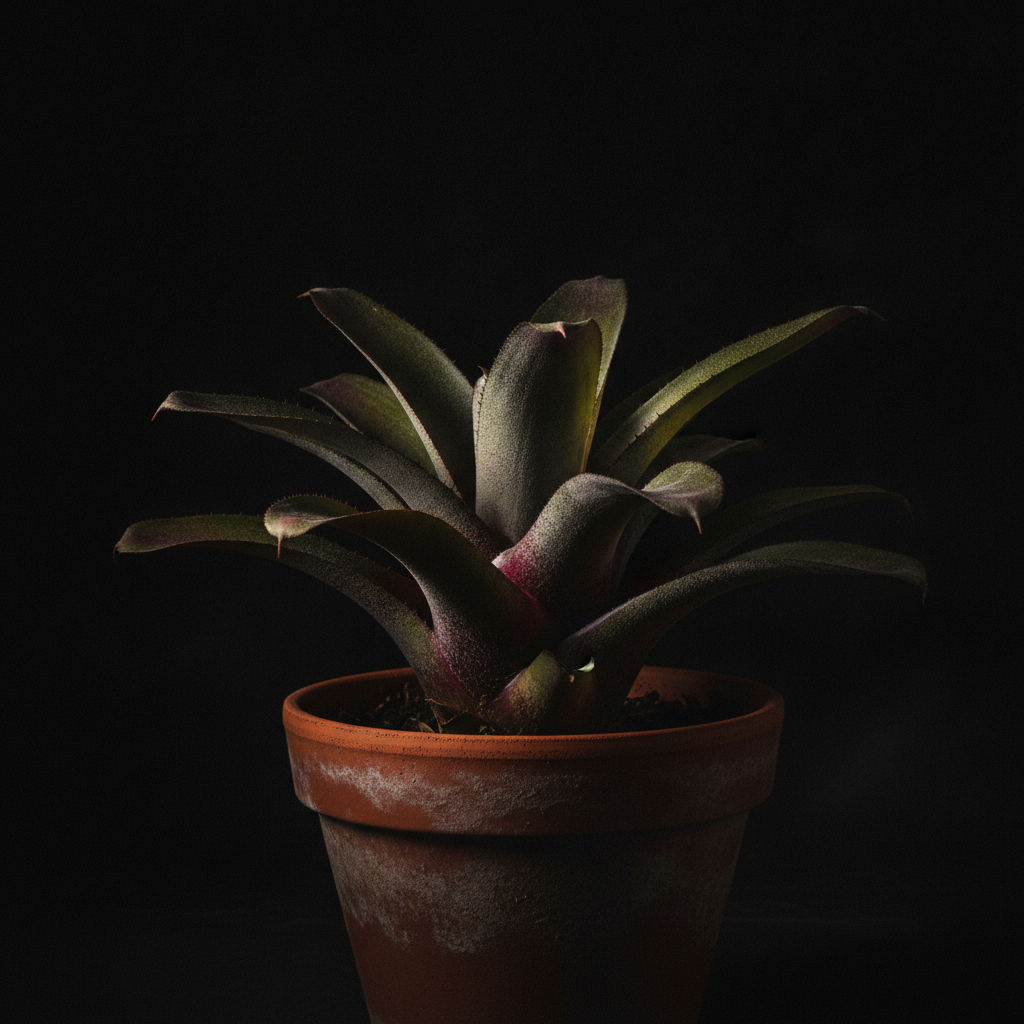
Aechmea fasciata ‘Purpurea’
A moodier form whose leaves are flushed with deep maroon-purple undertones beneath the usual silvery scurf, giving the whole rosette a darker, more dramatic cast. The pink bract stands out even more sharply against the smoky foliage. Care is identical to the species; it simply reads as the more sophisticated option.
Beyond these two, you may occasionally find variegated selections such as ‘Variegata’, which carries cream or yellow longitudinal stripes along the silver leaves. It is scarcer and a touch slower, but grown exactly the same way.
Frequently asked questions
Is the silver vase bromeliad safe for cats and dogs?
Yes. Aechmea fasciata is listed as non-toxic to both cats and dogs, and it is not poisonous to people either, which makes it one of the safer statement plants for a household with curious pets or small children. The stiff, sometimes slightly toothed leaf margins are the only thing to be mindful of.
My bromeliad is turning brown after flowering. Is it dying?
Almost certainly it is simply following its natural cycle rather than suffering from poor care. Each rosette blooms once and then declines over the following months while it channels its energy into producing pups. Keep caring for it as normal, let the offsets grow, and remove the mother only once it has fully browned.
How long does the pink bract last?
The colourful bract is long-lived, commonly holding its rose-pink colour for several months, sometimes up to half a year. The small true flowers that emerge from it are shorter-lived, but the bract itself is the real show and is what keeps the plant looking spectacular for so long.
Should I mist my silver vase bromeliad?
Occasional misting is beneficial, since the leaves absorb moisture through their trichomes and appreciate the humidity, especially in a dry, heated room. It is a helpful supplement rather than a substitute for keeping the central cup topped up, which remains the plant’s main source of water.
Why won’t my plant flower?
The usual reasons are that the plant is too young, too shaded, or a pup that has not yet reached maturity, which can take two to three years. Move it to a brighter, indirect position first. If a mature plant still resists, try the ethylene method: empty the cup and seal the plant in a clear bag with a ripe apple for a week to trigger blooming.
What water should I use in the cup?
Rainwater, distilled water or filtered water is best, because the standing water in the tank is in constant contact with living tissue and hard tap water leaves mineral deposits and can scorch the leaf bases. Whatever you use, tip it out and refill with fresh water every week or two to stop it going stagnant.






