
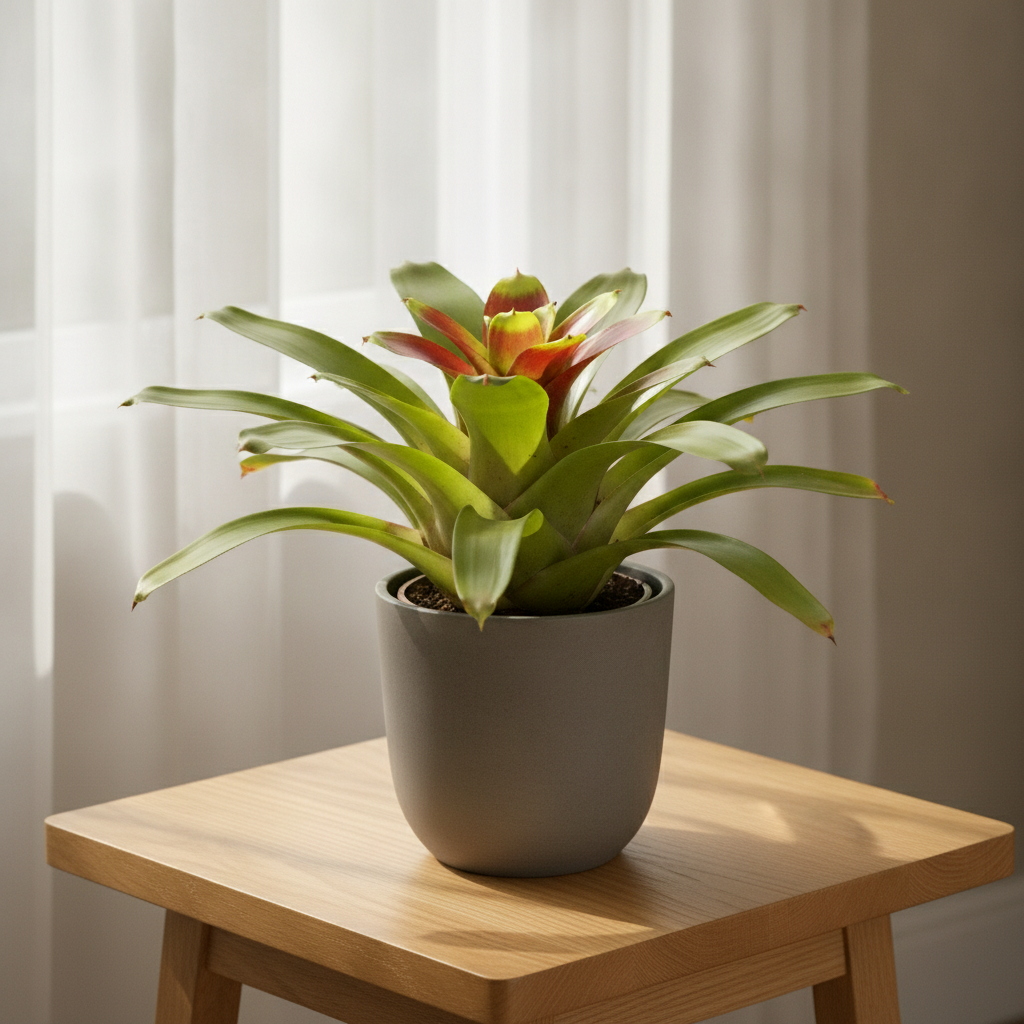
Few houseplants announce themselves quite as boldly as the zebra bromeliad. Rising from a modest, flat rosette of soft green leaves, its flattened, boat-shaped flower spike unfurls in overlapping scales of scarlet and gold, a display that can hold its colour for months on a windowsill. Known botanically as Vriesea carinata, and just as often sold under the names lobster claw or painted feather, this Brazilian epiphyte belongs to the same great family as the pineapple. It is a plant built for the humid understorey of the Atlantic rainforest, and understanding that origin is the key to keeping it happy indoors. This guide walks through everything you need to help a zebra bromeliad not merely survive on your shelf, but genuinely thrive.
In This Guide
- Quick Reference
- Why the Zebra Bromeliad Makes a Good Houseplant
- Light
- Watering
- Soil
- Fertilising
- Propagation
- Pests and Problems
- Varieties
- Frequently Asked Questions
Quick Reference
| Botanical name | Vriesea carinata |
| Common names | Zebra bromeliad, lobster claw, painted feather, flame bromeliad |
| Family | Bromeliaceae |
| Origin | Atlantic rainforest of eastern Brazil |
| Light | Bright, indirect light; no harsh direct sun |
| Water | Keep the central cup filled with fresh water; mix lightly moist |
| Humidity | Moderate to high, 50 to 60 per cent or more |
| Temperature | 18 to 27 degrees C (64 to 81 degrees F) |
| Soil | Very free-draining epiphyte mix of bark and perlite |
| Feeding | Weak, diluted feed occasionally in the growing season |
| Growth habit | Flat rosette to about 30 cm (12 in) across |
| Toxicity | Non-toxic to cats, dogs and humans |
| Difficulty | Easy to moderate |
Why the Zebra Bromeliad Makes a Good Houseplant
The appeal of Vriesea carinata begins with that unmistakable inflorescence. Where many flowering houseplants offer a fleeting week or two of bloom, the zebra bromeliad holds its brilliant bracts for anywhere from two to four months, and occasionally longer in cool, stable rooms. What looks like a single exotic flower is in fact a flattened stack of waxy, papery bracts, red at the base and shading to yellow-green at the tips, from between which the small, short-lived true flowers briefly emerge. Because the colour lives in the bracts rather than the flowers themselves, the display persists long after the actual blooms have faded, giving the plant an unusually generous return for the space it occupies.
Beyond the spectacle, this is a forgiving plant for anyone new to bromeliads. It stays compact, rarely exceeding 30 centimetres (12 inches) across, so it suits a bright bathroom shelf, a kitchen windowsill or a grouped display of tropical foliage. Its leaves are soft and strap-shaped rather than spiny, which makes it pleasant to handle and safe around curious hands. Crucially for pet owners, everything in the bromeliad family is considered non-toxic, so a zebra bromeliad can share a home with cats and dogs without the worry that accompanies aroids and lilies.
There is one quirk worth understanding from the outset, because it shapes everything that follows. Like all bromeliads, Vriesea carinata is monocarpic, meaning each rosette flowers only once in its life. After the bracts finally fade, the parent plant slowly declines over the following months. This is not a failure of care but the natural close of its cycle, and long before the mother fades she produces offsets, known as pups, at her base. Growing a zebra bromeliad is therefore less about keeping one plant alive indefinitely and more about stewarding a gentle, self-renewing succession from one generation to the next.
Light
In its native forests the zebra bromeliad grows as an epiphyte, perched on tree branches beneath a broken canopy where sunlight arrives filtered and dappled rather than direct. Recreating that quality of light indoors is the single most important thing you can do for its colour and vigour. Bright, indirect light is the target: a position a metre or so back from an east or west-facing window is close to ideal, giving the plant plenty of ambient brightness without the searing midday rays that its soft leaves are poorly equipped to handle.
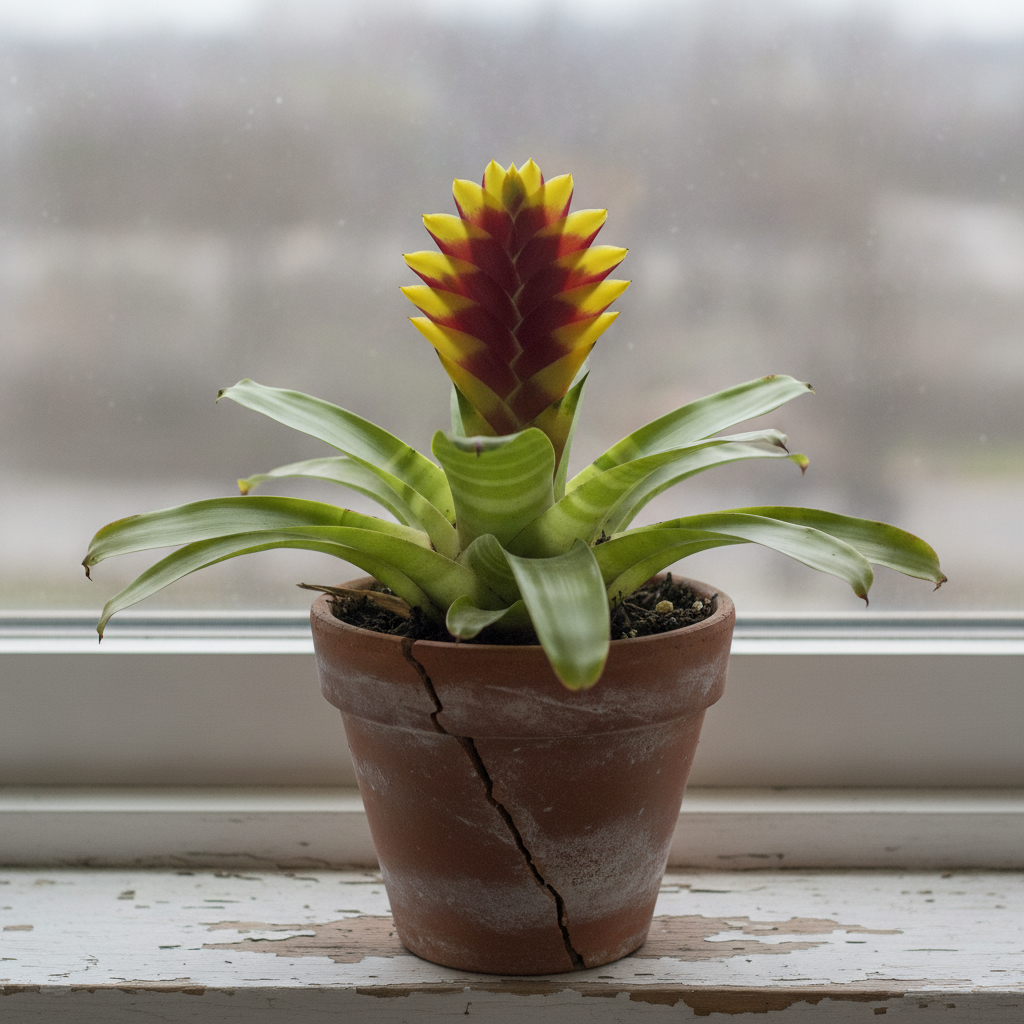
Too little light and the plant will survive but sulk, producing loose, pale leaves and, tellingly, refusing to develop the strong bract colour that is its whole reason for being. A north-facing window can work in a bright room, though in the darkest months you may notice the display becoming muted. Too much light is the more damaging error. Direct summer sun scorches the foliage, leaving bleached, brown-edged patches that never recover, and can heat the central cup of water to the plant’s detriment. If you are moving a zebra bromeliad to a sunnier spot, do so gradually over a week or two so the leaves can acclimatise rather than burn.
Pro Tip — Reading the leaves: The foliage is an honest gauge of light. Deep, even green with the plant sitting flat and open suggests it is well placed. Yellowing, washed-out leaves mean too much light, while stretched, floppy growth reaching toward the window means too little.
Watering
Watering a zebra bromeliad is different from watering almost any other houseplant, and getting the mental model right removes most of the difficulty. The rosette forms a natural reservoir at its centre, a watertight cup often called the tank, and in the wild this is how the plant drinks, catching rain and dew that trickle down its leaves. Your primary job is to keep that central cup topped up with fresh water. The roots, by contrast, exist as much for anchorage as for drinking, so the potting mix should be kept only lightly moist and never allowed to sit wet.
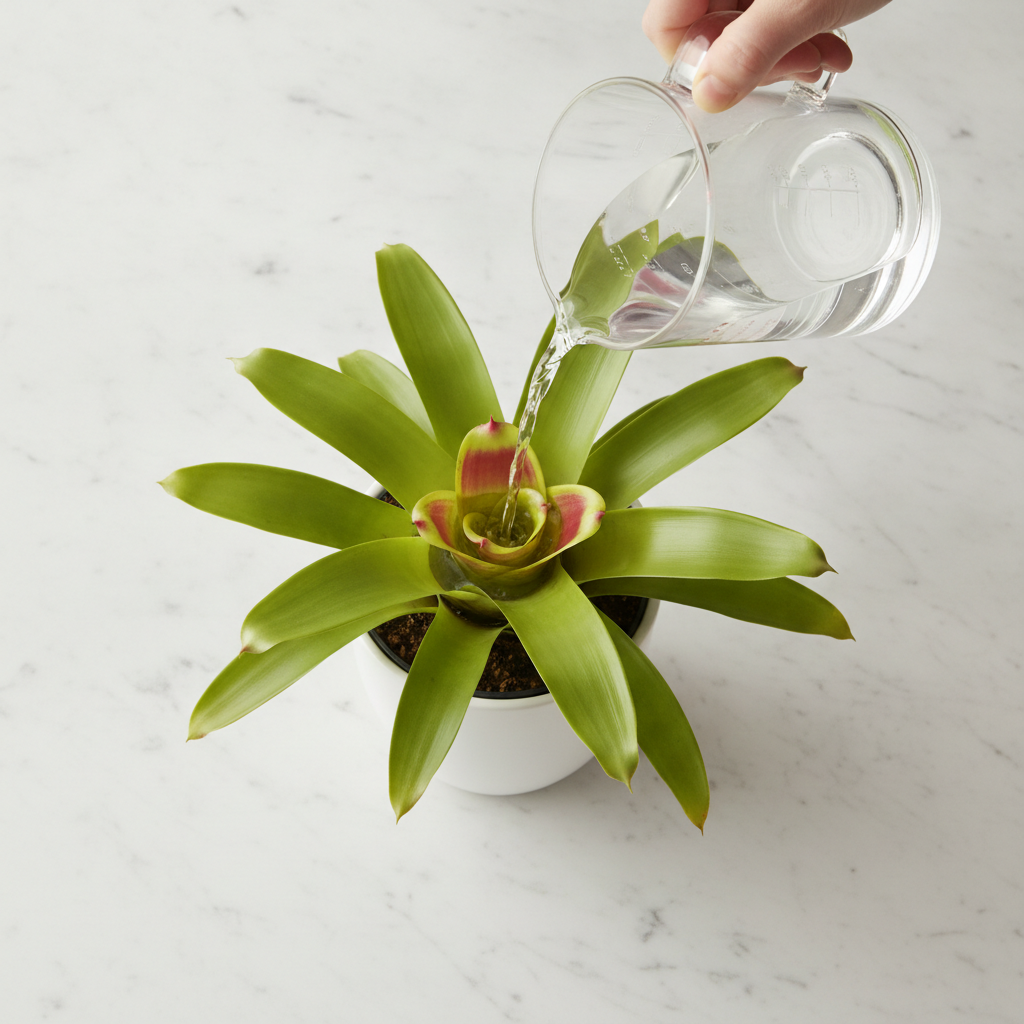
Water quality matters more here than for most plants. Bromeliads are sensitive to the minerals, chlorine and fluoride found in much tap water, which can accumulate in the cup and mark the leaves. Wherever possible, use rainwater, distilled water or filtered water, and let it come to room temperature before pouring. Fill the cup so that it holds a shallow pool, and refresh it completely every week or two rather than simply topping it up, because standing water left too long turns stagnant and can begin to smell or foster rot. Tip the old water out, give the cup a quick rinse, and refill with clean water.
The potting mix wants a gentler touch. Water it lightly when the top few centimetres feel dry, enough to keep it barely damp, and always let excess drain freely away. Overwatering the roots is the most common way to kill an otherwise healthy bromeliad, so when in doubt, err on the dry side at the root and keep the action at the cup. In very warm or dry rooms you may also mist the foliage occasionally, which the plant appreciates as a nod to the humid air of its homeland.
Warning — Stagnant water: A cup left unrefreshed for many weeks can become foul and rot the tender growing point at the centre of the rosette. If the water ever smells sour, empty, rinse and refill it straight away.
Soil
Because Vriesea carinata is an epiphyte rather than a ground-dweller, its roots evolved to cling to bark in fast-draining, airy conditions, never sitting in dense, waterlogged earth. Ordinary houseplant compost holds far too much moisture around the roots and will suffocate them. Instead, aim for a loose, chunky, open medium that drains almost the moment water passes through it. A blend built around orchid bark, with generous additions of perlite and a little coco coir or peat-free compost to hold a trace of moisture, closely mimics the conditions the plant expects.
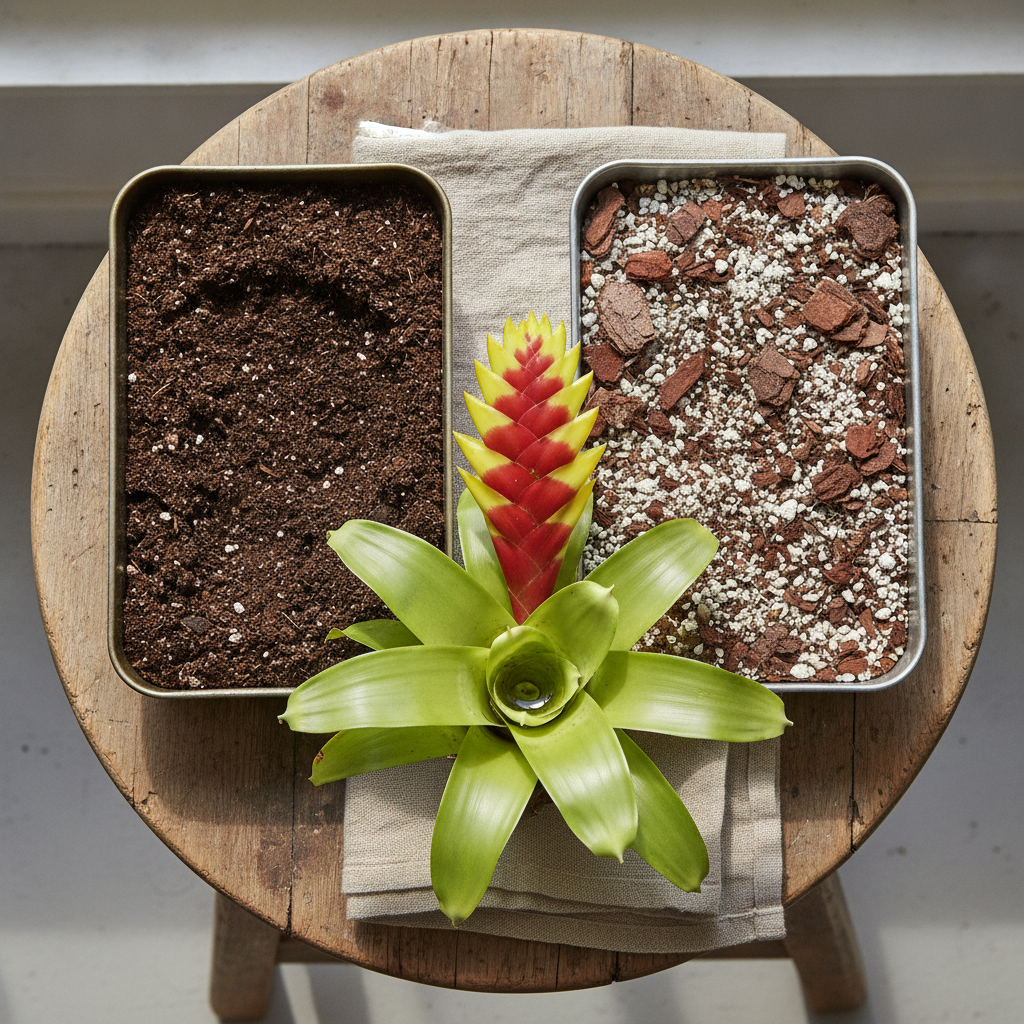
A ready-made orchid or bromeliad mix is a perfectly good shortcut and saves the bother of blending your own. Whatever medium you choose, it should feel coarse and springy in the hand, with visible gaps for air. Zebra bromeliads have small, shallow root systems and are content in modest pots; a container only slightly larger than the rootball is far better than a roomy one, which simply holds a reservoir of damp mix the plant cannot use. A pot with generous drainage holes is essential.
Repotting is rarely needed and should not be rushed. These plants dislike root disturbance and, being monocarpic, will not grow indefinitely in any case, so a mother rosette often lives out its life in the pot it arrived in. The more common reason to move a bromeliad into fresh mix is to pot up a separated pup, or to refresh a medium that has broken down into something dense and water-retentive after a couple of years. When you do repot, handle the roots gently, settle the plant at the same depth it sat before, and press the mix in just firmly enough to hold the rosette steady.
Fertilising
Zebra bromeliads are famously light feeders, a habit inherited from an epiphytic life spent gathering whatever scant nutrients wash down through the forest canopy. They need far less feeding than a typical leafy houseplant, and overfeeding does more harm than neglect ever could. Too much fertiliser produces leggy, weakened growth, dulls the very leaf colour you are trying to encourage, and in bromeliads can leave unsightly brown tips. A restrained hand is the whole secret.
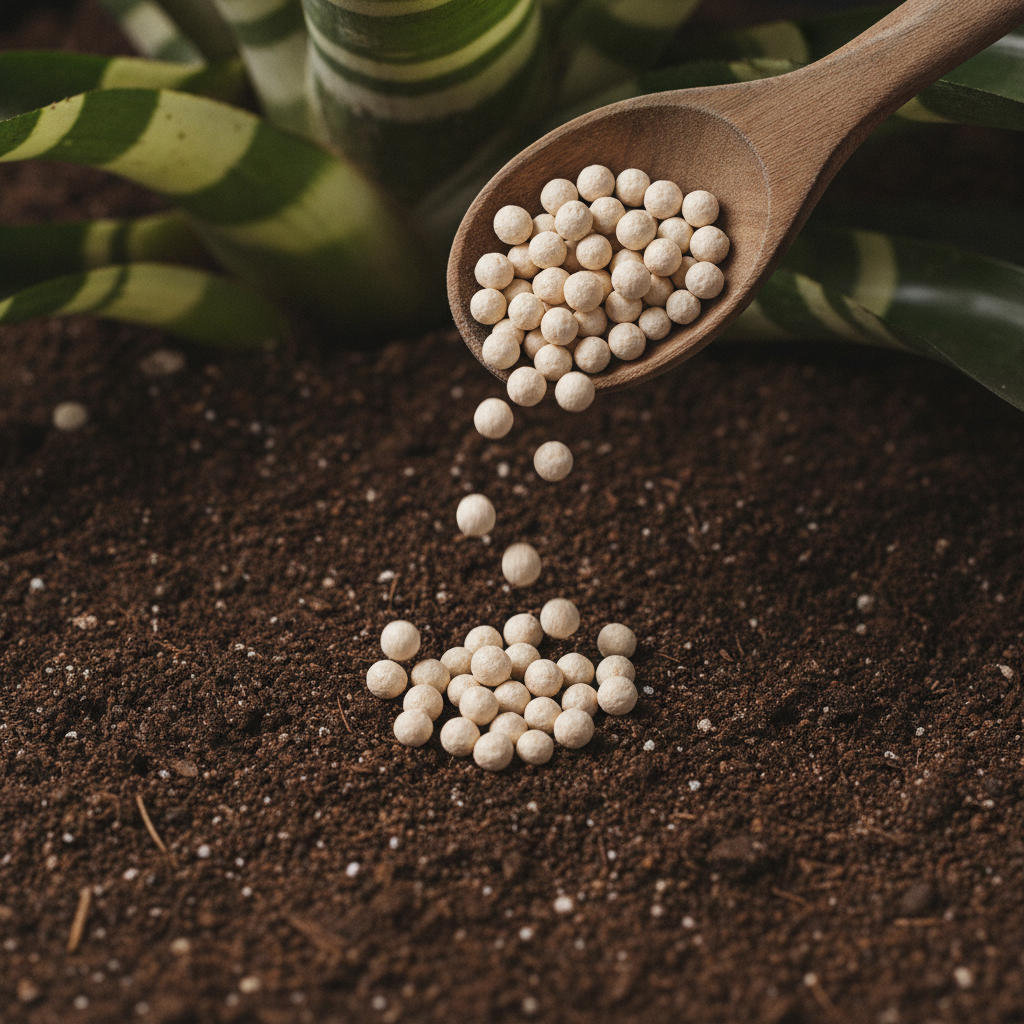
During the active growing months of spring and summer, feed no more than once a month, and always at a fraction of the recommended strength. A balanced liquid houseplant feed diluted to a quarter or even an eighth of its normal concentration is ample. You can apply this weak solution to the potting mix, or dilute it further still and add it to the water in the central cup, which is how the plant would naturally absorb dissolved nutrients. Avoid feeds that are heavy in copper or boron, as bromeliads are unusually sensitive to both. Through autumn and winter, when growth slows to a near standstill, stop feeding altogether and let the plant rest.
Pro Tip — Less is more: If you are unsure whether to feed, do not. A zebra bromeliad will colour up beautifully on almost no fertiliser, whereas a plant that has been overfed shows it in soft, faded, brown-tipped leaves that are slow to recover.
Propagation
Propagation is where the monocarpic nature of the zebra bromeliad turns from a limitation into a gift. As the parent rosette matures and begins its slow decline after flowering, it channels its remaining energy into producing offsets at its base. These pups are miniature clones of the mother, and separating and growing them on is how a single plant becomes a continuous, self-renewing collection. It is the most reliable and rewarding way to keep zebra bromeliads going indefinitely.
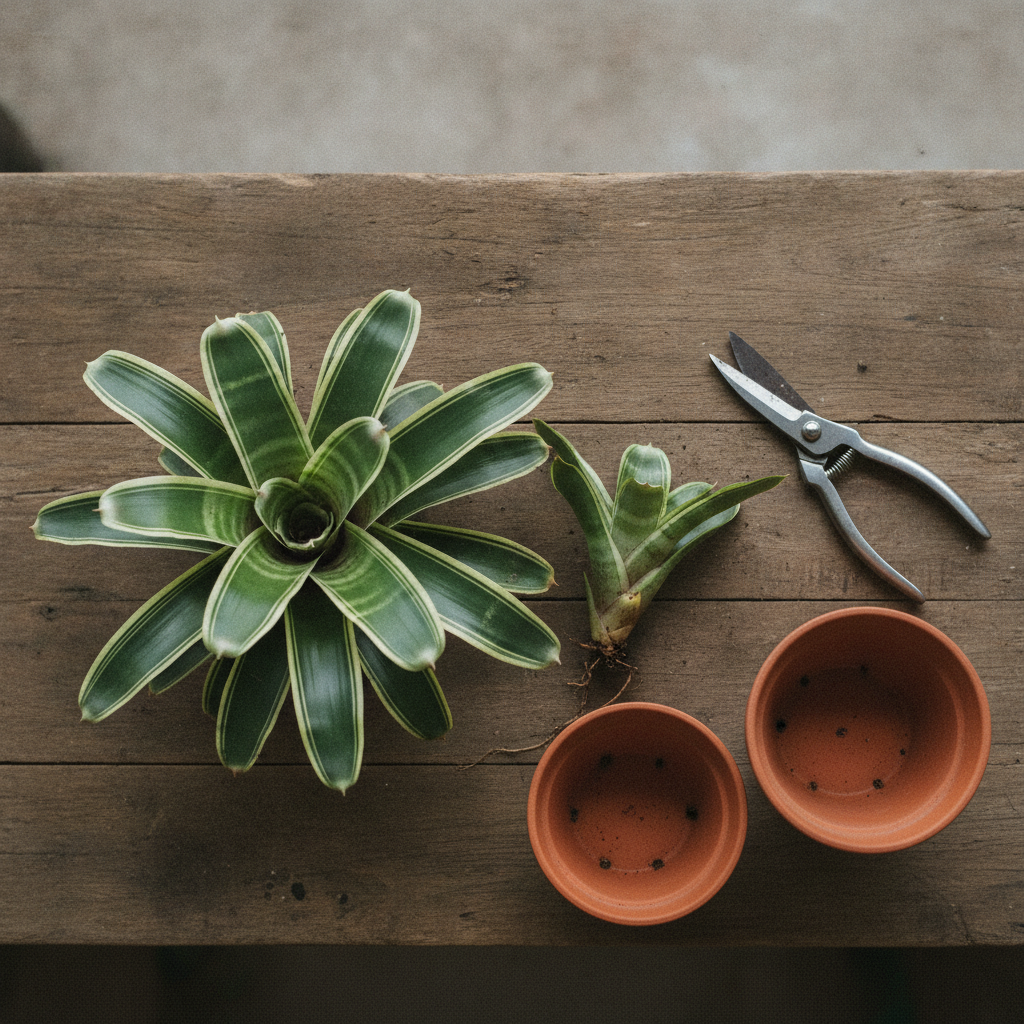
Patience is the main requirement. Resist the urge to remove a pup the moment it appears, because a young offset lacks the roots to fend for itself. Wait until it has grown to at least a third, and ideally half, the size of the parent, and has begun to form a small rosette and roots of its own. At that point it is ready to strike out alone.
- Ease the whole plant out of its pot so you can see where the pup joins the mother at the base.
- Using a clean, sharp knife or a pair of sterilised secateurs, cut the pup away from the parent, taking any roots it has already made along with it.
- Allow the cut surface to dry and callus for a few hours, which reduces the risk of rot.
- Pot the pup into a small container of fresh, free-draining bromeliad mix, settling it just deep enough to stand upright without burying the central cup.
- Water lightly, add a little fresh water to the young cup, and place it somewhere warm and brightly but indirectly lit while it establishes.
A newly separated pup will take its time to settle and root in, so keep conditions stable and humidity on the higher side during those first weeks. It may be a year or two before a young rosette reaches flowering size and produces bracts of its own, but the wait is part of the quiet pleasure of growing these plants. Meanwhile the fading mother can be left in place until she is fully spent, then composted with thanks.
Pests and Problems
The zebra bromeliad is a robust plant with relatively few enemies, and most trouble it does encounter can be traced back to watering or light rather than infestation. Still, a handful of pests turn up often enough to be worth knowing. Scale insects are the most frequent, appearing as small, flat, brown discs clinging to the undersides of leaves and along the leaf bases, where they feed on sap and leave sticky residue behind. Mealybugs, soft white cottony clusters tucked into leaf joints, are the other regular offender. Both can be dealt with by wiping them away with a cotton bud dipped in diluted isopropyl alcohol, followed by treatment with neem oil or an insecticidal soap.
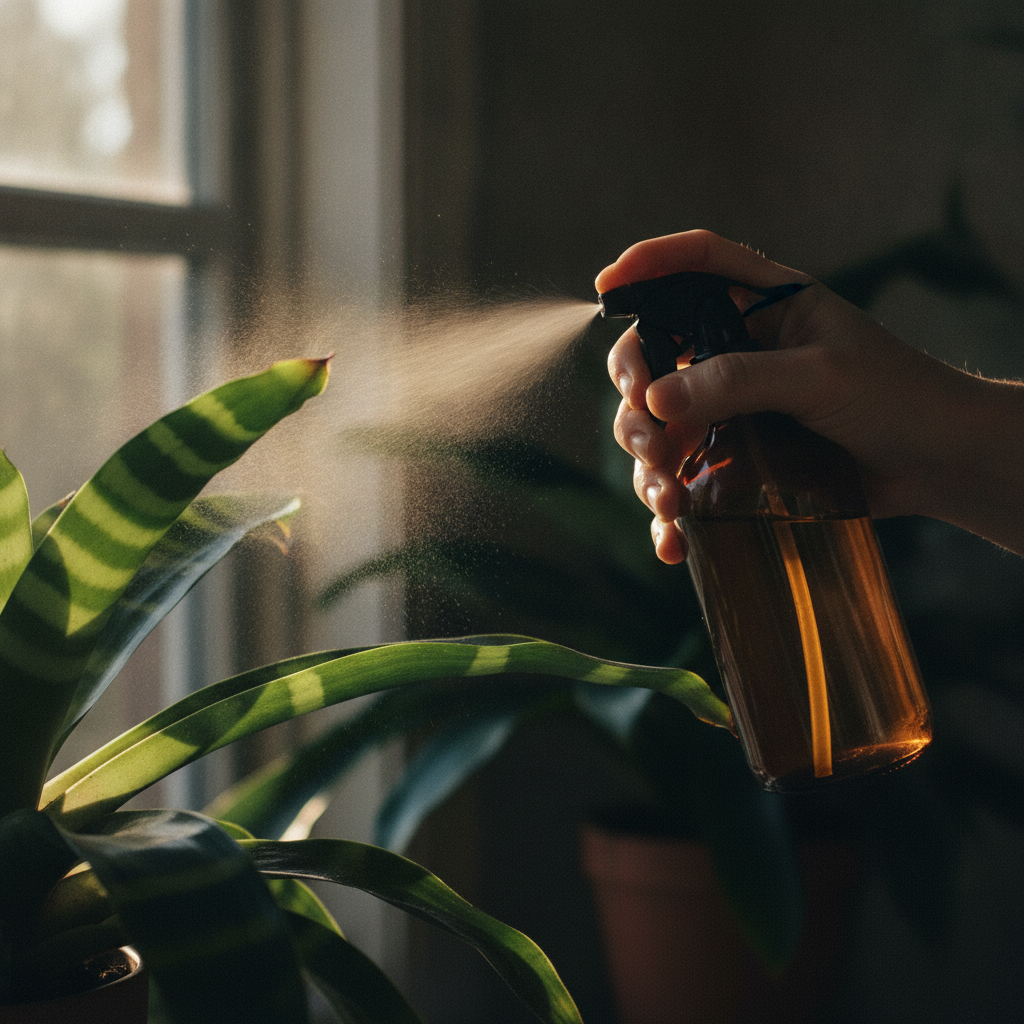
When treating a bromeliad, take care not to flood the central cup with oily sprays, which can foul the water the plant relies on. Treat the leaf surfaces, then empty and refresh the cup afterwards. Because bromeliads can be sensitive to some chemical insecticides, the gentler mechanical and oil-based approaches are usually both safer and sufficient. A monthly wipe of the leaves with a damp cloth keeps them clean and lets you spot any newcomers before they take hold.
Most complaints, though, are cultural rather than pest-related. Brown, crispy leaf tips usually point to dry air or a build-up of minerals from hard tap water, both eased by switching to rainwater and lifting the humidity. Bleached or scorched patches signal too much direct sun, while a soft, mushy centre is the hallmark of rot from stagnant cup water or an overwatered root zone. Faded, colourless bracts and loose, stretched leaves almost always mean the plant is not getting enough light. Read these signs early and the fix is generally a small adjustment rather than a rescue.
Warning — After flowering: Do not mistake the natural post-bloom decline of the mother rosette for a pest or disease. Slow browning after months of colour is simply the end of her cycle, and the pups at her base are the plant’s way of carrying on.
Varieties
The name zebra bromeliad is used loosely in the trade and can cover several closely related Vriesea plants, which is worth bearing in mind when you shop. Vriesea carinata itself is prized above all for its flattened, sword-like inflorescence, and a handful of forms and hybrids bring subtle variations on that theme.
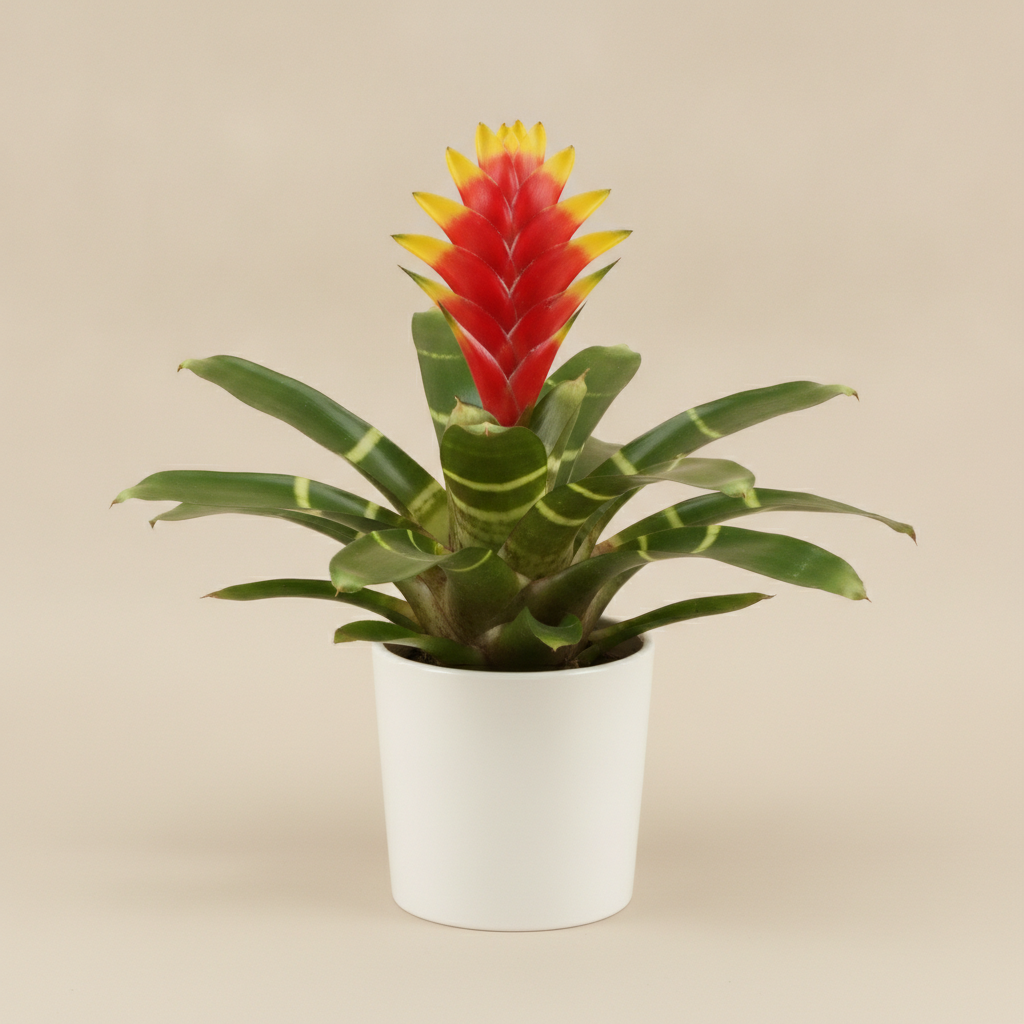
Lobster Claw
The classic form of Vriesea carinata, whose flat rosette of glossy strap leaves is topped by a paddle-shaped inflorescence of overlapping scarlet bracts tipped in golden yellow. The shape, broad and curved and vividly two-toned, is exactly what earned the plant its lobster claw nickname and remains the most widely sold.
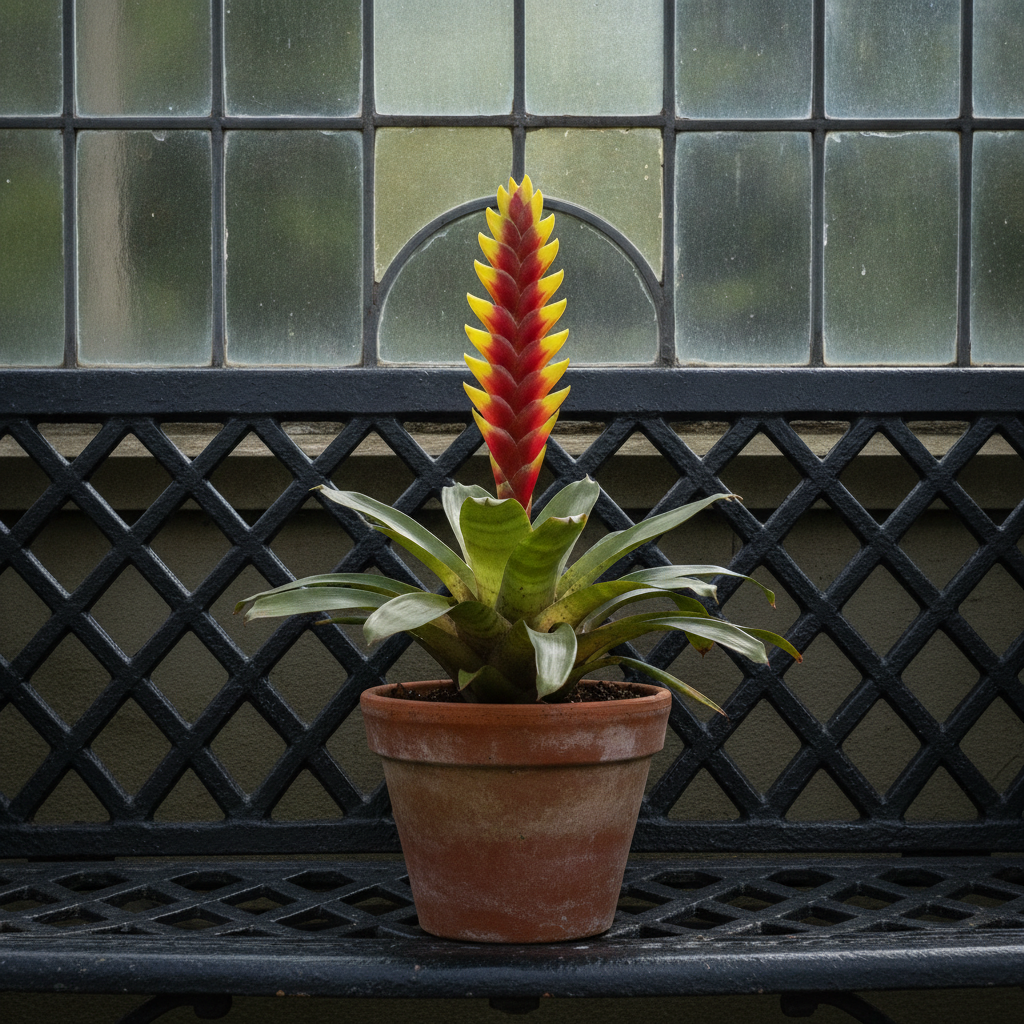
Vriesea ‘Christiane’
A popular compact hybrid that holds a slimmer, more upright sword of tightly stacked crimson and yellow bracts above a softer green rosette. It brings the same bold colouring in a neater, more vertical form, which suits smaller shelves and grouped displays where the broad paddle of the classic type would crowd its neighbours.
It is worth noting that the true zebra plant, with dramatically cross-banded foliage, is a different species, Vriesea splendens, often sold under the same common name. If banded leaves are what you are after rather than the plain green rosette and coloured bract of Vriesea carinata, check the botanical label carefully before you buy.
Frequently Asked Questions
Why is my zebra bromeliad dying after it flowered?
This is entirely normal. Bromeliads are monocarpic, so each rosette flowers only once and then gradually declines over the following months. Rather than trying to revive the mother, look for the pups forming at her base and grow those on. They are the plant’s natural way of continuing.
Should I water the soil or the central cup?
Both, but with different intentions. Keep the central cup filled with fresh water, refreshing it every week or two, as this is the plant’s main way of drinking. Water the potting mix only lightly, keeping it barely moist, and never let the roots sit wet, since root rot is the most common cause of failure.
Is the zebra bromeliad safe for cats and dogs?
Yes. All members of the bromeliad family are considered non-toxic to cats, dogs and humans, which makes Vriesea carinata a reassuring choice for households with pets or young children. Its soft, spineless leaves add to its safety.
How long do the colourful bracts last?
Remarkably long. The bright bracts typically hold their colour for two to four months, and sometimes longer in cool, stable conditions, which is a large part of the plant’s appeal. The small true flowers between the bracts are short-lived, but the colourful display continues well after they fade.
Why are the tips of the leaves turning brown?
Brown, crispy tips usually indicate dry air or a build-up of minerals from hard tap water. Raising the humidity around the plant and switching to rainwater, distilled or filtered water for both the cup and the mix generally solves the problem over time.
Why won’t my zebra bromeliad flower?
A young pup simply may not have reached flowering maturity yet, which can take a year or two. If a mature plant refuses to bloom, insufficient light is the usual reason. Move it somewhere brighter, though still out of direct sun, and be patient, as bract colour depends heavily on receiving enough indirect light.






