

Few houseplants manage to look both wild and orderly at once, but the foxtail asparagus fern pulls it off. Its stiff, upright plumes rise from the pot like green fireworks frozen mid-burst, each one densely packed with soft needle-like foliage that tapers to a neat point. It is a plant that rewards a light touch, tolerates the forgetful, and asks for very little beyond good light and a pot that drains. Yet behind that easygoing reputation lies a plant frequently misunderstood, starting with its name.
This guide covers everything needed to keep Asparagus densiflorus ‘Myersii’ not merely alive but genuinely thriving, from the quirks of its water-storing tuberous roots to the reasons those plumes sometimes shed a carpet of needles across the floor. Whether this is a first foxtail or a replacement for one that mysteriously declined, the sections below work through each element of its care in turn.
Quick Reference
- Quick Reference
- Why Grow a Foxtail Asparagus
- Light
- Watering
- Soil and Potting
- Fertilising
- Propagation
- Pests and Problems
- Varieties and Relatives
- Frequently Asked Questions
| Botanical name | Asparagus densiflorus ‘Myersii’ (syn. Asparagus meyeri) |
| Common names | Foxtail asparagus, foxtail fern, Myers fern, plume asparagus |
| Family | Asparagaceae |
| Light | Bright indirect light; some gentle direct sun tolerated |
| Water | Allow the top 3 to 5 cm (1 to 2 in) to dry between waterings |
| Humidity | Average room humidity; adaptable |
| Temperature | 18 to 24 degrees C (64 to 75 degrees F) |
| Soil | Rich, free-draining potting mix, slightly acidic |
| Feeding | Balanced liquid feed monthly in spring and summer |
| Mature size | 45 to 60 cm (18 to 24 in) tall and wide indoors |
| Propagation | Division of the clump; seed from ripe berries |
| Toxicity | Berries and sap toxic to pets and people; mildly irritating |
| Difficulty | Easy to intermediate |
Why Grow a Foxtail Asparagus as a Houseplant
The first thing worth clearing up is that the foxtail asparagus is not a fern. Despite the “foxtail fern” label that follows it around garden centres, it produces no spores and unfurls no fiddleheads. It is a flowering perennial in the family Asparagaceae, a close cousin of the asparagus grown for the dinner table, and it reproduces through tiny white flowers followed by berries. What look like soft green needles are not leaves at all but flattened stems called cladodes, which have taken over the work of photosynthesis. The true leaves have been reduced to almost invisible scales. This botanical sleight of hand is part of what gives the plant its remarkable texture and its toughness.
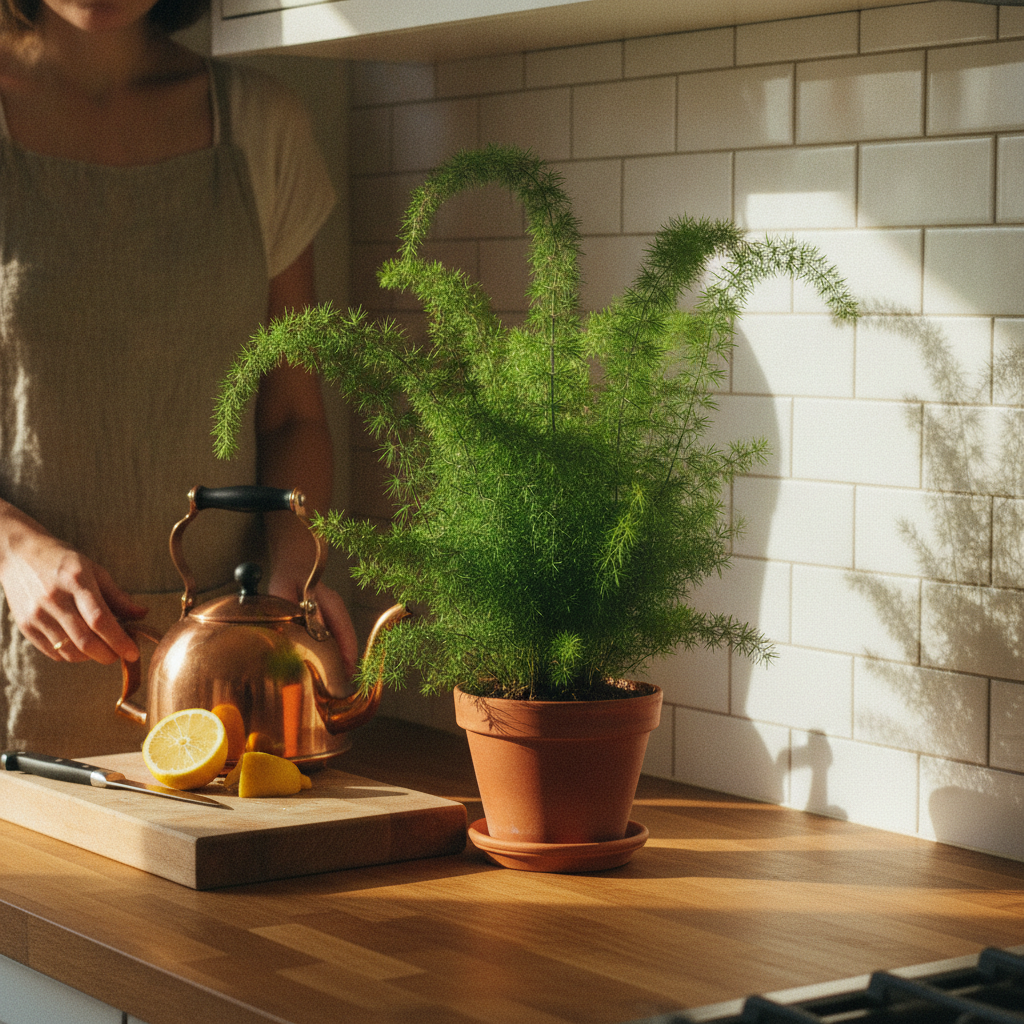
Native to the coastal regions of southeastern South Africa, the parent species Asparagus densiflorus grows in scrubby, well-drained ground where rainfall is seasonal and dry spells are routine. To survive this, the plant developed swollen, tuberous roots that store water and nutrients underground, acting as a built-in reservoir. For an indoor grower this heritage is a gift: it means the foxtail asparagus can shrug off the occasional missed watering that would flatten a true fern. The trade-off is that it will not tolerate constantly wet feet, a distinction that shapes almost every care decision below.
Aesthetically, the ‘Myersii’ cultivar earns its place through its distinctive growth habit. Rather than arching and trailing like most of its relatives, it sends up firm, cone-shaped plumes that stand more or less upright, each densely clothed in fine foliage and tapering toward the tip. A well-grown specimen forms a cluster of these plumes radiating from a central crown, giving a fountain-like silhouette that suits contemporary and traditional interiors alike. It brings movement and softness to a shelf without the flopping mess of a Boston fern, and it holds its shape with far less fuss.
The survive-versus-thrive gap is where this plant becomes interesting. A neglected foxtail asparagus in a dim corner will cling to life for months, slowly thinning and yellowing but refusing to die outright. Give it bright light, a genuine wet-and-dry watering rhythm, and a feed through the growing season, and it transforms into something lush and full, throwing up new plumes that deepen the whole silhouette. Most of this guide is about closing that gap.
Light
Light is the single biggest lever for a healthy foxtail asparagus, and the most common reason a plant looks sparse and leggy rather than dense and vigorous. In its native habitat it grows in bright, open conditions with dappled overhead sun, and it carries that preference indoors. The ideal position is one that receives plenty of bright, indirect light for most of the day, such as a spot a metre or two back from an east or west-facing window, or just off to the side of a bright south-facing one.
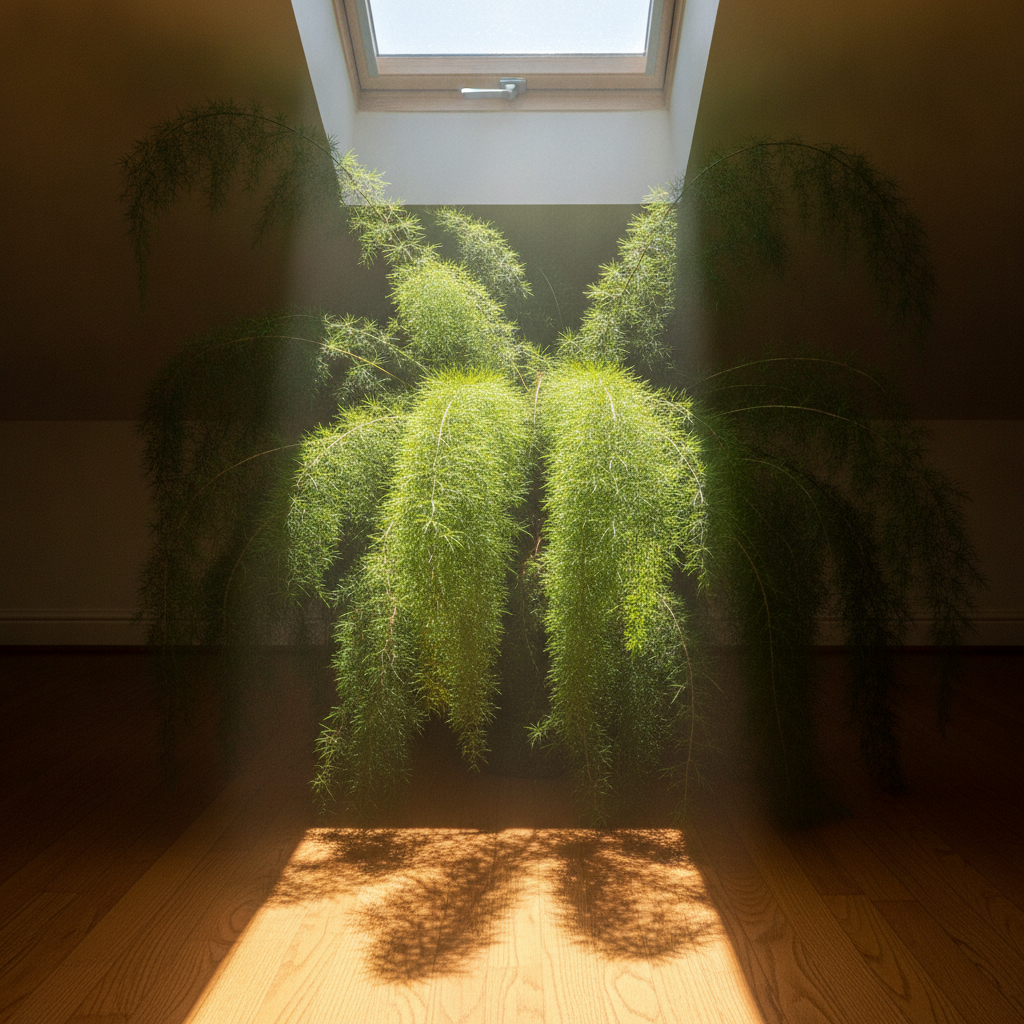
Unlike true ferns, the foxtail asparagus tolerates a measure of direct sun, particularly the gentler light of morning or late afternoon. A few hours of soft direct sun each day will produce compact, richly coloured plumes. Harsh midday summer sun through unshaded glass is another matter and can scorch the fine foliage, bleaching it to a pale straw colour or crisping the tips. If a plant is being moved into a sunnier position, acclimatise it gradually over a week or two rather than all at once, giving the cladodes time to adjust.
Too little light produces the opposite and more common problem. In a dim room the plant stretches toward the nearest window, the plumes grow further apart and floppy, and the overall form loses its characteristic fullness. Yellowing and heavy needle drop often follow. If a foxtail asparagus is thinning noticeably or leaning hard toward the glass, insufficient light is almost always the cause, and the remedy is simply to move it somewhere brighter. Because the plant grows evenly toward its light source, giving the pot a quarter turn each week keeps the plumes balanced on all sides.
Pro Tip — Read the plumes: The density of the plumes is a live readout of light levels. Tight, full, upright cones mean the plant is happy. Spread-out, floppy plumes with gaps between the foliage mean it wants more light. Adjust position before reaching for fertiliser or a bigger pot.
Watering
Watering a foxtail asparagus well means working with its tuberous roots rather than against them. Those swollen underground tubers store a reserve of moisture, which makes the plant genuinely drought tolerant and, more importantly, intolerant of standing water. The goal is a clear wet-and-dry cycle: water thoroughly, then let the top few centimetres of the mix dry out before watering again.
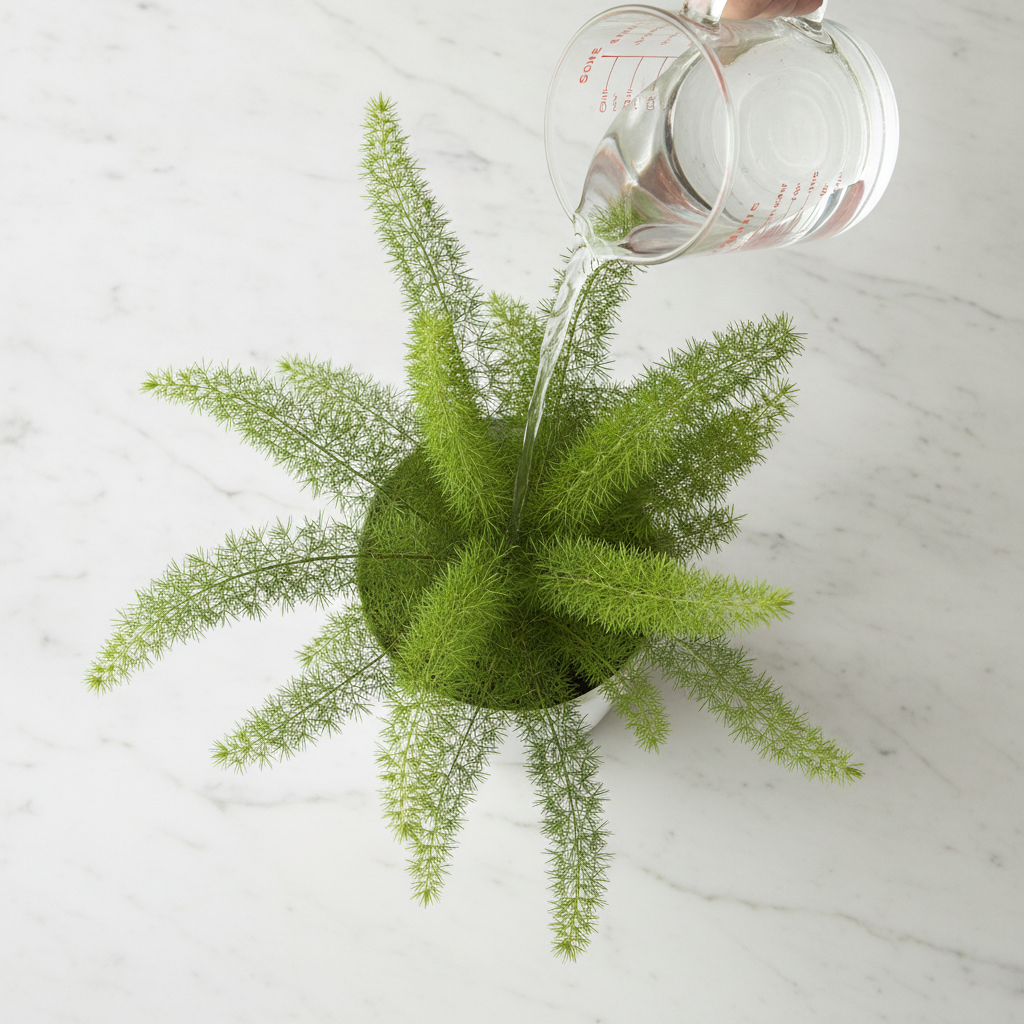
In practice, push a finger 3 to 5 cm (1 to 2 in) into the soil. If it feels dry at that depth, it is time to water; if it is still damp, wait. When watering, do so generously, letting water flow through the whole root ball until it drains from the bottom of the pot, then empty the saucer so the roots never sit in a puddle. This deep-then-dry pattern mimics the seasonal rains of the plant’s native range and encourages the tubers to fill out. During the warm, bright months of active growth this might mean watering once or twice a week; in the low light and cool temperatures of winter it may drop to every ten days or fortnight.
The signs of trouble point in both directions, which can be confusing. Overwatering shows up as yellowing plumes, a general limpness, and in severe cases soft, blackened stems at soil level from root rot. Underwatering, by contrast, causes the fine cladodes to dry, brown and shed, leaving a scattering of needles beneath the plant. The tuberous roots mean the plant leans toward drought tolerance, so when in doubt it is safer to wait a day than to water again. A foxtail asparagus that has been badly dried out will often recover fully once a normal rhythm resumes, sending up fresh plumes from the crown even after the old ones have browned.
Warning — Needle drop: A sudden shower of dropped needles is the plant’s classic distress signal, and it usually follows either a dried-out root ball or a sharp change in conditions such as a draught or a move to a darker spot. Restore steady watering and stable light, and new growth will replace what was lost.
Soil and Potting
Because drainage is the deciding factor in this plant’s health, the potting mix matters more than its easygoing reputation suggests. A foxtail asparagus wants a soil that holds enough moisture to keep the tubers supplied but drains freely enough that excess water never lingers. A good starting point is a quality general-purpose potting compost lightened with roughly a third perlite, coarse grit or bark. The added aeration keeps the mix open and prevents the dense, compacting texture that leads to root rot.
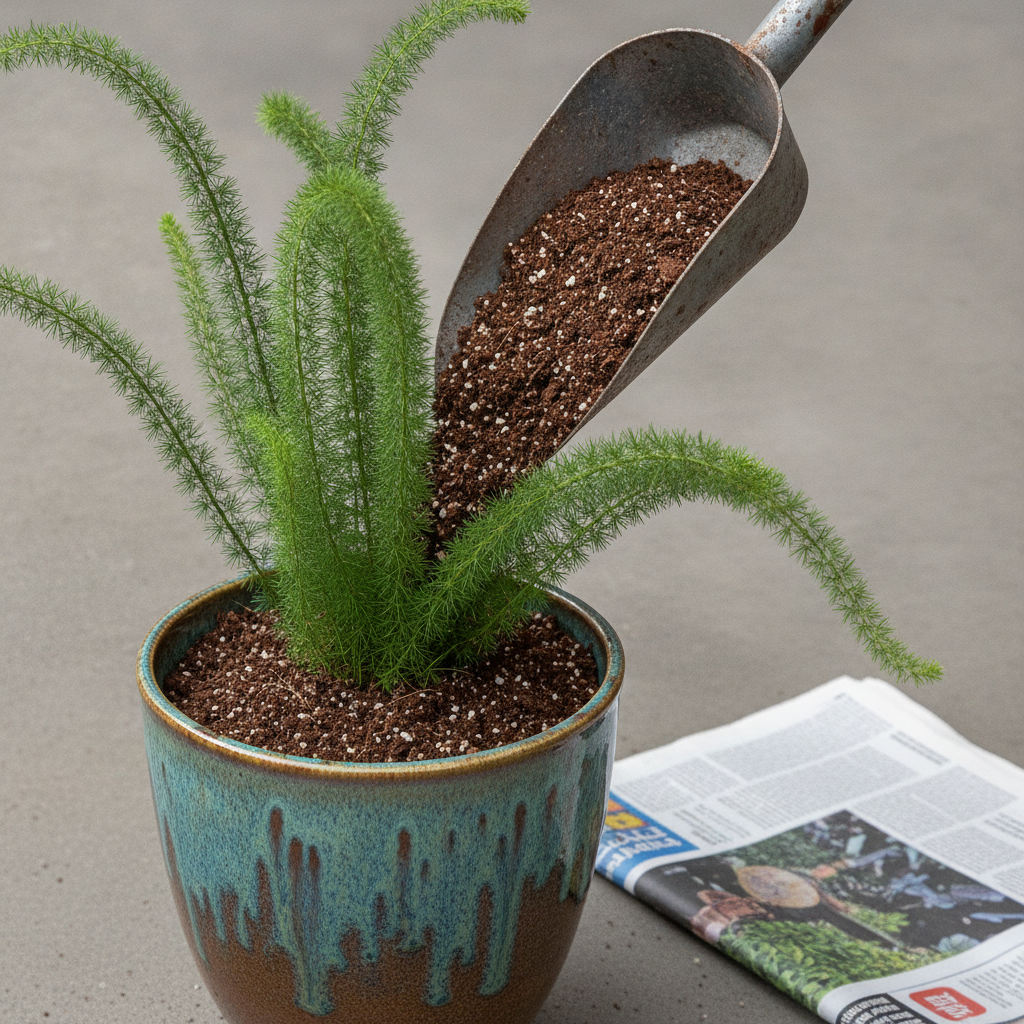
The plant prefers a slightly acidic to neutral soil, and most peat-free or peat-based houseplant composts fall comfortably within that range. Whatever the mix, the pot must have drainage holes; a decorative cachepot with no outlet is a common route to a waterlogged, rotting root ball. Terracotta suits this plant particularly well, as the porous clay wicks away surplus moisture and works with the wet-and-dry rhythm the roots prefer.
Foxtail asparagus grows vigorously and its tuberous roots expand with surprising force, so it fills a pot quickly. Do not be alarmed to find a solid mass of pale, knobbly tubers when it comes time to repot; this is entirely normal and even a healthy sign. Roots pushing the plant up out of its pot, tubers bulging against the sides, or water running straight through without wetting the mix all indicate it is pot-bound and ready to move up. Repot in spring, stepping up just one pot size, and be prepared to use a little muscle to ease the dense root ball free. These strong roots have been known to crack thin plastic pots, so a sturdy container is worth choosing.
Pro Tip — Repot with restraint: This plant flowers and looks its best when slightly snug in its pot, so resist the urge to over-pot. A container only a couple of centimetres wider than the last gives room to grow without leaving a large volume of wet soil around the roots.
Fertilising
A vigorous grower, the foxtail asparagus responds well to regular feeding through its active season, and steady nutrition is one of the surest ways to keep the plumes full and richly green. From spring through late summer, apply a balanced liquid houseplant fertiliser diluted to the strength recommended on the label, roughly once a month. This regular but modest feeding supports the constant production of new plumes without overwhelming the roots.
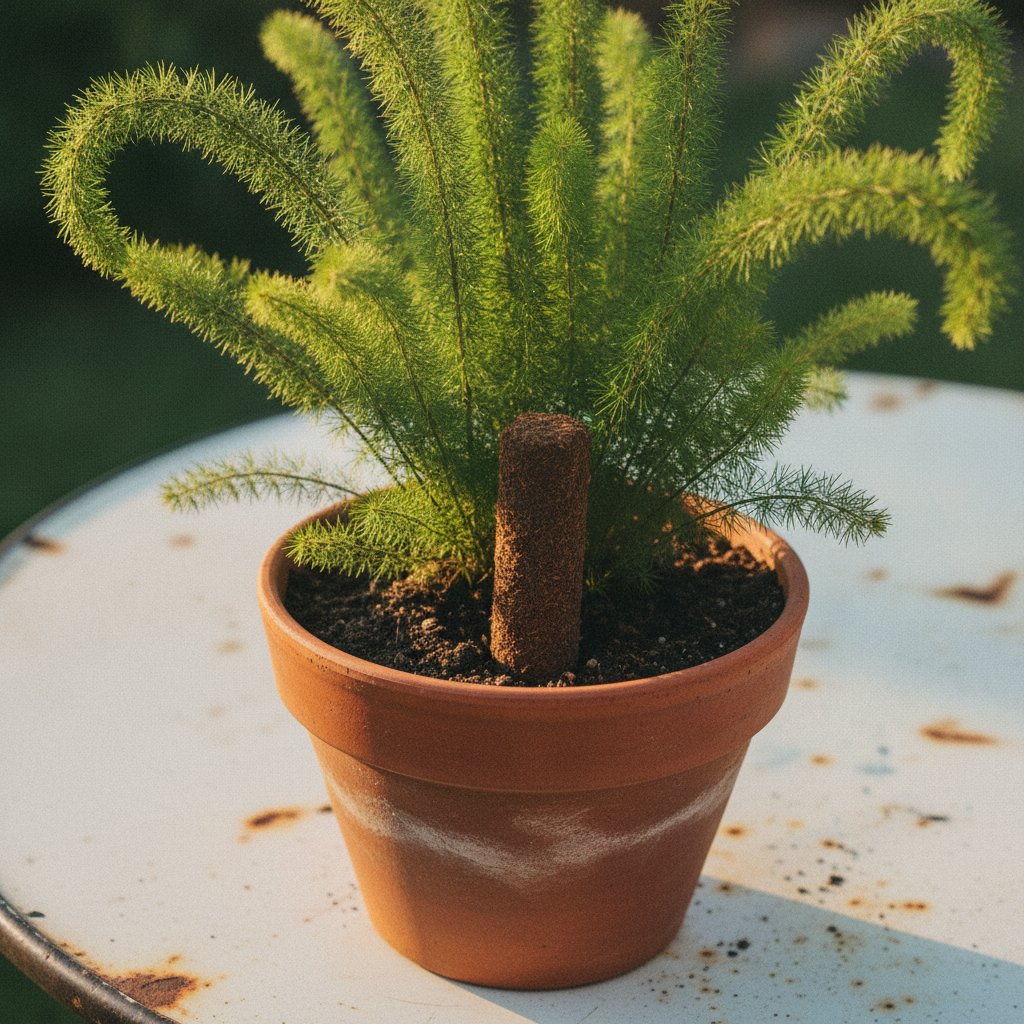
Restraint matters as much as generosity here. This is not a heavy feeder, and its salt-sensitive roots can be scorched by too much fertiliser, showing as browned needle tips and a crust of white mineral residue on the soil surface. If that residue builds up, flush the pot occasionally by running plenty of plain water through the mix to leach out accumulated salts. Always feed a plant that has been watered first; applying fertiliser to bone-dry soil concentrates the salts against thirsty roots and increases the risk of a chemical burn.
As the days shorten and growth slows in autumn, taper off feeding and stop altogether through winter. The plant is not actively producing new plumes during the dark months, so fertiliser applied then simply accumulates unused in the soil. Resume the monthly routine in spring when fresh growth signals that the plant is awake and hungry again. A foxtail asparagus fed on this seasonal rhythm rewards the grower with denser, more saturated foliage and the occasional flush of tiny, sweetly scented white flowers.
Propagation
Unlike the many houseplants that root cheerfully from a cut stem in a glass of water, the foxtail asparagus cannot be propagated from cuttings. Its plumes are cladodes rather than true stems and will not form roots, so a snipped plume placed in water will simply rot. The two reliable routes are division of an established clump and, more slowly, growing from the seed inside its ripe berries.
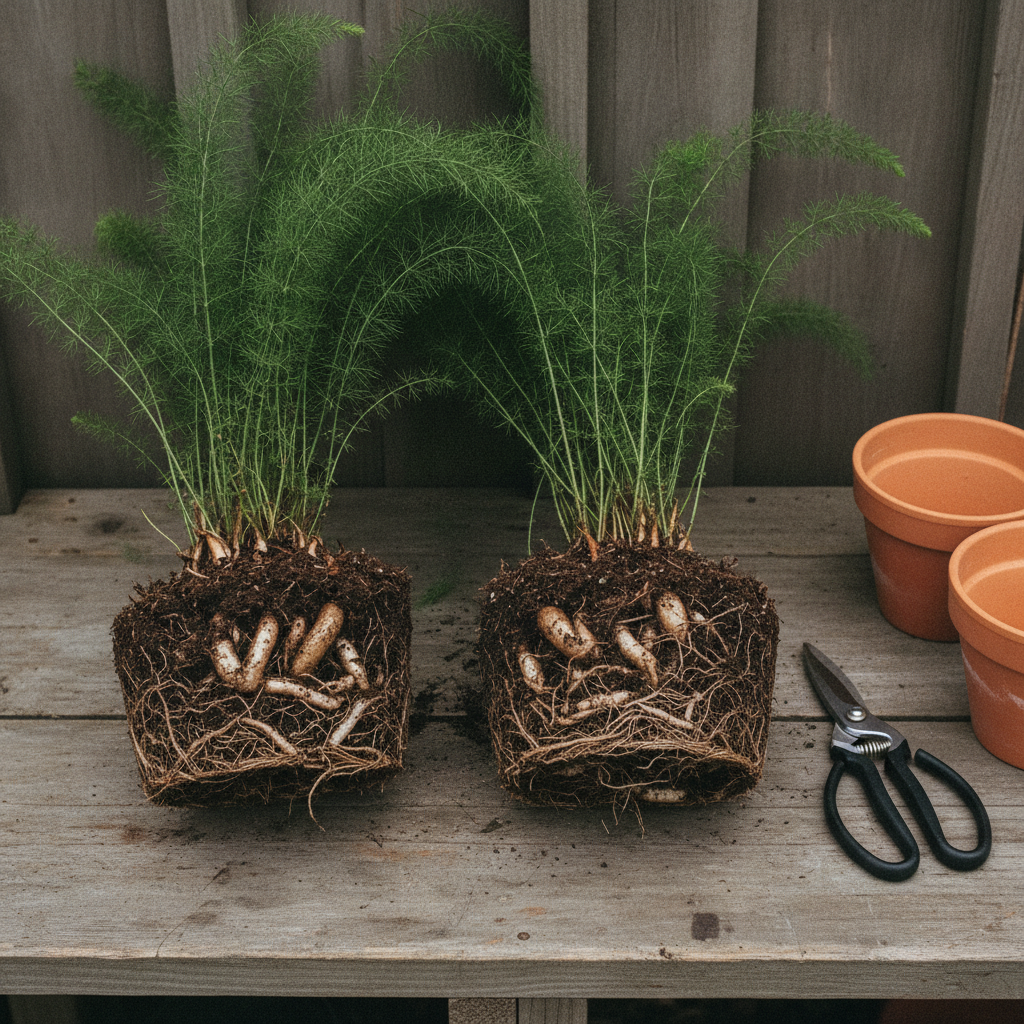
Division is by far the quicker method and is best carried out in spring, ideally combined with a routine repotting so the plant is only disturbed once. The steps are straightforward:
- Water the plant a day beforehand so the root ball is moist and the roots are supple rather than brittle.
- Ease the whole plant out of its pot and gently shake or tease away enough soil to see the mass of tubers and the crowns of growth above them.
- Using a clean, sharp knife, cut the root ball into two or three sections, making sure each division has a healthy portion of tubers and several plumes attached. The dense tubers may need real force to separate.
- Pot each division into its own container of fresh, free-draining mix, setting it at the same depth it grew before.
- Water each new plant in well and place it in bright, indirect light, keeping the soil lightly moist for the first few weeks while the roots re-establish.
Do not be discouraged if the divisions look a little ragged or drop some needles in the days after being split; this is a normal response to root disturbance, and each section will soon settle and push out fresh plumes. Growing from seed is possible for the patient: the mature red berries each contain one or more hard black seeds that can be cleaned of their pulp, soaked overnight and sown in warm, moist compost, though germination is uneven and seedlings take considerable time to reach a decent size. For most growers, division delivers a full new plant far faster.
Pests and Problems
The foxtail asparagus is generally robust, but its dense, sheltered plumes can hide a few common houseplant pests, and its fine foliage responds quickly to cultural stress. Catching problems early is far easier than clearing an established infestation from among thousands of tiny cladodes.
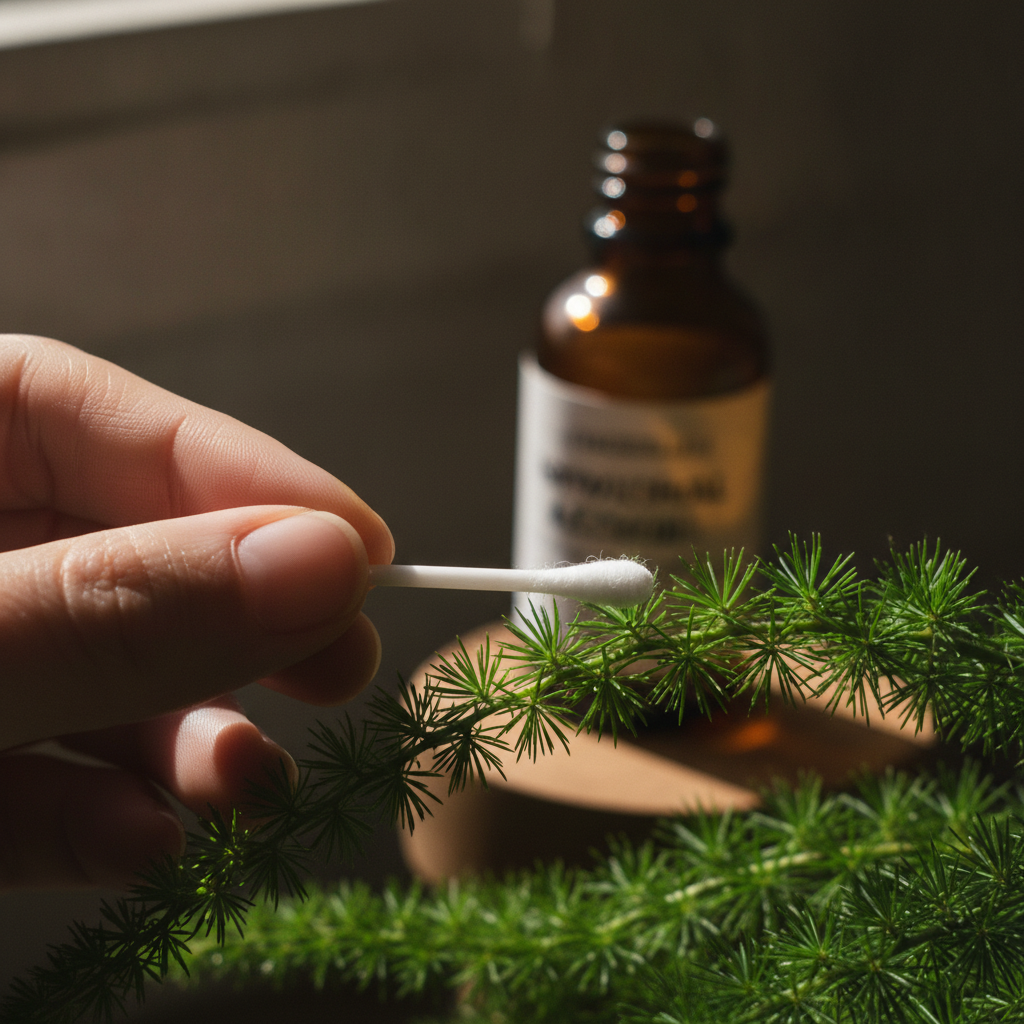
Spider mites are the most frequent visitor, particularly in warm, dry indoor air. They are almost too small to see, but their fine webbing strung between the plumes and a dull, stippled, greyish cast to the foliage give them away. Because they thrive in dry conditions, raising humidity and rinsing the plant under a gentle shower every so often discourages them. Mealybugs, appearing as small white cottony tufts tucked into the crowns and stem joints, and scale, showing as small brown bumps clinging to the stems, are the other two to watch for. Both can be dabbed away with a cotton bud dipped in diluted isopropyl alcohol, and heavier infestations treated with an insecticidal soap or a horticultural oil such as neem, repeated at intervals to catch newly hatched pests.
Most of the complaints growers bring against this plant, however, are not pests at all but responses to conditions. Yellowing plumes usually point to a watering fault, most often overwatering or a pot that cannot drain, while widespread browning and needle shed follow either a dried-out root ball or a sudden change such as a cold draught, a move, or the dry blast of a nearby radiator. Pale, straw-coloured foliage in a very bright window is sun scorch, and a thin, floppy, stretched-out habit is the signature of too little light. Because the plant reads its environment so plainly, the fix is almost always a matter of adjusting light, watering rhythm or position rather than reaching for a treatment.
Warning — Toxic berries and irritating sap: The attractive red berries are toxic to cats, dogs and people if eaten and can cause stomach upset, so keep them out of reach of pets and children. The sap may also irritate sensitive skin, and some plants carry small spines along the stems, so light gloves are wise when dividing or pruning.
Varieties and Relatives
The plant sold as foxtail asparagus is itself a cultivar, ‘Myersii’, but it sits within a small group of ornamental Asparagus species that share its needle-like foliage and easygoing nature while differing markedly in habit. Knowing the near relatives helps in choosing the right plant for a given spot, since some trail where others stand upright.
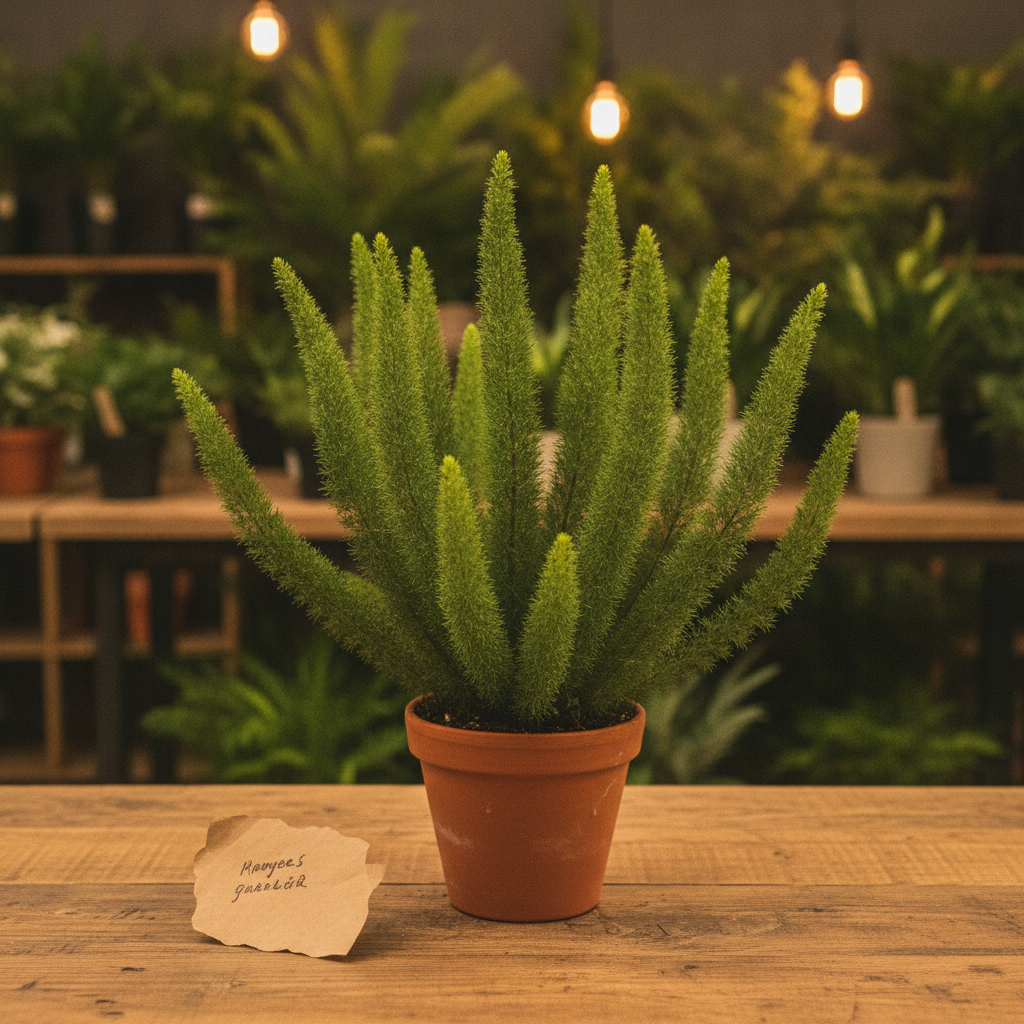
‘Myersii’ (Foxtail Fern): The plant this guide describes, prized for its firm, cone-shaped plumes that stand upright and radiate from the crown in a neat fountain. Its dense, symmetrical form makes it the most sculptural member of the group and the best choice where a self-supporting, architectural shape is wanted on a table or plant stand.
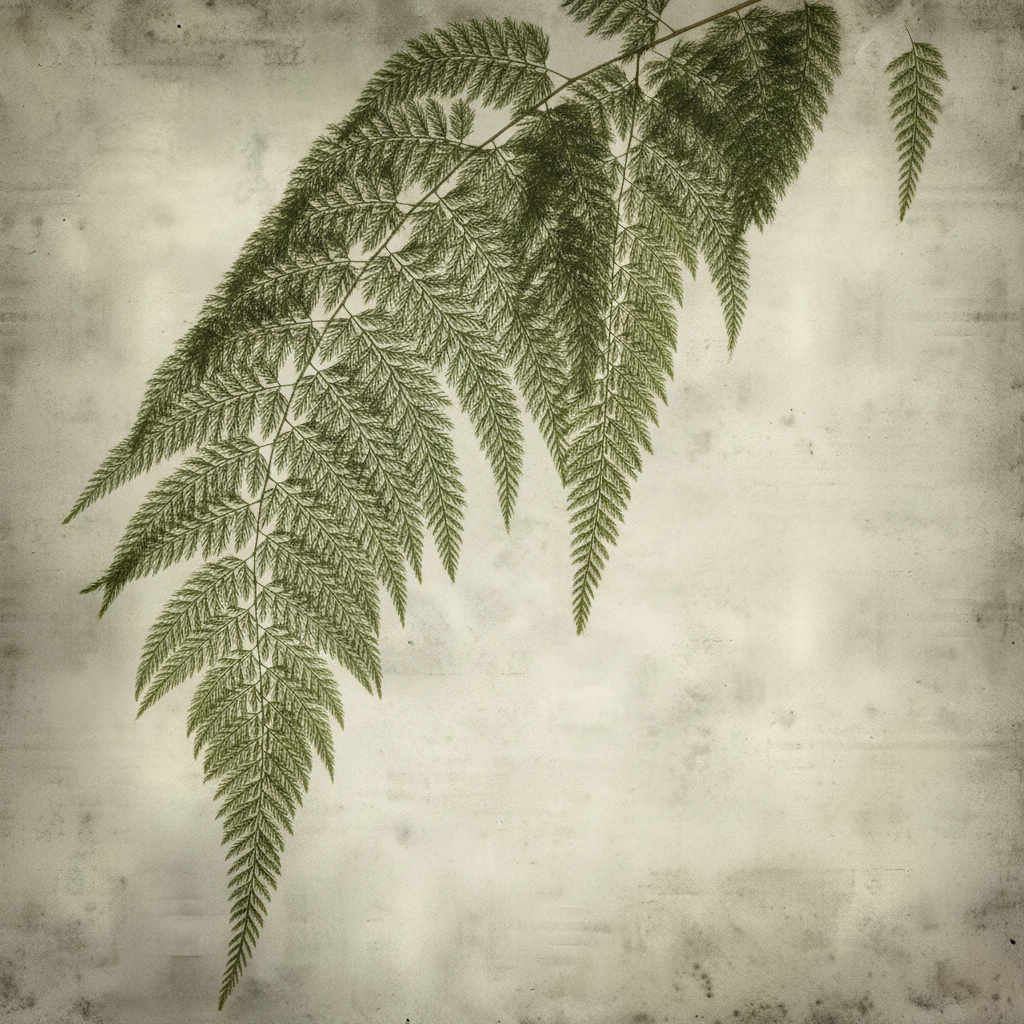
‘Sprengeri’ (Emerald Fern): The best-known cousin, with looser, arching and eventually trailing stems bearing flatter, feathery sprays of foliage. Where ‘Myersii’ stands to attention, ‘Sprengeri’ cascades, which makes it a natural for hanging baskets and high shelves. Its care is all but identical to the foxtail.
Beyond these two, the genus offers Asparagus setaceus, the lace or asparagus fern, whose flat, delicate, almost fern-frond-like sprays give a much finer, airier texture and a climbing habit, and Asparagus plumosus, long used by florists as a filler green. All share the same fundamental needs of bright indirect light, free-draining soil and a wet-and-dry watering rhythm, so a grower who masters the foxtail asparagus can move confidently among its relatives.
Frequently Asked Questions
Is the foxtail asparagus actually a fern?
No. Despite the common name “foxtail fern”, it is a flowering perennial in the family Asparagaceae, related to edible asparagus. It produces flowers and berries rather than spores, and its soft green “needles” are flattened stems called cladodes rather than true leaves.
Why is my foxtail asparagus dropping needles everywhere?
Needle drop is the plant’s classic stress signal. The usual causes are a root ball that has dried out too far, a sudden change in conditions such as a cold draught or a move to a darker spot, or the dry air near a radiator. Restore a steady watering rhythm and stable, bright light, and the plant will push out fresh plumes to replace what it shed.
How often should I water it?
Water when the top 3 to 5 cm (1 to 2 in) of soil has dried out, then water thoroughly until it drains from the bottom. In bright, warm conditions this may be once or twice a week; in winter it can drop to every ten days or fortnight. The tuberous roots store water, so err on the side of slightly dry rather than soggy.
Is it safe around cats and dogs?
Not entirely. The red berries are toxic to cats, dogs and people if eaten and can cause vomiting or stomach upset, and the sap may irritate sensitive skin. It is best kept out of reach of curious pets and children, and light gloves are sensible when handling or dividing it.
Can I grow a new plant from a cutting?
No, cuttings do not work for this plant because the plumes are cladodes and will not root. Propagate instead by dividing an established clump in spring, making sure each section has both tubers and plumes, or grow more slowly from the seed inside ripe berries.
Why does my plant look thin and floppy?
A stretched, floppy habit with gaps between the foliage almost always means too little light. Move the plant to a brighter position with plenty of indirect light, turn the pot a quarter each week so it grows evenly, and the new plumes will come in denser and more upright.
Grown with bright light, a free-draining pot and a genuine wet-and-dry watering rhythm, the foxtail asparagus is among the most rewarding of the easy houseplants: soft in texture yet firm in form, forgiving of the occasional lapse, and quick to bounce back with a flush of new plumes. Treat its tuberous roots with respect, keep it out of soggy soil and dim corners, and it will hold its fountain-like shape for years.






