
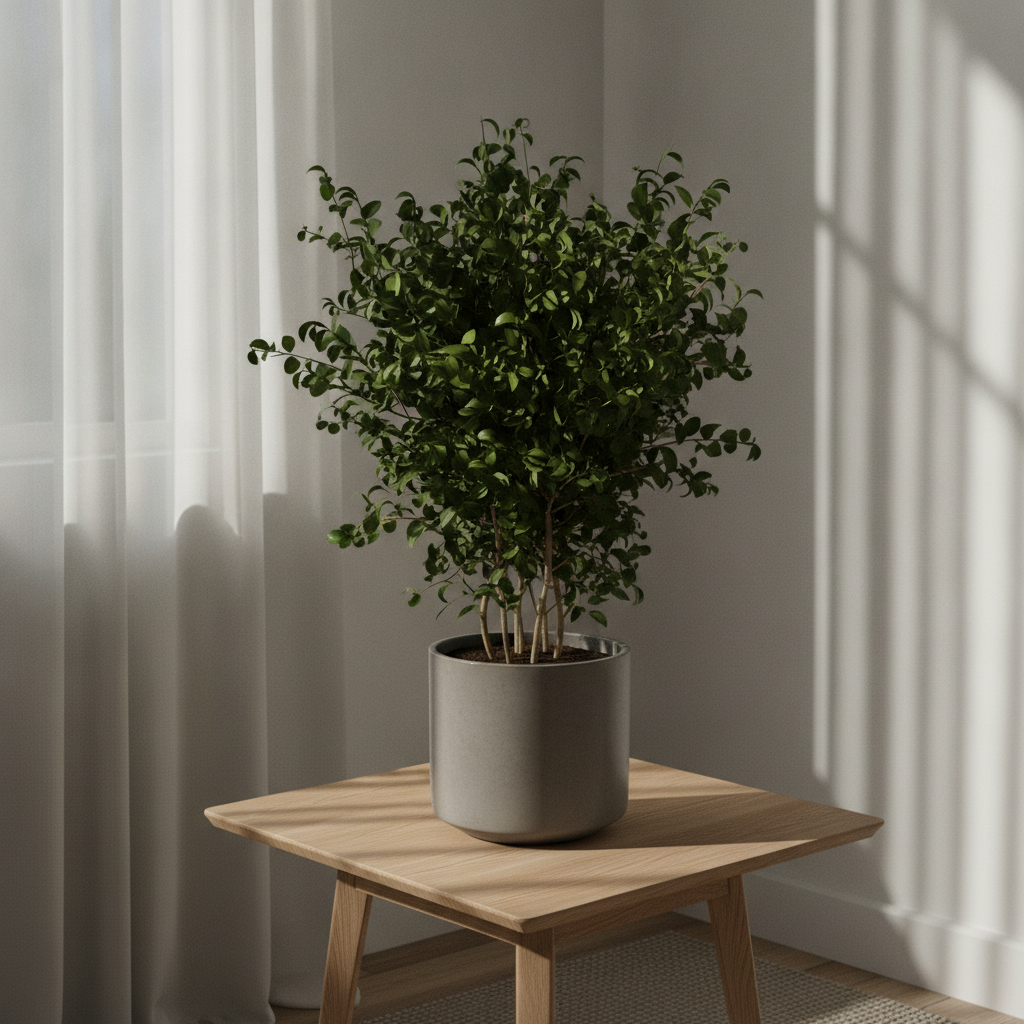
Few foliage plants carry themselves with the relaxed, shrubby grace of the Reflexa Dracaena. Where its cousins in the Dracaena genus tend towards stiff canes and upright rosettes, Dracaena reflexa leans and curves, throwing out dense whorls of short, glossy leaves along stems that bend back on themselves in the gentle arcs that give the plant its name. It is an island native with an island’s unhurried pace, and that combination of good looks and low demands has kept it on windowsills and in office lobbies for decades.
This guide walks through everything the plant needs to move from merely surviving to genuinely thriving, from the quality of the water in your can to the way its variegated forms sulk in low light. Whether you have inherited a leggy specimen that needs rescuing or you are choosing your first one at the nursery, the sections below cover light, watering, soil, feeding, propagation, pests and the handful of cultivars worth knowing.
Contents
- Quick reference
- Why the Reflexa Dracaena makes a good houseplant
- Light
- Watering
- Soil and potting
- Fertilising
- Propagation
- Pests and problems
- Varieties
- Frequently asked questions
Quick reference
The table below distils the plant’s core needs into a single glance. Treat it as a starting point rather than a rulebook, because the right watering interval or feeding rate always depends on your particular home, and the detailed sections that follow explain how to read your own plant.
| Botanical name | Dracaena reflexa (formerly Pleomele reflexa) |
| Common names | Reflexa dracaena, pleomele, Malaysian dracaena |
| Family | Asparagaceae |
| Native range | Madagascar, Mauritius and other western Indian Ocean islands |
| Mature size indoors | 1 to 2 metres (3 to 6 feet) tall over many years |
| Light | Bright, indirect light; variegated forms need more |
| Water | When the top 3 to 5 cm (1 to 2 in) of soil is dry |
| Soil | Loose, free-draining, slightly acidic potting mix |
| Temperature | 18 to 24 degrees C (65 to 75 degrees F) |
| Humidity | Moderate, 40 to 60 percent |
| Feeding | Monthly, diluted, during spring and summer |
| Propagation | Stem and tip cuttings |
| Toxicity | Toxic to cats and dogs if eaten |
Why the Reflexa Dracaena makes a good houseplant
The appeal of Dracaena reflexa begins with its silhouette. Rather than a single fountain of leaves erupting from the soil, the plant builds a loose, branching shrub of woody stems, each one clothed in tight spirals of lance-shaped foliage. Individual leaves are modest, only 5 to 15 centimetres (2 to 6 inches) long, but they crowd together so densely that a healthy plant reads as a soft green cloud on a sculptural frame. Left to its own devices over years, it develops the leaning, reflexed stems that botanists noted when they named it.
Beyond looks, the plant earns its keep through tolerance. It grew up on islands where light is bright but often filtered through taller canopy, and where the dry season teaches a plant to hold water in reserve. That heritage translates indoors into a specimen that shrugs off the occasional missed watering, adapts to a range of light levels and grows slowly enough that it rarely outgrows its welcome. For anyone who wants a substantial, tree-like presence without the fuss of a fiddle leaf fig, the Reflexa Dracaena is one of the most reasonable choices on the shelf.
It is worth being clear-eyed about the one real caution. Like every member of its genus, Dracaena reflexa contains saponins that are toxic to cats and dogs, causing vomiting, drooling and loss of appetite if the foliage is chewed. It is not dangerous to handle, and most households live with it happily, but a pet inclined to nibble leaves is reason enough to place the plant out of reach.
Light
Light is the single lever that most changes how this plant behaves, and getting it right is the difference between a full, richly coloured shrub and a thin, reaching one. In its island home the Reflexa Dracaena grows at the bright edges of woodland and scrub, receiving strong but usually filtered light. The indoor equivalent is a position that is bright without being scorched: a couple of metres back from a south or west window, or directly in front of an east-facing one where the morning sun is gentle.
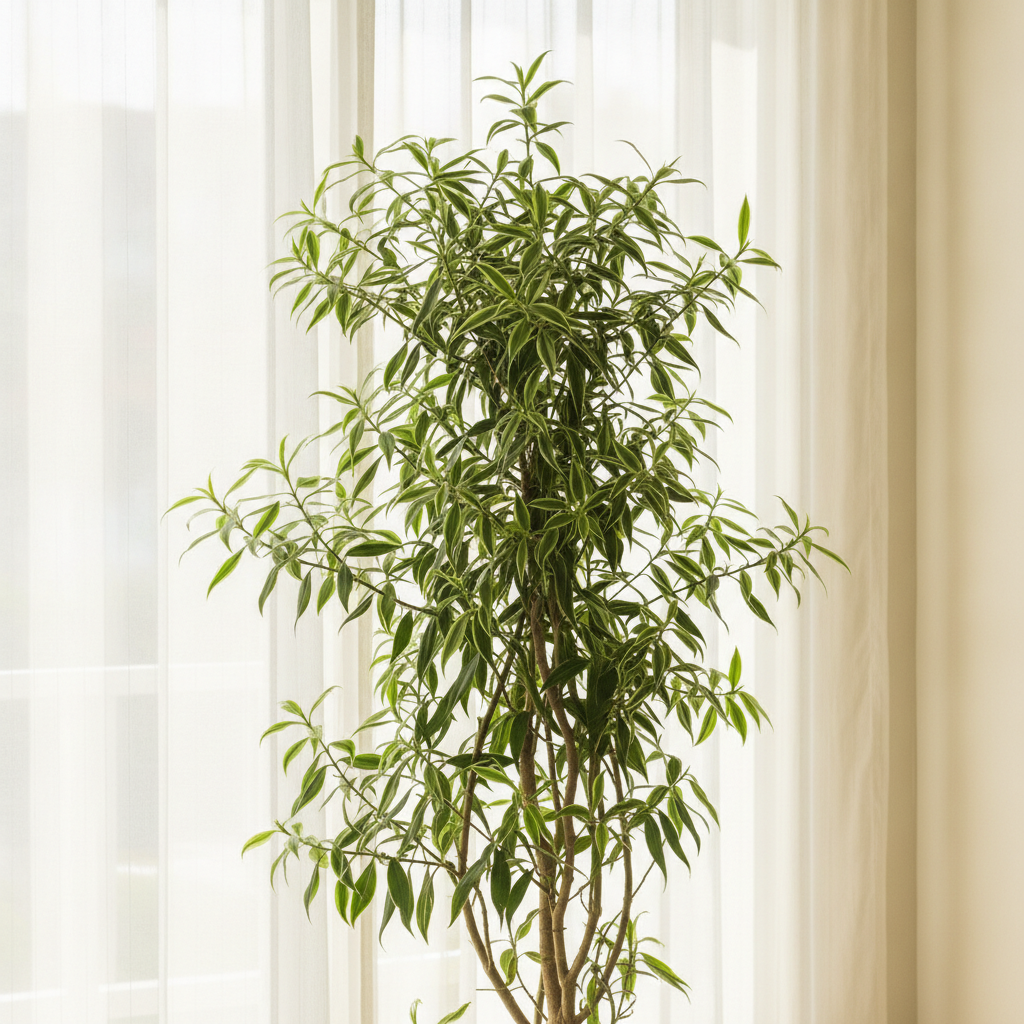
The plain green form is genuinely flexible and will hold its own in medium light, though growth slows and stems space their leaves further apart to catch what they can. The variegated cultivars are a different matter. Their creamy and lime markings contain less chlorophyll, so they need noticeably brighter conditions to keep their colour and compact form. Starve a Song of India of light and it fades towards green and stretches, losing the very quality you bought it for.
Direct summer sun through unshaded glass is the one thing to avoid, as the midday hours can bleach and scorch the leaves into pale, papery patches. A thin curtain solves this instantly. Because the plant grows towards its light source, it will lean over months into a lopsided shape unless you turn the pot a quarter every week or two, which keeps the shrub even and full on all sides.
Pro Tip — Reading the leaves: If new growth emerges pale and widely spaced, the plant is asking for more light. If leaf tips or edges bleach to cream and then brown, it is getting too much direct sun. Move it gradually rather than in one jump, giving it a week or two to adjust.
Watering
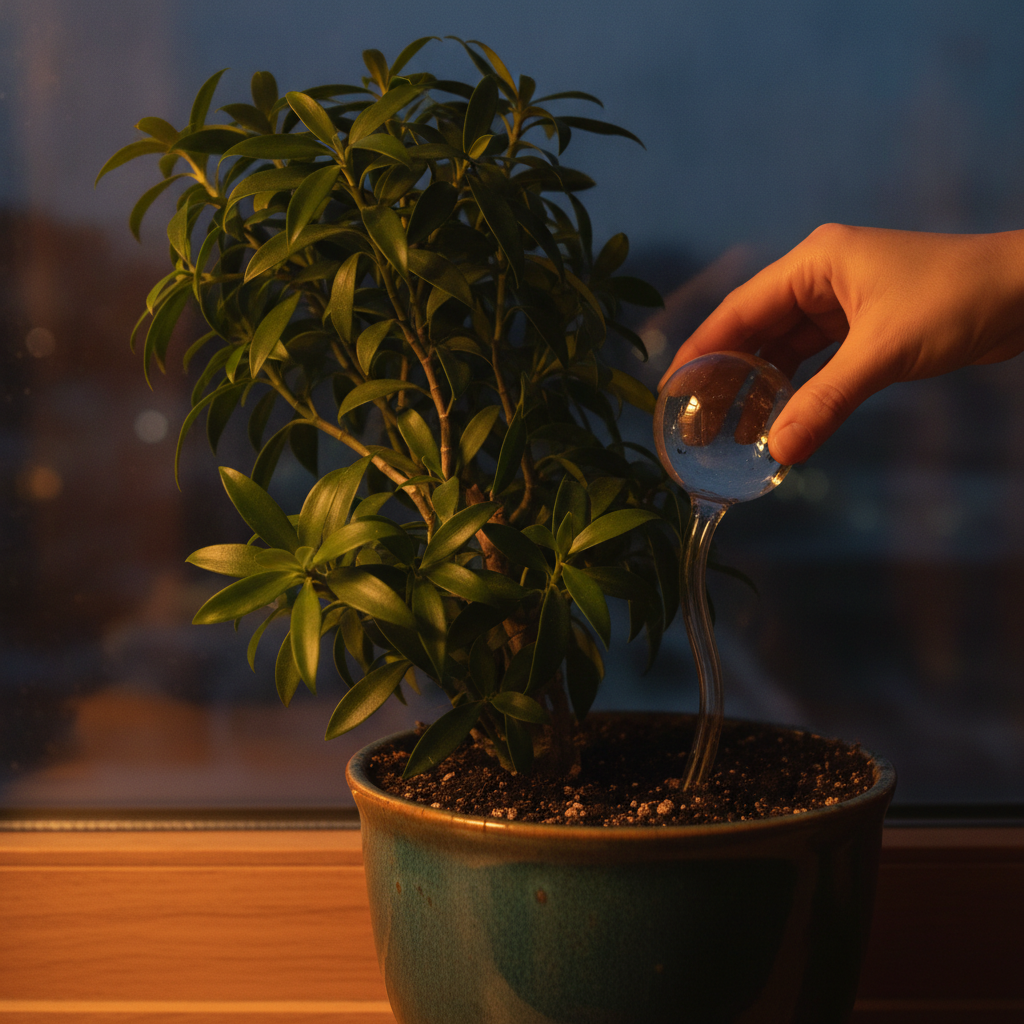
Watering is where most Reflexa Dracaenas are lost, and almost always to kindness rather than neglect. The plant stores moisture in its woody stems and thick roots, which means it copes far better with a short drought than with soil that stays wet. The reliable rule is to water thoroughly, let the excess drain away completely, and then wait until the top 3 to 5 centimetres (1 to 2 inches) of the mix has dried before watering again. In a bright warm spot that might mean once a week in summer, dropping to every two or three weeks in the low light and cool of winter.
There is a second, subtler issue that trips up newcomers to the genus. Dracaenas are unusually sensitive to fluoride and to the salts that build up from tap water and fertiliser. The classic symptom is browning that starts at the leaf tips and creeps inward, often with a thin yellow halo. If your tap water is fluoridated or heavily softened, this browning can appear even when your watering routine is perfect. Switching to filtered water, collected rainwater or tap water left to stand overnight usually clears the problem over a season of new growth.
When you do water, aim to soak the entire root ball rather than giving frequent sips, which only wet the surface and leave the deeper roots parched. Empty the saucer within half an hour so the pot never sits in standing water, and flush the pot generously every month or two to rinse accumulated salts out through the drainage holes.
Warning — Root rot: Yellowing lower leaves, a sour smell from the soil and soft, blackened stem bases all point to overwatering and rot. If you find them, unpot the plant, cut away any mushy roots with clean scissors, and repot into fresh, barely damp mix. Recovery depends on catching it early.
Soil and potting
The Reflexa Dracaena asks for a mix that holds a little moisture but drains freely and lets air reach the roots. A standard peat-free or peat-based houseplant compost makes a fine base, but on its own it tends to compact and hold water too long. Loosening it with roughly a third perlite, coarse bark or horticultural grit transforms it into something the plant’s roots can breathe in. The plant prefers a slightly acidic to neutral pH, which most commercial mixes already provide, so no special adjustment is needed.
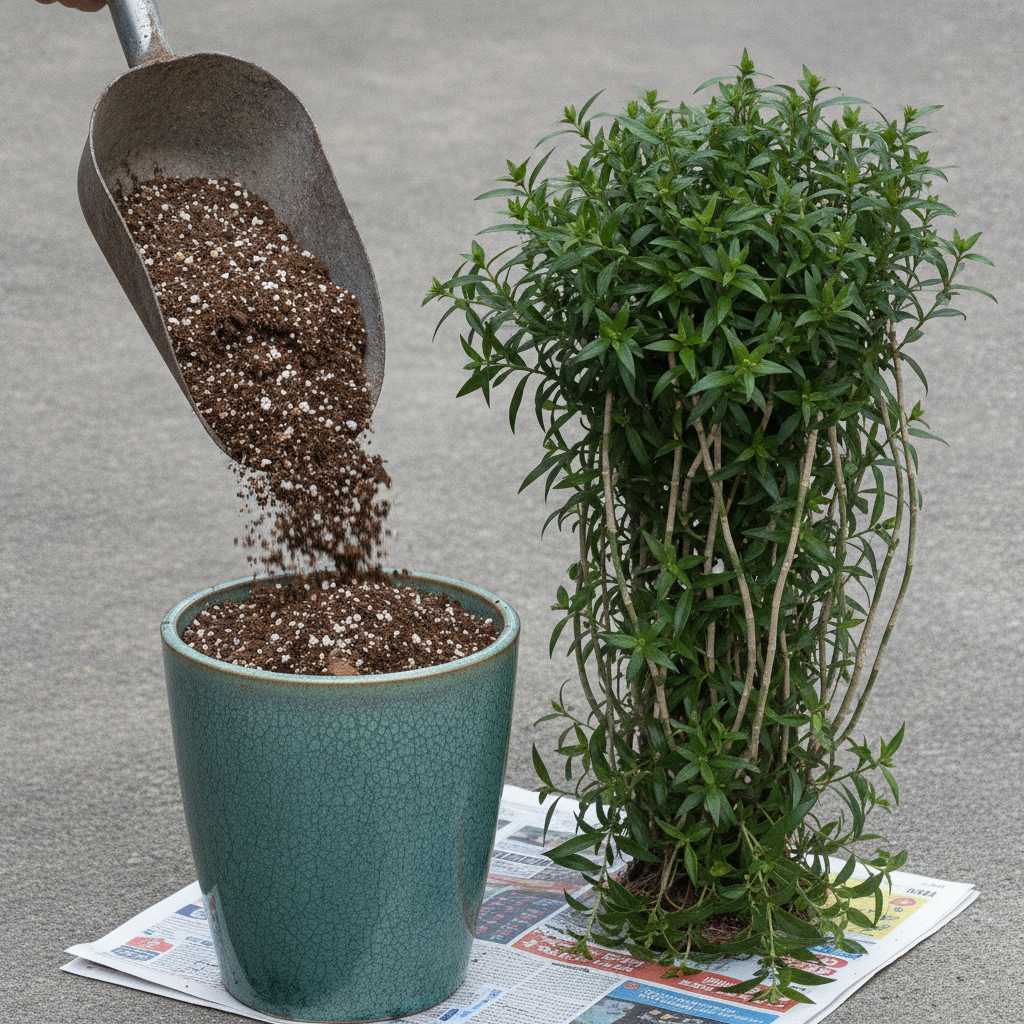
This is a slow-growing plant that actively resents being disturbed, so repotting is an occasional event rather than an annual chore. Every two to three years is plenty, and only when roots are visibly circling the pot or pushing out of the drainage holes. Choose a container just one size larger, because an oversized pot holds a reservoir of wet soil around roots that cannot use it, which is a direct path to rot. A drainage hole is not negotiable.
Spring is the best time to repot, at the start of the growing season when the plant can quickly grow into its new home. Ease it out gently, tease apart any tightly wound roots, settle it into fresh mix at the same depth it sat before, and water it in. Expect a short pause in growth afterwards while the roots re-establish; this is normal and not a sign of trouble.
Fertilising
Because it grows slowly, the Reflexa Dracaena is a light feeder, and heavy-handed fertilising does more harm than good. During the active months of spring and summer, a balanced liquid houseplant fertiliser diluted to half the recommended strength, applied roughly once a month, supplies everything the plant needs to push out fresh whorls of leaves. There is no need to feed in autumn and winter, when growth naturally stalls and unused fertiliser simply accumulates as salt in the soil.
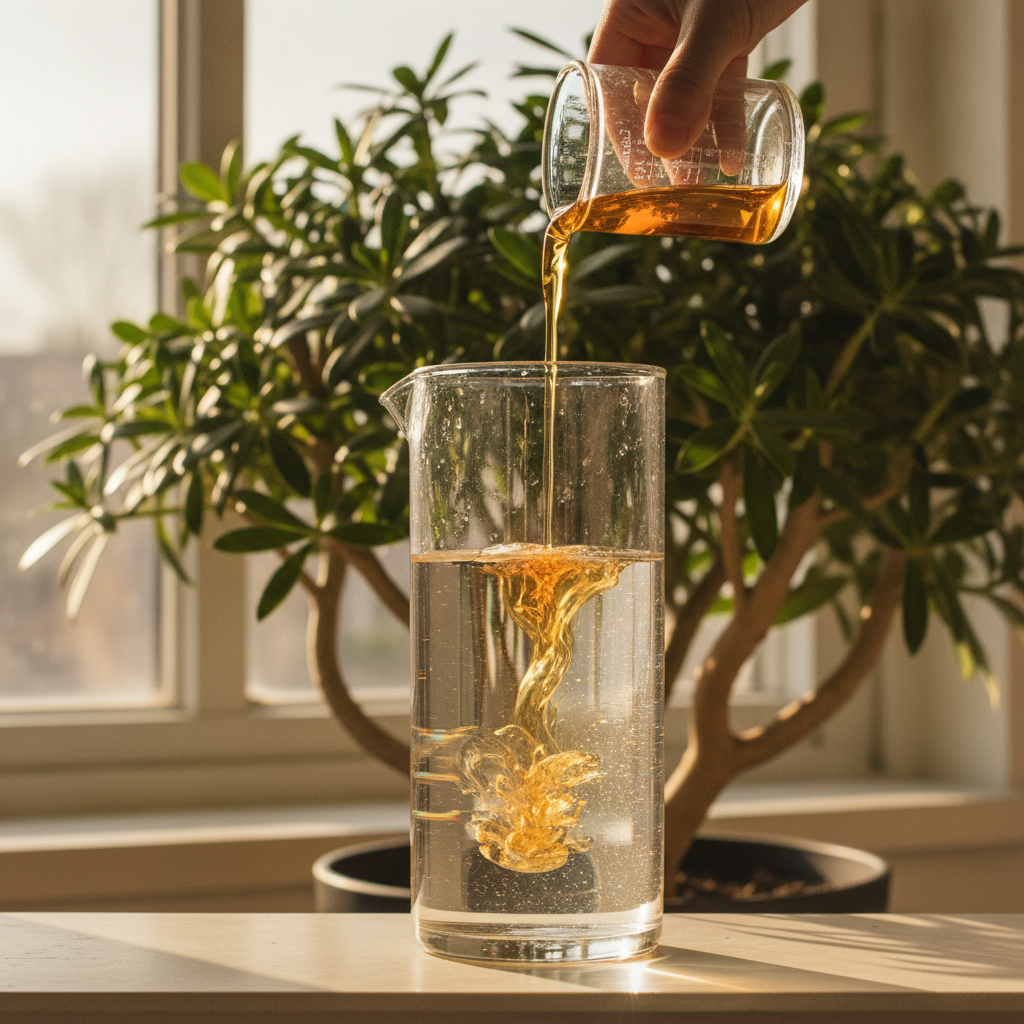
That salt sensitivity, the same trait behind the plant’s dislike of fluoride, is the main reason to keep feeding modest. The tell-tale sign of overfeeding is a crust of white mineral deposit on the soil surface or around the pot rim, often paired with the same tip browning that hard water causes. If you see it, flush the pot thoroughly with several changes of clean water and hold off feeding until the plant recovers. It is always safer to underfeed this species than to overfeed it.
Propagation
One of the quiet pleasures of the Reflexa Dracaena is how readily it propagates from cuttings, which also makes it the perfect solution for a plant that has grown tall and bare at the base. Rather than living with a leggy specimen, you can behead it and start again, and the parent will usually resprout below the cut into a bushier form. The reliable method is a stem or tip cutting taken in spring or early summer, when the plant is growing and roots form fastest.
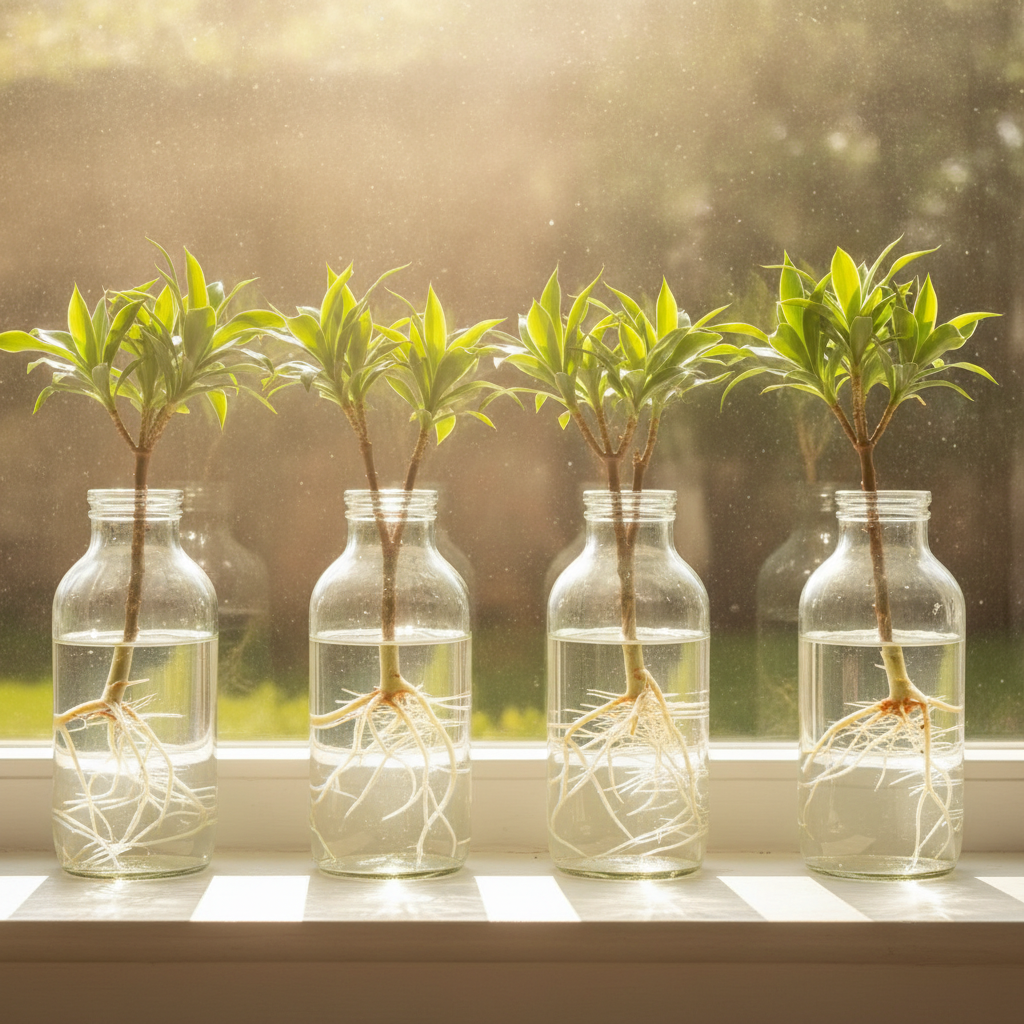
The steps are straightforward:
- Using clean, sharp secateurs, cut a healthy stem section 10 to 15 centimetres (4 to 6 inches) long, ideally with a tuft of leaves at the top.
- Strip the leaves from the lower few centimetres so a bare section of stem will sit below the water or soil line.
- Place the cutting in a jar of clean water on a bright windowsill out of direct sun, or push it into moist, free-draining potting mix.
- If rooting in water, refresh it every few days to keep it clear and oxygenated.
- Wait. White roots typically appear within three to six weeks, and once they reach a few centimetres long a water-rooted cutting can be potted up into soil.
Keep newly potted cuttings a little warmer and slightly more humid than an established plant while they settle, and resist the urge to feed until you see new leaf growth, the sign that the young root system is working. A dab of rooting hormone on the cut end can speed things along but is not essential with this obliging species.
Pests and problems
A well-grown Reflexa Dracaena is not especially prone to pests, but the dry indoor air of a heated home can invite the usual suspects. Spider mites are the most common, thriving in warm dry conditions and revealing themselves through fine stippling on the leaves and delicate webbing in the whorls and leaf joints. Mealybugs, which look like small tufts of white cotton wool tucked into the crevices where leaf meets stem, and scale, which appear as flat brown bumps along the stems, round out the list. Thrips and fungus gnats turn up occasionally.
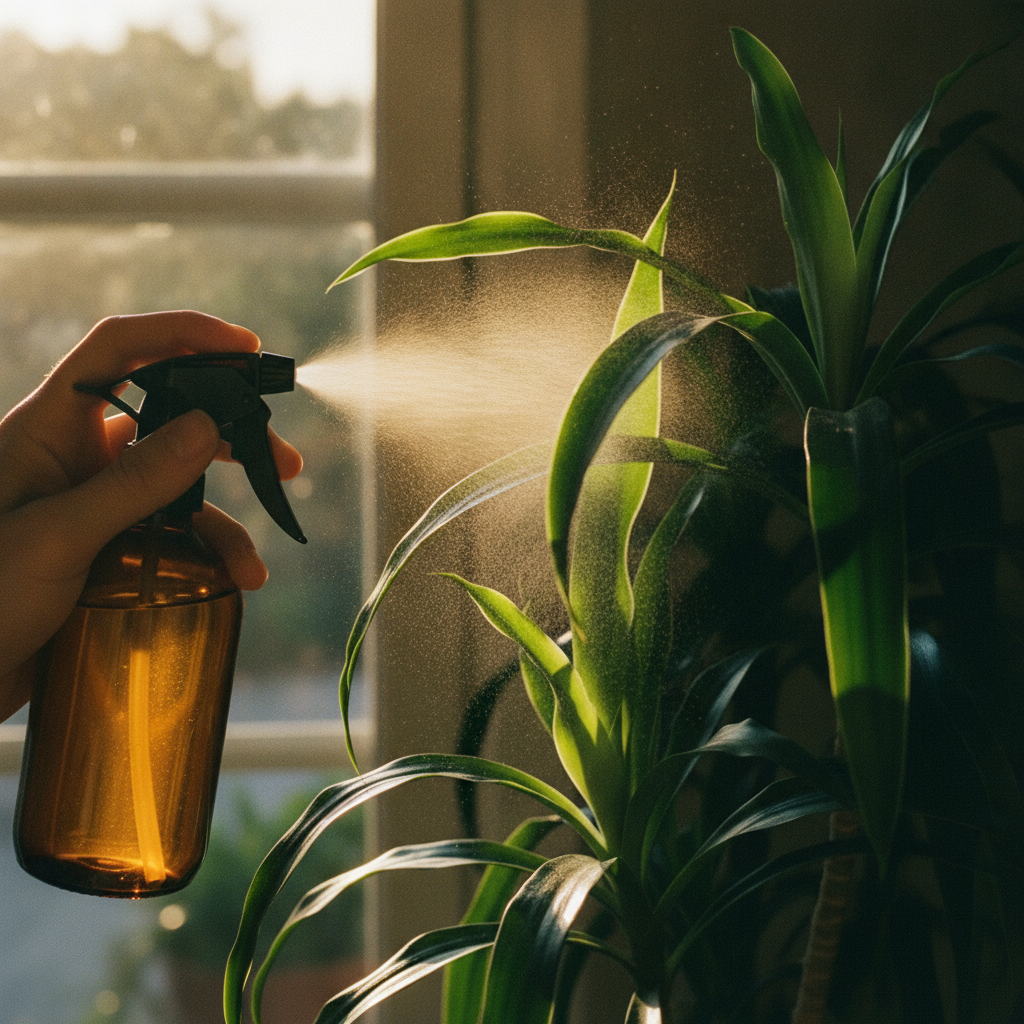
The response is the same for all of them: catch the problem early and act consistently. Isolate an affected plant so pests cannot spread to neighbours, wipe down the leaves and stems, and treat with insecticidal soap or a neem oil solution, paying particular attention to the undersides of leaves and the tight joints where pests hide. A single treatment rarely finishes the job, so repeat every seven to ten days for a few cycles to break the breeding cycle. Raising humidity and keeping the foliage clean of dust makes the plant a far less welcoming host to spider mites in the first place.
Most day-to-day complaints, though, are not pests at all but symptoms of care. Brown leaf tips point to fluoride, salt build-up or dry air. Yellowing lower leaves usually mean overwatering, though the occasional loss of an old leaf at the base is simply the plant retiring what it no longer needs. Pale, stretched growth signals too little light, while bleached patches signal too much direct sun. Read the plant against the sections above and the cause is nearly always straightforward to trace.
Varieties
The plain green species is handsome, but the Reflexa Dracaena is best known through its two variegated cultivars, both of which are widely sold and both of which trade a little extra light hunger for a great deal more colour. The pair below are the ones you are most likely to meet.
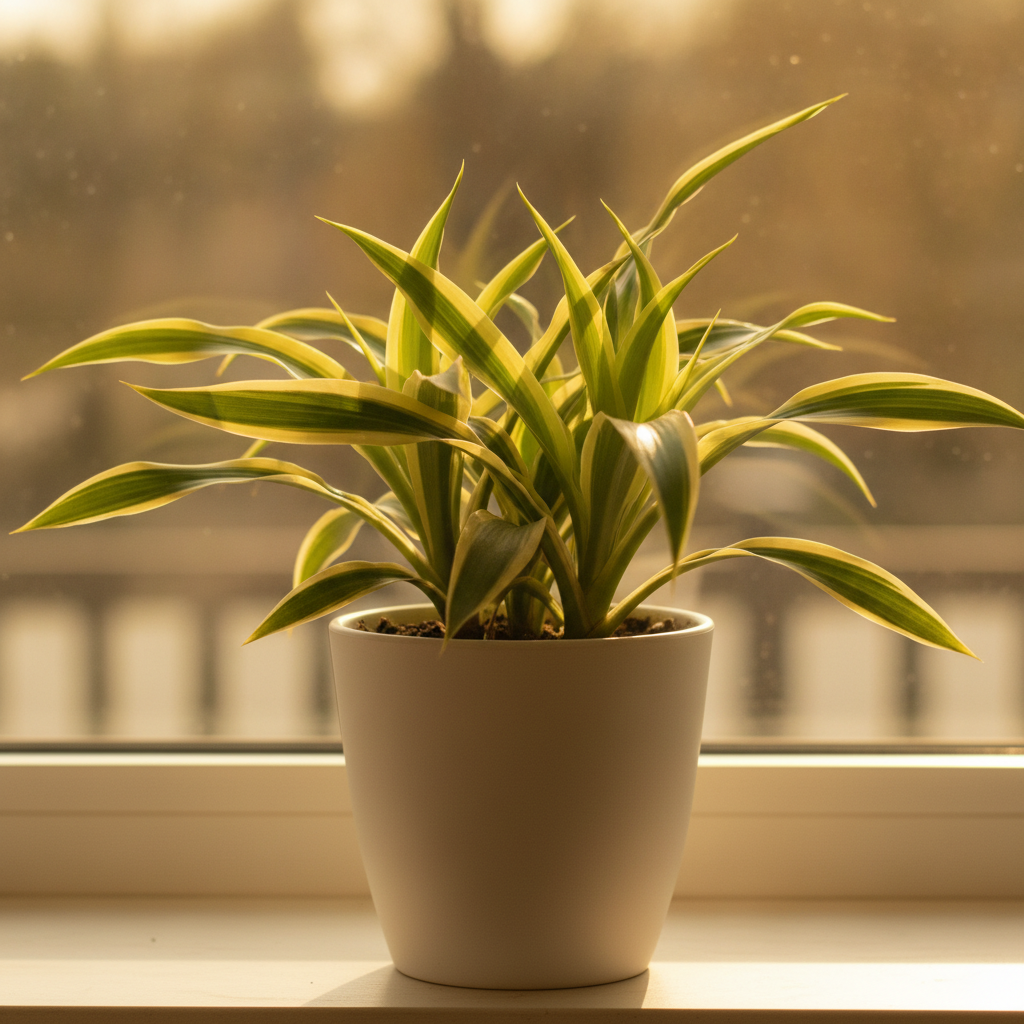
Song of India
Easily the most popular form, Song of India edges each leaf with a broad band of creamy yellow around a green centre, giving the whole shrub a warm, glowing quality. It is the variety most often sold simply as pleomele. Give it the brightest indirect light you can, short of harsh sun, and the margins stay wide and vivid; let it languish in shade and the yellow narrows and dulls.
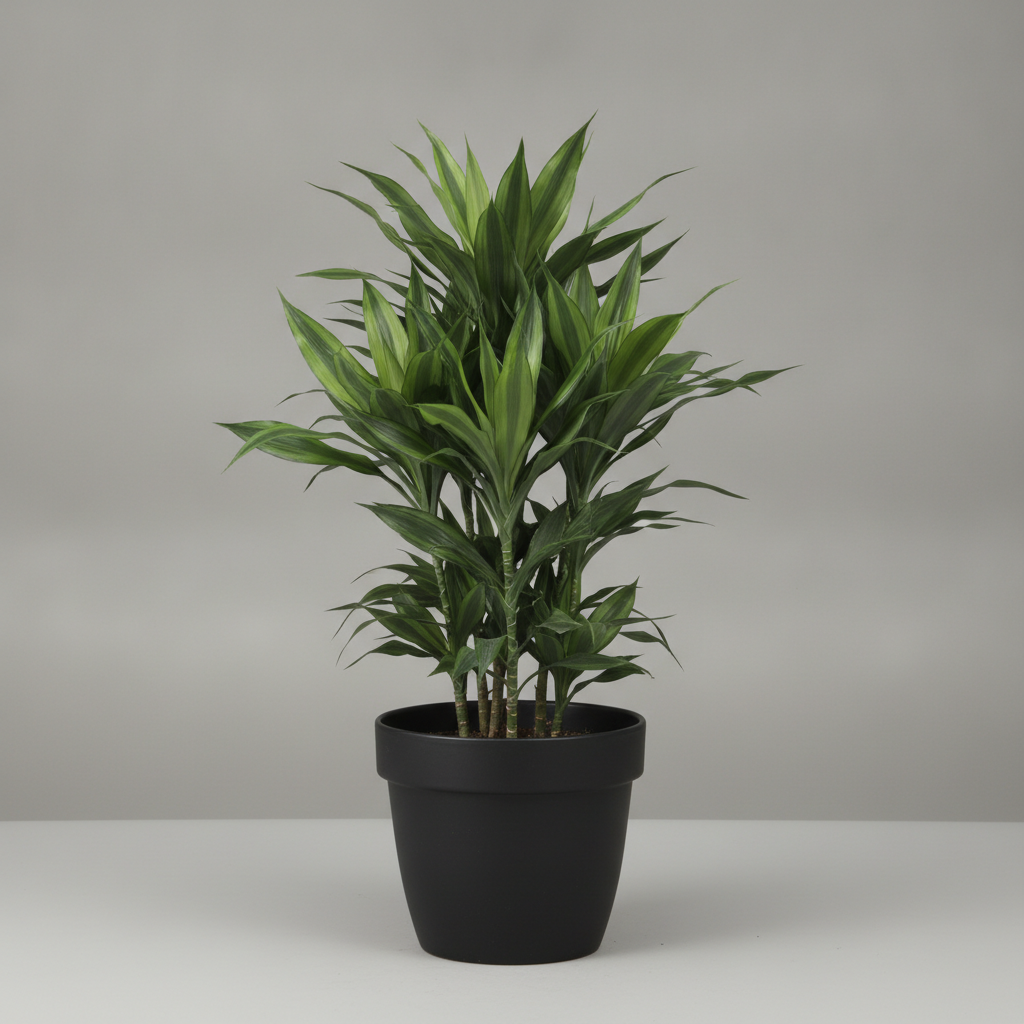
Song of Jamaica
A cooler, subtler alternative, Song of Jamaica marks its deep green leaves with paler lime-green central striping rather than a bright margin. The effect is more understated and reads well against dark interiors and modern pots. Its care is identical to Song of India, and it is a touch more forgiving of moderate light, though it too holds its markings best when the light is generous.
Frequently asked questions
Why are the tips of my Reflexa Dracaena turning brown?
Brown tips are the plant’s most common complaint and usually come down to water quality. Dracaenas are sensitive to the fluoride and salts in tap water, and to dry air. Switch to filtered or rainwater, or let tap water stand overnight before using it, flush the pot every month or two to clear built-up salts, and raise humidity a little. New growth will come in clean once the cause is removed.
Is the Reflexa Dracaena safe around cats and dogs?
No. Like all dracaenas it contains saponins that are toxic to cats and dogs, and chewing the leaves can cause vomiting, drooling and loss of appetite. It poses no risk from handling, but keep it out of reach of pets inclined to nibble.
How fast does it grow, and how big will it get?
It is a slow grower, which is part of its charm indoors. Over many years it can reach 1 to 2 metres (3 to 6 feet) tall as a branching shrub, but it will not overwhelm a room in a hurry. You can keep it more compact by pruning the stems, which also encourages bushier growth lower down.
My plant has gone bare and leggy at the bottom. Can I fix it?
Yes, and easily. Cut the tall stem back to whatever height you like with clean secateurs; the parent will usually resprout new shoots below the cut into a fuller shape. Do not waste the top, either, as it roots readily as a cutting in water or moist soil, giving you a second plant.
Can it tolerate low light?
The plain green form tolerates medium and even lowish light, though growth slows and leaves space out. The variegated cultivars, Song of India and Song of Jamaica, need brighter indirect light to keep their colour and will fade and stretch in dim corners. Bright, filtered light suits all of them best.






