
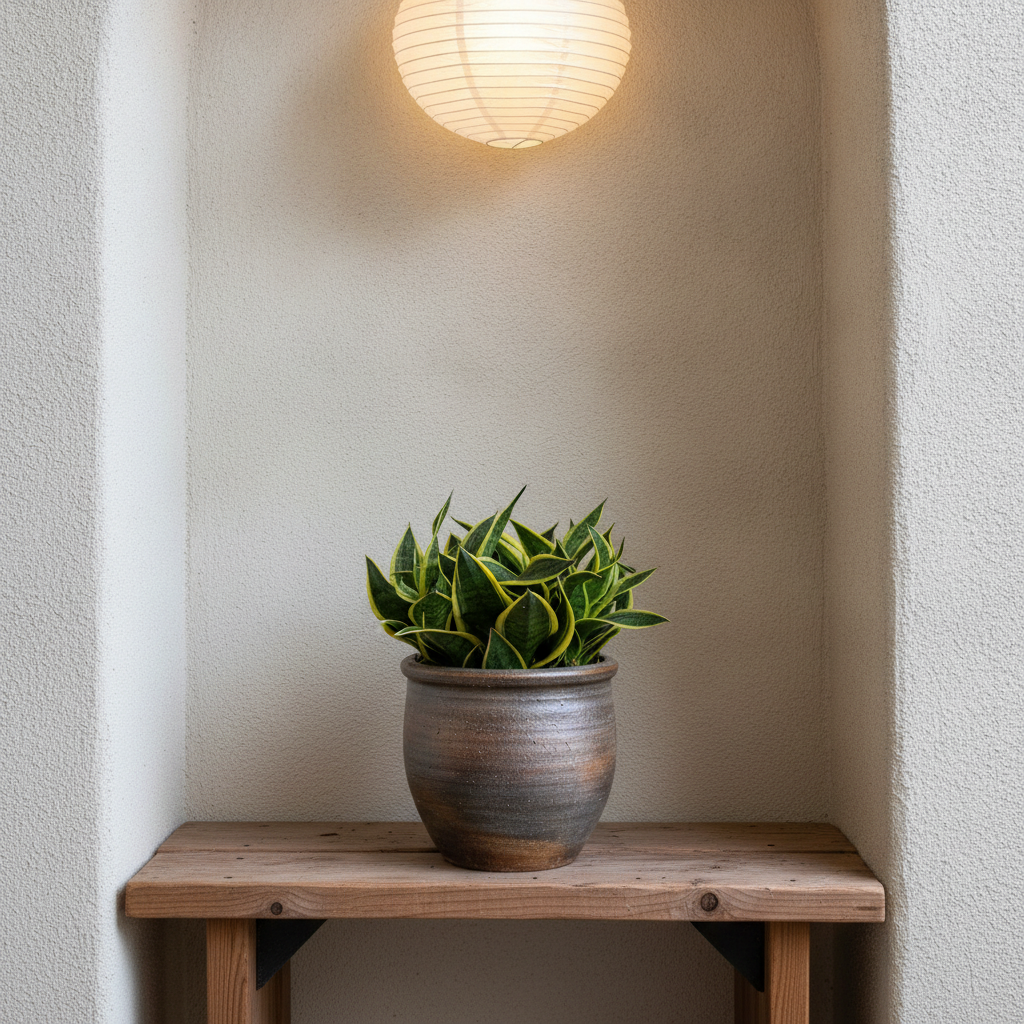
Where most snake plants reach for the ceiling with stiff vertical blades, the Twisted Sister (Dracaena trifasciata ‘Twisted Sister’) does something stranger and altogether more charming: it grows short, curling leaves that spiral back on themselves in a low rosette, edged in bright gold and stamped with faint horizontal banding. It is a dwarf cultivar, rarely taller than a stack of books, and it carries all the near-indestructible toughness of its taller relatives in a form that fits on a desk, a shelf, or a crowded windowsill. This guide covers everything needed to keep one alive for decades, and, more usefully, everything needed to make it genuinely thrive rather than merely persist.

On This Page
- Quick Reference
- Why the Twisted Sister Makes Such a Good Houseplant
- Light
- Watering
- Soil and Potting
- Fertilising
- Propagation
- Pests and Problems
- Varieties and Relatives
- Frequently Asked Questions
Quick Reference
The table below is the short version for anyone who wants the numbers before the reasoning. Everything in it is expanded on further down the page, but if you only read one section, read this one and then the watering section, because water is the single factor that decides whether a Twisted Sister lives or dies.
| Factor | Requirement |
|---|---|
| Botanical name | Dracaena trifasciata ‘Twisted Sister’ (formerly Sansevieria trifasciata) |
| Common names | Twisted Sister, Twisted Snake Plant, Golden Twist |
| Mature size | Roughly 30 to 38 cm (12 to 15 in) tall, spreading slowly by rhizome |
| Light | Bright indirect light preferred; tolerates low light and some direct sun |
| Water | Only when the soil is fully dry; roughly every 2 to 4 weeks in summer, every 6 to 8 weeks in winter |
| Soil | Free-draining cactus or succulent mix; add grit or perlite |
| Temperature | 18 to 27 C (64 to 81 F); keep above 10 C (50 F) |
| Humidity | Indifferent; ordinary room humidity is fine |
| Fertiliser | Dilute feed once or twice across spring and summer only |
| Propagation | Division of the rhizome, or leaf cuttings in water or soil |
| Toxicity | Mildly toxic to cats, dogs and people if eaten (saponins) |
| Difficulty | Very easy; ideal for beginners and frequent travellers |
Why the Twisted Sister Makes Such a Good Houseplant
The Twisted Sister belongs to a group of plants that botanists once filed under Sansevieria and now place within Dracaena, following genetic work that showed the snake plants nested firmly inside the larger dragon-tree genus. Whatever the label on the pot at the garden centre, the plant itself is a slow-growing evergreen from the dry, seasonally arid regions of West Africa, and almost every quality that makes it a superb houseplant traces back to that origin. It evolved to endure long rainless stretches, poor stony soils and blazing light, so the comfortable, low-stress conditions of an ordinary home register to it as something close to luxury.
What sets the Twisted Sister apart from the familiar tall snake plant is architecture. Instead of narrow upright blades, it produces shorter leaves, usually 15 to 25 cm long, that twist and curl along their length and lean outward to form a loose bird’s-nest rosette. Each leaf carries a broad golden-yellow margin and a mottled, dark green centre crossed by pale horizontal bands, so even a small specimen reads as busy and sculptural rather than plain. The overall effect is a plant that stays compact and tidy while offering far more visual movement than its upright cousins.
The famous toughness is real, and it rests on two biological tricks. First, the leaves are thick and succulent, storing water internally so the plant can coast through weeks of drought without a drop. Second, like many desert plants, it uses crassulacean acid metabolism, a form of photosynthesis in which the leaf pores open at night rather than during the heat of the day. This closes the pores when the air is hottest and driest, dramatically reducing water loss, and it has the pleasant side effect that the plant releases a little oxygen overnight, which is part of the reason snake plants have a reputation as good bedroom companions.
The practical upshot is a houseplant that survives genuine neglect and thrives on a light touch. It will forgive a forgotten watering, a dim corner, a draughty hallway and a cramped pot. The one thing it will not forgive is kindness in the form of too much water, which is worth stating plainly at the outset because nearly every dead snake plant died the same way. Understand watering and you have understood four-fifths of Twisted Sister care.
Pro Tip — Buy the Growth Habit, Not the Height: Because the Twisted Sister stays small, choose a specimen with several curling leaves emerging from the centre rather than one tall leaf. A dense, multi-leaved rosette signals an established, healthy rhizome that will bulk up steadily, whereas a single leaf takes far longer to become a full plant.
Light
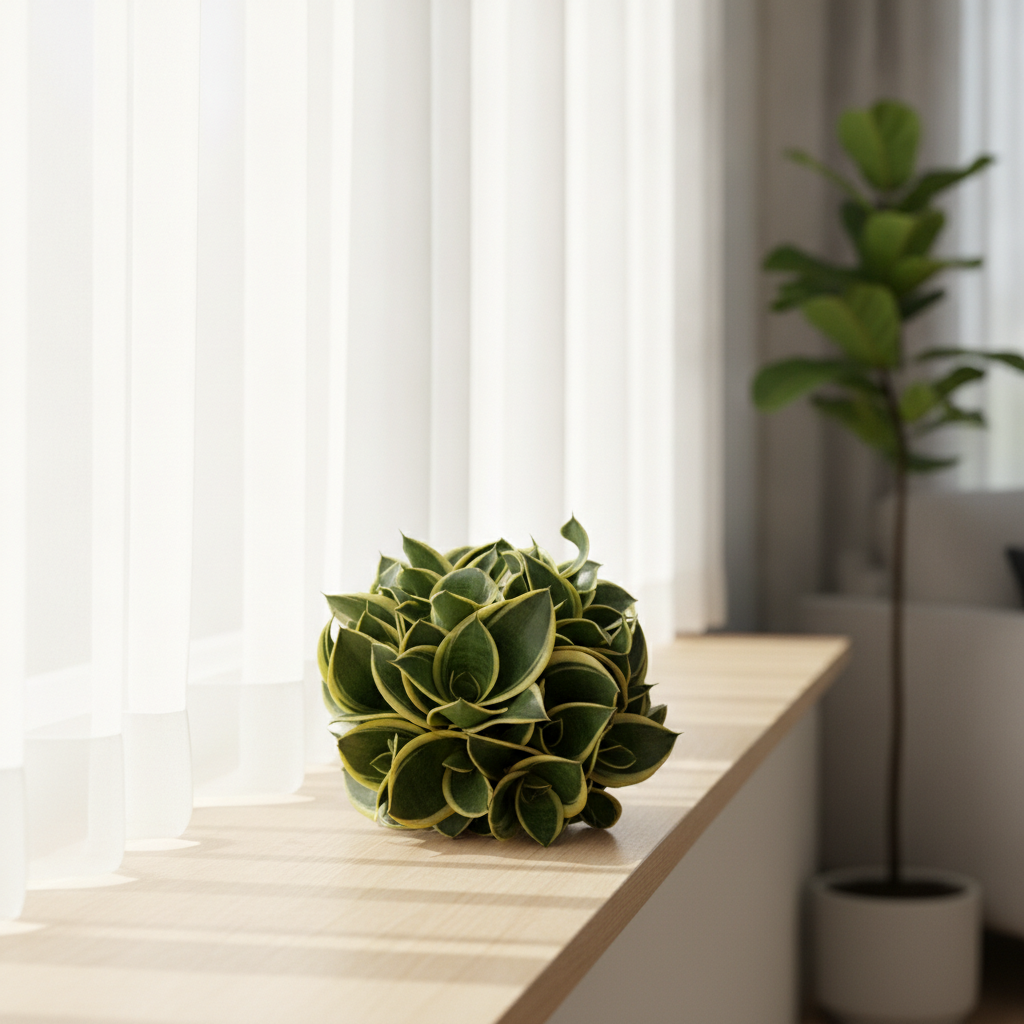
The snake plant’s reputation as a low-light survivor is well earned, and the Twisted Sister lives up to it, but survival and best appearance are two different things. To survive, this plant needs remarkably little; a north-facing room or an interior corner several metres from a window will keep it alive for years. To thrive, and in particular to keep its golden margins bright and its leaves densely curled, it wants bright indirect light for most of the day.
The ideal position is a metre or so back from an east or west window, or directly in front of a north window, where the plant receives plenty of ambient brightness without the leaves being scorched by hours of direct sun. A south-facing window works well too, provided the fiercest midday rays are softened by a sheer curtain. In strong light the variegation intensifies, the new leaves emerge tightly curled and well banded, and the whole rosette stays compact. In dim light the opposite happens: growth slows almost to a standstill, new leaves stretch and lose their tight curl, and the yellow margins fade toward plain green as the plant conserves its limited energy.
Direct sun deserves a word of caution. Mature, acclimatised plants tolerate a few hours of gentle morning or late-afternoon sun without complaint, and a little direct light actually deepens the colour. What causes trouble is sudden change. A plant moved abruptly from a shady shop shelf into a blazing south window can bleach or develop pale, papery scorch patches within days, because its leaves have not had time to build up protective pigments. Whenever you increase light substantially, do it over a week or two, shifting the plant gradually closer to the window.
One small habit pays dividends: rotate the pot a quarter-turn every couple of weeks. Because the rosette grows toward the brightest source, an unrotated plant slowly leans and becomes lopsided, whereas a rotated one fills out evenly on all sides. If your home is genuinely dark, the Twisted Sister accepts a full-spectrum LED grow light without fuss, and a modest desk lamp-style grow light running for ten to twelve hours a day is more than enough to keep it healthy through a sunless winter.
Pro Tip — Read the Newest Leaf: The leaf currently unfurling from the centre is your light meter. If it emerges short, tightly curled and well marked, the light is right. If it comes out long, straight and pale, the plant is telling you it needs a brighter spot.
Watering
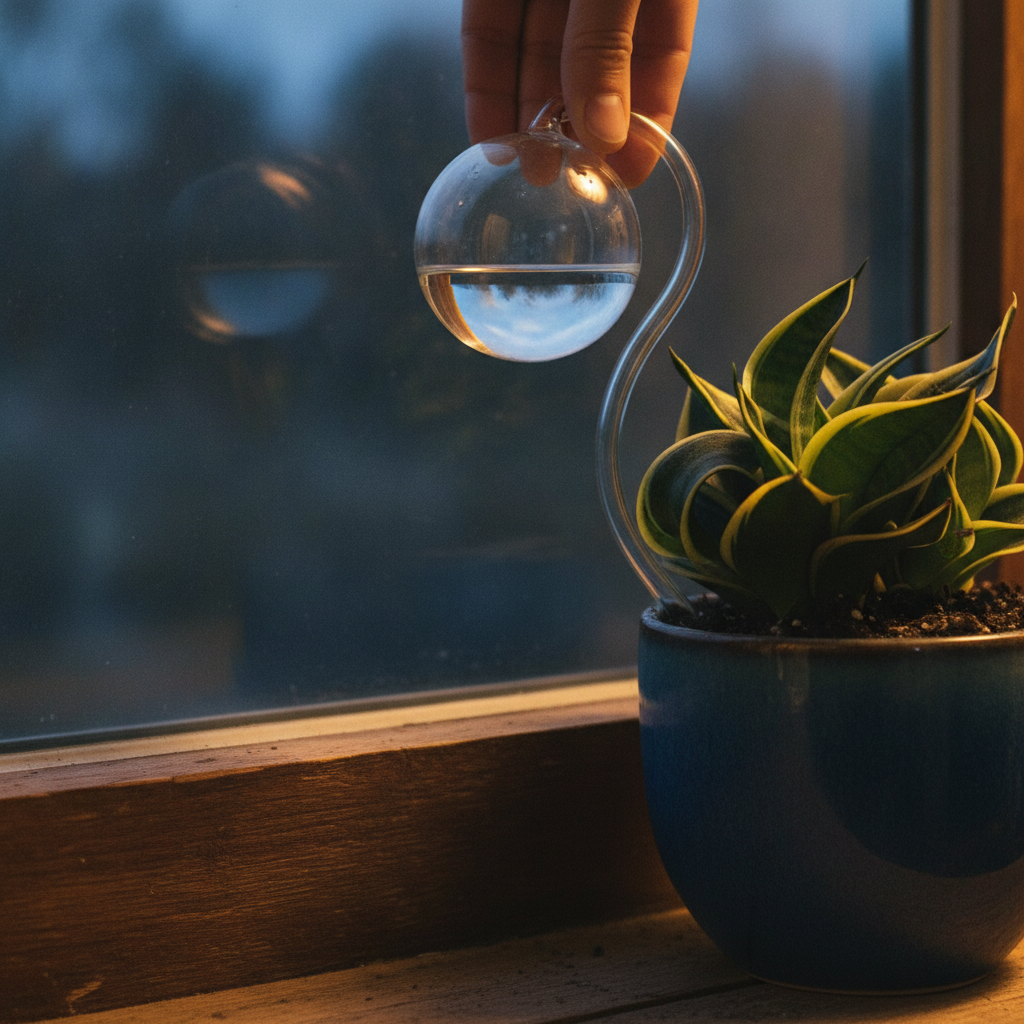
If you take only one lesson from this guide, take this one: the Twisted Sister is killed by overwatering far more often than by anything else, and when in doubt you should always wait. The plant stores water in its thick leaves and rhizome, so it is genuinely comfortable being dry, whereas its roots rot quickly in soil that stays wet. Root rot is a quiet killer because the damage happens underground and out of sight; by the time the leaves turn soft, yellow and mushy at the base, the roots below may already be beyond saving.
The correct method is to water thoroughly, then let the soil dry out completely before watering again. When you do water, add enough that it runs freely from the drainage holes, wetting the entire root ball, then tip away whatever collects in the saucer. Then leave the plant alone until the potting mix is dry all the way to the bottom of the pot. Do not water on a fixed calendar schedule; water according to how dry the soil actually is, because the rate at which a pot dries depends on the season, the light, the pot material and the size of the plant.
As a rough guide, an actively growing Twisted Sister in a bright spot in summer might need water every two to four weeks. In winter, when growth all but stops, that interval stretches to every six to eight weeks, and some growers water even less. The single most reliable test is simply to push a finger, or a wooden chopstick, right down into the soil. If it comes out with any cool dampness or clinging particles, wait. Water only when it comes out completely dry. A cheap moisture meter can help beginners calibrate their instincts, but the finger test never runs out of battery.
Water quality is rarely a concern; ordinary tap water suits this plant well. The bigger risks are structural. A pot without a drainage hole is an invitation to disaster, because water pools invisibly at the base and rots the rhizome from below. A pot that is much too large holds a great reservoir of wet soil that the small root system cannot drink dry, so oversized pots stay soggy for far too long. Snug pots and free-draining soil are your allies here, and both are covered in the next section.
Warning — When Cold, Keep Dry: The combination of cold and wet is the deadliest for a snake plant. In an unheated room in winter, err heavily on the side of drought. A plant kept cool and dry will sit dormant and healthy for months, whereas one kept cold and damp is very likely to rot.
Soil and Potting
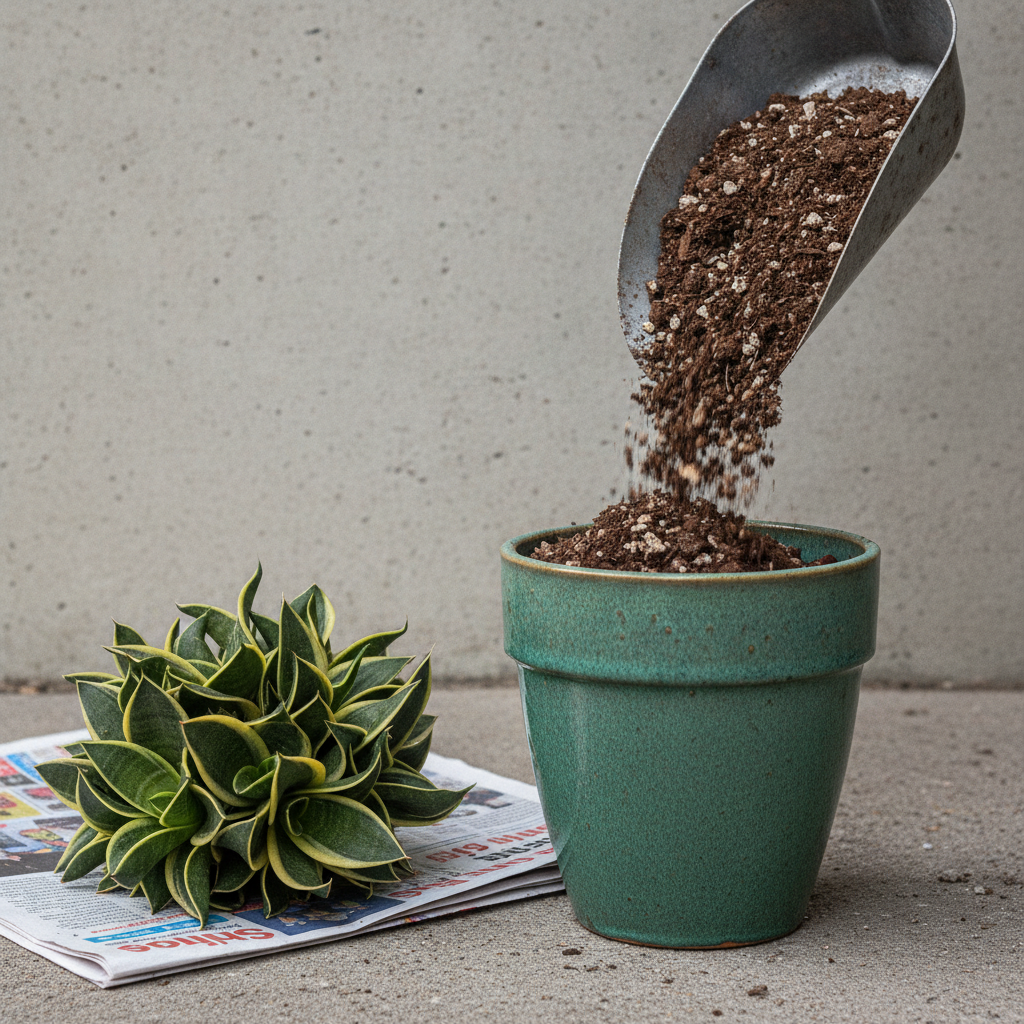
Everything about watering the Twisted Sister well begins with the soil it sits in, because the right mix does much of the work of preventing rot for you. This plant wants a substrate that drains fast and never stays sodden, mimicking the loose, gritty ground of its native habitat. The simplest good choice is a bag of ready-made cactus and succulent compost, which is formulated to shed water quickly. If you only have general-purpose houseplant compost, lighten it by cutting in a generous quantity of perlite, coarse horticultural grit or coarse sand, aiming for roughly one part grit to two parts compost, or even a fifty-fifty blend for extra insurance.
The pot matters as much as the mix. Terracotta is the classic choice for snake plants because the unglazed clay is porous and wicks moisture out of the soil, helping the root ball dry between waterings. Glazed ceramic and plastic both hold moisture longer, which is not disqualifying but does mean you must be more disciplined about letting things dry out. Whatever the material, the pot must have at least one drainage hole. A decorative cachepot without a hole is fine as an outer sleeve, but the plant should sit in an inner pot that drains, and that inner pot should never be left standing in collected water.
Twisted Sisters positively enjoy being pot-bound, so resist the urge to move them into roomy new containers. A tight pot dries out faster and flowers more readily, and these plants can happily spend three or four years in the same one. Repot only when the roots are visibly crowding the surface, circling the base or pushing the plant up out of the pot, or when the rhizome has cracked a plastic container. When you do repot, step up by just one size, choosing a pot only two or three centimetres wider than the last.
The best time to repot is spring or early summer, at the start of the growing season, so the plant can quickly settle its roots into the fresh mix. Ease the plant out, tease away the old spent soil, inspect the rhizome and roots for any soft brown rot, and trim away anything that is mushy with a clean blade. Settle the plant at the same depth it sat before, firm the fresh mix gently around it, and then, crucially, wait several days before watering. This pause lets any roots nicked during the move heal over, which sharply reduces the risk of rot taking hold in the disturbed root ball.
Fertilising
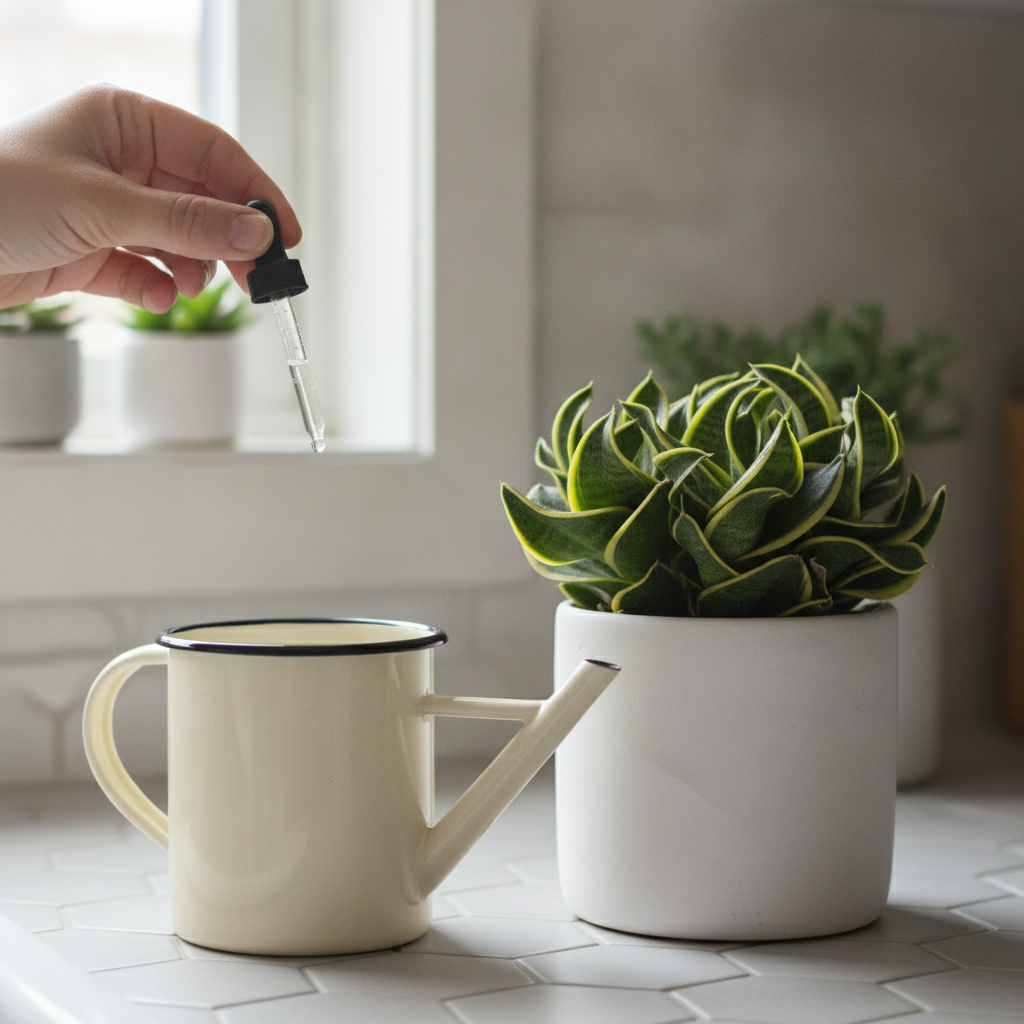
The Twisted Sister is a light feeder by nature, adapted to poor soils, and it needs very little supplementary nutrition to stay healthy. Overfeeding does more harm than underfeeding, because excess fertiliser salts build up in the soil and can scorch the roots, so the guiding principle is restraint. Many growers keep beautiful snake plants for years with almost no feeding at all, relying on an occasional refresh of the potting mix to supply what the plant needs.
If you do feed, use a balanced liquid houseplant fertiliser, or a formula sold for cacti and succulents, and dilute it to half the strength stated on the label. Apply it only during the active growing season of spring and summer, and only once or twice across those months. A useful rhythm is a single dilute feed in late spring and another in mid-summer, always applied to soil that is already slightly moist rather than bone dry, so the nutrients spread evenly and do not sit as a concentrated pocket against the roots.
Never fertilise in autumn or winter. The plant is dormant then, taking up little water and growing not at all, so any feed you add simply accumulates unused in the soil as harmful salts. Never fertilise a plant that is stressed, freshly repotted or sitting in dry soil either, as all of these situations increase the risk of root burn. If you ever suspect a build-up of fertiliser salts, shown by a white crust on the soil surface or the pot rim, or by brown, crisping leaf tips, flush the pot thoroughly with plain water two or three times to wash the excess through and out of the drainage holes.
Pro Tip — When Unsure, Skip It: With this plant, a missed feed costs you nothing, while an extra one can cause real damage. If you cannot remember whether the plant is in active growth, or whether you already fed it recently, the safe choice is always to wait until next season.
Propagation
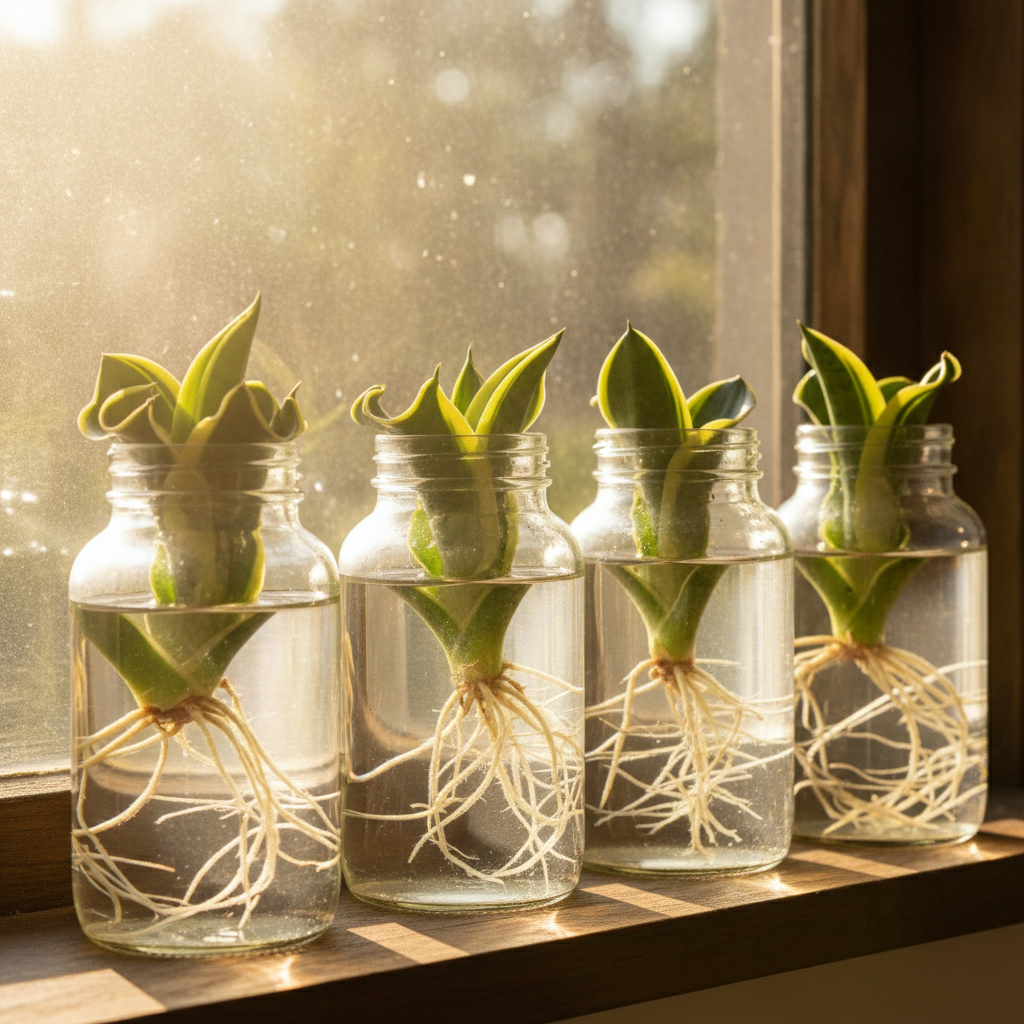
There are two dependable ways to make more Twisted Sisters, and they suit different goals. Division is faster and produces full-sized plants immediately, while leaf cuttings are slower but let you multiply a single plant into many. It is worth knowing one important quirk before you start: because the Twisted Sister is a variegated cultivar, leaf cuttings often lose the golden margin and revert to plain green, since the yellow-edged tissue does not always regenerate from a cut leaf. If you want to guarantee that the offspring keep the gold, division is the reliable choice.
To divide, take the plant out of its pot in spring and brush the soil off the rhizome, the thick horizontal underground stem from which the leaves and roots grow. You will see natural clumps, each with its own leaves and root section. Separate these by gently pulling them apart, or by cutting cleanly through the rhizome with a sterilised knife so that each division has both healthy roots and at least one or two leaves. Pot each division into its own small container of gritty mix, wait a few days, and then water lightly. Divisions establish quickly because they already have working roots.
To take leaf cuttings, choose a healthy leaf and cut it into several sections a few centimetres long, keeping track of which end pointed down, because each section must be planted the same way up it grew. A cutting placed upside down will not root. You can root the sections in two ways. In water, stand them cut-end down in a jar with a couple of centimetres of water on a bright windowsill, refreshing the water every few days, and wait for roots and then tiny new leaves to appear over several weeks. In soil, let the cut ends dry and callus for a day or two, then insert them upright into moist gritty mix and keep it barely damp.
Whichever method you use, patience is the main requirement. Snake plant propagation runs on a scale of months, not days, and both division wounds and cut leaf surfaces benefit from being allowed to dry and callus before they meet moist soil. Keep new propagations warm and in bright indirect light, resist the temptation to overwater them, and accept that a proportion of leaf cuttings will simply sit and sulk before eventually rooting. The reward is a steady supply of new plants at no cost, ideal for filling shelves or giving away.
Pests and Problems
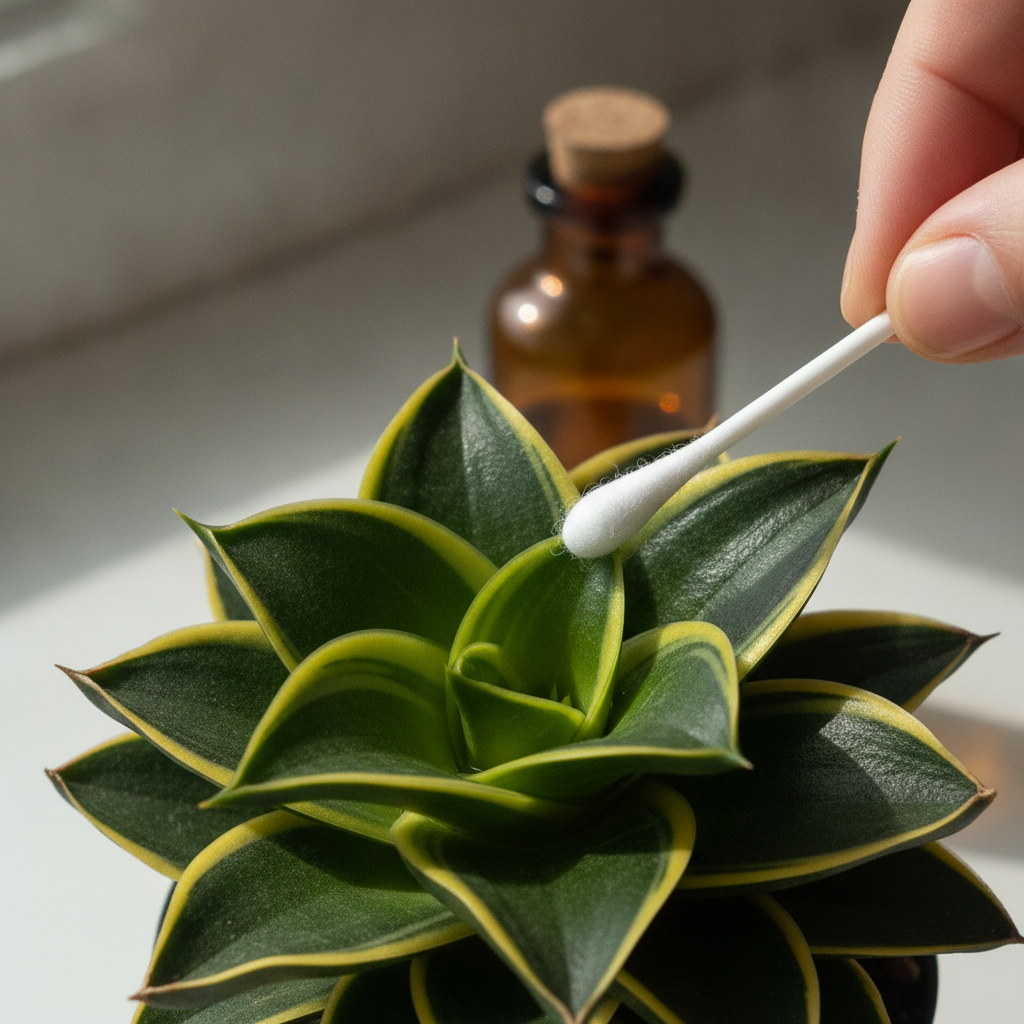
The Twisted Sister is one of the least pest-prone houseplants you can own, and the overwhelming majority of problems it does suffer are not pests at all but the after-effects of overwatering. Still, a few insects occasionally find it, and it pays to know the signs. Mealybugs are the most common, appearing as small white cottony tufts tucked into the leaf axils where the blades meet the base. Spider mites are rarer and show up as fine webbing and faint pale stippling on the leaves, usually only in very hot, dry conditions. Scale insects, which look like small brown limpet-like bumps stuck to the leaves, are occasional visitors.
Because infestations start small on this plant, spot treatment is usually enough. Dip a cotton bud in ordinary isopropyl alcohol and dab it directly onto any mealybugs or scale you find; the alcohol dissolves their protective coating and kills them on contact. For anything more widespread, wipe the leaves down with a cloth and then treat with an insecticidal soap or a diluted neem oil spray, repeating every week or so until no new pests appear. Isolate a newly affected plant from your other houseplants while you deal with it, and always inspect new purchases before bringing them home.
The real problems, though, are cultural, and nearly all of them lead back to water. Yellowing leaves that feel soft or mushy near the base are the classic symptom of overwatering and root rot; if you see this, stop watering at once, tip the plant out to inspect the roots, cut away anything soft and brown, and repot into fresh dry mix. Leaves that wrinkle, curl inward more than usual or lean and topple can indicate the opposite, a plant that has been left thirsty far too long, though this is much rarer and quickly reversed by a good soak. Brown, crisp leaf tips usually point to a build-up of fertiliser salts or, occasionally, to persistently very dry air combined with underwatering.
Two more issues round out the list. If the leaves lose their tight curl and the gold margin fades, the cause is almost always too little light, and the cure is a brighter position. If the plant sits in a cold, damp spot over winter and the base begins to soften and smell, that is cold-induced rot, and the plant needs to be moved somewhere warmer, watered far less and, if the rot has spread, salvaged by taking healthy cuttings from the firm upper parts of the leaves. Diagnose calmly, and remember that with this plant the answer to most questions is to water less.
Warning — Mildly Toxic if Eaten: Like all snake plants, the Twisted Sister contains saponins that are mildly toxic to cats, dogs and people. Chewing the leaves can cause drooling, nausea, vomiting and mouth irritation. It is not usually dangerous, but keep it out of reach of pets and small children who like to nibble, and wash your hands after handling cut leaves.
Varieties and Relatives
The Twisted Sister is one cultivar in a large and varied family of snake plants, and once you fall for its curling, gold-edged rosette you may want to collect its relatives. The two below are among the most widely available compact snake plants, and both share the Twisted Sister’s easy, drought-loving temperament, so everything in this guide applies to them with only minor adjustments.
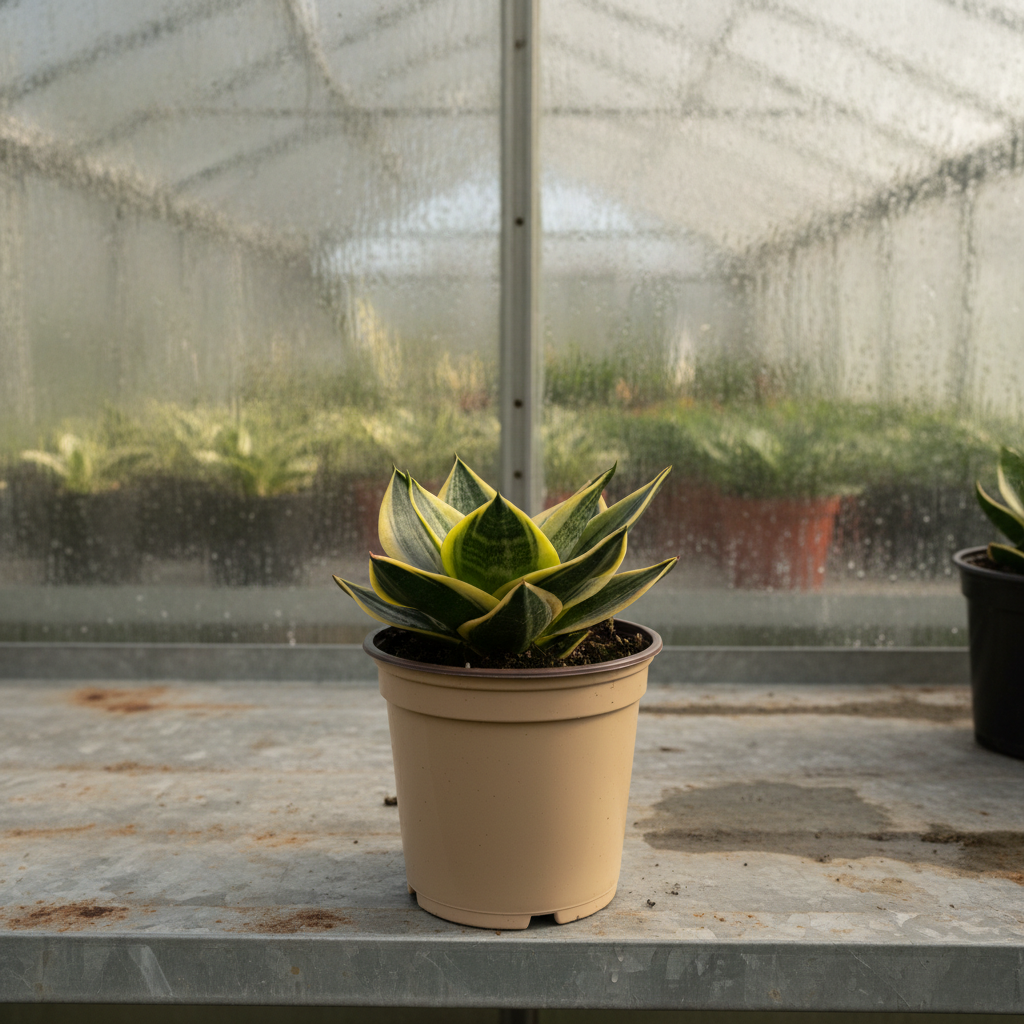
Golden Hahnii. A true dwarf that forms a tight, funnel-shaped bird’s-nest rosette of short, flat leaves no more than about 15 cm tall. Its broad creamy-gold margins frame a dark green centre, giving it a jewel-box quality that suits small pots and desktops. Care is identical to the Twisted Sister, though its even more compact form means it dries out a touch more slowly, so lean further toward underwatering.
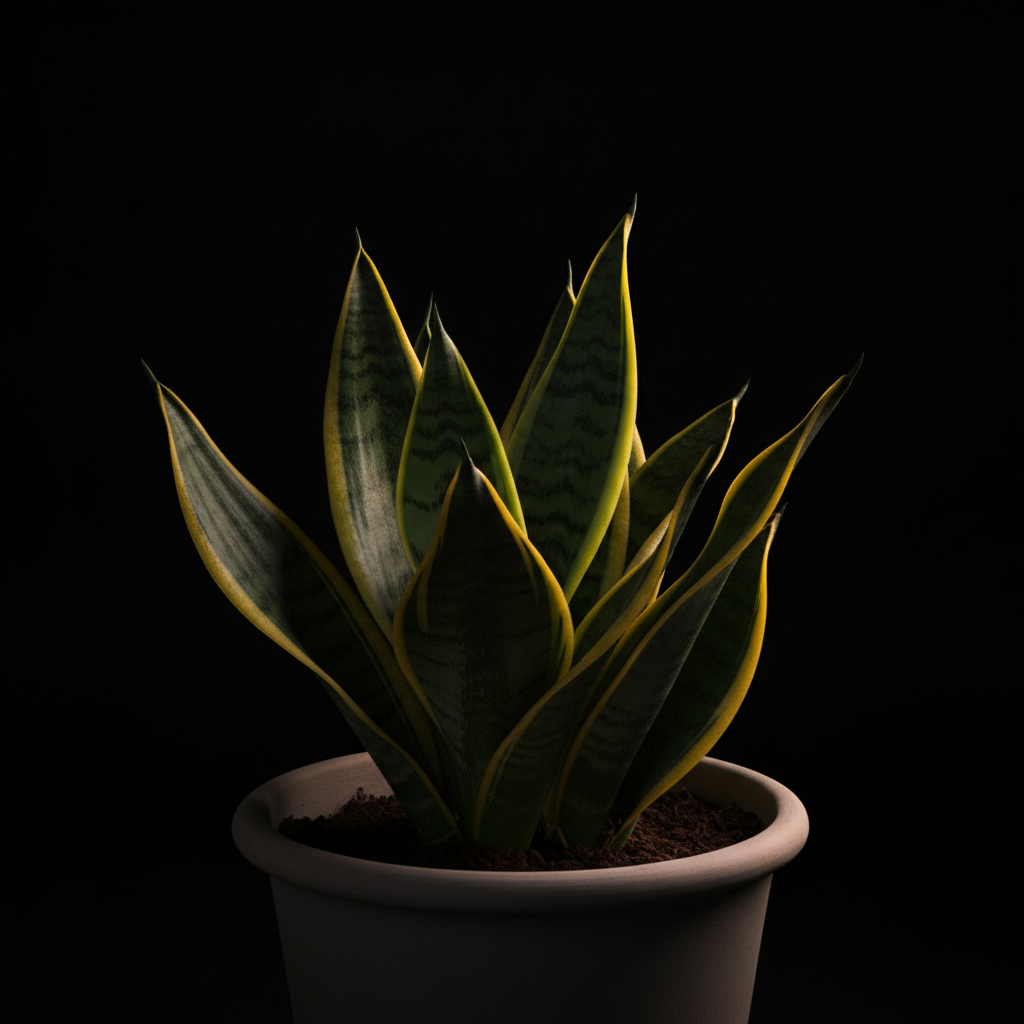
Futura Superba. A shorter, broader-leaved snake plant that grows in a compact vase shape reaching around 30 to 40 cm. Its silvery-green leaves carry wide, bright yellow margins and bold cross-banding, making it one of the most colourful of the smaller cultivars. It is a little more upright than the Twisted Sister but just as forgiving, happy in bright indirect light and content to be left dry for weeks at a time.
Beyond these two, the wider snake plant world offers everything from the tall, sword-like classic green forms to the cylindrical Dracaena cylindrica with its round spear leaves and the dramatic, single-bladed whale-fin type. All of them respond to the same fundamentals set out in this guide: bright indirect light, gritty free-draining soil, and above all a firm resolve to water sparingly.
Frequently Asked Questions
How often should I water a Twisted Sister snake plant?
Water only when the soil has dried out completely, which in practice means roughly every two to four weeks in summer and every six to eight weeks in winter. Never water on a fixed schedule; instead, check the soil with a finger or a wooden stick and water only when it comes out dry all the way to the bottom of the pot. When in doubt, wait, because this plant tolerates drought far better than sogginess.
Why are my Twisted Sister’s leaves losing their curl and colour?
The most common cause is insufficient light. In dim conditions the new leaves emerge longer and straighter, and the golden margins fade toward plain green as the plant conserves energy. Move it to a brighter position with plenty of indirect light, and the fresh growth should return to its tightly curled, well-marked form.
Is the Twisted Sister snake plant safe around cats and dogs?
No, it is mildly toxic. Like all snake plants it contains saponins, and if a cat or dog chews the leaves it can suffer drooling, nausea and vomiting. The reaction is rarely serious, but it is unpleasant, so keep the plant out of reach of pets and children who might be tempted to bite the leaves.
Can I propagate a Twisted Sister from a single leaf?
Yes, leaf cuttings root readily in water or soil, but be aware that they often lose the gold variegation and grow back plain green, because the yellow-edged tissue does not always regenerate from a cut. If keeping the golden margins matters to you, propagate by dividing the rhizome instead, which reliably produces identical, fully variegated plants.
Why won’t my Twisted Sister grow?
Slow growth is normal for this plant, which is naturally leisurely, and it slows to a near halt in winter or in low light. If you want faster growth, give it brighter indirect light, feed it lightly once or twice in spring and summer, and make sure it is not sitting cold and wet. Do not mistake dormancy for a problem; a Twisted Sister that simply sits unchanged for months is usually perfectly healthy.
Does the Twisted Sister need a humid environment?
No. Coming from dry regions, it is completely indifferent to humidity and thrives in ordinary room air. There is no need to mist it or use a humidifier, and in fact misting can encourage moisture to sit in the leaf crevices, which is best avoided. Focus your attention on getting the light and watering right, and the plant will look after the rest.






