
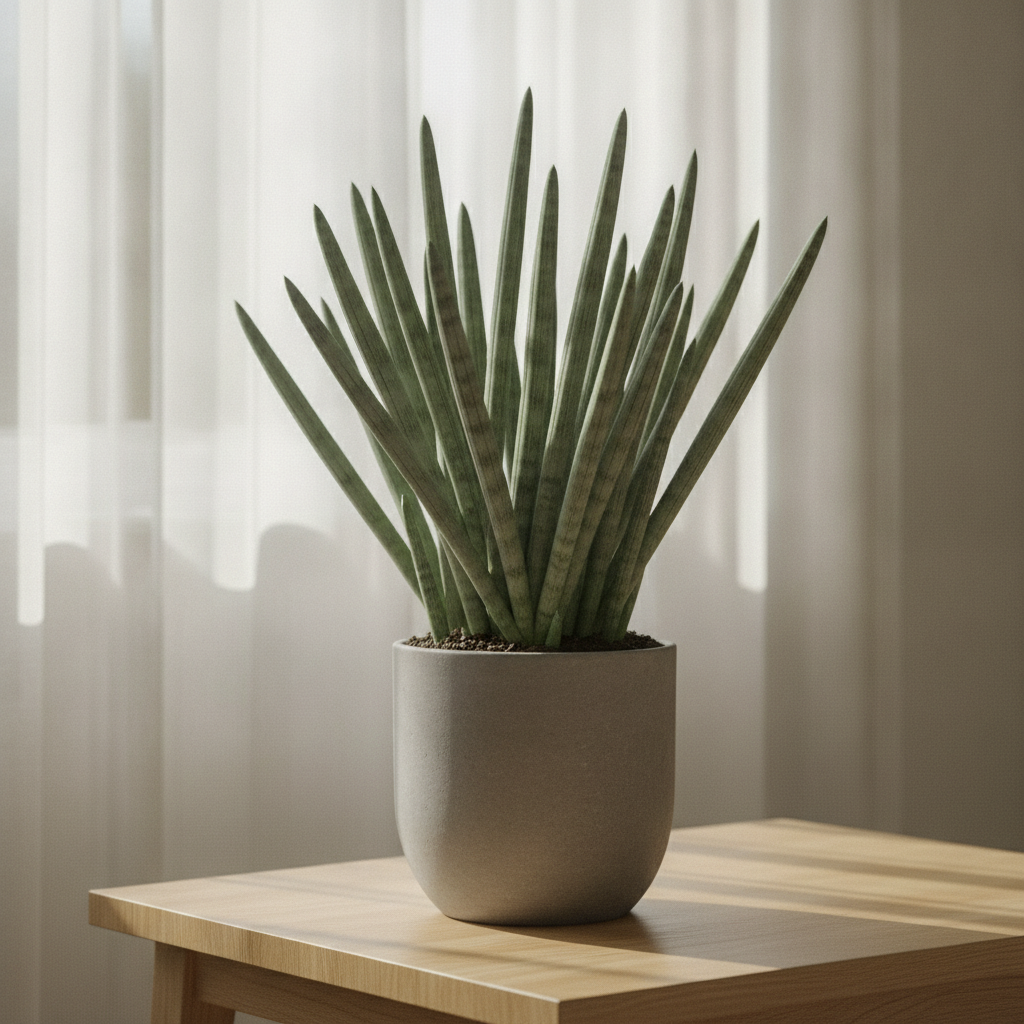
Few houseplants look as sculptural, or ask as little of you, as the African spear plant. Its stiff, cylindrical leaves rise from the soil like a cluster of polished green spears, each one banded with faint horizontal stripes and tapering to a fine point. Known botanically as Sansevieria cylindrica (and increasingly filed under its newer name, Dracaena angolensis), this Angolan native has earned a reputation as one of the most forgiving plants you can own. It stores water in those succulent leaves, shrugs off dry air and irregular watering, and keeps its poise in corners where fussier plants would sulk. The difference between a spear plant that merely survives and one that genuinely thrives comes down to a handful of small decisions, chiefly about light, watering rhythm and drainage. Get those right, and this plant will outlast most of the others on your shelf.
Quick Reference
| Common names | African spear plant, cylindrical snake plant, spear sansevieria |
| Botanical name | Sansevieria cylindrica (syn. Dracaena angolensis) |
| Family | Asparagaceae |
| Origin | Angola and tropical southern Africa |
| Light | Bright indirect light preferred; tolerates low light and some direct sun |
| Water | Sparingly; let the soil dry out completely between waterings |
| Soil | Free-draining cactus or succulent mix with added grit |
| Temperature | 18 to 27 degrees Celsius (64 to 81 Fahrenheit) |
| Humidity | Average to low; no special requirements |
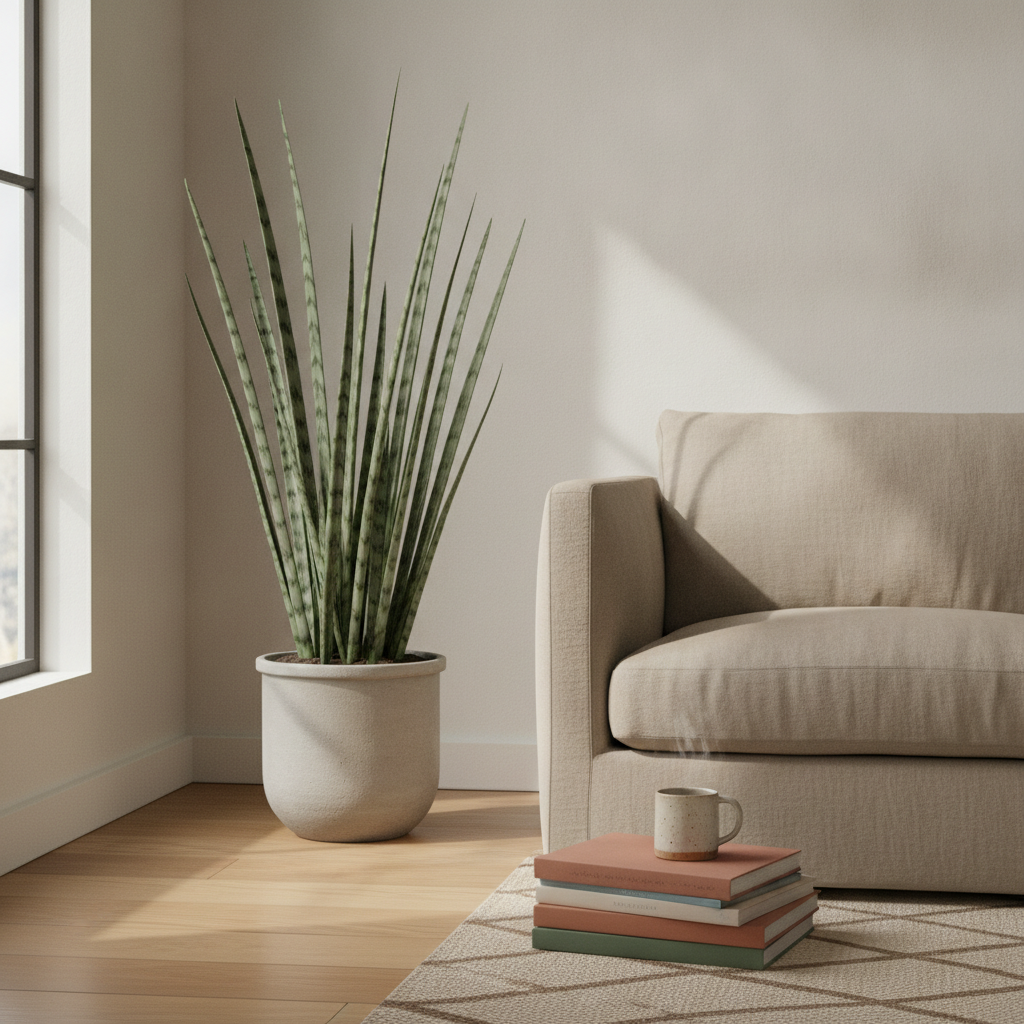
| Mature size indoors | 60 to 120 centimetres (24 to 48 inches) tall |
| Growth rate | Slow |
| Toxicity | Mildly toxic to cats, dogs and humans if eaten |
| Difficulty | Very easy, beginner friendly |
- Why the African Spear Plant Makes a Great Houseplant
- Light
- Watering
- Soil and Potting
- Fertilising
- Propagation
- Pests and Problems
- Varieties
- Frequently Asked Questions
Why the African Spear Plant Makes a Great Houseplant
The appeal of Sansevieria cylindrica begins with its silhouette. Where most houseplants spread outward in soft rosettes or trailing vines, the spear plant sends up rigid, pencil-thick cylinders that can reach a metre or more, fanning gently outward from a central base. This gives it an architectural, almost mineral quality that suits modern interiors, but it also sits happily in a rustic terracotta pot or a woven basket. Growers often braid or splay the young leaves for sale, training them into fans or plaits, though left to its own devices the plant simply grows upright spears.
Beyond looks, its real gift is resilience. The spear plant belongs to a group of succulents that use a form of photosynthesis called Crassulacean acid metabolism, which allows it to open its pores at night rather than during the heat of the day, conserving moisture in the process. Practically, this means it can go weeks without water, tolerate the dry air of a centrally heated flat, and forgive the kind of erratic attention that kills thirstier plants. It is closely related to the classic snake plant, Dracaena trifasciata, and shares its toughness, but trades flat sword-shaped leaves for these distinctive rounded spears. For anyone new to houseplants, travelling often, or simply short on time, few plants offer this much presence for so little effort.
Pro Tip — Start with the pot: Because this plant asks for so little, the single most important decision you will make is the container. Choose one with a drainage hole and pair it with gritty soil, and most of the ways people accidentally kill a spear plant simply disappear.
Light
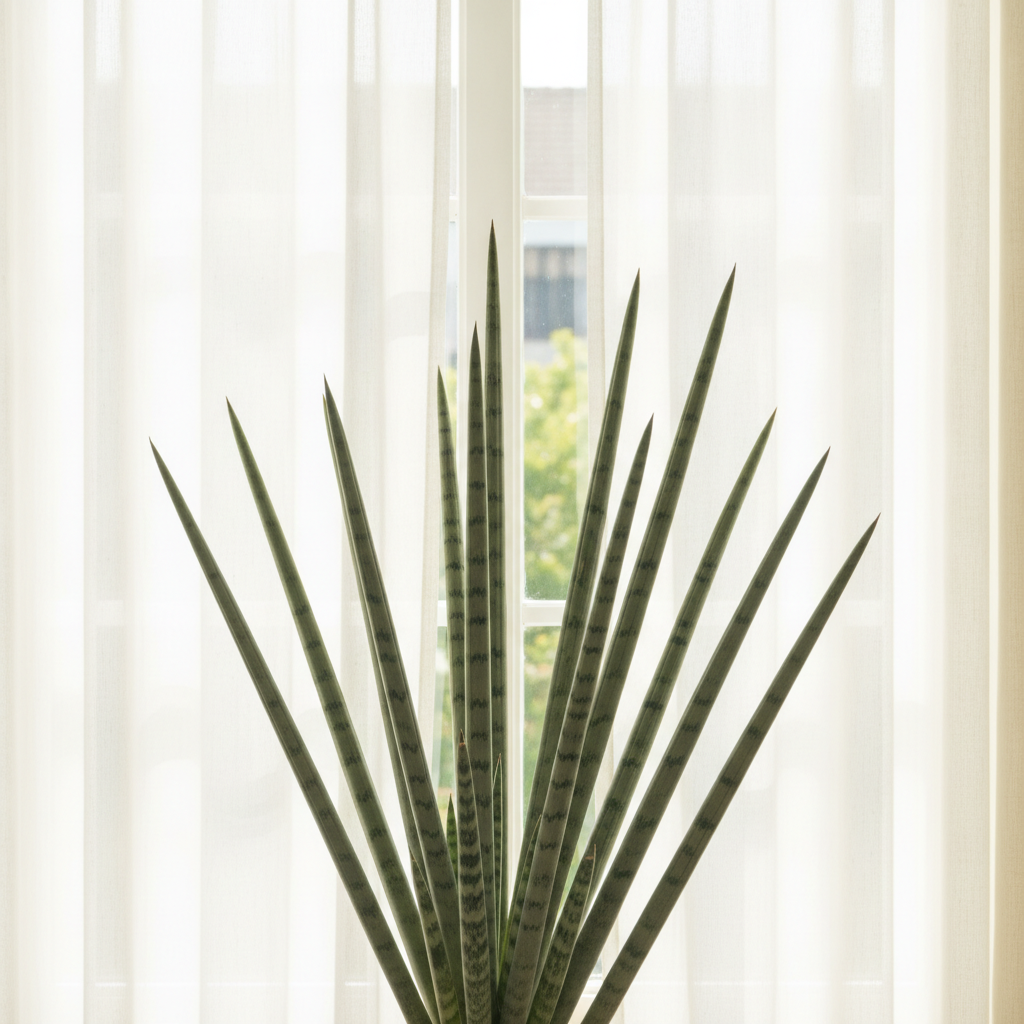
The African spear plant is famously adaptable when it comes to light, which is a large part of why it turns up so often in offices, lobbies and dim hallways. It will survive in low light, holding its shape for months in a spot several metres from a window. Survival, though, is not the same as flourishing. In genuinely dim conditions the plant slows almost to a standstill, produces no new spears, and can gradually stretch or lean toward whatever light it can find.
To see the plant at its best, give it bright, indirect light. An east or west facing window, or a position a metre or so back from a bright south facing one, is close to ideal. Here the leaves stay firm and deeply coloured, and the plant slowly puts out new growth from the base. Unlike many houseplants, the spear plant also tolerates a few hours of direct sun, and in fact appreciates some, though a plant grown in deep shade should be moved into strong sun gradually over a week or two to avoid scorching the leaf tips. If the tallest spears begin to flop or splay open dramatically, or if the colour fades to a pale, washed out green, the plant is asking for more light. Rotate the pot a quarter turn every couple of weeks so that all sides receive even exposure and the plant grows symmetrically rather than leaning.
Watering
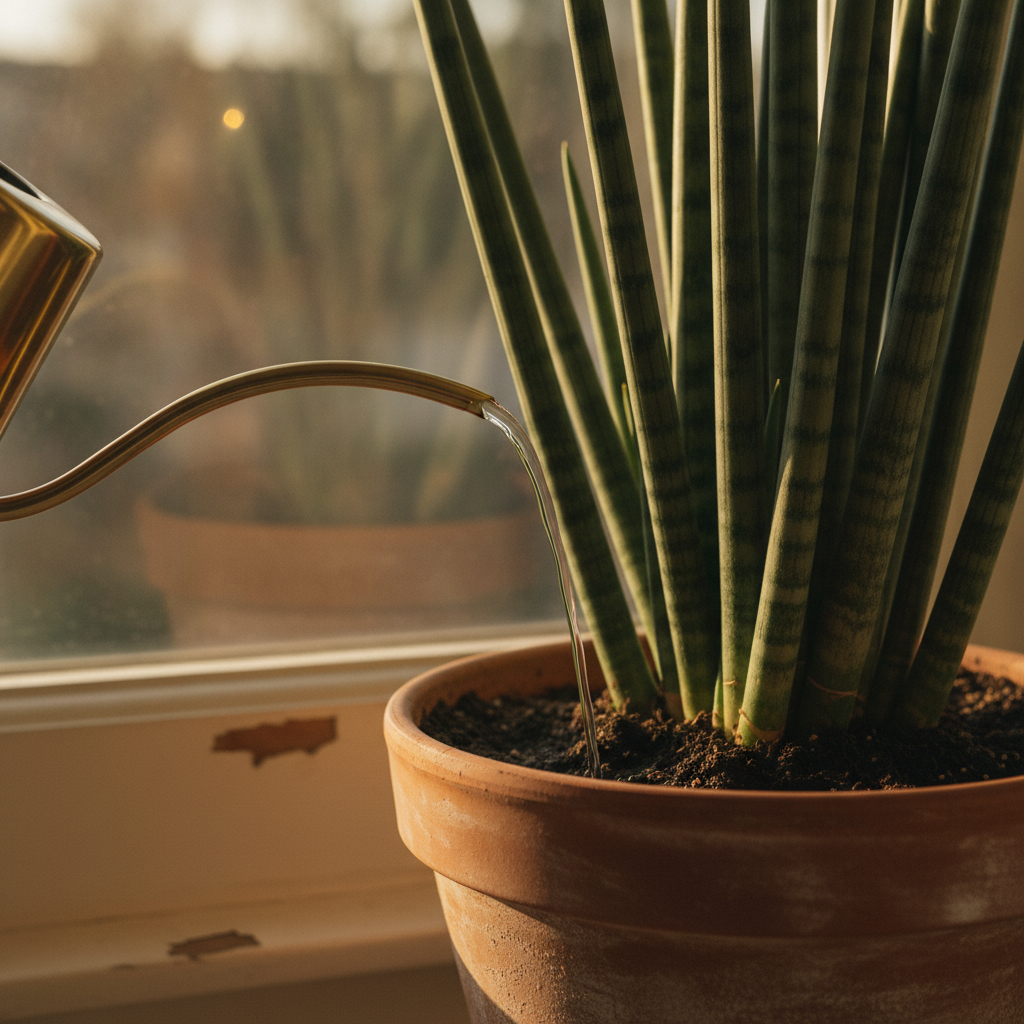
If there is one skill that separates a healthy spear plant from a doomed one, it is restraint with the watering can. This is a succulent, and its thick leaves are effectively water tanks. Overwatering, not underwatering, is by far the most common way people lose these plants. The roots are prone to rot the moment they sit in cold, soggy compost, and because the damage happens out of sight it is often too late by the time the leaves show it.
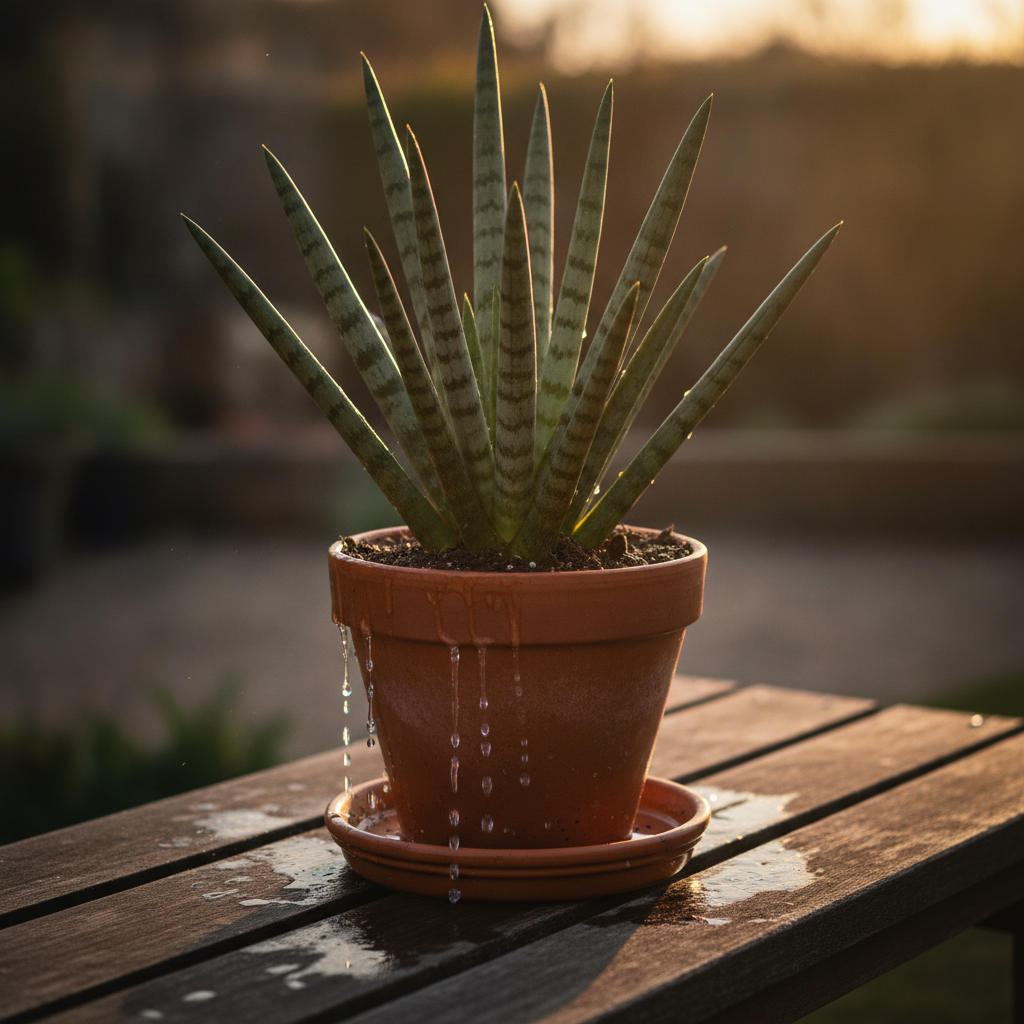
The rule is simple: let the soil dry out completely, then water thoroughly. When you do water, add enough that it runs freely from the drainage hole, wetting the entire root ball, then tip away anything that collects in the saucer. After that, wait. Push a finger deep into the pot, or lift it to feel the weight, and only water again when the soil is bone dry all the way down. In practice this often means watering every two to three weeks in the warmer months and as little as once every four to six weeks in winter, when growth stalls and the plant needs almost nothing. Always err on the side of too little rather than too much. A thirsty spear plant recovers within a day of a good drink, whereas a rotting one rarely comes back. Water at the base and try to keep the crown where the leaves meet the soil relatively dry, as trapped moisture there can cause the base of a spear to soften and collapse.
Warning — Watch for rot: If a spear turns yellow and mushy at its base, or wobbles when you touch it, suspect overwatering and root rot. Stop watering at once, unpot the plant, cut away any soft brown roots and rotten leaves with clean scissors, and repot into fresh dry gritty mix.
Soil and Potting
Everything about keeping a spear plant alive comes back to drainage, and that starts with the soil. A dense, moisture-retentive potting compost of the kind sold for leafy houseplants is the wrong choice here, because it holds water against the roots for far too long. Instead, use a free-draining cactus or succulent mix. You can improve an ordinary mix by cutting it with roughly one third coarse grit, perlite or pumice, so that water flows through quickly and air can reach the roots. A little coarse sand or fine bark helps too. The aim is a gritty, open medium that never stays sodden.
The pot matters just as much as what goes in it. A drainage hole is essential, and unglazed terracotta is particularly well suited to this plant because the porous clay wicks moisture away and dries the soil faster than plastic or glazed ceramic. Choose a container only slightly larger than the root ball, since spear plants are comfortable being somewhat pot bound and a pot that is too big holds a reservoir of damp soil the roots cannot use. Repotting is needed only every two to three years, or when roots begin pushing the plant up out of its container or escaping the drainage hole. Spring is the best time. Handle the leaves carefully, as the sharp tips can be damaged, and settle the plant at the same depth it sat before. Wait a few days before watering a freshly repotted plant so that any roots nicked during the move can callus over rather than rot.
Fertilising
The spear plant is a slow, undemanding grower and its appetite for fertiliser matches. In the wild it survives in poor, sandy soils, so heavy feeding does more harm than good, building up salts that can burn the roots. A light hand is the right approach. During the active growing season, from spring through to early autumn, feed once a month at most with a balanced liquid houseplant fertiliser diluted to half the strength recommended on the label. A fertiliser formulated for cacti and succulents, which is lower in nitrogen, works especially well and encourages firm rather than soft, floppy growth.
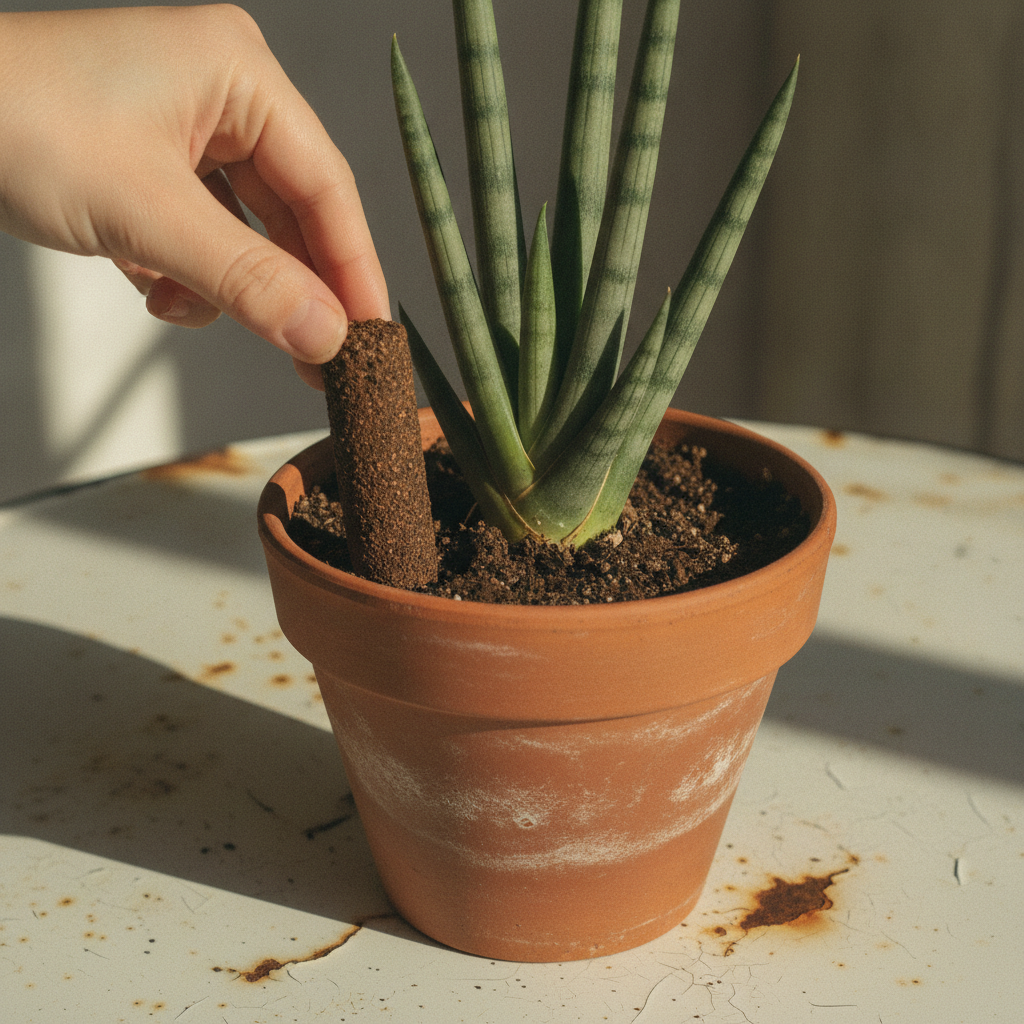
Stop feeding entirely through the autumn and winter, when the plant is resting and takes up almost nothing. If you prefer a low effort routine, a couple of slow release fertiliser pellets or a single stick pressed into the soil in spring will carry the plant through the whole season without further thought. Whatever you use, only ever fertilise soil that is already moist, never a dry root ball, as concentrated nutrients on dry roots can scorch them. When in doubt, feed less. An underfed spear plant simply grows a little more slowly, while an overfed one can develop weak, damaged growth that is hard to reverse.
Propagation
There are two dependable ways to make more spear plants, and they suit different situations. The fastest and most reliable is division. A mature plant spreads by underground rhizomes and produces offsets, sometimes called pups, around its base. To divide, slide the whole plant out of its pot, brush away the soil, and look for natural clumps of spears that have their own roots. Separate these by gently pulling the rhizomes apart, or cutting them with a clean knife, making sure each new section has both leaves and a healthy portion of root. Pot each division into its own container of dry gritty mix, and wait a week before the first light watering. Because each division already has roots, it establishes quickly and looks like a finished plant almost at once.
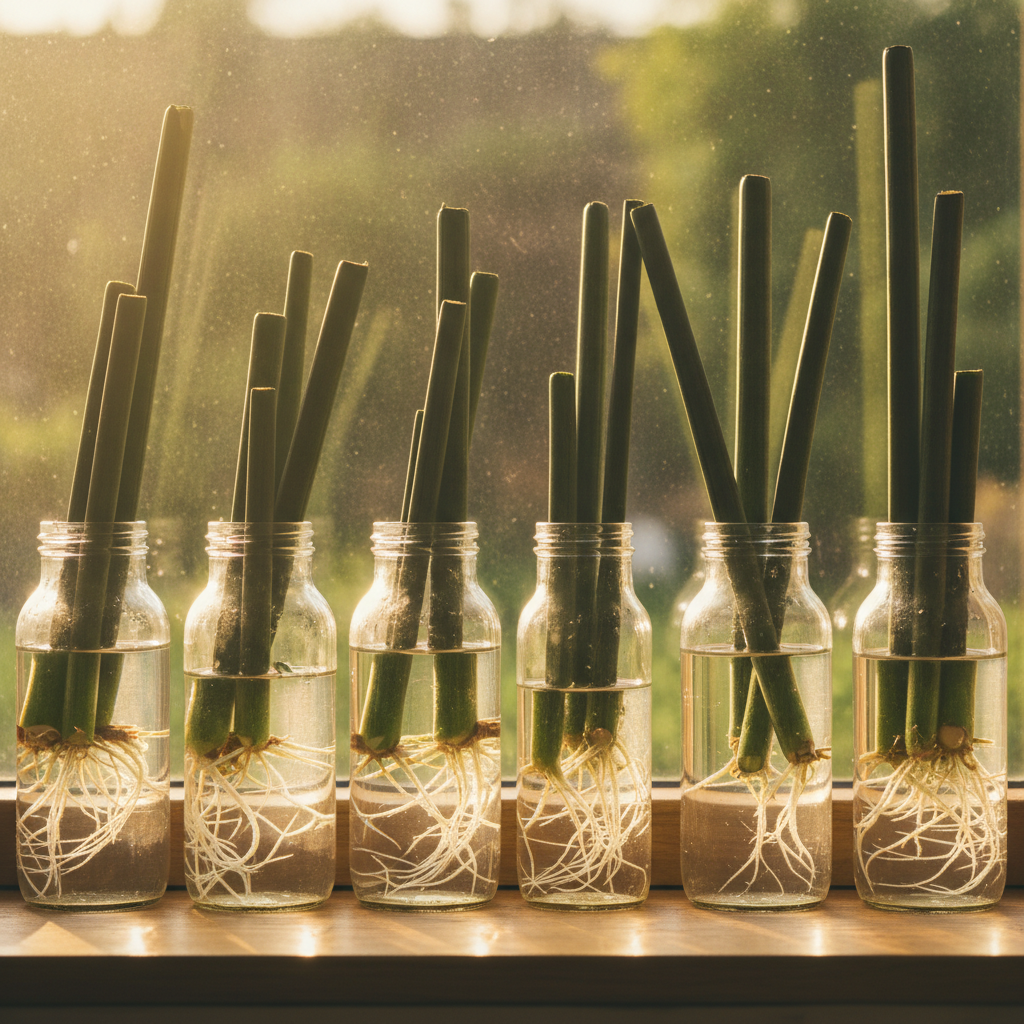
The second method, leaf cuttings, is slower but satisfying. Cut a healthy spear near its base and let the cut end dry and callus for a day or two. Then stand the cutting upright, cut end down, in water or in a jar of moist gritty mix, and be patient, as roots and eventually a new pup can take a couple of months to appear. Note the cut end must go down, the same way it grew, or it will not root. It is worth knowing that leaf cuttings of any variegated or specially coloured form will revert to plain green, losing the parent’s markings, so for named cultivars division is always the better choice.
- Choose a healthy plant and either separate a rooted offset or cut a firm, undamaged spear near the base.
- For cuttings, let the cut end dry for one to two days until it forms a callus.
- Plant divisions straight into dry gritty mix; stand cuttings cut-end-down in water or moist mix.
- Keep in bright indirect light and warmth, and water only sparingly.
- Wait for roots and new growth, then treat as a mature plant.
Pests and Problems
The African spear plant is remarkably trouble free, and the great majority of problems it does develop trace back to watering rather than to pests. Root rot from overwatering is the number one killer, showing up as spears that yellow, soften and topple at the base. If you catch it, the response is the same as for any succulent: unpot immediately, cut away every soft brown root and mushy leaf with clean scissors, let the plant dry, and replant into fresh, dry, gritty mix, then water very cautiously from then on. Wrinkled or leaning spears, by contrast, usually signal the opposite problem, a plant that is thirsty or short of light, and both are easily corrected.
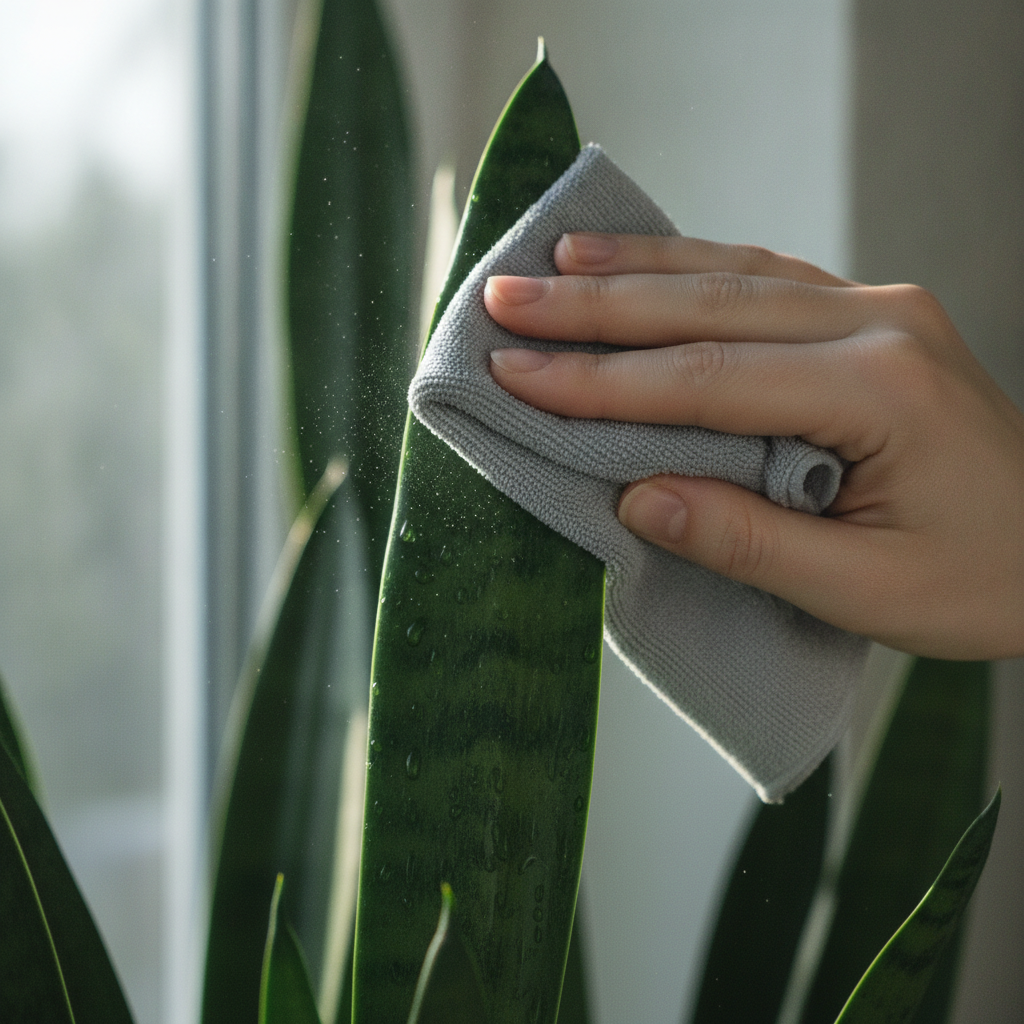
When pests do appear, the usual suspects are mealybugs, spider mites and the occasional scale insect. Mealybugs look like small tufts of white cotton wool tucked where the leaves meet, while spider mites are tiny and reveal themselves through fine webbing and a faint stippling on the leaves, most likely in hot, dry conditions. Deal with either promptly. Wipe mealybugs away with a cotton bud dipped in diluted rubbing alcohol, and treat wider infestations by wiping the leaves down and applying an insecticidal soap or diluted neem oil, repeating every week or so until the pests are gone. Because the spear plant has few leaves and smooth surfaces, it is easy to inspect and clean, so a quick wipe of the spears every few weeks doubles as both grooming and an early warning system.
| Symptom | Likely cause | What to do |
| Soft, yellow, collapsing spears | Overwatering and root rot | Unpot, cut away rot, dry out, repot in gritty mix, water less |
| Wrinkled, puckered or leaning spears | Underwatering or too little light | Water thoroughly, move to brighter indirect light |
| Brown, crispy leaf tips | Physical damage or very dry air | Trim tidily; largely cosmetic, no cause for alarm |
| Pale, washed-out colour | Insufficient light | Move closer to a bright window |
| White cottony tufts or fine webbing | Mealybugs or spider mites | Wipe off, treat with insecticidal soap or neem oil |
Varieties
While the straight species is the plant most often sold, Sansevieria cylindrica comes in a few distinctive forms that are worth seeking out. Most differ in the length, thickness and arrangement of the spears rather than in their care, so all of them share the same easygoing requirements described above.
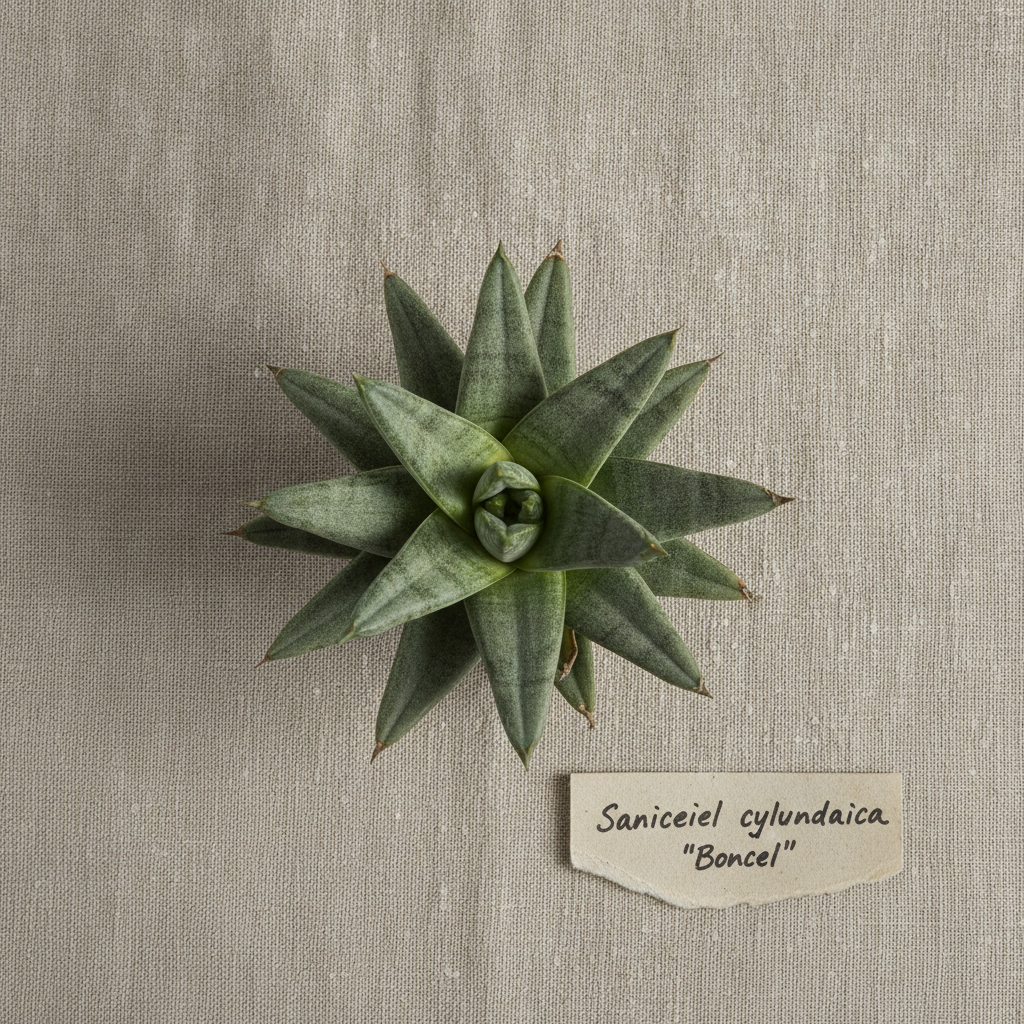
‘Boncel’ (Starfish Sansevieria): The most popular cultivar, and instantly recognisable. Instead of tall spears it produces short, stubby cylindrical leaves that splay outward in a flat fan, giving the plant the look of a chunky green starfish. It stays compact, rarely exceeding 20 to 30 centimetres, which makes it a favourite for desks and small shelves. Care is identical to the species.
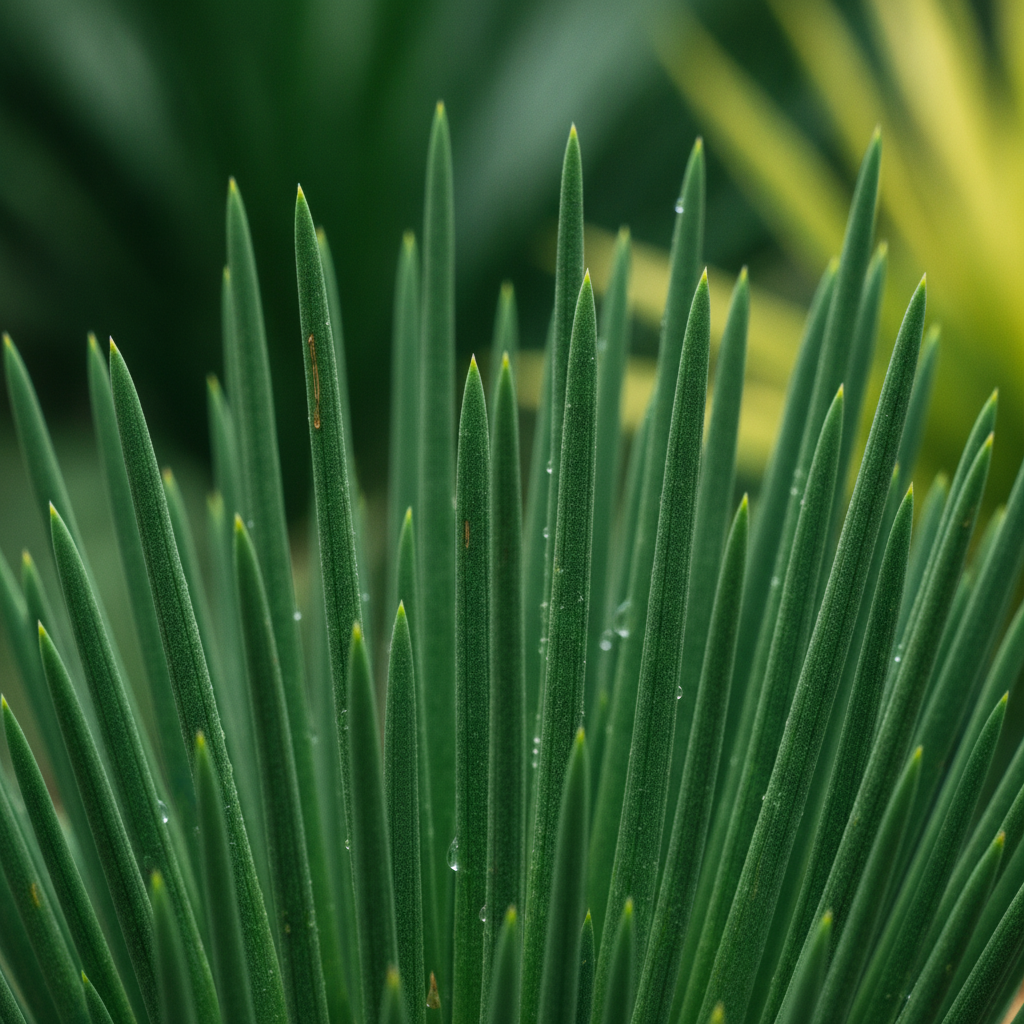
‘Spaghetti’: A slimmer, more delicate form whose numerous thin, upright leaves stand tightly together like a bundle of green spaghetti. It reads as softer and grassier than the bold species while keeping all of its toughness. Alongside these two, you will also find plants sold as braided or fan-trained, where growers have woven or splayed the young leaves into decorative shapes that hold as the plant matures.
Frequently Asked Questions
How often should I water an African spear plant?
Only when the soil has dried out completely. In practice this tends to be every two to three weeks in spring and summer and every four to six weeks in winter, but you should always check the soil rather than water on a fixed schedule. When in doubt, wait, as this plant tolerates drought far better than excess water.
Is the African spear plant toxic to pets?
Yes, mildly. Like other sansevierias it contains saponins that are toxic to cats and dogs if chewed or eaten, and can cause drooling, nausea, vomiting and diarrhoea. It is also mildly irritating to humans if ingested. The plant is not usually life threatening, but it is sensible to keep it out of reach of curious pets and small children.
Why are the leaves wrinkling or falling over?
Wrinkled, puckered spears usually mean the plant is thirsty and drawing on its stored water, so a thorough soak normally plumps them back up. Spears that flop open or lean tend to want more light. If instead the base of a leaf turns soft, yellow and mushy, the cause is overwatering rather than underwatering, and you should hold off water and check the roots for rot.
Does it really clean the air?
Sansevierias were among the plants in NASA’s well known clean air studies and can absorb certain airborne compounds under laboratory conditions. In a normal home the effect is very small, so it is best to enjoy the spear plant for its looks and toughness rather than to rely on it as an air purifier. That said, it does quietly release a little oxygen at night, which is a pleasant bonus.
Why is my spear plant not growing?
Slow growth is entirely normal for this plant, especially in autumn and winter when it rests. If you see no new spears at all during spring and summer, the most likely reason is too little light, so move it somewhere brighter. A light monthly feed during the growing season will also help, but do not expect fast results, as even a happy spear plant grows at a leisurely pace.
Can I grow it outdoors?
Only in warm, frost-free climates. The African spear plant is happy outdoors in a sheltered, bright spot where temperatures stay above about 10 degrees Celsius (50 Fahrenheit), and it makes a striking container plant on a patio. In cooler regions treat it as an indoor plant, moving it outside for the summer if you wish but bringing it back in well before the first cold nights of autumn.






