
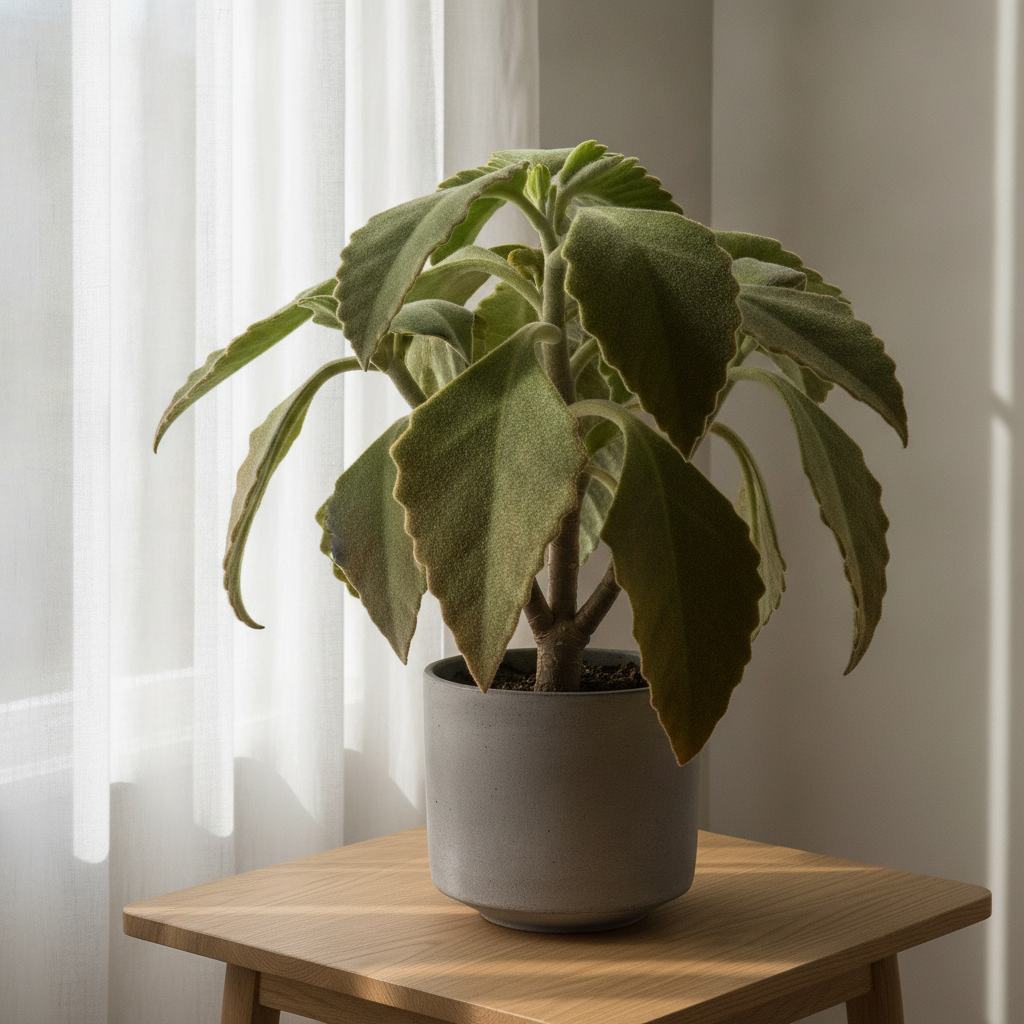
Few succulents wear their desert origins as openly as the felt bush. Run a finger across one of its large arrow-shaped leaves and you meet a dense, suede-like pile of hairs that ranges from olive to bronze to dusty silver, a living reminder that this plant evolved to survive the fierce sun and long droughts of southern Madagascar. Known botanically as Kalanchoe beharensis and sold under common names including velvet elephant ear, felt plant and Napoleon’s hat, it is the giant of the genus, capable of becoming a small gnarled tree in the wild and a sculptural, slow-growing specimen in a pot. This guide covers everything needed to keep one not merely alive but genuinely thriving indoors.
- Quick reference
- Why the felt bush makes a striking houseplant
- Light
- Watering
- Soil and potting
- Fertilising
- Propagation
- Pests and problems
- Varieties
- Frequently asked questions
Quick Reference
The table below distils the felt bush’s basic needs into an at-a-glance summary. Everything here is expanded on in the sections that follow, but if you only remember one thing, let it be this: bright light and restraint with the watering can will take you most of the way.
| Botanical name | Kalanchoe beharensis |
| Common names | Felt bush, velvet elephant ear, felt plant, Napoleon’s hat, elephant’s ear kalanchoe |
| Family | Crassulaceae |
| Origin | Arid thicket and dry forest of southern Madagascar |
| Light | Bright indirect to direct sun, at least 4 to 6 hours daily |
| Water | Soak thoroughly, then let the soil dry out completely |
| Soil | Gritty, fast-draining cactus or succulent mix |
| Temperature | 18 to 27 C (64 to 81 F); keep above 10 C (50 F) |
| Humidity | Low; dislikes damp, humid air |
| Feeding | Diluted low-nitrogen succulent feed, monthly in spring and summer |
| Mature size indoors | 60 cm to 1.2 m (2 to 4 ft) over many years |
| Growth rate | Slow |
| Toxicity | Toxic to cats, dogs and people if eaten |
| Difficulty | Easy, given enough light and sharp drainage |
Why the Felt Bush Makes a Striking Houseplant
Most succulents grown indoors are prized for compact rosettes or trailing strings, but the felt bush trades in a different currency altogether: texture and scale. Its leaves are broad triangles with scalloped, wavy margins, and every surface is coated in a fine felt of trichomes that softens the light and gives the whole plant a matte, almost sculpted appearance. That felt is not decoration for its own sake. In the plant’s native Behara region of southern Madagascar, where the species name comes from, the hairs reflect excess sunlight and slow the loss of water from the leaf surface, an adaptation that lets the plant endure blistering heat and months without meaningful rain.
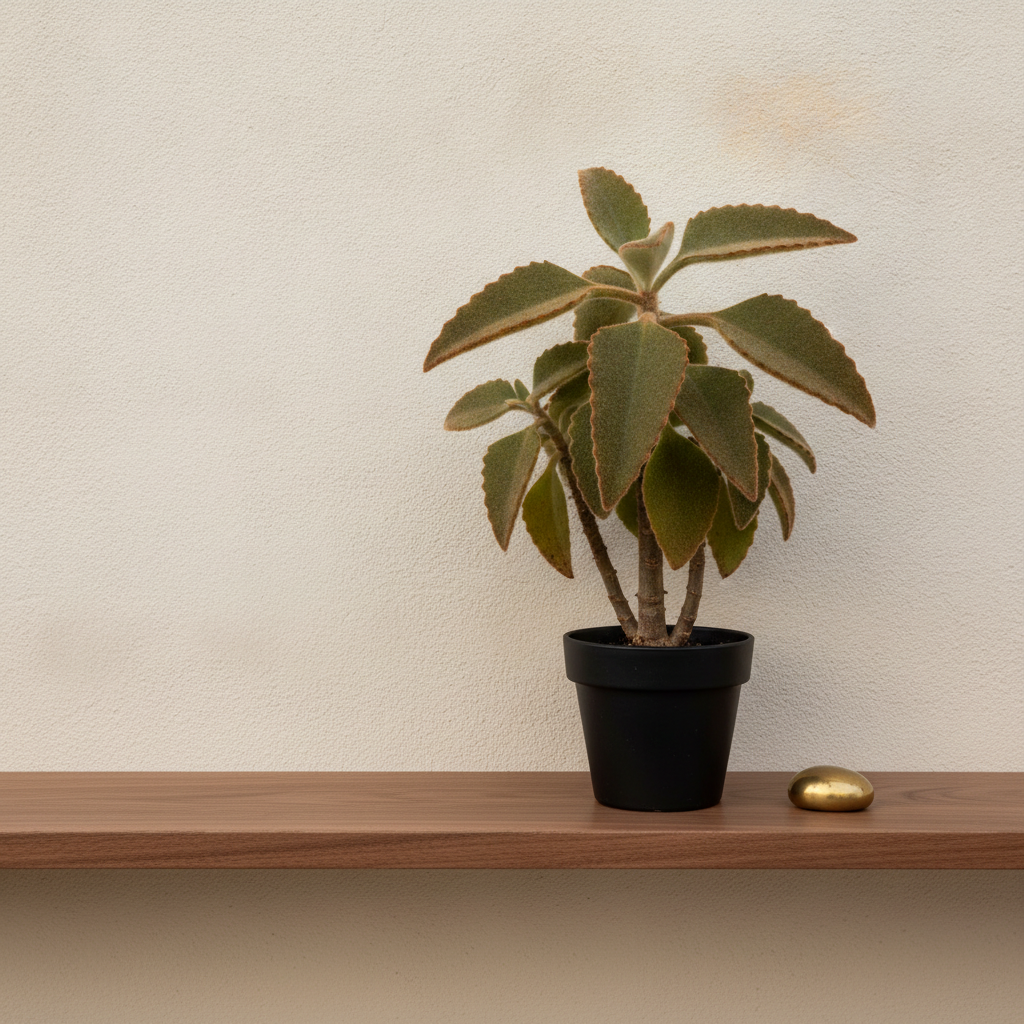
In the wild, Kalanchoe beharensis is the largest member of its genus and can grow into a small, sparsely branched tree of three metres or more, carried on a thick trunk textured with the raised scars of fallen leaves. As a houseplant it behaves far more modestly, usually settling somewhere between 60 cm and 1.2 m (2 to 4 ft) over the course of many years, since its growth is genuinely slow. New leaves emerge from the crown while the oldest ones at the base eventually yellow and drop, gradually revealing that characteristic knobbly stem. Many growers come to value the bare, elephant-hide trunk as much as the foliage, because it gives an established plant the presence of a bonsai.
The distinction between surviving and thriving matters a great deal with this plant. A felt bush kept in a dim corner and watered on a fixed schedule will not die quickly, but it will stretch toward the light, produce smaller and greener leaves with thinner felt, and lose the compact, silvered character that makes it worth growing. Given strong light and a dry-loving root run, the same plant produces larger leaves with denser, more colourful hair, holds its form, and slowly develops the woody structure that turns it from a curiosity into a centrepiece. Understanding a handful of principles, all rooted in the plant’s arid heritage, is what separates the two outcomes.
Pro Tip — Handle the felt sparingly: The velvet coating is easily marked. Repeated touching, misting or water sitting on the leaves can leave permanent blemishes and flatten the pile, so admire this plant with your eyes more than your hands.
Light
Light is the single most important factor in growing a good felt bush, and it is the area where indoor growers most often fall short. This is a full-sun plant by nature, accustomed to open, exposed positions where it receives hours of direct light every day. Indoors it wants the brightest spot available, ideally a south-facing or west-facing window where it can bask in several hours of direct sun. A minimum of four to six hours of strong light keeps the leaves broad, the felt dense, and the internodes short.
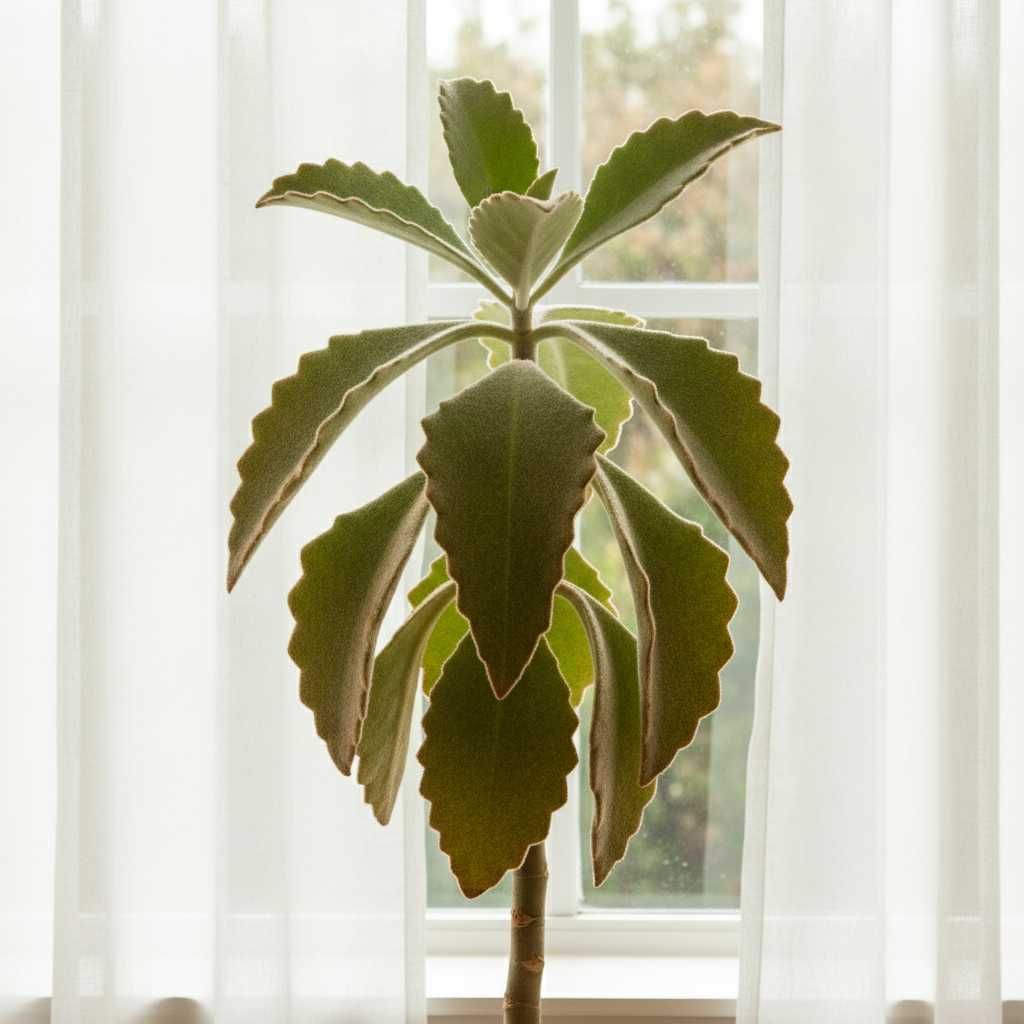
When light falls short, the plant tells you plainly. Stems elongate as the plant reaches for the window, the gaps between leaves widen, and new growth comes in smaller, greener and less hairy than the leaves it replaces. This etiolation is difficult to reverse, since stretched stems will not shorten again, so it is far better to prevent it by giving generous light from the outset. If the brightest window in the home still is not enough, particularly through a dim northern-hemisphere winter, a full-spectrum LED grow light positioned above the plant for ten to twelve hours a day makes an excellent substitute and keeps growth tight through the darkest months.
One caveat applies to plants that have spent time in lower light, or that have just come home from a shaded shop bench. Moving a soft, shade-grown felt bush straight into fierce summer sun can scorch the leaves, leaving pale or brown patches that will not recover. Acclimatise it over a week or two, starting with morning sun or gently filtered light and increasing exposure gradually, so the felt and leaf tissue have time to toughen. Rotating the pot a quarter turn every week or two also helps, encouraging the plant to grow evenly rather than leaning permanently toward the glass.
Watering
If light is where growers under-deliver, watering is where they over-deliver, and overwatering kills far more felt bushes than drought ever will. As a succulent from a seasonally arid climate, Kalanchoe beharensis stores moisture in its thick leaves and stems and is built to ride out long dry spells. The guiding principle is the soak-and-dry method: water thoroughly so that moisture reaches the entire root ball and runs from the drainage holes, then wait until the soil has dried out completely before watering again.
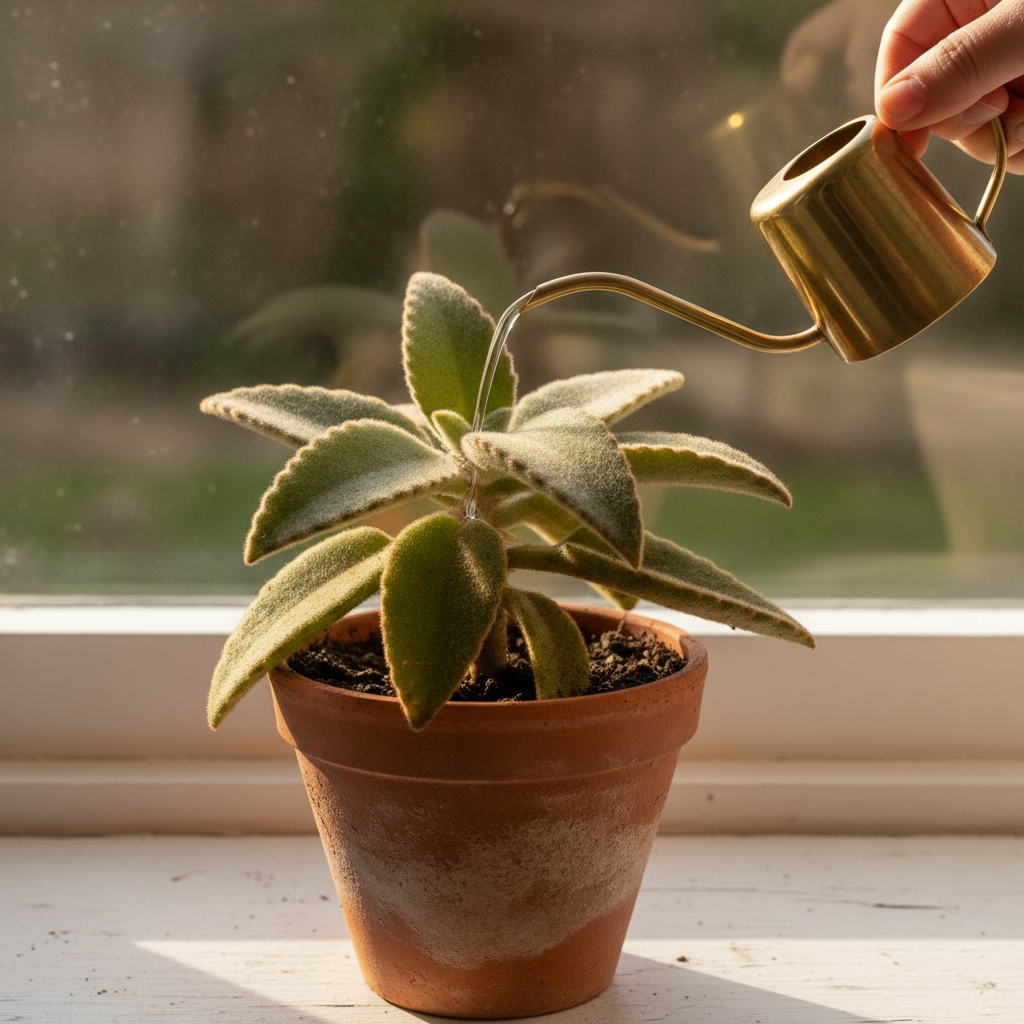
How often that works out to depends entirely on conditions rather than the calendar. In the warmth and strong light of spring and summer, an established plant in a fast-draining mix might need water every ten days to two weeks. Through autumn and winter, when growth slows and light is weaker, the interval stretches to three or four weeks or even longer. Rather than watering on a fixed day, check the soil: push a finger deep into the pot, or lift it to feel the weight, and only water when it is bone dry throughout. When in doubt, wait. A slightly thirsty felt bush recovers within hours of a drink, whereas one sitting in soggy soil is heading toward root rot.
Technique matters as much as timing. Direct water at the soil, not over the leaves, because moisture that pools in the felt and in the crown invites rot and can stain the velvet permanently. Always tip away any water that collects in the saucer within a few minutes so the roots never stand in it. Lukewarm or room-temperature water is kinder than cold straight from the tap. The clearest sign of overwatering is a soft, yellowing or translucent leaf, often lowest on the plant first, sometimes accompanied by a mushy stem base and a sour smell. Underwatering, by contrast, shows as leaves that grow thin, soft and slightly wrinkled, a state the plant shrugs off almost immediately once watered.
Warning — Rot moves fast: A felt bush left standing in wet soil can lose its roots within days. If you ever have to choose between watering too soon and waiting too long, always wait. Dry roots regrow; rotten ones do not.
Soil and Potting
Sharp drainage is not optional for the felt bush, it is the foundation of good health. The plant’s roots are adapted to gritty, lean, fast-draining ground that never holds water for long, and a dense, moisture-retentive potting compost works directly against that biology. Ordinary houseplant soil stays wet far too long around these roots and is the most common route to rot, so reach instead for a proper cactus and succulent mix.
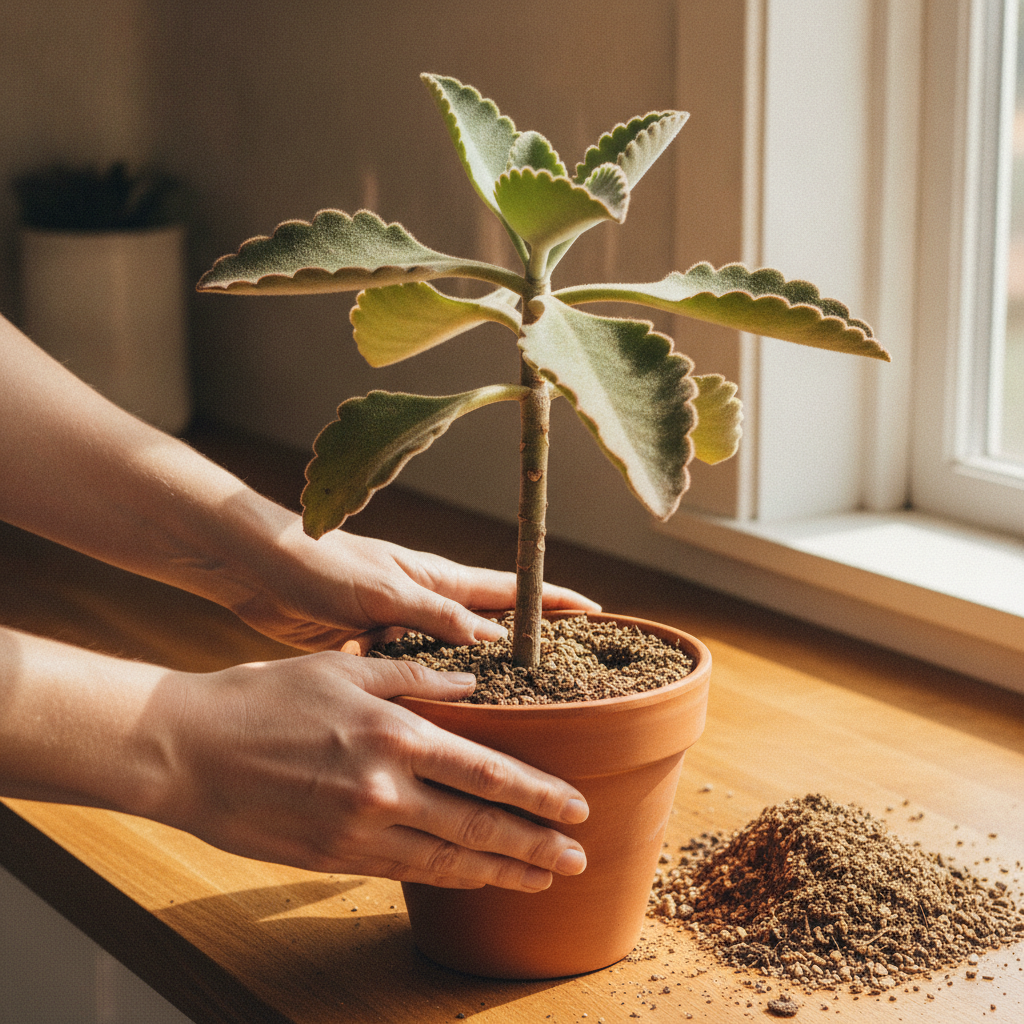
A reliable recipe is roughly two parts of a standard cactus compost to one part coarse mineral grit, such as perlite, pumice or fine horticultural gravel. The aim is a mix that water races straight through, leaving the particles damp but never claggy. Growers in humid homes, or those who tend to water generously, can push the mineral content higher still, because the more grit in the pot the more forgiving the plant becomes. Avoid anything containing water-retaining crystals or a high proportion of peat or coir on its own.
The pot itself is part of the drainage system. A container with generous holes in the base is essential, and unglazed terracotta is particularly well suited to this plant because its porous walls wick moisture from the soil and let it evaporate, helping the root ball dry between waterings. Choose a pot only slightly larger than the root ball, since a vast volume of soil around a small root system stays wet too long. Because the felt bush grows slowly and dislikes disturbance, it needs repotting only every two or three years, ideally in spring as growth resumes. When you do repot, handle the plant gently by the base to protect the leaves, tease away as much of the old spent soil as you can without shredding the roots, and settle it into fresh mix at the same depth it sat before. Then wait a week or so before watering, which gives any roots nicked during the move time to callus and reduces the risk of rot.
Fertilising
The felt bush is a lean feeder, evolved for poor soils, so its appetite for fertiliser is modest and easily overestimated. Too much feed, especially anything rich in nitrogen, pushes soft, leggy, pale growth that stretches between leaves and undermines the compact, silvered look you are trying to encourage. A light hand produces a far better plant than a heavy one.
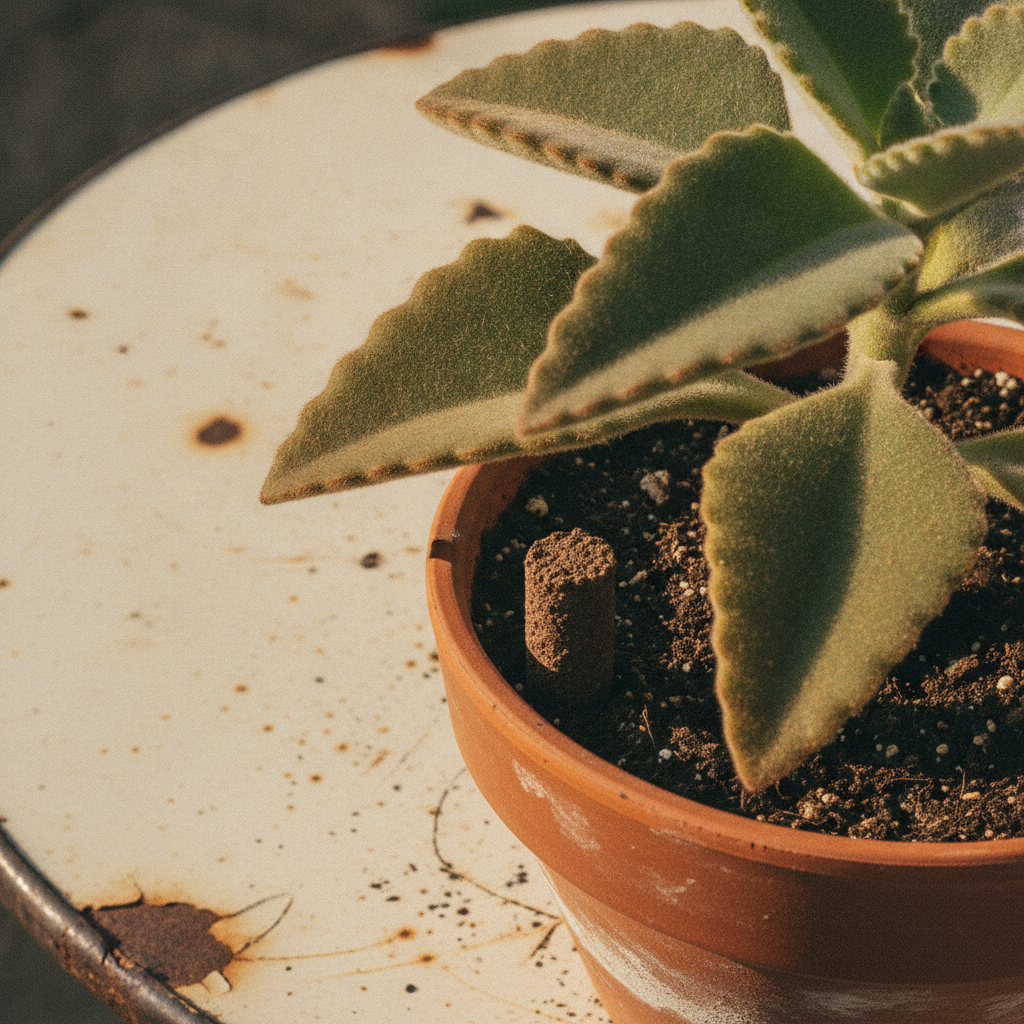
Feed only during the active growing season of spring and summer, and stop entirely through autumn and winter when the plant is resting. A balanced fertiliser formulated for cacti and succulents, which is naturally lower in nitrogen, is ideal, diluted to roughly half the strength stated on the label. Applied about once a month during the growing months, that is plenty. Always feed onto already-moist soil rather than bone-dry compost, because fertiliser salts drawn into dry roots can scorch them. Over the course of a year or two those salts can also build up in the mix, showing as a whitish crust on the soil surface or pot rim, and an occasional thorough flush of plain water through the pot clears them out.
A freshly repotted plant needs no feeding at all for the first couple of months, since new compost already carries a modest nutrient charge, and adding more on top simply risks burning the roots. If you would rather not fuss with liquid feeds, a controlled-release succulent fertiliser or a compressed feed stick worked lightly into the surface at the start of spring is a low-effort alternative, releasing a small trickle of nutrients over the season. Whichever route you take, remember that with this plant the goal is steady, well-lit, unhurried growth, and underfeeding is a far smaller problem than overfeeding.
Propagation
One of the quiet pleasures of the felt bush is how willingly it multiplies. Like many kalanchoes it roots readily from both leaf and stem cuttings, so a single plant can become several, and taking cuttings is also a useful way to rejuvenate a specimen that has grown tall and bare at the base. The warm, bright months of late spring and summer are by far the best time, as cuttings taken then root quickly while the plant is in active growth.
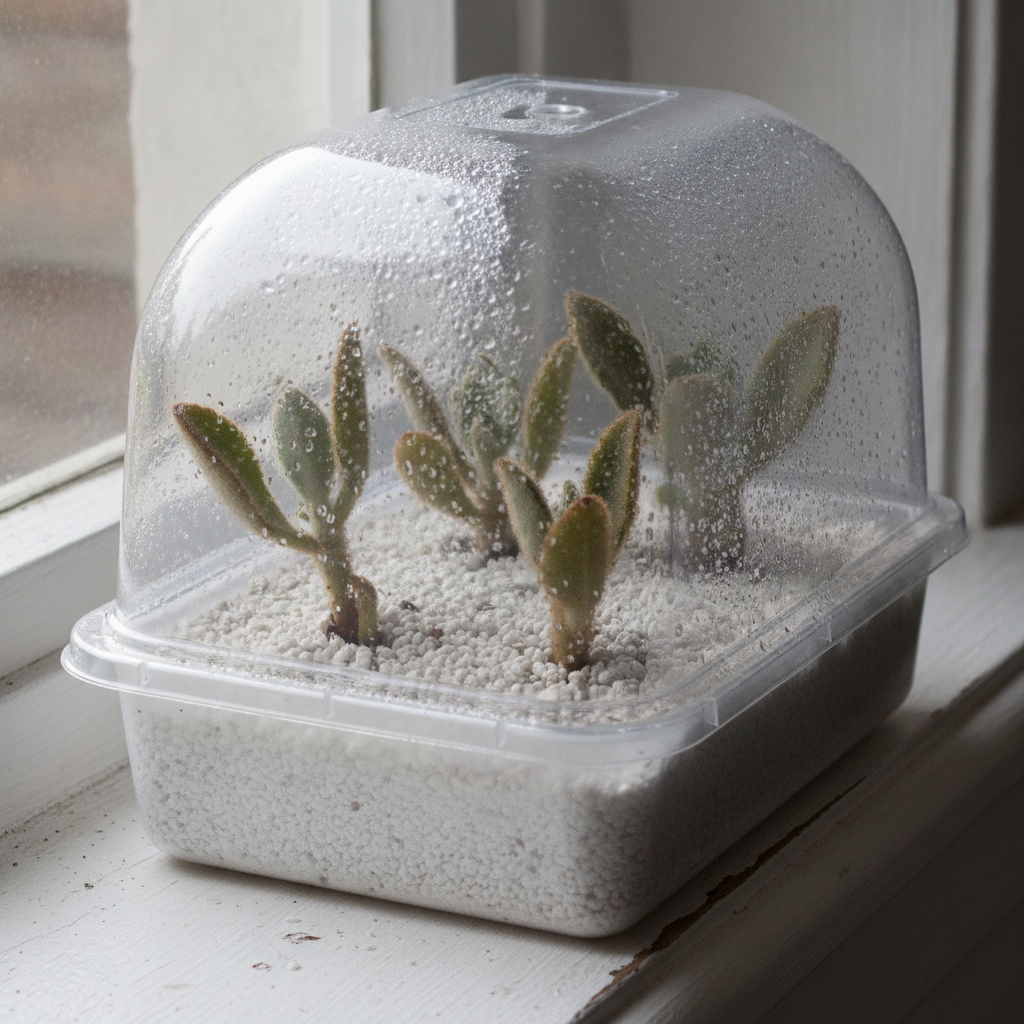
To propagate from a leaf, remove a healthy, mature leaf cleanly where it meets the stem, keeping it whole. For a stem cutting, use clean, sharp secateurs to take a section of stem several centimetres long, ideally including the growing tip. Either way, the crucial step that beginners often skip is to let the cut end dry and callus over. Lay the cutting somewhere warm, dry and out of direct sun for two to four days until the wound has sealed into a dry scab; planting a fresh, wet cut straight into soil is an open invitation to rot.
Once callused, follow these steps:
- Fill a small pot or shallow tray with a gritty, free-draining mix or a bed of damp perlite, and firm it lightly.
- Rest a leaf cutting flat on the surface, or insert the callused end of a stem cutting a couple of centimetres deep so it stands upright.
- Place the container somewhere warm and bright but out of harsh direct sun, aiming for temperatures around 20 to 24 C (68 to 75 F).
- Keep the medium barely moist, misting only lightly if it dries out completely; it should never be wet.
- Wait patiently. Roots and, from leaf cuttings, tiny plantlets typically appear over several weeks, and you can gently tug to check once new growth is visible.
- Once a cutting is well rooted and showing fresh leaves, pot it on into a normal succulent mix and begin caring for it as a mature plant.
Patience is the main ingredient. The felt bush is a slow grower at every stage, so a young plant raised from a cutting takes time to bulk up. A gentle bottom heat from a propagation mat speeds rooting noticeably, and keeping humidity modest rather than high suits this dry-loving species better than the sealed, steamy conditions favoured for tropical cuttings. Propagation from seed is also possible but is slow and rarely worthwhile when cuttings are so straightforward.
Pests and Problems
The felt bush is a robust plant, and its dense hairy coating actually deters some pests that trouble smooth-leaved houseplants. Most trouble comes not from insects but from care, above all from too much water. Even so, a few pests do appear from time to time, and the felt itself creates one problem unique to this species: it traps dust and can hide small infestations from casual inspection.
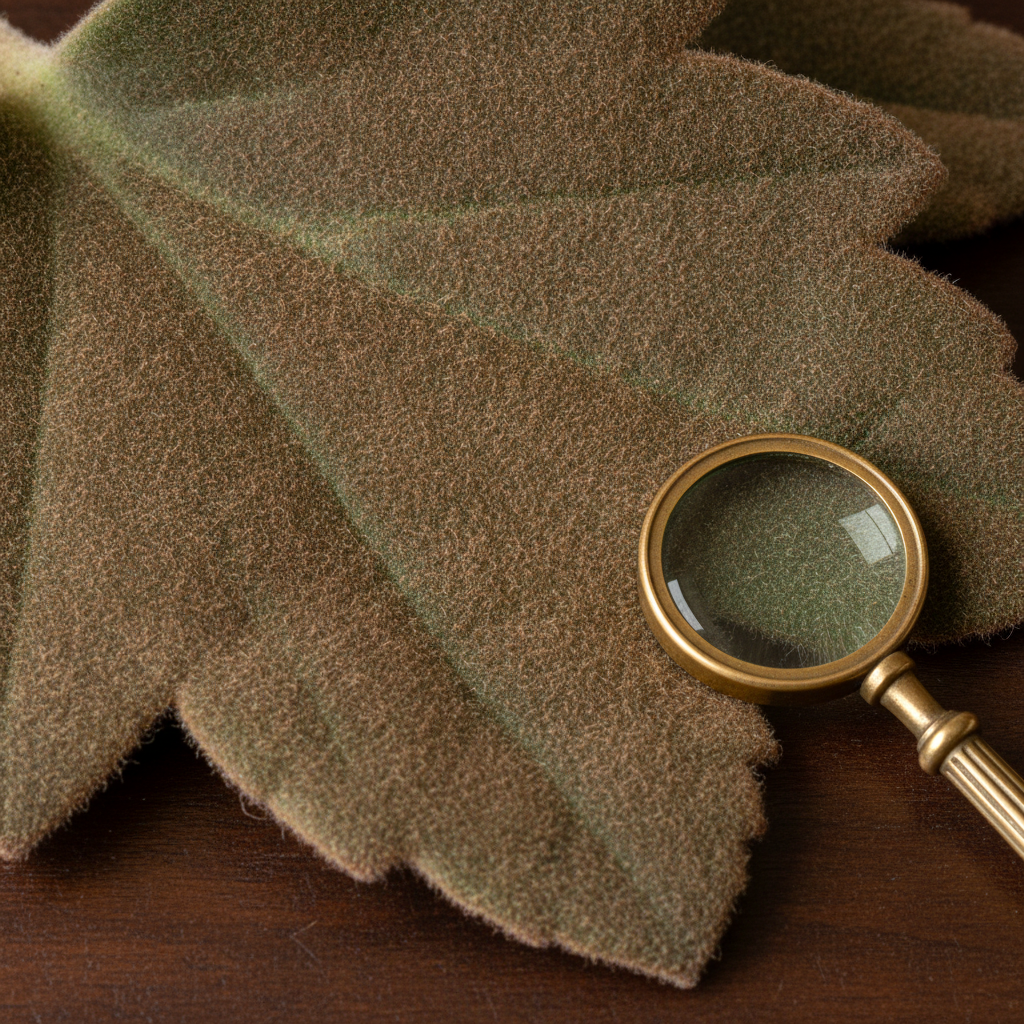
Mealybugs are the most likely culprits, appearing as small cottony white tufts tucked into the leaf axils and along the stem, where the felt gives them excellent cover. Scale insects show up as small brown limpet-like bumps on stems and leaves, while aphids may gather on any soft new growth. Spider mites are less common here than on thin-leaved plants but can strike in hot, very dry air, leaving fine stippling and faint webbing. Because the hairy surface hides all of these, it pays to inspect a felt bush closely and regularly, parting the felt and checking the undersides and crevices with a magnifier if need be.
For a light infestation, dab the pests directly with a cotton bud dipped in isopropyl alcohol, which kills mealybugs and scale on contact. For anything more widespread, treat with an insecticidal soap or a diluted neem oil solution, repeating every week or so until the problem clears, and isolate the affected plant from your others in the meantime. Take care spraying oils onto the felt, though, as they can mat the hairs, so spot-treat where you can rather than drenching the whole plant.
The physiological problems are more common and mostly trace back to water and light. Soft, yellowing or translucent lower leaves and a mushy stem base signal overwatering and the onset of rot, which calls for immediate action: stop watering, unpot the plant, cut away any black or slimy roots, let it dry, and repot into fresh gritty mix. Thin, wrinkled, drooping leaves indicate simple thirst and resolve within a day of watering. Pale scorch marks on leaves exposed to sudden fierce sun will not heal but do no lasting harm to the plant, while stretched, widely spaced growth with smaller greener leaves is the classic sign of too little light. Brown, crisping leaf edges usually point to underwatering or, occasionally, a build-up of fertiliser salts, both easily corrected. Read together, these signals make the felt bush an unusually communicative plant, one that tells you clearly when something is wrong.
Warning — Toxic to pets and people: Like all kalanchoes, Kalanchoe beharensis contains bufadienolide compounds that are poisonous if eaten, and are especially dangerous to cats and dogs. Keep it well out of reach of curious pets and children, and wash your hands after handling.
Varieties
The wild felt bush is a handsome plant in its own right, but growers have selected and named several forms that push its texture and shape in different directions. Two cultivars in particular are widely sold and worth seeking out, and both need exactly the same care as the species.
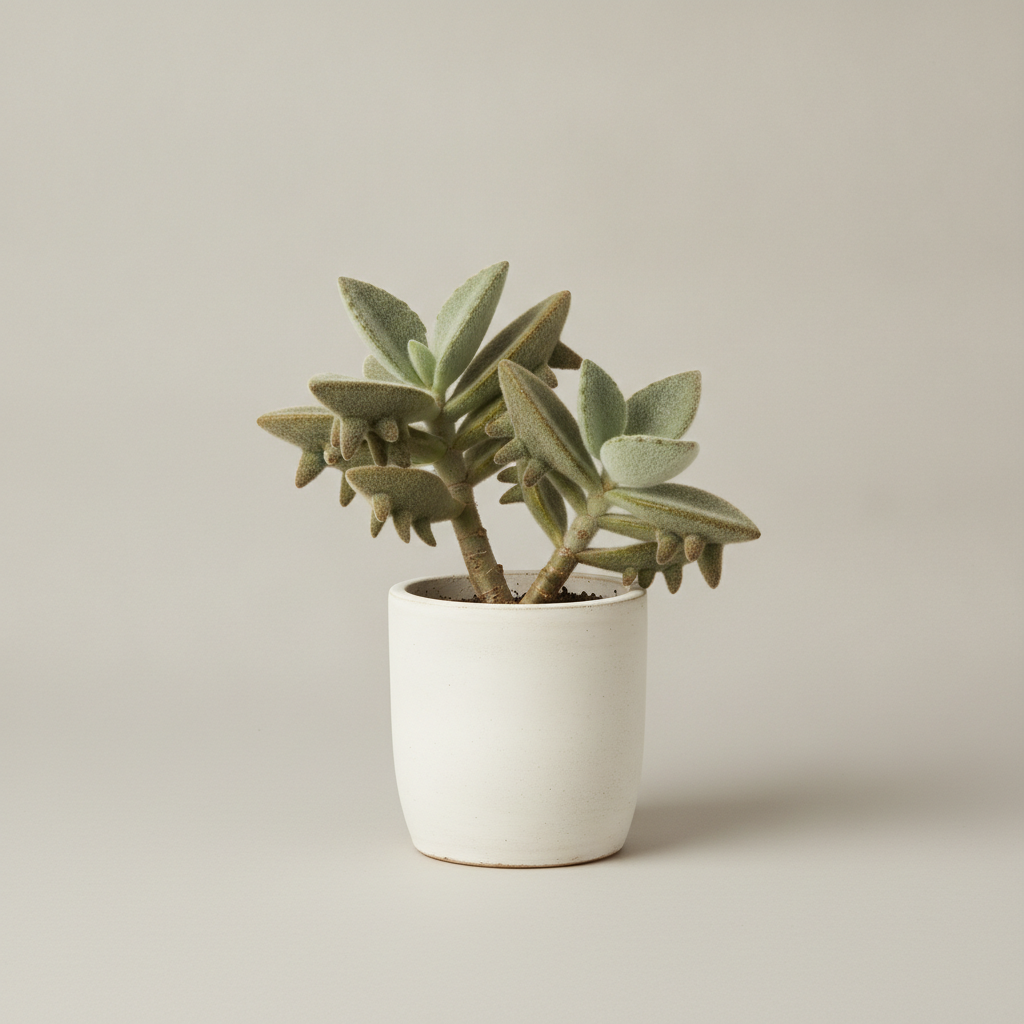
‘Fang’ is the most sought-after form, instantly recognisable by the row of finger-like tubercles, the so-called fangs, that project from the undersides of its silvery, felted leaves. These strange growths give the plant an almost prehistoric character and make it a favourite among collectors, while the upper leaf surfaces retain the same dense bronze-to-silver pile as the species.
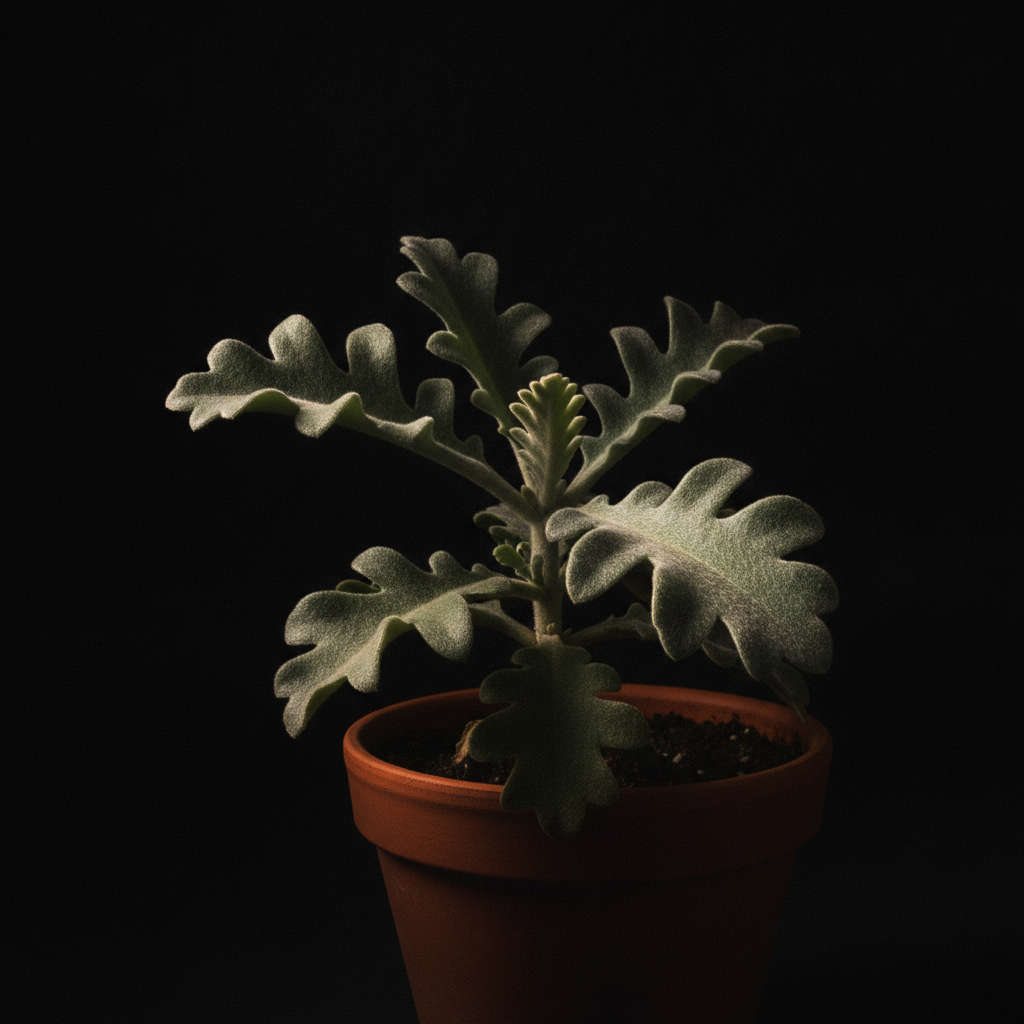
‘Oak Leaf’ takes the plant’s texture in a different direction, with deeply lobed, wavy-margined leaves that echo the outline of an oak leaf. Densely coated in soft silvery-grey felt, it has a slightly more delicate, ruffled silhouette than the broad triangles of the species, and it makes a beautiful contrast when the two are grown side by side.
Beyond these two, you may encounter a dwarf form sometimes sold as ‘Nana’, which stays more compact and suits smaller spaces, along with various selections offered simply for especially bronze or silver colouring. All of them share the same undemanding, sun-loving nature, so choosing between them is a matter of texture and taste rather than difficulty.
Frequently Asked Questions
Why are the lower leaves on my felt bush dropping?
A steady, slow loss of the oldest, lowest leaves is entirely natural, and it is how the felt bush develops its characteristic bare, textured trunk over time. It becomes a concern only when leaves drop rapidly or turn soft and yellow before falling, which usually points to overwatering. Check that the soil is drying out fully between waterings and that the pot drains freely.
Can I grow a felt bush outdoors?
Yes, in a warm, frost-free climate roughly equivalent to USDA zones 9b to 11, it thrives outdoors in full sun and free-draining ground. It cannot tolerate frost, so anywhere colder it is best grown in a pot that can spend summer outside and move indoors before the first cold nights, keeping it above 10 C (50 F) through winter.
Does the felt bush flower indoors?
Mature plants can produce clusters of small, urn-shaped yellow-green flowers, but flowering is uncommon on indoor specimens and usually only occurs on large, old, very well-lit plants. This species is grown almost entirely for its remarkable foliage rather than its modest blooms, so treat any flowers as a pleasant surprise rather than the goal.
Should I mist my felt bush to raise humidity?
No. This is a dry-climate plant that prefers low humidity, and misting is actively counterproductive: water sitting in the felt can mark the leaves and encourage rot in the crown. Give it good airflow and dry air rather than humidity, and never mist it as a matter of routine.
Why has my felt bush stopped growing?
Some pause is normal, since this is a naturally slow grower that rests through the cooler, darker months and resumes in spring. If it seems stalled during the growing season, the usual cause is insufficient light, so move it somewhere brighter or add a grow light. A plant that has completely filled its pot with roots may also benefit from repotting into fresh mix in spring.
Is the felt bush safe around cats and dogs?
No. All parts of Kalanchoe beharensis contain toxic bufadienolide compounds that can cause vomiting, drooling and, in more serious cases, heart problems in cats and dogs, and it is mildly toxic to people too. Keep it well out of reach of pets and children, and if ingestion is suspected, contact a vet or doctor promptly.






