
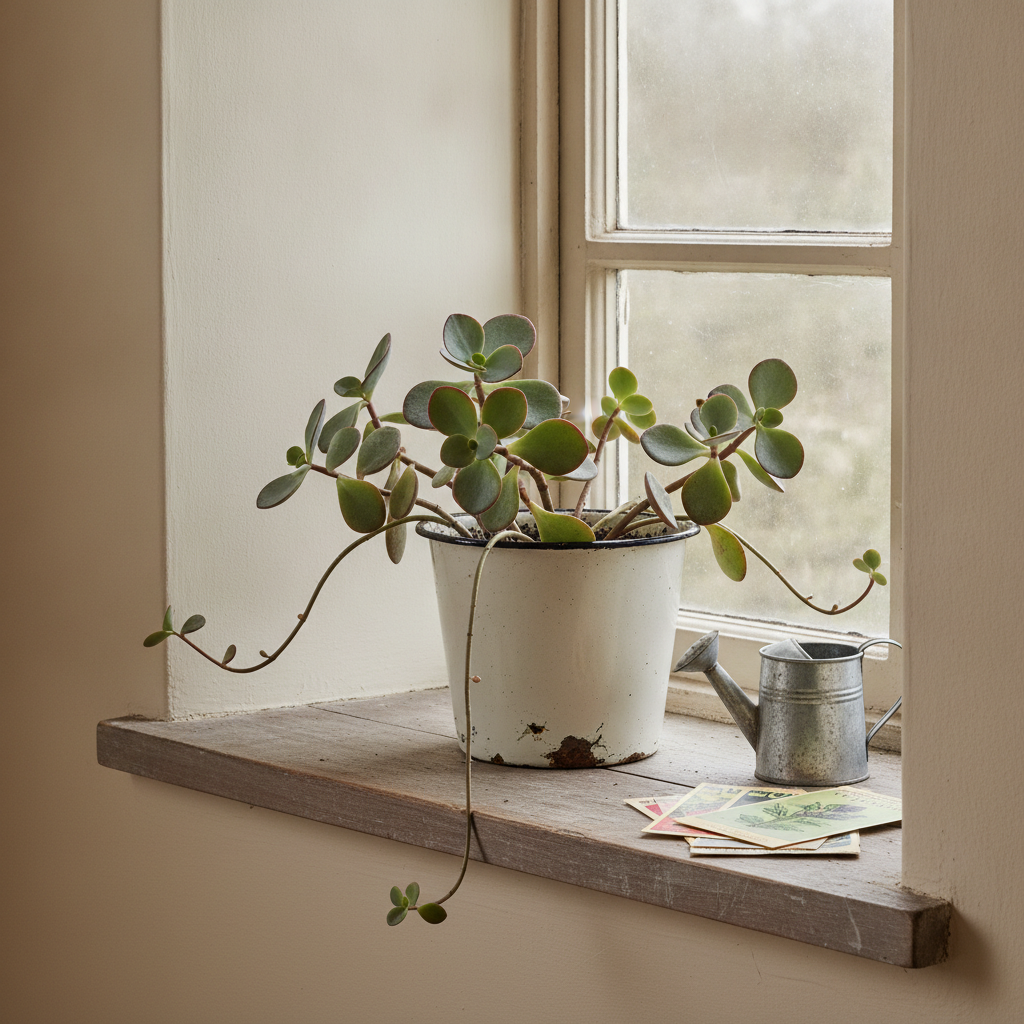
Few houseplants earn their common name quite so literally as the walking kalanchoe. Give it a season on a sunny shelf and it will send out slender, wiry runners that arch over the pot rim, each tipped with a tiny rooted rosette that touches down and marches the plant steadily outward. That restless, wandering habit belongs to Kalanchoe synsepala, a succulent from the rocky highlands of Madagascar that has adapted to spread itself across thin, stony soils by cloning its way over the ground rather than relying on seed alone.
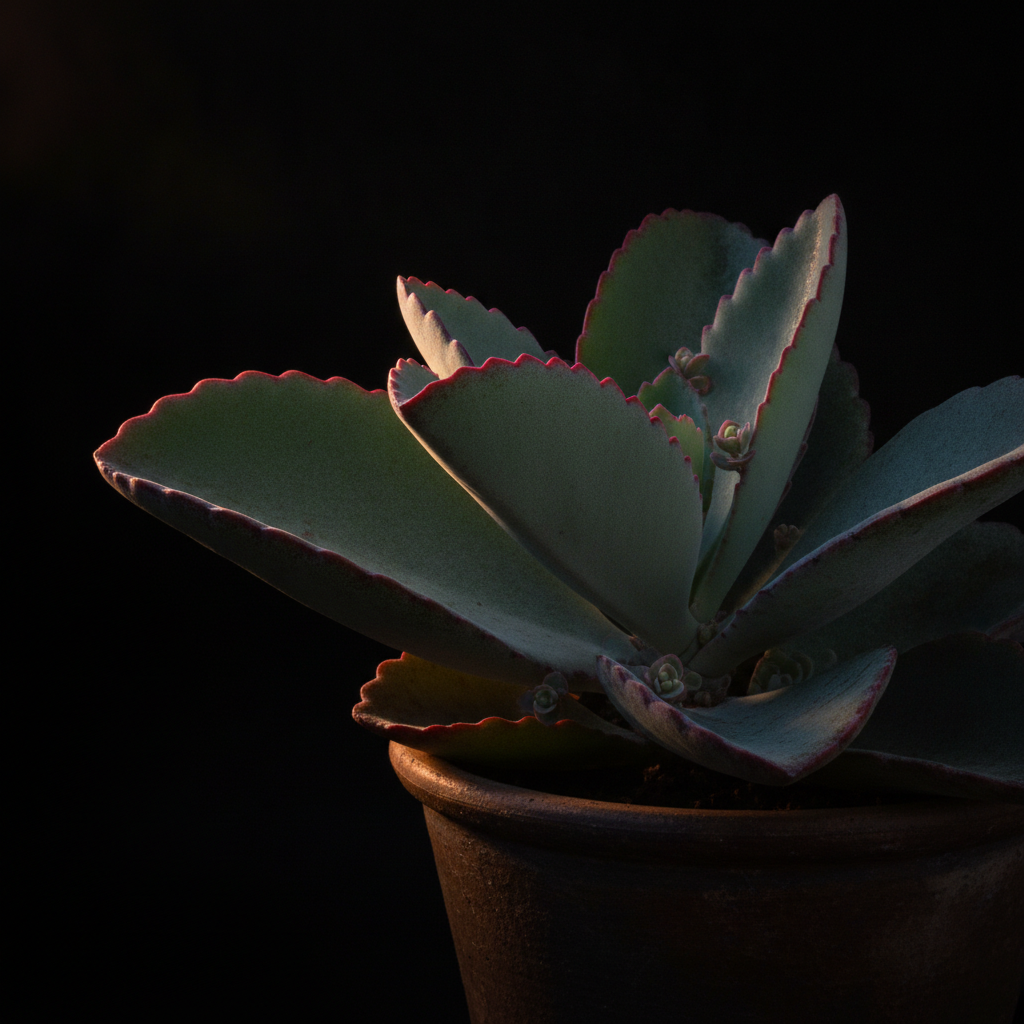
Sometimes sold as cup kalanchoe or round-leaf navelwort, it forms a low rosette of rounded, blue-grey paddle leaves finished with a powdery bloom and, in good light, a blush of maroon-red along the margins. It has a reputation as an almost unkillable beginner succulent, and that reputation is largely deserved. The catch is that “surviving” and “thriving” are two very different outcomes with this plant. A neglected specimen will limp along as a pale, stretched cluster of leaves; a well-grown one is compact, silvery, richly edged in red and constantly throwing out new plantlets. This guide covers everything needed to reach the second outcome, from light and watering through soil, feeding, propagation and the handful of pests that occasionally show interest.
Contents
- Quick Reference
- Why Walking Kalanchoe Makes a Rewarding Houseplant
- Light Requirements
- Watering & Humidity
- Soil, Potting & Repotting
- Fertilising
- Propagation
- Pests & Diseases
- Popular Varieties
- Frequently Asked Questions
Quick Reference: Walking Kalanchoe at a Glance
| Light | Bright light with several hours of direct sun; a south or west window indoors |
| Watering | Soak thoroughly, then let the soil dry out completely; roughly every 10 to 21 days depending on season |
| Temperature | 18 to 27 degrees Celsius (64 to 81 Fahrenheit); protect from anything below 10 degrees Celsius (50 Fahrenheit) |
| Humidity | Low to average household humidity, 30 to 50 per cent; never needs misting |
| Fertiliser | Dilute succulent feed once a month in spring and summer only |
| Toxicity | Toxic to cats, dogs and livestock; contains cardiac glycosides, keep away from pets and children |
Why Walking Kalanchoe Makes a Rewarding Houseplant
The walking kalanchoe sits in a sweet spot that few plants occupy. It is genuinely tough, forgiving of missed waterings and happy in the dry air of a centrally heated room, yet it also does something visually interesting that keeps it from feeling like just another green blob on the windowsill. Watching a runner extend, arch and set down a perfect miniature of the parent plant is a small piece of theatre that repeats itself all growing season. For anyone who likes the idea of a plant that quietly multiplies itself into pots you can share, this is one of the most satisfying succulents to keep.
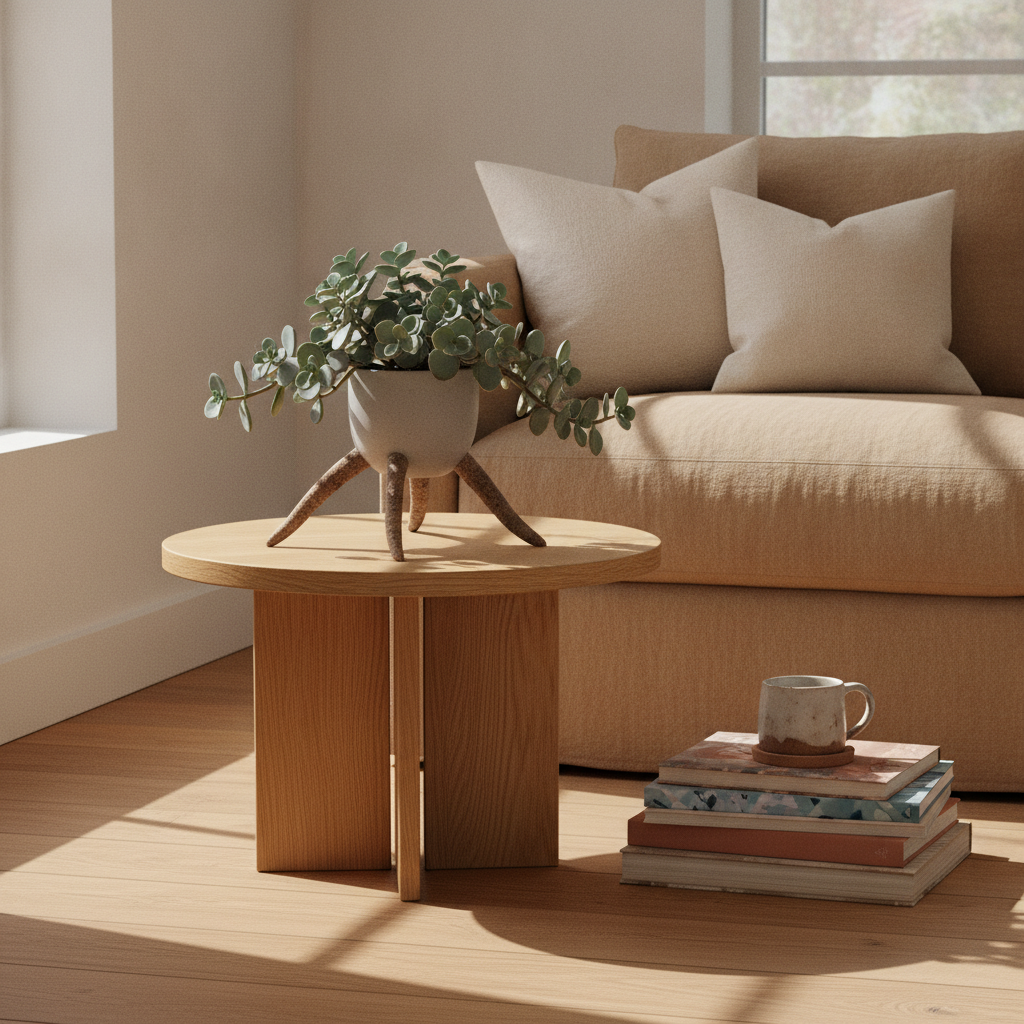
It is also an excellent teaching plant. Because it clones itself so readily, it rewards experimentation with propagation without the anxiety that surrounds slower or fussier species. Beginners learn the rhythm of succulent care, the soak-and-dry watering, the importance of bright light, the way colour intensifies under stress, while always having a supply of spare plantlets to practise on. The main thing standing between a survivor and a showpiece is light, and once that is right almost everything else falls into place.
Important — Toxicity: Like all kalanchoes, Kalanchoe synsepala contains bufadienolide cardiac glycosides that are toxic if eaten. It is particularly dangerous to cats, dogs and grazing animals, and the tempting little plantlets are easily knocked off and swallowed. Keep it well out of reach of pets and small children, and wash your hands after handling cut stems.
Light Requirements
Light is the single most important factor in growing a good-looking walking kalanchoe, and it is where most disappointing specimens go wrong. In its native Madagascan habitat the plant grows fully exposed on rocky outcrops, basking in strong sunlight for most of the day. Indoors it wants as much of that as you can offer. Given generous light it stays tight and rounded, the leaves silver over with a heavy bloom, and the red margins deepen to a rich maroon. Starved of light it stretches, the leaves space out and turn a flat, dull green, and the whole rosette leans toward the nearest window.
The ideal indoor position is directly in or beside a south-facing or west-facing window where the plant receives at least four to six hours of direct sun each day. On a bright sill it will colour up beautifully. If your only bright window faces east, the plant will still grow well, though the leaf colour will be softer and more grey than red.
Light Levels Explained
Understanding the practical light tiers helps you place the plant confidently. The values below are approximate and simply give a sense of relative brightness rather than readings you need to measure.
| Light Category | Approx. Level | Typical Location | Outcome |
|---|---|---|---|
| Direct sun | Over 50,000 lux | On a south or west sill, unobstructed | Ideal; compact, silvery, red margins |
| Bright indirect | 15,000 to 40,000 lux | Just back from a sunny window | Good growth, softer colour |
| Medium | 5,000 to 15,000 lux | Bright room, no direct sun | Slow growth, gradual stretching |
| Low | 1,000 to 5,000 lux | North window or interior wall | Etiolation, pale leaves, weak runners |
| Very low | Under 1,000 lux | Deep interior, far from windows | Decline; not sustainable long term |
Window Orientation and Placement
South-facing window: The best position in most homes. A south sill delivers the long hours of direct sun that bring out compact growth and the strongest leaf colour. Only in an intensely hot, glass-baked conservatory would you need to offer any shading.
East-facing window: A good second choice. Gentle morning sun is enough to keep the plant reasonably tight, though the leaves will lean toward grey rather than developing deep red edges.
West-facing window: Nearly as good as south. Strong afternoon sun encourages excellent colour, and the plant handles the heat of a west sill without complaint provided it is watered adequately.
North-facing window: The weakest option. A north sill rarely provides enough intensity, and plants here stretch and pale over time. If north light is all you have, plan to supplement with a grow light.
Pro Tip — Rotate for Symmetry: Because the rosette leans hard toward the light, give the pot a quarter turn every time you water. This keeps the plant growing evenly rather than flattening itself against the glass, and stops the runners all heading in one direction.
How Light Affects Leaf Colour
The silvery bloom and red margins that make this plant attractive are, in effect, a sunscreen response. Bright light triggers the leaves to produce protective pigments and a thicker waxy coating, which read to us as that desirable frosted, red-edged look. Move the same plant into shade and it withdraws those pigments to capture more light, fading to plain green. Colour, in other words, is a reliable light meter: a greening, spreading plant is asking for a brighter spot.
Warning — Direct Sunlight: A plant grown in low light and then moved abruptly into fierce summer sun can scorch, developing pale bleached or brown patches that do not recover. Acclimatise it over a week or two, increasing exposure gradually, rather than shifting it straight onto a blazing sill.
Artificial Lighting
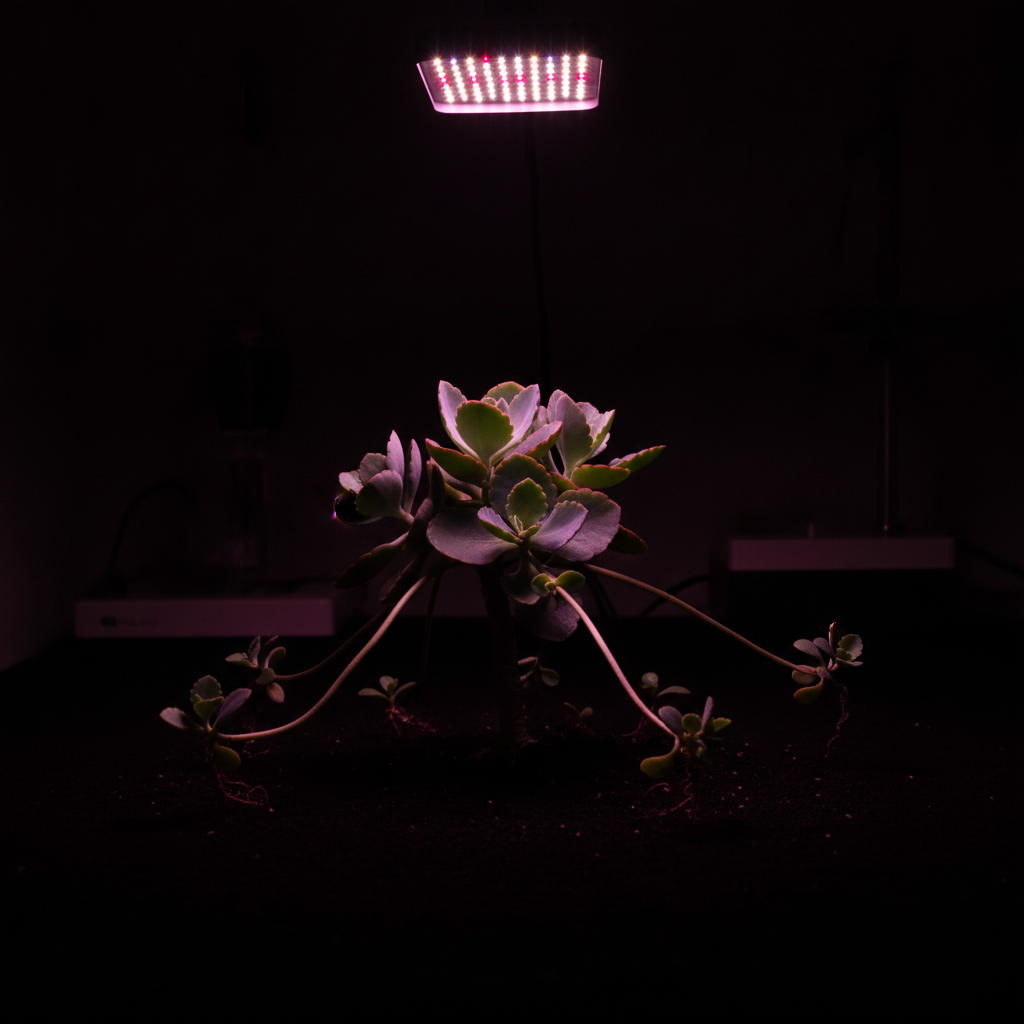
Walking kalanchoe responds very well to supplementary lighting, which makes it a practical choice for rooms without a strong window. A full-spectrum LED grow light positioned 20 to 30 centimetres (8 to 12 inches) above the rosette, run for 10 to 12 hours a day, keeps growth compact and colour reasonable through the darkest months. It is the simplest fix for winter stretching in northern homes.
Seasonal Adjustments
Light intensity drops sharply indoors between autumn and early spring, and this is when previously compact plants start to loosen and reach. Move the plant to your brightest available window for winter, clean any dust from the glass, and consider a grow light if growth becomes visibly leggy. Come spring, ramp direct exposure back up gradually to avoid shocking leaves that softened over winter.
Watering & Humidity
As a succulent, the walking kalanchoe stores water in its thick leaves and is built to endure drought far better than excess. The overwhelming majority of problems with this plant trace back to overwatering, not underwatering. The guiding principle is soak and dry: water generously, then wait until the soil is bone dry all the way through before watering again. When in doubt, wait another few days.
When to Water
Rather than watering on a fixed calendar, check the soil. Push a finger or a wooden skewer to the bottom of the pot; if it comes out dry and clean, it is time to water, and if there is any dampness or clinging soil, wait. In the warmth and brighter light of spring and summer this might mean watering every 10 to 14 days. In the cool, dim months of autumn and winter the plant slows almost to a halt and may need water only every three to four weeks.
The leaves themselves are a good gauge. A well-hydrated plant has firm, plump leaves; when they begin to feel slightly soft or look faintly wrinkled, the plant has drawn down its reserves and is ready for a drink. This visible feedback makes the walking kalanchoe very hard to underwater fatally, and it is far safer to lean toward the dry side than the wet.
Pro Tip — Read the Leaves: Slightly wrinkled, floppy leaves that firm up within a day of watering are exactly the rhythm you want. If the leaves stay firm for weeks, you are watering too often; let the plant tell you when it is thirsty rather than sticking to a schedule.
How to Water Correctly
- Confirm the soil is completely dry to the bottom of the pot before starting.
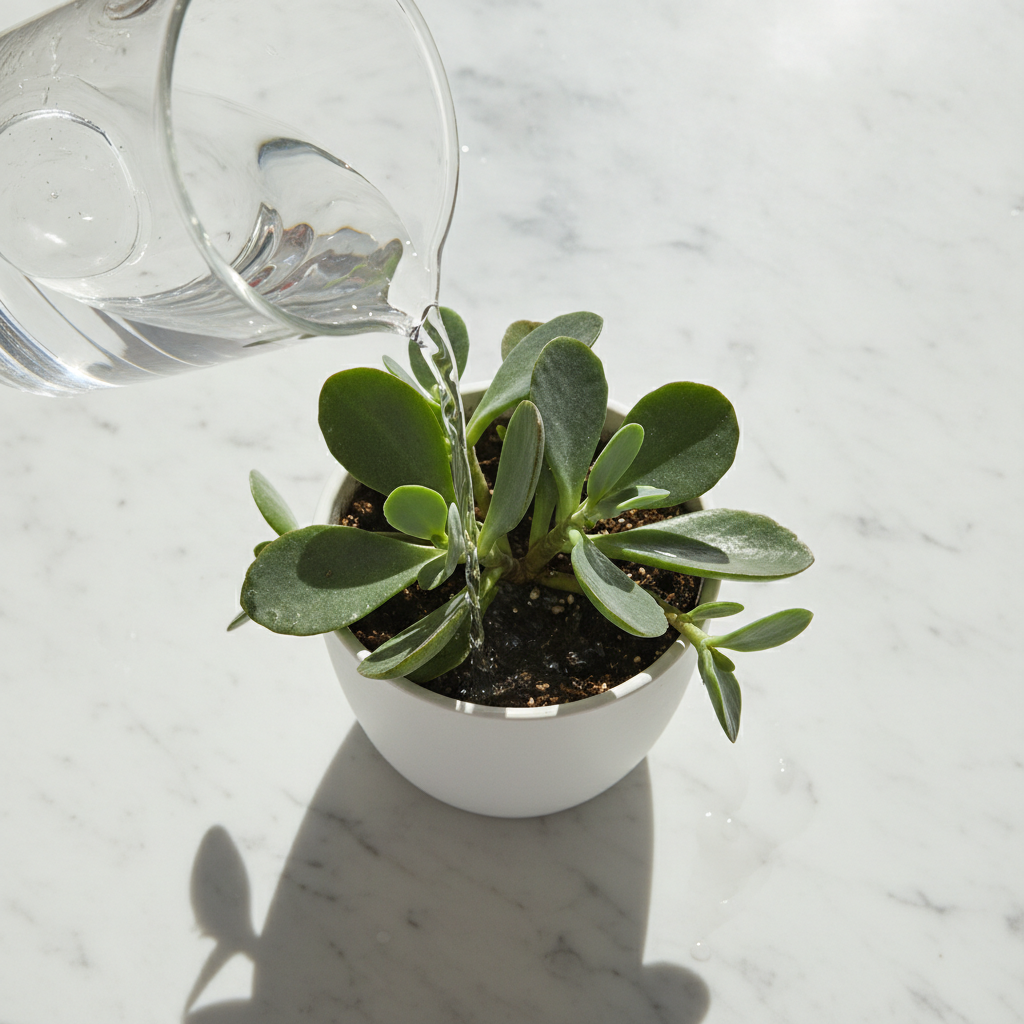
- Water at the soil surface, directing the flow around the base rather than over the rosette.
- Continue until water runs freely from the drainage holes, wetting the entire root ball.
- Let the pot drain fully, then tip away any water left standing in the saucer or cachepot.
- Return the plant to its bright spot and do not water again until the soil has dried out entirely.
Signs of Overwatering vs. Underwatering
| Symptom | Overwatering | Underwatering |
|---|---|---|
| Leaf colour | Yellowing, translucent or blackened leaves | Dull, faintly reddened, otherwise stable |
| Leaf texture | Soft, mushy, water-soaked to the touch | Thin, wrinkled, slightly limp but firm |
| Soil | Stays wet for days, may smell sour | Bone dry, pulling away from the pot sides |
| Roots | Brown, soft and foul-smelling | Pale, dry but intact |
| Stem base | Black, collapsing, rotting at soil line | Firm, sometimes slightly shrivelled |
Warning — Root Rot: A soft, blackening stem base is the hallmark of overwatering and, once advanced, it is usually fatal. If you catch it early, unpot the plant, cut away all mushy tissue, let the healthy parts callus for a day or two, and re-root the firm sections in dry, gritty mix. Prevention through sharp drainage and restraint is far easier than the cure.
Humidity Requirements
This is one of the least demanding plants on the humidity front. It is perfectly at home in the dry air of a heated or air-conditioned room, and average household humidity of 30 to 50 per cent suits it well. It has no need of misting, pebble trays or humidifiers, and in fact prefers good air movement that helps the soil surface dry quickly.
Excess humidity is more of a risk than too little. In a stagnant, damp bathroom or a crowded terrarium, the plant is prone to fungal spotting and rot, and its natural bloom can be spoiled. If you notice soft patches or persistent moisture sitting in the rosette, improve ventilation rather than reaching for a mister.
There is simply no scenario in normal home growing where you would need to raise humidity for this plant. Focus your attention instead on light and on getting the watering rhythm right, which matter far more to its health.
Water Quality
Walking kalanchoe is not fussy about water quality and tolerates ordinary tap water in most areas. In regions with very hard water you may see faint mineral crusting on the soil surface over time, which is harmless but can be flushed out by the occasional thorough watering. Room-temperature water is gentler on the roots than very cold water straight from the tap.
Soil, Potting & Repotting
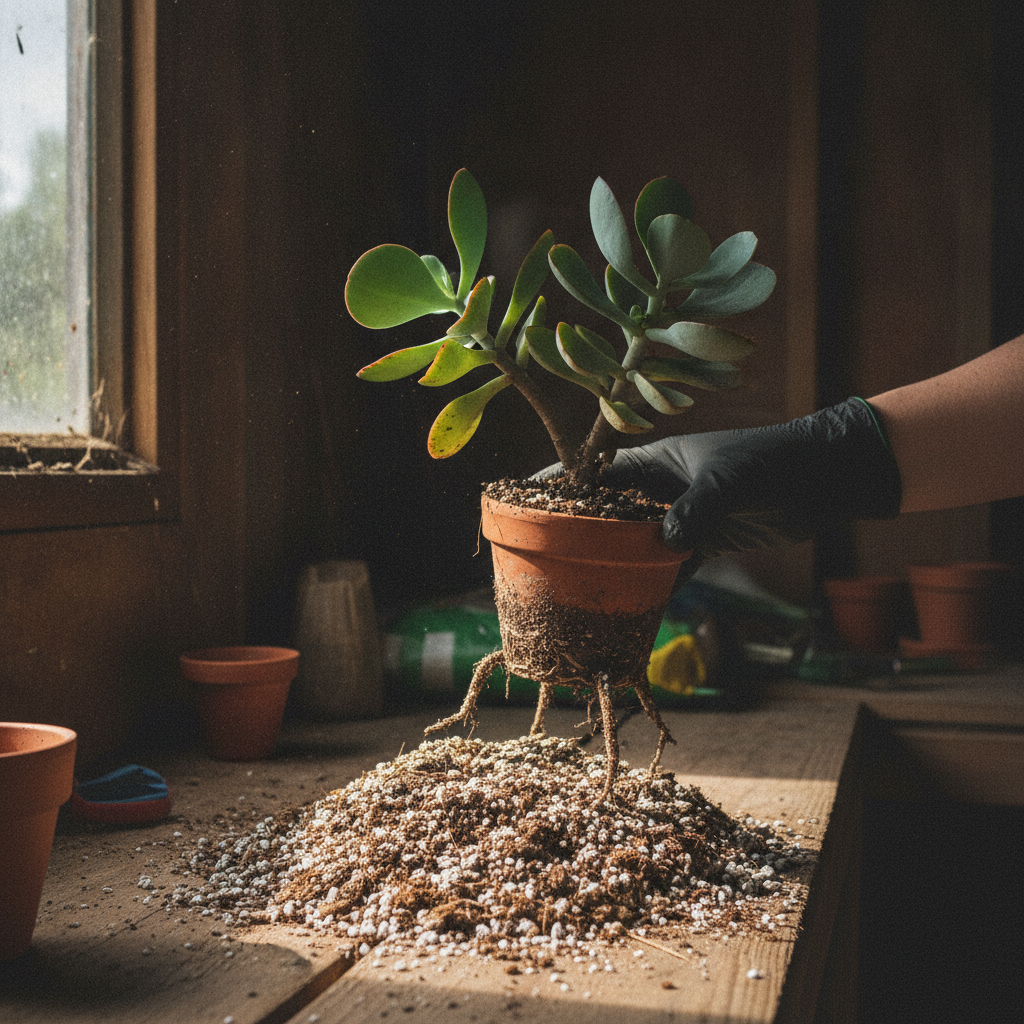
Sharp drainage is non-negotiable for a succulent adapted to thin, gritty mountain soils. The walking kalanchoe needs a medium that holds a little moisture briefly and then dries fast, allowing air back to the roots. A standard peat-heavy houseplant compost stays wet far too long and is the fastest route to rot.
Ideal Soil Composition
The goal is roughly half mineral grit and half light organic matter. A ready-made cactus and succulent compost is a fine starting point, but most benefit from extra grit stirred through to open them up further. The table below shows a reliable blend.
| Component | Proportion | Function |
|---|---|---|
| Cactus or succulent compost | 50 per cent | Holds a little moisture and nutrients |
| Perlite or pumice | 30 per cent | Opens the mix, drains and aerates |
| Coarse horticultural grit or sand | 20 per cent | Adds weight and sharp drainage |
The plant is relaxed about pH and does well in anything from slightly acidic to slightly alkaline, roughly 6.0 to 7.5. There is no need to test or adjust it; a good succulent mix will already sit comfortably in that range.
Pro Tip — Quick Mix Recipe: For a fast, dependable blend, combine two handfuls of ordinary succulent compost with one handful of perlite and one handful of coarse grit. If the mix still clumps in your hand when moist, add more grit until it falls apart freely.
Choosing the Right Pot
Because the walking kalanchoe spreads sideways on runners rather than growing tall, a wide, shallow pot suits it better than a deep one and gives the plantlets room to root down around the parent. A pan or half-pot is ideal.
Drainage holes are non-negotiable. Whatever pot you choose must have holes in the base. Without them water collects unseen at the bottom and the roots sit in a reservoir that guarantees rot. Decorative pots without drainage should only ever be used as an outer cachepot, emptied of runoff after every watering.
Pot material: Terracotta is the ideal choice. Its porous walls wick moisture out of the soil and let the whole root ball dry faster, which suits this plant perfectly. Glazed ceramic and plastic both work but hold water longer, so you must be even more disciplined about letting them dry.
Pot size: Choose a pot only slightly wider than the current rosette. An oversized pot holds a large volume of slow-drying soil around a small root system, which again invites rot. This plant would rather be a touch cramped than swimming in compost.
When to Repot
Walking kalanchoe is slow-rooting and happy staying put, so it rarely needs repotting more than every two to three years. The usual triggers are roots emerging from the drainage holes, the rosette filling the whole surface, or soil that has broken down and no longer drains freely. The best time to repot is spring, as the plant moves into active growth. Always repot into dry soil and wait several days before the first watering, giving any disturbed roots time to heal.
How to Repot: Step-by-Step
- Water sparingly a few days beforehand so the root ball holds together but is not soggy, then let it dry.
- Ease the plant out by squeezing the pot and supporting the rosette; avoid pulling on the leaves.
- Gently tease away the old soil and inspect the roots, trimming any that are brown, soft or dead.
- Add a layer of fresh gritty mix to the new pot and set the plant at the same depth it grew before.
- Fill around the roots with dry mix, firming lightly so the plant sits steady but not compacted.
- Leave the plant unwatered in bright, indirect light for five to seven days, then resume normal watering.
Warning — Transplant Shock: Watering immediately after repotting is the classic mistake. Freshly cut or bruised roots are open wounds, and wet soil around them is an invitation to rot. Hold off on water for the better part of a week, however tempting it is to give the newly potted plant a drink.
Fertilising
Adapted to lean, stony ground, the walking kalanchoe needs very little feeding and is easily harmed by too much. In the wild it thrives on soils that would starve a leafier plant, so a light hand is not just acceptable but preferable. Overfed plants grow soft, green and stretched, losing the compact silvery character that makes them worth growing.
Feed only during the active growing season of spring and summer, and stop completely through autumn and winter when the plant is resting. A little dilute nutrition at the right time supports steady growth and runner production without pushing the plant into weak, sappy excess.
Understanding Plant Nutrients
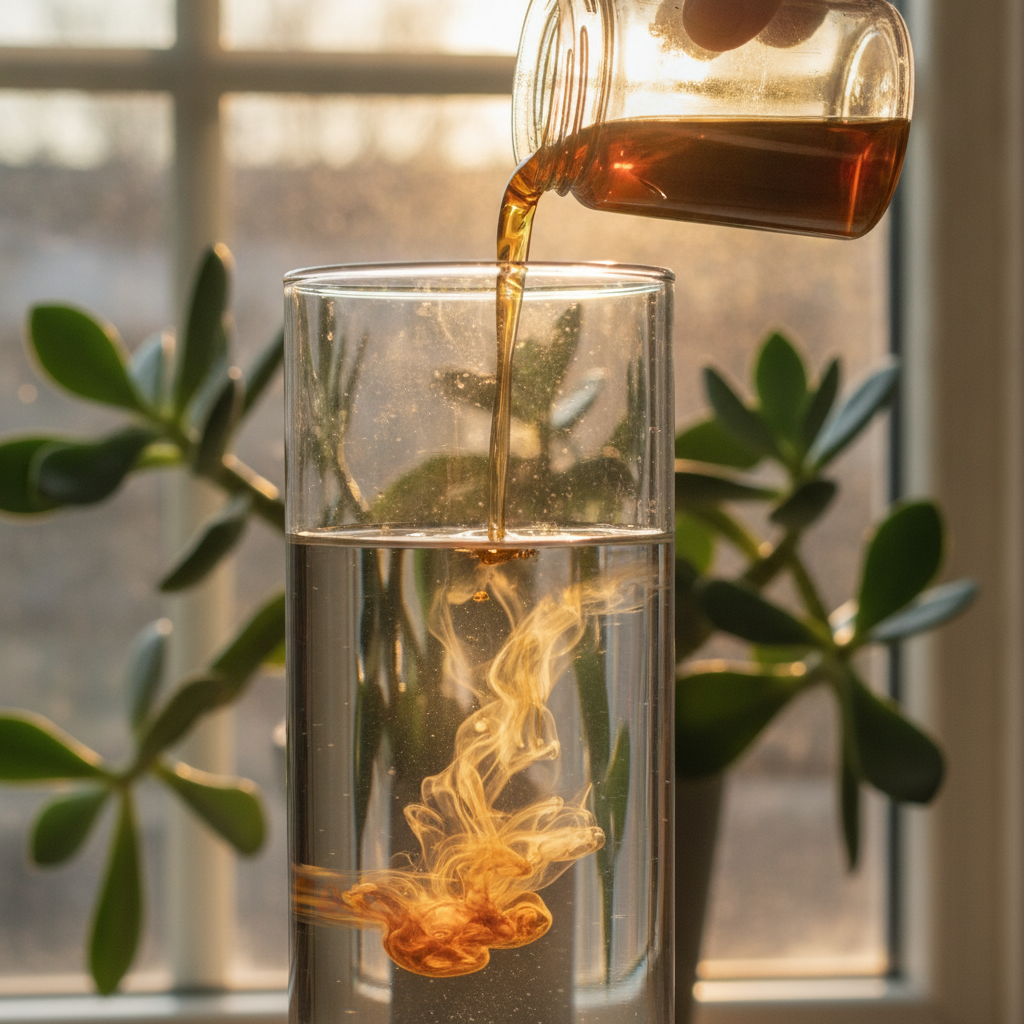
Fertiliser labels show three numbers, the ratio of nitrogen, phosphorus and potassium, often abbreviated as NPK. For succulents a balanced or slightly low-nitrogen feed is best, since too much nitrogen drives soft leafy growth at the expense of form and colour. The table below outlines the main nutrients and what their shortage looks like.
| Nutrient | Symbol | Primary Function | Deficiency Symptoms |
|---|---|---|---|
| Nitrogen | N | Leaf and stem growth | Pale, slow, undersized leaves |
| Phosphorus | P | Roots and flowering | Weak roots, poor blooming |
| Potassium | K | Overall vigour and hardiness | Yellow leaf edges, soft growth |
| Calcium | Ca | Cell wall strength | Distorted new growth |
| Magnesium | Mg | Chlorophyll production | Yellowing between leaf veins |
| Iron | Fe | Green pigment formation | Pale young leaves with green veins |
Types of Fertiliser
Liquid fertilisers: The easiest to control, which is exactly what this plant needs. A liquid succulent or balanced houseplant feed diluted to a quarter or half the recommended strength, applied to already-moist soil, gives you precise command over how much the plant receives.
Slow-release granular: Convenient but harder to moderate, since the granules keep releasing nutrients with every watering. If you use them, apply at half the stated dose and only at the start of the growing season.
Organic fertilisers: Gentle options such as heavily diluted worm-casting tea suit succulents well because they release nutrients slowly and are hard to overdo. They are a good choice for growers who prefer to avoid synthetic feeds.
Feeding Schedule
Once a month is plenty during spring and summer. Feed with a well-diluted solution immediately after a normal watering, never onto dry roots, and skip feeding entirely from autumn through winter. Four or five light feeds across the whole growing year are all a walking kalanchoe wants.
Pro Tip — Less Is More: With this plant it is always safer to underfeed than overfeed. If you are unsure, halve your dilution again. A slightly hungry kalanchoe stays compact and colourful, whereas an overfed one turns soft, green and prone to rot.
How to Fertilise
- Water the plant normally first so the roots are moist, protecting them from concentrated feed.
- Mix a liquid succulent fertiliser at a quarter to half the label strength in a jug of water.
- Apply the diluted solution to the soil until it just begins to drain from the base.
- Empty any runoff from the saucer so the roots do not sit in nutrient-rich water.
- Wait a full month before the next feed, and stop altogether once autumn arrives.
Warning — Salt Build-Up: Fertiliser salts accumulate in the soil over time and can scorch the roots, showing as brown, crisping leaf tips. Every few months, flush the pot by watering thoroughly with plain water until plenty runs through, which washes the excess salts away.
Propagation
Propagation is where the walking kalanchoe shows off. It does the hard work for you, producing ready-rooted baby plants on the ends of its runners with no intervention required. Detaching and potting these plantlets is the easiest and most reliable way to make new plants, and it is a wonderful project for children or nervous beginners because the success rate is close to total.
The best time to propagate is spring and summer, when the plant is actively growing and the plantlets root away fastest. That said, this plant is so eager that offsets and runner-tips will often take at almost any time of year given warmth and light.
Understanding Runners and Plantlets
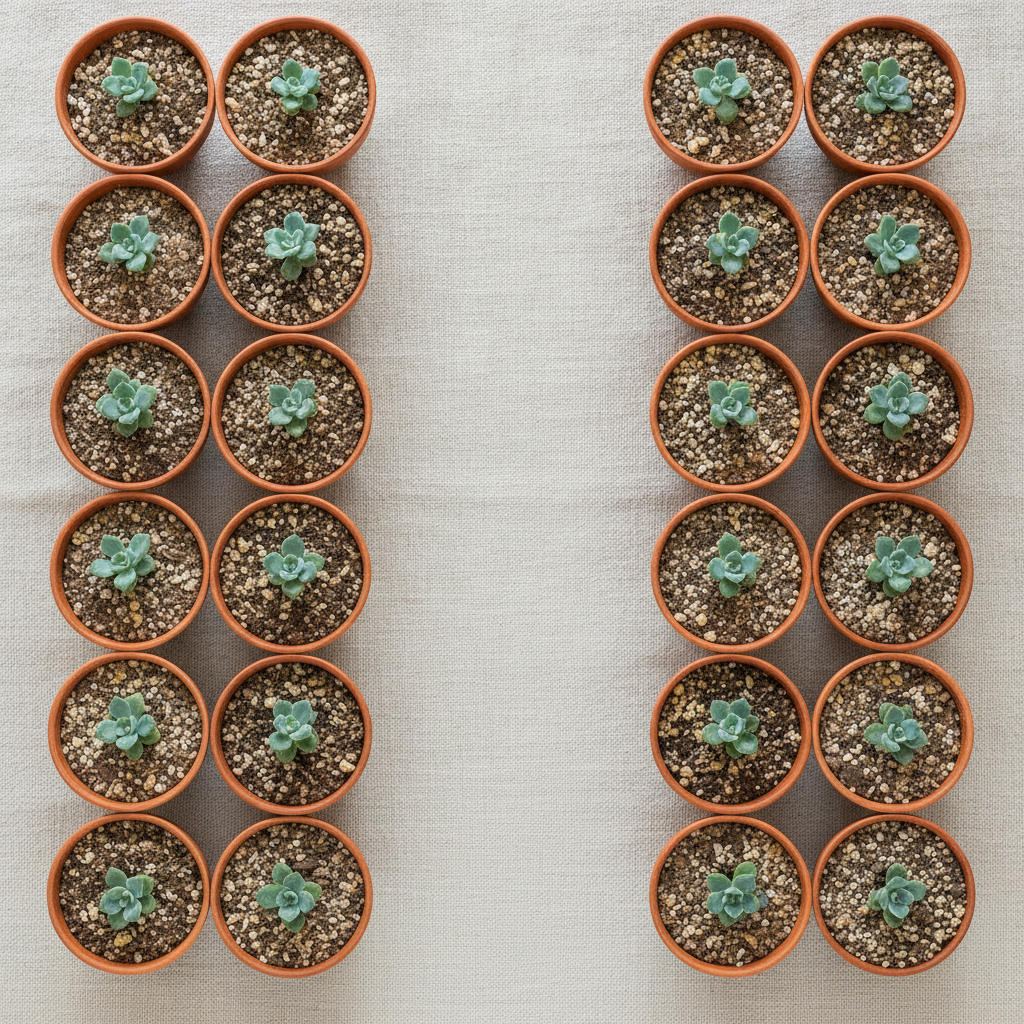
The runners, botanically called stolons, are the plant’s natural cloning mechanism. Each thin, arching stem carries one or more miniature rosettes at its tip. Where a plantlet touches soil it puts out its own roots and establishes as an independent plant, while the connecting runner eventually withers away. This is the same strategy a strawberry uses, and it is why the plant appears to walk across a surface, colonising new ground as it goes.
Potting Runner Plantlets: Step-by-Step
This is the primary method and the one to reach for first. Wait until a plantlet has a few visible roots of its own, then move it into its own pot.
- Choose a plump plantlet on a runner that already shows small aerial roots at its base.
- Snip the runner close to the plantlet with clean scissors, freeing it from the parent.
- Fill a small pot with dry, gritty succulent mix and make a shallow depression in the surface.
- Settle the plantlet so its root base rests on the soil, nestling it in just enough to stand upright.
- Place it in bright, indirect light and wait about three days before the first light watering.
- Once new growth appears, treat it as an established plant on the normal soak-and-dry routine.
Pro Tip — Let Them Root First: The plantlets root fastest if you leave them attached to the parent until they are a decent size and already reaching for the soil. A plantlet that has begun rooting on its own will barely notice the move, whereas a tiny one detached too early can stall.
Division and Leaf Offsets: Step-by-Step
A mature clump that has filled its pot with several crowns can also be divided, which both makes new plants and rejuvenates a crowded specimen. Individual leaves will sometimes root too, though this is slower and less certain than using plantlets.
- Unpot a crowded plant and gently brush the soil from the roots to reveal the separate crowns.
- Tease or cut the clump into sections, making sure each piece has both leaves and some roots.
- Let any cut surfaces dry and callus for a day or two in a shaded, airy spot.
- Pot each division into its own container of dry, gritty mix at the depth it grew before.
- Wait five to seven days, then begin watering lightly and move into brighter light.
Troubleshooting Propagation
| Problem | Likely Cause | Solution |
|---|---|---|
| Plantlet shrivels and dries out | Detached too early, before rooting | Leave plantlets on the parent longer next time |
| Plantlet rots and turns mushy | Soil kept too wet during rooting | Use dry mix and delay watering several days |
| No roots forming after weeks | Too little light or too cold | Move to a warmer, brighter position |
| Division wilts badly | Watered before cut roots healed | Wait a week after potting before watering |
Pests & Diseases
Healthy, well-lit walking kalanchoes are relatively untroubled by pests, and their tough, waxy leaves deter many of the sap-suckers that plague softer houseplants. The problems that do arise are almost always linked to overwatering or poor air movement rather than to the plant being inherently vulnerable.
Catching trouble early makes all the difference. Look the plant over whenever you water, paying attention to the leaf axils and undersides where pests like to hide, and act at the first sign of anything amiss rather than waiting for an infestation to build.

Common Pests
Mealybugs (Pseudococcus species)
The most likely pest by far. Mealybugs appear as small white cottony tufts tucked into the leaf axils and around the base of the rosette, where they suck sap and weaken the plant. On a densely packed clump they can be easy to miss until numbers build.
Treatment: Dab each insect with a cotton bud dipped in isopropyl alcohol, which kills them on contact. For larger outbreaks, treat the whole plant with a diluted insecticidal soap or neem solution and repeat weekly until clear.
Aphids (Aphidoidea)
Aphids are mainly drawn to the soft flower stems if the plant blooms, clustering on the buds and tender new growth and leaving a sticky honeydew residue behind. They rarely bother the tough leaves themselves.
Treatment: Rinse them off with a firm jet of water, or spray affected areas with insecticidal soap. Removing the flower stalk once blooming finishes takes away their favourite feeding site.
Fungus gnats (Sciaridae)
Small black flies drifting around the pot are a symptom of soil kept too wet. Their larvae live in damp compost and, while mostly a nuisance, can nibble tender roots and hint at watering that is heavier than the plant wants.
Treatment: Let the soil dry out fully, which breaks the larvae’s life cycle, and use yellow sticky traps to catch the adults. Topping the soil with a layer of grit also discourages egg-laying.
Common Diseases
Root and Stem Rot (Pythium and Fusarium species)
The most serious threat to this plant, caused by soil-borne fungi that flourish in soggy conditions. It shows as a blackening, softening stem base and collapsing leaves, and by the time it is obvious the roots are often already lost.
Treatment: Act fast. Unpot the plant, cut away every soft, discoloured part back to firm tissue, let the healthy sections callus, and re-root them in fresh dry mix. Prevent recurrence with sharp drainage and disciplined watering.
Leaf Spot (Colletotrichum and related fungi)
Fungal leaf spot appears as soft brown or black blotches on the leaves, usually where water has sat on the foliage in still, humid air. It spreads on splashed water and poor ventilation rather than on dry, airy conditions.
Treatment: Remove affected leaves, improve air circulation, and keep water off the foliage when you irrigate. A copper-based fungicide can help in stubborn cases.
Pest and Disease Summary
| Pest / Disease | Identification | Treatment |
|---|---|---|
| Mealybugs | White cottony tufts in leaf axils | Alcohol swab, insecticidal soap or neem |
| Aphids | Clusters on flower stems, sticky residue | Water jet or insecticidal soap |
| Fungus gnats | Small black flies around wet soil | Dry the soil, sticky traps, grit topping |
| Root and stem rot | Black, soft, collapsing base | Cut back to firm tissue, re-root dry |
| Leaf spot | Brown or black blotches on leaves | Remove leaves, improve airflow |
Prevention Strategies
The best defence is simply a well-grown plant. Bright light, gritty free-draining soil, restrained watering and good air movement together head off almost every problem this species faces. A kalanchoe grown hard and lean is far more resistant than a soft, overfed, overwatered one.
Quarantine any new plant for a couple of weeks before it joins your collection, since new arrivals are the most common way pests enter a home. Inspect regularly, remove fallen leaves and spent flowers that can harbour fungi, and deal with small problems before they become large ones.
Pro Tip — Isolate and Treat: At the first sight of mealybugs, move the plant away from its neighbours before treating. These pests spread readily to other succulents, and a little isolation now saves a great deal of trouble across your whole collection later.
Popular Varieties
Walking kalanchoe is grown as much for its habit as for dramatic variation, so there are fewer named cultivars than you find in showier houseplants. Even so, a handful of distinct forms circulate among collectors, differing mainly in leaf shape, size and the intensity of their colouring.
The species itself is the most widely sold, but the cut-leaf form and the larger, more colourful selections are worth seeking out if you enjoy this plant and want some variety on the shelf.
| Variety | Leaf Appearance | Light Needs | Growth Rate | Availability |
|---|---|---|---|---|
| Species type (K. synsepala) | Rounded grey-green, red margins | Bright, direct sun | Moderate | Common |
| Cut-leaf (var. dissecta) | Deeply divided finger-like lobes | Bright, direct sun | Moderate | Uncommon |
| ‘Big Momma’ | Large silvery-blue, strong red edges | Bright, direct sun | Moderate to fast | Uncommon |
| Variegated form | Grey-green marbled with cream | Bright, some direct sun | Slow | Rare |
| Dwarf selections | Compact, tightly rounded rosettes | Bright, direct sun | Slow | Rare |
Featured Varieties
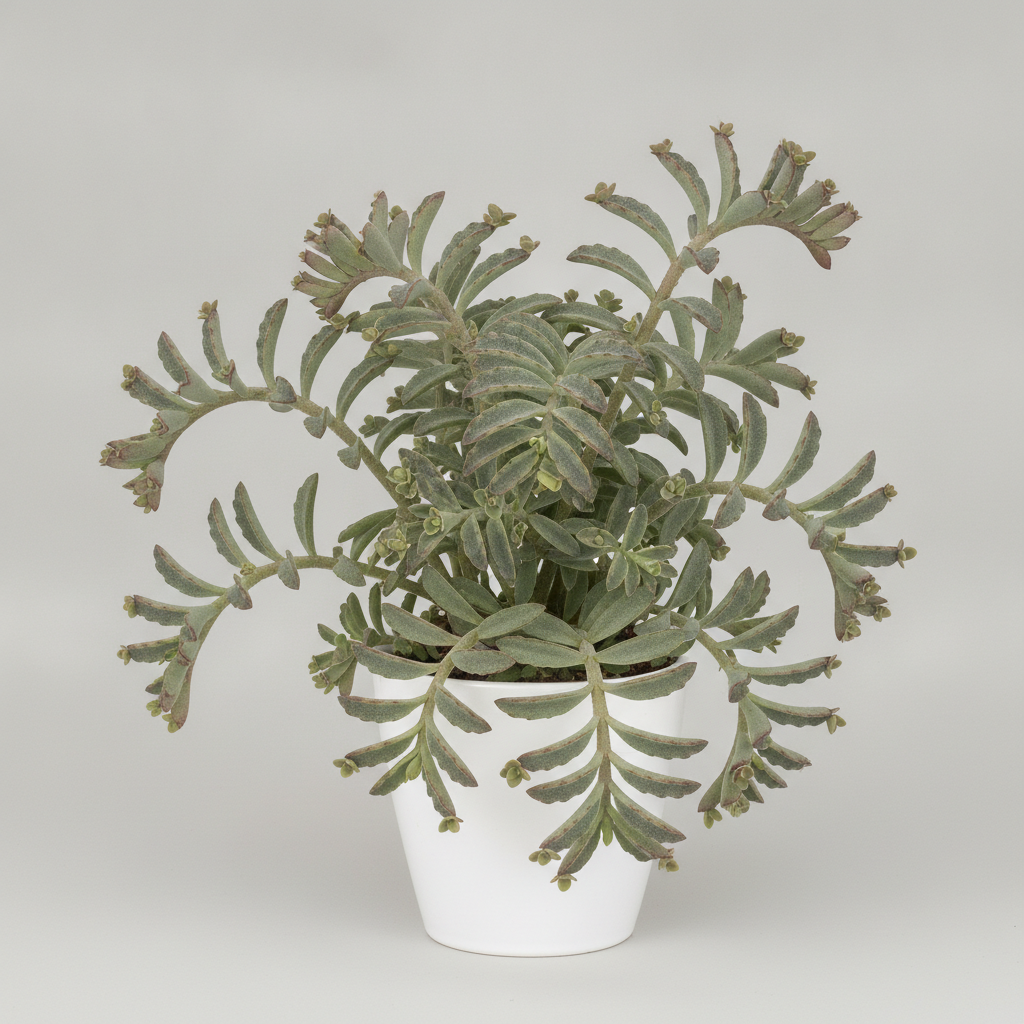
Cut-Leaf (var. dissecta)
A striking departure from the rounded species, this form carries grey-green leaves deeply cut into slender, finger-like lobes edged in dusky red. It has the same walking habit but a far more architectural, almost ferny silhouette that stands out in any succulent grouping.
‘Big Momma’
Selected for size and colour, ‘Big Momma’ produces oversized, silvery-blue paddle leaves with intense red-purple margins and a heavy powdery bloom. Grown in strong light it is one of the most colourful forms available, and its bold leaves make a real statement on a sunny sill.
Variety Profiles in Detail
Species Type (Kalanchoe synsepala)
The plant most people mean by walking kalanchoe. It forms a low rosette of rounded, spoon-shaped grey-green leaves that flush red along the margins in good light, and it is the most vigorous and freely walking of the forms. As the easiest to find and grow, it is the ideal starting point.
Variegated Walking Kalanchoe (Kalanchoe synsepala variegata)
An uncommon collector’s form in which the grey-green leaves are marbled and streaked with cream. The variegation reduces the leaf’s total chlorophyll, so it grows more slowly and needs bright light to keep its markings crisp, but a well-grown plant is quietly beautiful.
Choosing the Right Variety for Your Space
For a first plant, or for a bright, hot sill where you want reliable colour and plenty of plantlets to share, the species type is the obvious pick. If you already grow the species and want something more unusual, the cut-leaf form offers a completely different leaf shape, while ‘Big Momma’ delivers the boldest colour. Whatever you choose, the care is identical, so let looks and availability guide the decision.
Frequently Asked Questions
Why is my walking kalanchoe called a walking plant?
The name comes from its habit of sending out slender runners tipped with rooted baby plants. Where each plantlet touches down it establishes itself and the connecting stem withers, so the plant slowly steps outward and colonises new ground, appearing to walk across the surface it grows on.
Is walking kalanchoe safe for cats and dogs?
No. Like all kalanchoes it contains cardiac glycosides that are toxic to cats, dogs and other animals if eaten, causing drooling, vomiting and, in serious cases, heart problems. Keep it well out of reach of pets, and contact a vet promptly if you suspect an animal has chewed on it.
Why is my walking kalanchoe stretching and turning green?
Both are classic signs of too little light. Starved of sun the plant loosens its rosette, spaces out its leaves and withdraws the protective pigments that give it silver bloom and red margins, fading to plain green. Move it to your brightest window or add a grow light and the new growth will tighten and colour up again.
How often should I water it?
Only when the soil has dried out completely, which usually means every 10 to 14 days in spring and summer and every three to four weeks in winter. Rather than counting days, check the soil to the bottom of the pot and water only when it is fully dry. When unsure, wait; this plant tolerates drought far better than wet feet.
Does walking kalanchoe flower indoors?
It can. Mature, well-lit plants may throw up a tall stem of small bell-shaped pink or salmon flowers, usually in late winter or spring. The individual rosette that flowers often declines afterwards, but by then it will have produced plenty of plantlets and offsets to carry on, so the plant as a whole continues happily.
How do I propagate the little plantlets?
Wait until a plantlet has small roots of its own, snip it from the runner, and settle it onto dry, gritty succulent mix in a small pot. Keep it in bright, indirect light and delay the first watering by a few days. Rooting is quick and reliable, which makes this one of the easiest of all succulents to multiply.
Why are the leaves going soft and mushy?
Soft, translucent or mushy leaves almost always mean overwatering. The roots are sitting in soil that stays wet too long and beginning to rot. Let the plant dry out fully, check that the pot drains freely, and if the stem base has blackened, cut back to firm tissue and re-root the healthy parts in dry mix.
Can I grow walking kalanchoe outdoors?
Only in frost-free climates, roughly hardiness zones 10 and above, where it can live outside year round in a bright, well-drained spot. In cooler regions it can spend the summer outdoors in a sunny position but must come inside before temperatures drop below about 10 degrees Celsius (50 Fahrenheit), as it has no tolerance for frost.






