
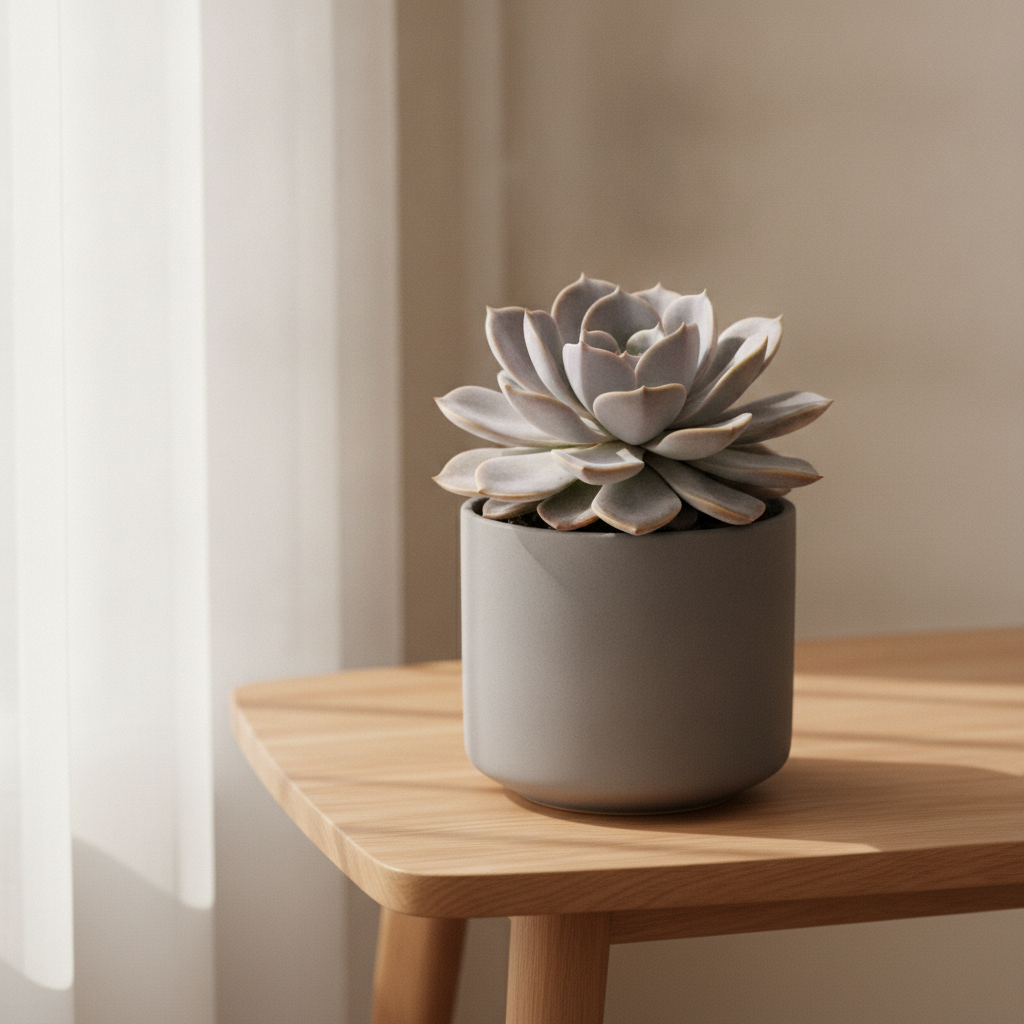
Few succulents look quite so much like carved stone as the ghost echeveria. Its broad, spoon-shaped leaves are the colour of a winter dawn, a pale silvery lilac that seems to glow faintly in low light, and the whole rosette is dusted in a fine powdery bloom that softens every edge. Echeveria lilacina is one of the calmer members of a famously showy genus, growing slowly and holding a tidy, symmetrical form rather than stretching or sprawling. It rewards the grower who understands one simple truth about it: this is a desert cliff plant that would far rather be kept a little too dry than a little too wet. Get the light and the drainage right, resist the urge to fuss, and it will thicken into a serene, almost architectural rosette that anchors a windowsill for years.
Quick Reference
| Common names | Ghost echeveria, ghost plant echeveria, Mexican hens and chicks |
| Botanical name | Echeveria lilacina |
| Family | Crassulaceae |
| Origin | Limestone cliffs and rocky slopes of Nuevo León, north-eastern Mexico |
| Mature size | Rosette 15 to 20 cm (6 to 8 in) across, up to 12 cm (5 in) tall |
| Light | Very bright light, including several hours of direct sun |
| Water | Soak thoroughly, then allow the soil to dry out completely |
| Soil | Gritty, sharply draining mineral mix |
| Temperature | 18 to 27 degrees C (64 to 81 degrees F); protect from frost |
| Humidity | Low; average dry room air is ideal |
| Feeding | Weak, occasional feed in spring and summer only |
| Toxicity | Non-toxic to cats, dogs and people |
| Difficulty | Easy, provided drainage and light are correct |
Why the Ghost Echeveria Makes a Rewarding Houseplant
The appeal of Echeveria lilacina begins with its colour, which is genuinely unusual among houseplants. Most succulents read as green, blue-green or grey, but the ghost echeveria carries a soft lilac undertone that shifts with the seasons and the strength of the light. In cool, bright winter conditions the leaves deepen toward pinkish mauve, while summer growth tends to settle into a paler pewter silver. This colour is not pigment in the ordinary sense but the effect of a waxy powder called farina, a natural bloom the plant produces to reflect fierce sunlight and reduce water loss on its native cliffs. The farina is what gives the rosette its ghostly, matte finish, and protecting it is one of the small disciplines of growing this plant well.
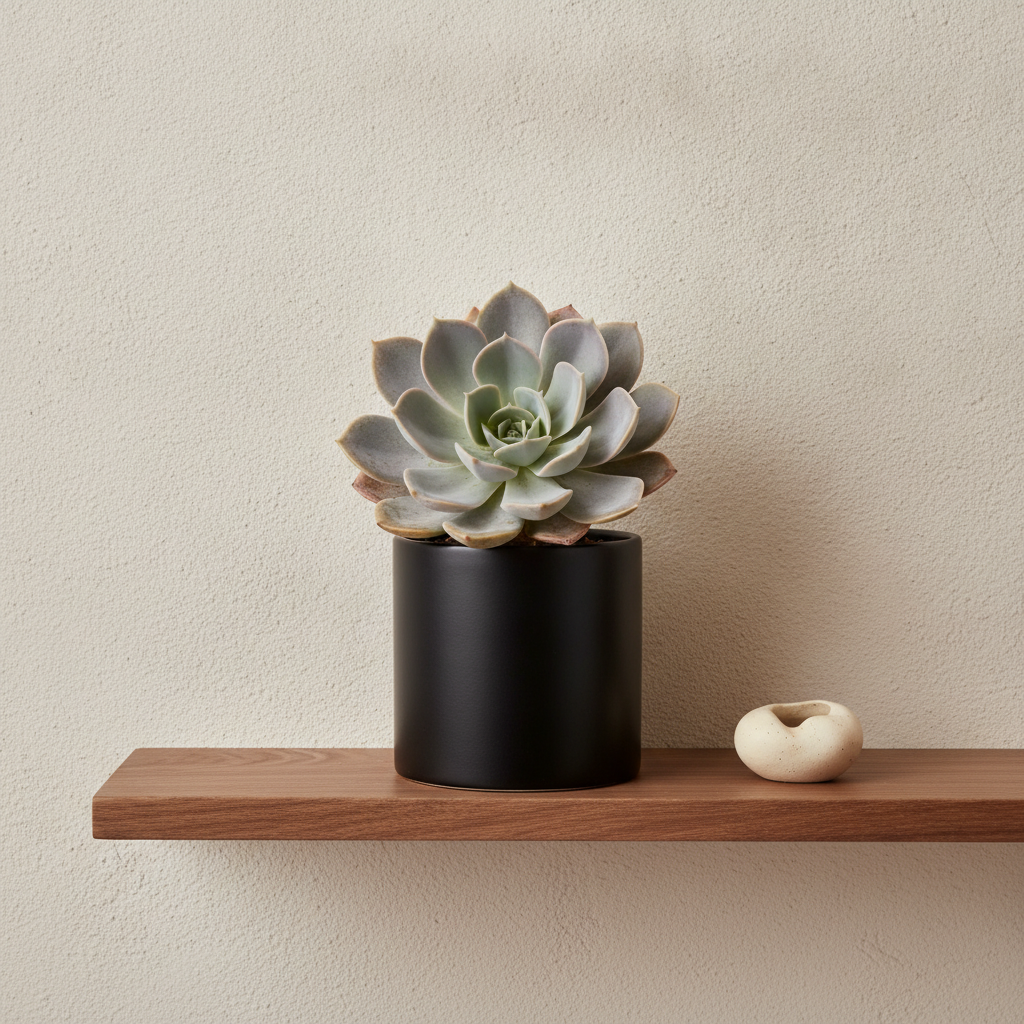
Beyond looks, the ghost echeveria is forgiving in the ways that matter most to a busy household. It stores water in its thick leaves, so it copes gracefully with the occasional missed watering and actively prefers a grower who forgets it now and then. It stays small and slow, meaning it will not outgrow its spot or demand frequent repotting, and it is entirely non-toxic, which removes any worry in homes with curious pets or children. In late winter or early spring a mature plant sends up a gently arching stalk of coral-pink to salmon flowers, small nodding bells that last for weeks and draw the eye without dominating the plant. Where many echeverias flower and then push out messy offsets, E. lilacina keeps its composure, remaining a clean solitary rosette for much of its life.
The difference between merely surviving and truly thriving with this species comes down to habit. A ghost echeveria that is surviving sits in the wrong pot, in soft light, watered on a schedule, and it slowly etiolates into a pale stretched thing with a bare stem and widely spaced leaves. A ghost echeveria that is thriving sits in a gritty pot in the brightest window you can offer, watered only when bone dry, and it draws its leaves into a tight, cupped, densely stacked rosette with rich lilac tones. Everything that follows in this guide is aimed at the second outcome.
Light
Light is the single most important factor in growing a shapely ghost echeveria, and it is the one most often supplied in short measure. On the limestone slopes of Nuevo León this plant grows fully exposed, taking the brunt of the Mexican sun, and it carries that appetite for brightness indoors. A position that feels merely bright to the human eye is frequently too dim for E. lilacina, which responds to insufficient light by stretching. The rosette loses its tight geometry, the central leaves reach upward and apart, and the stem elongates and bares itself, a condition known as etiolation that cannot be reversed once it has happened.
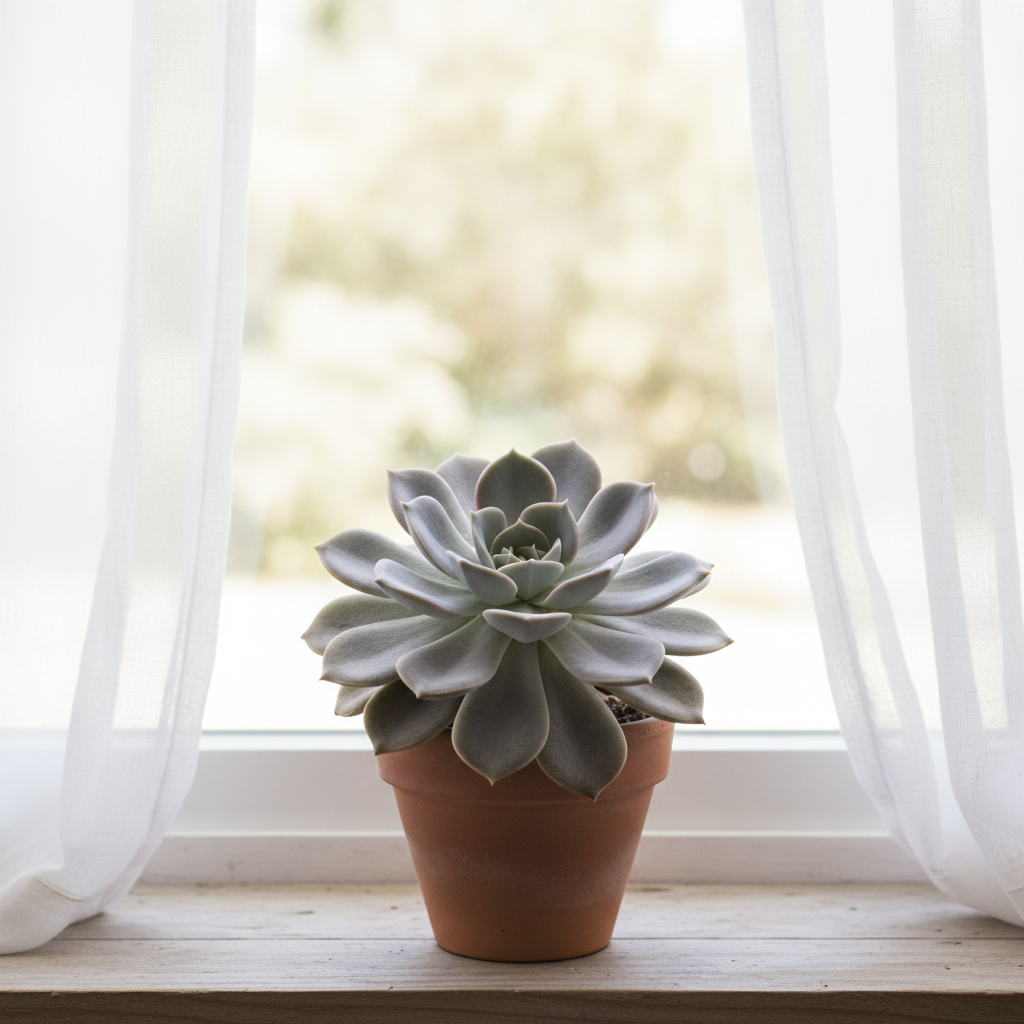
Indoors, aim for the brightest window in the home. A south-facing or west-facing sill in the northern hemisphere is ideal, delivering several hours of direct sun that the plant will happily absorb. East-facing windows can work if the morning light is strong and unobstructed, while north-facing rooms are almost always too weak to hold the rosette compact. The farina offers real protection against sunburn, so acclimatised plants tolerate direct glass-filtered sun without scorching, but a plant that has spent months in dim conditions should be reintroduced to strong light gradually over a week or two to avoid bleaching or brown patches on the leaf surface.
Colour is the clearest signal the plant gives you. Under generous light the leaves flush with lilac and rose tones and the rosette stays low and cupped. Under weak light the colour drains toward a flat pale green and the plant opens up and reaches. If you notice this stretching beginning, move the plant closer to the glass at once, and consider supplementing with a full-spectrum LED grow light during the short days of winter, positioned roughly 20 to 30 cm (8 to 12 in) above the rosette for twelve to fourteen hours a day. Turning the pot a quarter rotation each week keeps growth even, since the rosette will otherwise lean noticeably toward the light source.
Pro Tip — Reading the rosette: The gap between the leaves is your light meter. Tightly overlapping leaves mean the light is right; visible spacing between the leaves and a lengthening centre mean the plant is asking to be moved brighter, immediately.
Watering
If light shapes the ghost echeveria, water is what most often kills it. Echeveria lilacina is adapted to long dry spells punctuated by heavy seasonal rain, and it thrives on the same rhythm indoors: a thorough soak followed by a complete dry-out. The method matters as much as the frequency. When you water, water generously, letting moisture run right through the pot until it drains from the bottom, which wets the entire root ball and flushes out accumulated mineral salts. Then wait, and keep waiting, until the soil is dry all the way to the base of the pot before watering again. Pushing a wooden skewer to the bottom and checking that it comes out clean and dry is a more reliable test than the surface, which dries long before the core does.
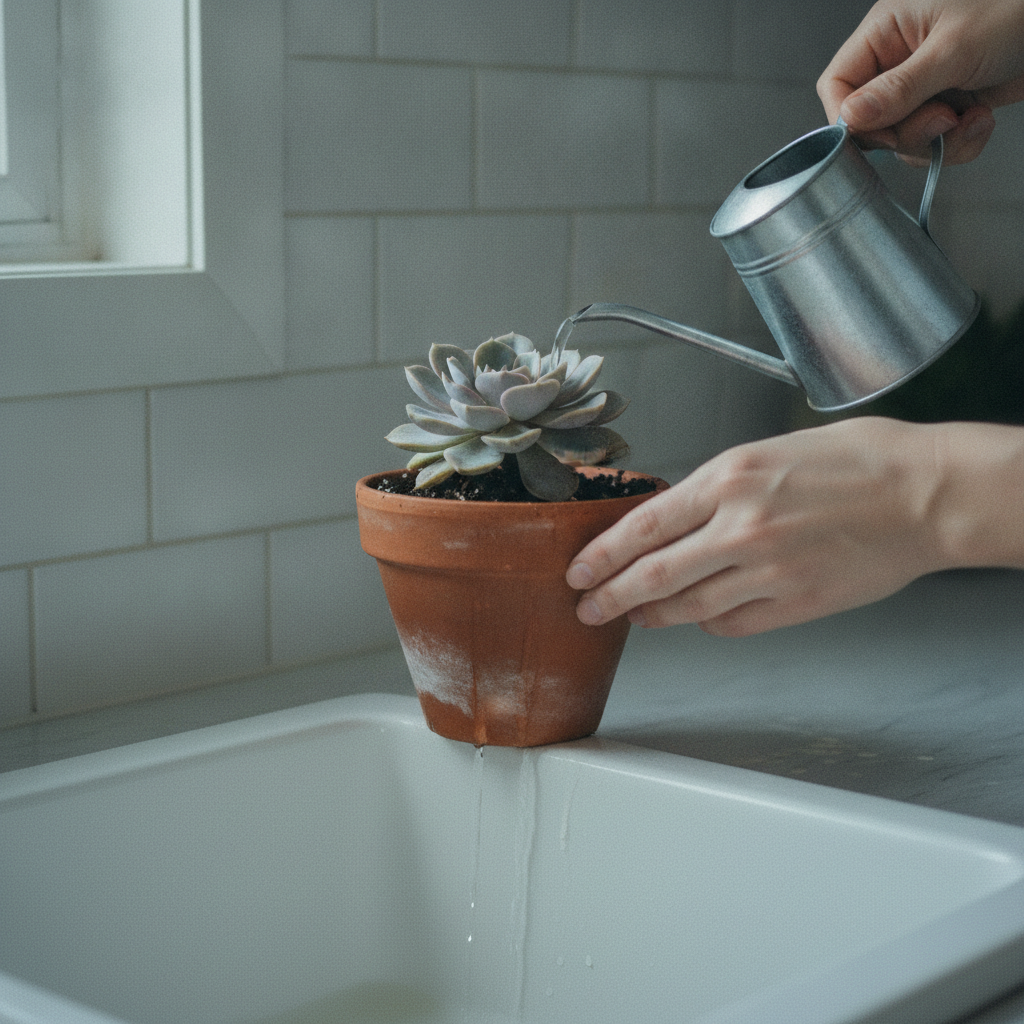
How long that dry-out takes depends entirely on conditions. In warm, bright summer weather a small pot may dry within four or five days, while in the cool dark of midwinter the same pot might hold moisture for three or four weeks. This is why watering to a calendar is so dangerous with succulents: the plant does not care what day it is, only how wet its roots are. Learn to judge by weight, lifting the pot to feel how heavy it is, and by the leaves, which grow plump and firm when well hydrated and take on a subtle softness or slight wrinkling at the base when genuinely thirsty. A slightly under-watered ghost echeveria recovers within a day of a drink; an over-watered one rots from the inside and is often beyond saving before the damage shows.
Direct the water at the soil rather than over the rosette. Water pooling in the tight central cup encourages rot and, just as importantly, disturbs the farina, leaving permanent marks and bare patches where the powder has been washed away. For this reason bottom watering, standing the pot in a shallow dish of water for ten to fifteen minutes until the surface darkens, suits this plant particularly well and keeps the leaves pristine. Whichever method you use, never leave the pot sitting in a saucer of standing water, and empty any excess promptly. Through the depths of winter, when growth all but stops, reduce watering to the barest minimum needed to keep the leaves from shrivelling, perhaps once a month or even less.
Warning — The rot line: Blackening or translucent, mushy leaves at the base of the rosette signal advanced root rot from overwatering. Act fast: unpot the plant, cut away all soft tissue with a clean blade, let the healthy remainder callus for several days, and restart it in dry gritty mix.
Soil and Potting
The right soil does half the work of watering for you. A ghost echeveria needs a substrate that drains almost instantly and holds very little water against the roots, mimicking the loose, mineral-rich rubble of its native cliffs. Ordinary houseplant compost, even so-called cactus compost from a supermarket, is usually far too rich and moisture-retentive on its own and is the hidden cause of many succulent deaths. The reliable approach is to build a gritty mix that is roughly half mineral grit and half organic matter: one part coir or a peat-free compost combined with one part coarse material such as pumice, perlite, or fine horticultural grit. The result should feel chunky and free-running, not smooth and spongy, and water poured onto it should vanish through in seconds.
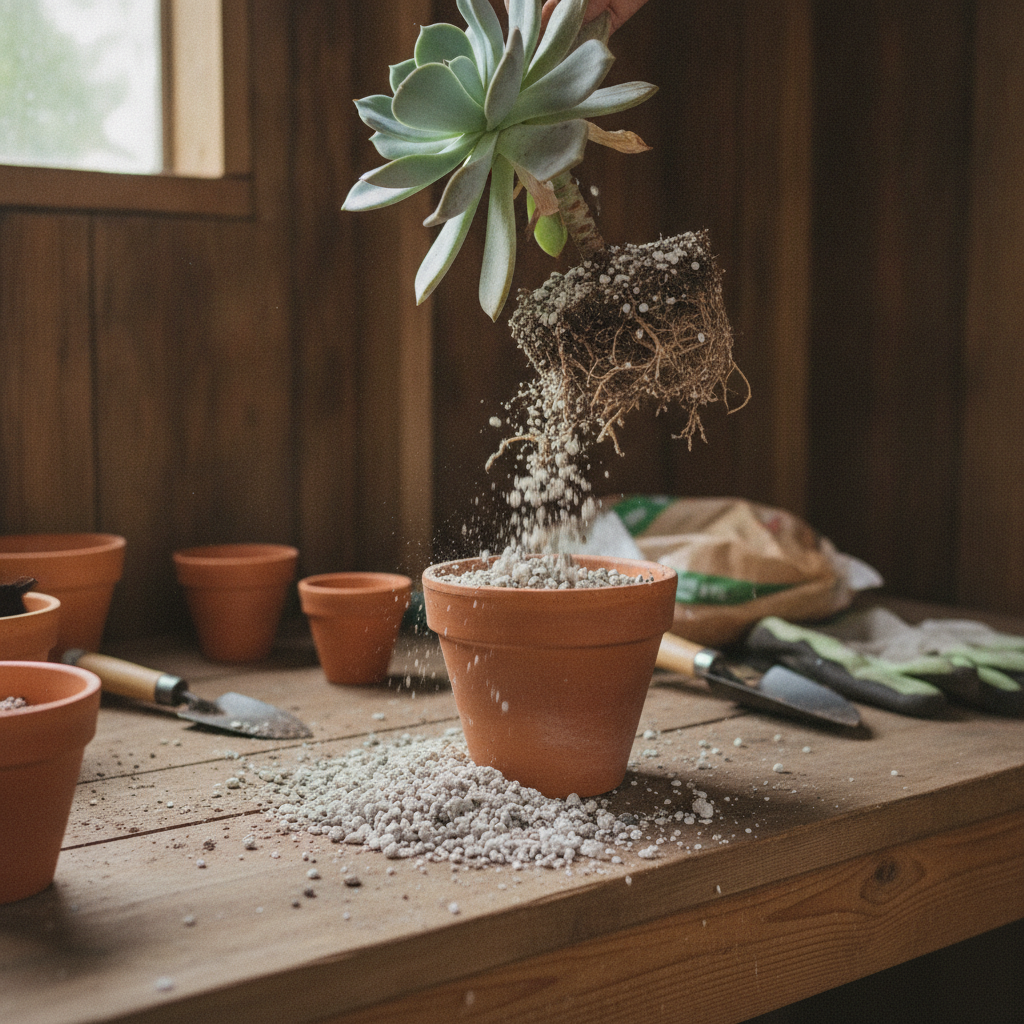
The pot matters as much as its contents. Choose one with a generous drainage hole, and favour terracotta over plastic or glazed ceramic, since the porous clay wicks moisture from the soil and breathes, speeding the crucial dry-out between waterings. Size the pot snugly to the rosette; a container only slightly wider than the plant dries far faster than an oversized one, and a large volume of damp soil around a small root system is an invitation to rot. Because the ghost echeveria grows slowly, it needs repotting only every two or three years, ideally in spring at the start of the growing season.
When you do repot, let the plant dry out first so the root ball loosens cleanly, then tease away the old spent soil and inspect the roots, trimming any that are black or mushy. Settle the plant into fresh mix at the same depth it grew before, taking care not to bury the lower leaves, and resist the temptation to water it in straight away. Waiting five to seven days after repotting allows any roots damaged in the process to callus over, which greatly reduces the risk of rot entering through fresh wounds. Handle the plant by the pot or the root ball rather than the leaves throughout, both to avoid snapping the brittle foliage and to preserve the powdery bloom.
Fertilising
The ghost echeveria is a light feeder by nature, drawing a meagre living from thin mineral soils, and it is far happier underfed than overfed. Too much fertiliser pushes soft, rapid growth that dilutes the plant’s colour, loosens the tight rosette, and leaves the tissue vulnerable to rot and pests. A little feeding during the active season does encourage steady growth and better flowering, but the emphasis must always be on restraint. Feed only from spring through to late summer, while the plant is visibly growing, and stop entirely in autumn and winter when it rests.
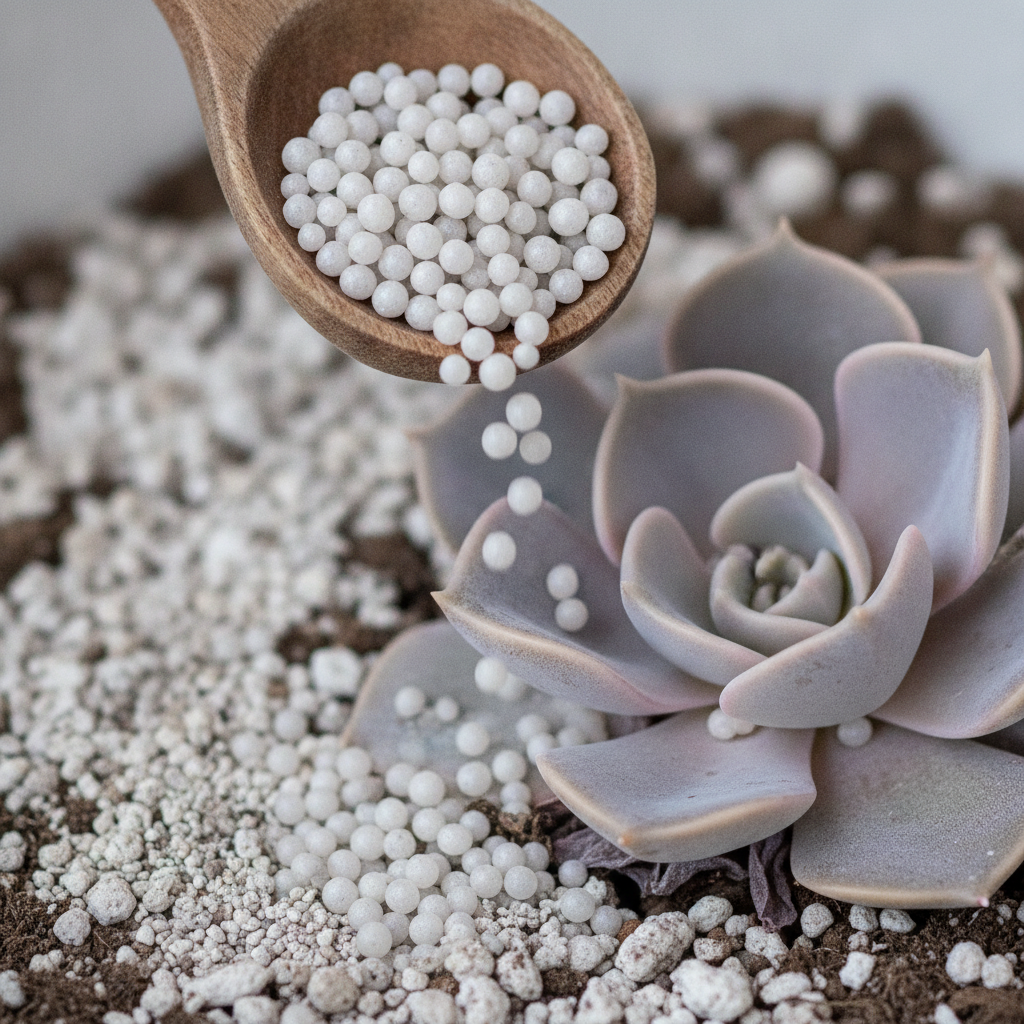
The simplest approach is a balanced liquid houseplant fertiliser diluted to a quarter or at most half of the strength recommended on the label, applied perhaps once a month during watering. A dedicated cactus and succulent feed, which is lower in nitrogen and higher in potassium and phosphorus, suits the plant even better, favouring firm growth and flower production over leafy softness. Always apply liquid feed to already-moist soil rather than dry soil, since fertiliser salts applied to parched roots can scorch them. Alternatively, a small pinch of slow-release granules worked into the soil surface once at the start of spring will supply a gentle background feed across the whole season with no further effort.
A newly potted plant in fresh mix needs no feeding for its first several months, as the new substrate already carries enough nutrients to see it through. If you are ever in doubt about whether to feed, the answer for this species is almost always to skip it. A ghost echeveria kept lean, bright and dry will outshine a pampered, well-fed one every time, holding its compact form and its lilac colour where the overfed plant sprawls into pale, sappy growth.
Propagation
Propagating the ghost echeveria is a slow but genuinely satisfying process, and there are three practical routes: leaf cuttings, offsets, and the beheading of a stretched plant. Of these, leaf propagation is the most abundant, since a single healthy plant offers dozens of potential new rosettes. To take a leaf, choose a plump, healthy one from low on the rosette and remove it with a gentle sideways wiggle, making sure you take the entire leaf cleanly at the base, including the tiny growth point where it joins the stem. A leaf that tears part-way will not root, so patience at this step pays off.
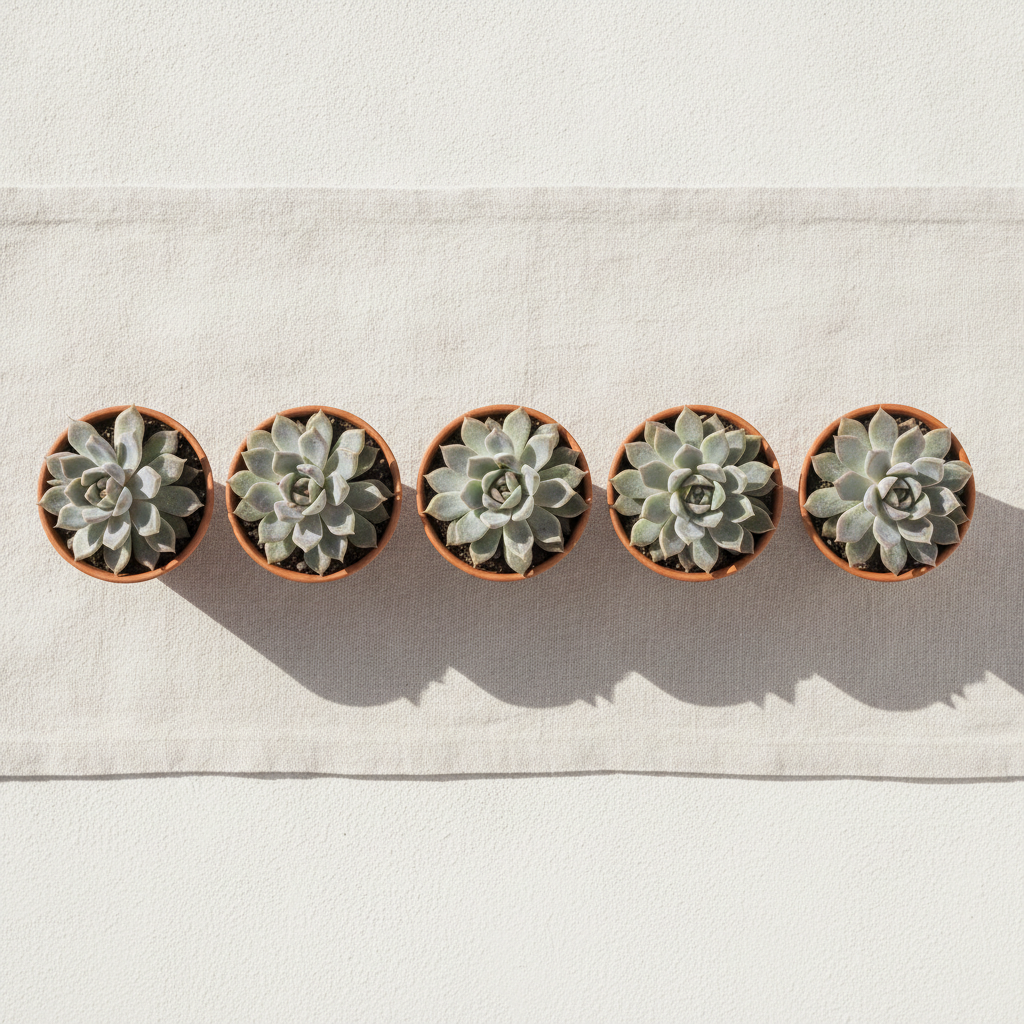
Lay the detached leaves on top of dry gritty mix in a bright spot out of harsh direct sun and simply leave them alone for a few days to callus over at the cut end. After that, a light misting of the soil surface every few days, rather than a soak, is enough to coax roots and a miniature rosette from the base of the leaf over the following weeks. The parent leaf gradually shrivels as it feeds the new plantlet, and once it has withered away entirely the young rosette can be potted on. This whole cycle unfolds over several months, so treat it as a long game rather than a quick win.
Offsets are the second route, though E. lilacina is more sparing with them than many echeverias. When a mature plant does produce a small pup at its base, wait until it has developed a few roots of its own, then separate it with a clean cut, allow the wound to callus for a day or two, and pot it into its own small container. The third method, beheading, doubles as a rescue for a plant that has etiolated in poor light: sever the leggy rosette with a clean blade leaving a short stem, let it callus, and replant the top, which will root and reform as a compact rosette, while the remaining stump often flushes new offsets from its base.
Pro Tip — Dry is safe: Every propagation method for this plant depends on letting cut surfaces callus before they touch moisture. Rushing wet soil onto a fresh wound is the fastest way to lose the whole attempt to rot.
Pests and Problems
A ghost echeveria grown in bright light and gritty soil is a robust plant, and most of the trouble it runs into is cultural rather than biological. That said, a few pests do seek it out. Mealybugs are the most common, appearing as small white cottony tufts tucked into the tight leaf axils at the centre of the rosette, where they are easy to miss until a colony has established. Root mealybugs, their subterranean cousins, hide in the soil and on the roots and reveal themselves as a white powdery residue when the plant is unpotted. Aphids sometimes cluster on the soft flower stalks in spring, and in rare cases sap-sucking scale insects attach to the leaves as small brown bumps.
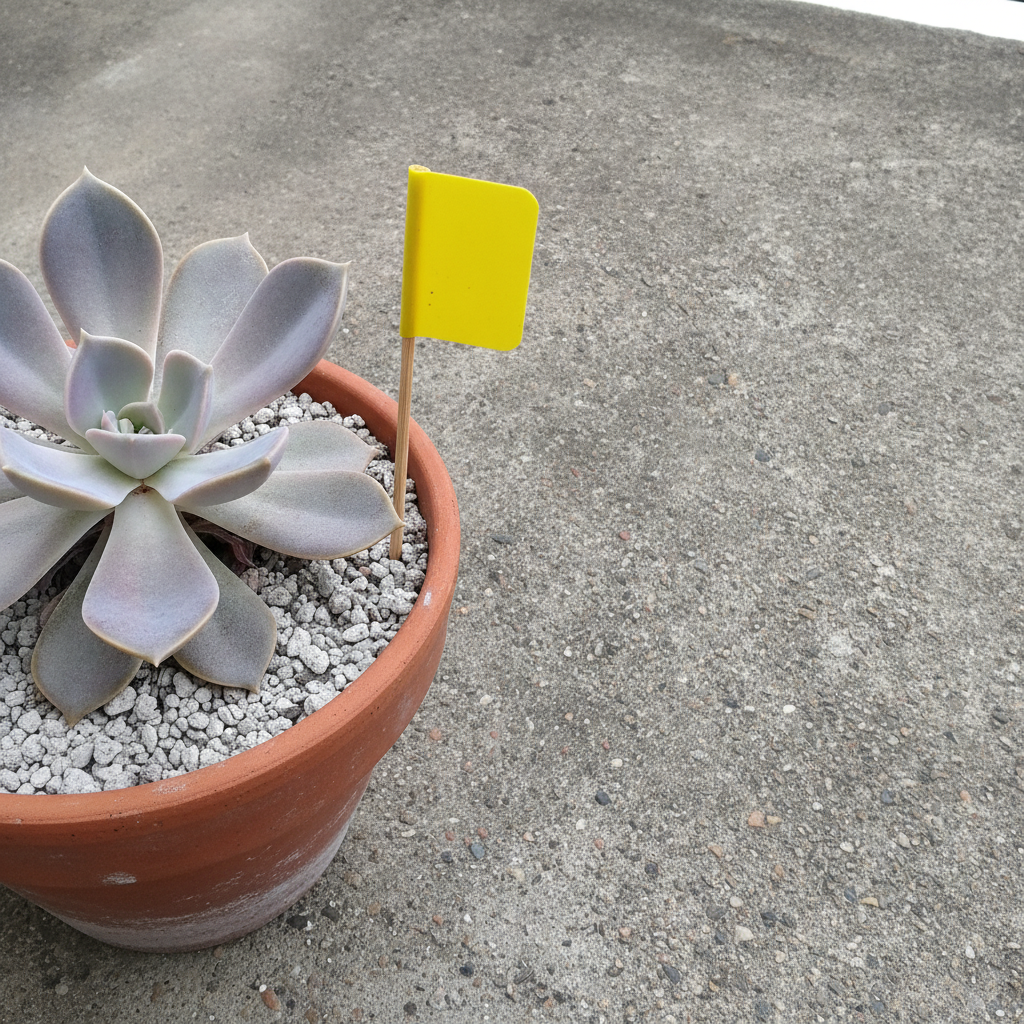
For a light mealybug infestation, dab each insect directly with a cotton bud dipped in isopropyl alcohol, which kills on contact, and repeat every few days until no new ones appear. A heavier outbreak may call for a systemic insecticide or repeated treatment with a horticultural soap or neem solution, though take care spraying oils onto the farina, as they can mark the powdery bloom just as water does. Suspected root mealybugs are best dealt with by unpotting the plant, washing the roots clean, discarding the old soil entirely, and repotting into fresh mix. Whenever you bring home a new succulent, keep it apart from your others for a couple of weeks, since mealybugs travel easily between plants.
The gravest problems, though, come not from insects but from water. Overwatering causes root and stem rot, showing first as yellowing, translucent or blackened leaves at the base that turn soft and mushy, and by the time it is visible the damage is often severe. The remedy is to unpot immediately, cut away every trace of rotten tissue, let the plant dry and callus, and restart it in dry gritty mix, treating whatever remains as a large cutting. At the milder end, a plant kept too dark stretches and pales, and one moved too suddenly into fierce sun can develop scorched brown patches. A few lower leaves shrivelling and dropping now and then is entirely normal, the plant’s natural way of shedding its oldest foliage, and is no cause for concern.
Varieties and Related Plants
The ghost echeveria is a distinctive species in its own right, but its calm colouring and reliable habit have made it a favoured parent in succulent breeding, and several of its hybrids are as widely grown as the species itself. Two in particular are worth knowing, both inheriting the pale, powdery, lilac-toned character that makes E. lilacina so recognisable while adding their own qualities.
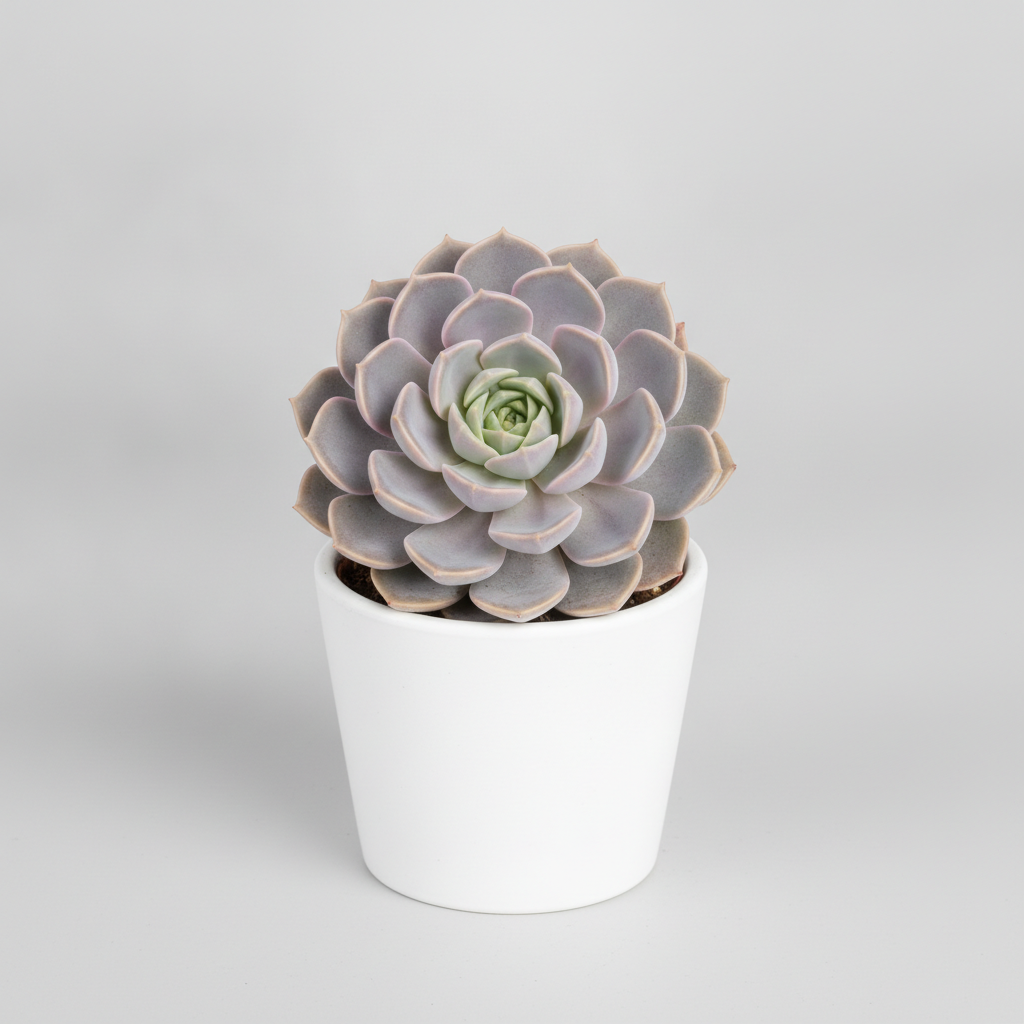
A celebrated hybrid of Echeveria lilacina and Echeveria derenbergii, ‘Lola’ is prized for its almost impossibly perfect symmetry. It forms a tight, tidy rosette of smooth pale lilac-grey leaves finished with a pearly farina and delicate soft-pink margins. Its care is identical to the species: bright light, gritty soil and a strict soak-and-dry regime.
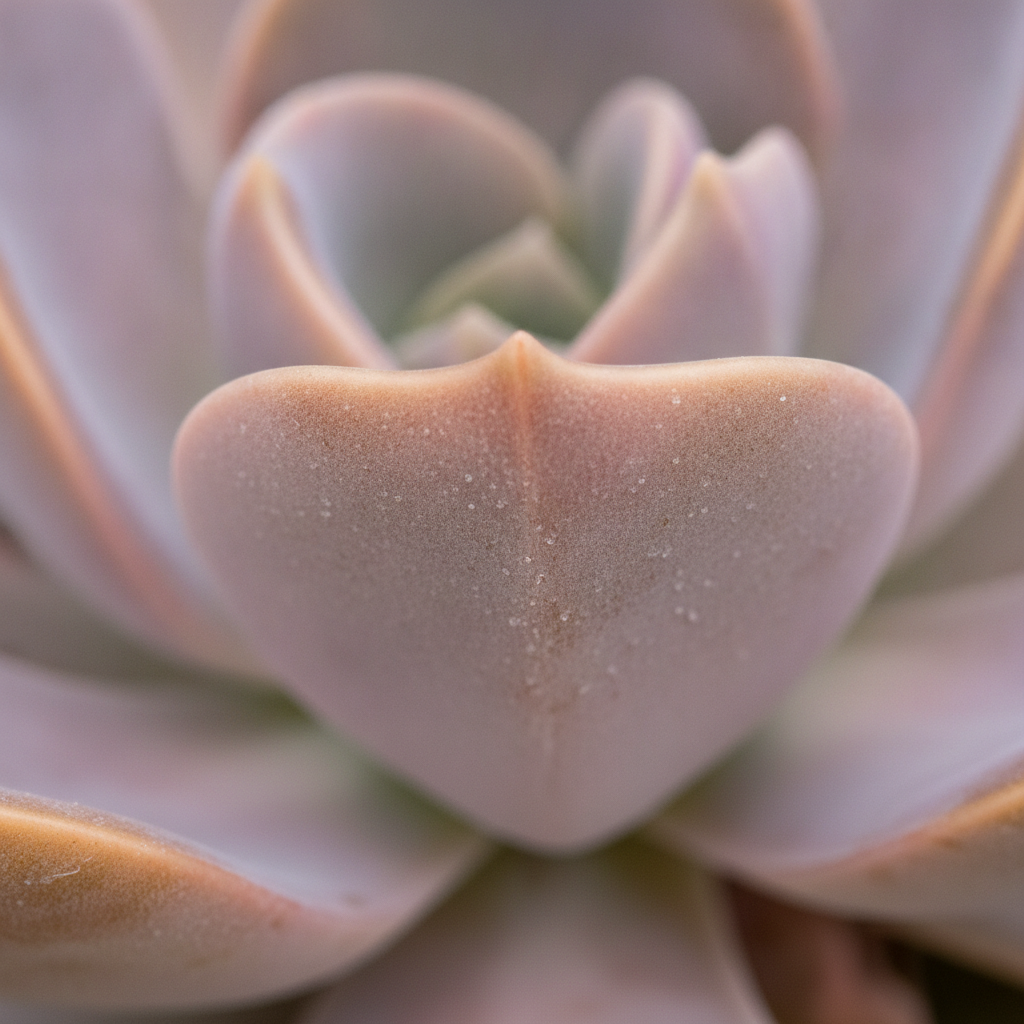
An intergeneric cross carrying lilacina influence, ‘Fred Ives’ forms a much larger, open rosette of broad leaves that shift from lilac-bronze to warm peach, apricot and pink in strong light. Vigorous and generous with offsets, it is one of the easiest showy succulents to grow and a natural companion to the ghost echeveria.
Beyond these named hybrids, the ghost echeveria sits comfortably alongside the wider world of rosette-forming echeverias and their relatives, from the blue-grey Echeveria elegans to the many powdery pastel cultivars now available. All share the same essential needs, which makes them easy to grow together as a collection: pack them into a shallow, gritty, well-drained arrangement in the brightest light you have, water them all on the same soak-and-dry rhythm, and their differing colours and forms will play off one another beautifully.
Frequently Asked Questions
Why is my ghost echeveria stretching and losing its shape?
This is etiolation, and it is caused by insufficient light. The plant reaches toward the nearest light source, spacing out its leaves and lengthening its stem. It cannot be reversed on the existing growth, so move the plant to the brightest window you have straight away to prevent it worsening. If the stem has already bared significantly, behead the compact top, let it callus and replant it, and it will reform as a tidy rosette.
The powdery coating has rubbed off in places. Will it grow back?
The farina on an individual leaf does not regenerate once it has been touched or washed away, so fingerprints and water marks on established leaves are permanent. New leaves that the plant produces will carry a fresh, unblemished bloom, so over time the marked leaves are replaced from the centre outward. Handle the plant by the pot and water at the soil to keep the coating intact.
How often should I water my ghost echeveria?
There is no fixed schedule; water only when the soil has dried out completely to the bottom of the pot. In warm bright weather this may be every week or so, while in cool winter conditions it can stretch to once a month or less. Judge by the dryness of the soil and the firmness of the leaves rather than by the calendar, and always err on the side of leaving it too dry.
Is the ghost echeveria safe around cats and dogs?
Yes. Echeveria lilacina is non-toxic to cats, dogs and humans, so it is a safe choice for homes with pets and children. The leaves are brittle and easily snapped, however, so a spot out of reach protects the plant from curious paws as much as it protects the household.
My plant is sending up a tall stalk. What is it?
That is a flower stalk, and it is a good sign. Mature ghost echeverias bloom in late winter or spring, sending up a gently arching inflorescence hung with small coral-pink to salmon bell-shaped flowers that last for several weeks. Unlike some succulents, this species is not harmed by flowering, so you can simply enjoy the display and remove the spent stalk once it has finished.






