

Few succulents manage to be both architectural and playful, but the silver dollar vine pulls it off with a stem strung end to end in flat, coin-shaped leaves. Known botanically as Xerosicyos danguyi, it belongs to the cucumber and gourd family, Cucurbitaceae, which makes it a genuine oddity: a drought-hardy climbing succulent related to the vegetables in your fridge. Native to the hot, dry southwest of Madagascar, where it scrambles through spiny thicket in search of light, it has earned the affectionate nicknames “string of coins” and “dollar plant” for the round, silver-grey discs that line its wiry stems.
As a houseplant it has a reputation for being nearly indestructible, and that reputation is largely deserved. It stores water in its thick leaves and fleshy stems, shrugs off dry indoor air, and asks for very little beyond bright light and a pot that drains freely. Yet there is a meaningful gap between a silver dollar vine that merely survives on a neglected shelf and one that thrives into a lush, trailing or climbing specimen with plump, tightly spaced coins. This guide covers everything that separates the two, from the quirks of watering a Cucurbitaceae succulent to training its tendrils and propagating new plants from a single cutting.
Contents
- Quick Reference
- Why Silver Dollar Vine Makes a Rewarding Houseplant
- Light Requirements
- Watering & Humidity
- Soil, Potting & Repotting
- Fertilising
- Propagation
- Pests & Diseases
- Popular Varieties
- Frequently Asked Questions
Quick Reference: Silver Dollar Vine at a Glance
| Light | Bright light, including several hours of direct sun; the brightest spot you can offer indoors |
| Watering | Sparingly; soak thoroughly then let the mix dry out completely, roughly every 10 to 20 days in growth |
| Temperature | 15 to 27 degrees Celsius (59 to 81 degrees Fahrenheit); protect from anything below 10 degrees Celsius (50 degrees Fahrenheit) |
| Humidity | Low to average; thrives in dry air and needs no misting |
| Fertiliser | Dilute succulent feed once a month in spring and summer only |
| Toxicity | Not listed as toxic, but data is limited; best kept away from pets and children that may chew it |
Why Silver Dollar Vine Makes a Rewarding Houseplant
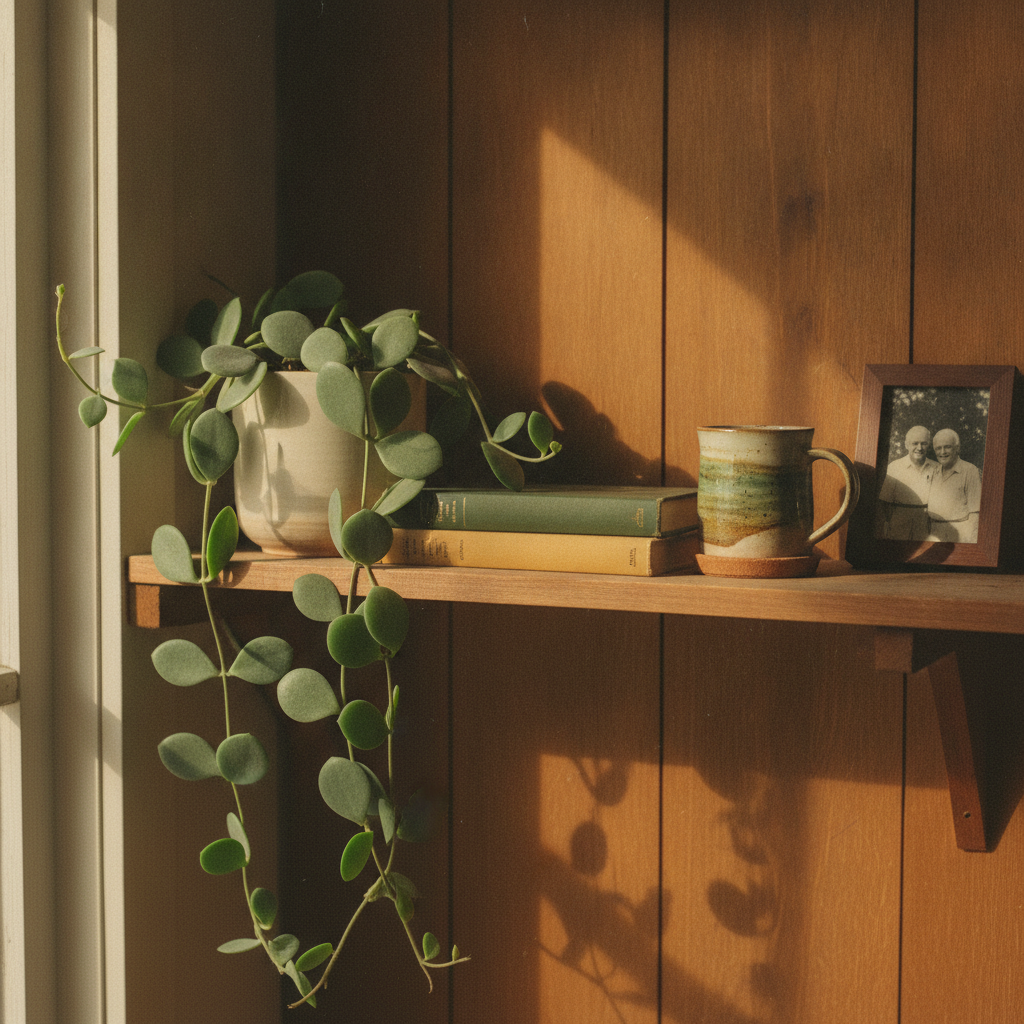
The appeal of Xerosicyos danguyi starts with its silhouette. Long, flexible stems carry near-circular leaves the size of a small coin, each one a soft, chalky grey-green with a faint blue cast from the powdery coating, called a bloom, that protects the surface from Madagascar’s fierce sun. Left to trail from a hanging pot the stems cascade in loose ropes, while given a trellis or moss pole they will climb, gripping with slender tendrils just as their cucumber cousins do. This dual habit means a single plant can be styled as a trailing specimen, a compact climber, or a sprawling table piece, depending on how you support it.
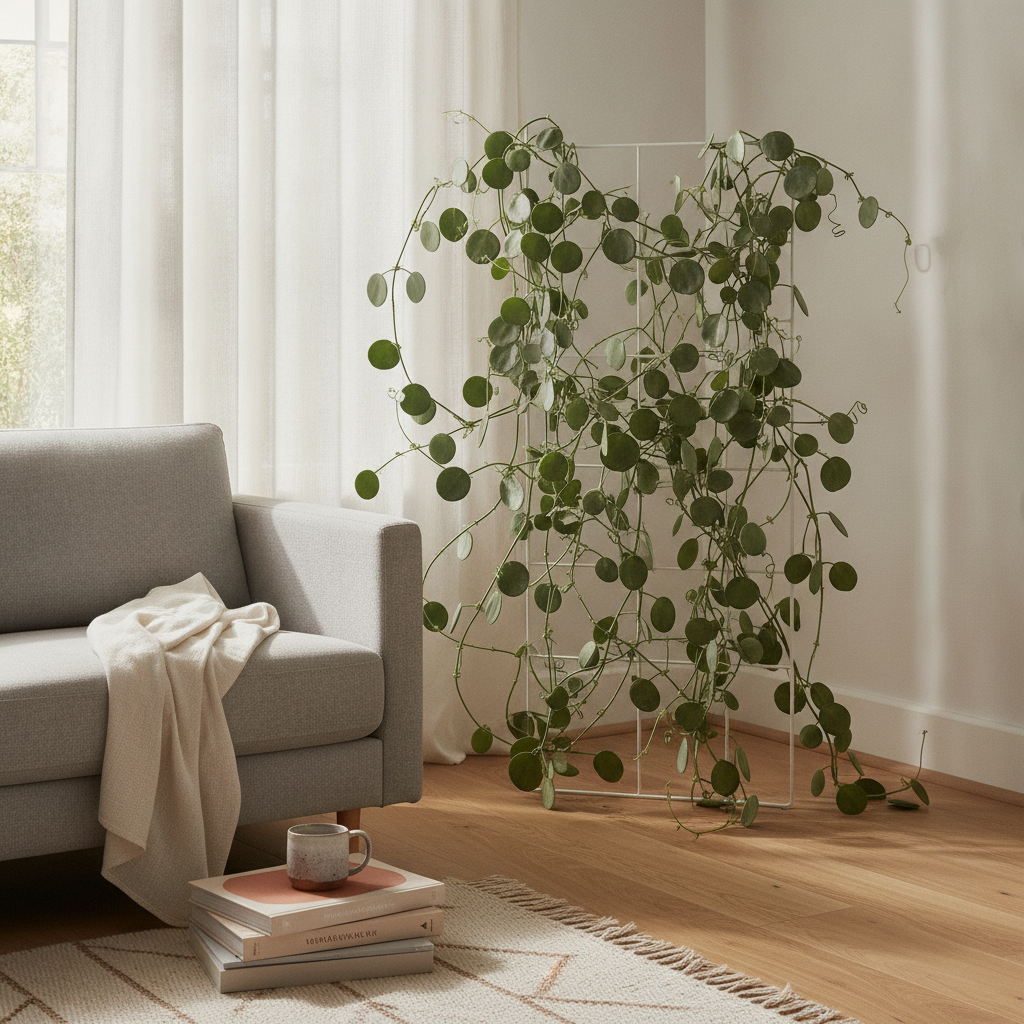
Beyond looks, it is one of the most forgiving succulents you can grow. Its water-storing leaves and stems buy it weeks of grace between waterings, making it ideal for frequent travellers or anyone still learning to read a plant’s thirst. It has no appetite for humidity, no fear of dry central heating, and no fussiness about being slightly pot-bound. The main way people fail with it is by treating it like a tropical foliage plant and keeping the soil damp, so the single most important shift in mindset is to think “desert” rather than “jungle”. Get that right and the silver dollar vine will reward you with steady growth and a long, largely trouble-free life.
Important — Toxicity: The silver dollar vine is not recorded on the major pet-poison registries, and no serious toxicity is documented. However, many plants in the gourd family contain bitter compounds called cucurbitacins, and reliable data for this species is limited. Treat it as potentially irritating if eaten, keep it out of reach of pets and small children, and contact a vet or doctor if a significant amount is chewed.
Light Requirements
Light is the single biggest lever you have over a silver dollar vine’s health, and this is a plant that genuinely wants a lot of it. In the wild it grows fully exposed to Madagascan sun, so indoors it will take as much brightness as your home can provide, including several hours of direct sun through glass. Insufficient light is the most common reason a plant looks disappointing: stems stretch, the gaps between leaves widen, and the coins shrink and lose their tight, overlapping arrangement.
The ideal position is directly in or very close to a bright window with unobstructed exposure. A few hours of gentle morning or late-afternoon direct sun keeps the leaves plump and closely spaced and encourages the silvery bloom that gives the plant its colour. Unlike many houseplants that are content with indirect light, the silver dollar vine treats “bright indirect” as a minimum rather than an ideal, so err always towards more light.
Light Levels Explained
Light indoors is measured in lux, and understanding the rough thresholds helps you match a spot to the plant. The table below sets out the common categories and what each means for a silver dollar vine specifically.
| Light Category | Approx. Level | Typical Location | Outcome |
|---|---|---|---|
| Direct sun | 20,000 lux and above | On a south or west sill against the glass | Excellent; compact growth and strong silvery colour |
| Bright indirect | 10,000 to 20,000 lux | Just back from a bright window | Good; acceptable but slightly looser growth |
| Medium | 5,000 to 10,000 lux | A metre or two from a window | Marginal; stems begin to stretch over time |
| Low | 1,000 to 5,000 lux | Interior wall or north corner | Poor; etiolation and leaf drop likely |
| Very low | Below 1,000 lux | Windowless room or deep interior | Unsuitable; the plant will decline |
Window Orientation and Placement
South-facing window: In the northern hemisphere this is the prime location, delivering the long, bright exposure the plant craves. Place it right on the sill. Only in the most intense midsummer heat behind glass might you need a very light sheer to prevent scorching on a plant that has not been acclimatised.
East-facing window: A good choice offering cooler morning sun followed by bright light. Growth stays compact here, though the plant may lean towards the glass, so rotate it every week or two for even shape.
West-facing window: Also excellent, providing strong afternoon sun. Because west light arrives when the day is at its warmest, watch for any signs of stress during heatwaves, but in most homes this is an ideal spot.
North-facing window: The weakest option and generally not enough on its own. A silver dollar vine on a north sill will survive for a while but slowly stretch and thin. If north light is all you have, plan to supplement it with a grow light.
Pro Tip — Read the Spacing: The distance between leaves is a live readout of your light levels. Tightly packed coins with short internodes mean the light is right. Long bare stretches of stem with widely spaced leaves mean the plant is reaching for brightness and needs to move closer to a window.
How Light Affects Leaf Colour and Form
The characteristic silvery blue-grey of the leaves is at its most pronounced in strong light, where the plant produces a generous protective bloom and holds its leaves flat and round. In dimmer conditions the coins tend to be a plainer, flatter green, the bloom is thinner, and the whole plant takes on a leggier, less sculptural appearance. If you are growing a variegated form, bright light is even more important, because the cream and yellow markings depend on ample light to develop and can fade or revert towards plain green in shade.
Warning — Direct Sunlight: Although this plant loves sun, a specimen grown in low light and then moved abruptly into blazing summer sun can scorch, developing bleached or brown patches on the leaves facing the glass. Increase exposure gradually over a week or two so the plant can build up its protective bloom before it faces full intensity.
Artificial Lighting
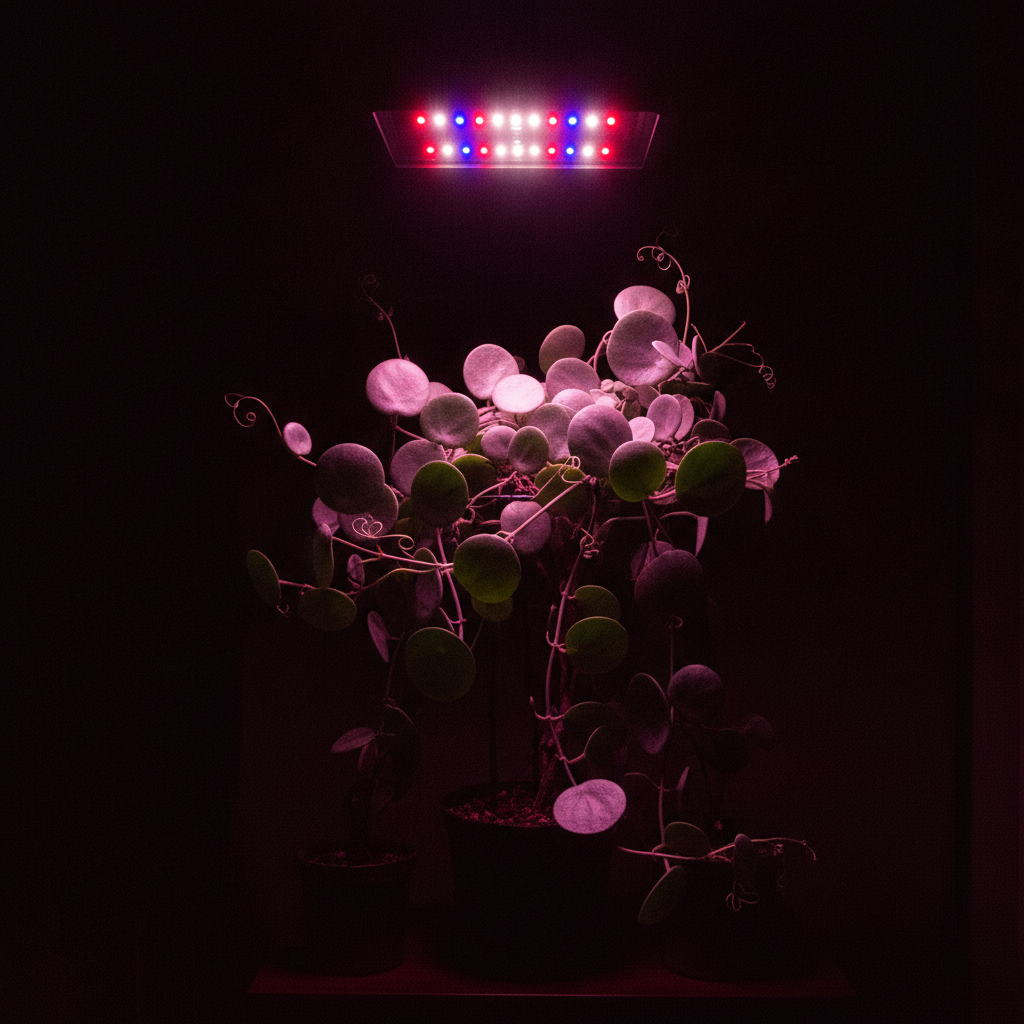
Because the silver dollar vine’s needs are so high, it responds very well to supplementary lighting in darker homes or through the short days of winter. A full-spectrum LED grow light positioned 20 to 30 centimetres (8 to 12 inches) above the plant and run for 10 to 12 hours a day will keep growth compact and colour strong. Grow lights are particularly worthwhile for anyone relying on north-facing windows, and they let you maintain a healthy plant in spots where daylight alone would cause stretching.
Seasonal Adjustments
As light weakens through autumn and winter, move the plant to your brightest available window and expect growth to slow or pause. This natural rest is healthy and coincides with the reduced watering described below. When the days lengthen again in spring, growth resumes; that is the moment to reintroduce feeding and, if the plant has stretched over winter, to consider a light prune to encourage denser new growth.
Watering & Humidity
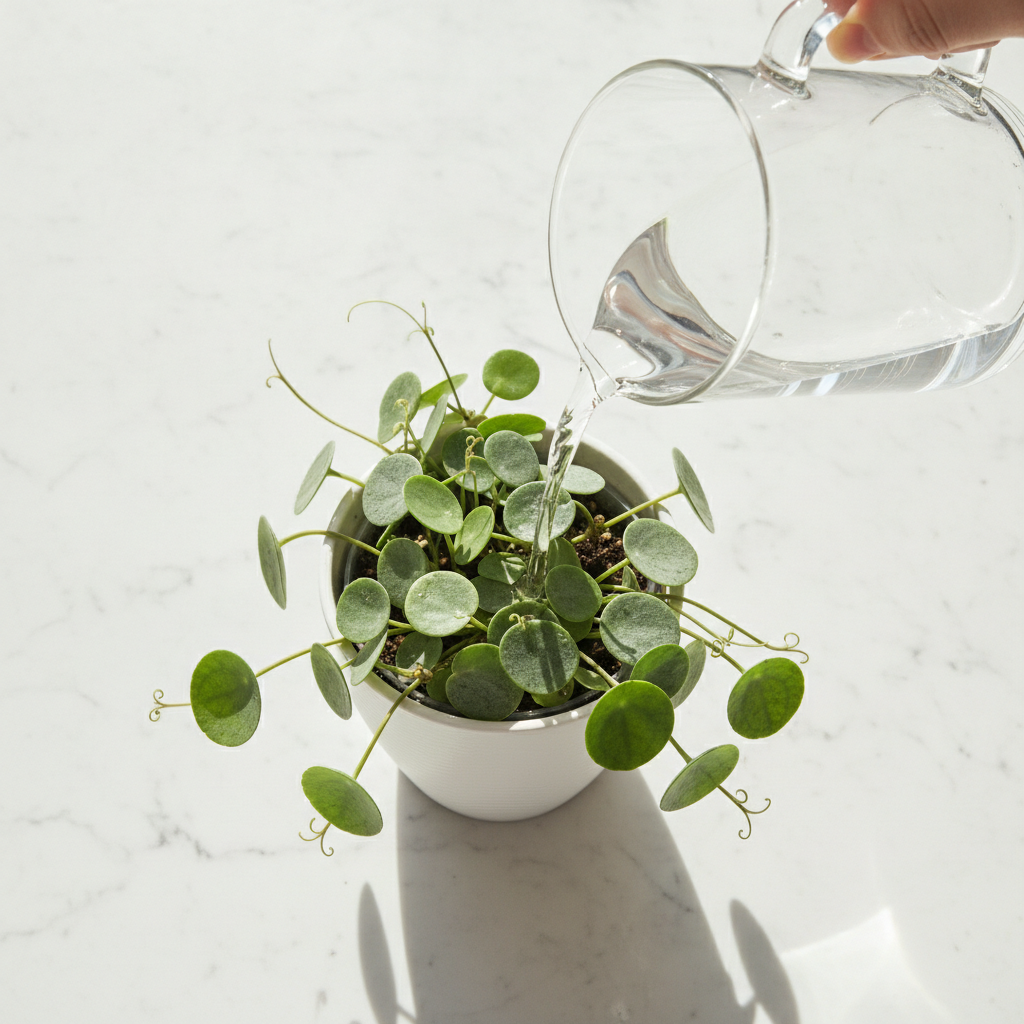
Watering is where most silver dollar vines are won or lost, and the guiding principle is restraint. This is a true succulent that stores its own reserves, so it is far happier being kept slightly too dry than slightly too wet. The soak-and-dry method suits it perfectly: water thoroughly, then wait until the potting mix has dried out completely before watering again.
When to Water
Rather than watering on a fixed calendar, water in response to the mix. Push a finger or a wooden skewer to the bottom of the pot; if it comes out dry and clean, it is time to water. During the active growing months of spring and summer this typically means watering every 10 to 20 days, though the exact interval depends on pot size, light, and how warm your home is.
In autumn and winter, when growth slows and light is weak, cut back sharply. Watering once every three to five weeks is often plenty, and a plant kept cool over winter needs even less. The leaves themselves are a helpful gauge: plump, firm coins mean the plant is well hydrated, while leaves that begin to feel soft, thin, or slightly wrinkled are the plant’s signal that its reserves are running low and a drink is due.
Pro Tip — Let the Leaves Tell You: When in doubt, wait. A silver dollar vine will show visible thirst through slightly softened, wrinkled leaves long before it comes to any harm, and those leaves plump back up within a day or two of watering. There is no equivalent early warning for overwatering, which does its damage silently at the roots.
How to Water Correctly
- Check that the mix is completely dry all the way to the bottom of the pot before you begin.
- Water at the base of the plant, adding water steadily until it runs freely from the drainage holes.
- Let the pot drain fully for several minutes so no excess sits at the roots.
- Empty any water that collects in the saucer or cover pot; never leave the plant standing in it.
- Return the plant to its bright spot and do not water again until the mix has dried out entirely.
Signs of Overwatering vs. Underwatering
| Symptom | Overwatering | Underwatering |
|---|---|---|
| Leaf colour | Yellowing, then translucent and mushy | Dull, sometimes faintly reddish or grey |
| Leaf texture | Soft, swollen, squashy and prone to dropping | Thin, wrinkled, flattened but still firm |
| Soil | Stays wet for many days, may smell sour | Bone dry, may pull away from the pot sides |
| Roots | Brown, soft and foul-smelling | Dry but firm and pale |
| Stem base | Blackened, soft or collapsing | Firm, perhaps a little shrivelled |
Warning — Root Rot: Root rot is the leading killer of this plant and is almost always caused by soil that stays wet. Once the stem base turns soft and black the plant is difficult to save, so prevention through a gritty mix and a firm dry spell between waterings matters far more than any cure. If rot appears, take healthy cuttings from the top growth immediately and start again rather than trying to nurse a rotting base.
Humidity Requirements
Humidity is refreshingly simple with the silver dollar vine: it does not need any special attention. Adapted to arid Madagascan habitat, it is entirely comfortable in the dry air of a centrally heated or air-conditioned home, and average household humidity of 30 to 50 per cent suits it well.
You will not see the browning leaf tips or crisping edges that signal humidity stress in tropical plants, because this species simply does not suffer from dry air. If anything, high humidity combined with poor airflow is more of a risk, as lingering moisture on the leaves and around the roots can encourage rot and fungal problems.
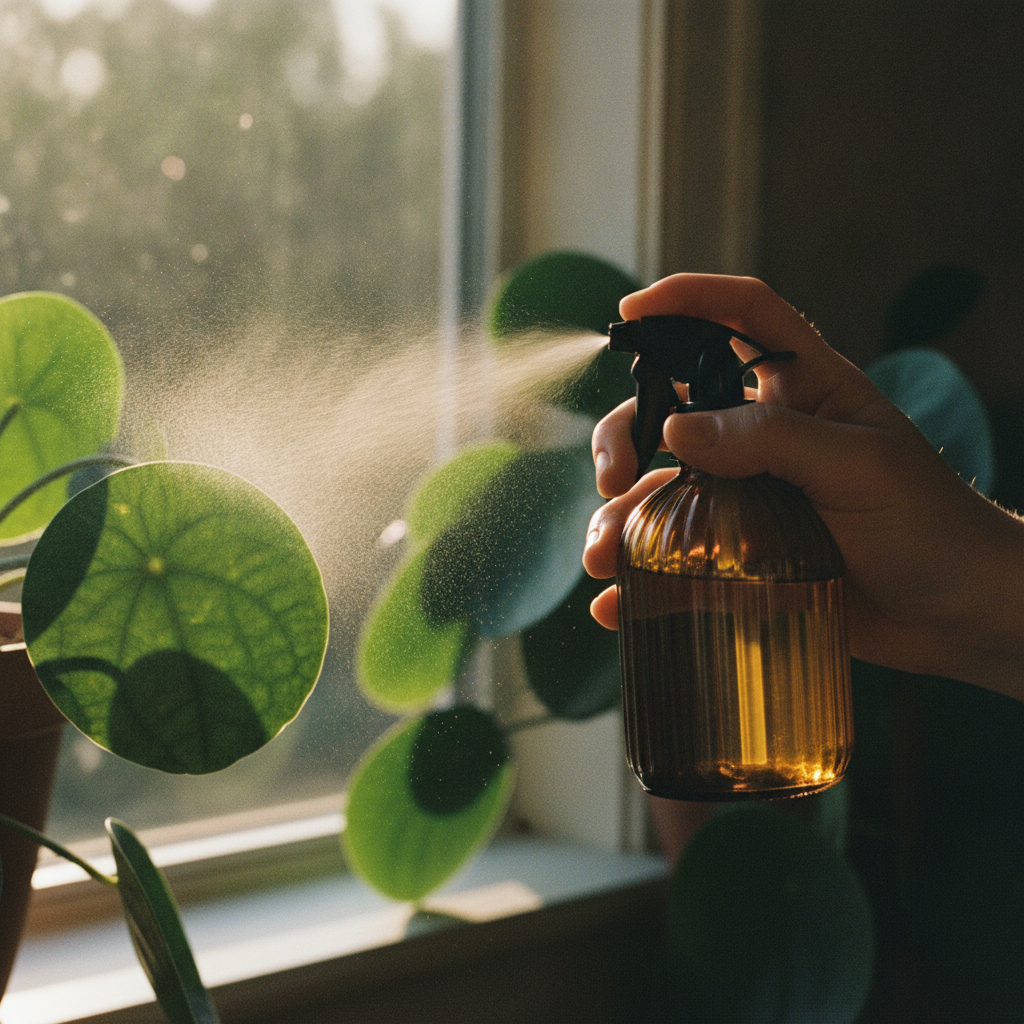
For that reason there is no need to mist, group the plant with others for moisture, or run a humidifier nearby. In fact, misting is best avoided entirely; it does nothing useful and only leaves water sitting on the leaves. Good air circulation is far more valuable to this plant than any effort to raise humidity.
Water Quality
The silver dollar vine is not especially sensitive to water quality and tolerates ordinary tap water in most areas. In regions with very hard water you may notice pale mineral deposits building up on the soil surface over time; flushing the pot thoroughly every few months, or using filtered or rainwater, keeps this in check. Room-temperature water is gentler on the roots than very cold water straight from the tap.
Soil, Potting & Repotting
Given how much of this plant’s wellbeing hinges on not staying wet, the potting mix is arguably as important as the watering can. The goal is a gritty, fast-draining medium that holds just enough moisture to sustain the plant between waterings while letting the excess run straight through.
Ideal Soil Composition
A quality cactus and succulent compost is the sensible starting point, but most bagged mixes benefit from extra grit to open them up further. The aim is a blend that feels coarse and crumbly in the hand rather than dense and spongy, with plenty of visible mineral particles to create air pockets and channels for drainage.
| Component | Proportion | Function |
|---|---|---|
| Cactus and succulent compost | Half | Provides structure and a modest reserve of moisture and nutrients |
| Coarse grit or pumice | One quarter | Creates drainage channels and air space around the roots |
| Perlite | One quarter | Lightens the mix and prevents compaction over time |
The plant is not fussy about pH and does well in the slightly acidic to neutral range that most commercial mixes fall into, so there is no need to adjust it. What matters far more than chemistry is physical structure: a mix that drains freely and dries out within a reasonable time.
Pro Tip — Quick Mix Recipe: For a reliable blend, combine two parts cactus compost with one part pumice or coarse grit and one part perlite. If you can only find one gritty additive, a good handful of pumice stirred through standard succulent compost is enough to transform its drainage.
Choosing the Right Pot
The container you choose has a direct effect on how quickly the mix dries, which in turn shapes your whole watering routine. A well-matched pot makes overwatering far harder to do.
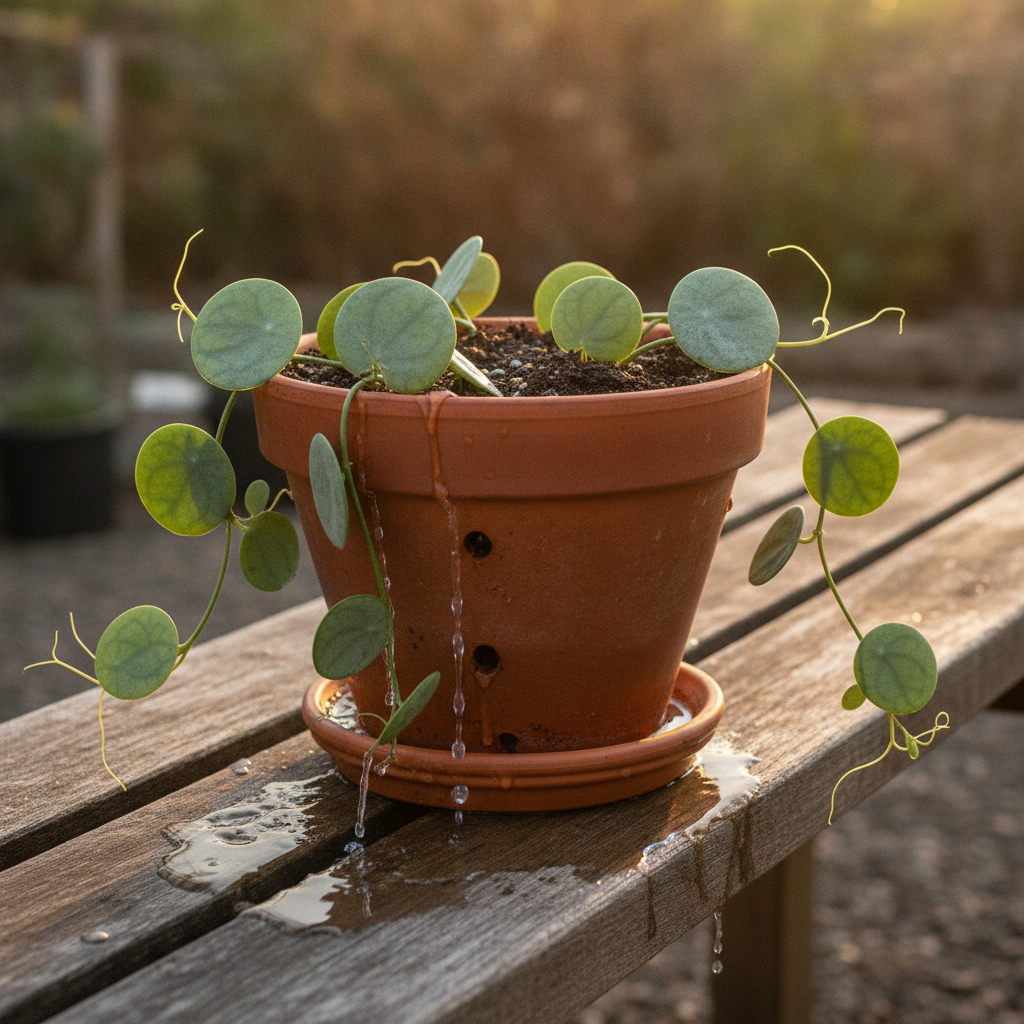
Drainage holes are non-negotiable. A silver dollar vine should never sit in a pot without a drainage hole. Without one, water collects invisibly at the bottom and the roots sit in it, which is the surest route to rot. If you love a decorative cover pot with no hole, keep the plant in a plain nursery pot inside it and lift it out to water.
Pot material: Terracotta is an excellent match because its porous walls wick moisture out of the mix and let it evaporate, helping the soil dry evenly. Glazed ceramic and plastic hold moisture longer, which is not disqualifying but does mean you must be more disciplined about letting the mix dry between waterings.
Pot size: Choose a pot only slightly larger than the root ball. An oversized pot holds a large volume of damp soil that the modest roots cannot use quickly, and that reservoir of moisture invites rot. This plant is content to be a little snug and generally grows better in a pot that looks almost too small than in one that is too big.
When to Repot
The silver dollar vine is slow to need repotting and is quite happy being pot-bound, so there is no need to rush. Expect to move it up a size only every two or three years, and only when you see clear signs it has outgrown its home: roots emerging from the drainage holes, the mix drying out unusually fast, or growth that has stalled despite good care. Spring, at the start of the growing season, is the best time to repot, as the plant recovers most quickly then.
How to Repot: Step-by-Step
- Water lightly a day or two beforehand if the mix is dust-dry, which makes the root ball easier to handle without shattering.
- Gently ease the plant out of its pot, supporting the stems, and tease away as much of the old, exhausted mix as you can from around the roots.
- Inspect the roots and trim away anything soft, brown, or rotten with clean, sharp scissors.
- Choose a pot just one size larger with a drainage hole, and add a layer of fresh gritty mix to the bottom.
- Position the plant at the same depth it sat before and fill in around the roots with fresh mix, firming gently.
- Wait around a week before watering, giving any disturbed or trimmed roots time to callus and reducing the risk of rot.
Warning — Transplant Shock: Waiting to water after repotting is not optional for succulents. Freshly cut or bruised roots are wide open to infection, and adding water immediately can turn a routine repot into a rot problem. Keep the newly potted plant somewhere bright but out of scorching sun for its first week and resist the urge to water early.
Fertilising
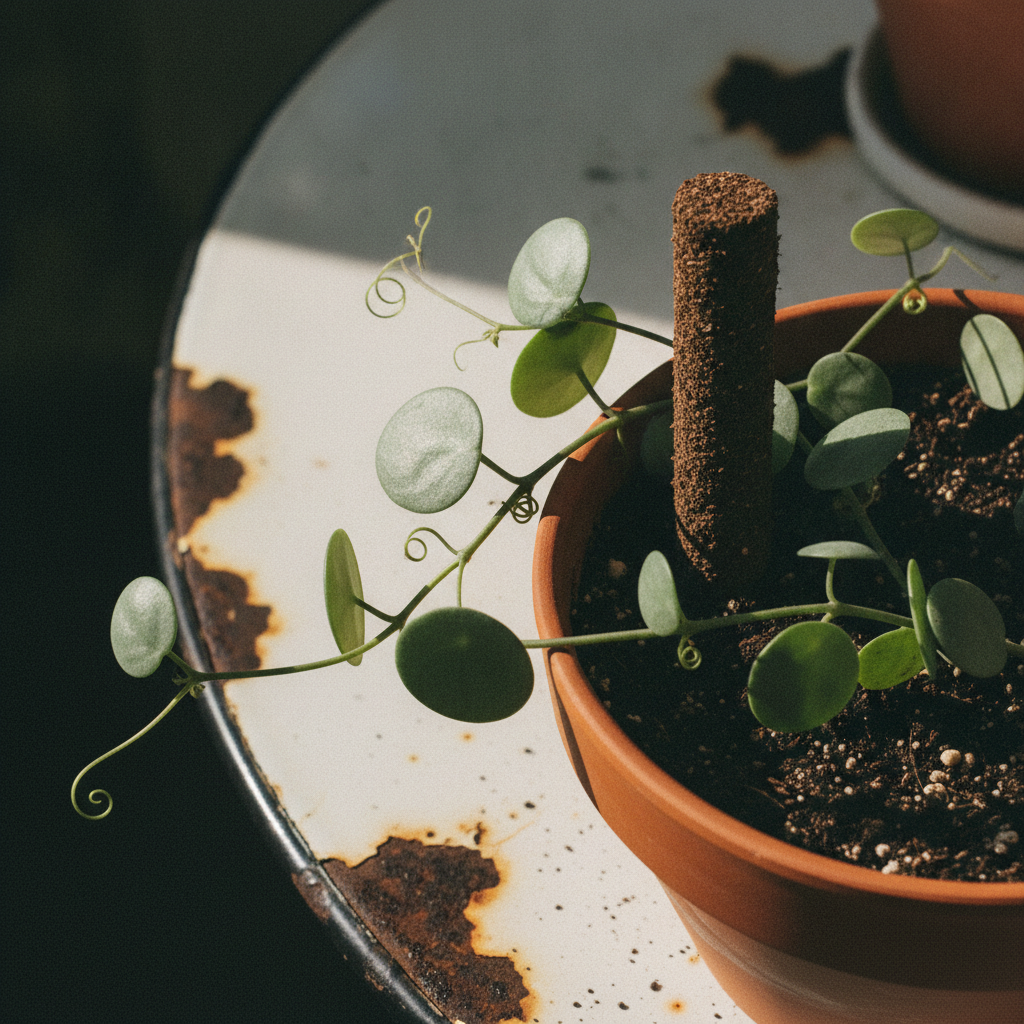
The silver dollar vine evolved in poor, dry soils and has correspondingly modest nutritional needs. It is not a heavy feeder, and far more plants are damaged by over-enthusiastic fertilising than by too little. A light, occasional feed during the growing season is all it asks.
The purpose of feeding is simply to top up the small reserve of nutrients that watering gradually flushes out of a fast-draining mix. Think of it as a gentle supplement rather than a growth accelerator, and always lean towards less rather than more.
Understanding Plant Nutrients
Fertilisers are labelled with three numbers representing nitrogen, phosphorus, and potassium, the NPK ratio. For succulents a balanced or slightly low-nitrogen formula is best, since too much nitrogen drives soft, sappy, stretched growth that is exactly what you do not want on a plant prized for its compact form. The table below summarises the main nutrients and what their shortage looks like.
| Nutrient | Symbol | Primary Function | Deficiency Symptoms |
|---|---|---|---|
| Nitrogen | N | Leaf and stem growth | Pale, yellowing older leaves and slow growth |
| Phosphorus | P | Root development and energy transfer | Weak roots and dull, stunted growth |
| Potassium | K | Overall vigour and stress resistance | Yellow or browning leaf margins |
| Calcium | Ca | Cell wall strength | Distorted or weak new growth |
| Magnesium | Mg | Core of the chlorophyll molecule | Yellowing between the veins of older leaves |
| Iron | Fe | Chlorophyll production | Yellowing of the youngest leaves |
Types of Fertiliser
Liquid fertilisers: A liquid succulent or cactus feed diluted in water is the easiest option and gives you precise control. Because you can dilute it to half strength or weaker, it is well suited to a light feeder like this and is the recommended choice for most growers.
Slow-release granular: Granules or sticks that release nutrients gradually over several months are convenient, but they offer less control and can continue feeding into autumn when the plant would rather rest. If you use them, apply at the start of spring and at a light rate.
Organic fertilisers: Gentle organic options such as diluted worm-casting tea are very forgiving and release nutrients slowly, making them almost impossible to overdo. They are a good match for anyone nervous about scorching their plant with concentrated feeds.
Feeding Schedule
Feed only during the active growing months of spring and summer, roughly once a month, and always with a diluted solution. Stop feeding entirely in autumn and winter, when the plant is resting and cannot make use of the nutrients; feeding a dormant succulent simply leaves unused salts to accumulate in the mix.
Pro Tip — Feed Weak, Feed Onto Moist Soil: Always dilute succulent feed to half the recommended strength or less, and apply it after a normal watering rather than onto bone-dry soil. Feeding a moist root ball spreads the nutrients evenly and avoids the risk of a concentrated dose burning dry, sensitive roots.
How to Fertilise
- Mix a succulent or balanced houseplant fertiliser to half strength or weaker in room-temperature water.
- Water the plant normally first if the mix is very dry, so the roots are already moist.
- Apply the diluted feed evenly to the mix until it just begins to drain from the bottom.
- Resume your usual dry-out watering cycle, and feed again no sooner than a month later during the growing season.
Warning — Salt Build-Up: Over-fertilising leaves a crust of mineral salts on the soil surface and can scorch the leaf edges brown. If you see a whitish crust forming, flush the pot thoroughly with plain water two or three times to leach out the excess, and cut back on how often and how strongly you feed.
Propagation
One of the quiet joys of the silver dollar vine is how easily it multiplies. A single healthy plant can furnish a whole windowsill of new plants over time, and propagation is a practical way to keep a leggy specimen looking full by rooting the trimmed stems rather than discarding them.
The reliable method is stem cuttings, which root readily in either a gritty mix or a rooting medium such as moss. Because this is a vining succulent rather than a rosette or clumping type, propagation from individual leaves does not work; the coin-shaped leaves will not form new plants on their own, so always take a length of stem with several nodes.
Understanding Nodes and Tendrils
The key to success is the node, the small point on the stem where a leaf, tendril, or side shoot emerges. Nodes contain the dormant tissue that produces new roots, so every cutting must include at least a couple of them. The plant’s tendrils, those thin coiling threads it uses to climb, mark node positions and are a useful visual guide to where roots will form once a cutting is planted.
Stem Cuttings in Soil: Step-by-Step
Rooting directly in a gritty mix is the simplest and most reliable approach, and it avoids the shock some succulents suffer when moved from water to soil.
- Using clean, sharp scissors, cut a healthy stem section 10 to 15 centimetres (4 to 6 inches) long with several nodes.
- Strip the leaves from the lowest two or three nodes, since these are the points that will sit in the mix and produce roots.
- Set the cutting aside in a dry, shaded spot for two to three days so the cut end forms a callus, which guards against rot.
- Insert the bare nodes into a pot of barely moist gritty succulent mix and firm it gently so the cutting stands upright.
- Place the pot in bright, indirect light and keep the mix only very slightly moist, never wet, while roots develop.
- After three to four weeks give the cutting a gentle tug; resistance means roots have formed and you can begin normal care.
Pro Tip — Callus First, Always: Letting the cut end dry and callus for a few days before planting is the difference between a cutting that roots and one that rots. Never plant a fresh, wet-cut succulent stem straight into moist soil; give it time to seal first.
Rooting in Moss or Water: Step-by-Step
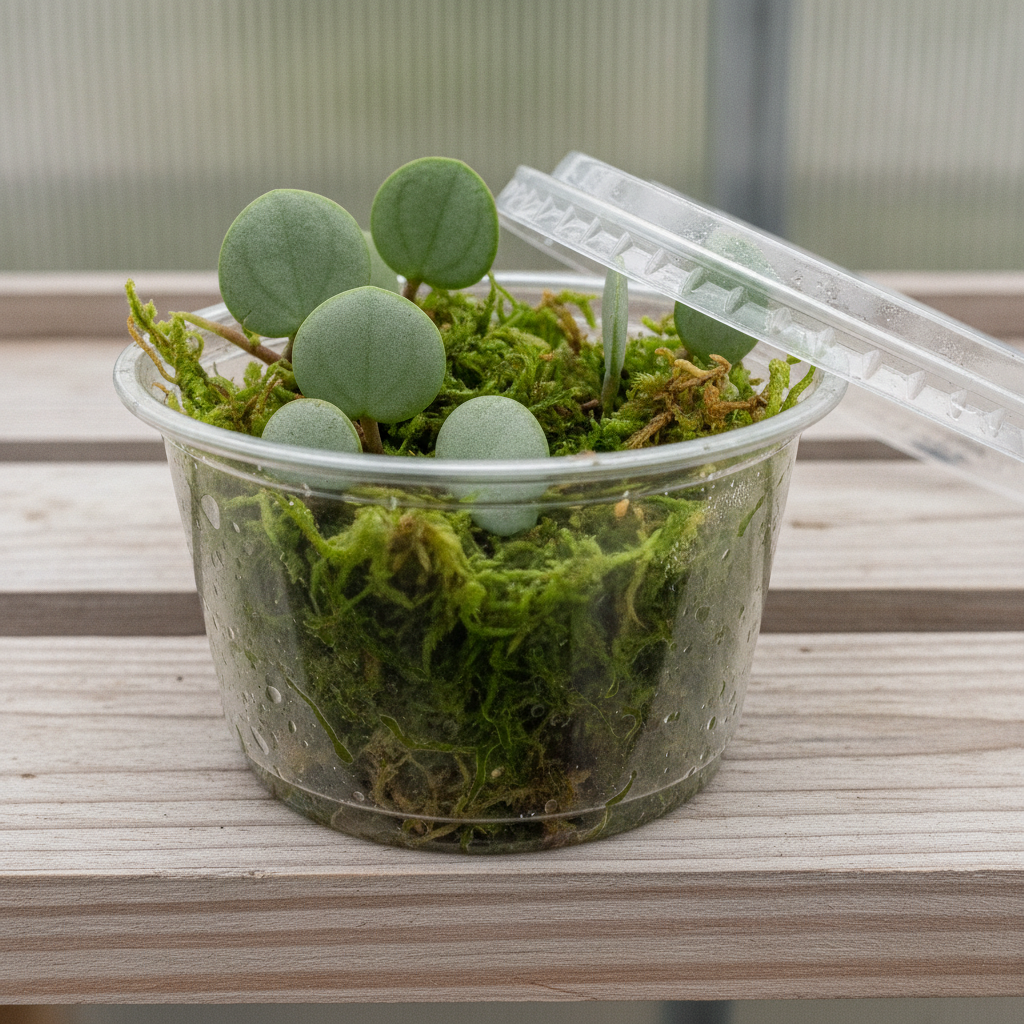
If you like to watch roots form, cuttings will also root in damp sphagnum moss or, more cautiously, in water. Moss is gentler than water because it holds moisture and air together and reduces the risk of the stem sitting sodden.
- Take and callus a cutting exactly as for the soil method above.
- Nestle the lower nodes into damp, wrung-out sphagnum moss in a small pot or clear cup, keeping the leaves above the surface.
- Keep the moss lightly moist but never saturated, and set the cutting in bright, indirect light with good airflow.
- Once roots reach two to three centimetres (about an inch), pot the cutting up into gritty succulent mix and resume normal watering.
Troubleshooting Propagation
| Problem | Likely Cause | Solution |
|---|---|---|
| Cutting turns soft and black | Rot from a wet medium or no callus | Recut above the rot, callus longer, and keep the medium drier |
| No roots after many weeks | Too little light or warmth | Move somewhere brighter and warmer, ideally 20 to 25 degrees Celsius |
| Cutting shrivels badly | Medium too dry before roots form | Lightly moisten the medium; a callused cutting needs a little moisture to root |
| Leaves drop from the cutting | Normal stress, or handling damage | Leave it be; as long as the stem and nodes are firm it can still root |
Pests & Diseases
The silver dollar vine is a robust plant with few natural enemies indoors, and a specimen grown in good light with careful watering rarely runs into trouble. Most problems that do appear are opportunistic, taking hold on plants that are stressed, overwatered, or crowded with poor airflow.
Prevention is therefore mostly a matter of good general care and regular observation. A quick look over the stems and the undersides of the leaves each time you water will catch almost any issue while it is still small and easy to deal with.
Common Pests
Mealybugs (Pseudococcidae)
The most likely pest on this plant, mealybugs appear as small, white, cottony tufts tucked into leaf axils and along the stems, where they suck sap and weaken growth. They spread slowly but steadily if ignored and can hide among the densely packed coins.
Treatment: Dab each insect directly with a cotton bud dipped in rubbing alcohol, then follow up with an insecticidal soap or diluted neem oil spray. Repeat every week for three to four weeks to catch newly hatched crawlers, and isolate the plant while you treat it.
Spider Mites (Tetranychus urticae)
These tiny mites thrive in warm, dry conditions and can appear as faint stippling on the leaves, sometimes with fine webbing between the stems. Because they are barely visible, they are often noticed only once damage has accumulated.
Treatment: Rinse the plant to dislodge the mites, then treat with neem oil or a miticide, repeating at weekly intervals. Improving airflow around the plant makes it a less hospitable home for them.
Scale (Coccoidea)
Scale insects look like small, flat, brown discs stuck firmly to the stems and leaves, and their tough coating protects them from casual treatment. They sap the plant’s vigour and can be surprisingly stubborn.
Treatment: Scrape or lift them off with a fingernail or an alcohol-dipped cotton bud, then apply neem oil or a systemic insecticide to reach any that remain. Persistence over several weeks is usually needed.
Common Diseases
Root and Stem Rot (Pythium and Phytophthora)
By far the most serious threat to the silver dollar vine, rot is a consequence of soil that stays wet, and it shows as a softening, blackening base and collapsing stems. Once it reaches the main stem the plant is often beyond saving.
Treatment: Act early. Unpot the plant, cut away all soft and discoloured tissue, and if the base is compromised take healthy top cuttings to root as a fresh start. Prevent recurrence with a gritty mix, a pot with drainage, and a thorough dry-out between waterings.
Fungal Leaf Spot (various fungi)
Less common, leaf spot appears as dark, sometimes sunken marks on the leaves and is usually linked to water sitting on the foliage or stagnant, humid air around the plant.
Treatment: Remove affected leaves, improve air circulation, and keep water off the foliage when you water. A copper-based fungicide can help in persistent cases.
Pest and Disease Summary
| Pest / Disease | Identification | Treatment |
|---|---|---|
| Mealybugs | White cottony tufts in leaf axils | Alcohol swab, then neem or insecticidal soap |
| Spider mites | Fine stippling and webbing | Rinse, then neem or miticide; improve airflow |
| Scale | Hard brown discs on stems | Scrape off, then neem or systemic insecticide |
| Root and stem rot | Soft, blackened base; wet soil | Cut away rot, take cuttings, correct watering |
| Fungal leaf spot | Dark marks on leaves | Remove leaves, improve airflow, keep foliage dry |
Prevention Strategies
The best defence is a plant kept in the conditions it prefers. Bright light, a gritty mix, disciplined watering, and good airflow together make the silver dollar vine remarkably resistant to both pests and disease, because a strong plant simply does not offer the soft, stressed tissue that opportunistic problems exploit.
Quarantine any new plant for a couple of weeks before letting it join your collection, since most pest outbreaks arrive on newcomers. Wiping the leaves occasionally, inspecting regularly, and dealing with any small infestation the moment you spot it will keep almost every problem from ever taking hold.
Pro Tip — Neem as Routine: A light monthly wipe or spray with diluted neem oil during the growing season acts as a gentle deterrent, discouraging mealybugs and mites before they establish. Apply it in the evening or out of direct sun so the treated leaves do not scorch.
Popular Varieties
The silver dollar vine is grown mostly as the true species, Xerosicyos danguyi, and it has not been bred into the long lists of named cultivars you find with more mainstream houseplants. What variation exists comes chiefly from a rare variegated form and from a handful of closely related species in the same genus that are sold and cared for in much the same way.
For the collector, this small family offers a satisfying spread of leaf shapes and sizes, from the classic round coins to thicker, more elongated forms. The table and profiles below cover the forms you are most likely to encounter.
| Variety | Leaf Appearance | Light Needs | Growth Rate | Availability |
|---|---|---|---|---|
| Silver Dollar Vine (species) | Round, flat silver-grey coins | Very high | Moderate | Common |
| Variegated Silver Dollar Vine | Coins marbled with cream and yellow | Very high | Slow | Rare |
| Xerosicyos perrieri | Thicker, oval, slightly pointed grey-green leaves | Very high | Moderate | Uncommon |
| Xerosicyos decaryi | Flatter, more angular grey-green leaves | Very high | Slow | Rare |
Featured Varieties
Variegated Silver Dollar Vine
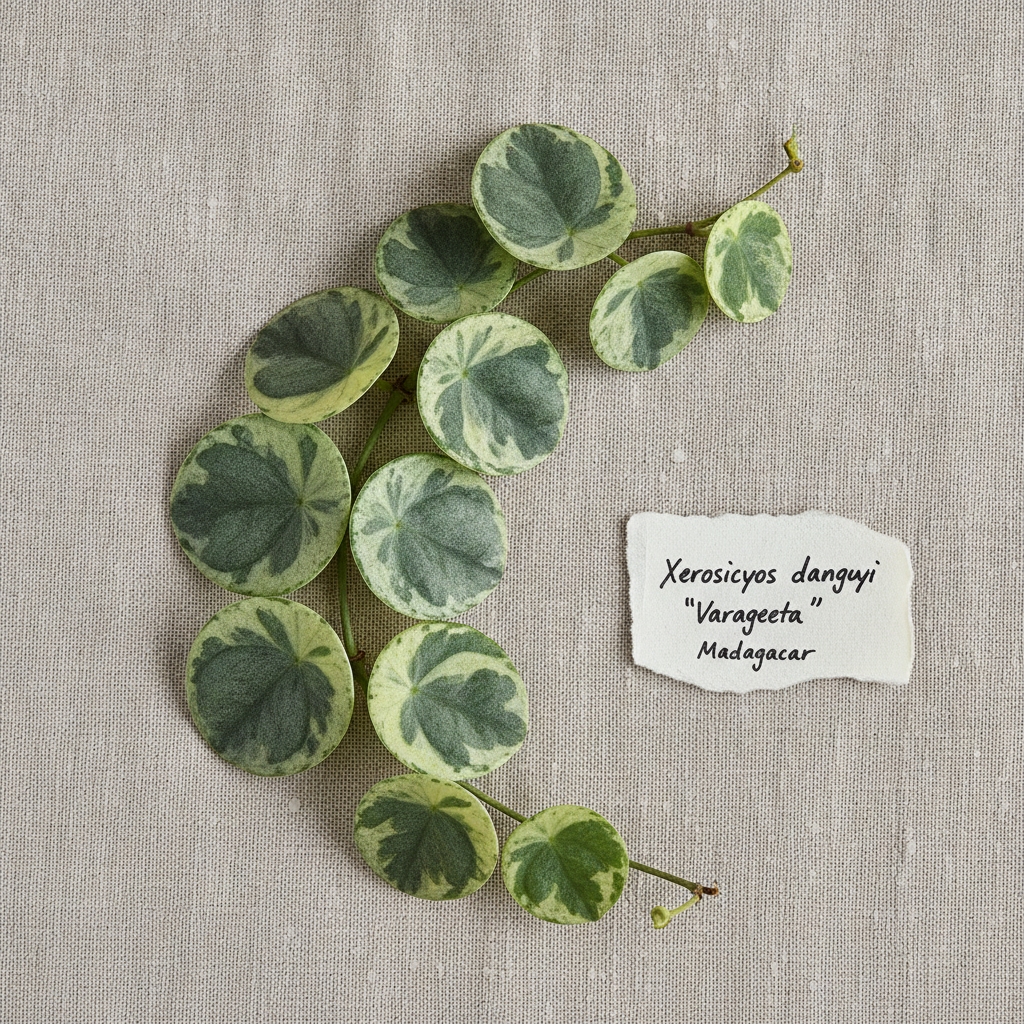
A prized and uncommon form in which the round coins are streaked and marbled with cream and pale butter-yellow. The variegation makes it slower growing and even more light-hungry than the species, since the pale tissue cannot photosynthesise, so it demands your brightest position to keep its markings vivid.
Xerosicyos perrieri
A close relative with thicker, more oval and slightly pointed leaves that are larger and more elongated than the classic round coins. It shares the same easy-going care and makes a handsome companion for the species, offering a subtle contrast in leaf shape within a matching silvery palette.
Variety Profiles in Detail
Silver Dollar Vine (Xerosicyos danguyi)
The standard and most widely grown form, with near-perfectly round, coin-sized leaves in a chalky silver-green. Vigorous and adaptable, it is the plant most people mean by “silver dollar vine” and the ideal starting point for anyone new to the genus.
Xerosicyos decaryi
A rarer relative with flatter, more angular leaves and the same climbing, tendril-bearing habit. It is a collector’s plant rather than a common find, but its care is identical to the species, favouring intense light and sparse watering.
Choosing the Right Variety for Your Space
For most homes the straightforward species is the best choice: it is the easiest to find, the most forgiving, and the fastest to fill out a pot. Reserve the variegated form for a spot with truly exceptional light, such as a south-facing sill or a position under a grow light, since it will disappoint anywhere dimmer. The related species like perrieri and decaryi are worth seeking out once you have the basic care mastered and want to expand a small silver-leaved collection.
Frequently Asked Questions
Why is my silver dollar vine dropping its leaves?
Leaf drop most often signals a watering problem at one extreme or the other. Soft, yellowing leaves that fall away point to overwatering and possible root rot, while thin, wrinkled leaves that shrivel and drop suggest the plant has been left dry for too long. Check the roots and the moisture of the mix, then adjust your routine towards a thorough soak followed by a complete dry-out.
Why has my plant become long and leggy?
Legginess, with long bare stretches of stem between widely spaced leaves, is almost always caused by too little light. Move the plant to your brightest window or add a grow light, and prune the stretched stems back to encourage denser new growth. The cuttings you remove can be rooted to make the plant fuller.
How fast does the silver dollar vine grow?
It is a moderate grower rather than a rampant one, putting on noticeable length through spring and summer and pausing over the darker months. In good light and with occasional feeding a healthy plant will lengthen its stems by a reasonable margin each year, eventually trailing or climbing to a metre or more.
Should I let it trail or train it to climb?
Either suits the plant, so it comes down to your space and taste. Left in a hanging pot the stems cascade attractively, while given a trellis, hoop, or moss pole the tendrils will grip and the plant will climb. You can also pinch the growing tips to encourage branching and a bushier shape whichever way you grow it.
Is the silver dollar vine safe around pets?
It is not listed as toxic on the major pet-poison databases, and no serious poisoning is documented. That said, reliable data for this species is limited and many plants in the gourd family contain bitter compounds, so it is sensible to keep it out of reach of pets and children and to seek professional advice if a significant amount is eaten.
Why are the leaves wrinkled or soft?
Slightly wrinkled, softened leaves are usually a sign of thirst; the plant has drawn down the water stored in its leaves and needs a drink. Water it thoroughly and the coins should plump back up within a day or two. If, however, the leaves are soft and yellowing rather than firm and wrinkled, suspect overwatering and check the roots instead.
Does it ever flower indoors?
The silver dollar vine can produce small, greenish-yellow flowers, but blooming is uncommon on indoor plants and the flowers are modest rather than showy. The plant is grown for its distinctive foliage rather than its flowers, so treat any bloom as a pleasant bonus rather than the goal.
How do I make my plant fuller and bushier?
Fullness comes from good light plus a little pruning. Ensure the plant is in the brightest position you can offer to keep new growth compact, then pinch or trim the growing tips to prompt the stems to branch. Root the trimmed cuttings and plant them back into the same pot to thicken it up quickly.






