
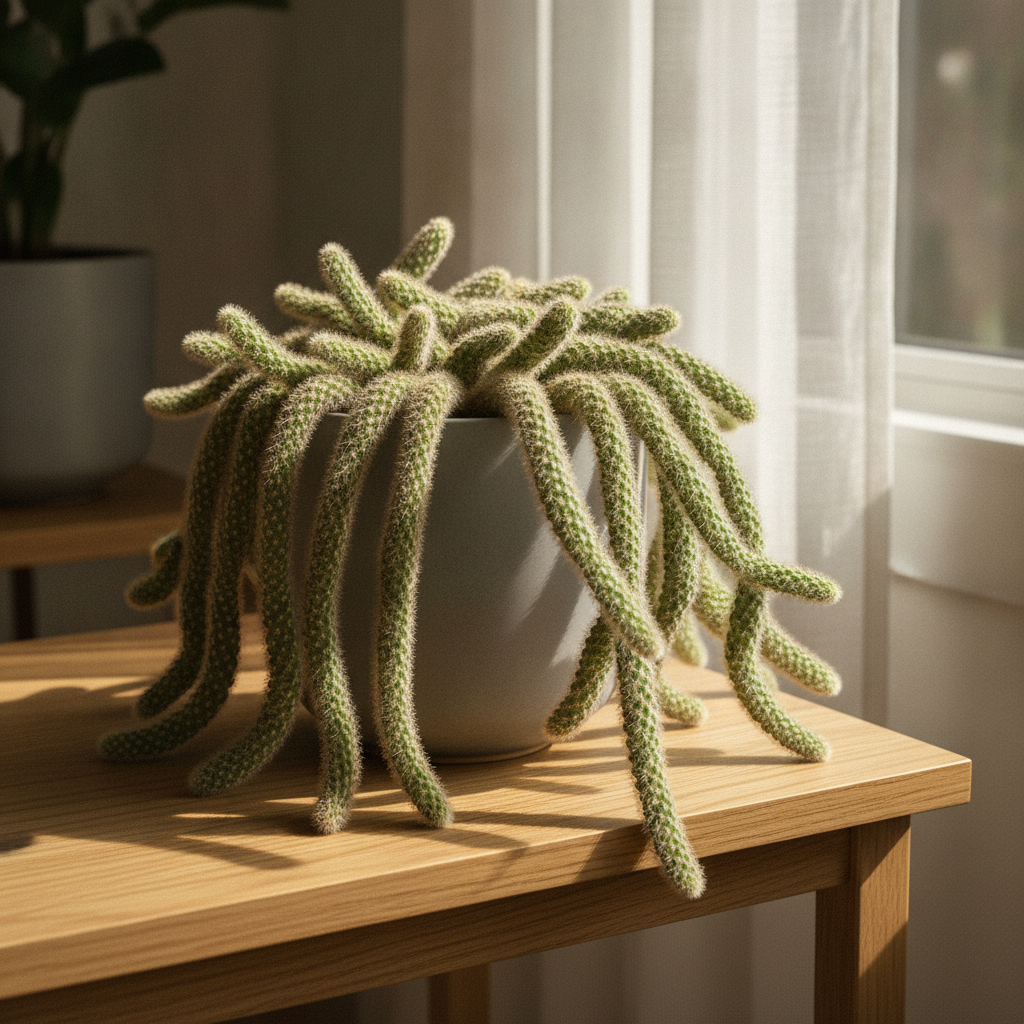
Few cacti wear their charm as openly as the peanut cactus. Where many desert plants guard themselves behind fierce spines and a stern silhouette, Echinopsis chamaecereus sprawls out in soft, finger-thick fingers of pale green, tumbling over the rim of its pot like a handful of spilled groundnuts. It looks approachable, and for once appearances do not deceive: this is one of the most beginner-friendly cacti in cultivation, and one of the very few that reliably rewards indoor growers with flowers so large and so vividly scarlet that they seem to belong to a plant three times its size.
Native to the mountain grasslands of northern Argentina, the peanut cactus has been passed hand to hand between gardeners for well over a century, largely because a single detached finger will root almost anywhere. That generosity is part of its appeal, but it can also mask the two or three things this plant genuinely needs to thrive rather than merely survive. This guide walks through every one of them, from the cool dry winter that unlocks its spring display to the gritty compost that keeps its roots alive for decades.
Quick Reference
| Botanical name | Echinopsis chamaecereus (syn. Chamaecereus silvestrii) |
| Common names | Peanut cactus, peanut cluster cactus |
| Difficulty | Very easy, excellent for beginners |
| Light | Bright light with some direct sun; 3 to 5 hours of gentle sun ideal |
| Water | Soak and dry in spring and summer; nearly dry through winter |
| Humidity | Average room humidity; dry air is fine |
| Temperature | 18 to 27 °C (64 to 81 °F) in growth; 5 to 10 °C (41 to 50 °F) winter rest |
| Soil | Gritty, fast-draining cactus mix |
| Fertiliser | Low-nitrogen cactus feed, monthly in spring and summer only |
| Mature size | Stems to 15 cm (6 in) long, clumps spreading to 30 cm (12 in) |
| Flowers | Large funnel-shaped scarlet blooms, late spring to early summer |
| Toxicity | Non-toxic to cats and dogs; the bristles can still irritate |
Why the Peanut Cactus Makes a Great Houseplant
The case for the peanut cactus rests on a rare combination of qualities. It is small enough to live on a windowsill for its whole life, tough enough to shrug off the neglect that kills fussier plants, and yet capable of a flowering display that stops visitors in their tracks. Most cacti sold as houseplants either stay resolutely flowerless indoors or demand conditions no ordinary room can provide. This one asks only for good light and a cool winter, and in return it produces blooms up to 4 cm (1.6 in) across in a scarlet so saturated it borders on fluorescent.
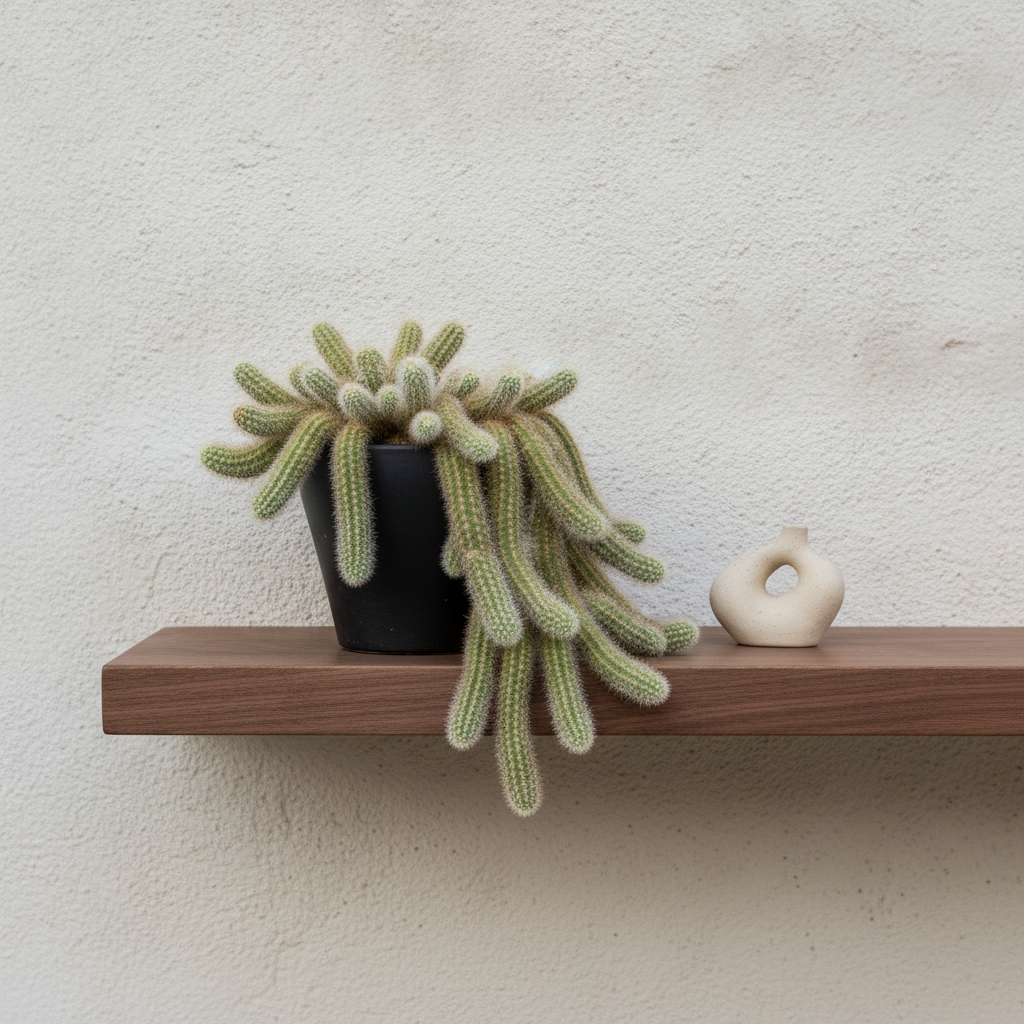
Its texture is the second surprise. The clustering stems are studded with fine white bristles rather than the rigid, skin-piercing spines of a barrel cactus, which makes the plant far more pleasant to handle and repot. Those same fingers snap off cleanly at the slightest knock, a trait that would be a nuisance in most plants but here becomes the easiest propagation method imaginable. A finger dropped on the compost will often root itself without any help at all.
There is a practical footnote that matters in homes with pets. Unlike the peace lily, dieffenbachia or many trailing aroids, the peanut cactus is not chemically toxic to cats or dogs. The only real hazard is mechanical: the bristles can lodge in paws, noses and curious fingers, so it still belongs somewhere out of casual reach. On balance, few plants offer this much reward for this little effort, which is precisely why it has stayed in cultivation, swapped between growers, for generations.
Pro Tip — Grow it for the flowers: A peanut cactus that never blooms is almost always one that never got a cool, dry winter. Treat the resting period as the most important part of the year, not an afterthought, and spring will take care of itself.
Light
Light is the single biggest lever you have over how a peanut cactus looks and behaves. In its native Argentine highlands it grows in open, sunny grassland, sheltered only by tufts of grass and rock, so it is built to handle strong light. Indoors, the goal is bright conditions with a few hours of gentle direct sun each day. An east-facing windowsill that catches the morning, or a spot just back from a south or west window, suits it almost perfectly.
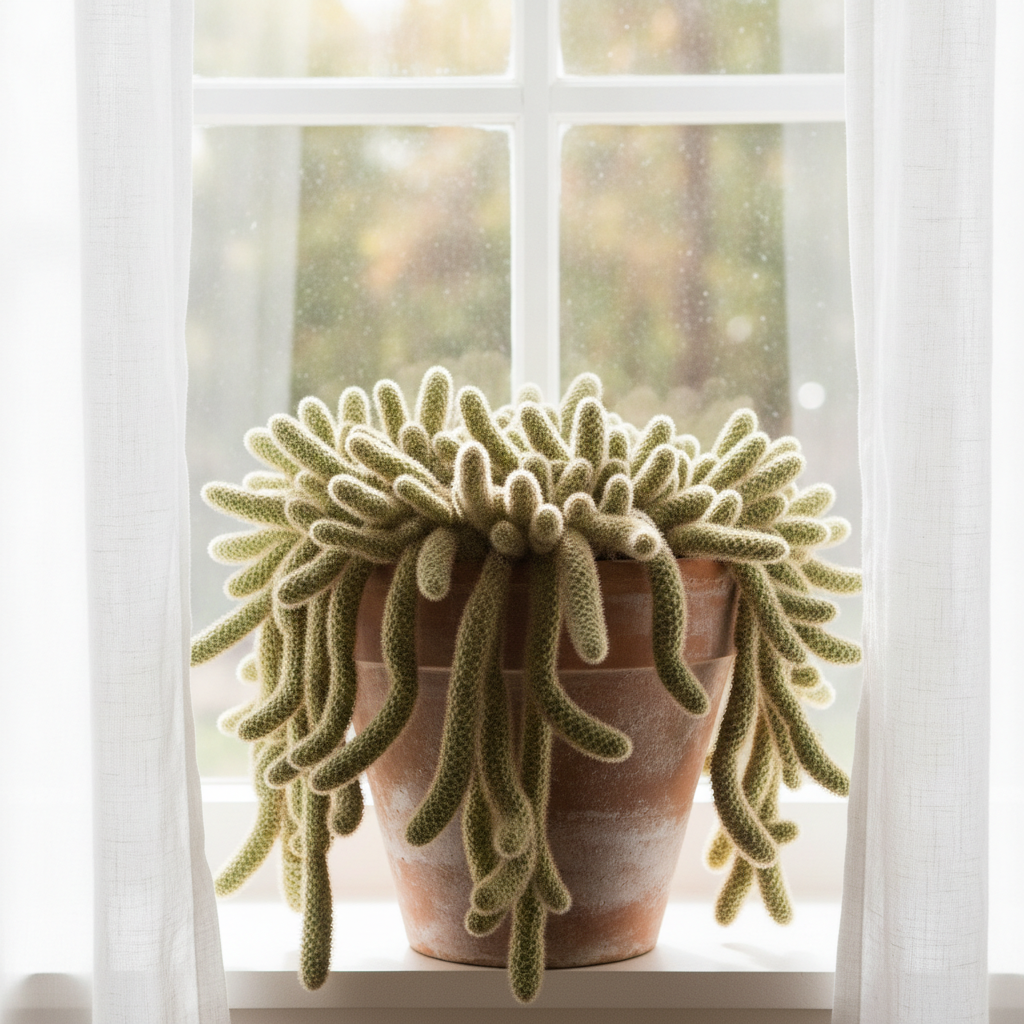
The difference between surviving and thriving shows up in the shape of the stems. Given enough light, the fingers stay short, plump and densely packed, a fresh mid green with the bristles standing out crisply white. Starved of light, the same stems stretch and thin as they reach for the window, growing pale and slightly translucent, a condition called etiolation that cannot be reversed once it has happened. Stretched growth is also far less likely to flower, because the plant is spending its energy on chasing light rather than building buds.
There is a balance to strike in high summer. A plant that has spent winter and spring behind glass has not hardened its skin against fierce midday sun, and moving it abruptly into an unshaded south window in July can scorch the fingers, leaving pale bleached patches that never fully green up again. Introduce stronger light gradually over a week or two, and provide light shade during the hottest hours if your window bakes in the afternoon. Rotating the pot a quarter turn each week keeps the clump growing evenly rather than leaning toward the glass.
Warning — Sudden sun scorches: Never move a peanut cactus straight from a shady spot into full summer sun. The bleached, corky patches that result are permanent, and severe scorch can kill whole fingers. Acclimatise it over ten to fourteen days.
Watering
Watering is where good intentions do the most damage to cacti, and the peanut cactus is no exception. The rule that keeps it alive is simple to state and easy to follow once you trust it: water thoroughly, then let the compost dry out almost completely before watering again. During the active growing season, from spring through to early autumn, this usually means a proper soak every week to ten days, depending on how warm and bright your home is.
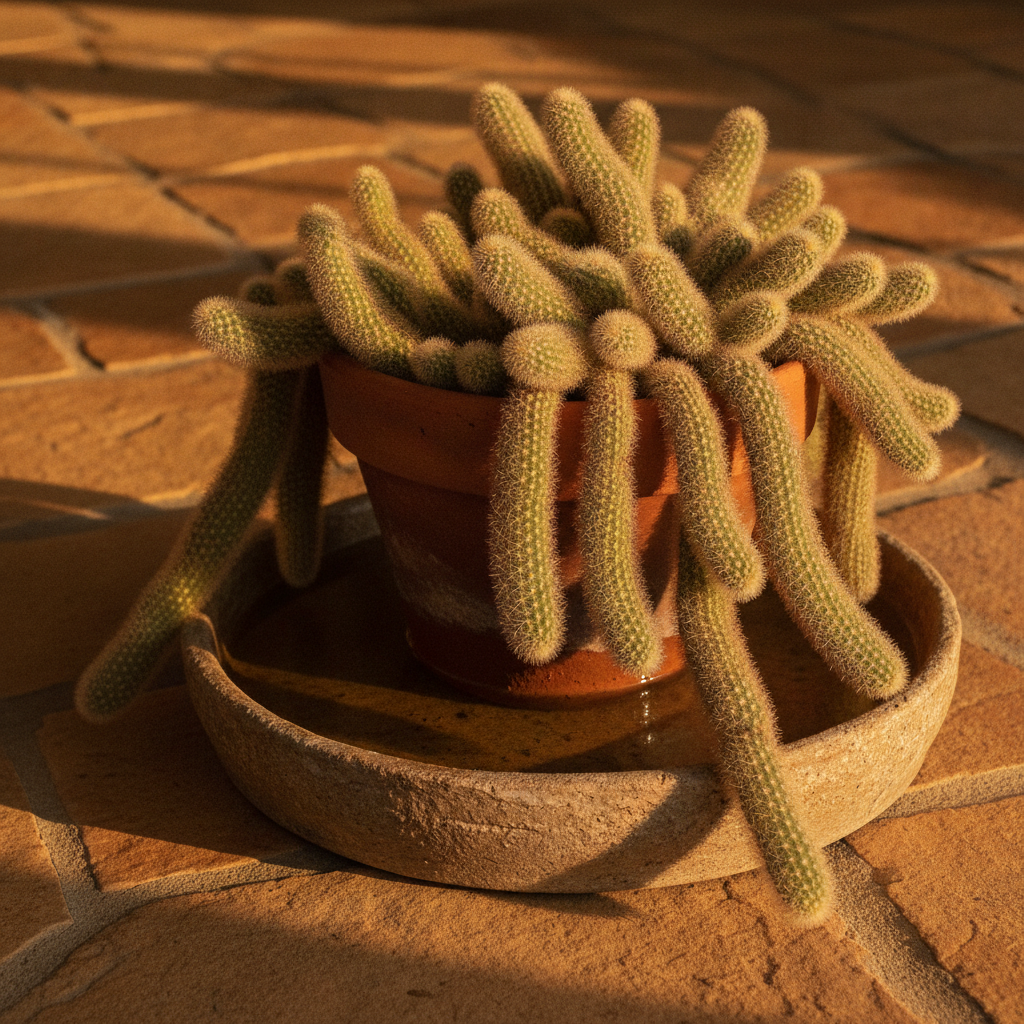
When you do water, water properly. A stingy splash that only dampens the top centimetre encourages roots to grow upward toward the surface, where they are most vulnerable to drying and heat. Instead, water until it runs freely from the drainage holes, or stand the pot in a shallow dish of water for ten minutes and let the gritty mix wick moisture up from below, then tip away whatever is left. Either way, the whole root ball should be wetted, and the pot should never be left sitting in a saucer of standing water.
Winter turns the whole approach on its head. From late autumn the plant should be kept cool and almost completely dry, receiving at most a light watering once every four to six weeks, and in a genuinely cold spot none at all. This dry rest is not cruelty, it is the trigger for flowering, and a peanut cactus watered normally through a warm winter will grow soft, weak and bloomless. If the fingers shrivel very slightly over the coldest months, that is expected and harmless; they will plump up again the moment spring watering resumes.
The clearest warning sign of overwatering is a finger that turns yellow, then brown and mushy from the base upward, often accompanied by a sour smell from the compost. This is rot, and it spreads. Caught early, you can cut away the affected stems with a clean blade, let the plant dry out hard, and salvage the healthy fingers as cuttings. Left unchecked, rot travels into the roots and the whole clump collapses. When in doubt, wait another few days before watering; this is a plant that forgives thirst far more readily than it forgives a soggy pot.
Soil
Everything about watering a peanut cactus successfully depends on getting the compost right first. The single most common reason these plants fail is being grown in standard, moisture-retentive houseplant compost, which holds water around the roots for far too long. What this cactus wants instead is a gritty, open mix that drains within seconds and dries out quickly, mimicking the sharp, mineral soils of its mountain home.
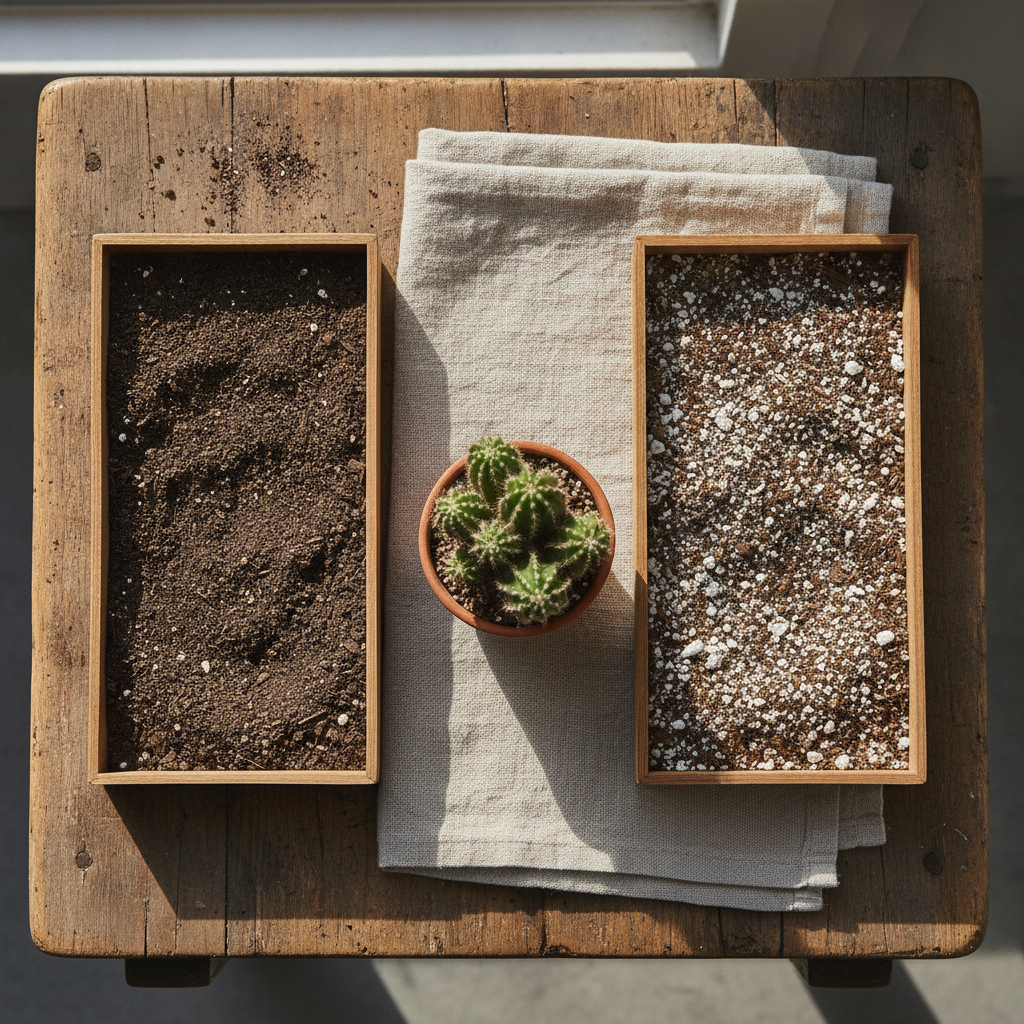
A reliable recipe is roughly two parts of a proprietary cactus and succulent compost to one part coarse mineral grit, such as horticultural pumice, perlite or fine gravel. The aim is a mix in which at least a third of the volume is inorganic and free-draining. If you pick up a handful and squeeze it after watering, it should crumble apart rather than hold together in a wet clump. Ordinary multipurpose compost, even when labelled peat-free, is almost always too rich and too water-retentive to use on its own.
The pot matters as much as what goes in it. A drainage hole is non-negotiable, and terracotta is a real advantage here because its porous walls let the root ball breathe and dry out faster than glazed ceramic or plastic. Choose a pot only slightly larger than the current root system; peanut cacti flower more freely when a little snug, and an oversized pot holds a reservoir of damp compost the small roots cannot use, which invites rot.
Repot only every two or three years, ideally in spring as growth resumes. Let the compost dry out before you start so the root ball slides free cleanly, tease away as much of the old mix as you can, and check the roots for any that are black or hollow, trimming those off with a clean blade. Settle the plant into fresh gritty mix at the same depth it sat before, and then, crucially, wait. Do not water a freshly repotted peanut cactus for a week or so, giving any nicked roots time to callus over rather than rot.
Fertilising
The peanut cactus is not a hungry plant, but a little feeding during the growing season noticeably improves both the vigour of the stems and the quantity of flowers. The key is to match the type of feed to the plant. A high-nitrogen fertiliser, of the kind sold for leafy houseplants, pushes soft, sappy growth that stretches easily and is prone to rot; what you want instead is a feed higher in potassium and phosphorus, which supports firm stems and flower production.
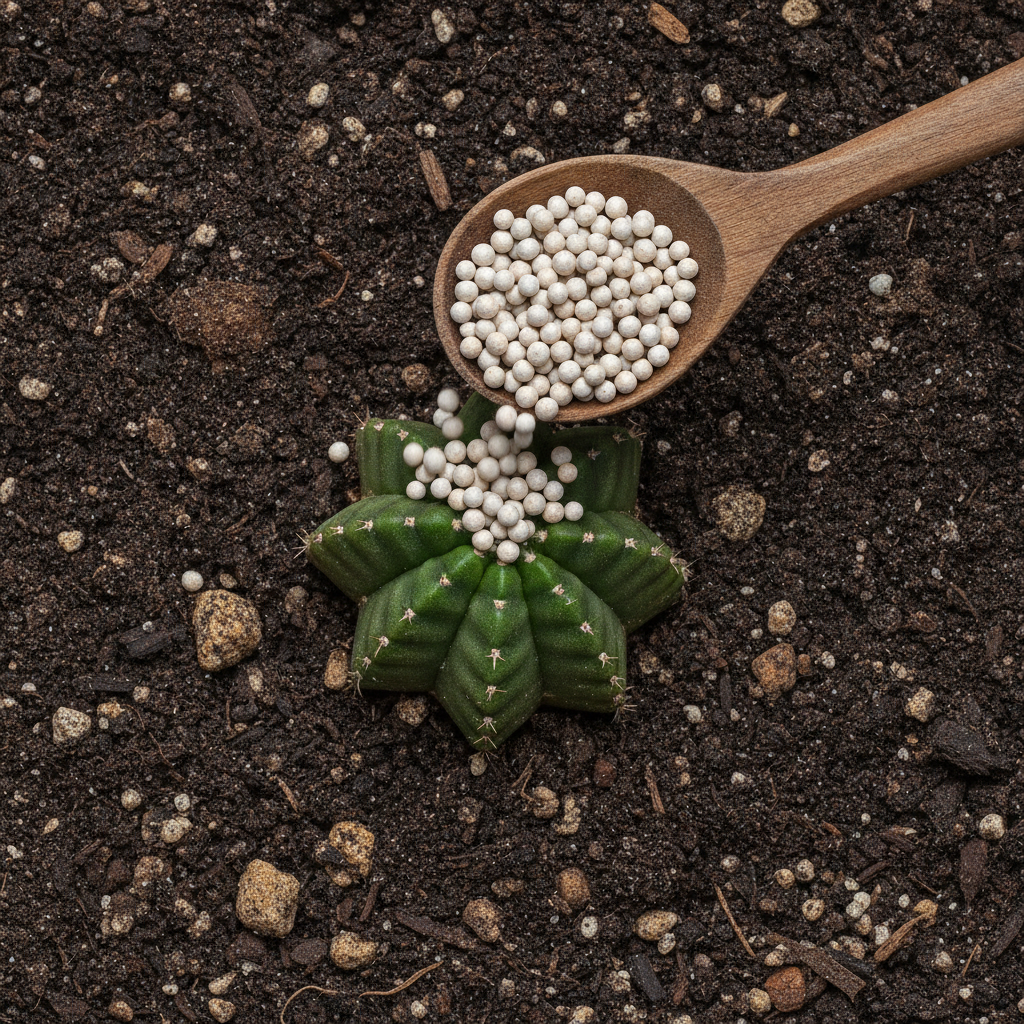
A purpose-made cactus and succulent fertiliser is the simplest choice. Apply it diluted to roughly half the strength on the label, once a month from spring through to late summer, and always onto compost that is already slightly moist rather than bone dry, so the feed does not scorch the roots. Four or five feeds across the growing season is plenty; there is no benefit to feeding more often, and over-fed plants tend toward lush, weak growth that flowers poorly.
Stop feeding entirely from early autumn onward. As the plant enters its cool, dry winter rest it is not actively growing, and any fertiliser applied now simply accumulates as unused salts in the compost, which can damage the roots over time. Resume only when new growth is clearly visible in spring. If you ever see a whitish crust building on the soil surface or the pot rim, that is fertiliser and mineral salt build-up; flush the compost thoroughly with plain water and ease off on future feeds.
Propagation
If any cactus can be called foolproof to propagate, it is this one. The clustering fingers detach so readily that the plant practically propagates itself, and each detached segment is a ready-made cutting complete with the beginnings of its own root system. Spring and early summer are the best times, when warmth and light get new roots moving quickly, but a healthy plant will oblige at almost any point in the growing season.
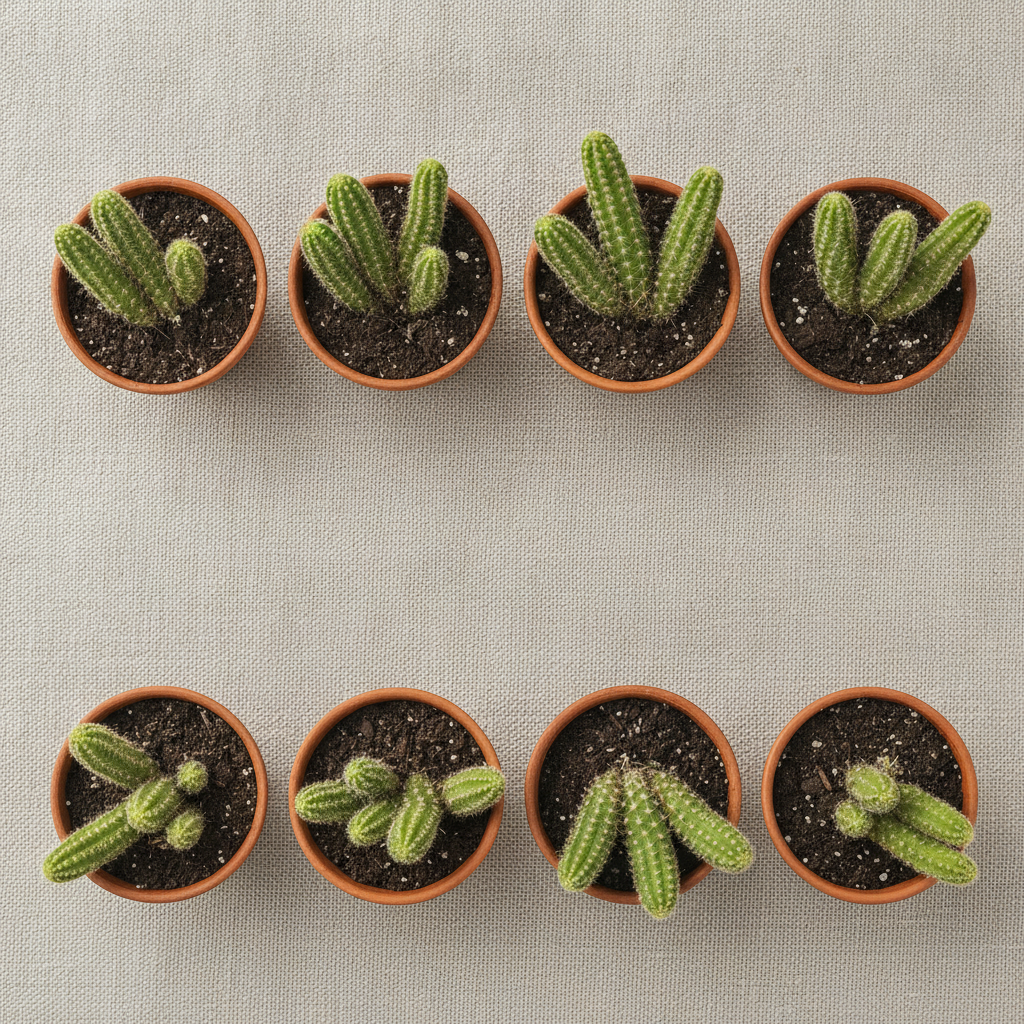
To propagate deliberately, gently twist or snap off a plump, healthy finger where it joins the main clump, taking care to keep the base intact. Then comes the one step people are tempted to skip: set the cutting aside in a dry, shaded spot for two to four days so the broken end forms a dry callus. Planting a fresh, moist wound straight into damp compost is the surest way to rot a cutting, whereas a callused cutting roots cleanly.
Once callused, follow these steps:
- Fill a small pot with the same gritty cactus mix you use for mature plants and firm it lightly.
- Rest the callused end of the finger on the surface, or push it in just deep enough to stand upright, propping it against the pot rim if needed.
- Place the pot somewhere bright but out of harsh direct sun, at normal room temperature.
- Wait about a week, then give the compost a light watering; keep it barely moist, never wet, while roots form.
- After three to four weeks, tug very gently; resistance means roots have taken, and you can begin watering on the normal soak-and-dry cycle.
Larger clumps can also be divided at repotting time by simply separating rooted sections, each of which establishes almost immediately. Whichever route you take, young plants grow surprisingly fast and can begin flowering within a couple of years, so a single peanut cactus quickly becomes a windowsill full, and a generous supply of gifts for fellow plant lovers.
Pests and Problems
A well-grown peanut cactus is a robust plant, and most of the trouble it runs into is cultural rather than the work of pests. Even so, a handful of common sap-suckers find their way onto indoor cacti, and knowing what to look for means you can deal with them before they take hold.
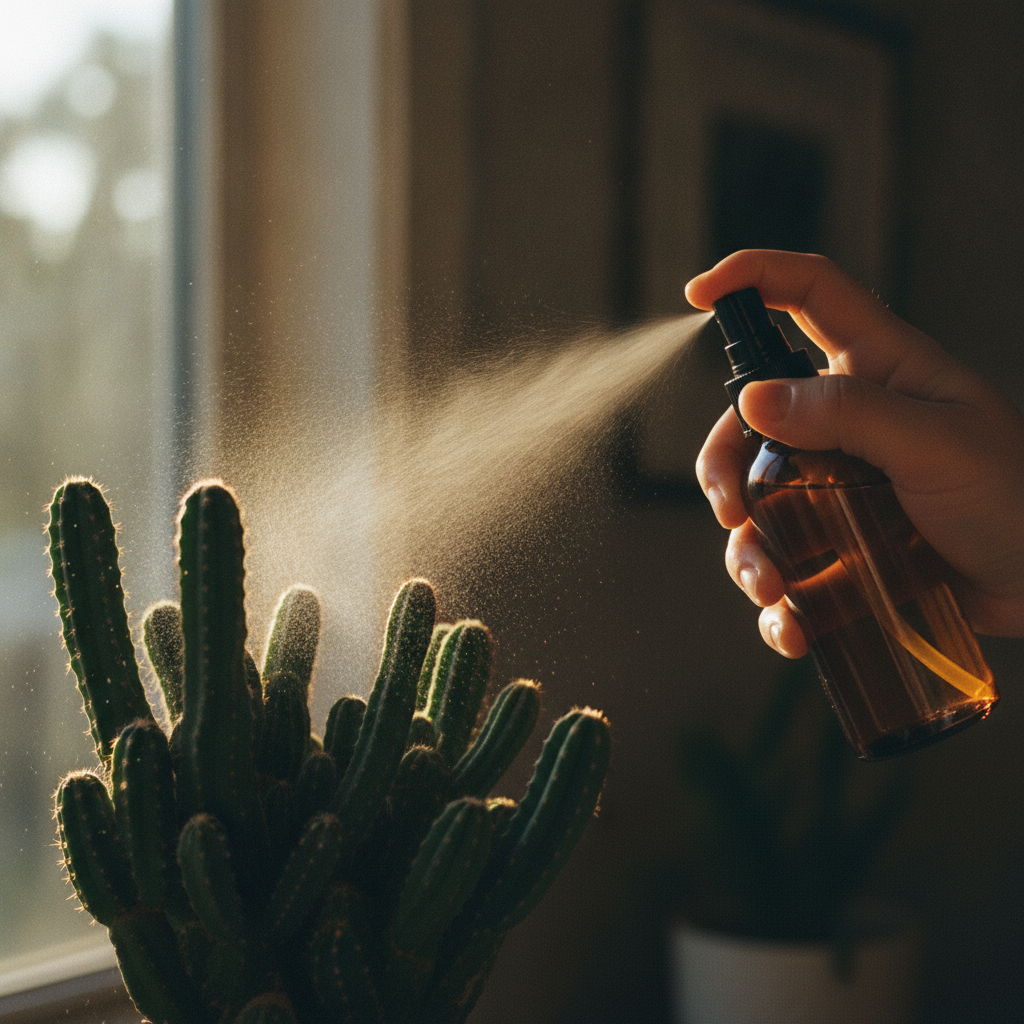
Mealybugs are the usual culprits, appearing as small white cottony blobs tucked between the fingers and around the base of the clump, where they are easy to miss among the white bristles. A cotton bud dipped in dilute isopropyl alcohol, dabbed directly onto each insect, dissolves their waxy coating and kills them on contact; repeat every few days until they stop reappearing. Spider mites are subtler, showing as fine speckling on the stems and, in bad cases, faint webbing, and they thrive in hot, dry, still air, so improving ventilation and the occasional rinse both help. Scale insects, seen as small brown limpet-like bumps, can be scraped off gently and treated the same way as mealybugs.
For any of these, a horticultural soap or neem oil spray gives a broader knock-down, applied in the evening or out of direct sun so the wet stems do not scorch. Whatever the pest, isolate an affected plant from your other cacti and succulents until it is clearly clear, because these insects travel readily between neighbouring pots.
The far more serious threat, as with all cacti, is root and stem rot brought on by overwatering, cold wet conditions, or heavy compost. Fingers that yellow and go soft, a blackening base, or a sour smell all point to rot rather than any insect. The response is the same each time: stop watering, move the plant somewhere warm and airy, cut away all affected tissue with a clean blade, and if the roots have gone, re-root the healthy fingers as cuttings. Two lesser problems round out the list. A plant that stretches and pales is short of light, and a plant that stubbornly refuses to flower has almost always been denied its cool, dry winter rest.
Warning — Rot moves fast: Once a peanut cactus finger softens and blackens at the base, the rot can reach the roots within days. Act the moment you notice it rather than waiting to see whether it recovers on its own.
Varieties
The wild species is charming enough on its own, but decades of collecting and hybridising have produced a small range of forms worth seeking out, from a startling all-yellow mutant to vigorous garden hybrids bred for larger, more varied flowers. Two stand out on any windowsill.
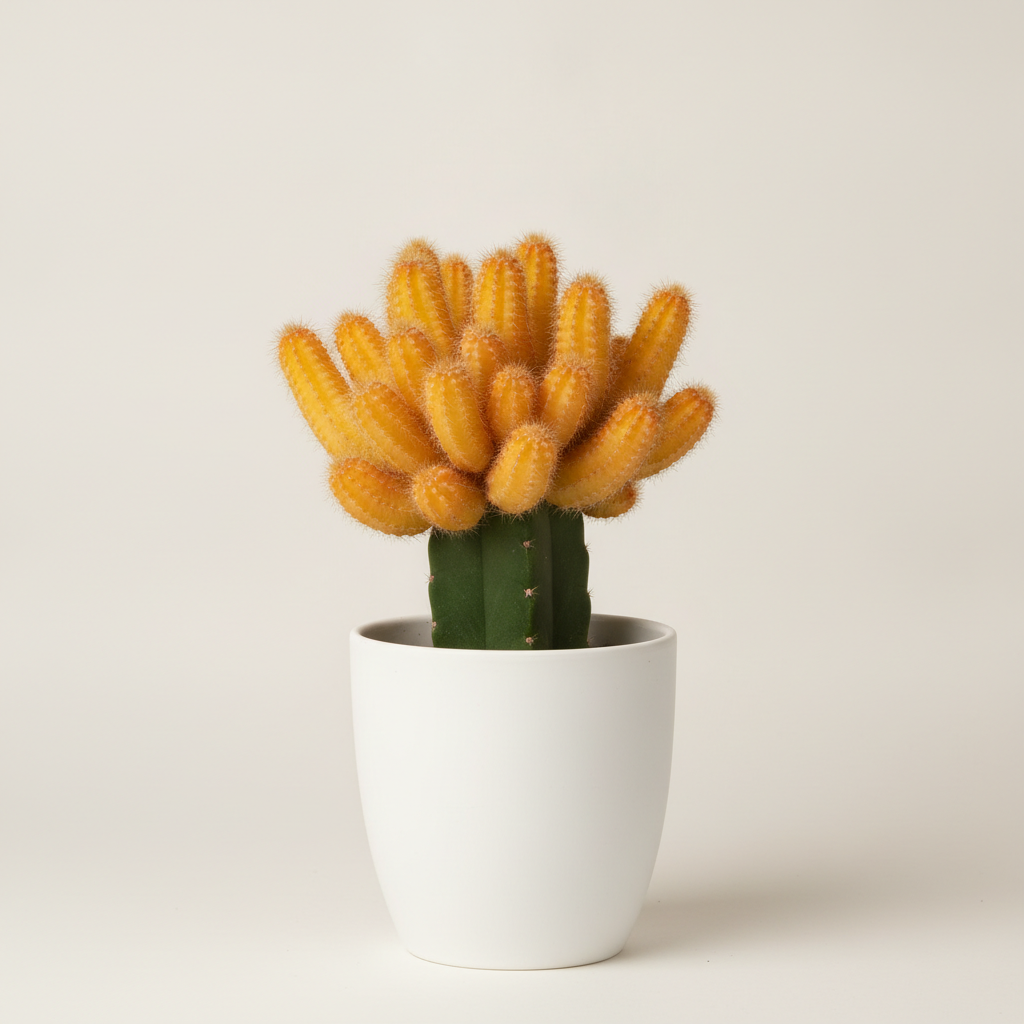
The ‘Lutea’ form is a chlorophyll-reduced mutant whose fingers glow a warm golden-yellow to soft orange instead of green. Because it produces little or no chlorophyll of its own, it cannot photosynthesise well and is almost always sold grafted onto a green rootstock that feeds it. It keeps the same clustering finger habit as the species and makes a striking specimen, but treat the graft union as the plant’s weak point and keep it dry and warm in winter.
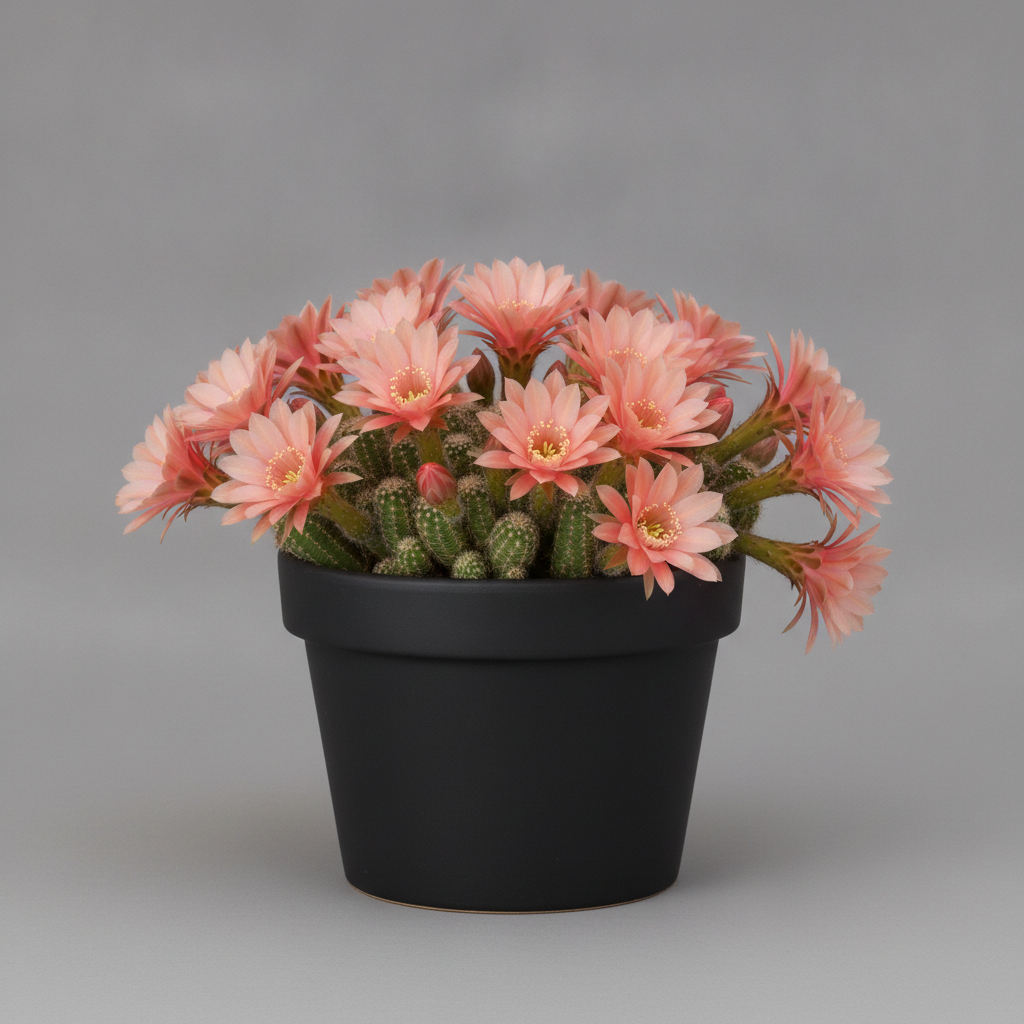
Crosses between the peanut cactus and its larger Echinopsis relatives, often sold under the old hybrid name Chamaelobivia, keep the easy clustering habit but flower in a much wider palette of salmon, pink, coral and gold. They tend to be a little more vigorous and slightly larger in the finger than the pure species, and are grown almost entirely for the size and colour range of their blooms. Care is identical to the species in every respect.
Frequently Asked Questions
Why won’t my peanut cactus flower?
By far the most common reason is the lack of a cool, dry winter rest. To set buds, the plant needs several weeks at around 5 to 10 °C (41 to 50 °F) with little or no water from late autumn into early spring. A plant kept warm and watered all year round grows perfectly well but rarely blooms. Too little light during the growing season is the second most common cause.
How often should I water a peanut cactus?
In spring and summer, water thoroughly whenever the compost has dried out almost completely, which usually works out to roughly every week to ten days indoors. In winter, cut back drastically to once every four to six weeks at most, or not at all if the plant is being kept genuinely cold. Always err on the side of underwatering.
Is the peanut cactus safe around cats and dogs?
Yes, it is not chemically toxic to cats or dogs. The only concern is physical: the fine bristles can lodge in paws, mouths and skin, so it is still wise to keep the plant somewhere pets cannot brush against it or knock it down.
Why are the stems turning brown or yellow and going soft?
Soft, discoloured fingers, especially browning from the base, are the classic sign of overwatering and rot. Stop watering immediately, move the plant somewhere warm and airy, and cut away any mushy tissue with a clean blade. Healthy fingers can be dried and re-rooted as cuttings if the base is lost.
My peanut cactus is growing thin and stretched. What’s wrong?
Thin, pale, elongated fingers are caused by too little light, a process called etiolation. Move the plant to a brighter spot with a few hours of gentle direct sun, acclimatising it gradually to avoid scorch. The stretched growth will not revert, but new growth will come in short and plump, and you can propagate healthy fingers to start a tidier plant.
How big does a peanut cactus get?
It stays small. Individual fingers reach around 15 cm (6 in) long and about 1 to 1.5 cm thick, while the clump gradually spreads to fill and spill over a pot, reaching perhaps 30 cm (12 in) across over many years. This modest size is part of what makes it such a good windowsill plant.






