
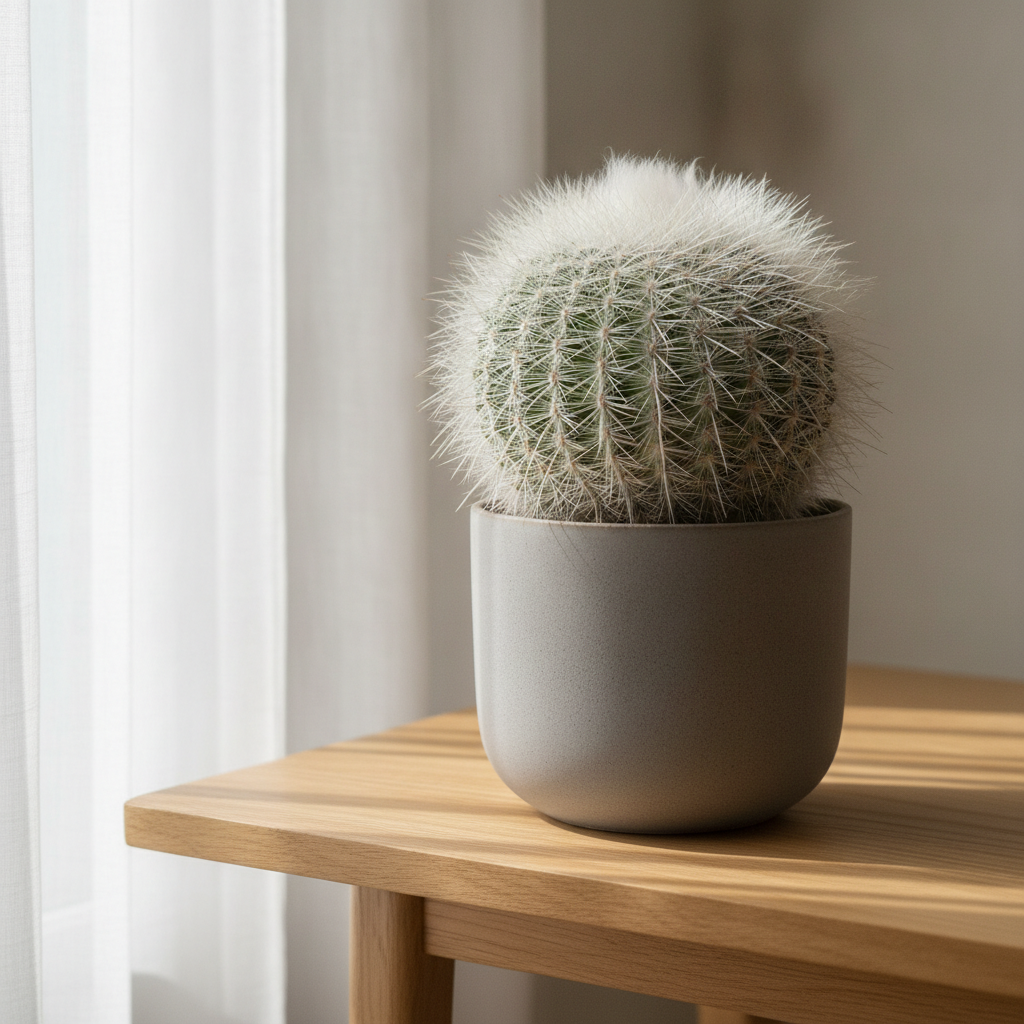
The silver ball cactus (Parodia scopa) earns its name honestly: a solitary, near-spherical body wrapped so densely in fine white spines that the green skin beneath all but disappears, leaving what looks like a soft silver snowball perched on a windowsill. Native to the rocky grasslands of southern Brazil, Uruguay and northern Argentina, it was known for decades as Notocactus scopa, and many nursery labels and older books still carry that name. Reaching around 15 to 25 cm (6 to 10 inches) tall over many years, it stays compact enough for the brightest corner of a sill yet rewards patience with a crown of glossy canary-yellow flowers each summer.
Among cacti it counts as genuinely forgiving, which is much of its appeal for anyone wary of spines and specialist routines. Give it strong light, a gritty pot that drains in seconds and a long dry rest through winter, and it will hold its silvery coat dense and its growth steady for decades. The gap between merely keeping a silver ball cactus alive and coaxing it to flower comes down to a handful of details, most of them about restraint rather than effort. This guide works through light, watering, soil, feeding, propagation and pests in turn, with the specific numbers and seasonal cues that separate a surviving plant from a thriving one.
Contents
- Quick Reference
- Why the Silver Ball Cactus Makes a Rewarding Houseplant
- Light Requirements
- Watering & Humidity
- Soil, Potting & Repotting
- Fertilising
- Propagation
- Pests & Diseases
- Popular Varieties
- Frequently Asked Questions
Quick Reference: Silver Ball Cactus at a Glance
| Light | Bright direct light; at least 4 to 6 hours of sun. A south or west windowsill indoors. |
| Watering | Soak thoroughly, then let the soil dry out completely. Roughly every 10 to 14 days in summer, none in winter. |
| Temperature | 18 to 27 degrees C (64 to 81 degrees F) in growth; a cool, dry rest at 7 to 10 degrees C (45 to 50 degrees F) in winter. |
| Humidity | Low. 30 to 50 per cent is ideal; it dislikes damp, stagnant air. |
| Fertiliser | A low-nitrogen cactus feed once a month in spring and summer only. |
| Toxicity | Non-toxic to cats, dogs and humans. The fine spines are the only real hazard. |
Why the Silver Ball Cactus Makes a Rewarding Houseplant
Few plants pack as much visual character into so small a footprint. A mature silver ball cactus is a tidy sphere the size of a large orange, entirely sheathed in soft-looking white spines that catch and scatter light so the whole plant seems to glow. It is architectural without being demanding, and because it grows slowly it holds that neat form for years rather than sprawling or outgrowing its spot the way many foliage houseplants do. For anyone furnishing a bright sill, a shelf or a desk, it reads as a living ornament that happens to need almost nothing from week to week.
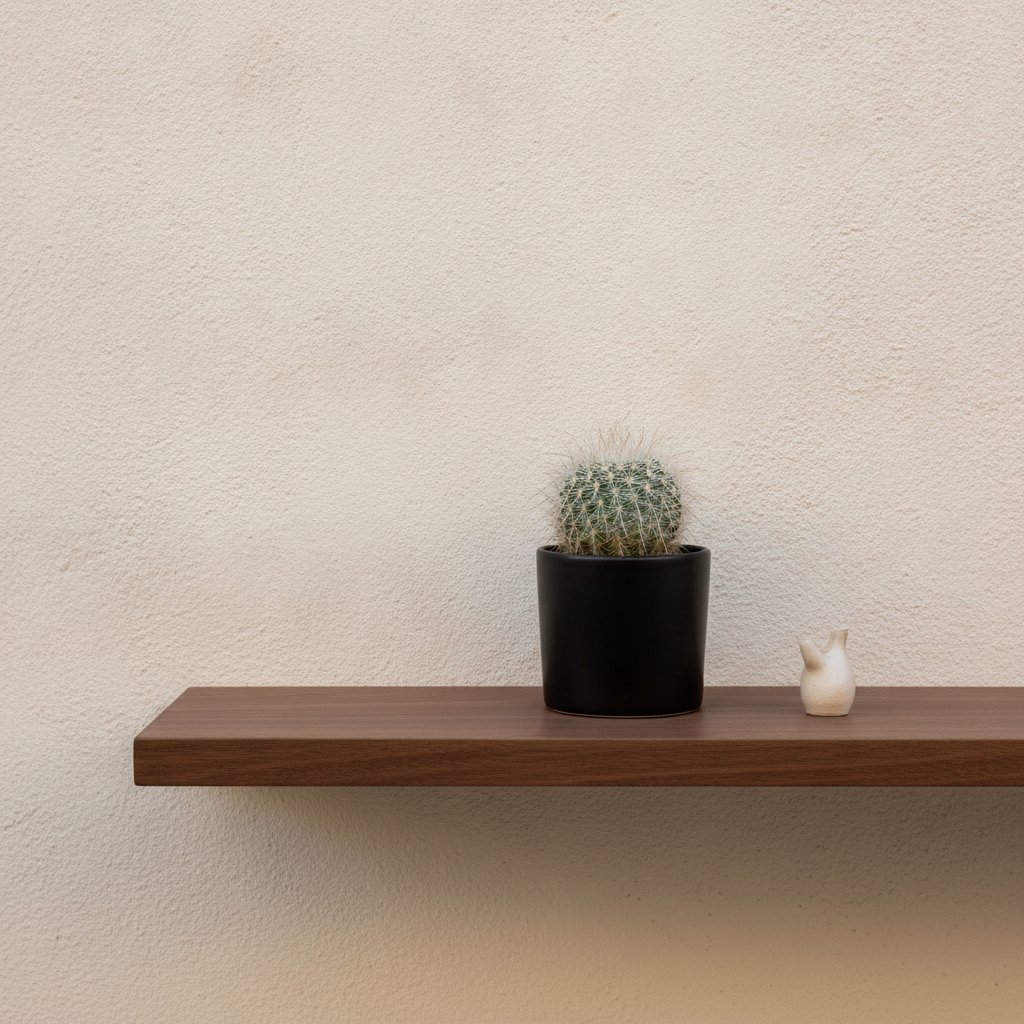
The forgiving reputation is well earned. This is a cactus that shrugs off missed waterings, tolerates dry indoor air that would crisp a fern, and asks only that you stop watering it in winter. Its one genuine reward for good care is flowering: in early to mid-summer a well-rested plant pushes a ring of silky, canary-yellow blooms from the woolly crown, each lasting several days. Those flowers are the payoff for the cool, dry rest described later in this guide, and they turn an already handsome plant into a small annual event. Between the low upkeep, the long lifespan and the seasonal show, the silver ball cactus offers an unusually high return for very little work.
Important — Toxicity: The silver ball cactus is not toxic to cats, dogs or people, so a curious nibble will not poison a pet. The real hazard is mechanical: the fine spines break off easily and lodge in skin, paws and mouths. Site the plant out of reach of pets and small children, and handle it with folded newspaper or thick gloves.
Light Requirements
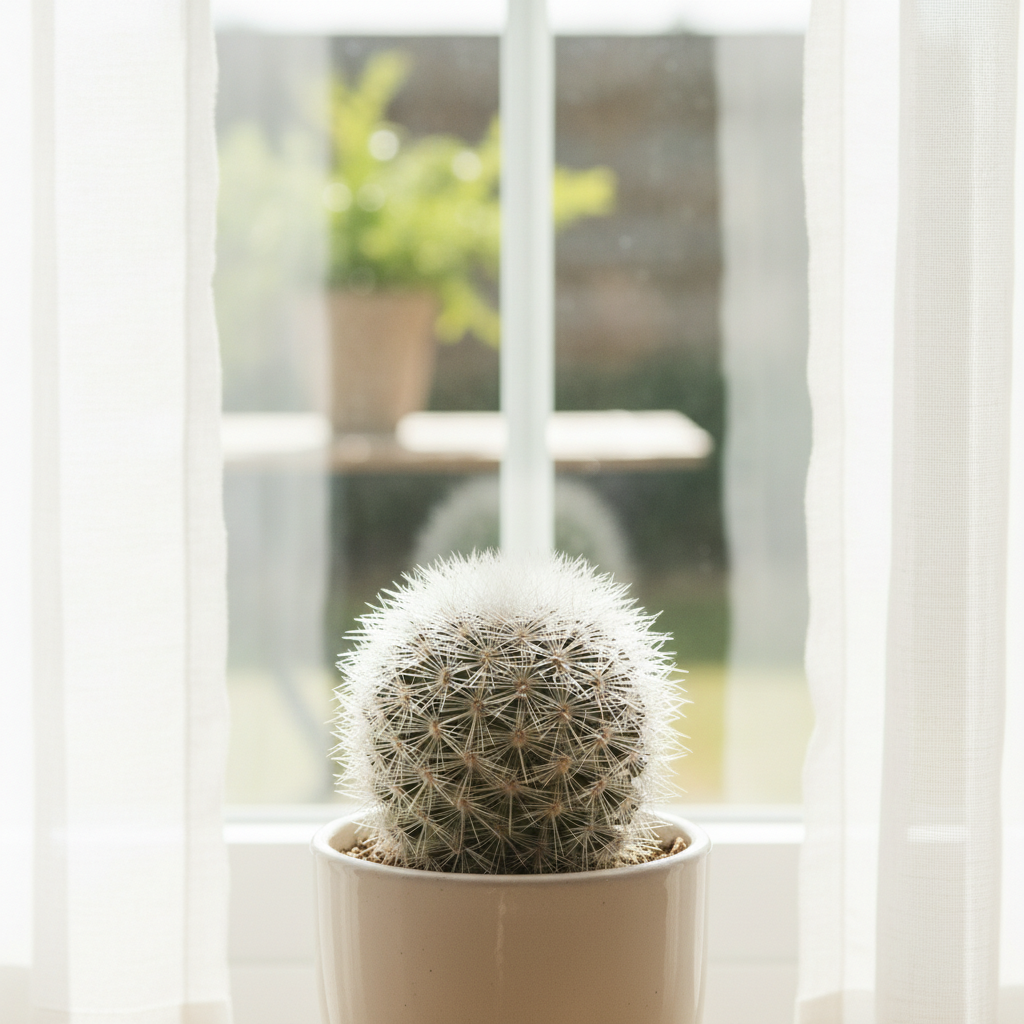
Light is the single most important factor in growing a good silver ball cactus, and it is where most indoor specimens fall short. In its native grasslands the plant sits in open, sun-drenched positions, and that heritage carries indoors: it wants as much direct light as a home can give it. Aim for at least four to six hours of direct sun a day, ideally more. Strong light keeps the body compact and the spines dense and bright white, and it is the precondition for flowering.
The ideal spot is a south-facing windowsill where the plant sits right against the glass. A west-facing window with a long run of afternoon sun works nearly as well. Anywhere further back in the room, or at a shaded window, the plant will slowly tell you it is unhappy by stretching, paling and refusing to bloom.
Light Levels Explained
Indoor light is far dimmer than we perceive, because our eyes adjust so readily. The table below translates the usual houseplant light categories into rough illuminance figures and typical positions, and shows what each means for a silver ball cactus.
| Light Category | Approx. Level | Typical Location | Outcome |
|---|---|---|---|
| Direct sun | Over 30,000 lux | On a south or west sill against the glass | Ideal. Compact growth, dense white spines, flowering. |
| Bright indirect | 10,000 to 20,000 lux | Just back from a sunny window, or an east sill | Survives and stays healthy, but often will not flower. |
| Medium | 2,000 to 10,000 lux | A metre or two from a bright window | Slow etiolation begins; growth stretches and softens. |
| Low | 500 to 2,000 lux | A north window or a dim corner | Poor. Pale, weak, elongated growth and no blooms. |
| Very low | Under 500 lux | Interior room away from windows | Unsuitable. The plant will slowly decline. |
Window Orientation and Placement
South-facing window: The best choice in the northern hemisphere. Place the cactus right on the sill, against the glass, for maximum sun. This is the position most likely to produce flowers.
West-facing window: A strong second choice. The intense afternoon light suits the plant well, though a specimen moved suddenly into hot summer west sun should be acclimatised gradually to avoid scorching.
East-facing window: Workable but marginal. Morning sun keeps the plant alive and reasonably firm, but the lower total light often means no flowers and slightly looser growth over time.
North-facing window: Not recommended. A north aspect simply does not supply enough light for a sun-loving cactus, and a plant kept there will pale and stretch. If a north window is the only option, plan to supplement with a grow light.
Pro Tip — Rotate for Even Growth: A silver ball cactus grows towards its light source and will lean or grow lopsided if left facing one way. Give the pot a quarter turn each week so every side receives equal sun and the sphere stays symmetrical.
How Light Affects Spination and Flowering
The silvery coat that gives this cactus its name is itself light-dependent. In strong sun the plant produces spines densely and evenly, and the body stays a firm, flattened globe. Starved of light, it does the opposite: new growth emerges pale and green with sparse spination, and the plant elongates into a soft, pointed column reaching for the window, a process called etiolation. This stretched growth never fully recovers its shape, so the goal is always to give enough light that new growth comes in tight and silver from the start. Flowering, too, is a direct function of light and rest. Without a genuinely bright position through the growing season, followed by the cool dry winter described under watering, most plants will never bloom no matter how well they are otherwise treated.
Warning — Direct Sunlight: Although this cactus loves sun, a plant kept in dim conditions and then moved abruptly into fierce summer glass can scorch, leaving permanent tan or white corky patches on the sun-facing side. Whenever you increase light sharply, do it over a week or two, starting with an hour or two of direct sun a day and building up.
Artificial Lighting
Where natural light is limited, a full-spectrum LED grow light is an effective substitute and can be the difference between a stretched, sulking plant and a firm, flowering one. Position the light 15 to 30 cm (6 to 12 inches) above the crown and run it for 10 to 12 hours a day during the growing season. A grow light is especially useful through the darker months in high latitudes, and for anyone whose only windows face north or east.
Seasonal Adjustments
Light needs shift with the seasons. Through spring and summer the plant wants all the sun it can get, so the sunniest sill in the house is right. As autumn arrives and day length shortens, growth naturally slows and the plant enters dormancy. During this period it needs bright light but not warmth; a cool, bright windowsill is perfect. Come spring, reintroduce stronger light gradually as the days lengthen, and resume watering only once the plant is clearly in active growth again.
Watering & Humidity
Watering is where silver ball cacti are most often lost, and almost always through kindness rather than neglect. As a desert-adapted plant it stores water in its swollen body and expects long dry spells between drinks. The rule that keeps it healthy is simple: water thoroughly, then wait until the soil is bone dry before watering again, and stop almost entirely through winter. More cacti die from a soggy pot than from a forgotten one.
When to Water
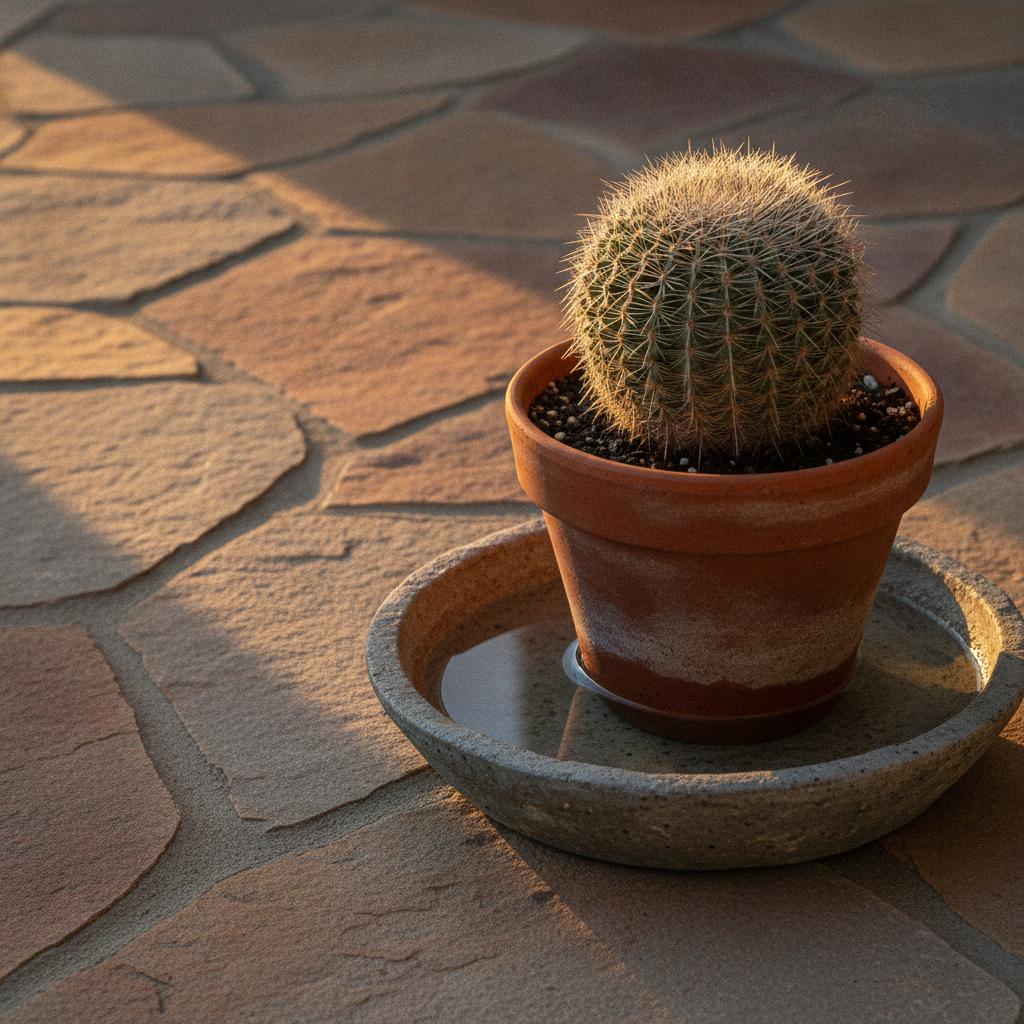
Through the active growing season, from spring to early autumn, water when the potting mix has dried out completely. In a gritty mix and a warm bright spot that usually means roughly every 10 to 14 days, but the calendar matters far less than the actual state of the soil. Check by pushing a finger or a wooden skewer to the bottom of the pot, or simply lift it: a pot that feels light and dry is ready, one that still has any weight to it is not.
In winter the picture changes entirely. From roughly November to February the plant should be kept cool and almost completely dry, with at most a light splash every four to six weeks if the body starts to look shrunken. This dry, cool rest is not optional if you want flowers: it is the trigger that sets buds for the following summer. A cactus watered and kept warm all winter stays alive but rarely blooms.
Pro Tip — The Weight Test: Learn the weight of the pot right after a thorough soak and again when it is completely dry. After a couple of cycles you will be able to judge exactly when to water just by lifting it, which is far more reliable than any fixed schedule.
How to Water Correctly
- Confirm the mix is completely dry throughout, not just at the surface.
- Water at the soil, not over the plant, or stand the pot in a shallow dish of water to soak from below and keep the spiny crown dry.
- Add water until it runs freely from the drainage holes, or until the surface is visibly damp if bottom watering.
- Let the pot drain fully. Never leave it standing in collected water.
- Empty the saucer or cache-pot after 10 to 15 minutes so the roots are not sitting in moisture.
- Wait until the mix is bone dry again before the next watering. When in doubt, wait longer.
Signs of Overwatering vs. Underwatering
| Symptom | Overwatering | Underwatering |
|---|---|---|
| Body colour | Yellowing, translucent or blackening patches | Dull, faded green |
| Body texture | Soft, mushy, water-soaked, especially at the base | Shrivelled, wrinkled, slightly shrunken |
| Soil | Stays wet for days; may smell sour | Bone dry for a prolonged period |
| Roots | Brown, slimy, rotting | Dry, thin, brittle |
| Base of plant | Brown or black soft collapse at soil line | Firm but puckered; recovers quickly once watered |
Warning — Root Rot: A soft, discoloured or collapsing base almost always means root rot from too much water. Act at once: unpot the plant, cut away every brown or mushy root and any rotten tissue with a sterile blade, let the cut surfaces callus in the air for several days, and repot into fresh, dry, gritty mix. Caught early the plant often survives; left in wet soil it will not.
Humidity Requirements
Humidity is refreshingly simple with this plant: it wants none of the fuss that tropical foliage demands. Ordinary household humidity of 30 to 50 per cent suits it perfectly, and the dry air of a heated winter room is no problem at all. If anything, the danger runs the other way.
Damp, still air encourages fungal problems and can cause the dense spine cover to trap moisture against the body, so the silver ball cactus should never be misted. It is far happier in a dry, airy position than in a humid bathroom or a crowded, poorly ventilated group of tropical plants.
Good air movement matters more than humidity. A spot with gentle natural airflow helps the soil surface dry quickly after watering and keeps fungal spores from settling, both of which protect against rot in a plant that hates staying wet.
Water Quality
Silver ball cacti are not especially fussy about water, but because they are watered infrequently and the mineral load concentrates in a fast-draining mix, hard tap water can leave chalky deposits and gradually raise soil salinity over the years. Where tap water is very hard, rainwater or filtered water is a gentle improvement. Whatever you use, let cold water come to room temperature before applying it, as an icy soak can shock the roots of a warm plant.
Soil, Potting & Repotting
If light is the first pillar of good cactus care, soil is the second, and the two work together: a sun-loving plant that dries quickly is only safe in a mix that also drains quickly. The silver ball cactus needs a sharp, gritty, low-organic medium that lets water rush through and air reach the roots. A standard peaty houseplant compost holds far too much moisture and is the most common cause of a slow, invisible root rot.
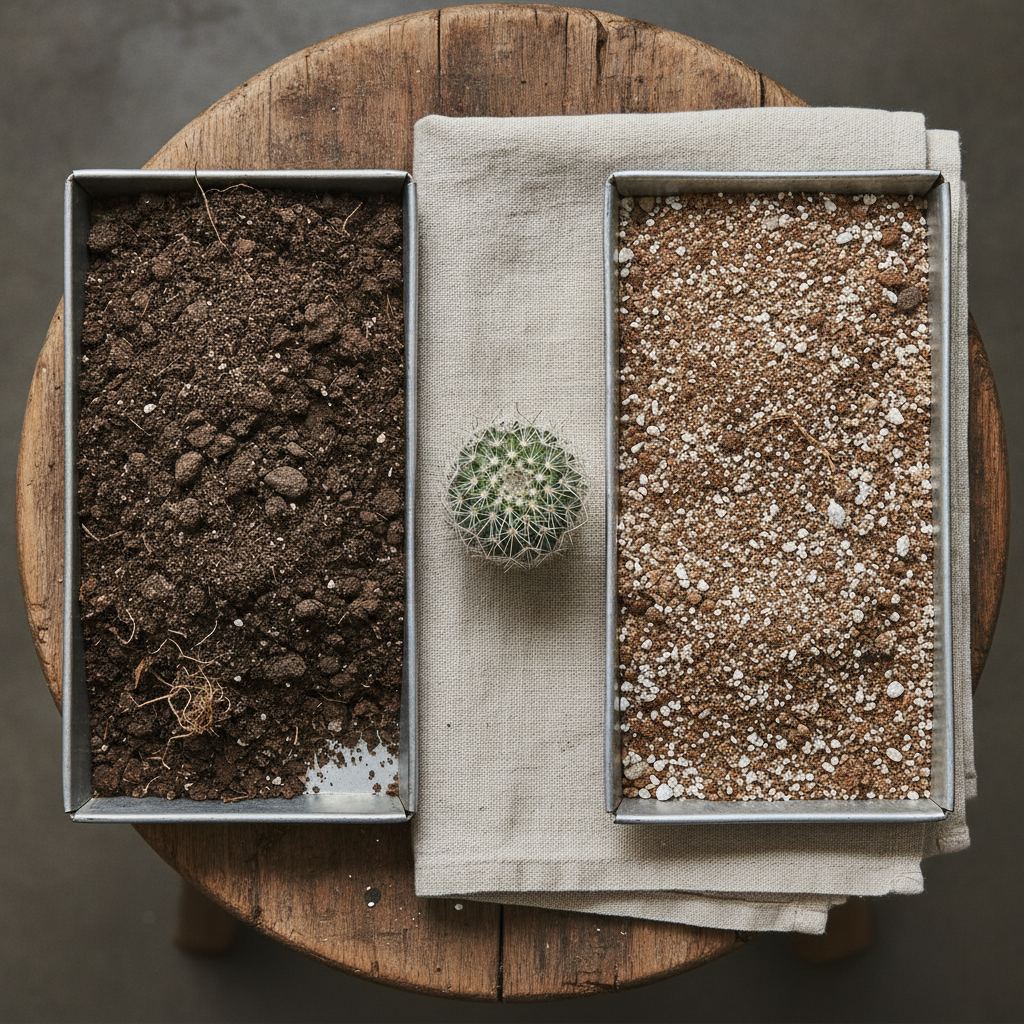
Ideal Soil Composition
The aim is a mix that is roughly half mineral grit and half open organic matter, so that it holds just enough moisture to keep the roots alive between soakings while draining almost instantly. A good starting point is a proprietary cactus and succulent compost cut with extra grit, or a blended mix along the lines below.
| Component | Proportion | Function |
|---|---|---|
| Cactus or standard potting compost | 50 per cent | Holds a little moisture and provides light nutrition |
| Pumice or coarse grit | 30 per cent | Creates air pockets and rapid drainage |
| Coarse horticultural sand or fine gravel | 20 per cent | Adds weight, sharpness and further drainage |
The plant prefers a slightly acidic to neutral soil, around pH 6.0 to 7.0, which most cactus mixes fall comfortably within. Precise pH is far less important than drainage, so it is rarely worth measuring for a windowsill plant.
Pro Tip — Quick Mix Recipe: For a reliable homemade blend, combine two parts cactus compost, one part pumice or perlite and one part coarse grit. Squeeze a damp handful: it should crumble apart immediately rather than holding together as a ball. If it clumps, add more grit.
Choosing the Right Pot
The pot is part of the drainage system, not just a container, and the right choice makes overwatering far harder to do by accident.
Drainage holes are non-negotiable. Never plant a silver ball cactus in a pot without holes. If you love a decorative cache-pot that has none, keep the cactus in a plain plastic or terracotta inner pot and lift it out to water, returning it only once it has drained fully.
Pot material: Terracotta is ideal. Its porous walls wick moisture out of the soil and let it dry evenly, which suits a plant that hates staying wet. Glazed ceramic and plastic both work but hold moisture longer, so err on the side of watering even less often in them.
Pot size: Choose a pot only slightly larger than the plant, leaving a centimetre or two of space around the body. An oversized pot holds a large reservoir of damp soil the small root system cannot use, and that lingering moisture is a direct invitation to rot.
When to Repot
Being slow-growing, a silver ball cactus needs repotting only every two to three years, or when roots begin to emerge from the drainage holes and the plant looks cramped. The best time is spring, at the start of the growing season, so the roots can re-establish while the plant is active. Always repot into dry mix and wait several days before the first watering, giving any disturbed or damaged roots time to seal over.
How to Repot: Step-by-Step
- Let the soil dry out fully first, which makes the root ball easier to remove and gentler on the roots.
- Protect your hands with folded newspaper wrapped around the body, or thick leather gloves, and ease the plant out of its pot.
- Gently crumble away the old soil from around the roots and inspect them, trimming any that are brown, soft or dead with a sterile blade.
- Add a layer of fresh dry mix to the new pot and set the cactus at the same depth it grew before, never burying the body.
- Fill around the roots with dry mix, firming lightly, and top with a thin layer of grit if you like a tidy finish.
- Leave the plant unwatered in a bright, warm spot for five to seven days, then resume normal watering.
Warning — Transplant Shock: Watering immediately after repotting is the classic mistake. Fresh cuts and torn root tips are open wounds, and wet soil around them invites rot straight into the plant. Always give the roots several dry days to callus before the first drink.
Fertilising
Silver ball cacti are adapted to lean, mineral soils and need very little feeding. A modest amount of the right fertiliser at the right time supports steady growth and flowering, but overfeeding does real harm, pushing soft, swollen growth that spoils the plant’s tight form and leaves it prone to rot and pests.
The guiding principle is little and only in season. Feed only during spring and summer, when the plant is actively growing, and never in autumn or winter, when a dormant plant cannot use the nutrients and salts simply accumulate in the soil.
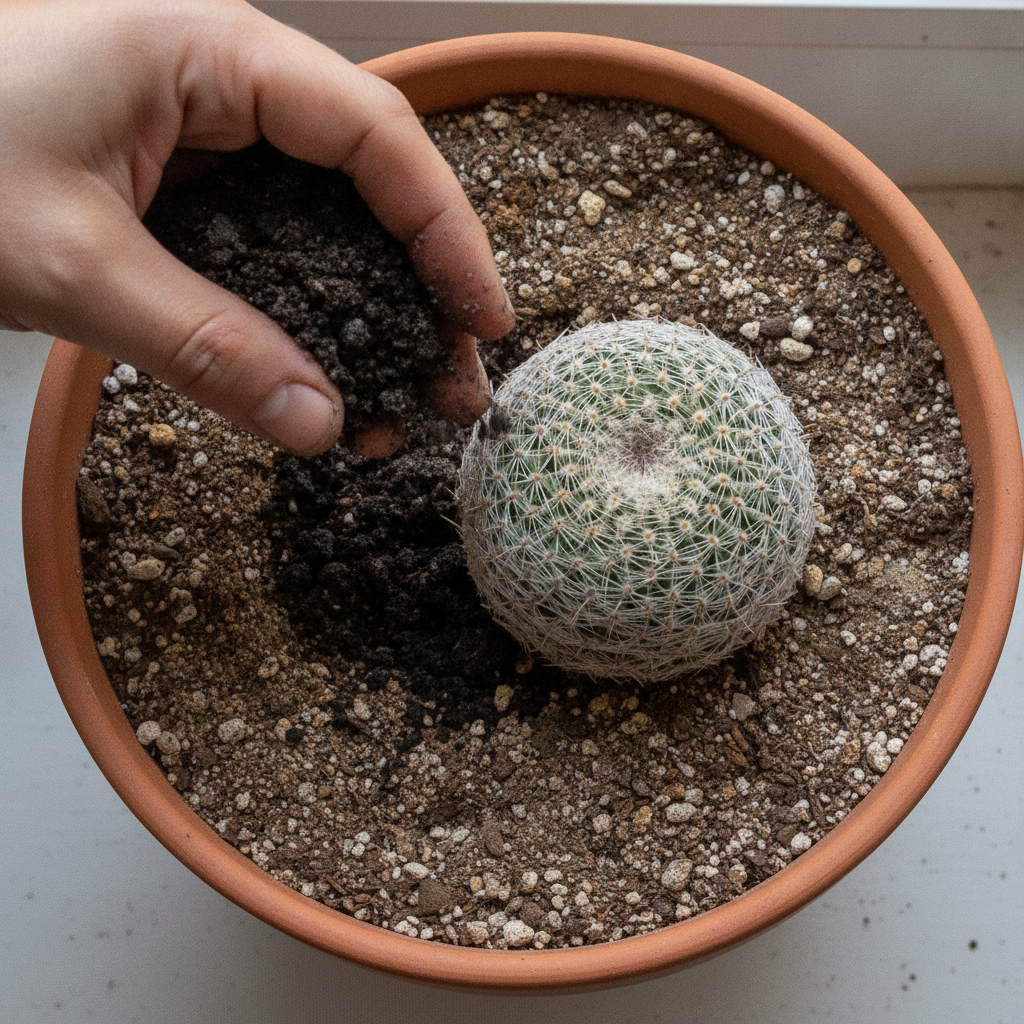
Understanding Plant Nutrients
Fertilisers are labelled with an N-P-K ratio for their three main nutrients. For cacti, a formula relatively low in nitrogen and higher in potassium and phosphorus is best, because too much nitrogen forces the soft, fast growth this plant should never make. The table below summarises the key nutrients and what their shortage looks like.
| Nutrient | Symbol | Primary Function | Deficiency Symptoms |
|---|---|---|---|
| Nitrogen | N | Green growth and body development | Slow growth, overall pale colour |
| Phosphorus | P | Root growth and flower formation | Weak roots, poor or absent flowering |
| Potassium | K | Overall vigour and stress resistance | Soft growth, low resistance to rot and pests |
| Calcium | Ca | Cell wall strength | Weak, distorted new growth |
| Magnesium | Mg | Core of the chlorophyll molecule | Yellowing of older tissue |
| Iron | Fe | Chlorophyll production | Pale or yellow new growth |
Types of Fertiliser
Liquid fertilisers: A liquid cactus feed diluted in water is the easiest option for a windowsill plant, giving you full control over strength and timing. Dilute to half the strength on the label and apply with a normal watering.
Slow-release granular: A few granules of a slow-release feed worked into the soil surface in spring will drip-feed nutrients over months. Convenient, though it offers less control than liquid feeding and should be used sparingly.
Organic fertilisers: A light top-dressing of worm castings or a dilute organic feed is a gentle, forgiving way to nourish the plant, releasing nutrients slowly and at low concentration that suits a cactus well.
Feeding Schedule
Feed once a month with a half-strength cactus fertiliser from spring through to late summer, giving perhaps four or five feeds across the whole growing season. Stop entirely by early autumn and give nothing at all through winter. This light seasonal rhythm is all a silver ball cactus needs to grow steadily and set its summer flowers.
Pro Tip — Feed a Damp Pot: Always apply liquid feed to soil that is already slightly moist, never bone dry. Fertiliser poured onto parched roots can scorch them; watering lightly first, or feeding a day after watering, spreads the nutrients safely.
How to Fertilise
- Confirm the plant is in active growth, during spring or summer, before feeding at all.
- Dilute a cactus fertiliser to half the recommended strength.
- Water lightly first, or feed the day after a normal watering, so the roots are moist.
- Apply the diluted feed to the soil, keeping it off the body of the plant.
- Resume the normal dry-out watering cycle, and do not feed again until the next month.
Warning — Salt Build-Up: Feeding too often, too strongly or into winter leaves a crust of mineral salts in the mix that can burn the roots and stunt the plant. If you see a white crust on the soil or pot rim, flush the pot thoroughly with plain water and ease off the feeding.
Propagation
Propagating a silver ball cactus is a slow but satisfying exercise in patience. Unlike leafy houseplants that root readily from a cutting, this cactus is multiplied either by separating the offsets that mature plants sometimes produce, or by raising new plants from seed. Both routes reward a gentle hand and a willingness to wait.
The species is naturally solitary, so it does not pup as freely as clustering cacti, but well-established specimens do form small offsets at the base over time. Seed is the more prolific method and the way most nursery plants are raised, though it asks for the most patience of all.
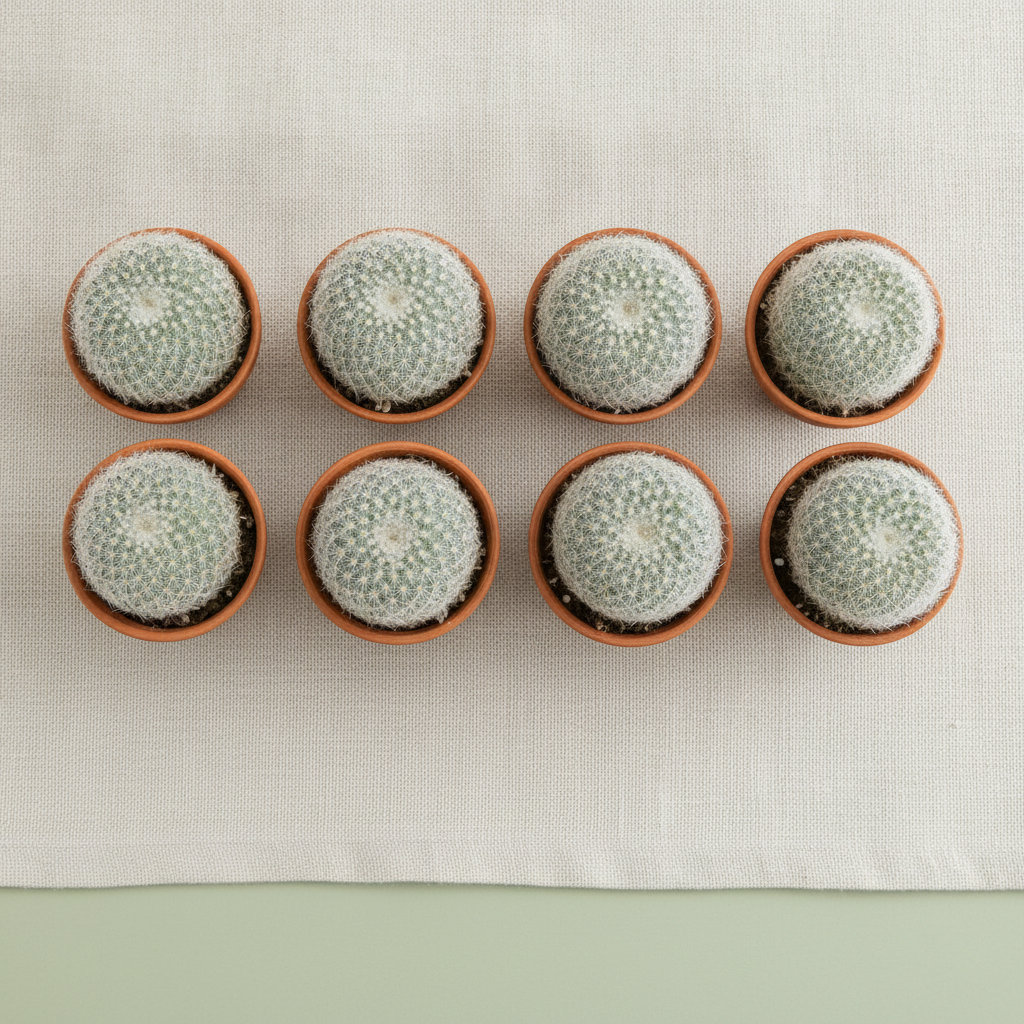
Understanding Offsets and Seed
An offset, or pup, is a small clone that forms at the base of a mature cactus and can be detached once it has grown large enough to survive on its own. Seed, by contrast, comes from the plant’s own flowers if they are pollinated, or from a specialist supplier, and produces genetically varied seedlings. Offsets give you an exact copy of the parent quickly, while seed offers many plants at once at the cost of years of growing time. Choose offsets for speed and certainty, seed for numbers and the pleasure of raising a plant from scratch.
Separating Offsets: Step-by-Step
This is the faster and more reliable method, best done in spring or early summer when the plant is growing and cut surfaces heal quickly.
- Choose a healthy offset at the base that has swelled to a reasonable size, ideally with a few roots of its own.
- Wrapping your hands to avoid the spines, gently twist or cut the offset away from the parent with a clean, sterile blade.
- Set the offset aside in a dry, shaded spot for three to seven days so the cut surface calluses over.
- Once dry and sealed, rest the offset on the surface of a small pot of barely moist gritty mix, or plant it just deep enough to stand upright.
- Keep it warm and bright but out of harsh direct sun, and mist the soil lightly only if it dries completely.
- After a few weeks roots will grip the mix; from then on treat it as a mature plant and water normally.
Pro Tip — Always Let It Callus: The single biggest cause of failed cactus propagation is planting a fresh cut straight into moist soil, where it rots before it can root. Never skip the drying period; a properly callused offset roots far more reliably.
Growing from Seed: Step-by-Step
Seed is how most silver ball cacti are commercially raised, and while slow, it is genuinely rewarding for the patient grower.
- Sow fresh seed thinly on the surface of a moist, sterile, gritty seed mix in spring.
- Do not bury the seed; these cacti need light to germinate, so leave it on the surface.
- Cover the pot with a clear lid or bag to hold humidity and keep it warm, around 21 to 24 degrees C (70 to 75 degrees F).
- Keep the surface lightly moist and in bright, indirect light. Seedlings usually appear within a few weeks.
- Once seedlings are established, gradually reduce humidity and increase light over several weeks.
- Grow them on undisturbed for a year or more before pricking out into individual small pots.
Troubleshooting Propagation
| Problem | Likely Cause | Solution |
|---|---|---|
| Offset rots before rooting | Planted before the cut callused, or soil kept too wet | Always dry the cut for several days; keep the mix barely moist |
| Offset shrivels and fails | Too dry, or no roots formed before it dehydrated | Mist the surface occasionally; start with offsets that already have roots |
| Seed fails to germinate | Old seed, buried too deep, or too cold | Use fresh seed on the surface and keep it warm and humid |
| Seedlings damp off | Fungal infection in overly wet, stagnant conditions | Use sterile mix, improve airflow, and avoid overwatering |
Pests & Diseases
A healthy silver ball cactus in a bright, airy spot is largely trouble-free, but its dense spine cover can hide pests until an infestation is well underway, so regular inspection matters. Most problems trace back to the same root causes: too much water, too little air movement, or a new plant bringing pests in from the shop.
The great majority of ailments are avoidable with good culture. Keep the plant lean, bright and on the dry side, quarantine any newcomers for a few weeks, and check the crown and base every time you water. Caught early, the pests below are all manageable.
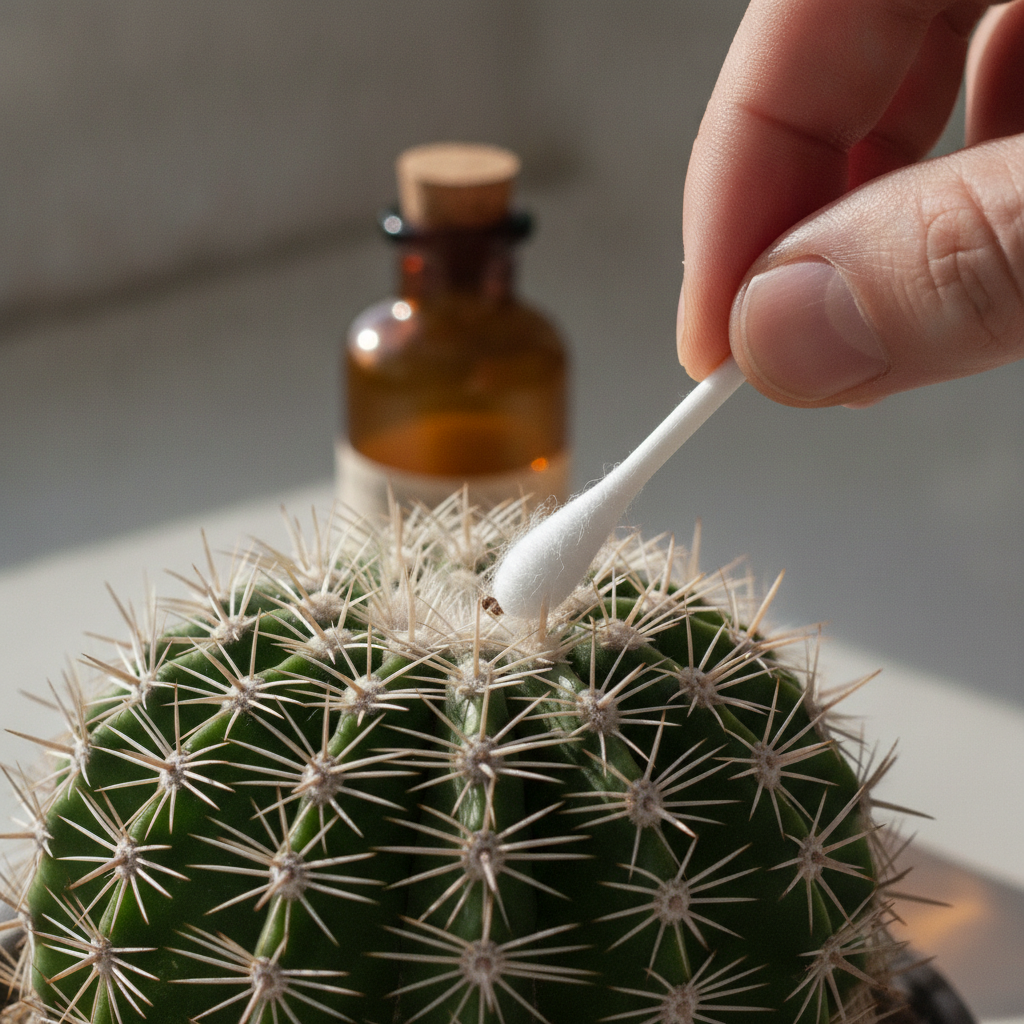
Common Pests
Mealybugs (Pseudococcus spp.)
The most common cactus pest, mealybugs appear as small, white, cottony tufts tucked between the spines and around the crown, where they suck sap and slowly weaken the plant. Root mealybugs, which infest the roots below soil level, are harder to spot and often show only as unexplained decline.
Treatment: Dab visible bugs with a cotton bud dipped in dilute isopropyl alcohol, working carefully between the spines. For heavier infestations, treat with a systemic insecticide or repeated horticultural soap sprays, and for root mealybugs, unpot, wash the roots and repot into fresh mix.
Spider Mites (Tetranychus urticae)
These tiny sap-suckers thrive in hot, dry, stagnant conditions and leave fine webbing and pale, bronzed scarring on the body, most often near the crown. They are almost too small to see, so the damage usually gives them away first.
Treatment: Improve air movement, rinse the plant if practical, and apply a miticide or horticultural oil, repeating every few days to break the fast breeding cycle. Persistent, thorough treatment is key, as mites rebound quickly.
Scale Insects (Diaspididae)
Scale appear as small, hard, brown or tan bumps clinging to the body, each a sap-feeding insect under a protective shell. They are easily mistaken for part of the plant and can build up unnoticed among the spines.
Treatment: Scrape off individual scales gently or lift them with an alcohol-dipped cotton bud, then treat with horticultural oil or a systemic insecticide to catch the mobile young.
Fungus Gnats (Sciaridae)
Small black flies drifting around the pot signal fungus gnats, whose larvae live in persistently damp soil and can nibble fine roots. They are less a threat to the plant than a clear sign the mix is being kept too wet.
Treatment: Let the soil dry out fully, which alone usually breaks the cycle, and use yellow sticky traps to catch the adults. A top layer of grit that dries fast also discourages them from laying eggs.
Common Diseases
Root and Basal Rot (Fusarium and Phytophthora spp.)
By far the most serious threat to a silver ball cactus, rot sets in when the roots or base sit in wet soil and fungal pathogens take hold. It shows as a soft, browning or blackening collapse at the base, often noticed only once it has spread upward.
Treatment: Act immediately. Unpot the plant, cut away all rotten tissue back to firm green flesh with a sterile blade, let the wound callus for several days, and repot into fresh dry mix. Prevention through careful watering and free-draining soil is far more effective than any cure.
Fungal Spots (various pathogens)
Damp, still air and water lingering on the body can bring on fungal leaf-spot-type infections, appearing as sunken, discoloured patches on the surface. These are usually cosmetic if caught early but can enlarge in humid conditions.
Treatment: Improve ventilation, keep water off the body, and remove badly affected tissue. A fungicide can help in stubborn cases, but better airflow and drier culture usually resolve the problem.
Pest and Disease Summary
| Pest / Disease | Identification | Treatment |
|---|---|---|
| Mealybugs | White cottony tufts among spines and at the crown | Alcohol on a cotton bud; systemic insecticide for heavy cases |
| Spider mites | Fine webbing and pale bronzed scarring | Miticide or horticultural oil, repeated; improve airflow |
| Scale | Hard brown bumps on the body | Scrape off; horticultural oil or systemic insecticide |
| Fungus gnats | Small black flies around a damp pot | Let soil dry fully; yellow sticky traps |
| Root and basal rot | Soft, brown or black collapse at the base | Cut out rot, callus, repot dry; water less |
| Fungal spots | Sunken discoloured patches on the surface | Improve airflow, keep body dry, remove affected tissue |
Prevention Strategies
Prevention with this plant is almost entirely about culture rather than chemicals. A cactus grown lean, bright and dry, in a gritty pot with good air movement, has firm tissue and strong natural resistance, and simply does not offer pests and pathogens the damp, soft conditions they need to establish.
Quarantine every new plant for two to three weeks before it joins your collection, and inspect the crown and base each time you water. Catching a handful of mealybugs early is a two-minute job with a cotton bud; missing them until they have colonised the whole plant is a far harder battle.
Pro Tip — Inspect at Watering Time: Make a quick pest check part of every watering. Turn the pot, look between the spines and at the soil line, and you will spot the earliest signs of trouble while they are still easy to deal with.
Popular Varieties
The silver ball cactus is grown mostly as the classic silvery species, but its wide natural range has given rise to several named subspecies and colour forms, and a couple of long-cultivated selections. These differ chiefly in the colour and density of their spines rather than in care, which is essentially identical across the group.
Because the plant was long classified as Notocactus scopa, many of these forms are still sold under that older name. The most sought-after are those with the whitest, densest wool or with a striking colour contrast between the pale radials and darker central spines.
| Variety | Spine Appearance | Light Needs | Growth Rate | Availability |
|---|---|---|---|---|
| Species (Parodia scopa) | Dense fine white radials, few pale centrals | Bright direct sun | Slow | Common |
| var. ruberrima | White radials pierced by vivid red centrals | Bright direct sun | Slow | Occasional |
| subsp. succinea | Warmer amber to honey-tinged spines | Bright direct sun | Slow | Occasional |
| subsp. neobuenekeri | Very dense, brilliant white cover | Bright direct sun | Slow | Specialist |
| Cristate forms | Fan-shaped, crested, undulating growth | Bright direct sun | Very slow | Rare |
Featured Varieties
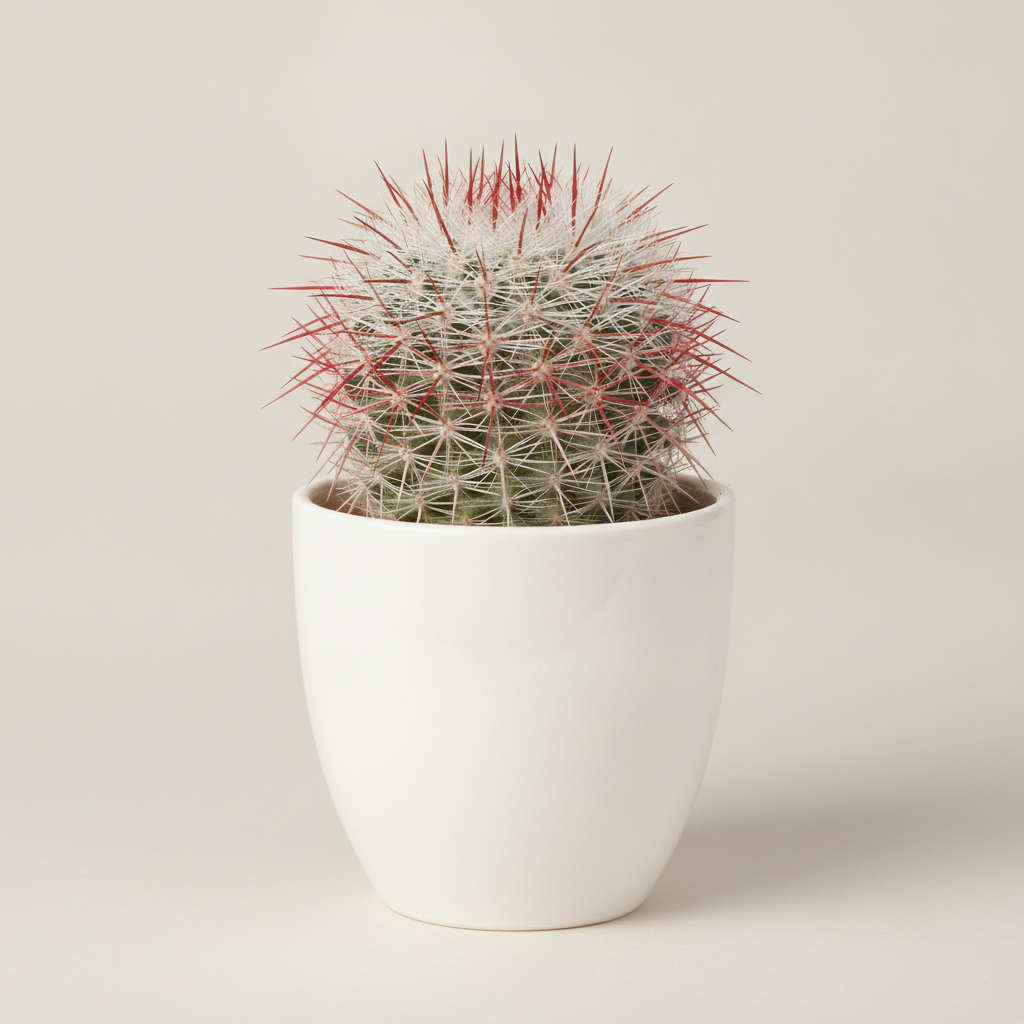
Ruberrima
The showiest form, its dense silvery-white radial spines interrupted by vivid red to crimson central spines that glow against the pale wool. The two-tone effect makes it a collector’s favourite while asking for exactly the same care as the species.
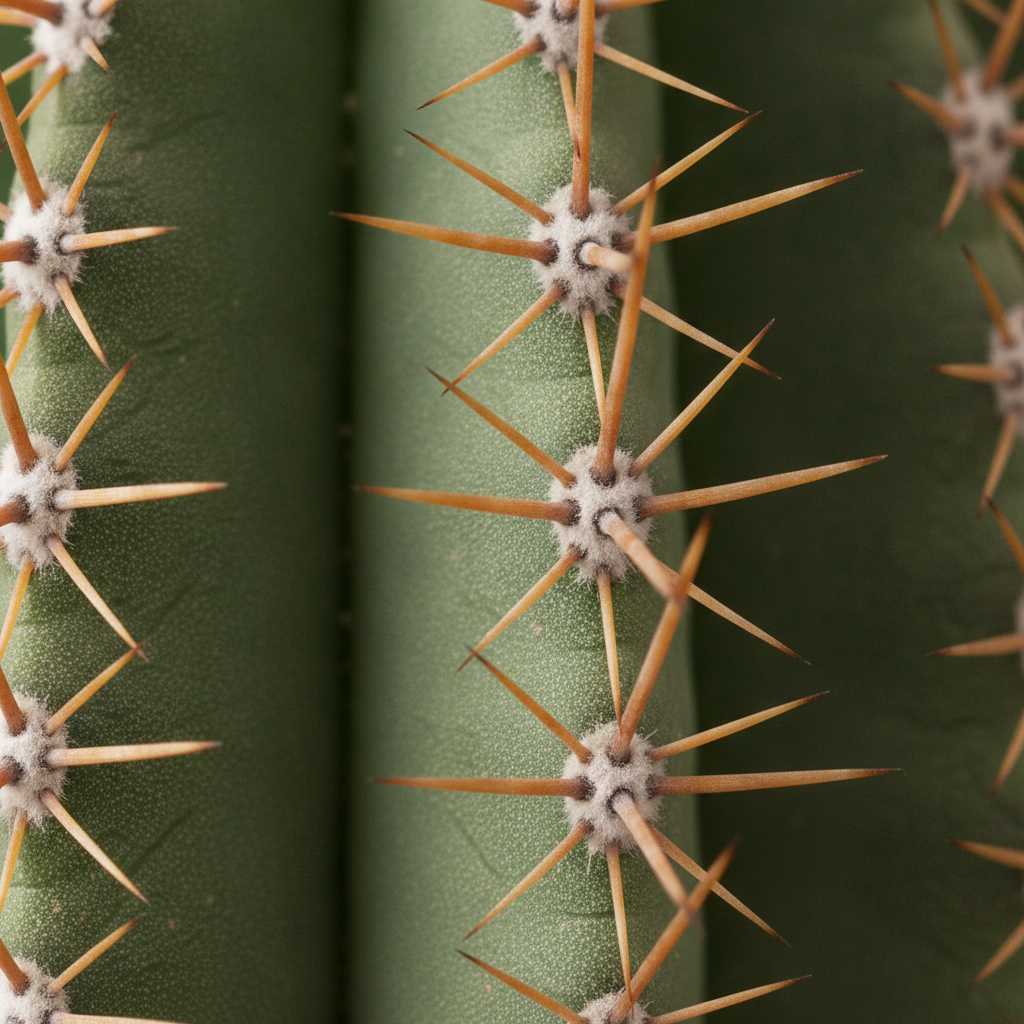
subsp. succinea
A softer, warmer form in which the spines carry an amber to honey tint over the white wool, giving the whole plant a golden cast in strong light. Subtle rather than dramatic, and prized by growers who like its gentler colouring.
Variety Profiles in Detail
Ruberrima (Parodia scopa var. ruberrima)
This red-spined form is the one most likely to catch a collector’s eye. Against the same dense white radial spines of the species, it produces central spines in shades from deep pink through to bright crimson, so the plant reads as silver shot through with red. The contrast is strongest on new growth at the crown and in bright light, which intensifies the colour. Care is identical to the species: strong sun, gritty soil and a dry winter rest.
Golden Form (Parodia scopa subsp. succinea)
Where the species is coolly silver, this subspecies leans warm, its fine spines washed with amber and honey tones that catch the light golden rather than white. It is a quieter beauty, appreciated for the way the colour shifts through the day, and grows and flowers in exactly the same way as its silver relatives.
Choosing the Right Variety for Your Space
Since every form of the silver ball cactus needs the same bright, dry culture, the choice comes down purely to looks. For maximum drama, seek out the red-spined Ruberrima; for a softer, warmer tone, the golden succinea; and for the purest silvery snowball effect, the classic species or the densely white neobuenekeri. Whichever you choose, give it your sunniest sill and it will thrive.
Frequently Asked Questions
Why won’t my silver ball cactus flower?
The two usual culprits are too little light and no winter rest. A silver ball cactus needs a genuinely sunny position through the growing season and then a cool, dry, dormant spell at 7 to 10 degrees C (45 to 50 degrees F) over winter to set buds. Give it both and a mature plant will flower canary-yellow in early to mid-summer.
How often should I water it?
Water only when the soil has dried out completely, which in summer is roughly every 10 to 14 days, and stop almost entirely in winter. The soil, not the calendar, should decide: if the pot still feels heavy or the mix is damp at the bottom, wait longer.
Why is my cactus turning soft or brown at the base?
A soft, browning or blackening base is almost always root or basal rot caused by overwatering or poorly draining soil. Unpot the plant at once, cut away all rotten tissue back to firm green flesh, let it callus for several days and repot into fresh dry gritty mix, then water far more sparingly.
Is the silver ball cactus safe around pets and children?
It is not toxic, so eating a piece will not poison a cat, dog or child. The genuine risk is the fine, sharp spines, which lodge painfully in skin and mouths, so keep the plant out of reach and handle it with gloves or folded newspaper.
Why is my cactus stretching and turning pale?
Pale, elongated growth reaching upward is etiolation, a sign the plant is not getting enough light. Move it to a much brighter spot, ideally a south or west windowsill, or add a grow light. The stretched growth will not shrink back, but new growth in good light will come in tight and silver again.
How big does a silver ball cactus get?
It is a slow, compact grower, reaching around 15 to 25 cm (6 to 10 inches) tall and roughly 8 to 10 cm (3 to 4 inches) across over many years, becoming slightly more columnar with great age. This modest, unhurried size is part of what makes it such an easy windowsill plant.
Should I mist my silver ball cactus?
No. This is a dry-loving plant that resents damp air, and misting can trap moisture among the dense spines and encourage fungal problems. Ordinary household humidity is fine, and good airflow matters far more than any added moisture.
Why is my cactus wrinkled and shrivelled?
A puckered, slightly shrunken body usually means the plant is thirsty, especially after a long dry spell or a hot summer. Give it a thorough soak and it should plump up within a day or two. If a shrivelled plant does not recover after watering, check the roots, as rot can also stop a plant taking up water.
Do I need to feed it, and how often?
Only lightly. A half-strength, low-nitrogen cactus fertiliser once a month through spring and summer is plenty, with no feeding at all in autumn or winter. Overfeeding pushes soft growth and salt build-up that do more harm than good, so when in doubt, feed less.






