
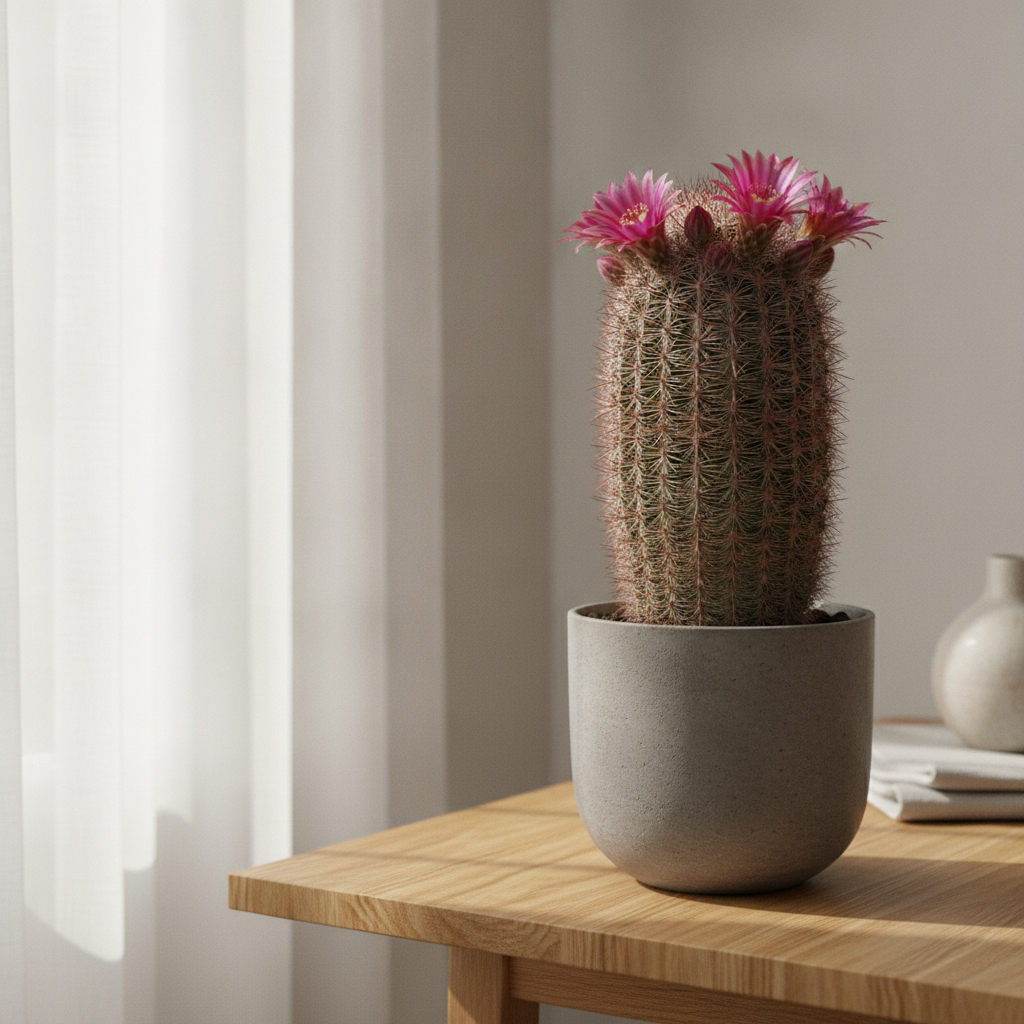
Few desert plants earn their common name as literally as the rainbow cactus. A member of the hedgehog cactus group, Echinocereus rigidissimus covers its short cylindrical body in dense, comb-like spines that lie flat against the ribs and emerge in tight horizontal bands of pink, white and rusty brown. Each band records a season of growth, so a mature plant reads almost like tree rings turned outward, a living stripe of colour that shifts with the light. It grows wild on rocky slopes and grassland in Arizona, New Mexico and northern Mexico, where blazing sun, sharp drainage and long dry spells shape everything about how it lives.
On a windowsill the rainbow cactus is genuinely low maintenance, but low maintenance is not the same as no maintenance, and the plant has firm opinions about light, water and soil. Get those three right and it will reward you with slow, steady growth and, in early summer, surprisingly large funnel-shaped flowers in vivid magenta-pink. Get them wrong, usually by watering too generously or growing it too dark, and it sulks or rots. This guide covers everything from the ideal light exposure to soil recipes, watering rhythm, feeding, propagation from offsets and seed, and the handful of pests worth watching, so you can move your plant from merely surviving to genuinely thriving.
Contents
- Quick Reference
- Why the Rainbow Cactus Makes a Rewarding Houseplant
- Light Requirements
- Watering & Humidity
- Soil, Potting & Repotting
- Fertilising
- Propagation
- Pests & Diseases
- Popular Varieties
- Frequently Asked Questions
Quick Reference: Rainbow Cactus at a Glance
| Light | Very bright direct sun, at least 4 to 6 hours daily; a south-facing window indoors |
| Watering | Sparingly; soak fully then let the soil dry out completely. Roughly every 2 to 3 weeks in summer, once a month or less in winter |
| Temperature | 18 to 27 C (64 to 81 F) in growth; a cool, dry winter rest at 5 to 10 C (41 to 50 F) encourages flowering |
| Humidity | Low; 30 to 50 percent is ideal. Dislikes damp, stagnant air |
| Fertiliser | Low-nitrogen cactus feed at half strength, once a month during spring and summer only |
| Toxicity | Not chemically toxic to cats, dogs or humans, but the spines are a physical hazard |
Why the Rainbow Cactus Makes a Rewarding Houseplant
The rainbow cactus appeals on two levels at once. It is ornamental in a way that few small cacti are, thanks to those banded spines that catch and scatter light, and it is undemanding of your time in a way that suits busy or forgetful growers. A single specimen sits happily in a small pot for years, staying compact and sculptural, and it will not outgrow a windowsill the way a pothos or a monstera eventually will. For anyone drawn to plants but nervous about the daily attention some houseplants seem to demand, a cactus that resents being fussed over is a reassuring place to start.
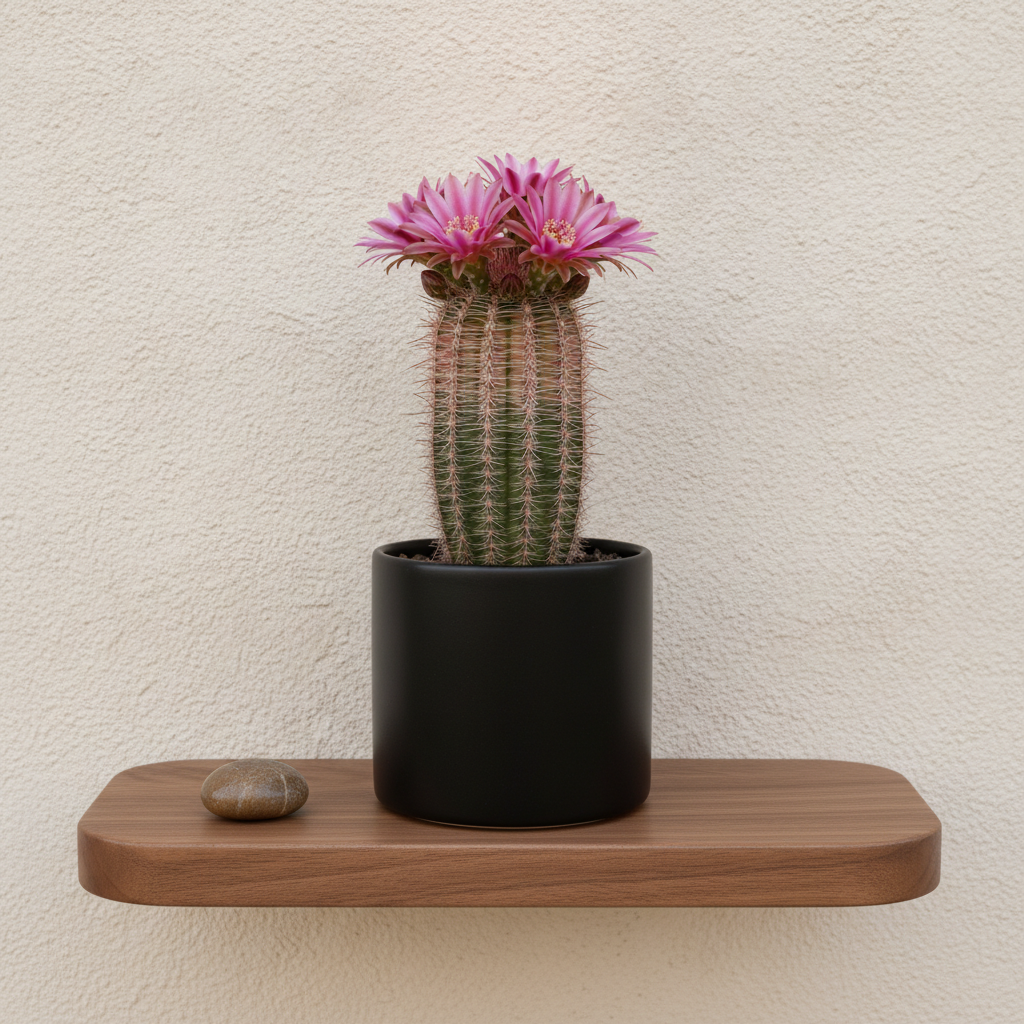
There is also the flowering to look forward to. Given enough sun and a genuine cool rest over winter, an established rainbow cactus produces large, silky flowers in late spring and early summer, typically magenta-pink with a paler throat, that can be nearly as wide across as the plant itself. Set against the muted stripes of the body, the effect is startling. The difference between a plant that merely survives on a dim shelf, holding on but never colouring up or blooming, and one that thrives in full light comes down to giving it conditions that echo the open, sun-baked slopes it comes from. That is the through-line of everything below.
Important — Toxicity: The rainbow cactus is not listed as toxic to cats, dogs or people, so an accidental nibble is unlikely to poison a curious pet. The real risk is mechanical. The fine, comb-like spines break off easily and lodge in skin, paws and mouths, so keep the plant out of reach of pets and small children, and handle it with folded newspaper or thick gloves.
Light Requirements
Light is the single most important factor in keeping a rainbow cactus healthy, and it is where most indoor failures begin. This is a full-sun desert plant, and it wants as much direct light as your home can offer. In the wild it grows fully exposed on rocky ground, so the bright, filtered light that keeps a fern content will slowly starve a rainbow cactus, causing it to stretch, pale and lose the tight banding that makes it worth growing.
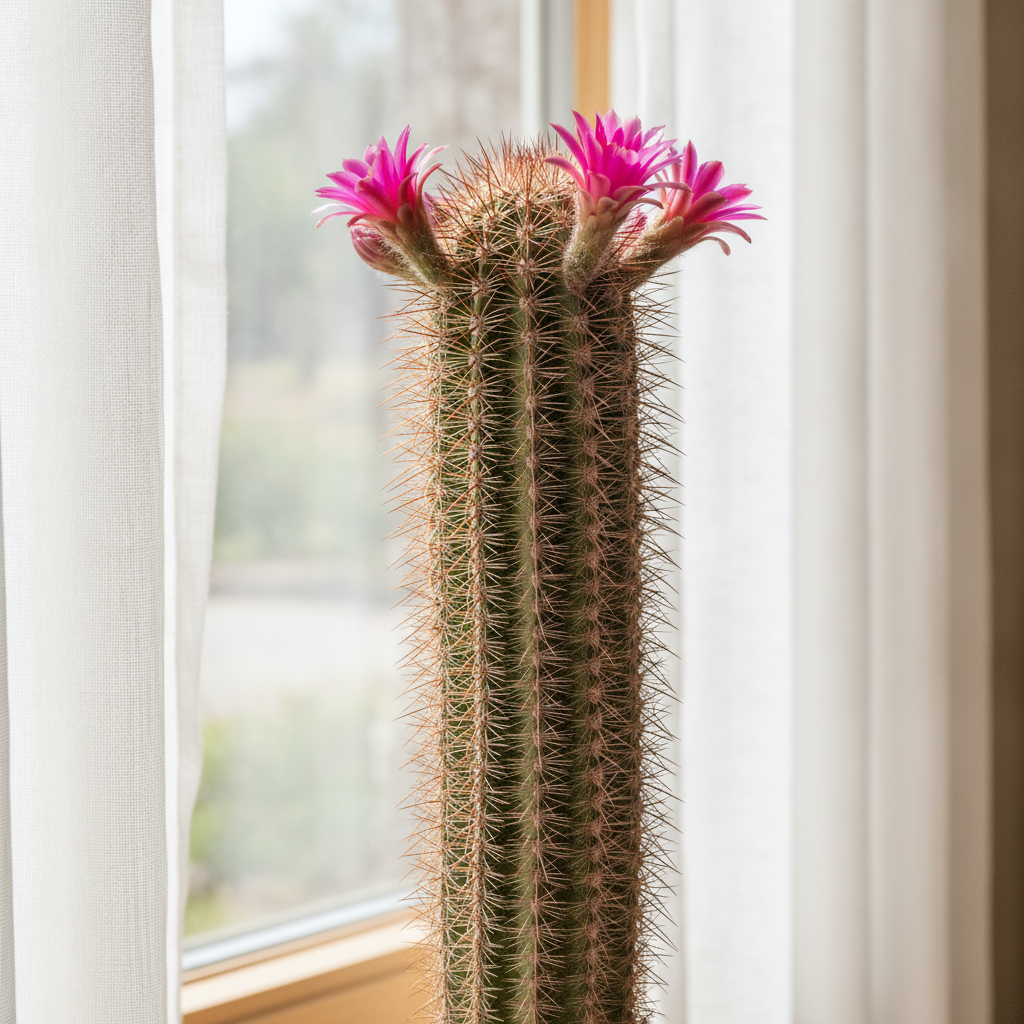
Indoors, aim for a minimum of four to six hours of direct sun each day, and more if you can manage it. A south-facing windowsill is the natural home for this plant in the Northern Hemisphere. In summer it also appreciates time outdoors, on a sunny balcony or patio, provided it is introduced to the stronger outdoor light gradually so the skin does not scorch.
Light Levels Explained
The categories below describe how different indoor light levels translate into outcomes for a sun-loving cactus. The lux figures are approximate, and the point is less the exact number than the direction of travel: the brighter, the better, right up to full direct sun.
| Light Category | Approx. Level | Typical Location | Outcome |
|---|---|---|---|
| Full direct sun | 50,000 lux and above | On a south-facing sill, unobstructed | Ideal; tight banding, compact growth, best flowering |
| Bright indirect | 10,000 to 20,000 lux | Near an east or west window | Survives but may stretch slightly and flower poorly |
| Medium | 5,000 to 10,000 lux | A metre or two back from a bright window | Etiolation likely; weak, pale, elongated growth |
| Low | 1,000 to 5,000 lux | North window or interior room | Decline; the plant loses colour and eventually rots |
| Very low | Below 1,000 lux | Hallway, far from any window | Unsuitable; the plant will not survive long term |
Window Orientation and Placement
South-facing window: The best position by a wide margin. It delivers the longest, strongest exposure and suits the plant year round. Push the pot right up to the glass.
East-facing window: Workable, offering strong morning sun that is gentle on the skin, but the total daily dose is usually short of ideal. Expect slower growth and less reliable flowering.
West-facing window: Also workable, with hot afternoon light. Watch for heat build-up behind glass on summer afternoons, which can cook a plant pressed against the pane.
North-facing window: Not enough light for this species. A rainbow cactus here will etiolate, losing its shape and colour, and is best moved or supplemented with a grow light.
Pro Tip — Rotate for Even Growth: Cacti grow towards the light, and a plant that is never turned will slowly lean and grow lopsided. Give the pot a quarter turn every week or two so all sides receive similar exposure and the body stays symmetrical.
How Light Affects Colour and Form
The banding that gives the rainbow cactus its name is at its most vivid under strong light. In good sun the plant grows in tight increments, laying down dense, well-coloured spine bands and keeping its squat, barrel-like shape. Starved of light it does the opposite: it etiolates, stretching upward into a pale, narrow, soft-bodied column with widely spaced spines and washed-out colour. This kind of stretched growth cannot be reversed, so it pays to get the light right from the start rather than trying to correct a plant that has already drawn itself thin.
Warning — Direct Sunlight: Although this is a sun-lover, a plant that has been growing in low light cannot be moved into blazing summer sun overnight. The pale, unhardened skin will sunburn, leaving permanent tan or white scars. Acclimatise it over two to three weeks, increasing exposure gradually, especially when moving a plant outdoors.
Artificial Lighting
If your home simply cannot supply enough natural sun, a full-spectrum LED grow light is an effective substitute. Cacti need high intensity, so position a reasonably powerful light 20 to 30 cm (8 to 12 in) above the plant and run it for 12 to 14 hours a day to mimic a long desert day. A grow light can also carry a plant through the dark months in higher latitudes, though if you want to trigger flowering you should still allow a cool, low-light winter rest rather than growing it hard all year.
Seasonal Adjustments
Light naturally weakens and shortens in autumn and winter, and the rainbow cactus responds by slowing almost to a stop. This is normal and even desirable, because the winter rest is part of the flowering cycle. Keep the plant in your brightest spot through the darker months, but do not try to force growth with heavy feeding or watering. As days lengthen again in spring, growth resumes and you can steadily increase both light and water.
Watering & Humidity
If light is where most rainbow cacti fail slowly, water is where they fail fast. This is a plant built to store moisture in its ribbed body and to endure long droughts, so the instinct to water it like a leafy houseplant is exactly the wrong one. The guiding principle is simple: water thoroughly, then wait until the soil is bone dry before watering again. When in doubt, wait longer.
When to Water
During the active growing season of spring and summer, a rainbow cactus in a small pot typically needs watering every two to three weeks, but the calendar is only a rough guide. The real test is the soil. Push a finger or a wooden skewer to the bottom of the pot, and only water when it comes out completely dry and the pot feels light when lifted. Warmth, strong light and a porous mix all speed drying, so a plant in a hot summer window drinks more often than the same plant in a cooler, duller spell.
In autumn and winter, watering drops away sharply. As the plant enters its rest, water no more than once a month, and if you are giving it a genuine cold rest to promote flowering you can withhold water almost entirely, offering just a small drink every four to six weeks to stop the roots shrivelling. A dry winter is one of the most important things you can give this plant, both for flowering and for avoiding rot.
Pro Tip — The Weight Test: Lift the pot straight after watering to learn how heavy a fully soaked plant feels, then lift it again every few days. When it feels light again, the mix has dried and it is safe to water. This quickly becomes more reliable than any schedule.
How to Water Correctly
- Check that the soil is completely dry all the way to the bottom of the pot before you begin.
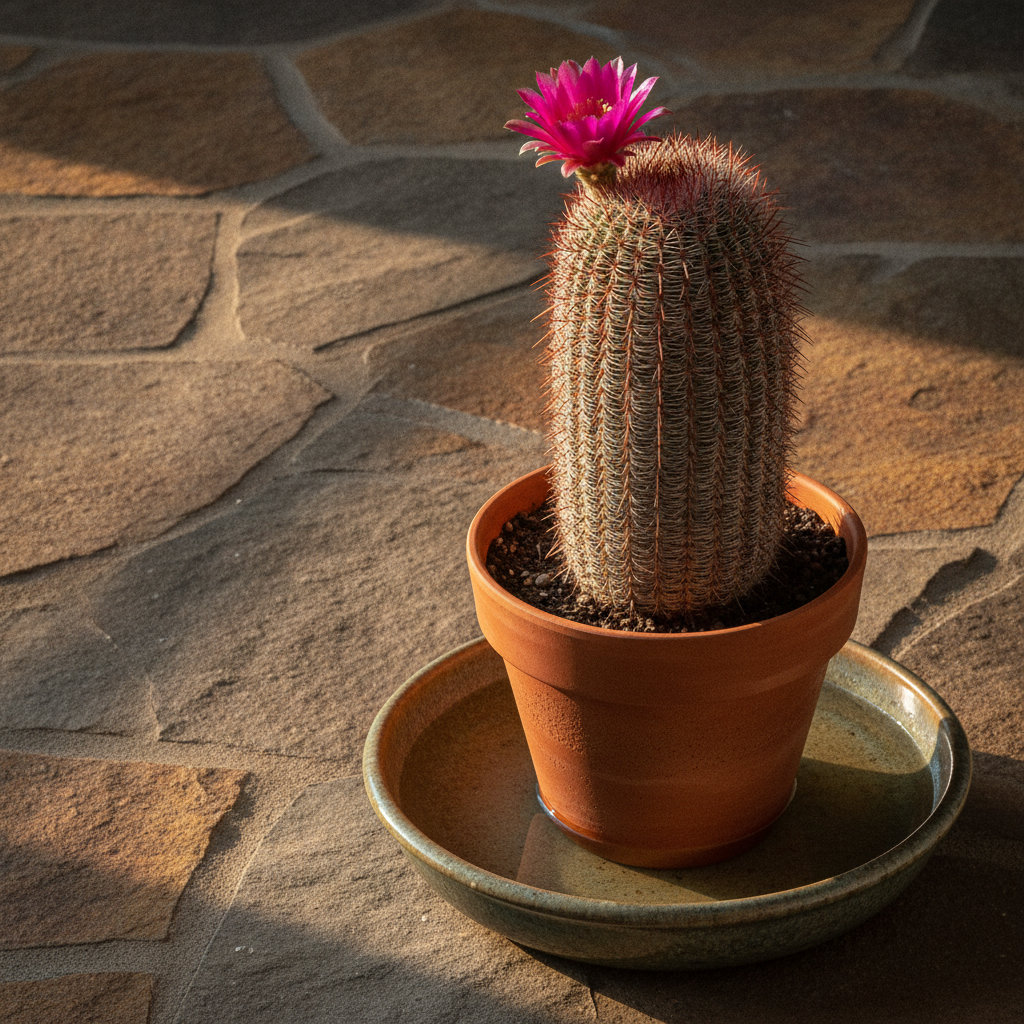
- Water at the soil surface, or stand the pot in a shallow dish of water, avoiding the body of the cactus and its crown.
- Soak the mix thoroughly so water runs freely from the drainage holes and the whole root zone is wetted.
- Let the pot drain fully for several minutes, then tip away any water left standing in the saucer.
- Return the plant to its bright spot and do not water again until the mix has dried out completely.
Signs of Overwatering vs. Underwatering
| Symptom | Overwatering | Underwatering |
|---|---|---|
| Body colour | Yellowing, translucent or blackening patches | Dull, greyish or faded green |
| Body texture | Soft, mushy, water-soaked feel | Wrinkled, shrunken, ribs drawn in |
| Base of plant | Brown or black rot spreading upward from soil level | Firm but slightly puckered |
| Soil | Stays wet for days, may smell sour | Bone dry for an extended period |
| Roots | Brown, slimy, disintegrating | Dry and thin but intact |
Warning — Root Rot: Overwatering is the leading killer of the rainbow cactus. A soft, discoloured base or a sour smell from the soil signals rot that is already advancing. If you catch it early, unpot the plant, cut away all mushy tissue with a sterile blade, let the cut surfaces callus for several days, and replant into fresh dry gritty mix. A rot that has reached the growing point is usually fatal, so prevention through restraint is far more effective than any cure.
Humidity Requirements
Coming from an arid climate, the rainbow cactus prefers dry air and is perfectly comfortable in the low humidity of a typical centrally heated home. A relative humidity of around 30 to 50 percent suits it well, and it needs no misting, pebble trays or humidifiers. In fact, the opposite is true.
Persistently damp, stagnant air is a hazard rather than a help. High humidity combined with poor airflow encourages fungal problems and slows the drying of the soil, both of which push the plant towards rot. If you keep it in a naturally humid room such as a bathroom, make sure the air moves freely and the mix still dries out fully between waterings.
There is no need to raise humidity for this plant. Where other houseplants show brown leaf tips in dry air, a cactus simply carries on, so you can site it near a radiator or a sunny sill without the humidity worries that come with tropical foliage plants. Good ventilation matters far more than moisture in the air.
Water Quality
Rainbow cacti are not especially fussy about water quality, and ordinary tap water is fine in most areas. If your water is very hard, minerals can build up as a chalky crust on the soil surface and the pot rim over time, which is unsightly but rarely harmful. Rainwater or filtered water avoids this entirely and is a good choice if you have it. Lukewarm water is gentler than a cold shock straight from the tap, particularly in winter.
Soil, Potting & Repotting
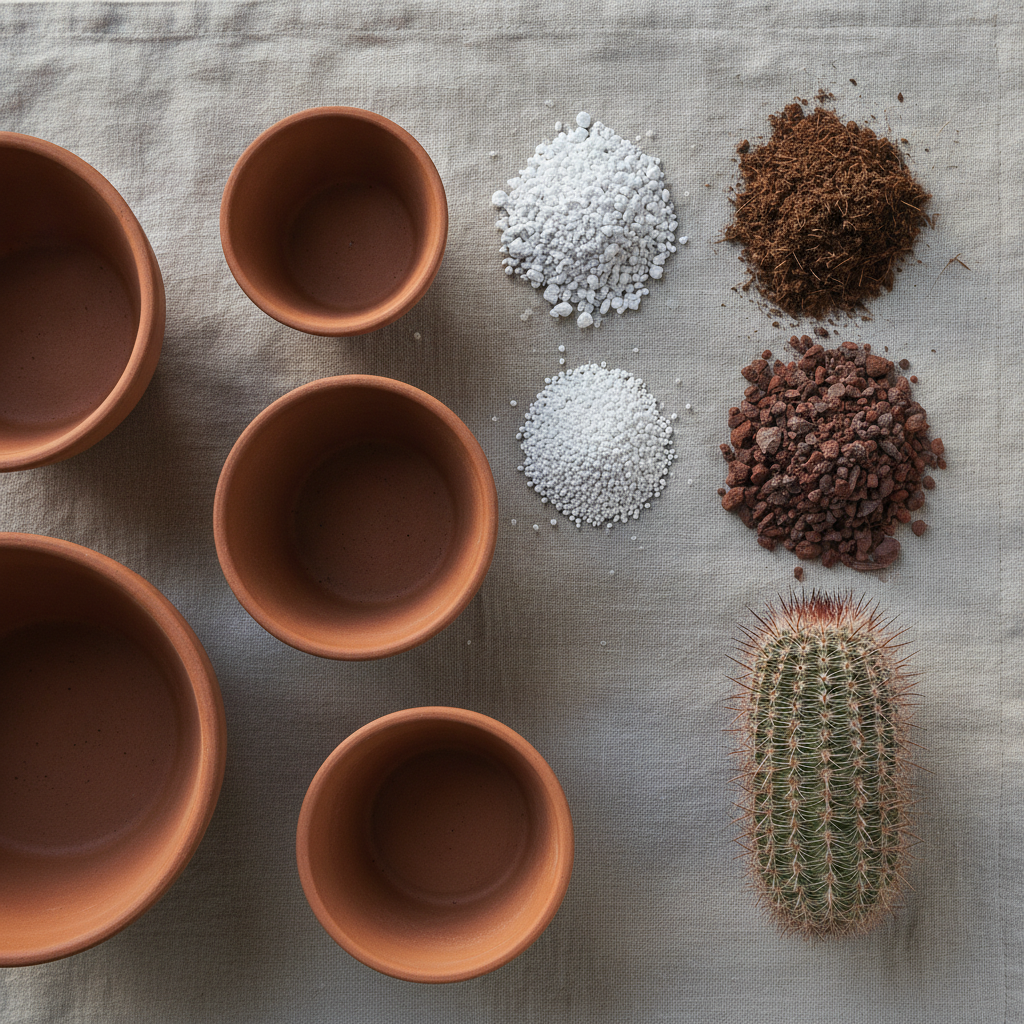
Soil for a rainbow cactus has one overriding job: to drain fast and hold very little water. A rich, moisture-retentive potting compost, the kind that suits leafy houseplants, spells disaster here, because it keeps the roots wet long enough for rot to set in. The mix should feel gritty and open, more mineral than organic, so that water rushes through and air reaches the roots.
Ideal Soil Composition
A good starting point is a commercial cactus and succulent compost cut heavily with extra grit. Aim for a blend that is at least half mineral matter, with only a modest fraction of organic material to hold a little moisture and nutrition. The exact ingredients matter less than the overall character, which should be coarse, free-draining and quick to dry.
| Component | Proportion | Function |
|---|---|---|
| Cactus or standard compost | 1 part | Holds a little moisture and provides light nutrition |
| Coarse grit or pumice | 1 part | Opens the mix and speeds drainage |
| Perlite or crushed lava rock | 1 part | Adds air pockets and prevents compaction |
| Coarse sand (optional) | Small handful | Improves weight and sharp drainage |
The rainbow cactus grows naturally in slightly acidic to neutral soils, so a pH around 6.0 to 7.0 is comfortable and no special adjustment is needed with a typical cactus mix. What matters far more than fine-tuning pH is the physical structure of the mix and its ability to dry out quickly.
Pro Tip — Quick Mix Recipe: For a reliable blend, combine one part cactus compost, one part pumice or coarse grit, and one part perlite. If you can squeeze a damp handful and it holds together in a solid ball, add more grit until it crumbles apart freely.
Choosing the Right Pot
Because this plant is small, slow and rot-prone, the pot you choose has a real influence on its health. The aim is a container that drains freely, dries quickly and is only just large enough to hold the roots.
Drainage holes are non-negotiable. Never plant a rainbow cactus in a pot without drainage. Even the grittiest mix will hold standing water at the base of a sealed container, and that reservoir of moisture is exactly what causes fatal root rot.
Pot material: Unglazed terracotta is ideal, because its porous walls wick moisture out of the soil and let it evaporate, helping the mix dry faster between waterings. Glazed ceramic and plastic hold moisture longer, so if you use them, water even more conservatively.
Pot size: Choose a pot only slightly wider than the plant itself, with just a centimetre or two of space around the body. An oversized pot holds a large volume of slow-drying soil that the modest root system cannot use, which keeps moisture around the roots for too long.
When to Repot
Rainbow cacti grow slowly and are content to stay in the same pot for two to four years. Repot only when the plant has clearly outgrown its container, when roots appear at the drainage holes, or when the old mix has broken down and no longer drains freely. The best time is spring, at the start of the growing season, and always into dry mix. Wait a week before the first watering so any roots damaged during the move can callus rather than sit wet and rot.
How to Repot: Step-by-Step
- Make sure the soil is dry, which makes the plant easier to remove and reduces root breakage.
- Protect your hands with folded newspaper, a strip of thick fabric or leather gloves to avoid the spines.
- Ease the plant out of its pot and gently crumble away the old mix from around the roots.
- Inspect the roots, trimming any that are dead, brown or mushy with a sterile blade.
- Settle the plant into a slightly larger pot of fresh dry gritty mix at the same depth it grew before.
- Firm the mix lightly around the base and top with a layer of grit if you like, then wait about a week before watering.
Warning — Transplant Shock: Watering straight after repotting is a common mistake. Freshly disturbed roots almost always carry small tears, and water on those open wounds invites rot. Keep the newly potted plant dry and out of harsh midday sun for a week or so, then resume normal watering once it has settled.
Fertilising
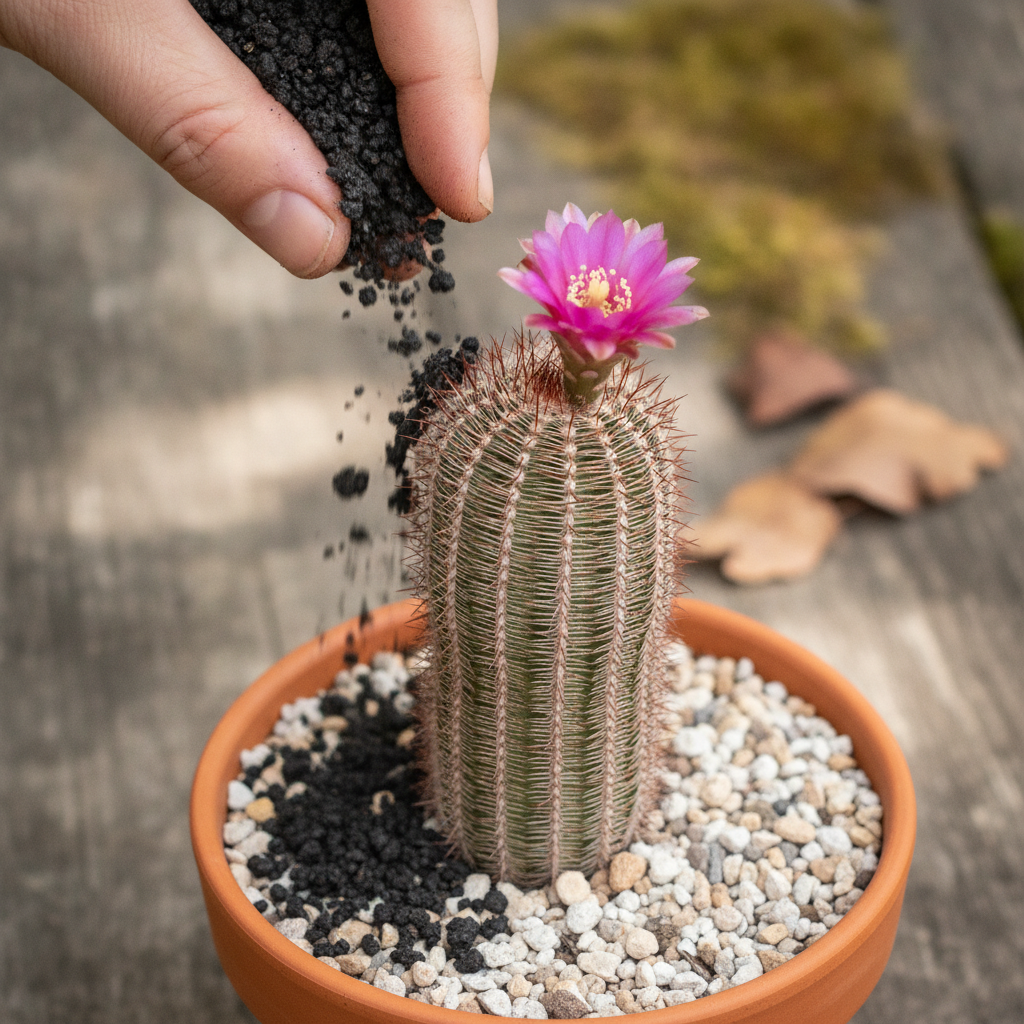
Rainbow cacti are adapted to lean, mineral soils and need very little feeding. In the wild they scrape a living from thin desert ground, so the goal indoors is a light touch that supports slow, healthy growth rather than a push for size. Too much fertiliser, especially too much nitrogen, forces soft, swollen, weakly coloured growth that is prone to splitting and rot.
Feed only during the active growing season, from spring through summer, and stop entirely in autumn and winter when the plant is resting. A cactus fed through the dormant months cannot use the nutrients, and the excess simply accumulates as harmful salts in the soil.
Understanding Plant Nutrients
Fertilisers are labelled with three numbers, the NPK ratio, showing the percentages of nitrogen, phosphorus and potassium. For cacti a formulation low in nitrogen and relatively higher in phosphorus and potassium is best, as it favours firm growth, strong roots and flowering rather than soft green bulk. The table below outlines the main nutrients and what their absence looks like.
| Nutrient | Symbol | Primary Function | Deficiency Symptoms |
|---|---|---|---|
| Nitrogen | N | Green growth and body tissue | Slow growth, pale overall colour |
| Phosphorus | P | Root development and flowering | Poor rooting, few or no flowers |
| Potassium | K | Overall vigour and stress resistance | Weak growth, poor resilience |
| Calcium | Ca | Cell wall strength | Weak, distorted new growth |
| Magnesium | Mg | Core of the chlorophyll molecule | Yellowing on older tissue |
| Iron | Fe | Chlorophyll production | Pale yellowing of newest growth |
Types of Fertiliser
Liquid fertilisers: A liquid cactus feed diluted to half the recommended strength is the easiest and safest option. It is taken up quickly and lets you control exactly how much the plant receives, which suits a species that wants only a little.
Slow-release granular: A few granules of a low-nitrogen slow-release feed worked into the soil surface in spring will drip-feed nutrients across the season. Use less than the label suggests, since these products are formulated for hungrier plants.
Organic fertilisers: A light top-dressing of worm castings or a very dilute organic feed gives a gentle, forgiving nutrient boost. Organic options release slowly and are hard to overdo, which makes them well suited to cacti.
Feeding Schedule
Once a month is plenty during spring and summer. Apply your chosen feed at half strength, always to soil that is already moist rather than bone dry, and skip feeding altogether from autumn to late winter. Many growers find that even monthly feeding is generous for such a slow plant, so if in doubt, feed less rather than more.
Pro Tip — Less Is More: When it comes to feeding cacti, restraint beats enthusiasm every time. A slightly underfed rainbow cactus stays firm, compact and well coloured, while an overfed one grows soft and bloated. If you are unsure whether to feed, skip it.
How to Fertilise
- Water the plant lightly a day ahead, or feed just after a normal watering, so the roots are never exposed to fertiliser in dry soil.
- Dilute a liquid cactus feed to half the strength stated on the label.
- Apply the solution to the soil, keeping it off the body of the plant.
- Let any excess drain away and empty the saucer so salts do not concentrate at the roots.
Warning — Salt Build-Up: Over time, fertiliser salts collect in the soil and can scorch the roots, showing as browning or stalled growth. Flush the pot thoroughly with plain water every few months, letting it run freely from the drainage holes, to wash accumulated salts out of the mix.
Propagation
The rainbow cactus is not the easiest houseplant to multiply, largely because it usually grows as a solitary body rather than clustering freely. Even so, there are two dependable routes: separating any offsets or pups the plant produces, and growing new plants from seed. Both call for patience, but each is well within reach of a home grower willing to work slowly and keep things clean and dry.
Whichever method you use, cleanliness and dryness are the two watchwords. Cut surfaces must be allowed to callus before they touch soil or water, and the young plants must be kept only lightly moist, never wet, until they have rooted. Rushing either step is the surest way to lose a batch to rot.
Understanding Offsets and Seed
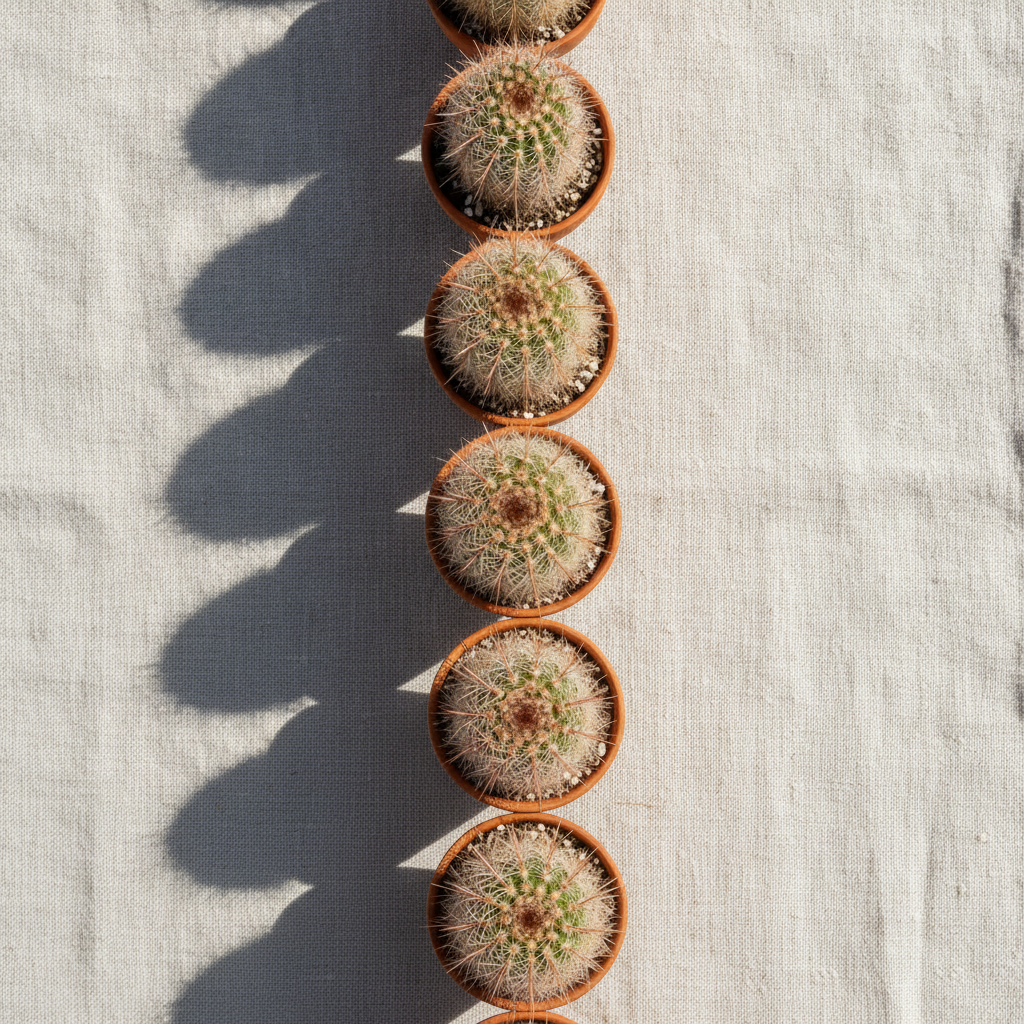
Some rainbow cacti, particularly older or well-grown plants, produce small offsets or pups at the base or side of the main body. These are miniature clones of the parent, and once they have grown large enough to handle they can be detached and rooted on their own. Seed, by contrast, is produced only when flowers are pollinated, and it yields genetically varied plants over a much longer timescale. Offsets are quicker and give you an exact copy; seed is slower but lets you raise many plants at once.
Offset Division: Step-by-Step
This is the more reliable method when your plant obliges by producing pups. Work in spring or early summer so the young plant has the whole growing season to establish.
- Choose a healthy offset that has grown to a workable size, ideally with a few of its own roots already forming.
- Protecting your hands, gently twist or cut the offset away from the parent with a sterile, sharp blade.
- Set the offset aside in a dry, shaded spot for several days to a week so the cut surface calluses over.
- Place the calloused offset on top of dry gritty cactus mix, barely settling its base into the surface.
- Keep it warm and brightly lit but out of scorching sun, and wait until roots form before the first light watering.
Pro Tip — Let It Callus: The single most important step in cactus propagation is allowing the cut to dry and seal before it meets any moisture. An offset planted while its wound is still fresh will almost always rot, whereas one that has calloused for a week roots cleanly.
Growing From Seed: Step-by-Step
Seed is the way to raise rainbow cacti in numbers, and although it is slow it is not difficult. Sow in spring for the longest first season of growth.
- Fill a shallow tray or pot with a fine, gritty seed mix and firm it level, then moisten it.
- Scatter the tiny seeds thinly across the surface and press them in very lightly without burying them, as they need light to germinate.
- Cover the container with a clear lid or bag to hold humidity, and keep it warm at around 21 to 27 C (70 to 81 F) in bright, indirect light.
- Keep the surface just barely moist until the pinhead-sized seedlings appear, which can take a few weeks.
- Gradually increase ventilation as they grow, and once the seedlings are large enough to handle, prick them out into individual small pots.
Troubleshooting Propagation
| Problem | Likely Cause | Solution |
|---|---|---|
| Offset rots before rooting | Planted before the cut calloused, or kept too wet | Allow a longer callus period and keep the mix nearly dry |
| No roots after many weeks | Too cold, too dark or the offset was too small | Provide more warmth and bright light, and be patient |
| Seeds fail to germinate | Buried too deep, too cold, or old seed | Surface sow, keep warm and use fresh seed |
| Seedlings damp off and collapse | Fungal infection from excess moisture | Improve airflow, ease off watering, use clean sterile mix |
Pests & Diseases
Grown well, in strong light and dry, gritty soil, the rainbow cactus is a robust plant that shrugs off most trouble. The problems it does encounter are nearly always tied to excess moisture or to a few sap-feeding insects that find their way onto indoor cacti. Catching these early, before they spread, is far easier than dealing with an established infestation on a spiny plant.
Regular inspection is your best defence. Every time you water, take a moment to look over the body, the crown and the spaces between the ribs, which are the exact spots pests like to hide. The dense spines make these plants awkward to treat once pests are entrenched, so vigilance pays off.

Common Pests
Mealybugs (Pseudococcus species)
Mealybugs are the most common pest of the rainbow cactus, appearing as small, white, cottony tufts tucked between the ribs and around the crown. They suck sap, weakening the plant and leaving sticky honeydew that can turn sooty and black.
Treatment: Dab each insect directly with a cotton bud dipped in isopropyl alcohol, which kills them on contact. For heavier infestations, treat with a systemic insecticide or repeated applications of a suitable horticultural product, checking hidden crevices carefully.
Spider Mites (Tetranychus urticae)
Spider mites thrive in hot, dry conditions and are almost too small to see, but they leave fine webbing and cause pale, rusty or bronzed patches on the body where they have fed. On a cactus they often start near the crown.
Treatment: Rinse the plant gently and improve airflow, then apply a miticide or horticultural oil as needed. Because mites reproduce fast, repeat treatments at intervals until no new damage appears.
Scale Insects (Coccoidea)
Scale insects show up as small, hard, brown or tan bumps fixed to the body, often mistaken for part of the plant. Like mealybugs they feed on sap and secrete honeydew, gradually sapping the cactus of vigour.
Treatment: Scrape off individual scales carefully with a fingernail or blunt tool, then wipe the area with alcohol. A systemic insecticide helps with larger populations that are hard to remove by hand.
Common Diseases
Root and Stem Rot (Fusarium and Phytophthora species)
By far the most serious threat, rot is caused by fungi and water moulds that take hold in soggy soil. It shows first as soft, discoloured, water-soaked tissue at the base, which spreads upward and turns the body brown or black and mushy.
Treatment: Act at the first sign. Unpot the plant, cut away all affected tissue back to firm, clean flesh with a sterile blade, let it callus for several days, and replant into fresh dry mix. Prevent recurrence by watering less and improving drainage.
Fungal Spotting (various pathogens)
Damp, still air can lead to corky or discoloured spots on the body, often superficial but sometimes a sign of deeper trouble. These blemishes are usually permanent even once the cause is corrected.
Treatment: Improve ventilation, reduce humidity and keep water off the body when watering. A copper-based fungicide can halt active spread, but scars already formed will not fade.
Pest and Disease Summary
| Pest / Disease | Identification | Treatment |
|---|---|---|
| Mealybugs | White cottony tufts between ribs | Alcohol on a cotton bud; systemic insecticide |
| Spider mites | Fine webbing, rusty or bronzed patches | Rinse, improve airflow, miticide or oil |
| Scale insects | Hard brown bumps on the body | Scrape off, wipe with alcohol, systemic feed |
| Root and stem rot | Soft, brown or black mushy tissue | Cut back to clean flesh, dry out, repot |
| Fungal spotting | Corky or discoloured spots | Improve airflow, copper fungicide |
Prevention Strategies
Prevention with a rainbow cactus comes down to getting the basics right. Strong light, a fast-draining mix, careful watering and good airflow together create conditions in which pests struggle to establish and rot never gets a foothold. A plant grown hard and lean, in the way its desert origins intend, has natural resilience that no amount of chemical treatment can match.
It is also worth isolating any new plant for a couple of weeks before it joins your collection, since new arrivals are the most common way pests enter a home. Inspect the crevices and the crown closely during this quarantine, and treat any problems before the plant sits alongside your others.
Pro Tip — Inspect at Watering Time: Tie your pest checks to your watering routine. Since you water this plant only occasionally, using each session as a moment to examine the body closely means you never go too long without a thorough look, and small problems are caught while they are still easy to treat.
Popular Varieties
The rainbow cactus is a single species, Echinocereus rigidissimus, but it is grown in a handful of recognised forms and subspecies that differ mainly in the colour and density of their spines. Collectors prize these variations precisely because the banded spines are the plant’s chief ornament, and a shift towards deep pink or vivid ruby transforms its whole character.
The two most sought-after forms are the classic Arizona rainbow and the intensely coloured Rubispinus. Both are grown the same way, so choosing between them is purely a matter of the look you prefer and what you can find for sale, since the more colourful forms tend to be scarcer and pricier.
| Variety | Spine Appearance | Light Needs | Growth Rate | Availability |
|---|---|---|---|---|
| Arizona Rainbow (species form) | Bands of pink, white and rust | Full sun | Slow | Common |
| Rubispinus | Dense magenta to ruby-pink | Full sun | Slow | Uncommon |
| Rubrispinus forms | Deep red-pink banding | Full sun | Slow | Uncommon |
| Albispinus types | Predominantly white spines | Full sun | Slow | Rare |
Featured Varieties
Rubispinus
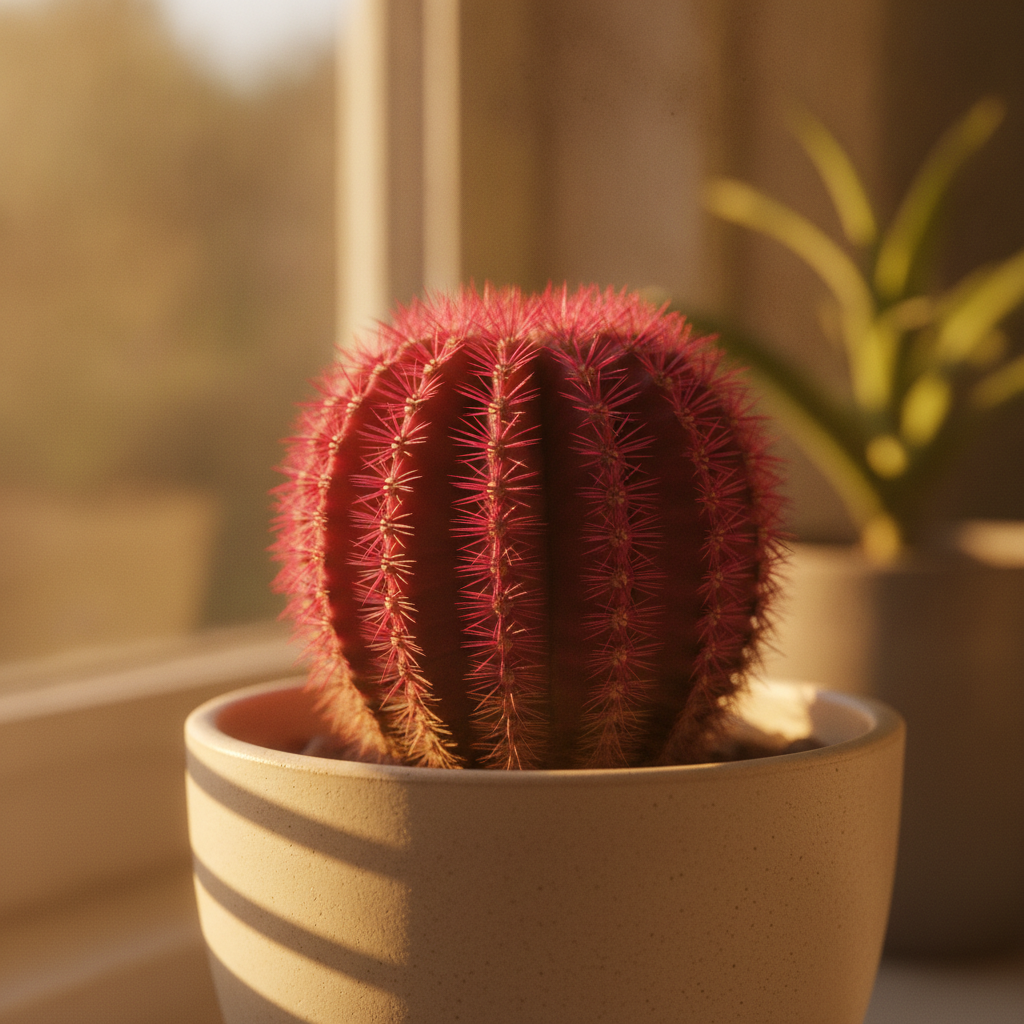
A compact form from Chihuahua clothed in dense, comb-like spines of vivid magenta and ruby-pink pressed flat against the ribs, giving the whole plant an intense, glowing colour that makes it a standout in any collection.
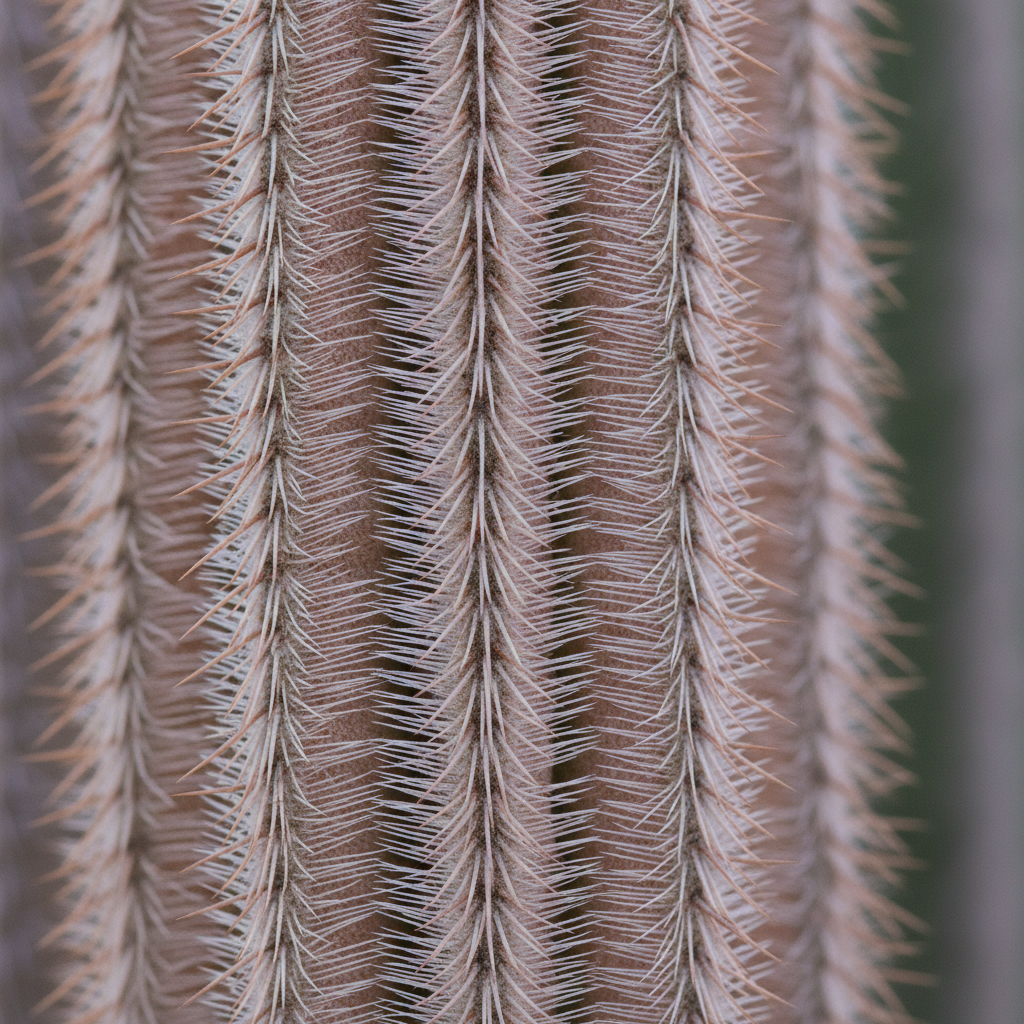
Arizona Rainbow
The classic species form, showing clear alternating horizontal bands of pale pink, chalky white and rusty brown running up the column, each band a record of a season’s growth and the source of the plant’s common name.
Variety Profiles in Detail
Arizona Rainbow (Echinocereus rigidissimus)
The type form is the plant most people picture when they hear the name. It builds a solitary, barrel-shaped body up to around 30 cm (12 in) tall, ribbed and densely covered in pectinate spines that band from pink to white to rust as the seasons turn. In early summer it crowns itself with large, funnel-shaped magenta flowers with paler centres. It is the most widely available form and the easiest to source.
Rubispinus (Echinocereus rigidissimus subsp. rubispinus)
This subspecies from the Mexican state of Chihuahua is the jewel of the group. It stays smaller than the type and swaps the subtle rainbow banding for an all-over blaze of magenta to ruby-red spines, so dense that they hide the green body almost completely. Its care is identical to the species, but its scarcity and slow growth make it a more expensive and prized plant among collectors.
Choosing the Right Variety for Your Space
Because every form of the rainbow cactus needs the same full-sun, dry, gritty conditions, the choice between them is entirely aesthetic. If you want the definitive banded look and easy availability, the Arizona rainbow is the obvious pick. If you are drawn to saturated colour and are prepared to hunt a little and pay more, Rubispinus rewards the effort with its glowing spines. Whichever you choose, a bright south-facing window and a disciplined watering hand will keep it thriving for many years.
Frequently Asked Questions
Why is my rainbow cactus growing tall and thin?
Stretched, narrow growth is called etiolation, and it means the plant is not getting enough light. It is reaching towards the nearest light source. The stretched section cannot shrink back, but moving the plant to a much brighter spot, ideally full sun, will restore normal compact growth from that point onward.
How often should I water a rainbow cactus?
Roughly every two to three weeks in the warmth of the growing season, and once a month or less in winter, but always let the soil dry out completely first. The exact interval depends on light, heat and pot size, so test the soil rather than following a fixed schedule.
How do I get my rainbow cactus to flower?
Flowering hinges on two things: plenty of direct sun through the year and a cool, dry rest in winter at around 5 to 10 C (41 to 50 F) with little or no water. This seasonal contrast mimics the desert climate and triggers the large magenta blooms in late spring and early summer. Young plants may take a few years before they are mature enough to flower.
Is the rainbow cactus toxic to pets?
It is not chemically toxic to cats or dogs. The danger is physical: the fine, sharp spines can injure paws, mouths and skin. Keep the plant somewhere pets cannot bump into or chew it.
Why is the base of my cactus turning brown and soft?
A soft, brown or black base is almost always root or stem rot caused by overwatering or poor drainage. Act quickly by unpotting the plant, cutting away all mushy tissue back to firm flesh, letting the wound callus for several days, and replanting into fresh dry gritty mix. Then water far more sparingly in future.
Can I grow a rainbow cactus outdoors?
In a hot, dry climate with mild winters it can live outdoors year round in a sunny, sharply drained spot. In cooler or wetter climates it is best grown in a pot that can spend summer outside and come indoors before autumn rain and cold arrive, since prolonged winter wet is fatal even though the plant tolerates dry cold surprisingly well.
How big does a rainbow cactus get?
It stays small and slow, typically reaching around 20 to 30 cm (8 to 12 in) tall and 5 to 11 cm (2 to 4 in) across over many years. This modest size makes it perfectly suited to a windowsill, where it will not outgrow its space.
Why has my rainbow cactus stopped growing?
Little to no growth in autumn and winter is completely normal, as the plant is resting. During the growing season, stalled growth usually points to too little light, though it can also follow repotting or a spell of stress. Ensure it has strong sun and resume light watering and feeding as spring advances.






