
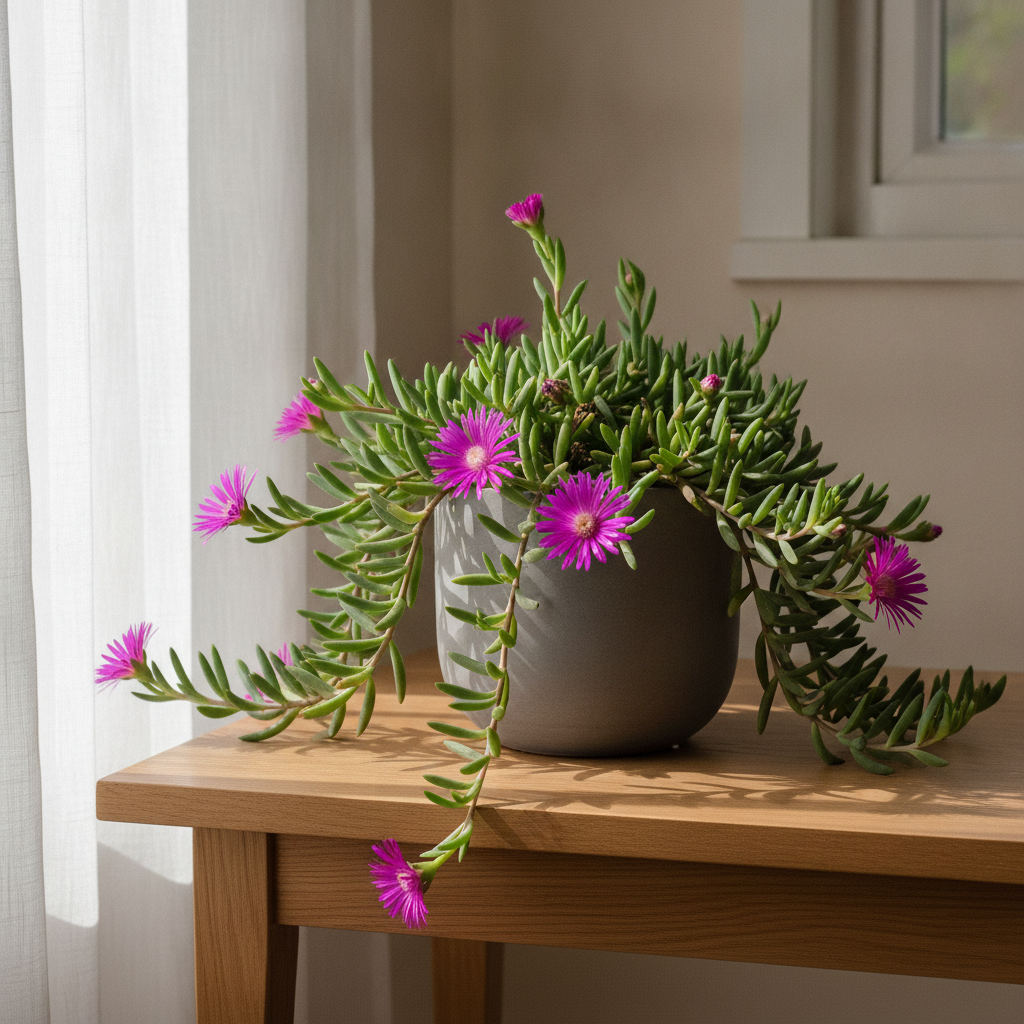
Few succulents announce themselves as loudly as the trailing ice plant. For much of the year it is a quiet cushion of slender blue-green stems, and then, on a bright morning in early summer, it detonates into hundreds of satin daisy-like flowers in a magenta so saturated it looks almost artificial. Lampranthus spectabilis earns the second half of its Latin name, spectabilis meaning spectacular, without a hint of exaggeration. Native to the sun-baked coastal slopes of South Africa’s Cape, it is a plant built for light and neglect in equal measure, which makes it both wonderfully forgiving and slightly demanding in a way that surprises new growers.
This guide covers everything needed to move a trailing ice plant from merely surviving to genuinely thriving, whether it lives in a bright windowsill pot, cascades from a hanging basket, or spreads across a gravel bed on a sheltered balcony. The difference between the two states is almost always down to light and water, and getting those two right is easier than it first appears.
- Quick Reference
- Why Grow a Trailing Ice Plant
- Light
- Watering
- Soil
- Fertilising
- Propagation
- Pests and Problems
- Varieties
- Frequently Asked Questions
Quick Reference
The table below summarises the conditions a trailing ice plant needs. Treat it as the shorthand version of everything that follows, useful for a quick check but no substitute for understanding why each figure matters.
| Botanical name | Lampranthus spectabilis |
| Common names | Trailing ice plant, hardy ice flower, showy ice plant |
| Family | Aizoaceae |
| Origin | Coastal Eastern and Western Cape, South Africa |
| Light | Full sun, the brightest position available, minimum 6 hours direct light |
| Water | Sparingly; soak then allow to dry out fully, near dormant in winter |
| Soil | Sharply draining gritty succulent or cactus mix |
| Temperature | 18 to 27 C (64 to 81 F) in growth; a cool dry rest at 5 to 10 C (41 to 50 F) |
| Humidity | Low; prefers dry air, dislikes stagnant humidity |
| Feeding | Light, low-nitrogen feed once or twice in spring and early summer |
| Growth habit | Trailing, mat-forming; 15 to 30 cm (6 to 12 in) tall, spreading 45 cm (18 in) or more |
| Flowering | Late spring to summer, blooms open only in bright light |
| Toxicity | Generally considered non-toxic to cats and dogs |
| Difficulty | Easy, provided light and drainage are right |
Why Grow a Trailing Ice Plant
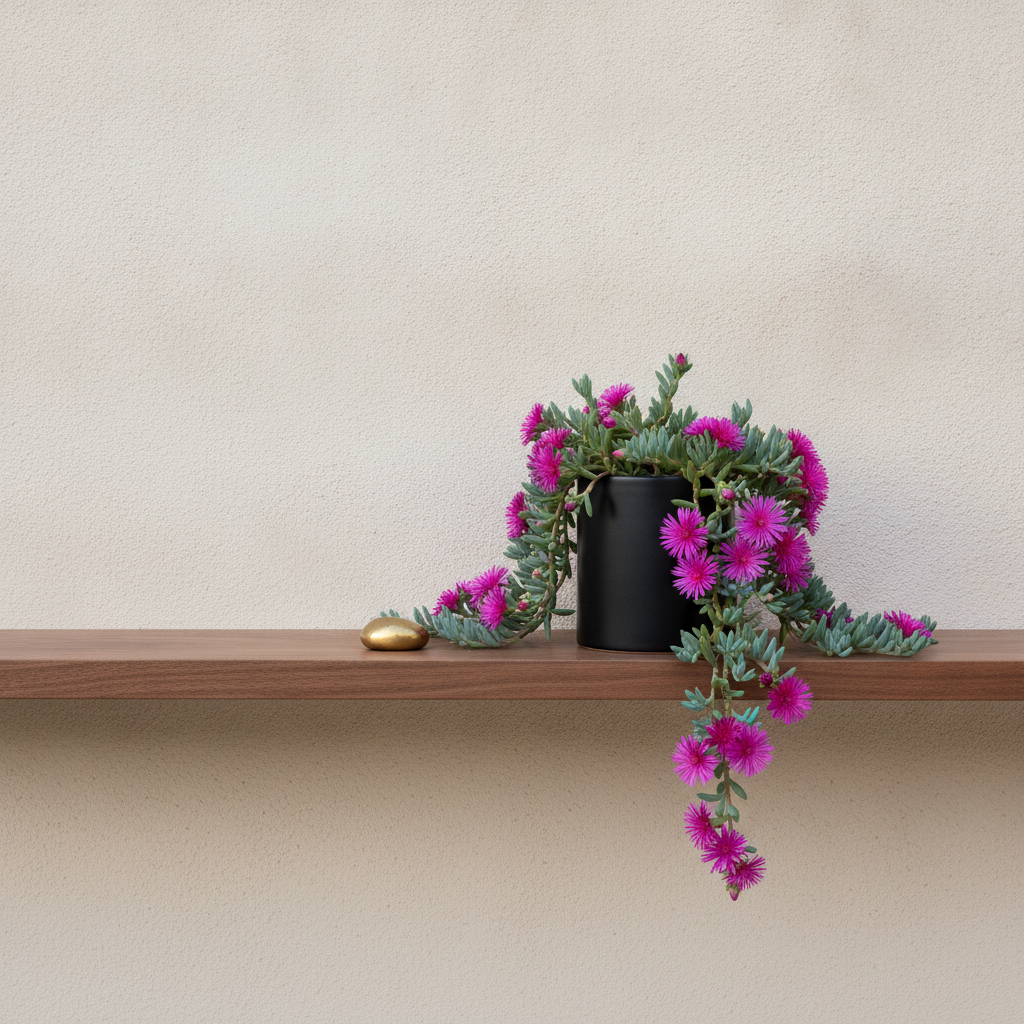
The trailing ice plant belongs to the Aizoaceae, the vast family of southern African succulents that also includes living stones, delospermas and the sprawling carpobrotus that colonise coastal dunes across much of the world. What unites them is a talent for storing water in fleshy tissue and for flowering with a generosity that seems disproportionate to the harsh, mineral soils they call home. Lampranthus spectabilis is one of the most rewarding of the group for a grower who wants colour rather than curiosity, because its blooms are large, abundant and produced on a plant compact enough to sit comfortably in a pot.
The name ice plant is worth explaining, because it causes endless confusion. It does not mean the plant tolerates ice, though this species is hardier than most of its relatives. The name comes from the surface of the leaves and stems, which are covered in tiny bladder-like cells that catch the light and glisten as though dusted with frost or sugar. In strong sun this shimmer is unmistakable, and it is one of the small pleasures of growing the plant up close. The leaves themselves are slender, cylindrical to three-sided in cross section, and a cool blue-green that turns bronze or reddish at the tips when the plant is stressed by heat or drought, which in this species is a sign of health rather than trouble.
Then there are the flowers. Each is a shallow, many-petalled disc that looks superficially like a daisy but is in fact structured quite differently, the numerous thin petals being modified staminodes rather than true ray florets. They open in response to bright light, spreading wide on sunny mornings and closing again in the evening or on overcast days, so the whole display pulses with the weather. The dominant colour is an intense magenta-pink, though the wider Lampranthus group ranges through purple, rose, orange and scarlet. A well-grown plant in full flower can be almost entirely hidden beneath its blooms for two or three weeks in early summer.
For the indoor grower, the appeal is threefold. It is genuinely drought tolerant, so it forgives the forgetful. Its trailing habit suits it to hanging baskets and high shelves where its stems can cascade. And, unlike many foliage houseplants, it offers a real seasonal event in the form of its flowering. The one thing it will not tolerate is a dim corner, which is where most disappointments begin.
Pro Tip — A patio plant that comes indoors: The trailing ice plant is happiest spending the warm months outside in full sun and only wintering indoors where frosts are severe. If you have a sunny balcony or doorstep, moving the pot outdoors from late spring to early autumn will produce far more flowers than a purely indoor life ever can.
Light
If there is a single factor that decides whether a trailing ice plant thrives or merely limps along, it is light. This is a plant of open, sun-drenched slopes, and it has no strategy for coping with shade. Given plenty of direct sun it grows compact, keeps its blue-green colour, and flowers freely. Deprived of it, the stems stretch and thin, the leaves space themselves further apart, the plant becomes pale and floppy, and flowering stops altogether. In the language of survival versus thriving, a trailing ice plant in low light will survive for months, but it will never look like the plant you bought.
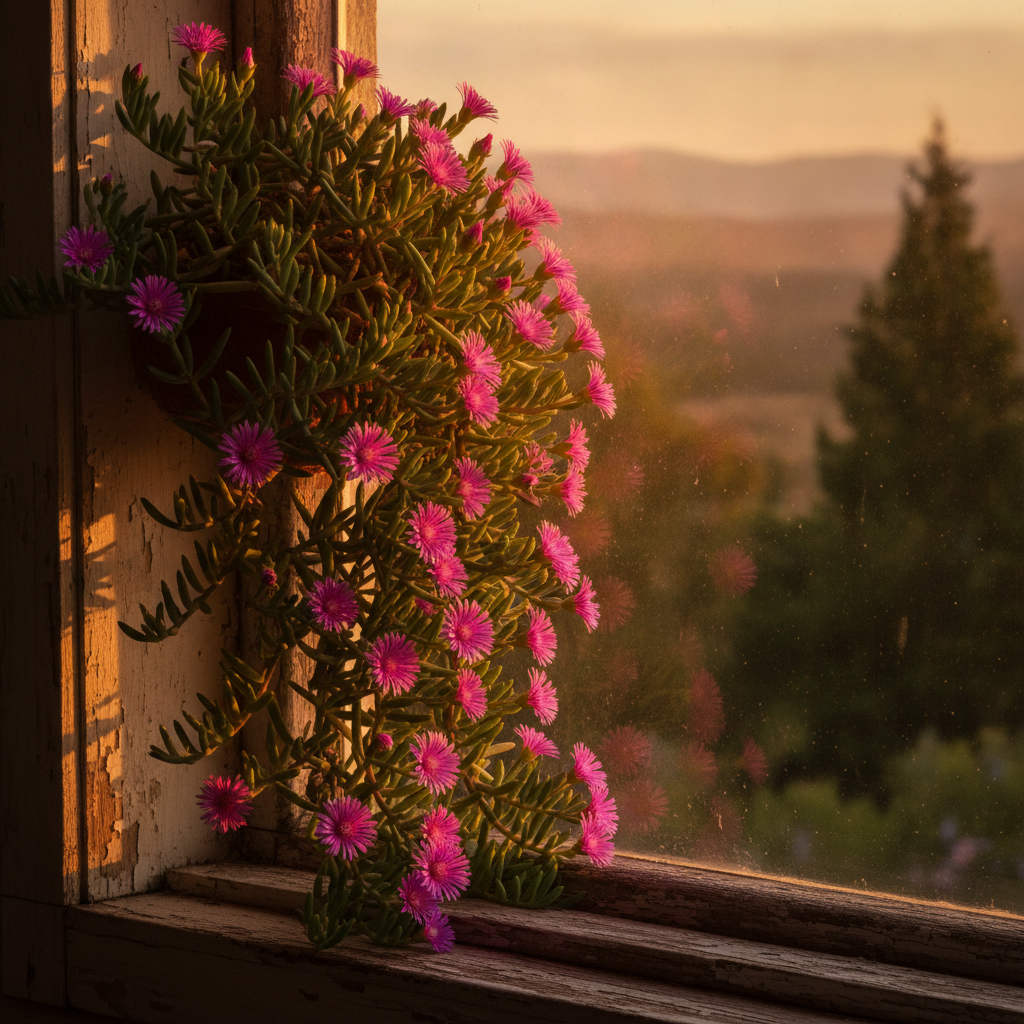
Indoors, the goal is the brightest windowsill in the home, ideally one facing south or west that receives at least six hours of direct sunlight a day. An east window can work but usually delivers too little intensity for heavy flowering, and a north window is out of the question. Where natural light is genuinely limited, a full-spectrum LED grow light suspended close above the plant for twelve to fourteen hours a day is an effective substitute and will keep the growth tight even through a dark winter.
The flowers themselves are a useful diagnostic tool. Because the blooms only open in strong light, a plant that refuses to flower, or whose buds open reluctantly and close early, is almost always telling you it needs more sun rather than more food or water. Move it to a brighter spot before you reach for anything else. When the plant is happy, the flowers will fling themselves open on any sunny morning and close again as the light fades, a daily rhythm that is one of the species’ quiet charms.
One caution applies when moving a plant from indoors into direct outdoor sun, or from a shop’s dim interior to a blazing windowsill. Succulent leaves that have acclimatised to lower light can scorch if the change is abrupt, developing bleached or brown patches that do not recover. Introduce stronger light over a week or two, giving a little more exposure each day, and the plant will harden off without damage.
Watering
Watering is where most trailing ice plants meet their end, and almost always through kindness rather than neglect. As a succulent adapted to a climate of winter rains and long dry summers, it stores water in its stems and leaves and expects the soil around its roots to dry out completely between drinks. The single most useful habit to develop is patience, waiting until the compost is bone dry before watering again.
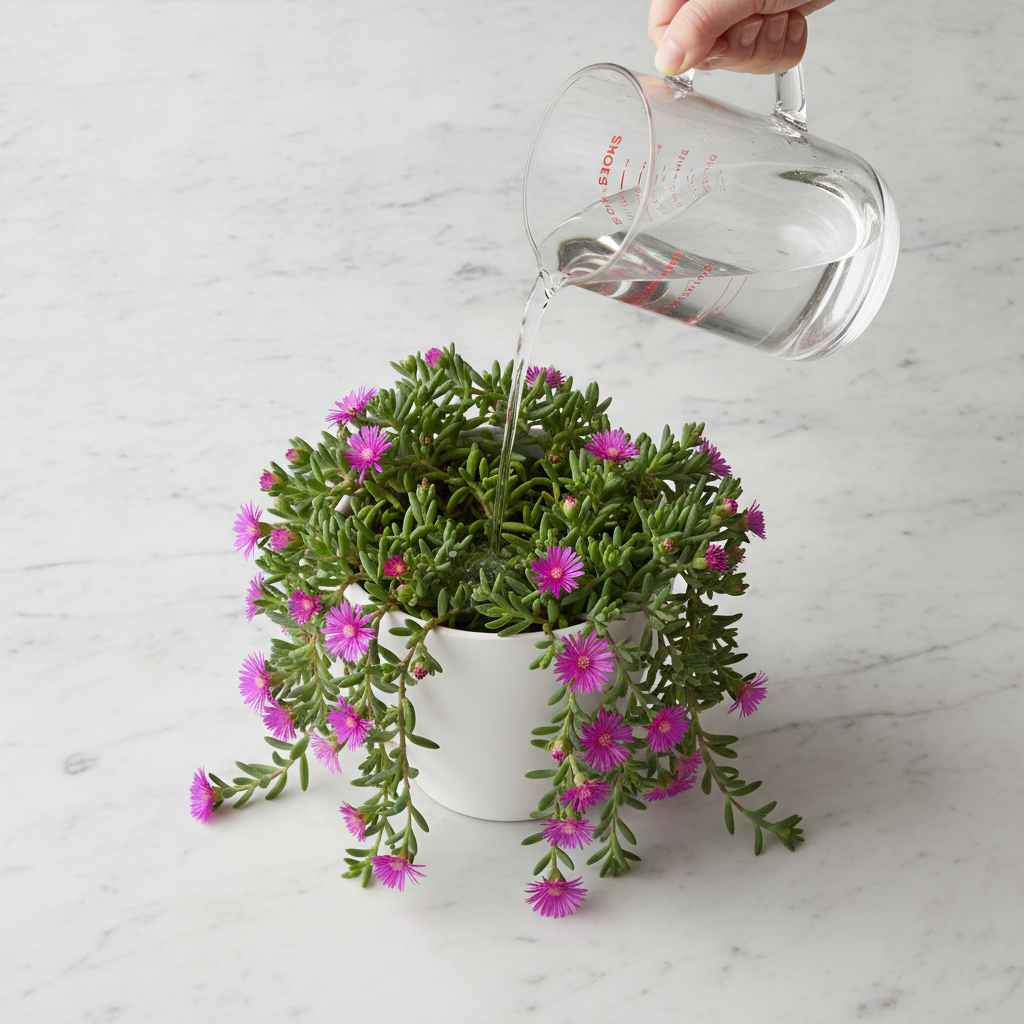
When you do water, water properly. The soak-and-dry method suits this plant perfectly. Drench the compost until water runs freely from the drainage holes, let the pot drain completely, and then leave it alone. During the active growing season from spring to early autumn, and in a warm bright position, this might mean watering once every seven to ten days, but the calendar matters far less than the state of the soil. Push a finger deep into the mix or lift the pot to judge its weight. A dry pot is noticeably light. Only when it is genuinely dry should you water again.
In winter the plant slows almost to a stop, and its water needs fall away with it. From late autumn through to the first signs of spring growth, watering should be reduced to a bare minimum, perhaps a small drink once every three or four weeks, just enough to stop the stems shrivelling badly. A cool, dry winter rest of this kind is not merely tolerated but actively beneficial, because it mimics the plant’s natural dormancy and sets it up to flower well the following season. A trailing ice plant kept warm and watered all winter tends to grow soft, etiolated stems and flowers poorly.
The warning signs of overwatering are worth knowing before they become fatal. Stems that turn yellow, translucent or mushy at the base, a sour smell from the compost, and a general collapse of previously firm growth all point to waterlogged roots and the rot that follows. By the time these signs appear the damage is often advanced, which is why erring on the dry side is always the safer choice. Underwatering, by contrast, shows as slightly wrinkled or softened leaves that plump up again within a day of a good soak, a far more recoverable situation.
Warning — Never leave it standing in water: A saucer of water left under the pot is one of the fastest routes to root rot in this species. Always tip away any water that collects in the saucer within a few minutes of watering, and never let the pot sit in a puddle.
Soil
Drainage is the entire philosophy behind potting a trailing ice plant. The roots need air as much as water, and they will not tolerate a compost that stays wet. A standard peat-based houseplant mix, which is designed to hold moisture, is precisely the wrong medium and will keep the roots damp long after the plant wants them dry. The aim instead is a gritty, open mix that water passes through quickly, leaving the particles just faintly moist.
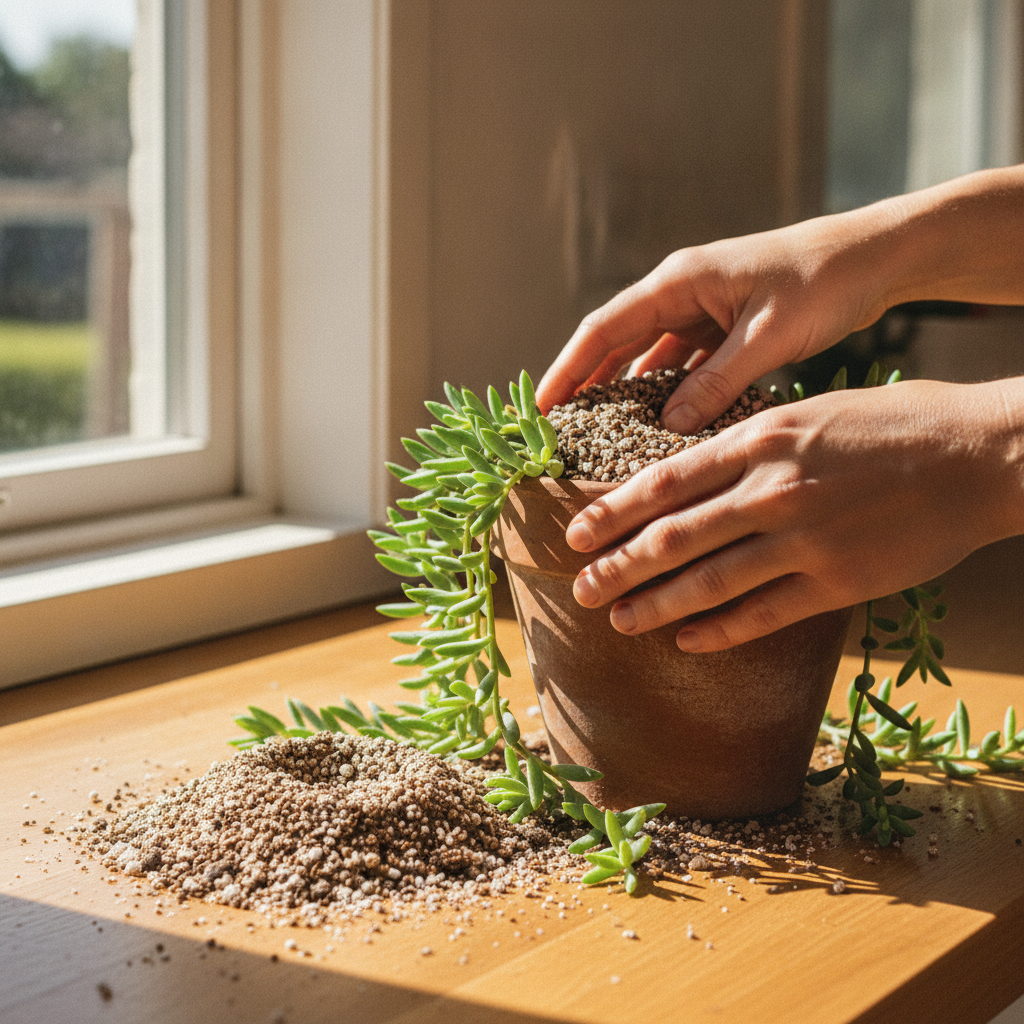
A ready-made cactus and succulent compost is a sound starting point, but most bagged mixes still hold a little too much moisture for comfort and benefit from extra grit. A reliable recipe is roughly two parts of a proprietary cactus mix to one part coarse material such as horticultural grit, pumice, or perlite. The added mineral content opens up the structure, creates air pockets and speeds drainage, exactly the conditions the roots evolved to expect. Some growers add a top-dressing of fine gravel, which keeps the crown of the plant off the damp compost and reduces the chance of stem rot at soil level.
The choice of pot matters almost as much as the mix. An unglazed terracotta pot is close to ideal, because the porous clay wicks moisture out of the compost and allows it to breathe, making overwatering far harder to achieve. Whatever the material, the pot must have drainage holes; a decorative cover pot with no drainage is a common and avoidable cause of death. Because the plant is shallow-rooted and trails rather than climbs, a wide, shallow pot suits it better than a deep one, and it looks more natural too, with the stems spilling over the rim.
Repotting is needed only every two or three years, and the plant actually flowers more freely when slightly pot-bound, so there is no rush to move it into ever-larger containers. The best time is spring, at the start of the growing season, which gives the roots the whole summer to settle. Handle the stems gently as they snap easily, tease away as much of the old compost as comes free without forcing it, and settle the plant into fresh gritty mix at the same depth it grew before. Then, crucially, wait several days before the first watering to let any broken roots callus over, which greatly reduces the risk of rot taking hold in the freshly disturbed root system.
Fertilising
The trailing ice plant is adapted to lean, mineral soils and needs very little feeding to perform well. In its native habitat it grows in ground that most garden plants would find impoverished, and this frugality carries over into cultivation. Overfeeding, and particularly feeding with a high-nitrogen fertiliser, does more harm than good, pushing soft, leafy growth at the expense of flowers and leaving the plant floppy and prone to rot.
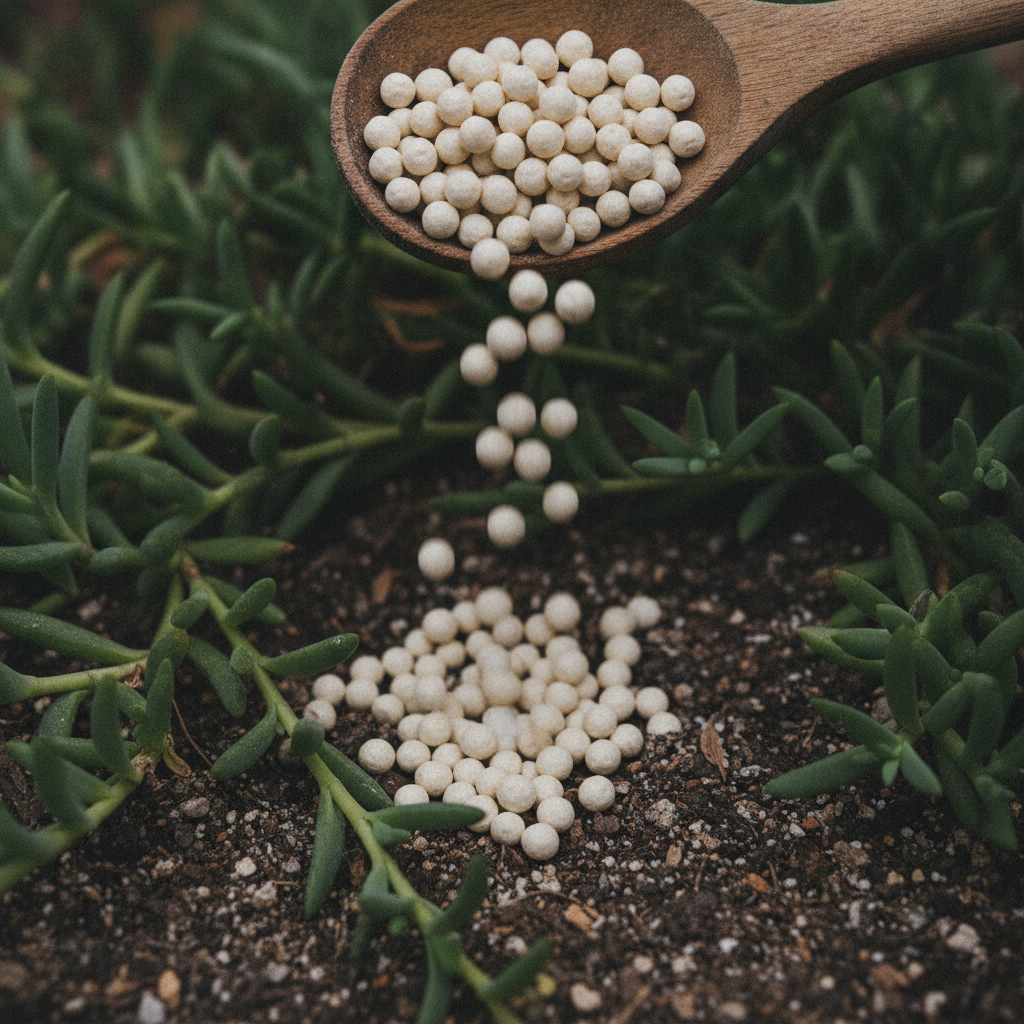
A light touch is all that is required. One or two feeds across the whole growing season are plenty. The best choice is a fertiliser formulated for cacti and succulents, or a general feed that is low in nitrogen and higher in potassium, since potassium encourages flowering rather than leaf. Dilute it to half the strength recommended on the label and apply it only when the plant is in active growth in spring and early summer, always onto already-moist compost rather than dry roots, which prevents the concentrated solution from scorching them.
Timing is as important as quantity. Feeding should stop entirely by late summer, well before the plant enters its winter rest. Fertiliser given in autumn or winter has nowhere useful to go, since the plant is not growing, and simply accumulates as salts in the compost, which can burn the roots over time. If a plant has been recently repotted into fresh mix, hold off feeding altogether for the first couple of months, as new compost already contains enough nutrients to see it through. In short, when in doubt, feed less; this is a plant that resents being pampered.
Propagation
One of the great pleasures of the trailing ice plant is how readily it multiplies. Like many trailing succulents, it roots with almost no effort from stem cuttings, and an established plant can also be divided into several smaller ones. A single healthy specimen can furnish a whole windowsill, or a run of pots for gifting, within a season.
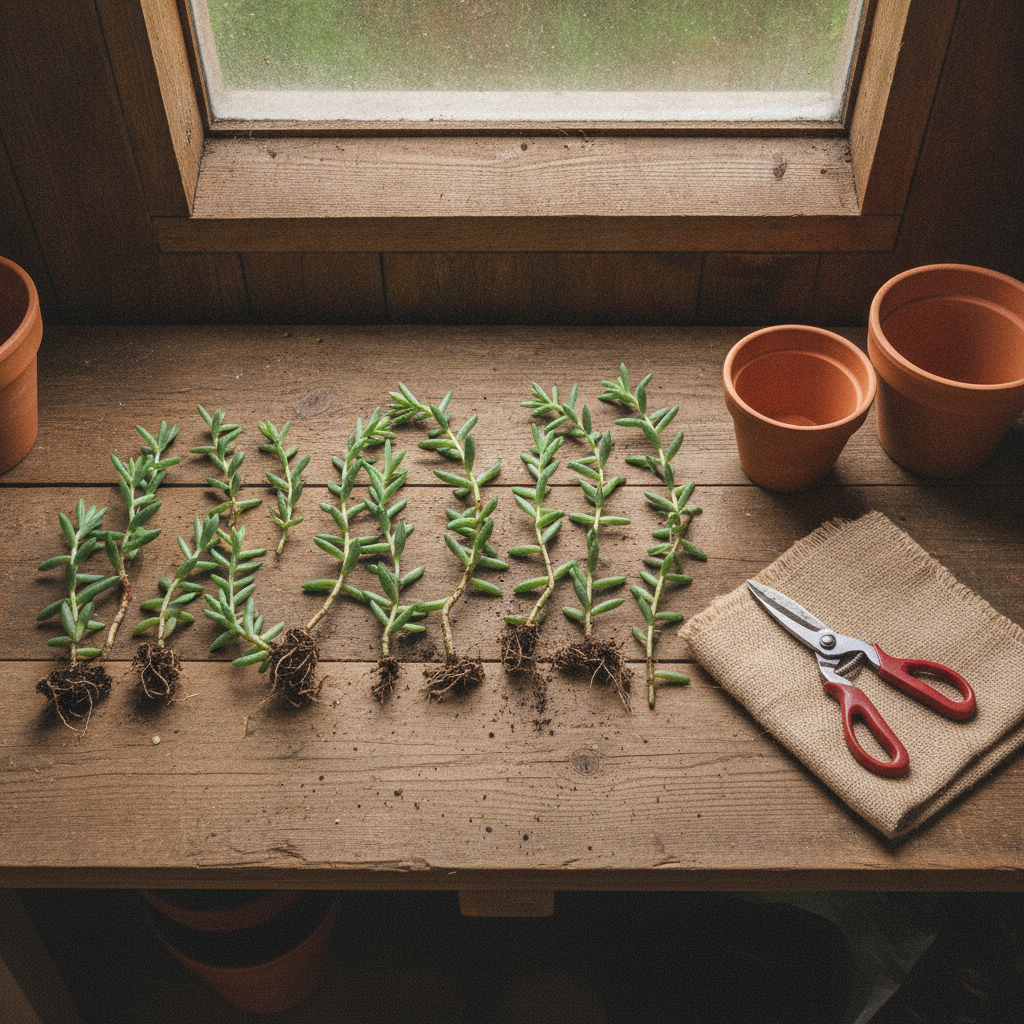
Stem cuttings are the simplest method and the one most growers rely on. The process rewards a little patience at the start, because a cutting that is allowed to dry before it meets the soil is far less likely to rot. The steps below describe the whole sequence.
- Using clean, sharp scissors or secateurs, cut a healthy trailing stem 8 to 12 cm (3 to 5 in) long, choosing a section with several pairs of leaves and no flowers.
- Strip the leaves from the lowest 2 to 3 cm (1 in) of the stem, leaving a bare length to insert into the mix.
- Set the cuttings aside in a dry, shaded place for two to three days so the cut ends callus over, forming a dry seal that resists rot.
- Insert the calloused ends into a pot of gritty, barely moist succulent mix, firming them just enough to hold them upright.
- Place the pot in bright, indirect light and keep the compost almost dry, giving only a light misting or the merest splash of water every few days.
- After two to four weeks, roots will have formed; a gentle tug that meets resistance confirms success, and normal succulent watering can begin.
Division suits a larger, mature plant that has spread to fill its pot. In spring, lift the whole plant, shake off the loose compost, and gently pull or cut the clump into sections, making sure each piece carries a share of both stems and roots. Pot each division into its own container of fresh gritty mix, treat it exactly as you would a repotted adult, and wait a few days before the first watering. Division gives you instant, already-rooted plants rather than the slower wait of cuttings.
Whichever method you use, the golden rule is the same as for the parent plant: keep things on the dry side. Cuttings and divisions rot far more readily than they dry out, so resist the urge to water attentively. The plant’s natural vigour will do the rest.
Pro Tip — Take cuttings from your annual tidy-up: Trailing ice plants can look straggly by late summer. When you trim back the longest stems to keep the plant compact, save the healthiest offcuts as cuttings rather than discarding them, and you will have new plants ready to overwinter alongside the parent.
Pests and Problems
A trailing ice plant grown in good light with careful watering is remarkably trouble-free, and most of the difficulties growers encounter are cultural rather than the work of pests. That said, a few insects do take an interest, and it pays to recognise them early, before a small infestation becomes a serious one.
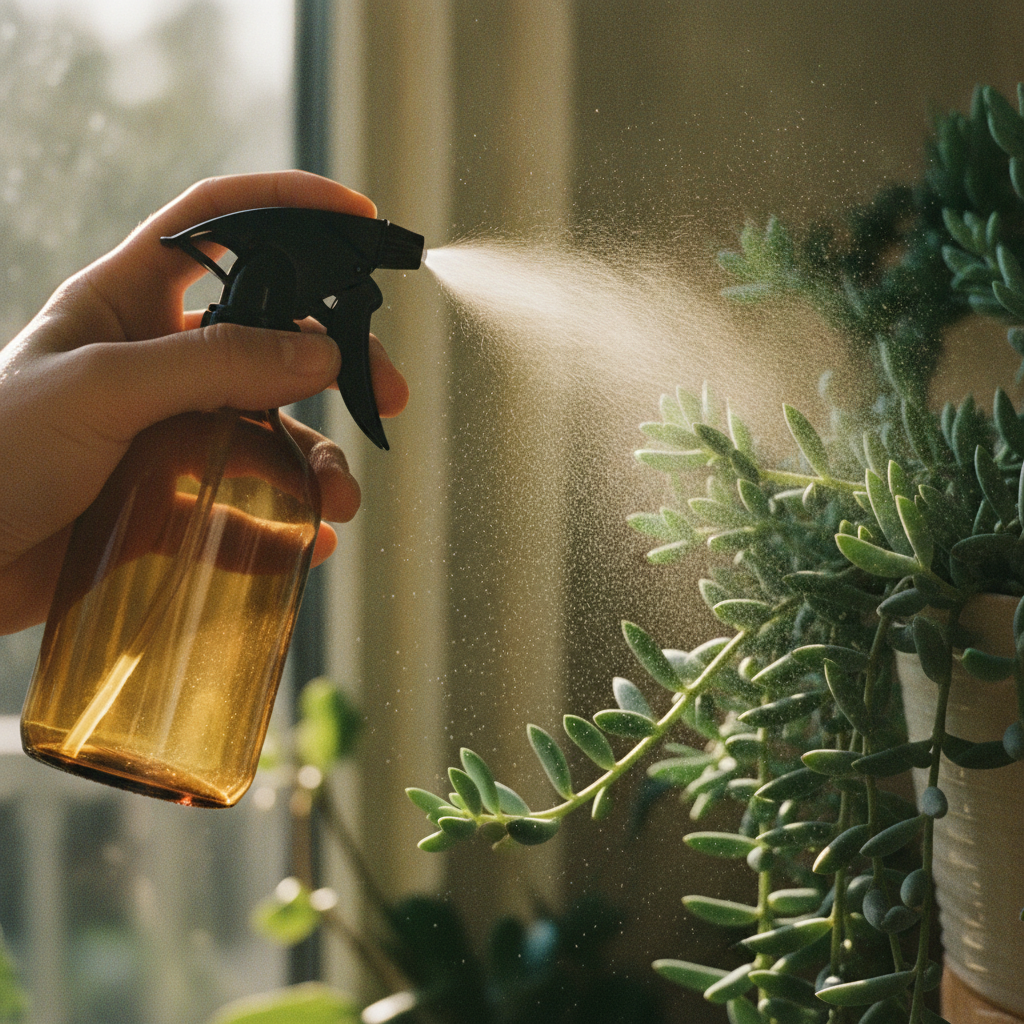
Mealybugs are the most common pest, showing as small tufts of white, cottony wax tucked into the leaf joints and along the stems. They feed on sap and, left unchecked, weaken the plant and coat it in sticky honeydew. A cotton bud dipped in isopropyl alcohol, dabbed directly onto each insect, deals with light infestations, while heavier ones respond to a thorough spray of diluted neem oil or an insecticidal soap, repeated every week or so until the problem clears. Aphids sometimes cluster on the soft new growth and flower buds in spring, and are easily rinsed off or treated the same way. Spider mites are a risk only in hot, dry, still air, betraying themselves by fine webbing and a faint stippling on the leaves; improving air movement and raising humidity slightly discourages them.
By far the most serious threat, however, is not an insect at all but root and stem rot brought on by overwatering. Because the symptoms, yellowing, softening, blackening and collapse, can look at first like a general decline, it is easy to misread them and respond by watering more, which accelerates the problem. If rot is suspected, act quickly: unpot the plant, cut away all mushy tissue with clean tools, allow the healthy remainder to dry for a day or two, and either replant it in fresh dry mix or take cuttings from any firm, green stems as an insurance policy. Prevention, through gritty compost and a strict dry-out-between-waterings regime, is enormously easier than cure.
Two non-pest problems round out the picture. Etiolation, the stretching and paling of stems, is a direct consequence of too little light and is corrected by moving the plant somewhere brighter, though the stretched growth itself will not shorten again and is best trimmed away. A failure to flower, meanwhile, is almost always down to insufficient light or a too-comfortable winter; a bright position and a cool, dry, near-dry rest through the coldest months are the two levers that most reliably bring the blooms back.
Varieties
The species Lampranthus spectabilis itself is most often sold in its vivid magenta-pink form, but the wider genus and its named selections offer a genuine spread of colour, from soft rose through to fiery orange-red. Two of the most widely grown selections are shown below, both compact, free-flowering and easy to keep by exactly the methods described in this guide.
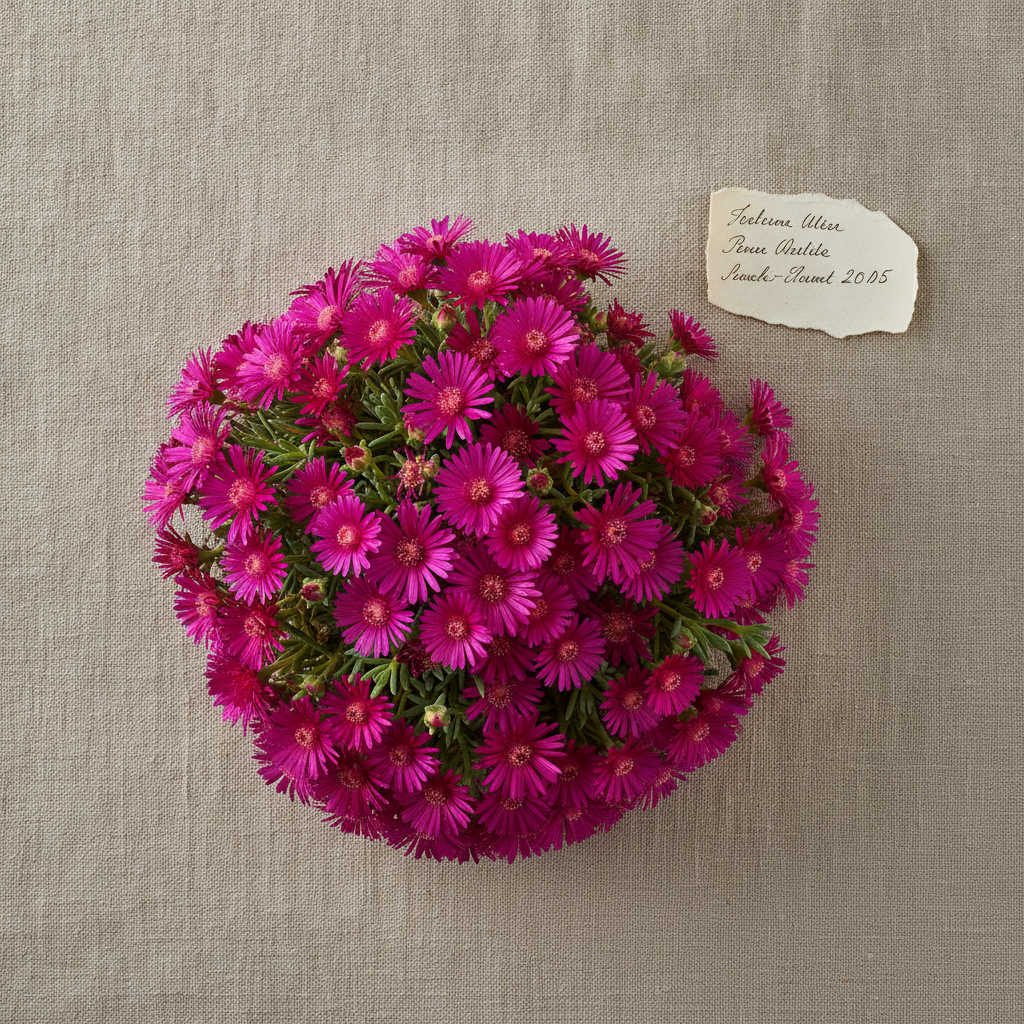
Tresco Brilliant
A mounding, spreading selection prized for the sheer intensity of its blooms, a magenta-crimson so bright it almost hums. The fine blue-green needle-like foliage all but disappears beneath the flowers at their peak. It is one of the hardier Lampranthus forms and a favourite for sunny raised beds and containers alike.
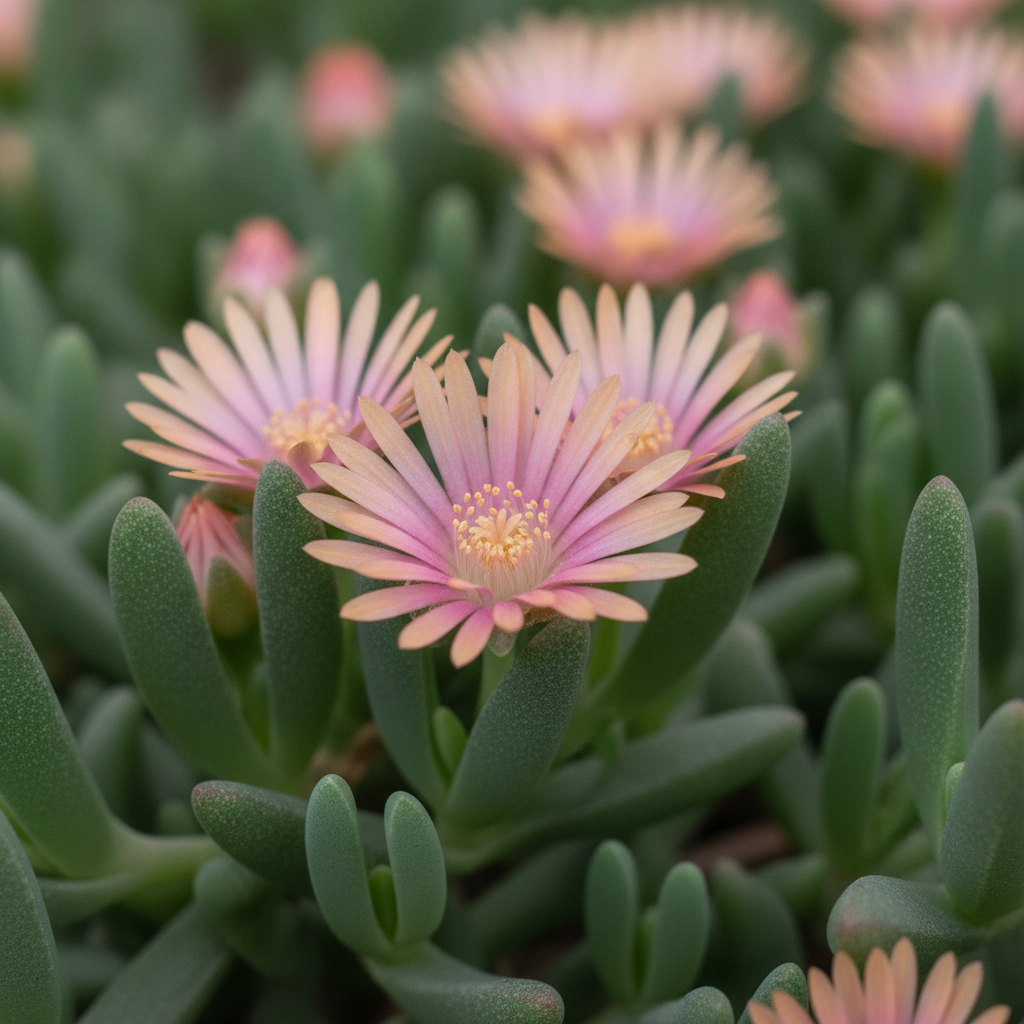
Tresco Peach
A softer, more romantic counterpart carrying the same fine blue-green succulent foliage but topped with gentle rose-pink to peach flowers. It brings a quieter, pastel note to a planting and combines beautifully with the brighter forms, extending the palette without any change in care.
Beyond these, gardeners will encounter related Lampranthus species and hybrids in orange, purple and scarlet, as well as close cousins such as the low, cushion-forming Delosperma ice plants, which are hardier still and often used as groundcover in cold gardens. All share the same essential requirements of full sun, sharp drainage and a dry winter, so mastering the trailing ice plant opens the door to the whole colourful tribe.
Frequently Asked Questions
Why won’t my trailing ice plant flower?
The overwhelming cause is too little light. This plant needs several hours of direct sun each day to produce and open its flowers, and even a bright indoor spot is often dimmer than it appears. The second most common cause is a winter that was too warm and too wet; a cool, dry rest through the coldest months triggers the following season’s flowering. Give it the sunniest position you have and a genuine winter rest, and blooms usually follow.
Is the trailing ice plant safe around cats and dogs?
Lampranthus ice plants are generally regarded as non-toxic to cats and dogs, and they are not listed among the plants known to cause serious poisoning. As with any plant, a curious pet that eats a large amount may suffer mild stomach upset, so it is still sensible to discourage nibbling, but the trailing ice plant is considered one of the safer flowering succulents to keep in a pet household.
How often should I water it?
There is no fixed schedule; water only when the compost has dried out completely. In warm, bright conditions during the growing season this often works out at roughly once every week to ten days, but the deciding factor is always the dryness of the mix rather than the calendar. In winter, cut back to a token drink once every three or four weeks. When in doubt, wait; this plant far prefers to be too dry than too wet.
Can I grow a trailing ice plant outdoors?
Yes, and it usually performs better outdoors than in. In mild, frost-free or nearly frost-free climates it can live outside all year in a sunny, sharply drained spot. Where winters bring hard frost, grow it in a pot that spends the warm months outside in full sun and comes indoors, or into a cool greenhouse, before the first frosts. This species tolerates a light touch of frost when dry but will not survive being frozen wet.
Why are the stems long, pale and floppy?
This is etiolation, the plant stretching towards a light source that is too weak. Compact, richly coloured growth needs strong direct sun, and without it the stems elongate and the leaves pale and space out. Move the plant to a much brighter position, or add a grow light, and new growth will come back tight and healthy. The stretched stems will not recover their form, so trim them off and use the offcuts as cuttings.
Do the leaves really shimmer like ice?
They do, and it is the origin of the common name. The surface of the leaves and stems is covered in tiny bladder-like cells that catch and scatter light, giving a glistening, frosted or sugary appearance that is most obvious in strong sunshine. It has nothing to do with cold tolerance, which is a frequent misunderstanding, but everything to do with how the plant reflects excess light and conserves moisture in its bright native habitat.
Grown well, the trailing ice plant asks for very little and gives a great deal in return: a tidy cushion of shimmering blue-green foliage for most of the year, and then a burst of colour that few other windowsill plants can match. Keep it bright, keep it dry, give it a cool winter rest, and it will reward you season after season.






