
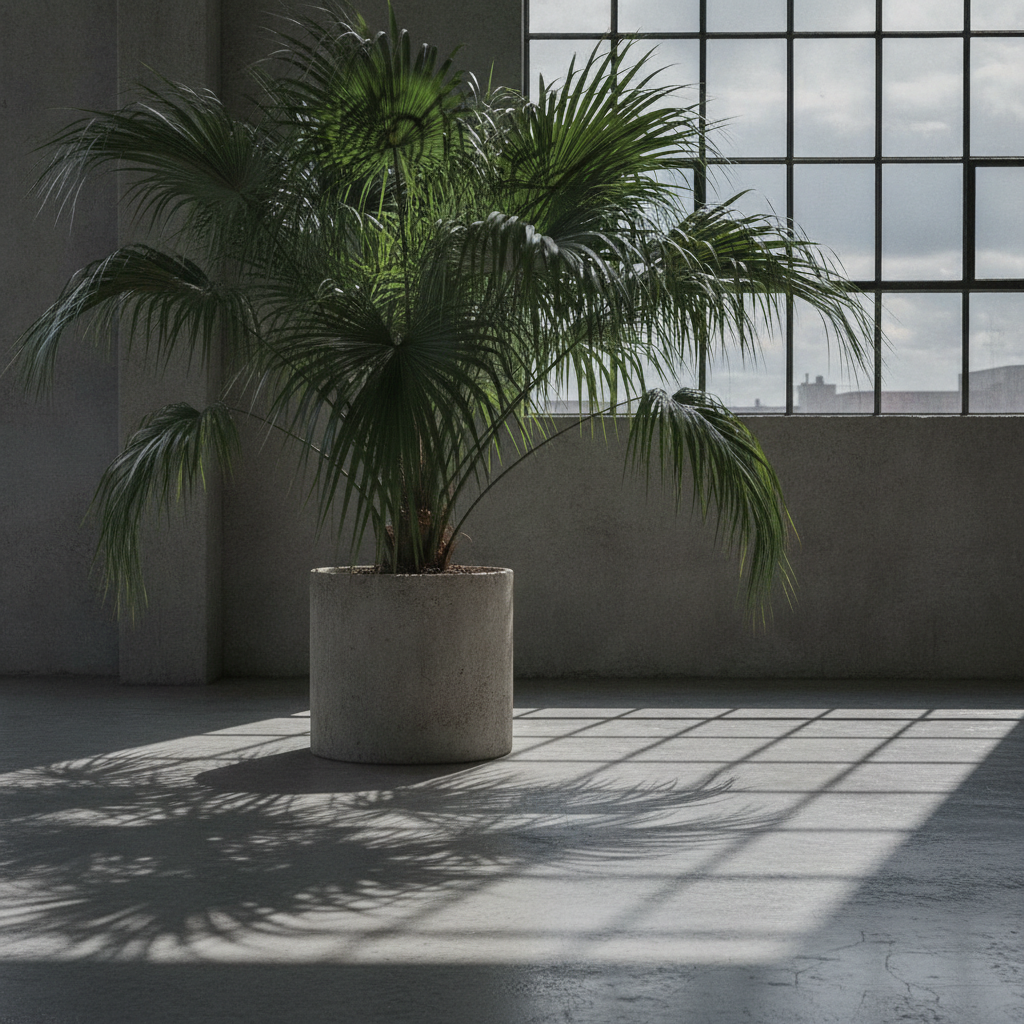
Few indoor palms carry themselves with the quiet drama of the Chinese fan palm (Livistona chinensis), a plant whose common alternative name, the fountain palm, tells you almost everything about its silhouette. Each broad, circular frond splits into dozens of stiff segments that arch outward and then cascade at the tips into slender, weeping threads, so that a mature specimen appears to spill green water in every direction. Native to the warm, humid forests and coastal slopes of southern Japan, Taiwan and southern China, it has been cultivated for centuries both as a landscape tree and, in its slow-growing youth, as a container plant for verandas, conservatories and bright interior corners.
The fountain palm has a reputation as one of the more forgiving fan palms for indoor life, and that reputation is largely deserved. It asks for less water than a fern, tolerates a wider range of light than a calathea, and grows so unhurriedly that a single plant can furnish the same corner of a room for a decade without outgrowing it. The gap between a Chinese fan palm that merely survives and one that genuinely thrives, though, comes down to a handful of details: enough light to keep the fronds broad and stiff rather than stretched and floppy, water that is neither stingy nor stagnant, and an awareness of the mineral sensitivities that give palms their characteristic brown tips. This guide walks through every one of those details so you can grow a specimen that looks less like a tolerated houseplant and more like a small piece of subtropical architecture.
Contents
- Quick Reference
- Why the Chinese Fan Palm Makes a Rewarding Houseplant
- Light Requirements
- Watering & Humidity
- Soil, Potting & Repotting
- Fertilising
- Propagation
- Pests & Diseases
- Popular Varieties
- Frequently Asked Questions
Quick Reference: Chinese Fan Palm at a Glance
| Light | Bright, indirect light; tolerates a few hours of direct morning sun once acclimated. Young plants accept medium light. |
| Watering | Keep the mix evenly moist in spring and summer, letting the top 2 to 3 cm (about 1 in) dry between waterings. Reduce noticeably in winter. |
| Temperature | 18 to 24 degrees C (64 to 75 degrees F) ideal. Keep above 10 degrees C (50 degrees F) indoors; brief cold tolerance to around minus 4 degrees C (25 degrees F) when established outdoors. |
| Humidity | Moderate to high, ideally 50 percent or above. Tolerates average room humidity but browns at the tips in very dry air. |
| Fertiliser | Balanced palm fertiliser with magnesium, manganese and potassium, monthly through the growing season only. |
| Toxicity | Not known to be toxic to cats, dogs or humans. The sharp teeth along the leaf stalks are a mechanical hazard rather than a chemical one. |
Why the Chinese Fan Palm Makes a Rewarding Houseplant
The strongest argument for the Chinese fan palm is architectural. Where most popular houseplants offer either delicate detail or bold single leaves, the fountain palm gives you sculpture: a symmetrical rosette of pleated fans held on long stalks, each one catching the light differently as it curves. In a bright corner it reads as a living lamp, throwing intricate shadows across walls and floors. That visual weight belongs to a plant that is, by palm standards, remarkably undemanding, which is why it appears again and again in the planting schemes of hotels, atriums and offices where reliability matters as much as beauty.
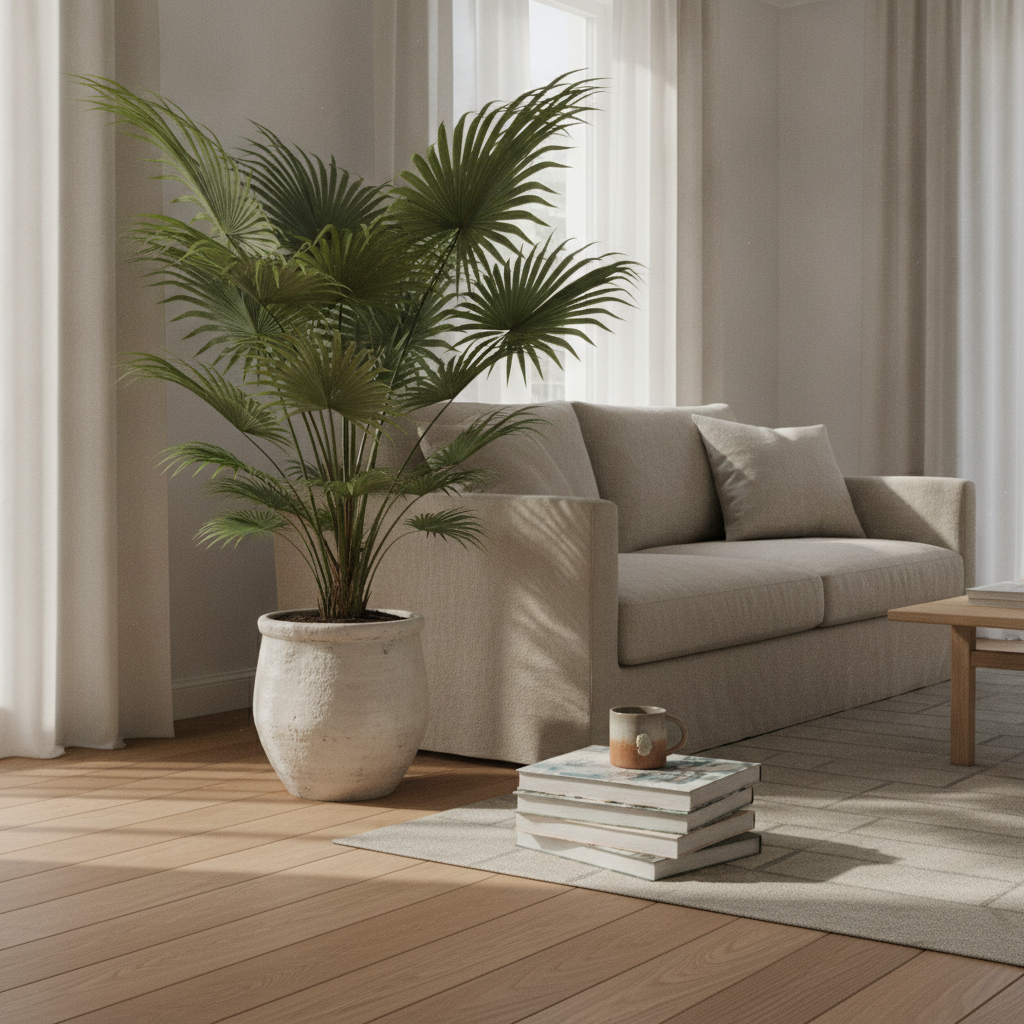
Its slow growth, often treated as a drawback, is a genuine asset indoors. A fountain palm typically adds only a handful of new fronds each year, which means it holds its scale and shape for a long time and rarely needs the aggressive repotting or pruning that faster plants demand. It is also more tolerant of the low humidity and fluctuating light of a centrally heated home than fussier relatives such as the areca or majesty palm, both of which tend to crisp and brown when conditions are less than tropical. For someone who wants the lushness of a palm without a daily maintenance routine, the Chinese fan palm sits in a comfortable middle ground between the near-indestructible and the genuinely demanding.
Important — Toxicity: The Chinese fan palm is not listed as toxic to cats, dogs or people, which sets it apart from many popular houseplants. The real hazard is physical: the leaf stalks carry rows of stiff, backward-pointing teeth along their edges, sharp enough to scratch skin. Site the plant where passing arms and curious pets will not brush against the lower stalks, and wear gloves when repotting.
Light Requirements
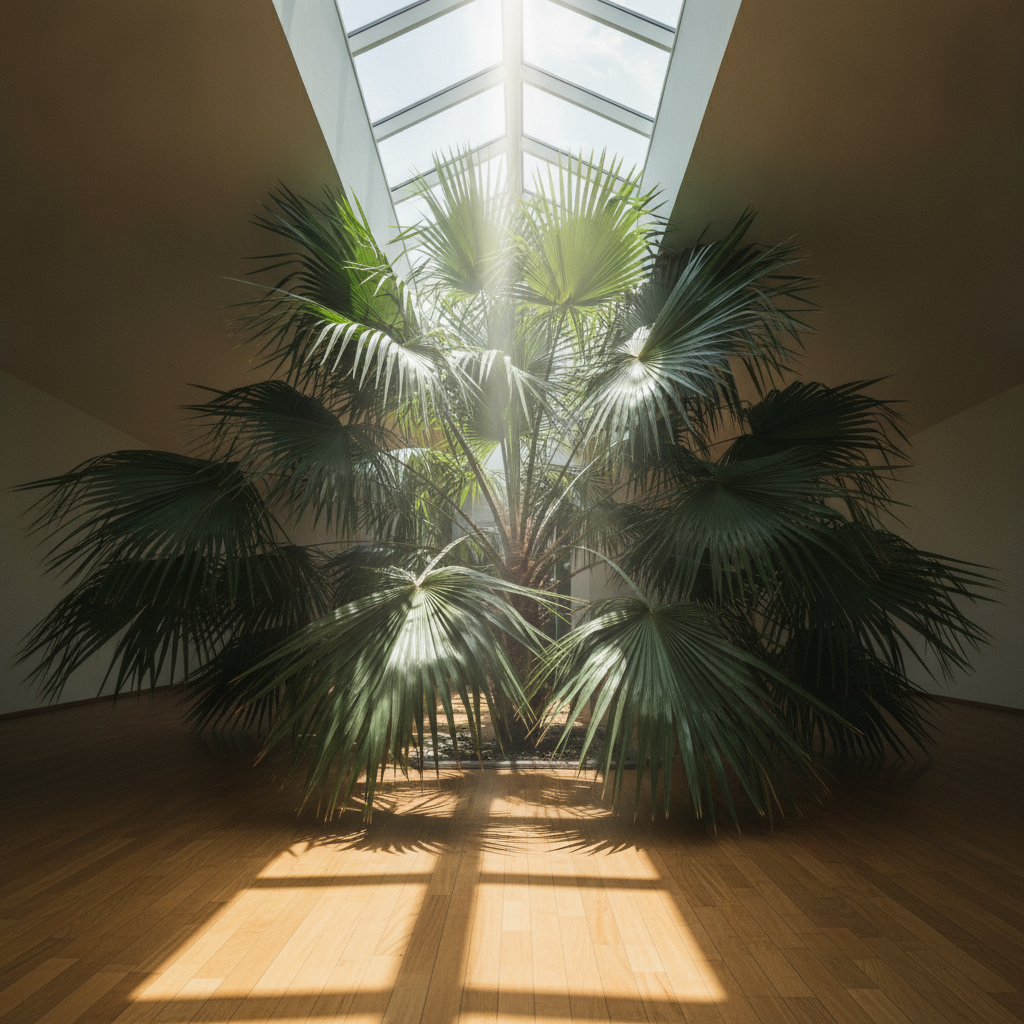
Light is the single biggest lever you can pull to shape how a Chinese fan palm looks. In its native habitat it germinates on the shaded forest floor and gradually climbs into brighter conditions as it matures, so a young plant is genuinely comfortable in medium light while an older, larger specimen wants considerably more to keep its fronds broad and firm. The practical rule for indoor growing is simple: give it the brightest indirect light you can, and treat anything dimmer as a compromise the plant will tolerate but not enjoy.
The ideal position is a spot that receives strong, filtered daylight for most of the day, such as a few feet back from a large south or east-facing window, or directly in a bright window shielded by a sheer curtain. In these conditions the palm produces stocky stalks and wide, well-segmented fans. Move it into a dim interior and the plant does not simply stop growing; it stretches, producing longer, weaker petioles and narrower fronds as it reaches toward the light, and this etiolated growth never fully recovers its form once it has hardened.
Light Levels Explained
The categories below describe the light bands most often used for houseplants, with the approximate illuminance in lux that each represents. A Chinese fan palm performs best in the bright indirect band and merely holds steady in medium light.
| Light Category | Approx. Level | Typical Location | Outcome |
|---|---|---|---|
| Direct sun | 20,000 lux and above | On the sill of an unshaded south window | Acceptable for acclimated mature plants in the morning; midday summer sun scorches |
| Bright indirect | 10,000 to 20,000 lux | Near a large bright window, out of the sun beam | Ideal; broad fans, firm stalks, steady growth |
| Medium | 5,000 to 10,000 lux | Middle of a well-lit room | Tolerated; slower growth, slightly longer stalks |
| Low | 1,000 to 5,000 lux | Corner of a room, north aspect | Survival only; stretching and weak fronds over time |
| Very low | Below 1,000 lux | Interior hallway, far from any window | Gradual decline; not recommended |
Window Orientation and Placement
South-facing window: The most generous exposure and, for a larger palm, often the best. Position the plant a little back from the glass or behind a sheer curtain so that it bathes in bright light without sitting in the full midday beam, which can bleach and scorch the outer fans in summer.
East-facing window: An excellent all-round choice. Gentle direct sun in the morning is well tolerated, even welcomed, and the light softens to bright indirect for the rest of the day, which suits the palm’s preferences almost exactly.
West-facing window: Similar to an east aspect but with the strong light arriving in the afternoon, when air temperatures are higher. Watch for heat stress on the nearest fronds in summer and pull the plant back slightly if the tips begin to brown.
North-facing window: Workable for a young plant but marginal for a mature one. Expect slow growth and a tendency to stretch. If a north window is your only option, supplement with a grow light to keep the fronds compact.
Pro Tip — Even Growth: A fan palm grown against a window will lean and grow lopsidedly toward the light. Give the pot a quarter turn every week or two so that all sides receive their share, and the rosette will stay symmetrical instead of listing to one side.
How Light Affects Frond Form
Unlike variegated plants, the Chinese fan palm does not change colour dramatically with light, but light governs the very quality that makes it worth growing: the breadth and stiffness of its fans. In strong light the plant invests in short, sturdy stalks and large, well-divided blades that hold themselves proudly. In weak light it produces the opposite, long thin stalks topped by smaller, floppier fans that droop under their own weight. Because palm fronds cannot be reshaped once they have expanded and hardened, the form you get is effectively locked in by the light the plant received while that frond was developing, which makes correct placement from the outset more important than with almost any leafy houseplant.
Warning — Direct Sunlight: A palm that has been growing in medium indoor light will scorch badly if moved abruptly into full sun, developing bleached patches and crisp brown blotches on the exposed fans. Any increase in direct light must be introduced over two to three weeks, lengthening the daily exposure gradually so the foliage can adapt.
Artificial Lighting
The Chinese fan palm responds well to supplementary lighting, which makes it a viable plant even in rooms that lack a good natural aspect. A full-spectrum LED grow light positioned above the crown, running for ten to twelve hours a day, provides more than enough energy to keep growth compact and healthy. Because the plant is large and its fronds spread widely, a single broad panel or a couple of spot fixtures angled to cover the whole rosette works better than one narrow bulb, which will only light the centre and leave the outer fans reaching.
Seasonal Adjustments
Light indoors falls sharply from autumn through winter, both because the days shorten and because the sun sits lower and weaker. A palm that was perfectly placed in July may be in effective low light by December without having moved at all. Shift the plant closer to its window for the darker months, clean the glass and the fronds so no light is wasted, and accept that growth will slow or stop until spring. As the light returns, move the palm back to its summer position gradually rather than all at once, to avoid shocking foliage that has adjusted to lower levels.
Watering & Humidity
Watering is where most Chinese fan palms are won or lost. The plant likes consistent moisture at the roots but is intolerant of standing water, so the goal is a mix that stays damp like a wrung-out sponge without ever turning to mud. Get the balance right and the palm rewards you with steady growth and clean green fans; get it wrong in either direction and the symptoms show up quickly at the vulnerable leaf tips.
When to Water
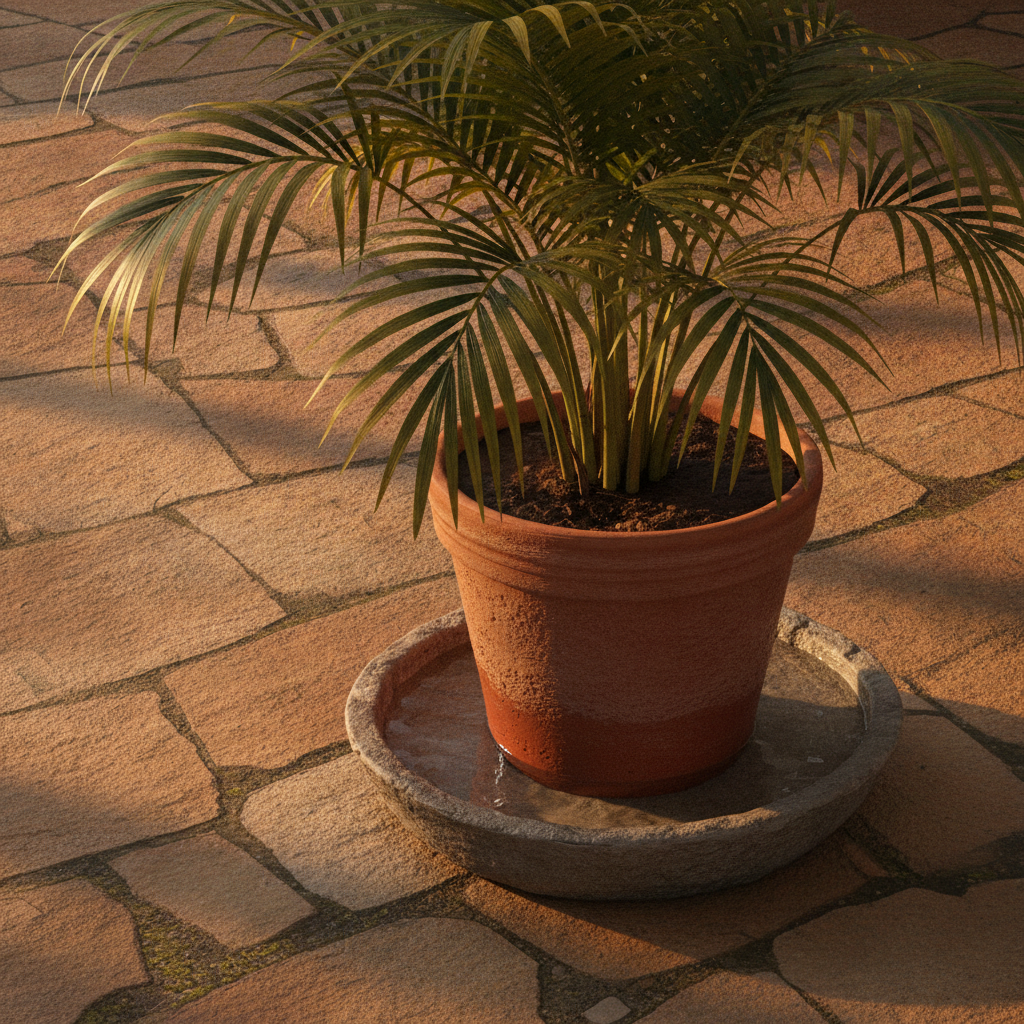
Rather than watering on a fixed calendar, judge by the mix itself. Push a finger into the soil to the second knuckle; when the top 2 to 3 cm (about 1 in) has dried but there is still moisture below, it is time to water. In a bright, warm room during spring and summer this typically means watering once or twice a week, though the exact interval depends on pot size, light and temperature. A moisture meter or simply the weight of the pot, light when dry and heavy when watered, both give reliable readings once you learn the plant.
In autumn and winter the palm’s water use drops sharply as growth slows and light weakens. Let more of the pot dry out between waterings during these months, checking that the top third of the mix is dry rather than just the surface, and water less often. Overwatering does far more damage in winter than in summer, because cold, wet compost is the perfect environment for the root rot that kills so many palms. When in doubt in the cooler months, wait another few days.
Pro Tip — Read the Tips: Brown, crispy leaf tips usually signal a watering or water-quality problem rather than a pest. Dry, papery tips point to underwatering or dry air, while soft, dark tips paired with soggy soil point to overwatering. Trim damaged tips at an angle with clean scissors, leaving a thin margin of brown so you do not cut into living tissue.
How to Water Correctly
- Check the mix first and only water when the top 2 to 3 cm has dried; watering on a schedule regardless of soil moisture is the commonest cause of trouble.
- Use room-temperature water and, if your tap water is hard or heavily treated, water that has stood overnight, been filtered, or collected as rainwater.
- Pour slowly and evenly across the whole surface of the mix until water runs freely from the drainage holes, which ensures the entire root ball is wetted rather than just the centre.
- Let the pot drain completely for several minutes before returning it to its saucer or cover pot.
- Empty any water that collects in the saucer; the roots must never sit in standing water.
- Wait until the surface has dried again before repeating, adjusting the interval to the season rather than the calendar.
Signs of Overwatering vs. Underwatering
| Symptom | Overwatering | Underwatering |
|---|---|---|
| Leaf colour | Yellowing that spreads from older lower fronds; general dullness | Fronds fade to a greyish green and lose their gloss |
| Leaf texture | Soft, limp segments; dark mushy patches | Dry, brittle, papery tips and margins |
| Soil | Stays wet for many days; may smell sour or grow mould | Pulls away from the pot sides; bone dry throughout |
| Roots | Brown, soft and foul-smelling when inspected | Dry and wiry but generally still firm and pale |
| Stem base | Softening or darkening at the crown; a serious warning sign | Firm, though growth stalls and new fronds are small |
Warning — Root Rot: A softening, darkening base is the most dangerous symptom a palm can show, because the growing point sits at the crown and rot there is often fatal. If you find soft roots and sour soil, remove the plant from its pot, cut away all mushy roots with sterilised blades, and repot into fresh, barely moist, free-draining mix, then withhold water until new growth resumes.
Humidity Requirements
As a plant of humid subtropical forests, the Chinese fan palm prefers moisture in the air and is happiest at a relative humidity of around 50 percent or above. It is more forgiving of dry air than tropical rainforest palms, which is part of why it succeeds indoors, but it is not immune. In the parched air of a centrally heated room in winter, humidity can fall below 30 percent, and at those levels the thread-like frond tips are the first casualty, drying and browning even when watering is correct.
The clearest sign that the air is too dry is a rash of brown, crisp tips across many fronds at once, particularly on the newest and most exposed fans. This is distinct from the isolated tip browning of a watering fault; when dry air is to blame the damage is widespread and appears fastest during heating season or near radiators and heating vents.
Raising humidity around a large palm is best done at the room scale. A humidifier running nearby is by far the most effective method and benefits both plant and people. Grouping plants together raises the local humidity through their combined transpiration, and standing the pot on a wide tray of pebbles topped up with water adds useful moisture as it evaporates, provided the pot base stays above the waterline. Misting, often recommended, gives only a fleeting lift and is not a substitute for these steadier methods.
Water Quality
Palms in general, and fan palms in particular, are notably sensitive to the fluoride, chlorine and dissolved salts found in much tap water, and the Chinese fan palm is no exception. These compounds accumulate in the foliage over time and are deposited at the tips and margins, where they cause the classic brown, scorched edges that so often puzzle otherwise careful growers. If your palm develops persistent tip burn despite sound watering and adequate humidity, water quality is the likely culprit. Switching to rainwater, distilled water, or tap water that has been filtered or left to stand overnight will usually halt the problem, and flushing the pot thoroughly every few months helps wash accumulated salts out of the mix.
Soil, Potting & Repotting
The right growing medium for a Chinese fan palm balances two competing demands: it must hold enough moisture to keep the roots evenly damp, yet drain freely enough that water never pools around them. A dense, water-retentive compost of the kind sold as general houseplant soil will stay too wet and invite rot, while a pure cactus or succulent mix will dry out too fast for a palm that dislikes drought. The sweet spot is a rich but open blend built on a loam base and loosened with plenty of coarse, drainage-boosting material.
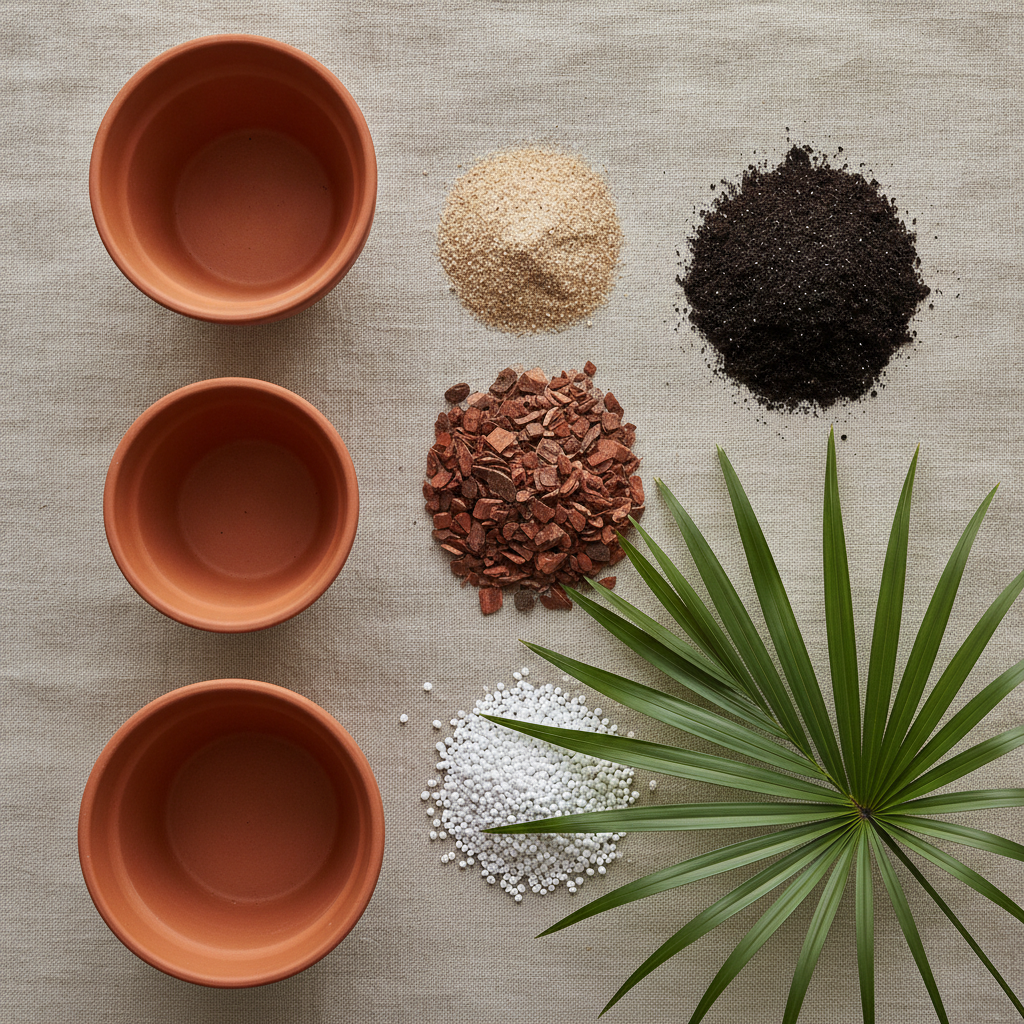
Ideal Soil Composition
A reliable recipe starts with a quality peat-free or loam-based potting compost as the moisture-holding foundation, then adds coarse grit or sand and perlite for drainage and aeration, along with a portion of fine bark to keep the structure open over time. The aim is a mix that feels crumbly and loose in the hand, holds together lightly when squeezed damp, and lets water run straight through when poured. The proportions below give a good starting point that you can adjust toward more grit in a humid home or more compost in a dry one.
| Component | Proportion | Function |
|---|---|---|
| Loam-based or peat-free potting compost | Half | Holds moisture and nutrients; the body of the mix |
| Coarse horticultural sand or grit | One fifth | Improves drainage and adds weight to steady a top-heavy palm |
| Perlite | One fifth | Keeps the mix aerated and prevents compaction |
| Fine composted bark | One tenth | Maintains open structure and slow, long-term drainage |
The Chinese fan palm prefers a soil that is slightly acidic to neutral, roughly pH 6.0 to 7.0. Most quality potting composts fall naturally into this range, so pH is rarely something you need to manage actively, but it is worth knowing if you are diagnosing nutrient problems, because very alkaline conditions can lock up the iron and manganese that palms need and produce yellowing on the newest fronds.
Pro Tip — Quick Mix Recipe: For a fast, dependable blend, combine five parts quality potting compost, two parts coarse sand or grit, two parts perlite and one part fine bark. This gives the moisture retention a palm wants with the drainage its roots demand, and the extra sand usefully lowers the centre of gravity of a tall, top-heavy plant.
Choosing the Right Pot
Because the Chinese fan palm grows slowly and dislikes disturbance, the pot you choose will house it for several years, so it pays to get the choice right. The two things that matter most are drainage and stability, with material and exact size following from those.
Drainage holes are non-negotiable. Whatever pot you choose must have generous drainage holes, since the fastest way to kill a palm is to let water collect at the bottom of a sealed container. If you want to use a decorative cover pot without holes, keep the plant in a plain plastic nursery pot inside it and lift it out to water, so that excess can drain away completely before it goes back.
Pot material: Terracotta breathes and dries the mix more quickly, which suits growers who tend to overwater, while glazed ceramic and plastic hold moisture longer and suit drier homes or forgetful waterers. For a tall palm, a heavy glazed or terracotta pot has the added virtue of resisting the top-heavy tip-over that lightweight plastic invites.
Pot size: Choose a pot only 2 to 4 cm (1 to 2 in) wider in diameter than the current root ball. Palms actually resent excessive root room, and a pot that is too large holds a reservoir of wet soil the roots cannot reach, which sours and invites rot. A snug pot that the roots can quickly colonise is far safer than an oversized one.
When to Repot
Expect to repot a Chinese fan palm only every two to three years, and sometimes less often as it matures, because it grows slowly and is content to be a little pot-bound. The signs that repotting is due include roots emerging from the drainage holes or circling visibly at the surface, water running straight through without wetting the mix, growth that has stalled despite good care, and the plant becoming unstable in its pot. The best time to repot is spring, at the start of the growing season, when the plant can recover quickly. Palms resent root disturbance more than most houseplants, so where possible top-dress with fresh compost instead of full repotting, and only move up a pot size when the plant is genuinely crowded.
How to Repot: Step-by-Step
- Water the palm a day beforehand so the root ball is moist and holds together, which reduces stress during the move.
- Put on gloves to protect your hands from the toothed leaf stalks, then ease the plant out by tipping the pot and supporting the base of the stems rather than pulling on the fronds.
- Gently tease a little of the old mix from the outer roots, but avoid teasing apart or washing the root ball, since palms dislike having their roots disturbed.
- Inspect the roots and trim away any that are soft, brown or rotten with sterilised scissors, leaving the firm, pale healthy roots intact.
- Position the plant in the new pot at the same depth it grew before, on a layer of fresh mix, and fill around the sides, firming gently so no large air pockets remain.
- Water thoroughly to settle the compost, let the pot drain completely, then top up any mix that has sunk.
- Return the palm to a shaded, sheltered spot for a week or two before moving it back to its brighter position, and hold off feeding until you see new growth.
Warning — Transplant Shock: A palm that has been repotted may pause its growth and even brown a frond or two as it recovers, which is normal. Do not respond by overwatering or feeding to force it back into growth; both make matters worse. Keep the mix lightly moist, the light gentle and the environment stable, and let the plant re-establish at its own pace.
Fertilising
Palms are moderately hungry plants with a well-known appetite for particular minerals, and feeding a Chinese fan palm correctly does more than speed growth; it prevents the specific deficiency disorders that disfigure so many indoor palms. The guiding principles are to feed only while the plant is actively growing, to use a fertiliser that supplies the micronutrients palms crave, and to err on the side of dilution rather than strength.
Because palms draw heavily on potassium, magnesium and manganese in addition to the main nutrients, an ordinary balanced houseplant feed used alone can leave a fan palm subtly starved over time, with older fronds yellowing and new growth deformed. A fertiliser formulated specifically for palms, which includes these elements, is the simplest way to keep the plant properly nourished.
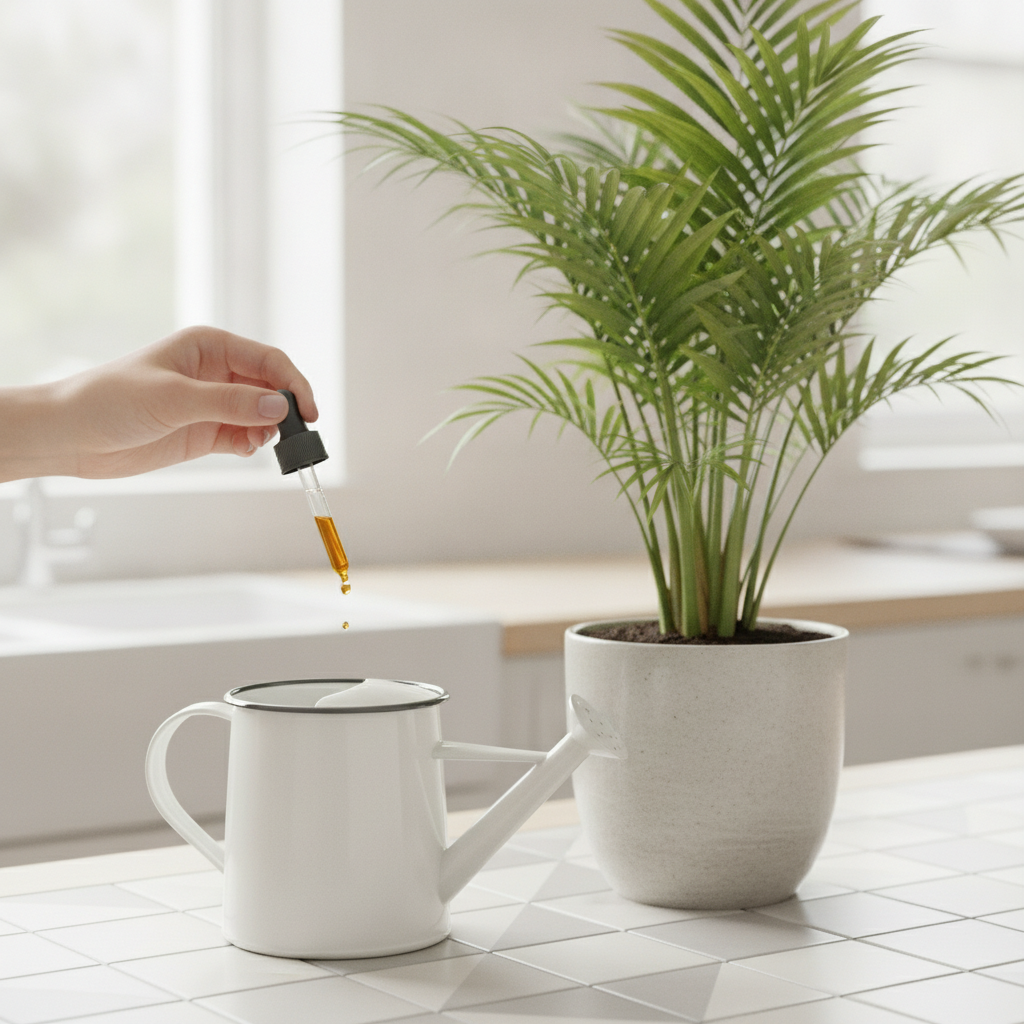
Understanding Plant Nutrients
Fertiliser labels carry three numbers, the N-P-K ratio, which give the percentages of nitrogen, phosphorus and potassium. Nitrogen drives leafy growth, phosphorus supports roots and overall vigour, and potassium regulates water use and general resilience, and it is potassium that palms burn through fastest. Beyond these three, a set of secondary nutrients and trace elements matters greatly for palms; the table below shows the ones most likely to cause visible trouble when they run short.
| Nutrient | Symbol | Primary Function | Deficiency Symptoms |
|---|---|---|---|
| Nitrogen | N | Leaf and stalk growth, green colour | Uniform paling of older fronds, weak growth |
| Phosphorus | P | Root development and energy transfer | Stunted growth, dull foliage |
| Potassium | K | Water regulation and stress resistance | Yellow to orange flecking and necrotic tips on the oldest fronds |
| Magnesium | Mg | Core of the chlorophyll molecule | Broad yellow bands along the edges of older fronds while the centre stays green |
| Manganese | Mn | Enzyme activity in new growth | Weak, frizzled, yellow-streaked new fronds, known as frizzle top |
| Iron | Fe | Chlorophyll formation in new leaves | Yellowing between the veins of the newest fronds |
Types of Fertiliser
Liquid fertilisers: The easiest option for indoor palms, diluted into the watering can and applied during the growing season. They act quickly and let you control the dose precisely, which suits a plant that prefers little and often over occasional heavy feeding. Choose a palm-specific liquid feed or a balanced houseplant feed supplemented with magnesium.
Slow-release granular: Coated granules mixed into the top layer of soil release nutrients gradually over several months, which is convenient for a low-maintenance plant. Use a formulation made for palms so the micronutrient balance is right, and apply only at the start of the growing season so the feeding tails off naturally before winter.
Organic fertilisers: Worm castings, seaweed extracts and other organic feeds release nutrients slowly and gently, and they improve the soil biology at the same time, making them almost impossible to overdo. They tend to be lower in concentration, so they suit growers who prefer a cautious, steady approach over rapid results.
Feeding Schedule
Feed the Chinese fan palm roughly once a month with a diluted liquid feed through spring and summer, when it is actively producing new fronds. As growth slows in autumn, taper the feeding off, and stop altogether through winter, when the plant is resting and cannot use the nutrients; feeding a dormant palm simply builds up harmful salts in the mix. Resume in spring once you see fresh growth emerging from the crown. A plant that has just been repotted into fresh compost already has a nutrient reserve and does not need feeding for the first couple of months.
Pro Tip — Feed at Half Strength: Palms are easily scorched by over-concentrated fertiliser, which shows up as burnt brown tips indistinguishable from a watering fault. Mixing liquid feed to half the strength stated on the label, and feeding a little more often if needed, is far safer than a full dose and gives you the steady nutrition a fan palm prefers.
How to Fertilise
- Water the plant lightly first, or feed just after a normal watering, so the soil is already moist; fertiliser applied to dry roots can burn them.
- Dilute a palm or balanced liquid feed to half the recommended strength in your watering can.
- Apply the solution evenly across the whole surface of the mix until it begins to drain, so every root receives some.
- Let the pot drain and discard any feed that collects in the saucer.
- Every few months, water heavily with plain water to flush accumulated salts out of the mix and prevent tip burn.
Warning — Salt Build-Up: A white crust on the soil surface or around the pot rim is a sign that fertiliser salts have accumulated to harmful levels, which shows on the plant as scorched frond tips. Flush the pot by running plenty of plain water through it until it drains freely several times, and scale back the feeding frequency going forward.
Propagation
Propagation is the one area where the Chinese fan palm asks for genuine patience, because unlike the many houseplants that root readily from cuttings or divisions, it can only be grown from seed. The plant has a single growing point at the top of its trunk and produces no offsets, pups or side shoots, which means there is nothing to divide or cut and root. Anyone who tells you they propagated a fan palm from a leaf or stem cutting is mistaken; it simply cannot be done.
Growing from seed is entirely achievable at home, but it is a long game measured in weeks for germination and years for a plant of any size. For most people the practical route to a second Chinese fan palm is to buy a young nursery plant, and seed-raising is best approached as a rewarding project in its own right rather than a quick way to multiply your collection.
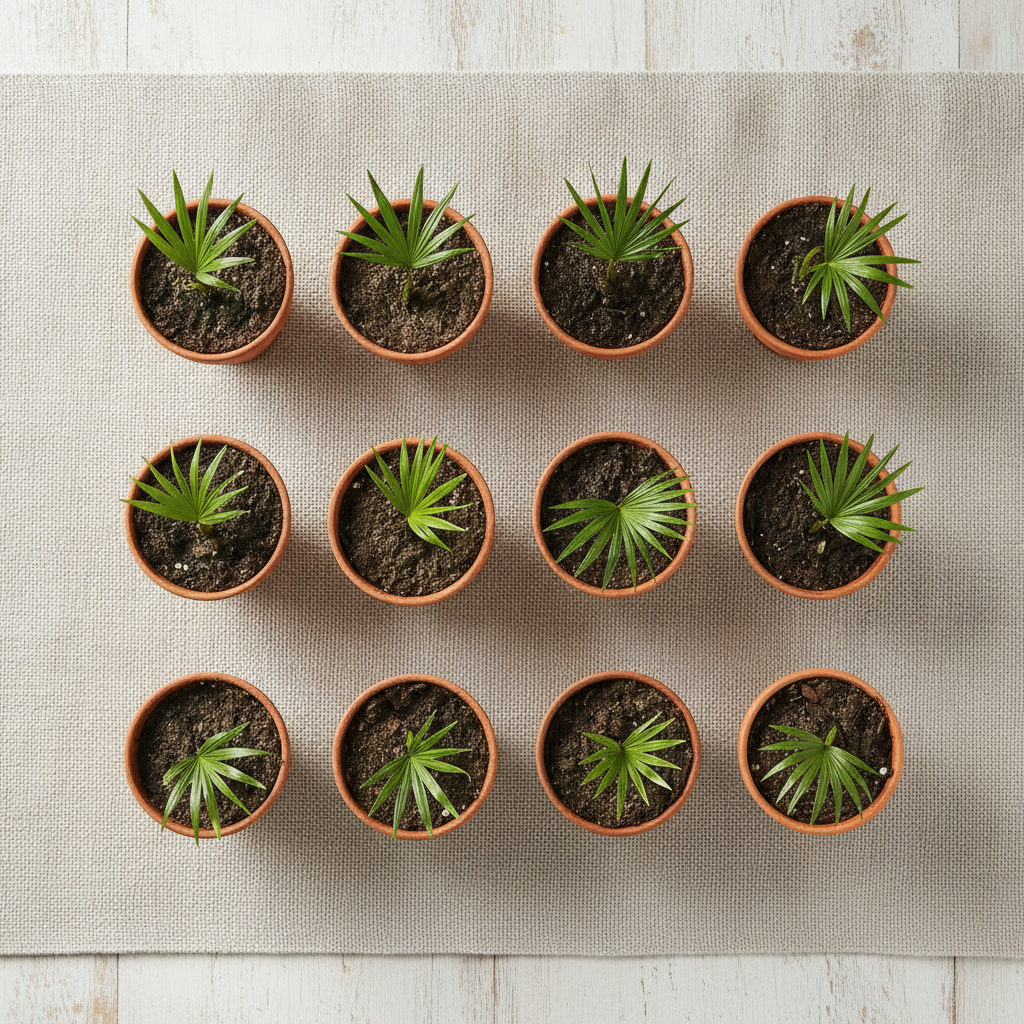
Understanding the Single Growing Point
To understand why seed is the only option, it helps to know how a palm is built. A Chinese fan palm grows from a solitary apical meristem, the single active growing tip at the centre of the crown, from which every new frond emerges in turn. There are no dormant buds along the trunk waiting to sprout, as there are on a philodendron or a rubber plant, so a piece of trunk or a severed frond has no way to generate a new plant. This same architecture is why damage to the crown is so serious: lose the growing point and the whole plant is lost, because there is no backup from which it can regenerate.
Growing From Seed: Step-by-Step
Fresh seed is the key to success, as palm seed loses viability quickly with age. If you can obtain ripe, cleaned seed, or harvest the blue-black fruits from a mature plant and remove the flesh, you have the best chance of a good germination rate.
- Clean the seed thoroughly, removing all of the fleshy fruit pulp, which can inhibit germination and encourage mould.
- Soak the cleaned seed in room-temperature water for one to three days, changing the water daily, to soften the coat and rehydrate the embryo.
- Sow each seed just below the surface of a moist, free-draining seed mix in a small pot or tray, one seed per cell where possible.
- Place the container somewhere consistently warm, ideally 27 to 30 degrees C (80 to 86 degrees F), as bottom heat from a propagation mat dramatically speeds and improves germination.
- Keep the mix lightly and evenly moist but never waterlogged, and maintain high humidity by covering with a clear lid or bag, ventilating occasionally to prevent mould.
- Be patient; germination is erratic and can take anywhere from six weeks to several months, so do not discard a pot that looks empty too soon.
- Once each seedling has produced its first strap-like leaf and some roots, pot it on individually into the standard palm mix and grow it in bright, indirect light.
Pro Tip — Warmth Is Everything: More than any other factor, steady warmth at the roots determines whether palm seed germinates. A heated propagation mat that holds the mix near 28 degrees C (82 degrees F) will transform your results, turning a scattered, months-long trickle of seedlings into a far quicker and more even flush.
Caring for Seedlings: Step-by-Step
Young seedlings are more delicate than established plants and need a gentler regime for their first year or two while they build strength.
- Grow seedlings in bright, indirect light, keeping them out of direct sun, which can scorch their tender first leaves.
- Keep the mix consistently moist, as seedlings have small root systems and dry out faster than mature plants, but still ensure the pot drains freely.
- Maintain warmth and moderate to high humidity, avoiding cold draughts and sudden temperature swings.
- Begin feeding only lightly, with a quarter-strength balanced feed, once the seedling is actively growing and has several leaves.
- Resist the urge to pot on too quickly; seedlings settle best when their roots have filled the small pot before moving up a size.
Troubleshooting Propagation
| Problem | Likely Cause | Solution |
|---|---|---|
| Seed fails to germinate | Old or dried-out seed, or temperatures too low | Use fresh seed and provide steady bottom heat near 28 degrees C |
| Seed or seedling rots | Waterlogged mix or fruit pulp left on the seed | Clean seed fully, use free-draining mix, and reduce moisture slightly |
| Mould on the surface | Stagnant, overly humid air under the cover | Ventilate the propagator daily and improve air movement |
| Seedling leaves scorch | Direct sun on tender young foliage | Move to bright but indirect light |
Pests & Diseases
A healthy, well-sited Chinese fan palm is reasonably resistant to trouble, but indoor conditions, especially the dry air of a heated home, can invite a familiar cast of sap-sucking pests, while overwatering opens the door to fungal disease. The best defence is vigilance: because palms grow slowly and their fronds are long-lived, an infestation left unchecked can disfigure foliage that will remain on the plant for years.
Inspect your palm regularly, paying particular attention to the undersides of the fans and the sheltered crevices where the stalks meet the crown, which is where most pests establish first. Catching a problem early, when it is still confined to a frond or two, makes it far easier to control than a colony that has spread across the whole plant.

Common Pests
Spider Mites (Tetranychus urticae)
Spider mites are the most persistent enemy of indoor palms and thrive precisely in the warm, dry air that heated rooms provide. Almost too small to see, they feed on the undersides of the fronds, producing a fine pale stippling across the green and, in heavy infestations, delicate webbing strung between the segments. Fronds take on a dull, dusty, greyish cast as the damage builds.
Treatment: Rinse the whole plant thoroughly, directing water at the frond undersides to dislodge the mites, then treat with insecticidal soap or a horticultural oil, repeating every five to seven days for several cycles to catch newly hatched mites. Raising the humidity around the plant makes the environment far less hospitable to them and is the best long-term deterrent.
Scale Insects (Coccidae and relatives)
Scale appear as small, hard or waxy brown bumps clinging to the stalks and along the frond ribs, often mistaken at first for part of the plant. They feed on sap beneath their protective shells and excrete sticky honeydew, which leaves a shiny, tacky residue on the leaves and nearby surfaces and can turn black with sooty mould.
Treatment: Scrape or wipe off the scales with a cloth or a cotton bud dipped in diluted isopropyl alcohol, which dissolves their waxy coat. For larger infestations, treat with horticultural oil to smother them, and check the plant weekly, as scale are tenacious and often need repeated attention over several weeks.
Mealybugs (Pseudococcidae)
Mealybugs look like small tufts of white cotton wool tucked into the crevices where the stalks meet, and in the folds of emerging fronds. Like scale, they suck sap and produce honeydew, weakening the plant and leaving a sticky, sometimes sooty film in their wake.
Treatment: Dab each visible mealybug directly with a cotton bud soaked in diluted isopropyl alcohol, which kills them on contact, then follow up with insecticidal soap or horticultural oil across the whole plant. Because they hide deep in sheltered spots, inspect and re-treat weekly until no new tufts appear.
Common Diseases
Root Rot (Pythium and Phytophthora species)
Root rot is the most common and most lethal disease of indoor palms, caused not by a single organism but by soil-borne fungi that flourish in waterlogged compost. The roots turn brown and mushy and can no longer take up water, so the plant paradoxically wilts and yellows even though the soil is wet, and left unchecked the rot climbs into the crown and kills the plant.
Treatment: Act promptly by unpotting the plant, cutting away all soft, discoloured roots with sterilised tools, and repotting into fresh, free-draining mix in a clean pot. Then correct the underlying cause by watering less often and ensuring drainage is faultless, since the fungus cannot take hold in a mix that is allowed to breathe.
Leaf Spot (various fungi)
Fungal leaf spot shows as small brown or black spots on the fronds, sometimes ringed with a yellow halo, which can enlarge and merge in humid, poorly ventilated conditions or where the foliage stays wet for long periods. It is rarely fatal but disfigures the long-lived fronds.
Treatment: Remove the worst affected fronds, improve air circulation around the plant, and keep water off the foliage by watering at the soil rather than from above. Persistent cases can be treated with a suitable fungicide, but improving the growing conditions usually resolves it.
Pest and Disease Summary
| Pest / Disease | Identification | Treatment |
|---|---|---|
| Spider mites | Fine pale stippling and webbing on frond undersides; dusty look | Rinse, apply insecticidal soap or oil weekly, raise humidity |
| Scale | Hard brown bumps on stalks and ribs; sticky honeydew | Wipe off with alcohol, treat with horticultural oil |
| Mealybugs | White cottony tufts in crevices and leaf folds | Dab with alcohol, follow with soap or oil, re-treat weekly |
| Root rot | Wilting with wet soil; brown mushy roots | Remove rotten roots, repot in fresh mix, water less |
| Leaf spot | Brown or black spots, sometimes with yellow halos | Remove affected fronds, improve airflow, keep foliage dry |
Prevention Strategies
Prevention with palms rests on two foundations: correct watering and good air. Because both the deadliest disease and several of the worst pests are encouraged by the wrong moisture balance, watering only when the plant needs it and ensuring the pot drains freely eliminates the majority of problems before they start. Dry, still air favours spider mites in particular, so keeping humidity moderate and the air gently moving around the plant is a quiet but effective defence.
Beyond the growing conditions, routine hygiene keeps a palm healthy. Wipe or rinse the fronds occasionally to remove dust and expose any pests early, inspect new plants carefully and keep them apart from your collection for a couple of weeks before introducing them, and remove dead or dying fronds promptly so they cannot harbour disease. A well-fed, well-lit plant is also simply more resistant, shrugging off minor attacks that would overwhelm a stressed one.
Pro Tip — Shower Treatment: Every few weeks, stand your palm in the shower and give the whole plant a gentle lukewarm rinse, paying attention to the undersides of the fans. This washes away dust and dislodges pests before they can establish, and it doubles as a thorough watering, letting the salts flush through at the same time.
Popular Varieties
The Chinese fan palm is grown almost entirely as the true species, and unlike many houseplants it has not been bred into a long line of named cultivars. What variation exists comes mainly from a naturally more compact subspecies and from the plant’s own change of form as it ages, alongside a handful of closely related fan palms that are often confused with it or sold alongside it.
For the indoor grower this means selection is less about hunting down a rare cultivar and more about choosing a well-grown plant of the right size, and knowing how to tell the true fountain palm from its relatives. The comparisons below cover the forms and look-alikes you are most likely to meet.
| Variety | Leaf Appearance | Light Needs | Growth Rate | Availability |
|---|---|---|---|---|
| Species (Livistona chinensis) | Large circular fans with long weeping thread-like tips | Bright indirect | Slow | Common |
| Subsp. subglobosa | More compact, densely crowned, shorter drooping tips | Bright indirect | Slow | Occasional |
| Juvenile form | Simple strap-like or partly divided young leaves | Medium to bright | Slow | Common as small plants |
| Footstool palm (Livistona rotundifolia) | Glossier, near-perfectly circular flatter fans | Bright indirect | Slow to moderate | Occasional |
| Ribbon fan palm (Livistona decipiens) | Deeply divided, very pronounced weeping segments | Bright indirect to sun | Moderate | Less common indoors |
Featured Varieties
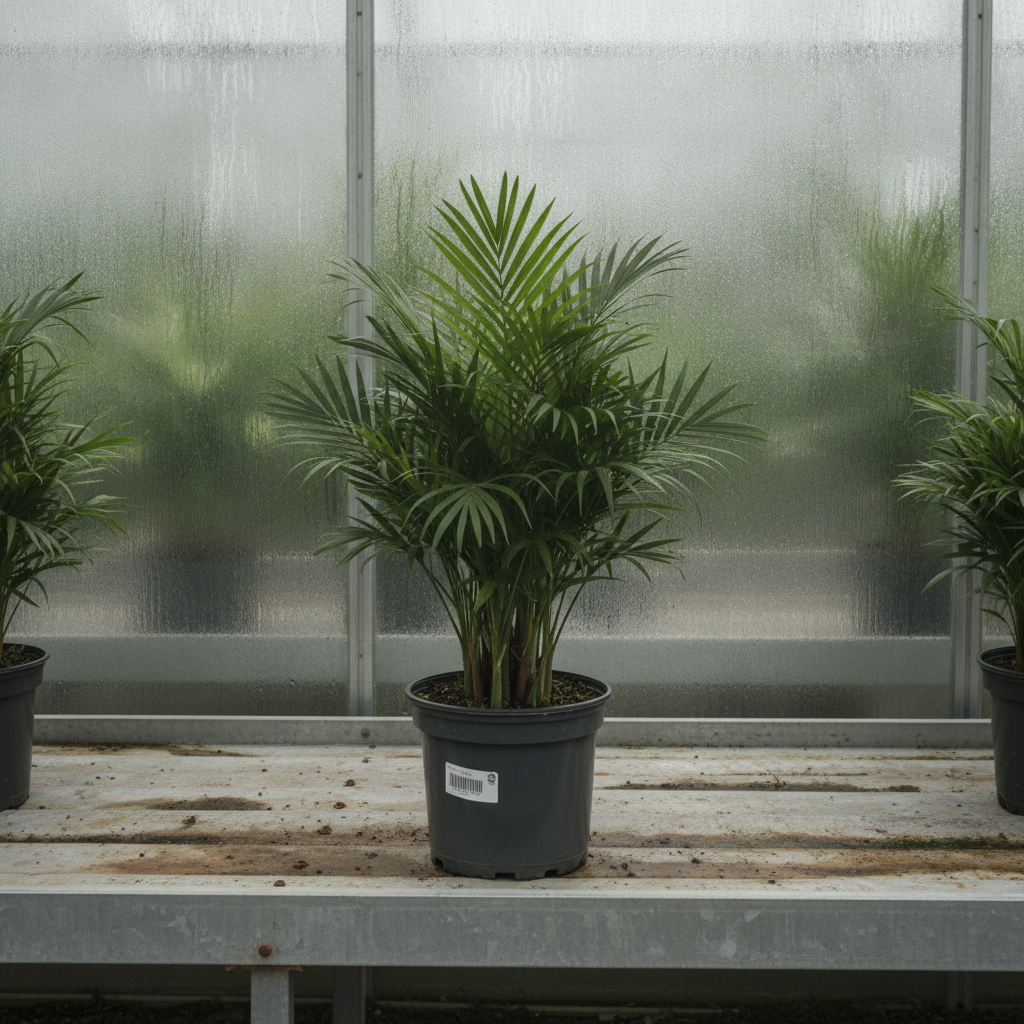
Compact Form (subsp. subglobosa)
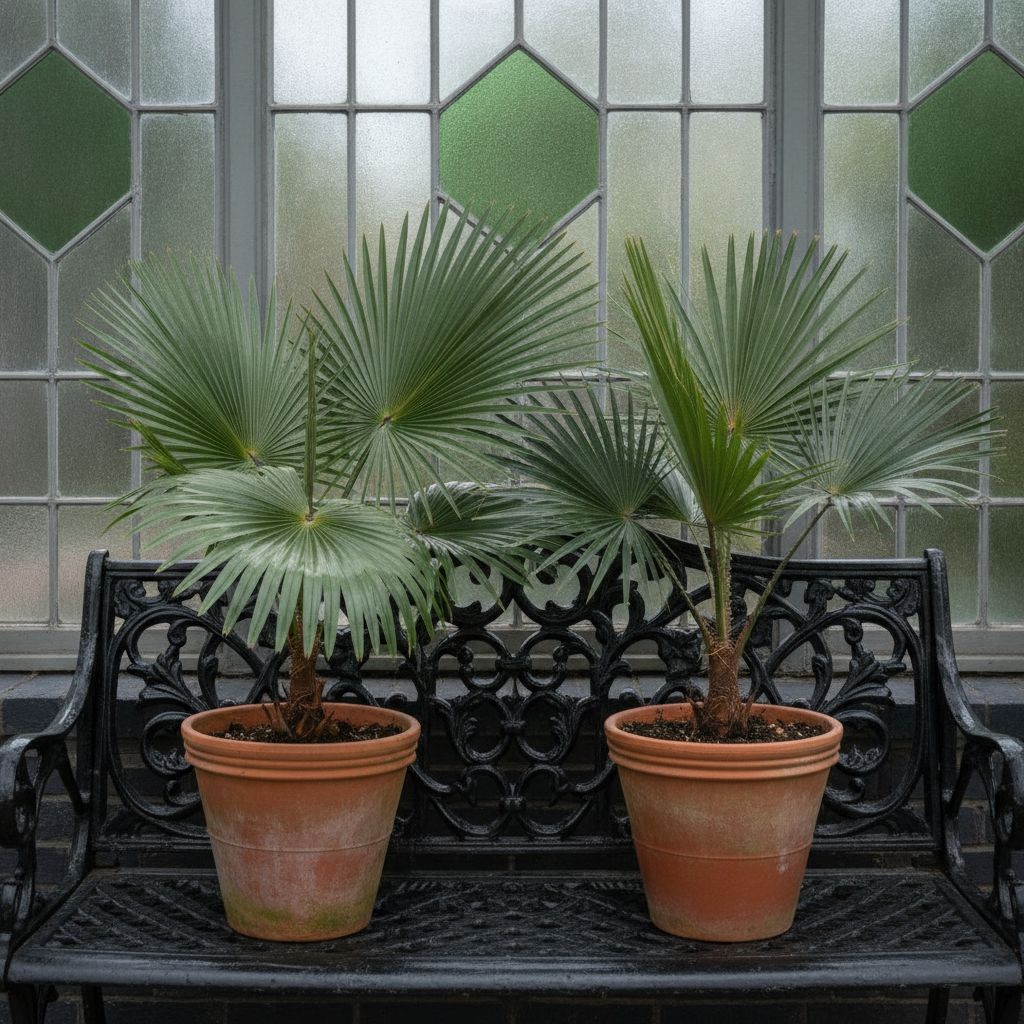
A naturally smaller, more densely crowned form of the species with rounded fans and shorter weeping tips. Its tighter habit and slower ultimate size make it an especially good choice for indoor growing where space is limited.
Footstool Palm (Livistona rotundifolia)
A close relative often sold alongside the fountain palm, distinguished by glossier, more perfectly circular and flatter fans with finer segmentation. It shares the same care needs, so growers who like the fan-palm look have two similar options to choose between.
Variety Profiles in Detail
Chinese Fan Palm (Livistona chinensis)
The true species is the plant this guide describes: a solitary fan palm whose large, circular, deeply pleated fronds divide into stiff segments that arch and then weep at the tips, giving the fountain effect that names it. Slow-growing and long-lived, it remains a manageable container size for many years before, in ideal outdoor conditions, eventually becoming a substantial tree. Indoors it is prized for exactly that unhurried pace and its architectural presence.
Footstool Palm (Livistona rotundifolia)
Native to Southeast Asia, the footstool palm earns its name from its almost perfectly round, glossy fans, which are flatter and less deeply divided than those of the Chinese fan palm, particularly on young plants. It is grown and cared for in the same way and is a fine alternative for anyone drawn to the clean, disc-like leaf shape, though it can be a touch more tender to cold.
Choosing the Right Variety for Your Space
For most homes the true species is the natural choice, widely available and reliably attractive, but if space is tight the compact subspecies is worth seeking out for its tidier habit. If you are captivated by the leaf shape above all, compare the deeply weeping fans of the Chinese fan palm against the rounder discs of the footstool palm in person and pick whichever speaks to you, since their care is effectively identical. Whichever you choose, prioritise a healthy, well-grown plant with firm green fronds and no sign of pests over any particular label; a vigorous specimen of the ordinary species will always outperform a struggling rarity.
Frequently Asked Questions
Why are the tips of my Chinese fan palm turning brown?
Brown tips are the fountain palm’s most common complaint and usually trace back to one of three causes: dry air, inconsistent watering, or minerals in the water. If the browning is widespread and appears during heating season, dry air is likely, so raise the humidity. If it comes and goes with your watering habits, aim for more even moisture. And if it persists despite good watering and humidity, switch to rainwater or filtered water, as fan palms are sensitive to fluoride and salts. Trim the crisp tips at an angle, leaving a sliver of brown, to tidy the plant while you correct the cause.
How fast does a Chinese fan palm grow?
Slowly, especially indoors. A healthy plant typically produces only a few new fronds each year and may take many years to reach 1.5 to 2 metres (5 to 6.5 ft) in a container. This unhurried pace is part of its appeal as a houseplant, since it holds its size and shape for a long time, but it also means you should buy a plant close to the size you want rather than expecting rapid growth to fill a space.
Is the Chinese fan palm safe for cats and dogs?
Yes, the Chinese fan palm is not known to be toxic to cats, dogs or humans, and it does not appear on the standard lists of plants poisonous to pets, which makes it a good choice for animal households. The one caution is physical rather than chemical: the leaf stalks are lined with sharp teeth that can scratch, so position the plant where pets are not tempted to chew or brush against the lower stalks.
Can I grow a Chinese fan palm in low light?
A young plant will tolerate medium light and can survive in low light for a while, but it will not thrive there. In poor light the palm stretches, producing long weak stalks and smaller, floppier fans that never recover their form. If a dim spot is your only option, add a full-spectrum grow light running ten to twelve hours a day to keep the growth compact, or accept that the plant will slowly decline without it.
Should I cut off brown or damaged fronds?
Remove a whole frond only once it has turned largely brown, since even a partly green frond is still feeding the plant and is best left in place. When a frond is mostly dead, cut it off cleanly near the base with sterilised secateurs, wearing gloves against the toothed stalk. For fronds that are merely tip-burnt, trim just the brown portion rather than removing the whole leaf, and always resist the urge to over-prune, as a palm relies on its limited number of fronds and stripping them weakens it.
Why is my palm producing pale, weak new leaves?
Weak, frizzled or unusually pale new fronds most often point to a nutrient deficiency, since palms are prone to shortages of manganese and magnesium in particular. Deformed, streaky new growth, sometimes called frizzle top, is the classic sign of manganese deficiency, while broad yellow bands on older fronds suggest a lack of magnesium. Feeding with a palm-specific fertiliser that includes these micronutrients through the growing season usually corrects the problem, though the damaged fronds themselves will not recover and must simply grow out.
Can a Chinese fan palm live outdoors?
In a warm climate, yes. The Chinese fan palm is hardy in roughly USDA zones 8b to 11 and, once established, can briefly tolerate light frost down to around minus 4 degrees C (25 degrees F), though prolonged or hard freezes damage or kill it. In cooler regions it is best grown as a container plant that summers outdoors in a bright, sheltered spot and comes inside before the first frost, kept above 10 degrees C (50 degrees F) through winter.
How often should I repot my fountain palm?
Only every two to three years, and often less as the plant matures, because it grows slowly and actually prefers to be slightly pot-bound. Repot in spring when you see roots emerging from the drainage holes or the plant becoming unstable, moving up just one pot size and disturbing the roots as little as possible. Between repottings, refreshing the top few centimetres of compost each spring keeps the plant fed without the stress of a full root disturbance, which palms particularly dislike.






