
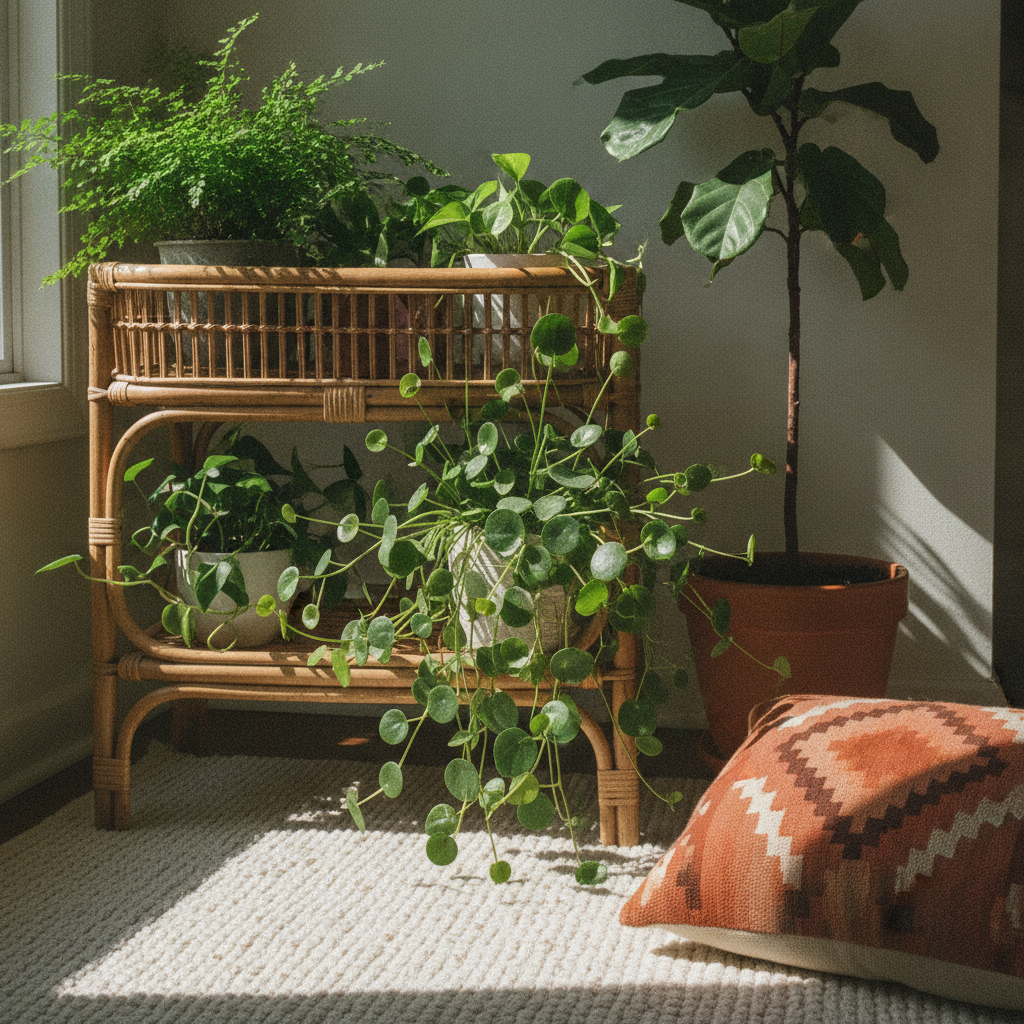
Few houseplants manage to be both forgiving and quietly charismatic, but the Hope peperomia (Peperomia tetraphylla ‘Hope’) pulls it off with ease. A garden hybrid raised from two tropical parents, it strings together plump, coin-shaped leaves in neat whorls along slender trailing stems, part succulent, part vine, and entirely undemanding. It is the kind of plant that thrives on a little benign neglect, storing water in its thickened leaves so that a forgotten watering rarely does any lasting harm. For anyone building confidence with indoor plants, or simply wanting greenery that will not sulk at the first missed routine, Hope is a genuinely rewarding place to start.
Quick Reference
Use the table below for the essentials at a glance, then read on for the reasoning behind each recommendation. Understanding why a plant wants what it wants is what turns a plant that merely survives into one that visibly thrives.
| Common name | Hope peperomia, four-leaved peperomia, acorn peperomia |
| Botanical name | Peperomia tetraphylla ‘Hope’ (a hybrid of Peperomia deppeana and Peperomia quadrifolia) |
| Family | Piperaceae |
| Light | Bright, indirect light; tolerates medium light |
| Water | Allow the top 3 to 5cm (1 to 2in) to dry; water thoroughly, then drain |
| Soil | Light, free-draining mix with plenty of perlite and bark |
| Temperature | 18 to 27C (64 to 81F) |
| Humidity | Average household humidity; tolerant of dry air |
| Feeding | Balanced feed at half strength, monthly in spring and summer |
| Mature size | Trails to roughly 20 to 30cm (8 to 12in) |
| Toxicity | Non-toxic to cats, dogs and humans |
| Difficulty | Easy, well suited to beginners |
- Why Hope Peperomia Makes a Great Houseplant
- Light Requirements
- Watering
- Soil and Potting
- Fertilising
- Propagation
- Pests and Problems
- Varieties
- Frequently Asked Questions
Why Hope Peperomia Makes a Great Houseplant
The appeal of Hope peperomia begins with its leaves. Small, rounded and slightly convex, they are held in whorls of three or four along reddish, semi-trailing stems, giving the plant a beaded, almost jewellery-like quality. Each leaf is thickened and faintly translucent at the edge, a clue to the plant’s semi-succulent nature. Because those leaves act as tiny reservoirs, the plant tolerates irregular care far better than the thin-leaved tropicals it is often shelved beside. This combination of good looks and resilience is exactly why it has become a fixture of plant shops and windowsills alike.
As a hybrid, Hope inherits the compact, clumping habit of one parent and the trailing tendency of the other, settling into a mounding plant that gradually spills over the rim of its pot. It never grows large or unruly, which makes it ideal for shelves, desks, hanging planters and the crowded corners of a plant collection where a sprawling monstera would overwhelm. Its modest root system means it is happy in a small pot for a long time, and its slow-to-moderate growth rate keeps maintenance to a minimum.
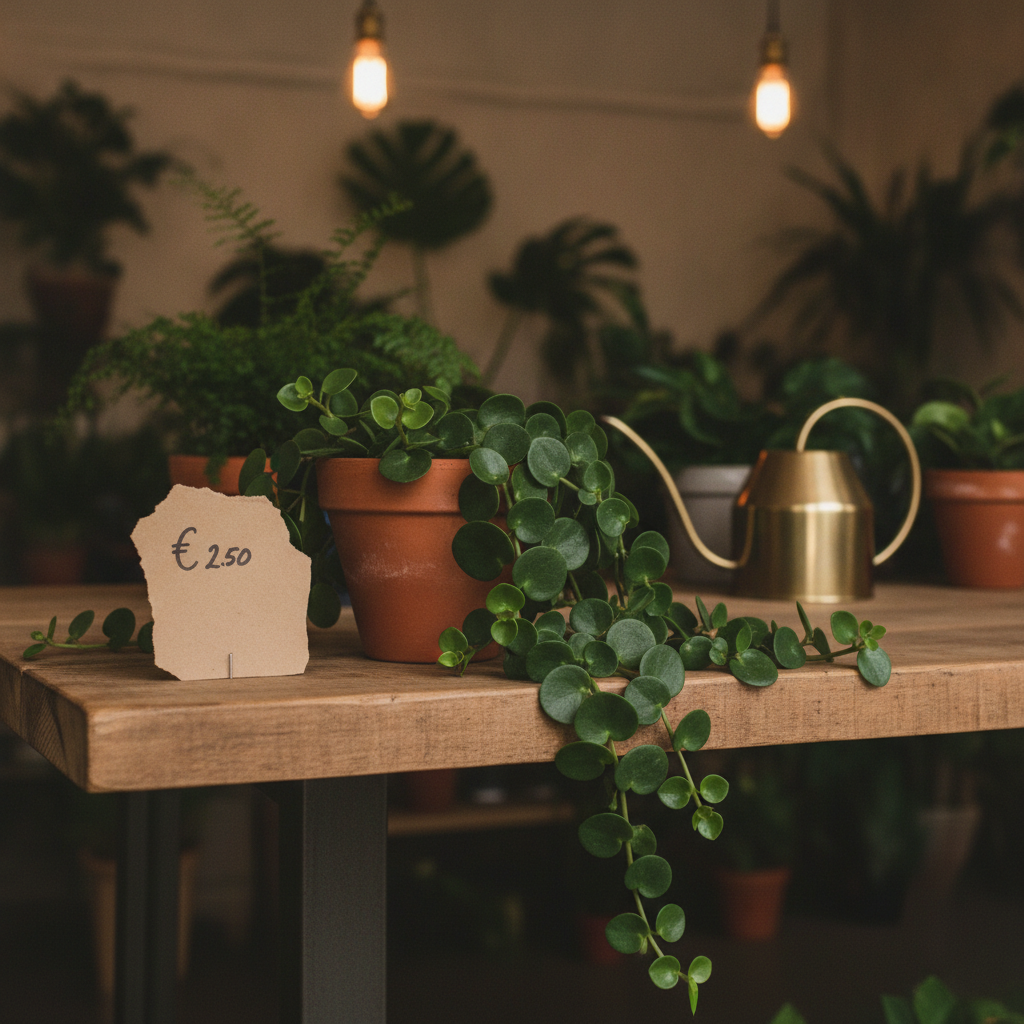
There is a practical bonus that matters in many households. Like the wider peperomia clan, Hope is non-toxic to cats, dogs and people, so it can share a room with curious pets and small children without concern. That safety, paired with its tolerance of ordinary indoor conditions and its willingness to root from the simplest cutting, means a single plant can quickly become several. For a beginner, it offers early success; for an experienced grower, it offers a low-effort accent that still earns its place.
Light Requirements
Bright, indirect light is where Hope peperomia looks its best. In the wild its parents grow as epiphytes and ground-dwellers beneath the forest canopy, bathed in filtered light rather than direct sun. Indoors, that translates to a position near a window where the plant receives plenty of ambient brightness but is shielded from the harsh midday rays that would scorch its leaves. An east-facing windowsill, with its gentle morning sun, is close to ideal, as is a spot a metre or so back from a brighter south or west-facing window.
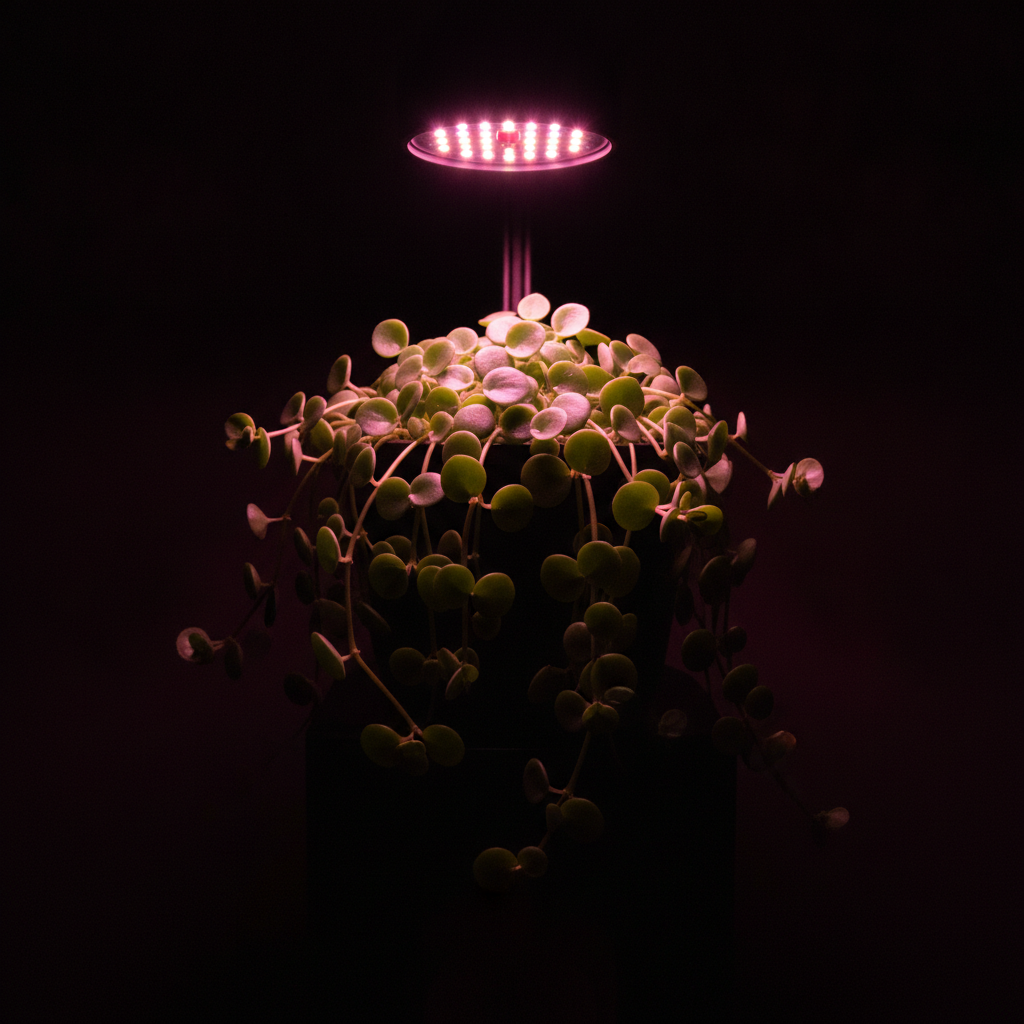
The plant will cope with medium light, but its response tells you when it is short of energy. In dimmer conditions the stems stretch, the gaps between whorls widen and the tidy, beaded silhouette loosens into something leggier and less appealing. Colour also fades, and any variegation on a variegated specimen will diminish as the leaves produce more chlorophyll to compensate. If a brighter window is not available, a modest full-spectrum grow-light run for ten to twelve hours a day restores compact growth and keeps the leaves saturated.
Pro Tip — Even growth: Peperomias lean noticeably towards their light source. Give the pot a quarter turn each time you water so every side receives its share, and the plant will keep a balanced, rounded shape rather than reaching in one direction.
Avoid prolonged direct sun, particularly through glass in summer, which can bleach and crisp the leaf surfaces. If you notice pale, washed-out patches or dry brown edges appearing on the sunniest side of the plant, move it back from the window or filter the light with a sheer curtain. The goal is bright but soft, the sort of light in which you could comfortably read a book without a lamp.
Watering
Watering is where most peperomia problems begin and end, and Hope is no exception. Its thickened, semi-succulent leaves store moisture, which means the plant is far more tolerant of drought than of waterlogging. The single most useful habit you can adopt is to let the top 3 to 5cm (1 to 2in) of the mix dry out before watering again, then to water thoroughly until it runs freely from the drainage holes. Empty the saucer afterwards so the roots never stand in water.
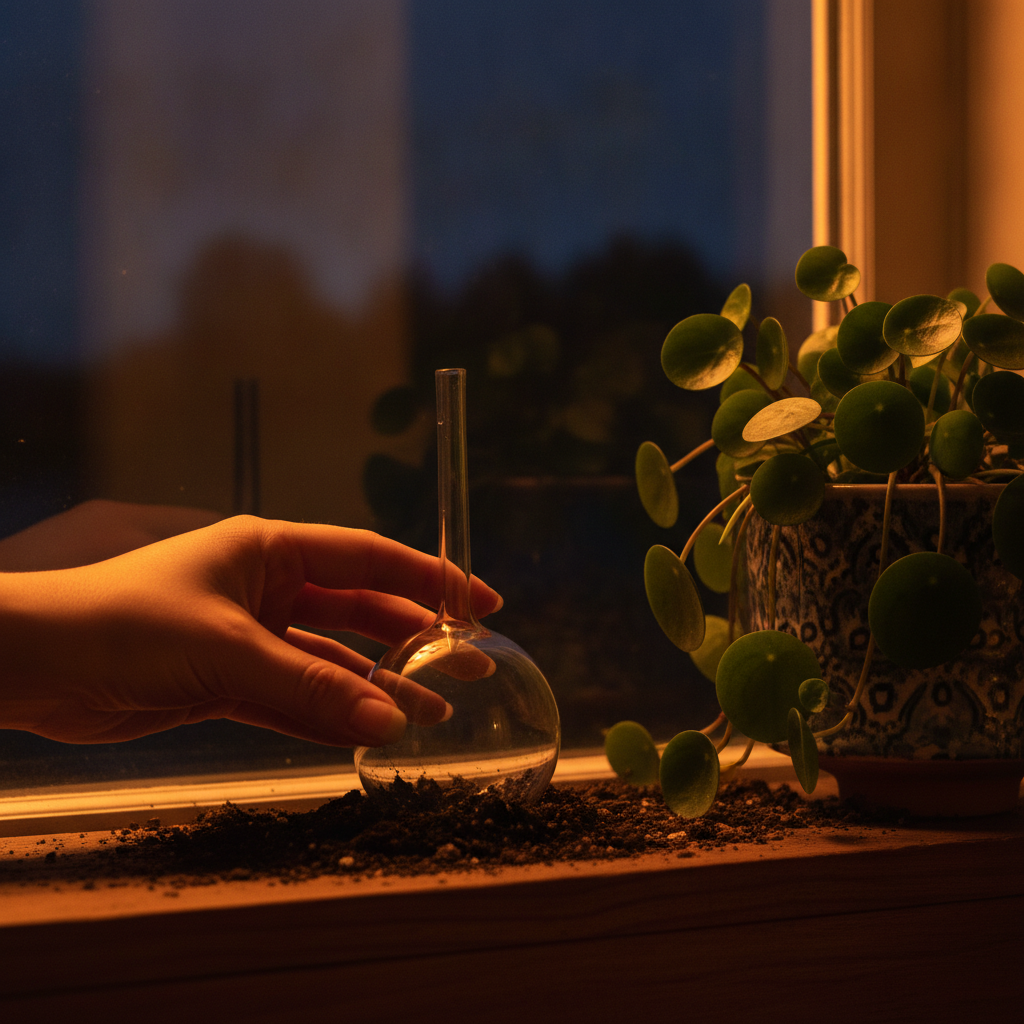
Frequency depends on light, warmth and the time of year rather than the calendar. In the bright, warm months of spring and summer, an actively growing plant might want water every seven to ten days. In the cooler, darker months of autumn and winter, when growth slows and evaporation drops, that interval can stretch to two or three weeks. Rather than watering on a fixed schedule, check the mix with a finger or a wooden skewer and let the plant’s actual dryness guide you. When in doubt, wait a day; a Hope peperomia recovers quickly from being a little too dry, but rot from being too wet is far harder to reverse.
The leaves themselves are a helpful gauge. When the plant is well hydrated they feel firm and plump. When it is genuinely thirsty they soften slightly and may look a touch less turgid, bouncing back within a day of a good drink. Persistently limp, yellowing or translucent leaves, by contrast, usually signal the opposite problem of overwatering, and the response then is to hold off and let the mix dry, not to water more.
Warning — Root rot: Soft, blackening stems at soil level and a sour smell from the pot point to root rot from chronic overwatering. Unpot the plant, cut away any mushy roots and stems, and restart the healthy portion as cuttings in fresh, dry mix rather than trying to nurse a collapsed root ball back to life.
Soil and Potting
Because Hope peperomia is so sensitive to sitting wet, the potting mix does much of the work of keeping it healthy. What it wants is an open, airy, free-draining medium that holds a little moisture but never stays sodden. A reliable recipe is roughly two parts of a standard peat-free or coir-based houseplant compost to one part perlite and one part fine orchid bark. The perlite opens up air channels and the bark mimics the chunky, debris-rich pockets its epiphytic parents would root into in the wild.
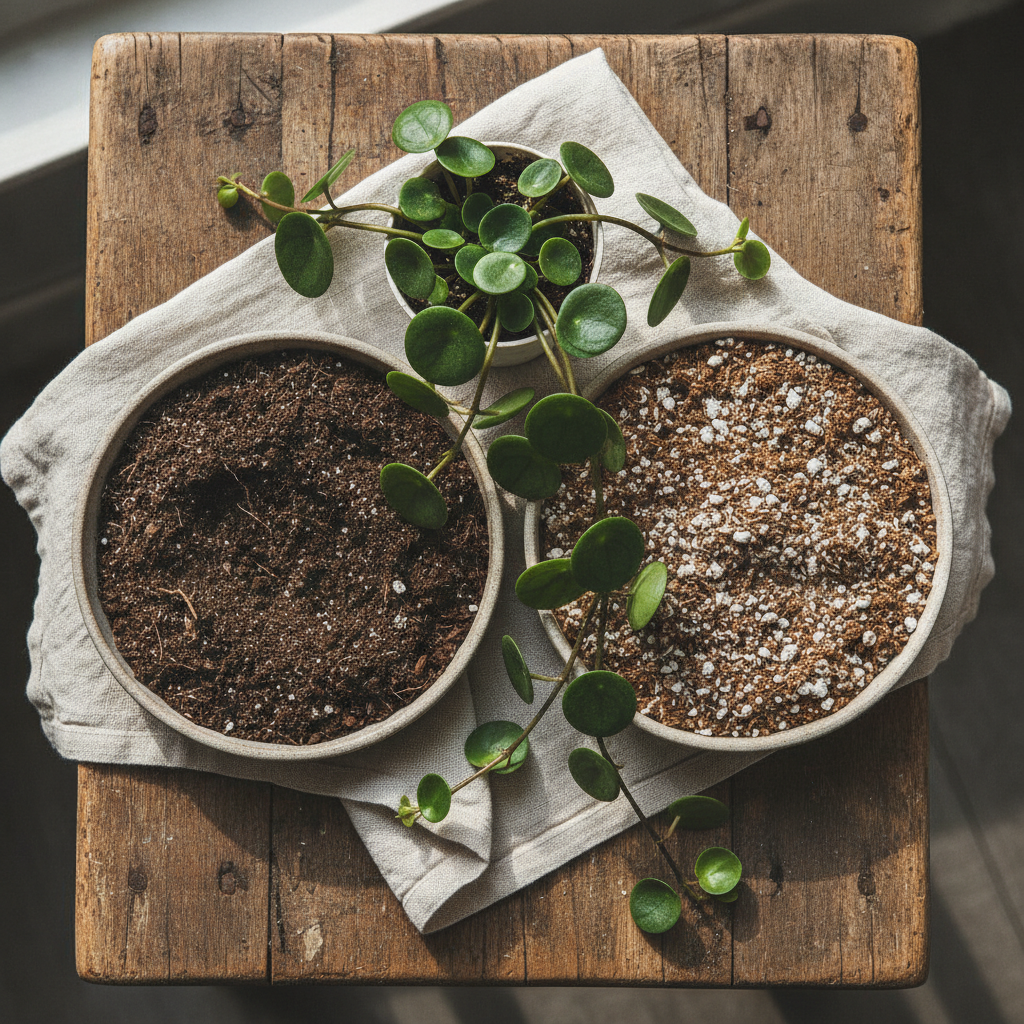
The pot matters as much as the mix. Always choose a container with drainage holes, and resist the temptation to size up too generously. Hope has a small, shallow root system and prefers to be a little snug; a pot that is too large holds a reservoir of damp compost that the roots cannot use, which is a direct invitation to rot. When the plant does eventually fill its pot, move it up by just one size, from a 10cm to a 12cm pot for example, rather than making a dramatic jump. Terracotta is an excellent choice, since its porous walls wick away excess moisture and buffer against overwatering.
Repotting is only needed every two to three years, or when roots begin to creep from the drainage holes. Spring, at the start of the growing season, is the best time. To repot, follow these steps:
- Water the plant a day beforehand so the root ball holds together and the roots are hydrated before disturbance.
- Ease the plant from its pot and gently tease away the old, spent compost from around the roots, taking care with the brittle stems.
- Inspect the roots and trim away anything soft, brown or mushy with clean scissors.
- Settle the plant into fresh mix at the same depth it sat before, firming lightly so it stands upright without burying the stems.
- Water lightly to settle the mix, then hold off on the next watering until the surface has dried.
Fertilising
Hope peperomia is a light feeder and needs far less fertiliser than many houseplants. Its compact size and modest growth mean it draws only small quantities of nutrients, and overfeeding does more harm than underfeeding. During the active growing months of spring and summer, a balanced liquid houseplant feed diluted to half the recommended strength, applied roughly once a month, is ample. Always feed onto already-moist soil rather than a bone-dry root ball, which helps the nutrients distribute evenly and protects the fine roots from being scorched.
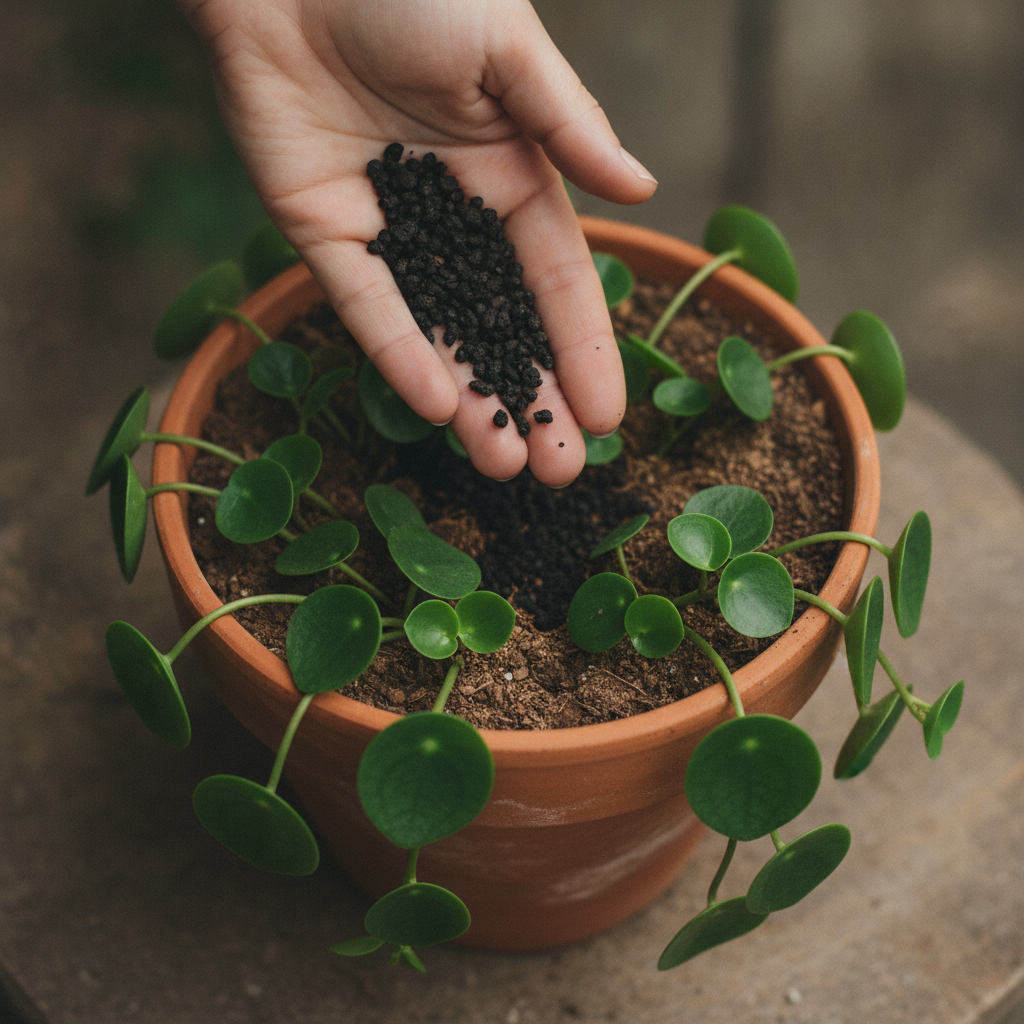
In autumn and winter, when growth naturally slows, stop feeding altogether. Pushing fertiliser into a plant that is not actively growing simply allows unused salts to accumulate in the mix, where they can burn the roots and cause the leaf tips to brown. If you prefer a gentler, lower-maintenance approach, a thin top-dressing of worm castings once or twice during the growing season provides a mild, slow-release source of nutrients without the risk of overdoing it.
Pro Tip — Flushing salts: If you have fed regularly and notice crusty white deposits on the soil surface or persistent brown leaf tips, flush the pot every few months by running water through the mix for a minute or two. This washes accumulated fertiliser salts out through the drainage holes and resets the root environment.
Propagation
One of the great pleasures of Hope peperomia is how readily it propagates. A single healthy plant can supply cuttings for a fuller pot, for sharing with friends or for replacing an older specimen that has grown leggy. The most reliable method is the stem cutting, which roots quickly in either water or a moist, airy mix. Spring and early summer, when the plant is in active growth, give the fastest and most dependable results.
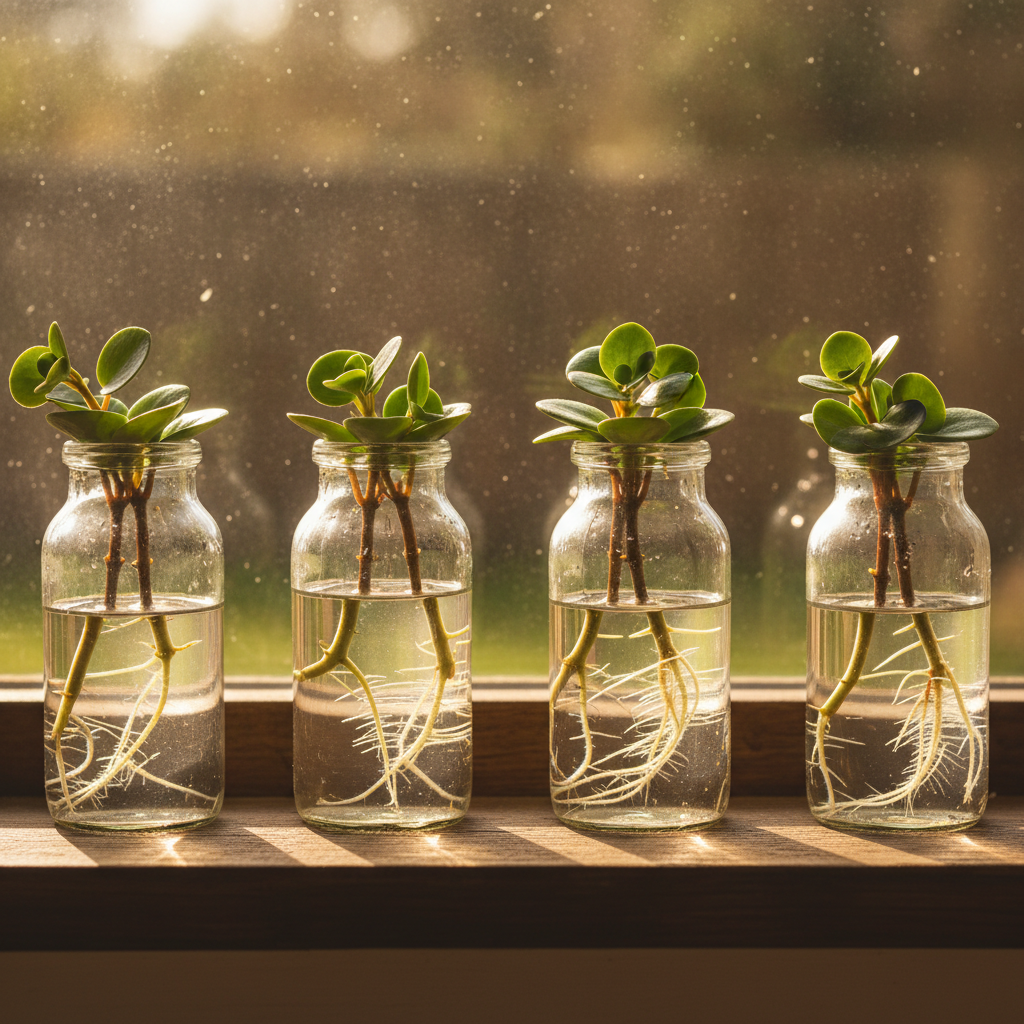
To take stem cuttings, work through the following steps:
- Choose a healthy trailing stem and cut a 5 to 8cm (2 to 3in) section just below a node, the point where a whorl of leaves meets the stem, using clean scissors.
- Remove the lowest whorl of leaves so that a bare node is exposed, since this is where new roots will form.
- Place the cutting in a small jar of water with the bare node submerged and the remaining leaves above the waterline, or insert it directly into moist, free-draining mix.
- Set the cutting in bright, indirect light and keep it warm; refresh the water every few days if rooting in water.
- Once roots reach 2 to 3cm (about 1in), usually within three to five weeks, pot water-rooted cuttings into the standard mix and keep them lightly moist while they establish.
Leaf cuttings are also possible, taken by removing a healthy leaf with a short piece of its stalk and inserting the stalk into moist mix, though these are slower and less certain than stem cuttings. Whichever method you choose, taking several cuttings at once and potting them together produces the fullest, most attractive result, since Hope looks its best as a generous, mounding cluster rather than a single sparse stem.
Pests and Problems
Hope peperomia is not especially prone to pests, and most of the troubles it does encounter trace back to watering rather than insects. That said, a few common houseplant pests will occasionally find it, and catching them early keeps a minor nuisance from becoming an infestation. Regularly wiping the leaves and looking over the plant when you water is the simplest and most effective defence.
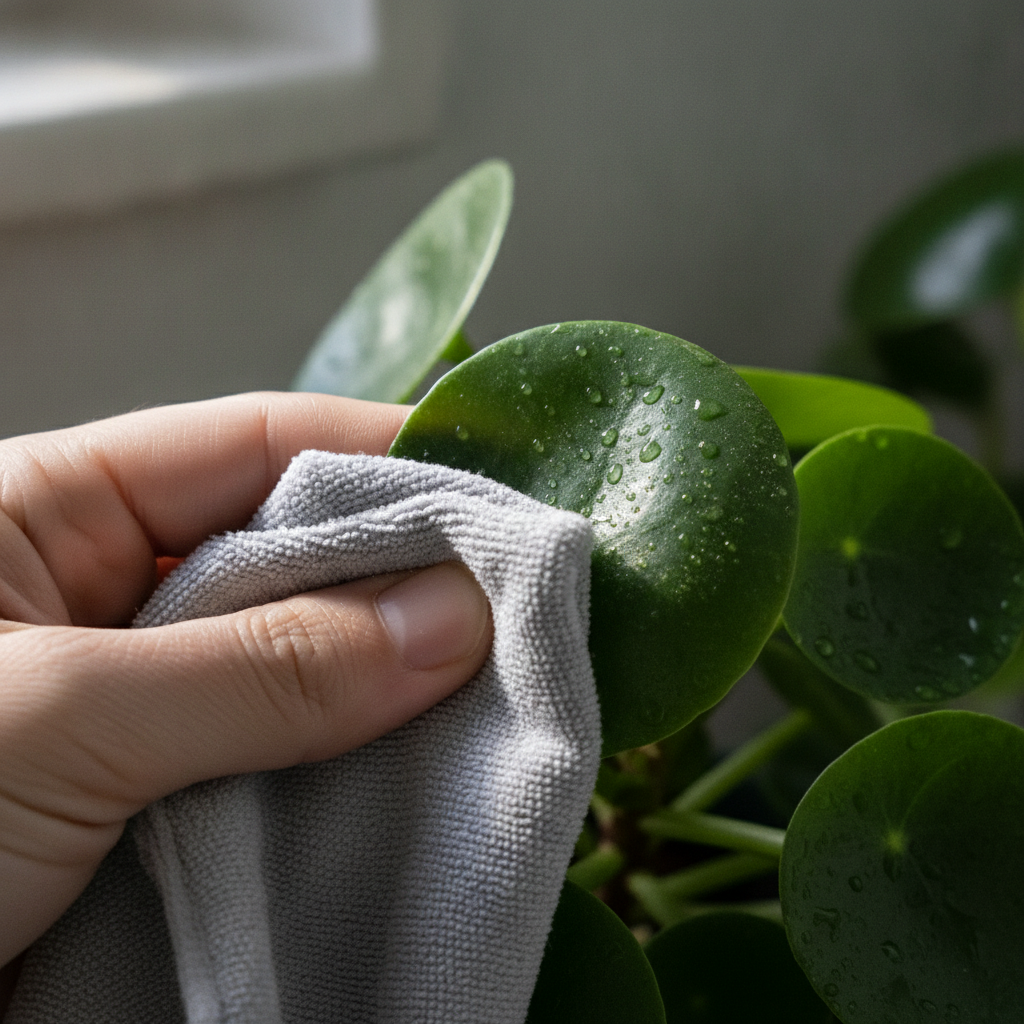
Mealybugs are the most likely visitor, appearing as small white, cottony tufts tucked into the leaf whorls and stem joints. Spider mites can show up in hot, dry conditions, betrayed by fine webbing and a stippled, dusty look to the leaves, while fungus gnats hover around the soil surface when the mix is kept too wet. For mealybugs and mites, dab or wipe the affected areas with a cotton bud dipped in diluted isopropyl alcohol, then treat the whole plant with an insecticidal soap or neem solution and repeat weekly until they are gone. Fungus gnats are best tackled by letting the soil dry out more between waterings, which breaks their breeding cycle at the source.
| Symptom | Likely cause | Remedy |
| Soft, yellowing, translucent leaves | Overwatering | Let the mix dry; reduce frequency; check for rot |
| Wrinkled, limp leaves that firm up after watering | Underwatering | Water thoroughly and settle into a routine |
| Leggy stems, wide gaps between whorls | Too little light | Move to brighter indirect light or add a grow-light |
| Pale, bleached or crispy patches | Direct sun scorch | Filter the light or move back from the window |
| Brown leaf tips, crusty soil surface | Overfeeding or salt build-up | Flush the pot and cut back on feeding |
| White cottony tufts in leaf joints | Mealybugs | Spot-treat with alcohol, follow with neem or soap |
The most serious problem, root rot, is a consequence of prolonged wet soil rather than any pest. Its warning signs are blackened stem bases, a collapsing plant and an unpleasant smell from the pot. Prevention is simple and lies almost entirely in the watering and drainage advice above; recovery, if it does take hold, means salvaging whatever healthy top growth remains as cuttings and starting again. Treat a Hope peperomia as a plant that would rather be dry than wet and most problems never arise.
Varieties
Hope itself is a named hybrid rather than a species, so the variation you will encounter is mostly between the standard green form and its variegated counterpart. Both share the same easy care and trailing, whorled habit; the choice between them comes down to appearance and to how much light you can offer, since variegated plants ask for a little more brightness to hold their colour.
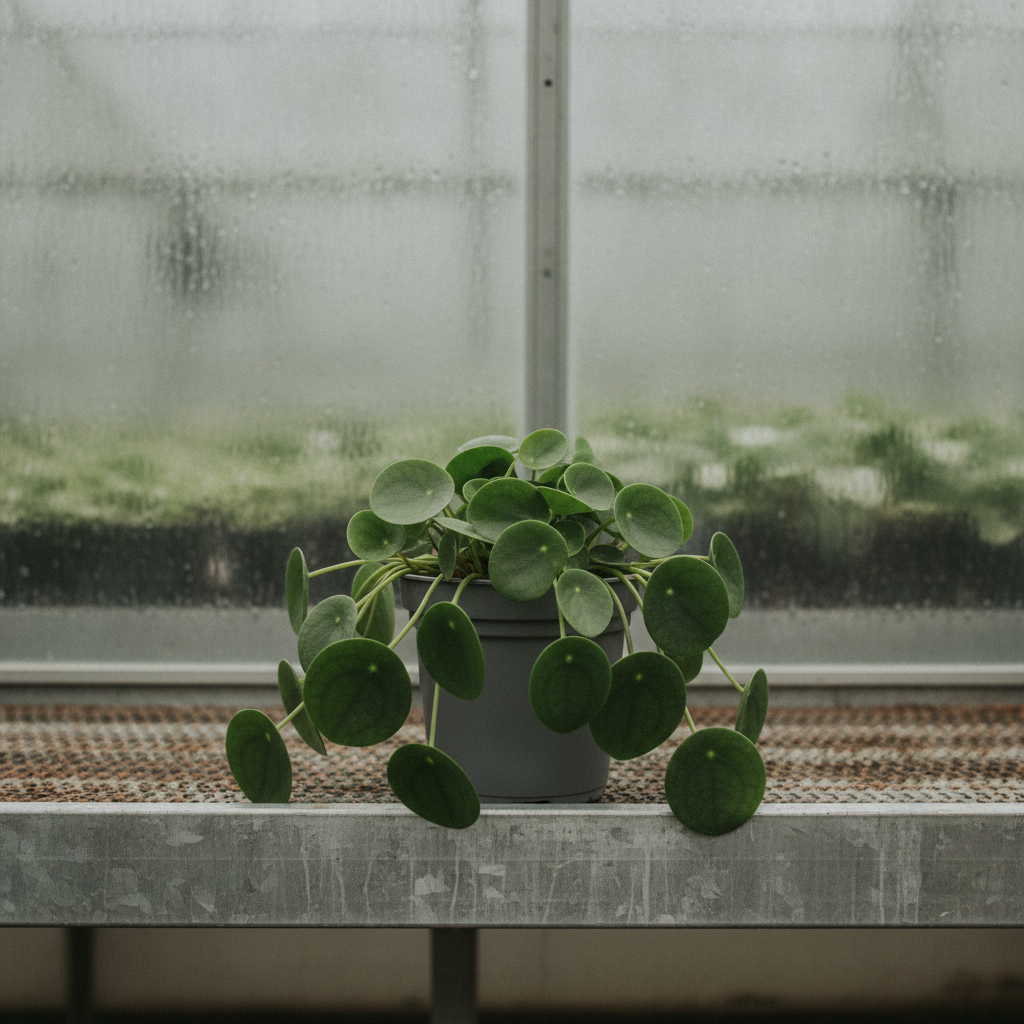
‘Hope’ (standard): The classic form, with plump, uniformly mid-green leaves in tidy whorls of three or four. It is the most widely sold and the most forgiving, holding its colour well even in medium light, which makes it the easiest choice for a first peperomia.
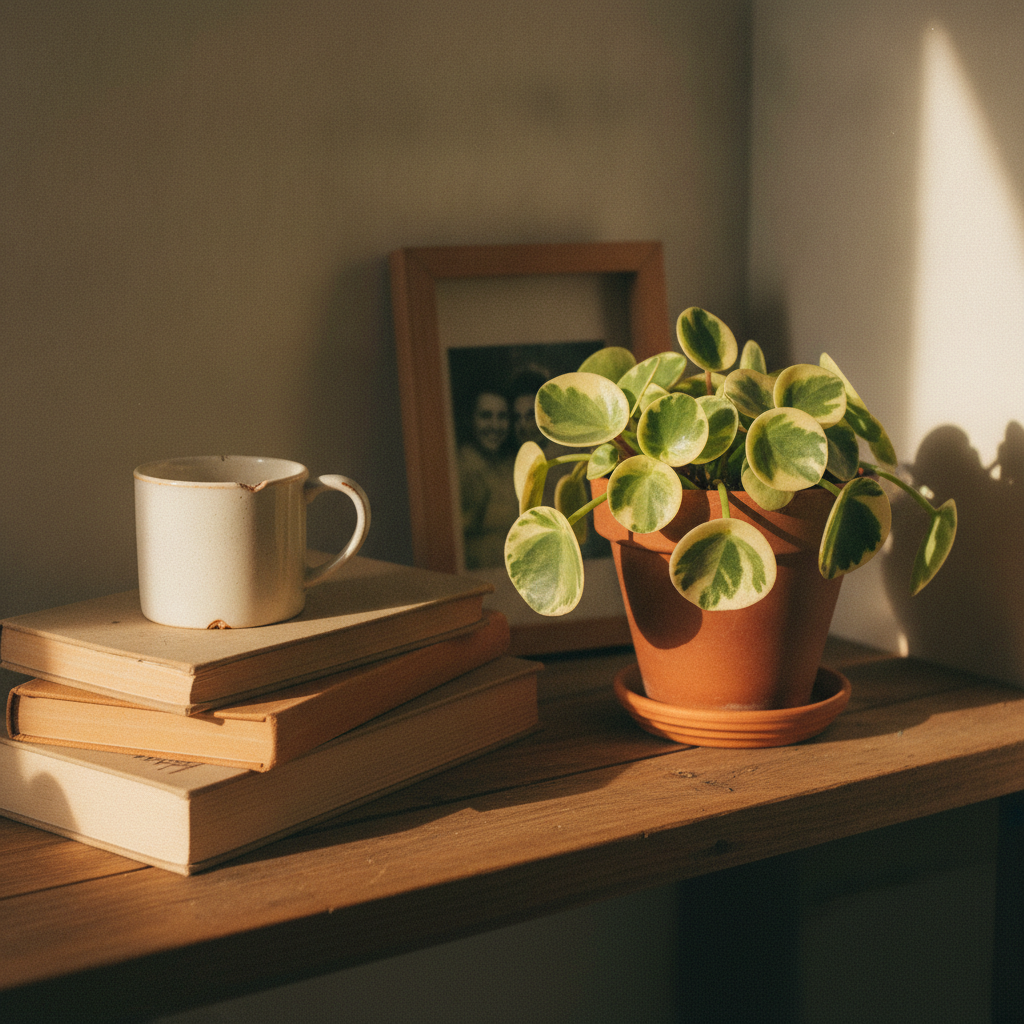
Variegated Hope: Less common and more coveted, this form carries the same round leaves marbled with creamy-yellow and pale green. It is a little slower and needs brighter indirect light to keep its markings, since low light pushes it to revert towards plain green.
It is worth noting that Hope is frequently confused with other trailing, round-leaved peperomias sold under similar names, including the closely related species Peperomia rotundifolia and Peperomia prostrata, the string of turtles. The care described here applies broadly across these look-alikes, so even if your plant’s exact label is uncertain, treating it as a semi-succulent trailing peperomia will serve it well.
Frequently Asked Questions
Is Hope peperomia safe for cats and dogs?
Yes. Like other members of the peperomia group, Hope is non-toxic to cats, dogs and humans, making it a reassuring choice for homes with curious pets. While no plant should be eaten, you need not worry about serious harm if a leaf is nibbled.
Why are the leaves on my Hope peperomia going soft and yellow?
Soft, yellowing, translucent leaves are almost always a sign of overwatering. Allow the mix to dry out well before watering again, make sure the pot drains freely, and check the roots for rot if the problem continues. The plant far prefers to be a touch too dry than too wet.
How often should I water a Hope peperomia?
There is no fixed schedule. In spring and summer this often works out to every seven to ten days, and in autumn and winter every two to three weeks, but you should always let the top 3 to 5cm (1 to 2in) of soil dry before watering rather than watering by the calendar.
Why is my Hope peperomia growing leggy?
Legginess, with long gaps between the leaf whorls, is the classic response to insufficient light. Move the plant to a brighter spot with plenty of indirect light, or supplement with a grow-light, and pinch back the longest stems to encourage bushier growth. The cuttings you remove can be rooted to fill out the pot.
Does Hope peperomia need high humidity?
No. Its semi-succulent leaves make it well adapted to ordinary household humidity, and it does not require the misting or humidifiers that thin-leaved tropicals often demand. It will happily tolerate the dry air of a centrally heated room, which is part of what makes it so low-maintenance.
How big does a Hope peperomia get?
It stays small and manageable, trailing to roughly 20 to 30cm (8 to 12in) over time. This compact habit, combined with its shallow roots, is what makes it such a good fit for shelves, desks and hanging planters where space is limited.






