
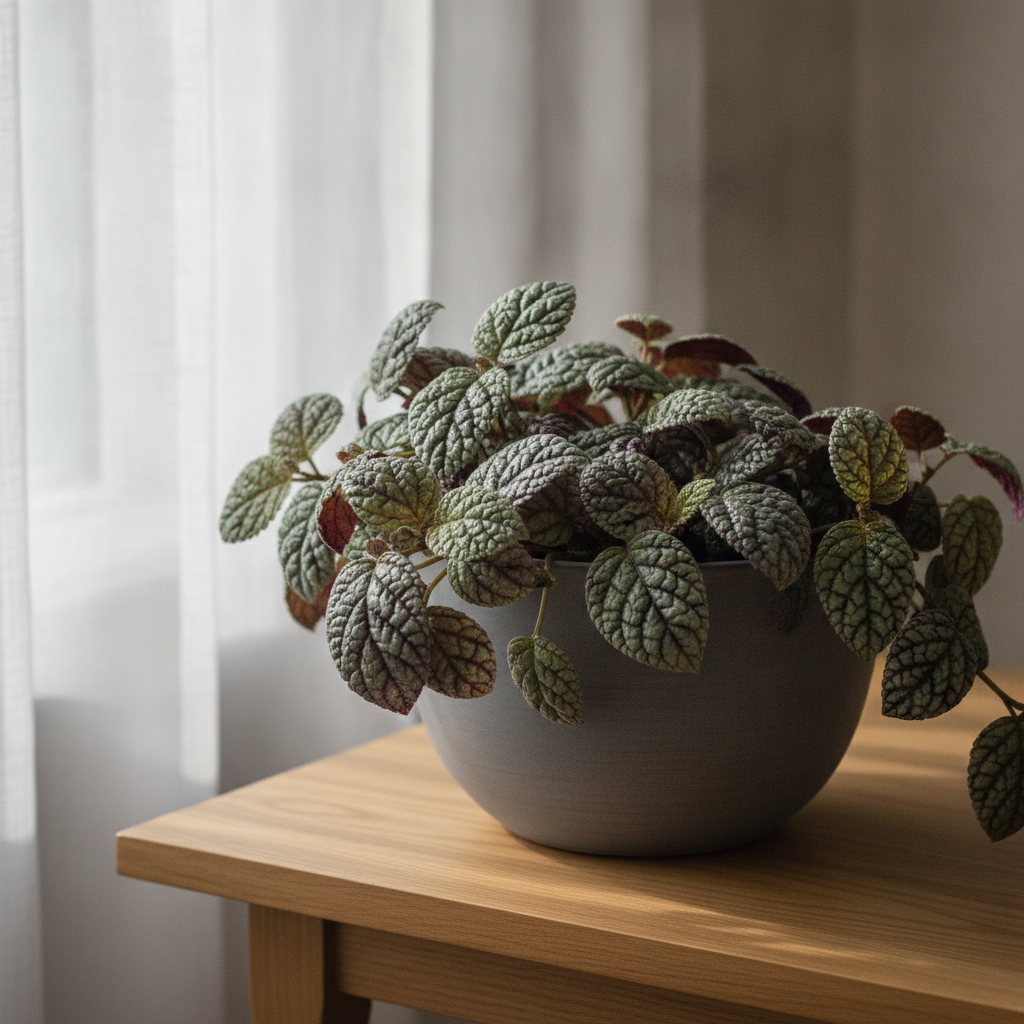
Few foliage houseplants pack as much colour into such a small footprint as the purple waffle plant. Known botanically as Hemigraphis alternata and sold under a tangle of common names including red ivy, red flame ivy and metal leaf, this low-growing tropical earns its keep with heavily puckered, quilted leaves that shimmer metallic grey-green on top and glow deep wine-purple underneath. A member of the acanthus family (Acanthaceae), it hails from the humid understorey of tropical Southeast Asia, where it creeps across the forest floor as a spreading groundcover rather than reaching for the canopy.
Its reputation is that of an easy, fast-growing plant, and that is fair as far as it goes. A purple waffle plant will survive a wide range of conditions, but there is a real gap between a plant that clings on and one that spreads into a dense, richly coloured cushion of foliage. That gap comes down to light, humidity and consistent moisture. This guide walks through everything that separates surviving from thriving, from the exact light levels that deepen the purple to the propagation methods that let you turn one plant into a dozen in a matter of weeks.
Contents
- Quick Reference
- Why Purple Waffle Plant Makes an Easy Houseplant
- Light Requirements
- Watering & Humidity
- Soil, Potting & Repotting
- Fertilising
- Propagation
- Pests & Diseases
- Popular Varieties
- Frequently Asked Questions
Quick Reference: Purple Waffle Plant at a Glance
| Light | Bright, indirect light for the deepest colour; tolerates medium light but purple fades |
| Watering | Keep evenly moist at all times; water when the top 1 to 2 cm of soil begins to dry |
| Temperature | 18 to 27 degrees C (65 to 80 degrees F); avoid anything below 15 degrees C (59 degrees F) |
| Humidity | High, ideally above 50 to 60 per cent; thrives in terrariums and bathrooms |
| Fertiliser | Balanced liquid feed at half strength, monthly through spring and summer |
| Toxicity | Generally considered non-toxic to cats and dogs, though not intended for eating |
Why Purple Waffle Plant Makes an Easy Houseplant
The purple waffle plant appeals to two very different kinds of grower at once. For the beginner, it is forgiving, quick to show when something is wrong, and quick to recover once the problem is fixed. For the collector, it delivers colour and texture that most easy plants simply cannot match, all in a compact form that suits shelves, windowsills, hanging baskets and closed terrariums equally well. Rarely does a single plant sit so comfortably in both camps.
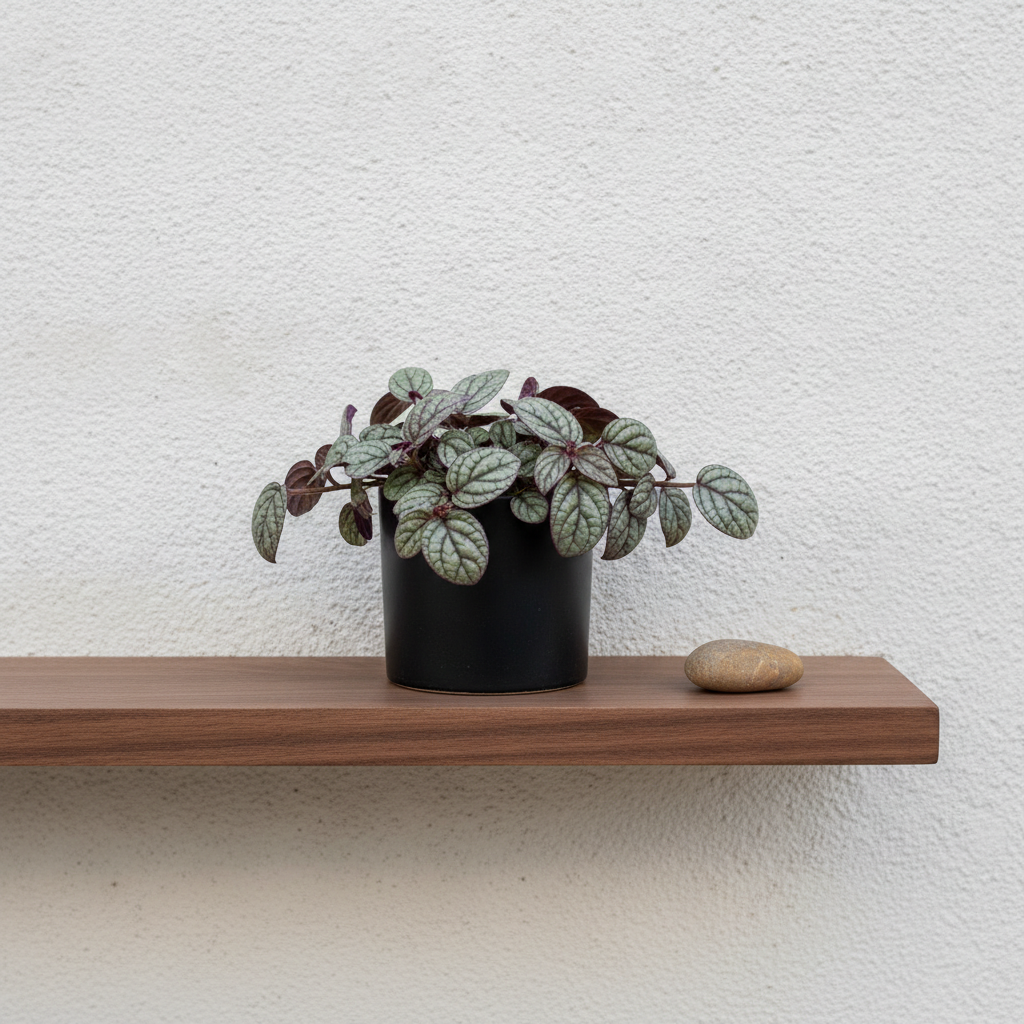
Growth is another point in its favour. Under good conditions a purple waffle plant grows noticeably from week to week, sending out trailing stems that root wherever a node touches damp soil. It stays low, usually 15 to 20 cm (6 to 8 inches) tall, while spreading outward to 30 cm (12 inches) or more, which makes it an excellent groundcover in mixed planters and a reliable filler that softens the edges of a pot. Because it responds so fast to changes in care, it also works beautifully as a living indicator plant: when it wilts, the rest of your collection is probably thirsty too.
Important — Toxicity: The purple waffle plant is generally regarded as non-toxic to cats and dogs and does not appear on the main lists of plants known to poison pets. Even so, no houseplant is a food, and nibbled foliage can cause mild stomach upset, so it is sensible to keep it out of reach of pets and small children who like to chew.
Light Requirements
Light is the single biggest lever you have over how a purple waffle plant looks. In its native understorey it grows in dappled, filtered light, so it is genuinely adaptable indoors, but the intensity of its signature colour is tied directly to how much light it receives. Give it too little and the metallic purple washes out to a plain green; give it harsh, unfiltered sun and the delicate leaves scorch. The sweet spot is bright, indirect light.
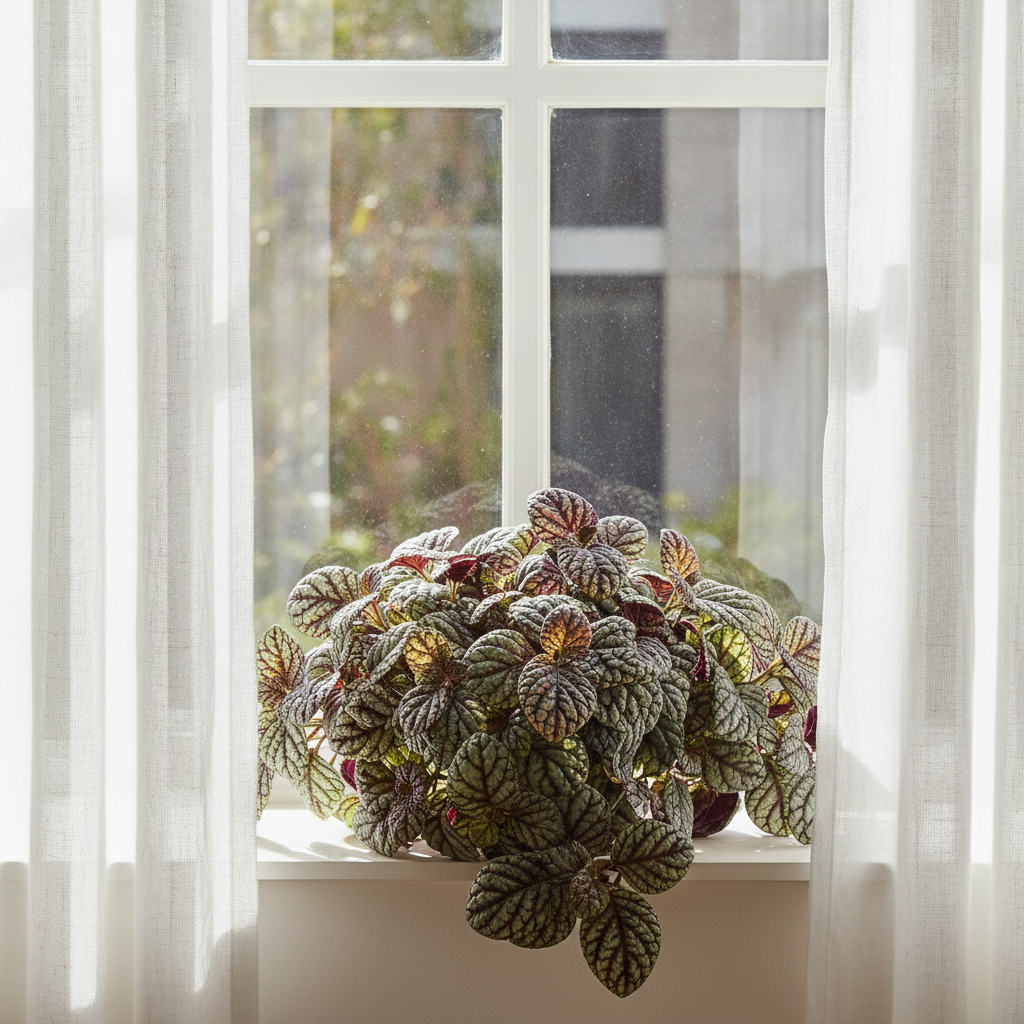
Aim to place the plant where it receives several hours of strong, filtered daylight each day without the sun’s rays striking the leaves directly for long stretches. A position a metre or so back from a bright window, or right at a window screened by a sheer curtain, gives the plant the energy it needs to hold its rich colouring while keeping it safe from the burn of concentrated midday sun.
Light Levels Explained
Understanding how indoor light is categorised makes it far easier to find the right spot. The table below sets out the main tiers, from scorching direct sun to the dim corners where the plant will merely persist, along with the likely outcome for a purple waffle plant in each.
| Light Category | Approx. Level | Typical Location | Outcome |
|---|---|---|---|
| Direct sun | 20,000 lux and above | On a south-facing sill, unscreened | Leaves scorch, edges crisp and bleach |
| Bright indirect | 10,000 to 20,000 lux | Near an east or curtained south window | Ideal; deepest purple, dense growth |
| Medium | 5,000 to 10,000 lux | A metre or two from a bright window | Good growth, colour a little muted |
| Low | 1,000 to 5,000 lux | North window or interior wall | Leggy, greener leaves, slow growth |
| Very low | Below 1,000 lux | Dim corner, far from any window | Survives briefly then declines |
Window Orientation and Placement
South-facing window: The brightest option in the northern hemisphere and capable of delivering superb colour, but only with protection. Set the plant back from the glass or diffuse the light with a sheer curtain so the leaves never take direct midday rays.
East-facing window: Arguably the perfect position. Gentle direct sun in the morning is soft enough not to burn, and the bright indirect light through the rest of the day keeps the purple rich and the growth compact.
West-facing window: Workable, but the strong afternoon sun can be fierce in summer. Pull the plant back from the glass or add a light curtain so the hottest hours are filtered.
North-facing window: The lowest-light aspect. A purple waffle plant will live here but tends to lose its colour, stretch towards the glass and grow slowly. A supplementary grow light lifts the results considerably.
Pro Tip — Read the Colour: Let the leaves tell you whether the light is right. Vivid purple undersides and tight, compact growth mean the plant is happy. Long gaps between leaves and a shift towards flat green are the plant asking for more light, so move it somewhere brighter before the habit becomes permanently leggy.
How Light Affects Leaf Colour
The purple pigmentation in the leaves is produced by anthocyanins, the same class of pigments that colour red cabbage and aubergine skins. Plants produce more of them in response to brighter light, partly as a natural sunscreen. This is why a purple waffle plant grown in strong indirect light develops such intense, metallic colour, while the same plant in a dim room drifts towards ordinary green. If your plant has faded, the fix is almost always more light rather than anything to do with feeding or watering.
Warning — Direct Sunlight: The thin, puckered leaves have little tolerance for direct sun. A few hours of unfiltered midday light can leave pale, papery scorch patches that never recover, and in a hot window the whole plant can crisp within a day or two. Always filter or set back from strong sun.
Artificial Lighting
Purple waffle plants respond well to artificial light, which makes them a good choice for offices and rooms without much natural daylight. A standard full-spectrum LED grow light positioned 20 to 40 cm above the plant, run for 10 to 12 hours a day, easily supplies enough energy to maintain colour and growth. Because the plant stays low, a single compact bar or bulb usually covers it comfortably, and pairing a grow light with a north window turns a marginal spot into a reliable one.
Seasonal Adjustments
Light indoors changes with the seasons, and a purple waffle plant notices. Through the darker autumn and winter months, when daylight is weaker and shorter, move the plant closer to its window or top up with a grow light to keep the colour from fading. As spring returns and the sun climbs higher, watch that a previously safe south or west sill does not start delivering scorching direct rays, and pull the plant back or add a curtain accordingly.
Watering & Humidity
If light governs colour, water governs survival. The purple waffle plant is a moisture lover with a shallow, fibrous root system and thin leaves that hold little water in reserve, so it dislikes drying out completely and will flop dramatically when it does. The aim is steady, even moisture: damp but never waterlogged, and never bone dry.
When to Water
Check the top of the compost with a fingertip every couple of days. When the top 1 to 2 cm (about half an inch) feels just dry to the touch, it is time to water. Unlike a succulent or a snake plant, you should not let a purple waffle plant dry out deeply between waterings, because the fine roots are quick to shrivel and the plant sulks for days afterward even once rehydrated.
How often that works out to depends on your conditions, but in a warm, bright room in summer it may mean watering every two to four days, dropping to perhaps weekly in winter when growth slows. Rather than watering to a fixed calendar, let the feel of the soil guide you, and expect to water more in heat and bright light and less in cool, dim spells.
Pro Tip — The Wilt Test: A purple waffle plant that has gone too dry will wilt and collapse quite theatrically, but it usually bounces back within an hour or two of a thorough watering. Use an occasional gentle wilt as calibration for how long your plant can go, but do not make a habit of it, as repeated severe drying weakens the plant and browns the leaf edges over time.
How to Water Correctly
- Check the top of the soil and water once the surface layer has just begun to dry.
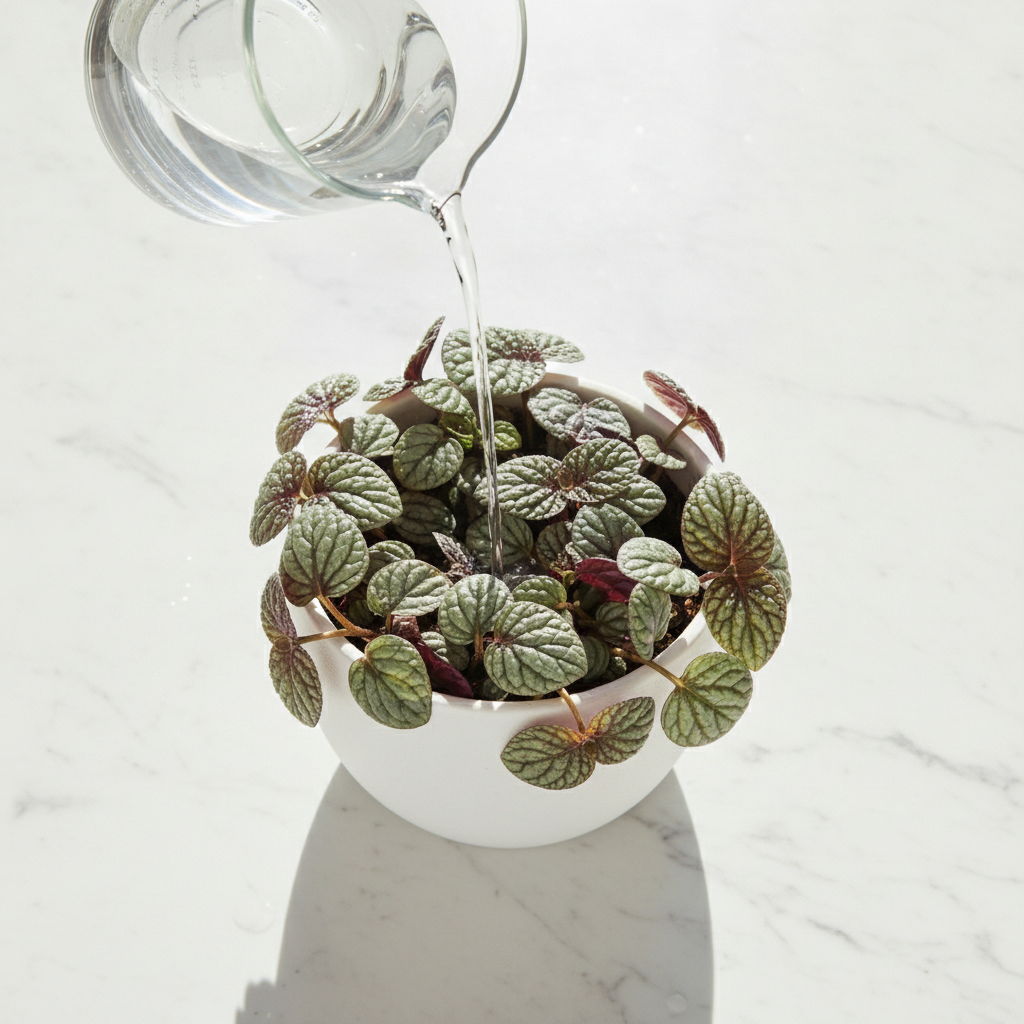
- Water at the soil level, pouring evenly around the base rather than over the foliage, which can trap moisture in the puckered leaves.
- Add water steadily until it runs freely from the drainage holes, ensuring the whole root ball is moistened.
- Let the pot drain fully for several minutes so no excess sits at the bottom.
- Empty the saucer or cover pot; never leave the plant standing in collected water.
- Tip out any water that pools and return the plant to its spot.
Signs of Overwatering vs. Underwatering
| Symptom | Overwatering | Underwatering |
|---|---|---|
| Leaf colour | Yellowing, especially lower leaves | Dull, purple deepening then browning |
| Leaf texture | Soft, limp, translucent patches | Crisp, papery, curling edges |
| Soil | Constantly wet, sour smell | Dry, pulling away from the pot sides |
| Roots | Brown, mushy, foul-smelling | Dry, brittle, thread-like |
| Overall habit | General collapse that does not recover with water | Sudden wilt that recovers quickly after watering |
Warning — Root Rot: The one thing a purple waffle plant will not forgive is sitting in waterlogged soil. Constant sogginess suffocates the fine roots and invites rot, which shows as blackened, mushy roots and a plant that wilts even though the soil is wet. If you suspect rot, unpot the plant, cut away any soft brown roots, and repot into fresh, free-draining compost.
Humidity Requirements
This is a true humidity lover, and it is where the purple waffle plant reveals its jungle origins. It is happiest above 50 to 60 per cent relative humidity, which is well above the level of most centrally heated homes. High humidity keeps the foliage plump and richly coloured and is the reason the plant performs so brilliantly in closed terrariums, where the sealed, saturated air suits it perfectly.
When the air is too dry, the symptoms are easy to read: crisp brown leaf edges, a general loss of lustre, and slower growth. Winter, when heating strips moisture from indoor air, is the season when these signs appear most often, so it pays to raise humidity actively during the colder months.
Raising humidity is straightforward. Grouping plants together creates a more humid microclimate, and standing the pot on a tray of pebbles topped up with water lifts the moisture around the leaves without wetting the roots. A small room humidifier is the most effective solution of all, and a naturally damp room such as a bright bathroom or kitchen often suits the plant with no extra effort. A terrarium remains the gold standard for anyone who wants the very best colour.
Water Quality
Purple waffle plants are not especially fussy about water, and ordinary tap water suits most plants well. If your water is very hard or heavily chlorinated, though, mineral build-up can contribute to browning leaf tips over time. Letting tap water stand overnight before using it allows some chlorine to dissipate, and rainwater or filtered water is a gentle alternative if your plant seems sensitive. Always use room-temperature water, as a cold shock can stress the roots.
Soil, Potting & Repotting
The ideal growing medium for a purple waffle plant threads a needle between two demands: it must hold enough moisture to keep the thirsty roots happy, yet drain freely enough that they never sit in water. A rich, moisture-retentive but airy mix, based on peat-free coir or a quality houseplant compost and opened up with drainage material, ticks both boxes.
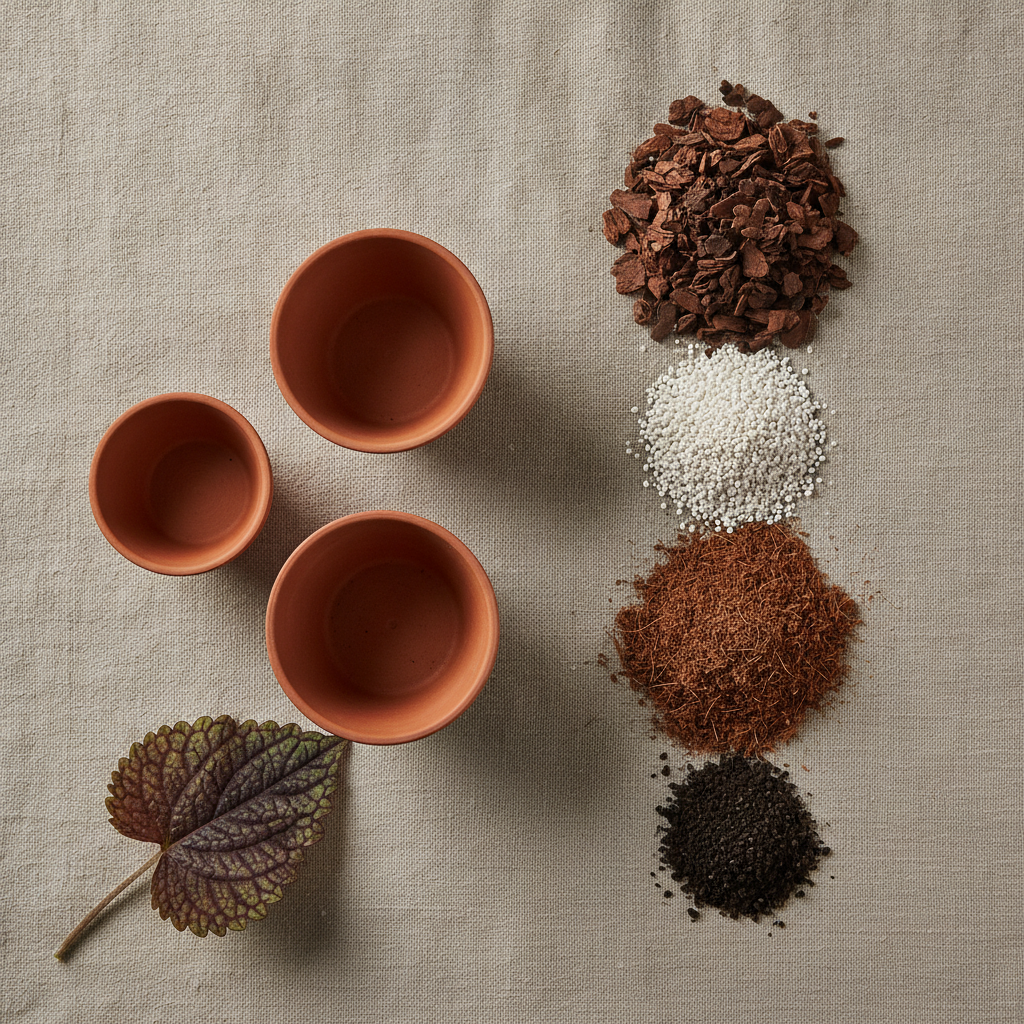
Ideal Soil Composition
A good starting point is a general-purpose houseplant compost lightened with perlite for drainage and enriched with a little organic matter to hold moisture and nutrients. The table below shows a reliable blend that keeps the roots evenly damp while still allowing excess water to escape.
| Component | Proportion | Function |
|---|---|---|
| Peat-free houseplant compost or coir | 60 per cent | Holds moisture and provides body |
| Perlite | 25 per cent | Improves drainage and aeration |
| Fine bark or leaf mould | 10 per cent | Adds structure and prevents compaction |
| Worm castings or compost | 5 per cent | Supplies slow-release nutrients |
The plant prefers a slightly acidic to neutral soil, roughly pH 6.0 to 7.0, which most standard houseplant composts fall within naturally, so there is rarely any need to adjust it. What matters far more than fine-tuning the pH is getting the balance of moisture retention and drainage right.
Pro Tip — Quick Mix Recipe: For a fuss-free blend, mix three handfuls of peat-free houseplant compost with one handful of perlite and a small scoop of worm castings. It holds moisture like the plant wants while draining fast enough to keep rot at bay, and it takes under a minute to throw together.
Choosing the Right Pot
Because a purple waffle plant stays small and spreads sideways, a wide, shallow pot generally suits it better than a tall, deep one. This matches its shallow root system and shows off the spreading habit, and it is also why the plant looks so at home in a hanging basket or draped over the lip of a bowl.
Drainage holes are non-negotiable. Whatever pot you choose, it must have drainage holes. Given how much this plant likes moisture, the temptation to use a sealed decorative pot is real, but without an escape route for excess water, root rot is almost guaranteed. If you love a particular cover pot, use it as an outer sleeve and keep the plant in a plastic nursery pot inside it.
Pot material: Plastic and glazed ceramic hold moisture well and suit this thirsty plant nicely. Unglazed terracotta wicks water away through its porous walls and dries out faster, which can be a chore with a plant that hates going dry, so if you use terracotta be prepared to water more often.
Pot size: Choose a pot only slightly larger than the current root ball, no more than 2 to 3 cm wider. An oversized pot holds a large volume of soil that stays wet long after the roots have taken their fill, and that lingering moisture is exactly what invites rot.
When to Repot
Purple waffle plants are fast growers and may need repotting once a year, usually in spring as growth picks up. Tell-tale signs that a plant is ready include roots emerging from the drainage holes, water running straight through without soaking in, and growth that has slowed despite good care. Because the plant is so easy to propagate, many growers simply take fresh cuttings every year or two and start over with vigorous young plants rather than nursing an old, woody one.
How to Repot: Step-by-Step
- Water the plant a day beforehand so the root ball is moist and holds together.
- Ease the plant out of its pot, supporting the base of the stems and teasing it free rather than pulling.
- Gently loosen the outer roots and remove any that are soft, brown or dead.
- Add a layer of fresh mix to a clean pot only slightly larger than the last.
- Position the plant at the same depth it sat before and fill around it with fresh mix, firming gently.
- Water thoroughly to settle the soil and remove air pockets, topping up any mix that sinks.
- Return the plant to bright, indirect light and keep it out of direct sun while it settles.
Warning — Transplant Shock: Expect a little wilting for a day or two after repotting while the roots re-establish. Resist the urge to fix it by drowning the plant in water or moving it into brighter light, as both make matters worse. Keep the soil evenly moist, hold it in stable, indirect light, and it will perk up on its own.
Fertilising
As a fast grower, the purple waffle plant appreciates regular feeding through its active season, but it is not a heavy feeder and is easily over-fed. The goal is a light, steady supply of nutrients to fuel the constant flush of new leaves rather than an occasional heavy dose.
A balanced liquid houseplant fertiliser is ideal, applied at half the recommended strength. Feeding little and often at a dilute rate matches the way this plant grows and avoids the salt build-up that comes from concentrated feeds.
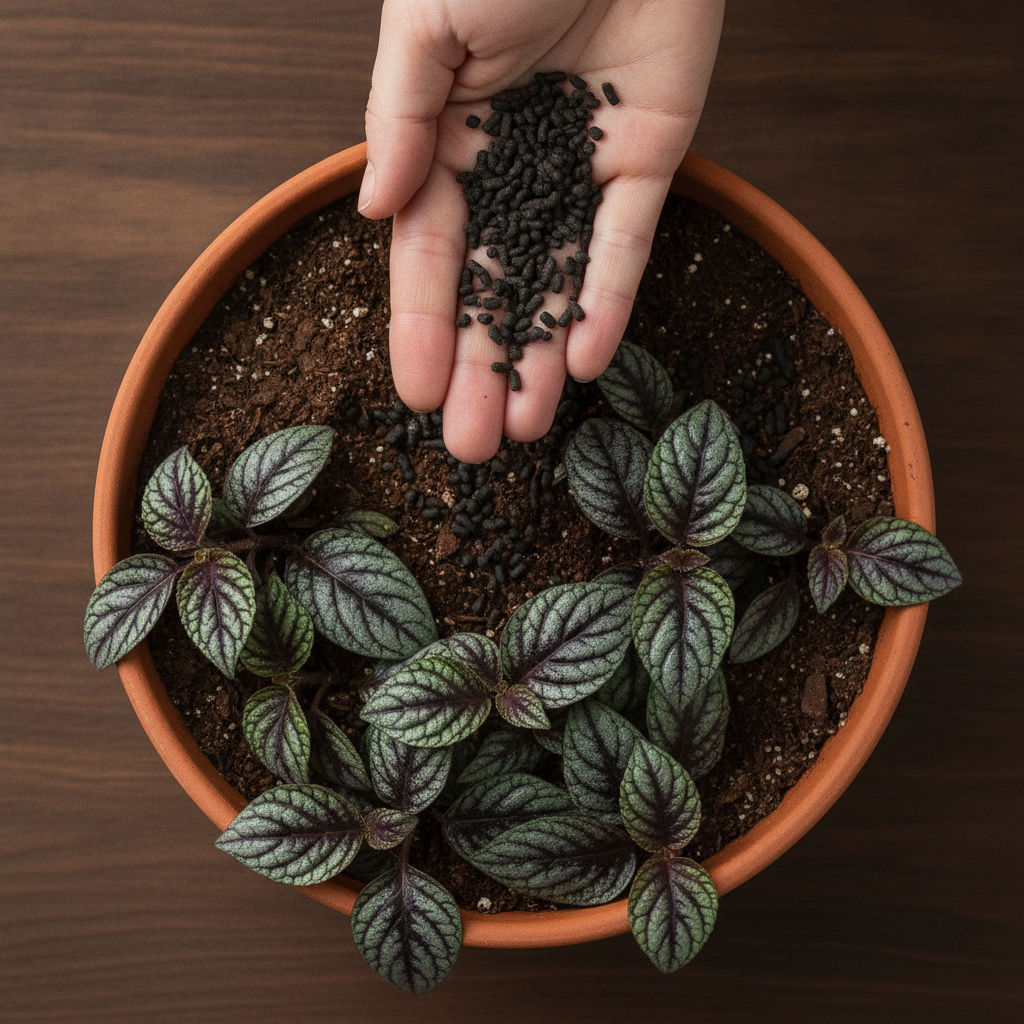
Understanding Plant Nutrients
Fertiliser labels revolve around three numbers, the NPK ratio, standing for nitrogen, phosphorus and potassium. For a foliage plant like this one, nitrogen matters most because it drives leaf growth, but a balanced feed that supplies all the essential nutrients keeps the plant healthy across the board. The table below outlines the key nutrients and the symptoms that betray a shortage of each.
| Nutrient | Symbol | Primary Function | Deficiency Symptoms |
|---|---|---|---|
| Nitrogen | N | Leaf and stem growth | Pale, yellowing older leaves, weak growth |
| Phosphorus | P | Root development and energy | Stunted growth, dull or purplish tint |
| Potassium | K | Overall vigour and water regulation | Brown, scorched leaf edges |
| Calcium | Ca | Cell wall structure | Distorted, weak new growth |
| Magnesium | Mg | Core of the chlorophyll molecule | Yellowing between leaf veins |
| Iron | Fe | Chlorophyll production | Yellowing of the youngest leaves |
Types of Fertiliser
Liquid fertilisers: The easiest match for this plant. Diluted into the watering can, they deliver nutrients quickly and let you control the dose precisely, which suits a plant that wants little and often.
Slow-release granular: Convenient for hands-off growers, these pellets release nutrients gradually over months. They are fine here, but choose a gentle formulation and use the lower end of the recommended rate to avoid overfeeding a small plant.
Organic fertilisers: Worm castings, diluted seaweed and other organic feeds nourish the plant gently while improving the soil. A light top-dressing of worm castings in spring is a particularly easy, forgiving way to feed a purple waffle plant.
Feeding Schedule
Feed roughly once a month with a balanced liquid feed at half strength through spring and summer, when the plant is in active growth. As light levels fall in autumn and growth slows through winter, stop feeding altogether. A dormant or slow plant cannot use the nutrients, and unused fertiliser salts simply accumulate in the soil where they can damage the roots.
Pro Tip — Less Is More: When in doubt, underfeed. A purple waffle plant shows a lack of food slowly and recovers quickly once fed, whereas the brown, crisped leaf edges caused by overfeeding are far harder to reverse. Half strength, once a month, in the growing season is plenty for almost every plant.
How to Fertilise
- Water the plant lightly first, as feeding dry roots can burn them.
- Dilute a balanced liquid fertiliser to half the recommended strength.
- Apply the solution evenly to the soil, avoiding the foliage.
- Let any excess drain away and empty the saucer.
- Flush the pot with plain water every couple of months to wash out accumulated salts.
Warning — Salt Build-Up: A white, crusty deposit on the soil surface or around the pot rim is a sign of accumulated fertiliser salts. Left unchecked, these draw water away from the roots and scorch the leaf tips. Flush the pot thoroughly with plain water two or three times to leach the salts out, and ease off on feeding.
Propagation
If there is one thing the purple waffle plant does even better than colour, it is multiply. This is one of the easiest houseplants of all to propagate, rooting so readily from stem cuttings that a single healthy plant can become a whole trayful within a few weeks. It is the perfect plant to practise propagation on, and an endlessly renewable source of gifts for fellow plant lovers.
The reason it roots so easily lies in its natural growth habit. As a creeping groundcover, it is built to spread by putting down roots wherever its stems touch damp earth, so every stem is primed to root the moment it finds moisture. You can harness this either by rooting cuttings in water or by encouraging the plant to layer itself in the pot.
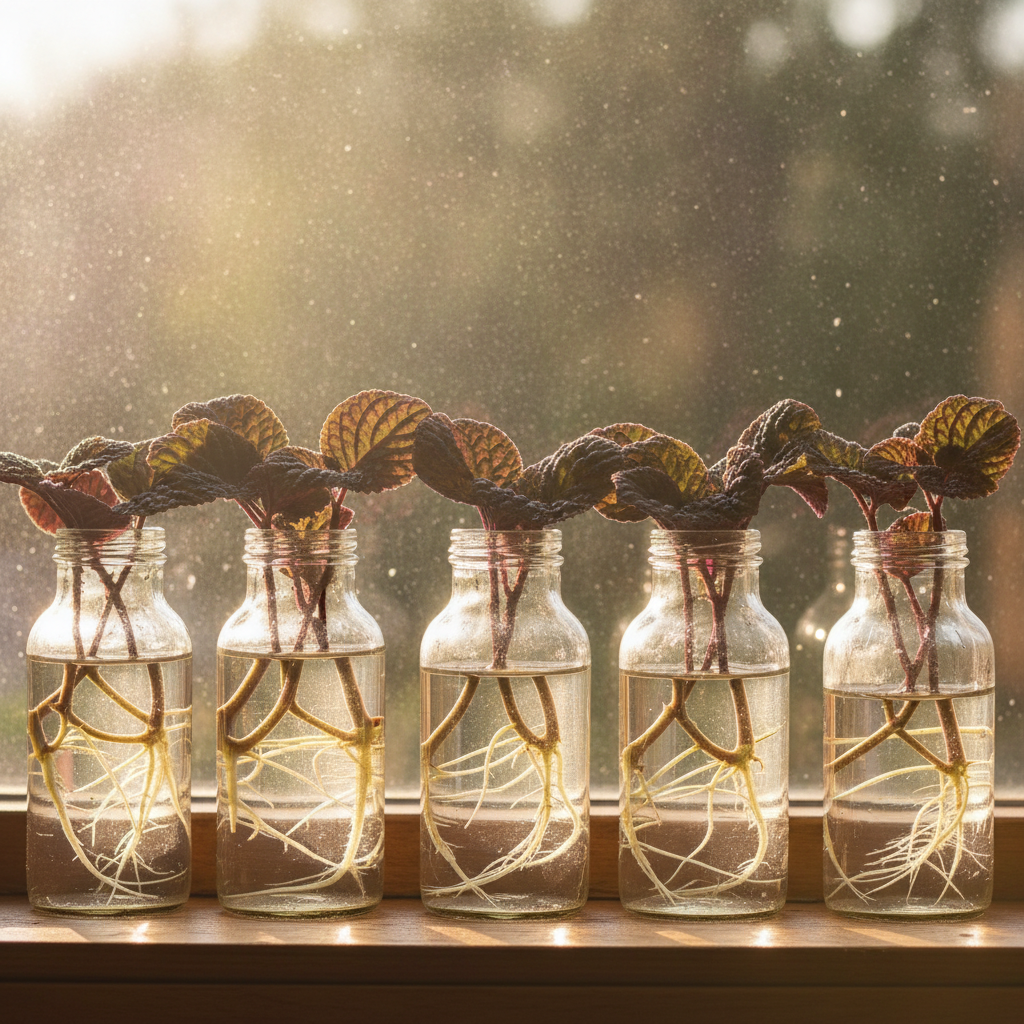
Understanding Nodes
The key to propagating any stemmed plant is the node, the slightly swollen point on the stem where a leaf joins and where dormant root cells wait. A cutting must include at least one node below the water or soil line, because that is where new roots emerge. A length of bare stem with no node will simply rot, so always count your nodes before you cut.
Water Propagation: Step-by-Step
Rooting cuttings in water is the simplest method and lets you watch the roots develop, which makes it especially satisfying for beginners.
- Choose a healthy stem and cut a 8 to 10 cm (3 to 4 inch) length just below a node using clean scissors.
- Remove the lower leaves so that at least one bare node will sit below the waterline.
- Place the cutting in a small jar of room-temperature water, keeping the remaining leaves above the surface.
- Set the jar in bright, indirect light and refresh the water every few days to keep it clear.
- Watch for white roots emerging from the nodes, usually within one to two weeks.
- Once the roots reach 3 to 5 cm long, pot the cutting up into moist compost and keep it well watered as it settles.
Pro Tip — Plant in Clusters: Because each cutting stays small, pot three or four rooted cuttings together in a single pot rather than one on its own. You will get a full, bushy plant far faster than waiting for a lone cutting to fill out, and the massed foliage looks richer straight away.
Soil Layering: Step-by-Step
Layering takes advantage of the plant’s natural tendency to root along its stems, and it produces a new plant that is already established before you separate it, so there is almost no risk of failure.
- Choose a long, healthy trailing stem still attached to the parent plant.
- Pin a section of the stem down onto the surface of moist compost, in the same pot or a neighbouring one, so a node makes firm contact with the soil.
- Keep the compost consistently moist to encourage rooting at the pinned node.
- After a few weeks, tug very gently to check for resistance, which signals that roots have formed.
- Once well rooted, cut the stem free from the parent to create an independent new plant.
Troubleshooting Propagation
| Problem | Likely Cause | Solution |
|---|---|---|
| Cutting rots in water | No node submerged, or stale water | Ensure a node is below water and change it every few days |
| No roots after weeks | Too cold or too little light | Move to a warmer, brighter spot out of direct sun |
| Roots form but cutting wilts after potting | Soil too dry or shock from the move | Keep newly potted cuttings evenly moist and humid |
| Leaves yellow in water | Cutting has exhausted its reserves | Pot up promptly once roots reach a few centimetres |
Pests & Diseases
A well-grown purple waffle plant is reasonably resilient, but its love of warmth and humidity, and its soft, thin leaves, can attract the usual cast of houseplant pests. The good news is that these problems are easy to catch early if you look, and easy to treat if you act promptly.
The single best defence is regular inspection. Turn a few leaves over each time you water and check the leaf axils and undersides, where pests like to hide. Catching an infestation while it is still a handful of insects rather than a colony makes all the difference to how quickly you can clear it.

Common Pests
Aphids (Aphidoidea)
Small green, black or pink sap-suckers that cluster on soft new growth and flower stems, leaving behind sticky honeydew and distorted young leaves. They breed rapidly in warm conditions and are drawn to the tender tips this plant produces so freely.
Treatment: Rinse them off under a tap or wipe with a damp cloth, then treat with insecticidal soap or a diluted neem oil spray, repeating every few days until they are gone.
Whiteflies (Trialeurodes vaporariorum)
Tiny white winged insects that rise in a cloud when the plant is disturbed. Like aphids they suck sap and excrete honeydew, weakening the plant and encouraging sooty mould on the sticky residue.
Treatment: Hang yellow sticky traps to catch the adults and spray the leaf undersides with insecticidal soap or neem oil, repeating regularly to break the breeding cycle.
Spider Mites (Tetranychus urticae)
Microscopic mites that thrive in dry air and show themselves through fine webbing and a pale, stippled speckling on the leaves. They are the pest most likely to appear if the humidity around your plant drops too low.
Treatment: Raise the humidity, rinse the foliage thoroughly, and treat with neem oil or a miticide. Because they hate moisture, keeping the air humid is both cure and prevention.
Mealybugs (Pseudococcidae)
Small, soft insects coated in a white, cottony wax that gather in leaf joints and along stems. They sap the plant’s strength and, like other suckers, leave sticky honeydew behind.
Treatment: Dab each one with a cotton bud dipped in rubbing alcohol, then follow up with neem oil or insecticidal soap and inspect regularly for stragglers.
Common Diseases
Root Rot (Pythium and Phytophthora)
The most serious threat to this moisture-loving plant, caused by soil that stays waterlogged for too long. It shows as yellowing, wilting foliage that does not recover with watering, and blackened, mushy roots with a foul smell.
Treatment: Unpot the plant, cut away all soft, dark roots, and repot into fresh, free-draining compost. Take healthy cuttings as insurance, since a badly rotted plant may not pull through.
Botrytis and Leaf Spot (Botrytis cinerea)
Fungal problems that appear as grey, fuzzy mould or brown, spreading blotches on the leaves, usually where damp foliage sits in still, humid air. The very conditions that give the plant its best colour can, if air movement is poor, also invite these fungi.
Treatment: Remove affected leaves, improve air circulation, and avoid wetting the foliage when watering. A fungicide can help in stubborn cases, but better airflow usually solves the problem.
Pest and Disease Summary
| Pest / Disease | Identification | Treatment |
|---|---|---|
| Aphids | Clusters on new growth, sticky honeydew | Rinse off, then insecticidal soap or neem |
| Whiteflies | White flies rising when disturbed | Sticky traps and neem on leaf undersides |
| Spider mites | Fine webbing, stippled leaves | Raise humidity, rinse, apply neem or miticide |
| Mealybugs | White cottony tufts in leaf joints | Alcohol swab, then neem or soap |
| Root rot | Wilting despite wet soil, mushy roots | Trim rot, repot in fresh free-draining mix |
| Botrytis / leaf spot | Grey mould or brown blotches | Remove leaves, improve airflow, keep foliage dry |
Prevention Strategies
Prevention is far less work than cure. Inspect new plants carefully before bringing them home and keep them apart from your collection for a couple of weeks, since new arrivals are the most common way pests enter a home. Keep your plant well cared for, because a vigorous, healthy plant shrugs off minor pest pressure far better than a stressed one.
Balance is everything with this plant. Give it the high humidity it craves but pair it with gentle air movement so still, damp air does not turn fungal. Water to keep the soil evenly moist but never let it sit soggy. Manage those two tensions well and the great majority of pest and disease problems never get started.
Pro Tip — Neem as Routine: A light monthly spray of diluted neem oil over the leaves, top and bottom, acts as a gentle deterrent that stops many infestations before they take hold. Apply it in the evening or out of direct sun so the treated leaves do not scorch, and wipe the puckered surfaces gently so the oil does not pool in the crevices.
Popular Varieties
The purple waffle plant belongs to a small but characterful group of Hemigraphis species and cultivars, all sharing the same easy nature and love of humidity but differing in leaf shape, colour and variegation. Most are sold simply as purple waffle plant or red ivy, but a few named forms are worth seeking out for their distinct looks.
Because the whole group is so easy to grow and propagate, collecting several is straightforward and rewarding, and they combine beautifully in a shared planter or terrarium where their varied textures and purples play off one another.
| Variety | Leaf Appearance | Light Needs | Growth Rate | Availability |
|---|---|---|---|---|
| ‘Exotica’ | Deeply puckered, metallic purple-green with wine undersides | Bright indirect | Fast | Common |
| ‘Belgian Waffle’ | Variegated cream, green and pink with purple undersides | Bright indirect | Moderate | Uncommon |
| Dragon’s Tongue (H. repanda) | Narrow, toothed, dark bronze-purple leaves | Bright indirect | Fast | Uncommon |
| ‘Purple Dragon’ | Broad, glossy deep-purple leaves | Bright indirect | Fast | Uncommon |
| ‘Snow White’ | Green and cream marbling, softer texture | Bright indirect | Moderate | Rare |
| H. colorata | Similar to Exotica, silvery-purple sheen | Bright indirect | Fast | Common |
Featured Varieties
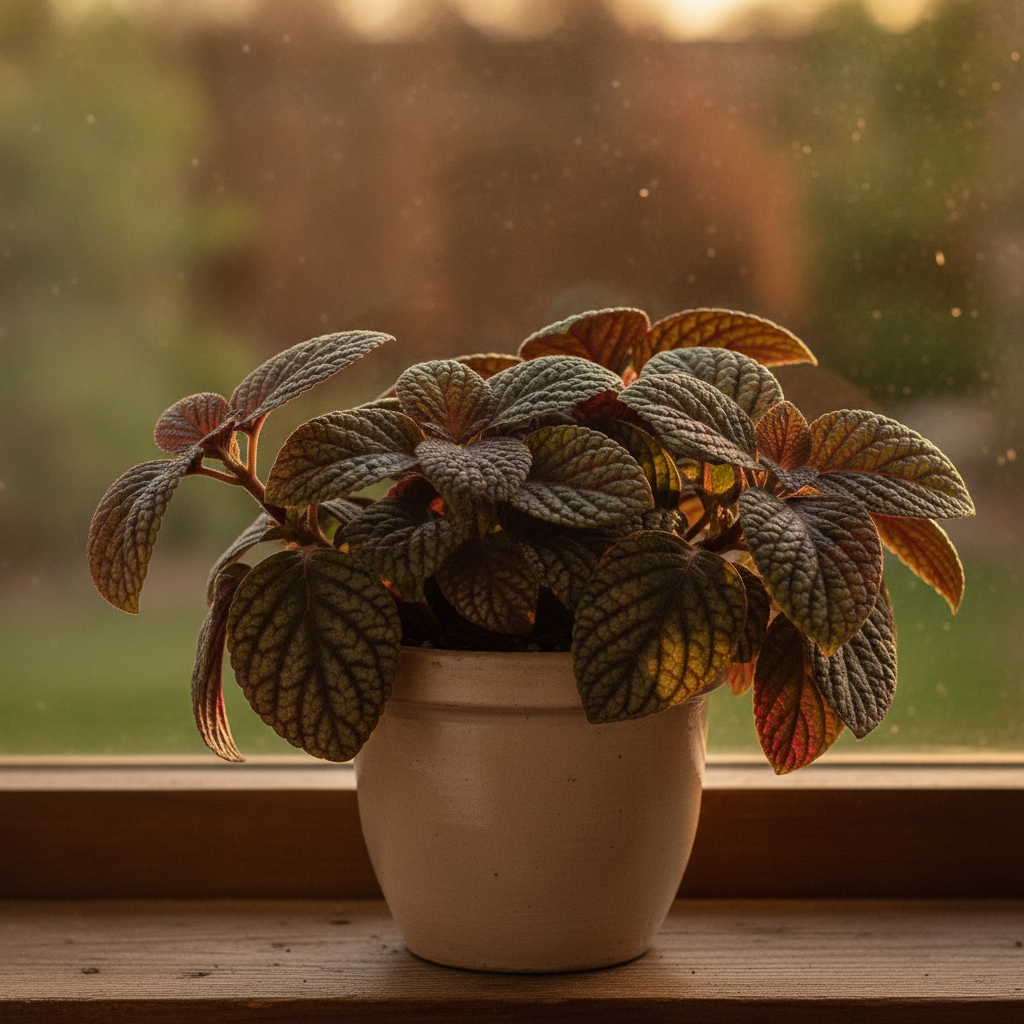
‘Exotica’
The classic and most widely sold form, with intensely puckered, deeply quilted leaves that shift from metallic grey-green to purple on top and glow rich burgundy underneath. This is the plant most people picture when they hear the name purple waffle.
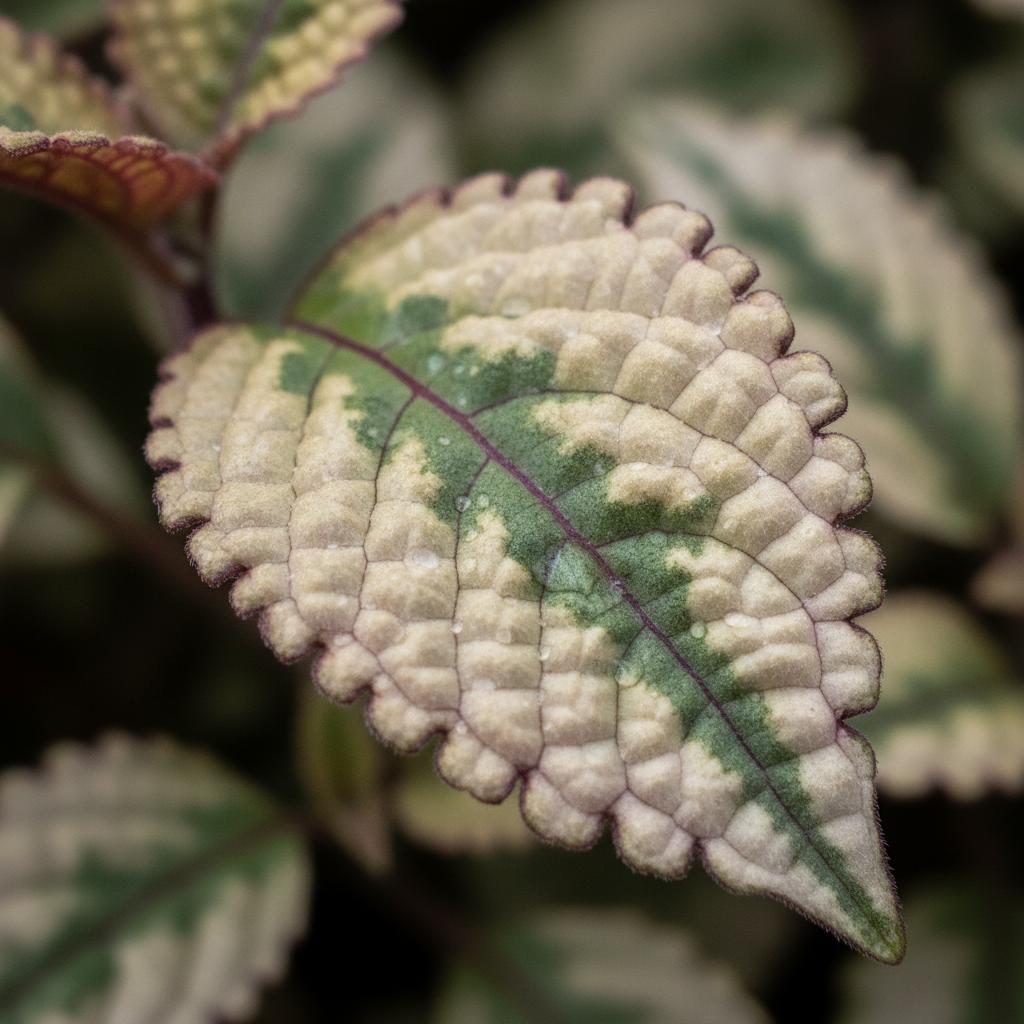
‘Belgian Waffle’
A more unusual variegated cultivar, marbled with cream, soft green and dusky pink across the same puckered surface, still backed by the signature deep purple undersides. The variegation makes it a little slower and a touch more light-hungry, but it is a striking talking point.
Variety Profiles in Detail
Dragon’s Tongue (Hemigraphis repanda)
A close relative with a completely different silhouette: narrow, elongated, sharply toothed leaves in a dark bronze-purple. Its finer texture makes a lovely contrast to the broad, quilted leaves of the standard purple waffle, and it is a favourite for terrariums and nano aquascapes where its slim foliage suits the scale.
Purple Dragon (Hemigraphis cultivar)
Grown for the depth of its colouring, this form carries broader, glossier leaves in an especially saturated purple. In good light it can be one of the darkest and most dramatic of the group, and it holds its colour well when given the brightness it likes.
Choosing the Right Variety for Your Space
For sheer reliability and the boldest colour, the standard ‘Exotica’ is hard to beat and the easiest to find. If you want something more unusual, the variegated ‘Belgian Waffle’ rewards a slightly brighter spot with its pastel marbling, while the fine-leaved Dragon’s Tongue is the pick for terrariums and tight planted scenes. Whichever you choose, the care is essentially identical, so you can mix and match freely and grow them all side by side.
Frequently Asked Questions
Why is my purple waffle plant turning green?
Loss of purple colour is almost always a light problem. The purple pigments develop in response to bright light, so a plant in a dim spot gradually reverts to plain green. Move it to a brighter position with plenty of indirect light, and the rich colour should return to new growth over the following weeks.
Why has my plant suddenly wilted and collapsed?
A dramatic, sudden wilt is usually a sign that the soil has gone too dry. The purple waffle plant flops quickly when thirsty but generally recovers within an hour or two of a thorough watering. If the soil is wet rather than dry and the plant is still collapsing, suspect root rot instead and check the roots.
Is the purple waffle plant safe around pets?
It is generally considered non-toxic to cats and dogs and does not appear on the main pet-poison lists. That said, no houseplant is meant to be eaten, and chewing foliage can cause mild stomach upset, so it is still best kept out of reach of determined nibblers.
Can I grow it in a terrarium?
Yes, and it is one of the best terrarium plants there is. The warm, humid, enclosed environment suits its jungle nature perfectly, keeping the foliage lush and richly coloured. Its low, spreading habit also makes it an excellent living groundcover among taller terrarium plants.
Why are the leaf edges turning brown and crispy?
Crispy brown edges usually point to air that is too dry, or to repeated drying out of the soil. Raise the humidity around the plant with a humidifier, pebble tray or more humid room, and keep the soil evenly moist. Accumulated fertiliser salts can cause the same symptom, so flush the pot occasionally if you feed regularly.
How fast does a purple waffle plant grow?
Quickly, given warmth, moisture and good light. In its active season it puts out new leaves and trailing stems noticeably from week to week, which is why it makes such a good groundcover and filler. That vigour is also why it needs repotting or refreshing from cuttings fairly often.
Should I let my purple waffle plant flower?
The plant occasionally produces small white flowers, but it is grown for its foliage rather than its blooms, which are modest. Flowering diverts energy that would otherwise go into leaves, so some growers pinch off the flower buds to keep the plant bushy and fully focused on foliage. It is entirely a matter of preference.
How do I make my plant bushier?
Pinch out the growing tips regularly. Removing the tip of a stem encourages it to branch from lower down, and repeated pinching over time builds a dense, full plant rather than a sparse, trailing one. Better still, the tips you pinch off root easily as cuttings, so nothing is wasted.






