
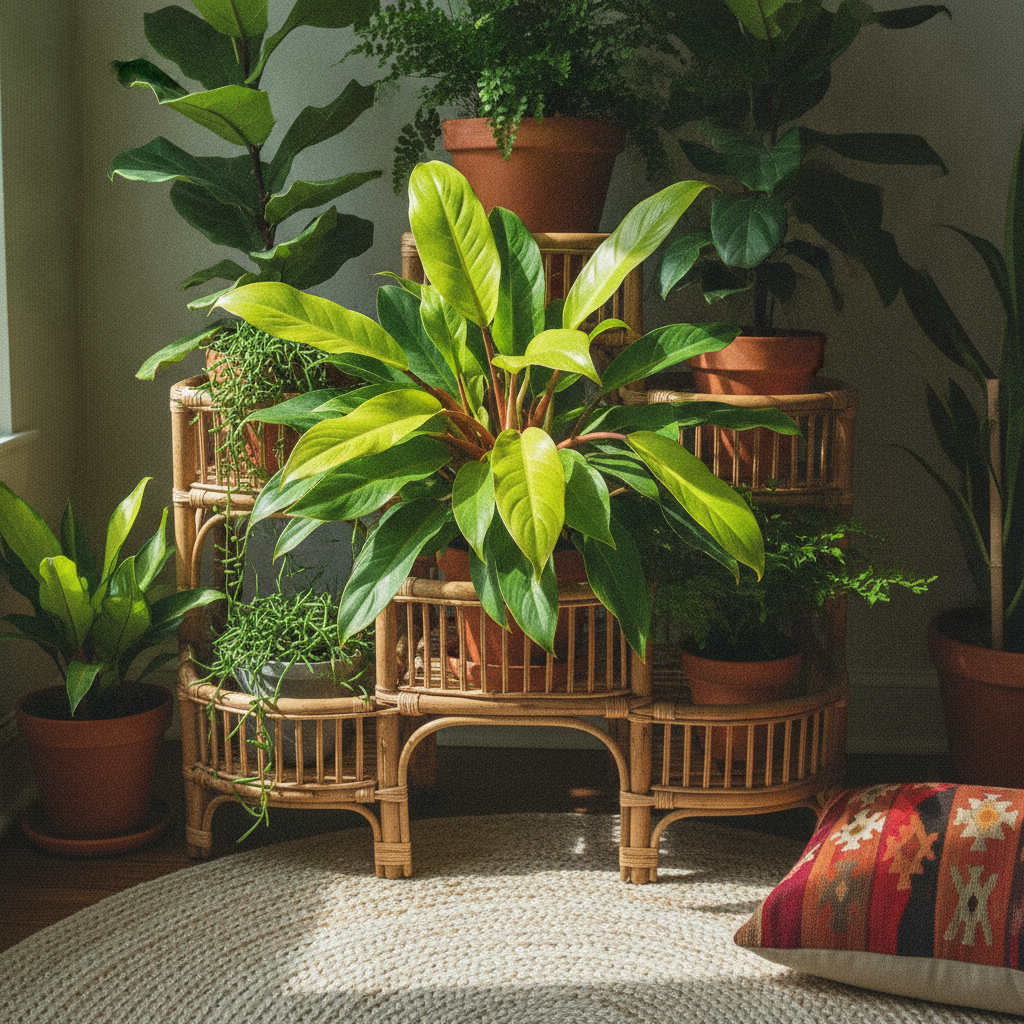
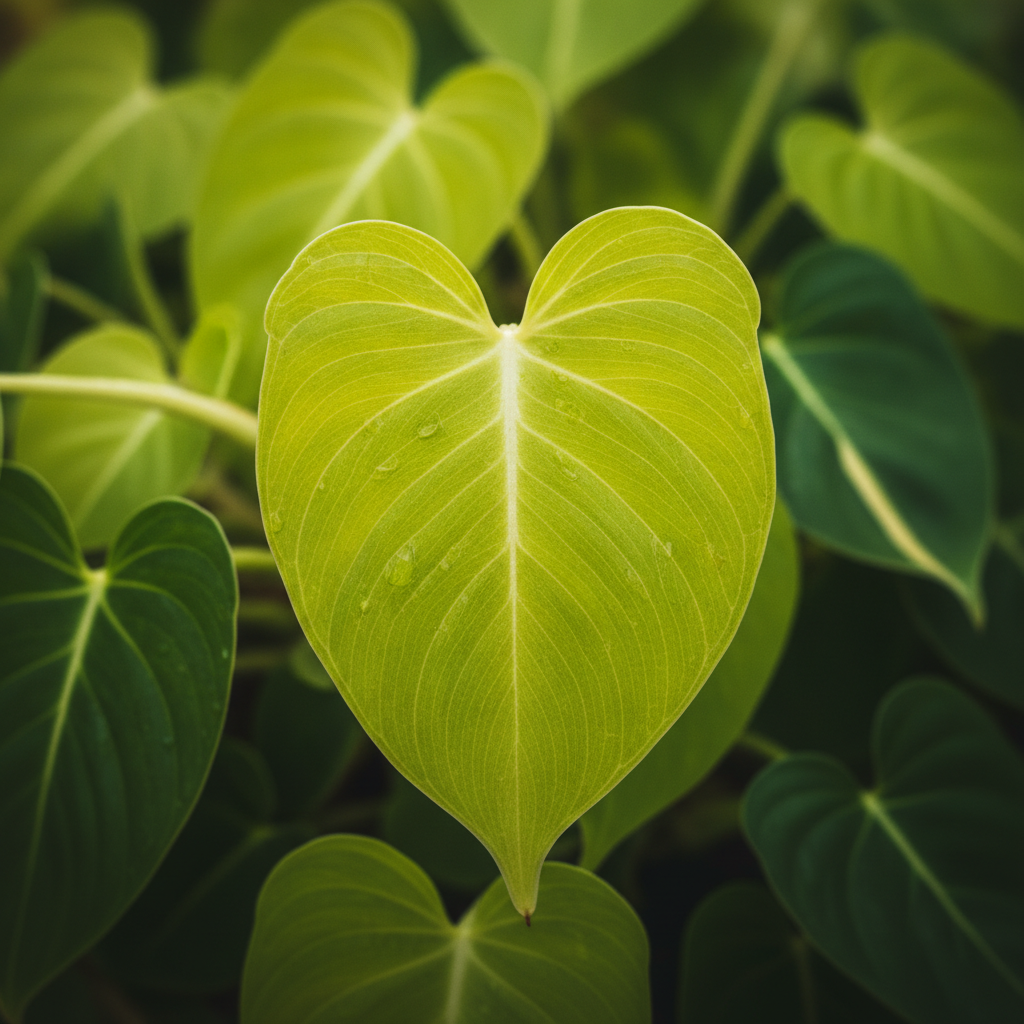
Few houseplants announce a new leaf quite as loudly as the Moonlight Philodendron. Each fresh frond unfurls in a startling shade of neon chartreuse, almost glowing against the older foliage, before settling into lime and finally a calmer mid green. A hybrid of garden origin, Philodendron ‘Moonlight’ belongs to the vast aroid family (Araceae) and shares its tropical American heritage with the climbing philodendrons most growers know, yet it behaves quite differently. Rather than trailing or vining, it is a self-heading plant that builds a tidy, fountain-like clump from a central base, making it one of the most sculptural and well-mannered philodendrons available.
That combination of luminous colour and compact habit has made ‘Moonlight’ a fixture on shop benches and windowsills alike. It has a deserved reputation as a forgiving, fast-growing plant that asks for very little, which is exactly why so many people keep one alive without ever seeing it look its best. This guide draws the line between merely surviving and genuinely thriving: a survived Moonlight is a green blob in a dim corner, while a thriving one pushes glowing new leaves every few weeks and holds a full, balanced rosette. Everything below, from light and water to soil, feeding, propagation and pests, is aimed at the second outcome.
Contents
- Quick Reference
- Why Moonlight Philodendron Makes a Brilliant Houseplant
- Light Requirements
- Watering & Humidity
- Soil, Potting & Repotting
- Fertilising
- Propagation
- Pests & Diseases
- Popular Varieties
- Frequently Asked Questions
Quick Reference: Moonlight Philodendron at a Glance
| Light | Bright, indirect light; tolerates medium light but colour fades. Avoid harsh direct sun. |
| Watering | Water when the top 2 to 3 cm (1 in) of soil is dry, roughly every 7 to 10 days in summer. |
| Temperature | 18 to 27 degrees C (65 to 80 degrees F); keep above 13 degrees C (55 degrees F). |
| Humidity | Average to high, 40 to 60 percent or more; happy in normal rooms but greener with humidity. |
| Fertiliser | Balanced liquid feed at half strength, every 4 weeks in spring and summer. |
| Toxicity | Toxic to cats, dogs and humans if eaten; contains insoluble calcium oxalate crystals. |
Why Moonlight Philodendron Makes a Brilliant Houseplant
The first thing anyone notices about a Moonlight Philodendron is the colour. New leaves emerge an almost fluorescent yellow-green, the kind of shade that looks lit from within, and a healthy plant produces them often enough that there is nearly always a glowing leaf or two at the centre of the clump. As each leaf ages it deepens through lime to a soft mid green, so a mature specimen carries a built-in gradient from bright tip to mellow base. Set against darker houseplants, that luminosity is hard to beat, and it gives the plant a presence well out of proportion to its modest size.

Beyond its looks, ‘Moonlight’ earns its place through sheer good temperament. It grows quickly, recovers gracefully from the occasional missed watering, and stays compact enough for a desk, shelf or side table without the constant pruning a vining philodendron demands. Its self-heading habit means it holds its shape on its own, building outward into a neat rosette instead of sprawling. For a beginner it is reassuringly tough, and for a more experienced grower it offers the satisfaction of frequent, dramatic new growth. The only real catch is toxicity, which is worth understanding before you bring one home.
Important — Toxicity: Like all philodendrons, ‘Moonlight’ contains insoluble calcium oxalate crystals in its sap. Chewing or swallowing any part can cause intense burning of the mouth and throat, drooling, and swelling in cats, dogs and people. Keep it out of reach of pets and small children, and wash your hands after handling cut stems or sap.
Light Requirements
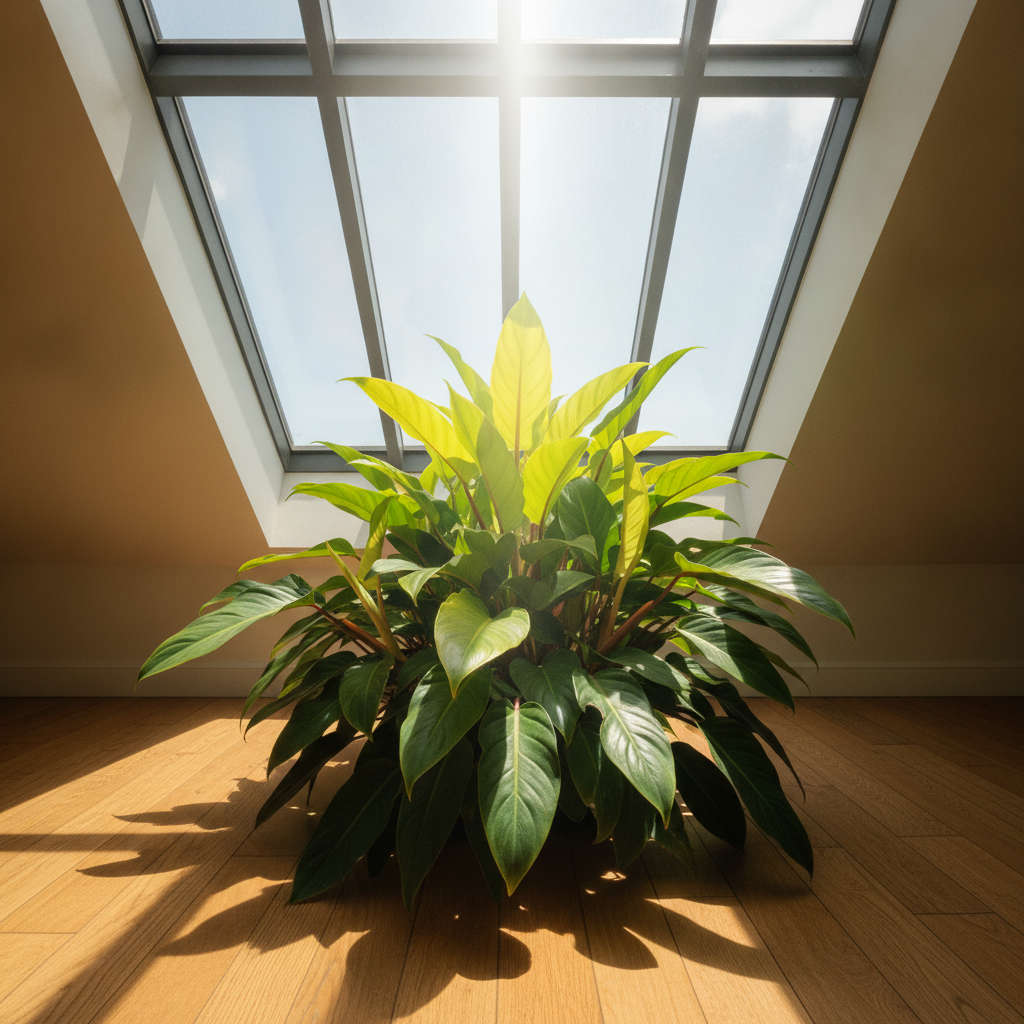
Light is the single biggest lever you have over a Moonlight Philodendron, because light is what powers and preserves its signature colour. In its native understorey, this kind of aroid lives in bright, dappled shade beneath a forest canopy, never in full sun but rarely in deep gloom either. Indoors, that translates to bright, indirect light: a position near a window where the plant receives plenty of ambient brightness but little or no direct beam falling on the leaves.
Given the right exposure, ‘Moonlight’ rewards you with compact growth, well-spaced leaves and that intense neon flush on every new frond. In light that is too low, the plant does not die quickly, but it stretches towards the window, the gaps between leaves lengthen, and crucially the new leaves emerge a duller, muddier green instead of glowing yellow. Too much direct sun has the opposite problem, bleaching and scorching the tender new foliage.
Light Levels Explained
Houseplant light is easier to judge once you attach rough numbers to the vague categories people throw around. The table below sets out the main tiers and what each one means for this plant in practice.
| Light Category | Approx. Level | Typical Location | Outcome |
|---|---|---|---|
| Direct sun | 20,000 lux and above | On a south sill, sun on the leaves | Scorched, bleached new leaves; avoid |
| Bright indirect | 10,000 to 20,000 lux | Near an east or filtered south window | Ideal: vivid colour, compact growth |
| Medium | 5,000 to 10,000 lux | A metre or two back from a bright window | Acceptable: steady growth, slightly muted colour |
| Low | 1,000 to 5,000 lux | North window, dim interior corner | Leggy, dull, slow; tolerated but not thriving |
| Very low | Below 1,000 lux | Hallways, rooms with no nearby window | Decline over time; not recommended |
Window Orientation and Placement
South-facing window: The brightest aspect in the northern hemisphere and potentially too strong if the plant sits directly in the beam. Set it a metre back, or diffuse the light with a sheer curtain, and a south window becomes one of the best positions of all.
East-facing window: Close to perfect. Gentle morning sun is soft enough not to burn, and the bright light for the rest of the day keeps colour and form at their best. This is the position to choose if you have it.
West-facing window: Good, with a caveat. Afternoon sun is hotter and more direct than morning light, so pull the plant back slightly or filter the harshest hours to prevent scorching the newest leaves.
North-facing window: The dimmest option. A ‘Moonlight’ will survive here and may even look respectable right on the sill, but expect slower growth and noticeably less of the electric colour that makes the plant worth having.
Pro Tip — Rotate for Symmetry: Because this is a self-heading plant that grows towards light, give the pot a quarter turn each time you water. Over a few weeks this keeps the clump even and rounded instead of leaning hard towards the window on one side.
How Light Affects Leaf Colour
The defining yellow-green of ‘Moonlight’ is a function of pigment and light together. In bright indirect conditions the plant produces just enough chlorophyll to look healthy while letting the underlying golden tones shine through, which is what gives new leaves their glow. In low light the plant ramps up chlorophyll to capture every scrap of energy, and that extra green masks the gold, leaving leaves a flatter, darker shade. If your plant has stopped producing those bright flushes, the most likely cause is not a feeding problem but simply too little light.
Warning — Direct Sunlight: The soft, newly unfurled leaves are especially vulnerable to sunscald. A few hours of direct summer sun can leave permanent bleached patches or crisp brown edges that never recover. Introduce any brighter position gradually over a week or two.
Artificial Lighting
Moonlight Philodendron responds well to supplementary lighting, which makes it a good candidate for offices and darker rooms. A full-spectrum LED grow light positioned 30 to 45 cm (12 to 18 in) above the plant and run for 10 to 12 hours a day will sustain strong colour and growth where natural light falls short. Because the plant does not need intense light, a modest grow bulb is usually plenty, and it can be combined with whatever ambient daylight the room already offers.
Seasonal Adjustments
Light changes through the year and your plant’s position should change with it. In the short, weak days of winter, move the plant closer to its window to compensate for lower intensity and a shorter photoperiod. In high summer, when the sun sits higher and stronger, you may need to pull it back or add a sheer screen to protect against scorching. A plant that was perfectly placed in December can be sitting in damaging direct sun by June.
Watering & Humidity
Watering is where most Moonlight Philodendrons run into trouble, and almost always because of too much rather than too little. This is a plant that likes its soil to feel lightly moist during active growth but absolutely insists on draining freely between waterings. Get into the habit of watering in response to the soil rather than the calendar, and you sidestep the single most common cause of decline in this species.
When to Water
The reliable test is your finger. Push it into the soil up to the first knuckle, and if the top 2 to 3 cm (about 1 in) feel dry, it is time to water. If you still feel moisture, wait and check again in a day or two. In a warm, bright spot during spring and summer this usually works out to roughly once every 7 to 10 days, but the interval is a result, not a rule.
In autumn and winter, growth slows and the soil stays wet for longer, so the gap between waterings naturally widens, sometimes to two weeks or more. Resist the urge to keep to a summer rhythm through the colder months, as cold, soggy soil is the fast route to root rot. A cheap moisture meter or simply lifting the pot to feel its weight, light when dry and heavy when wet, both make the judgement easier.
Pro Tip — Drooping as a Cue: A thirsty ‘Moonlight’ droops its leaves in a soft, theatrical sag, then perks back up within hours of a good drink. Letting the plant tell you it is ready, just occasionally, is a safer guide than overwatering on a schedule, though you should not make a habit of waiting until it wilts.
How to Water Correctly
- Take the plant to a sink or use a saucer to catch the runoff.
- Pour room-temperature water evenly over the soil surface, working around the whole pot rather than in one spot.
- Keep going until water flows freely from the drainage holes, which ensures the entire root ball is moistened.
- Let the pot drain completely for several minutes so no excess sits at the bottom.
- Empty the saucer or cache pot; never leave the plant standing in collected water.
- Return it to its spot and wait until the top few centimetres dry out again before repeating.
Signs of Overwatering vs. Underwatering
| Symptom | Overwatering | Underwatering |
|---|---|---|
| Leaf colour | Yellowing, often several leaves at once | Dull, sometimes pale with crisp edges |
| Leaf texture | Soft, limp, sometimes translucent | Dry, papery, curling inward |
| Soil | Stays wet for days, may smell sour | Pulls away from the pot edge, bone dry |
| Roots | Brown, mushy, foul-smelling | Dry but firm and pale |
| Stem base | Soft or blackened at soil line | Firm, occasionally shrivelled |
Warning — Root Rot: Persistent wet soil suffocates the roots and invites the fungal and bacterial rots that kill more philodendrons than any pest. If the base feels soft or the soil smells sour, unpot immediately, trim away any brown mushy roots with sterilised scissors, and repot into fresh, dry, well-draining mix.
Humidity Requirements
As a tropical aroid, ‘Moonlight’ appreciates humidity, but it is more adaptable than its rainforest origins suggest. It grows perfectly well in ordinary household humidity of around 40 percent, and only really shows its gratitude for higher levels, 50 to 60 percent and above, with larger leaves and lusher overall growth. It is not a fussy diva like a calathea, so you do not need to chase tropical numbers to keep it happy.
The signs that the air is too dry are easy to read: crisp brown leaf tips and edges, slower unfurling of new leaves, and a generally tired look despite correct watering. These symptoms tend to appear in winter, when central heating strips moisture from indoor air, rather than in the more humid months.
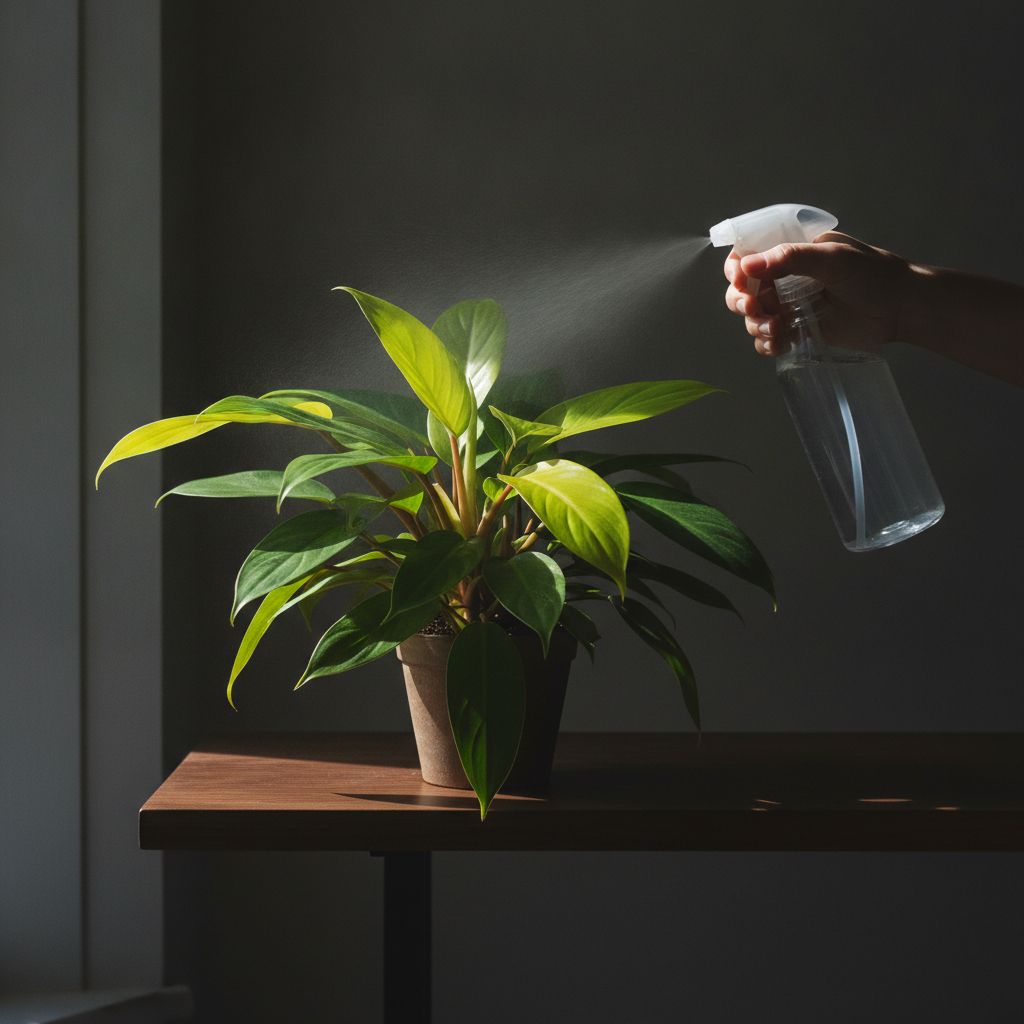
If you want to raise humidity, the most effective methods are grouping plants together so they share transpired moisture, standing the pot on a tray of pebbles topped up with water that sits below the pot base, or running a small room humidifier nearby. Misting is popular but offers only a brief, minor lift and can encourage fungal spots if leaves stay wet, so it is the least reliable option.
Water Quality
Moonlight Philodendron is reasonably tolerant of ordinary tap water, but it can be sensitive to the chlorine, fluoride and mineral salts that build up over time, sometimes showing as brown tips. If your tap water is heavily treated or very hard, leaving it to stand uncovered overnight lets some chlorine dissipate, and using filtered or collected rainwater is gentler still. Always bring water to room temperature first, as cold water can shock the roots.
Soil, Potting & Repotting
The right growing medium does much of the watering work for you. Philodendrons evolved as forest-floor and epiphytic plants whose roots are used to air as much as moisture, so the goal is a mix that holds some water while draining fast and never compacting into a dense, airless mass. A heavy, peaty supermarket compost used straight from the bag is the wrong choice and a frequent cause of slow decline.
Ideal Soil Composition
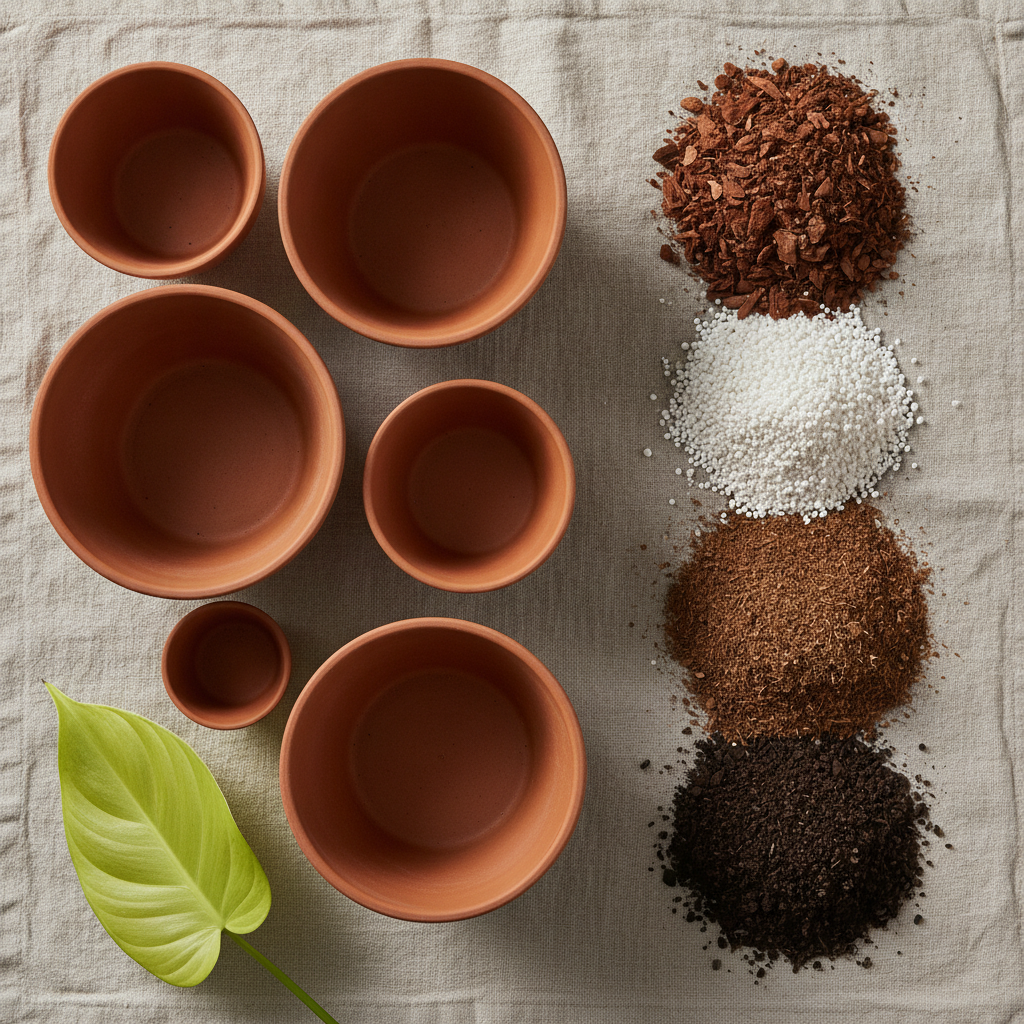
The classic approach is to start with a quality peat-free houseplant compost and bulk it out with chunky, airy materials so that water drains through quickly and roots can breathe. The components below, combined in roughly these proportions, make a reliable aroid mix that suits ‘Moonlight’ well.
| Component | Proportion | Function |
|---|---|---|
| Peat-free potting compost or coco coir | 40 percent | Base that holds moisture and nutrients |
| Orchid bark | 30 percent | Creates large air pockets and aids drainage |
| Perlite or pumice | 20 percent | Keeps the mix light and prevents compaction |
| Worm castings or compost | 10 percent | Slow, gentle source of nutrients |
Moonlight Philodendron prefers a slightly acidic medium, in the range of pH 5.5 to 6.5, which most peat-free and coir-based mixes naturally fall within. You rarely need to adjust pH deliberately; far more important is the physical structure of the mix and its ability to drain.
Pro Tip — Quick Mix Recipe: If you want a no-fuss blend, combine two handfuls of peat-free houseplant compost, one of orchid bark and one of perlite. That simple three-part mix drains well, stays airy and suits almost every common philodendron, not just ‘Moonlight’.
Choosing the Right Pot
The container matters as much as what goes in it. Because this plant is so sensitive to waterlogging, the priorities are drainage and a sensible size, with material and looks a distant third.
Drainage holes are non-negotiable. Whatever pot you choose, it must have holes in the base so excess water can escape. A decorative cache pot without holes is fine as an outer sleeve, but only if you lift the inner pot out to water and let it drain fully before returning it.
Pot material: Terracotta is porous and wicks moisture from the soil, which helps if you tend to overwater, while plastic and glazed ceramic retain moisture longer and suit those who forget. Either works for ‘Moonlight’; just adjust your watering frequency to match the pot you pick.
Pot size: Choose a pot only 2 to 3 cm (1 in) wider than the current root ball. An oversized pot holds a large volume of wet soil the roots cannot use quickly, which keeps the mix soggy and raises the risk of rot. Pot up gradually rather than in big jumps.
When to Repot
A fast grower like ‘Moonlight’ typically needs repotting every one to two years. The clearest cues are roots circling the inside of the pot or creeping out of the drainage holes, water that runs straight through without wetting the soil, and growth that has slowed despite good care. The ideal time is spring or early summer, when the plant is entering its strongest growth and will recover quickly from the disturbance.
How to Repot: Step-by-Step
- Water the plant a day beforehand so the root ball is hydrated and slides out cleanly.
- Gently ease the plant from its pot, supporting the base of the clump rather than pulling on the leaves.
- Tease apart any tightly circling roots and brush off some of the old, spent soil.
- Inspect the roots and trim away any that are brown, soft or rotten with sterilised scissors.
- Add fresh mix to the base of a slightly larger pot, then position the plant at the same depth it sat before.
- Fill around the root ball with fresh mix, firming gently to remove large air gaps without compacting.
- Water thoroughly, let it drain, and keep the plant out of strong light for a week while it settles.
Warning — Transplant Shock: Some drooping or a paused growth spurt in the days after repotting is normal. Do not respond by overwatering or feeding to compensate, as stressed roots cannot use the extra and may rot. Keep conditions stable and let the plant recover at its own pace.
Fertilising
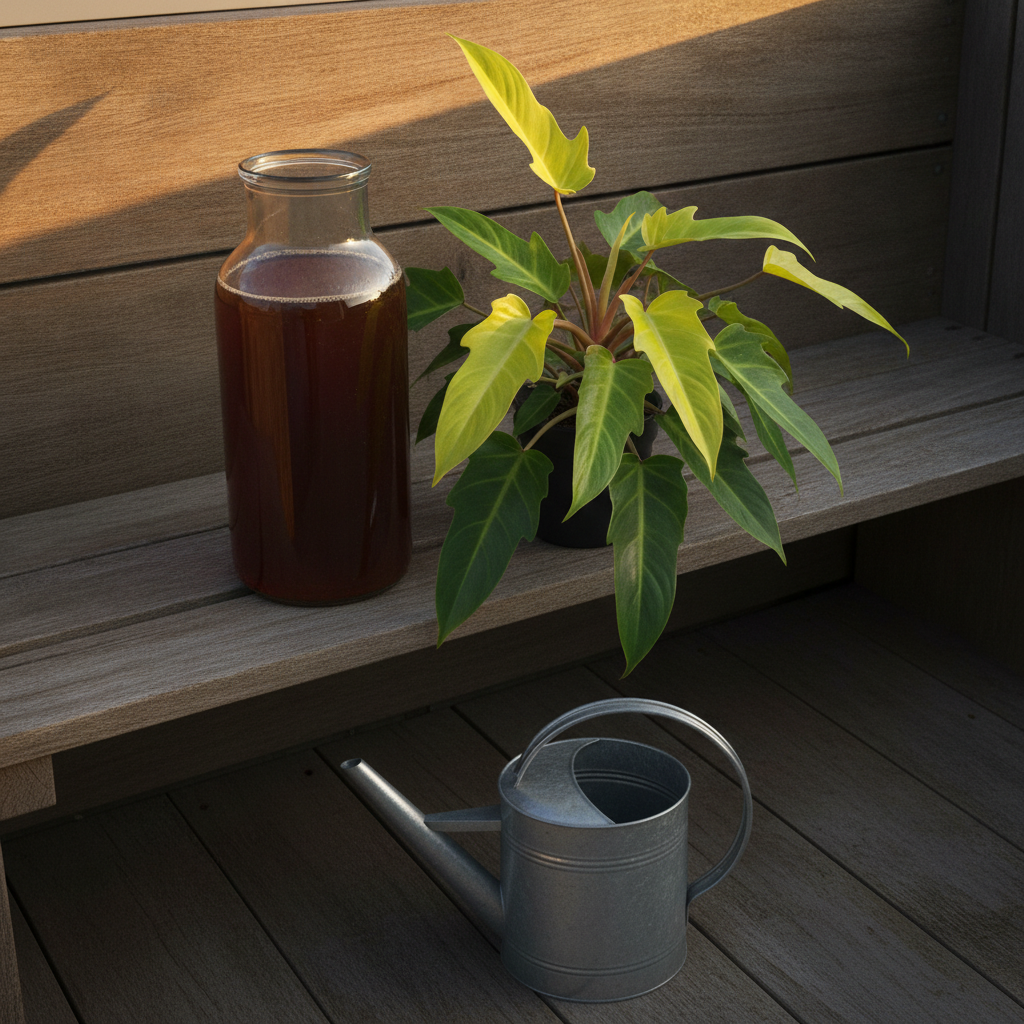
Because it grows so quickly and pushes leaves so often, a Moonlight Philodendron benefits from regular feeding more than many easy houseplants. Those frequent new flushes draw heavily on nitrogen and other nutrients, and a plant in fresh soil will eventually exhaust the supply. Feeding through the growing season keeps the colour strong and the growth steady.
That said, philodendrons are far more often harmed by overfeeding than by going hungry. The salts in concentrated fertiliser accumulate in the soil and can scorch roots and brown leaf tips, so the guiding principle is little and often at reduced strength rather than occasional heavy doses.
Understanding Plant Nutrients
Fertiliser labels carry an N-P-K ratio describing the proportion of the three main nutrients, plus a handful of secondary and trace elements. Understanding what each one does makes it easier to read your plant and choose a sensible product.
| Nutrient | Symbol | Primary Function | Deficiency Symptoms |
|---|---|---|---|
| Nitrogen | N | Leaf and stem growth, rich green colour | Pale, yellowing older leaves; slow growth |
| Phosphorus | P | Root development and energy transfer | Stunted growth, dull or purplish tints |
| Potassium | K | Overall vigour and water regulation | Yellow or brown leaf margins |
| Calcium | Ca | Cell wall structure | Deformed or weak new growth |
| Magnesium | Mg | Core of the chlorophyll molecule | Yellowing between leaf veins |
| Iron | Fe | Chlorophyll production | Pale young leaves with green veins |
Types of Fertiliser
Liquid fertilisers: The most popular choice for houseplants because they are easy to dilute and control. A balanced liquid feed mixed into your watering can gives you precise command over strength and timing, which suits the little-and-often approach this plant prefers.
Slow-release granular: Coated pellets that release nutrients gradually over several months. Convenient for hands-off growers, but they offer less control, and in a fast-draining aroid mix they can release unevenly, so monitor for any signs of overfeeding.
Organic fertilisers: Worm castings, compost and seaweed or fish-based feeds release nutrients slowly and gently while supporting healthy soil life. They are very hard to overdo, which makes them a forgiving option, though their nutrient content is lower and less predictable than synthetic feeds.
Feeding Schedule
Feed actively from spring through summer, roughly every four weeks, using a balanced liquid fertiliser at half the recommended strength. As growth slows in autumn, taper off, and through winter stop feeding entirely; a dormant or barely growing plant cannot use the nutrients and the unused salts simply build up in the soil. Always apply feed to already-moist soil, never to a bone-dry root ball.
Pro Tip — Half Strength, Double Confidence: When in doubt, dilute further. A feed at quarter to half the label rate, applied a little more often, gives steady nutrition with almost no risk of fertiliser burn. You can always feed again sooner; you cannot easily undo scorched roots.
How to Fertilise
- Water the plant lightly first, or feed on a day when the soil is already moist, to protect the roots.
- Dilute a balanced liquid fertiliser to half the recommended strength in your watering can.
- Pour the solution evenly over the soil until it just begins to drain from the bottom.
- Discard any runoff and never let the plant sit in the fertiliser solution.
- Every couple of months, flush the pot with plain water to wash out accumulated salts.
Warning — Salt Build-Up: A white crust on the soil surface or pot rim, together with browning leaf tips, signals a build-up of fertiliser salts. Flush the soil by running plenty of plain water through it until it drains clear, and ease off feeding until the plant recovers.
Propagation
Propagating a Moonlight Philodendron is genuinely satisfying, partly because the results are quick and partly because the glowing new growth is so rewarding to see multiply. Its self-heading habit, however, changes the rules compared with the vining philodendrons people are more used to propagating from simple stem cuttings.
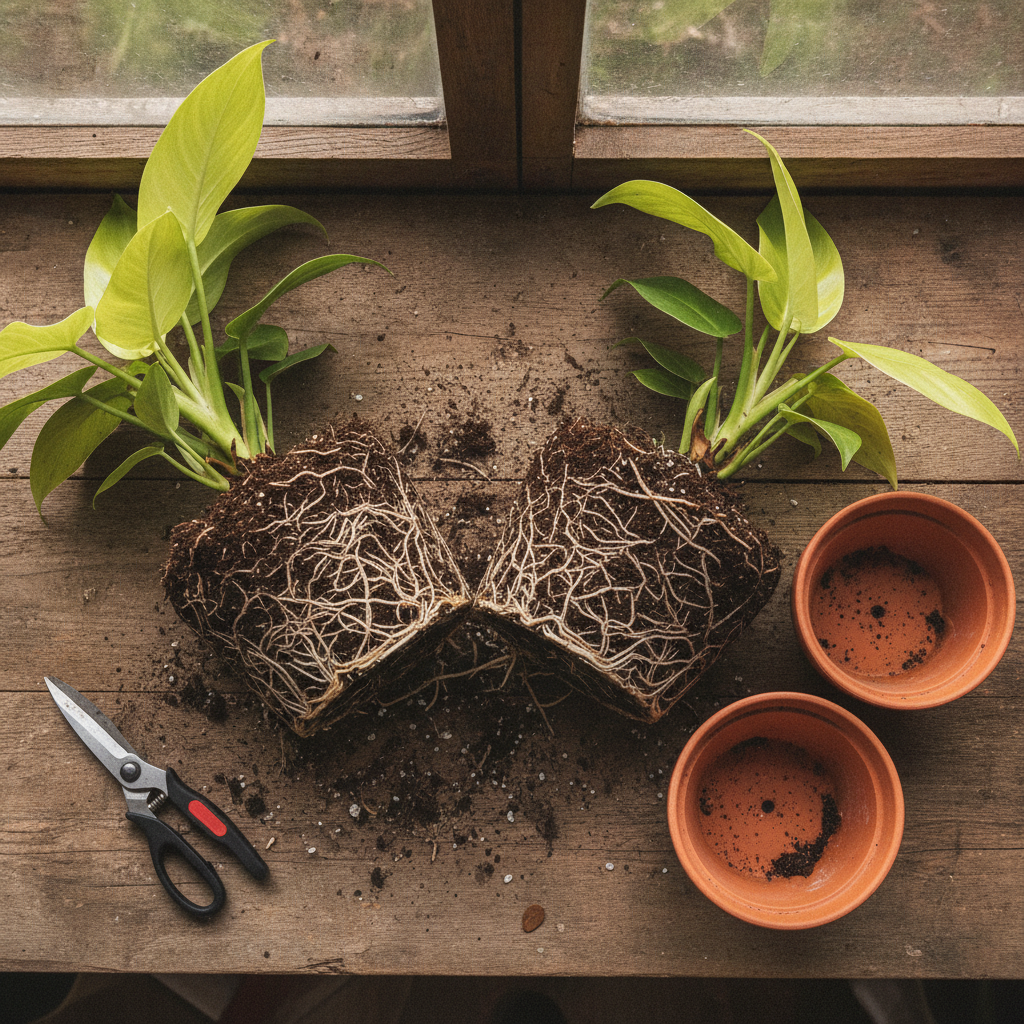
Because ‘Moonlight’ grows as a clump from a central base rather than along a trailing stem, the most reliable method is division: separating the natural offshoots that form around the parent. Where a plant has developed an elongated stem with visible nodes, stem cuttings are also possible, but division is the everyday technique and the one most growers will reach for.
Understanding Crowns and Offshoots
A mature ‘Moonlight’ is really several growth points, or crowns, sharing one root mass. Over time the plant throws up new shoots from the base, each developing its own roots while still attached to the parent. These offshoots are the units you divide. The key to success is making sure each separated piece carries both a healthy crown of leaves and a portion of well-rooted root system, so it can support itself from day one.
Division: Step-by-Step
Division is best done in spring or early summer, ideally combined with a planned repotting so you only disturb the roots once. Work gently and keep your tools clean to avoid introducing disease.
- Water the plant the day before, then slide the whole root ball out of its pot.
- Brush away loose soil so you can see where the separate crowns and their roots join.
- Gently tease the clump apart with your fingers, following the natural divisions between offshoots.
- If roots are too tangled to pull apart, cut cleanly through the root mass with a sterilised knife, giving each division a crown and roots.
- Pot each division into its own small pot of fresh aroid mix at the same depth it grew before.
- Water in lightly and place the new plants somewhere warm with bright, indirect light.
- Keep the soil just moist and expect new growth to resume within a few weeks.
Pro Tip — Let Cuts Settle: Where you have had to cut through roots or stem, let the wounds air for an hour before potting, and water sparingly for the first week. This reduces the chance of rot entering through the fresh cuts while the divisions establish.
Stem Cuttings: Step-by-Step
If your plant has developed a longer stem with distinct nodes, you can take stem cuttings as an alternative. Each cutting needs at least one node, the small bump from which roots and leaves emerge, to have any chance of rooting.
- Using sterilised scissors, cut a section of stem just below a node, keeping one or two leaves attached.
- Remove the lowest leaf so a bare node is exposed for rooting.
- Place the cutting in water or moist sphagnum moss, with the node submerged or buried and the leaves above.
- Keep it warm and brightly lit but out of direct sun, refreshing water every few days.
- Once roots reach 3 to 5 cm (1 to 2 in), pot the cutting into a small pot of aroid mix and care for it as normal.
Troubleshooting Propagation
| Problem | Likely Cause | Solution |
|---|---|---|
| Division wilts badly | Too few roots, or too much top growth to support | Increase humidity, keep warm, remove a leaf or two to reduce demand |
| Cut stem or roots rot | Soil kept too wet, or wounds not allowed to settle | Use fresh airy mix, water sparingly, let cuts dry before potting |
| No new roots on a cutting | No node included, or conditions too cold | Ensure a node is present and keep at 20 to 25 degrees C (68 to 77 degrees F) |
| New growth very pale | Light too low for the establishing plant | Move to brighter indirect light once roots are active |
Pests & Diseases
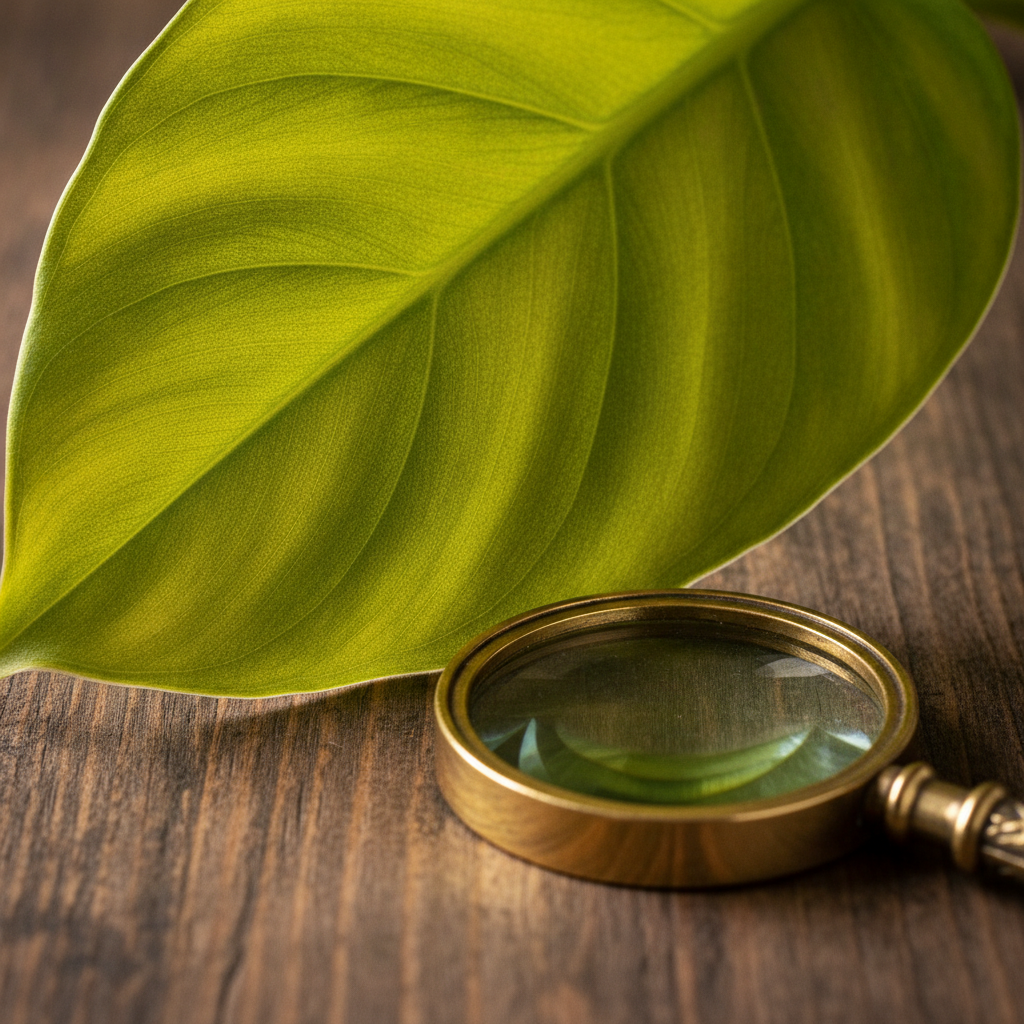
A healthy, well-grown Moonlight Philodendron is fairly resistant to pests, and most problems arrive either on a newly bought plant or from neighbouring houseplants already harbouring an infestation. Catching trouble early is everything, so make a habit of glancing over the leaves, particularly the undersides and the points where leaf meets stem, whenever you water.
Most of the usual indoor pests are sap-suckers that weaken the plant gradually rather than killing it outright, which buys you time to respond if you stay observant. The diseases that affect this species are almost all linked to overwatering and poor airflow, meaning good cultural care is the best preventative of all.
Common Pests
Mealybugs (Pseudococcus species)
Small, soft-bodied insects that look like tiny tufts of white cotton wool, clustering in leaf axils and along the undersides of leaves. They suck sap and excrete sticky honeydew, which can lead to sooty mould. A heavy infestation causes yellowing and stunted growth.
Treatment: Dab each insect with a cotton bud dipped in isopropyl alcohol, then wipe the leaves clean. Follow up with insecticidal soap or neem oil every week until no new bugs appear, and isolate the plant while you treat it.
Spider Mites (Tetranychus urticae)
Almost invisible to the naked eye, these mites reveal themselves through fine webbing and a faint stippling of pale dots across the leaves. They thrive in hot, dry air, so they are most likely to appear in winter when heating dries out the room.
Treatment: Rinse the plant thoroughly, including leaf undersides, then treat with neem oil or insecticidal soap. Raising humidity makes the environment far less welcoming to mites and helps prevent their return.
Aphids (Aphidoidea)
Tiny green, black or pinkish insects that gather on soft new growth, exactly the bright young leaves ‘Moonlight’ produces so freely. They distort developing foliage and leave behind sticky honeydew.
Treatment: Wash them off with a stream of water or wipe them away by hand, then apply insecticidal soap to any survivors. Aphids reproduce quickly, so repeat every few days until the new growth stays clean.
Fungus Gnats (Sciaridae)
Small dark flies that hover around the soil surface and are more nuisance than serious threat to a mature plant, though their larvae can damage fine roots and seedlings. Their presence is usually a sign that the soil is being kept too wet.
Treatment: Let the top of the soil dry out more between waterings, use yellow sticky traps to catch the adults, and top-dress with a layer of grit or sand to interrupt their breeding cycle.
Common Diseases
Root Rot (Pythium and Phytophthora species)
The most serious threat to any philodendron, caused by waterlogged soil that suffocates the roots and lets fungal pathogens take hold. Symptoms include yellowing leaves, a wilting plant despite wet soil, and a soft, blackened base with a sour smell.
Treatment: Unpot the plant, cut away all brown, mushy roots with sterilised scissors, and repot into fresh, dry, well-draining mix. Water sparingly while it recovers, and correct the overwatering habit that caused it.
Bacterial Leaf Spot (Erwinia and Xanthomonas species)
Appears as dark, water-soaked spots that may be ringed with yellow and can spread rapidly in warm, humid, stagnant conditions, especially when leaves stay wet. Left unchecked, the spots merge and large areas of leaf collapse.
Treatment: Remove affected leaves with sterilised scissors, stop misting and overhead watering, and improve air circulation around the plant. Avoid wetting the foliage and keep new growth dry to halt the spread.
Pest and Disease Summary
| Pest / Disease | Identification | Treatment |
|---|---|---|
| Mealybugs | White cottony tufts in axils | Alcohol swab, then neem oil weekly |
| Spider mites | Fine webbing, pale stippling | Rinse, neem oil, raise humidity |
| Aphids | Clusters on new growth | Rinse off, insecticidal soap |
| Fungus gnats | Small flies over the soil | Dry out soil, sticky traps, grit top-dressing |
| Root rot | Yellowing, soft black base | Trim roots, repot dry, water less |
| Bacterial leaf spot | Dark water-soaked spots | Remove leaves, improve airflow, keep dry |
Prevention Strategies
Prevention rests on two pillars: good growing conditions and vigilance. A plant grown in the right light, watered correctly and given airy soil is naturally more resistant to both pests and disease, because the stresses that weaken plants are also the conditions pests exploit. Most outbreaks begin on a stressed or freshly imported plant.
Always quarantine new arrivals for a couple of weeks before letting them join your collection, inspect at every watering, wipe the leaves occasionally to remove dust and early pests, and avoid the chronic overwatering that underlies nearly every disease this plant suffers. Catching a problem when it is one or two insects is far easier than tackling a full infestation.
Pro Tip — Neem as Routine: A light monthly spray of diluted neem oil over the leaves, top and bottom, works as a gentle preventative that deters most sap-suckers before they establish. Apply it in the evening or out of direct sun to avoid leaf marking.
Popular Varieties
‘Moonlight’ is itself a named hybrid cultivar rather than a wild species, bred specifically for its luminous foliage and tidy, self-heading form. It sits within a wider group of brightly coloured and characterful philodendrons that share its easy temperament, and which collectors often grow alongside it for contrast.
The varieties below range from close relatives with similar self-heading habits to vining cousins that share the same electric colouring. They make natural companions to a ‘Moonlight’ and help you build a collection with a coherent look but varied form.
| Variety | Leaf Appearance | Light Needs | Growth Rate | Availability |
|---|---|---|---|---|
| Moonlight | Neon chartreuse, maturing to lime | Bright indirect | Fast | Common |
| Prince of Orange | Coppery-orange new leaves to green | Bright indirect | Moderate | Common |
| Lemon Lime | Vivid lime-yellow, heart-shaped, vining | Bright indirect | Fast | Common |
| Prince of Orange’s cousin McColley’s Finale | Red new growth ageing to green | Bright indirect | Moderate | Occasional |
| Birkin | Dark green with fine white pinstripes | Bright indirect | Slow to moderate | Common |
| Painted Lady | Mottled lime and yellow, pink stems | Bright indirect | Moderate | Occasional |
Featured Varieties
Prince of Orange
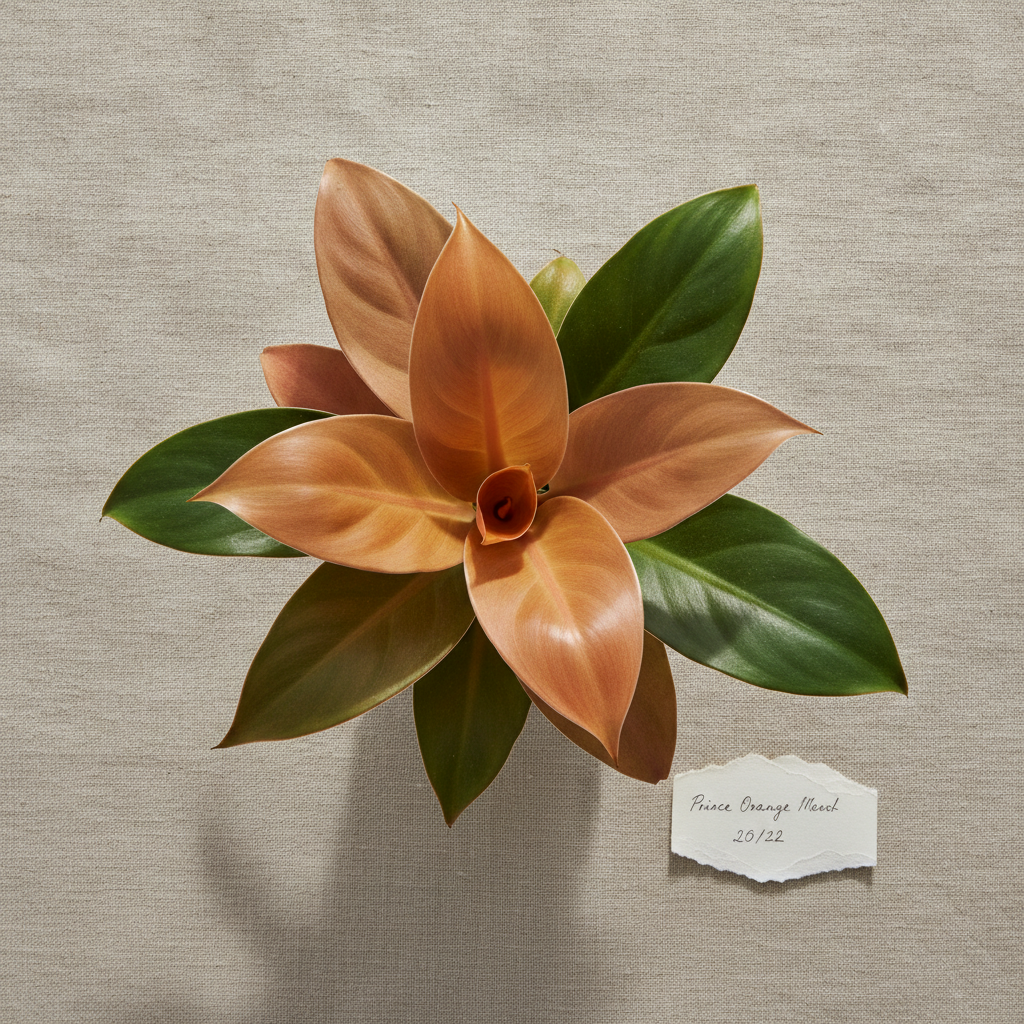
A self-heading cousin that mirrors ‘Moonlight’ in habit but swaps yellow for fire: new leaves emerge bright coppery-orange and amber, fading through salmon to deep green as they age. Grown side by side, the two cultivars give a glowing two-tone display.
Lemon Lime
The vining counterpart to ‘Moonlight’, with the same luminous lime-yellow colouring on heart-shaped, trailing leaves. Where ‘Moonlight’ builds a compact clump, Lemon Lime cascades from a shelf or climbs a pole, offering the same colour in a very different form.
Variety Profiles in Detail
Prince of Orange (Philodendron ‘Prince of Orange’)
Another self-heading hybrid, Prince of Orange is perhaps the closest match to ‘Moonlight’ in growth and care. Its drama lies in the colour shift of each new leaf, from vivid orange through salmon to settled green, so a healthy plant displays a whole spectrum at once. It wants the same bright indirect light, airy soil and careful watering, and the brighter the light, the more intense the orange.
Lemon Lime (Philodendron hederaceum ‘Lemon Lime’)
A vining form of heartleaf philodendron that shares ‘Moonlight’s electric colouring but trails or climbs rather than clumping. It is fast, forgiving and ideal for a hanging pot or moss pole, and because it roots so readily from stem cuttings it is far easier to propagate than the self-heading types. Care is otherwise near identical.
Choosing the Right Variety for Your Space
If you want a sculptural, self-contained plant for a shelf, desk or side table, the self-heading cultivars like ‘Moonlight’ and Prince of Orange are the natural choice, holding a neat rosette without training. If you would rather have trailing greenery to spill from a high shelf or climb a support, a vining cultivar such as Lemon Lime delivers similar colour in a flowing form. All of them share the same easy care, so you can mix habits freely and let light and space, rather than difficulty, guide your decision.
Frequently Asked Questions
Why are my Moonlight Philodendron’s new leaves not bright yellow?
The most common reason is insufficient light. In dimmer conditions the plant produces more chlorophyll, which masks the golden tones and leaves new growth a flatter green. Move it to a brighter spot with plenty of indirect light, and the next flush should emerge with much more of its signature glow.
Is the Moonlight Philodendron a climbing or trailing plant?
Neither. ‘Moonlight’ is a self-heading philodendron, meaning it grows as a compact, upright clump from a central base rather than vining or trailing. It holds its own shape without a support and stays relatively small, which is part of what makes it so tidy and easy to place.
How often should I water my Moonlight Philodendron?
Water when the top 2 to 3 cm (about 1 in) of soil feels dry, which usually means every 7 to 10 days in spring and summer and less often in winter. Always check the soil rather than following a fixed schedule, as the right frequency depends on light, temperature and the time of year.
Why are the leaves on my plant turning yellow?
Occasional yellowing of the oldest, lowest leaves is normal ageing. Several leaves yellowing at once, especially with soggy soil, usually points to overwatering, the most frequent problem with this plant. Check that the soil drains freely and let the top layer dry out before watering again.
Is Moonlight Philodendron safe around pets and children?
No. Like all philodendrons it contains insoluble calcium oxalate crystals that cause burning, drooling and swelling of the mouth and throat if chewed or swallowed, in cats, dogs and people alike. Keep it well out of reach of curious pets and small children.
How do I propagate a Moonlight Philodendron?
The most reliable method is division. When repotting, separate the natural offshoots that form around the base, making sure each piece has both a crown of leaves and its own roots, then pot them up individually. If the plant has developed an elongated stem with nodes, stem cuttings rooted in water or moss are also possible.
Why does my plant have brown, crispy leaf tips?
Brown tips most often come from low humidity, inconsistent watering, or a build-up of mineral salts from tap water or fertiliser. Raise the humidity around the plant, keep your watering even, and flush the soil with plain water periodically to wash out accumulated salts.
How big does a Moonlight Philodendron get?
It stays pleasingly compact for a philodendron, typically reaching around 45 to 60 cm (18 to 24 in) tall and a similar spread as a mature clump. That modest size, combined with its self-heading habit, makes it well suited to shelves, desks and tabletops where a larger plant would not fit.






