
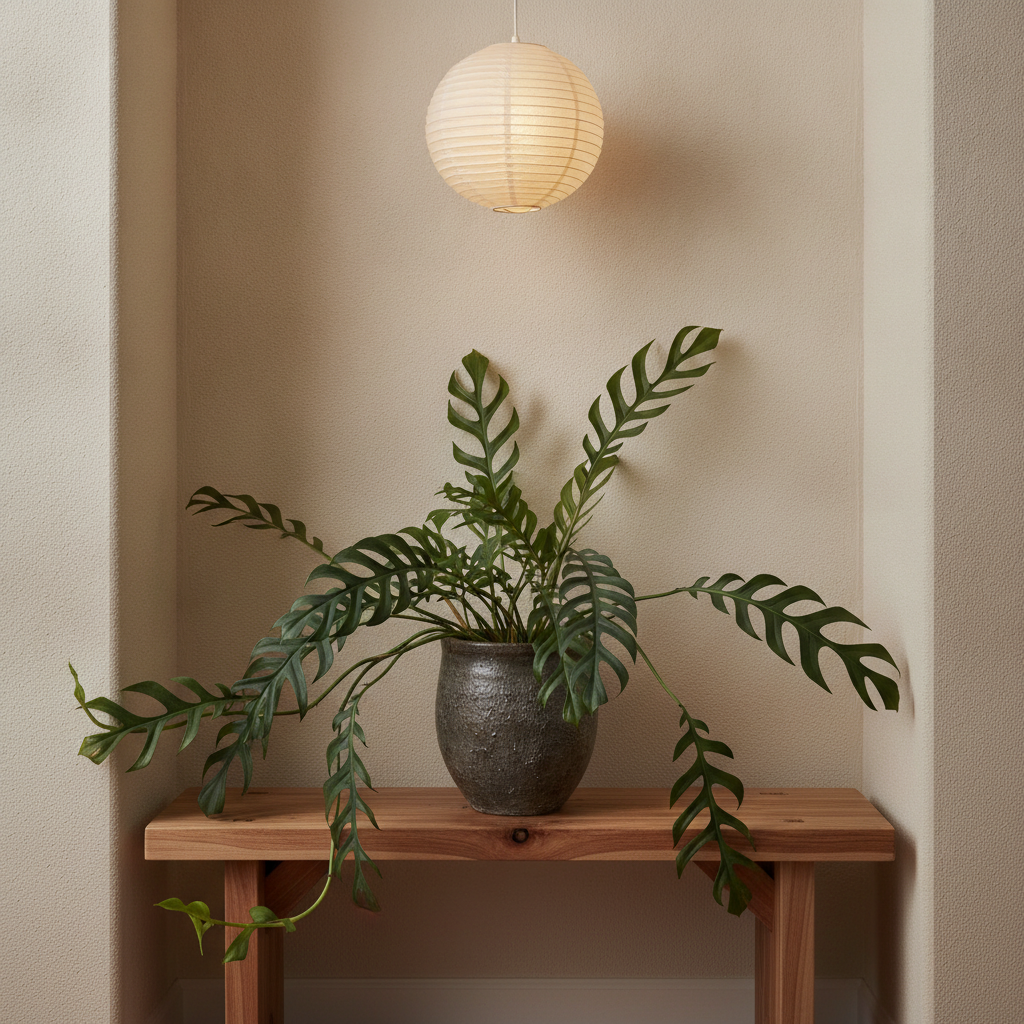
Few houseplants have arrived with as much quiet fanfare as the Baltic Blue Pothos, a selection of Epipremnum pinnatum introduced to the mass market in the early 2020s and prized for one striking trait: it develops the dramatic leaf splits, or fenestrations, that collectors covet far earlier and far more readily than the everyday golden pothos. Its leaves emerge a deep, almost teal blue-green, a colour that deepens in good light and gives the plant its name. Native in its parent species to the tropical forests of Southeast Asia, northern Australia and the western Pacific, where it scrambles up tree trunks as a climbing aroid, it brings a touch of jungle architecture to a windowsill without demanding jungle-level attention.
The Baltic Blue has earned a reputation as one of the most rewarding easy plants you can grow, and that reputation is largely deserved. It tolerates neglect, recovers gracefully from mistakes, and grows quickly once settled. Yet there is a meaningful gap between a Baltic Blue that merely survives, trailing a few flat juvenile leaves down the side of a shelf, and one that truly thrives, climbing a support and unfurling large, deeply fenestrated foliage. This guide covers everything that separates the two, from the precise light that triggers those splits to watering rhythm, soil structure, feeding, propagation and the handful of pests worth watching for.
Contents
- Quick Reference
- Why Baltic Blue Pothos Makes an Excellent Houseplant
- Light Requirements
- Watering & Humidity
- Soil, Potting & Repotting
- Fertilising
- Propagation
- Pests & Diseases
- Popular Varieties
- Frequently Asked Questions
Quick Reference: Baltic Blue Pothos at a Glance
| Light | Bright, indirect light; tolerates medium light but fenestrates best in bright conditions |
| Watering | When the top 3 to 5 cm (1 to 2 in) of soil dries out, roughly every 7 to 10 days in growth |
| Temperature | 18 to 29 degrees C (64 to 84 degrees F); avoid below 12 degrees C (54 degrees F) |
| Humidity | Tolerates average household humidity (40 to 50 percent); happier above 60 percent |
| Fertiliser | Balanced liquid feed monthly in spring and summer, diluted to half strength |
| Toxicity | Mildly toxic to cats, dogs and humans if chewed or swallowed (calcium oxalate) |
Why Baltic Blue Pothos Makes an Excellent Houseplant
The appeal of the Baltic Blue begins with a single fact: it fenestrates young. Most pothos varieties produce simple, unbroken heart-shaped leaves indoors and only develop splits when grown enormous on a moss pole over many years. The Baltic Blue, by contrast, can begin showing its characteristic notched and split leaves while still a modestly sized plant, often within the first year of good growth. That gives the average grower access to the sculptural, fenestrated look usually reserved for patient specialists. Pair that with the unusual blue-green leaf colour, which reads as cool and almost metallic against warmer interiors, and you have a plant that looks far more exotic than it is to keep alive.
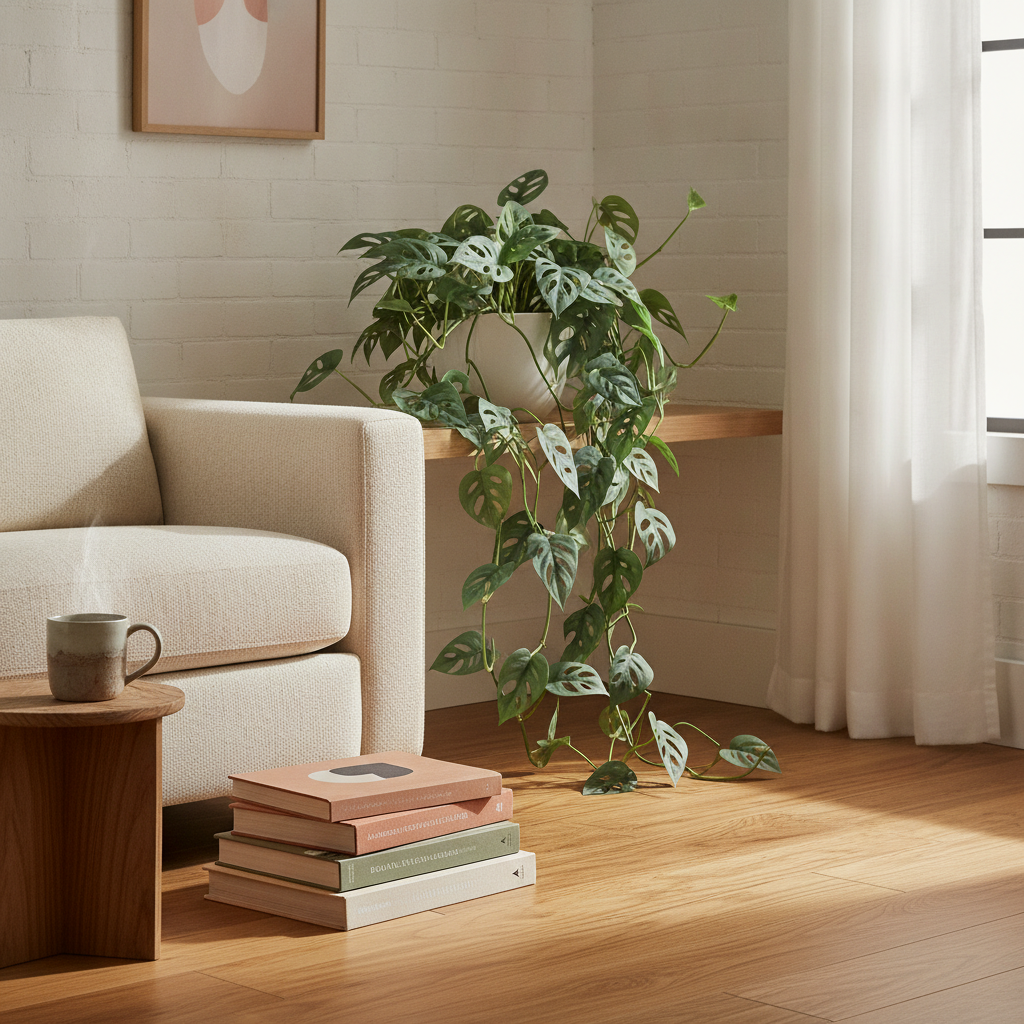
Beyond looks, the Baltic Blue is genuinely forgiving. It tolerates a wide range of light, shrugs off the occasional missed watering thanks to semi-succulent stems and aerial roots, and grows fast enough to feel rewarding without overrunning a room. It can be grown two ways: left to trail from a hanging pot or shelf for a softer, cascading habit, or trained up a moss pole or trellis to encourage larger, more heavily fenestrated mature leaves. That flexibility makes it suitable for beginners learning the rhythm of houseplant care and for experienced growers who want a low-effort plant with high visual payoff. It also tolerates the dry, centrally heated air of most homes far better than fussier aroids such as alocasias or calatheas.
Important — Toxicity: Like all members of the arum family, the Baltic Blue Pothos contains insoluble calcium oxalate crystals. Chewing or swallowing the leaves or stems can cause oral irritation, drooling, mouth and throat swelling, and digestive upset in cats, dogs and humans. It is rarely life-threatening but genuinely unpleasant, so keep it out of reach of pets and young children, and wash your hands after taking cuttings.
Light Requirements
Light is the single most important variable in growing a beautiful Baltic Blue rather than a merely living one. The plant will survive in surprisingly dim corners, but light is what drives the size, the colour intensity and, crucially, the fenestrations that make this variety worth owning. A Baltic Blue kept in low light will stay alive, grow slowly, and produce small, flat, unsplit leaves on leggy stretched stems. The same plant moved into bright indirect light will grow faster, colour up to a richer blue-green, and begin splitting its leaves much sooner.
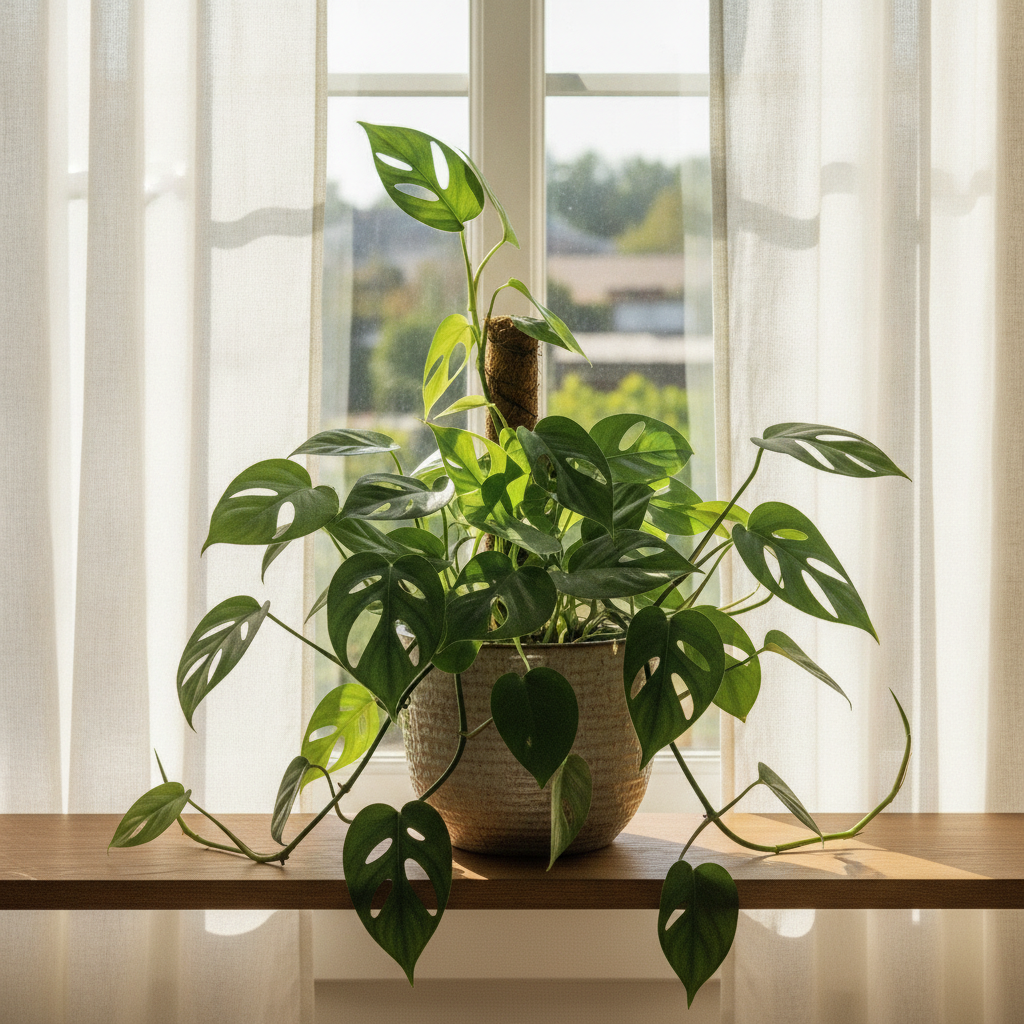
The ideal is bright, indirect light for most of the day: a position a metre or two back from a sunny window, or directly in front of a window that receives gentle morning sun rather than fierce afternoon glare. Think of the dappled light beneath a forest canopy, which is exactly the conditions the species evolved under as it climbed tree trunks. A few hours of soft, direct morning sun is beneficial and will not harm the leaves, but prolonged direct midday or afternoon sun can scorch them.
Light Levels Explained
Houseplant light is easy to misjudge because human eyes adjust constantly, making rooms feel brighter than they are to a plant. The table below translates light categories into the practical outcome you can expect from a Baltic Blue in each.
| Light Category | Approx. Level | Typical Location | Outcome |
|---|---|---|---|
| Direct sun | Over 50,000 lux | On an unshaded south or west sill | Risk of scorch and faded, bleached leaves |
| Bright indirect | 10,000 to 20,000 lux | Near an east window or back from a south one | Best growth, rich colour, earliest fenestration |
| Medium | 5,000 to 10,000 lux | A metre or more from a bright window | Steady growth, fewer and smaller splits |
| Low | 1,000 to 2,500 lux | Interior wall, north-facing room | Survives but stretches, leaves stay small and flat |
| Very low | Under 1,000 lux | Dim hallway, far from any window | Slow decline, leggy growth, no fenestration |
Window Orientation and Placement
South-facing window: The brightest exposure in the northern hemisphere. Excellent for a Baltic Blue provided you set it back a little or filter the light with a sheer curtain, especially in summer when midday sun is strongest.
East-facing window: Arguably the perfect position. Gentle, cool morning sun followed by bright indirect light for the rest of the day suits the plant beautifully with little risk of scorch.
West-facing window: Good, but the afternoon sun is harsher and hotter than morning light, so pull the plant back from the glass or diffuse the strongest hours to protect the leaves.
North-facing window: Workable for survival but rarely enough to push strong growth or fenestration. Expect a slower, leggier plant, and consider supplementing with a grow light through the darker months.
Pro Tip — Rotate for Even Growth: Pothos lean noticeably toward their light source. Give the pot a quarter turn each time you water so the plant grows symmetrically rather than reaching out one-sided toward the window.
How Light Affects Colour and Fenestration
The two features that define the Baltic Blue, its deep blue-green colour and its split leaves, are both light-driven. In strong, bright indirect light the new growth emerges darker and more saturated, with that characteristic cool, almost teal cast. In low light the leaves come in a flatter, paler green and the blue tone is muted. Fenestration follows the same logic: the plant only invests energy in producing larger, split mature leaves when it has the light to support them, and when it is given something to climb. A Baltic Blue left to trail in medium light may never split much at all, while the same plant in bright light on a moss pole can fenestrate dramatically.
Warning — Direct Sunlight: While a few hours of soft morning sun help, prolonged harsh direct sun, particularly through summer afternoon glass, will scorch the leaves. Watch for pale, bleached patches or crispy brown edges, which signal too much intensity, and move the plant back from the window if they appear.
Artificial Lighting
The Baltic Blue responds very well to artificial light, making it a strong candidate for offices and rooms with few windows. A standard full-spectrum LED grow light positioned 30 to 45 cm (12 to 18 in) above the plant and run for 10 to 12 hours a day will comfortably replace or supplement natural light. This is also the most reliable way to keep colour and growth strong through winter in northern latitudes, where natural daylight drops sharply.
Seasonal Adjustments
As the sun sits lower and weaker through autumn and winter, a position that was perfect in summer may suddenly be too dim. Move the plant closer to the window for the colder months, clean the glass to maximise transmission, and accept that growth will slow regardless. In spring, as light returns, ease the plant back to its summer spot gradually rather than all at once to avoid shocking foliage that has acclimatised to lower levels.
Watering & Humidity
If light is what makes a Baltic Blue beautiful, watering is what keeps it alive, and the most common way growers harm this plant is by giving it too much. The thick, semi-succulent stems and aerial roots store moisture, so the plant is built to tolerate drying out between drinks far better than it tolerates sitting in soggy soil. The guiding principle is simple: water thoroughly, then wait until the soil has partly dried before watering again.
When to Water
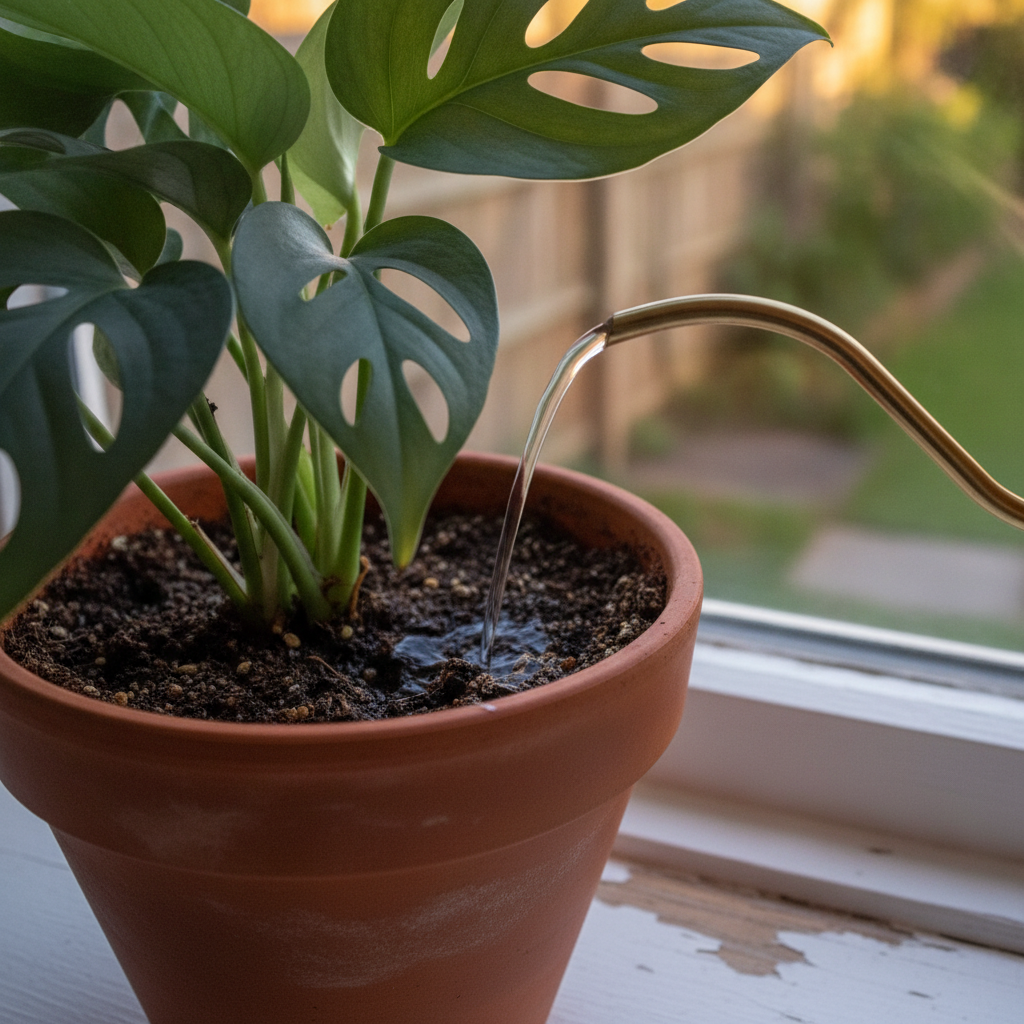
Rather than watering on a fixed calendar, check the soil. Push a finger into the top of the pot: when the top 3 to 5 cm (1 to 2 in) feels dry, it is time to water. In a bright, warm spot during the growing season this typically works out to roughly every 7 to 10 days, but it varies with pot size, light, temperature and the time of year, so the finger test always beats the calendar.
In autumn and winter, when growth slows and the plant uses less water, stretch the interval considerably, sometimes to every two weeks or longer. The Baltic Blue will also tell you when it is genuinely thirsty: the leaves lose a little rigidity and the stems soften slightly. This is a useful, low-stakes signal, and a plant watered promptly at that point will perk back up within hours.
Pro Tip — Lift the Pot: Once you know what a freshly watered pot weighs versus a dry one, lifting it becomes the fastest moisture check of all. A pot that feels surprisingly light is ready for water; one that still feels heavy is not.
How to Water Correctly
- Check that the top few centimetres of soil are dry before you begin.
- Water slowly and evenly across the whole surface, not just one spot.
- Continue until water runs freely from the drainage holes, ensuring the entire root ball is moistened.
- Let the pot drain completely for several minutes.
- Empty the saucer or cache pot so the plant never sits in standing water.
- Wait until the top of the soil dries again before repeating.
Signs of Overwatering vs. Underwatering
| Symptom | Overwatering | Underwatering |
|---|---|---|
| Leaf colour | Yellowing, often several leaves at once | Dull, with browning crispy edges |
| Leaf texture | Soft, limp, sometimes translucent | Thin, curling, papery and dry |
| Soil | Stays wet for many days, may smell sour | Bone dry, pulling away from the pot edge |
| Roots | Brown, mushy, foul-smelling | Dry and brittle but pale and firm |
| Stem base | Soft, blackening, collapsing | Slightly shrivelled but recovers when watered |
Warning — Root Rot: Persistent overwatering is the leading killer of pothos. If you find soft yellow leaves and a sour-smelling, soggy root ball, act fast: unpot the plant, trim away any brown mushy roots with sterilised scissors, and repot into fresh, well-draining mix. Caught early, root rot is recoverable; left unchecked, it spreads to the stem and is usually fatal.
Humidity Requirements
As a tropical aroid, the Baltic Blue enjoys humidity, but one of its great virtues as a houseplant is that it does not insist on it. It grows perfectly well in the average household range of 40 to 50 percent and will not collapse in the dry air of a centrally heated room the way a calathea might. That said, higher humidity above 60 percent encourages larger leaves, faster growth and more reliable fenestration, so it is worth providing if you can.
Signs that the air is too dry tend to be subtle on this forgiving plant: occasional crispy leaf tips, slightly smaller new leaves, or slower growth than the light would otherwise suggest. These are rarely serious, but they are a gentle hint that a little extra moisture in the air would be welcome.
To raise humidity, group the plant with other houseplants so they share the moisture they transpire, stand the pot on a tray of damp pebbles kept topped up with water, or run a small humidifier nearby during the driest winter weeks. Misting offers only a brief, fleeting lift and is not an effective long-term strategy, so do not rely on it alone.
Water Quality
The Baltic Blue is not especially fussy about water quality and tolerates most tap water without complaint. If your supply is heavily chlorinated or very hard, you may see mineral spotting on the leaves over time; in that case, leaving water to stand overnight before use, or switching to filtered or collected rainwater, gives a cleaner result. Always use water at room temperature, as very cold water can shock the roots.
Soil, Potting & Repotting
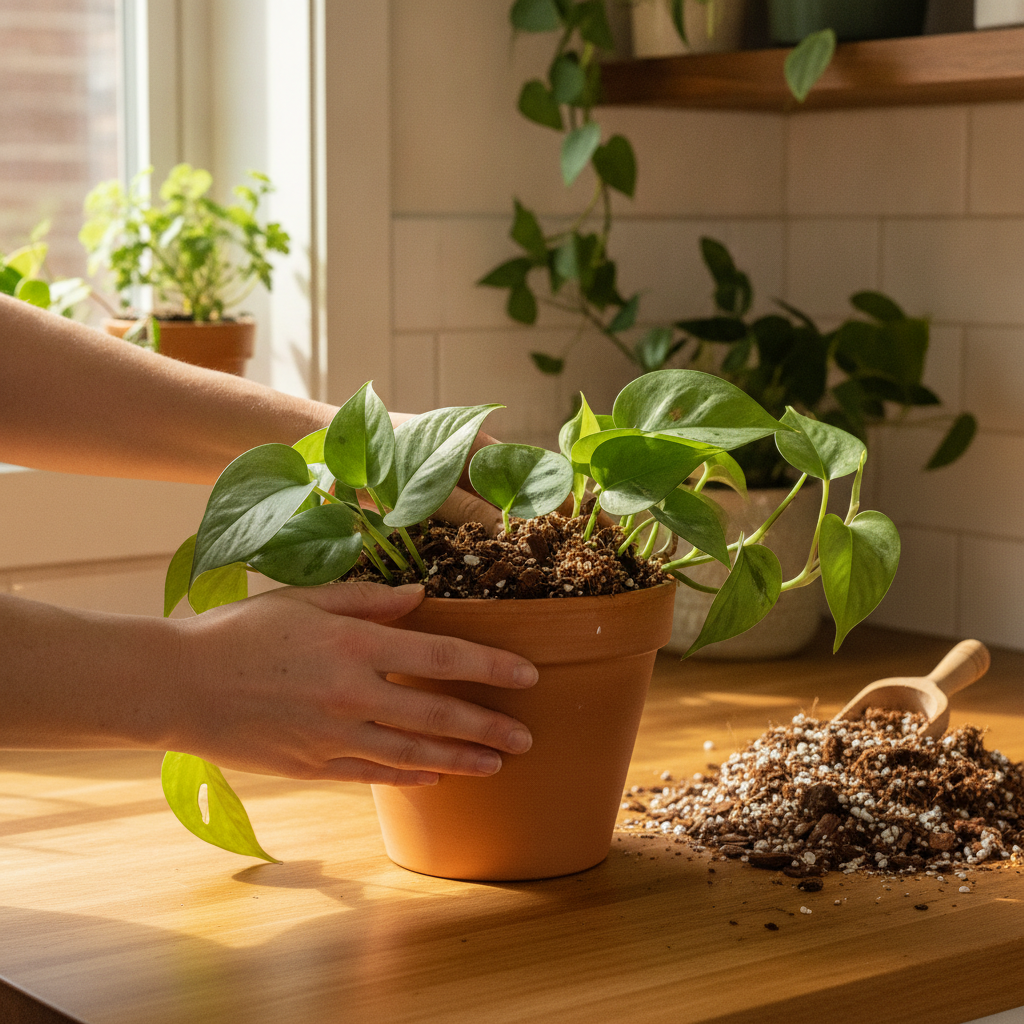
The right soil does most of the work of preventing overwatering for you. Because the Baltic Blue is an epiphytic climber that in nature roots into loose forest debris and bark rather than dense ground soil, it wants an airy, chunky, fast-draining medium that holds some moisture while letting excess water and air move freely around the roots. A heavy, water-retentive potting compost used straight from the bag is the wrong choice and invites rot.
Ideal Soil Composition
The goal is a so-called aroid mix: open and structured, with plenty of coarse material to create air pockets. Rather than a single fine compost, blend several components so the mix drains quickly but never dries to dust. The proportions below make a reliable base that suits the Baltic Blue well.
| Component | Proportion | Function |
|---|---|---|
| Quality potting mix | 40 percent | Base nutrition and moisture retention |
| Orchid bark | 25 percent | Structure, air pockets and grip for roots |
| Perlite or pumice | 25 percent | Drainage and aeration |
| Coco coir or worm castings | 10 percent | Even moisture and gentle nutrients |
The Baltic Blue prefers a slightly acidic to neutral soil, around pH 6.1 to 6.8, which most standard potting mixes already provide. There is no need to test or adjust pH in normal household conditions; a good chunky mix will sit comfortably in the right range on its own.
Pro Tip — Quick Mix Recipe: No time to source specialist ingredients? Combine two handfuls of ordinary houseplant compost with one handful of perlite and one handful of orchid bark. That simple three-part blend transforms a dense bagged compost into something a pothos will thrive in.
Choosing the Right Pot
The container matters as much as what goes in it. A well-chosen pot supports the same goal as the soil: keeping roots oxygenated and never waterlogged.
Drainage holes are non-negotiable. Whatever pot you choose, it must have holes in the base. A decorative cache pot with no drainage is fine as an outer cover, but the plant should sit in an inner pot that drains freely, and you must never leave it standing in collected water.
Pot material: Plastic and glazed ceramic retain moisture longer and suit growers who tend to underwater or forget. Terracotta breathes and dries faster, which is a safety net for heavy-handed waterers. Either works well; just match your watering habits to the material.
Pot size: Choose a pot only 2 to 3 cm (about 1 in) wider than the current root ball. An oversized pot holds a large volume of wet soil the roots cannot use, which dramatically raises the risk of rot. Pothos also flower and grow best when slightly snug in their containers.
When to Repot
A Baltic Blue typically needs repotting every one to two years, or whenever roots begin circling the bottom of the pot and creeping out of the drainage holes. Other signs include water running straight through without wetting the soil, visibly slowed growth despite good care, or the plant drying out far faster than it used to. Spring and early summer, at the start of the active growing season, are the best times to repot so the plant can recover quickly into fresh growth.
How to Repot: Step-by-Step
- Water the plant a day before repotting so the root ball is hydrated and holds together.
- Gently slide the plant out, supporting the base of the stems, and tease apart any tightly circling roots.
- Inspect the roots, trimming away any that are brown, soft or rotten with sterilised scissors.
- Add a layer of fresh aroid mix to the base of the new pot.
- Position the plant at the same depth it sat before, then fill around it with mix, pressing gently to remove large air gaps.
- Water thoroughly to settle the soil and let the pot drain fully.
- Return the plant to its usual spot and resume normal care.
Warning — Transplant Shock: Some drooping or a pause in growth in the days after repotting is normal. Resist the urge to overwater or fertilise to compensate, as this only stresses recovering roots further. Keep the plant in stable, bright indirect light, water normally, and it will settle within a week or two.
Fertilising
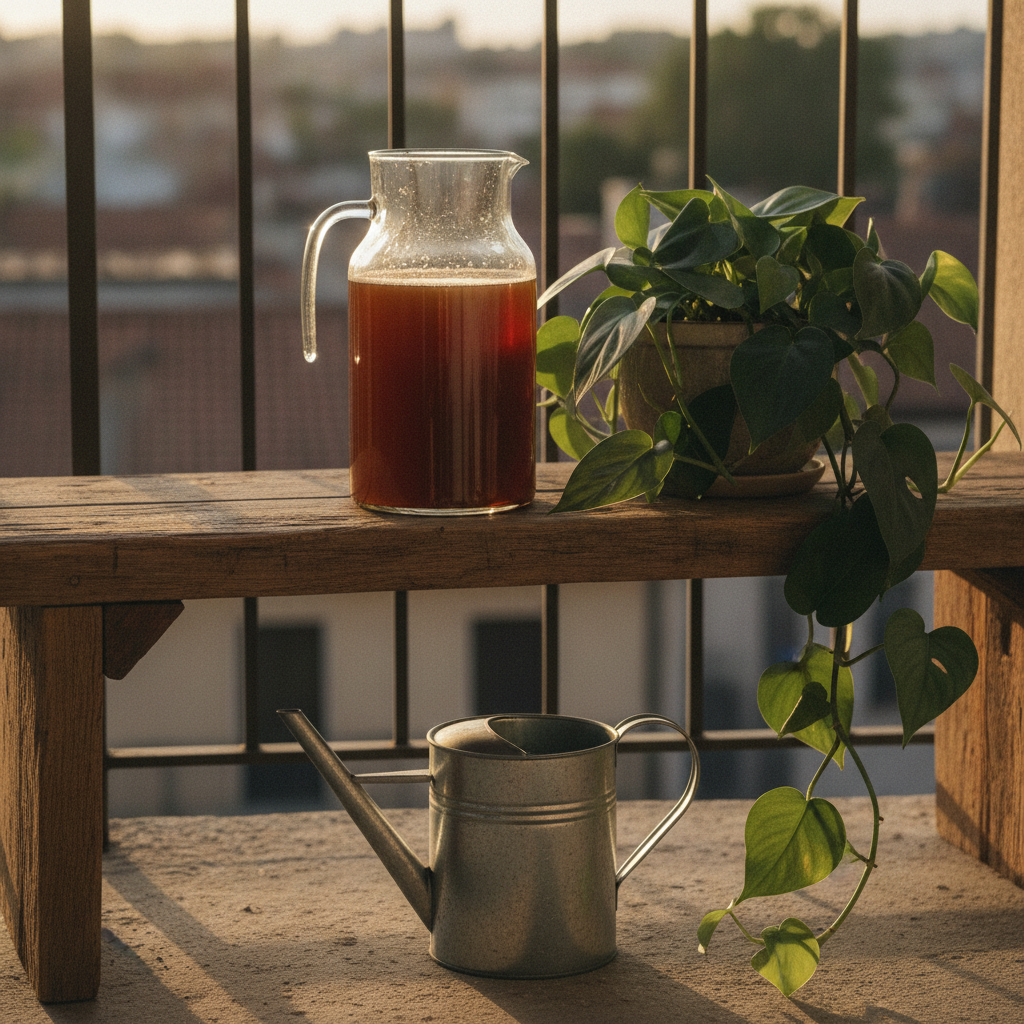
The Baltic Blue is not a heavy feeder, but because potting mix steadily loses its nutrients to watering and root uptake, a little regular feeding through the growing season makes a noticeable difference to leaf size, colour and the rate of fenestration. The aim is light, consistent nutrition rather than occasional heavy doses, which do more harm than good.
Feeding is best confined to the active growing months of spring and summer. During autumn and winter, when growth naturally slows or stops, the plant cannot use the extra nutrients, and feeding then simply allows mineral salts to build up in the soil where they can scorch the roots.
Understanding Plant Nutrients
Fertiliser labels carry three prominent numbers, the NPK ratio, showing the percentages of nitrogen, phosphorus and potassium. For a foliage plant like the Baltic Blue, a balanced ratio such as 10-10-10, or one slightly higher in nitrogen to support leafy growth, works well. Beyond these three macronutrients, plants also draw on secondary nutrients and trace elements, and a quality fertiliser supplies them too.
| Nutrient | Symbol | Primary Function | Deficiency Symptoms |
|---|---|---|---|
| Nitrogen | N | Leafy growth and rich green colour | Overall paling and yellowing of older leaves |
| Phosphorus | P | Root development and energy transfer | Stunted growth, dull or purple-tinged leaves |
| Potassium | K | Overall vigour and disease resistance | Yellow or brown leaf edges and weak stems |
| Calcium | Ca | Cell wall structure and new growth | Deformed or weak emerging leaves |
| Magnesium | Mg | Core of the chlorophyll molecule | Yellowing between the veins of older leaves |
| Iron | Fe | Chlorophyll production in new growth | Yellowing between veins on the newest leaves |
Types of Fertiliser
Liquid fertilisers: The easiest option for pothos. Diluted into watering water, they deliver nutrients quickly and let you control the dose precisely, which is ideal for the light, regular feeding this plant prefers.
Slow-release granular: Pellets mixed into the soil that release nutrients gradually over several months. Convenient and low-effort, though they offer less control and can over-concentrate if the plant is also watered erratically.
Organic fertilisers: Worm castings, compost teas and similar gentle feeds improve the soil as well as the plant, releasing nutrients slowly and with little risk of burning. They are a forgiving choice for cautious growers.
Feeding Schedule
Through spring and summer, feed roughly once a month with a balanced liquid fertiliser diluted to half the recommended strength. That cadence keeps a steady supply of nutrients available without overwhelming the plant. Stop feeding entirely from mid-autumn until the days lengthen again in spring, and always water lightly before feeding so the fertiliser never hits bone-dry roots.
Pro Tip — Less Is More: When in doubt, underfeed. Pothos are far more often damaged by too much fertiliser than too little. Half strength once a month in the growing season is plenty, and a slightly hungry plant is healthier than one with salt-scorched roots.
How to Fertilise
- Dilute the liquid fertiliser to half the strength stated on the label.
- Lightly water the plant first if the soil is very dry, to protect the roots.
- Apply the diluted feed evenly across the soil surface until it begins to drain.
- Let the pot drain fully and empty any water from the saucer.
- Resume normal watering, and flush the soil with plain water every couple of months to clear any salt build-up.
Warning — Salt Build-Up: A white crust on the soil surface or around the pot rim signals accumulated fertiliser salts. Flush the pot thoroughly with plain water, letting it run through several times, to leach the salts away. Left to build up, they cause brown leaf tips and gradual root damage.
Propagation
One of the most satisfying things about the Baltic Blue is how readily it propagates. Like all pothos, it grows from simple stem cuttings that root quickly and reliably, so a single healthy plant can become many, whether you want to fill out a sparse pot, gift cuttings to friends or grow a fuller specimen.
The best time to propagate is spring or early summer, when the plant is growing actively and cuttings root fastest. With a little warmth and patience, success rates are very high, making this an excellent first propagation project for newer growers.
Understanding Nodes and Aerial Roots
The key to propagating any pothos is the node, the small bump on the stem where a leaf meets the vine and where roots emerge. Every viable cutting must include at least one node, because roots cannot form without it; a leaf alone will not grow into a new plant. The Baltic Blue also produces small aerial roots at its nodes, which speed up the rooting process and help the cutting establish even faster. When taking cuttings, always cut about 1 cm (under half an inch) below a node so that node is included.
Water Propagation: Step-by-Step
Rooting in water is the most popular method because it lets you watch the roots develop, which is both reassuring and genuinely lovely to observe.
- Choose a healthy vine and cut a section with one to three nodes, snipping just below the lowest node with clean, sharp scissors.
- Remove the lowest leaf or two so that the bottom node sits bare and will be submerged.
- Place the cutting in a glass of room-temperature water, ensuring at least one node is underwater while the leaves stay above the surface.
- Set the glass in bright indirect light and refresh the water every three to five days to keep it oxygenated.
- Wait for white roots to grow several centimetres long, usually within two to four weeks.
- Pot the rooted cutting into a moist aroid mix and keep it slightly more humid for the first couple of weeks as it adjusts to soil.
Pro Tip — Pot Up at the Right Length: Move cuttings to soil once the roots are about 3 to 5 cm (1 to 2 in) long. Roots left to grow much longer in water become adapted to it and can struggle to transition into soil, causing a setback just when you want growth.
Direct Soil Propagation: Step-by-Step
Rooting directly in a medium skips the water-to-soil transition entirely, often producing sturdier roots that establish without a check in growth.
- Take cuttings exactly as for water propagation, each with at least one node and the lowest leaf removed.
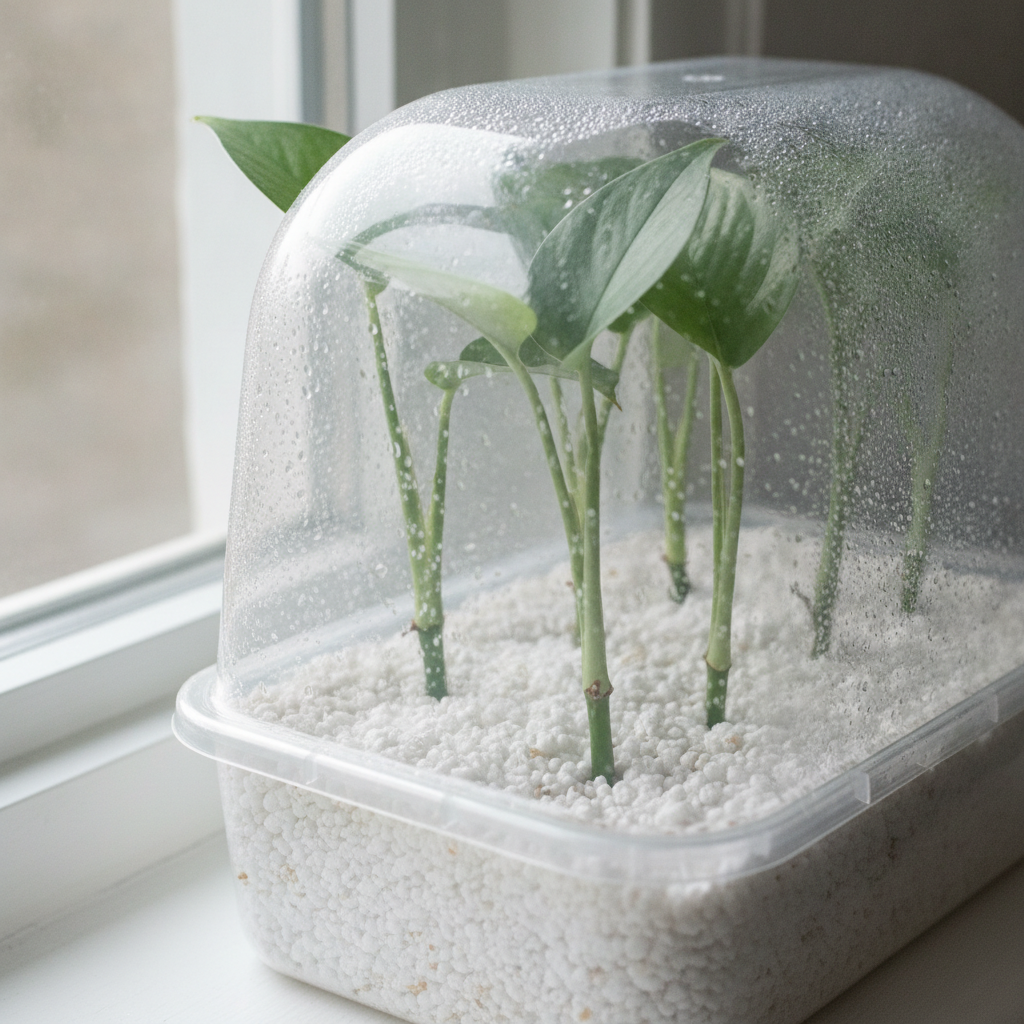
- Insert the bare node into a small pot of moist, airy mix, or into a tray of damp perlite or sphagnum moss.
- Cover loosely with a clear plastic dome or bag to hold humidity, leaving a small gap for airflow.
- Keep the medium lightly moist but never soggy, and place in warm, bright indirect light.
- Tug gently after three to four weeks; resistance means roots have formed and the cover can be removed.
- Grow on as a normal plant once the cutting is clearly established and pushing new leaves.
Troubleshooting Propagation
| Problem | Likely Cause | Solution |
|---|---|---|
| Cutting rots in water | No node submerged, or stale water | Ensure a node is under water and change it regularly |
| No roots after a month | Too cold or too little light | Move somewhere warmer and brighter |
| Leaves yellowing | Cutting too large for its energy reserves | Use shorter cuttings with fewer leaves |
| Roots form but plant stalls in soil | Roots grew too long in water | Pot up earlier, while roots are still short |
Pests & Diseases
The Baltic Blue is robust and relatively pest-resistant, but no houseplant is entirely immune. Most problems are introduced on new plants or in fresh compost, or arise when a plant is stressed by poor watering or low light. Catching trouble early, while it is confined to a leaf or two, makes treatment quick and painless.
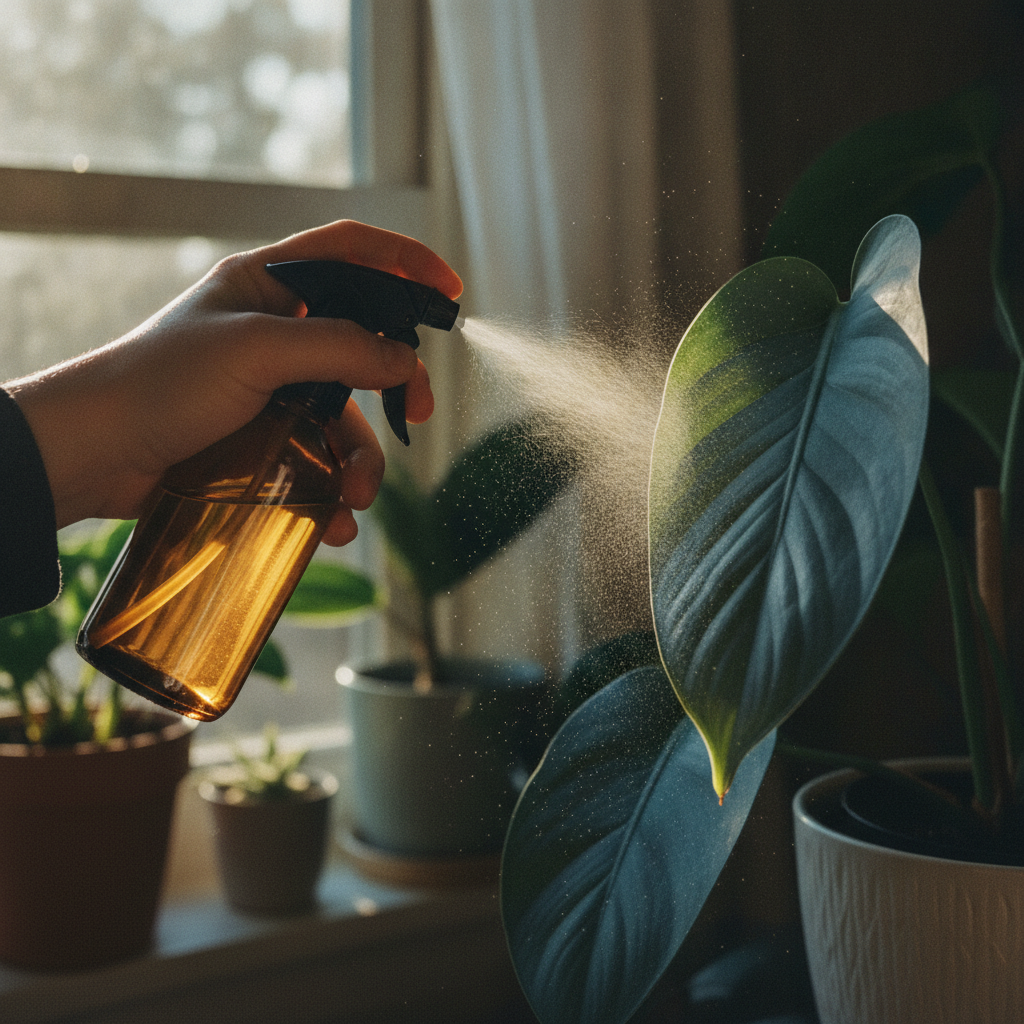
The single best defence is regular inspection. Every week or two, turn a few leaves over and check the leaf undersides and the points where leaves meet the stem, the places pests like to hide. A plant that is checked often rarely suffers a serious infestation.
Common Pests
Mealybugs (Pseudococcus species)
Small, soft-bodied insects that look like tiny tufts of white cotton wool, clustering in leaf axils and along stems where they suck sap and weaken the plant. They are the most frequent pest on pothos.
Treatment: Dab each bug directly with a cotton bud dipped in isopropyl alcohol, then follow up with neem oil or insecticidal soap every week until no new bugs appear. Isolate the plant from your other houseplants while treating.
Spider Mites (Tetranychus urticae)
Almost microscopic mites that thrive in hot, dry air. They cause fine pale stippling across the leaves and spin delicate webbing on the undersides and between stems when numerous.
Treatment: Rinse the foliage thoroughly under a shower to dislodge them, then treat with neem oil. Raising humidity makes the environment far less hospitable and helps prevent their return.
Fungus Gnats (Bradysia species)
Small black flies that hover around the soil. The adults are merely a nuisance, but their larvae live in consistently wet topsoil and can nibble fine roots, and their presence is usually a sign the soil is being kept too damp.
Treatment: Let the top of the soil dry out more thoroughly between waterings, set yellow sticky traps to catch the adults, and top-dress with a layer of grit or sand to break their breeding cycle.
Common Diseases
Root Rot (Pythium and Phytophthora species)
By far the most serious threat to a pothos, caused by waterlogged soil that suffocates the roots and lets fungal pathogens take hold. It shows as yellowing, wilting and a soft, blackening stem base despite wet soil.
Treatment: Unpot the plant, cut away all soft brown roots with sterilised scissors, and repot into fresh, dry, well-draining mix. Improve drainage and watering habits to prevent a recurrence, and take healthy cuttings as insurance if the damage is severe.
Bacterial Leaf Spot (Pseudomonas and Erwinia species)
Appears as dark, water-soaked spots, sometimes with a yellow halo, that can spread on persistently wet foliage. It is uncommon but can take hold in stagnant, overly humid conditions with poor airflow.
Treatment: Remove affected leaves promptly, avoid wetting the foliage when watering, and improve air circulation around the plant. In stubborn cases a copper-based fungicide can help bring it under control.
Pest and Disease Summary
| Pest / Disease | Identification | Treatment |
|---|---|---|
| Mealybugs | White cottony tufts in leaf axils | Alcohol swab, then neem oil weekly |
| Spider mites | Fine stippling and webbing | Rinse, neem oil, raise humidity |
| Fungus gnats | Small flies around damp soil | Dry out topsoil, sticky traps, grit layer |
| Root rot | Yellowing, soft black stem base | Trim roots, repot in dry fresh mix |
| Bacterial leaf spot | Dark water-soaked spots | Remove leaves, improve airflow, keep foliage dry |
Prevention Strategies
Prevention is overwhelmingly easier than cure. Quarantine every new plant for two to three weeks before placing it near your collection, since shop-bought plants are the commonest source of an infestation. Keep the foliage clean by wiping the leaves occasionally, which removes dust and lets you spot pests early, and avoid the chronic overwatering that underlies most pothos diseases.
A healthy, well-grown plant is also a more resistant one. Correct light, sensible watering and good airflow keep the Baltic Blue vigorous enough to fend off minor problems on its own, so most of its disease resistance comes simply from good routine care rather than any special intervention.
Pro Tip — Neem as Routine Defence: A monthly preventative spray of diluted neem oil on the leaf undersides, applied in the evening or out of direct sun to avoid leaf burn, deters most common pests before they ever establish. It is the simplest insurance policy a pothos owner can adopt.
Popular Varieties
The Baltic Blue belongs to the Epipremnum pinnatum group, a set of blue-toned, fenestrating pothos that look noticeably different from the familiar golden and marble queen types derived from Epipremnum aureum. If you are drawn to the Baltic Blue’s cool colour and split leaves, its close relatives are well worth knowing, as several share the same easy care while offering their own twist on leaf shape and colour.
The varieties below range from the widely available to the genuinely collectible. All share the Baltic Blue’s love of bright indirect light, chunky soil and a support to climb, so once you can grow one well, the rest follow naturally.
| Variety | Leaf Appearance | Light Needs | Growth Rate | Availability |
|---|---|---|---|---|
| Baltic Blue | Deep blue-green, splits early | Bright indirect | Fast | Common |
| Cebu Blue | Narrow silvery blue, metallic sheen | Bright indirect | Fast | Common |
| Albo Variegata | Blue-green marbled with creamy white | Bright indirect | Moderate | Rare |
| Skeleton Key | Slim leaves shaped like a key | Bright indirect | Moderate | Uncommon |
| Variegata | Green with golden-yellow streaks | Bright indirect | Moderate | Uncommon |
Featured Varieties
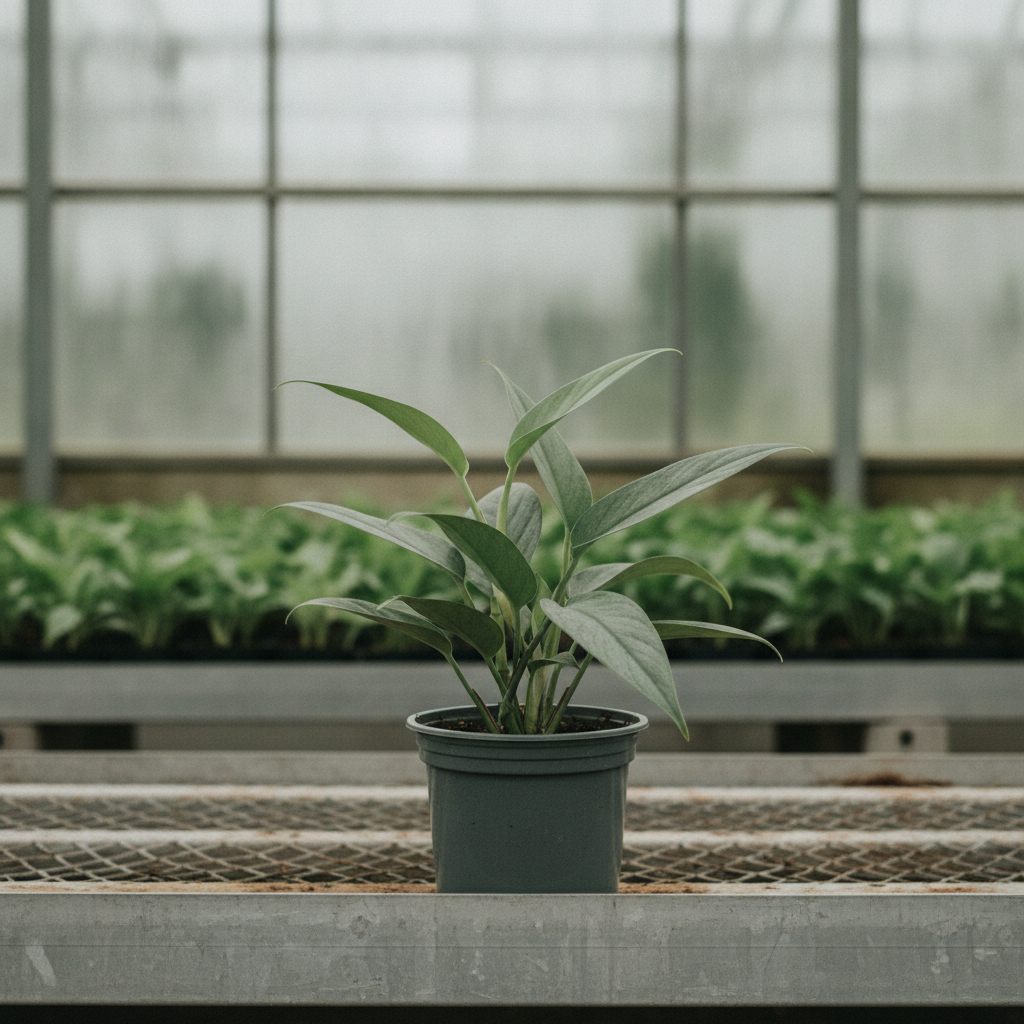
Cebu Blue
The best-known of the blue pothos, with slim, lance-shaped leaves that carry a distinct silvery, metallic sheen. Juvenile leaves are solid, but a mature, climbing Cebu Blue develops dramatic fenestrations much like the Baltic Blue.
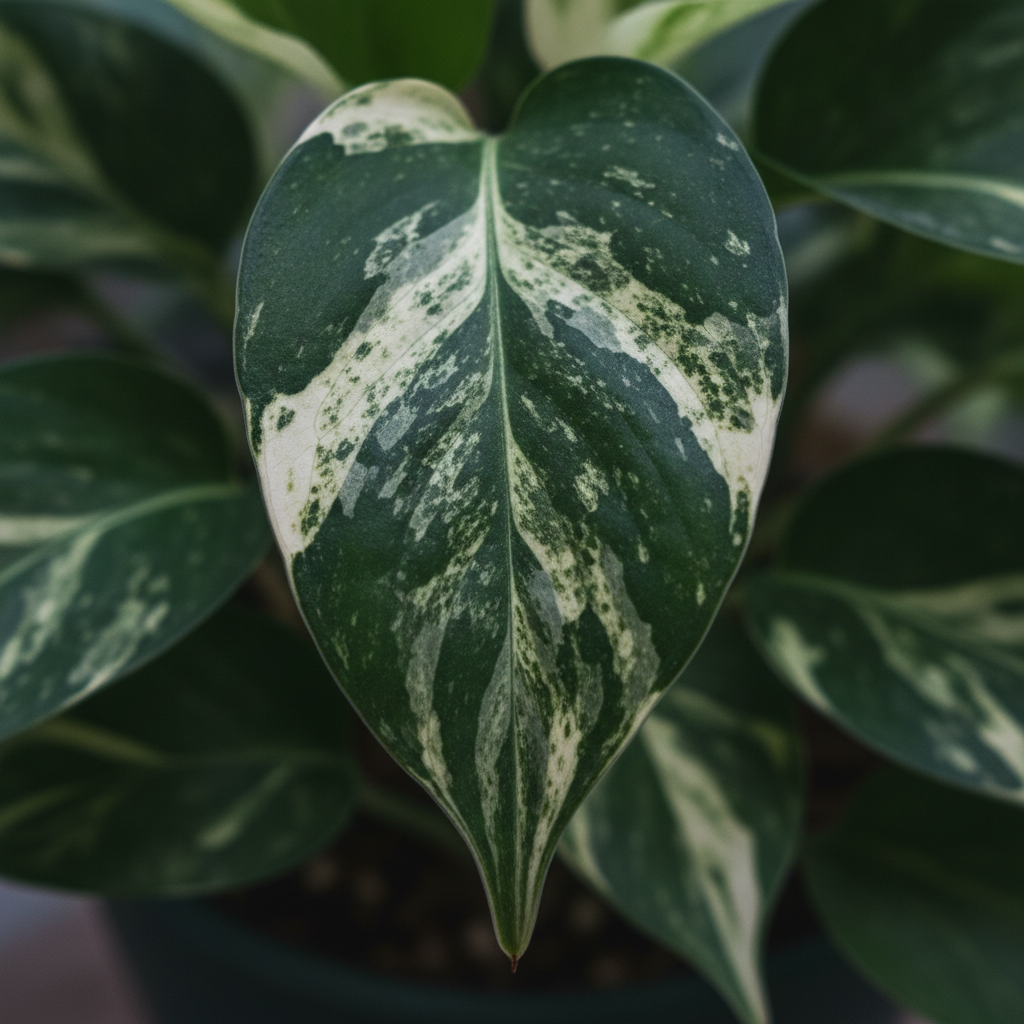
Albo Variegata
A prized collector’s form whose blue-green leaves are splashed and marbled with creamy white. The variegation reduces the leaf’s green surface, so it grows a little more slowly and needs reliably bright light to keep its white sections healthy.
Variety Profiles in Detail
Cebu Blue (Epipremnum pinnatum ‘Cebu Blue’)
Named for the island of Cebu in the Philippines, this variety is the gateway to the blue pothos world. Its narrow leaves and shimmering finish make it instantly recognisable, and it is just as forgiving as the Baltic Blue. Grow it up a moss pole if you want to coax out the large, split adult foliage that the juvenile plant only hints at.
Albo Variegata (Epipremnum pinnatum ‘Albo Variegata’)
The showpiece of the group, with bold white marbling across blue-green leaves. Because the white tissue contains no chlorophyll, this variety photosynthesises less efficiently and rewards patience and excellent light. Avoid letting it dry out completely, as the pale sections are more prone to crisping than solid green leaves.
Choosing the Right Variety for Your Space
If you want maximum impact for minimum fuss, the Baltic Blue itself remains the best all-rounder, splitting earlier than the rest and staying genuinely easy. Choose Cebu Blue if you love the metallic colour and want something widely available and affordable. Reserve the variegated forms for a bright spot and a little extra attention, since their beauty comes with slightly higher demands. Whichever you pick, give it something to climb and bright indirect light, and it will reward you with the architectural, fenestrated foliage that makes this group of pothos so special.
Frequently Asked Questions
Why isn’t my Baltic Blue Pothos developing split leaves?
Fenestration depends mainly on light and support. A Baltic Blue left to trail in medium or low light will produce smaller, flat juvenile leaves. To encourage splits, give it bright indirect light and let it climb a moss pole or trellis, which signals the plant to produce larger, mature, fenestrated foliage.
How fast does a Baltic Blue Pothos grow?
In good light and warmth during spring and summer it is a fast grower, often adding a new leaf every week or two and extending its vines noticeably over a season. Growth slows or pauses in winter, which is entirely normal.
Is the Baltic Blue Pothos toxic to pets?
Yes, mildly. It contains insoluble calcium oxalate crystals that can cause mouth irritation, drooling and digestive upset if cats or dogs chew it. It is rarely dangerous but unpleasant, so keep it out of reach of curious pets and children.
Why are the leaves on my Baltic Blue turning yellow?
The most common cause is overwatering, especially if several leaves yellow at once and the soil stays wet. Check that the soil dries between waterings and that the pot drains freely. A single old leaf yellowing now and then is simply natural ageing and nothing to worry about.
Should I grow my Baltic Blue trailing or climbing?
Both work, but they give different results. Left to trail it stays bushier with smaller leaves and a soft cascading habit. Trained up a support it produces larger, more heavily fenestrated mature leaves. If the dramatic split foliage is what you are after, give it something to climb.
How is the Baltic Blue different from a Cebu Blue?
Both are forms of Epipremnum pinnatum with blue-green foliage, but the Baltic Blue has broader, darker, more teal leaves that fenestrate earlier, while the Cebu Blue has narrower, more silvery, metallic leaves. The Baltic Blue was specifically selected for its tendency to split sooner, which is its main selling point.
How often should I repot a Baltic Blue Pothos?
Every one to two years, or when roots circle the bottom and grow out of the drainage holes. Move up just one pot size at a time and repot in spring or early summer so the plant recovers quickly into the growing season.
Can a Baltic Blue Pothos grow in water permanently?
It can survive in water for a long time, which makes it a handy way to display cuttings, but it grows more slowly and stays smaller than a soil-grown plant. For the best long-term growth and fenestration, pot rooted cuttings into a chunky aroid mix once their roots are a few centimetres long.






