
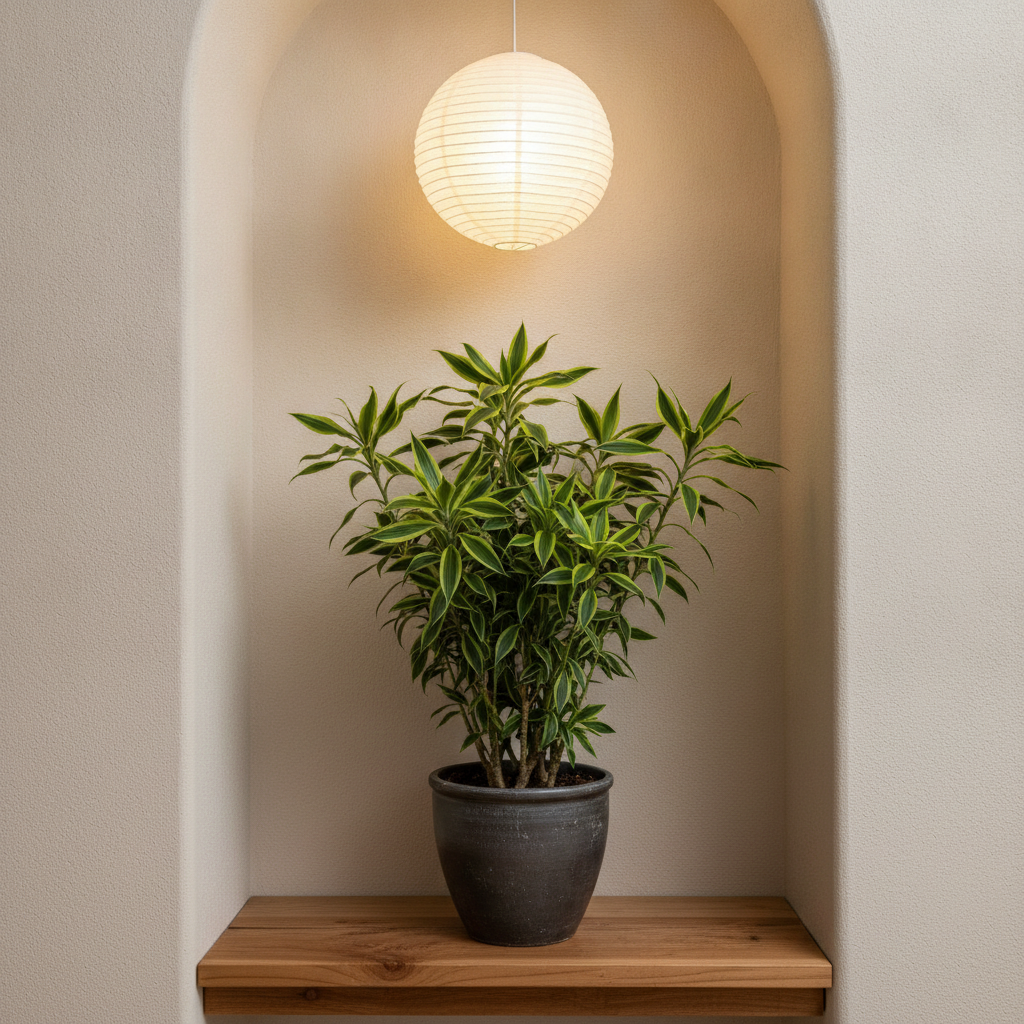
The Song of Jamaica is one of those houseplants that quietly earns its keep, holding a tidy, sculptural shape in the corner of a room while asking for remarkably little in return. It is a named cultivar of Dracaena reflexa, an evergreen shrub native to Madagascar, Mauritius and other islands of the western Indian Ocean, where it grows into a many-stemmed tree several metres tall. Indoors it stays far more compact, building up slender woody canes clothed in dense whorls of glossy, lance-shaped leaves. What sets this particular cultivar apart is the leaf colour: a deep forest green brushed through the centre and margins with soft chartreuse and lime striping, a gentler, greener counterpart to the buttery-yellow edges of its famous sibling, Song of India.
As a houseplant the Song of Jamaica has a reputation for being almost unkillable, and there is real truth to that. It tolerates low light, irregular watering and the dry air of a centrally heated room without complaint. But there is a meaningful difference between a plant that survives and one that genuinely thrives, between a thin, leggy specimen dropping its lower leaves and a lush, full column of foliage that holds its colour and keeps producing new growth. This guide covers everything you need to move from the first to the second: light, watering, soil, feeding, propagation, pest control and the wider family of Dracaena reflexa cultivars you might want to grow alongside it.
Contents
- Quick Reference
- Why Song of Jamaica Makes a Rewarding Houseplant
- Light Requirements
- Watering & Humidity
- Soil, Potting & Repotting
- Fertilising
- Propagation
- Pests & Diseases
- Popular Varieties
- Frequently Asked Questions
Quick Reference: Song of Jamaica at a Glance
| Light | Bright, indirect light is ideal. Tolerates medium and low light, though variegation fades and growth slows. Avoid harsh midday sun. |
| Watering | Water when the top 2 to 3 cm (1 inch) of soil dries out, roughly every 7 to 14 days. Reduce in winter. Never leave the roots sitting in water. |
| Temperature | 18 to 27 degrees C (65 to 80 degrees F). Keep above 13 degrees C (55 degrees F) and away from cold draughts. |
| Humidity | Average room humidity is fine, but 40 to 60 percent keeps the foliage at its best. |
| Fertiliser | Balanced liquid feed at half strength, monthly from spring to early autumn. None in winter. |
| Toxicity | Toxic to cats and dogs if eaten. Keep out of reach of pets and young children. |
Why Song of Jamaica Makes a Rewarding Houseplant
Few plants pack as much architectural presence into as little fuss as the Song of Jamaica. Each upright cane carries its leaves in a tight spiral, so a mature plant reads as a series of green pompoms stacked along bare woody stems, a look that suits modern, minimal interiors as readily as a cluttered plant-filled corner. Because it grows slowly and predictably, it holds whatever shape you give it for a long time, which means you can place it and largely forget it rather than constantly pruning to keep it in bounds.

Its tolerance is the other half of the appeal. This is a plant bred and selected from a species that copes with the variable light and seasonal dryness of island scrubland, so a missed watering or a slightly gloomy position rarely does lasting harm. It is also one of the better houseplants for filtering indoor air, a quality the genus became famous for after NASA’s clean-air research in the 1980s, although in practice you would need a great many plants to measurably change the air in a real room. The honest reason to grow it is simpler: it looks good, it lasts, and it asks very little of you. The main thing to keep in mind is that everything good about this plant depends on not overwatering it, which is the single mistake that turns a robust, long-lived specimen into a casualty.
Important — Toxicity: Like all Dracaena, the Song of Jamaica contains saponins that are toxic to cats and dogs. Eating the leaves can cause vomiting (sometimes with blood), drooling, loss of appetite and depression. Cats in particular may show dilated pupils. It is not considered seriously toxic to humans, but keep it out of reach of pets and curious toddlers, and contact a vet if an animal has chewed it.
Light Requirements
Light is the lever that controls almost everything about how the Song of Jamaica looks. The species evolved as an understorey and forest-edge shrub, dappled by the canopy above, so it is genuinely adaptable to a range of indoor conditions. That adaptability is why it is so often sold as a low-light plant, and it is true that it will not die in a dim corner. What it will do, however, is grow more slowly, space its leaves further apart and lose the crisp lime striping that makes the cultivar worth having in the first place.
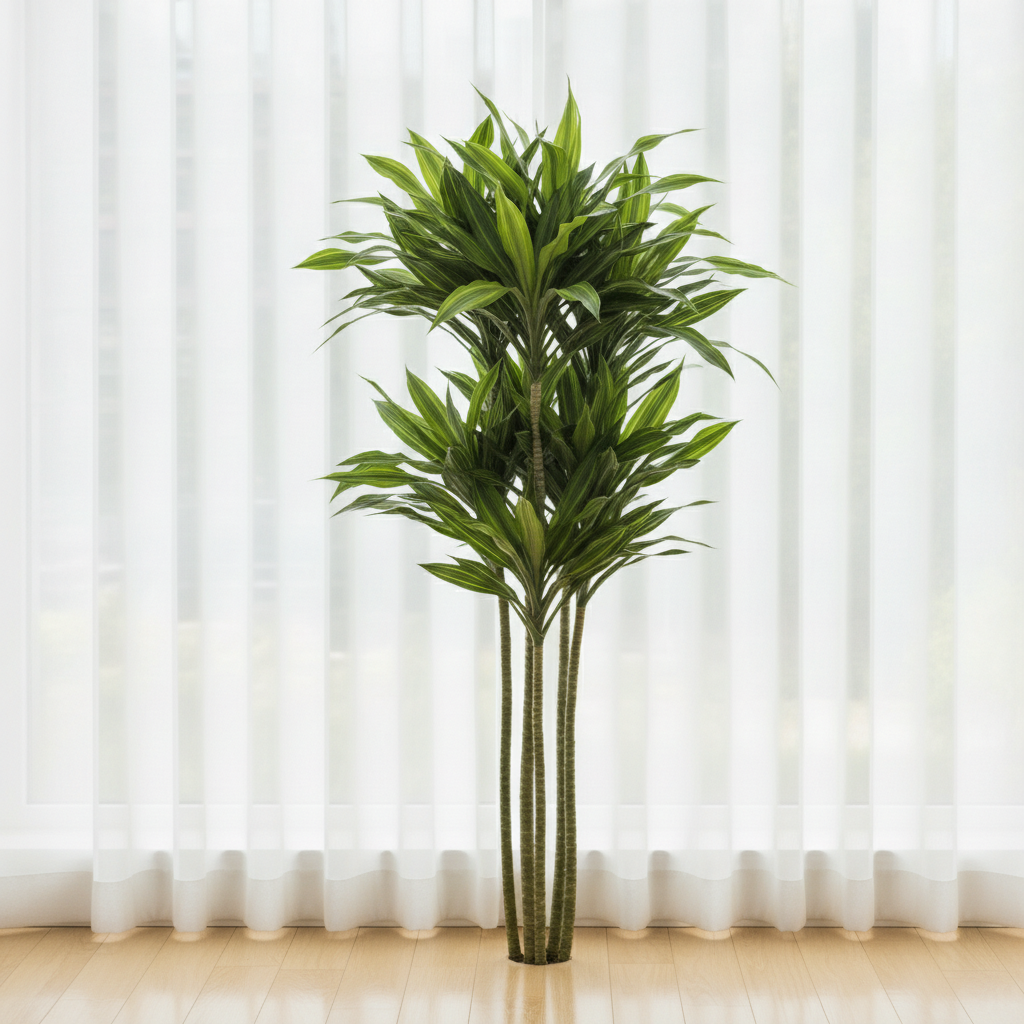
The sweet spot is bright, indirect light: a position near a window where the plant is bathed in plenty of daylight but rarely struck by direct sun for more than an hour or two. In those conditions it produces compact, well-coloured growth and stays full from top to bottom. Think of low light as survival and bright indirect light as the setting where the plant actually thrives.
Light Levels Explained
The terms used on plant labels can be vague, so it helps to translate them into rough light levels and real positions in a home. The table below shows how the Song of Jamaica responds across the spectrum, from full sun to the dim back of a room.
| Light Category | Approx. Level | Typical Location | Outcome |
|---|---|---|---|
| Direct sun | 20,000 lux and above | On an unshaded south or west sill | Risk of bleached, scorched leaves, especially behind glass |
| Bright indirect | 10,000 to 20,000 lux | Within a metre of a bright window, lightly filtered | Ideal: compact growth, strong striping |
| Medium | 5,000 to 10,000 lux | A few metres from a window, or beside a north window | Steady but slower growth, slightly muted colour |
| Low | 1,000 to 5,000 lux | Interior wall, away from windows | Survives, but leggy and pale; striping fades |
| Very low | Below 1,000 lux | Hallways, windowless rooms | Gradual decline; not sustainable long term |
Window Orientation and Placement
South-facing window: Offers the most light of any aspect in the northern hemisphere. The Song of Jamaica enjoys it provided you set it back a little or filter the midday glare with a sheer curtain, so the leaves get brightness without the direct burn of unobstructed sun.
East-facing window: Arguably the best aspect for this plant. The gentle morning sun is rarely strong enough to scorch, and the bright indirect light through the rest of the day suits it perfectly.
West-facing window: Works well, though the afternoon sun can be fierce in summer. Pull the plant back from the glass or diffuse the light during the hottest months to avoid leaf scorch.
North-facing window: Provides soft, even light all day. The Song of Jamaica will hold here, making it a sensible spot, although growth is slower and you should expect somewhat less pronounced striping than at a brighter aspect.
Pro Tip — Rotate for Even Growth: Plants lean towards their light source over time, and a tall, single-stemmed Song of Jamaica can develop a distinct tilt. Give the pot a quarter turn each time you water so every side gets its share, and the canes will stay upright and the leaf whorls even all the way round.
How Light Affects Leaf Colour
The lime-and-green striping that defines this cultivar is a form of variegation, and variegation is light-dependent. The paler stripes contain less chlorophyll, so the plant relies on its darker green tissue to power growth. In good light the contrast stays sharp and the new leaves emerge brightly marked. In dim conditions the plant compensates by producing more chlorophyll throughout the leaf, and the stripes fade towards a uniform green as it tries to capture every available photon. If your plant is losing its markings, the cause is almost always insufficient light rather than anything wrong with the plant itself.
Warning — Direct Sunlight: While the plant likes brightness, prolonged direct sun, especially when magnified through window glass in summer, can bleach the leaves and leave dry, brown scorched patches that never recover. If you are moving a plant from a shady spot into a brighter one, acclimatise it over a week or two rather than relocating it all at once.
Artificial Lighting
The Song of Jamaica responds well to supplementary lighting, which makes it a good candidate for offices, basements and rooms with few windows. A standard full-spectrum LED grow light positioned 30 to 45 cm (12 to 18 inches) above the plant, run for 10 to 12 hours a day, is more than enough to keep it healthy and well coloured. Because it is not a high-light plant, you do not need an especially powerful fixture; even a modest desk-style grow lamp will lift a dim corner into the medium-to-bright range it prefers.
Seasonal Adjustments
Light levels indoors fall dramatically between summer and winter, often by more than half, even in the same spot. Many people find their Song of Jamaica grows happily all summer then sulks once the short, grey days arrive. The simple fix is to move it closer to the window for the winter, or add a few hours of grow light, then shift it back as the days lengthen again in spring. Cleaning the window glass and the leaves themselves also makes a surprising difference to how much light actually reaches the plant during the darker months.
Watering & Humidity
If there is one skill that determines success with the Song of Jamaica, it is watering, and specifically the discipline to water less than instinct suggests. This is a plant adapted to dry spells, storing reserves in its woody canes, and it is far more often killed by kindness than by neglect. The roots need air as much as moisture, and soil kept constantly wet starves them of oxygen and invites rot.
When to Water
Forget any fixed schedule and let the soil be your guide. Push a finger into the potting mix to the second knuckle: when the top 2 to 3 cm (about an inch) feels dry, it is time to water. For most plants in average indoor conditions this works out at roughly once a week in the growing season, stretching to every 10 to 14 days, or longer, in winter. The exact interval depends on pot size, light, temperature and the time of year, which is precisely why feeling the soil beats counting days.
A useful rule with this plant is that when in doubt, wait. A Song of Jamaica that is a touch too dry will perk up within hours of a drink, but one that has been sitting wet for weeks may already be losing roots by the time the symptoms show above the soil. Drooping or soft, yellowing lower leaves are the plant’s way of telling you something is wrong, and with this species the wrong is usually too much water rather than too little.
Pro Tip — Lift the Pot: A freshly watered pot is noticeably heavy; a dry one feels surprisingly light. After a few weeks you will be able to judge whether your plant needs water just by lifting it, a quick check that works even when the surface of the soil is misleading.
How to Water Correctly
- Check the soil first and only water if the top few centimetres are dry.
- Water at the base of the plant, pouring slowly and evenly over the whole surface of the mix rather than in one spot.
- Keep going until water runs freely from the drainage holes, which ensures the entire root ball is moistened, not just the top layer.
- Let the pot drain completely for several minutes in a sink or over a tray.
- Empty the saucer or cache pot so the plant is never left standing in collected water.
- Wait until the soil dries to the right depth again before the next watering, rather than topping up little and often.
Signs of Overwatering vs. Underwatering
| Symptom | Overwatering | Underwatering |
|---|---|---|
| Leaf colour | Lower leaves yellow and drop, often several at once | Leaf tips and edges turn brown and crisp |
| Leaf texture | Soft, limp, sometimes translucent | Dry, papery, curling |
| Soil | Stays wet for days, may smell sour | Pulls away from the pot edge, bone dry |
| Roots | Brown, mushy, foul-smelling | Dry but firm and pale |
| Stem base | Soft or spongy near the soil line | Firm, perhaps slightly wrinkled |
Warning — Root Rot: Soft, browning leaves combined with a sour smell from the soil point to root rot, the most common killer of this plant. Act quickly: remove the plant from its pot, cut away all black or mushy roots with sterile scissors, repot into fresh, well-draining mix and water sparingly until it recovers. A plant caught early can bounce back; one left sitting in sodden soil rarely does.
Humidity Requirements
Coming from humid island habitats, the Song of Jamaica appreciates moisture in the air, but it is forgiving enough to cope with the drier conditions of a typical home. Average indoor humidity of 30 to 40 percent will keep it alive and looking reasonable, while lifting that towards 50 or 60 percent brings out fuller, glossier foliage and reduces the brown leaf tips that dry air can cause.
The most common humidity-related complaint is browning leaf tips, which tends to appear in winter when central heating dries the air to desert levels. It is rarely a serious problem, more a cosmetic one, but it is a useful signal that the surrounding air has become very dry.
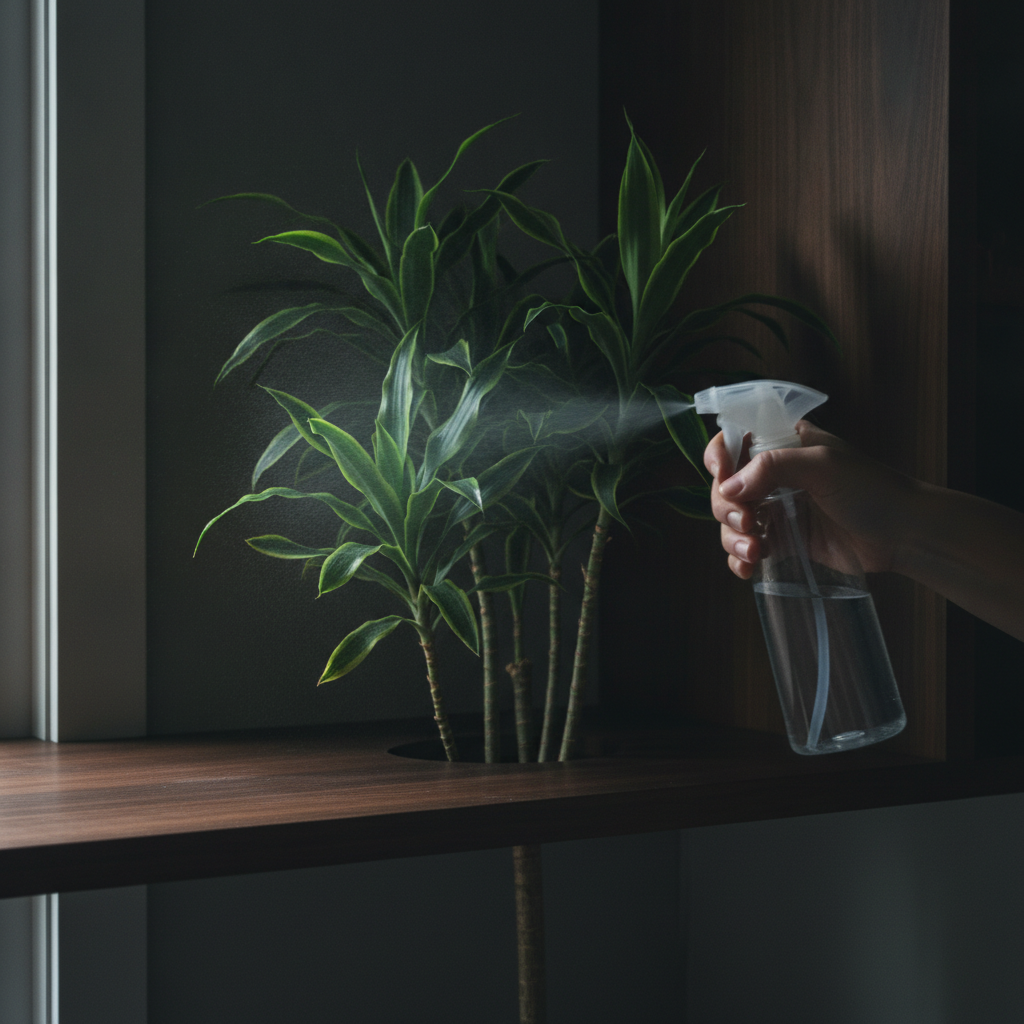
If you want to raise humidity, the most reliable method is a small room humidifier. Grouping plants together also helps, since they release moisture and create a more humid microclimate, as does standing the pot on a tray of pebbles topped up with water, keeping the pot base above the waterline. Misting is pleasant and freshens the leaves but does little for ambient humidity beyond the few minutes the droplets last, so treat it as a top-up rather than a solution.
Water Quality
This is the detail that catches many growers out. Dracaena are notably sensitive to fluoride and to a lesser extent chlorine and dissolved salts, all of which are common in tap water. Over time these build up in the leaf tissue and cause the characteristic brown, scorched tips and margins that plague so many otherwise healthy plants in this genus. If your tap water is fluoridated and your plant suffers from persistent tip burn despite correct watering, switch to filtered water, distilled water or collected rainwater. Letting tap water stand uncovered overnight allows some chlorine to dissipate but does nothing for fluoride, so filtered or rainwater remains the better long-term choice.
Soil, Potting & Repotting
Because overwatering is the chief danger with this plant, the soil you choose is really a drainage decision. The goal is a mix that holds enough moisture to keep the plant hydrated between waterings while letting excess water run straight through, so the roots are never left sitting in a soggy mass. A heavy, water-retentive compost used straight from the bag is the wrong starting point; it stays wet far too long for a plant that likes to dry out.
Ideal Soil Composition
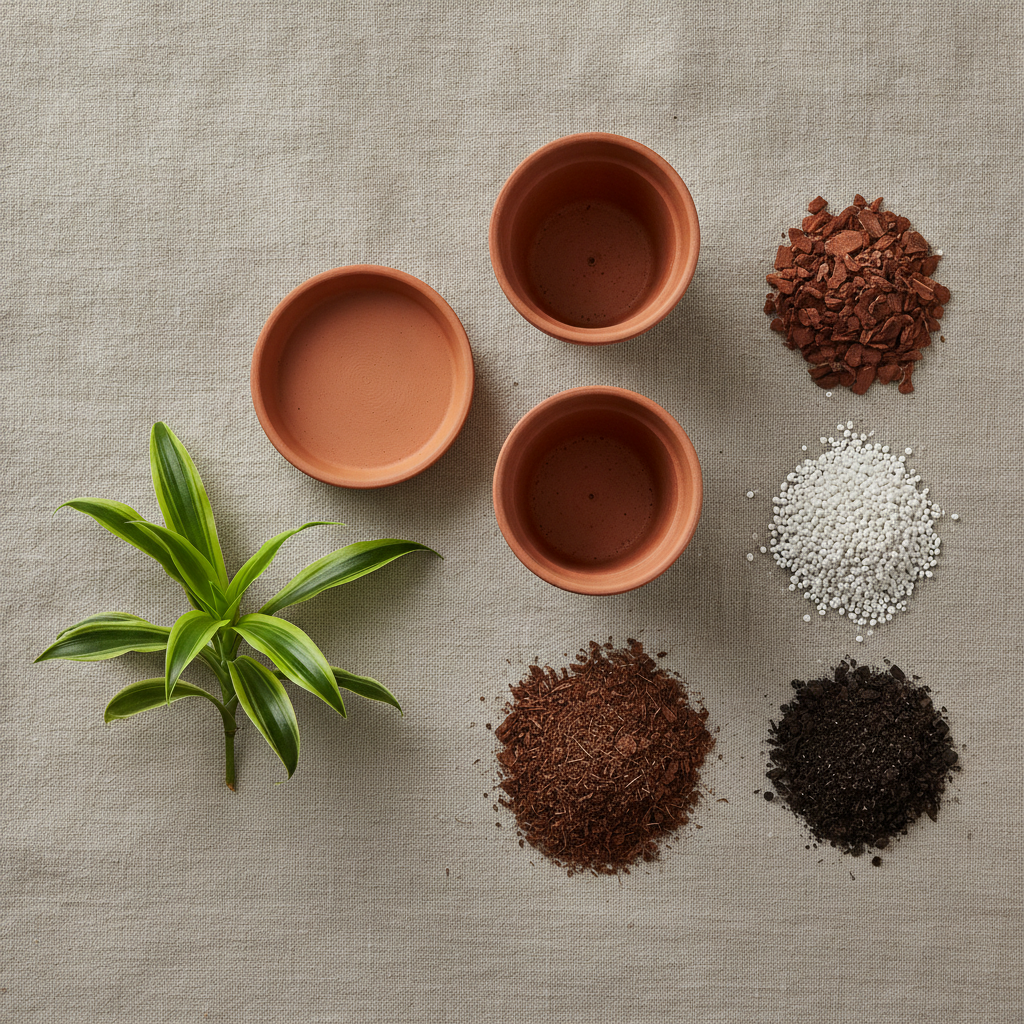
A good blend for the Song of Jamaica starts with a quality peat-free houseplant compost as the base, then opens it up with chunky, free-draining materials. The aim is an airy, structured mix rather than a dense one. The table below shows a reliable recipe.
| Component | Proportion | Function |
|---|---|---|
| Houseplant compost or coco coir | 2 parts | Holds moisture and nutrients, forms the body of the mix |
| Perlite or pumice | 1 part | Creates air pockets and sharp drainage |
| Orchid bark or fine wood chips | 1 part | Adds structure and stops the mix compacting over time |
| Worm castings or compost | Small handful | Slow, gentle nutrition for steady growth |
The Song of Jamaica prefers a slightly acidic to neutral soil, in the range of pH 6.0 to 6.5, which most standard houseplant composts fall comfortably within. You do not need to test or adjust pH for this plant under normal circumstances; getting the drainage right matters far more.
Pro Tip — Quick Mix Recipe: If you want a fast, no-measuring approach, take any bag of standard houseplant compost and stir through roughly one-third its volume of perlite. That single addition transforms a too-heavy compost into something a Dracaena will be happy in, and it is the easiest upgrade you can make for almost any drought-tolerant houseplant.
Choosing the Right Pot
The container matters more than people expect, because pot choice directly affects how quickly the soil dries and therefore how forgiving your watering can be.
Drainage holes are non-negotiable. Whatever pot you choose, it must have holes in the base. A decorative cache pot with no drainage is fine as an outer cover, but the plant itself should sit in an inner pot that drains freely, and you should never let water collect in the bottom of the outer container.
Pot material: Terracotta is an excellent choice for this plant because it is porous and wicks moisture out of the soil, helping the mix dry between waterings and giving you a wider margin against overwatering. Plastic and glazed ceramic hold moisture longer, which is not a problem as long as you adjust your watering to suit, but they are less forgiving if you tend towards a heavy hand.
Pot size: Choose a pot only 2 to 5 cm (1 to 2 inches) wider than the current root ball. An oversized pot holds a large volume of soil that stays wet long after the roots have taken what they need, which is exactly the condition that leads to rot. This plant is also perfectly content to be a little root-bound, so there is no rush to size up.
When to Repot
The Song of Jamaica is a slow grower with a modest root system, so it needs repotting only every two to three years. The signs that it is time include roots creeping out of the drainage holes or circling visibly at the soil surface, water running straight through without wetting the mix, or growth that has stalled despite good care. Spring, at the start of the active growing season, is the best time to do it, giving the plant the whole summer to settle in. Even when it is not due a larger pot, refreshing the top few centimetres of soil each year keeps the mix from becoming tired and compacted.
How to Repot: Step-by-Step
- Water the plant a day or two beforehand so the root ball is moist and holds together, which reduces stress.
- Ease the plant out of its pot, supporting the base of the canes, and tease apart any tightly circling roots with your fingers.
- Inspect the roots and trim away anything brown, soft or dead with clean, sharp scissors.
- Add a layer of fresh mix to the base of the new pot, then position the plant so it sits at the same depth it did before.
- Fill around the sides with fresh mix, pressing gently to remove large air gaps without compacting the soil hard.
- Water thoroughly to settle the soil, then let the pot drain fully.
- Return the plant to its usual spot and hold off on feeding for four to six weeks while new roots establish.
Warning — Transplant Shock: Do not be alarmed if your plant sulks for a week or two after repotting, perhaps dropping a leaf or looking a little limp. This is normal transplant shock as the roots adjust. Keep it out of direct sun, water carefully and resist the urge to feed; it will recover on its own without intervention.
Fertilising
The Song of Jamaica is not a heavy feeder. In the wild it grows in lean island soils, and indoors it builds new growth slowly, so it needs only modest, occasional feeding to keep its colour rich and its canes producing fresh leaves. Far from being a plant you need to fuss over with constant fertiliser, it is one where restraint pays off.
Overfeeding is genuinely harmful here. Excess fertiliser salts accumulate in the soil and burn the sensitive root tips, compounding the leaf-tip browning this genus is already prone to from fluoride and hard water. When it comes to feeding this plant, less really is more.
Understanding Plant Nutrients
A balanced fertiliser supplies the three macronutrients plants use in the largest quantities, shown on the label as the N-P-K ratio, alongside the secondary nutrients and trace elements that keep foliage healthy. For a foliage plant like this one, nitrogen is the most important of the three. The table below summarises what each does and how a shortage shows.
| Nutrient | Symbol | Primary Function | Deficiency Symptoms |
|---|---|---|---|
| Nitrogen | N | Drives leaf and stem growth, builds chlorophyll | Pale, yellowing older leaves; weak growth |
| Phosphorus | P | Supports roots and overall energy transfer | Stunted growth, dull foliage |
| Potassium | K | Regulates water use and disease resistance | Browning leaf edges, weak stems |
| Calcium | Ca | Builds strong cell walls and new growth | Distorted, weak new leaves |
| Magnesium | Mg | Central atom of the chlorophyll molecule | Yellowing between the veins of older leaves |
| Iron | Fe | Needed to make chlorophyll | Yellowing between the veins of young leaves |
Types of Fertiliser
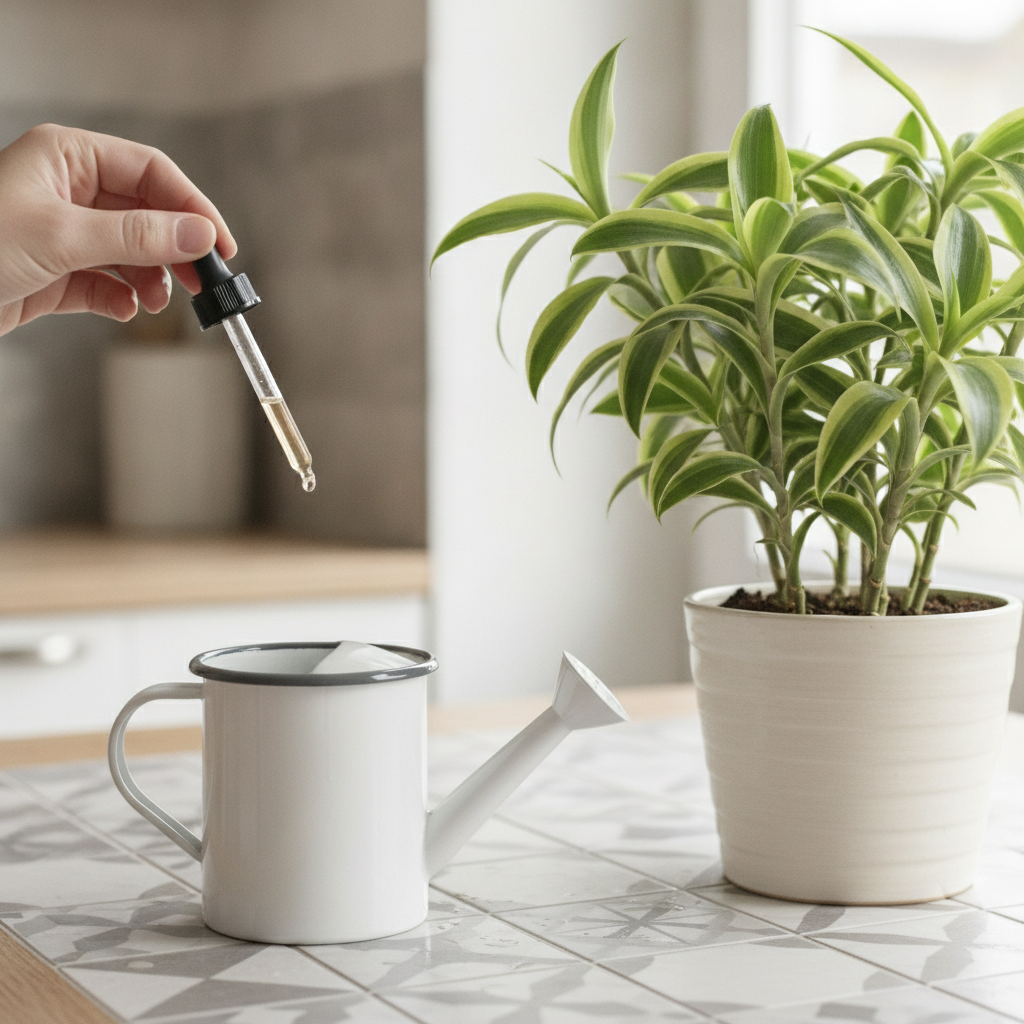
Liquid fertilisers: The most practical choice for this plant. Diluted in your watering can, a balanced liquid feed gives you precise control over strength and timing, which matters for a salt-sensitive Dracaena. Always mix it weaker than the label recommends.
Slow-release granular: Pellets mixed into the soil release nutrients gradually over several months. Convenient, but they offer less control, and on a light feeder like this one they can easily lead to a slow build-up of salts, so use sparingly if at all.
Organic fertilisers: Worm castings, diluted seaweed extract and similar gentle organic feeds nourish the plant slowly and improve the soil, with very little risk of burning the roots. They are a forgiving option for anyone nervous about overfeeding.
Feeding Schedule
Feed once a month from spring through to early autumn, the period of active growth, using a balanced liquid fertiliser at half the recommended strength. Stop feeding entirely through late autumn and winter, when the plant is barely growing and cannot use the nutrients; fertilising a dormant plant simply leaves salts to accumulate in the soil. A monthly feed across roughly six months of the year is all this plant asks.
Pro Tip — Half Strength is Plenty: Most houseplant fertiliser labels are written with hungry, fast-growing plants in mind. For the Song of Jamaica, mixing to half the stated dose gives all the nutrition it needs while keeping salt levels low. If you ever see a white crust forming on the soil surface or pot rim, that is salt build-up telling you to ease off and flush the soil.
How to Fertilise
- Make sure the soil is already slightly moist; feeding into bone-dry soil can burn the roots.
- Dilute a balanced liquid fertiliser to half the recommended strength in your watering can.
- Apply the solution evenly over the soil until it just begins to drain from the bottom.
- Empty any liquid that collects in the saucer so the roots are not left sitting in concentrated feed.
- Every few months, water thoroughly with plain water to flush accumulated salts out of the pot.
Warning — Salt Build-Up: A white, crusty deposit on the soil or around the pot rim, combined with browning leaf tips, signals that fertiliser salts have accumulated to harmful levels. Flush the pot by running plenty of plain water through it several times, letting it drain fully between each pass, and scale back your feeding afterwards.
Propagation
One of the quiet pleasures of growing a Song of Jamaica is how easily it propagates from cuttings. The same woody canes that give the plant its structure can be cut into sections, each of which is capable of producing roots and shoots, so a single leggy plant can become several full ones. It is also the standard way to rejuvenate a specimen that has grown tall and bare at the base.
The best time to propagate is spring or early summer, when the plant is in active growth and cuttings root fastest. All you really need are clean, sharp secateurs, a glass of water or a pot of free-draining mix, and a little patience, since this is a slower rooter than soft-stemmed plants like pothos.
Understanding Canes and Nodes
The key to propagating any Dracaena is understanding the cane. Each woody stem is marked with faint rings, which are leaf scars and dormant growth points known as nodes. When you cut a cane, new shoots emerge from the nodes near the top of each section, and new roots form from the base. This is why even a bare length of stem with no leaves at all can be persuaded to grow, provided it has nodes and is planted the right way up. Tip cuttings, which keep the leafy crown attached, root most reliably and look complete from the start, while plain cane sections take longer but let you multiply a plant many times over.
Tip Cuttings in Water: Step-by-Step
Rooting a leafy tip cutting in water is the most beginner-friendly method, with the bonus that you can watch the roots develop through the glass.
- Using clean secateurs, cut a healthy stem tip 10 to 15 cm (4 to 6 inches) long, just below a node.
- Strip the leaves from the lower third of the cutting so no foliage will sit underwater.
- Place the cutting in a glass of clean, room-temperature water, ideally filtered or rainwater, with at least one bare node submerged.
- Stand it in bright, indirect light and change the water every three to four days to keep it fresh and oxygenated.
- Be patient: roots usually appear in three to six weeks, sometimes longer.
- Once the roots reach 3 to 5 cm (1 to 2 inches), pot the cutting up into a small container of free-draining mix and keep it lightly moist while it adjusts.
Pro Tip — Don’t Discard the Stump: When you take a tip cutting from a tall plant, the parent stump left behind will usually sprout one or more new shoots from just below the cut within a couple of months. So a single act of pruning gives you a rooted new plant and a bushier original, which is how growers keep these plants full and compact.
Cane Cuttings in Soil: Step-by-Step
If you are cutting back a long, bare cane, you can divide the leafless section into several pieces and root them directly in soil. This is the classic method for multiplying a Dracaena.
- Cut the bare cane into sections 8 to 12 cm (3 to 5 inches) long, each with at least two visible nodes.
- Keep track of which end was lower, because cane sections must be planted the same way up they grew; an upside-down cutting will not root.
- Let the cut ends dry and callus over for a day in a shaded spot, which reduces the risk of rot.
- Insert the lower end of each section a few centimetres into a pot of moist, free-draining mix.
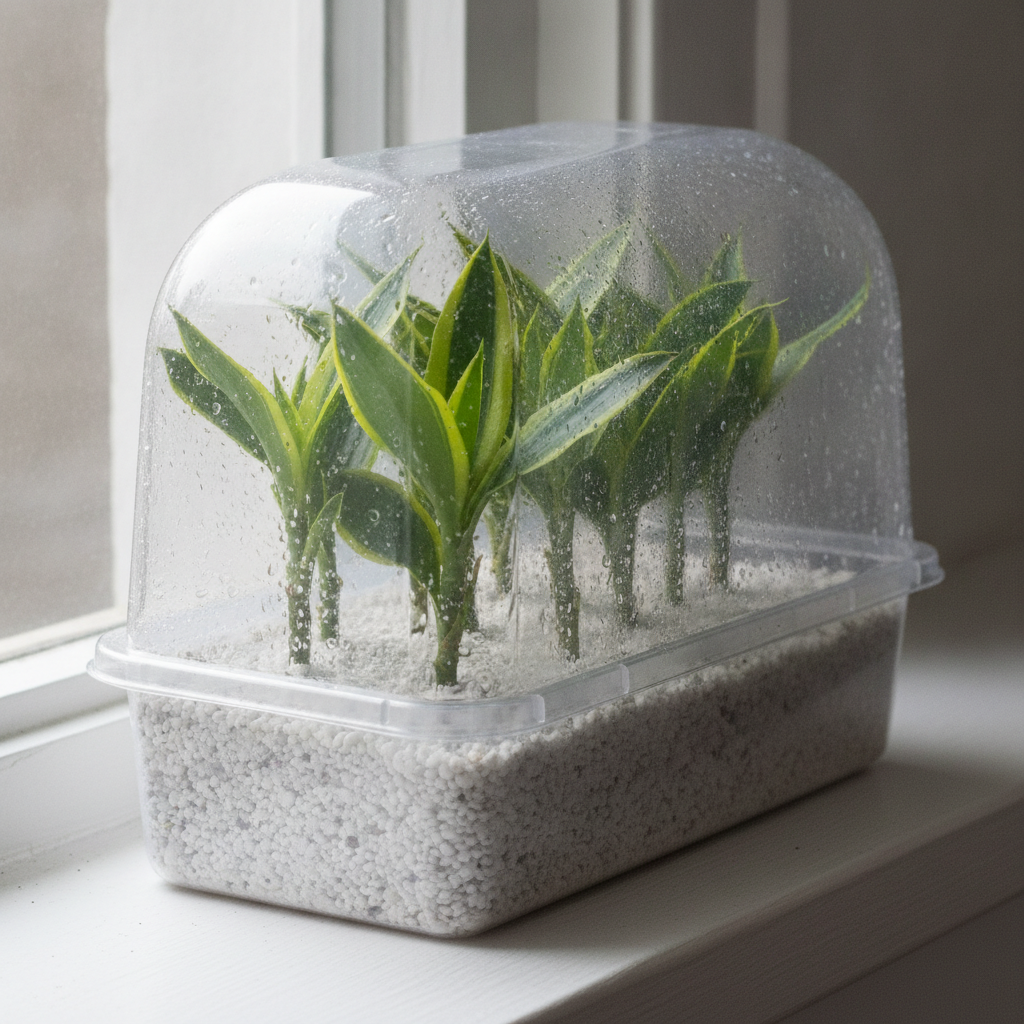
- Keep the soil lightly moist and the pot in warm, bright, indirect light, covering loosely with a clear bag to raise humidity if the air is dry.
- New shoots should emerge from the upper nodes within four to eight weeks, confirming the cutting has rooted below.
Troubleshooting Propagation
| Problem | Likely Cause | Solution |
|---|---|---|
| Cutting rots in water or soil | Too cold, dirty water, or stem left wet without callusing | Use fresh water, warmer conditions, and let soil cuttings callus first |
| No roots after many weeks | Low temperature or insufficient light slowing growth | Move somewhere warmer and brighter; this species is simply slow |
| Cane section never shoots | Planted upside down, or no viable nodes | Replant the right way up; ensure each section has clear nodes |
| Leaves shrivel on the cutting | Moisture loss before roots can supply water | Raise humidity with a loose clear cover until rooting |
Pests & Diseases
The Song of Jamaica is a tough plant that is rarely troubled by pests when grown well, but no houseplant is entirely immune. The pests it does attract are the usual indoor suspects, and they are far easier to deal with if you catch them early, before a few stragglers become a full infestation.
The single best defence is observation. Make a habit of looking over your plant whenever you water, paying particular attention to the undersides of leaves and the tight crevices where the leaves meet the stem, which is where most pests like to hide. A new plant brought into the home is the most common source of trouble, so isolate any newcomer for a couple of weeks before letting it join your collection.
Common Pests
Spider Mites (Tetranychus urticae)
The most likely pest on a Dracaena, especially in the warm, dry air of a heated room. Spider mites are almost too small to see, but they leave fine pale stippling across the leaves and, in bad cases, delicate webbing in the leaf joints. The foliage takes on a dull, dusty, faded look.
Treatment: Rinse the plant thoroughly in the shower to knock back the population, then treat with insecticidal soap or neem oil, repeating every few days for two to three weeks to break the breeding cycle. Raising humidity makes the environment far less hospitable to them.
Mealybugs (Pseudococcus species)
These show up as small, white, cottony tufts tucked into the leaf axils and along the stems. They feed on sap, weakening the plant and leaving behind a sticky residue called honeydew that can turn black with sooty mould.
Treatment: Dab each insect directly with a cotton bud dipped in isopropyl alcohol, which kills it on contact, then follow up with neem oil or insecticidal soap to catch any you missed. Check weekly, as they are persistent.
Scale (Coccus species)
Scale insects look like small brown or tan bumps clinging to the stems and the undersides of leaves, often mistaken for part of the plant itself. Like mealybugs they suck sap and excrete honeydew, and a heavy infestation saps the plant’s vigour.
Treatment: Scrape or rub the scales off gently with a fingernail or an alcohol-soaked cotton bud, then treat with neem oil or horticultural oil to smother any crawlers. Several rounds are usually needed.
Thrips (Thrips species)
Thrips are tiny, slender insects that rasp at the leaf surface, leaving silvery, streaky scarring and small black specks of excrement. They can spread quickly and are among the more frustrating pests to clear.
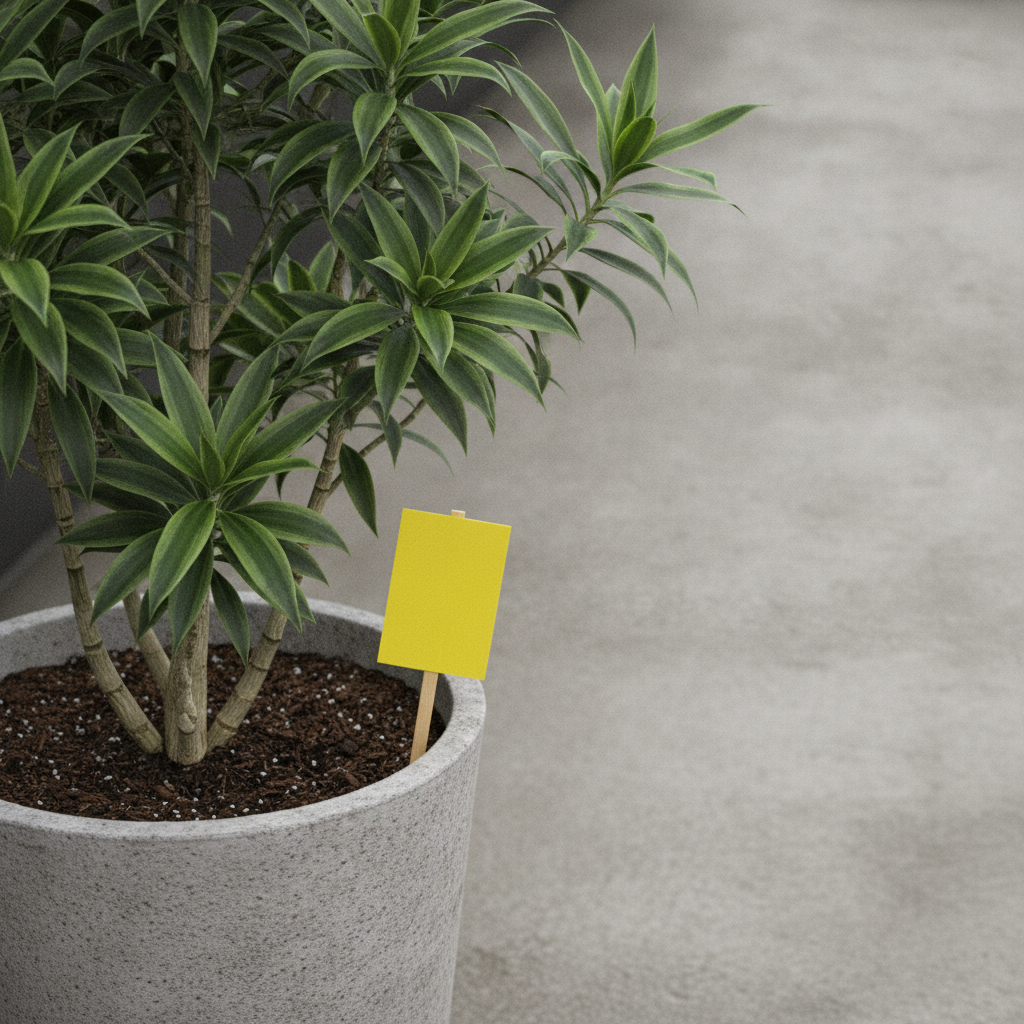
Treatment: Isolate the plant, prune the worst-affected leaves, and treat repeatedly with neem oil or insecticidal soap. Blue sticky traps help catch the winged adults and monitor whether the problem is receding.
Common Diseases
Root Rot (Pythium and Fusarium species)
By far the most serious threat to this plant, root rot is caused not by a single organism but by waterlogged soil that suffocates the roots and lets opportunistic fungi take hold. The first signs above ground are yellowing, drooping lower leaves and a soft, sometimes smelly base.
Treatment: Unpot the plant, cut away every black or mushy root, repot into fresh free-draining mix and water only sparingly until it recovers. Prevention through careful watering is far more reliable than any cure.
Leaf Spot (Fusarium and bacterial pathogens)
Brown or reddish spots, sometimes ringed with a yellow halo, can appear on the leaves when the foliage stays wet for long periods or the air is stagnant. It is more a cosmetic and containable problem than a fatal one.
Treatment: Remove affected leaves, avoid wetting the foliage when you water, and improve air circulation around the plant. A copper-based fungicide can help in stubborn cases.
Fluoride Toxicity (physiological disorder)
Not a disease in the infectious sense, but the most common cause of the brown leaf tips that affect this plant. It results from a build-up of fluoride, and to a lesser extent salts, absorbed from tap water and certain fertilisers.
Treatment: Switch to filtered, distilled or rainwater, flush the soil periodically to clear accumulated salts, and avoid superphosphate fertilisers, which are high in fluoride. Existing brown tips will not turn green again but new growth should come in clean.
Pest and Disease Summary
| Pest / Disease | Identification | Treatment |
|---|---|---|
| Spider mites | Fine stippling, dusty leaves, webbing in joints | Rinse, neem or insecticidal soap, raise humidity |
| Mealybugs | White cottony tufts in leaf axils | Alcohol on a cotton bud, then neem oil |
| Scale | Brown bumps on stems and leaf undersides | Scrape off, treat with horticultural oil |
| Thrips | Silvery scarring and tiny black specks | Prune, repeat neem treatments, sticky traps |
| Root rot | Yellow drooping leaves, soft smelly base | Trim rotten roots, repot, water sparingly |
| Leaf spot | Brown spots with yellow halos | Remove leaves, improve airflow, keep foliage dry |
| Fluoride tip burn | Brown, crisp leaf tips and margins | Use filtered or rainwater, flush salts |
Prevention Strategies
A healthy, well-grown plant is naturally more resistant to both pests and disease, so the best prevention is simply good culture: the right light, careful watering, free-draining soil and restrained feeding. Stressed plants, especially those weakened by overwatering or sitting in a dark corner, are the ones that pests find and exploit.
Beyond good care, a few habits go a long way. Wipe the leaves occasionally to remove dust and reveal any early pest activity, quarantine new plants before introducing them, avoid letting water sit in the saucer, and keep the air moving rather than stagnant. Together these small routines prevent the great majority of problems before they start.
Pro Tip — Neem Oil as Routine Defence: A monthly wipe-down or light spray with diluted neem oil during the warmer months acts as both a deterrent and an early treatment, keeping the leaves glossy and discouraging mites and scale before they establish. Apply it in the evening or out of direct sun to avoid leaf marking.
Popular Varieties
The Song of Jamaica is one cultivar within a wider and rather confusing family of Dracaena reflexa selections, most of which are grown for variations in leaf colour and form. Because the species naturally varies and growers have long selected the best forms, the names you see in shops are not always applied consistently, but a handful of recognisable cultivars dominate the trade.
All of these share the same easy-going care, so you can mix and match them freely. Choosing between them is largely a matter of which leaf colouring appeals to you and how much light you can offer, since the more heavily variegated forms need brighter conditions to keep their markings crisp.
| Variety | Leaf Appearance | Light Needs | Growth Rate | Availability |
|---|---|---|---|---|
| Song of Jamaica | Deep green with soft lime and chartreuse striping | Bright indirect | Slow | Common |
| Song of India | Deep green with broad creamy-yellow margins | Bright indirect | Slow | Very common |
| Anita | Fine, narrow, all-green needle-like leaves | Medium to bright | Slow to moderate | Common |
| Variegata | Green leaves with crisp white-cream stripes | Bright indirect | Slow | Occasional |
| Riki | Broad green leaves with central yellow band | Bright indirect | Slow | Occasional |
| Plain species (Dracaena reflexa) | Uniform glossy mid-green | Tolerant, medium to bright | Slow | Common |
Featured Varieties
Song of India
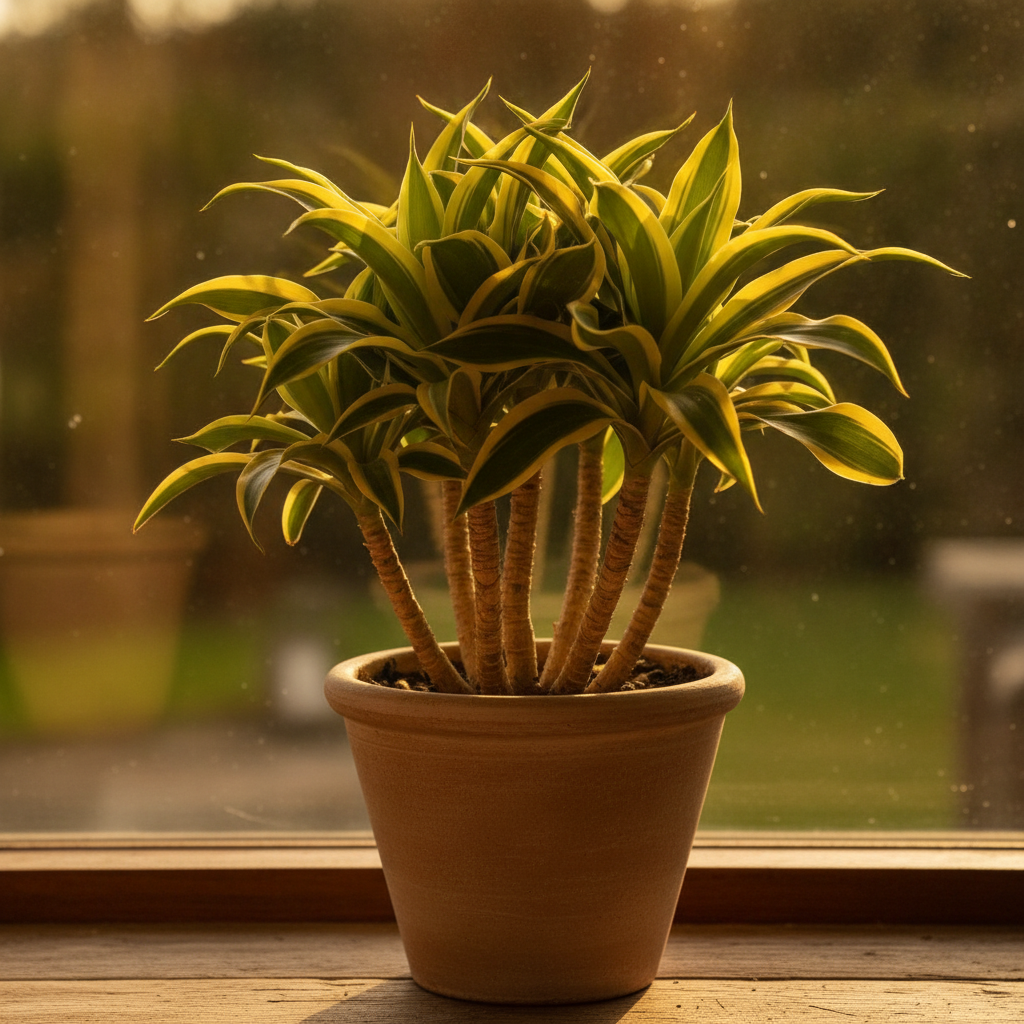
The best known member of the family and the closest relative to Song of Jamaica. Its leaves carry broad, buttery-yellow margins around a green centre, giving it a brighter, sunnier look. Care is identical, and the two make handsome companions, one warm and golden, the other cool and limey.
Anita
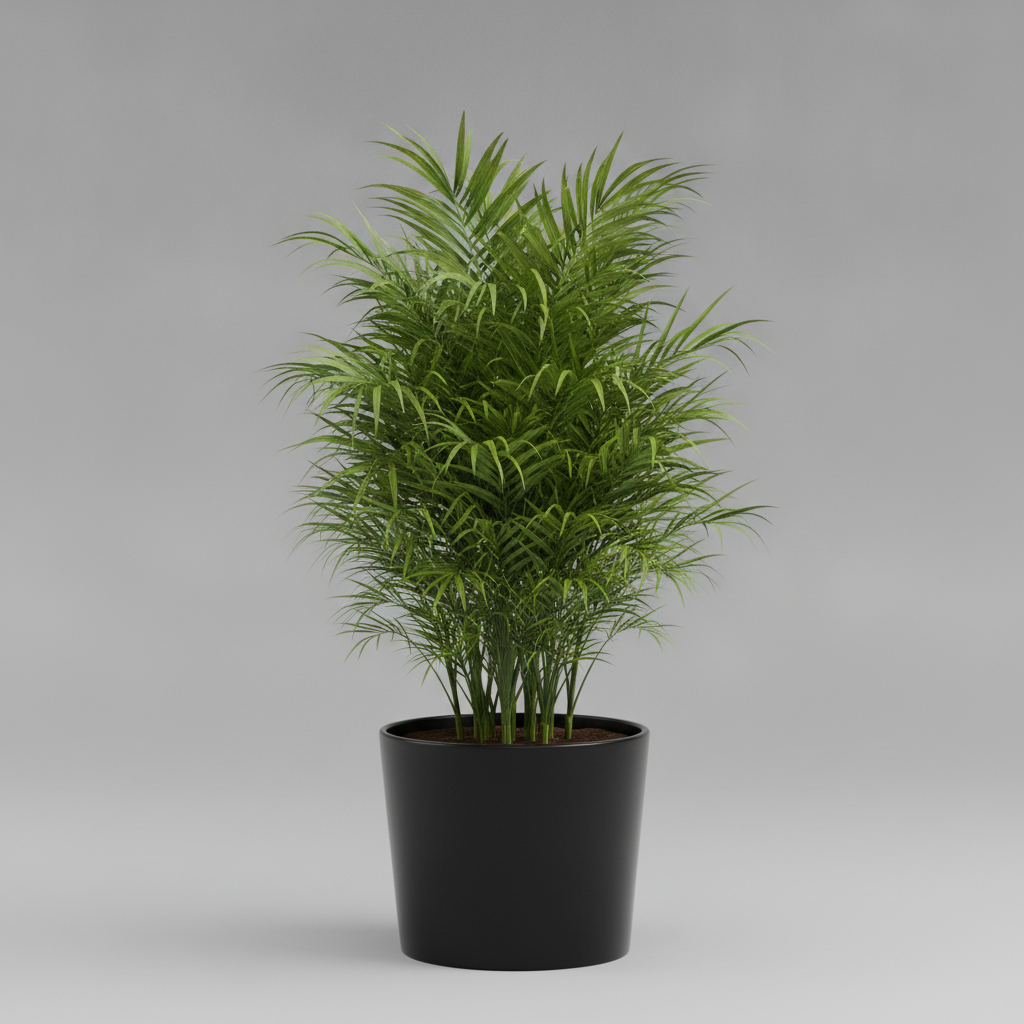
A distinct, all-green cultivar with much finer, narrower leaves than the striped forms, giving it a soft, feathery, almost grassy silhouette. Because it lacks variegation it copes a little better with lower light, and its delicate texture makes a pleasing contrast to the bolder, broader-leaved cultivars.
Variety Profiles in Detail
Song of India (Dracaena reflexa ‘Variegata’)
Sold in vast numbers worldwide, Song of India is so widespread that many people meet it before they ever encounter the plain species. Its golden-edged leaves bring warmth and light to a room, and it has exactly the same tolerant constitution as Song of Jamaica. The yellow variegation does demand decent light to stay vivid, fading towards green in shade, so give it a bright indirect position to see it at its best.
Anita (Dracaena reflexa ‘Anita’)
Anita is the choice for anyone who finds the broad-leaved Dracaena a little stiff. Its slender, pointed leaves cluster thickly around the stems to create a fountain of fine green foliage, a softer and more contemporary look. It is sometimes confused with the unrelated Dracaena ‘Anita’ sold for similar effect, but the reflexa form keeps the characteristic dense, whorled growth of its parent species.
Plain Species (Dracaena reflexa)
The unvariegated wild form, with uniform glossy green leaves, is the most shade-tolerant of the lot and the toughest of all. Without variegation to maintain, it grows steadily in conditions that would leave its striped relatives looking pale and drawn, making it the safest pick for a darker room or a less attentive owner.
Choosing the Right Variety for Your Space
Let your light guide the choice. If you have a bright, indirect spot, the variegated cultivars, Song of Jamaica, Song of India and the white-striped Variegata, will reward you with their full colouring. For a dimmer corner, lean towards Anita or the plain species, which hold up far better in low light. Whichever you choose, the underlying plant is the same dependable, slow-growing, low-maintenance Dracaena reflexa, so you are really just selecting a leaf pattern to suit your room.
Frequently Asked Questions
Why are the tips of my Song of Jamaica turning brown?
Brown leaf tips are the most common complaint with this plant and usually point to one of three causes: a build-up of fluoride and salts from tap water, very dry air, or inconsistent watering. Switch to filtered or rainwater, raise the humidity a little, and water more evenly. Existing brown tips will not turn green again, but new growth should come in clean once the cause is addressed.
How often should I water my Song of Jamaica?
There is no fixed schedule. Water when the top 2 to 3 cm (about an inch) of soil has dried out, which in practice tends to be every 7 to 14 days in the growing season and less often in winter. Always check the soil with your finger rather than watering by the calendar, and when in doubt, wait a few more days.
Why is my plant losing its lime striping?
Fading variegation is almost always a sign of too little light. The pale stripes contain less chlorophyll, so in dim conditions the plant produces more green tissue to survive, and the markings blur. Move it somewhere brighter, though still out of direct sun, and new leaves should emerge with sharper contrast.
Is the Song of Jamaica safe for cats and dogs?
No. Like all Dracaena, it contains saponins that are toxic to cats and dogs, and eating the leaves can cause vomiting, drooling and loss of appetite. It is not dangerous to handle, but keep it out of reach of pets and young children, and consult a vet if an animal has chewed on it.
Why is my Song of Jamaica dropping its lower leaves?
Some loss of the oldest, lowest leaves is natural as the plant grows taller and reveals more of its woody cane, which is part of its character. However, sudden or heavy yellowing and dropping of lower leaves usually signals overwatering. Check that the soil is draining freely and that the plant is not sitting in water, and let the mix dry out more between waterings.
How big does a Song of Jamaica get indoors?
Indoors it is a slow grower that typically reaches 1.2 to 1.8 metres (4 to 6 feet) over many years, though it can be kept smaller and bushier with periodic pruning. In its native habitat the parent species can become a small tree several metres tall, but you will never see that scale in a pot.
Can I grow Song of Jamaica in low light?
It will survive in low light, which is why it is often recommended for difficult spots, but it will not thrive there. Expect slower growth, more spaced-out leaves and faded striping. If a brighter position is not possible, a modest grow light will keep it looking far better through the year.
How do I make my Song of Jamaica bushier?
Pruning is the key. Cutting back a tall cane encourages it to branch, producing two or more new shoots from below the cut and a fuller overall shape. You can root the removed tip as a new plant at the same time, so a single trim both improves the parent and gives you a free cutting.
Is Song of Jamaica the same as Song of India?
They are different cultivars of the same species, Dracaena reflexa, and need identical care. The difference is purely in the leaves: Song of India has broad creamy-yellow margins, while Song of Jamaica has a greener, lime-and-chartreuse striping. Grown side by side, they make a complementary pair.






