
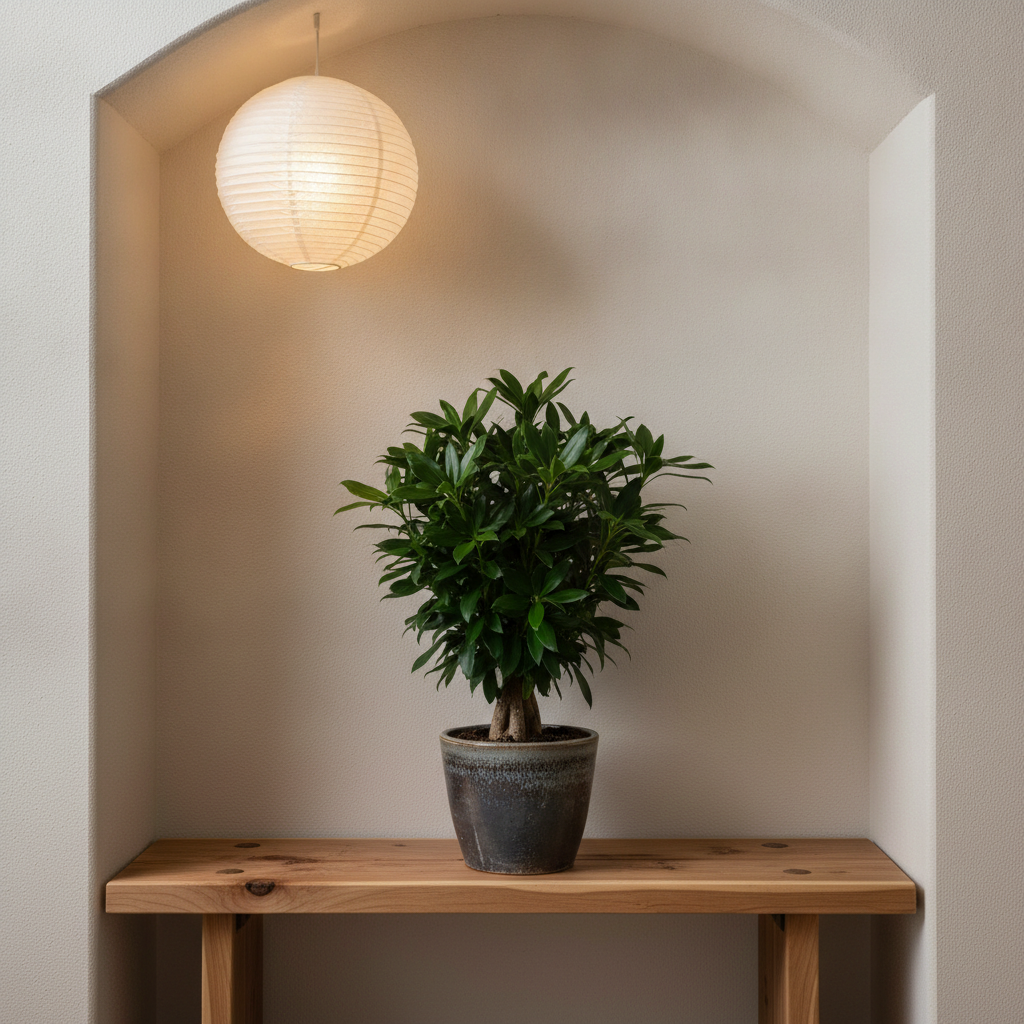
The Janet Craig Compacta is the stocky, slow-motion cousin of one of the most reliable foliage plants ever brought indoors. Botanically it is Dracaena fragrans ‘Compacta’, a dwarf cultivar of the broad-leaved ‘Janet Craig’ dracaena (older references still file it under Dracaena deremensis). Where the parent plant throws long, strappy leaves on an open cane, the Compacta packs short, glossy, dark green blades into tight whorls around a thick woody stem, giving it the squat, layered silhouette that earns it the occasional nickname of pineapple dracaena. It descends from species native to the tropical forests of West and Central Africa, and like the rest of its genus it has spent decades proving itself in offices, hotel lobbies and living rooms where lesser plants would sulk.
That reputation for toughness is well earned, but there is a difference between a Compacta that merely survives in a dim corner and one that genuinely thrives, holding its leaves glossy, deep green and densely stacked. This guide walks through every part of its care, from reading light levels correctly to watering a plant that resents wet feet, choosing a free-draining mix, feeding it lightly, propagating from cane cuttings, and heading off the handful of pests and the tap-water sensitivity that account for most of its problems. Master those and the Compacta becomes one of the most forgiving long-term residents you can own.
Contents
- Quick Reference
- Why Janet Craig Compacta Makes a Great Houseplant
- Light Requirements
- Watering & Humidity
- Soil, Potting & Repotting
- Fertilising
- Propagation
- Pests & Diseases
- Popular Varieties
- Frequently Asked Questions
Quick Reference: Janet Craig Compacta at a Glance
| Light | Low to medium indirect light; tolerates dim corners but grows fastest in bright, filtered light. No direct sun. |
| Watering | Allow the top 5cm (2in) of soil to dry out; water sparingly. Far happier slightly dry than soggy. |
| Temperature | 18 to 24C (65 to 75F). Avoid anything below 12C (54F) and keep away from cold draughts. |
| Humidity | Average household humidity is fine; 40 to 50 percent is ideal. |
| Fertiliser | Dilute balanced feed once a month in spring and summer; none in autumn and winter. |
| Toxicity | Toxic to cats and dogs if eaten. Mildly irritating to humans. |
Why Janet Craig Compacta Makes a Great Houseplant
Few plants ask so little and give so much. The Janet Craig Compacta tolerates the kind of low light that defeats most foliage plants, copes with irregular watering, and rarely outgrows its space thanks to its painfully slow rate of growth. Its compact, architectural form suits a desk, a shelf or a side table just as well as a floor pot, and the dense rosettes of dark, lacquered leaves read as deliberately styled even when the plant has been entirely ignored for weeks. For anyone furnishing a north-facing room, a windowless office or a first apartment, it is close to foolproof.
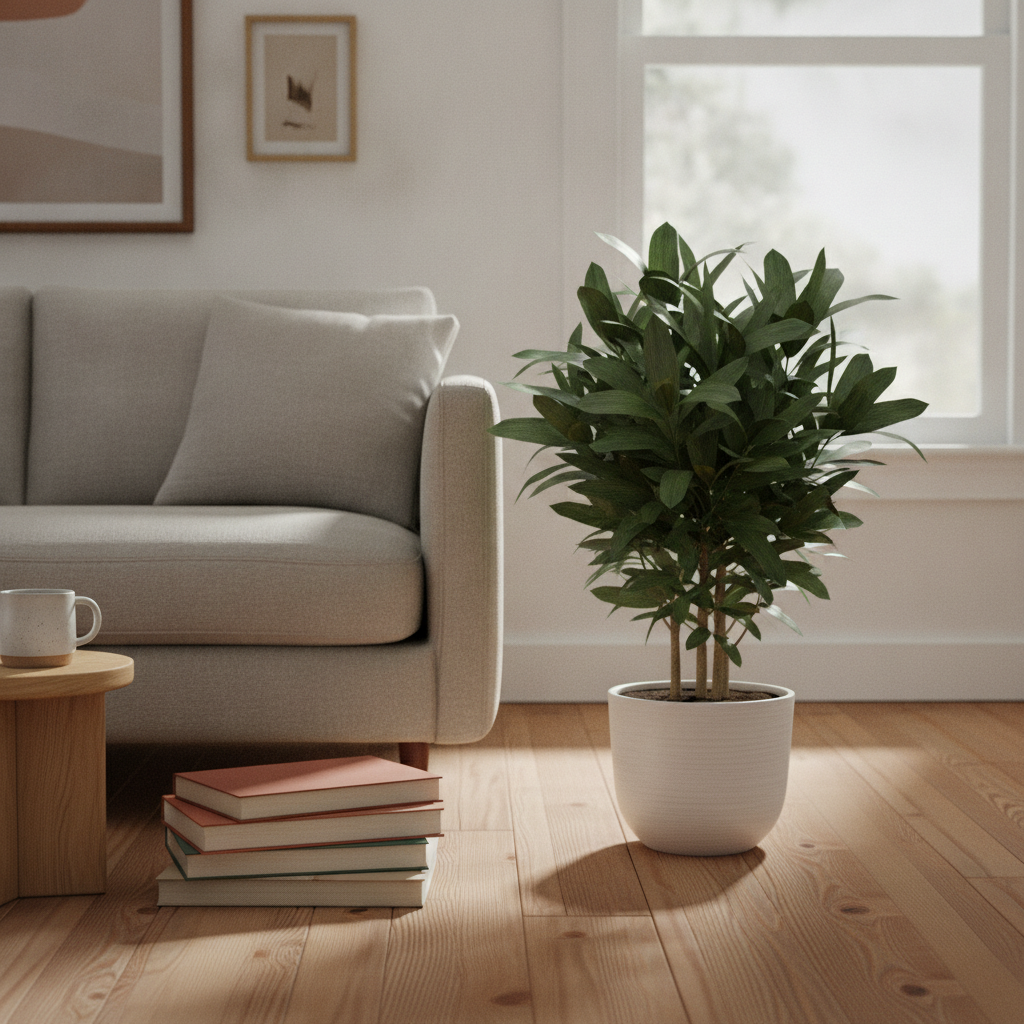
Beyond looks, the Compacta brings practical benefits. Like other dracaenas it was among the plants studied for foliage that helps trap airborne dust and contributes modestly to indoor greenery, and its upright, non-trailing habit means it stays tidy without pruning or staking. It is long-lived, often persisting for a decade or more, and it develops a thicker, more characterful cane with age. The trade-off for all this resilience is sensitivity to two things: overwatering and the fluoride and salts found in much tap water. Get those right, covered in detail below, and there is very little left to go wrong.
Important — Toxicity: All dracaenas, including the Janet Craig Compacta, contain saponins that are toxic to cats and dogs. Ingestion can cause vomiting (sometimes with blood), drooling, loss of appetite and, in cats, dilated pupils. Keep the plant out of reach of pets and curious children, and contact a vet if you suspect your animal has chewed the leaves.
Light Requirements
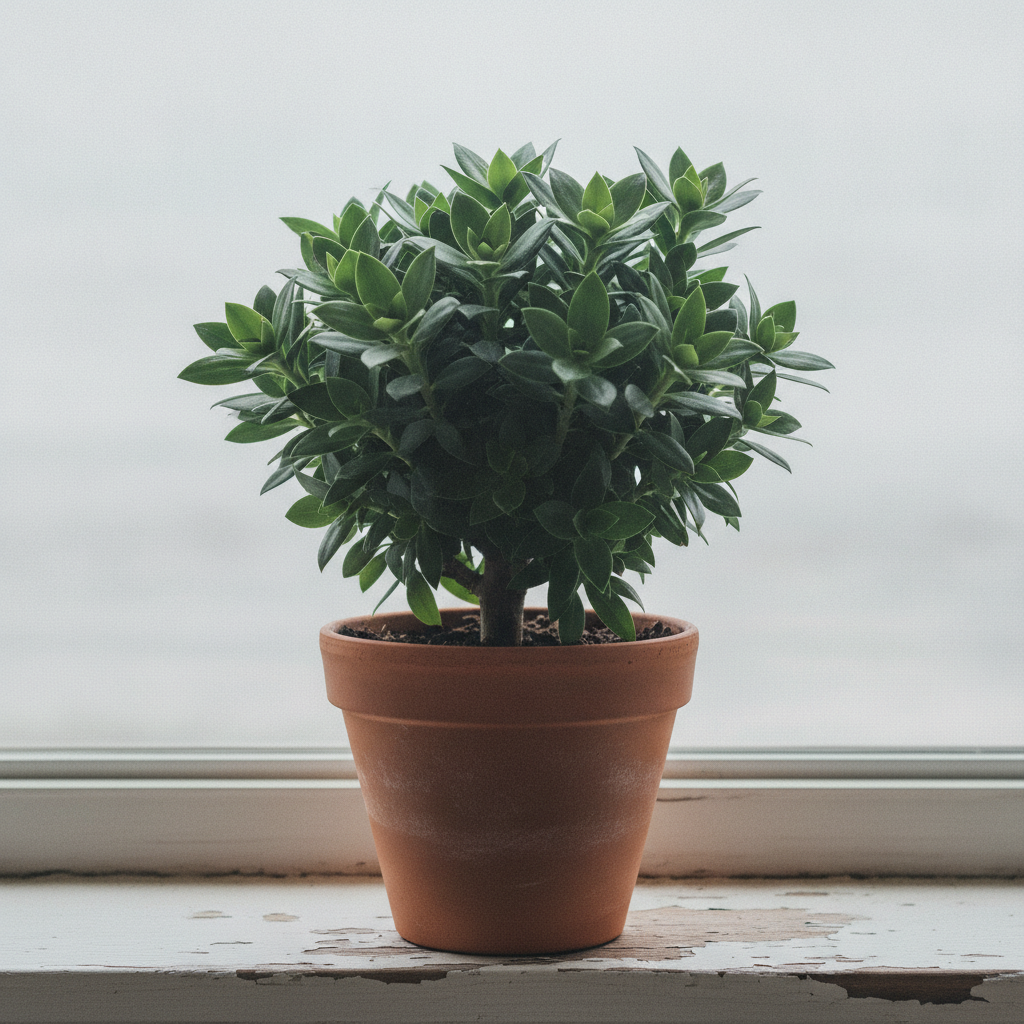
The single most useful thing to understand about the Janet Craig Compacta is that “tolerates low light” is not the same as “prefers low light”. In its forest understorey origins the plant evolved to make do with the dappled scraps of light filtering through a canopy, which is exactly why it survives in dim interiors. But survival and vigour are different states. In genuinely low light the Compacta simply slows almost to a standstill, holding its existing leaves without producing many new ones.
The ideal is bright but indirect light: a position near a window where the plant receives plenty of ambient brightness without the sun’s rays ever falling directly on the leaves. In these conditions it produces fuller rosettes, richer colour and noticeably faster growth, while still keeping the relaxed, unhurried pace that makes it so easy to live with.
Light Levels Explained
Indoor light is far dimmer than most people assume, and the human eye adjusts so well that a spot which feels bright may deliver only a fraction of what a plant needs. The table below sets out how the Compacta responds across the usual range of indoor light levels.
| Light Category | Approx. Level | Typical Location | Outcome |
|---|---|---|---|
| Direct sun | 20,000 lux and above | On an unshaded south-facing sill | Leaves scorch, bleach and develop dry brown patches |
| Bright indirect | 10,000 to 20,000 lux | Near, but not in, a bright window | Best growth, deepest colour, densest rosettes |
| Medium | 5,000 to 10,000 lux | A metre or two back from a window | Steady, healthy growth at a moderate pace |
| Low | 1,000 to 5,000 lux | Interior corners, north rooms | Survives well, very slow growth |
| Very low | Below 1,000 lux | Windowless rooms, deep hallways | Gradual decline; leaf loss over months |
Window Orientation and Placement
South-facing window: The brightest exposure and potentially too intense if the plant sits directly in the path of the sun. Position it a couple of metres back, or filter the light with a sheer curtain, and the Compacta will be very happy.
East-facing window: An excellent choice. Gentle morning sun is rarely strong enough to scorch, and the plant can sit close to the glass to enjoy the bright early light before it softens through the day.
West-facing window: Also good, though the afternoon sun here is hotter than the morning equivalent. Keep the plant slightly back from a west window to avoid the most intense late-day rays in summer.
North-facing window: The classic dracaena position. North light is soft, even and never harsh, and while growth will be slower here than at a brighter aspect, the Compacta keeps its colour and form reliably.
Pro Tip — Rotate for Symmetry: Because the Compacta grows towards its light source, rosettes on the shaded side thin out over time. Give the pot a quarter turn each time you water to keep the plant growing evenly on all sides and preserve its tidy, balanced shape.
How Light Affects Leaf Colour and Density
The standard Compacta is solid dark green, so it does not lose variegation in low light the way a patterned plant would. What it loses instead is density and depth of colour. In good light the leaves are short, tightly packed and almost lacquered; in poor light new growth emerges more spaced out, paler and floppier, and the whole plant takes on a stretched, sparse look as it reaches for brightness. If your Compacta starts producing thin, widely separated leaves, it is asking to be moved closer to a window.
Warning — Direct Sunlight: Despite being undemanding, the Compacta scorches readily in direct sun. Bleached patches, crisp brown edges and a faded, washed-out cast all signal too much direct light. The damage is permanent on affected leaves, so move a scorched plant out of the sun’s path promptly.
Artificial Lighting
The Compacta is one of the best candidates for office and windowless settings because it responds well to artificial light. A standard LED or fluorescent fitting running for ten to twelve hours a day is enough to keep it healthy, and a dedicated full-spectrum grow light positioned 30 to 45cm (12 to 18in) above the plant will support active growth in a room with no natural light at all. This adaptability is a large part of why the plant became a fixture in commercial interiors.
Seasonal Adjustments
Light levels indoors drop sharply through autumn and winter as the sun sits lower and days shorten. A spot that was perfectly bright in July can become marginal by December, so it is worth moving the Compacta closer to its window for the darker months and then easing it back in spring. Because growth naturally slows in winter, the plant also needs far less water during this period, a point covered in the next section.
Watering & Humidity
If light determines how fast a Janet Craig Compacta grows, watering determines whether it lives or dies. This is a plant that stores moisture in its thick cane and roots, and it is far better equipped to ride out a dry spell than to cope with constantly wet soil. The overwhelming majority of Compactas that fail do so from kindness, watered too often by owners who mistake the plant’s slow pace for thirst.
When to Water
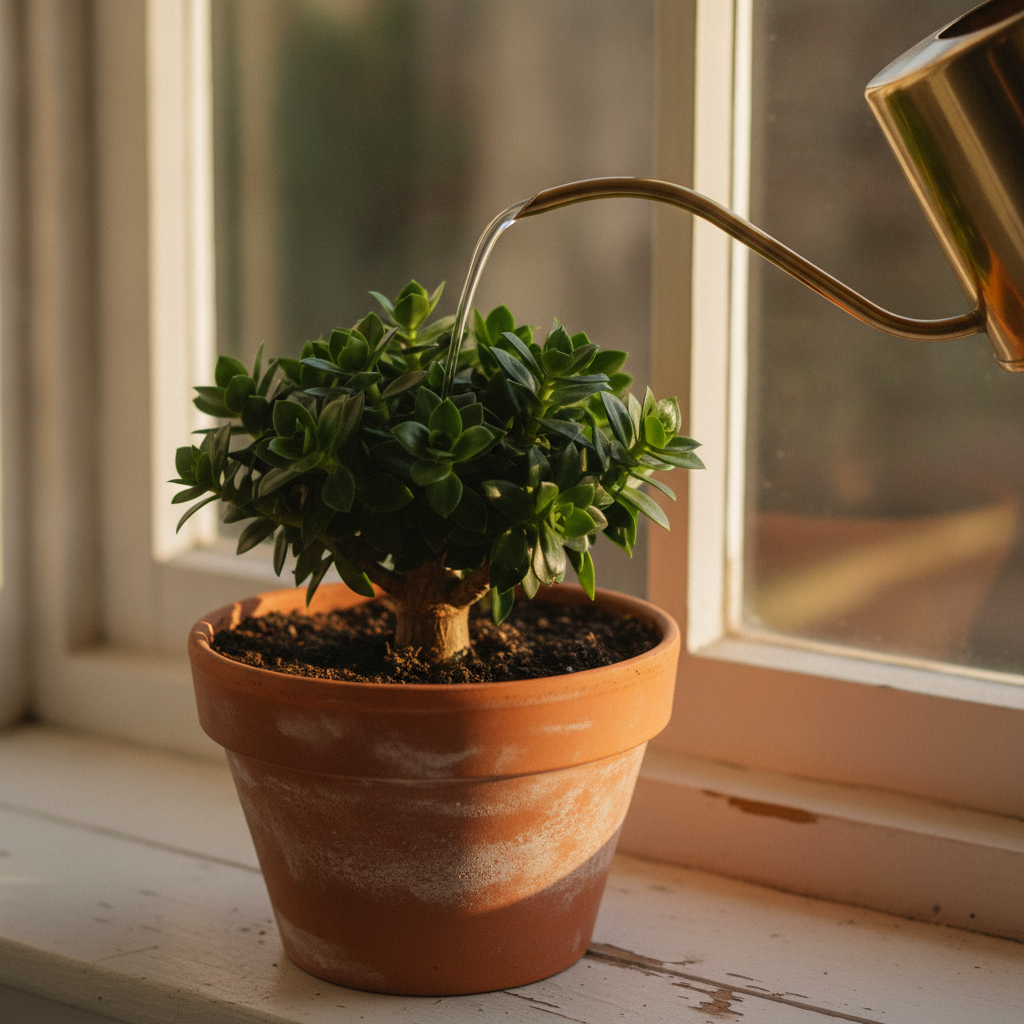
The reliable rule is to let the top 5cm (2in) of soil dry out completely before watering again. Push a finger into the mix, or lift the pot to feel its weight: a recently watered pot is noticeably heavy, while one ready for water feels light. In a bright spot during summer this might mean watering every seven to ten days, while in a dim corner in winter the same plant may need water only once every three or four weeks.
Rather than watering on a fixed calendar, learn to read the plant and its soil. Frequency depends on light, temperature, pot size and the time of year, all of which change through the seasons. The dry-soil test removes the guesswork and is by far the safest approach for a plant this sensitive to excess moisture.
Pro Tip — The Weight Test: Lift the pot right after a thorough watering and again a week later to learn the difference in heft. Once you can judge moisture by weight alone you will rarely overwater, since a pot that still feels heavy clearly does not need topping up.
How to Water Correctly
- Check that the top 5cm (2in) of soil is dry before you begin.
- Water slowly and evenly across the surface using room-temperature water, ideally filtered or left to stand (see Water Quality below).
- Keep going until water runs freely from the drainage holes, ensuring the entire root ball is moistened.
- Let the pot drain completely for several minutes.
- Empty the saucer or cachepot so the plant never sits in standing water.
- Wait until the soil dries to the correct depth again before the next watering.
Signs of Overwatering vs. Underwatering
| Symptom | Overwatering | Underwatering |
|---|---|---|
| Leaf colour | Yellowing, often starting low and spreading | Dull green fading to pale, with browning tips |
| Leaf texture | Soft, limp, sometimes translucent | Dry, crisp and curling at the edges |
| Soil | Stays wet for days, may smell sour | Bone dry, pulling away from the pot sides |
| Roots | Brown, mushy and foul-smelling | Dry and brittle but otherwise intact |
| Stem base | Soft or spongy where it meets the soil | Firm, occasionally a little shrivelled |
Warning — Root Rot: Persistently wet soil suffocates roots and invites the fungal rot that is the leading killer of this plant. A soft, darkening stem base and a sour smell from the soil are emergencies. Unpot the plant immediately, cut away any brown mushy roots with sterile scissors, and repot into fresh, dry, free-draining mix.
Humidity Requirements
One of the Compacta’s great conveniences is that it is comfortable in ordinary household humidity. While it originates in humid tropical forests, it adapts readily to the drier air of a typical home and does not demand the constant misting or pebble trays that fussier tropical plants require. A relative humidity of 40 to 50 percent keeps it looking its best.
That said, very dry air, such as the parched conditions near a radiator or an air-conditioning vent in winter, can cause the leaf tips to brown. If you notice crisping tips and your home is genuinely arid, raising the humidity a little will help, though it is worth ruling out water quality first since that is a more common cause of the same symptom in dracaenas.
To lift humidity around the plant, group it with other houseplants so they share the moisture they transpire, stand the pot on a tray of pebbles topped up with water (keeping the pot base above the waterline), or run a small humidifier nearby during the driest months. Occasional misting does little harm but achieves little either, so do not rely on it as your main method.
Water Quality
Dracaenas are unusually sensitive to fluoride, chlorine and the dissolved salts found in tap water, and the Compacta is no exception. The classic symptom is brown, dead tips and margins on otherwise healthy leaves, often mistaken for low humidity or underwatering. To avoid it, water with rainwater, distilled water or filtered water where possible. If you only have tap water, leaving it to stand uncovered overnight allows some chlorine to dissipate, though it will not remove fluoride. Avoid softened water entirely, as the sodium it adds is actively harmful to the plant.
Soil, Potting & Repotting
Because the Janet Craig Compacta is so vulnerable to root rot, the medium it grows in matters enormously. The goal is a mix that holds enough moisture to keep the roots hydrated between waterings while draining freely enough that water never lingers around them. A dense, water-retentive compost on its own is a recipe for trouble; a loose, airy blend is the foundation of a healthy plant.
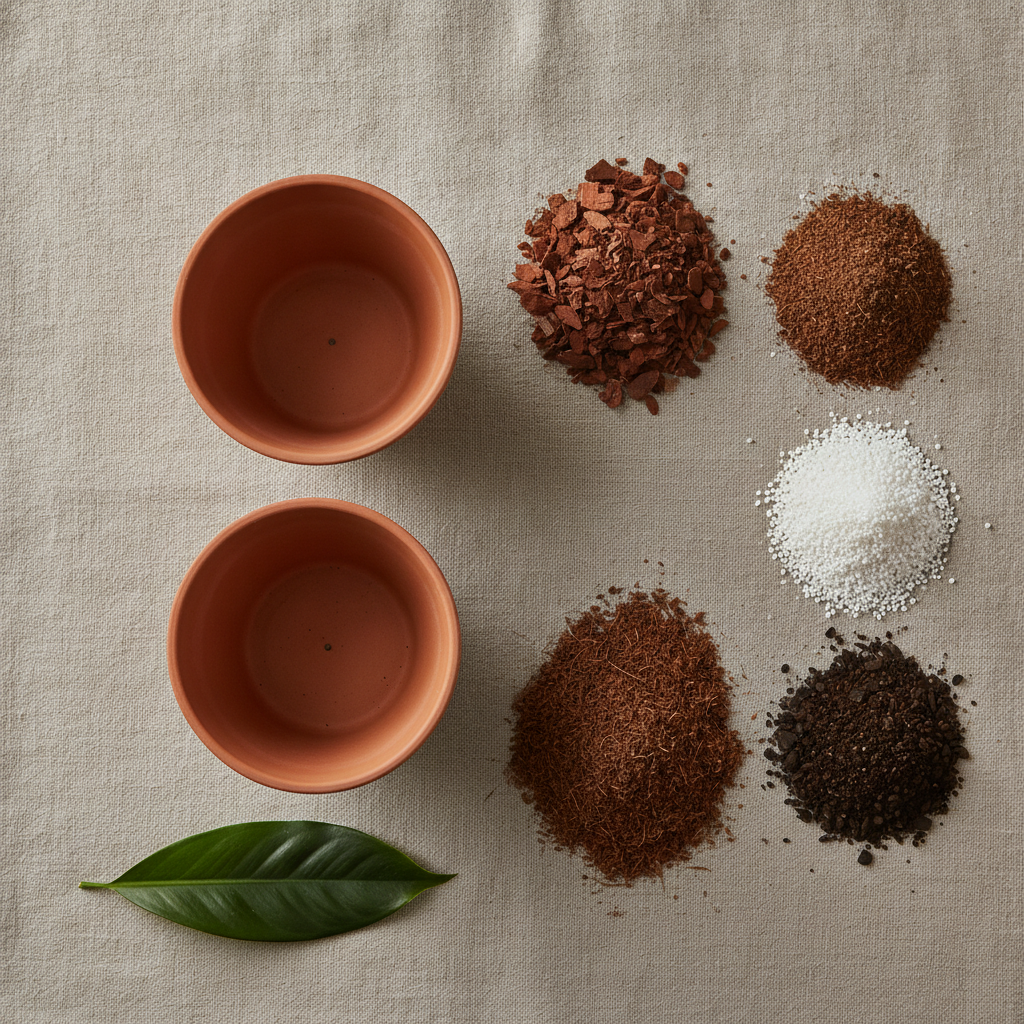
Ideal Soil Composition
A good Compacta mix starts with a quality peat-free houseplant compost as its base and is opened up with generous amounts of drainage material. The aim is a substrate that feels loose and crumbly in the hand, not heavy or claggy, with plenty of air pockets for the roots to breathe.
| Component | Proportion | Function |
|---|---|---|
| Houseplant compost | 2 parts | Holds moisture and nutrients, the base of the mix |
| Perlite or pumice | 1 part | Creates air pockets and sharp drainage |
| Orchid bark or coir | 1 part | Adds structure and stops compaction over time |
The Compacta prefers a slightly acidic to neutral medium, roughly pH 6.0 to 6.5, which is well within the range of most standard houseplant composts. There is no need to test or adjust pH in normal circumstances; simply avoid heavy garden soils and anything containing added lime.
Pro Tip — Quick Mix Recipe: For a fast, reliable blend, combine two handfuls of peat-free houseplant compost with one handful of perlite and one handful of orchid bark or coir. The result drains fast, resists compaction, and suits the Compacta perfectly without any fuss.
Choosing the Right Pot
The right container does as much for this plant as the right soil. Because the Compacta is slow-growing and dislikes excess moisture, it does best in a pot that fits its root ball fairly snugly rather than one that surrounds it with a large volume of damp, unused compost.
Drainage holes are non-negotiable. Whatever the pot is made of, it must have holes in the base so excess water can escape. If you love a decorative cachepot without drainage, use it as an outer cover and keep the plant in a plain plastic nursery pot inside, lifting it out to water and drain.
Pot material: Terracotta is an excellent choice because its porous walls let the soil dry more evenly and quickly, a real advantage for a rot-prone plant. Glazed ceramic and plastic both hold moisture longer, so if you use them, be especially careful not to overwater.
Pot size: Move up by only one size, roughly 2.5 to 5cm (1 to 2in) in diameter, when repotting. An oversized pot holds far more water than the modest root system can use, keeping the mix wet for too long and inviting rot.
When to Repot
The Compacta grows slowly and is perfectly content being a little root-bound, so it needs repotting only every two to three years. Tell-tale signs that it is time include roots emerging from the drainage holes, water running straight through without soaking in, or the plant drying out unusually fast. The best moment is spring, at the start of the growing season, when the plant can recover quickly. Even when a fresh pot is not needed, refreshing the top few centimetres of compost each spring gives a gentle nutrient boost.
How to Repot: Step-by-Step
- Water the plant a day or two beforehand so the root ball is moist and slides out cleanly.
- Tip the plant out by supporting the base of the cane and easing it from the pot; avoid pulling on the leaves.
- Gently tease away old, spent compost from around the roots and inspect them, trimming any that are soft, brown or rotten with sterile scissors.
- Add a layer of fresh, free-draining mix to the base of the new pot.
- Position the plant at the same depth it sat before, then backfill around it with mix, firming gently to remove large air gaps.
- Water thoroughly, let it drain fully, and return the plant to its usual spot.
- Hold off on feeding for six to eight weeks while new roots establish.
Warning — Transplant Shock: Some drooping or a little leaf yellowing in the days after repotting is normal as the plant settles. Resist the urge to compensate with extra water or fertiliser, which only adds stress. Keep conditions stable, water normally, and let the Compacta recover at its own pace.
Fertilising
The Janet Craig Compacta is a light feeder, and like its tolerance for low light, this works in the grower’s favour. It does not need the regular, heavy feeding that fast-growing plants demand, and it is genuinely easier to harm a Compacta by overfeeding than by underfeeding it. A modest, restrained approach produces the healthiest plants.
Fertiliser supplements the nutrients in the potting mix, which deplete over time as the plant uses them and as watering flushes them away. A balanced houseplant feed replaces these, but because the Compacta grows so slowly, it draws on them gradually and is quickly overwhelmed by excess.
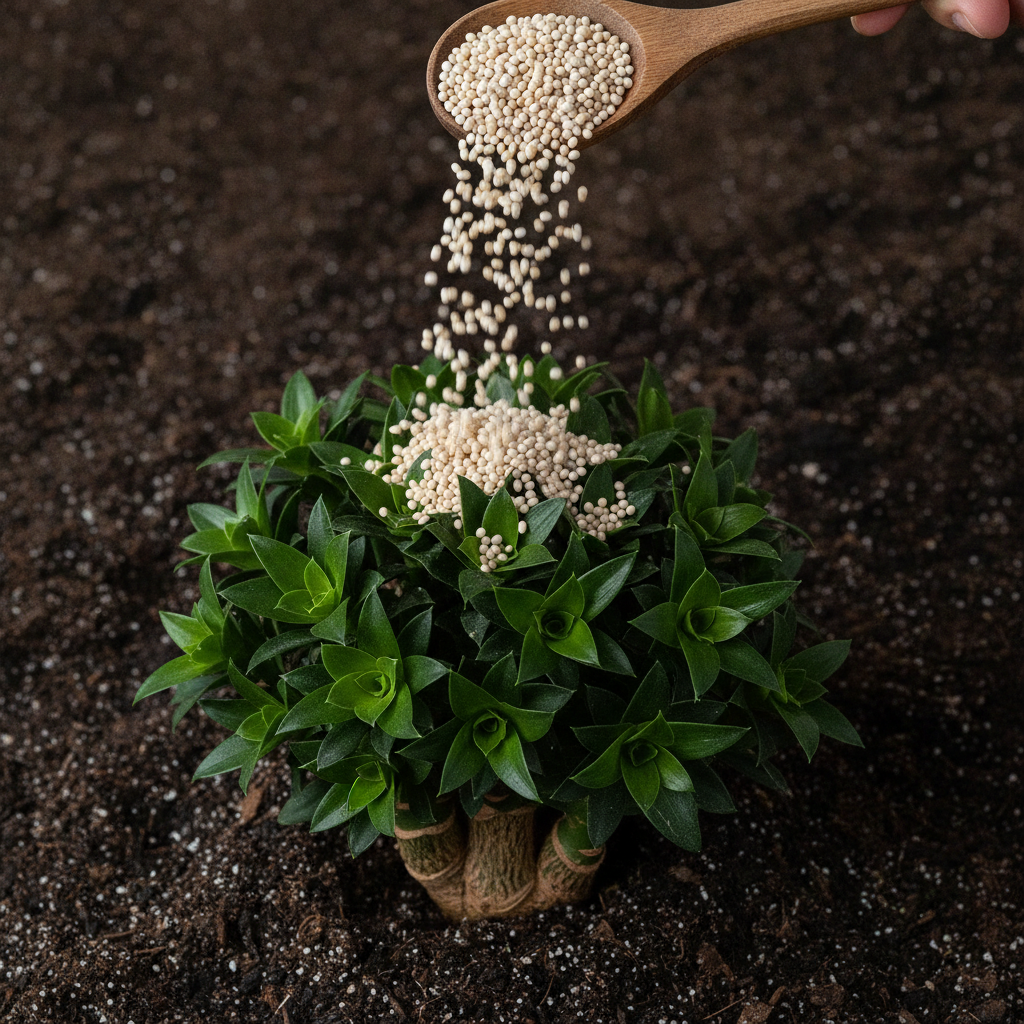
Understanding Plant Nutrients
Most fertilisers are labelled with an NPK ratio, the proportions of nitrogen, phosphorus and potassium they contain. For a foliage plant like the Compacta a balanced ratio is ideal, supporting healthy leaves without pushing unnaturally fast growth. The table below outlines the key nutrients and the symptoms of their deficiency.
| Nutrient | Symbol | Primary Function | Deficiency Symptoms |
|---|---|---|---|
| Nitrogen | N | Leaf and stem growth, green colour | Older leaves yellow, growth stalls |
| Phosphorus | P | Root development and energy transfer | Poor rooting, dull or purplish leaves |
| Potassium | K | Overall vigour and disease resistance | Yellow or brown leaf margins |
| Magnesium | Mg | Core of the chlorophyll molecule | Yellowing between the veins of older leaves |
| Iron | Fe | Chlorophyll production in new growth | Yellowing between veins on young leaves |
Types of Fertiliser
Liquid fertilisers: The easiest option for this plant, diluted into the watering can and applied during the growing season. They give you precise control over strength and timing, which matters for a feeder as light as the Compacta.
Slow-release granular: Pellets that release nutrients gradually over several months. Convenient, but harder to control, so use them at the lower end of the recommended rate and never alongside regular liquid feeding, or you risk overdoing it.
Organic fertilisers: Worm castings, diluted seaweed and similar gentle, organic feeds suit the Compacta well. They release nutrients slowly and are far less likely to scorch the roots or build up damaging salts than concentrated synthetics.
Feeding Schedule
Feed once a month with a balanced liquid fertiliser diluted to half the recommended strength, and only during the active growing season of spring and summer. Stop feeding entirely in autumn and winter, when growth slows or pauses and the plant cannot use the nutrients, allowing them to accumulate to harmful levels in the soil instead.
Pro Tip — Less Is More: When in doubt, underfeed. A Compacta that is fed too little simply grows a touch more slowly, which is easily corrected. One that is fed too much suffers scorched roots and brown leaf tips that take months to grow out. Half strength, once a month, in the growing season only, is plenty.
How to Fertilise
- Dilute the fertiliser to half the strength stated on the label.
- Water the plant with plain water first if the soil is very dry, to protect the roots from concentrated feed.
- Apply the diluted solution evenly across the soil surface until it begins to drain.
- Every few months, flush the pot with plain water until it runs freely from the base to wash out any accumulated salts.
Warning — Salt Build-Up: A white crust on the soil surface or pot rim, combined with browning leaf tips, points to a build-up of fertiliser salts. Flush the pot thoroughly with plain water several times to leach them out, and reduce how often you feed going forward.
Propagation
Propagating a Janet Craig Compacta is straightforward and satisfying, even if it tests your patience. Unlike a rosette-forming succulent or a clumping plant, the Compacta is propagated from sections of its woody cane, each of which can be coaxed into producing roots and new shoots. It is the same method used commercially to produce the cane dracaenas sold in garden centres.
The best time to take cuttings is spring or early summer, when the plant is in active growth and will root most readily. Propagation also offers a neat solution to a leggy or top-heavy plant: cutting it back to reshape it gives you cuttings to root at the same time.
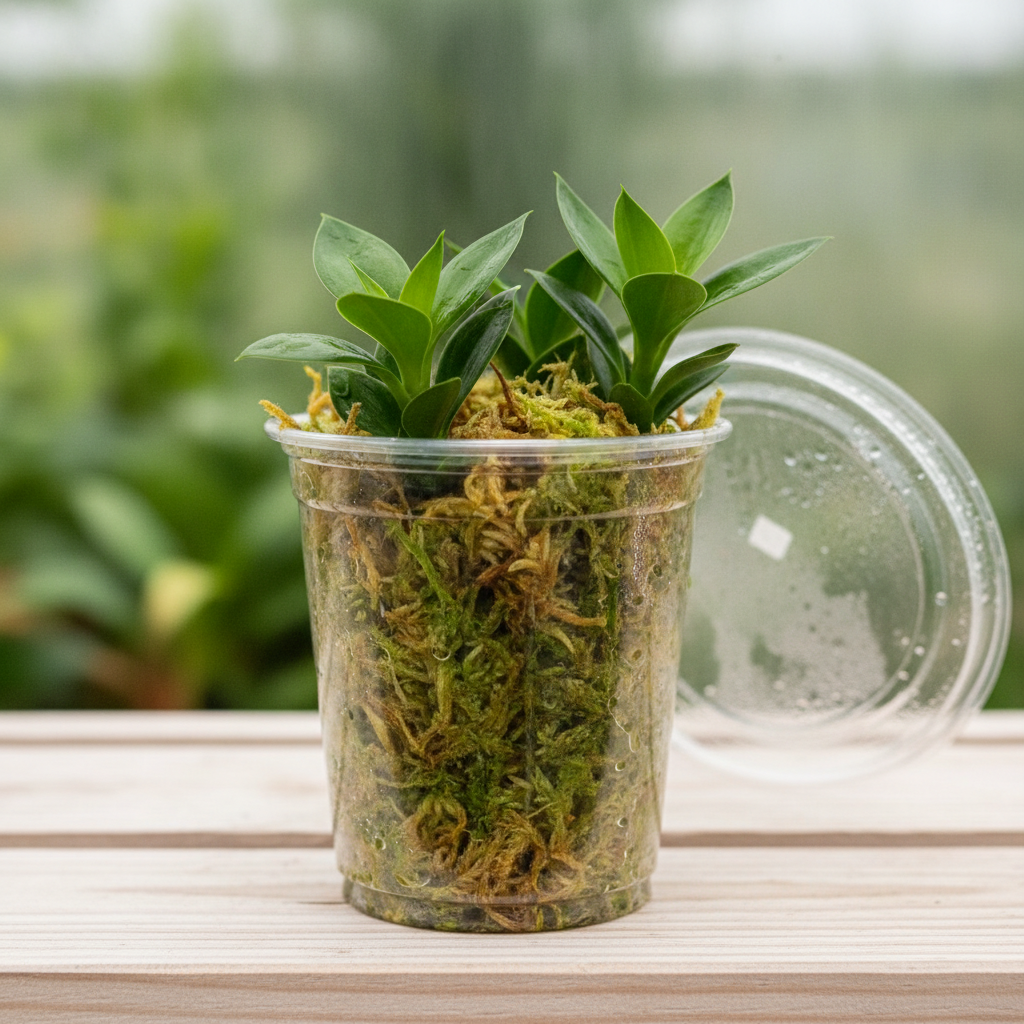
Understanding the Cane and Growth Nodes
The thick woody stem of the Compacta is its cane, and along it sit nodes, the points from which leaves and dormant buds emerge. When you cut a section of cane, roots form at the base and new shoots push out from the nodes near the top. Understanding this is the key to propagation: every cutting needs at least one viable node, and it must be planted the right way up, since a cane inserted upside down will not grow.
Tip Cuttings: Step-by-Step
A tip cutting takes the leafy crown at the top of a cane and is the most reliable method, since it already has foliage to photosynthesise while it roots.
- Using clean, sharp secateurs, cut a 10 to 15cm (4 to 6in) section from the top of a cane, including the leafy rosette.
- Remove any leaves from the lowest few centimetres so a clean length of stem is exposed.
- Optionally dip the cut end in rooting hormone to speed things along.
- Insert the stem into moist sphagnum moss or a free-draining propagation mix, or stand it in a glass of clean water.
- Place it somewhere warm with bright, indirect light, keeping the medium lightly moist but never waterlogged.
- Roots typically appear within three to six weeks; once they are a few centimetres long, pot the cutting into normal mix.
Pro Tip — Do Not Discard the Stump: The bare cane left behind after you take a tip cutting will usually sprout one or more new shoots from the nodes just below the cut. Keep watering it as normal and you often end up with a bushier original plant as a bonus.
Cane Cuttings: Step-by-Step
If you have a long, leafless section of cane, it can be cut into several pieces, each capable of forming a whole new plant. This method is slower than tip cuttings but multiplies your plant the most.
- Cut the bare cane into sections 8 to 12cm (3 to 5in) long, each with at least two nodes.
- Mark which end is the base, as the cuttings must be planted the same way up they grew; a slanted cut at the bottom and a flat cut at the top is a handy convention.
- Let the cut ends callus over for a day in a dry, shaded spot to reduce the risk of rot.
- Insert the base of each section a few centimetres deep into moist, free-draining mix.
- Keep warm in bright, indirect light with lightly moist soil, and be patient: shoots and roots can take one to two months to appear.
Troubleshooting Propagation
| Problem | Likely Cause | Solution |
|---|---|---|
| Cutting rots at the base | Medium too wet, or cut end not callused | Use a drier mix, allow ends to callus, refresh water often |
| No roots after many weeks | Too cold, too dark, or cane planted upside down | Increase warmth and light; check the cutting is the right way up |
| Leaves yellow and drop | Normal stress, or the medium drying out fully | Keep the medium lightly moist and conditions stable; be patient |
| Roots form but no shoots | No viable node above the medium | Ensure at least one node sits above the soil line |
Pests & Diseases
The Janet Craig Compacta is not especially prone to pests, and a healthy, well-positioned plant will usually go untroubled for long stretches. When problems do arise they tend to be the common indoor sap-suckers, which are easily managed if caught early. As with most things concerning this plant, prevention and prompt attention beat dramatic intervention.
The dense, layered rosettes that make the Compacta so handsome also create snug hiding places where pests can shelter, so it pays to inspect the leaf axils and undersides regularly rather than relying on a glance at the top surfaces.
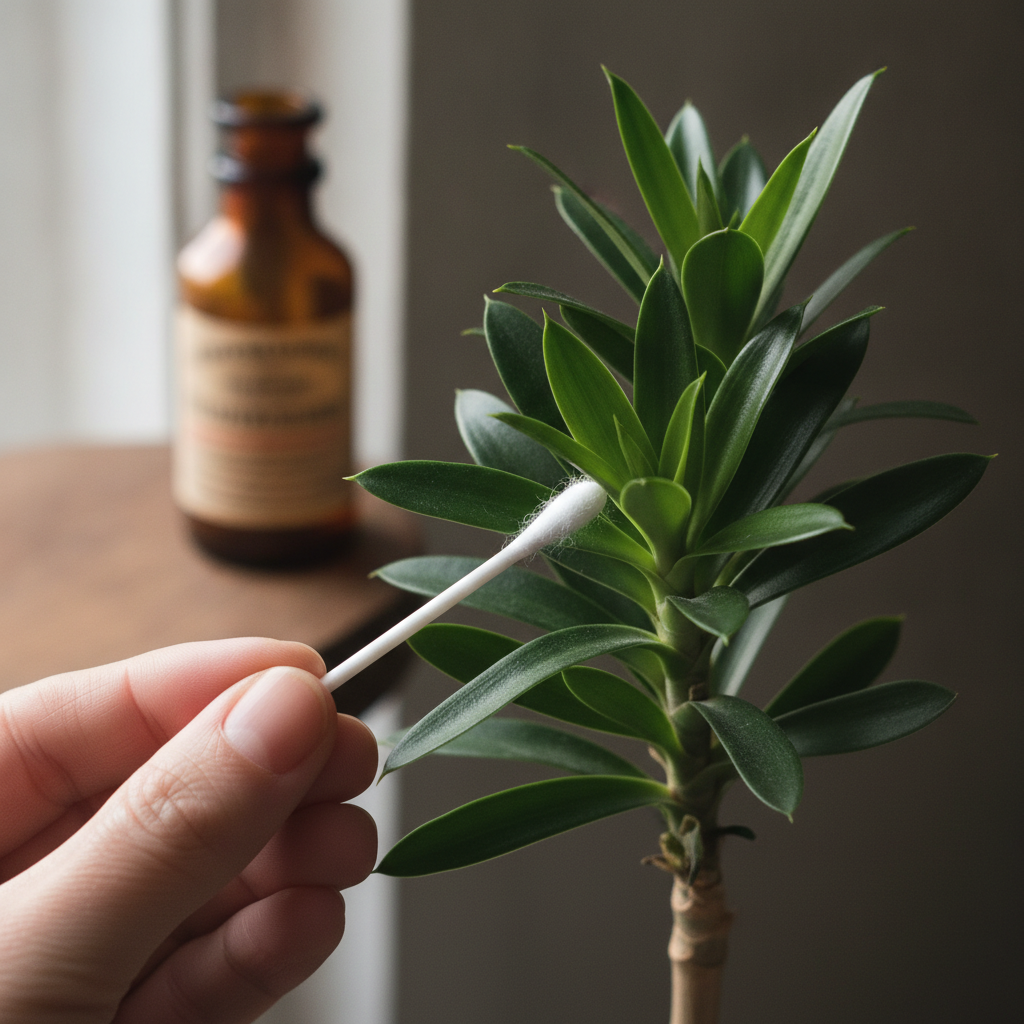
Common Pests
Spider Mites (Tetranychus urticae)
Tiny arachnids that thrive in warm, dry air. They cause fine pale stippling on the leaves and, in heavy infestations, delicate webbing between the foliage. They are easiest to spot by holding a sheet of white paper under a leaf and tapping it to dislodge them.
Treatment: Rinse the plant thoroughly, raise humidity, and treat with insecticidal soap or neem oil at weekly intervals until the mites are gone. Increasing humidity also makes conditions less favourable for them to return.
Mealybugs (Pseudococcus spp.)
Small, soft-bodied insects coated in a white, cottony wax. They cluster in the leaf axils and along the cane, where the Compacta’s tight rosettes give them excellent cover, and they weaken the plant by sucking sap while excreting sticky honeydew.
Treatment: Dab each insect directly with a cotton bud dipped in isopropyl alcohol, then follow up with neem oil or insecticidal soap. Check weekly, as mealybugs are persistent and hide deep in the foliage.
Scale (Coccidae family)
Scale insects appear as small, brown, immobile bumps on the stems and the undersides of leaves. Their waxy shells protect them from many sprays, so they are often noticed only once they have multiplied and the plant looks tired and sticky with honeydew.
Treatment: Scrape off what you can with a fingernail or an old toothbrush, then treat with neem oil or a systemic insecticide. Repeat treatments are usually needed to catch newly hatched crawlers.
Common Diseases
Root Rot (Pythium and Fusarium spp.)
By far the most serious disease of this plant, root rot is caused by fungi that flourish in waterlogged soil. Symptoms include yellowing, wilting foliage, a soft stem base and brown, mushy roots that smell unpleasant. Left unchecked it is usually fatal.
Treatment: Unpot the plant, cut away all affected roots with sterile tools, and repot into fresh, dry, free-draining mix. Then correct the watering habits that caused it, as no treatment will succeed while the soil stays wet.
Leaf Spot (various fungal pathogens)
Fungal leaf spot shows as brown or tan blotches, sometimes ringed with yellow, usually where water has sat on the leaves in poorly ventilated, humid conditions. It is unsightly but rarely life-threatening if addressed.
Treatment: Remove affected leaves, avoid wetting the foliage when watering, and improve air circulation around the plant. A copper-based fungicide can help with persistent cases.
Pest and Disease Summary
| Pest / Disease | Identification | Treatment |
|---|---|---|
| Spider mites | Fine stippling and webbing, dry conditions | Rinse, raise humidity, neem or insecticidal soap |
| Mealybugs | White cottony clusters in axils | Alcohol on a cotton bud, then neem oil |
| Scale | Brown immobile bumps on stems and leaves | Scrape off, then neem or systemic insecticide |
| Root rot | Soft stem base, mushy roots, yellowing | Remove rot, repot dry, correct watering |
| Leaf spot | Brown blotches with yellow halos | Remove leaves, keep foliage dry, improve airflow |
Prevention Strategies
The most effective defence is a healthy plant in the right conditions, since stressed plants attract pests and succumb to disease far more readily. Inspect your Compacta regularly, paying attention to the hidden leaf axils and undersides, and wipe the leaves occasionally with a damp cloth both to remove dust and to give yourself a chance to spot trouble early.
Always quarantine new plants for a couple of weeks before placing them near your existing collection, as new arrivals are the most common way pests enter a home. Combined with sensible watering and good air circulation, these simple habits prevent the great majority of problems before they start.
Pro Tip — The Weekly Once-Over: Make a habit of checking the plant whenever you water it. Thirty seconds spent looking under a few leaves and into the rosettes lets you catch pests while they are still a handful of individuals, when a single wipe or spray is all it takes to deal with them.
Popular Varieties
The Janet Craig Compacta is itself a cultivar, a dwarf, dense-growing selection of Dracaena fragrans derived from the broad-leaved ‘Janet Craig’. It belongs to a large and varied group of dracaenas that share its easy temperament while offering very different looks, from towering floor specimens to brightly variegated forms.
Knowing the relatives helps you choose the right plant for a space and the right companions to grow alongside it. The table and profiles below cover the Compacta and the dracaenas most often confused or grouped with it.
| Variety | Leaf Appearance | Light Needs | Growth Rate | Availability |
|---|---|---|---|---|
| Janet Craig Compacta | Short, glossy dark green in tight whorls | Low to medium indirect | Very slow | Common |
| Janet Craig (standard) | Long, broad, glossy dark green | Low to medium indirect | Slow to moderate | Very common |
| Compacta Variegata | Compact rosettes striped creamy yellow | Medium indirect | Very slow | Uncommon |
| Warneckii | Grey-green with white stripes | Medium indirect | Slow | Common |
| Lemon Lime | Bright lime and dark green stripes | Medium to bright indirect | Moderate | Common |
| Massangeana (Corn Plant) | Wide, arching with a yellow centre stripe | Low to medium indirect | Slow to moderate | Very common |
Featured Varieties
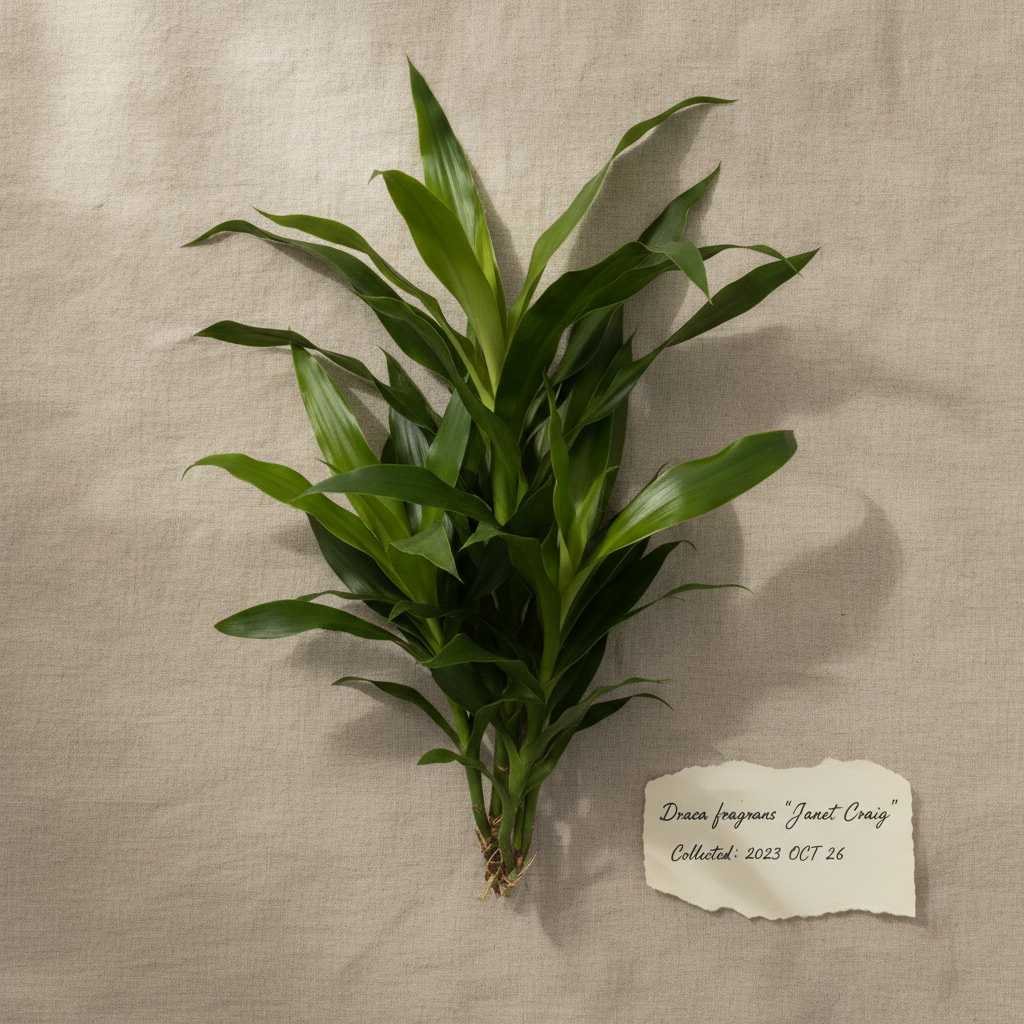
Janet Craig (Standard)
The full-size parent, with long, broad, lustrous dark green leaves on an open cane. It shares the Compacta’s toughness but makes a larger, more graceful floor plant for filling a corner.
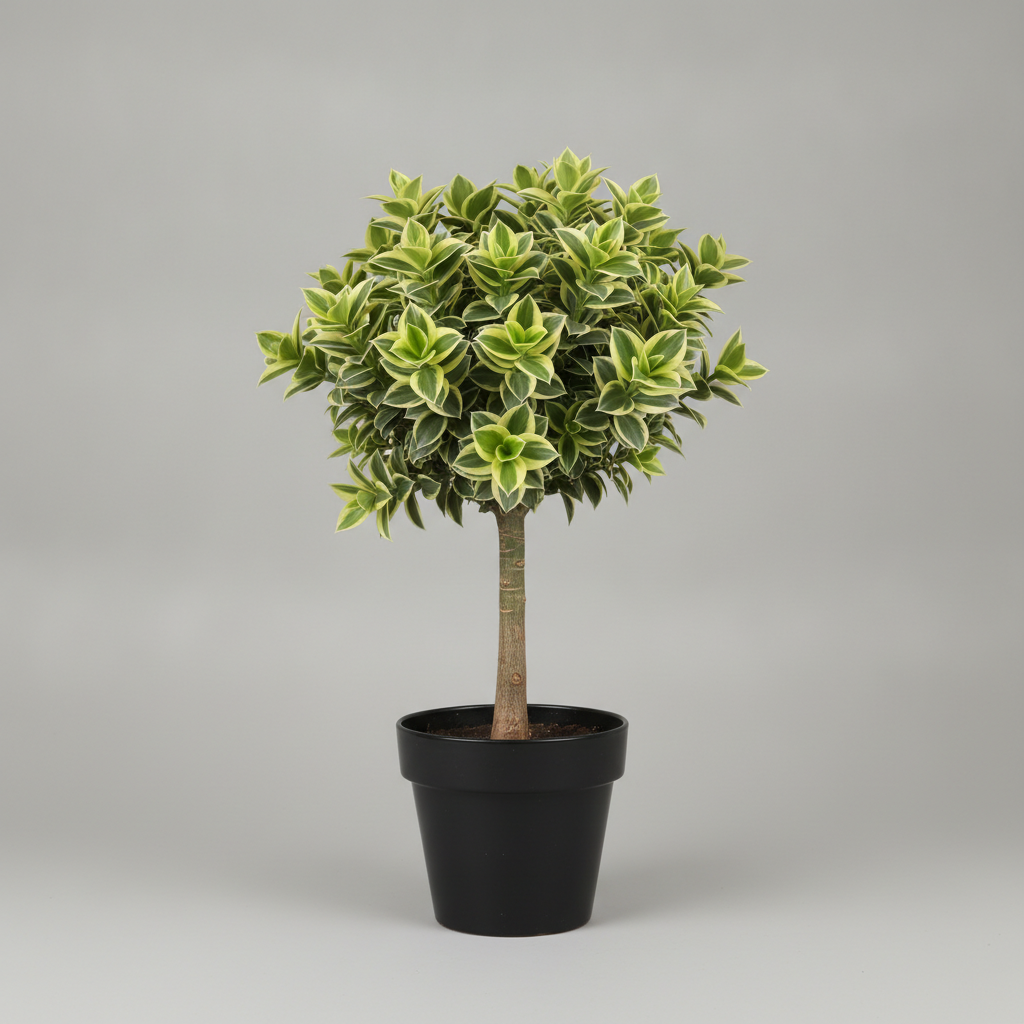
Compacta Variegata
A variegated sport with the same dense, dwarf rosettes brightened by creamy yellow stripes. It needs slightly more light than the plain green form to hold its markings, but is otherwise identical in care.
Variety Profiles in Detail
Janet Craig Compacta (Dracaena fragrans ‘Compacta’)
The subject of this guide, prized for its squat, layered form and exceptionally slow growth. Its short internodes give it the densely stacked, almost geometric look that makes it such a popular desk and shelf plant, and it is among the most shade-tolerant dracaenas of all.
Warneckii (Dracaena fragrans ‘Warneckii’)
A close cousin with upright, sword-shaped grey-green leaves edged and striped in white. It brings a brighter, more linear feel than the deep green Compacta and shares the same easy, low-maintenance temperament.
Lemon Lime (Dracaena fragrans ‘Lemon Lime’)
One of the showiest of the group, with leaves boldly striped in electric lime and dark green. It wants a little more light than the Compacta to keep its colours vivid, and rewards it with one of the most cheerful displays in the genus.
Choosing the Right Variety for Your Space
For a small, slow plant that will sit happily on a desk or shelf in modest light, the Compacta is hard to beat. If you want height and presence to fill a floor corner, look to the standard Janet Craig or the Corn Plant, and if you crave colour, the variegated Compacta, Warneckii or Lemon Lime add pattern while asking for only a little more light. All share the same forgiving care, so you can mix several with confidence and treat them more or less identically.
Frequently Asked Questions
Why are the tips of my Janet Craig Compacta turning brown?
The most common cause is fluoride and salts in tap water, to which dracaenas are particularly sensitive. Switch to rainwater, distilled or filtered water and the new growth should come through clean. Very dry air and a build-up of fertiliser salts can produce the same symptom, so check those too if the problem persists.
How often should I water it?
There is no fixed schedule, because the right frequency depends on light, temperature and the season. Water only when the top 5cm (2in) of soil has dried out, which might mean weekly in a bright spot in summer or monthly in a dim corner in winter. When unsure, wait, since this plant tolerates dryness far better than excess water.
Is the Janet Craig Compacta safe around pets?
No. Like all dracaenas it contains saponins that are toxic to cats and dogs, causing vomiting, drooling and loss of appetite if eaten, with dilated pupils in cats. Keep it well out of reach of pets, and consult a vet if you suspect your animal has chewed it.
Can it really survive in low light?
Yes, it is one of the best plants for low-light rooms, which is why it is so widely used in offices. Bear in mind, though, that low light means slow growth, not no consequences. For fuller rosettes and richer colour it grows best in bright, indirect light, even if it merely persists in a dim corner.
Why is my plant growing so slowly?
Slow growth is entirely normal for this cultivar; it is one of the slowest-growing dracaenas and that is part of its appeal. If you would like to encourage a little more growth, move it to a brighter (still indirect) spot and feed lightly through spring and summer. Do not try to force it with heavy feeding, which does more harm than good.
My Compacta has become tall and leggy. What can I do?
Legginess usually signals too little light, so first move the plant somewhere brighter. To restore a compact shape you can cut the cane back to the height you want; the plant will sprout new shoots from below the cut, and the top section you removed can be rooted as a cutting. Spring is the ideal time for this.
Why are lower leaves turning yellow and dropping?
The occasional loss of an old lower leaf is natural as the plant ages. Widespread yellowing, however, most often points to overwatering, so check that the soil is not staying soggy and that the pot drains freely. Less commonly it can indicate a nutrient shortfall in a plant that has not been repotted or fed in a long while.
Do I need to mist it for humidity?
No. The Compacta is comfortable in normal household humidity and does not need misting. If your home is very dry and you see browning tips, grouping plants together, using a pebble tray or running a humidifier is more effective than misting, but first rule out water quality, which is the usual culprit behind brown tips on dracaenas.






