
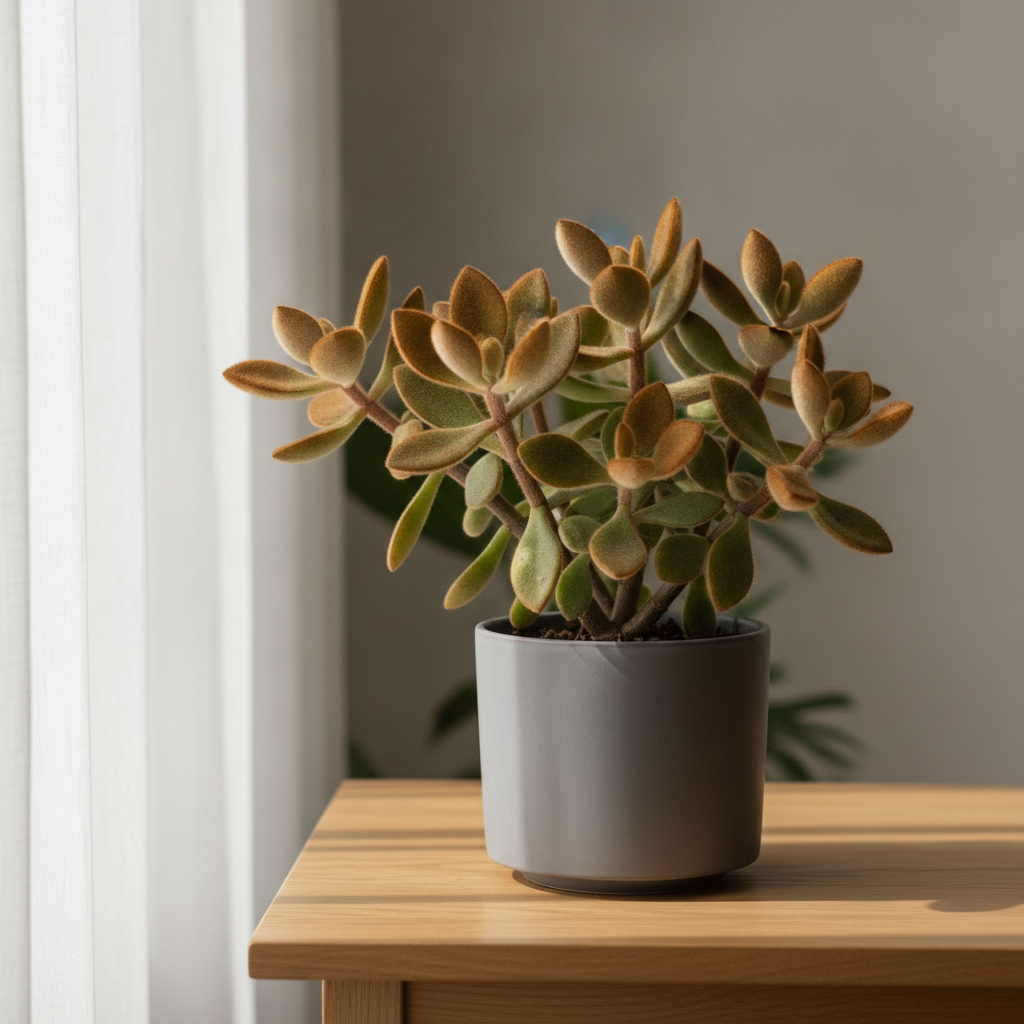
Few succulents look as if they have been dusted with cinnamon, but Copper Spoons earns the comparison honestly. Known botanically as Kalanchoe orgyalis, this slow-growing shrub from the dry forests of Madagascar carries oval, spoon-shaped leaves coated in a dense layer of fine felt. New growth emerges a warm coppery bronze on the upper surface and a soft silvery-grey beneath, the two tones folding together as the paired leaves cup upward toward the light. The plant is sometimes sold under the names Cinnamon Bear or Copper Spoons Kalanchoe, and it belongs to the stonecrop family, Crassulaceae, alongside jade plants and echeverias.
As a houseplant, Copper Spoons has a reputation for being undemanding but easy to dull. Give it too little light and the cinnamon glow fades to a flat grey-green; water it the way you would a leafy tropical and the felted leaves spot and the roots rot. The gap between a plant that merely survives and one that genuinely thrives comes down to a few specifics: strong light, a gritty fast-draining mix, and the discipline to let the soil run completely dry between drinks. This guide covers each of those in detail, along with feeding, repotting, propagation, pests, and the related felted kalanchoes you are likely to meet on the same nursery bench.
Contents
- Quick Reference
- Why Copper Spoons Makes a Striking Houseplant
- Light Requirements
- Watering & Humidity
- Soil, Potting & Repotting
- Fertilising
- Propagation
- Pests & Diseases
- Popular Varieties
- Frequently Asked Questions
Quick Reference: Copper Spoons at a Glance
| Light | Bright light with several hours of direct sun; the brighter the position, the stronger the copper colour |
| Watering | Soak thoroughly, then allow the mix to dry out completely; roughly every 2 to 3 weeks in summer and far less in winter |
| Temperature | 18 to 27 degrees Celsius (64 to 81 degrees Fahrenheit); keep above 10 degrees Celsius (50 degrees Fahrenheit) |
| Humidity | Low; prefers dry air and resents moisture sitting on its felted leaves |
| Fertiliser | A dilute low-nitrogen succulent feed once or twice during the growing season |
| Toxicity | Toxic to cats, dogs, and horses if eaten; contains cardiac glycosides |
Why Copper Spoons Makes a Striking Houseplant
The appeal of Copper Spoons rests almost entirely on its leaves. Each one is a thick, rounded paddle held in an opposite pair on a branching woody stem, and the whole plant is covered in a velvety coating of tiny hairs known as trichomes. That coating is not just decorative. In the plant’s native Madagascar it scatters fierce sunlight, insulates the tissue against heat, and slows water loss in a climate that swings between drought and brief rains. Indoors, the same felt gives the plant a matte, almost suede-like quality that catches warm light beautifully and sets it apart from the glossy succulents that dominate most collections.
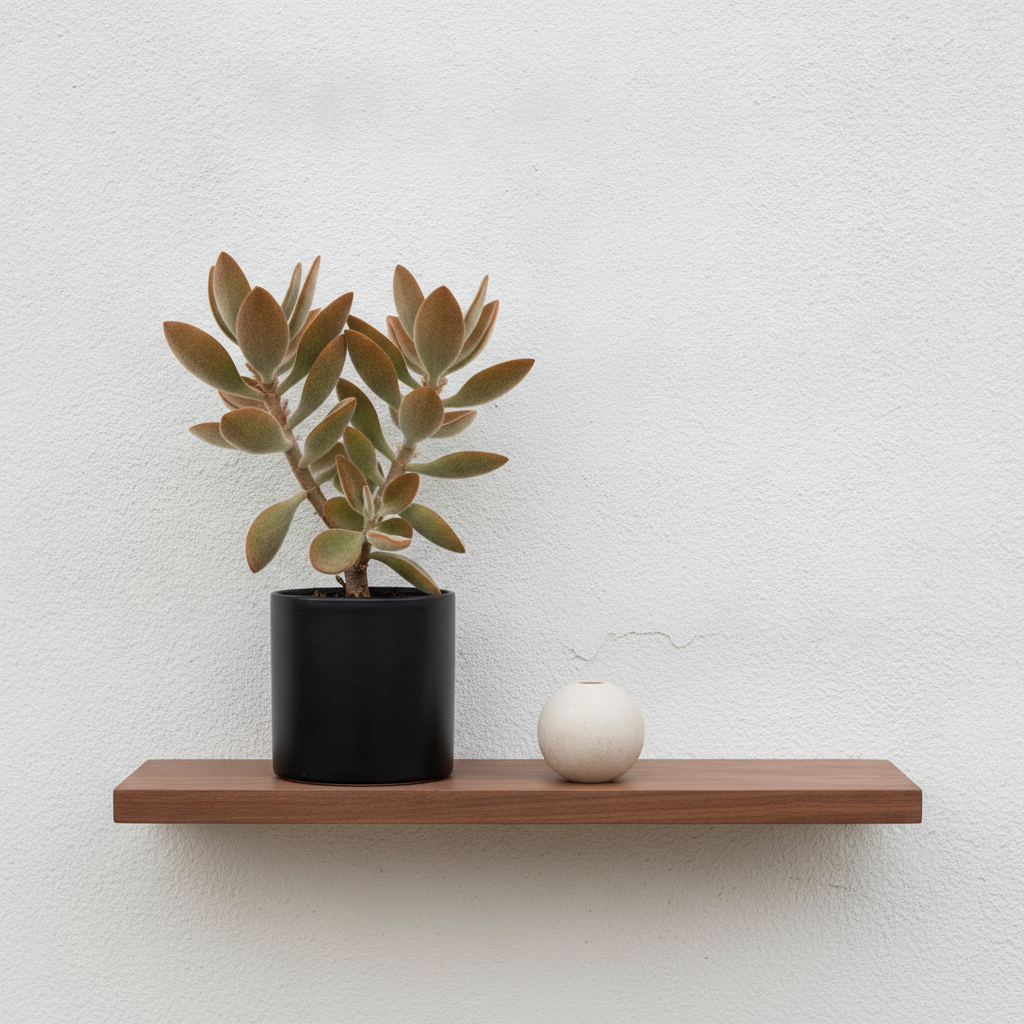
Beyond looks, this is a forgiving plant for anyone who tends to forget the watering can. Like most kalanchoes it stores water in its leaves and stems, so it shrugs off a missed week without complaint and actively prefers neglect to fussing. It grows slowly, which means it rarely outgrows its spot or needs frequent repotting, and a mature specimen kept for several years develops a pleasing branched, tree-like form. In the ground in a frost-free climate it can eventually reach well over a metre tall, but as a container plant indoors it usually settles between 30 and 60 centimetres (12 to 24 inches), making it an easy fit for a sunny windowsill or shelf.
Important — Toxicity: Like all kalanchoes, Kalanchoe orgyalis contains bufadienolides, a group of cardiac glycosides that are toxic to cats, dogs, and horses if the leaves are chewed or swallowed. Symptoms can include drooling, vomiting, and in serious cases an irregular heartbeat. Keep the plant out of reach of curious pets and children, and wash your hands after handling cuttings.
Light Requirements
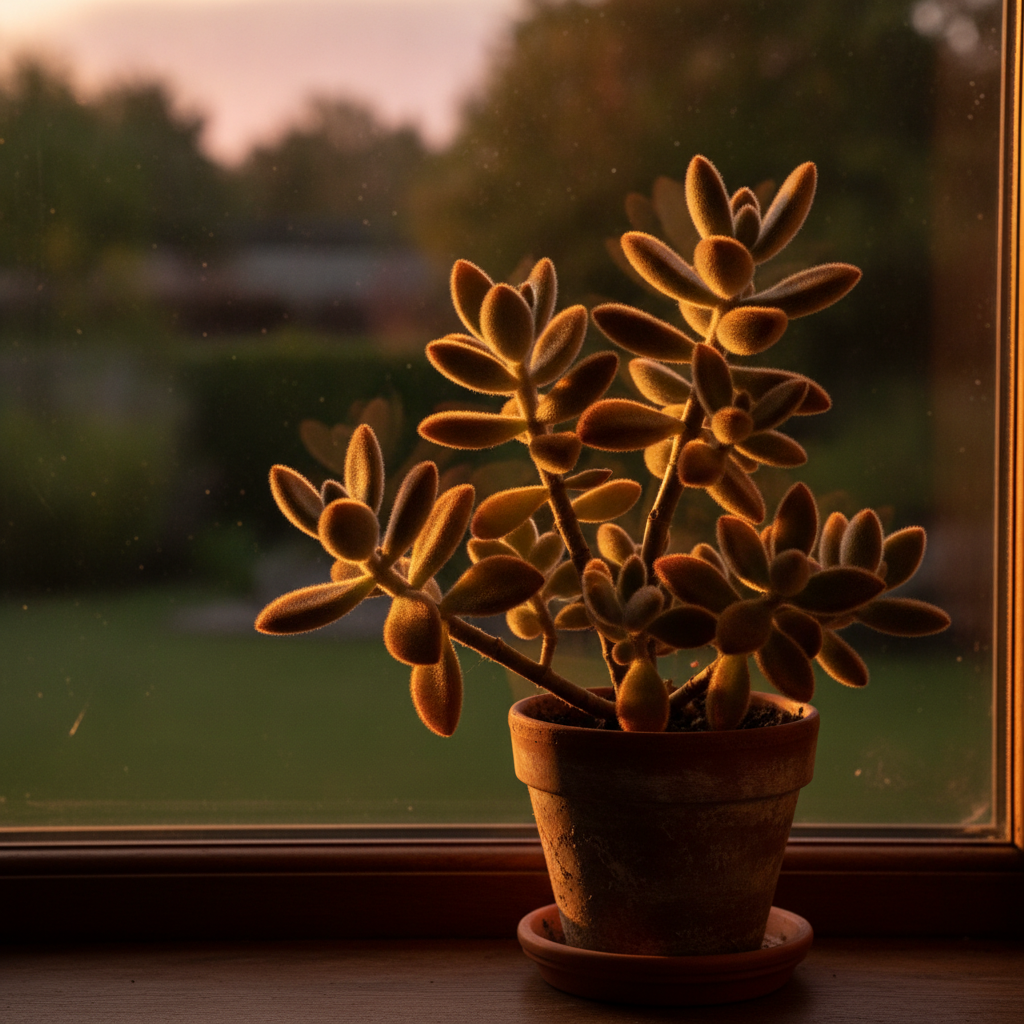
Light is the single most important factor in keeping Copper Spoons looking its best. This is a sun-loving succulent that evolved in open, exposed habitat, and it carries that preference indoors. In a bright spot the leaves stay compact, the pairs cup tightly, and the upper surfaces hold their warm cinnamon-bronze tone. Starved of light, the plant tells you immediately: the stems stretch and lean toward the window, the gaps between leaf pairs widen, and the rich copper colour washes out to a dull green-grey.
The ideal position is one that receives several hours of direct sun each day, supplemented by bright ambient light for the rest. A windowsill is usually the best place in the home, since most rooms simply cannot deliver enough intensity a metre or two back from the glass. Unlike many tender houseplants, an established Copper Spoons handles direct midday sun well once it has been gradually acclimated to it, and that strong light is exactly what brings out the colour the plant is grown for.
Light Levels Explained
Indoor light is far dimmer than most people assume, and a position that feels bright to the eye can still be marginal for a sun-hungry succulent. The table below sets out the broad light categories and how Copper Spoons responds to each, so you can judge your own spot more accurately.
| Light Category | Approx. Level | Typical Location | Outcome |
|---|---|---|---|
| Direct sun | Over 50,000 lux | On a south or west windowsill | Ideal; compact growth and the strongest colour |
| Bright indirect | 10,000 to 20,000 lux | Just back from a sunny window | Good; healthy but colour slightly muted |
| Medium | 5,000 to 10,000 lux | A few metres from a bright window | Tolerated; leggy growth over time |
| Low | 1,000 to 2,500 lux | North-facing room, interior wall | Poor; stretching and loss of colour |
| Very low | Under 1,000 lux | Hallway, far corner | Unsuitable; decline and eventual stem rot |
Window Orientation and Placement
South-facing window: In the northern hemisphere this is the brightest exposure and an excellent choice. Place the plant directly on the sill where it can drink in full sun. Only in the most intense summer weeks, behind glass that magnifies the heat, might you need a sheer curtain at midday.
East-facing window: A good option that delivers several hours of gentler morning sun. The colour will be strong, though perhaps a touch less vivid than in a south window, and there is little risk of scorching.
West-facing window: Also very suitable, supplying strong afternoon sun. Because west light arrives when the day is already warm, keep an eye on the plant during heatwaves and ensure air can circulate around it.
North-facing window: The weakest exposure and generally too dim for Copper Spoons to hold its form. A plant kept here will stretch and fade within a season. If a north window is your only option, plan to supplement with a grow light.
Pro Tip — Rotate for Even Growth: Because the plant leans hard toward its light source, give the pot a quarter turn every week or two. This keeps the stems growing upright and symmetrical rather than all reaching in one direction.
How Light Affects Leaf Colour
The cinnamon-copper colour that gives this plant its name is produced under stress, specifically the bright light and cooler nights of an exposed position. In strong light the leaves pump out protective pigments that deepen the bronze tone, while the felt itself grows denser. Move the same plant into shade and it redirects its energy into chlorophyll and stem extension instead, so the new leaves come in greener, flatter, and spaced further apart. If your Copper Spoons has gone dull and lanky, the cause is almost always insufficient light, and the cure is simply a brighter home.
Warning — Direct Sunlight: A plant grown in low light has thin, soft tissue and will sunburn if moved straight into full sun. Acclimate it over 10 to 14 days, starting with an hour or two of direct light and building up gradually, to avoid pale, scorched patches that never recover.
Artificial Lighting
Where natural light falls short, a full-spectrum LED grow light fills the gap effectively. Position the light around 20 to 30 centimetres (8 to 12 inches) above the plant and run it for 10 to 12 hours a day to mimic a bright window. Grow lights are especially useful through the short days of winter in temperate regions, or in rooms that never receive direct sun, and they will hold the colour and compact form that a dim windowsill cannot.
Seasonal Adjustments
As the sun drops lower and weakens through autumn and winter, move Copper Spoons to your brightest available window to compensate. A spot that delivered plenty of light in midsummer may become marginal by December, and a plant that stretches over winter is usually reacting to that seasonal dimming rather than to anything you have done wrong. Come spring, as light intensifies again, ease the plant back into stronger sun gradually to avoid shocking leaves that softened over the darker months.
Watering & Humidity
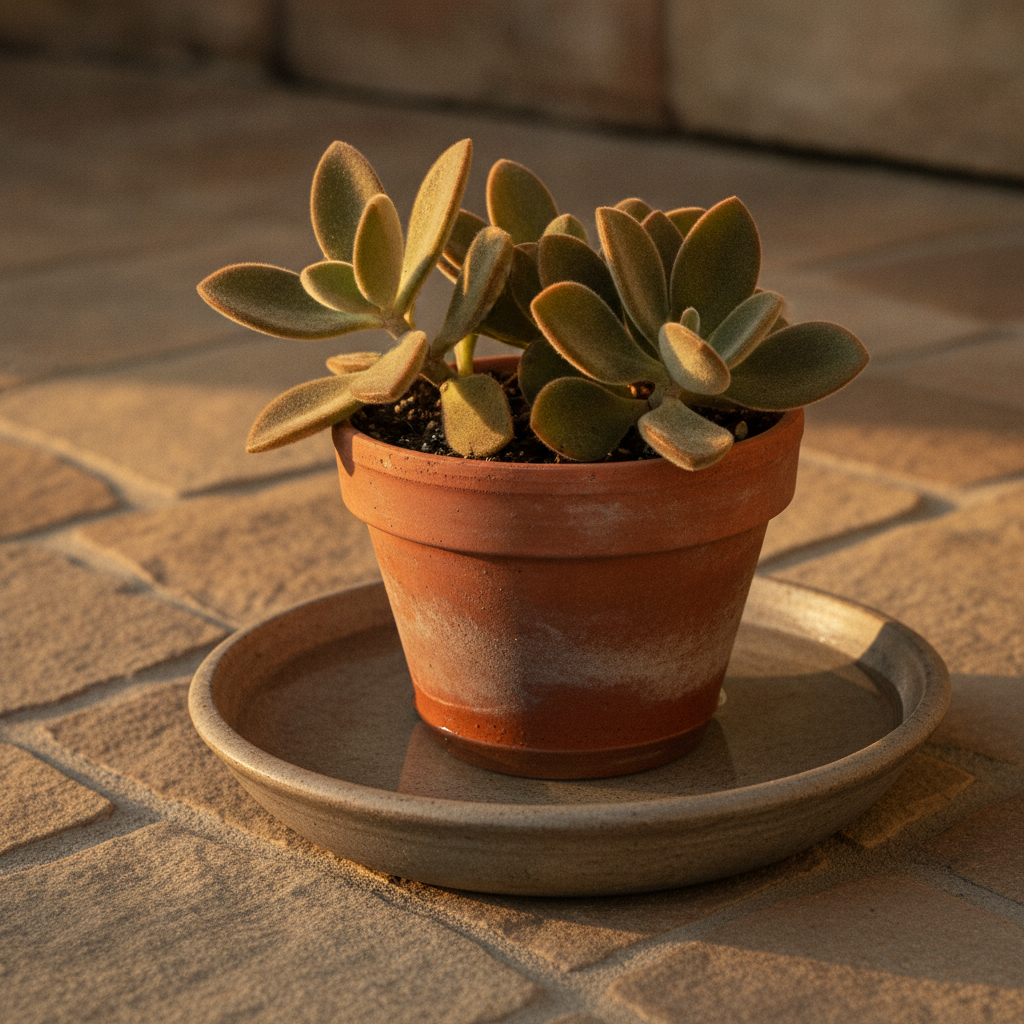
If light keeps Copper Spoons looking good, watering is what keeps it alive. This is a true desert succulent that stores its own reserves and is far more often killed by kindness than by drought. The guiding principle is to water thoroughly but infrequently, soaking the mix when you do water and then leaving it bone dry until the plant has clearly used up what you gave it. Overwatering is the single most common cause of death in this species.
When to Water
Forget any fixed schedule and read the plant and the pot instead. Wait until the potting mix has dried out completely all the way through, then wait a little longer. In a warm, bright spot during the growing season that often works out to roughly once every two to three weeks, but the only reliable test is the soil itself: push a finger or a wooden skewer deep into the mix, and if it comes out with any cool dampness or clinging particles, hold off.
Watering needs drop sharply in winter. As light fades and temperatures fall, the plant slows almost to a stop and uses very little moisture, so a soak every four to six weeks, or even less, is usually plenty. The leaves are also a useful gauge. Plump, firm paddles mean the plant is well hydrated, while leaves that begin to look slightly soft or wrinkled are an early signal that a drink is due.
Pro Tip — Keep the Felt Dry: Water that sits on the felted leaves can leave permanent spots and invite rot, because the fuzzy coating holds droplets against the surface. Water at soil level or stand the pot in a shallow dish to soak from below, and avoid misting or overhead watering altogether.
How to Water Correctly
- Check that the mix is completely dry throughout before you begin.
- Water directly onto the soil surface, keeping the stream away from the leaves, or stand the pot in a tray of water to wick up from the drainage holes.
- If watering from above, continue until water runs freely from the bottom of the pot, ensuring the entire root ball is moistened.
- If soaking from below, leave the pot in the tray for 10 to 20 minutes, then lift it out once the surface feels damp.
- Let the pot drain fully and never leave it standing in residual water.
- Empty the saucer and wait until the mix is dry again before the next watering.
Signs of Overwatering vs. Underwatering
| Symptom | Overwatering | Underwatering |
|---|---|---|
| Leaf colour | Yellowing, translucent, or blackening leaves | Leaves keep their colour but dull slightly |
| Leaf texture | Soft, mushy, and swollen to the point of splitting | Thin, wrinkled, and slightly limp |
| Soil | Stays damp for days; may smell sour | Bone dry well beyond the normal interval |
| Roots | Brown, black, and slimy when checked | Dry and intact but growth stalls |
| Stem base | Soft, darkened, or collapsing at soil level | Firm but no new growth |
Warning — Root Rot: A soft, darkening stem at soil level is the hallmark of root or stem rot and it spreads quickly. If you spot it, take healthy cuttings from the top of the plant straight away and root them fresh, because a collapsing base rarely recovers once the rot reaches the main stem.
Humidity Requirements
Copper Spoons asks for nothing in the way of added humidity and is happiest in the dry air of an ordinary heated home. It comes from an arid climate and its felted leaves are built to conserve moisture rather than absorb it, so the average indoor range of 30 to 50 percent relative humidity suits it perfectly.
Problems appear at the humid end of the scale rather than the dry. In a steamy bathroom or a poorly ventilated room, moisture lingers in the felt and around the leaf joints, raising the risk of fungal spotting and rot. If you grow this plant in a damp room, prioritise airflow and bright light to keep the surfaces drying quickly.
For the same reason, there is no need to group it with humidity-loving plants, place it on a pebble tray, or run a humidifier nearby. Doing so only works against the conditions it prefers. Treat dry air as a feature rather than a flaw with this species.
Water Quality
Copper Spoons is not especially fussy about water quality and ordinary tap water is generally fine. Because it is watered so infrequently, any minerals in the water accumulate slowly, and an occasional flush with a generous soak helps wash them through. If your tap water is very hard or heavily chlorinated, letting it stand overnight or using filtered or rainwater will keep mineral crusting on the soil surface to a minimum, but this is a refinement rather than a requirement.
Soil, Potting & Repotting
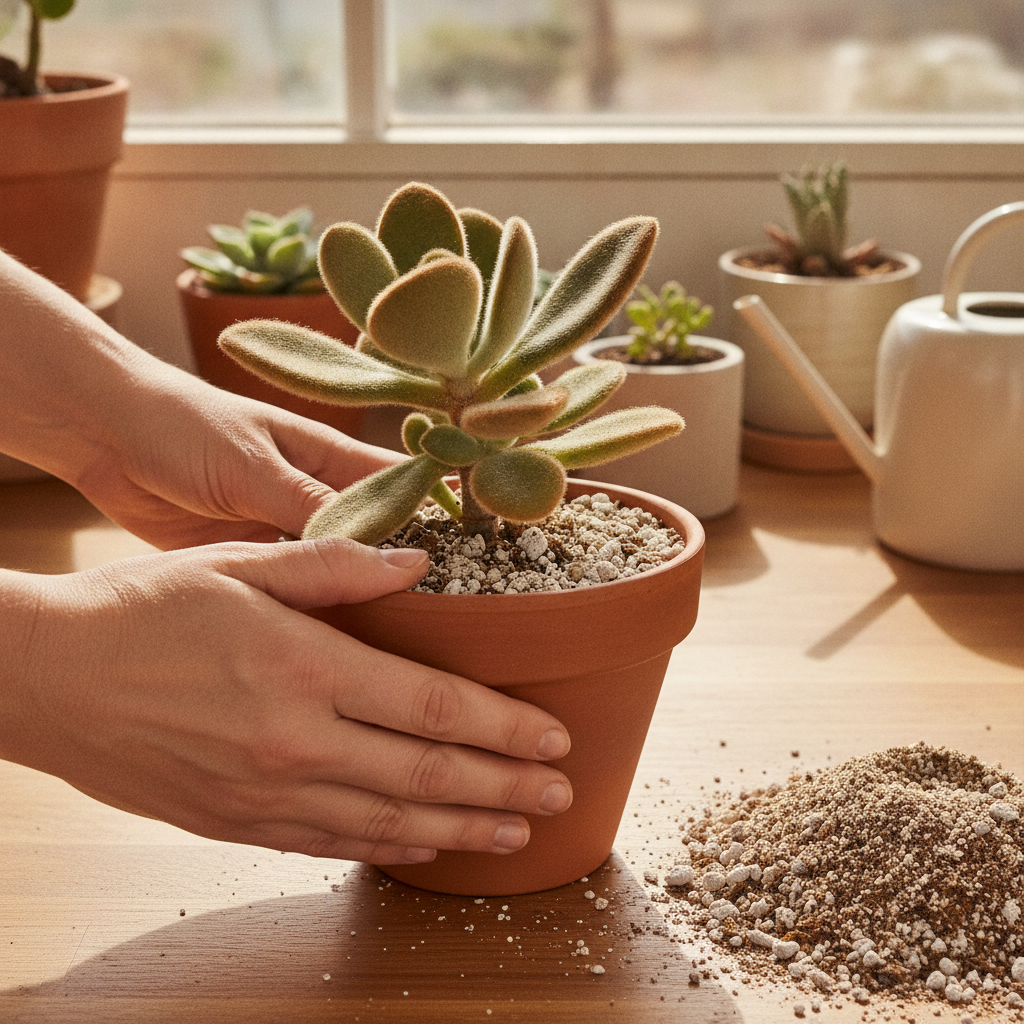
The right soil does half the watering work for you. Copper Spoons needs a mix that drains almost instantly and holds very little moisture, so that even a heavy watering passes through quickly and the roots are never left sitting in the wet. A standard houseplant compost, which is designed to stay damp, is the wrong choice and a common reason these plants fail.
Ideal Soil Composition
The goal is an open, mineral-rich blend. A good starting point is a quality cactus and succulent compost cut with extra grit so that roughly half the volume is coarse inorganic material. The table below breaks down a reliable mix and what each component contributes.
| Component | Proportion | Function |
|---|---|---|
| Cactus and succulent compost | 50 percent | Provides structure and a modest reserve of nutrients |
| Pumice or coarse grit | 30 percent | Creates fast drainage and air spaces around the roots |
| Perlite | 20 percent | Lightens the mix and prevents compaction |
Copper Spoons is relaxed about pH and grows well in anything from slightly acidic to slightly alkaline, broadly a pH of 6.0 to 7.5. The free-draining, gritty character of the mix matters far more than its exact acidity, so there is no need to test or adjust the pH for this plant.
Pro Tip — Quick Mix Recipe: If you want a simple, repeatable blend, combine two parts cactus compost, one part pumice, and one part perlite. A handful of horticultural grit on the soil surface also helps keep the stem base dry, where rot tends to start.
Choosing the Right Pot
Pot choice has a direct effect on how often the roots dry out, which for a rot-prone succulent is a meaningful decision rather than a cosmetic one.
Drainage holes are non-negotiable. Never plant Copper Spoons in a pot without a drainage hole. Without an escape route, water collects unseen at the bottom and the roots sit in it, which is a direct path to rot. If you love a decorative cachepot, keep the plant in a plain nursery pot inside it and lift it out to water.
Pot material: Unglazed terracotta is the ideal choice because its porous walls draw moisture out of the mix and allow it to dry faster, exactly what this plant wants. Glazed ceramic and plastic both hold moisture longer, so if you use them, be even more conservative with watering.
Pot size: Choose a pot only slightly larger than the root ball. An oversized pot holds a large volume of damp soil that the modest root system cannot use, and that excess moisture is a liability. Snug is safe with Copper Spoons.
When to Repot
This is a slow grower with a small root system, so it needs repotting only rarely, typically once every two to three years or when you can see roots emerging from the drainage holes. The best time is early in the growing season, in spring, when the plant is gearing up and will recover quickly. Always repot into dry mix and wait several days before the first watering, which gives any roots disturbed in the process time to seal over rather than rot.
How to Repot: Step-by-Step
- Water sparingly a few days beforehand so the root ball is neither sodden nor dust dry, then let it firm up.
- Gently ease the plant out of its pot, supporting the base of the stem rather than pulling on the leaves.
- Tease away the old soil from the roots and inspect them, trimming off any that are brown, black, or mushy with clean scissors.
- Add a layer of fresh gritty mix to the base of the new pot, then position the plant at the same depth it sat before.
- Fill around the root ball with more mix, pressing it in lightly to remove large air pockets without compacting it.
- Top off with a thin layer of grit around the stem and place the plant back in its bright spot.
- Wait five to seven days before watering to let any damaged roots heal.
Warning — Transplant Shock: Watering immediately after repotting is a common mistake. Freshly cut or bruised roots absorb water poorly and rot easily, so the few days of dry rest after repotting are not optional with succulents like this one.
Fertilising
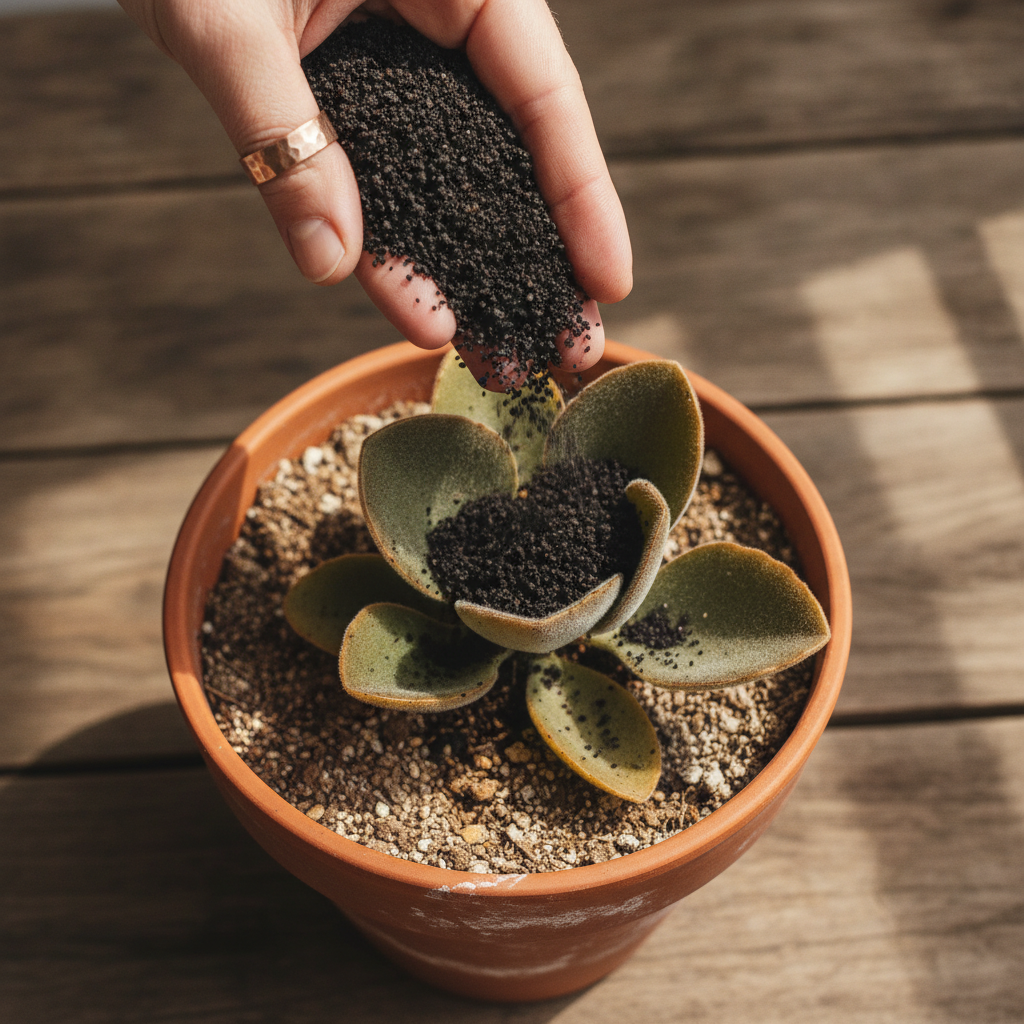
Copper Spoons is a light feeder that grows naturally in poor, stony ground, so it needs only modest help to stay healthy. Too much fertiliser does more harm than good, pushing soft, fast growth that loses the compact shape and intense colour the plant is grown for. A little, applied during the active season, is all it asks.
The growing season runs from spring through to early autumn, and feeding should be confined to that window. In winter the plant is resting, its roots take up almost nothing, and any fertiliser simply accumulates in the soil as harmful salts.
Understanding Plant Nutrients
Fertilisers are labelled with an N-P-K ratio describing their proportions of nitrogen, phosphorus, and potassium, the three nutrients plants need in the largest amounts. For a succulent grown for its form and colour, a feed that is relatively low in nitrogen and balanced or higher in potassium is preferable, since excess nitrogen drives leggy green growth. The table below summarises the main nutrients and what a shortage of each looks like.
| Nutrient | Symbol | Primary Function | Deficiency Symptoms |
|---|---|---|---|
| Nitrogen | N | Leaf and stem growth | Pale, slow growth, oldest leaves yellowing first |
| Phosphorus | P | Root development and flowering | Weak roots, dull tones, stunted growth |
| Potassium | K | Overall vigour and stress tolerance | Yellow or brown leaf edges, soft tissue |
| Calcium | Ca | Cell-wall strength | Distorted or weak new growth |
| Magnesium | Mg | Chlorophyll production | Yellowing between the veins of older leaves |
| Iron | Fe | Healthy new foliage | Pale, yellowing young leaves with green veins |
Types of Fertiliser
Liquid fertilisers: A liquid succulent or cactus feed diluted to half the recommended strength is the easiest and most controllable option. You apply it with a normal watering and can stop the moment growth looks vigorous enough.
Slow-release granular: A small dose of slow-release granules mixed into the soil at repotting feeds the plant gently over months. Use a light hand, as it is easy to overdo with a plant that needs so little.
Organic fertilisers: A thin top dressing of worm castings is a gentle, forgiving way to add nutrients with almost no risk of burning the roots, and it suits the relaxed needs of this plant well.
Feeding Schedule
One or two feeds across the whole growing season are plenty for Copper Spoons. A diluted liquid feed in late spring and again in midsummer covers its needs comfortably, and many growers do even less without any ill effect. When in doubt, underfeed rather than overfeed: a slightly hungry succulent stays compact and colourful, while an overfed one turns soft and green.
Pro Tip — Dilute and Halve: Always mix succulent feed to half or even a quarter of the strength stated on the bottle. Concentrations formulated for leafy plants are far stronger than a desert succulent wants, and a dilute feed is much safer than a full-strength one.
How to Fertilise
- Water the plant lightly a day or two ahead so the roots are not bone dry when the feed is applied.
- Mix a succulent or cactus fertiliser to half the recommended dilution.
- Apply it to the soil during a normal watering, keeping the liquid off the felted leaves.
- Let the pot drain completely and resume the usual dry-out cycle afterwards.
Warning — Salt Build-Up: Feeding too often, or feeding in winter, leaves a crust of fertiliser salts on the soil and can scorch the root tips, showing up as brown, crisp leaf edges. If you see a white crust forming, flush the pot through with plain water and pause feeding entirely.
Propagation
Copper Spoons propagates readily, and taking cuttings is also the natural way to renew an old, leggy plant or to rescue one whose base has started to rot. The most reliable method by far is the stem cutting, with leaf cuttings a slower and less certain second option.
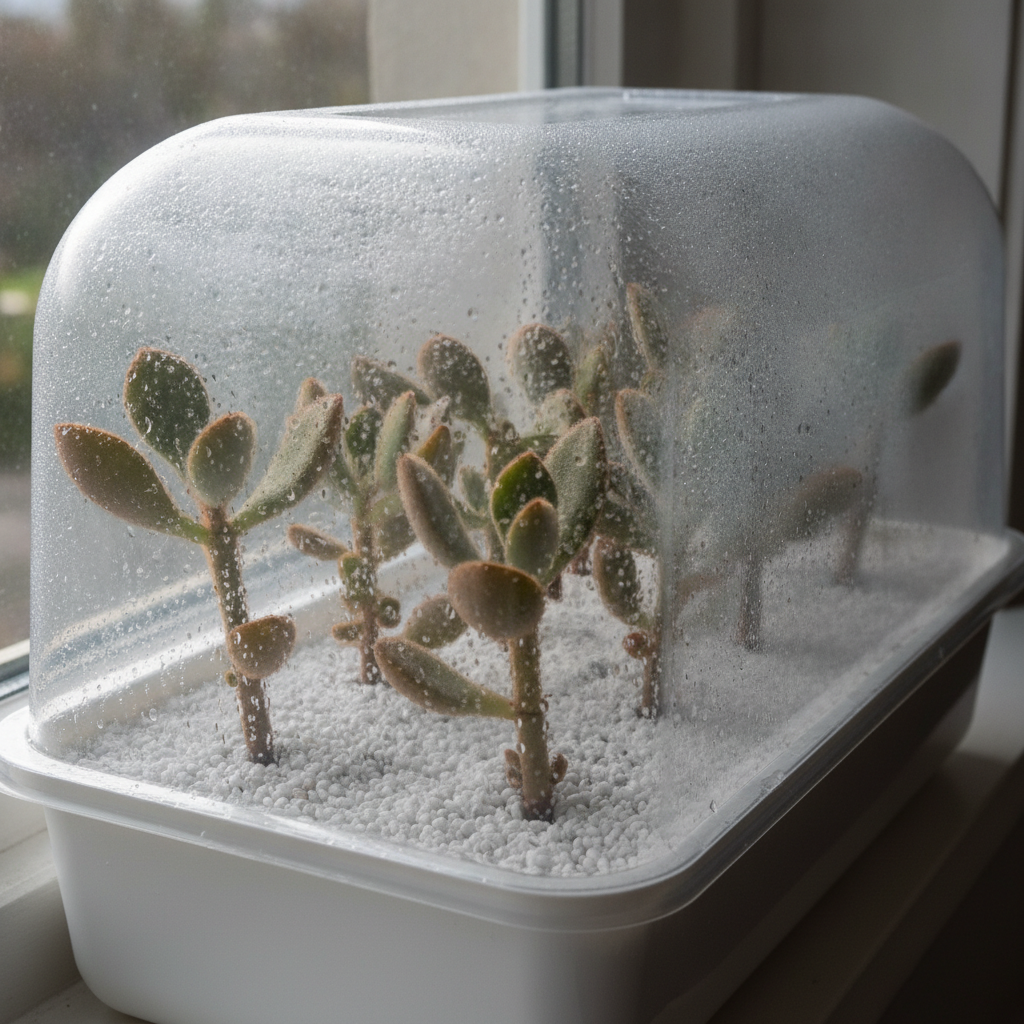
Whichever route you take, the key with all kalanchoes is patience and dryness. Fresh cuts must be allowed to callus over before they touch soil, and the rooting mix should stay barely moist rather than wet, because a succulent cutting is just as prone to rot as a mature plant.
Understanding Callusing
Callusing is the process by which a fresh cut on a succulent dries and forms a protective layer of hardened tissue over the wound. This seal is what stops the cutting from taking up too much water and rotting once it is in the soil, and it also marks the point from which new roots will emerge. Skipping the callusing step is the most common reason succulent cuttings fail, so it is always worth the wait of a few days before planting.
Stem Cuttings: Step-by-Step
Stem cuttings root quickly and produce a fully formed new plant, making this the recommended method for most growers.
- Using clean, sharp scissors or a knife, cut a healthy stem tip 8 to 12 centimetres (3 to 5 inches) long.
- Remove the lowest pair or two of leaves to expose a length of bare stem for planting.
- Set the cutting aside in a dry, shaded place for three to five days until the cut end has callused over.
- Insert the bare stem into barely moist gritty succulent mix or damp perlite, deep enough to stand upright.
- Place it in bright, indirect light and keep the mix only slightly moist, never wet.
- After two to four weeks, give the cutting a gentle tug; resistance means roots have formed and you can begin a normal watering routine.
Pro Tip — Take Cuttings in Spring: Cuttings taken in spring and early summer root fastest because the plant is in active growth. Avoid propagating in the depths of winter, when slow metabolism leaves cuttings sitting damp and vulnerable to rot for far longer.
Leaf Cuttings: Step-by-Step
Leaf propagation is possible with Copper Spoons but slower and less reliable than stem cuttings, since the thick felted leaves are slow to root and easily lost to rot. It is worth trying when you have spare leaves from pruning.
- Gently twist off a whole, healthy leaf so that it comes away cleanly at the base without tearing.
- Lay the leaf on a dry surface out of direct sun for two to three days until the base has callused.
- Rest the leaf on top of barely moist gritty mix rather than burying it, with the callused end just touching the surface.
- Keep it in bright, indirect light and mist the soil surface only very lightly if it dries out completely.
- Be patient, as roots and a tiny new plantlet can take several weeks to many months to appear, and not every leaf will take.
Troubleshooting Propagation
| Problem | Likely Cause | Solution |
|---|---|---|
| Cutting turns soft and black | Rot from too much moisture or no callusing | Use drier mix, allow a longer callus, and discard the affected cutting |
| Cutting shrivels and dries up | Too little moisture or very low humidity | Lightly dampen the mix and keep out of harsh direct sun |
| No roots after many weeks | Low light or cold temperatures slowing growth | Move somewhere warmer and brighter and wait patiently |
| Leaf cutting fails to sprout | Leaf damaged at the base or simply not viable | Take several leaves at once to improve the odds of success |
Pests & Diseases
Copper Spoons is a tough plant with few natural enemies indoors, and most trouble traces back to overwatering rather than to pests. Still, a handful of common sap-sucking insects do find their way onto it, and the dense felt that makes the plant so attractive also gives small pests excellent cover, so close inspection now and then pays off.
The leaf joints, where paired leaves meet the stem, are the favourite hiding place for pests on this species. Check those crevices whenever you water, ideally with a magnifier, because catching an infestation early makes it far easier to clear.
Common Pests
Mealybugs (Pseudococcus species)
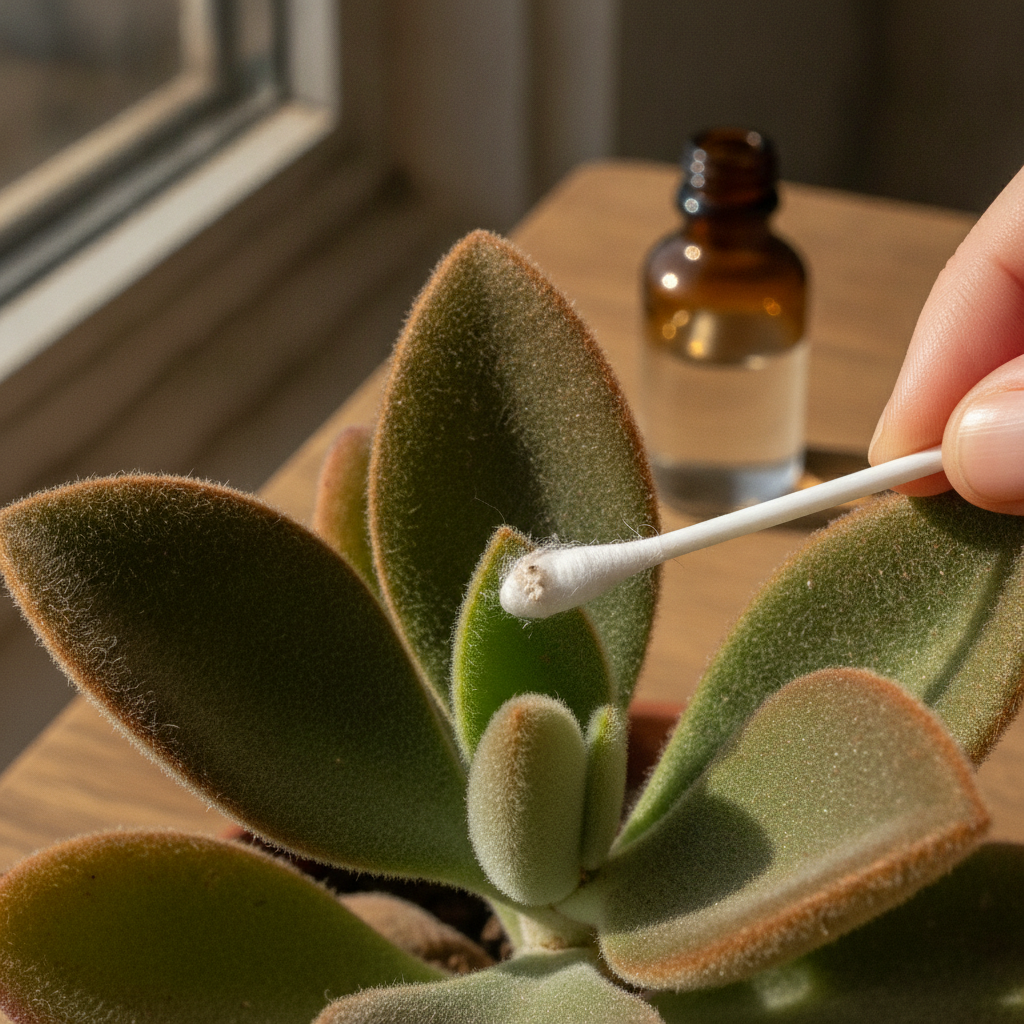
Mealybugs are the number one pest of Copper Spoons. They appear as small, white, cottony tufts tucked into the leaf joints, where they blend in with the plant’s own pale felt and are easy to miss until they multiply. They suck sap, weaken the plant, and leave behind sticky honeydew.
Treatment: Dab each insect directly with a cotton bud dipped in isopropyl alcohol, which kills them on contact. For heavier infestations, treat the whole plant with a succulent-safe insecticidal soap or a systemic insecticide, and repeat every week until no new bugs appear.
Aphids (Aphidoidea)
Aphids are small green, black, or pinkish insects that cluster on soft new growth and flower stalks, particularly if the plant ever blooms. They too feed on sap and can distort fresh leaves.
Treatment: Rinse them off at the soil level with care to keep the leaves dry, or spray with insecticidal soap. A light application of neem oil deters them from returning.
Scale insects (Coccoidea)
Scale shows up as small, hard brown bumps clinging to stems and the undersides of leaves. They sit still and can be mistaken for part of the plant, slowly draining its vigour as they feed.
Treatment: Scrape them off gently with a fingernail or an alcohol-soaked cotton bud, then treat with insecticidal soap or a systemic product to catch the mobile young crawlers.
Common Diseases
Root and Stem Rot (Pythium and Phytophthora)
By far the most serious threat to Copper Spoons, rot sets in when the roots or stem base sit in moisture for too long. The first signs are a soft, darkening stem at soil level and leaves that yellow and drop, and once it takes hold it spreads upward fast.
Treatment: There is no cure for badly rotted tissue. Cut well above any soft, discoloured stem, let the healthy top cutting callus, and re-root it in fresh dry mix. Prevent recurrence by watering only when the soil is completely dry and using a gritty, free-draining mix.
Leaf Spot and Fungal Blemishes (Botrytis and others)
Dark or brown spots on the felted leaves usually follow water sitting on the surface or poor air circulation in a humid room. The felt holds droplets against the leaf, giving fungi a foothold that a smooth-leaved succulent would shrug off.
Treatment: Remove badly marked leaves, improve airflow, and keep water off the foliage entirely. Damaged felt does not regenerate, so the marks remain, but new growth will come in clean once conditions improve.
Pest and Disease Summary
| Pest / Disease | Identification | Treatment |
|---|---|---|
| Mealybugs | White cottony tufts in the leaf joints | Alcohol on a cotton bud, then insecticidal soap |
| Aphids | Clusters on new growth and flower stalks | Rinse off or spray with insecticidal soap |
| Scale | Hard brown bumps on stems and leaf undersides | Scrape off and treat with systemic insecticide |
| Root and stem rot | Soft, dark stem base and yellowing leaves | Re-root a healthy cutting; correct watering |
| Leaf spot | Dark fungal blemishes on the felt | Remove leaves, improve airflow, keep foliage dry |
Prevention Strategies
The best defence is the same set of conditions that keeps the plant looking its best: bright light, a fast-draining mix, careful watering, and good airflow. A healthy, unstressed Copper Spoons is far less attractive to pests and far more able to fend off disease than one that is overwatered or starved of light.
Quarantine any new succulent for a couple of weeks before placing it near your existing plants, since mealybugs in particular often arrive hidden on a new purchase. Inspect the leaf joints regularly, deal with any pests the moment you spot them, and keep the growing area clean and uncluttered so problems cannot spread unnoticed.
Pro Tip — Inspect at Watering Time: Tie pest checks to your watering routine. Every time you water, take a moment to look into the leaf joints and along the stems, so any infestation is caught while it is still small and easy to clear.
Popular Varieties
Unlike many popular houseplants, Copper Spoons has not been bred into a long list of named cultivars. The species itself is the star, and most of the variation you will see comes from the plant’s age and growing conditions rather than from distinct varieties. The most obvious change is colour: bright new growth is a rich cinnamon-copper, while older leaves gradually weather to a soft silvery-grey, so a single mature specimen can display both tones at once.
What you are more likely to meet are close relatives in the same group of felted kalanchoes, which are often sold alongside Copper Spoons and sometimes confused with it. The table below sets the species in context against those lookalikes so you can tell them apart on the nursery bench.
| Variety | Leaf Appearance | Light Needs | Growth Rate | Availability |
|---|---|---|---|---|
| Copper Spoons (the species) | Spoon-shaped, cinnamon-bronze above, silvery beneath | Bright, with direct sun | Slow | Common |
| Young copper form | Fresh growth in intense copper felt | Bright, with direct sun | Slow | Common |
| Mature silvered form | Older leaves aged to silvery-grey felt | Bright, with direct sun | Slow | Common |
| Silver Teaspoons (Kalanchoe bracteata) | Smaller spoon leaves in chalky silver-white | Bright, with direct sun | Slow to moderate | Occasional |
| Panda Plant (Kalanchoe tomentosa) | Furry grey-green leaves with brown-tipped edges | Bright indirect to direct | Slow | Common |
| Felt Bush (Kalanchoe beharensis) | Large, triangular, deeply felted bronze leaves | Bright, with direct sun | Moderate | Occasional |
Featured Varieties
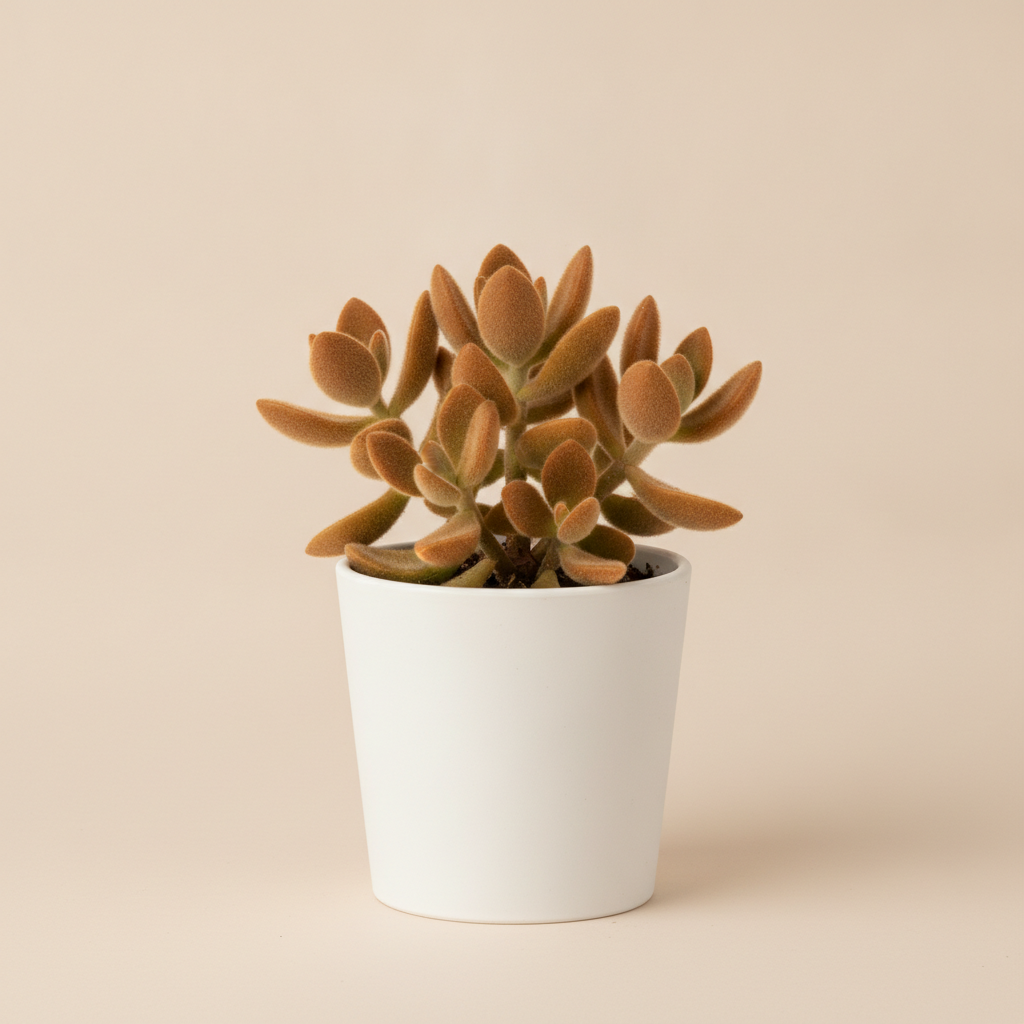
Young Copper Form
Fresh growth shows the plant at its most vivid, the spoon-shaped leaves wrapped in dense cinnamon-copper felt and held in tight, upright pairs. This is the look that bright light and cooler nights preserve.
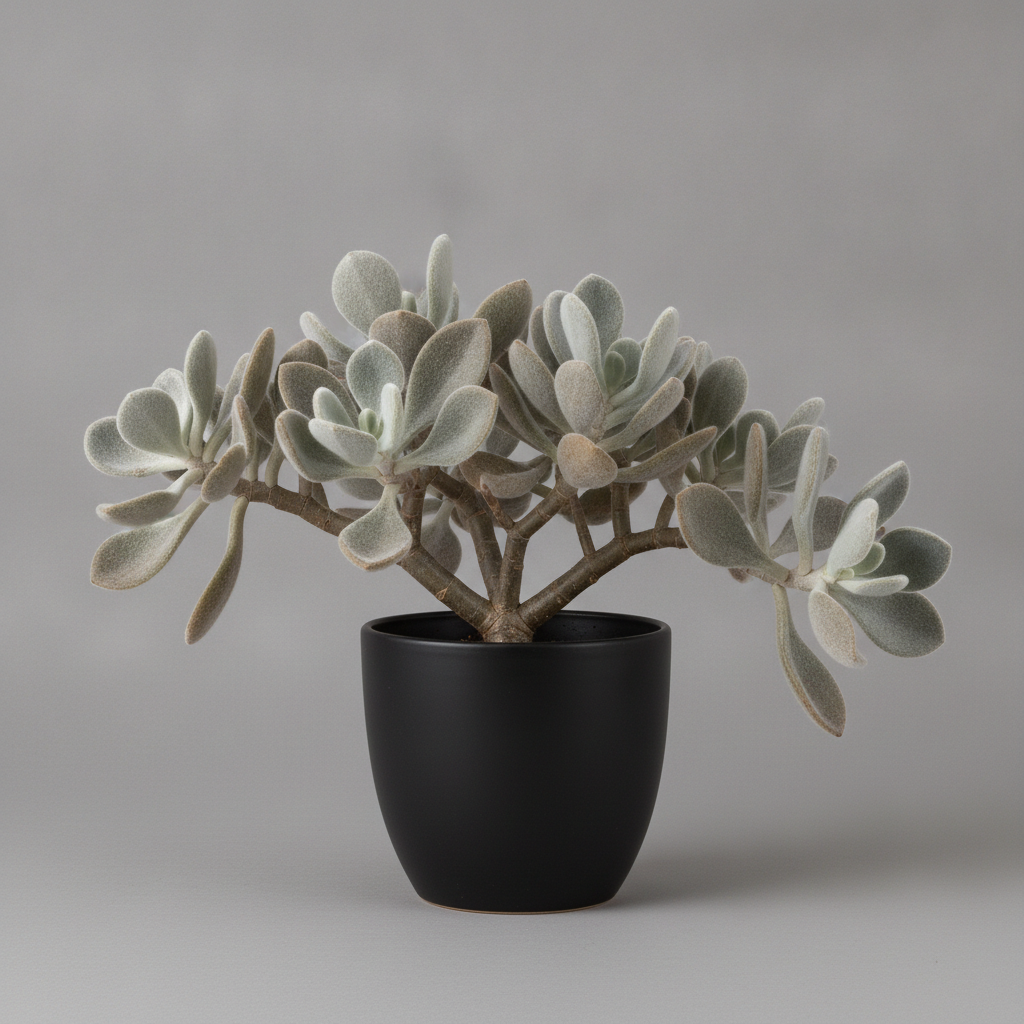
Mature Silvered Form
With age the lower leaves mellow to a soft silvery-grey and the stems turn woody and branched, giving an established plant a sculptural, tree-like character that many growers prize above the younger colour.
Variety Profiles in Detail
Copper Spoons (Kalanchoe orgyalis)
The species is endemic to southern Madagascar, where it grows as a slow, branching shrub. Its defining feature is the two-tone felt, copper above and silver beneath, on rounded, slightly cupped leaves. Grown well it forms a compact, characterful plant that improves with age, and it is the standard against which the related felted kalanchoes are judged.
Silver Teaspoons (Kalanchoe bracteata)
A close Madagascan relative often sold beside Copper Spoons and sometimes mistaken for it. Its leaves are smaller and a cooler, chalky silver-white rather than copper, but the spoon shape and felted texture are similar, and its care is essentially identical. It makes an attractive companion piece for anyone who likes the felted look in a paler shade.
Felt Bush (Kalanchoe beharensis)
The largest of the felted kalanchoes, with big triangular, deeply textured leaves in bronze and grey tones. It grows faster and far taller than Copper Spoons and is better suited to a floor position than a windowsill, but it shares the same love of bright light and dislike of wet roots.
Choosing the Right Variety for Your Space
For a bright windowsill, Copper Spoons or Silver Teaspoons are the natural picks, both staying compact and rewarding a sunny spot with rich felted colour. If you have a larger, well-lit floor space and want a bolder statement, the Felt Bush brings the same texture on a much grander scale. Whichever you choose, the care is broadly the same across the group, so once you have learned to keep one of these felted kalanchoes happy, the rest will follow easily.
Frequently Asked Questions
Why is my Copper Spoons losing its copper colour?
Almost always the cause is too little light. The cinnamon-bronze tone is produced under bright sun, and in a dim spot the plant reverts to plain green and stretches. Move it to your sunniest window, or add a grow light, and new growth will come back in colour.
How often should I water Copper Spoons?
Only when the soil has dried out completely, which tends to be roughly every two to three weeks in summer and far less in winter. There is no fixed schedule; the right interval depends on your light, pot, and warmth, so always check that the mix is bone dry before watering again.
Is Copper Spoons safe around cats and dogs?
No. Like all kalanchoes it contains cardiac glycosides that are toxic to cats, dogs, and horses if eaten, and can cause drooling, vomiting, and heart problems. Keep it well out of reach of pets and children.
Can I mist my Copper Spoons?
No, misting does this plant more harm than good. The felted leaves trap water against their surface, leading to spotting and rot, and the plant prefers dry air in any case. Water the soil directly and keep the foliage dry.
Why are the leaves on my Copper Spoons going soft and mushy?
Soft, translucent, or mushy leaves are the classic sign of overwatering. Let the plant dry out fully, check the stem base for rot, and if the base is soft, take a healthy top cutting and re-root it in fresh dry mix to save the plant.
How big does Copper Spoons get?
Indoors it usually reaches 30 to 60 centimetres (12 to 24 inches) over several years, growing slowly into a branched little shrub. In the ground in a frost-free climate it can eventually exceed a metre, but in a pot it stays comfortably compact.
Does Copper Spoons flower indoors?
It can produce clusters of small yellow flowers on tall stalks in late winter or spring, but flowering is uncommon on indoor plants and usually only happens on mature specimens grown in very bright conditions. The plant is grown for its foliage, so blooms are a bonus rather than the point.
Why is my Copper Spoons growing tall and leggy?
Leggy, stretched growth with wide gaps between the leaf pairs is the plant reaching for more light. Give it a brighter position, and prune back the stretched stems if you like; the cuttings can be callused and re-rooted to make a fuller, more compact plant.






