
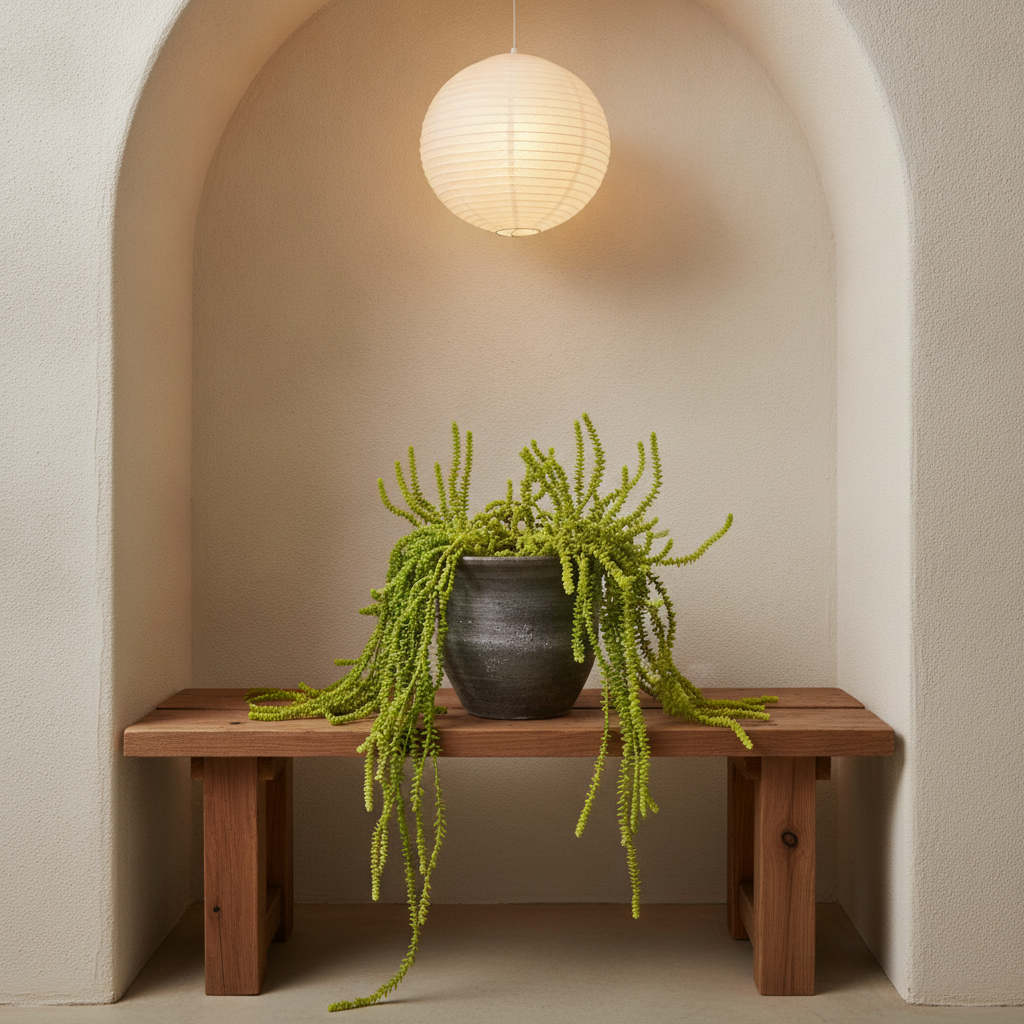
Few succulents look quite as architectural as the watch chain plant. Its slender stems are sheathed in tiny triangular leaves stacked in four neat ranks, so each shoot resembles a length of braided cord, a strip of green zipper or a tightly woven chain. Botanically it is Crassula muscosa, a member of the stonecrop family from the arid corners of southern Africa, and you may also meet it under the older name Crassula lycopodioides or one of its many nicknames: zipper plant, princess pine, lizard’s tail, rat-tail crassula and clubmoss crassula. Whatever you call it, the appeal is the same, a fine-textured, almost coral-like form that brings a different rhythm to a shelf of rosette succulents.
It has a reputation as one of the most forgiving houseplants you can grow, and that reputation is largely deserved. The watch chain plant asks for very little and resents fuss, which makes it a fine choice for beginners and for anyone who travels or forgets to water. Yet there is a meaningful gap between a plant that merely survives and one that genuinely thrives, between thin, stretched stems reaching for a distant window and a dense, springy mound of chartreuse chains spilling over the pot rim. This guide covers everything that closes that gap: light, watering, soil, feeding, propagation, pests and the handful of varieties worth seeking out.
Contents
- Quick Reference
- Why Watch Chain Plant Makes a Rewarding Houseplant
- Light Requirements
- Watering & Humidity
- Soil, Potting & Repotting
- Fertilising
- Propagation
- Pests & Diseases
- Popular Varieties
- Frequently Asked Questions
Quick Reference: Watch Chain Plant at a Glance
| Light | Bright light, including several hours of gentle direct sun; tolerates bright indirect but stretches in shade |
| Watering | Soak only when the soil is completely dry, roughly every 10 to 14 days in summer and monthly in winter |
| Temperature | 18 to 24 degrees Celsius (64 to 75 Fahrenheit); keep above 7 degrees Celsius (45 Fahrenheit), not frost hardy |
| Humidity | Average household humidity of 30 to 50 percent; dislikes stagnant, damp air |
| Fertiliser | A dilute, low-nitrogen succulent feed two or three times across spring and summer |
| Toxicity | Generally regarded as non-toxic to cats, dogs and people, though ingestion may cause mild stomach upset |
Why Watch Chain Plant Makes a Rewarding Houseplant
The watch chain plant earns its place on the windowsill through a rare combination of low demands and high character. It is a true succulent, storing water in those countless little leaves, so it shrugs off the occasional missed watering that would flatten a fern or a calathea. A healthy specimen grows into a sprawling, mounding cushion of stems, generally reaching 15 to 30 centimetres (6 to 12 inches) tall before the longer shoots flop and trail, which makes it equally at home in a small pot on a desk or tumbling from the edge of a shelf. The texture is the real draw, fine and intricate at close range yet reading as a soft green mass from across a room.
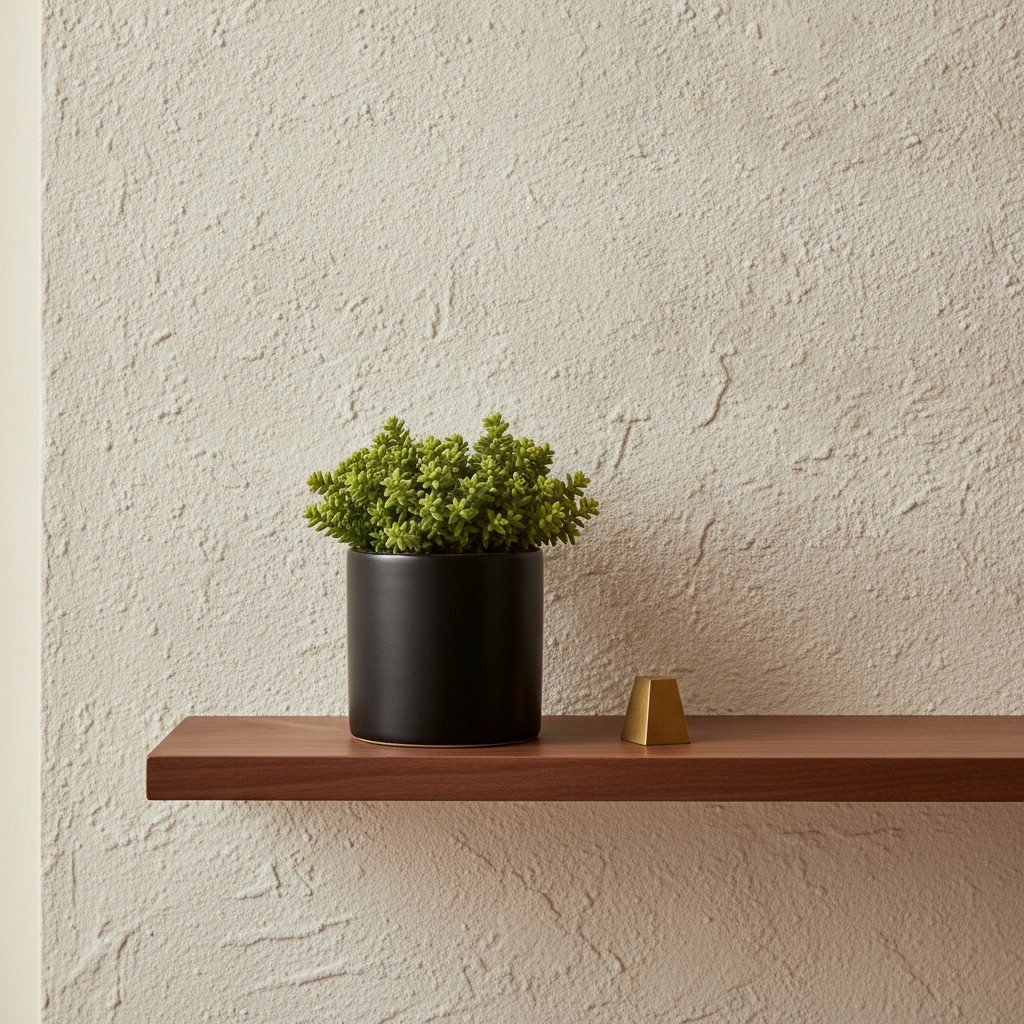
Native to rocky, free-draining slopes across South Africa and Namibia, the plant evolved to handle long dry spells, intense light and lean, mineral soils. Understanding that origin explains almost every care decision that follows: it wants to dry out, it wants to be bright, and it wants nothing to do with rich, water-retentive compost. In late winter and spring mature plants produce tiny pale yellow-green flowers tucked into the leaf axils. They are easy to miss and carry a faintly musty scent, so the watch chain plant is grown for its foliage and form rather than any floral display. Get the basics right and it rewards you with steady, undemanding growth for many years.
Important — Toxicity: Unlike its relative the jade plant, Crassula muscosa is generally listed as non-toxic to cats and dogs and is not known to be poisonous to humans. Even so, it is not food, and a curious pet that chews on it may suffer mild drooling or an upset stomach, so it is sensible to discourage nibbling and keep an eye on enthusiastic chewers.
Light Requirements
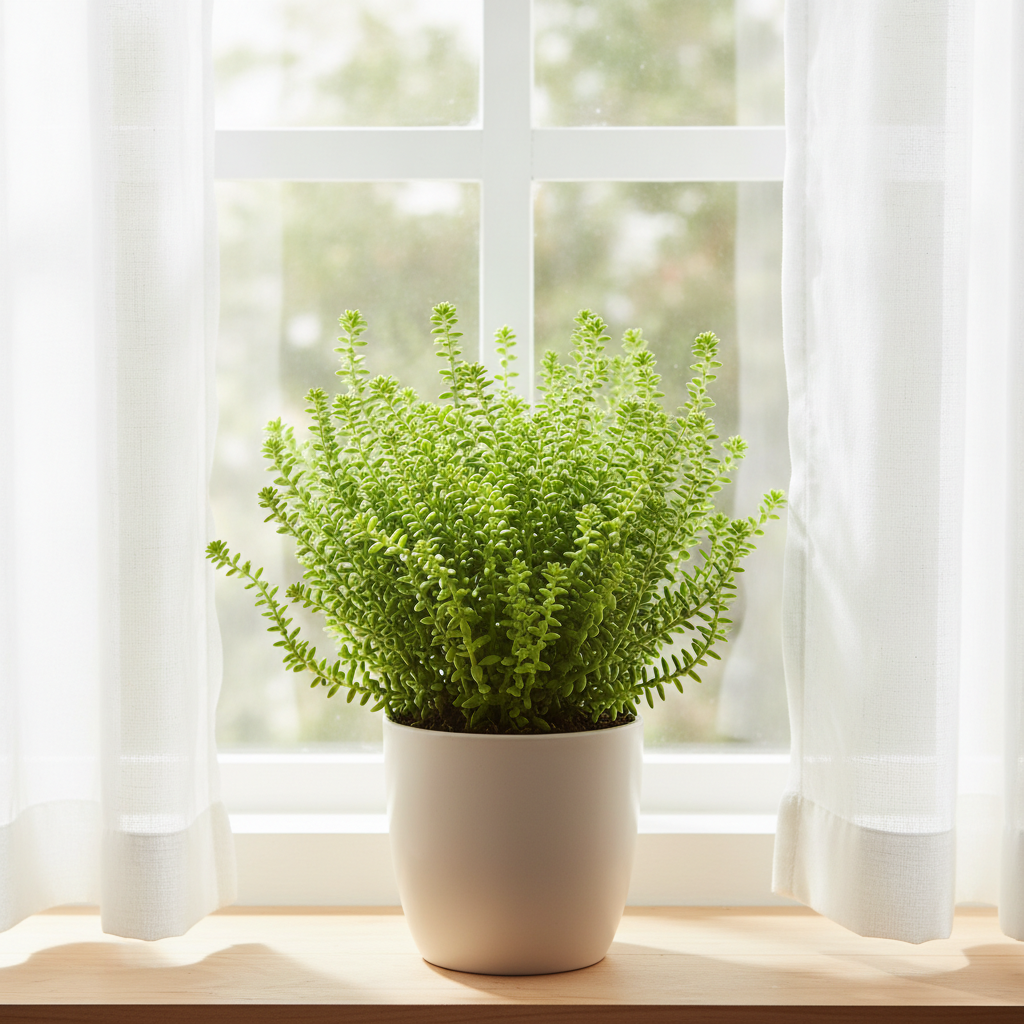
Light is the single biggest factor in whether a watch chain plant stays compact and handsome or turns into a sparse, leggy tangle. As a sun-loving succulent from open habitats, it wants as much brightness as a windowsill can offer, including a few hours of gentle direct sun each day. In good light the stems stay short, densely packed and a fresh chartreuse green, holding the tidy braided look that gives the plant its name.
The ideal indoor position is right on or beside a bright windowsill where the plant catches direct morning or late-afternoon sun and bright indirect light for the rest of the day. It will survive in merely bright indirect light, but survival is not the goal. In dim corners the stems elongate, the leaf scales space out and the whole plant loses the crisp, chain-like density that makes it worth growing.
Light Levels Explained
Indoor light falls away far more quickly than our eyes suggest, so it helps to think in rough tiers. The table below describes how the watch chain plant responds across the range you are likely to encounter at home.
| Light Category | Approx. Level | Typical Location | Outcome |
|---|---|---|---|
| Direct sun | Over 50,000 lux | On a south or west sill | Excellent if eased into gradually; richest colour and tightest growth |
| Bright indirect | 10,000 to 25,000 lux | Just back from a sunny window | Very good; healthy if a little less compact |
| Medium | 2,000 to 10,000 lux | A few metres from a bright window | Tolerated but stems begin to stretch and thin |
| Low | 500 to 2,000 lux | An interior wall or north corner | Poor; leggy, pale and prone to rot |
| Very low | Under 500 lux | A windowless room | Unsuitable; decline is only a matter of time |
Window Orientation and Placement
South-facing window: In the northern hemisphere this is the brightest aspect and an excellent spot, providing the strong light the plant craves. During the fiercest midday hours of high summer a very sheer curtain can take the edge off and prevent scorching on a plant that has been kept indoors.
East-facing window: A reliable choice. Cooler morning sun is gentle enough to enjoy directly, followed by bright ambient light through the afternoon, which suits the watch chain plant well with little risk of scorch.
West-facing window: Also very good, delivering strong afternoon sun. Because that light arrives at the warmest part of the day, watch for any leaf bronzing on a newly moved plant and give it time to adjust.
North-facing window: The weakest aspect and the hardest to succeed with. A watch chain plant may hang on directly on a north sill, but expect stretching and pale growth, and consider supplementing with a grow light through the darker months.
Pro Tip — Even Growth: Because the stems always lean towards the light, rotate the pot a quarter turn every week or two. This keeps the mound symmetrical instead of letting it lurch towards the glass and grow lopsided.
How Light Affects Colour and Form
In strong light the stems stay tightly packed and take on a warm, slightly golden chartreuse, and in very bright conditions or cool nights the tips can flush faintly bronze or pink, a sign of a happy, well-lit plant rather than stress. The variegated form depends entirely on good light to keep its cream and rose tones; in shade that variegation fades back towards plain green. Move any plant into brighter conditions gradually, over a week or two, so it can build up protective pigments rather than being shocked.
Warning — Direct Sunlight: A watch chain plant that has spent months in low light will scorch if it is suddenly moved into blazing midday sun, showing bleached white or brown patches that do not recover. Always acclimatise it over ten to fourteen days, lengthening its time in direct sun a little each day.
Artificial Lighting
This is a forgiving plant to grow under lights, which makes it a good candidate for darker flats and short northern winters. A full-spectrum LED grow light positioned 20 to 30 centimetres (8 to 12 inches) above the plant and run for 12 to 14 hours a day will keep growth dense and colourful. If you notice stems starting to stretch over winter even by a bright window, a supplementary light is the simplest way to hold the plant’s shape until the days lengthen again.
Seasonal Adjustments
Light intensity indoors can halve between summer and winter, so a position that is perfect in June may be too dim in December. Move the plant to your brightest available window as autumn closes in, clean dust from the glass, and ease it back from the hottest sun the following spring once growth resumes. Matching the plant’s exposure to the season is the easiest way to keep it compact year round.
Watering & Humidity
If light is the most important factor for shape, watering is the one most likely to kill a watch chain plant outright. As a succulent adapted to dry, stony ground, it stores its own water reserves and is far more endangered by too much moisture than by too little. The guiding principle is simple: water thoroughly, then wait until the soil is bone dry before watering again.
When to Water
Forget any fixed schedule and read the soil instead. Push a finger or a wooden skewer to the bottom of the pot, and only water when it comes out completely dry. In a warm, bright spot through spring and summer that usually works out to roughly every 10 to 14 days, though a small pot in strong sun may dry faster and a large one slower.
In autumn and winter the plant’s growth slows and its water use drops sharply, so stretch the interval to once every three or four weeks, or even less if your home is cool. The plant’s own leaves are a useful gauge: plump, firm scales mean it is well hydrated, while leaves that look slightly shrivelled or soft tell you it is genuinely thirsty and ready for a drink.
Pro Tip — The Soak and Dry Method: When you do water, water generously until it runs freely from the drainage holes, which moistens the entire root ball and flushes out built-up salts. Then do not water again until the mix is completely dry. Frequent little sips keep the soil perpetually damp and are the fastest route to root rot.
How to Water Correctly
- Check that the soil is dry all the way to the bottom of the pot before you begin.
- Water at the soil surface, directing the stream around the base rather than over the dense foliage, which can trap moisture and rot.
- Keep going until water flows steadily from the drainage holes, ensuring the whole root ball is wetted.
- Let the pot drain completely for several minutes so no water is left sitting at the roots.
- Tip away anything that collects in the saucer or cachepot; the plant should never stand in water.
- Return the plant to its bright spot and leave it alone until the soil is fully dry again.
Signs of Overwatering vs. Underwatering
| Symptom | Overwatering | Underwatering |
|---|---|---|
| Leaf colour | Yellowing, translucent or blackening stems | Dull, slightly faded green |
| Leaf texture | Soft, mushy, easily squashed | Shrivelled, thin, wrinkled scales |
| Soil | Stays wet for days, may smell sour | Bone dry well beyond the normal interval |
| Roots | Brown, soft and foul-smelling | Dry and intact but sparse |
| Stem base | Collapsing, black and slimy at soil line | Firm but shrinking slightly |
Warning — Root Rot: Blackening at the base and soft, collapsing stems signal root rot, the most common cause of death in this plant. Act immediately: unpot it, cut away every brown or mushy root and stem, let the healthy pieces callus for a day or two, and replant into fresh, dry, gritty mix. Often the fastest rescue is to take a few firm cuttings from the top and start again.
Humidity Requirements
Coming from dry habitats, the watch chain plant is perfectly content in ordinary household humidity of around 30 to 50 percent and needs no special measures. It actively dislikes humid, stagnant air, which encourages fungal problems among its tightly packed stems.
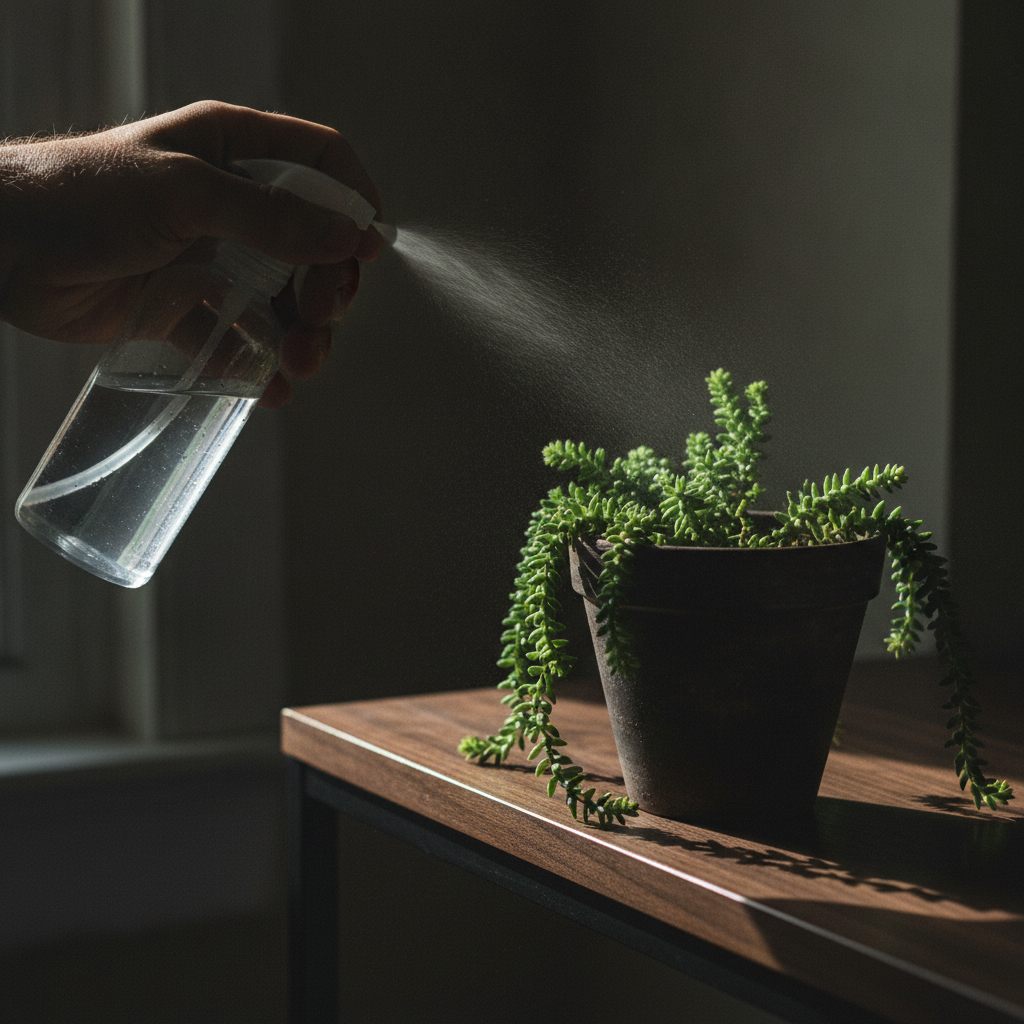
The most common humidity-related mistakes are misting it for moisture and grouping it among tropical plants in a damp microclimate. Neither is necessary. If anything goes wrong on the humidity front it is usually too much, showing up as mould or rot deep in the foliage rather than the crispy tips you would see on a moisture-loving plant.
Rather than raising humidity, focus on air movement. A gently circulating room, an open door or a small fan nearby helps the dense stems dry quickly after watering and keeps fungal trouble at bay. Good airflow is far more valuable to this plant than any humidity tray.
Water Quality
The watch chain plant is not fussy about water quality and tolerates ordinary tap water in most areas. In regions with very hard water you may notice pale mineral crust on the soil surface over time, which an occasional flush with rain water or filtered water will clear. Whatever you use, room-temperature water is kinder to the roots than water straight from a cold tap.
Soil, Potting & Repotting
Everything about the watch chain plant’s care comes back to drainage, and that begins with the soil. The single most important decision you make for this plant is to pot it in a fast-draining, gritty mix that holds almost no excess water. Standard houseplant compost, which is designed to stay moist, is a trap for a succulent like this.
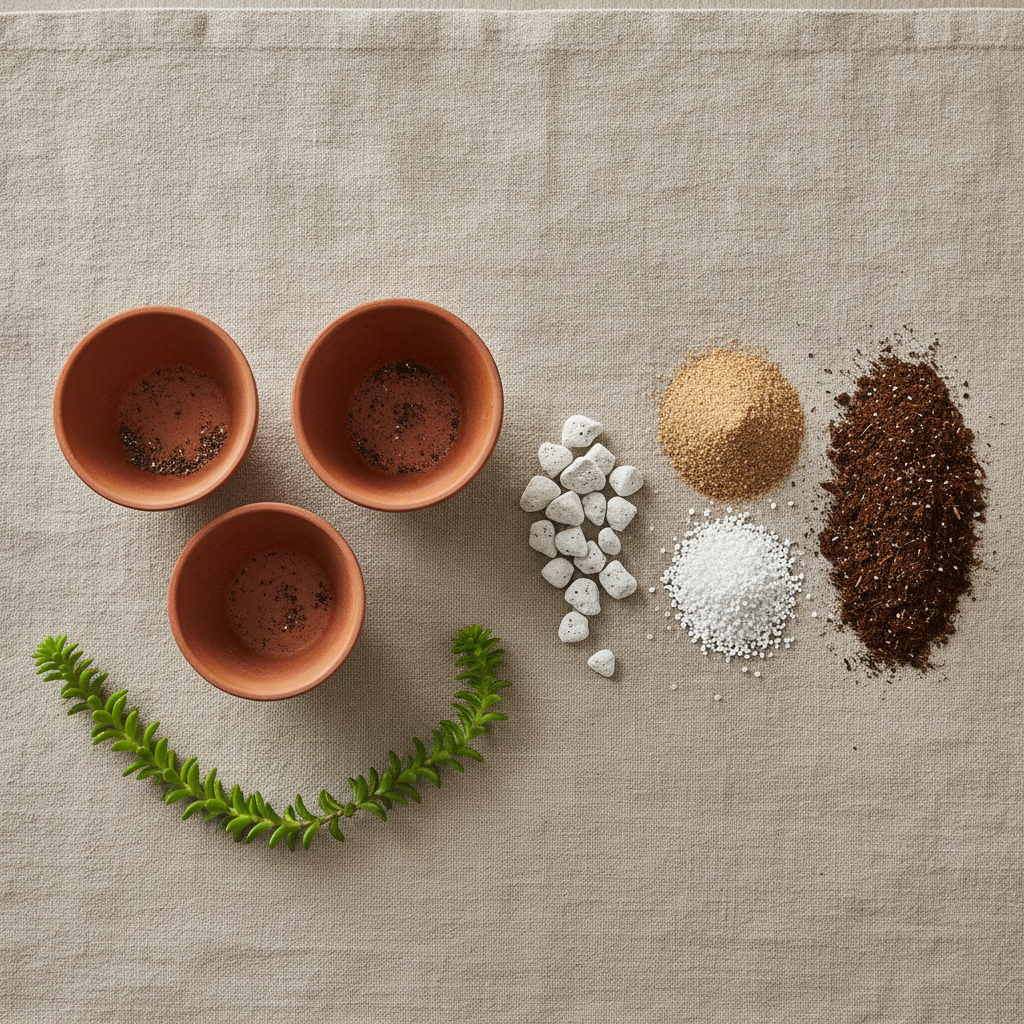
Ideal Soil Composition
Aim for a mix that is at least half coarse mineral material so that water rushes through and air reaches the roots. A purpose-made cactus and succulent compost is a fine starting point, improved further by stirring in extra grit or pumice. The table below shows a reliable blend you can mix yourself.
| Component | Proportion | Function |
|---|---|---|
| Cactus or general potting compost | 40 to 50 percent | Holds a little moisture and nutrients |
| Coarse grit or pumice | 30 percent | Creates fast drainage and stability |
| Perlite | 20 to 30 percent | Adds air pockets and lightens the mix |
The plant is relaxed about pH and grows happily in anything from slightly acidic to slightly alkaline, roughly 6.0 to 7.5, so there is no need to test or adjust it. Texture matters far more than chemistry here; if water sits on the surface for more than a second or two, add more grit.
Pro Tip — Quick Mix Recipe: For a no-fuss blend, combine two parts shop-bought cactus compost with one part perlite and one part fine grit or pumice. It drains in seconds, suits almost every common succulent, and means you can mix one batch for your whole collection.
Choosing the Right Pot
The pot works hand in hand with the soil to keep the roots on the dry side, so it deserves as much thought as the compost. With this plant, smaller and more breathable is almost always better than large and water-retentive.
Drainage holes are non-negotiable. Never plant a watch chain plant in a pot without a drainage hole, however attractive the container. Without an escape route the water pools at the bottom and the roots rot. If you love a particular decorative cachepot, grow the plant in a plain plastic pot with holes and slip it inside, lifting it out to water.
Pot material: Terracotta is ideal because its porous walls wick moisture out of the soil and help it dry evenly, a real advantage for a rot-prone succulent. Glazed ceramic and plastic both work but hold water longer, so if you use them, lean even harder on a gritty mix and a careful watering hand.
Pot size: Choose a pot only slightly larger than the root ball. An oversized pot holds a large volume of damp soil that the modest roots cannot use, and that lingering moisture is exactly what invites trouble. When you do pot up, increase by just one size.
When to Repot
The watch chain plant is slow growing and entirely happy being a little snug, so it needs repotting only every two or three years, or when roots appear at the drainage holes and the mound clearly overhangs the rim. The best time is spring, at the start of the active growing season, and it is wise to repot into dry mix and wait several days before the first watering so any disturbed roots can heal. This is also the natural moment to refresh tired, broken-down soil.
How to Repot: Step-by-Step
- Make sure the plant is dry, which makes the root ball easier to handle and less prone to damage.
- Ease the plant out by squeezing a flexible pot or running a knife around a rigid one, supporting the brittle stems as you go.
- Gently tease away the old soil from the roots and inspect them, trimming off anything brown, soft or dead.
- Add a layer of fresh gritty mix to a clean pot one size up and set the plant at its previous depth.
- Fill around the roots with more dry mix, firming lightly so the plant sits steady without being packed tight.
- Leave the plant unwatered in a bright, sheltered spot for three to seven days, then resume normal watering.
Warning — Transplant Shock: The fine stems are brittle and snap easily, so handle the plant by the root ball rather than the foliage. Do not water immediately after repotting; freshly cut or bruised roots sitting in damp soil are extremely vulnerable to rot. Any pieces that break off are not wasted, since they root readily as cuttings.
Fertilising
In the wild the watch chain plant grows in lean, mineral soils where nutrients are scarce, and that heritage shapes its appetite. It needs very little feeding, and far more plants are harmed by overfeeding than by going hungry. A light hand here keeps growth compact and healthy.
Think of fertiliser as a gentle seasonal boost rather than a regular meal. A few dilute feeds spread across the growing season are plenty to keep the plant ticking over, support steady growth and maintain good colour without pushing the soft, weak growth that heavy feeding encourages.
Understanding Plant Nutrients
Fertiliser labels carry three numbers, the N-P-K ratio, standing for nitrogen, phosphorus and potassium. For a succulent like this you want a feed that is relatively low in nitrogen, because excess nitrogen drives lush, soft, stretched growth that is weak and rot-prone. The table below outlines the main nutrients and the signs that a plant is short of them, though deficiencies are rare in a recently potted specimen.
| Nutrient | Symbol | Primary Function | Deficiency Symptoms |
|---|---|---|---|
| Nitrogen | N | Leaf and stem growth | Pale, slow, stunted growth |
| Phosphorus | P | Root development and flowering | Weak roots, poor establishment |
| Potassium | K | Overall vigour and stress tolerance | Yellow leaf edges, soft growth |
| Calcium | Ca | Cell wall strength | Distorted or weak new shoots |
| Magnesium | Mg | Chlorophyll production | Yellowing between leaf veins |
| Iron | Fe | Green pigment formation | Pale new growth at the tips |
Types of Fertiliser
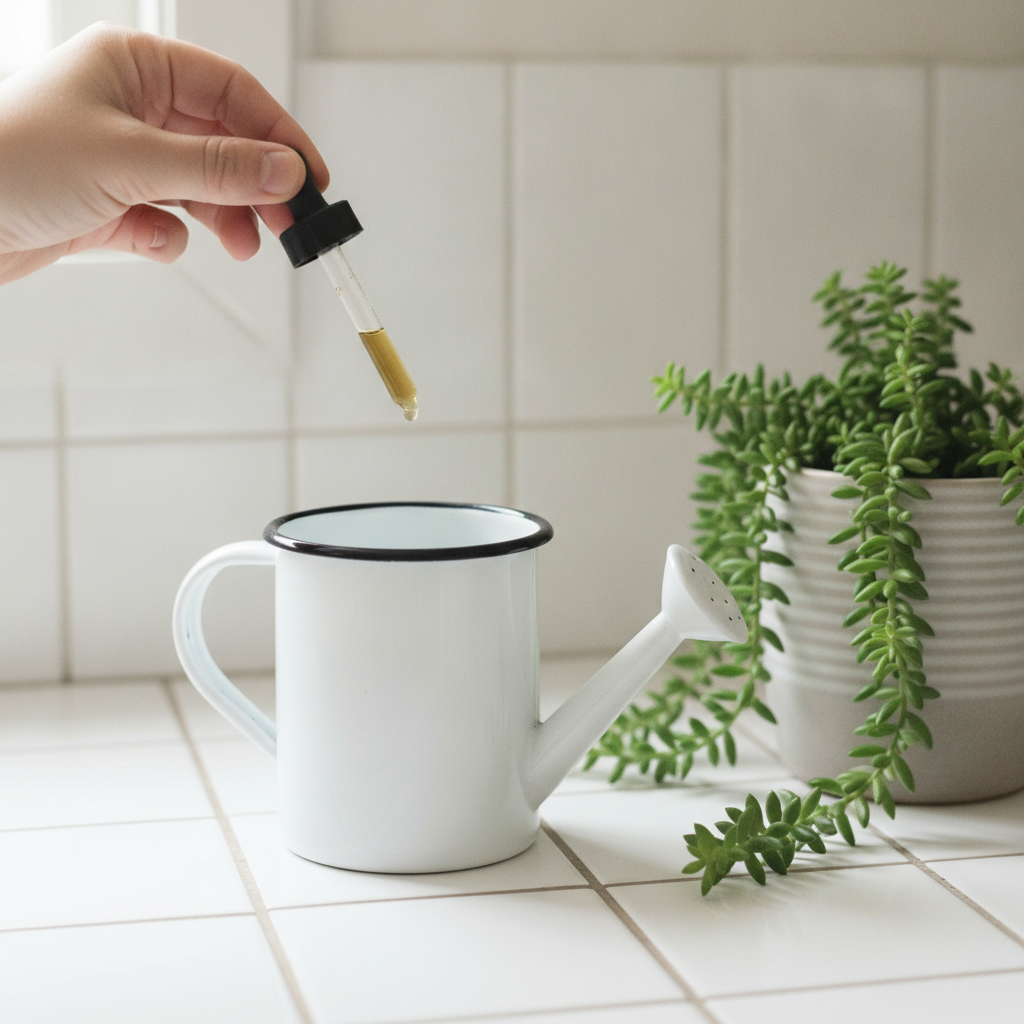
Liquid fertilisers: The easiest and most controllable option for this plant. A liquid cactus or succulent feed diluted to half the recommended strength, or weaker still, lets you deliver a precise small dose with a normal watering and stop the moment growth slows.
Slow-release granular: Convenient but harder to control, since a single application keeps releasing nutrients for months. If you use granules, choose a low-nitrogen succulent formula and apply at the lighter end of the recommended rate.
Organic fertilisers: Mild options such as heavily diluted worm-casting tea suit the plant’s modest needs and release nutrients gently. Avoid rich, fast-acting organic feeds, which deliver more nitrogen than a succulent wants.
Feeding Schedule
Feed only during the active growing season of spring and summer, offering a dilute feed perhaps two or three times across those months. Stop entirely in autumn and winter, when the plant is resting and cannot use the nutrients; feeding a dormant plant simply leaves unused salts to accumulate in the soil. A freshly repotted plant needs no feeding for its first few months, as fresh mix already contains enough to sustain it.
Pro Tip — Less Is More: When in doubt, dilute the feed further and use it less often. A watch chain plant kept slightly lean stays compact, firm and well coloured, while an overfed one grows soft, leggy and far more attractive to pests. You genuinely cannot starve this plant by underfeeding it.
How to Fertilise
- Dilute a liquid succulent fertiliser to half strength or less in a can of water.
- Water the plant with plain water first if the soil is completely dry, to protect the roots from a concentrated dose.
- Apply the diluted feed to the soil, never over the foliage, until it drains from the bottom.
- Let the pot drain fully and tip away any excess that collects in the saucer.
- Resume your normal soak-and-dry routine and feed again only after several weeks.
Warning — Salt Build-Up: Over time, fertiliser salts can accumulate in the soil and show up as a white crust on the surface or scorched, browning stem tips. Every few months, flush the pot by running plain water through it several times to wash out the excess, and always feed at low concentrations to keep build-up to a minimum.
Propagation
One of the great pleasures of the watch chain plant is how generously it propagates. It is among the easiest of all succulents to multiply, and because the brittle stems tend to break anyway, you will often have ready-made material to work with. A single plant can quickly become a windowsill full, or a steady supply of gifts.
The two reliable methods are stem cuttings and division. Both work best in spring and summer when the plant is actively growing, giving cuttings and divisions the warmth and light they need to establish quickly. Avoid propagating in the depths of winter, when slow growth makes rot more likely than rooting.
Understanding Stems and Roots
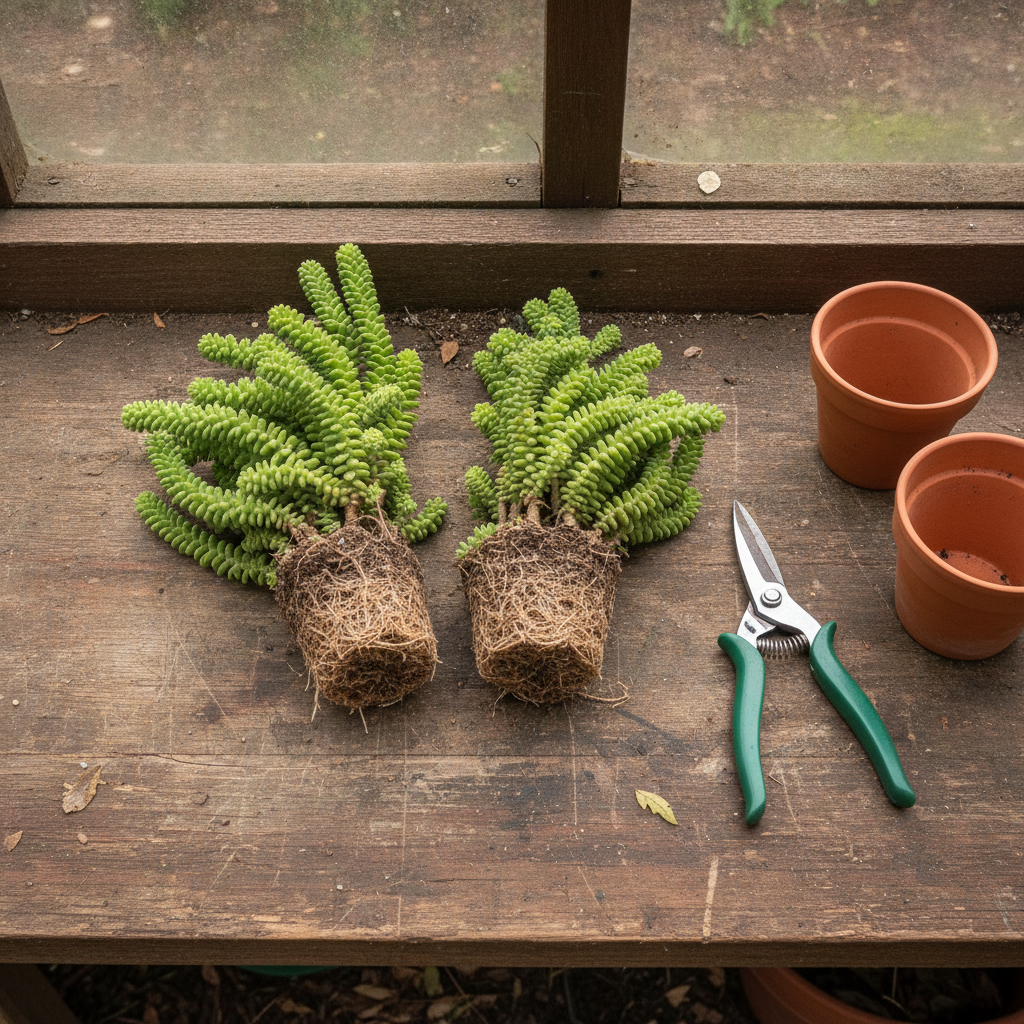
The key to propagating this plant is that almost any healthy stem segment can grow new roots from the point where it touches soil. Unlike some succulents that root from individual leaves, the watch chain plant roots from its stems, so a cutting needs to be a length of shoot rather than a single scale. Allowing the cut end to dry and callus before planting is the one step that makes the difference between success and rot.
Stem Cuttings: Step-by-Step
Stem cuttings are the simplest and most productive method, and the one to reach for when a plant has grown leggy and you want to refresh it. Taking the tips both produces new plants and encourages the parent to branch more densely.
- Using clean scissors, snip healthy stem tips 4 to 8 centimetres (1.5 to 3 inches) long from the parent plant.
- Set the cuttings aside in a dry, shaded spot for two to four days so the cut ends callus over.
- Insert the callused ends a centimetre or so into dry, gritty succulent mix, standing several cuttings together in one pot.
- Place the pot in bright indirect light and leave it dry for the first few days.
- Begin watering sparingly, just enough to moisten the surface, and let it dry between waterings as roots form over two to four weeks.
- Once the cuttings resist a gentle tug they are rooted, and you can treat them as normal plants.
Pro Tip — Fuller Pots Faster: Plant five or six cuttings together in a single small pot rather than one per pot. They knit into a full, bushy specimen far more quickly than a lone cutting ever could, and the arrangement looks generous from the start.
Division: Step-by-Step
Division suits an older, congested plant that has formed a dense mat of stems with plenty of roots. It is quicker than cuttings because each section arrives already rooted and ready to grow, making it the natural method to combine with a spring repot.
- Ease the whole plant out of its pot while the soil is dry and brush away the loose mix.
- Find a natural division in the clump and gently pull or cut it into two or more sections, each with a fair share of roots and stems.
- Let any cut surfaces dry for a day so they can callus before going into soil.
- Pot each section into its own container of fresh, gritty mix at its original depth.
- Hold off on watering for several days, then resume the usual soak-and-dry routine.
Troubleshooting Propagation
| Problem | Likely Cause | Solution |
|---|---|---|
| Cuttings rot before rooting | Planted without callusing or kept too wet | Let ends dry several days and water only sparingly |
| No roots after many weeks | Too cool, too dark or taken in winter | Move somewhere warm and bright and wait for the growing season |
| Cuttings shrivel and dry up | Soil kept bone dry for too long after rooting starts | Begin light watering once roots are forming |
| Divisions fail to establish | Too few roots on a section or planted too deep | Divide so each piece keeps roots and plant at the original depth |
Pests & Diseases
The watch chain plant is robust and not especially pest-prone, but its dense, tightly packed stems offer plenty of sheltered nooks where insects can hide. Most problems are linked to overwatering or poor airflow, so a plant grown lean and bright in gritty soil rarely runs into serious trouble.
The best defence is regular observation. Look the plant over whenever you water, parting the stems occasionally to check the hidden interior, and deal with any intruders early while populations are small and easy to control.
Common Pests
Mealybugs (Pseudococcus species)
The most likely pest on this plant. Mealybugs look like tiny tufts of white cotton wool and love to hide deep among the densely stacked stems, where they suck sap and slowly weaken the plant. Their sheltered habit makes them easy to miss until numbers build.
Treatment: Dab each insect with a cotton bud dipped in isopropyl alcohol, which kills them on contact. For wider infestations, spray with a diluted insecticidal soap or neem oil solution, repeating every week or so until they are gone, and isolate the plant from neighbours meanwhile.
Spider Mites (Tetranychus urticae)
Most likely in hot, dry, still conditions. These almost microscopic mites cause fine pale stippling on the stems and may spin delicate webbing between them. A heavy infestation gives the plant a dull, dusty, faded look.
Treatment: Rinse the plant under a gentle stream of water to knock the mites back, then treat with insecticidal soap or neem oil. Improving air circulation around the plant makes the environment far less inviting to them.
Fungus Gnats (Bradysia species)
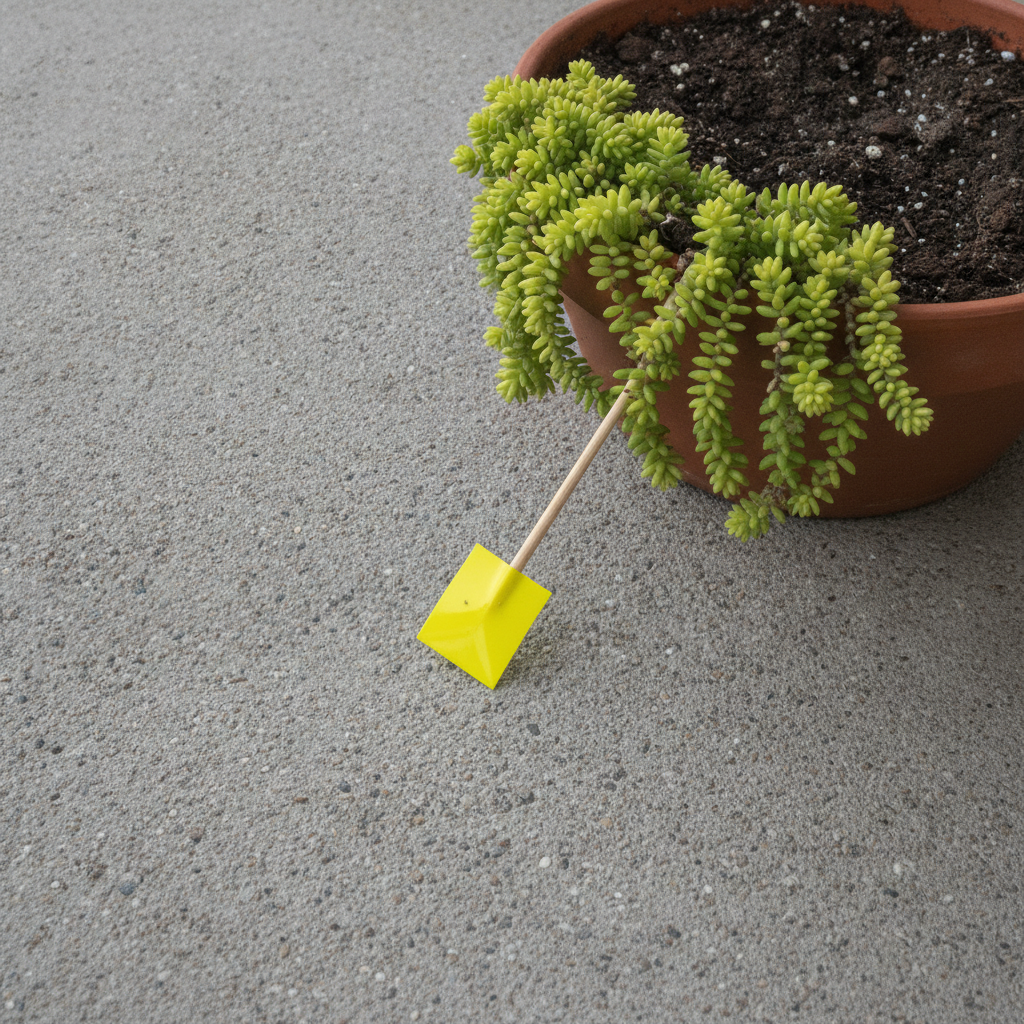
Small black flies that hover around the pot are a near-certain sign of soil kept too wet. The adults are merely a nuisance, but their larvae feed on roots in constantly damp compost and point to a watering problem.
Treatment: Let the soil dry out fully, which alone usually ends the problem, and catch the adults with yellow sticky traps. The lasting fix is to water less and ensure the mix drains freely.
Common Diseases
Root Rot (Pythium and Phytophthora species)
By far the most serious threat to this plant, caused by soil-borne fungi that thrive in waterlogged compost. It shows as yellowing, blackening and collapse at the base, often before there is any sign above ground, and can kill a plant quickly once established.
Treatment: Unpot the plant at once, cut away every soft, brown root and stem, and let the healthy remainder callus before replanting into fresh dry mix. If the base is badly affected, salvage firm tip cuttings and start over. Prevent it by watering only when bone dry and using a gritty mix.
Stem and Crown Rot (Botrytis and related fungi)
Fungal rot can also take hold within the dense foliage itself, especially in humid, stagnant air or when water sits trapped among the stems. It appears as soft, darkened, sometimes fuzzy patches deep in the plant.
Treatment: Cut out affected sections with clean scissors back to healthy tissue, improve airflow around the plant, and water at the soil rather than over the foliage. Keeping the dense centre dry is the key to preventing recurrence.
Pest and Disease Summary
| Pest / Disease | Identification | Treatment |
|---|---|---|
| Mealybugs | White cottony tufts among stems | Alcohol on a cotton bud, then neem or insecticidal soap |
| Spider mites | Fine stippling and faint webbing | Rinse, then treat and improve airflow |
| Fungus gnats | Small black flies around the pot | Dry the soil out, use sticky traps, water less |
| Root rot | Blackening, collapse at the base | Cut away rot, replant dry or restart from cuttings |
| Stem and crown rot | Soft dark patches within the foliage | Cut back to healthy tissue, improve airflow |
Prevention Strategies
Almost every problem this plant suffers traces back to excess moisture, so the foundation of prevention is restraint with the watering can and a genuinely free-draining mix. A plant grown bright, lean and on the dry side is naturally resilient and seldom troubled by pests or disease.
Good airflow is the other half of the equation. Air moving freely around the stems lets them dry quickly and discourages the fungal rots that take hold in stagnant, humid pockets. Inspect new plants before bringing them home, keep new arrivals apart from the rest of your collection for a couple of weeks, and you will head off most trouble before it starts.
Pro Tip — Neem Oil as Routine Defence: A light monthly spray of diluted neem oil during the growing season works as both a deterrent and an early treatment, keeping common pests in check before they establish. Apply it in the evening or out of direct sun so the wet foliage does not scorch.
Popular Varieties
The watch chain plant is grown more as a distinctive species than as a parade of named cultivars, but there are a few forms worth knowing, along with several close relatives often sold under the same common names. The variation is mostly in stem thickness, leaf spacing and colour.
Because the nomenclature in this group is tangled, plants sold as Crassula muscosa, Crassula lycopodioides and Crassula pseudolycopodioides often overlap or are mislabelled. The table and profiles below cover the forms you are most likely to come across.
| Variety | Leaf Appearance | Light Needs | Growth Rate | Availability |
|---|---|---|---|---|
| Species (typical) | Fine chartreuse chains, tightly stacked | Bright, some direct sun | Slow to moderate | Common |
| ‘Variegata’ | Cream and pink flushed stems | Bright, to hold variegation | Slow | Occasional |
| ‘Major’ | Thicker, coarser, more spaced chains | Bright, some direct sun | Slow to moderate | Occasional |
| ‘Purpusii’ | Compact, fine, can flush bronze | Bright, some direct sun | Slow | Specialist |
| ‘Pseudolycopodioides’ | Slender, upright, clubmoss-like | Bright | Slow to moderate | Specialist |
Featured Varieties
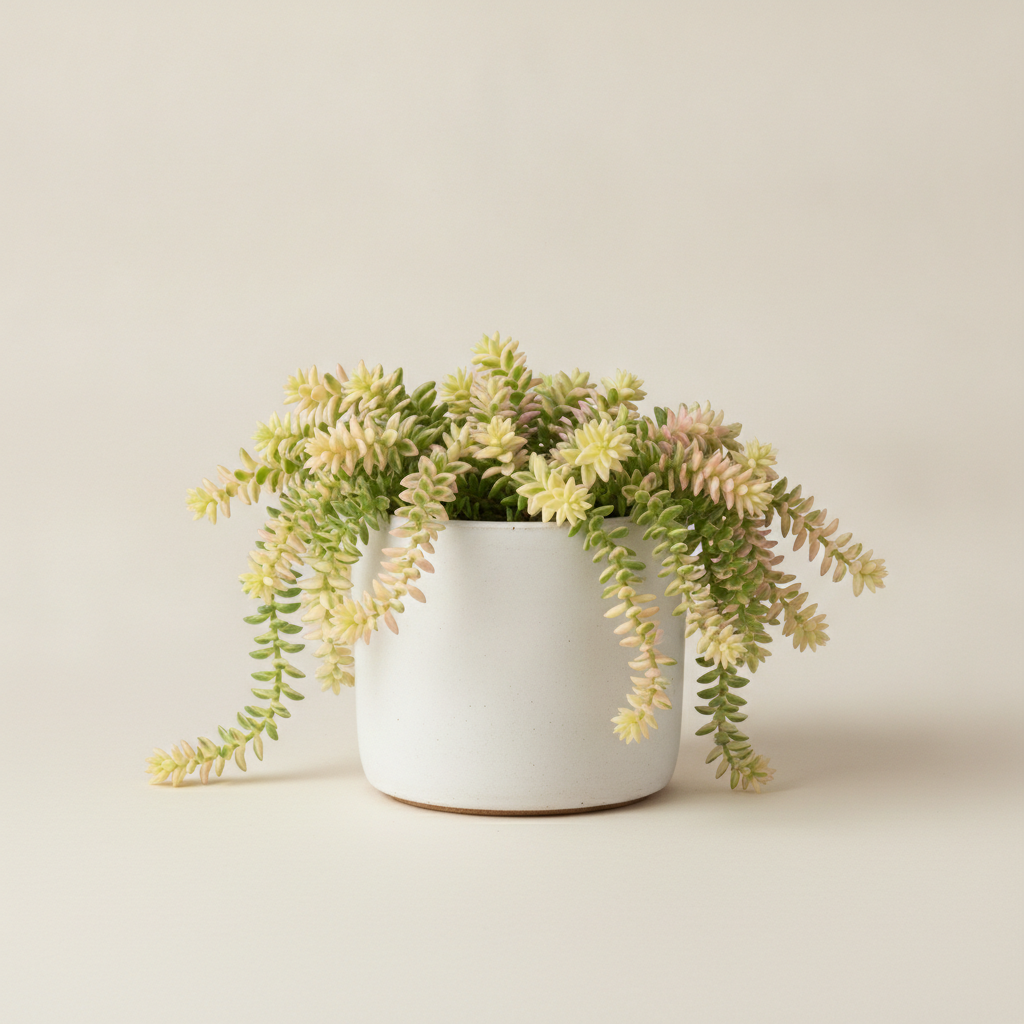
‘Variegata’
The most ornamental form, with stems washed in creamy yellow and soft pink between the green scales. It needs strong light to keep its colour and grows a touch more slowly than the plain species.
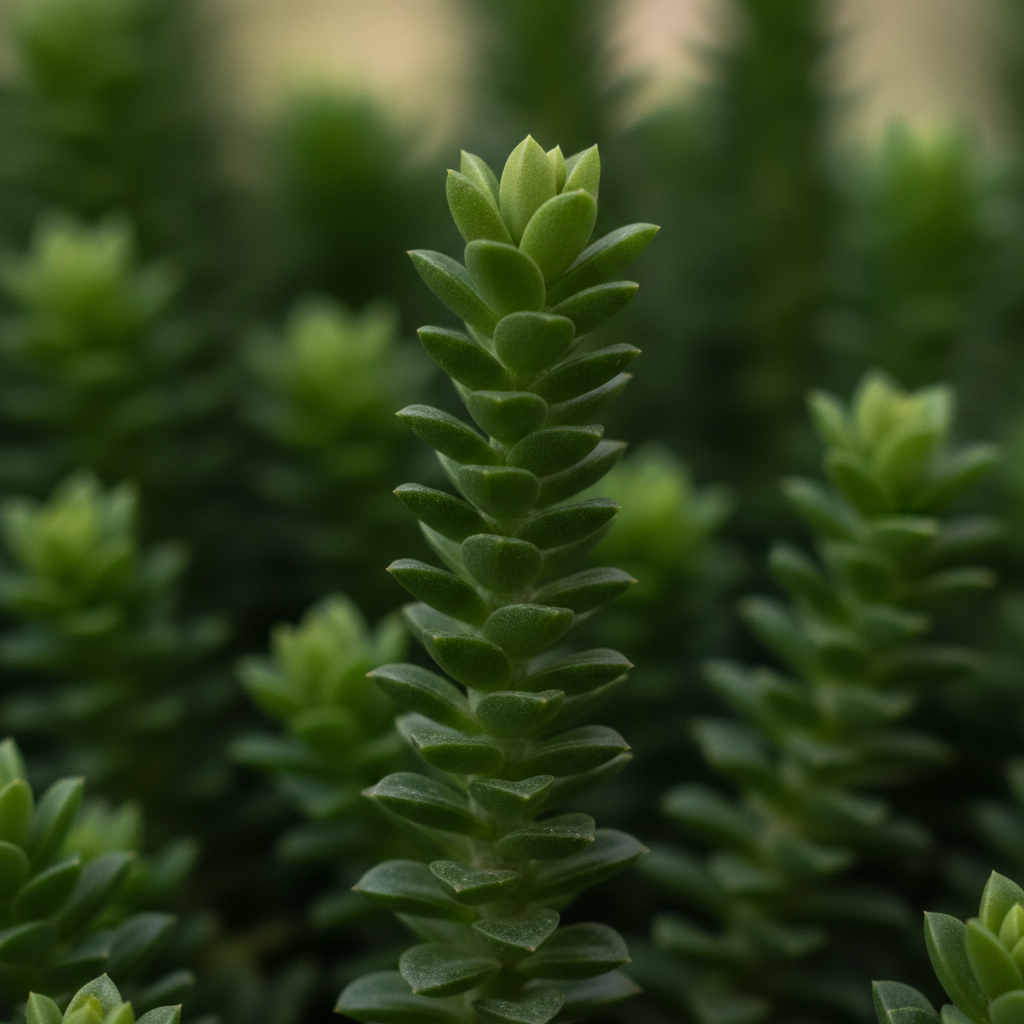
‘Major’
A bolder, coarser form with thicker stems, larger and more widely spaced scale leaves, and a stiffer, more upright habit. It reads as chunkier and more sculptural than the delicate species.
Variety Profiles in Detail
Variegated Watch Chain (Crassula muscosa ‘Variegata’)
This is the form to seek out if you want more than green. Cream and rose tones thread through the stems, lifting the fine texture with colour, and the contrast intensifies in bright light and cooler conditions. Give it your sunniest spot, since variegation is the first thing to fade in shade, and treat it exactly as the species in every other respect.
Greater Watch Chain (Crassula muscosa ‘Major’)
Often sold simply as the larger or coarser form, ‘Major’ has noticeably thicker chains and a more architectural presence. Its sturdier stems are a little less prone to flopping, so it holds an upright shape well and makes a striking specimen in a small, simple pot where the geometry of the stems can be appreciated.
Princess Pine (Crassula muscosa ‘Pseudolycopodioides’)
Slender and upright with a clubmoss-like look, this form is the one most responsible for the nicknames princess pine and clubmoss crassula. It is a little harder to find outside specialist nurseries but is grown in exactly the same way, rewarding bright light with neat, fine, evenly stacked stems.
Choosing the Right Variety for Your Space
For a first watch chain plant the plain species is the easiest to find and the most forgiving, and its fine green chains suit almost any setting. If you have a genuinely bright window, the variegated form rewards that light with subtle colour, while ‘Major’ is the pick for anyone who wants a sturdier, more sculptural plant. Whichever you choose, the care is identical, so let your light levels and your taste guide the decision.
Frequently Asked Questions
Why has my watch chain plant gone leggy and stretched?
Stretched, sparse stems with widely spaced leaves almost always mean too little light. The plant is reaching for a brighter source. Move it to your sunniest window or add a grow light, and trim the leggy growth back into tip cuttings, which both tidies the plant and gives you new ones.
How often should I water it?
Only when the soil is completely dry, which usually works out to roughly every 10 to 14 days in summer and every three to four weeks in winter. Rather than following the calendar, check the soil each time and water only when it is dry all the way down.
Is the watch chain plant toxic to cats and dogs?
It is generally listed as non-toxic to cats and dogs, unlike its relative the jade plant. Even so, it is not meant to be eaten, and a pet that chews on it may get a mild stomach upset, so it is best to discourage nibbling.
My plant’s stems are turning soft and black. What is wrong?
Soft, blackening stems are the classic signs of overwatering and root rot. Stop watering, unpot the plant, cut away all the affected tissue, and replant the firm remainder into fresh dry, gritty mix, or restart from healthy tip cuttings if the base is far gone.
Why are the leaves shrivelling?
Thin, wrinkled scales usually mean the plant is genuinely thirsty, the one case where it has been left dry too long. Give it a thorough soak and it should plump back up within a day or two. If the soil is wet and the stems are still shrivelling, suspect rotten roots instead.
Does it really flower?
Yes, though the flowers are tiny and easy to overlook. Mature plants produce minute pale yellow-green blooms tucked into the leaf axils in late winter and spring, carrying a faintly musty scent. The watch chain plant is grown for its form rather than its flowers.
How do I make my plant fuller and bushier?
Bright light is the foundation, since it keeps growth dense rather than stretched. Pinching or trimming the stem tips encourages branching, and you can plant several cuttings together in one pot to build a generous, mounded specimen far more quickly than a single plant would fill out.
Can it grow outdoors?
In warm, frost-free climates, roughly hardiness zones 9 to 11, it grows happily outdoors in a bright, sheltered spot with excellent drainage. Where winters bring frost it must come indoors or into a greenhouse before temperatures fall below about 7 degrees Celsius (45 Fahrenheit), as it is not frost hardy.
Why won’t my cuttings root?
The usual causes are planting cuttings before the cut ends have callused, keeping them too wet so they rot, or taking them in cold, dark winter conditions. Let cut ends dry for a few days, use gritty mix kept barely moist, and propagate in the warmth and light of the growing season.
How big does a watch chain plant get?
It is a small, slow-growing succulent, generally reaching 15 to 30 centimetres (6 to 12 inches) tall before the longer stems begin to trail and mound. This compact, spreading habit makes it ideal for small pots, shelves and the edges of mixed succulent arrangements.






