
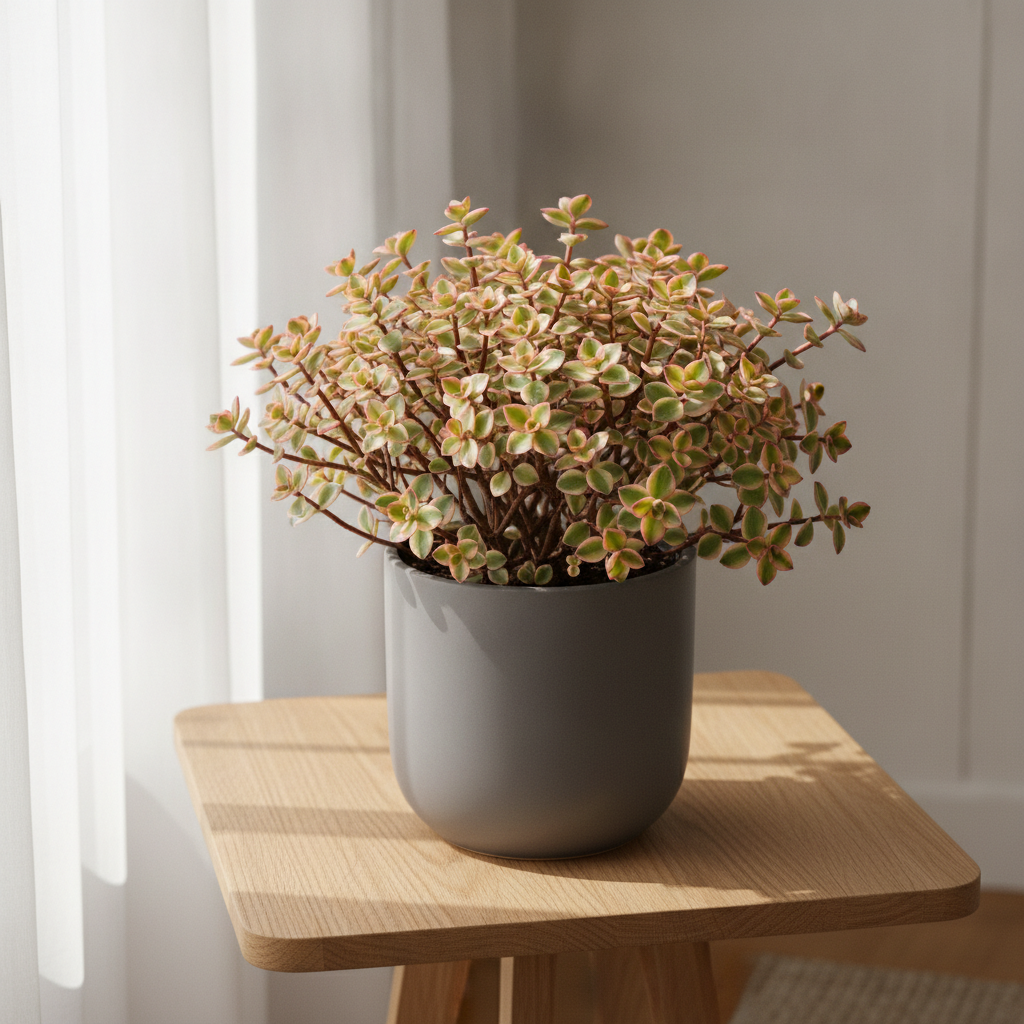
Few succulents reward a sunny windowsill quite as theatrically as the rainbow bush. Where its plain green cousin the spekboom is a workhorse of warm gardens, the variegated form, Portulacaria afra variegata, turns the same easygoing nature into something ornamental: tiny rounded leaves splashed cream and green that flush rosy-pink to coral at the edges whenever the light is strong enough to stress them just a little. It is one of the rare houseplants that is genuinely hard to kill, entirely safe around pets and children, and beautiful enough to anchor a shelf, a sunny sill or a bonsai pot for decades.
This guide covers everything that separates a rainbow bush merely surviving from one that thrives: how much light it truly needs to hold its colour, how to water a plant that stores its own reserves, the gritty soil it insists on, and the few pests and mistakes that can undo years of slow, patient growth.
Quick Reference
| Common names | Rainbow bush, variegated elephant bush, variegated spekboom |
| Botanical name | Portulacaria afra variegata |
| Family | Didiereaceae |
| Light | Bright direct light, at least 4 to 6 hours of sun for good colour |
| Water | Soak only when the soil is fully dry, roughly every 10 to 21 days in growth |
| Soil | Gritty, fast-draining cactus and succulent mix |
| Temperature | 18 to 27°C (64 to 81°F); keep above 5°C (41°F) |
| Humidity | Low to average; no extra humidity needed |
| Feeding | Diluted cactus feed once a month in spring and summer only |
| Growth habit | Slow-growing bushy shrub; reaches 1 to 1.5 m (3 to 5 ft) indoors over many years |
| Propagation | Stem cuttings, very easily |
| Toxicity | Non-toxic and pet-safe; the green form is even edible |
| Difficulty | Very easy |
Why the Rainbow Bush Makes Such a Good Houseplant
The rainbow bush belongs to a small group of plants that ask almost nothing of you and still look like you know what you are doing. It is a succulent shrub from the hot, dry thicket of South Africa’s Eastern Cape and the Karoo, where the green species, known locally as spekboom, grows into dense stands grazed by elephants, tortoises and kudu. That ancestry explains nearly everything about its temperament indoors: it is built to bank water in fleshy leaves and stems, to shrug off long dry spells, and to bask in light that would scorch a fern in minutes.
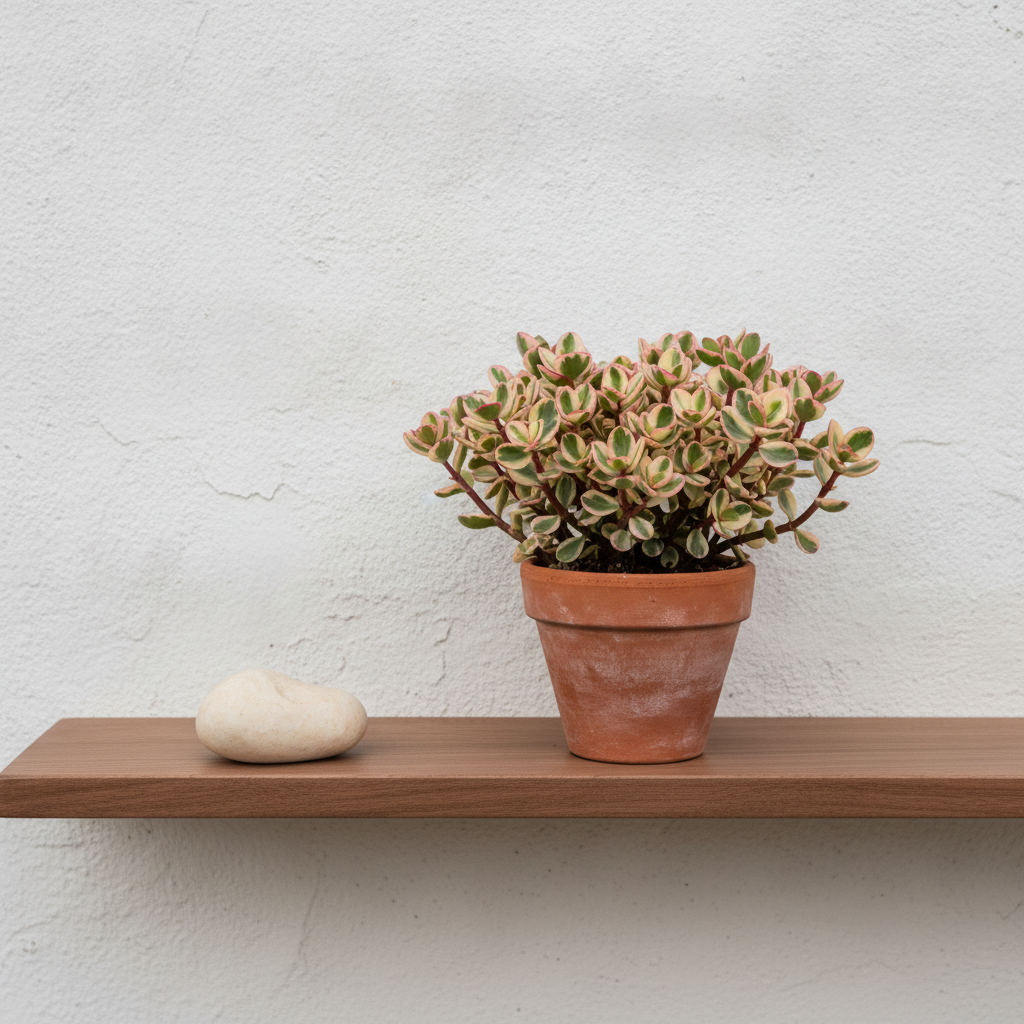
The variegated cultivar trades some of that wild vigour for ornament. Each obovate leaf, rarely more than a centimetre across, carries a green centre framed in creamy-white, and in bright light the margins blush a warm rosy-pink that can deepen to coral or red. The stems are a glossy reddish-brown that contrasts handsomely against the pale foliage. Because variegated tissue carries less chlorophyll, the plant grows more slowly and stays more compact than its green parent, which is exactly why it is such a beloved subject for bonsai and for collectors who want a characterful shrub that will not outgrow a sunny sill in a single season.
Two practical virtues seal its reputation. First, it is genuinely tough: it forgives forgotten waterings far more readily than overwatering, which puts it in a small club of plants that suit busy or distractible owners. Second, it is completely non-toxic. The green spekboom is eaten as a tart, lemony salad green across southern Africa, and the variegated form shares that safety, so it sits happily in homes with cats, dogs and curious toddlers where many popular houseplants cannot.
Pro Tip — Read the colour: The pink and coral edges are a mild stress response to strong light. If your rainbow bush is mostly cream and green with no blush, it is comfortable but under-lit for peak colour. A little more sun, stopping short of scorch, will bring the rainbow out.
Light
Light is the single factor that decides whether your rainbow bush merely lives or genuinely earns its name. As a succulent from open, sun-drenched thicket, it wants more direct light than almost any leafy houseplant, and the variegated leaves need that intensity twice over: once to feed the reduced chlorophyll in their cream sectors, and once to trigger the pink pigments that make the plant worth growing.
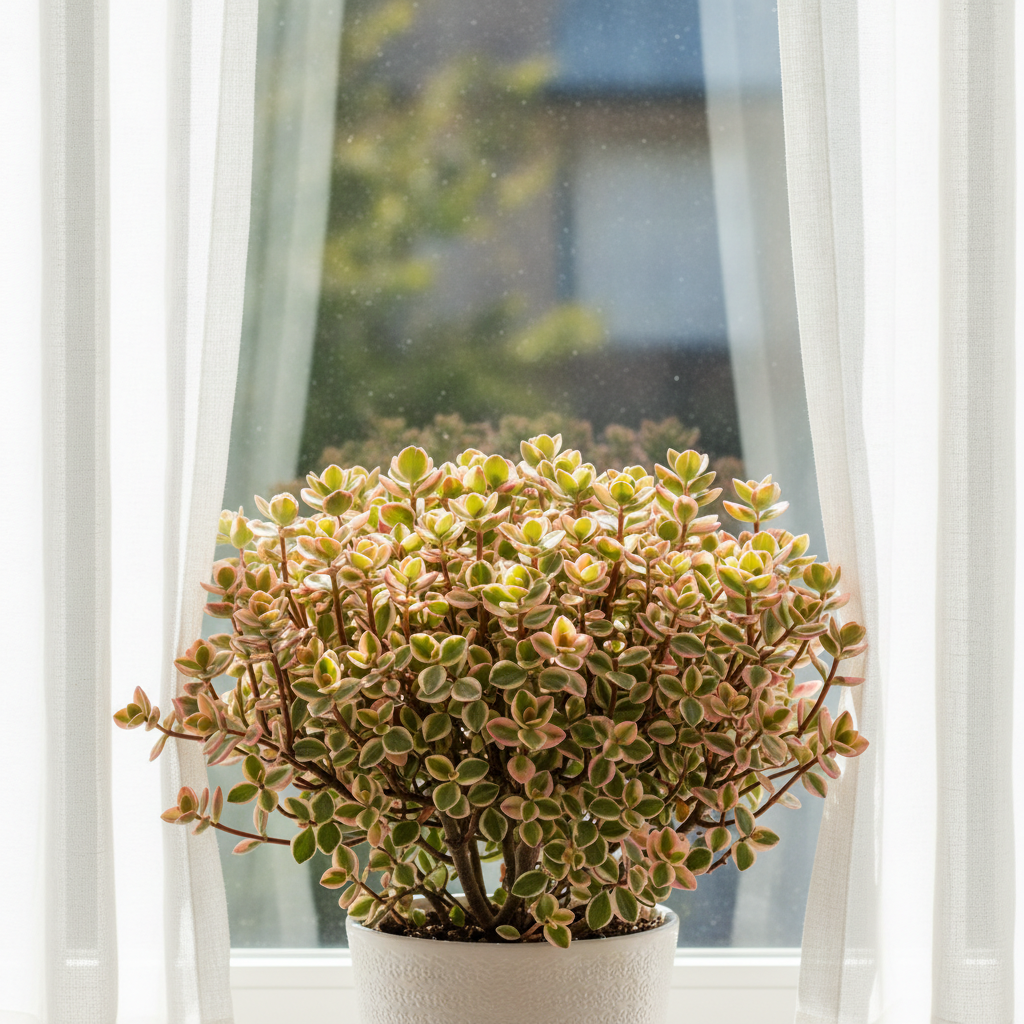
Aim for a spot that receives at least four to six hours of direct sun a day. A south-facing window (north-facing in the southern hemisphere) is ideal, with east and west aspects a close second. In those conditions the plant grows compact and densely leaved, the internodes stay short, and the margins colour up properly. In a dim corner the rainbow bush will not die quickly, but it will tell you it is unhappy: stems stretch and thin as they reach for light, the gaps between leaves widen, new growth comes in greener and paler, and the prized pink fades to plain cream. This stretching, called etiolation, is permanent on the stems that produced it, so the sooner you correct the light the better.
There is a sensible limit. A plant that has spent winter in low light should not be moved straight into blazing summer glass, or the soft new leaves can sunburn into brown patches. Acclimatise it over a week or two, giving a little more direct sun each day. If you summer the plant outdoors, which it loves, harden it off the same way and start in dappled shade before moving it into full sun. Indoors, rotate the pot a quarter turn every week or two so every side gets its share and the shrub grows evenly rather than leaning toward the glass. Where natural light is genuinely short, a full-spectrum LED grow light run for ten to twelve hours a day will keep growth tight and hold colour through a dark winter.
Warning — Reverting growth: In persistent low light, a variegated rainbow bush may push out all-green shoots that grow faster and can eventually dominate the plant. Prune these green reversions out promptly, or the more vigorous plain tissue will crowd out the variegation you bought the plant for.
Watering
If light is what makes the rainbow bush beautiful, watering is what most often kills it. Like all succulents it stores its own water in leaves and stems, so it is built to ride out drought and deeply resents sitting wet. The single most useful habit you can adopt is to water thoroughly but infrequently, and to let the soil dry out completely in between.
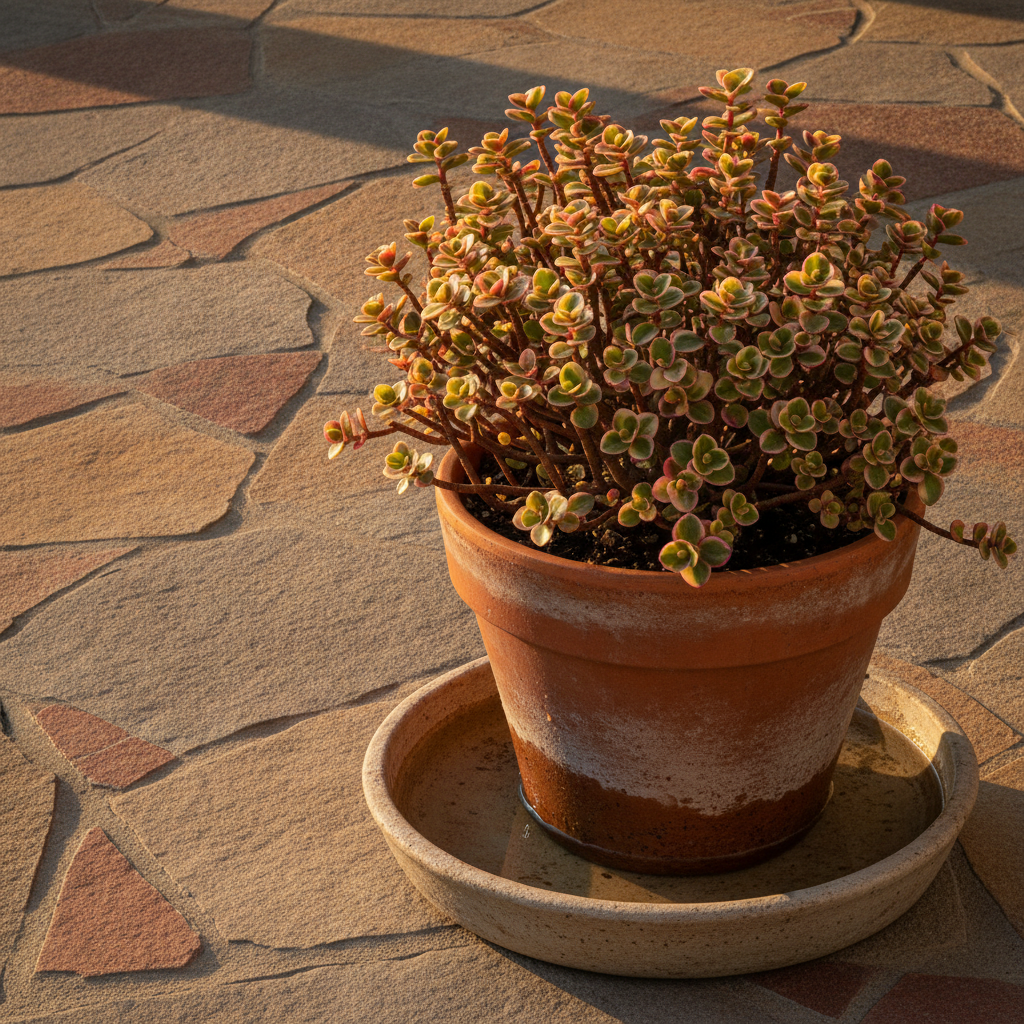
The reliable method is to check the soil rather than the calendar. Push a finger two to three centimetres into the mix, or lift the pot to feel its weight; a bone-dry pot is noticeably light. Only when the soil is fully dry should you water, and then water generously until it runs freely from the drainage holes, which flushes the whole root ball and pushes out stale air. Tip away anything that collects in the saucer after a few minutes. In the active growing months of spring and summer this usually works out to roughly once every ten days to a fortnight, but treat that as a guide, not a rule, because pot size, light, warmth and the season all change the pace.
Winter is different. As light fades and temperatures drop the plant slows almost to a stop and needs very little water, perhaps once every three to four weeks or even less, just enough that the leaves do not shrivel badly. A cool, barely watered winter rest actually does the plant good and helps it stay compact. The plant itself is an honest gauge: leaves that look slightly soft, wrinkled or pulled inward are telling you it is thirsty and will plump up within a day of a drink. Leaves that turn translucent, yellow, mushy or drop at the lightest touch are the opposite signal, a clear sign of overwatering and the first step toward root rot.
Pro Tip — When in doubt, wait: A thirsty rainbow bush recovers within hours of watering; an overwatered one may rot beyond saving. If you are ever unsure whether it needs water, give it another few days. Underwatering is almost always the safer mistake with this plant.
Soil and Potting
Everything about watering a rainbow bush depends on getting the soil right first, because the right mix forgives small watering mistakes and the wrong one magnifies them. What this plant needs above all is drainage: a gritty, open medium that lets water rush through and air reach the roots quickly. A standard peat-based houseplant compost holds far too much moisture and will eventually suffocate and rot the roots, no matter how careful you are with the watering can.
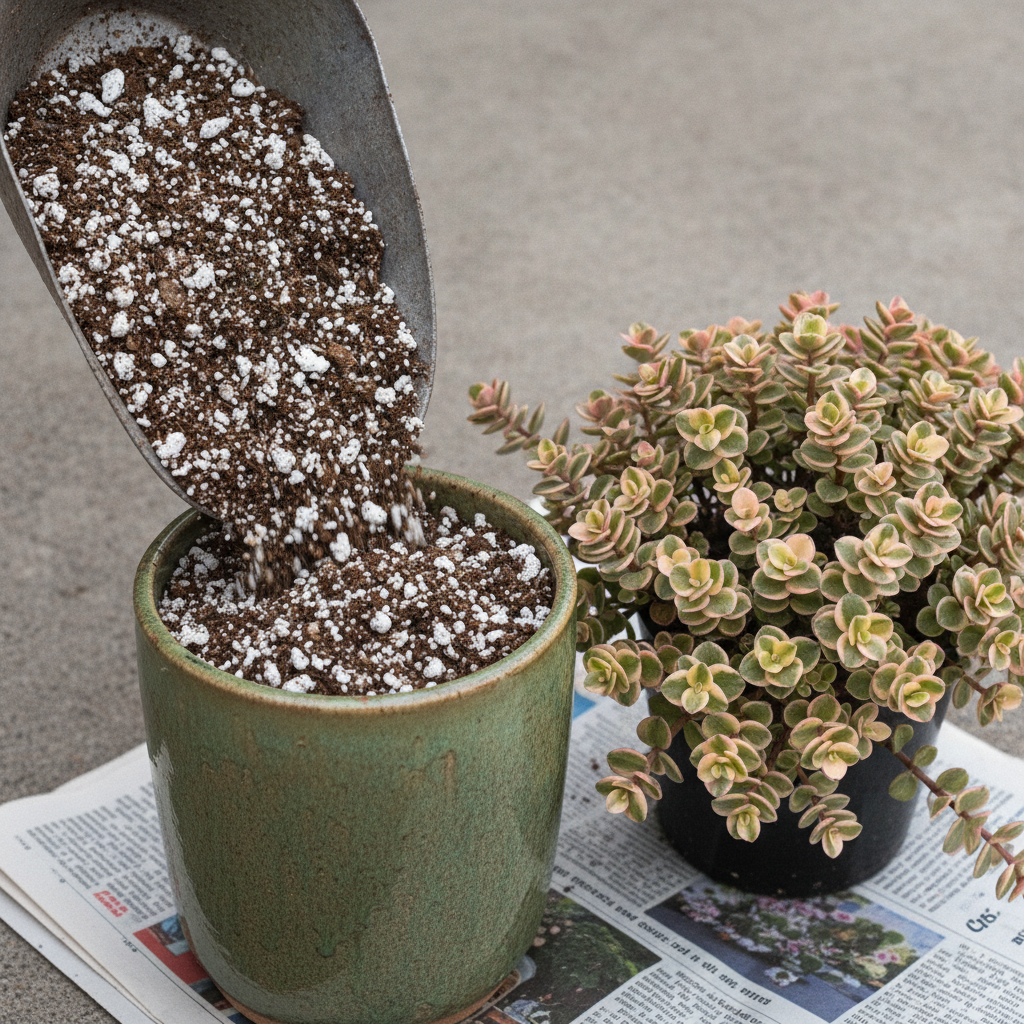
A purpose-made cactus and succulent compost is the easy starting point, and you can make it even better by cutting it with extra mineral grit. A simple, reliable recipe is roughly half cactus mix and half coarse material such as perlite, pumice, or fine horticultural grit, aiming for a blend that feels gritty and crumbly rather than dense and spongy. The mineral fraction creates large air pockets that drain fast and dry quickly, exactly the conditions succulent roots evolved for. Whatever you mix, the pot must have drainage holes; a decorative cachepot without holes is the most common silent killer of succulents, because water pools invisibly at the base.
Choice of pot matters too. Terracotta is the classic match for a rainbow bush because the unglazed clay breathes and wicks moisture away, helping the root ball dry between waterings, which is precisely what you want. Size up only modestly when repotting, by a single pot size, since a pot that is too large holds a reservoir of damp soil the small root system cannot use. This is a slow-growing plant, so it needs repotting only every two to three years, ideally in spring as growth resumes. When you do repot, brush off the old soil, check the roots are firm and pale rather than soft and brown, and then keep the plant dry for a week afterward so any nicked roots can callus before they meet moisture.
Fertilising
The rainbow bush is a famously light feeder, adapted to the lean, mineral soils of its homeland, and it is far happier slightly underfed than overfed. A modest feeding routine through the growing season is all it asks, and the most common fertilising mistake is simply giving too much.
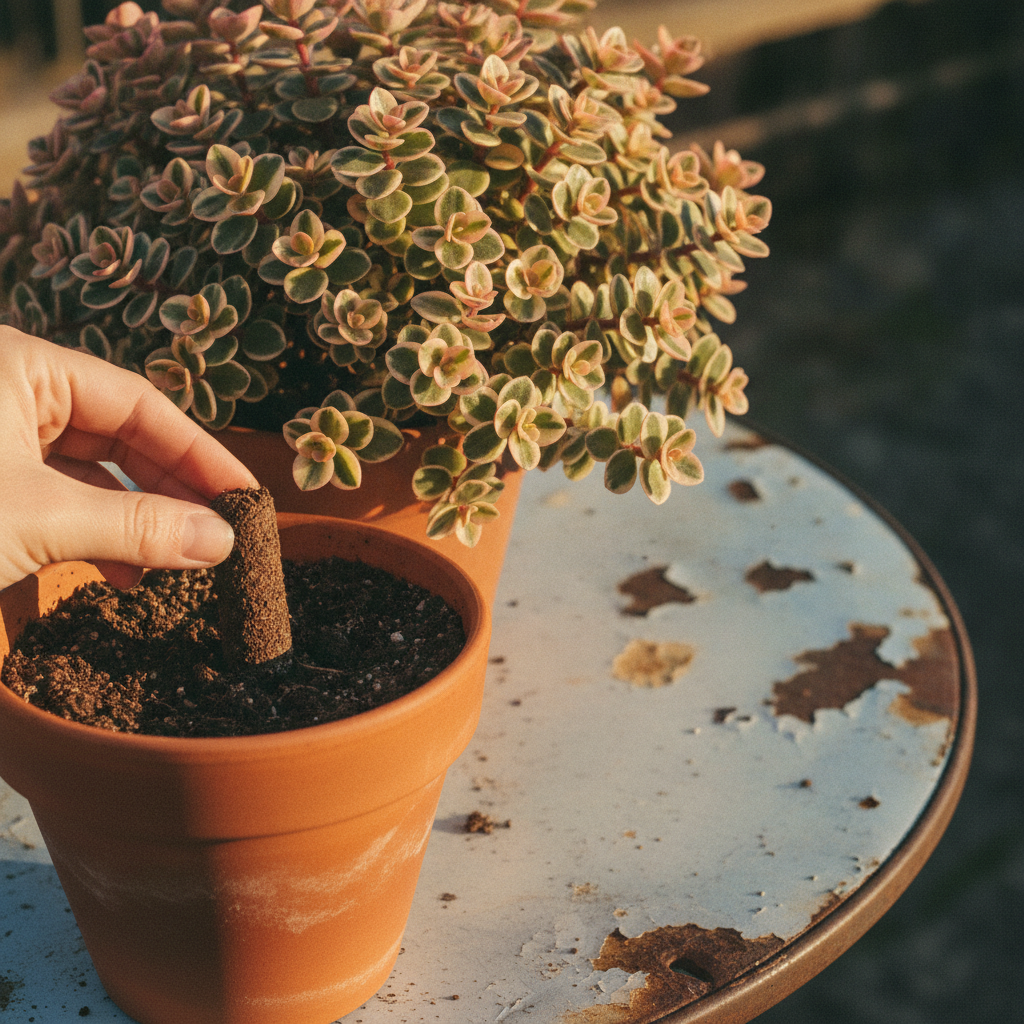
Feed only during the active growing months of spring and summer, roughly once a month, and use a fertiliser formulated for cacti and succulents, which is lower in nitrogen than a general houseplant feed. Dilute it to half the strength suggested on the label; a weak, occasional feed gives the plant the trace nutrients it needs without forcing soft, leggy growth or burning the roots. Always water lightly first or feed onto already-moist soil, never onto bone-dry roots, as concentrated fertiliser against dry roots can scorch them. Through autumn and winter, when the plant is resting, stop feeding entirely. Pushing fertiliser at a dormant plant simply leaves unused salts to build up in the soil, which can damage the roots over time.
A newly potted rainbow bush needs no feeding for the first few months, since fresh compost already carries enough nutrients. If you ever suspect salt has accumulated, shown by a white crust on the soil surface or pot rim, flush the pot thoroughly with plain water two or three times to leach it out, then resume your light feeding schedule.
Propagation
Propagating a rainbow bush is almost comically easy, which is one reason the plant passes so freely between collectors. It roots readily from stem cuttings, and because the variegated form is slow, taking cuttings is also the quickest way to build up a fuller plant or to start new ones from prunings you would otherwise discard.
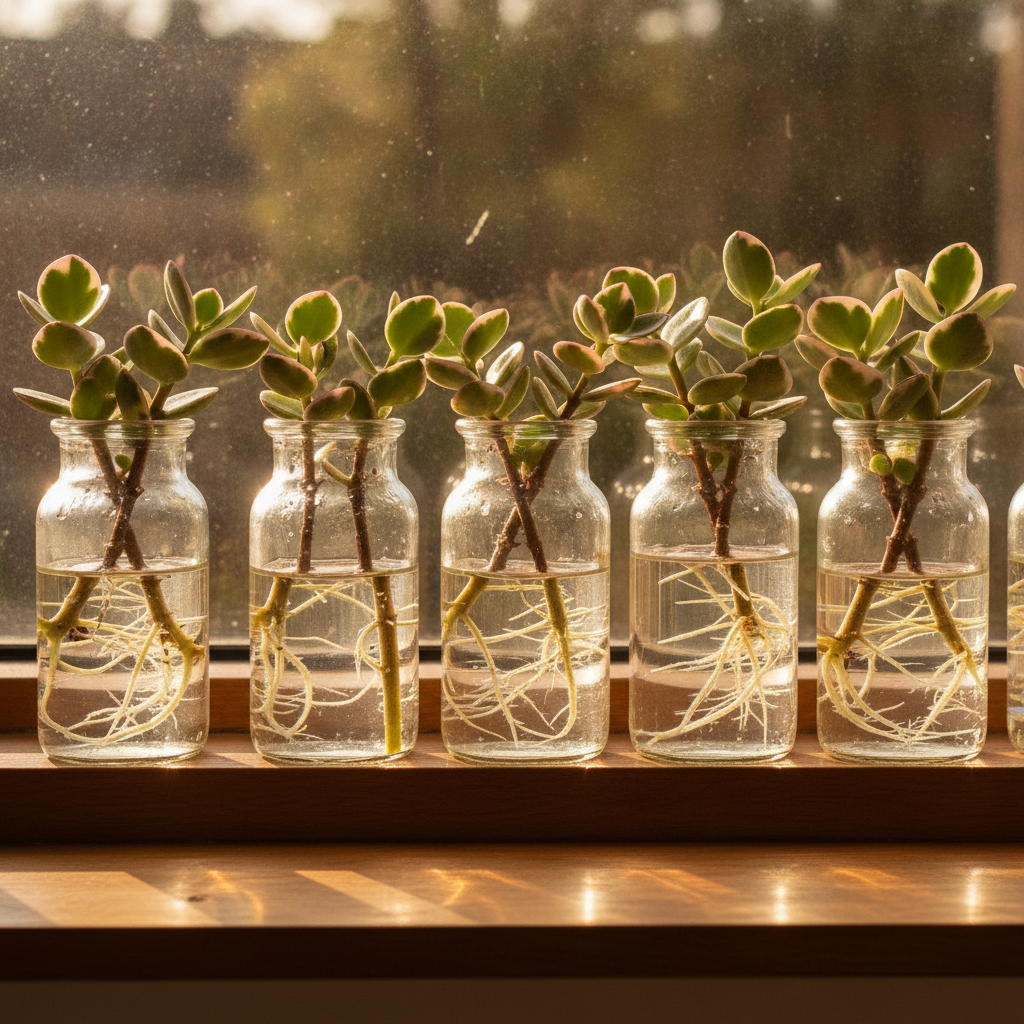
The most dependable method is a stem cutting taken in spring or summer. Work through the steps below for a near-guaranteed result.
- Using clean, sharp scissors or secateurs, cut a healthy stem tip 8 to 12 cm (3 to 5 in) long, ideally one showing good cream-and-pink colour rather than a green reversion.
- Strip the leaves from the lower third of the cutting, leaving a bare length of stem to sit in the soil.
- Set the cutting aside somewhere dry and shaded for three to seven days so the cut end forms a dry callus. This step is essential; planting a fresh wet cut almost always leads to rot.
- Insert the calloused end into barely moist gritty succulent mix, firming it just enough to stand upright.
- Place it in bright, indirect light and leave it dry for the first week, then water sparingly only when the soil is fully dry.
- Roots usually form within two to four weeks. A gentle tug that meets resistance tells you it has taken, after which you can treat it as a mature plant.
Cuttings can also be rooted in water, with the bare stem suspended so the lower end sits just in a jar of water on a bright sill; roots often appear within a couple of weeks. It works well and is satisfying to watch, but water-grown roots are more brittle and need careful acclimatising when you move the cutting into soil, so the dry, soil-first method generally gives a sturdier plant. Either way, you can speed things along and create a bushier specimen by planting several rooted cuttings together in one pot.
Pro Tip — Prune and propagate together: Because the rainbow bush takes so well to pruning, you can shape the parent plant and start new ones in the same session. Every healthy tip you trim to keep the shrub compact is a ready-made cutting.
Pests and Problems
A well-grown rainbow bush in bright light and gritty soil is remarkably trouble-free, and most of the problems owners meet are not pests at all but the consequences of too much water. Still, a few sap-sucking insects do find succulents, and it pays to know what to look for.

The pest you are most likely to encounter is the mealybug, a small sap-sucker that hides as white cottony tufts in leaf joints and along the stems. Spider mites can appear in hot, dry air, leaving fine webbing and a stippled, dusty look on the leaves, and scale insects sometimes attach as small brown bumps to the stems. For light infestations, dab the insects directly with a cotton bud dipped in isopropyl alcohol, which kills them on contact. For anything more widespread, treat the whole plant with an insecticidal soap or a diluted neem oil spray, repeating every week or so until the problem clears, and isolate the plant from your other succulents while you do. Always inspect a new plant carefully before it joins your collection, since mealybugs in particular travel in on shop-bought specimens.
By far the most serious threat, though, is root rot from overwatering or poorly draining soil. The warning signs are leaves turning yellow, translucent or mushy and dropping at the slightest touch, often alongside a soft, blackening stem base. If you catch it early, stop watering at once and let the soil dry out completely. If the rot has set in, your best chance is to unpot the plant, cut away every soft, brown root and stem until only firm, healthy tissue remains, and either repot the survivor into fresh dry gritty mix or take clean cuttings from the healthy top growth and start again. The table below sums up the most common complaints and their causes.
| Symptom | Likely cause | What to do |
| Soft, wrinkled, inward-curling leaves | Underwatering | Water thoroughly; leaves plump up within a day |
| Yellow, translucent or mushy leaves dropping easily | Overwatering, early root rot | Stop watering, dry out, check roots, repot if needed |
| Stretched stems, wide gaps between leaves | Too little light | Move to a brighter spot or add a grow light |
| Fading pink, leaves all cream and green | Insufficient light intensity | Increase direct sun gradually |
| Brown scorched patches on leaves | Sudden intense sun on unacclimatised growth | Acclimatise to strong light slowly |
| White cottony tufts in joints | Mealybugs | Dab with alcohol; treat with insecticidal soap |
| All-green vigorous shoots | Variegation reverting | Prune the green shoots out promptly |
Varieties and Related Forms
The rainbow bush is itself a variegated cultivar of the plain green spekboom, but the wider Portulacaria afra group offers a handful of attractive forms worth knowing. The two below are the most widely grown alongside the classic rainbow bush, and they show how much variety a single, easygoing species can hold.
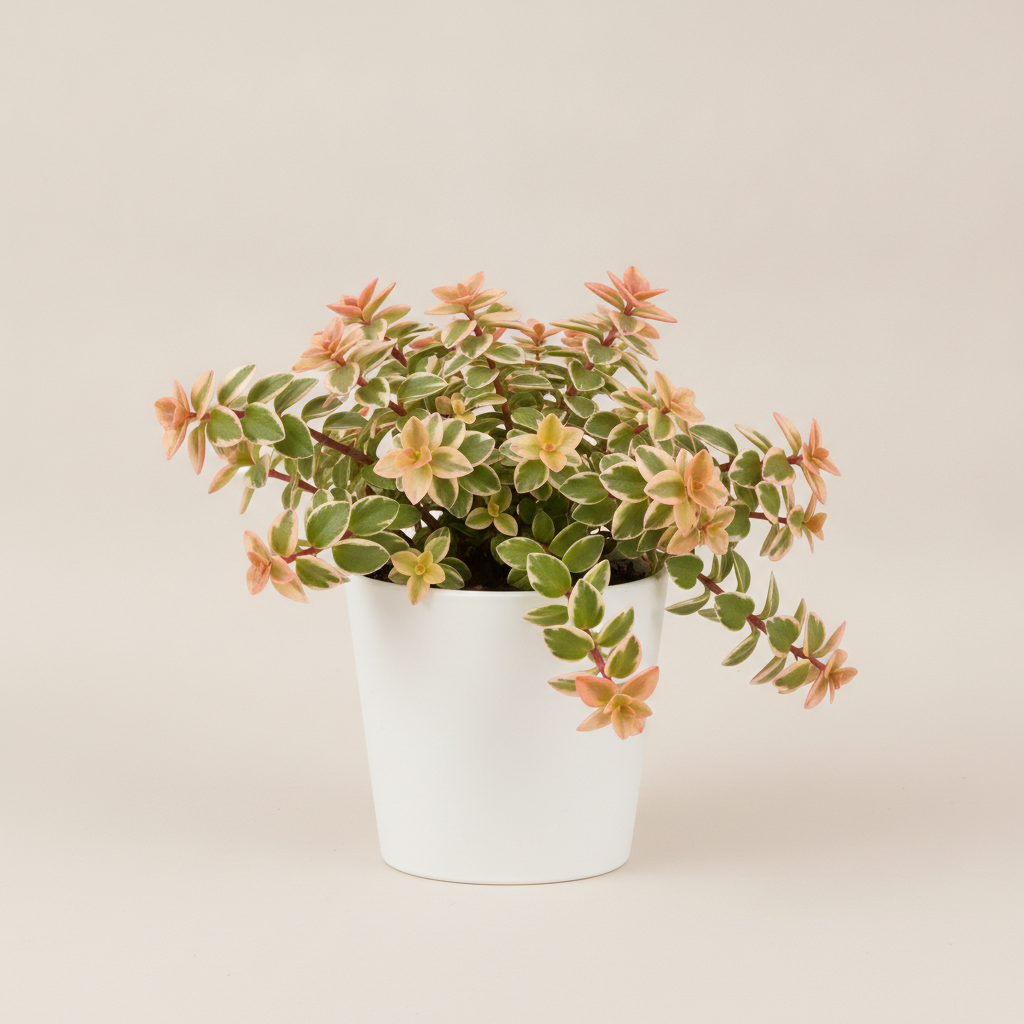
‘Variegata’ (Classic Rainbow Bush): The form most people mean by rainbow bush. Green leaves edged in creamy-white blush rosy-pink to coral-red at the margins in strong sun, carried on glossy reddish stems. Slow, compact and the most colourful of the group, it is the benchmark variegated cultivar and a favourite for bonsai.
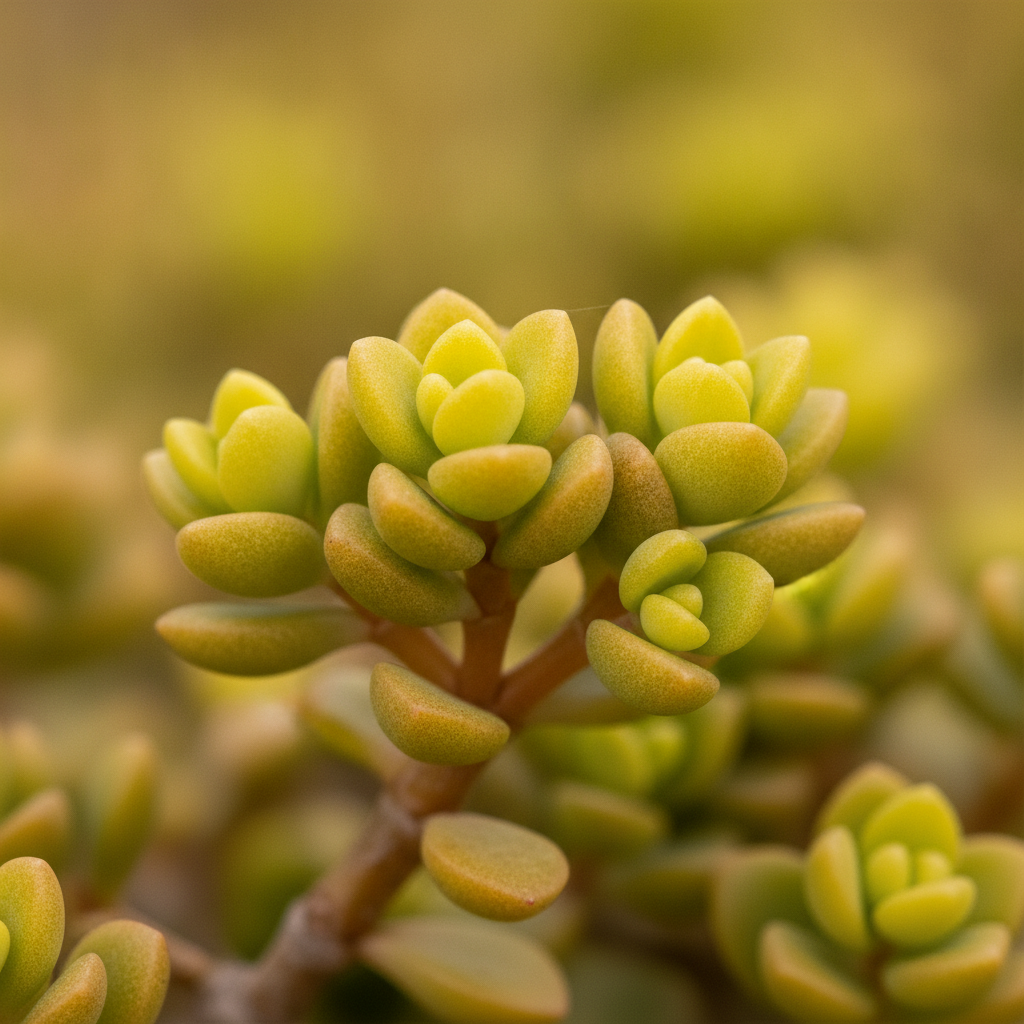
‘Aurea’ (Golden Elephant Bush): A compact form whose rounded new leaves emerge chartreuse to golden-yellow in bright light before deepening to soft green as they mature, all on warm reddish-brown stems. The glow is light-driven, so like the rainbow bush it shows its best colour in full sun and greens up in shade.
Beyond these, the trailing ‘Prostrata’, or low elephant bush, spills sideways and downward rather than growing upright, making it a fine choice for hanging pots and the front edges of arrangements, while the original green Portulacaria afra remains the most vigorous of all and the one celebrated in South Africa for its remarkable appetite for carbon dioxide. All share the same easy care described in this guide; only the colour, pace and habit differ.
Frequently Asked Questions
Is the rainbow bush safe for cats and dogs?
Yes. Portulacaria afra and its variegated form are non-toxic to cats, dogs and humans. The green spekboom is even eaten as a tart salad green in southern Africa, which makes the rainbow bush one of the safest succulents you can keep in a home with pets or young children.
Why is my rainbow bush losing its pink colour?
The pink and coral edges are a response to bright light. When the plant is in a spot that is comfortable but not quite bright enough, the margins fade to plain cream and green. Increasing direct sun gradually, without scorching the leaves, will bring the colour back over a few weeks.
How fast does a rainbow bush grow?
Slowly. The reduced chlorophyll in its variegated leaves means it grows noticeably slower and stays more compact than the plain green spekboom. Over many years it can reach 1 to 1.5 m (3 to 5 ft) indoors, but most plants stay small for a long time, which is part of why it is such a popular bonsai subject.
How often should I water it?
Only when the soil has dried out completely, then water thoroughly. In spring and summer this is often roughly every ten days to a fortnight; in winter it can drop to once every three to four weeks or less. Always check the soil rather than following a fixed schedule, and remember that this plant tolerates drought far better than wet feet.
Why are the leaves shrivelling?
Slightly soft, wrinkled leaves usually mean the plant is thirsty, and they will plump up within a day of watering. If instead the leaves are turning yellow, translucent or mushy and dropping easily, that is overwatering and the early stage of root rot, which calls for the opposite response: stop watering, let the soil dry out, and check the roots.
Can I grow a rainbow bush as a bonsai?
Very much so. Its naturally slow growth, small leaves, thick woody stems and tolerance of frequent pruning make it one of the easiest succulents to train as a bonsai. Regular tip pruning encourages branching and a denser canopy, and every healthy piece you remove can be rooted as a new plant.
Can the rainbow bush go outside in summer?
Yes, and it usually colours up beautifully outdoors. Move it out once nights are reliably above about 10°C (50°F), acclimatise it to direct sun gradually to avoid scorch, and bring it back indoors before temperatures fall near 5°C (41°F), as it is not frost hardy.






