
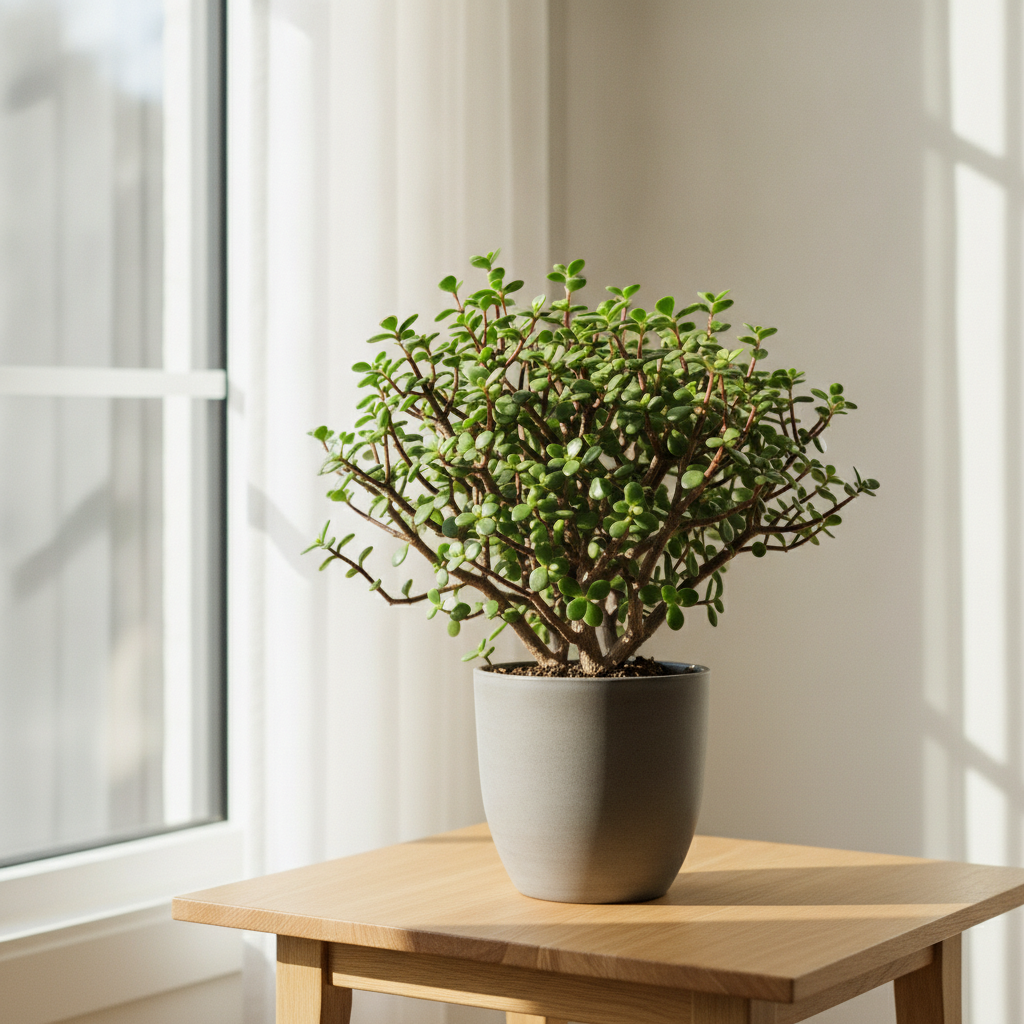
The elephant bush (Portulacaria afra) is a soft-wooded succulent shrub from the hot, dry thickets of South Africa’s Eastern Cape, where wild herds strip its branches for food and give the plant its common name. Known locally as spekboom and sold around the world as porkbush, dwarf jade or elephant food, it forms a dense tangle of reddish, semi-woody stems studded with small, rounded, glossy leaves no larger than a fingernail. At a glance it resembles the true jade plant (Crassula ovata), but its leaves are smaller and thinner, its stems are more flexible and faster growing, and its whole habit is looser and more shrub-like.
Few houseplants are as forgiving. The elephant bush stores water in its leaves and stems, shrugs off missed waterings, roots from a snapped twig within weeks, and is entirely non-toxic to cats, dogs and curious children. It also tolerates hard pruning, which is why it is one of the most popular beginner subjects for bonsai. The difference between a plant that merely survives and one that genuinely thrives comes down to a handful of choices: enough light, a gritty fast-draining mix, and the discipline to water only when the soil has dried. This guide walks through every one of those factors in detail, from light and watering to soil, feeding, propagation, pests and the most rewarding varieties to grow.
Contents
- Quick Reference
- Why Elephant Bush Makes a Great Houseplant
- Light Requirements
- Watering & Humidity
- Soil, Potting & Repotting
- Fertilising
- Propagation
- Pests & Diseases
- Popular Varieties
- Frequently Asked Questions
Quick Reference: Elephant Bush at a Glance
| Light | Bright light, including several hours of direct sun; the more light, the more compact the growth |
| Watering | Soak then dry completely; roughly every 10 to 14 days in summer, monthly or less in winter |
| Temperature | 18 to 27 degrees Celsius (64 to 81 Fahrenheit); protect from anything below 5 Celsius (41 Fahrenheit) |
| Humidity | Average household humidity is fine; prefers dry air to damp |
| Fertiliser | Dilute succulent feed once a month in spring and summer only |
| Toxicity | Non-toxic and pet-safe; harmless to cats, dogs and humans |
Why Elephant Bush Makes a Great Houseplant
The elephant bush earns its place on the windowsill through sheer reliability. It is a succulent in the truest sense, holding reserves of water in both leaves and stems, so it copes with the single most common houseplant mistake of all, which is forgetting to water. A neglected elephant bush simply slows down and waits. Combine that resilience with a fast growth rate, an easy-going attitude to light, and the simplest propagation of almost any houseplant, and you have a species that rewards beginners while still offering enough plasticity to keep experienced growers and bonsai enthusiasts engaged for years.
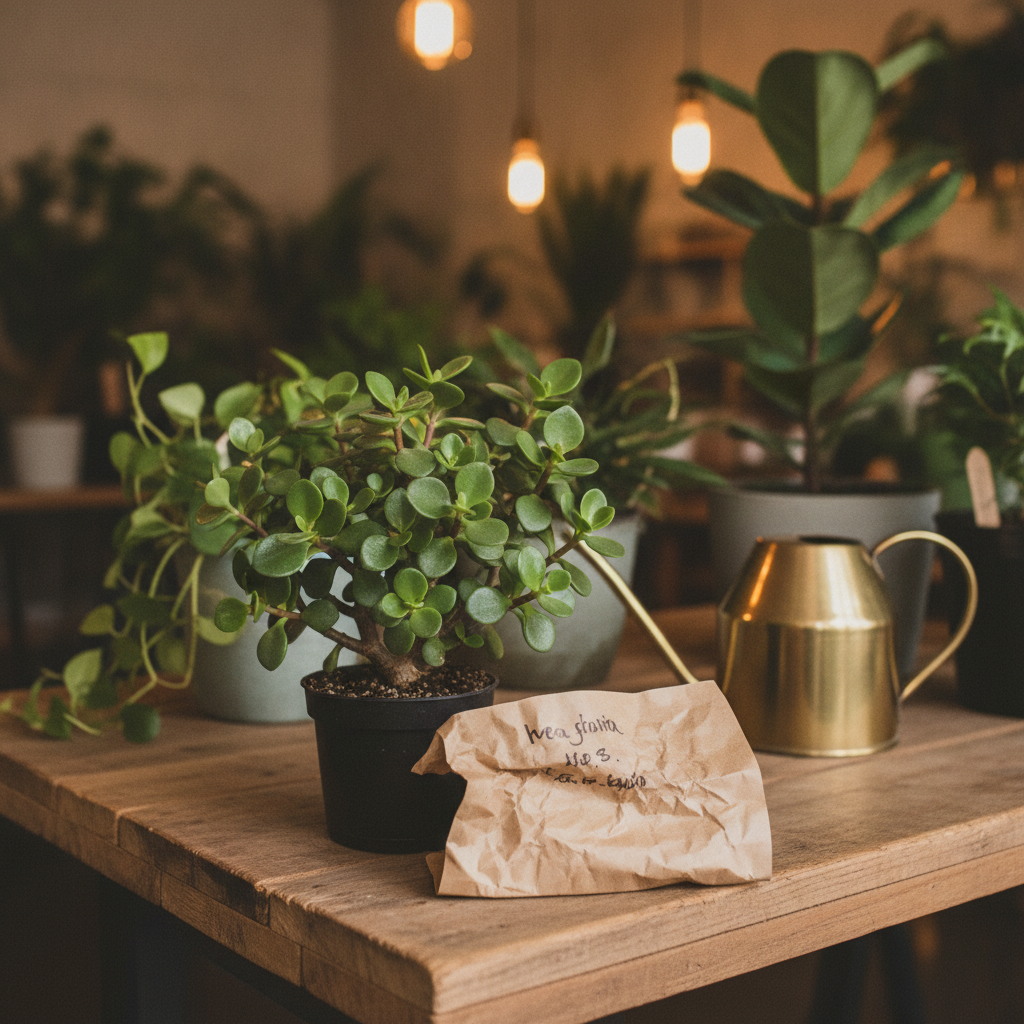
There is also a green credential worth noting. Portulacaria afra is a remarkably efficient carbon sink, able to switch between standard C3 photosynthesis and water-saving CAM metabolism depending on conditions, a flexibility that lets it keep fixing carbon even through drought. In its native South Africa it is planted at scale to restore degraded land and lock away atmospheric carbon. On a domestic scale none of this matters for survival, but it speaks to just how tough and adaptable the plant is. Indoors it stays manageable, usually reaching 30 centimetres to 1 metre (12 to 39 inches) in a pot, though left alone in good conditions it will happily become a small indoor tree.
Important — Toxicity: The elephant bush is one of the few succulents that is completely non-toxic. Its leaves are even edible, with a tart, lemony flavour used in salads in parts of South Africa. It is safe to grow around cats, dogs and small children, making it an excellent choice for pet-friendly homes where many other succulents would be a worry.
Light Requirements
Light is the single biggest factor separating a stocky, full elephant bush from a thin, sprawling one. This is a sun-loving plant from open, exposed thickets, and indoors it wants as much brightness as you can give it. In strong light the stems stay short and the leaves crowd together tightly, giving the compact, jade-like silhouette most growers are after. Starved of light, the plant stretches toward the nearest window, the gaps between leaves widen, and the stems grow weak and floppy.
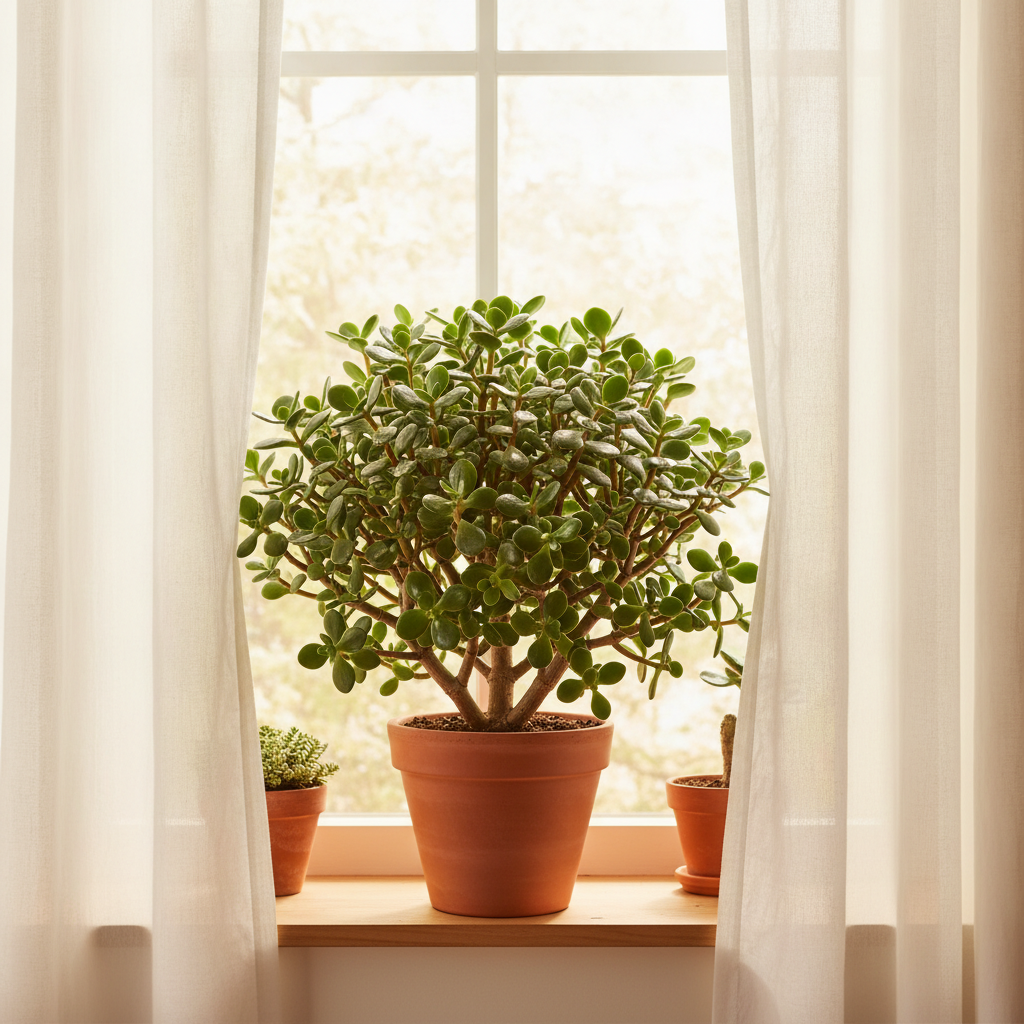
The ideal position is directly in or beside a bright window where the plant receives at least four to six hours of sun each day. Unlike many tender houseplants, a well-acclimatised elephant bush handles direct sun on its leaves without scorching, and that direct exposure is exactly what brings out the reddish blush along the stems and leaf edges. If you can only offer bright indirect light the plant will still grow, just more loosely and with a greater tendency to reach.
Light Levels Explained
Understanding how the elephant bush responds across the full range of indoor light makes placement far easier. The table below sets out what to expect at each level, from a baking south window to a dim interior corner.
| Light Category | Approx. Level | Typical Location | Outcome |
|---|---|---|---|
| Direct sun | 20,000 lux and above | On a south or west windowsill | Compact growth, reddish tints, best colour and form |
| Bright indirect | 10,000 to 20,000 lux | Just back from a bright window | Healthy but slightly looser growth |
| Medium | 5,000 to 10,000 lux | A few metres from a window | Slow, stretched growth, wider leaf spacing |
| Low | 1,000 to 5,000 lux | Interior wall or north corner | Leggy, weak stems, leaf drop over time |
| Very low | Below 1,000 lux | Hallway or windowless room | Decline; not sustainable without a grow light |
Window Orientation and Placement
South-facing window: In the northern hemisphere this is the best possible spot. The long hours of strong light here suit the elephant bush perfectly and produce the densest, most colourful growth. Newly bought plants raised in shadier nurseries should be moved into full sun gradually over a week or two to avoid sunburn.
East-facing window: A good choice offering bright, gentle morning sun followed by softer afternoon light. Growth will be healthy and only marginally less compact than at a south window.
West-facing window: Also excellent, delivering strong afternoon sun. Watch that leaves do not touch hot glass on the warmest summer days, as that contact point can scorch.
North-facing window: The weakest option. The plant will live but tends to stretch and thin out. If a north window is all you have, sit the plant right against the glass and consider supplementing with a grow light.
Pro Tip — Rotate for Even Growth: An elephant bush leans noticeably toward its light source. Give the pot a quarter turn every week or two so all sides receive equal exposure and the plant builds a balanced, upright shape rather than a one-sided lean.
How Light Affects Colour and Form
The elephant bush is one of those succulents whose appearance is essentially a readout of how much light it gets. In strong sun the new stems flush a warm reddish-bronze and the leaf margins take on a similar tint, while the internodes, the gaps between leaves, stay short and tight. Move the same plant into shade and within weeks the colour drains to a flat green, the internodes lengthen, and the whole plant takes on a leggy, searching look. Variegated forms are even more responsive, because their cream and pink markings deepen and brighten with light and fade toward plain green in shade.
Warning — Direct Sunlight: Although established plants love full sun, a plant taken straight from a dim shop shelf or a shady corner and placed in fierce midday sun can sunburn, leaving permanent pale or brown scorch marks on the exposed leaves. Always acclimatise to direct sun over one to two weeks, increasing exposure a little each day.
Artificial Lighting
Where natural light falls short, the elephant bush takes very happily to a grow light. A full-spectrum LED positioned 20 to 30 centimetres (8 to 12 inches) above the plant and run for 10 to 12 hours a day will keep growth compact through dark winters or in rooms with poor windows. Because this is a high-light plant, err on the side of more intensity rather than less, and watch the internode spacing as your gauge: tight spacing means the light is sufficient, stretching means it needs to be brighter or closer.
Seasonal Adjustments
Light levels indoors fall dramatically between summer and winter, and the elephant bush notices. In the brighter half of the year you may need to shade a plant slightly from the most intense midday glare, or simply let it bask. As autumn arrives and the sun sits lower, move the plant to your brightest available window to compensate for the shorter, weaker days. Growth naturally slows in winter, so a little stretching over the darkest months is normal and will tighten up again once spring light returns.
Watering & Humidity
Watering is where most elephant bush problems begin and end, and the rule could not be simpler: water thoroughly, then wait until the soil is bone dry before watering again. As a succulent adapted to long dry spells, the plant is built to be watered infrequently and generously rather than little and often. Far more elephant bushes are killed by kindness, through constant damp soil, than by genuine drought.
When to Water
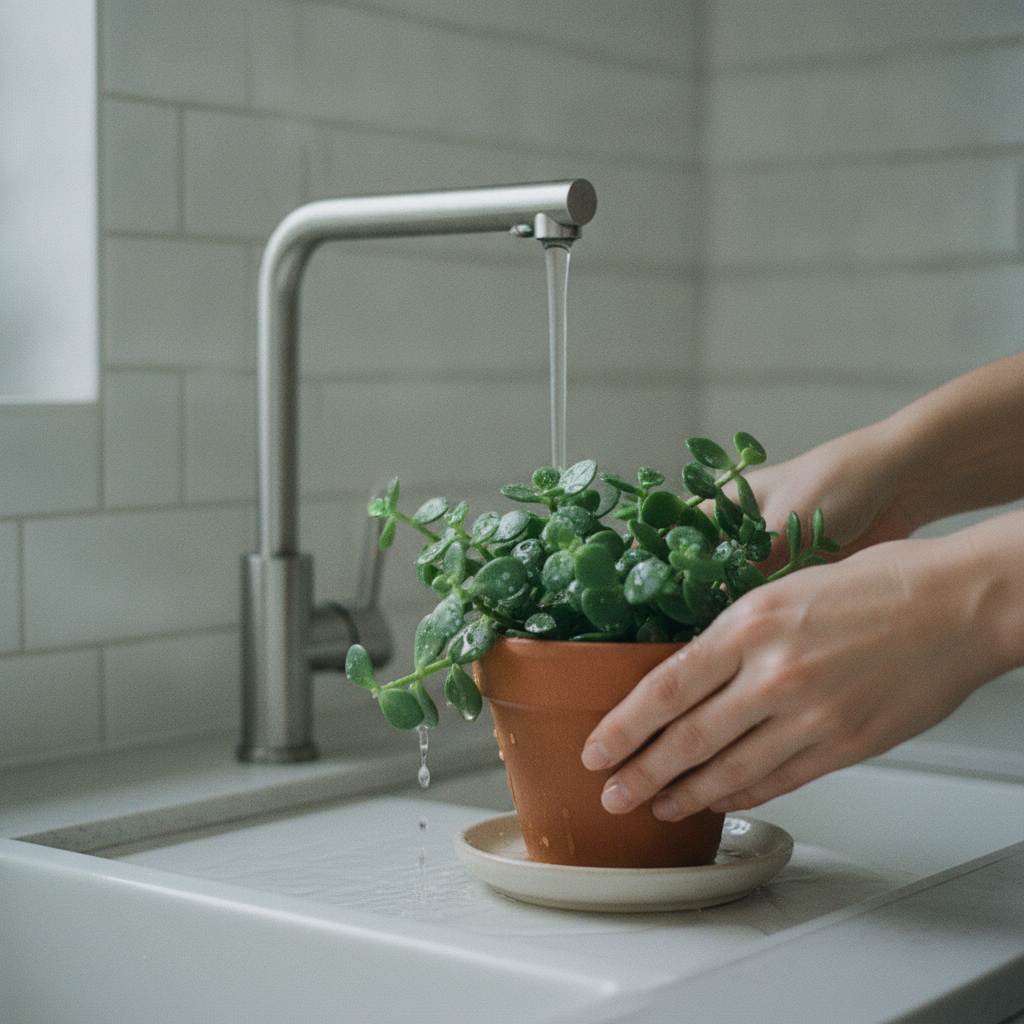
The most reliable cue is the soil itself. Push a finger into the mix or lift the pot to feel its weight; only water when the soil is dry all the way through and the pot feels light. In a warm, bright spot during summer this typically falls every 10 to 14 days, but never water by the calendar alone. Temperature, pot size, light and the season all shift the plant’s thirst, so the dryness test always overrules a fixed schedule.
In winter, when growth slows and light is weak, the elephant bush needs very little water, often only once a month or even less. The leaves act as a useful gauge of their own: a well-hydrated plant has firm, plump leaves, while leaves that look slightly soft, wrinkled or thinner than usual are the plant’s signal that its reserves are running low and a drink is due.
Pro Tip — Read the Leaves: When in doubt, look at the leaves before reaching for the watering can. Plump and firm means wait; slightly soft and wrinkled means water. This living moisture meter is more dependable than any schedule and quickly trains your eye to the plant’s real needs.
How to Water Correctly
- Check first that the soil is completely dry throughout, not just at the surface.
- Water slowly and thoroughly, letting water flow evenly across the whole soil surface.
- Continue until water runs freely from the drainage holes, ensuring the entire root ball is wetted.
- Let the pot drain fully and tip away any water that collects in the saucer or cachepot.
- Return the plant to its bright spot and do not water again until the mix has dried out completely.
Signs of Overwatering vs. Underwatering
| Symptom | Overwatering | Underwatering |
|---|---|---|
| Leaf colour | Yellowing, translucent or blackened leaves | Dull green, sometimes reddened from stress |
| Leaf texture | Soft, mushy, swollen and squishy to the touch | Wrinkled, shrivelled, thin and papery |
| Leaf drop | Leaves drop suddenly while still plump | Lower leaves dry and drop gradually |
| Stem base | Soft, dark, mushy and foul-smelling | Firm but slightly shrunken |
| Soil | Stays wet for days, may smell sour | Bone dry, pulling away from the pot sides |
Warning — Root Rot: Soft, blackening stems and mushy leaves point to root rot, the most serious threat to this plant and almost always caused by overwatering or poorly draining soil. If you catch it early, cut away all affected tissue back to firm, healthy green growth, let the cuttings callus, and re-root them in fresh dry mix. A rotting elephant bush is often more easily saved as cuttings than as the original plant.
Humidity Requirements
Humidity is refreshingly unimportant for the elephant bush. Adapted to dry, sunny thickets, it is perfectly content in the average, often quite dry air of a centrally heated or air-conditioned home. There is no need for misting, pebble trays or humidifiers, and in fact damp, stagnant air does the plant more harm than good by encouraging rot and fungal problems.
If anything, the elephant bush prefers conditions on the drier side. It will tolerate the brief humidity spikes of a bathroom or kitchen without complaint, but it does not need them, and you should never try to raise humidity around it the way you might for a fern or calathea.
Good air circulation matters far more than moisture in the air. A gentle flow of fresh air helps the soil surface and foliage dry quickly after watering, which is exactly what keeps fungal issues and pests at bay. An overcrowded, stuffy spot is best avoided.
Water Quality
The elephant bush is not fussy about water quality, and ordinary tap water suits it well in most areas. In regions with very hard water, mineral salts can gradually build up in the soil over time, so an occasional thorough flush, or the use of collected rainwater now and then, helps keep the root zone clean. Room-temperature water is gentler than icy cold straight from the tap, but this is a minor refinement rather than a requirement for such a tolerant plant.
Soil, Potting & Repotting
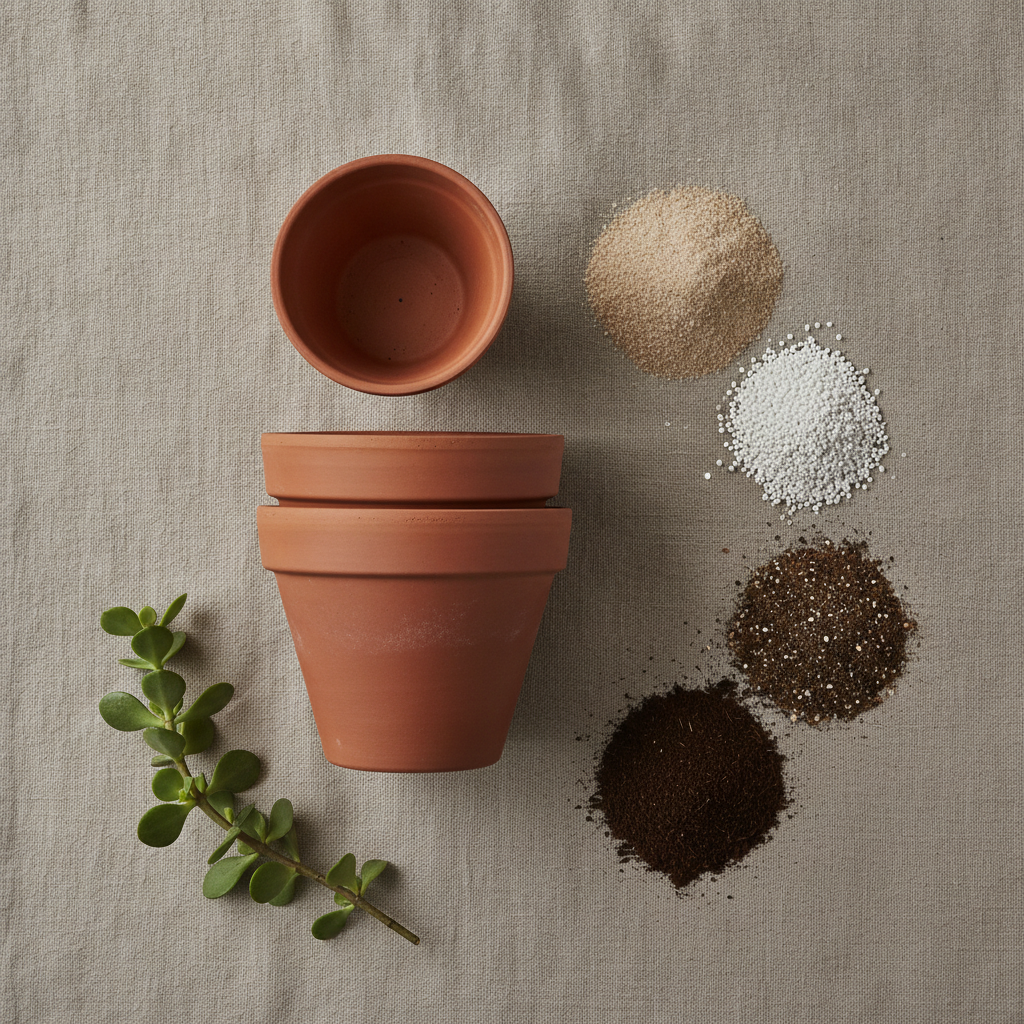
Get the soil right and most other care becomes easy, because the correct gritty, fast-draining mix forgives the occasional watering mistake. The elephant bush needs a substrate that holds just enough moisture to satisfy the roots and then drains the rest away within seconds, never staying soggy. A heavy, water-retentive potting compost is the surest route to the root rot that kills this plant.
Ideal Soil Composition
The aim is a mix that is roughly half organic matter and half mineral grit, far grittier than a standard houseplant compost. A bagged cactus and succulent mix makes a sound starting point, but most benefit from extra perlite, pumice or coarse sand to open them up further. The mineral component creates the air pockets that let roots breathe and water escape, which is precisely what this succulent demands.
| Component | Proportion | Function |
|---|---|---|
| Cactus or succulent compost | 50% | Provides structure, nutrients and light moisture retention |
| Perlite or pumice | 30% | Opens the mix, holds air and speeds drainage |
| Coarse sand or fine grit | 20% | Adds weight and sharp drainage around the roots |
The elephant bush is relaxed about pH and grows well in anything from slightly acidic to slightly alkaline soil, roughly 6.0 to 7.5. Far more important than chemistry is physical structure: a mix that drains fast and dries quickly will keep the plant healthy across a wide range of conditions.
Pro Tip — Quick Mix Recipe: For a reliable blend, combine two parts bagged cactus compost, one part perlite or pumice, and one part coarse horticultural grit or sand. Mix thoroughly so the grit is evenly distributed, and the result drains freely while still holding a little moisture for the roots.
Choosing the Right Pot
The pot you choose has a direct effect on how quickly the soil dries and therefore how easy the plant is to keep alive. With a top-heavy older specimen, weight also becomes a consideration, since a tall elephant bush in a light plastic pot can tip over.
Drainage holes are non-negotiable. Whatever the material or style, the pot must have at least one generous drainage hole. Without it, water collects unseen at the base and the roots sit in a reservoir that guarantees rot. Decorative pots with no hole should only ever be used as outer covers for a properly draining inner pot.
Pot material: Terracotta is ideal for the elephant bush because its porous walls wick moisture out of the soil and let it dry faster, which suits this drought-loving plant and gives a margin of safety against overwatering. Glazed ceramic and plastic both work but hold moisture longer, so you must be more disciplined with watering. The heavier weight of terracotta or stoneware also helps stabilise larger, top-heavy plants.
Pot size: Choose a pot only slightly larger than the root ball. The elephant bush actually grows well a little snug, and an oversized pot holds a large volume of damp soil the small root system cannot use, which slows drying and invites rot. Going up just one pot size at each repotting is the safest approach.
When to Repot
The elephant bush is in no hurry to be repotted and is generally happy to stay in the same pot for two or three years. Tell-tale signs that it is time include roots emerging from the drainage holes, water running straight through without wetting the soil, or a plant that has grown so top-heavy it keeps toppling. The best time to repot is spring or early summer, at the start of active growth, when the plant recovers fastest. Always repot into dry soil and wait several days before the first watering to give any disturbed roots time to heal.
How to Repot: Step-by-Step
- Let the soil dry out fully before you begin, as dry roots are less prone to breaking and tearing.
- Slide the plant gently from its pot, supporting the base of the stems, and tease away the old loose soil.
- Inspect the roots, trimming off any that are blackened, mushy or clearly dead with clean, sharp tools.
- Add a layer of fresh gritty mix to the new pot and position the plant at the same depth it sat before.
- Fill around the root ball with more dry mix, firming gently to remove large air gaps without compacting it.
- Wait at least three to five days before watering, then resume your normal soak-and-dry routine.
Warning — Transplant Shock: Watering immediately after repotting is a common mistake. Any small wounds on the roots are an open door for rot if the soil is wet, so always repot into dry mix and hold off watering for several days. A little patience here prevents the most frequent cause of post-repotting losses.
Fertilising
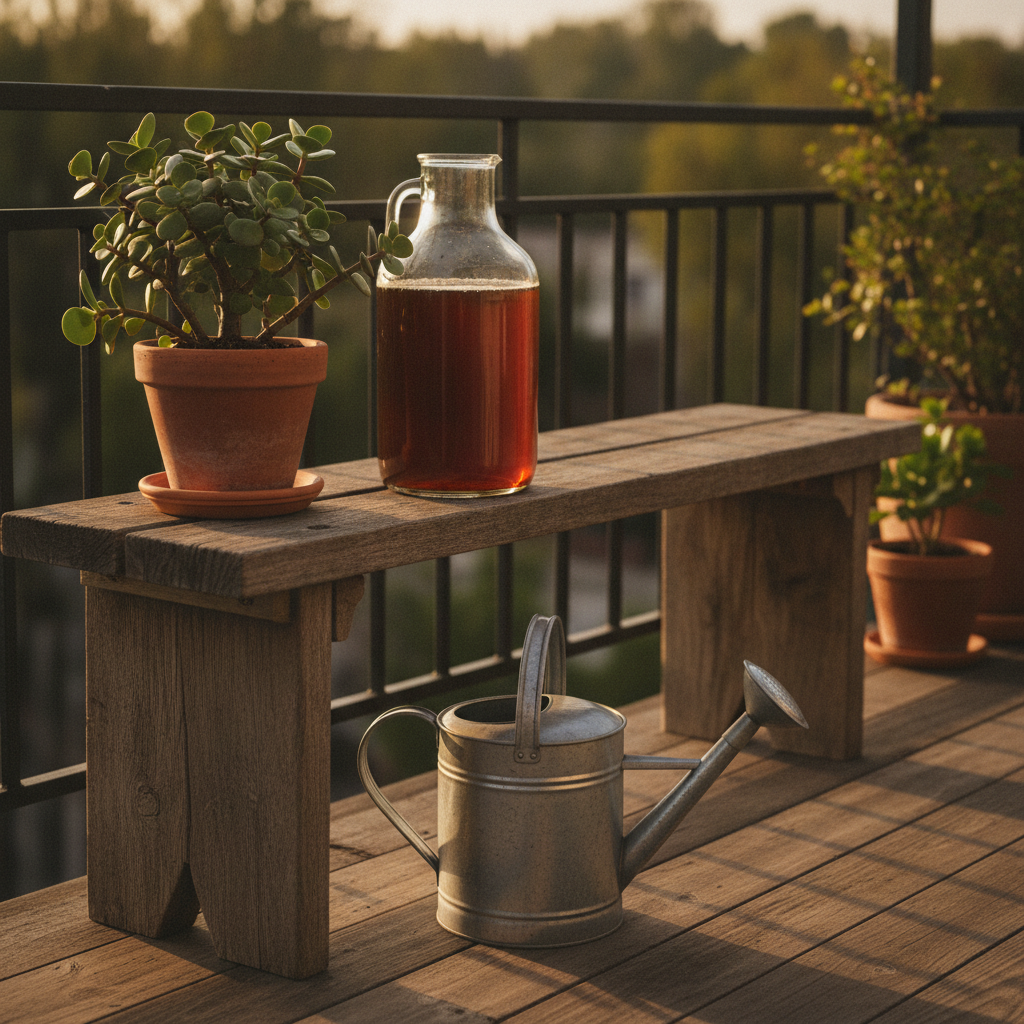
The elephant bush is a light feeder that evolved in poor, stony soils, so it asks for very little supplementary nutrition. A modest feed during the growing season supports its fast spring and summer growth, but overfeeding does real harm, producing weak, sappy growth and a build-up of salts in the soil. When it comes to fertilising this plant, less is genuinely more.
Think of feeding as a gentle seasonal boost rather than a routine necessity. A plant in fresh soil has all it needs for many months, and an underfed elephant bush is far easier to put right than an overfed one. Feed only when the plant is actively growing, and never in the dormant depths of winter.
Understanding Plant Nutrients
Fertilisers are labelled with an NPK ratio showing the percentages of nitrogen, phosphorus and potassium, the three nutrients plants use in the greatest quantity. For a succulent like the elephant bush, a balanced or slightly low-nitrogen feed is ideal, since too much nitrogen drives soft, leggy growth at the expense of the compact form you want. The table below summarises the key nutrients and what their shortage looks like.
| Nutrient | Symbol | Primary Function | Deficiency Symptoms |
|---|---|---|---|
| Nitrogen | N | Leaf and stem growth, green colour | Pale, yellowing older leaves, stunted growth |
| Phosphorus | P | Root development and energy transfer | Poor rooting, dull or purplish leaves |
| Potassium | K | Overall vigour and water regulation | Yellow or browned leaf edges, weak stems |
| Magnesium | Mg | Core of the chlorophyll molecule | Yellowing between the veins of older leaves |
| Iron | Fe | Chlorophyll production in new growth | Yellowing of the youngest leaves, green veins |
Types of Fertiliser
Liquid fertilisers: The easiest option for the elephant bush. A liquid succulent or cactus feed, diluted to half the recommended strength and applied to already-moist soil, gives precise control over how much the plant receives and is simple to stop in winter.
Slow-release granular: Coated granules mixed into the soil release nutrients gradually over months. They are convenient, but harder to control for a plant that needs so little, so use them at a reduced rate if at all.
Organic fertilisers: Gentle options such as diluted worm-casting tea or a weak organic succulent feed work well and carry little risk of burning. Their mild, slow action suits the modest appetite of this plant nicely.
Feeding Schedule
Feed once a month at most during spring and summer, the plant’s active growing season, using a feed diluted to half strength. From autumn through winter, stop feeding altogether; growth has slowed or paused and any nutrients you add will simply accumulate as unused salts in the soil. Resume only when you see fresh growth pushing again in spring.
Pro Tip — Dilute and Halve: Always mix succulent feed to half the strength stated on the bottle, and only ever apply it to soil that is already damp. Fertilising bone-dry roots with full-strength feed is the quickest way to scorch them, while a weak dose on moist soil is taken up safely and evenly.
How to Fertilise
- Confirm the plant is in active growth and the season is spring or summer.
- Water lightly first, or feed a day after watering, so the roots are moist and not parched.
- Dilute a succulent fertiliser to half the recommended strength in a watering can.
- Apply evenly to the soil, avoiding splashing concentrated feed onto the leaves.
- Flush the pot with plain water every couple of months to clear any accumulated salts.
Warning — Salt Build-Up: A white crust on the soil surface or pot rim and browning leaf tips are signs of fertiliser salts accumulating in the mix. When you see them, flush the pot thoroughly with plenty of plain water to leach the salts out, and cut back on feeding. Built-up salts damage roots and steadily weaken the plant if left unaddressed.
Propagation
If any single trait explains why the elephant bush is so widely shared and grown, it is the ease with which it propagates. A snapped stem dropped on dry soil will often root itself unaided, and deliberate cuttings succeed almost without fail. This makes the plant ideal for filling out a sparse specimen, replacing a rotting one, or simply giving pieces away to friends.
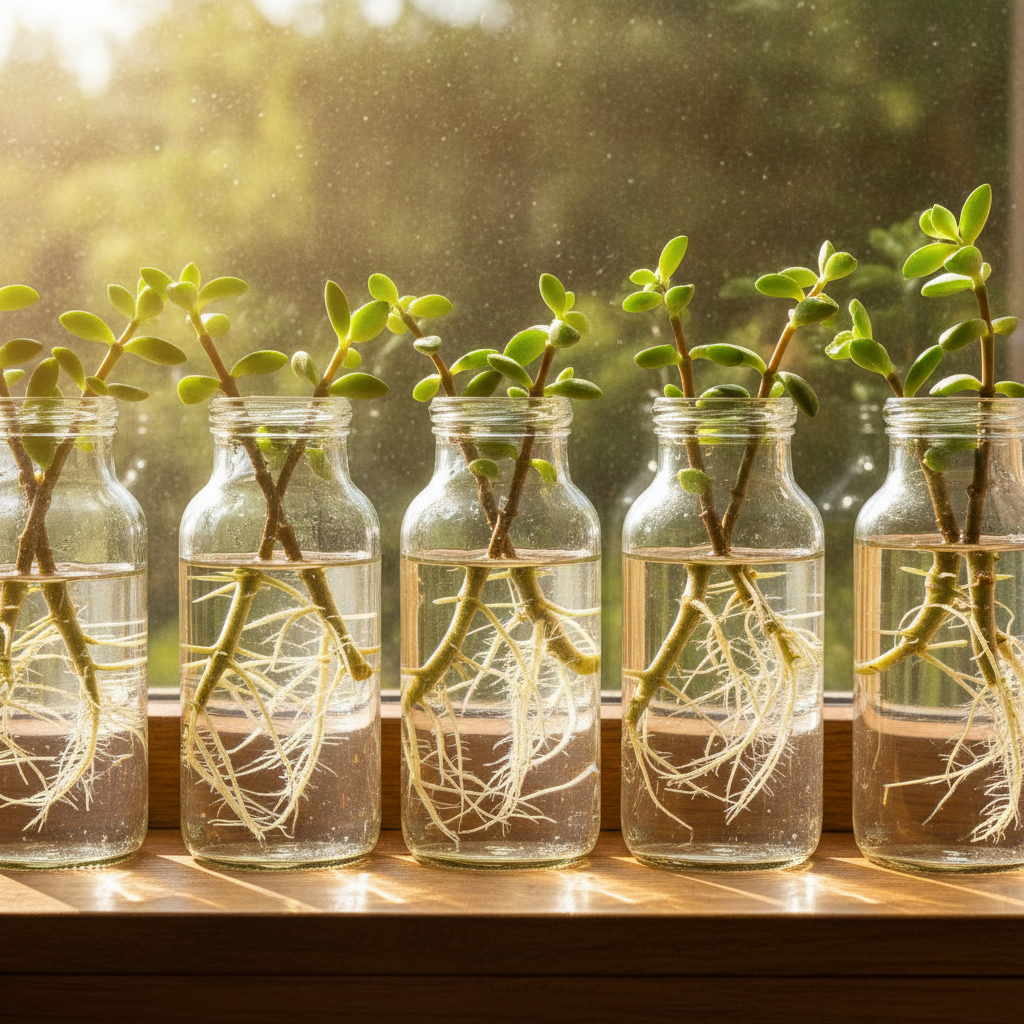
Stem cuttings are by far the most common and reliable method, and they can be rooted either in dry soil or in water. The plant grows from seed too, but that is slow and rarely worthwhile when cuttings root so quickly and stay true to the parent. Spring and summer, during active growth, give the fastest and most dependable results.
Understanding the Callus
The key to success with succulent cuttings is the callus, the dry, protective layer that forms over a cut surface. When you take a cutting, the fresh wound is vulnerable to rot if placed straight into soil. Leaving the cutting in a dry, shaded spot for a few days allows the cut end to dry and seal over, forming a callus that resists infection and from which new roots will emerge. Skipping this step is the most common reason soil-rooted cuttings fail.
Soil Propagation: Step-by-Step
Rooting cuttings directly in dry, gritty mix is the most reliable approach and produces sturdy plants that never need transferring from water. It asks for nothing more than patience.
- Using clean, sharp scissors, cut a healthy stem 8 to 15 centimetres (3 to 6 inches) long.
- Strip the leaves from the lower third of the cutting to expose a clean length of stem.
- Set the cutting aside in a dry, shaded place for three to five days until the cut end calluses over.
- Insert the callused end about 2 to 3 centimetres (1 inch) into dry, gritty succulent mix.
- Place in bright indirect light and wait a week before the first light watering.
- Water sparingly thereafter; roots usually form within two to four weeks, shown by firm new growth and resistance when gently tugged.
Pro Tip — Take Several Cuttings: Because cuttings root so easily, take three or four at once and pot them together in a single container. The result is an instantly full, bushy plant rather than a lone thin stem, and you can always thin them later if they crowd.
Water Propagation: Step-by-Step
Rooting in water is slightly less traditional for succulents but works well with the elephant bush and lets you watch the roots develop, which many growers enjoy.
- Take a healthy stem cutting and strip the lower leaves as for soil propagation.
- Allow the cut end to callus for a day or two, which reduces the risk of the stem rotting in water.
- Stand the cutting in a glass of water so the bare lower stem is submerged but no leaves sit in the water.
- Place on a bright windowsill and refresh the water every few days to keep it clean and oxygenated.
- Once roots reach 2 to 3 centimetres (about 1 inch), pot the cutting up into gritty succulent mix and water it in gently.
Troubleshooting Propagation
| Problem | Likely Cause | Solution |
|---|---|---|
| Cutting rots at the base | No callus formed, or soil kept too wet | Let cuttings dry longer before potting and water sparingly |
| No roots after many weeks | Low light or cool temperatures | Move to a warmer, brighter spot during spring or summer |
| Cutting shrivels badly | Severe water loss before rooting | A little wrinkling is normal; mist lightly or water once roots start |
| Leaves drop from cutting | Transplant stress or handling | Leave it undisturbed; new growth usually follows once rooted |
Pests & Diseases
The elephant bush is a robust plant that suffers few problems when its basic needs are met, and a healthy specimen in bright light with a dry-leaning watering routine is rarely troubled. Most issues that do appear trace back to overwatering or a weakened plant in poor light, both of which lower its natural defences.
That said, a few sap-sucking pests and one major disease are worth knowing. Catching them early, while an infestation is small or the rot is localised, makes treatment far easier, so a quick inspection whenever you water pays off handsomely.
Common Pests
Mealybugs (Pseudococcus longispinus)
The most frequent pest of the elephant bush, mealybugs appear as small, white, cottony tufts clustered in the leaf joints and along the stems. They suck sap, weaken the plant and excrete sticky honeydew that can lead to sooty mould. Their waxy coating hides them well, so check the crevices between leaves and stems carefully.
Treatment: Dab each mealybug directly with a cotton bud soaked in isopropyl alcohol, which dissolves their protective coat on contact. For larger infestations, spray the whole plant with diluted insecticidal soap or a neem oil solution, repeating every week until clear, and isolate the plant from your other succulents meanwhile.
Spider Mites (Tetranychus urticae)
These tiny mites thrive in hot, dry conditions and can be hard to see until fine webbing appears between the leaves and stems. Affected foliage takes on a dull, stippled or speckled look as the mites drain the cells. A heavy infestation saps vigour and can cause leaf drop.
Treatment: Rinse the plant under a gentle stream of water to knock mites off, then treat with neem oil or insecticidal soap, covering the undersides of leaves and the stem joints. Repeat treatments are essential to break the rapid breeding cycle of these pests.
Scale Insects (Coccus hesperidum)
Scale insects show up as small, flat or domed brown bumps fixed firmly to the stems and the undersides of leaves. Beneath their hard shells they feed on sap, and like mealybugs they secrete honeydew. They can be mistaken for part of the plant’s woody bark, so look for raised, evenly spaced bumps.
Treatment: Scrape or pick off the scales by hand, or loosen them with an alcohol-dipped cotton bud, then follow up with neem oil to catch the mobile young crawlers. Persistent checking over several weeks is needed to clear them fully.
Common Diseases
Root Rot (Pythium and Phytophthora species)
By far the most serious threat to the elephant bush, root rot is a fungal and water-mould disease that takes hold when roots sit in cold, wet soil. The first signs are usually above ground: soft, yellowing or blackening leaves, mushy stems and a plant that wilts despite damp soil. Left unchecked it spreads up from the roots and collapses the whole plant.
Treatment: Act fast. Unpot the plant, cut away every soft, dark root and stem back to firm, healthy tissue, and let the remaining healthy sections callus before replanting in fresh dry mix. In advanced cases the best rescue is to take clean cuttings from the unaffected top growth and start over. Prevention through gritty soil and restrained watering is far easier than any cure.
Edema (Physiological Disorder)
Edema is not an infection but a physiological response to erratic watering, where the plant takes up water faster than it can use it and cells in the leaves burst. The result is small corky, blister-like spots on the leaves, most often after a heavy watering following a dry spell. It is unsightly but rarely dangerous.
Treatment: There is no cure for already-marked leaves, but the disorder is easily prevented by watering more evenly and ensuring the soil drains freely. Improving light and air flow helps the plant regulate its water use and stops new blisters forming.
Pest and Disease Summary
| Pest / Disease | Identification | Treatment |
|---|---|---|
| Mealybugs | White cottony tufts in leaf joints | Alcohol swab, insecticidal soap or neem oil |
| Spider mites | Fine webbing and stippled, dull leaves | Rinse off, then neem oil, repeated weekly |
| Scale insects | Brown bumps fixed to stems and leaves | Scrape off and treat with neem oil |
| Root rot | Soft, blackening stems, mushy roots | Cut back to healthy tissue, re-root cuttings |
| Edema | Corky blisters after uneven watering | Water evenly; prevention only |
Prevention Strategies
Prevention with the elephant bush comes down to good husbandry rather than chemicals. A plant grown in bright light, in fast-draining soil, and watered only when dry is naturally vigorous and far less attractive to pests and disease. Inspect new plants before bringing them home, and quarantine any new arrival for a couple of weeks so a hidden infestation does not spread to the rest of your collection.
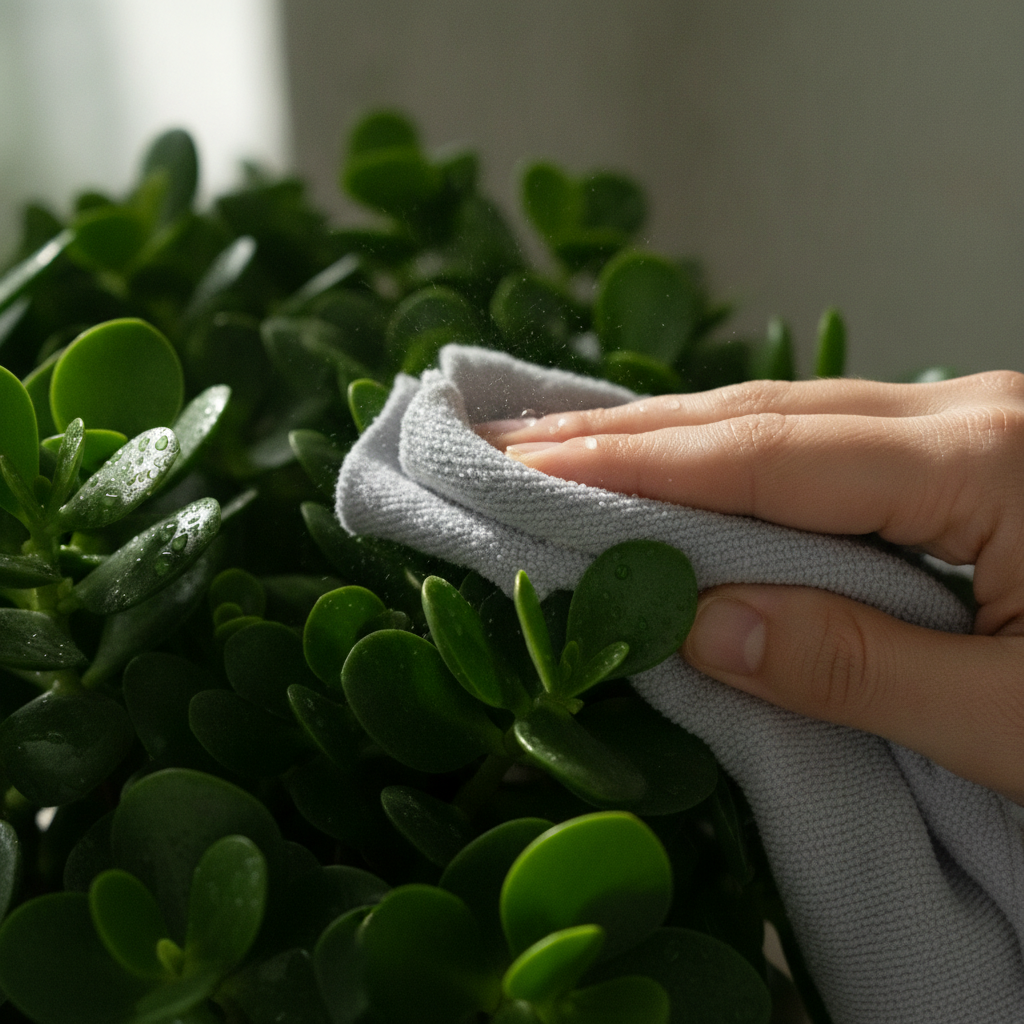
Routine attention does the rest. Wiping the leaves occasionally removes dust and lets you spot trouble early, while good air circulation keeps foliage dry and discourages both pests and fungal spores. Avoid the standing water, crowded conditions and gloomy corners in which problems take hold, and the elephant bush will largely look after itself.
Pro Tip — Inspect at Watering Time: Make a habit of looking the plant over each time you water. Since you only water when the soil is dry, this gives you a regular but not excessive check-in, just often enough to catch mealybugs or the first soft stem before a small problem becomes a serious one.
Popular Varieties
Although the plain green elephant bush is the form most often sold, Portulacaria afra has given rise to several distinctive cultivars that vary in colour, leaf shape and growth habit. They share the same easy care, so choosing between them is largely a matter of looks and the role you want the plant to play.
The variegated and dwarf forms are the most sought after, but trailing and upright selections offer further options for hanging baskets, bonsai or sculptural display. The table and profiles below cover the varieties you are most likely to encounter.
| Variety | Leaf Appearance | Light Needs | Growth Rate | Availability |
|---|---|---|---|---|
| Green Elephant Bush | Small, glossy, plain green | Bright to full sun | Fast | Very common |
| ‘Variegata’ | Cream and green variegation, pink stems | Bright, some direct sun | Moderate | Common |
| ‘Aurea’ | Rounded bright yellow-green leaves | Bright to full sun | Slow, compact | Occasional |
| ‘Prostrata’ | Small green leaves on trailing stems | Bright light | Moderate, trailing | Occasional |
| ‘Cork Bark’ | Green leaves, deeply corky bark | Bright to full sun | Slow | Rare, specialist |
Featured Varieties
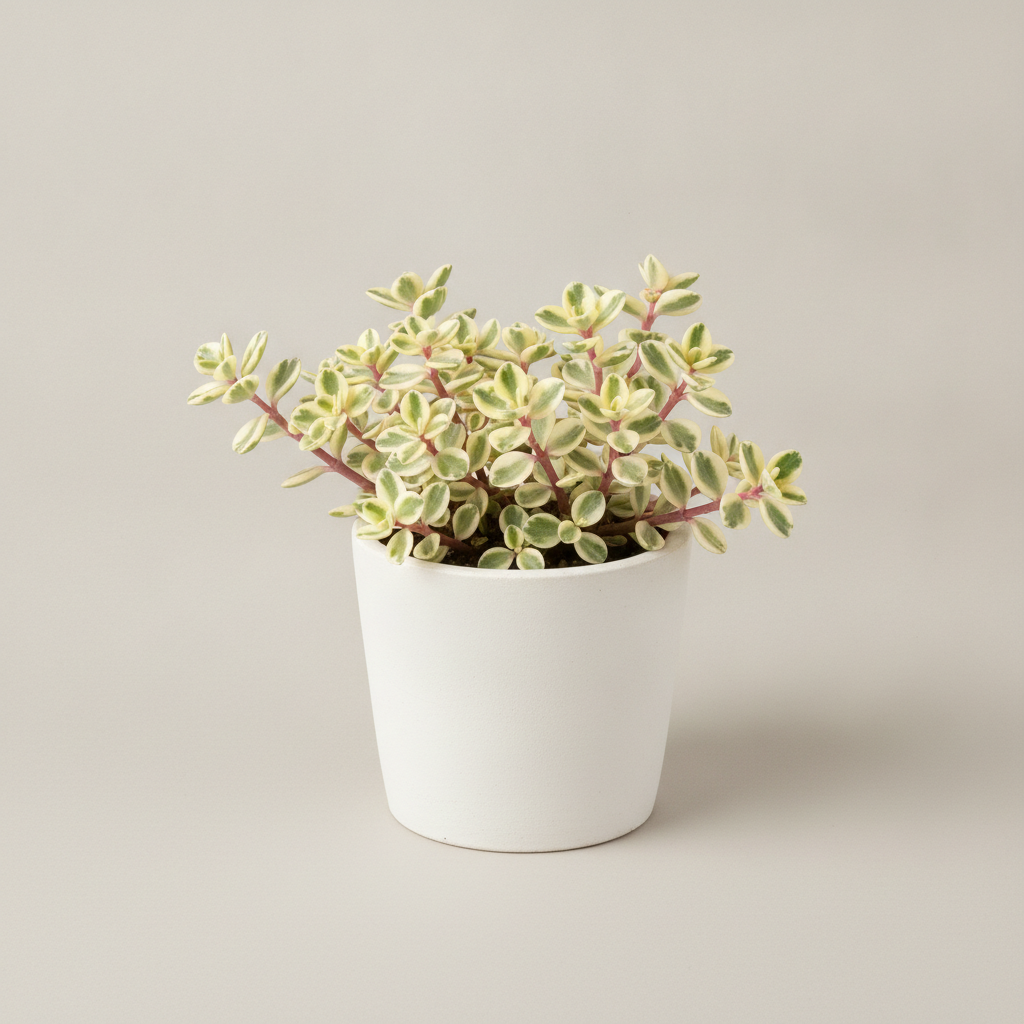
‘Variegata’ (Rainbow Bush)
The most ornamental form, with leaves boldly marked in cream and pale green and stems that flush a striking pink in good light. It is slightly slower and a little more light-hungry than the plain species, but its colour makes it a standout in any succulent collection.
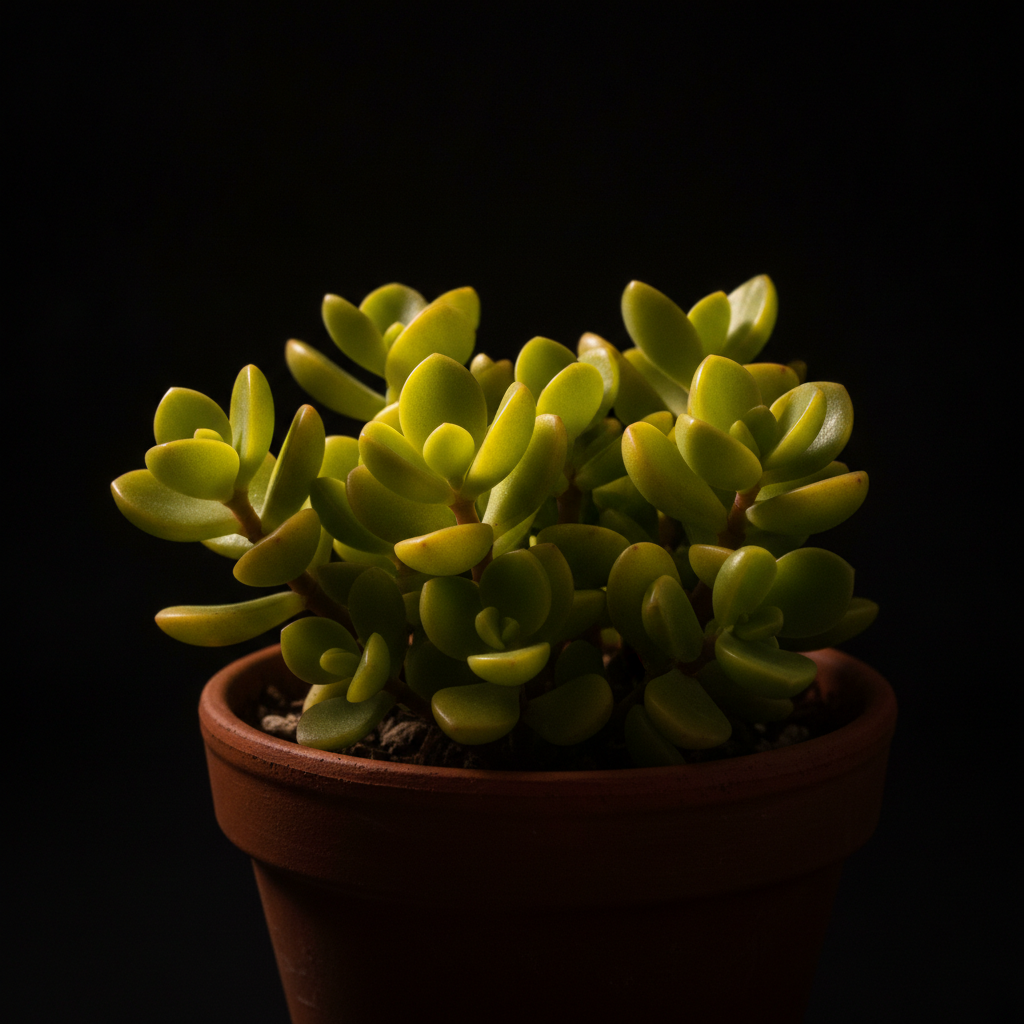
‘Aurea’ (Yellow Dwarf)
A compact dwarf selection with rounded, chartreuse to bright yellow-green leaves clustered tightly on short stems. Its slow, dense habit and warm colour, which intensifies in full sun, make it a favourite for small pots and bonsai-style planting.
Variety Profiles in Detail
Variegated Elephant Bush (Portulacaria afra ‘Variegata’)
Often sold as rainbow bush, this is the showpiece of the group. Each small leaf carries irregular bands of creamy white against green, and the stems blush deep pink to red where the sun strikes them. The variegation does cost the plant some vigour, since there is less chlorophyll to drive growth, so it grows a touch more slowly and needs bright light to keep its markings crisp. In too little light the cream fades and the plant reverts toward plain green.
Yellow Dwarf Elephant Bush (Portulacaria afra ‘Aurea’)
A naturally compact form whose new growth emerges a vivid yellow-green before maturing to a softer lime. The leaves are noticeably rounder and the internodes shorter than the species, giving a dense, cushiony shape that lends itself beautifully to small containers and bonsai. Full sun brings out the brightest colour, while shade mutes it toward ordinary green.
Trailing Elephant Bush (Portulacaria afra ‘Prostrata’)
This low, spreading selection sends out horizontal and cascading stems rather than growing upright, making it an excellent choice for hanging baskets and the edges of mixed succulent bowls. Its care is identical to the species, and it roots from cuttings just as readily, quickly filling a container with trailing growth.
Choosing the Right Variety for Your Space
For a bright, sunny windowsill the colourful ‘Variegata’ or ‘Aurea’ will reward you with their best tints, while the plain green species is the most forgiving and fastest to fill out if you have slightly less light. Choose the trailing ‘Prostrata’ for a hanging position, and look to the dwarf and cork bark forms if bonsai is your goal. Whichever you pick, the underlying care is the same, so you can mix several forms in one collection and treat them all alike.
Frequently Asked Questions
Is the elephant bush the same as a jade plant?
No, although they look alike and are often confused. The jade plant is Crassula ovata, while the elephant bush is Portulacaria afra, an unrelated species. The elephant bush has smaller, thinner leaves, reddish and more flexible stems, and a faster growth rate. The two also belong to different plant families and have different flowers, but their care is broadly similar.
Is the elephant bush safe for cats and dogs?
Yes. The elephant bush is non-toxic to cats, dogs and humans, which is unusual among succulents and makes it a great choice for pet-friendly homes. Its leaves are even edible, with a tart flavour. While it is harmless, it is still sensible to discourage pets from chewing on any houseplant to avoid digestive upset from the sheer volume eaten.
Why is my elephant bush dropping leaves?
Leaf drop usually points to a watering problem. Sudden dropping of plump leaves often signals overwatering and the early stages of rot, whereas the gradual loss of shrivelled lower leaves indicates the plant is too dry. Other causes include a sharp change in light or temperature and the stress of a recent move or repotting. Review your watering first, then check light and recent changes.
Why is my elephant bush growing leggy and thin?
Legginess, with long gaps between leaves and weak, stretching stems, is almost always a sign of insufficient light. The plant is reaching toward the nearest light source. Move it to a brighter spot with several hours of direct sun, and prune the stretched stems to encourage bushier regrowth. The cuttings you remove can be rooted to fill out the plant further.
How fast does an elephant bush grow?
In good light and warmth the elephant bush is a fast grower by succulent standards, adding fresh stem length noticeably through spring and summer. Growth slows or pauses in winter. Over several years a well-grown plant can reach 1 metre (39 inches) or more indoors, though regular pruning keeps it compact and is exactly how bonsai specimens are shaped.
Can I grow elephant bush as a bonsai?
Yes, and it is one of the most popular beginner succulents for bonsai. Its woody stems, small leaves, fast growth and tolerance of hard pruning all suit the art well, and it back-buds readily after cutting. With regular trimming, wiring of young stems and shallow planting, an elephant bush can be trained into a convincing miniature tree in a relatively short time.
Should I mist my elephant bush?
No. As a dry-climate succulent the elephant bush has no need for misting and actively dislikes damp foliage, which can encourage rot and fungal problems. It thrives in ordinary, even dry, household air. Save your effort for genuinely humidity-loving plants and keep this one on the dry side.
Why are the leaves on my elephant bush wrinkled?
Wrinkled, slightly soft leaves usually mean the plant is thirsty and drawing on its stored reserves, so a thorough watering should plump them up again within a day or two. If the leaves are wrinkled but the soil is still wet, the cause is more likely root rot preventing the roots from taking up water, in which case you should check the roots and stem base for softness.
Can elephant bush live outdoors?
In warm, frost-free climates the elephant bush makes an excellent outdoor plant and can grow into a large shrub or informal hedge in full sun. In cooler regions it is best grown in a pot that can spend summer outside and come indoors before the first frost, as it is damaged by temperatures below about 5 degrees Celsius (41 Fahrenheit) and will not survive freezing.






