
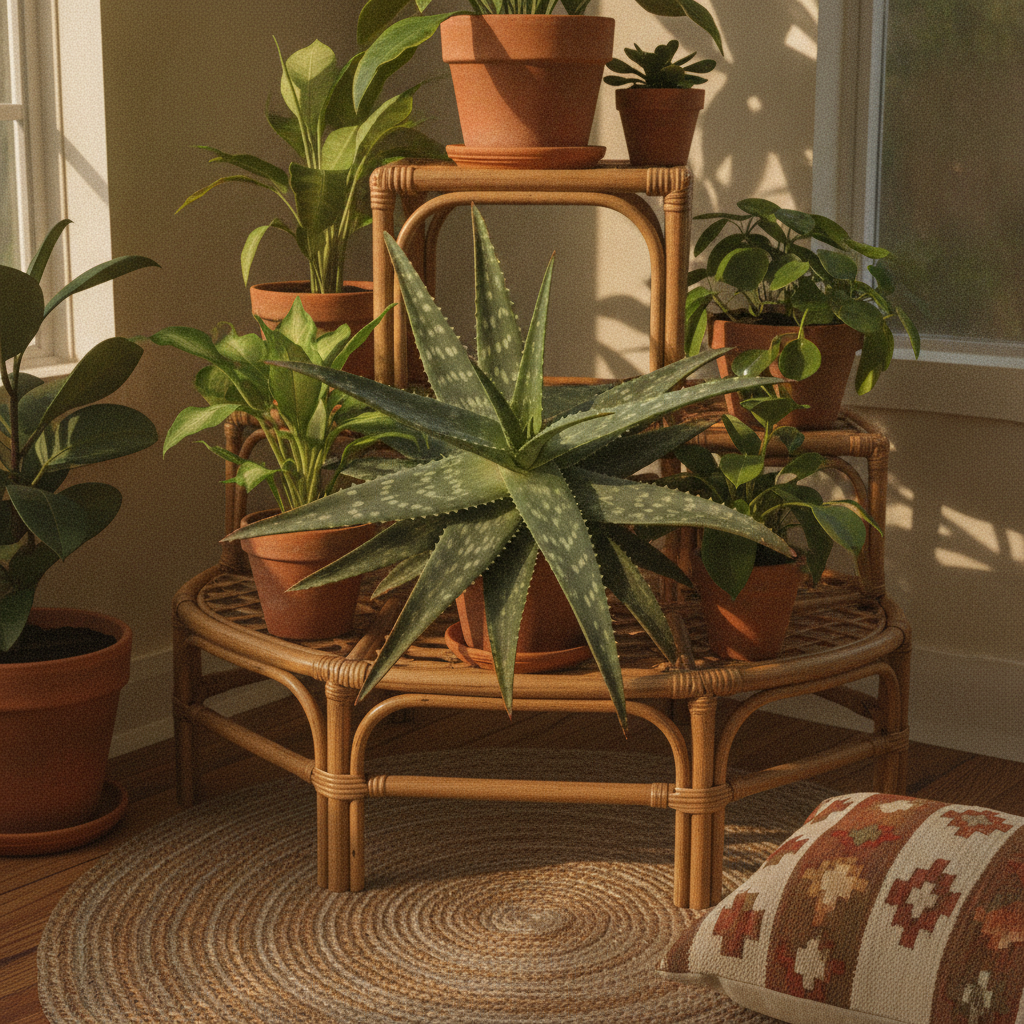
Few succulents earn their keep on a sunny windowsill as effortlessly as the soap aloe. Known botanically as Aloe maculata, and still widely sold under its older name Aloe saponaria, this clumping rosette hails from the grasslands and rocky slopes of southern Africa, where it grows in everything from coastal sand to high inland veld. Its common name traces back to the soapy lather its sap produces when mixed with water, a property generations of gardeners in its native range have put to practical use. Elsewhere it is grown for the bold geometry of its broad, spotted leaves and the torch-like flower spikes that rise above the rosette in coral, orange or yellow.
As a houseplant the soap aloe is forgiving to the point of stubbornness, asking only for strong light and a pot that drains freely. Yet there is a meaningful gap between a soap aloe that merely survives, sitting pale and stretched in a dim corner, and one that thrives, tight and colourful with the occasional flower stalk. This guide covers everything that separates the two: how much light the plant genuinely needs, how to water a succulent without rotting it, the gritty soil it prefers, when and how to feed it, how to multiply it from its freely produced offsets, and how to deal with the handful of pests that occasionally find it.
Contents
- Quick Reference
- Why Soap Aloe Makes a Great Houseplant
- Light Requirements
- Watering & Humidity
- Soil, Potting & Repotting
- Fertilising
- Propagation
- Pests & Diseases
- Popular Varieties
- Frequently Asked Questions
Quick Reference: Soap Aloe at a Glance
| Light | Bright direct to full sun; at least 4 to 6 hours of direct light, ideally a south or west window |
| Watering | Let the soil dry out completely between waterings; roughly every 2 to 3 weeks in growth, far less in winter |
| Temperature | 18 to 27°C (64 to 81°F) ideal; tolerates brief dips to around -4°C (25°F) once established |
| Humidity | Low to average; 30 to 50% is plenty, no misting required |
| Fertiliser | Light feeder; dilute succulent feed two or three times across spring and summer only |
| Toxicity | Mildly toxic to cats, dogs and horses if eaten; sap can irritate skin |
Why Soap Aloe Makes a Great Houseplant
The soap aloe’s appeal begins with its architecture. Each plant forms a low, spreading rosette of broad, fleshy, triangular leaves that can reach 25 to 30 cm (10 to 12 in) long, arranged in a tidy spiral. The leaf surface is grey-green, overlaid with irregular creamy-white spots that gather into wavy horizontal bands, an effect that gives the plant its alternate name, zebra aloe. In strong light the leaves blush bronze or reddish at the tips and margins, and the soft, reddish-brown marginal teeth become more pronounced. Unlike the strictly upright Aloe vera, the soap aloe stays compact and ground-hugging, which makes it well suited to wide, shallow pots and sunny sills.
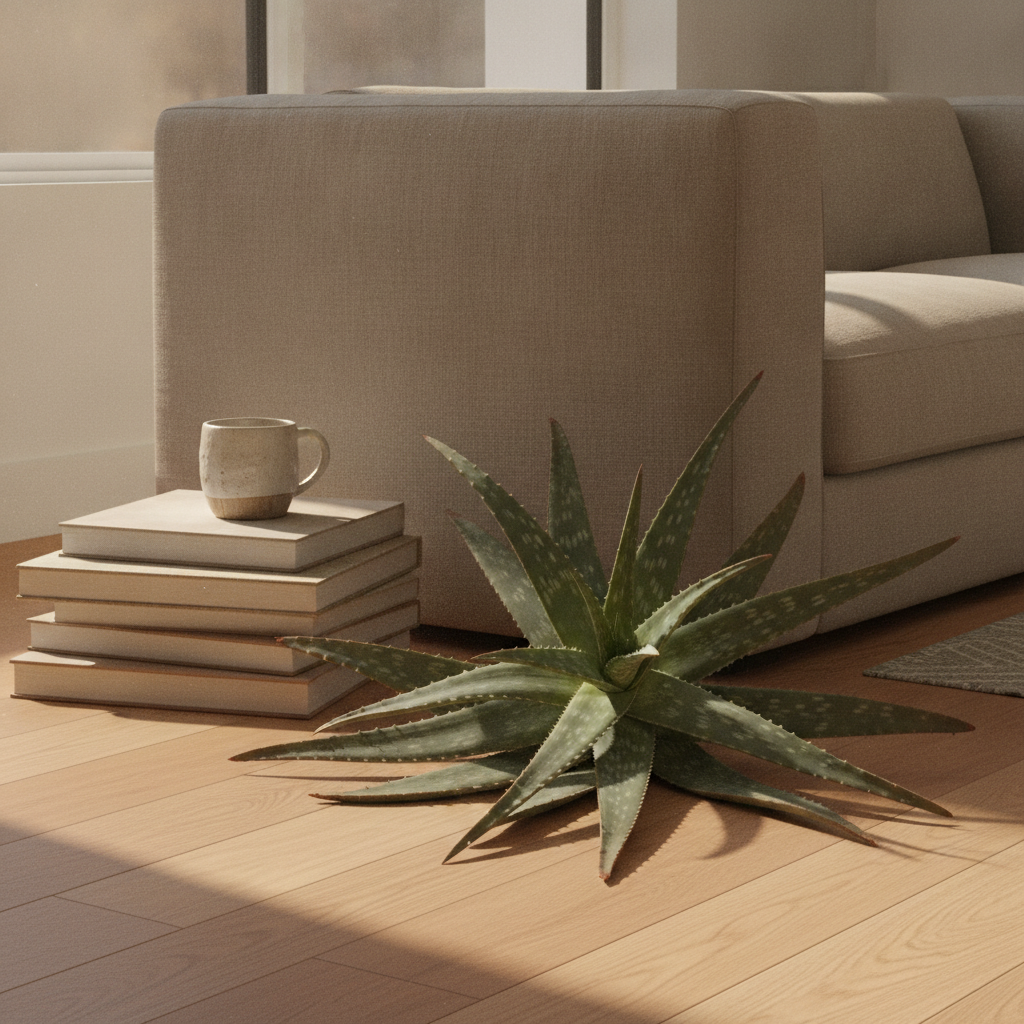
Beyond looks, the plant offers genuine practicality. It is exceptionally drought-tolerant, storing water in its thick leaves so that a forgotten watering or two does no harm. It propagates itself enthusiastically, throwing out offsets around the base until a single plant becomes a dense clump, which means a steady supply of new plants for free. Mature specimens reward good light with a branched flower spike up to 80 cm (31 in) tall, topped with flat clusters of tubular flowers that, outdoors, draw in sunbirds and bees. For anyone who has lost a fussy calathea or struggled with a thirsty fern, the soap aloe is a confidence-restoring plant that asks very little and gives a great deal.
Important — Toxicity: Like most true aloes, Aloe maculata contains saponins and anthraquinones that make it mildly toxic to cats, dogs and horses. Ingestion can cause vomiting, diarrhoea, lethargy and changes in urine colour. The gel-like sap can also irritate sensitive skin. Keep the plant out of reach of pets and children, and wash your hands after handling cut leaves.
Light Requirements
Light is the single most important factor in growing a healthy soap aloe, and it is the one most often gotten wrong indoors. In its native habitat the plant grows in open, sun-baked positions, and it carries that appetite for brightness into the home. A soap aloe given too little light does not die quickly; instead it slowly deteriorates, the rosette loosening and the leaves stretching and paling as the plant reaches for a stronger source.
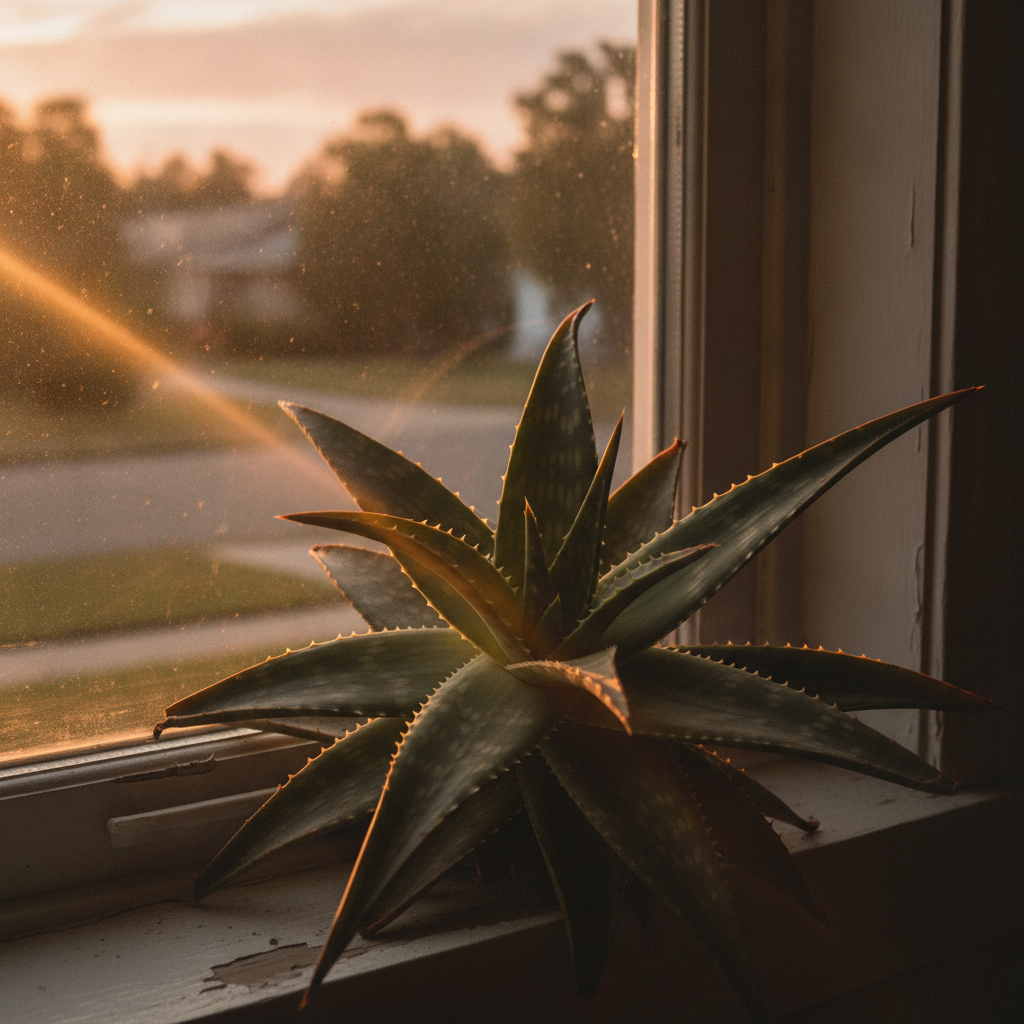
For a plant that thrives rather than merely persists, aim to give your soap aloe at least four to six hours of direct sun each day. A south-facing or west-facing window is ideal in most homes. The plant can take more sun than almost any common houseplant, including several hours of unfiltered midday light once acclimatised, though a plant moved abruptly from shade into blazing sun can scorch. Outdoors in summer it is happy in full sun, and a spell on a sunny balcony or patio between late spring and early autumn does wonders for leaf colour and flowering.
Light Levels Explained
Indoor light is far dimmer than it appears to the eye, which is why so many succulents languish on shelves their owners consider bright. The table below translates the loose categories gardeners use into rough lux values and realistic placements for a soap aloe.
| Light Category | Approx. Level | Typical Location | Outcome |
|---|---|---|---|
| Direct sun | 50,000+ lux | On the sill of a south window | Best colour and form; flowering possible |
| Bright indirect | 10,000 to 20,000 lux | Just back from a sunny window | Acceptable; rosette stays reasonably tight |
| Medium | 5,000 to 10,000 lux | A few metres from a bright window | Survives but stretches over time |
| Low | 1,000 to 2,500 lux | An interior wall or north room | Decline; leggy, pale growth, no flowers |
| Very low | Under 500 lux | A windowless corner | Plant slowly starves and rots more easily |
Window Orientation and Placement
South-facing window: The premium position for a soap aloe in the northern hemisphere. A south window delivers the longest and most intense daily light, producing tight rosettes, strong leaf colour and the best chance of flowers. Acclimatise gradually if the plant has been in shade.
East-facing window: An east window provides bright morning sun that is gentler than afternoon light. It will keep a soap aloe healthy and reasonably compact, though colour and flowering may be less pronounced than in a south or west position.
West-facing window: Nearly as good as south. West windows deliver strong, warm afternoon light that suits the plant well. Watch for heat build-up behind glass on hot summer afternoons, which can occasionally scorch a plant pressed against the pane.
North-facing window: The weakest orientation and the hardest place to keep a soap aloe looking its best. Without supplementary lighting, a north window almost always leads to stretching and pale, loose growth over the months. If a north room is your only option, plan to add a grow light.
Pro Tip — Read the Rosette: Your soap aloe will tell you whether it is getting enough light. A tight, low rosette with good colour and short gaps between leaves means the light is right. Leaves that grow longer, thinner, point upward and space out are reaching for more light, a process called etiolation. Move the plant somewhere brighter before the habit becomes permanent.
How Light Affects Leaf Colour
The soap aloe is one of those succulents that changes appearance dramatically with light, a trait collectors call stress colouring. In bright light and with cooler nights, the grey-green leaves develop bronze, copper or russet tones, the white spots stand out more sharply, and the marginal teeth deepen to red. In low light the same plant reverts to a flat, uniform green and the markings fade. This colouring is harmless and reversible, and many growers deliberately give their plants strong light to bring it out. It should not be confused with sunburn, which produces dry, bleached or brown patches that do not recover.
Warning — Direct Sunlight: Although the soap aloe loves sun, a plant grown in shade and then moved suddenly into intense direct light can scorch within a day or two. Sunburn appears as pale, papery or brown patches on the most exposed leaf surfaces and is permanent. Always acclimatise a plant to stronger light over a week or two, increasing exposure gradually rather than all at once.
Artificial Lighting
Where natural light is insufficient, the soap aloe responds well to a full-spectrum LED grow light. Position the light 20 to 30 cm (8 to 12 in) above the plant and run it for ten to twelve hours a day to mimic a bright growing season. Grow lights are particularly useful through the short days of winter, or in north-facing rooms where the plant would otherwise stretch. A simple timer keeps the schedule consistent.
Seasonal Adjustments
Light levels swing considerably between summer and winter, and the soap aloe’s needs swing with them. Through spring and summer the plant is in active growth and wants as much light as it can get. In autumn and winter, growth naturally slows; the plant needs less water but still wants the brightest position you can offer, since weak winter light is a common cause of the stretching that appears the following spring. Rotating the pot a quarter turn every week or two keeps the rosette growing evenly rather than leaning toward the glass.
Watering & Humidity
Watering is where most soap aloes meet their end, and almost always through kindness rather than neglect. As a succulent adapted to dry, well-drained ground, the plant is built to endure drought and to resent constantly damp roots. The guiding principle is simple: water thoroughly, then wait until the soil is bone dry before watering again.
When to Water
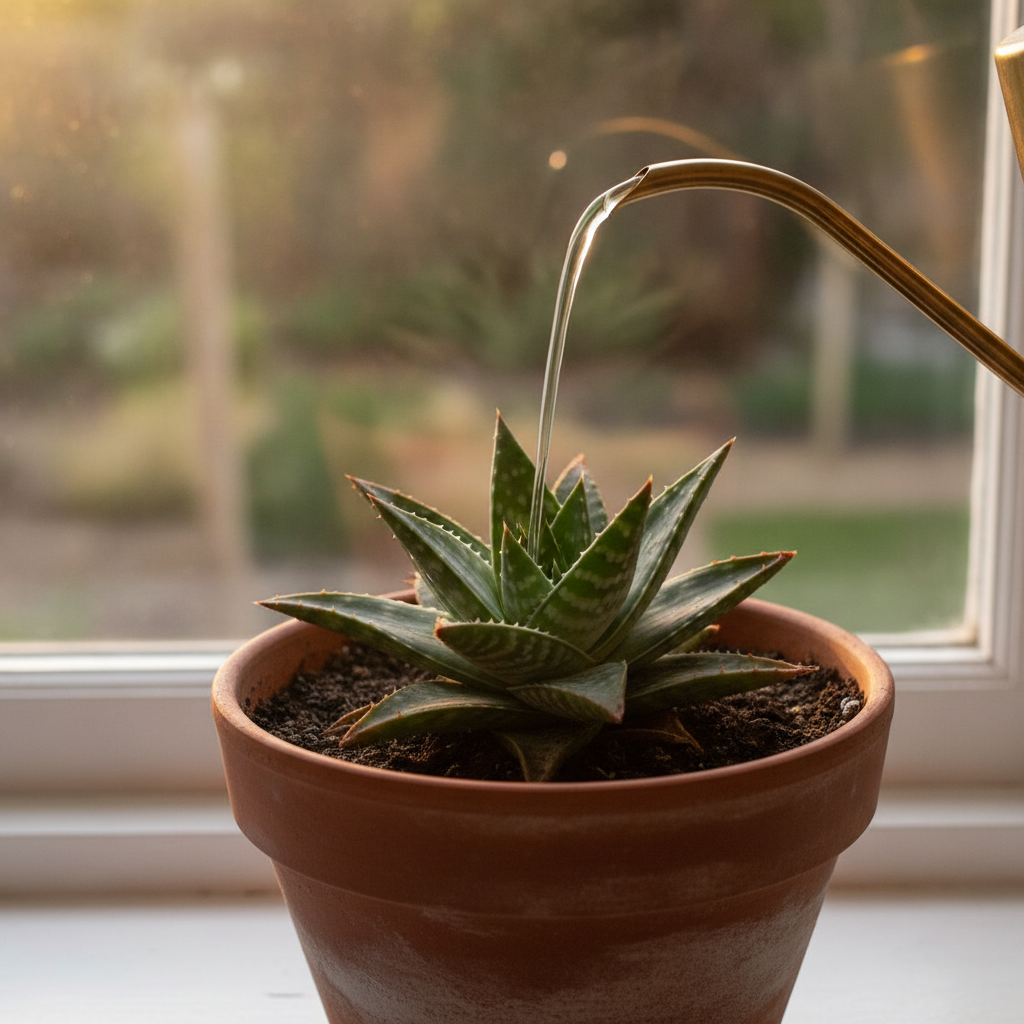
The soap aloe should be watered only when its soil has dried out completely. Rather than following a fixed calendar, check the soil: push a finger several centimetres into the pot, or lift the pot to judge its weight. Dry soil is light and crumbly; a pot that still feels heavy or cool holds moisture and needs no water yet. During the warm growing months this usually means watering roughly every two to three weeks, but the interval depends entirely on your light, warmth and pot size.
In winter the plant’s demand drops sharply. With shorter days and cooler temperatures it may need water only once every four to six weeks, sometimes less. Many experienced growers deliberately keep their aloes almost dry through the coldest months, which also improves cold tolerance. When you do water, do so in the morning so any moisture on the leaves evaporates during the day.
Pro Tip — The Soak and Dry Method: When you water, water properly. Drench the soil until water runs freely from the drainage holes, making sure the entire root ball is moistened, then empty the saucer and let the pot dry out fully before the next watering. This soak-and-dry rhythm mimics the natural cycle of desert rain followed by long dry spells and produces far healthier roots than frequent light sips.
How to Water Correctly
- Check that the soil is completely dry by feeling deep into the pot or lifting it to gauge its weight.
- Water early in the day, using room-temperature water directed at the soil rather than over the rosette.
- Apply water slowly and evenly until it flows out of the drainage holes at the base of the pot.
- Let the pot drain fully for several minutes, then tip away any water collected in the saucer or cachepot.
- Avoid letting water pool in the centre of the rosette, where it can sit and cause crown rot.
- Wait until the soil has dried out completely before watering again, however long that takes.
Signs of Overwatering vs. Underwatering
| Symptom | Overwatering | Underwatering |
|---|---|---|
| Leaf colour | Yellowing, translucent or water-soaked look | Dull, greyish, slightly faded |
| Leaf texture | Soft, mushy, swollen leaves that bruise easily | Thin, wrinkled, puckered leaves |
| Soil | Stays wet for days; may smell sour | Bone dry, pulling away from pot sides |
| Roots | Brown, black, soft and foul-smelling | Dry but firm and pale |
| Stem base | Soft, darkened, collapsing at soil line | Firm, no discolouration |
Warning — Root Rot: Root rot is the most serious and most common threat to a soap aloe, caused by soil that stays wet around the roots. By the time the lower leaves turn yellow and mushy and the base feels soft, the rot is often advanced. If you suspect it, unpot the plant immediately, cut away all blackened roots and soft tissue with a clean blade, let the cuts callus for a day or two, and repot into fresh, dry, gritty mix. Withhold water until new growth shows.
Humidity Requirements
Humidity is rarely a concern with the soap aloe, which is one of the qualities that makes it such an easy houseplant. Adapted to dry climates, it is perfectly content in the low to moderate humidity of an ordinary home, somewhere between 30 and 50 percent. It needs no misting, no pebble trays and no humidifier, and in fact prefers drier air to the damp conditions that suit tropical foliage plants.
Problems linked to humidity are far more likely to come from too much moisture than too little. High humidity combined with poor air circulation encourages fungal spots on the leaves and raises the risk of rot, particularly in winter. If your home is very humid, make sure the plant has good airflow and pay even more attention to drainage than usual.
There is almost never a need to raise humidity for this plant. If you grow it alongside thirstier, humidity-loving species, resist the temptation to mist the whole group; the soap aloe will be happier kept on the dry side and given its own well-ventilated spot.
Water Quality
The soap aloe is not fussy about water quality and tolerates ordinary tap water in most areas. If your water is very hard, you may in time see a chalky mineral crust on the soil surface or pot rim; this is cosmetic rather than harmful. Where water is heavily chlorinated, letting it stand overnight before use allows some chlorine to dissipate, but this is a refinement rather than a requirement for such a tough plant.
Soil, Potting & Repotting
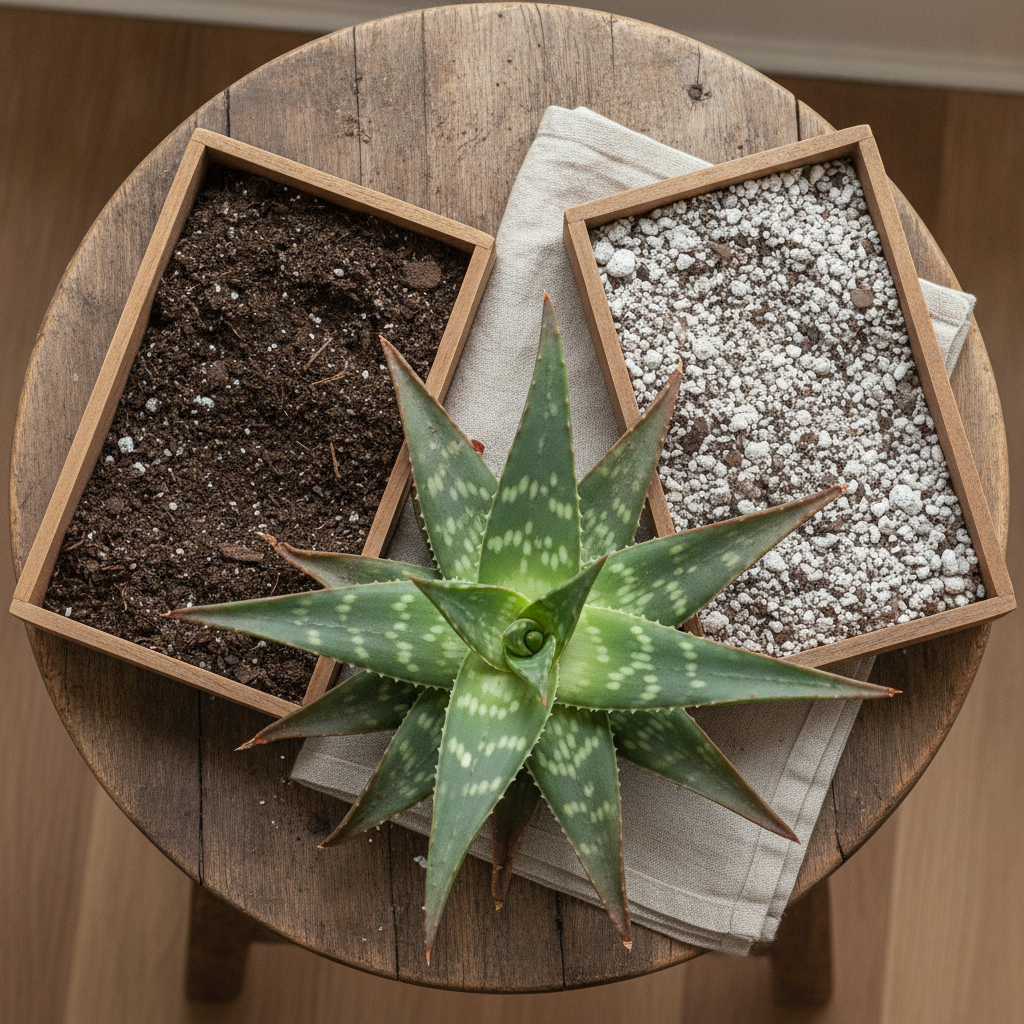
Getting the soil right is the other half of the watering equation, and the two cannot be separated. No watering routine, however careful, will save a soap aloe planted in dense, moisture-retentive compost. The plant needs a gritty, fast-draining medium that lets water rush through and air reach the roots, recreating the open, mineral soils of its native ground.
Ideal Soil Composition
A good soap aloe mix is built around sharp drainage. The simplest reliable approach is to start with a commercial cactus and succulent compost and improve it further with extra grit, since most bagged mixes still hold more water than these plants like. The aim is a substrate that feels coarse and free-running rather than soft and spongy, with plenty of mineral content to keep air pockets open even when wet.
| Component | Proportion | Function |
|---|---|---|
| Cactus and succulent compost | 50% | Provides structure and a modest reserve of nutrients and moisture |
| Coarse grit or pumice | 25% | Opens the mix, ensures rapid drainage and air to the roots |
| Perlite | 15% | Lightens the mix and prevents compaction over time |
| Coarse sand or fine gravel | 10% | Adds weight and further sharpens drainage |
The soap aloe is relaxed about soil pH, growing well anywhere from slightly acidic to slightly alkaline, roughly pH 6.0 to 7.5. Far more important than fine-tuning pH is ensuring the mix drains freely; a perfectly balanced soil that stays wet will still kill the plant, while a slightly off-pH mix that drains sharply will grow it well.
Pro Tip — Quick Mix Recipe: For a foolproof blend, combine two parts cactus compost, one part pumice or coarse grit and one part perlite. If you can only find standard potting compost, cut it at least half-and-half with grit and perlite. When you squeeze a handful of the finished mix it should crumble apart immediately rather than holding together in a wet clump.
Choosing the Right Pot
The pot you choose has as much influence on a soap aloe’s health as the soil inside it. Because the plant resents sitting in moisture, the container’s job is to let the mix dry out quickly and completely between waterings.
Drainage holes are non-negotiable. A pot without a drainage hole will eventually drown a soap aloe no matter how careful you are, because water collects unseen at the base and rots the roots from below. If you love a decorative pot that has no hole, use it as a cachepot, keeping the plant in a plain plastic nursery pot that can be lifted out to water and drain.
Pot material: Pot material matters more for succulents than for most plants. Unglazed terracotta is the ideal choice, because its porous walls wick moisture out of the soil and allow it to evaporate, helping the mix dry faster. Glazed ceramic and plastic hold moisture longer, so if you use them, water more cautiously and lean even harder on a gritty mix.
Pot size: Soap aloes have shallow, spreading root systems and are happy slightly snug in their pots. Choose a container only a little wider than the rosette, and favour width over depth since the plant naturally spreads outward by offsets. An oversized pot holds a large volume of slow-drying soil around the roots, which is exactly the situation to avoid.
When to Repot
The soap aloe is a slow, steady grower that needs repotting only every two to three years, or when it has clearly outgrown its container. Tell-tale signs include offsets crowding against the pot rim, roots emerging from the drainage holes, the rosette looking top-heavy, or the plant drying out unusually fast because roots have displaced most of the soil. Spring, at the start of the growing season, is the best time to repot, giving the plant months of active growth to settle in.
How to Repot: Step-by-Step
- Water lightly a day or two beforehand if the soil is dust-dry, which makes the root ball easier to handle, then let it drain.
- Slide the plant out by tipping the pot and supporting the rosette; wear gloves if you wish, as the marginal teeth can scratch.
- Gently tease away the old soil from the roots and inspect them, trimming any that are brown, soft or rotten with a clean blade.
- If you want to divide the clump, separate rooted offsets from the parent at this stage, as described in the propagation section below.
- Settle the plant into fresh gritty mix in a pot only slightly larger than the last, at the same depth it grew before.
- Firm the mix gently around the roots, leaving the base of the lower leaves sitting just above the soil surface.
- Wait about a week before watering, allowing any disturbed or trimmed roots to callus and reducing the risk of rot.
Warning — Transplant Shock: Resist the urge to water a freshly repotted soap aloe straight away. Repotting inevitably breaks fine roots, and watering immediately invites those wounds to rot in damp soil. Give the plant a week in its new, dry mix before the first watering, and keep it out of harsh direct sun for a few days while it recovers.
Fertilising
The soap aloe is a light feeder that grows perfectly well in lean conditions, reflecting the nutrient-poor soils of its origin. Feeding is therefore a minor part of its care, useful for encouraging steady growth and good flowering but easy to overdo. Many plants go their whole lives on almost no supplementary feeding and remain perfectly healthy.
When you do feed, the watchwords are dilute and infrequent. Too much fertiliser pushes soft, weak growth that loses the plant’s characteristic tight form and makes it more vulnerable to pests and rot, while a build-up of mineral salts in the soil can scorch the roots. A little, occasionally, during the growing season is all this plant asks.
Understanding Plant Nutrients
Fertilisers are described by their N-P-K ratio, the percentages of nitrogen, phosphorus and potassium they contain. Nitrogen drives leafy growth, phosphorus supports roots and flowers, and potassium underpins overall vigour and stress resistance. For a soap aloe a balanced or slightly low-nitrogen feed is ideal, since heavy nitrogen produces lush but floppy growth at the expense of the compact rosette and the flower spike.
| Nutrient | Symbol | Primary Function | Deficiency Symptoms |
|---|---|---|---|
| Nitrogen | N | Drives leaf and stem growth | Older leaves yellow uniformly; growth stalls |
| Phosphorus | P | Supports roots and flowering | Poor flowering; dull or purplish leaves |
| Potassium | K | Regulates water use and hardiness | Weak growth; brown or scorched leaf edges |
| Calcium | Ca | Builds strong cell walls | Distorted new growth; soft tissue |
| Magnesium | Mg | Central to chlorophyll | Yellowing between the veins of older leaves |
| Iron | Fe | Aids chlorophyll formation | Yellowing between veins of new leaves |
Types of Fertiliser
Liquid fertilisers: The easiest option for a soap aloe is a liquid succulent or cactus feed, diluted to half the recommended strength and added to your normal watering during the growing season. Liquids are absorbed quickly and give you complete control over how much and how often, which suits a plant that wants very little.
Slow-release granular: Slow-release pellets mixed into the soil or scattered on the surface release nutrients gradually over several months. They are convenient, but they make it harder to throttle back feeding in autumn, so use them sparingly and at no more than half the label rate for succulents.
Organic fertilisers: Gentle organic options such as worm castings or a dilute seaweed feed work well and are almost impossible to overdo. A thin top-dressing of worm castings in spring provides a slow, mild nutrient supply that matches the soap aloe’s modest appetite nicely.
Feeding Schedule
Feed only during the active growing season, from mid-spring to early autumn. Two or three feeds across the whole of spring and summer, spaced four to six weeks apart, are ample for this plant. Stop feeding entirely in autumn and winter, when growth slows and the roots cannot use the extra nutrients, which would simply accumulate as salts in the soil.
Pro Tip — Less Is More: When in doubt, underfeed. A soap aloe given no fertiliser at all will grow slowly but stay healthy; one given too much will grow soft, leggy and pest-prone. If you only remember one feeding rule, make it this: dilute to half strength, feed two or three times a year, and never in winter.
How to Fertilise
- Feed only when the plant is in active growth, during the warmer months of spring and summer.
- Dilute liquid succulent fertiliser to half the strength recommended on the label.
- Water the plant with plain water first if the soil is completely dry, to avoid feeding bone-dry roots.
- Apply the diluted feed to the soil, not the leaves, until it just begins to drain from the pot.
- Flush the soil with plain water every few months to wash out any accumulated fertiliser salts.
Warning — Salt Build-Up: Over time, fertiliser salts and hard-water minerals accumulate in the soil and can burn the roots, showing as brown, crisp leaf tips and a white crust on the soil or pot. To prevent this, flush the pot thoroughly with plain water two or three times a year, letting water run through for a minute or so, and always err on the side of feeding less rather than more.
Propagation
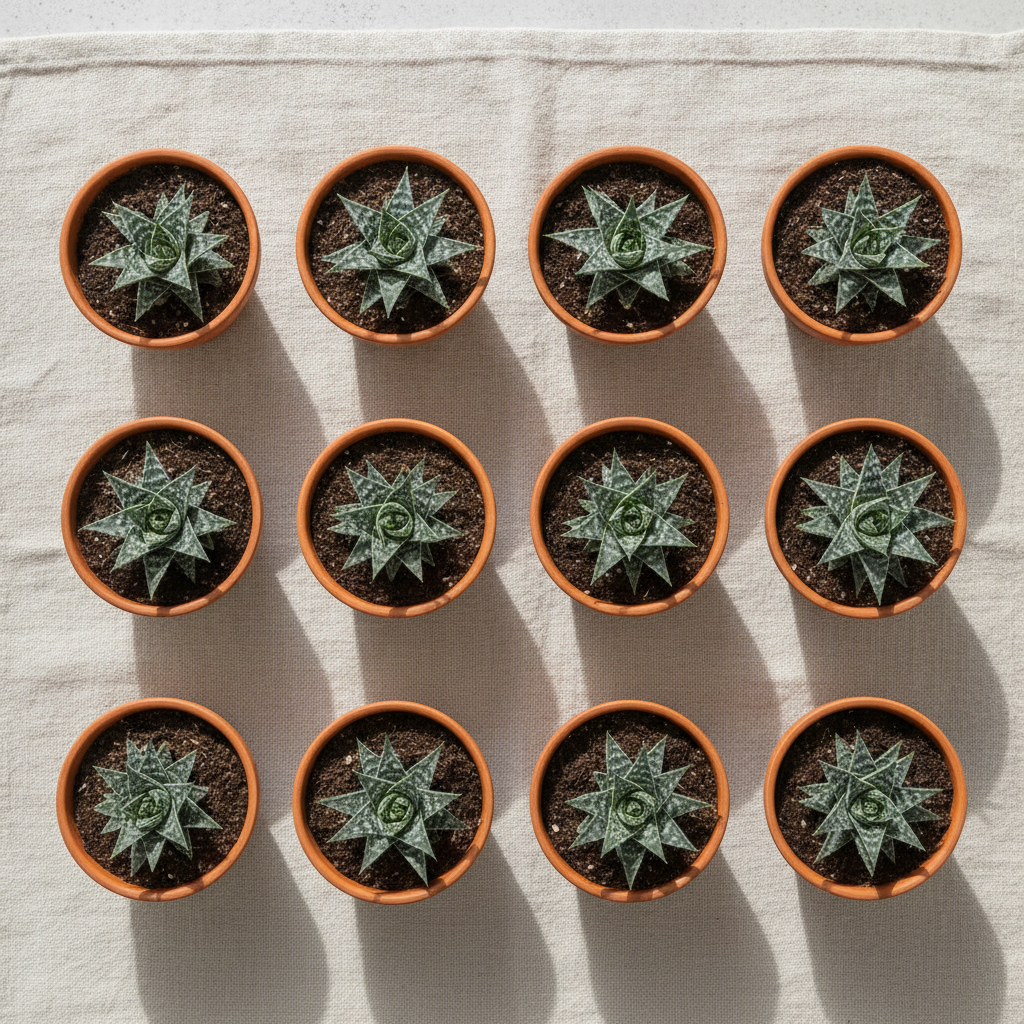
One of the soap aloe’s most endearing qualities is how readily it multiplies. Left to its own devices, a single rosette steadily produces offsets, also called pups, around its base until it forms a generous clump. This makes propagation almost effortless and gives you a constant supply of new plants to pot up, share or expand a collection with.
The plant can also be grown from seed, but this is slower and less predictable, and seed-grown plants take years to reach flowering size. For practically every home grower, division of offsets is the method of choice: it is quick, has a very high success rate, and produces a sizeable new plant almost immediately.
Understanding Offsets
An offset is a complete miniature plant that develops from the base of the parent, connected by a short stem and often forming its own roots while still attached. Because each pup is genetically identical to the parent and frequently already rooted, separating one is less an act of propagation than of simple division. The best offsets to remove are those that have grown to at least a third of the parent’s size and show signs of their own roots, which establish far faster than rootless pups.
Dividing Offsets: Step-by-Step
Dividing offsets is best done in spring or summer, ideally combined with a routine repotting so the plant is disturbed only once. You will need a clean, sharp knife and some fresh gritty mix.
- Unpot the parent plant and gently brush away soil from the base until you can see where the offsets join the main rosette.
- Identify pups that are well developed and, ideally, already carrying a few roots of their own.
- Separate each offset by pulling it gently away, or by cutting through the connecting stem with a clean, sharp blade.
- Set the separated offsets aside in a dry, shaded spot for one to two days so the cut surfaces callus over.
- Pot each pup into its own small container of gritty succulent mix, burying only the base so the rosette sits above the soil.
- Wait about a week before watering lightly, then resume normal soak-and-dry watering once the pup is established.
Pro Tip — Let Cuts Callus: The single biggest cause of failed aloe division is rot from potting up a fresh-cut pup straight into damp soil. Always let the cut surface dry and callus for a day or two first, and keep the newly potted offset on the dry side until it has rooted in. A callused, slightly thirsty pup roots reliably; a wet, fresh-cut one often rots.
Growing from Seed: Step-by-Step
Growing soap aloe from seed is a patient gardener’s project, rewarding but slow. Fresh seed gives the best germination, and warmth is essential.
- Sow fresh seed thinly on the surface of a moist, gritty seed mix and cover with a fine layer of grit.
- Keep the tray warm, around 21 to 24°C (70 to 75°F), in bright, indirect light.
- Maintain light moisture until germination, which usually takes two to four weeks.
- Once seedlings appear, gradually reduce moisture and increase light to prevent damping off.
- Prick out and pot on the young plants when they are large enough to handle, into individual small pots of gritty mix.
Troubleshooting Propagation
| Problem | Likely Cause | Solution |
|---|---|---|
| Offset rots after potting | Potted while cut was fresh, or kept too wet | Let cuts callus; keep new pups dry until rooted |
| Pup wilts and shrivels | Removed with no roots and watered too soon | Choose rooted pups; water sparingly while establishing |
| No offsets forming | Too little light or a very young plant | Increase light; be patient, pups come with maturity |
| Seeds fail to germinate | Old seed or too cold | Use fresh seed and keep the tray consistently warm |
Pests & Diseases
The soap aloe is a robust plant that suffers from few pests and diseases, and a healthy specimen in good light with sharp drainage will usually shrug off problems entirely. Most trouble can be traced back to overwatering or poor airflow rather than to the pests themselves, which tend to take hold only on plants already under stress.
That said, no houseplant is entirely immune, and a handful of sap-sucking insects occasionally find their way to an aloe. Catching them early, while an infestation is small, makes treatment quick and straightforward, so it pays to glance over your plant, especially the leaf bases and undersides, whenever you water.
Common Pests
Mealybugs (Pseudococcus species)
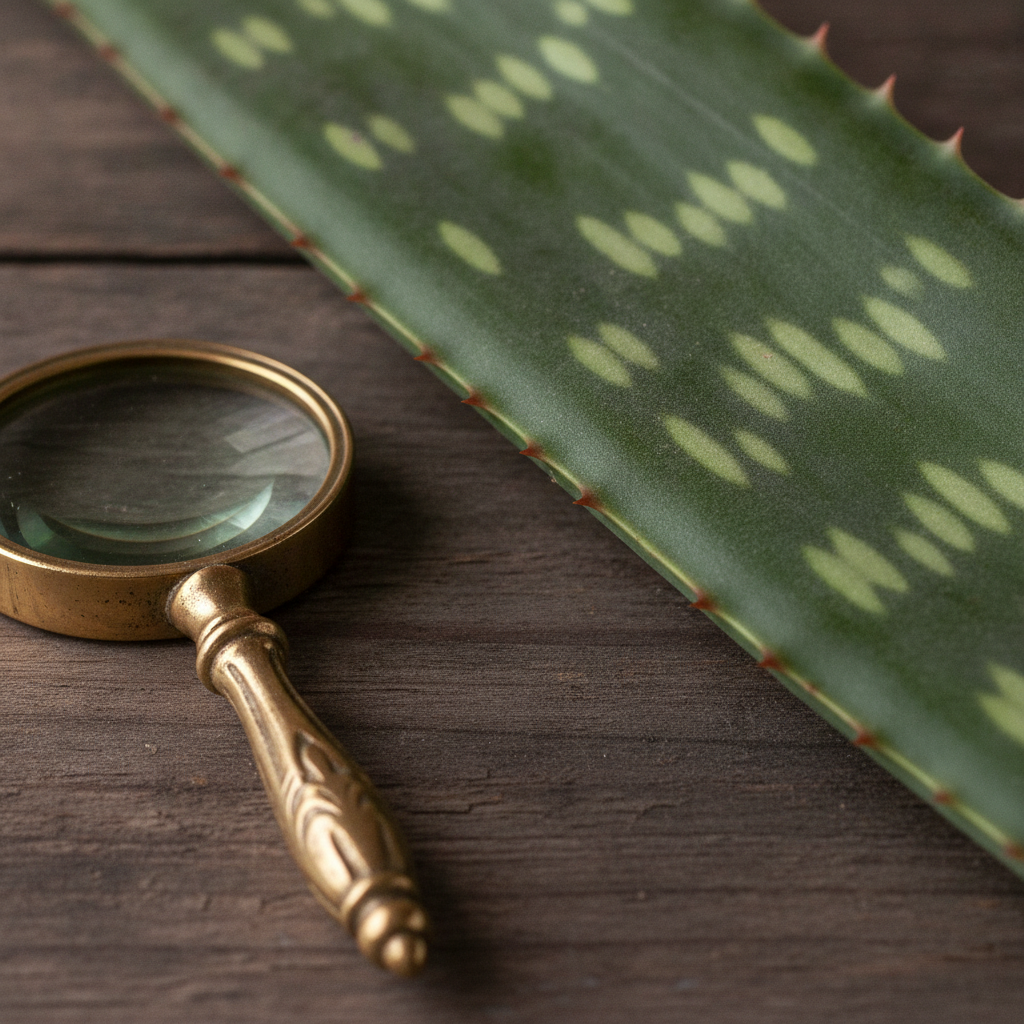
Mealybugs are the most common pest of the soap aloe, appearing as small, white, cottony tufts tucked into the leaf axils and crevices of the rosette. They feed on the plant’s sap, weakening it and excreting sticky honeydew that can lead to sooty mould. Left unchecked, a colony slows growth and distorts new leaves.
Treatment: Dab each insect directly with a cotton bud soaked in isopropyl alcohol, which kills them on contact. For larger infestations, treat the whole plant with a systemic insecticide or insecticidal soap, repeating every week or two until no new bugs appear. Isolate the plant from others while you deal with it.
Scale insects (Coccoidea)
Scale appear as small, brown, limpet-like bumps fixed to the leaves, particularly along the undersides and bases. Beneath their waxy shields they feed on sap, and like mealybugs they secrete honeydew. Their hard covering makes them resistant to contact sprays, so they are often noticed only once well established.
Treatment: Scrape or rub off the scales with a fingernail or an alcohol-dipped cotton bud, then follow up with a systemic insecticide or horticultural oil to catch the mobile young. Several treatments spaced a week or two apart are usually needed to break the cycle.
Fungus gnats (Sciaridae)
Fungus gnats are small black flies whose larvae live in damp soil and feed on roots and organic matter. They are less a pest of the aloe itself than a clear sign that the soil is being kept too wet, and they thrive in exactly the moist conditions that also threaten the plant with rot.
Treatment: Let the soil dry out fully, which kills most larvae, and top-dress with a layer of grit to deter egg-laying. Yellow sticky traps catch the adults, and correcting your watering usually solves the problem at source.
Common Diseases
Root rot (Pythium and Phytophthora)
Root rot is by far the most serious disease of the soap aloe and is caused by waterlogged soil rather than by any pest. The roots turn brown and mushy, the lower leaves yellow and soften, and the base of the plant may collapse. Because the damage is hidden below the soil, it is often advanced before it is noticed.
Treatment: Act immediately. Unpot the plant, cut away all rotten roots and soft tissue with a sterile blade, let the wounds callus for a day or two, and repot into fresh, dry, gritty mix. Withhold water until firm new roots and growth appear, and correct the overwatering that caused it.
Leaf rot and fungal spots (various fungi)
Soft brown or black patches on the leaves, or rot starting in the centre of the rosette, usually follow water sitting on or in the plant in cool, humid, poorly ventilated conditions. Crown rot, where the growing point at the centre turns mushy, is frequently fatal if it reaches the core.
Treatment: Remove affected leaves with a clean blade, improve airflow, and water only at the soil, never over the rosette. Move the plant somewhere brighter and better ventilated, and reduce watering. There is no cure once the central crown has rotted, so prevention through careful watering is essential.
Pest and Disease Summary
| Pest / Disease | Identification | Treatment |
|---|---|---|
| Mealybugs | White cottony tufts in leaf axils | Alcohol on a cotton bud; insecticidal soap |
| Scale | Brown limpet-like bumps on leaves | Scrape off; systemic insecticide or oil |
| Fungus gnats | Small black flies around damp soil | Let soil dry; sticky traps; top-dress with grit |
| Root rot | Brown mushy roots; yellowing base | Cut away rot; repot dry; withhold water |
| Leaf and crown rot | Soft brown or black patches | Remove leaves; improve airflow; water at soil only |
Prevention Strategies
Prevention is far easier than cure with a soap aloe, and almost every problem comes down to the same handful of good habits. Give the plant strong light, plant it in gritty free-draining soil, water only when it is bone dry, and make sure air moves freely around it. A plant grown this way is vigorous enough to resist most pests and rarely succumbs to disease.
Quarantine any new plant for a couple of weeks before placing it near your others, since pests most often arrive on new acquisitions. Inspect your aloe whenever you water, wipe dust from the leaves occasionally so you can see the surface clearly, and remove any dead or dying leaves promptly, as decaying tissue invites both pests and fungus.
Pro Tip — Isolate and Inspect: The moment you spot a pest, move the affected plant away from its neighbours. Most infestations spread plant to plant by contact, and a single isolated, treated plant is a far smaller problem than an outbreak across a whole collection. A weekly habit of turning leaves over to inspect the undersides catches trouble while it is still trivial.
Popular Varieties
Aloe maculata is a famously variable species across its wide southern African range, differing from one population to another in leaf width, spotting and flower colour, which is part of why it has carried so many names over the years. Rather than a long list of named cultivars, the soap aloe is better understood through its natural forms and its close kin, with which it readily hybridises.
It is worth noting that the soap aloe crosses freely with other aloes, both in gardens and in the wild, so plants sold under this name vary considerably and some are hybrids. The two forms featured below capture the main difference most growers encounter, which is flower colour, while the table sets the species in the context of the aloes it is most often confused with or grown alongside.
| Variety | Leaf Appearance | Light Needs | Growth Rate | Availability |
|---|---|---|---|---|
| Broad-leaved spotted form | Wide grey-green leaves, heavy white banding | Full sun to bright | Slow | Common |
| Yellow-flowered form | Spotted rosette, sulphur-yellow blooms | Full sun to bright | Slow | Occasional |
| Aloe vera | Upright grey-green, faint spots when young | Bright to full sun | Moderate | Very common |
| Tiger aloe (Gonialoe variegata) | Dark leaves, bold white V-banding | Bright indirect | Slow | Common |
| Lace aloe (Aristaloe aristata) | Small dark rosette, white tubercles | Bright indirect | Slow | Common |
| Coral aloe (Aloe striata) | Smooth blue-grey leaves, no teeth | Full sun | Moderate | Occasional |
Featured Varieties
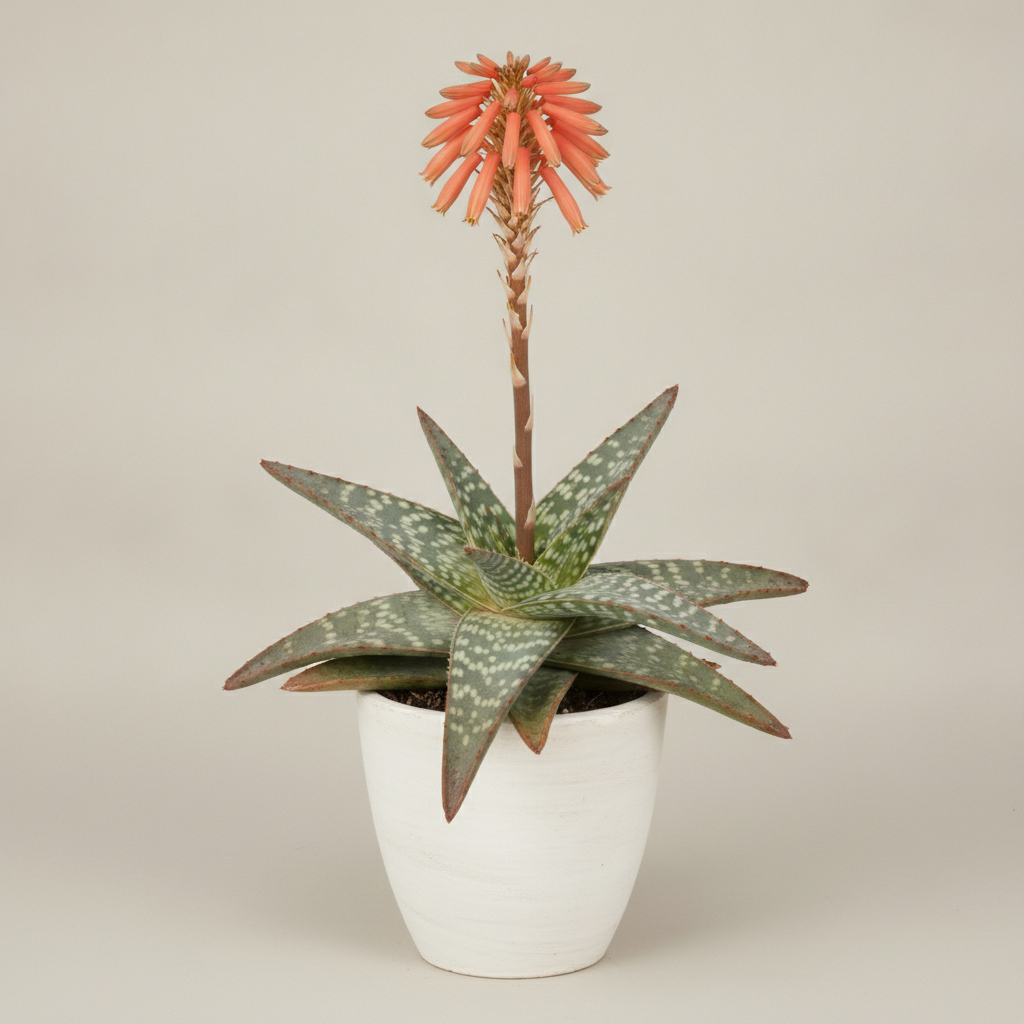
Broad-leaved Spotted Form
The classic and most widely grown form of the soap aloe, with broad triangular grey-green leaves heavily marked with creamy-white bands and topped, in season, by a branched spike of coral to orange tubular flowers. This is the plant most people picture when they think of Aloe maculata.
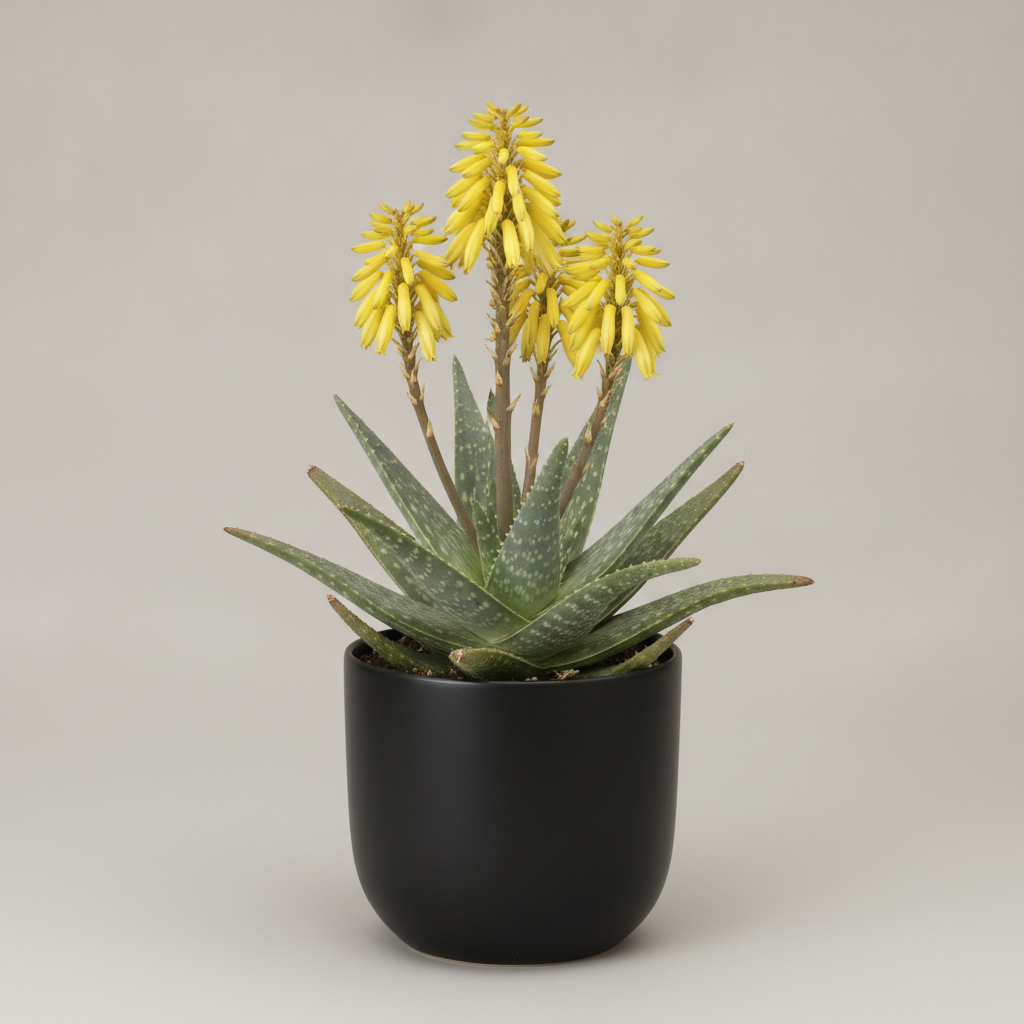
Yellow-flowered Form
A naturally occurring colour variant with the same spotted rosette but flowers in clear sulphur-yellow rather than orange. Slightly less common in cultivation, it is prized by collectors who grow several aloes together for a longer and more varied flowering display.
Variety Profiles in Detail
Broad-leaved Spotted Form (Aloe maculata)
This is the typical soap aloe of gardens and windowsills, a low rosette of broad, fleshy leaves whose grey-green ground is overlaid with the wavy white bands that give the plant its zebra-aloe nickname. In strong light the leaves flush bronze and the flat-topped flower heads emerge on tall branched stalks in shades of coral and orange. Tough, drought-proof and quick to form offsets, it is the form to seek out for reliability and easy increase.
Yellow-flowered Form (Aloe maculata)
Identical in habit and leaf to the typical form but distinguished by sulphur-yellow flowers, this variant adds colour variety to a collection of aloes. It is no harder to grow than the orange-flowered plant and shares the same appetite for sun and sharp drainage. Because the species hybridises so freely, flower colour in seed-grown plants can be unpredictable, so buy in flower if a particular shade matters to you.
Choosing the Right Variety for Your Space
For most homes the choice comes down to availability and flower colour rather than care, since all forms of the soap aloe want the same things: a sunny window, gritty soil and minimal water. If you have a bright, sunny sill and want a single tough, characterful succulent that will slowly build into a clump, the standard broad-leaved form is the obvious pick. Collectors with room for several aloes might add the yellow-flowered form and related species such as the tiger or lace aloe for a longer flowering season and a fuller display, bearing in mind that growing several aloes together increases the chance of chance hybrids appearing in any seedlings.
Frequently Asked Questions
Is the soap aloe the same as Aloe vera?
No, though the two are close relatives and easily confused. Aloe vera grows upright with narrower, plain green leaves and is grown chiefly for its medicinal gel, while the soap aloe, Aloe maculata, forms a low, spreading rosette of broad, spotted leaves and is grown mainly as an ornamental. The soap aloe’s sap lathers like soap but is not used in the way Aloe vera gel is.
Why is my soap aloe turning red or brown?
A reddish or bronze blush across the whole plant is usually a harmless response to strong light and cool nights, known as stress colouring, and many growers actively encourage it. Be concerned only if you see dry, bleached or brown papery patches, which indicate sunburn from too sudden a move into intense light, or soft brown areas, which suggest rot.
How often should I water a soap aloe?
Only when the soil has dried out completely, which in warm growing months usually means every two to three weeks, and in winter as little as once a month or less. Always judge by the soil rather than the calendar: if the pot still feels heavy or the soil is damp below the surface, wait. Overwatering is the most common way these plants are killed.
Why is my soap aloe stretching and growing leggy?
Stretching, with longer, thinner leaves that space out and point upward, is a classic sign of too little light, a process called etiolation. Move the plant to your brightest window or add a grow light. The stretched growth will not tighten up again, but new growth in better light will return to the proper compact form.
Is the soap aloe safe around pets?
No, it is mildly toxic to cats, dogs and horses, which may suffer vomiting, diarrhoea and lethargy if they eat it, so keep it out of their reach. While many aloes are less dangerous than some houseplants, it is best treated as off-limits to curious pets, and the sap can also irritate human skin.
My soap aloe has never flowered. Why not?
The most common reasons are insufficient light and immaturity. Soap aloes need strong sun, ideally several hours of direct light a day, to bloom, and young plants may simply not be old enough. A spell outdoors in full sun over summer, a cool and drier rest in winter, and patience as the plant matures all improve the odds of a flower spike.
How do I get more plants from my soap aloe?
Division of offsets is by far the easiest method. As the plant matures it produces pups around its base; once these reach about a third of the parent’s size and ideally have a few roots, separate them with a clean blade, let the cut callus for a day or two, and pot them into gritty mix. Wait a week before watering, and you will have a new plant in no time.
Can a soap aloe live outdoors?
Yes, very happily in mild climates. It thrives outdoors in full sun where winters stay above roughly -4°C (25°F), and even in colder regions it benefits from a summer spell outside before coming in for winter. Outdoor light brings out the best leaf colour and the strongest flowering; just acclimatise the plant gradually to avoid scorching.
What is the white residue on my aloe’s leaves or soil?
A chalky white crust on the soil or pot rim is usually mineral build-up from hard water or fertiliser salts and is harmless, though flushing the pot with plain water clears it. A powdery or cottony white substance tucked into the leaf joints, on the other hand, is likely mealybugs and should be treated promptly with alcohol on a cotton bud.






