
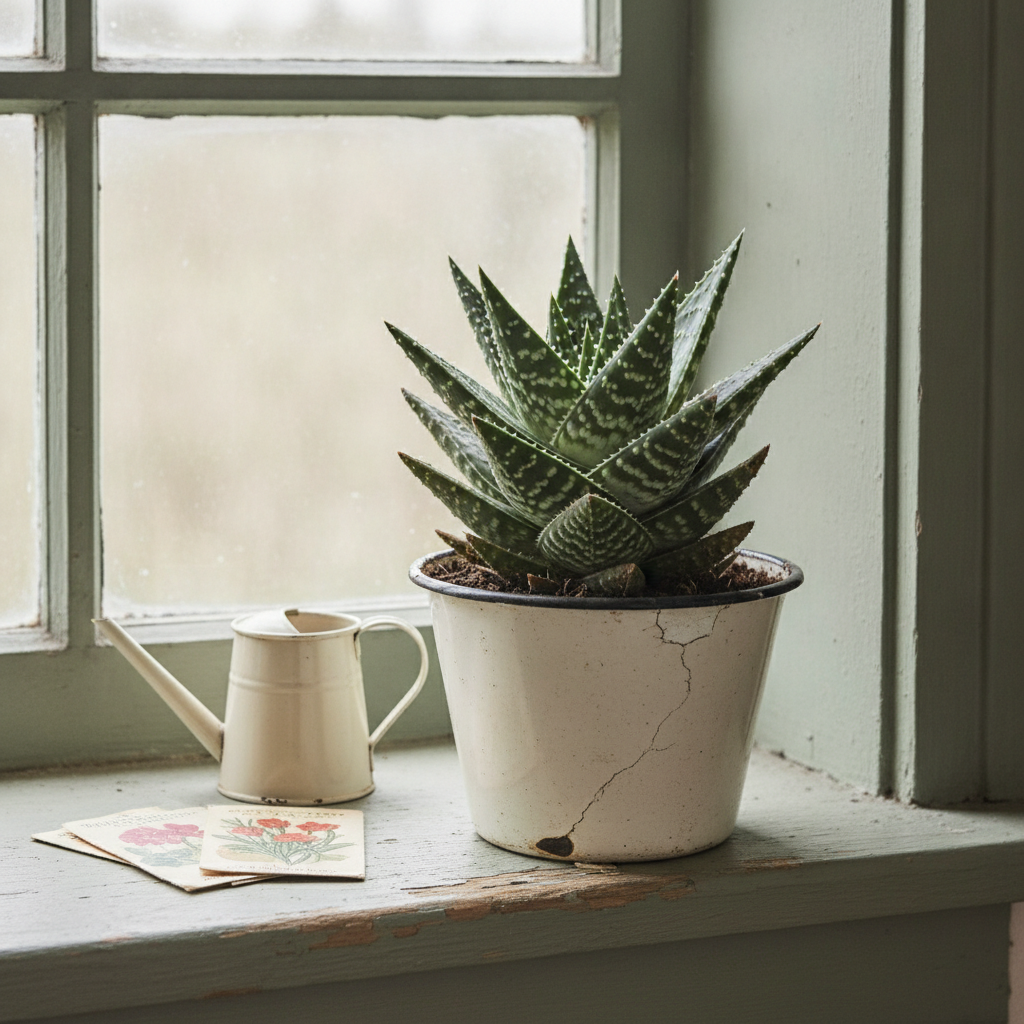
Few small succulents carry their markings with as much confidence as the tiger aloe. Barely taller than a coffee mug, Gonialoe variegata stacks its triangular leaves into three tidy ranks and paints each one with crisp white bands, a pattern that earned it both its tiger nickname and the older common name partridge breast. It was a windowsill favourite long before the modern houseplant boom, and it remains one of the most rewarding small aloes you can grow, provided you understand that almost everything that goes wrong with it traces back to a single mistake: too much water.
This guide walks through the difference between merely keeping a tiger aloe alive and genuinely helping it thrive, from the gritty mineral soil it insists on to the cool, dry winter rest that persuades it to throw up its coral flower spike. Everywhere in this guide the recurring theme is restraint. A tiger aloe asks for less than almost any other plant in your collection, and learning to give it less is the whole art.
Quick Reference
Use the navigation below to jump to any section, then return here whenever you need the short version. The table that follows condenses everything a tiger aloe needs into the essentials, but the sections beneath it explain the reasoning, which is what keeps a plant alive over years rather than weeks.
- Why the Tiger Aloe Makes a Good Houseplant
- Light
- Watering
- Soil and Potting
- Fertilising
- Propagation
- Pests and Problems
- Varieties and Relatives
- Frequently Asked Questions
| Botanical name | Gonialoe variegata (formerly Aloe variegata) |
| Common names | Tiger aloe, partridge breast aloe, partridge-breasted aloe |
| Family | Asphodelaceae |
| Origin | Arid regions of South Africa and southern Namibia |
| Mature size | 15 to 30 centimetres (6 to 12 inches) tall and wide |
| Light | Bright indirect light with some gentle direct sun |
| Watering | Soak thoroughly, then let the soil dry out completely |
| Soil | Gritty, fast-draining cactus and succulent mix |
| Temperature | 18 to 27 degrees Celsius (64 to 81 degrees Fahrenheit) in growth |
| Humidity | Low; normal dry room air is ideal |
| Toxicity | Mildly toxic to cats and dogs if eaten |
| Difficulty | Easy, as long as you underwater rather than overwater |
Why the Tiger Aloe Makes a Good Houseplant
The tiger aloe earns its place on a windowsill through a combination of good looks, modest size and genuine toughness. Native to the dry interior of South Africa and southern Namibia, it grows wild among rocks and low scrub in places that receive little rain and a great deal of sun, often tucked into the partial shade of nurse shrubs. That heritage shapes everything about how it behaves indoors. It is built to endure long droughts, store water in its fleshy leaves, and wait patiently for conditions to improve, which translates into a plant that forgives the forgetful owner far more readily than the attentive one.
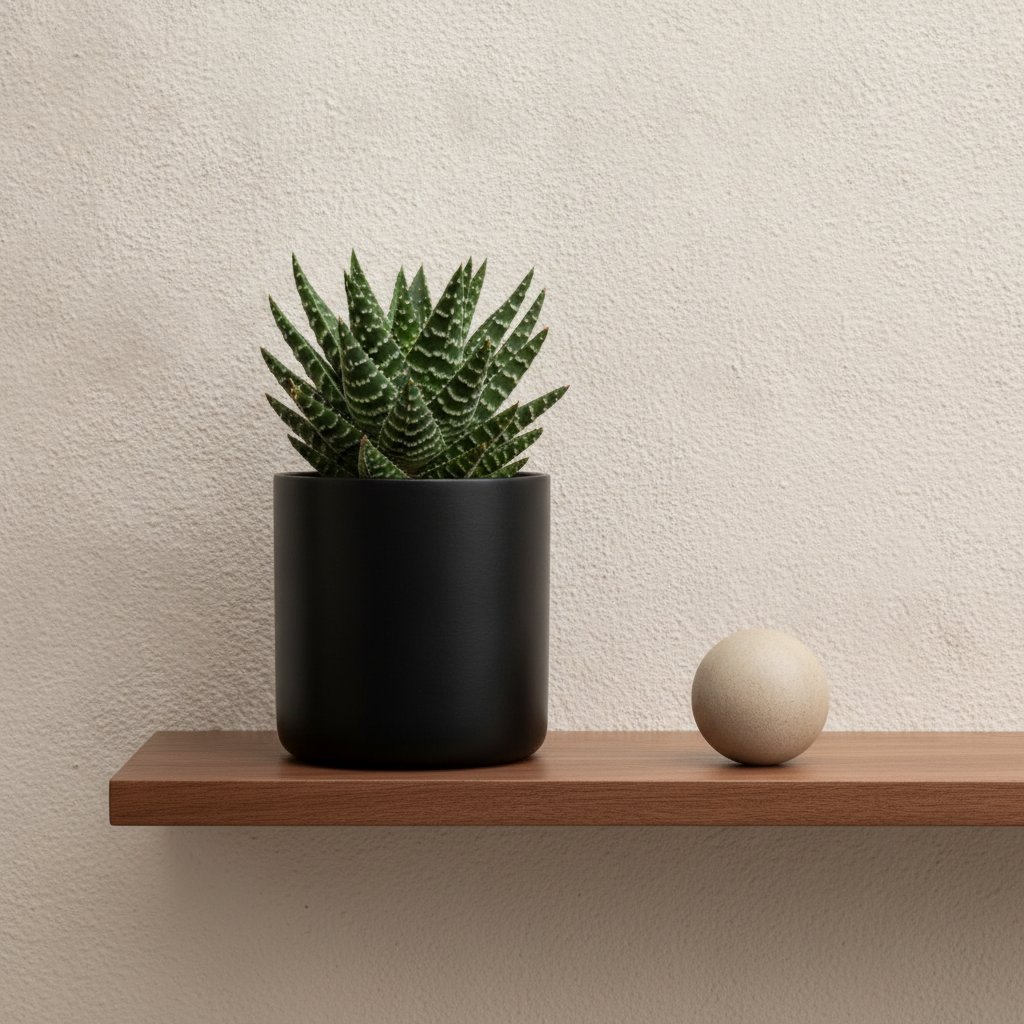
Visually it is unmistakable. The thick, keeled leaves are arranged in three vertical ranks, a growth habit botanists call tristichous, so that a young plant looks almost geometric, like a living sculpture folded from dark green and chalk white. Each leaf is boat-shaped and channelled along its upper surface, banded with irregular transverse white markings and edged with a fine line of soft white teeth. As the plant matures the spiral tightens and the rosette fills out, and well-grown specimens take on a sculptural symmetry that few other small succulents match.
It is also a plant with history. Generations of growers knew it as Aloe variegata, and it appeared on Victorian windowsills and in cottage collections under the name partridge breast, a reference to the way its banding echoes the speckled plumage of a partridge. In 2014 it was moved into the genus Gonialoe alongside a small group of close relatives, so you will still see both names used interchangeably in nurseries and books. Whatever the label on the pot, the care is identical.
Perhaps its greatest practical virtue is that it stays small. A mature tiger aloe rarely exceeds 30 centimetres in height, and many stay nearer 20, which means it never demands the floor space that a larger aloe or a sprawling tropical eventually claims. It clusters slowly into a tidy colony of offsets rather than racing away, so a single plant can occupy the same bright corner contentedly for years. And when it is happy and well rested, it rewards you in late winter or early spring with a slender raceme of tubular salmon-pink to coral flowers, a genuinely striking display on so compact a plant.
Pro Tip — Buy a plant with tight growth: When choosing a tiger aloe, look for one with short, densely stacked leaves and bold banding. A specimen with stretched, widely spaced, pale leaves has been grown in too little light, and while it will recover with brighter conditions, the etiolated growth never fully tightens up again.
Light
Light is where the tiger aloe asks for a careful balance rather than an extreme. In the wild it grows in full sun but frequently in the dappled shelter of larger plants, so it is more shade-tolerant than the desert aloes that bake in open ground, yet it still needs considerably more light than the average foliage houseplant. The goal indoors is bright light for most of the day with a few hours of gentle direct sun, ideally the softer light of morning or late afternoon rather than the fierce overhead glare of midday through unshaded glass.
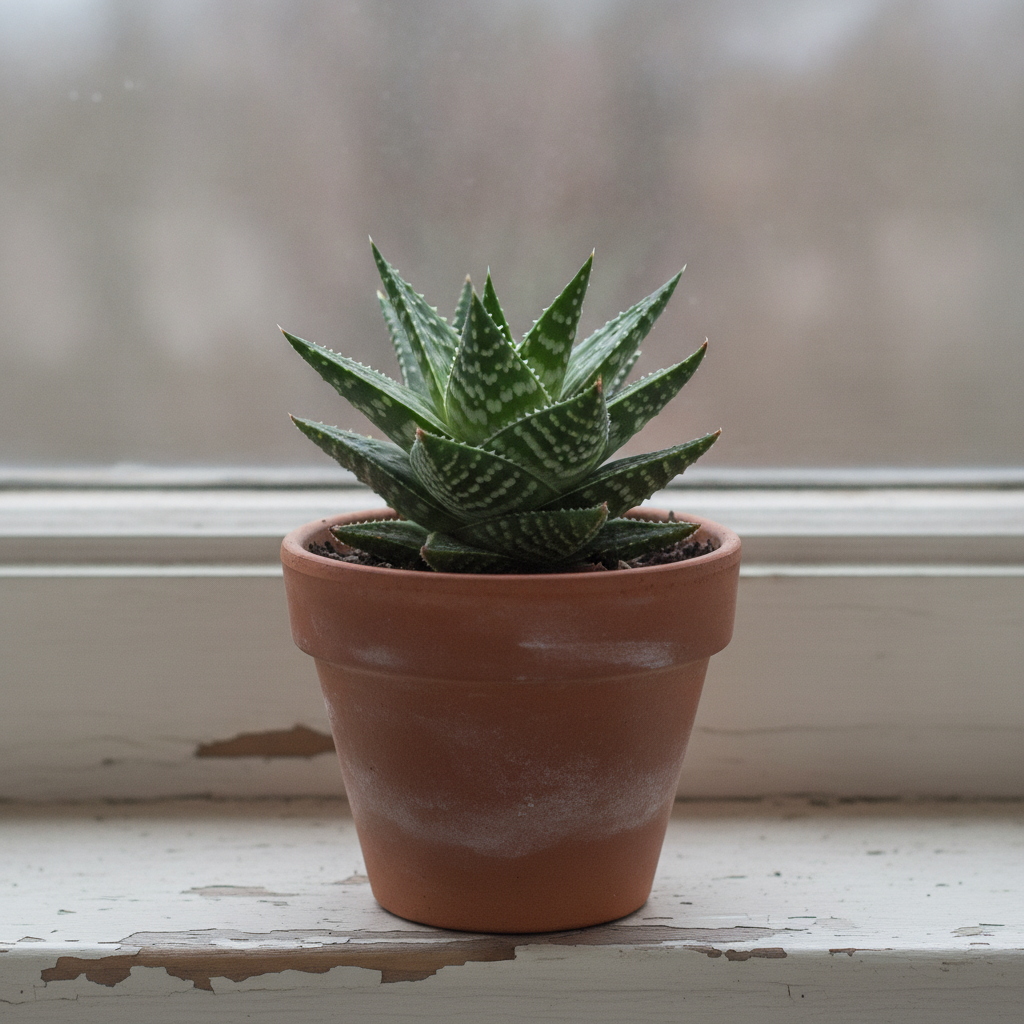
An east-facing or west-facing windowsill suits it almost perfectly. A south-facing window works well too, but in summer you may want a sheer curtain or a slight setback from the glass to soften the strongest hours, particularly if the plant has spent winter in dimmer conditions and has not had time to adjust. A north-facing window will keep a tiger aloe ticking over, but in that lower light it tends to lose its compactness, stretching towards the brightest point and spacing its leaves further apart. The banding also fades when light is insufficient, so a loss of contrast in the markings is an early sign the plant wants more.
The most common light mistake is not too little but too sudden a change. A tiger aloe moved abruptly from a shaded shop shelf or a dim winter windowsill straight into strong summer sun can scorch, developing dry brown or reddish patches on the leaf faces that never heal. If you want to give a plant more sun, do it gradually over a week or two, increasing exposure a little each day so the leaves can build up their protective pigments. A touch of reddish or bronze blush on the leaf tips in strong light is normal and even attractive; crisp brown scorch marks are not.
Pro Tip — Rotate for symmetry: Because the tiger aloe leans towards its light source, give the pot a quarter turn every week or two. This keeps the rosette growing evenly and preserves the tidy three-ranked symmetry that makes the plant so appealing.
Watering
If you remember only one thing from this guide, make it this: the tiger aloe is killed far more often by kindness than by neglect. Its fleshy leaves are reservoirs, holding enough moisture to carry it through weeks of drought, and its roots are adapted to dry out completely between rains. Keep the soil constantly damp and those roots suffocate and rot, usually before the owner realises anything is wrong, because the damage happens below the surface while the leaves still look plump.
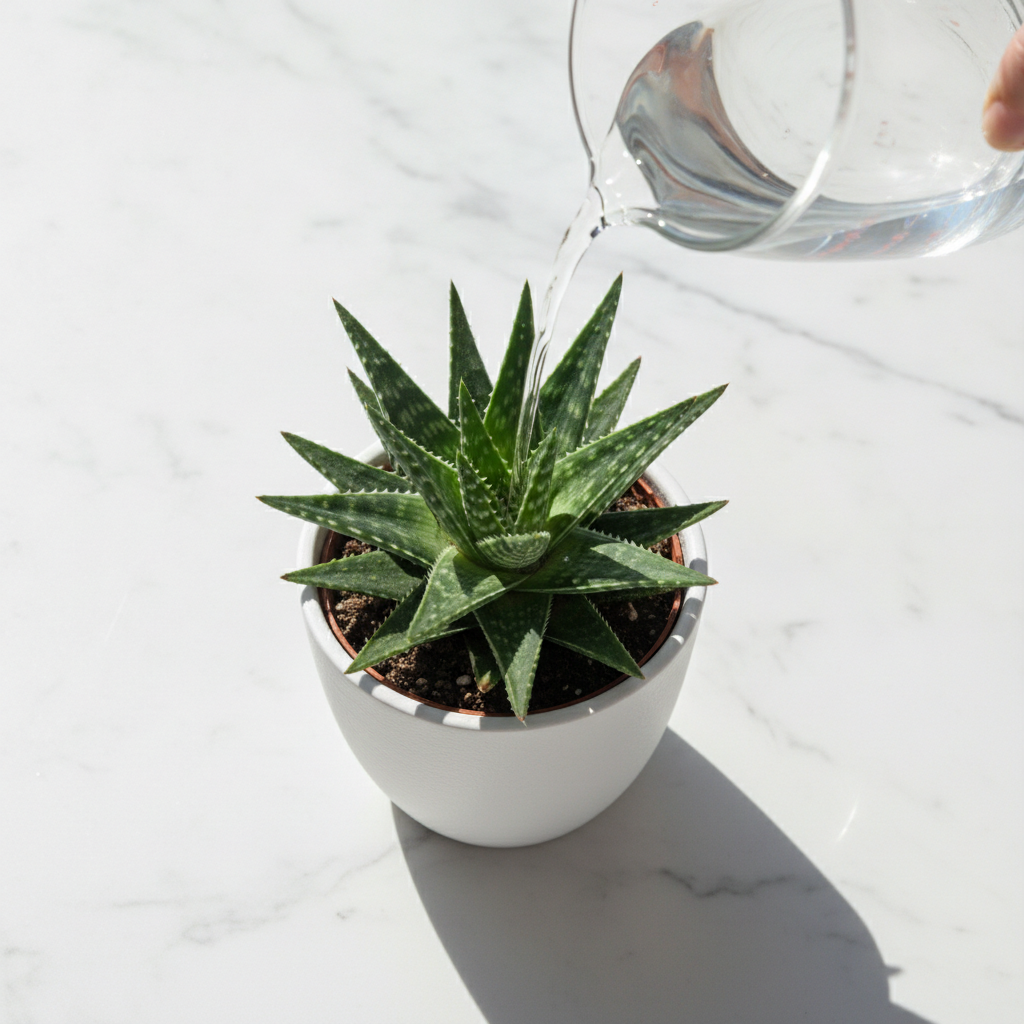
The right method is the soak-and-dry approach. When the potting mix has dried out completely, all the way to the bottom of the pot, water generously until it runs freely from the drainage holes, then empty the saucer and leave the plant alone until it is fully dry again. In a bright, warm spot during the growing season this might mean watering every ten days to a fortnight, but treat any schedule as a rough guide rather than a rule. The pot should feel light and the soil dry to the touch a couple of centimetres down before you reach for the watering can.
Winter changes everything. As days shorten and temperatures drop, the tiger aloe enters a natural rest and its water needs fall away almost to nothing. Through the coldest months, watering once every three or four weeks, or even less, is usually plenty, just enough to keep the leaves from shrivelling. A cool, dry winter is not something to fight against; it is precisely the condition that triggers flowering, so a plant that is allowed to rest properly is far more likely to bloom in spring. Watering heavily in cold, dark conditions is the single fastest route to root rot.
Always water the soil rather than the rosette. Water that collects in the central crown, especially in cool or poorly ventilated conditions, can sit there and cause the heart of the plant to rot. If you do splash the leaves, a quick tip of the pot to drain the crown is worth the trouble. Soft rainwater or filtered water is appreciated over time, as tiger aloes can show mineral spotting from very hard tap water, but this is a refinement rather than a necessity.
Warning — Read the leaves, not the calendar: Slightly soft, wrinkled leaves mean the plant is thirsty and will plump up within a day of watering. Leaves that turn translucent, yellow, mushy or brown at the base mean the opposite, that the roots are rotting from overwatering. The two look nothing alike once you learn to tell them apart, and the cure for each is the exact opposite of the other.
Soil and Potting
The right soil does half the work of watering for you, because a fast-draining medium makes overwatering much harder to achieve. A tiger aloe wants a gritty, mineral-heavy mix that holds very little water and dries quickly. A bagged cactus and succulent compost is a reasonable starting point, but most are still too rich and moisture-retentive straight from the bag, so it pays to cut them with extra grit. A blend of roughly two parts cactus compost to one part coarse sand, perlite, pumice or fine gravel gives the sharp drainage these plants depend on.
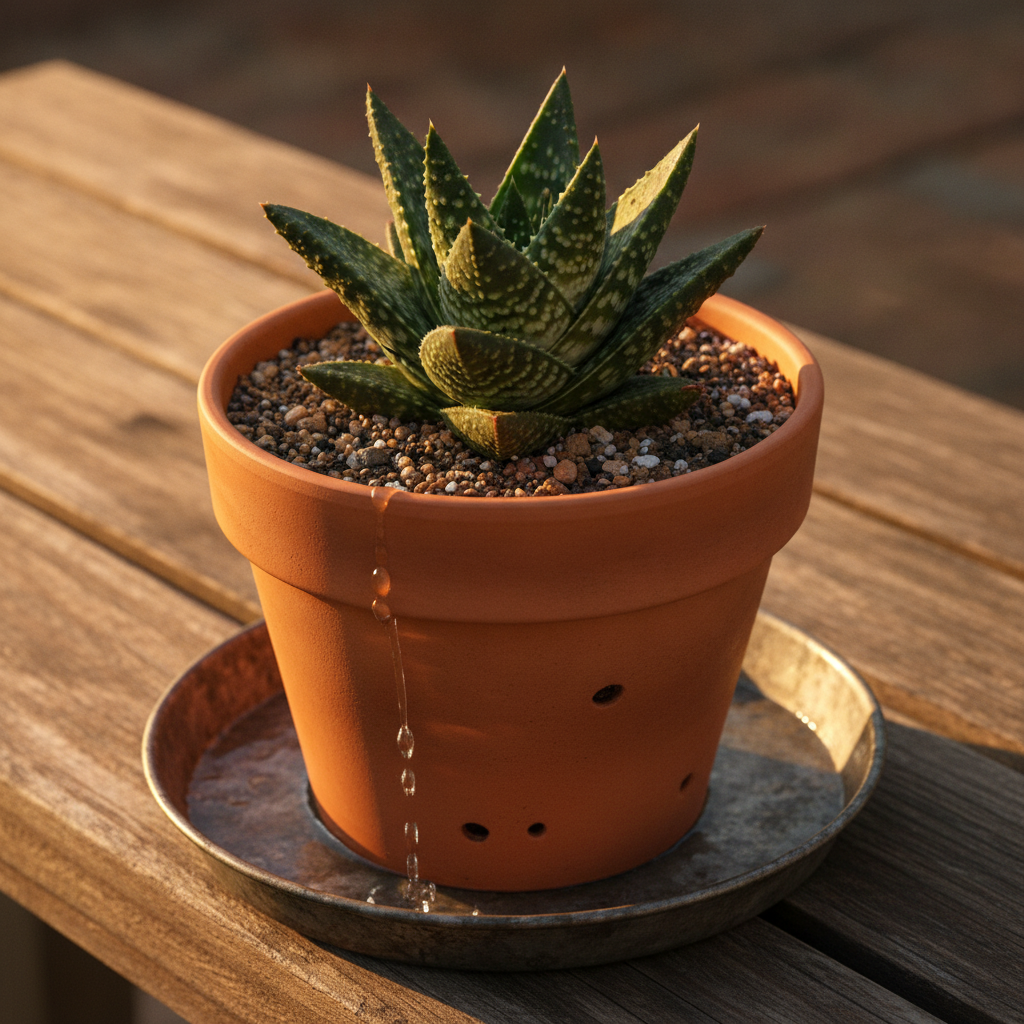
The container matters as much as what goes in it. A pot with generous drainage holes is non-negotiable, and many growers prefer unglazed terracotta because its porous walls wick moisture out of the soil and let it breathe, which suits a plant so prone to rot. Choose a pot only a little larger than the root ball, because tiger aloes resent swimming in a large volume of damp compost that takes too long to dry. A snug pot dries faster and keeps the roots healthier.
Repotting is an infrequent chore. These are slow growers that flower and offset more freely when slightly pot-bound, so there is no need to move a plant up a size every year. Every two or three years, or when a clump has filled its pot and is pushing offsets over the rim, is often enough. The best time is spring, as the plant comes back into growth. After repotting, resist the urge to water straightaway; wait several days to a week so that any roots damaged during the move can callus over, which dramatically reduces the risk of rot setting in through fresh wounds.
Pro Tip — Top-dress with grit: A thin layer of coarse grit or gravel over the soil surface keeps the base of the leaves dry, deters fungus gnats, and gives the plant a clean, finished look. It also stops compost splashing up onto the lower leaves when you water.
Fertilising
Tiger aloes are frugal feeders, adapted to nutrient-poor desert soils, and they need far less feeding than most houseplants. In fact, overfeeding is its own kind of harm, producing soft, swollen growth that loses the tight form and bold banding the plant is grown for, and that is more vulnerable to pests and rot. A light hand here, as with watering, is the right approach.
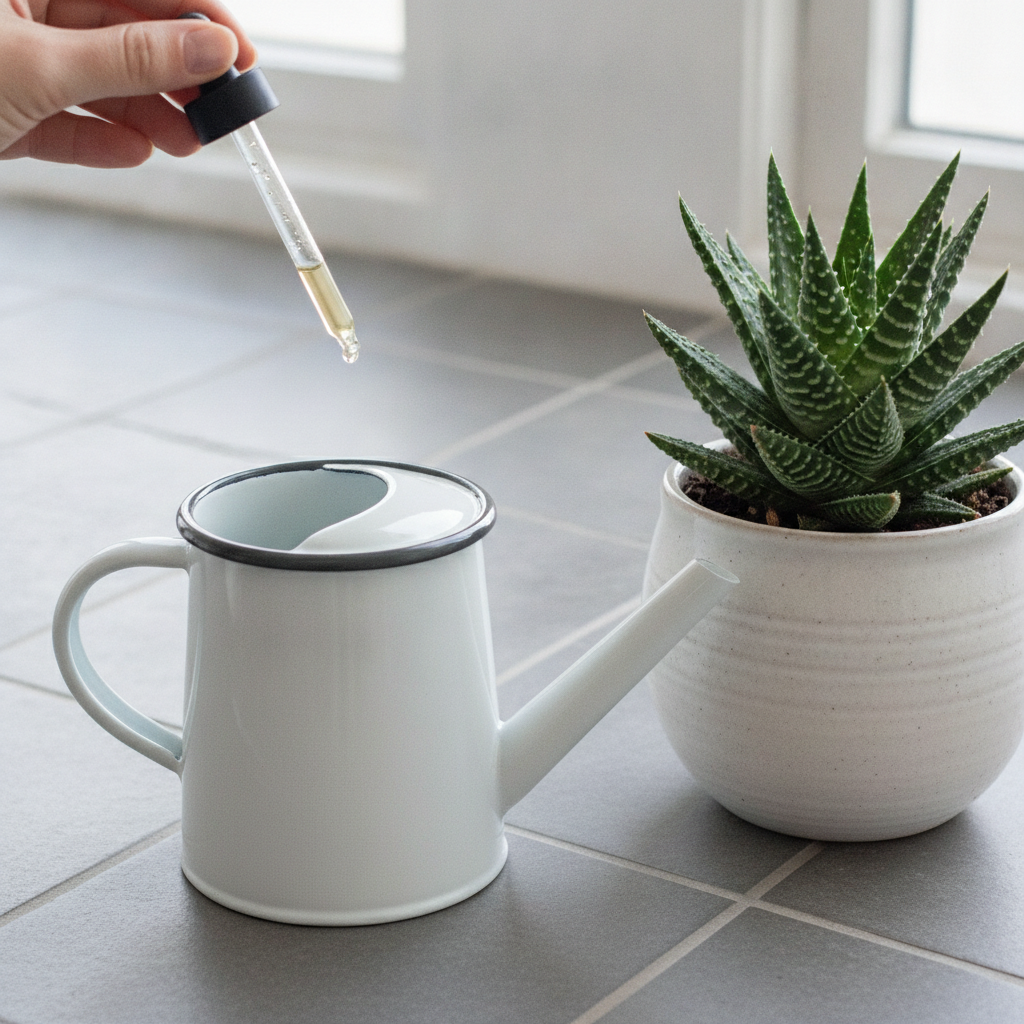
During the active growing season, from spring through to early autumn, a feed every six to eight weeks is ample. Use a fertiliser formulated for cacti and succulents, which is lower in nitrogen than a general houseplant feed, and dilute it to half the recommended strength. Always apply it to soil that is already slightly moist rather than bone dry, because concentrated feed on dry roots can scorch them. Two or three feeds across the whole season is plenty; there is no benefit in feeding more often.
Stop feeding entirely through autumn and winter. The plant is resting, it is not putting on new growth, and any fertiliser applied now simply accumulates in the soil as unused salts that can build up and damage the roots. A freshly repotted plant also needs no feeding for its first few months, as new compost already contains enough nutrients to see it through. When in doubt, feed less; a slightly hungry tiger aloe is a far better-looking plant than a pampered one.
Propagation
The easiest and most reliable way to make more tiger aloes is by separating the offsets, the small pups that form around the base of an established plant. Unlike many succulents, the tiger aloe does not propagate readily from leaf cuttings; a detached leaf will usually just dry up rather than root, so division of offsets is the method to rely on. Patience helps, because a contented plant produces pups steadily rather than all at once, but over a couple of years a single rosette will build into a small clump ready to be split.
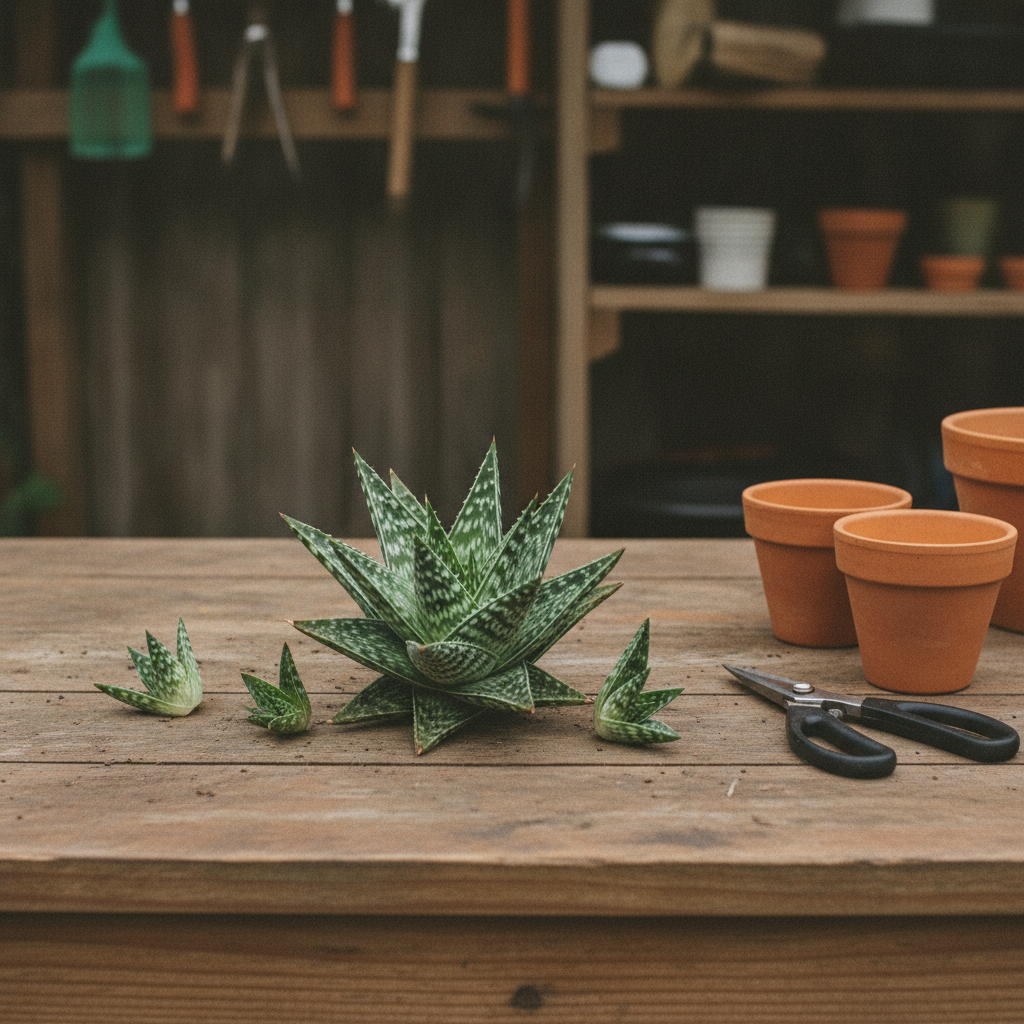
The best time to divide is spring or early summer, when the plant is in active growth and will recover fastest. Wait until an offset is a reasonable size, ideally a third or more of the parent’s size and showing some roots of its own, before separating it; very small pups have a much lower survival rate on their own. Working over a clean surface makes the job easier and reduces the chance of introducing disease.
- Ease the whole plant out of its pot and gently brush away the loose soil so you can see where the offsets join the parent.
- Find the natural point of attachment and separate the offset, ideally teasing it away by hand with some roots attached. If it will not come free cleanly, cut it away with a clean, sharp knife.
- Lay the separated offsets somewhere dry and shaded for two or three days so the cut surfaces can callus over. Skipping this step is the most common cause of rot.
- Pot each offset into a small container of the same gritty, fast-draining mix you use for adults, just deep enough to hold it upright.
- Wait about a week before the first light watering, then care for the young plants exactly as you would a mature one, keeping them out of harsh direct sun until they are established.
Tiger aloes can also be grown from seed, which is how new genetic variation arises and how hybridisers work, but seed-raised plants are slow, taking several years to reach a presentable size, so for most growers division is by far the more practical route. If your plant flowers and you have the patience, though, raising a batch from seed is a quietly satisfying project.
Pests and Problems
A healthy, properly grown tiger aloe is remarkably trouble-free, and the overwhelming majority of problems owners encounter are cultural rather than the work of pests. Root rot from overwatering tops the list by a wide margin, followed by the stretching and fading that come from too little light. Get the water and the light right and you have eliminated most of what can go wrong before it starts.
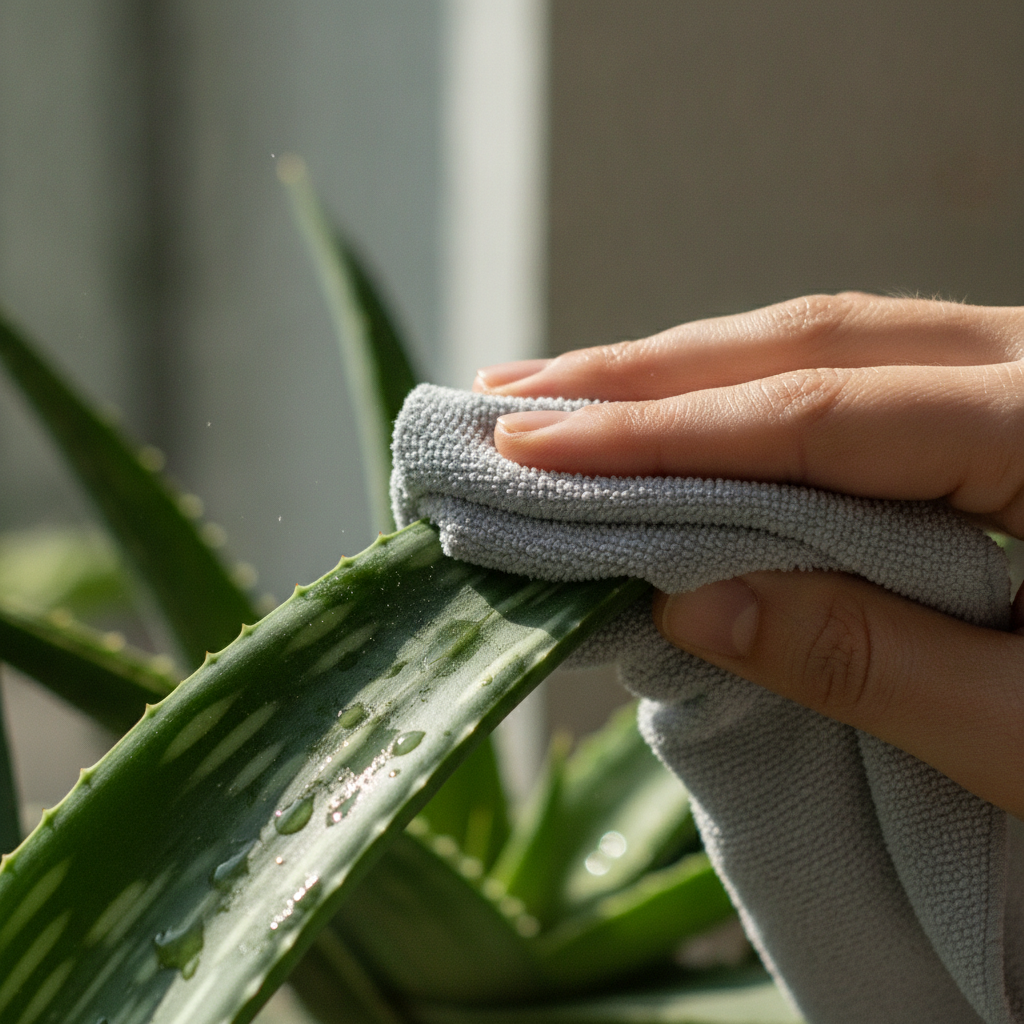
When pests do appear, mealybugs are the most likely culprits, showing up as small white cottony tufts tucked into the leaf axils and the tight spaces at the base of the rosette, exactly where they are hard to spot. Scale insects, which look like small brown limpets stuck to the leaves, turn up occasionally too, and in soil that stays too wet, fungus gnats can breed in the surface layer. None of these is a crisis if caught early, which is the best argument for handling and inspecting your plant regularly.
For a light mealybug or scale infestation, dab each insect directly with a cotton bud dipped in diluted isopropyl alcohol, which kills them on contact. For anything more widespread, a horticultural soap or oil spray, repeated every week or so until the problem clears, usually does the job, though take care applying oils in strong sun as they can scorch the leaves. Fungus gnats are best dealt with by letting the soil dry out more thoroughly between waterings, which removes the damp conditions their larvae need, and a grit top-dressing helps deter the adults from laying.
The table below sorts the most common symptoms by their usual cause, which is the quickest way to diagnose a struggling plant.
| Symptom | Likely cause | What to do |
|---|---|---|
| Soft, yellow or translucent leaves, mushy at the base | Overwatering and root rot | Stop watering, unpot, cut away rotten roots, repot dry in fresh gritty mix |
| Leaves stretching apart and leaning, banding fading | Insufficient light | Move to a brighter spot gradually |
| Dry brown or reddish patches on leaf faces | Sunburn from sudden strong sun | Shade slightly and increase sun exposure more gradually |
| Wrinkled, slightly shrivelled leaves | Underwatering | Water thoroughly; leaves plump up within a day |
| White cottony tufts in the leaf joints | Mealybugs | Dab with alcohol on a cotton bud; repeat as needed |
| Small flies around the soil surface | Fungus gnats in wet soil | Let soil dry fully; add a grit top-dressing |
Warning — Mildly toxic to pets: Like other aloes, the tiger aloe contains compounds that can cause vomiting, diarrhoea and lethargy if a cat or dog chews on it. It is not among the most dangerous houseplants, but it is best kept out of reach of curious pets, and you should contact a vet if a significant amount is eaten.
Varieties and Relatives
The tiger aloe is grown as the species rather than in a long list of named cultivars, and most of what you find for sale is simply Gonialoe variegata itself, prized for the boldness and regularity of its banding. There is natural variation from plant to plant in how crisp and contrasting the markings are, which is why it pays to choose your specimen in person when you can. The genus Gonialoe is small, but it includes a couple of close relatives that are often sold alongside it and confused with it, so a brief tour of the family is useful.
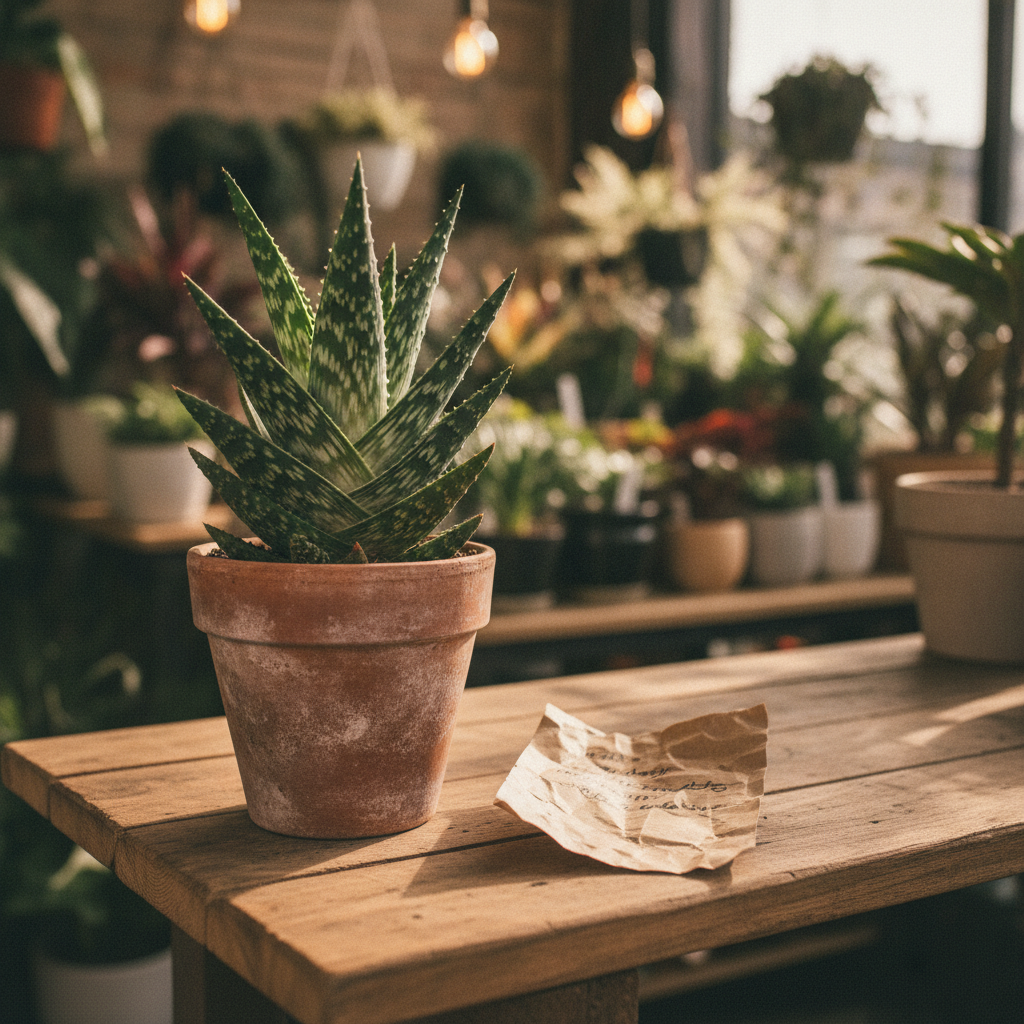
Partridge Breast (the typical form): This is the plant most people mean by tiger aloe, with neatly stacked triangular leaves and crisp, regular white banding on a deep green ground. Well-grown specimens have an almost architectural symmetry, and this remains the form to seek out for the strongest markings.
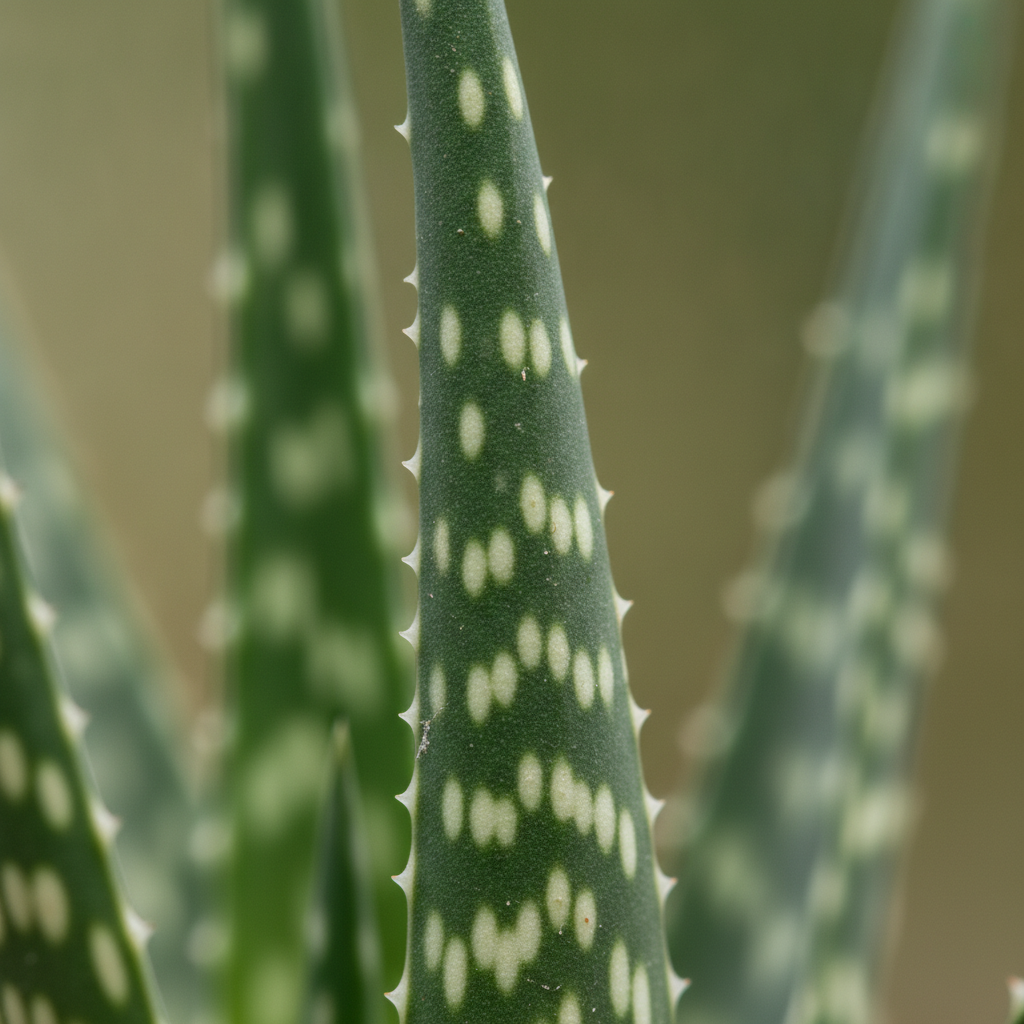
Dinter’s tiger aloe (Gonialoe dinteri): A close cousin from Namibia and Angola, this relative carries more slender leaves marked with irregular scattered white spots and flecks rather than the bold continuous bands of G. variegata. It needs the same gritty, dry-loving care and makes an interesting companion on the same shelf.
It is also worth knowing the wider family resemblance. The closely related haworthias, which share the same toothless or softly toothed succulent rosette habit and the same love of gritty soil, are frequently grown alongside tiger aloes and respond to almost identical care. If you enjoy your tiger aloe, that small world of compact South African succulents is a natural and rewarding place to expand a collection.
Frequently Asked Questions
Why are my tiger aloe’s leaves turning yellow and soft?
Soft, yellowing, translucent leaves are almost always a sign of overwatering and the root rot that follows. The remedy is to stop watering immediately, lift the plant from its pot, cut away any blackened or mushy roots, and repot into fresh dry gritty mix, leaving it unwatered for a week. Going forward, let the soil dry out completely between waterings and ease right off in winter.
How often should I water a tiger aloe?
There is no fixed schedule. In the growing season, water thoroughly whenever the soil has dried out completely, which might be every ten days to a fortnight in a warm bright spot. In winter, cut back drastically to perhaps once every three or four weeks. Always check that the soil is dry rather than watering by the calendar, because pot size, light, warmth and season all change how fast it dries.
Will my tiger aloe flower indoors?
Yes, established plants flower readily indoors, sending up a slender raceme of tubular salmon-pink to coral flowers in late winter or early spring. The key to triggering bloom is a cool, dry, bright winter rest, so resist the temptation to keep the plant warm and watered through the colder months. A mature, slightly pot-bound plant that has rested properly is the most likely to flower.
Is the tiger aloe the same as aloe vera?
No. They are related members of the same family but different plants. Aloe vera is larger, grows upright leaves and is used for its gel, whereas the tiger aloe is a small ornamental species with banded, three-ranked leaves and is grown purely for its looks. The tiger aloe is not a medicinal plant and should not be used as one.
Why is my tiger aloe growing tall and stretched?
Stretched growth with widely spaced, pale leaves is etiolation, the plant reaching for more light. Move it to a brighter position, increasing the light gradually so it does not scorch. The existing stretched leaves will not tighten back up, but new growth in better light will return to the compact, well-banded form, and over time the plant regains its proper appearance.
How do I get more plants from my tiger aloe?
Separate the offsets that form around the base. Wait until a pup is a reasonable size with some roots of its own, ease it away from the parent in spring or summer, let the cut surface callus for a few days, then pot it into gritty mix and wait about a week before watering. Tiger aloes do not grow from leaf cuttings, so offsets are the way to multiply them.






