
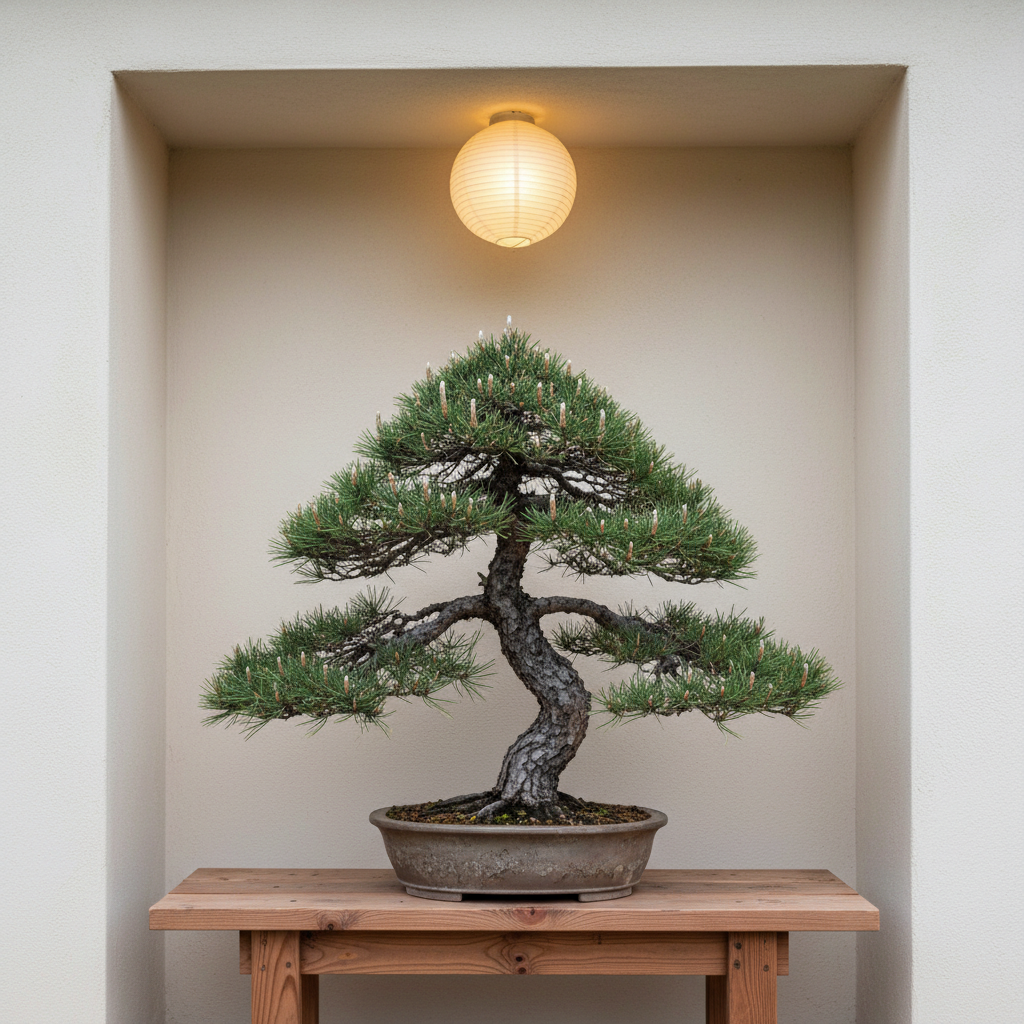
Few plants carry the weight of tradition quite like the Japanese black pine. Known botanically as Pinus thunbergii and called kuromatsu in its homeland, this rugged evergreen conifer grows wild along the storm-battered coasts of Japan and the Korean peninsula, where salt-laden wind and thin sandy soil have sculpted it into a living emblem of resilience. In the world of bonsai it is often called the king of bonsai, prized for its bold trunk, deeply fissured grey-black bark and stiff paired needles that hold their colour through the harshest winter. Grown in a tray rather than the open ground, the same tree becomes a miniature portrait of an ancient windswept giant.
It is worth being honest from the outset: the bonsai pine is not a houseplant in the way a pothos or a peace lily is. It is an outdoor tree that has been trained to grow in a shallow container, and it needs full sun, fresh moving air and a genuine cold winter to stay healthy. Brought indoors for more than a few days at a time it slowly declines. This guide treats the bonsai pine as what it truly is, an outdoor specimen, and walks through everything that separates merely keeping one alive from cultivating a tree that thrives for decades and improves with every passing year.
Contents
- Quick Reference
- Why the Bonsai Pine Makes a Rewarding Tree
- Light Requirements
- Watering & Humidity
- Soil, Potting & Repotting
- Fertilising
- Propagation
- Pests & Diseases
- Popular Varieties
- Frequently Asked Questions
Quick Reference: Bonsai Pine at a Glance
| Light | Full sun outdoors, at least 6 to 8 hours of direct light daily |
| Watering | Water thoroughly when the soil surface begins to dry; often daily in summer, rarely in winter |
| Temperature | Very hardy, roughly -10 to 35 degrees Celsius (14 to 95 Fahrenheit); needs a cold winter dormancy |
| Humidity | Ambient outdoor humidity; not demanding, dislikes stagnant air |
| Fertiliser | Balanced feed regularly through the growing season, adjusted to refine needle size |
| Toxicity | Low; needles and sap may cause mild stomach upset if eaten by pets |
Why the Bonsai Pine Makes a Rewarding Tree
The appeal of the Japanese black pine lies in its character. Where many bonsai species are valued for delicate foliage or seasonal flowers, the black pine is admired for masculinity and age. A well-developed specimen suggests a tree that has stood for centuries on a rocky headland, its trunk thickened and its bark broken into rugged plates. Because the species responds so well to the classic refinement techniques of pine bonsai, particularly candle cutting, it rewards the patient grower with results that are difficult to achieve in any other genus.
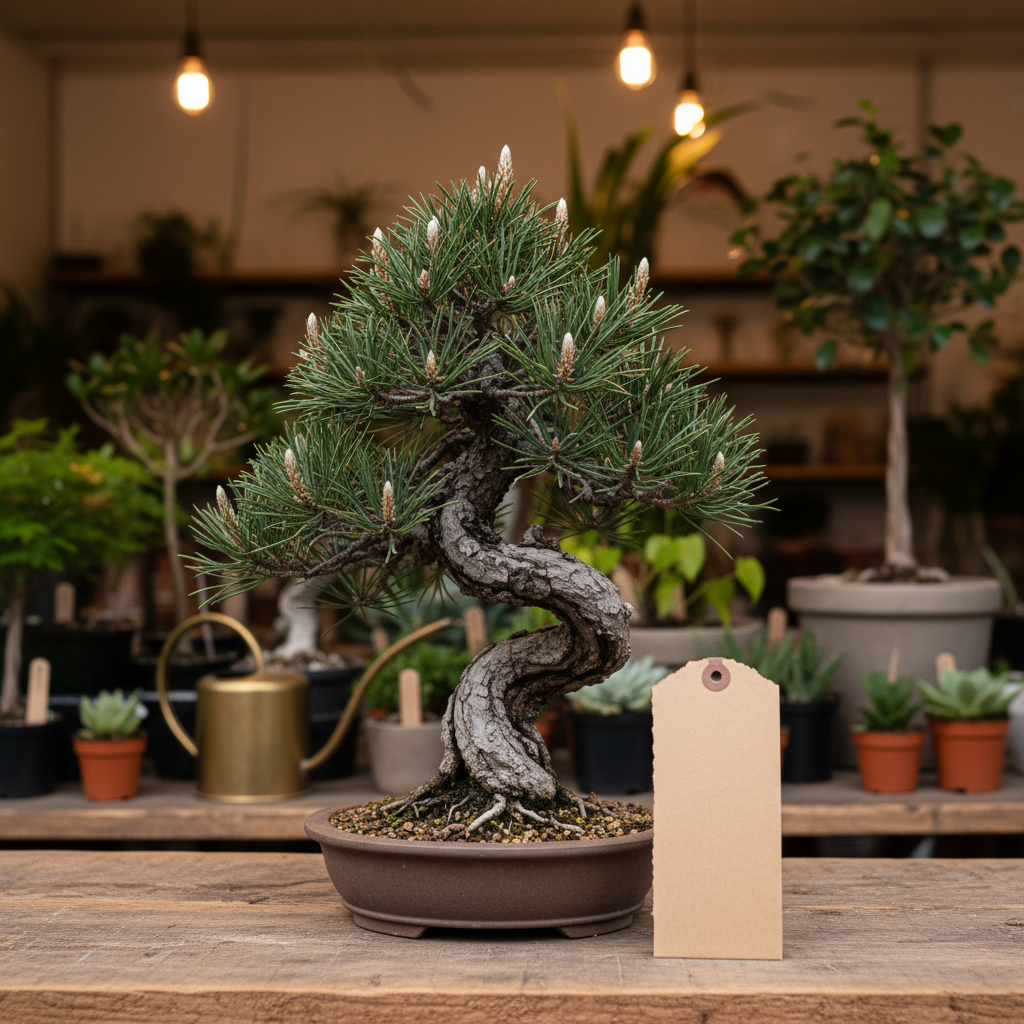
There is also a deeper satisfaction in growing a tree that genuinely lives outdoors and marks the turning of the seasons. The black pine pushes its candles, the tight vertical clusters of new growth, in late spring, hardens its needles through summer and rests through a cold dormancy in winter. Following that rhythm and working with it rather than against it is the heart of pine bonsai. The species is forgiving of beginners in terms of basic survival, since it tolerates drought, heat and cold far better than most ornamentals, but it asks for knowledge and timing if it is to become beautiful rather than merely alive.
Important — Toxicity: The Japanese black pine is considered only mildly toxic. The needles, bark and resinous sap can cause stomach upset, drooling or vomiting if chewed by cats or dogs, and the sharp needle tips can irritate the mouth. It is not among the dangerously poisonous houseplants, but it is sensible to keep pets and small children from nibbling the foliage, and to wash hands after handling fresh sap.
Light Requirements
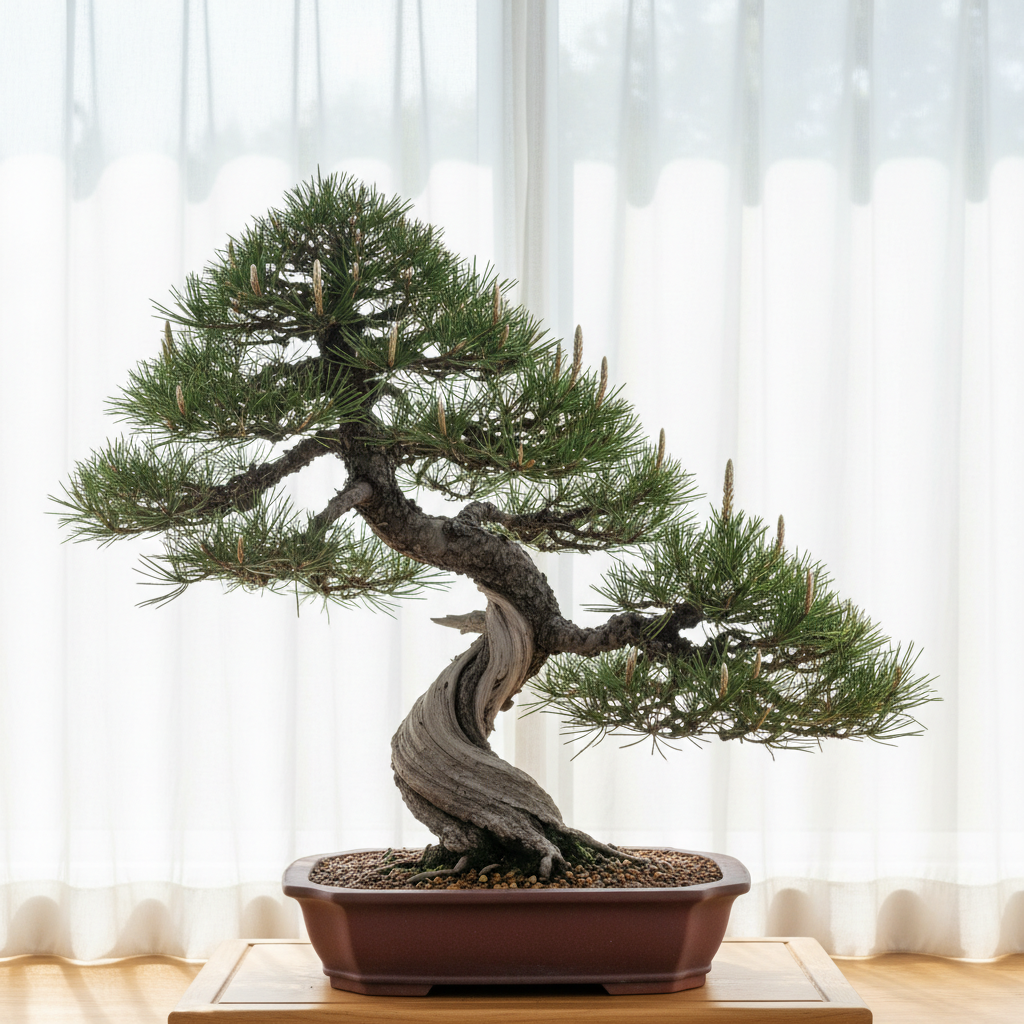
Light is the single most important factor in keeping a bonsai pine healthy, and it is where indoor growers most often fail. The Japanese black pine is a full-sun species that evolved on exposed coastlines. It wants as much direct sunlight as it can get, ideally a minimum of six to eight hours each day, and it produces its best, shortest and most compact growth only when that demand is met.
Given strong light the tree responds with short internodes, dense needle pads and vigorous back-budding, the production of new buds further back along old wood that is essential for building a compact silhouette. Deprived of light it stretches, the needles grow long and sparse, the lower interior shoots weaken and die, and the whole tree gradually thins out. This is why a bonsai pine cannot be treated as an indoor ornament. It belongs on a sunny balcony, terrace, courtyard or in a garden where nothing shades it for most of the day.
Light Levels Explained
The table below frames common light situations against what a black pine actually needs. Note that almost every category below the top tier results in slow decline for this species, which underlines just how light-hungry it is.
| Light Category | Approx. Level | Typical Location | Outcome |
|---|---|---|---|
| Full direct sun | 50,000 lux and above | Open garden, unshaded balcony | Ideal; short needles, strong buds, dense growth |
| Partial direct sun | 20,000 to 50,000 lux | East or west terrace with some shade | Acceptable; slightly longer needles, fair vigour |
| Bright indirect | 10,000 to 20,000 lux | Behind a sunny window indoors | Poor long term; stretching and weak buds |
| Medium | 2,000 to 10,000 lux | Interior room near a window | Unsustainable; gradual decline |
| Low | Below 2,000 lux | Away from windows | Fatal within months |
Window Orientation and Placement
South-facing window: If the tree must spend a short period indoors, a south-facing window in the northern hemisphere gives the strongest light available inside. Even this is far weaker than open sun, so treat indoor time as a temporary display of no more than a few days.
East-facing window: Gentle morning light only. Inadequate as a long-term position and useful at most for very brief viewing.
West-facing window: Warm afternoon light that is stronger than an east window but still a fraction of outdoor intensity. Not a place to keep a pine.
North-facing window: Far too dim. A black pine kept at a north window will weaken steadily and should be moved outside without delay.
Pro Tip — Outdoor First: The simplest way to grow a thriving bonsai pine is to keep it outdoors all year and bring it in only for short display, ideally for no longer than two or three days at a time before returning it to full sun. Think of indoor time as an occasional event, not a home.
How Light Affects Needle Length and Density
For pine bonsai the visual goal is short needles and tight, dense foliage pads, and light is the foundation of both. In strong sun the tree naturally produces shorter needles and holds buds closer together, which is exactly what refinement techniques aim to encourage. In weak light needles elongate dramatically, sometimes to twice their ideal length, and the interior of the tree begins to shade itself out, losing the fine inner growth that gives a bonsai its sense of depth. No amount of pruning can compensate for a tree that is starved of light.
Warning — Sudden Sun Exposure: A pine that has spent time in low light should not be moved straight into blazing midday sun, as the sudden change can scorch tender shoots. Reintroduce it over a week or two, increasing exposure gradually, so the foliage can adapt.
Artificial Lighting
Artificial lighting is a poor substitute for sun with a tree this demanding. While powerful full-spectrum horticultural lights can keep a pine ticking over for a limited period, matching the intensity and duration of natural sunlight indoors is impractical for most growers and does nothing to provide the winter cold the species needs. Grow lights should be regarded as emergency support, for instance during a brief illness or a hard frost event, rather than a normal way of growing.
Seasonal Adjustments
Through spring and summer give the tree the most open, sun-drenched position you can. In autumn the lower sun and shorter days naturally slow growth, which is normal and healthy. In winter the tree should remain outdoors to experience dormancy, though the roots in a shallow pot need protection from deep freezing, a subject covered in the watering and potting sections below.
Watering & Humidity
Watering a bonsai pine is a balancing act between two truths. The species is genuinely drought tolerant and resents constantly wet feet, yet a tree in a shallow bonsai tray holds very little soil and can dry out within hours on a hot day. The skill lies in reading the soil rather than following a fixed schedule.
When to Water
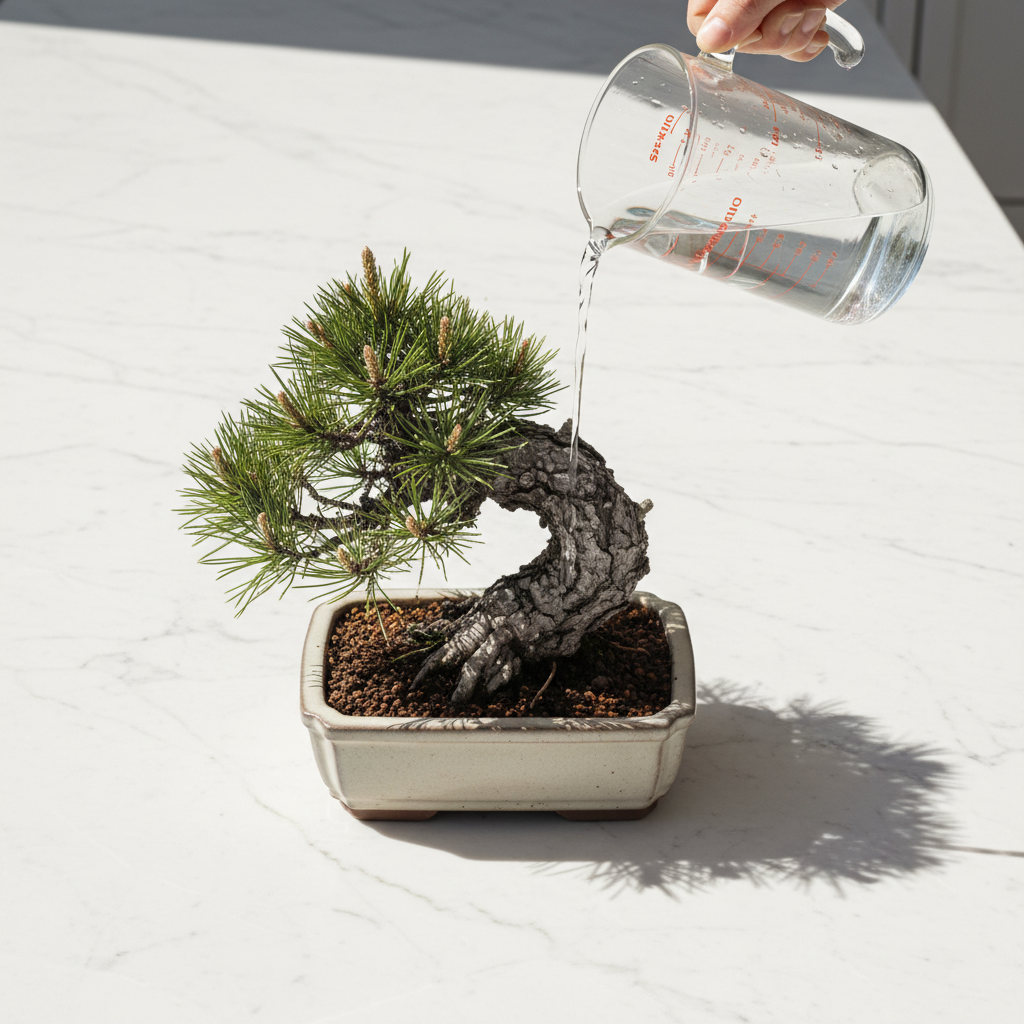
The reliable rule is to water when the surface of the soil has begun to dry but the layer just beneath is still slightly moist. Push a finger or a wooden chopstick a centimetre or so into the mix to check, since the colour of the surface alone can mislead you. On a hot, breezy summer day a small pine may need watering once or even twice daily, while in cool, damp weather it might go several days between waterings.
In winter, with the tree dormant and the soil cold, water requirements fall sharply. Check every few days and water only when the mix is approaching dryness, taking care never to water while the soil is frozen solid. The aim through the cold months is to keep the rootball from desiccating without ever leaving it waterlogged.
Pro Tip — Water by Weight: Lift the pot just after a thorough watering to learn how heavy a fully watered tree feels, then again a day later. With a little practice the change in weight becomes a more accurate guide to when the tree needs water than any calendar.
How to Water Correctly
- Use a watering can or hose fitted with a fine rose so the stream is gentle and does not wash out the soil surface.
- Begin watering and pass slowly over the whole surface so the water has time to soak in rather than run off the top.
- Continue until water flows freely from the drainage holes, which confirms the entire rootball has been wetted.
- Pause, then water a second time the same way to be sure no dry pockets remain in a fast-draining mix.
- Allow the pot to drain fully and never leave it standing in a saucer of water.
Signs of Overwatering vs. Underwatering
| Symptom | Overwatering | Underwatering |
|---|---|---|
| Needle colour | Yellowing, often from the base outward | Greyish or faded green, then browning at the tips |
| Needle texture | Soft, limp, sometimes dropping | Dry, brittle, snapping easily |
| Soil | Persistently wet, sour smelling | Bone dry, pulling away from the pot edge |
| Roots | Dark, mushy, foul odour | Dry and shrivelled but firm |
| Overall vigour | Weak candles, fungal problems | Stalled growth, widespread needle loss |
Warning — Root Rot: Pines are especially vulnerable to root rot in dense, water-retentive soil. Because the damage happens out of sight, the first visible signs are often yellowing needles and a general loss of vigour. Prevention through a free-draining mix and disciplined watering is far easier than cure, since a pine whose roots have rotted rarely recovers.
Humidity Requirements
Humidity is rarely a concern for the bonsai pine. As an outdoor coastal species it is comfortable across a wide range of atmospheric moisture and does not need the raised humidity that tropical houseplants crave. What it does value is fresh, moving air, which keeps fungal problems at bay and helps needles stay firm and healthy.
Problems linked to moisture in the air are usually the result of stagnation rather than dryness. A pine crowded against a wall or pressed among other plants with no airflow is more prone to needle fungus and pests than one standing in the open where breezes can move through the foliage.
There is no need to mist a bonsai pine and no benefit in humidity trays. If anything, deliberately raising humidity around a pine can encourage the very fungal diseases the species is prone to, so the better approach is simply to give it space and good ventilation.
Water Quality
The black pine is not fussy about water quality and tolerates ordinary tap water well, including water that is moderately hard. Rainwater is excellent when available, particularly in areas with very alkaline tap supplies, since pines prefer slightly acidic conditions. Over time hard water can nudge the soil toward alkalinity, so growers in hard-water regions may choose to flush the soil thoroughly from time to time or alternate with collected rainwater.
Soil, Potting & Repotting
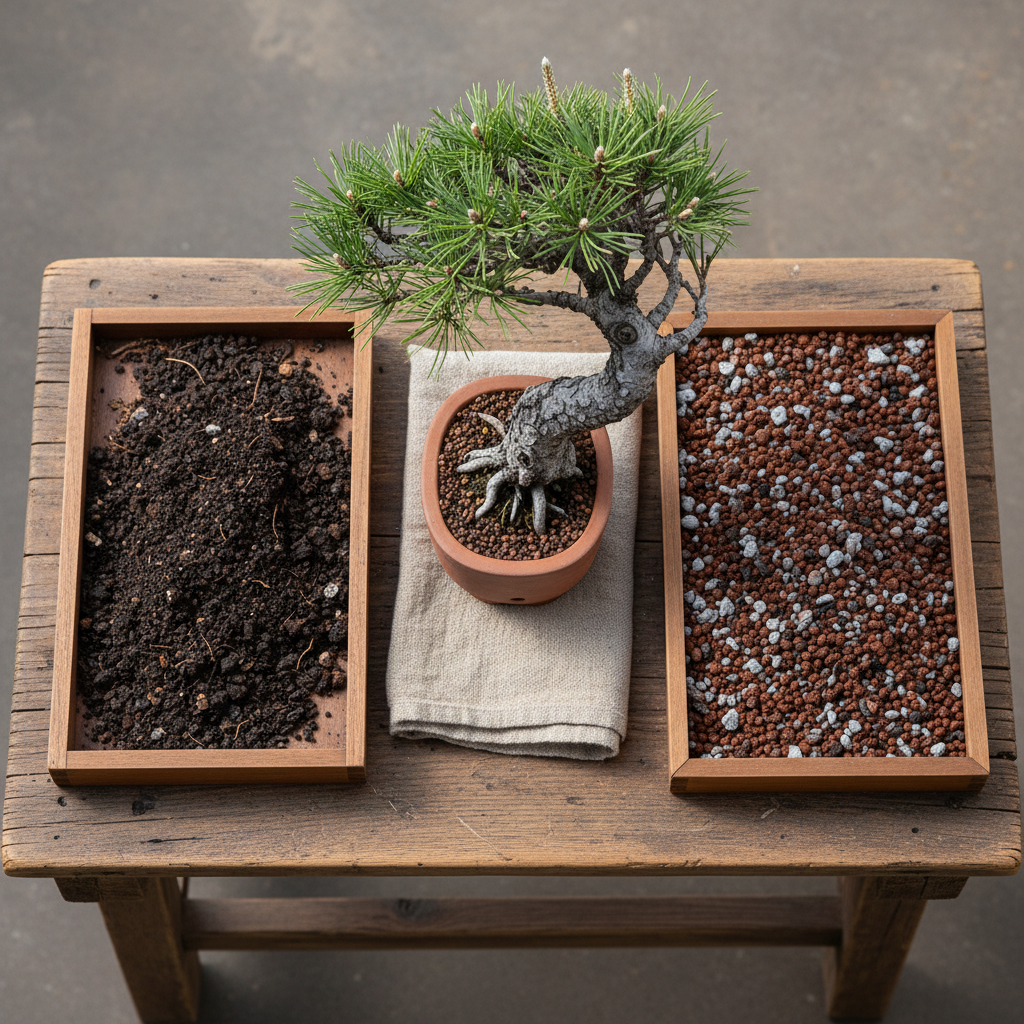
If light is the most important environmental factor for a bonsai pine, soil is the most important thing within the grower’s direct control. Pines demand sharp drainage and an open, airy root environment, and they form a symbiotic relationship with beneficial root fungi that depends on a healthy, well-aerated mix. Ordinary bagged potting compost holds far too much water for this species and is one of the most common causes of failure.
Ideal Soil Composition
A classic pine bonsai soil is built almost entirely from inorganic, granular components that drain freely yet hold a thin film of moisture and air around each particle. The Japanese clay akadama is the traditional backbone, combined with pumice and volcanic lava rock to keep the structure open. A small proportion of organic matter can be added to retain a little extra moisture and nutrition, but pines are generally grown leaner than most bonsai.
| Component | Proportion | Function |
|---|---|---|
| Akadama | Around one half | Holds moisture and nutrients while staying open; shows when it is drying |
| Pumice | Around one quarter | Lightens the mix, stores air and water, encourages fine roots |
| Lava rock | Around one quarter | Adds sharp drainage and lasting structure that resists breakdown |
| Optional fine bark or compost | A small handful | Slight extra moisture and organic nutrition for younger trees |
The black pine prefers a soil that is neutral to slightly acidic, broadly in the range of pH 6.0 to 7.0. The standard inorganic bonsai components sit comfortably within this band, which is another reason they suit the species so well. Avoid lime-rich materials that would push the soil strongly alkaline.
Pro Tip — Quick Mix Recipe: For a reliable all-purpose pine mix, combine two parts akadama, one part pumice and one part lava rock, sieved to remove dust and fine particles. In hot climates increase the akadama slightly for moisture retention; in wet climates increase the lava and pumice for even faster drainage.
Choosing the Right Pot
Pots for black pines are traditionally chosen to echo the masculine character of the tree. Unglazed stoneware in earthy browns, greys and reddish tones is the usual choice, often in rectangular or strong oval forms with substantial feet, since glossy glazes and delicate shapes tend to fight against the rugged look of the trunk.
Drainage holes are non-negotiable. A bonsai pot must have generous drainage holes, and most also have smaller wiring holes used to anchor the tree. Water has to be able to leave the pot freely, because even the best soil cannot save a pine sitting in a container that holds standing water.
Pot material: Fired stoneware is the standard, prized for its durability and frost resistance. Unglazed finishes suit the pine aesthetically and let the eye rest on the tree. Plastic training pots are entirely acceptable while a tree is being developed, where function matters more than presentation.
Pot size: The pot should be shallow relative to the trunk, generally with a depth close to the diameter of the trunk base for a finished tree. A container that is too deep holds excess water and unbalances the design, while one that is too shallow dries dangerously fast and cramps the roots.
When to Repot
Black pines are repotted less often than fast-growing deciduous bonsai. Young, vigorous trees may need fresh soil every two to three years, while mature specimens can often go four or five years between repottings. The signs that a tree is ready include water sitting on the surface and draining slowly, roots beginning to circle the pot or push the tree upward, and a general loss of vigour. The ideal moment is early spring, just as the buds begin to swell but before the candles extend, when the tree has the energy to recover quickly.
How to Repot: Step-by-Step
- In early spring, ease the tree out of its pot and gently rake the soil away from the outer and lower roots with a root hook or chopstick.
- Take care to preserve the pale, thread-like mycorrhizal fungi in the rootball, as this beneficial fungus is vital to a pine’s health.
- Trim no more than about one third of the root mass, removing thick circling roots and any that are dark or rotten, and keep the fine feeder roots.
- Prepare the clean pot with mesh over the drainage holes, an anchoring wire and a thin layer of coarse mix at the base.
- Position the tree, work fresh mix in around the roots with a chopstick so no air pockets remain, and secure it firmly with the wire.
- Water thoroughly until the run-off is clear, then place the tree in a sheltered, brightly lit spot out of strong wind and harsh sun while it recovers.
- Withhold fertiliser for around a month until new growth shows the roots are active again.
Warning — Transplant Shock: Pines resent heavy root disturbance and can take a full season to recover, so never bare-root a black pine or remove most of its soil in one go. Repot conservatively, keep some original soil and mycorrhizae intact, and avoid repotting at the same time as major pruning, which would stress the tree on two fronts at once.
Fertilising
Feeding is where bonsai pine cultivation becomes an art rather than a routine. Because the tree grows in a tiny volume of lean, inorganic soil, it relies almost entirely on the grower for nutrition, and the timing and strength of feeding are used deliberately to control vigour and refine needle size.
The general principle is that a pine in development is fed heavily to build trunk and branches, while a refined tree is fed more carefully, with feeding adjusted around the growing season to keep needles short and growth balanced across the canopy. Understanding what the nutrients do makes these decisions far clearer.
Understanding Plant Nutrients
Fertilisers are described by their ratio of nitrogen, phosphorus and potassium, the three numbers printed on the label, alongside smaller amounts of secondary nutrients and trace elements. For pines the balance of these elements through the year is as important as the total amount.
| Nutrient | Symbol | Primary Function | Deficiency Symptoms |
|---|---|---|---|
| Nitrogen | N | Drives shoot and needle growth and green colour | Pale, yellowing older needles, weak growth |
| Phosphorus | P | Supports roots, buds and overall energy transfer | Dull foliage, poor root and bud development |
| Potassium | K | Strengthens cells and improves cold and stress tolerance | Browning needle tips, reduced hardiness |
| Calcium | Ca | Builds cell walls and new growth | Distorted, stunted new shoots |
| Magnesium | Mg | Central to chlorophyll and photosynthesis | Yellowing between veins on older needles |
| Iron | Fe | Needed for chlorophyll formation | Yellowing of the newest needles while veins stay green |
Types of Fertiliser
Liquid fertilisers: Diluted liquid feeds act quickly and let you fine-tune both strength and frequency, which makes them useful for giving a measured boost during the main growth period. Their effect is short lived, so they need to be applied regularly to keep the tree supplied.
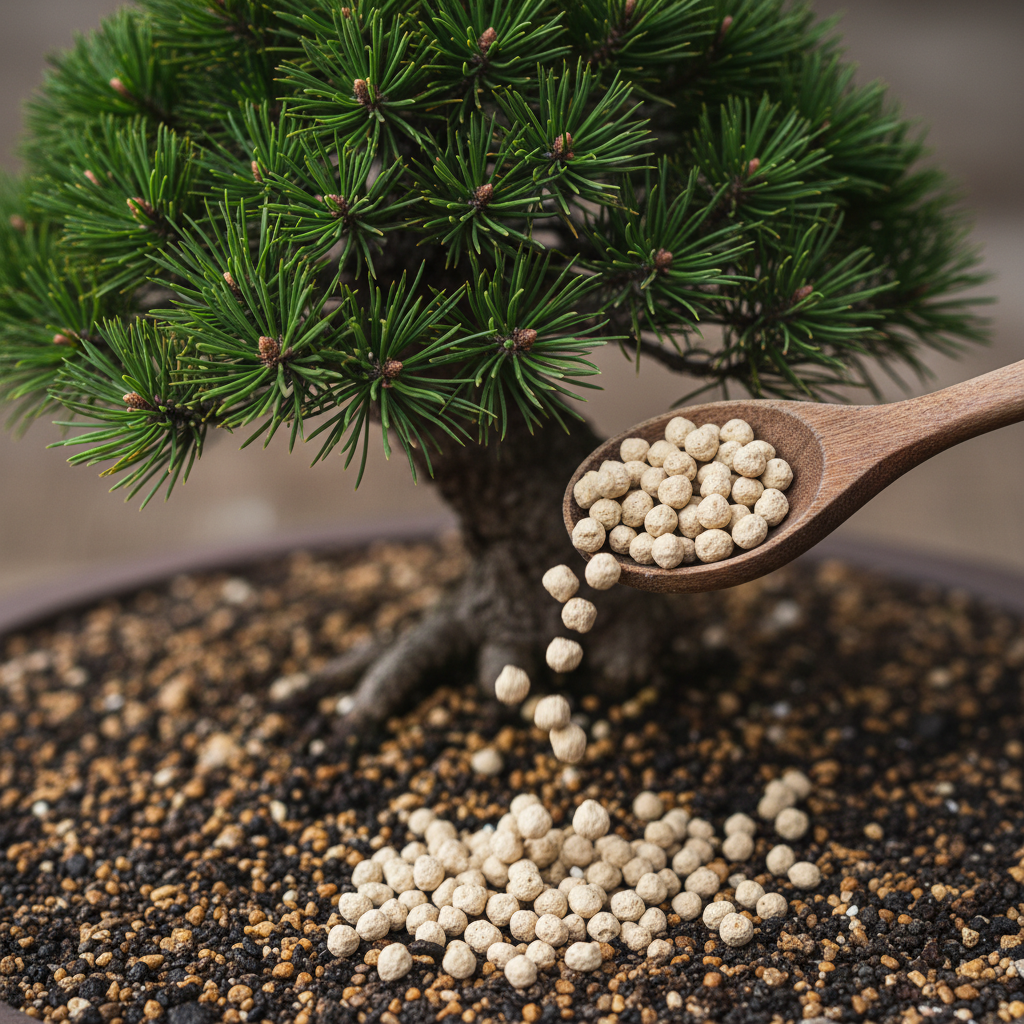
Slow-release granular: Granular feeds scattered on the soil surface release nutrients gradually over weeks and suit the steady feeding pines appreciate. They are convenient and forgiving, and pair well with the free-draining mix that would otherwise wash liquid feed straight through.
Organic fertilisers: Traditional pine bonsai culture leans heavily on organic feed, often in the form of pressed cakes or pellets of rapeseed and bone meal placed on the soil. These break down slowly, feed the beneficial soil life and rarely scorch roots, though they can attract animals and develop an odour when wet.
Feeding Schedule
For a tree in development, feed generously from spring through to autumn to build strength. For a refined tree, a widely used approach is to hold back feeding in early spring until after the candles have been managed, then feed strongly from midsummer through autumn to build energy for the following year and to encourage a strong second flush of growth. Feeding is reduced or stopped in winter while the tree is dormant.
Pro Tip — Autumn Feeding: The most valuable feeding window for an established black pine is late summer into autumn. Strong feeding at this time builds the reserves that power next spring’s growth and supports the short, dense needles that make refined pines so handsome, without driving the excessive spring vigour that causes long needles.
How to Fertilise
- Water the tree first so the roots are moist and never feed a dry, stressed pine.
- Apply the chosen fertiliser at the recommended rate, scattering granules or cakes evenly across the soil or watering in a diluted liquid feed.
- If using organic cakes, space them around the edge of the pot and consider small mesh covers to stop them being disturbed.
- Keep fertiliser off the trunk and away from the base of the needles to avoid burning.
- Water again lightly after feeding to begin carrying the nutrients into the soil.
Warning — Salt Build-Up: Frequent feeding in a small pot can leave mineral salts in the soil that gradually harm the roots. Flush the soil thoroughly with plain water every few weeks during heavy feeding, letting plenty run through the drainage holes, and never exceed the recommended dose in the belief that more is better.
Propagation
Propagating the Japanese black pine is a slower and more specialised affair than rooting a cutting from a tropical houseplant. Pines do not root readily from cuttings the way many soft-stemmed plants do, so the species is raised mainly from seed, with grafting used to reproduce named cultivars and air layering used occasionally to capture a desirable section of an existing tree.
For most growers, seed is the natural starting point. It is inexpensive, produces large numbers of seedlings, and the early years of growing from seed teach an enormous amount about how the tree develops. The trade-off is time, since a black pine grown from seed takes many years to reach a size and character worth styling.
Understanding How Pines Reproduce
In nature the black pine reproduces by seed carried in woody cones, and each seed grows into a tree with its own slightly different characteristics. This genetic variation is part of why seedlings are so useful for bonsai, as they offer a wide range of trunk and growth habits to select from. Named cultivars, by contrast, must be grafted or layered to stay true, because they will not come reliably from seed. Knowing this distinction guides which method to use for a given goal.
Growing from Seed: Step-by-Step
Seed is the most accessible method and the one most beginners should start with. Fresh, viable seed and a free-draining medium are the keys to success.
- Soak the seeds in water for around a day and discard any that float, as these are usually not viable.
- Cold stratify the seeds by storing them in damp medium in the refrigerator for several weeks to mimic winter and improve germination.
- Sow into trays of gritty, well-draining seed mix in early spring, covering them lightly.
- Keep the medium just moist and place the trays in a warm, bright position out of harsh direct sun.
- Once seedlings emerge and produce their first true needles, move them into stronger light to keep growth compact.
- Grow them on for a season or two before disturbing the roots, then begin selecting the strongest for development.
Pro Tip — Seedling Cuttings: A traditional refinement is to take very young seedlings, only a few weeks old, and cut off the base before the first roots form, then root the tiny stem as a cutting. This encourages a flat, radial root spread and a better trunk base, and is one of the few situations where black pine roots from cut material with any reliability.
Air Layering: Step-by-Step
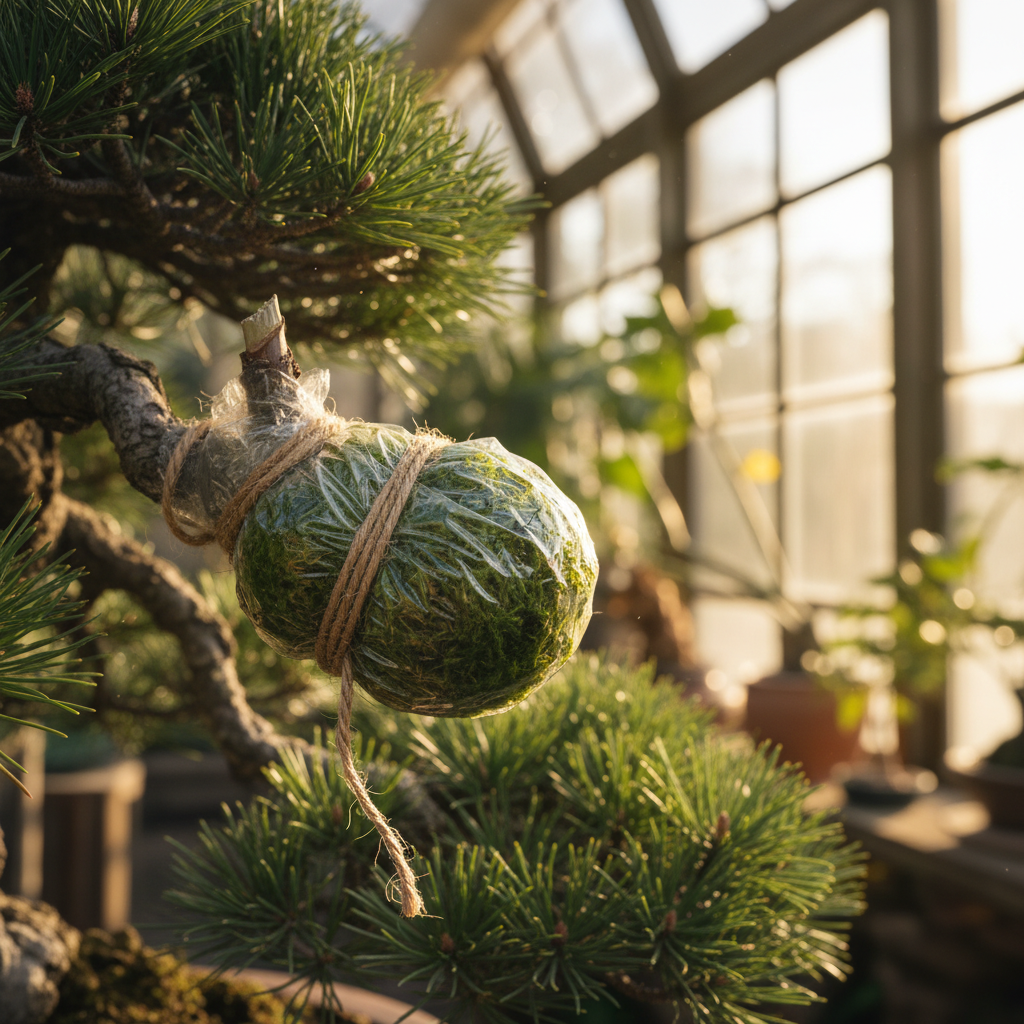
Air layering lets you root a branch or trunk section while it is still attached to the parent tree, then separate it as a new plant. It is more difficult on pines than on many species and is best attempted on a healthy, vigorous tree, but it can capture an attractive piece of trunk or rescue good material from above a poor base.
- In spring, choose a healthy section of stem and remove a ring of bark down to the wood, or apply a tight wire tourniquet to interrupt the flow of sugars.
- Dust the upper edge of the wound with rooting hormone to encourage new roots.
- Wrap the area in a generous ball of damp sphagnum moss.
- Enclose the moss in clear plastic film, tying it firmly above and below so it holds moisture and you can monitor for roots.
- Keep the moss consistently damp throughout the season and be patient, as pines can take many months to root.
- Once a strong network of roots has formed, sever below the layer and pot up the new tree carefully in free-draining mix.
Troubleshooting Propagation
| Problem | Likely Cause | Solution |
|---|---|---|
| Seeds fail to germinate | Old seed or no cold stratification | Use fresh seed and give a proper cold, damp period before sowing |
| Seedlings collapse at soil line | Damping-off fungus from wet, stagnant conditions | Improve airflow, water less, use a sterile gritty medium |
| Air layer makes no roots | Moss dried out or attempted on a weak tree | Keep the moss constantly moist and only layer vigorous, healthy stems |
| Cuttings rot rather than root | Pines root poorly from ordinary cuttings | Switch to seed or grafting, or use the seedling-cutting method instead |
Pests & Diseases
A healthy black pine growing in full sun with good airflow is a tough, resilient tree that shrugs off most problems. Trouble tends to arrive when a tree is weakened by poor light, waterlogged soil or stagnant air, which leaves it open to the handful of pests and diseases that target pines.
Regular, close inspection is the best defence. Looking over the needles, shoots and bark each time you water means most issues are caught early, while they are still easy to deal with, rather than after they have spread through the canopy.
Common Pests
Pine Needle Scale (Chionaspis pinifoliae)
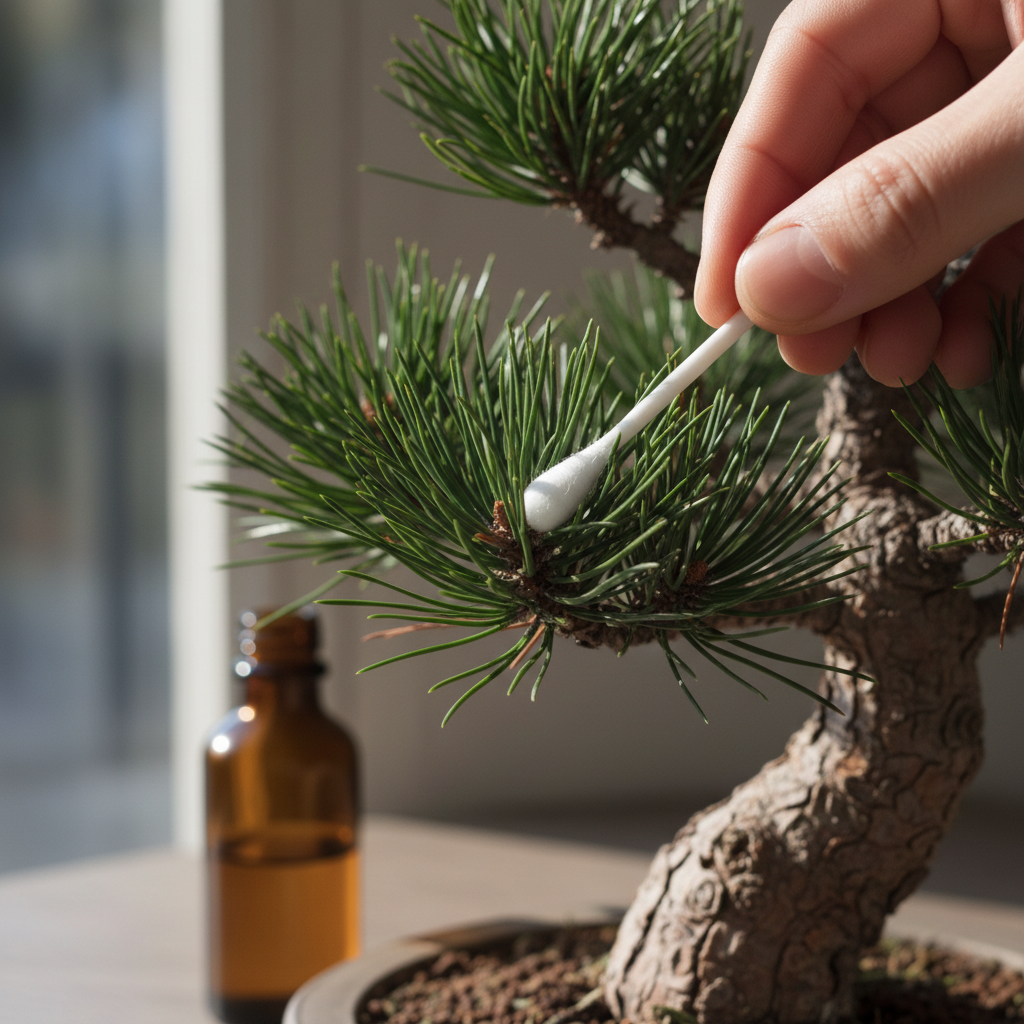
This scale insect appears as small, elongated white flecks stuck to the needles, where it feeds on sap and weakens the tree. A heavy infestation can give the foliage a speckled, unhealthy look and cause needles to yellow and drop.
Treatment: Rub off light infestations with a cloth or a cotton bud dipped in diluted alcohol, and treat heavier cases with horticultural oil to smother the insects, repeating as needed to catch newly hatched crawlers.
Spider Mites (Tetranychus species)
Tiny sap-sucking mites that thrive in hot, dry, still air. They cause a fine stippling and dulling of the needles, and in bad cases fine webbing appears among the foliage. They are easy to miss until the tree looks tired and faded.
Treatment: Spray the foliage forcefully with water to dislodge them, improve air circulation, and apply a miticide or horticultural oil for persistent infestations, treating several times to break the breeding cycle.
Aphids (Cinara species)
Soft-bodied insects that cluster on tender new candles and shoots, sucking sap and excreting sticky honeydew that can lead to sooty mould. New growth attacked by aphids may be distorted or stunted.
Treatment: Blast them off with water, wipe down affected shoots, and use insecticidal soap or horticultural oil if the colony persists, while encouraging natural predators such as ladybirds outdoors.
Pine Sawfly Larvae (Diprion and Neodiprion species)
Caterpillar-like larvae that feed in groups and can strip needles quickly, sometimes defoliating whole branches in a short time. They are most active in late spring and summer and can be surprisingly destructive on a small tree.
Treatment: Pick the larvae off by hand as soon as they are noticed, since on a bonsai-sized tree this is usually enough, and treat heavier outbreaks with an appropriate insecticide if hand removal cannot keep up.
Common Diseases
Needle Cast (Lophodermium species)
A fungal disease that causes older needles to develop spots and yellow bands before browning and falling, often leaving only the youngest needles at the shoot tips. It is encouraged by damp, crowded conditions and poor airflow.
Treatment: Remove and dispose of fallen and infected needles, improve ventilation, avoid wetting the foliage when watering, and apply a suitable fungicide preventively in damp seasons if the disease is recurrent.
Diplodia Tip Blight (Diplodia sapinea)
This fungus attacks new shoots and candles, causing them to brown, stunt and die back, often with resin oozing from affected areas. It tends to strike trees already stressed by drought, injury or poor conditions.
Treatment: Prune out and destroy blighted shoots with clean tools, reduce stress on the tree, keep foliage dry, and use a protective fungicide on vulnerable new growth in wet springs.
Root Rot (Phytophthora and Pythium species)
The most serious threat to a potted pine, root rot sets in when soil stays waterlogged and starves the roots of oxygen. The roots turn dark and mushy, and by the time the needles yellow and the tree fades the damage is often advanced.
Treatment: Prevention through free-draining soil and careful watering is far more effective than cure. If caught early, repot into fresh open mix, cut away rotten roots with sterile tools and water sparingly while the tree recovers.
Pest and Disease Summary
| Pest / Disease | Identification | Treatment |
|---|---|---|
| Pine needle scale | White elongated flecks on needles | Wipe off, apply horticultural oil |
| Spider mites | Stippled, dull needles, fine webbing | Rinse, improve airflow, miticide or oil |
| Aphids | Clusters on new shoots, sticky honeydew | Rinse off, insecticidal soap or oil |
| Pine sawfly larvae | Grouped larvae stripping needles | Hand pick, insecticide if severe |
| Needle cast | Spotted, banded older needles dropping | Remove debris, ventilate, fungicide |
| Diplodia tip blight | Browning, dying new shoots with resin | Prune out, reduce stress, fungicide |
| Root rot | Dark mushy roots, fading tree | Repot in open mix, remove rotten roots |
Prevention Strategies
Almost every pest and disease that troubles the black pine takes hold more easily on a weakened tree, so the best prevention is simply good culture. A pine kept in full sun, watered with discipline, grown in fast-draining soil and given room to breathe is rarely seriously troubled.
Cleanliness matters too. Clearing fallen needles and debris from the soil surface removes places for fungus and pests to overwinter, and using clean, sharp tools when pruning avoids introducing disease into fresh wounds. Quarantining any new tree for a few weeks before placing it among an established collection is a sensible habit.
Pro Tip — Dormant Oil: A dormant-season application of horticultural oil in late winter, before new growth begins, smothers overwintering scale, mites and insect eggs and gives the tree a clean start to the year. Apply it on a mild, dry day when no hard frost is expected.
Popular Varieties
While the standard seed-grown Japanese black pine is the backbone of the bonsai world, generations of growers have selected and named cultivars with particular qualities, from unusually short needles to corky, deeply textured bark. These forms are usually grafted onto ordinary black pine roots to keep their character true.
For a beginner, an ordinary nursery-grown black pine is the ideal place to learn, as it is vigorous, inexpensive and responds well to the standard techniques. The named cultivars below become more interesting once the basics are mastered and a grower is looking for a specific look.
| Variety | Needle / Bark Appearance | Light Needs | Growth Rate | Availability |
|---|---|---|---|---|
| Standard black pine | Long stiff dark green paired needles | Full sun | Vigorous | Very common |
| ‘Thunderhead’ | Very dark needles, bold white spring candles | Full sun | Slow and compact | Common |
| ‘Mikawa’ | Short needles, early corky plated bark | Full sun | Moderate | Specialist |
| ‘Kotobuki’ | Dense dwarf habit, short needles | Full sun | Slow | Specialist |
| ‘Yatsubusa’ (Banshosho) | Compact dwarf with very short needles | Full sun | Very slow | Specialist |
| ‘Nishiki’ (corkbark) | Deeply fissured, corky bark even when young | Full sun | Slow | Specialist |
| ‘Oculus Draconis’ | Needles banded with yellow, the dragon eye effect | Full sun | Moderate | Rare |
Featured Varieties
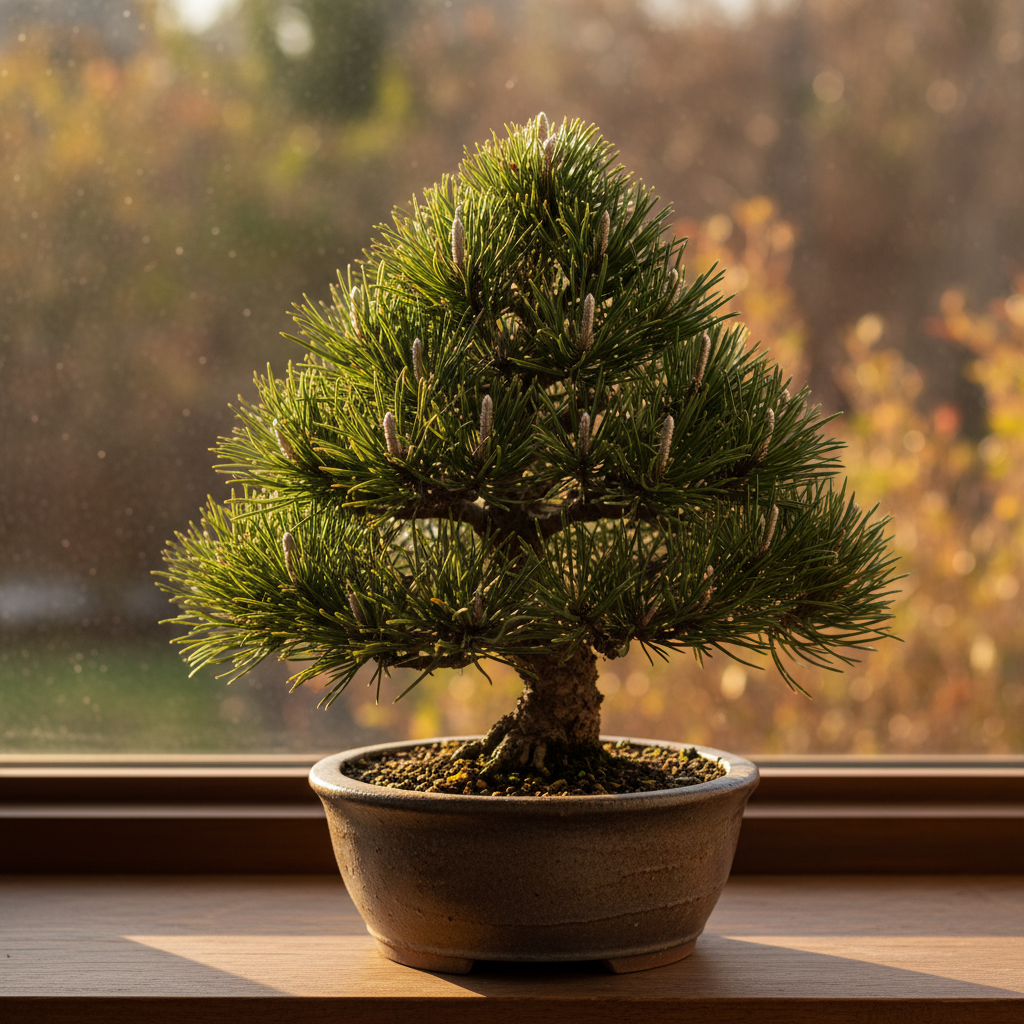
‘Thunderhead’
A compact, slow-growing cultivar famous for its exceptionally dark green needles and the dramatic silvery-white candles it throws up in spring. Its density and refined habit make it a favourite for smaller bonsai where short, tidy growth is prized.
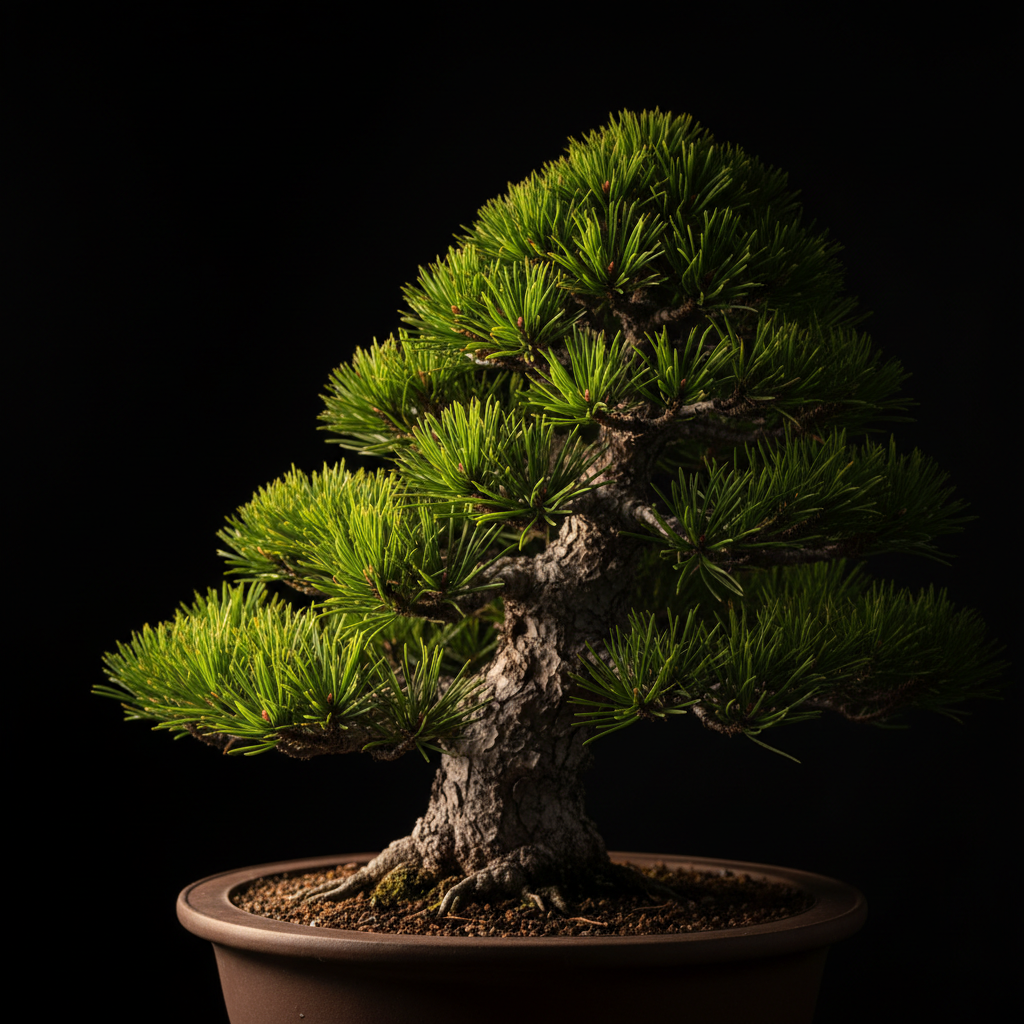
‘Mikawa’
A bonsai-prized strain valued for its naturally short paired needles and, above all, for bark that fissures into corky grey plates while the tree is still relatively young. This early bark character lets a ‘Mikawa’ look convincingly aged years ahead of an ordinary black pine.
Variety Profiles in Detail
Standard Japanese Black Pine (Pinus thunbergii)
The ordinary seed-grown black pine is the most widely available and the most rewarding for learning. It grows strongly, back-buds well, produces the bold trunk and rugged bark the species is famous for, and responds to every classic refinement technique, which makes it the standard against which the cultivars are judged.
‘Kotobuki’ (Pinus thunbergii ‘Kotobuki’)
A dwarf cultivar with a naturally dense, upright habit and short needles. Its slow, tidy growth means less pruning is needed to keep it compact, which appeals to growers who want a refined look with a little less intervention, though it lacks the raw vigour of a standard tree.
‘Nishiki’ Corkbark Black Pine (Pinus thunbergii ‘Nishiki’)
The corkbark forms are grown above all for their bark, which develops deep, rugged, corky ridges from a young age and gives even a modest tree an air of great antiquity. They tend to grow more slowly and can be a little more demanding, but the bark is unmatched for conveying age.
Choosing the Right Variety for Your Space
Whatever the cultivar, every Japanese black pine needs the same thing above all else, which is a position in full outdoor sun with good air movement and a genuine winter. For a first tree, choose a vigorous standard black pine and concentrate on mastering watering, soil and the seasonal rhythm of candle management. Once those fundamentals are second nature, the named cultivars offer a way to pursue a particular character, whether that is the short needles of a dwarf form or the dramatic aged bark of a corkbark selection.
Frequently Asked Questions
Can I keep a bonsai pine indoors?
Not as a permanent home. The Japanese black pine is an outdoor tree that needs full sun, fresh air and a cold winter dormancy, none of which an indoor environment can provide for long. You can bring it inside for short display, ideally no more than a couple of days at a time, but it must then return outdoors. Kept indoors continuously it will weaken and eventually die.
What are the candles on my pine, and should I cut them?
Candles are the tight, upright clusters of new growth that extend in spring before the needles open. Managing them, by pinching, cutting or removing them at the right time, is the central refinement technique for black pines and is used to control needle length and balance vigour across the tree. On a developing tree you may let them run to build strength, while on a refined tree cutting candles in early summer encourages a shorter, denser second flush.
Why are my pine’s needles turning yellow?
Some yellowing is natural, as older interior needles turn yellow and shed in autumn each year. Beyond that, yellowing can signal overwatering and root problems, poor light, nutrient deficiency or pests such as scale and mites. Check the soil moisture and roots first, since waterlogging is the most common and most serious cause, then consider light and feeding.
How often should I water my bonsai pine?
There is no fixed schedule. Water when the soil surface begins to dry but the layer beneath is still slightly moist, which may mean once or twice a day in hot summer weather and only every few days in cool conditions. Always water thoroughly until it runs from the drainage holes, and let the mix approach dryness before watering again rather than keeping it constantly wet.
How cold can a black pine tolerate in winter?
The species is very hardy and welcomes a cold dormancy, comfortably handling temperatures well below freezing in the ground. In a shallow bonsai pot, however, the exposed roots are more vulnerable than they would be in open soil, so in hard winters protect the rootball by heeling the pot into the ground, mulching it or moving it to a cold but sheltered, unheated space. The goal is to allow dormancy while preventing the rootball from freezing solid for long periods.
When should I repot my pine?
Repot in early spring as the buds begin to swell, before the candles extend. Young trees usually need it every two to three years and mature trees every four or five, judged by drainage slowing and roots filling the pot. Always keep some original soil and the beneficial mycorrhizal fungi, trim the roots conservatively, and avoid combining a repot with heavy pruning in the same year.
Is the Japanese black pine toxic to pets?
It is considered only mildly toxic. The needles, bark and sap can cause stomach upset, drooling or vomiting if eaten, and the sharp needles can irritate a pet’s mouth, but it is not among the genuinely dangerous plants. It is still wise to discourage pets from chewing the foliage and to keep a curious animal away from a freshly pruned tree with exposed sap.
How long does it take to grow a black pine bonsai?
Bonsai is a long-term pursuit, and pines especially so. A tree grown from seed may take a decade or more before it has the trunk and structure worth refining, and decades more to reach real maturity. Many growers shorten the early years by starting with nursery stock or collected material with an established trunk, then developing the branches and refinement, which is the most rewarding stage of working with this magnificent species.






