
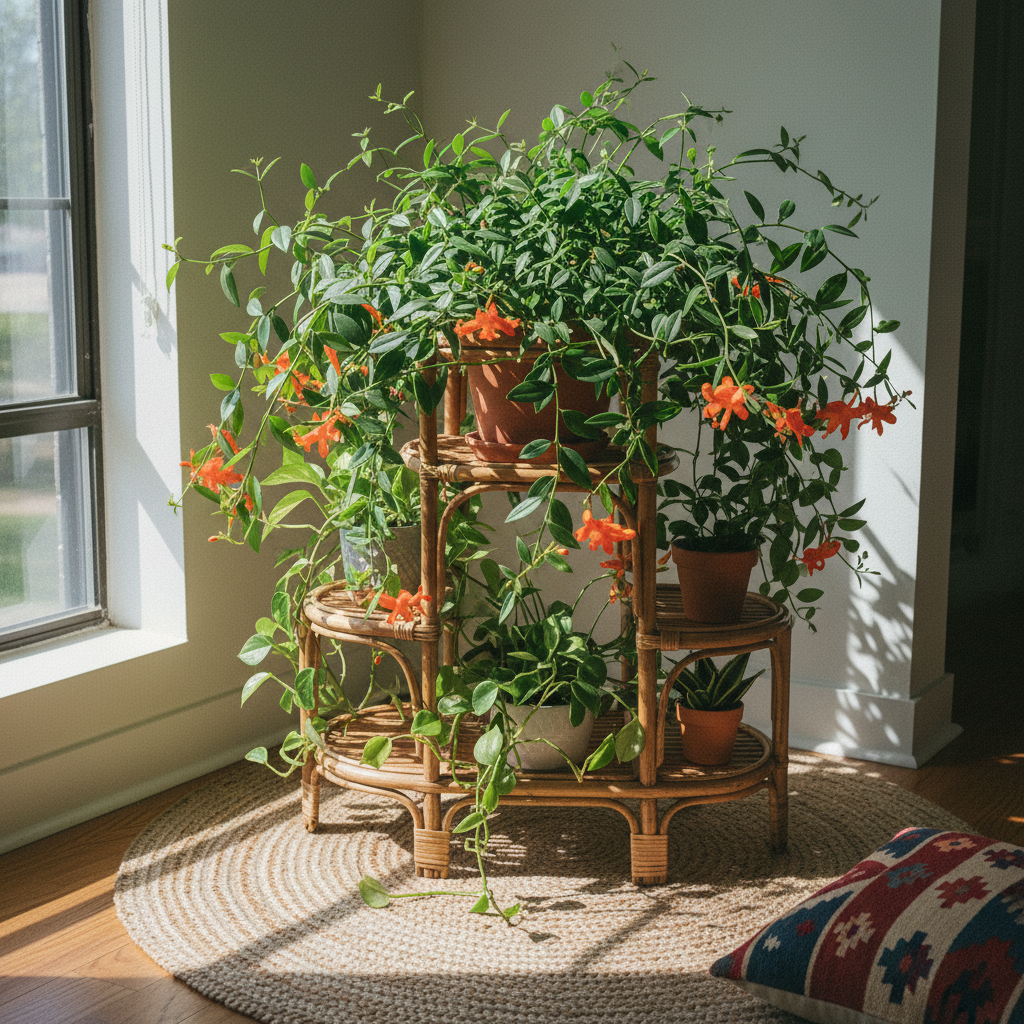
Few houseplants reward a casual glance the way a well-grown goldfish plant does. From a tangle of cascading wiry stems and small glossy leaves, dozens of pouched tubular flowers emerge in vivid orange and red, each one resembling a tiny leaping fish caught mid-arc. The goldfish plant (Nematanthus gregarius), also sold as the guppy plant or clog plant, is a Brazilian epiphyte from the same family as African violets and gloxinias, the Gesneriaceae. In the wild it grows on tree branches in the humid coastal rainforests of the Mata Atlântica, where its trailing habit and modest root system are clues to how it likes to be treated indoors.
The plant has a reputation as a moderately easy gesneriad, more forgiving than its delicate cousins but still rewarding to attentive growers. It will survive in average household conditions with reasonable light, but it only truly thrives, flowering nearly year-round and pushing out flushes of new growth, when light, watering rhythm and feeding all line up. This guide covers everything from the basic survival floor through the conditions that produce a plant covered in goldfish-shaped blooms, including light, watering, soil, fertilising, propagation from cuttings, pest control and the most popular cultivars in circulation.
Contents
- Quick Reference
- Why Goldfish Plant Makes a Rewarding Houseplant
- Light Requirements
- Watering and Humidity
- Soil, Potting and Repotting
- Fertilising
- Propagation
- Pests and Diseases
- Popular Varieties
- Frequently Asked Questions
Quick Reference: Goldfish Plant at a Glance
| Botanical name | Nematanthus gregarius (Gesneriaceae) |
| Common names | Goldfish plant, guppy plant, clog plant |
| Origin | Atlantic rainforest of south-eastern Brazil, epiphytic on trees |
| Light | Bright indirect light; tolerates an hour or two of gentle morning sun |
| Watering | Keep evenly moist in growing season; let top 2 cm dry between waterings in winter |
| Temperature | 18 to 24 degrees Celsius (65 to 75 degrees Fahrenheit); avoid below 13 degrees Celsius (55 degrees Fahrenheit) |
| Humidity | 50 percent or higher preferred; tolerates 40 percent |
| Soil | Light, well-draining, slightly acidic mix; African violet blend with extra perlite works well |
| Fertiliser | Balanced liquid feed at quarter strength every 2 weeks in spring and summer |
| Mature size | Trailing stems 60 to 90 cm (24 to 36 inches) long; clump roughly 30 cm (12 inches) wide |
| Growth rate | Moderate; pushes flushes of new growth in warm months |
| Flowering | Nearly year-round in good light, peaking spring and summer |
| Toxicity | Non-toxic to cats, dogs and humans according to the ASPCA |
| Difficulty | Beginner to intermediate |
Why Goldfish Plant Makes a Rewarding Houseplant
Most flowering houseplants ask the grower to choose between two compromises: lush foliage with shy flowers, or floriferous performance with thin, unimpressive leaves. The goldfish plant refuses the trade. A well-grown specimen carries a dense canopy of small, deep-green ovate leaves on trailing wiry stems and produces orange tubular flowers continuously, often in the dozens, dangling from the leaf axils like a school of fish caught in the canopy. Few other indoor gesneriads flower this generously while also looking handsome out of bloom.
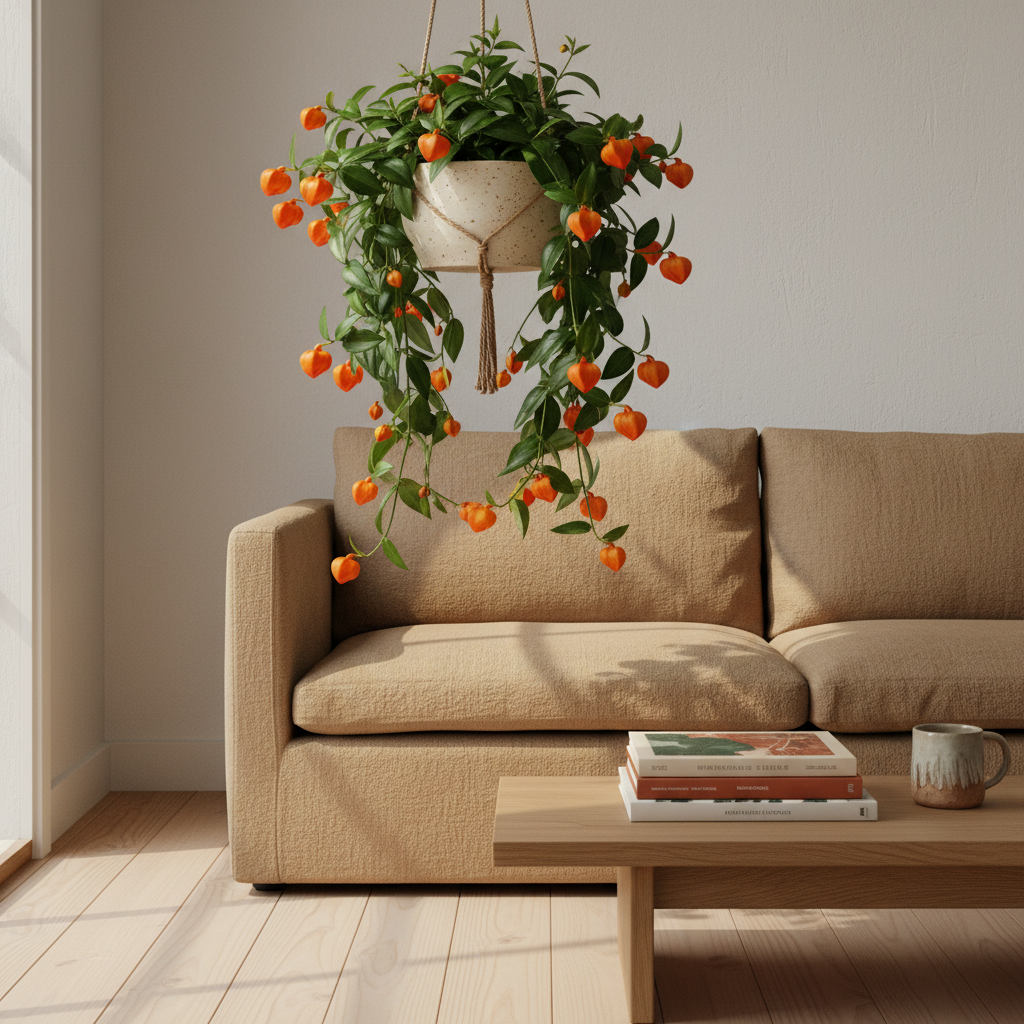
The cascading habit is part of the appeal. Stems lengthen to between 60 and 90 centimetres (24 to 36 inches) over a few seasons and spill over the rim of the pot in a soft, layered curtain. Hung in a bright window, on top of a tall bookshelf or trained over the edge of a kitchen counter, the plant draws the eye downward in a way that few upright houseplants manage. The slightly succulent leaves catch light along their glossy upper surface, so the plant practically twinkles when sun rakes across it.
Its origins as an epiphyte on rainforest trees explain a great deal about how it behaves indoors. In the wild, Nematanthus gregarius roots in pockets of accumulated moss and leaf litter caught in tree forks, where moisture arrives in regular short bursts and drainage is always sharp. The roots are fine and shallow, and rot is a real risk if they sit in stagnant wet soil. Translated to the windowsill, this means a small pot, a chunky free-draining mix and a watering rhythm that mimics tropical rain rather than constant saturation.
Behaviour-wise, the goldfish plant is also unusually communicative. Its leaves and stems telegraph what is going wrong before the situation becomes terminal. Wrinkled, slightly limp leaves usually mean a missed watering. Yellowing on multiple lower leaves at once usually points to overwatering or fertiliser excess. A sudden drop of buds before they open almost always traces back to a draft, a temperature swing or a soil that dried out mid-bud development. With practice, the plant becomes one of the easiest indoor flowering subjects to read.
Pro Tip — Don’t confuse the species: Several plants are sold under the name “goldfish plant”, including Nematanthus gregarius, Nematanthus wettsteinii, and certain Columnea species like Columnea gloriosa. They look broadly similar and want similar care, but the most common houseplant version on the market is N. gregarius, which has slightly succulent, glossy leaves and a near-evergreen flowering habit.
Light Requirements
Light is the single most important variable in goldfish plant care, and the gap between a plant that survives and a plant that covers itself in flowers is almost entirely a matter of how much bright light it receives. The species evolved on the inner branches of rainforest trees, where it sees long hours of bright filtered light and short flashes of direct sun. Indoors, the closest analogue is an east-facing window with no obstruction, or a south or west-facing window set back a couple of feet with a sheer curtain.
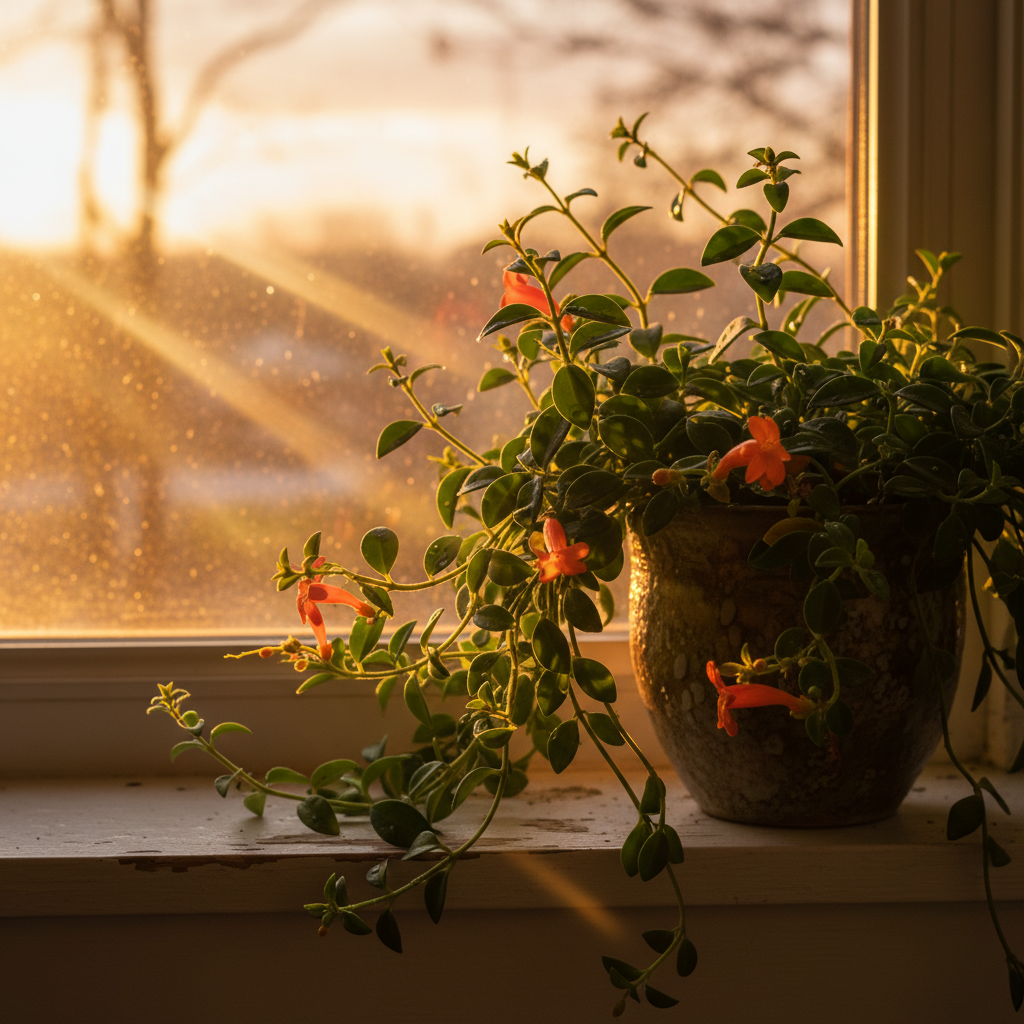
The practical signal that a plant is receiving enough light is the colour of new leaves and the appearance of flower buds along the stems. Healthy new growth comes in a deep, glossy green, often with a slight reddish flush on the undersides that mellows as the leaf hardens off. Stems remain compact, with leaf pairs close together. Flower buds appear all along the length of mature stems, not just at the tips. When light is insufficient, the stems stretch noticeably between leaf pairs, the leaves themselves come in pale and dull, and flowering reduces to a handful of blooms or stops altogether.
Too much direct sun is also possible, particularly in late spring and summer through unobstructed south or west-facing glass. The leaves are slightly succulent and reasonably tolerant, but prolonged direct sun bleaches the upper surface to a yellowed olive and in severe cases produces translucent papery scorch patches. A useful rule of thumb is that an hour or two of gentle morning sun is welcome, while midday and afternoon direct sun should be diffused with a sheer curtain or by setting the plant back from the glass.
In dim interiors where window light is limited, a full-spectrum LED grow light is a reliable substitute. Position the fixture 25 to 40 centimetres (10 to 16 inches) above the foliage and run it for 12 to 14 hours a day. A goldfish plant under a properly set up grow light will often flower more consistently than the same plant on a marginal natural windowsill, because the photoperiod stays stable and the intensity does not fluctuate with weather.
Rotate the plant a quarter turn every week or two. Trailing stems naturally lean toward the brightest face of the window, and without rotation a plant develops a lopsided cascade with one bare side. Rotation also encourages the central crown of the plant to remain dense and well-leaved rather than gradually thinning out.
Watering and Humidity
Watering is the second-most-common reason goldfish plants underperform indoors, and the failure mode is almost always the same: a plant that lives somewhere between bone dry and soaking wet, never settling into a consistent rhythm. The species responds best to a clean cycle of thorough watering followed by a brief partial drying, repeated regularly. It dislikes both extremes equally, and the slightly succulent leaves make this easier to manage than it sounds.
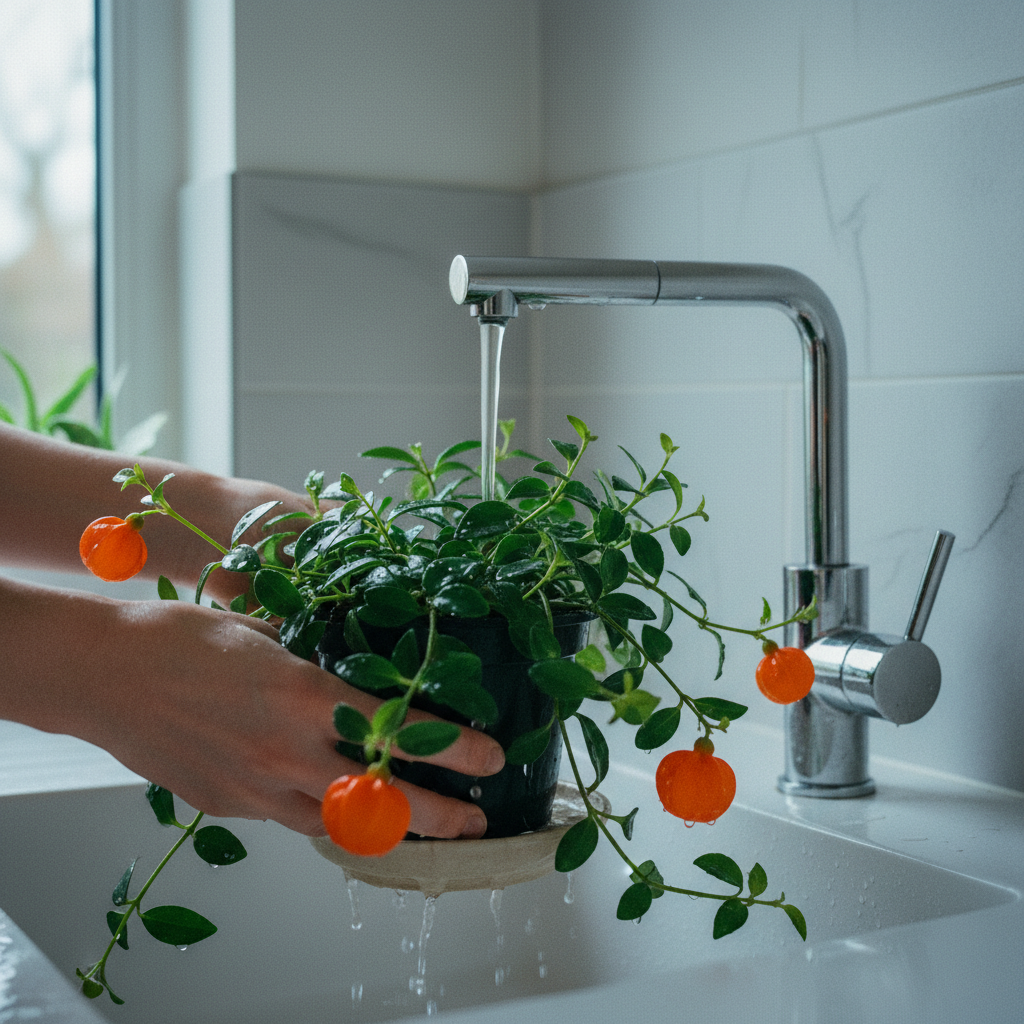
During the growing season, from spring through early autumn, water when the top 1 to 2 centimetres (about half an inch) of soil feels just dry to the touch. The bulk of the root ball below should still be lightly moist. Take the plant to the sink and pour room-temperature water slowly across the surface until it runs freely from the drainage holes for 20 to 30 seconds. Let the pot drain completely before returning it to its decorative cover or saucer. Never leave water standing in a saucer beneath the plant.
In winter, when light is lower and growth slows, ease back. The top 2 to 3 centimetres (about an inch) of soil can dry out between waterings, and the overall frequency typically drops from once or twice a week to once every 10 to 14 days. The plant signals winter dormancy by slowing visibly, with fewer new leaves and shorter internodes. Continuing to water at summer levels through this slower period is the single most common route to root rot.
Water quality matters more than for many tougher houseplants. Goldfish plants prefer slightly acidic conditions, and consistently watering with hard tap water raises the pH of the rootzone over time and leads to a tired-looking, chlorotic plant. Where tap water is hard or heavily chlorinated, rainwater or filtered water makes a visible difference within a few months. Allow tap water to stand uncovered overnight to let chlorine dissipate, and aim for room temperature when watering, since cold water on the roots can shock the plant and trigger bud drop.
Humidity around 50 percent is the comfort zone. The goldfish plant tolerates 40 percent and tolerates household winter dryness better than most gesneriads thanks to those thickened leaves, but it rewards higher ambient moisture with denser flowering and softer-looking foliage. A pebble tray under the pot, a grouping of plants together to share transpired moisture, or a small room humidifier all work. Direct daily misting is less helpful than people assume; it raises humidity only briefly and can encourage fungal spotting on the leaves if water sits in the foliage overnight.
Warning — Bud drop: The most reliable cause of sudden bud drop on a goldfish plant is a dry-out during bud development, often combined with a cold draft. If buds are forming, do not let the plant dry out completely, and keep it away from radiators, air-conditioning vents and frequently opened doors. Bud drop from a single incident does not signal a serious problem; the plant will simply restart the cycle once conditions stabilise.
Soil, Potting and Repotting
An epiphyte planted in heavy peat-based potting compost is a plant set up to fail. Goldfish plants need a substrate that is light, airy, retains some moisture but drains freely and never compacts into a dense slab. A commercial African violet mix is the closest off-the-shelf option, but most growers improve it further by cutting in extra perlite and a handful of fine orchid bark or coco husk chips.
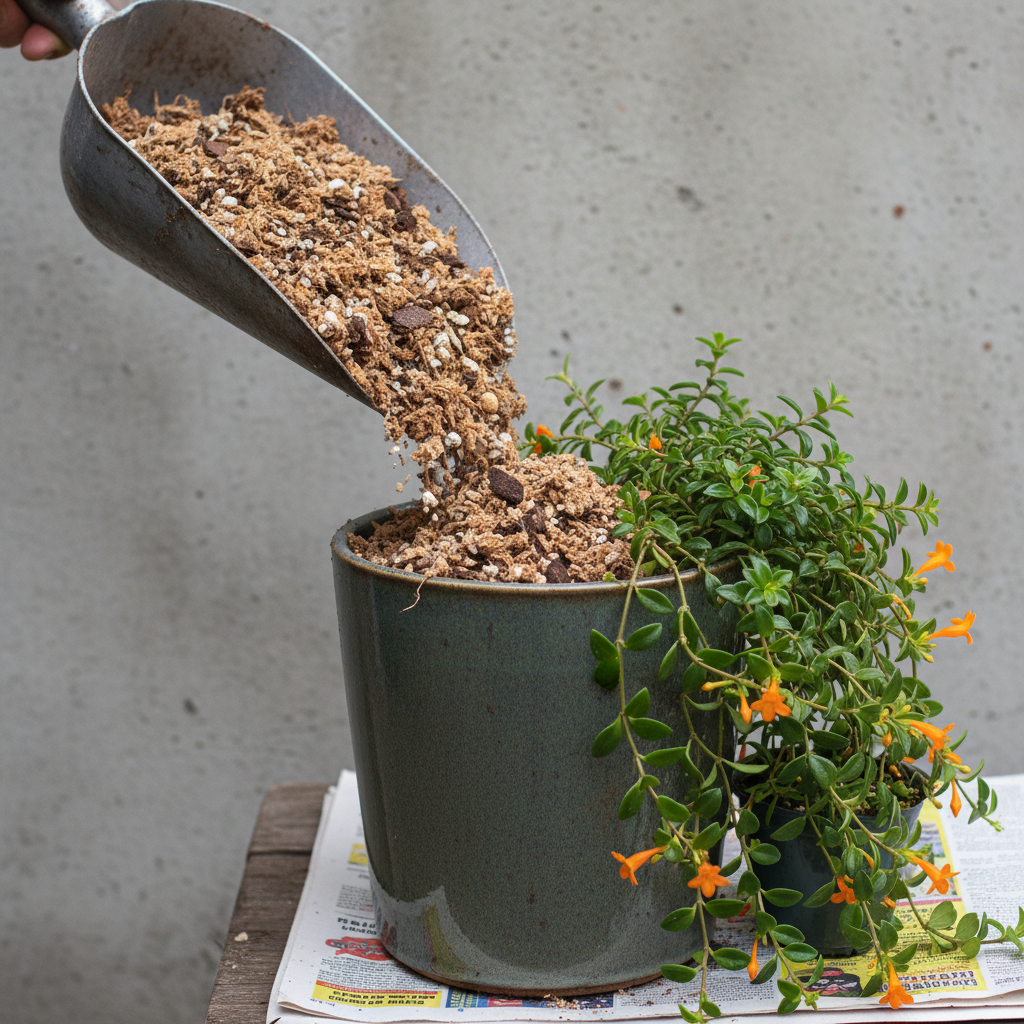
A reliable recipe is two parts African violet potting mix to one part perlite and one part fine orchid bark or coco husk chips. The mix should feel springy in the hand, hold its shape briefly when squeezed wet but fall apart again easily. Avoid garden topsoil, heavy seedling composts and pure peat, all of which compact too tightly and stay wet for too long. A pinch of horticultural charcoal in the bottom of the pot helps keep the mix sweet between repottings.
Choose a pot only one size larger than the current root ball. Goldfish plants flower most prolifically when slightly root-bound, and an oversized pot holds excess wet soil that the small root system cannot dry out. Plastic and glazed ceramic pots both work; unglazed terracotta dries more quickly and suits a heavier-handed waterer who tends to overdo it. Drainage holes are essential, regardless of pot material.
When and How to Repot
Most goldfish plants need repotting every 2 to 3 years, in spring as growth resumes. Signs that it is time include roots circling the inside of the pot, water running straight through without soaking in, or a noticeable decline in flowering despite good conditions otherwise. The procedure is straightforward, but a few details prevent setbacks.
- Water the plant the day before repotting so the root ball comes out intact rather than crumbling.
- Slide the plant out of its current pot and gently tease the outer roots loose. Do not aggressively comb the root ball apart.
- Inspect the roots. Healthy roots are pale tan to white and firm. Cut away any blackened, mushy or hollow roots with clean scissors.
- Place a 1 to 2 centimetre layer of fresh mix in the bottom of the new pot, sit the plant in so the soil surface ends up 1 centimetre below the rim, and pour fresh mix around the sides.
- Tap the pot to settle the mix rather than pressing down hard with the hands, which compacts the substrate.
- Water lightly to settle, but do not soak. A full soak is fine 3 to 5 days later, by which point any minor root damage has begun to callus.
- Keep the freshly repotted plant out of direct sun for a week or two while it re-establishes.
Fertilising
Goldfish plants are gentle feeders. As epiphytes, they evolved to extract nutrients from very dilute sources like rainwater dripping through tree canopies and small amounts of decaying organic matter caught around the roots. Heavy feeding programmes designed for fast-growing leafy houseplants will burn the fine root system and discourage flowering rather than promote it.
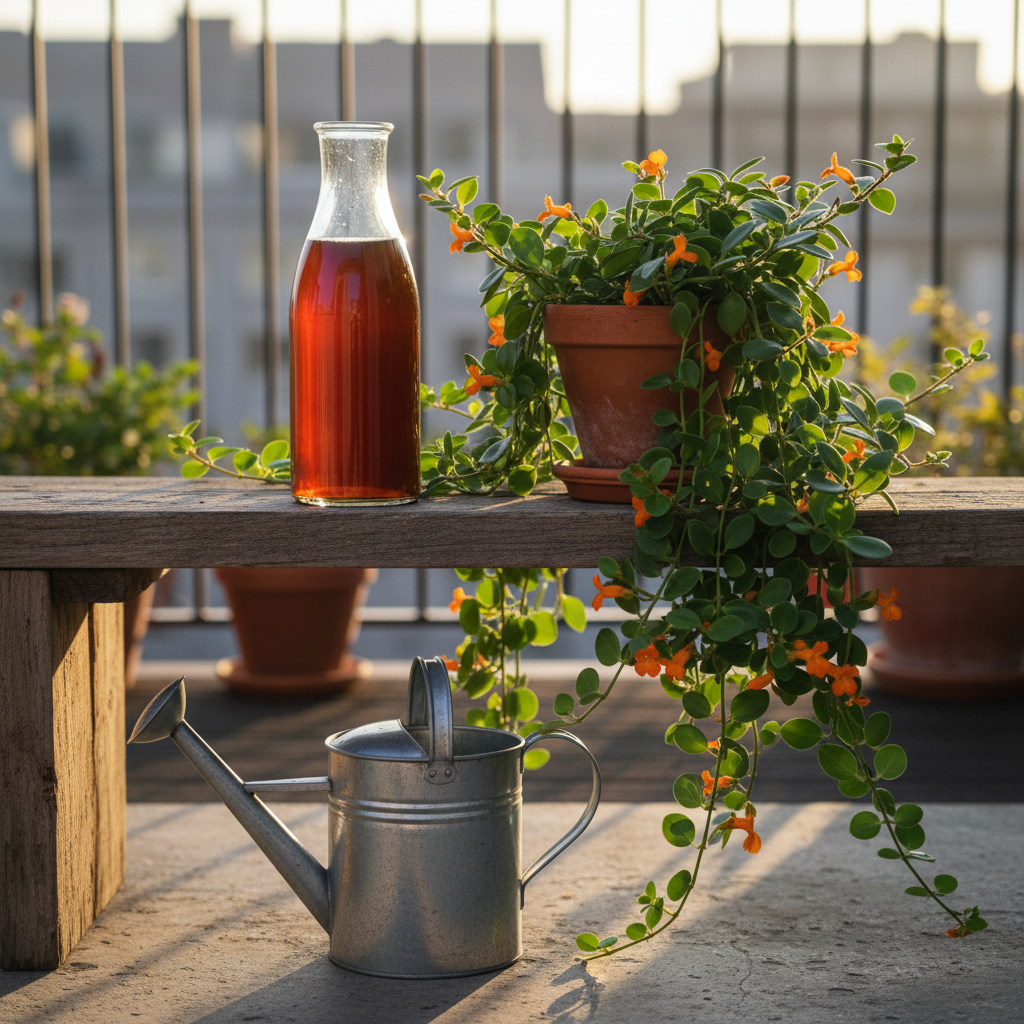
The standard approach is a balanced liquid fertiliser, formulated for flowering houseplants or African violets, diluted to quarter strength and applied every 2 weeks during spring and summer. A roughly 3-1-2 or 5-1-3 NPK ratio works well, though anything between balanced and gently bloom-leaning is acceptable. The dilution is more important than the precise formula; a quarter-strength feed twice a month consistently outperforms a full-strength feed once a month.
From mid-autumn through late winter, taper feeding back. Either skip it entirely until spring or reduce to a very dilute feed once every 6 weeks if the plant is under grow lights and remains in active growth. Feeding heavily through a low-light winter pushes weak, etiolated growth that the plant cannot support and that is unusually attractive to spider mites and aphids.
To encourage particularly heavy flowering, some growers switch to a bloom-boosting fertiliser with a higher middle number, such as 10-30-20, for one or two feeds at the start of the flowering flush. This is optional and rarely necessary if light is genuinely good, but it can help nudge a plant that has been growing well but flowering sparsely.
Watch for the early signs of fertiliser excess: a crusty white deposit at the soil surface or on the pot rim, leaf tips that brown back as if scorched, and slowed growth despite warm bright conditions. When these appear, flush the pot thoroughly with several pot volumes of plain water at the sink, let it drain fully, and pause feeding for 4 to 6 weeks before restarting at a lower dose.
Propagation
Few common houseplants propagate as obligingly as the goldfish plant. Stem-tip cuttings root almost without effort in water, in moist mix or in damp sphagnum moss, and the propagation success rate routinely sits above 90 percent when cuttings are taken from healthy spring or summer growth. A single mature plant produces enough material in one pruning session to start several new pots, which is why the plant has spread widely through plant-shop swaps and friend-to-friend gifts.
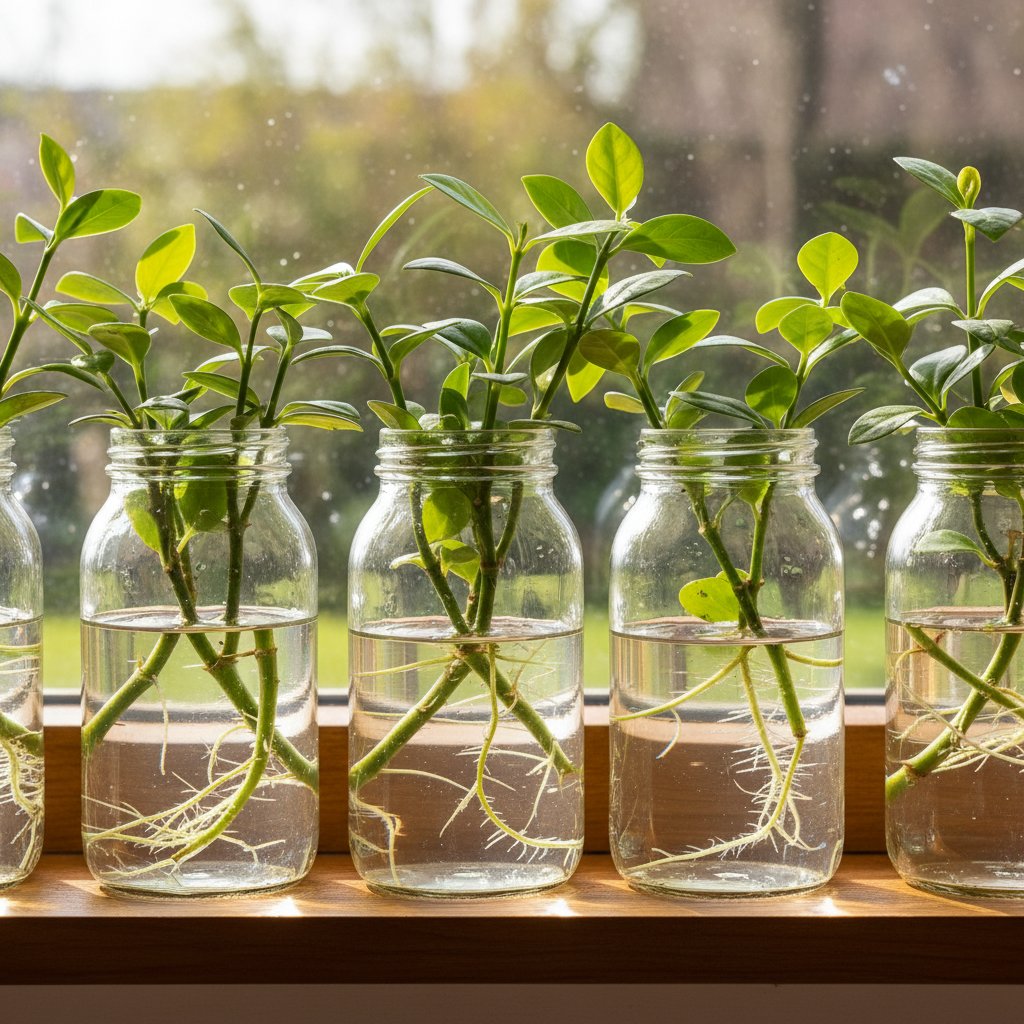
Water Propagation, Step by Step
- Choose a healthy, non-flowering stem tip 8 to 12 centimetres (3 to 5 inches) long. Avoid stems with active flower buds, which redirect energy away from root development.
- Cut just below a leaf node with clean scissors or a sharp blade. The node is where roots will emerge.
- Strip the lower 2 to 3 leaf pairs from the cutting so only the upper 3 to 4 pairs remain.
- Place the cutting in a small glass jar of room-temperature water, ensuring at least one node is submerged but no leaves touch the water.
- Stand the jar in bright indirect light, not direct sun. Refresh the water every 4 to 5 days to keep it clear and oxygenated.
- First white roots usually appear within 2 to 3 weeks. Wait until roots reach 3 to 5 centimetres (about 1 to 2 inches) long before potting.
- Pot up into the standard goldfish plant mix, water lightly and keep the soil consistently moist for the first 3 to 4 weeks while the roots transition from water to soil.
Direct-in-Soil Propagation
If water propagation feels fussy, the same cuttings can be inserted directly into a small pot of moist propagation mix, typically equal parts perlite and coco coir. Insert several cuttings around the edge of the pot, water lightly and cover loosely with a clear plastic bag or place in a propagation box to maintain humidity. Roots form within 3 to 4 weeks, after which the cover comes off gradually over the following week to harden them off.
Pinch the growing tips of the new plants once they have produced 4 or 5 leaf pairs of their own. This single act of pinching, repeated through the first year, produces a dense bushy plant rather than a stringy one and dramatically increases the number of flowers the mature plant can carry, because every pinched tip generates two or more new branches each capable of flowering.
Pro Tip — Combined pruning and propagation: Plan major pruning sessions for early spring, just as the plant gears up for its main growth flush. Long, leggy stems get cut back to a strong leaf pair to rejuvenate the parent plant, and the trimmings become next year’s cuttings. One annual prune, with the offcuts propagated, keeps a single goldfish plant looking fresh almost indefinitely.
Pests and Diseases
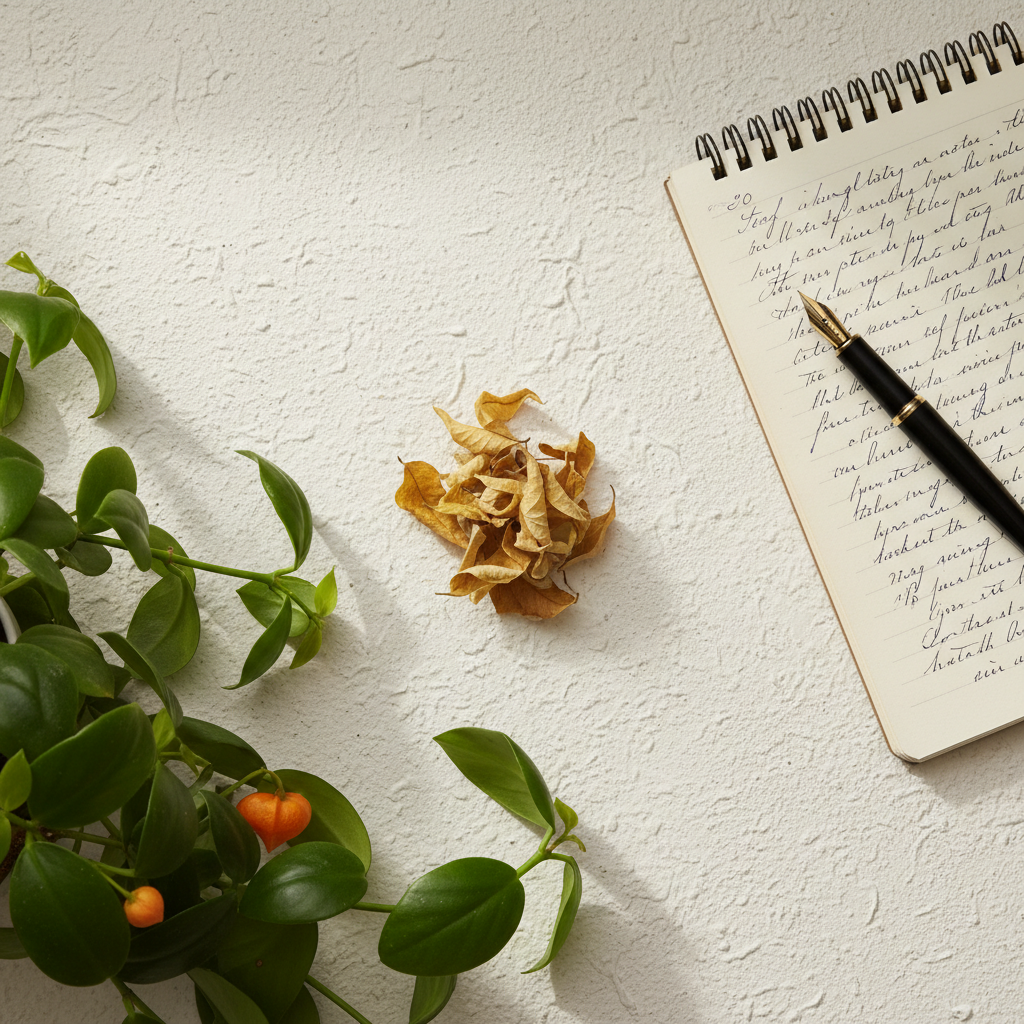
Goldfish plants are not unusually pest-prone, but the dense canopy and trailing habit provide cover for a few of the standard houseplant pests, and the species has a small repertoire of cultural problems that masquerade as disease. Catching trouble early is mostly a matter of routine inspection: every couple of weeks, lift the foliage and look at the undersides of leaves, the leaf axils and the soil surface.
Insects to Watch For
Aphids are the most common visitor, typically clustering on the soft new growth at stem tips and around flower buds. They cause sticky honeydew on the leaves below and slowly distort new foliage. A strong spray of water at the sink dislodges the bulk of an infestation, and follow-up treatment with insecticidal soap or a 1 percent horticultural oil solution every 5 to 7 days for 2 to 3 cycles clears the rest. Insecticidal soap is preferred over neem oil here, as some growers report leaf marking on Gesneriaceae from neem.
Mealybugs appear as small white cottony masses in leaf axils and along stems. They are slower-moving than aphids and harder to dislodge, but easier to spot. Dab each visible mealybug with a cotton swab dipped in 70 percent isopropyl alcohol, then follow with insecticidal soap sprays at weekly intervals for a month to catch the offspring that hatch from any missed eggs.
Spider mites are an issue mainly in dry winter air or near hot radiators. The first sign is a faint stippling on the upper leaf surface, followed by fine webbing in the leaf axils. Raise the humidity, rinse the foliage thoroughly and treat with a miticide or repeated insecticidal soap applications. Mites multiply quickly, so weekly treatment for 3 to 4 weeks is usually required to break the life cycle.
Fungus gnats often arrive with a fresh bag of potting mix or after a stretch of overwatering. The adults are harmless, but the larvae chew on fine roots. Letting the top centimetre of soil dry out between waterings, using a layer of horticultural sand or grit on the surface, and adding a yellow sticky trap usually clears the population within 2 to 3 weeks.
Cultural Problems and Diseases
Several issues that look like disease are actually cultural responses to environment. Yellowing of multiple lower leaves at once typically signals overwatering, especially when accompanied by a sour smell from the soil; correct it by letting the mix dry further between waterings and checking for rotted roots. Leaf drop following a relocation is a stress response to the change in light or temperature and usually resolves within 2 to 3 weeks once the plant adjusts. Bud drop is almost always cold drafts, dry-out events or sudden temperature swings during bud formation.
Genuine root rot is the most serious risk. Symptoms include rapid wilting that does not respond to watering, blackened mushy roots and a sour smell. The cure is to slide the plant out of its pot, cut away all blackened root tissue, dust the cuts with cinnamon or horticultural charcoal, repot into fresh dry mix and water only sparingly until new growth appears. Severely affected plants are often easier to save by cutting healthy stem tips and rooting them from scratch.
Botrytis, a grey mould, occasionally appears on flowers or leaves in cool, damp, poorly ventilated rooms. Improve airflow, remove affected flowers and leaves, and avoid misting. Powdery mildew is rare on this species indoors and almost always resolves with improved air circulation.
Popular Varieties
The plant trade carries half a dozen named selections of Nematanthus gregarius, each with its own twist on foliage colour, flower colour or growth habit. Two cultivars dominate the market and represent the most striking departures from the species form.
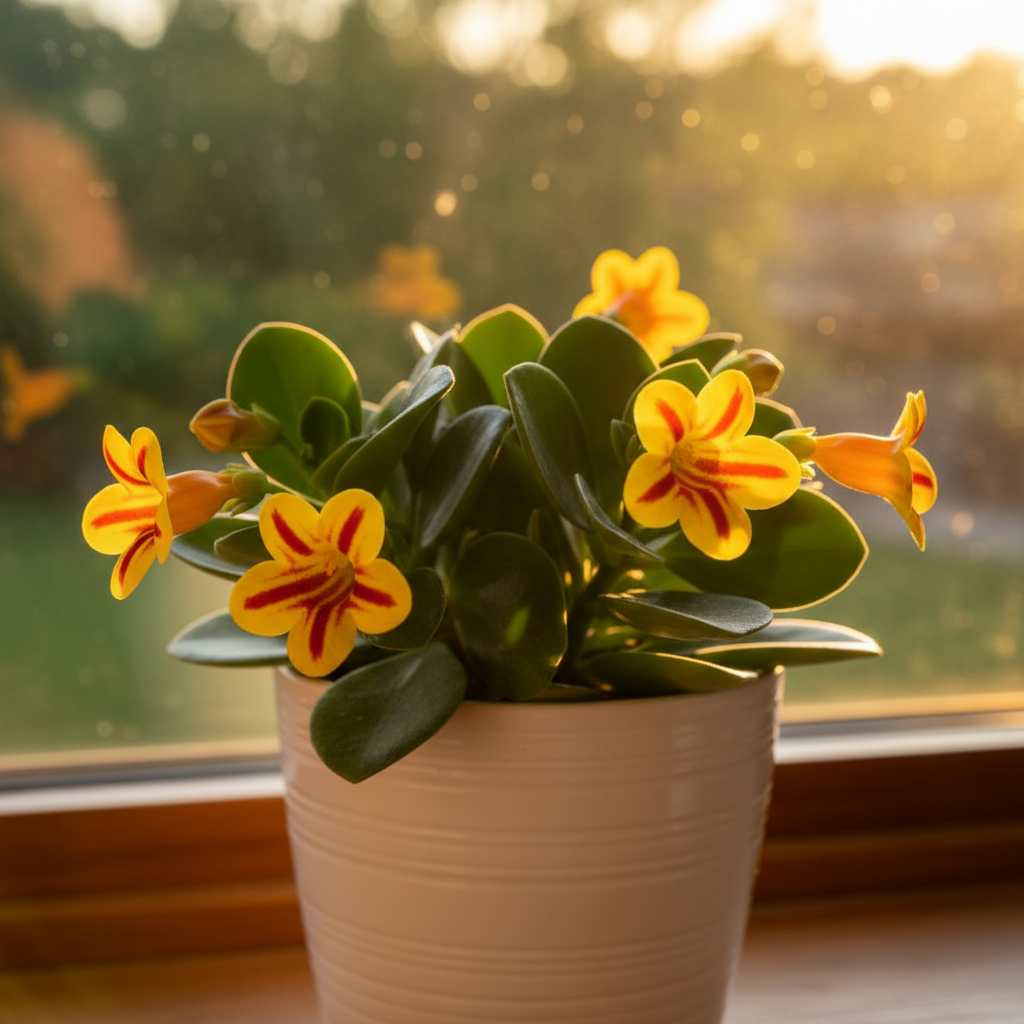
‘Tropicana’
The ‘Tropicana’ selection is the most decorative cultivar in cultivation. The glossy dark-green foliage matches the species, but the flowers swap out solid orange for a candy-stripe of deep red over a golden-yellow ground, giving each pouchy bloom the look of a tiny lantern. Flowering is generous and the cultivar holds up well in average household humidity, making it a popular pick for those who want a more theatrical variant of the standard goldfish plant.
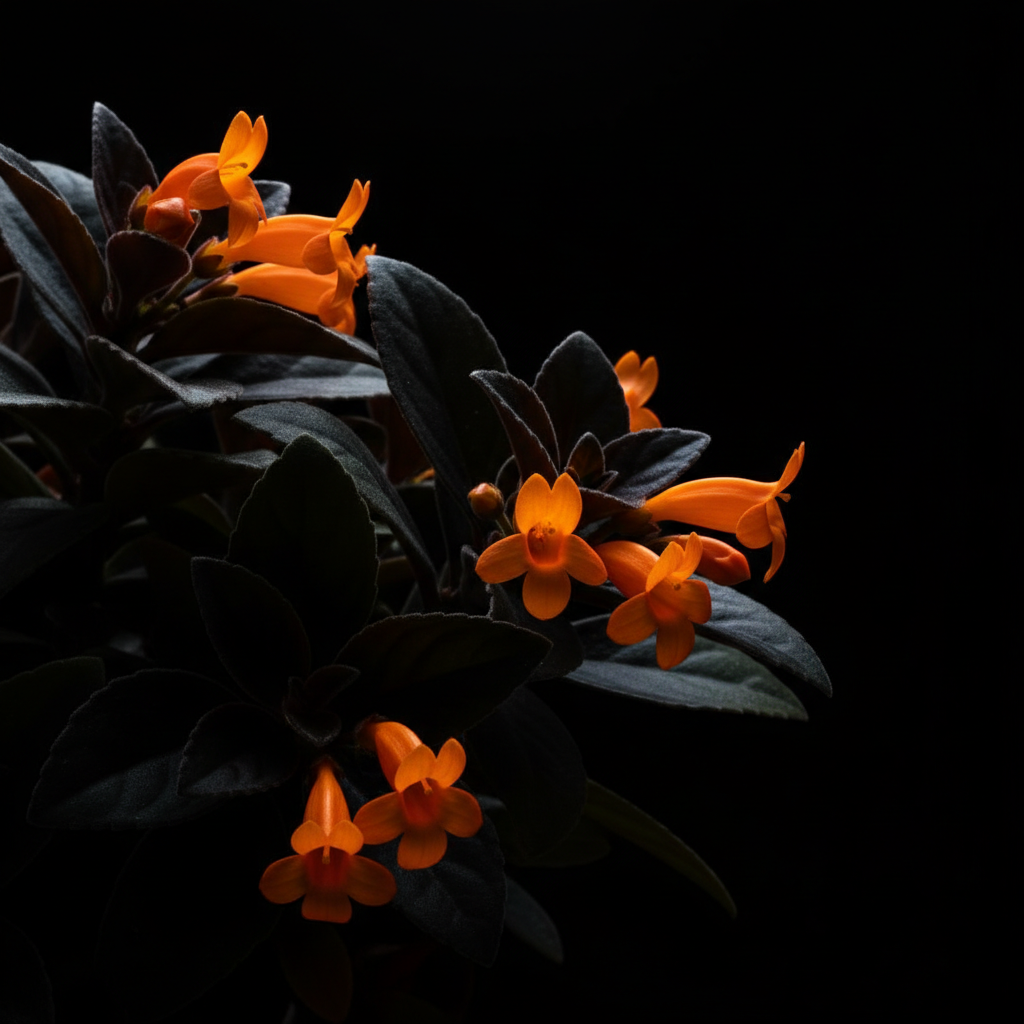
‘Black Gold’
The ‘Black Gold’ cultivar is the moodier counterpart. Its leaves emerge a deep green and mature to such a dark, almost-black sheen that the standard orange flowers appear to glow against them. Growth is slightly slower and the canopy more upright than the species, making it a good choice for a small shelf-top display where the plant is viewed from below and the leaf colour becomes part of the appeal even out of bloom.
Other cultivars to look out for include ‘Variegata’, with creamy yellow leaf margins on a green base; ‘Green Magic’, selected for an especially heavy and continuous flowering habit; and ‘Cheerio’, a compact form with smaller leaves better suited to a windowsill than a hanging basket. All require identical care to the species.
Frequently Asked Questions
Is the goldfish plant safe for cats and dogs?
Yes. The ASPCA lists Nematanthus gregarius as non-toxic to cats, dogs and horses, and the species has no recorded toxicity in humans either. As with any plant, ingestion of large quantities of foliage may cause mild stomach upset in pets, but no specific toxic compound is present.
Why is my goldfish plant not flowering?
The two dominant causes are insufficient light and overgenerous repotting. A goldfish plant in a moderate spot away from a window will produce healthy foliage but few or no flowers; move it closer to a bright window or add a grow light. A plant recently moved into a much larger pot will also pause flowering for a season or more while the roots fill the new soil. Beyond that, check that feeding is consistent at quarter strength every 2 weeks during the growing season.
Why are my goldfish plant’s leaves falling off?
Sudden leaf drop is almost always a response to environmental stress: a sharp drop in temperature, a cold draft, a sudden move into much lower light, or a soil that went from saturated to bone dry. The plant should stabilise within 2 to 3 weeks once conditions are restored. Persistent leaf drop, especially of older leaves yellowing first, points to overwatering and possible root damage.
How often should I repot a goldfish plant?
Every 2 to 3 years is typical, in spring as growth resumes. Step up by only one pot size each time. A goldfish plant that is slightly root-bound flowers more freely than one in a generously oversized pot, so resist the temptation to bump it up too aggressively.
Can a goldfish plant live outdoors?
In USDA zones 10 and 11 it can be grown outdoors year-round in a sheltered shaded position. Elsewhere, the plant is suited to summering outdoors in a shaded, sheltered spot once nights are reliably above 13 degrees Celsius (55 degrees Fahrenheit), but it must come back inside before autumn cools. Outdoor summers often produce particularly heavy flowering provided the plant is protected from direct midday sun and strong winds.
How long does a goldfish plant live?
With good care, a goldfish plant can live for many years and remain attractive for a decade or more. As individual stems age they become woody and produce fewer flowers, so plants are typically rejuvenated every 3 to 5 years by hard pruning, with the offcuts rooted to either replace or supplement the parent.
Do I need to deadhead the flowers?
Not strictly. Spent flowers drop cleanly from the plant on their own. Some growers gently pick off browning blooms to keep the canopy looking tidy and to prevent any fallen blooms from sitting on lower leaves and trapping moisture, but the plant does not need deadheading to continue flowering.






