
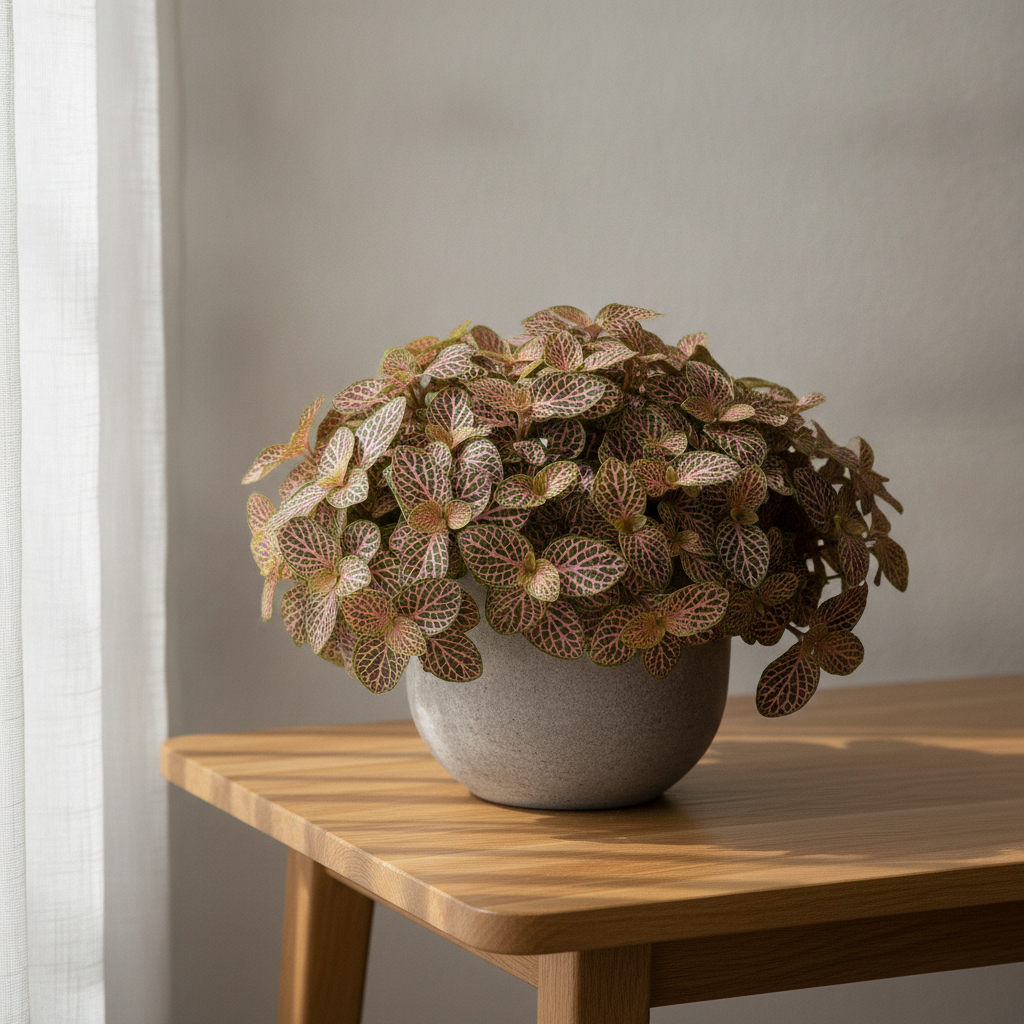
Few houseplants wear their personality quite as openly as the Pink Angel Fittonia (Fittonia albivenis), a low, spreading member of the acanthus family whose small olive leaves are stitched through with a dense filigree of rose-pink veins. Sold under a tangle of names, including nerve plant, mosaic plant and painted net leaf, it is native to the warm, shaded understorey of the Peruvian rainforest, where it creeps across the forest floor in the perpetually damp, dappled light beneath taller canopy plants. That origin story explains almost everything about how it behaves on a windowsill: it wants warmth, moisture in the air, steady water at the roots and light that never turns harsh.
The Pink Angel has a reputation as a drama queen, and it earns it honestly. Let the soil dry out even slightly and the whole plant collapses in a theatrical faint, every leaf drooping as if it has given up entirely, only to spring back within an hour or two of watering. This habit makes it look far more difficult than it is, and the truth is that keeping a nerve plant alive is straightforward once you understand its handful of non-negotiable needs. Getting it to thrive, spreading into a full pink cushion that spills over the pot rim, takes a little more attention to humidity and feeding. This guide covers both, from the quick daily rhythm that keeps it upright to the longer game of growing a genuinely lush, showpiece plant.
Contents
- Quick Reference
- Why Pink Angel Fittonia Makes a Rewarding Houseplant
- Light Requirements
- Watering & Humidity
- Soil, Potting & Repotting
- Fertilising
- Propagation
- Pests & Diseases
- Popular Varieties
- Frequently Asked Questions
Quick Reference: Pink Angel Fittonia at a Glance
| Light | Bright, indirect light. No direct sun, which scorches the thin leaves and fades the pink veins. |
| Watering | Keep the compost lightly and evenly moist at all times, never soggy and never bone dry. Usually every 3 to 5 days. |
| Temperature | 18 to 27 degrees Celsius (64 to 81 Fahrenheit). Avoid anything below 15 degrees Celsius (59 Fahrenheit) and cold draughts. |
| Humidity | High. Aim for 50 to 60 per cent or more. Thrives in terrariums and bathrooms. |
| Fertiliser | Balanced liquid feed at half strength every 4 to 6 weeks in spring and summer. |
| Toxicity | Non-toxic to cats, dogs and humans. One of the safest choices for pet households. |
Why Pink Angel Fittonia Makes a Rewarding Houseplant
The immediate appeal of the Pink Angel is the foliage. Each leaf is a small oval, rarely more than a few centimetres long, and the surface is netted with veins in a saturated rose-pink that stands out sharply against the deep green blade. Massed together on a well-grown plant, the effect is of a low pink-and-green cushion, and because the plant spreads sideways rather than climbing, it fills a shallow pot beautifully and drapes gently over the edge. It stays compact, seldom exceeding 15 centimetres (6 inches) in height, which makes it one of the few genuinely colourful plants that suits a crowded shelf, a desk corner or a terrarium where taller plants would never fit.
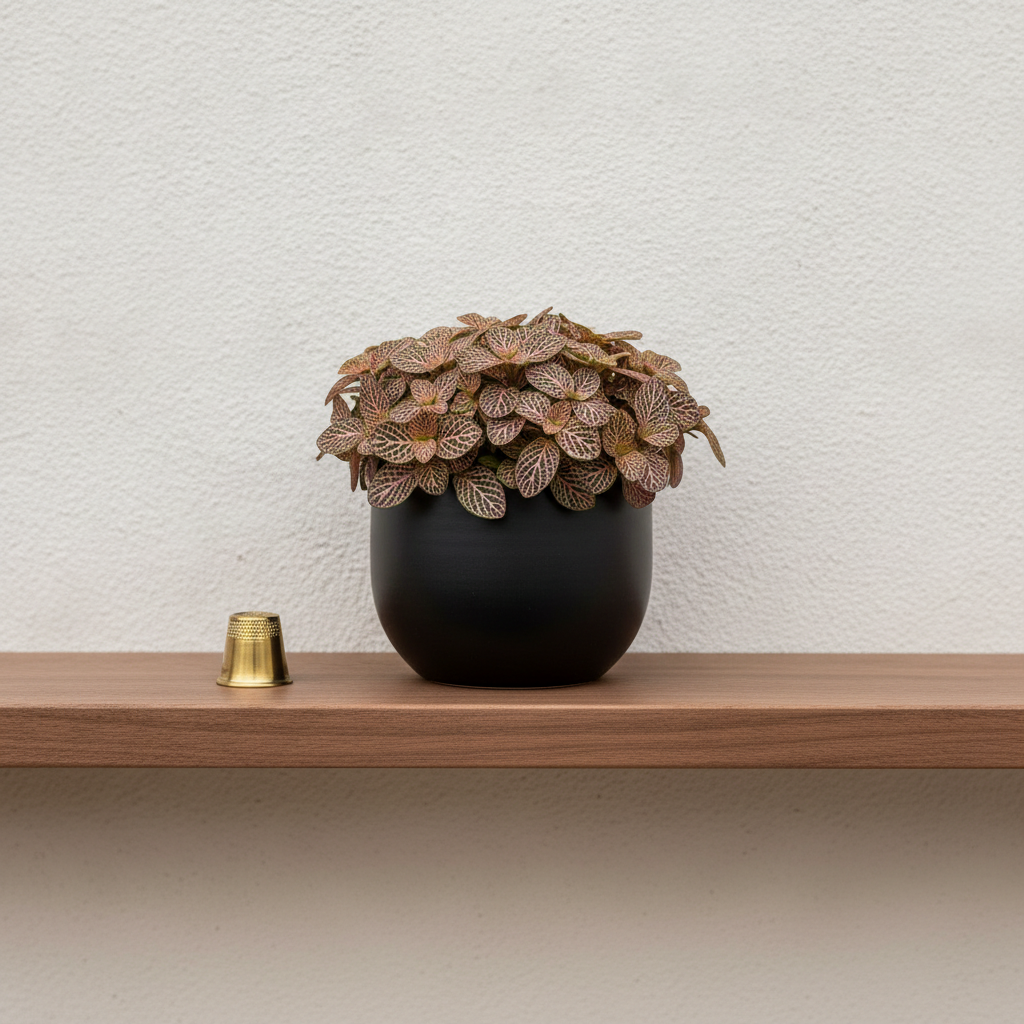
Beyond the looks, there are two practical reasons the nerve plant has stayed popular for generations. The first is that it is genuinely small, so it fits the reality of most homes far better than the giant aroids that dominate plant photography. The second, and arguably more important, is that it is completely non-toxic. Fittonia is one of the very few brightly coloured foliage plants that you can grow with cats, dogs and curious toddlers in the house without a second thought, which is why it turns up so often in nurseries and terrarium kits marketed to families. It is also a plant that rewards attentiveness in a way that suits people who enjoy the daily ritual of tending. If you like checking on your plants, the Fittonia will always give you something to respond to.
Pro Tip — Pet Safe: Fittonia albivenis is listed as non-toxic to cats and dogs by the ASPCA. If you have been avoiding colourful foliage because of pets, this is one of the safest options you can bring home.
Light Requirements
In the wild the Pink Angel lives on the shaded forest floor, receiving only the soft, filtered light that survives its way down through several layers of canopy. Translated to the home, that means bright but strictly indirect light. An east-facing windowsill that catches gentle morning sun, or a spot a metre or so back from a brighter south or west window, suits it perfectly. What it will not tolerate is direct midday sunlight falling on the leaves. The blades are thin and have very little protection, so an hour of hard sun can bleach the pink veining to a washed-out cream and leave crisp brown scorch marks that never recover.
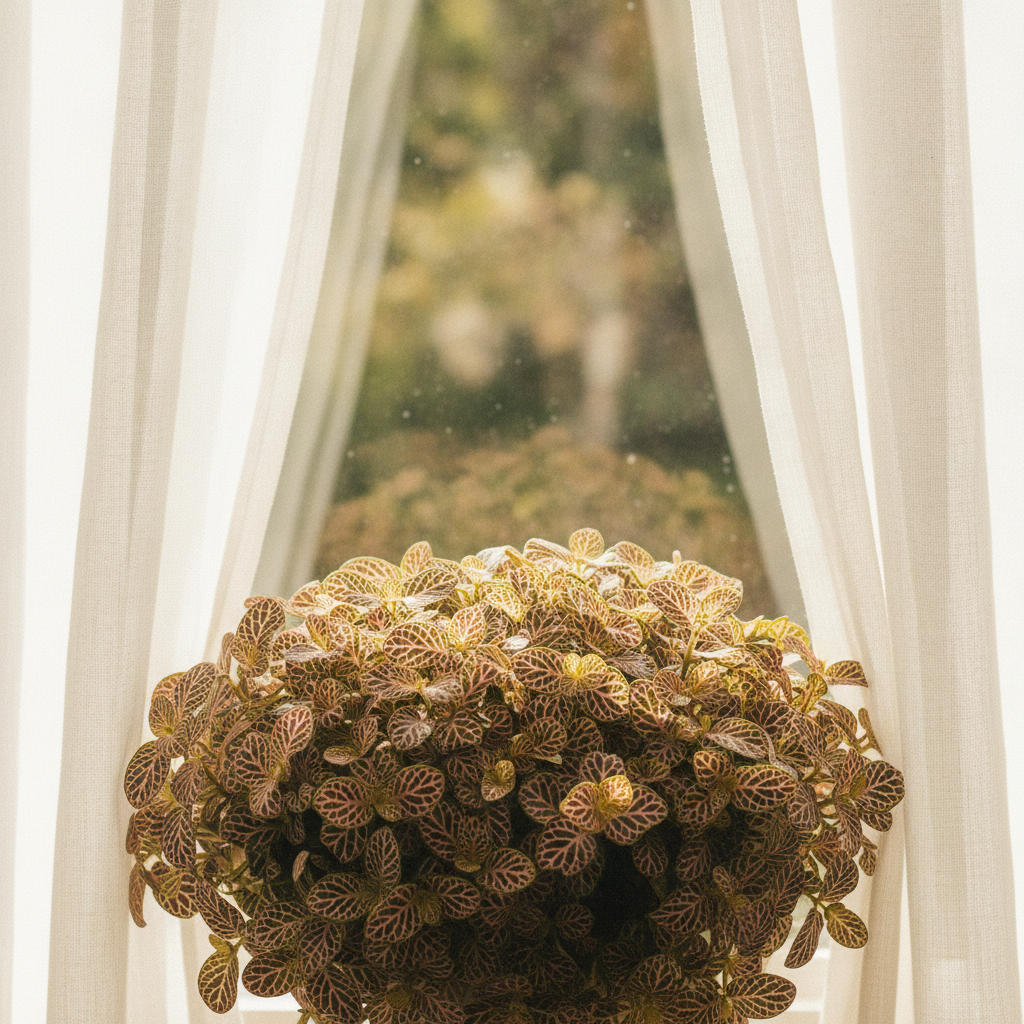
The other end of the scale matters too. Fittonia will survive in surprisingly low light, but survival and good colour are not the same thing. In a dim corner the plant stretches, the gaps between leaves widen, growth becomes leggy and sparse, and the vein colour dulls. If your plant is looking pale and drawn out, the fix is almost always more light rather than more water. A position that stays bright all day but never receives a direct beam is the sweet spot, and a thin curtain over a strong window is an easy way to create exactly that. Fittonia also responds well to full-spectrum LED grow lights, which makes it a reliable candidate for a windowless desk or a closed terrarium lit from above, where you can dial the intensity to keep the pink vivid without any risk of burning.
Pro Tip — Reading the Colour: The veins are your light meter. Vivid, high-contrast pink means the light level is right. Pale, faded veining with wide leaf spacing means the plant wants brighter, though still indirect, light.
Watering & Humidity
Watering is where the Pink Angel makes its demands most loudly, and it is the single most important thing to get right. Unlike the succulents and drought-tolerant aroids that forgive a forgotten week, Fittonia wants its compost kept lightly and evenly moist at all times. It has shallow, fine roots that dry out quickly, and the moment the top of the pot goes dry the plant stages its famous collapse, every leaf wilting flat in a dramatic faint. The good news is that this faint is a warning rather than a death sentence: water the plant promptly and it usually recovers its posture within an hour or two, looking as though nothing happened. Rely on that recovery too often, though, and the repeated stress takes a cumulative toll, browning leaf edges and weakening the plant over time.
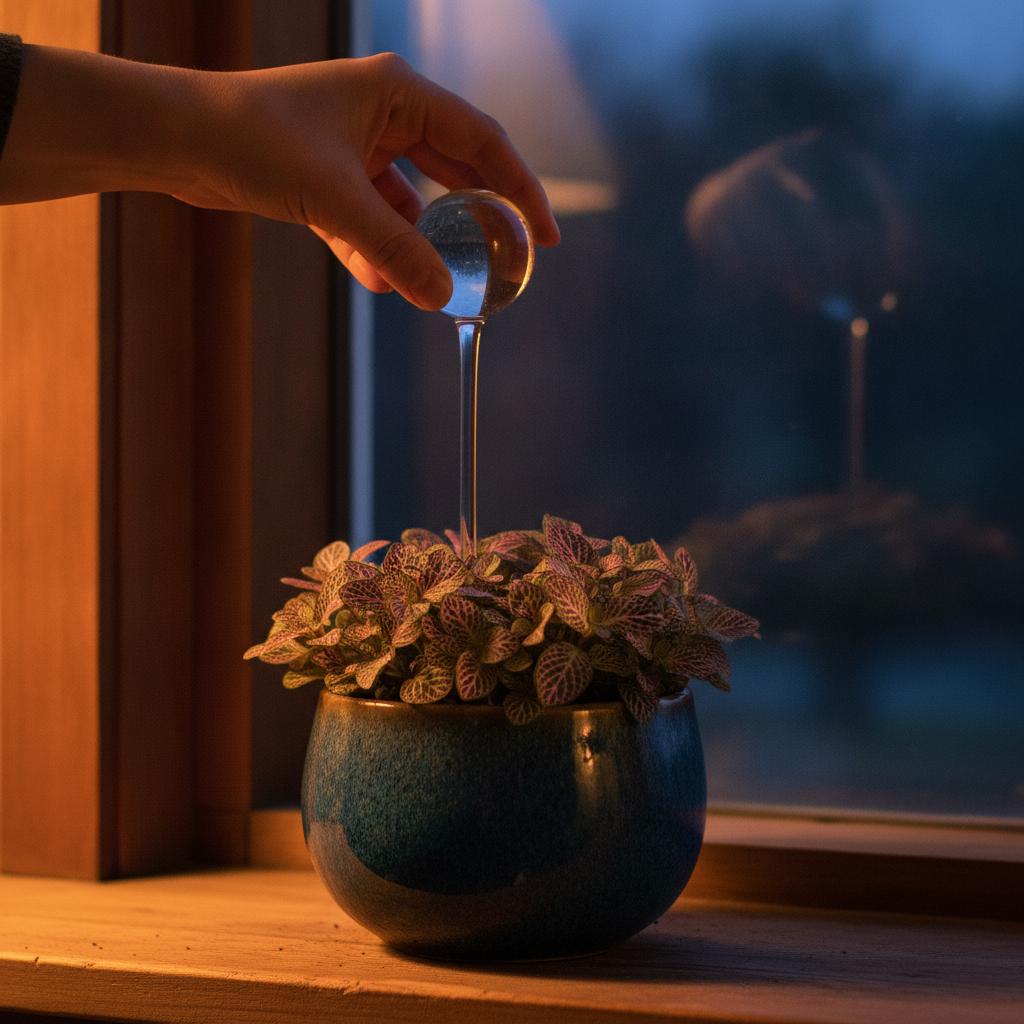
The aim is consistency, not saturation. Check the plant every couple of days by touching the surface of the compost, and water thoroughly as soon as the very top feels like it is starting to dry, letting the excess drain away freely. In a warm room in summer this often means watering every three to four days; in cooler winter conditions the interval stretches out, and you should always follow the pot rather than the calendar. What you are trying to avoid is the plant sitting in a waterlogged pot, because the same fine roots that dry out fast will also rot fast if they are left standing in water. Lukewarm water is gentler than cold straight from the tap, and if your tap water is very hard, the nerve plant appreciates filtered or rainwater, which keeps mineral crust off the soil surface.
Humidity is the partner to watering and the factor that separates a merely surviving nerve plant from a thriving one. Coming from a rainforest floor, the Pink Angel wants moisture in the air as much as in the soil, ideally 50 to 60 per cent or higher. In the dry air of a centrally heated room it often shows its displeasure with brown, crisping leaf tips. There are several ways to raise the local humidity: grouping it with other plants, standing the pot on a tray of damp pebbles, or running a small humidifier nearby. By far the most reliable, though, is to grow it somewhere naturally humid. Fittonia is a classic terrarium plant precisely because a closed glass container holds the warm, saturated air it loves, and a bright bathroom shelf achieves much the same thing. Misting gives a brief lift but evaporates quickly, so treat it as a supplement rather than a solution.
Warning — The Faint: A wilted Fittonia that revives after watering is telling you it was allowed to dry too far. Occasional faints are survivable, but making a habit of it browns the leaf edges and slowly exhausts the plant. Aim to water before the collapse, not after.
Soil, Potting & Repotting
The ideal compost for a Pink Angel manages an apparent contradiction: it needs to hold moisture reliably, because the plant hates drying out, yet it must also drain freely enough that the roots never sit in stagnant water. A good starting point is a quality peat-free houseplant compost lightened with a generous handful of perlite for aeration and, if you have it, a little fine orchid bark or coco coir to keep the structure open. That combination stays evenly damp without turning into the dense, airless mud that rots fine roots. Avoid heavy garden soil and anything that compacts down hard, as compacted compost both starves the roots of oxygen and dries into a water-repellent block that is very hard to re-wet.
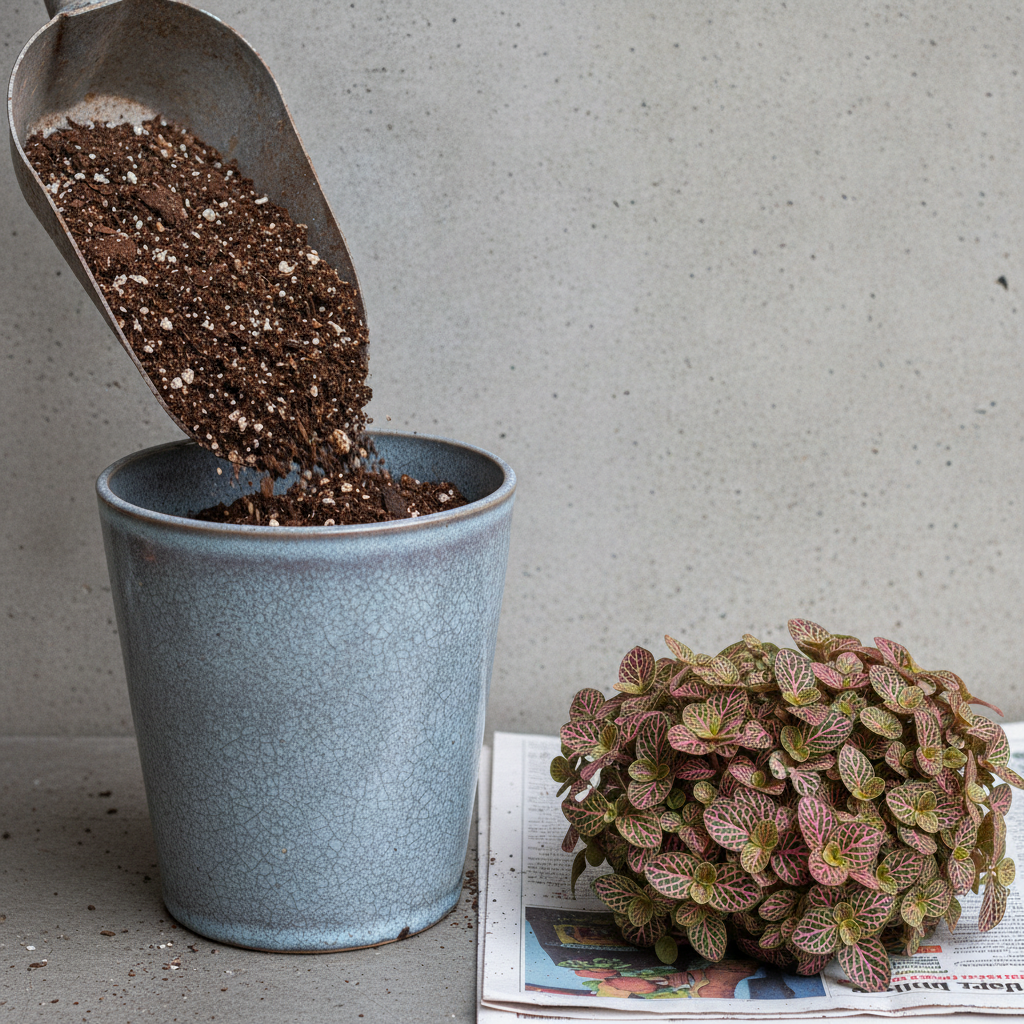
Because Fittonia has a shallow, spreading root system and stays small above ground, it does not need a deep pot and actually prefers to be a little snug. A wide, shallow pot suits its habit far better than a tall one, and it gives the roots the horizontal room they naturally want. Whatever container you choose, it must have drainage holes. The nerve plant’s need for constant moisture makes it especially vulnerable to root rot in a pot that cannot shed excess water, so decorative pots without holes should only ever be used as a cache pot with the plant in a plastic liner that can be lifted out to drain.
Repotting is an occasional job rather than a regular one. A Pink Angel generally needs moving on every one to two years, or when you see roots creeping out of the drainage holes and the compost drying out noticeably faster than it used to. Spring is the best time, when the plant is moving back into active growth and will recover quickly. Choose a pot only one size larger, because an oversized pot holds a reservoir of wet compost around the small root ball and invites rot. Repotting is also the natural moment to refresh tired soil and, if the plant has grown lopsided or leggy, to trim it back and encourage denser, bushier regrowth.
Pro Tip — Stay Snug: Resist the urge to give your nerve plant a big pot. Its shallow roots prefer a shallow, slightly cramped container, and too much surrounding compost stays wet and cold, which is a fast route to root rot.
Fertilising
Fittonia is not a heavy feeder, but because it is grown for a constant flush of colourful foliage, a modest, regular supply of nutrients keeps that colour strong and the plant filling out. Through the active growing season of spring and summer, feed with a balanced liquid houseplant fertiliser diluted to half the strength recommended on the label, roughly every four to six weeks. Diluting is the key point: the fine roots are easily burned by concentrated feed, and a build-up of salts in the compost shows up quickly as brown, scorched leaf edges that look much like the damage from letting the plant dry out.
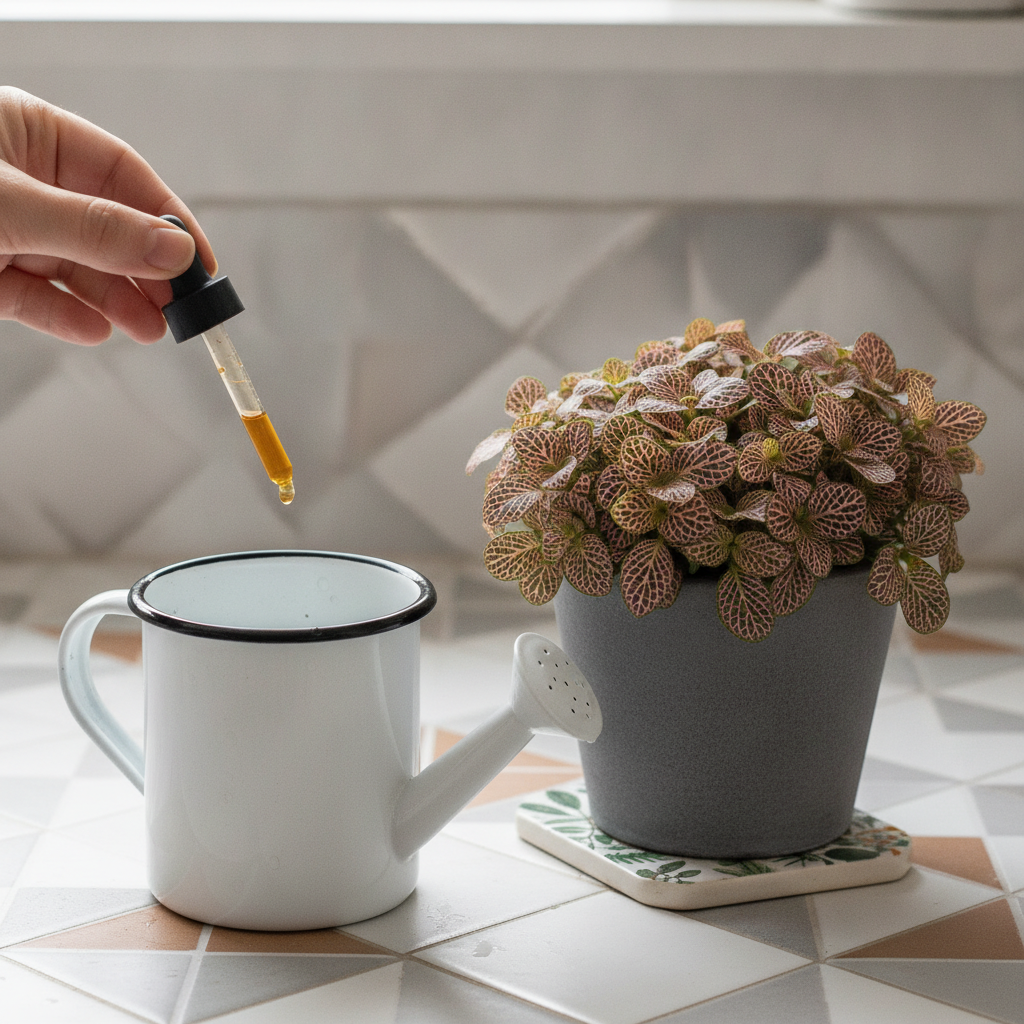
Always apply feed to compost that is already damp rather than to a dry root ball, which further reduces the risk of burning the roots. In autumn and winter, when light levels drop and growth naturally slows almost to a standstill, stop feeding altogether. A dormant plant cannot use the nutrients, and continuing to feed simply leaves unused salts to accumulate in the soil. If you ever suspect a salt build-up, whether from over-feeding or hard water, flush the pot by running plenty of plain water through it and letting it drain completely, which washes the excess away. For most growers, the simple rhythm of a weak feed every month or so from spring to late summer, and nothing over winter, is all a Pink Angel ever asks for.
Propagation
One of the quiet pleasures of the Pink Angel is how eagerly it propagates. It roots from stem cuttings with very little effort, which means a single plant can quickly become several, and it also gives you a productive use for the trimmings you take when tidying a leggy specimen. The method is simple. Using clean scissors, cut a healthy stem tip a few centimetres long, making the cut just below a node, the small point where leaves join the stem, and remove the lowest pair of leaves so that a bare node is exposed. That node is where new roots will emerge.
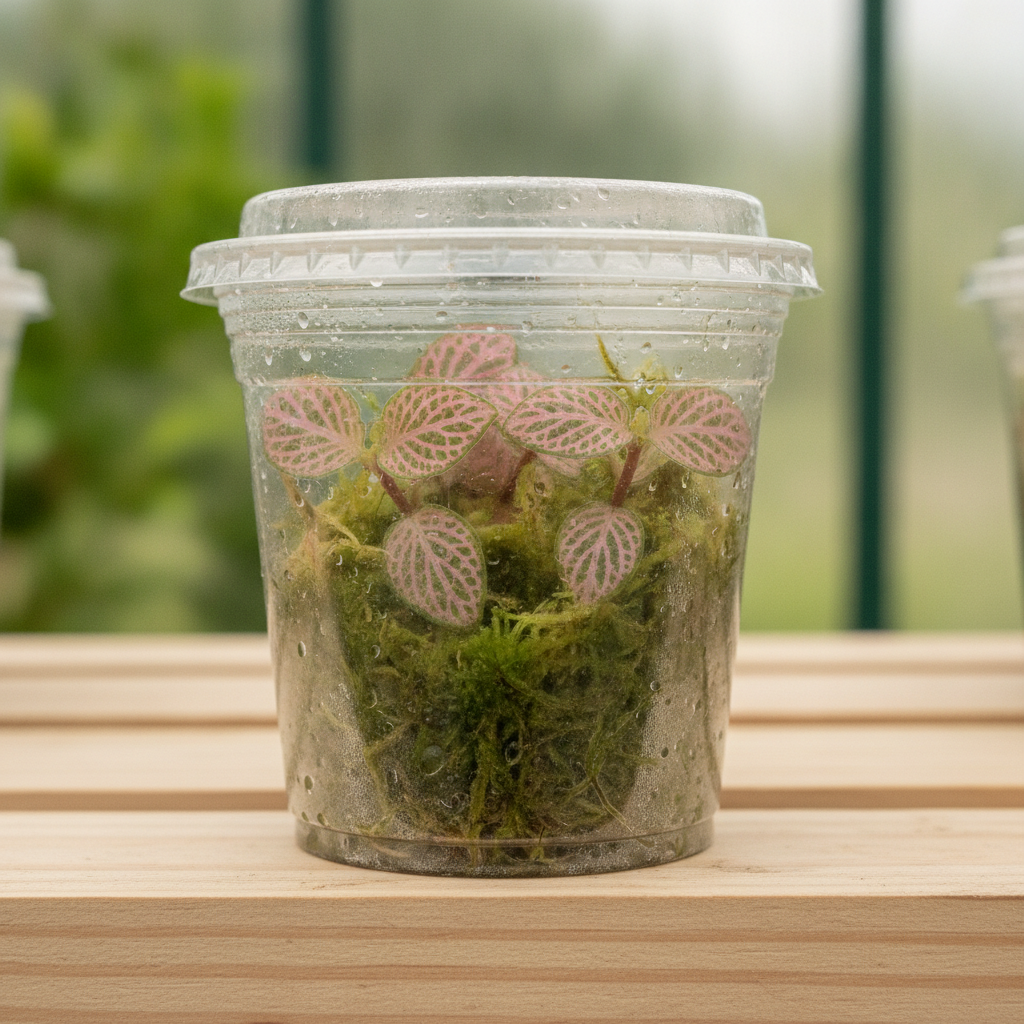
From there you have two reliable routes. The first is to nestle the cuttings into damp sphagnum moss inside a clear container with the lid slightly ajar, which holds the high humidity the cuttings need while they establish. The second is to stand them in a small glass of water on a bright windowsill and wait for the fine white roots to appear at the node. Whichever you choose, warmth and humidity are what speed things along, so a covered container or a spot in a bright, warm room makes a real difference. Here is the simple sequence to follow:
- Cut a healthy stem tip 5 to 8 centimetres (2 to 3 inches) long, making the cut just below a node with clean scissors.
- Strip the lowest pair of leaves to expose a bare node, keeping several leaves at the top.
- Place the cutting in damp sphagnum moss or a glass of clean water, keeping the bare node covered and the leaves above the surface.
- Set it somewhere warm and bright with indirect light, and keep the humidity high with a loose cover if using moss.
- Watch for roots within two to three weeks, and once they reach a few centimetres long, pot the cutting into a small pot of the usual moist, open compost.
A useful trick for building a full pot fast is to root several cuttings together and plant them as a cluster, which gives you a dense, bushy plant far sooner than waiting for a single stem to spread. Cuttings taken in spring and summer root fastest, taking advantage of the plant’s natural growth surge, though with enough warmth and light you can succeed at almost any time of year.
Pro Tip — Fill the Pot: Don’t discard the stems you prune to keep the plant tidy. Root a handful together and pot them as one cluster, and you’ll have a lush, full nerve plant in a fraction of the time a single cutting would take.
Pests & Diseases
The most common problems with a Pink Angel are not pests at all but the visible symptoms of care that has drifted slightly off course, and learning to read them saves a great deal of worry. Wilting is the plant’s all-purpose distress signal, usually meaning the compost has dried too far, though confusingly it can also appear when the roots are waterlogged and failing, so always check whether the soil is dry or sodden before reaching for the watering can. Brown, crispy leaf edges point to air that is too dry, water that is too hard, or a build-up of fertiliser salts. Yellowing leaves most often signal overwatering and the start of root trouble, while faded, washed-out veining and stretched, leggy growth are the classic signs of too little light.
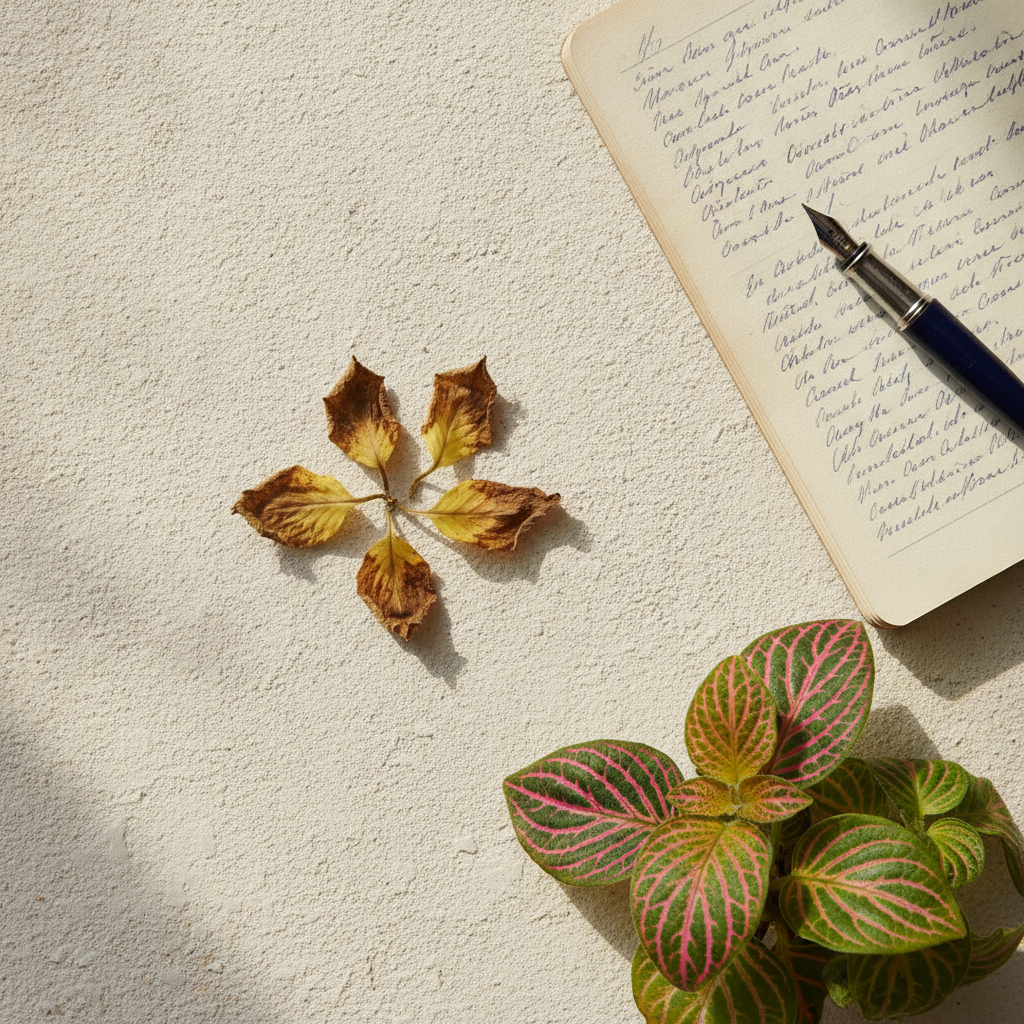
When it comes to actual pests, the humid conditions a Fittonia enjoys tend to deter the spider mites that plague drier-loving plants, but a few opportunists still turn up. Fungus gnats are the most frequent, their tiny black adults hovering around the perpetually moist compost that the plant demands; the larvae live in the top layer of soil, and letting that surface dry very slightly between waterings, along with yellow sticky traps, usually brings them under control. Mealybugs, recognisable as small white cottony tufts tucked into leaf joints, and aphids clustering on soft new growth are the other two to watch for. Both can be dealt with by wiping the plant over with a cloth dipped in diluted insecticidal soap, or dabbing individual mealybugs with a cotton bud moistened with a little isopropyl alcohol.
Disease in a nerve plant almost always traces back to water sitting where it should not. Root rot, caused by compost that stays waterlogged, is the serious one, and it announces itself with soft, blackening stems and a general collapse that watering does not fix. If you catch it early you can sometimes save the plant by unpotting it, cutting away the rotten roots and repotting into fresh, open compost, but prevention through good drainage and sensible watering is far more reliable. Powdery grey or brown patches on the leaves usually indicate a fungal problem encouraged by cool, stagnant, overly wet conditions, and improving air circulation while easing off the water generally clears it. The recurring lesson is that a Fittonia wants moisture that is constant but never stagnant.
Warning — Dry or Drowning: Because both a thirsty plant and a rotting one can wilt, never assume a drooping Fittonia simply needs water. Feel the compost first. If it is already wet, the problem is the roots, and more water will only make it worse.
Popular Varieties
Although it is sold as a single species, Fittonia albivenis has been bred into a wide spread of cultivars that differ mainly in the colour and pattern of their veining, ranging from the deep rose of the Pink Angel through fiery reds to cool silvers and whites. They are traditionally grouped into two camps, the Verschaffeltii group with pink and red veins and the Argyroneura group with white and silver ones, but for the shopper the practical difference is simply the shade you find most striking. Two of the most widely available relatives of the Pink Angel are worth singling out.
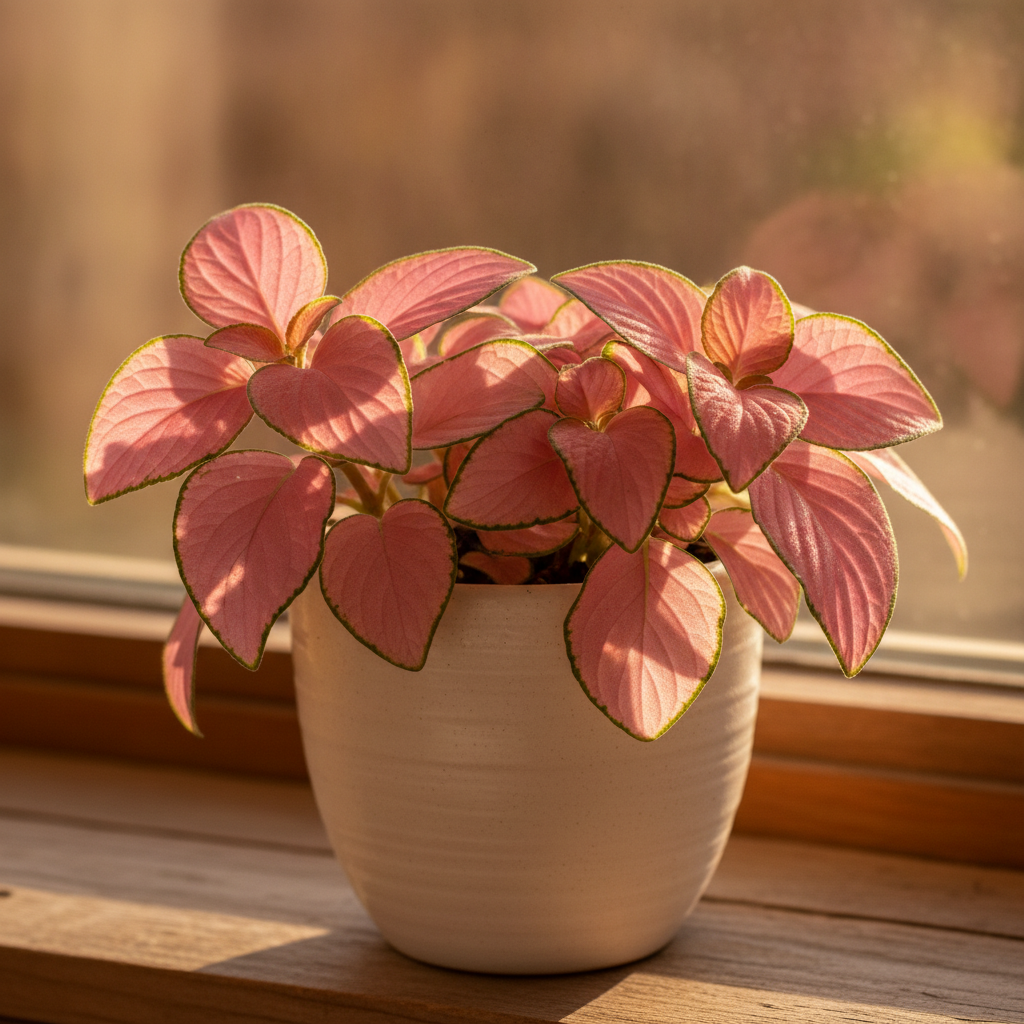
Frankie
Frankie takes the pink much further than the standard nerve plant. Rather than confining the colour to fine veins, its broad, soft leaves are washed almost entirely in candy pink, leaving only a thin dark green margin around the edge. The result is one of the boldest, most saturated Fittonia on the market, a plant that reads as pink from across a room. Its care is identical to the Pink Angel, though because so much of the leaf is pale, it benefits from slightly brighter indirect light to keep the colour from washing out completely.
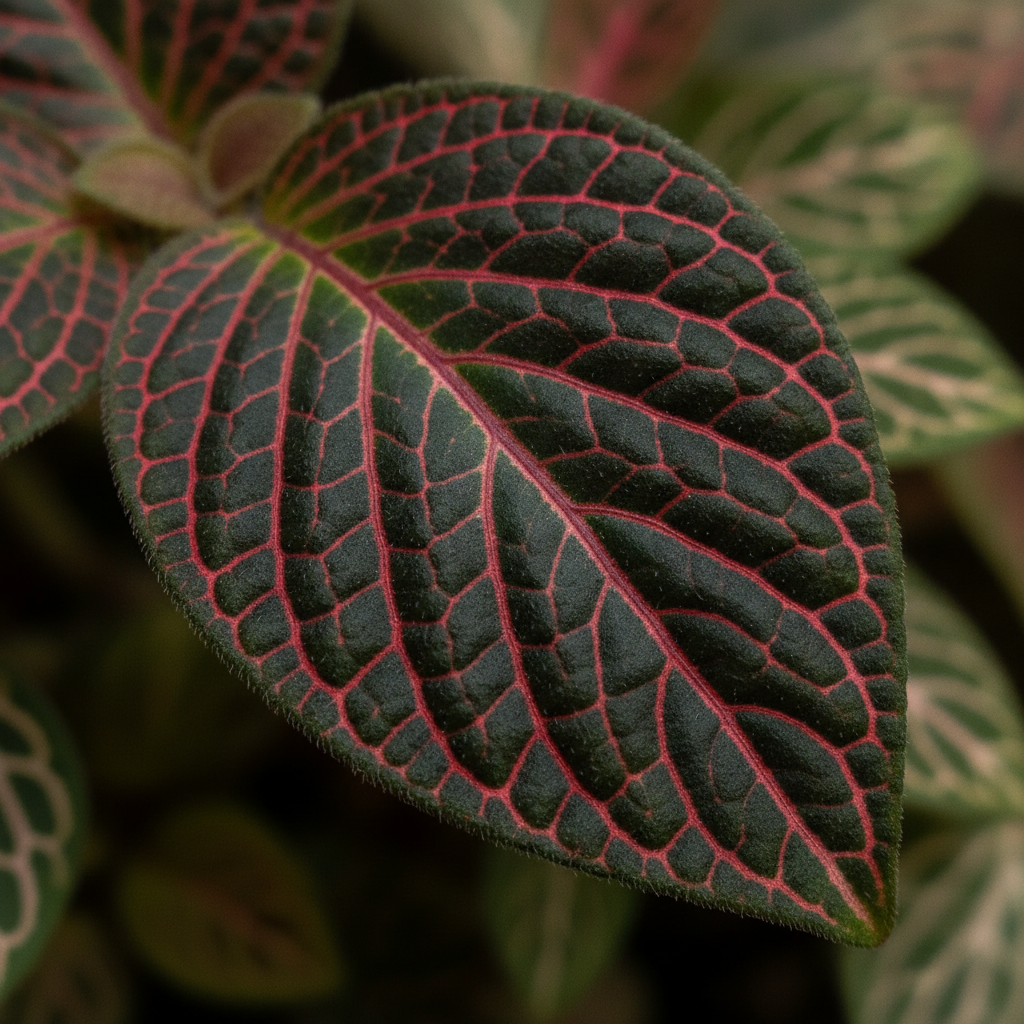
Red Anne
Red Anne swaps the soft pink of the Pink Angel for a vivid crimson-red, its deep green leaves netted with a bold, high-contrast pattern that looks almost drawn on. It is a more dramatic, jewel-like plant than the gentler pink forms, and it pairs beautifully with them in a mixed terrarium or grouped planting where the different vein colours play off one another. Like all Fittonia its needs are the same steady warmth, moisture and humidity, and the intensity of the red, like the pink of its cousins, holds best in bright, filtered light.
Frequently Asked Questions
Why does my Pink Angel Fittonia keep wilting and then recovering?
This dramatic fainting is the nerve plant’s signature behaviour and it means the compost has dried out too far. The shallow roots lose water quickly, the plant collapses to conserve moisture, and it springs back within an hour or two once you water it. Occasional faints are survivable, but making a habit of them browns the leaf edges and weakens the plant over time, so the goal is to water consistently before it reaches the point of collapse.
Is the Pink Angel Fittonia safe for cats and dogs?
Yes. Fittonia albivenis is non-toxic to cats, dogs and humans, and is one of the safest colourful foliage plants you can keep in a pet or family household. That said, it is always best to discourage any pet from chewing houseplants, as even a harmless plant can cause a mild stomach upset if a large amount is eaten.
Why are the leaf tips turning brown and crispy?
Crispy brown edges almost always mean the air is too dry for a plant that evolved in rainforest humidity. Raise the local humidity by grouping plants together, using a pebble tray or a humidifier, or moving the plant to a naturally humid spot such as a bathroom or a terrarium. Hard tap water and a build-up of fertiliser salts can cause the same browning, so switching to filtered or rainwater and feeding at half strength both help.
Can I grow a nerve plant in a terrarium?
Fittonia is one of the best terrarium plants there is. A closed glass container holds the warm, humid, stable air it craves and keeps the compost evenly moist, solving in one step the two things that most often trouble it in open rooms. Give the terrarium bright, indirect light or an LED grow light, keep it out of direct sun, and trim the plant occasionally to stop it swamping its neighbours.
Does the Pink Angel Fittonia flower?
It can, producing small spikes of insignificant reddish or white flowers, but the blooms are tiny and unremarkable and the plant is grown entirely for its foliage. Many growers pinch the flower spikes off as they appear, because removing them channels the plant’s energy back into producing the dense, colourful leaves that are the whole point of a nerve plant.
How do I make my Fittonia bushier?
Regular pinching is the answer. Nipping out the growing tips encourages the stems to branch, so the plant fills out sideways instead of trailing thin and leggy. Do this through the growing season and root the trimmings, and you can either plant them back into the same pot to thicken it up or start new plants. Good light also keeps growth compact, since a Fittonia in dim conditions stretches and spaces out its leaves.
The Pink Angel Fittonia asks for a little more daily attention than a snake plant or a pothos, but it repays that attention with a colour and character that few houseplants can match. Keep it warm, keep it humid, keep the compost evenly moist and the light bright but indirect, and you will have a compact, pet-safe cushion of rose-veined foliage that thrives on exactly the kind of care that plant lovers most enjoy giving.






