
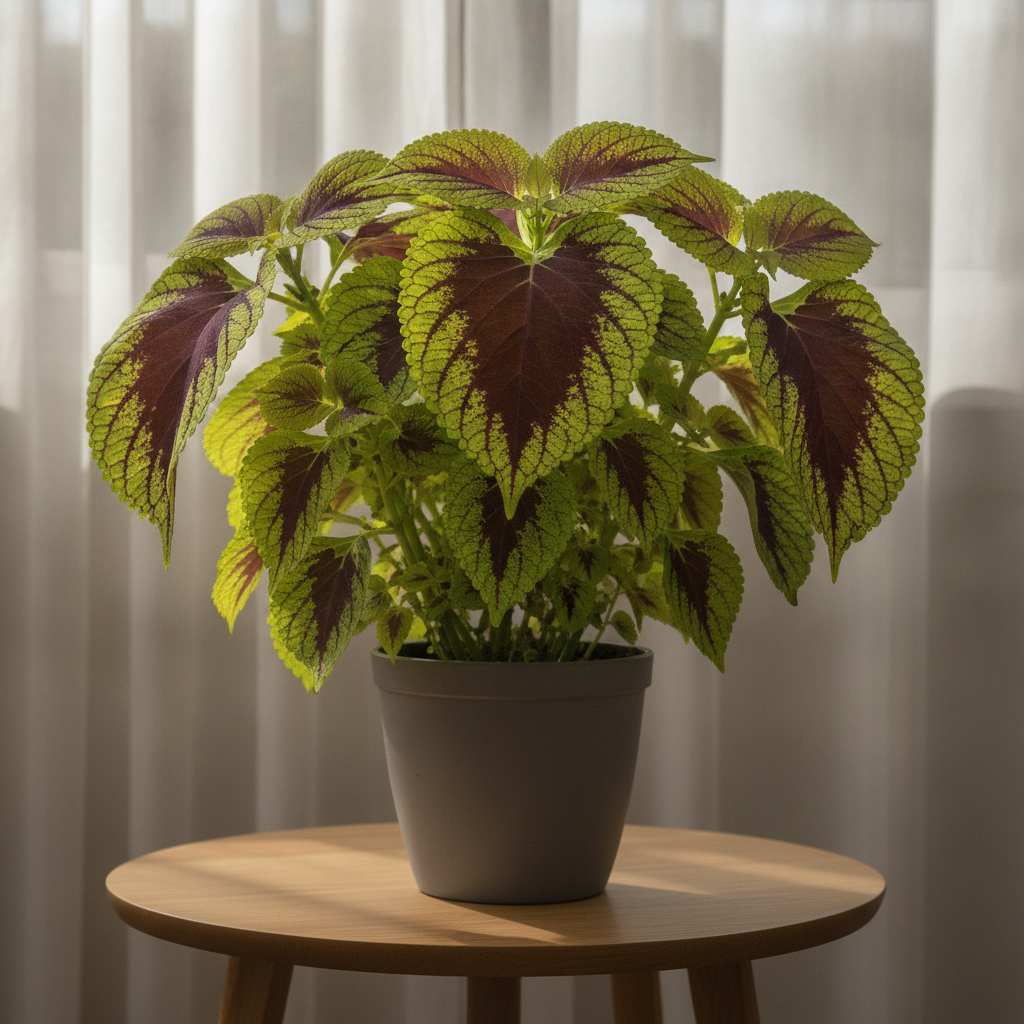
Few foliage plants command a room the way a well grown Kong coleus does. A member of the mint family, Coleus scutellarioides is an old garden favourite that has been bred and reselected for well over a century, but the Kong series, developed by Ball Horticultural, pushes the plant to an extreme: single leaves can reach 15cm (6in) across, twice the size of an ordinary coleus, splashed with rose, scarlet, chartreuse and burgundy in patterns no two plants share exactly. Sometimes still sold under its older names Plectranthus scutellarioides or Solenostemon scutellarioides, the species is native to the warm, humid understorey of Southeast Asia, from India across the Malay Archipelago to northern Australia, and that origin explains almost everything about how it likes to be treated indoors.
Coleus has a reputation as a bedding annual, but the Kong types make outstanding houseplants precisely because they were selected for shade rather than sun. Where most coleus fade or scorch in a bright window, Kong holds its colour in gentler light, which is exactly what an indoor grower can offer. This guide covers everything from the quick daily decisions to the finer points that separate a leggy, faded specimen from a lush, saturated one. The difference between merely keeping a Kong coleus alive and helping it thrive comes down to three things above all: steady moisture, warmth, and resisting the temptation to bake it in direct sun.
Contents
- Quick Reference
- Why Kong Coleus Makes a Dramatic Houseplant
- Light Requirements
- Watering & Humidity
- Soil, Potting & Repotting
- Fertilising
- Propagation
- Pests & Diseases
- Popular Varieties
- Frequently Asked Questions
Quick Reference: Kong Coleus at a Glance
| Light | Bright indirect light to partial shade; protect from harsh midday sun, which fades and scorches the large leaves |
| Watering | Keep evenly moist; water when the top 2cm (0.8in) of soil feels dry, never letting it dry out completely |
| Temperature | 18 to 24°C (64 to 75°F); keep above 10°C (50°F) at all times |
| Humidity | Moderate to high, ideally 50 per cent or above |
| Fertiliser | Balanced liquid feed at half strength every two to four weeks during spring and summer |
| Toxicity | Toxic to cats, dogs and horses if eaten; the sap can irritate human skin |
Why Kong Coleus Makes a Dramatic Houseplant
The appeal of a Kong coleus is immediate and visual. The leaves are enormous, softly quilted, and coloured in combinations that read almost as painted rather than grown, with saturated centres bleeding into contrasting margins along a serrated edge. Because the plant is grown entirely for its foliage, the display never depends on a fleeting bloom; a healthy Kong looks its best every day of the growing season and fills a pot far faster than most foliage houseplants, often doubling in size within a couple of months of being potted on.
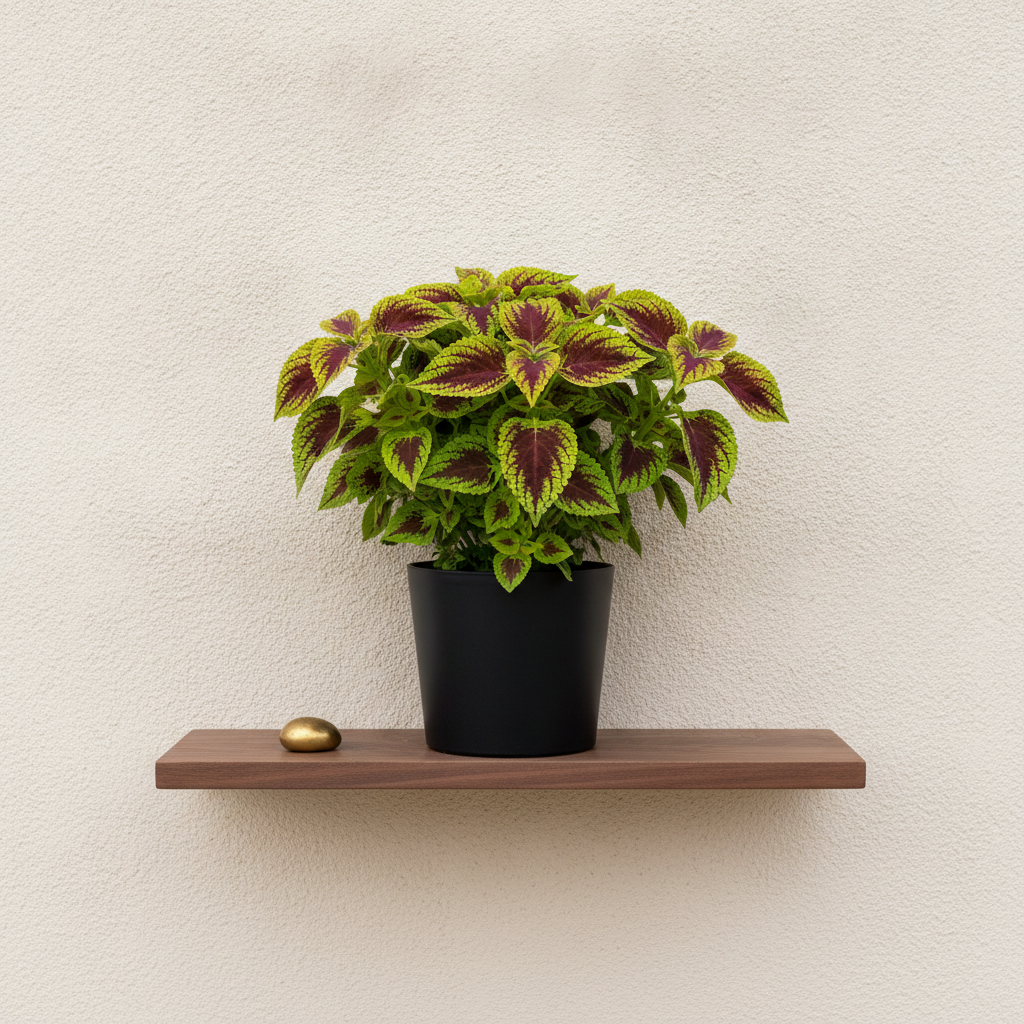
There is a second, quieter reason the Kong series suits indoor life so well. Unlike the sun coleus sold for summer borders, Kong was bred to keep its colouring in shade, which means it is genuinely comfortable in the moderate light of a living room rather than merely tolerating it. Add its speed, its willingness to root from the simplest cutting, and the sheer range of colour across the series, and it becomes one of the most rewarding foliage plants a beginner can grow. It is fast enough to feel responsive to good care, forgiving enough to bounce back from the occasional missed watering, and cheap enough to replace or multiply at will.
Important — Toxicity: Coleus contains essential oils, including diterpenes, that make it toxic to cats, dogs and horses; ingestion can cause vomiting, diarrhoea, drooling and loss of appetite. The sap may also cause skin irritation or a mild rash in sensitive people, so wear gloves when taking cuttings and keep the plant out of reach of pets and small children.
Light Requirements
Light is the single most misunderstood aspect of Kong coleus care, largely because gardeners carry over habits from the sun-tolerant bedding types. The Kong series is a shade coleus. It evolved from understorey plants and was specifically selected to hold its colour in lower light, so bright, indirect light is ideal and a spell of harsh direct sun is a genuine threat rather than a treat.
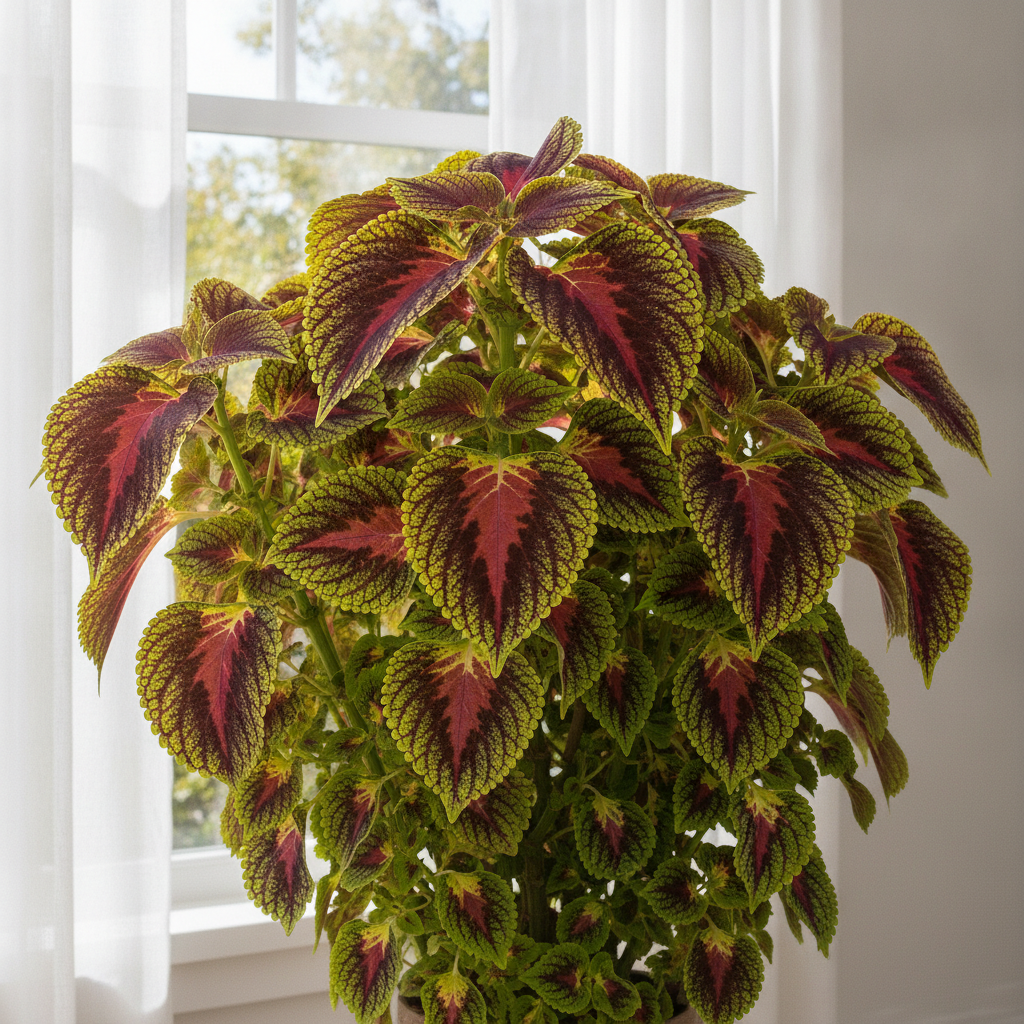
In the right light, a Kong coleus produces large, thick, densely coloured leaves on short internodes, giving a full, bushy shape. Too little light and the plant stretches, the stems lengthen between leaves, and the colours dull toward plain green as the plant tries to maximise chlorophyll. Too much direct sun and the opposite happens: the leaves bleach, develop crisp pale or brown patches, and the whole plant looks tired by mid afternoon. The sweet spot is bright but filtered, the kind of light found a metre back from a sunny window or directly in front of one that faces away from the midday sun.
Light Levels Explained
The table below sets out how a Kong coleus responds across the range of light conditions found in a typical home, measured in approximate lux so you can compare with a phone light meter.
| Light Category | Approx. Level | Typical Location | Outcome |
|---|---|---|---|
| Direct sun | Over 50,000 lux | On a south-facing sill in summer | Leaf bleaching and scorch; colours wash out |
| Bright indirect | 15,000 to 40,000 lux | Near an east or filtered south window | Ideal; rich colour, compact growth |
| Medium | 7,000 to 15,000 lux | A metre or two into a bright room | Good colour, slightly looser habit |
| Low | 2,000 to 7,000 lux | North room, away from windows | Stretching, fading toward green |
| Very low | Under 2,000 lux | Interior hallway, corner | Leggy, weak, gradual decline |
Window Orientation and Placement
South-facing window: The brightest position in a Northern Hemisphere home and potentially too intense in summer. Set the plant back from the glass or diffuse the light with a sheer curtain. In winter, when the sun sits lower and weaker, a south window is close to perfect.
East-facing window: Often the best all-round choice. Gentle morning sun followed by bright, indirect light for the rest of the day suits Kong coleus year round and keeps the colours saturated without risking scorch.
West-facing window: Workable, but the strong afternoon sun can be harsh in summer. A short distance back from the glass, or a light curtain during the hottest hours, keeps the plant happy.
North-facing window: Usable for a Kong coleus in a way it would not be for a sun coleus, since the series tolerates lower light. Expect a slightly looser habit and marginally softer colour, and consider supplementing with a grow light in the darkest months.
Pro Tip — Read the Leaves: Let the plant tell you whether the light is right. Vivid, compact growth means you have it right; long bare stretches of stem mean move it brighter, while crisp bleached patches mean move it back from the sun.
How Light Affects Leaf Colour
The intense pigmentation that makes Kong coleus so striking comes from anthocyanins and other pigments layered over the underlying chlorophyll, and the balance between them shifts with light. In good, bright indirect light the reds, pinks and burgundies deepen and the contrast with the green margins sharpens. In dim conditions the plant produces more chlorophyll to capture what light there is, and the coloured areas green over and lose definition. This is why a Kong coleus that looked spectacular in the shop can turn muddy in a dark corner at home, and why moving it to better light usually restores the colour within a few weeks of new growth.
Warning — Direct Sunlight: Do not move a Kong coleus straight from indoor light into full sun. The large, thin leaves scorch quickly, leaving papery bleached patches that never recover. If you want to move a plant to a brighter spot, acclimatise it over a week to ten days by increasing exposure gradually.
Artificial Lighting
Kong coleus responds very well to artificial light, which makes it a good candidate for rooms with few windows. A full-spectrum LED grow light positioned 20 to 40cm (8 to 16in) above the plant for 12 to 14 hours a day will maintain compact growth and strong colour through winter. Because the series does not demand high intensity, even a modest desktop grow light is often enough to keep a plant looking its best, and combining a grow light with natural window light usually gives the richest results.
Seasonal Adjustments
Light changes through the year, and so should placement. In the short, weak days of winter, move the plant closer to the brightest window and clean the glass to make the most of what light there is. As spring strengthens and summer arrives, watch for signs of too much direct sun and move the plant back or add a diffusing curtain. Growth slows in winter, so a plant that stretched over the darker months can be pinched back hard in early spring to encourage a fresh, dense flush of leaves.
Watering & Humidity
If light sets the ceiling for how good a Kong coleus can look, watering sets the floor for whether it survives at all. These are thirsty plants with large, soft leaves and a high surface area, and they lose water quickly. Consistent moisture is the goal: the compost should stay lightly damp at all times, never waterlogged and never bone dry.
When to Water
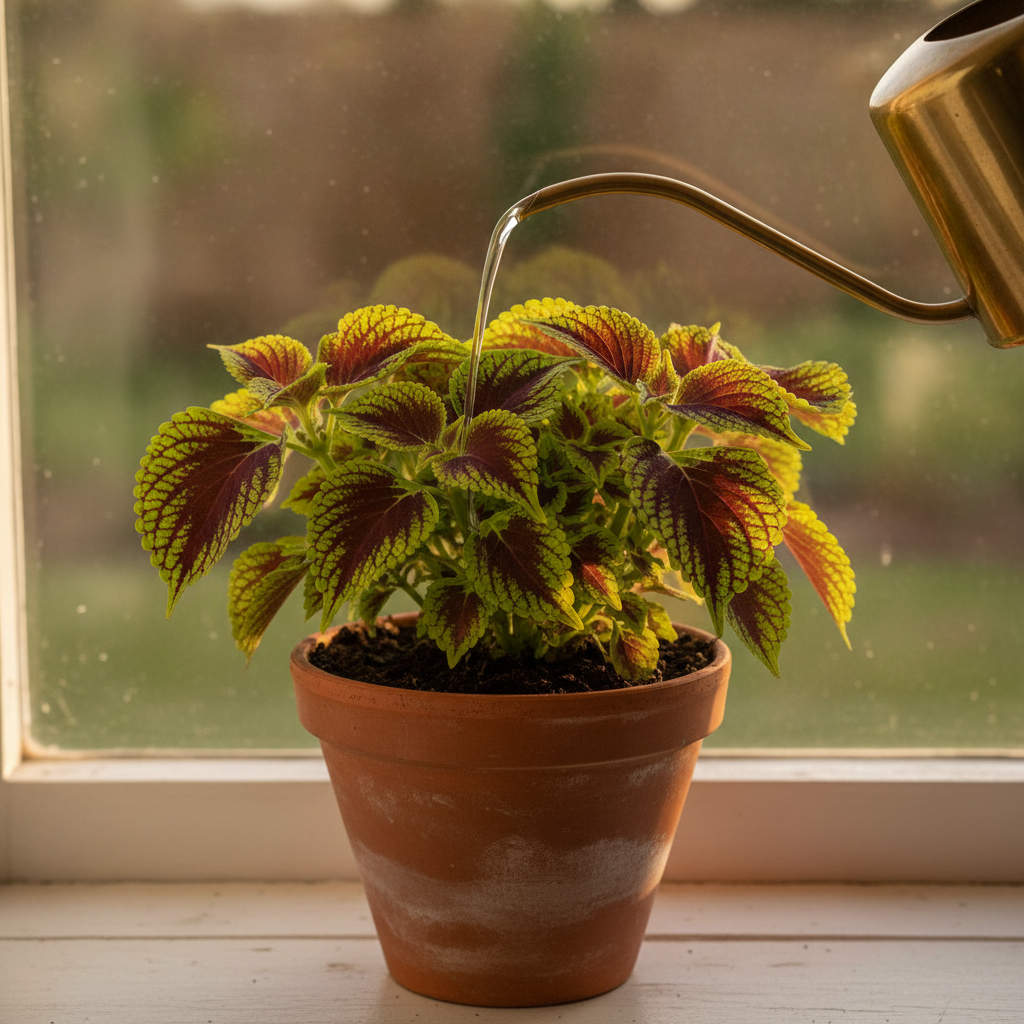
Check the plant every couple of days by pushing a finger into the compost. When the top 2cm (0.8in) feels dry, it is time to water. In the warmth of summer, a vigorous Kong coleus in a bright spot may need watering every two to three days, sometimes daily in a small pot during a heatwave. In winter, with slower growth and cooler temperatures, the interval stretches out and you should let the surface dry a little more between waterings to avoid keeping the roots cold and wet.
Kong coleus is unusually honest about thirst. When it dries out it wilts dramatically, the whole plant flopping as though it has collapsed, and this can be alarming the first time you see it. In most cases a thorough watering revives it within an hour or two with no lasting harm. Repeated wilting does take a toll, though, so treat a dramatic flop as a clear signal to water more attentively rather than a routine part of care.
Pro Tip — Weigh the Pot: Lift the pot just after watering to feel how heavy a fully watered plant is, then lift it again when you think it needs water. Over a week you will learn the weight of a thirsty plant, which is faster and more reliable than any moisture meter.
How to Water Correctly
- Water when the top 2cm (0.8in) of compost feels dry to the touch.
- Pour room-temperature water evenly over the soil surface, avoiding the crown and leaves where you can.
- Keep going until water runs freely from the drainage holes, which ensures the whole root ball is wetted.
- Let the pot drain completely for a few minutes before returning it to its saucer or cover pot.
- Empty any water that collects in the saucer so the roots never sit in standing water.
- Reassess in two to three days rather than watering to a fixed calendar.
Signs of Overwatering vs. Underwatering
| Symptom | Overwatering | Underwatering |
|---|---|---|
| Leaf colour | Yellowing, often from the lower leaves upward | Dulling and browning at the leaf edges |
| Leaf texture | Soft, limp, sometimes translucent | Thin, crisp and papery when severe |
| Soil | Stays wet for days, may smell sour | Dry, pulling away from the pot sides |
| Roots | Brown, mushy, foul smelling | Dry and brittle but otherwise pale |
| Whole plant | Steady decline that watering does not fix | Dramatic wilt that recovers after watering |
Warning — Root Rot: Kong coleus wilts when both too dry and too wet, so it is easy to mistake overwatering for thirst and add more water, which worsens the problem. If a wilted plant sits in soggy compost, check the roots before watering again; brown, mushy roots mean root rot, which calls for trimming the damage, repotting into fresh compost, and easing off the water.
Humidity Requirements
As a plant of humid Southeast Asian forests, Kong coleus is happiest in moderate to high humidity, ideally 50 per cent or more. It will grow in average household air, but very dry conditions, especially near radiators or in winter-heated rooms, cause brown leaf edges and a generally tired look.
The first signs of humidity stress are crisping and browning along the margins of the largest leaves, sometimes with a slight inward curl. Because these symptoms overlap with underwatering, check the compost first; if it is adequately moist and the edges are still crisping, low humidity is the likely culprit.
Raising humidity is straightforward. Grouping plants together creates a moister microclimate, and standing the pot on a tray of pebbles topped up with water lifts local humidity without wetting the roots. A small room humidifier is the most reliable option in a dry, heated home. Misting gives only a brief lift and can encourage fungal problems on the soft coleus foliage, so it is not the best choice for this plant.
Water Quality
Kong coleus is not especially fussy about water quality and tolerates most tap water well. In hard-water areas, mineral build-up can gradually show as pale crusting on the soil surface, and in that case rainwater or filtered water is a gentle alternative. Whatever you use, let it come to room temperature before watering, as very cold water can shock the roots of this warmth-loving plant.
Soil, Potting & Repotting
The ideal growing medium for a Kong coleus balances two competing needs: it must hold enough moisture to keep this thirsty plant hydrated, yet drain freely enough that the roots never sit in water. A good general-purpose houseplant compost, lightened slightly with a drainage amendment, hits that balance perfectly.
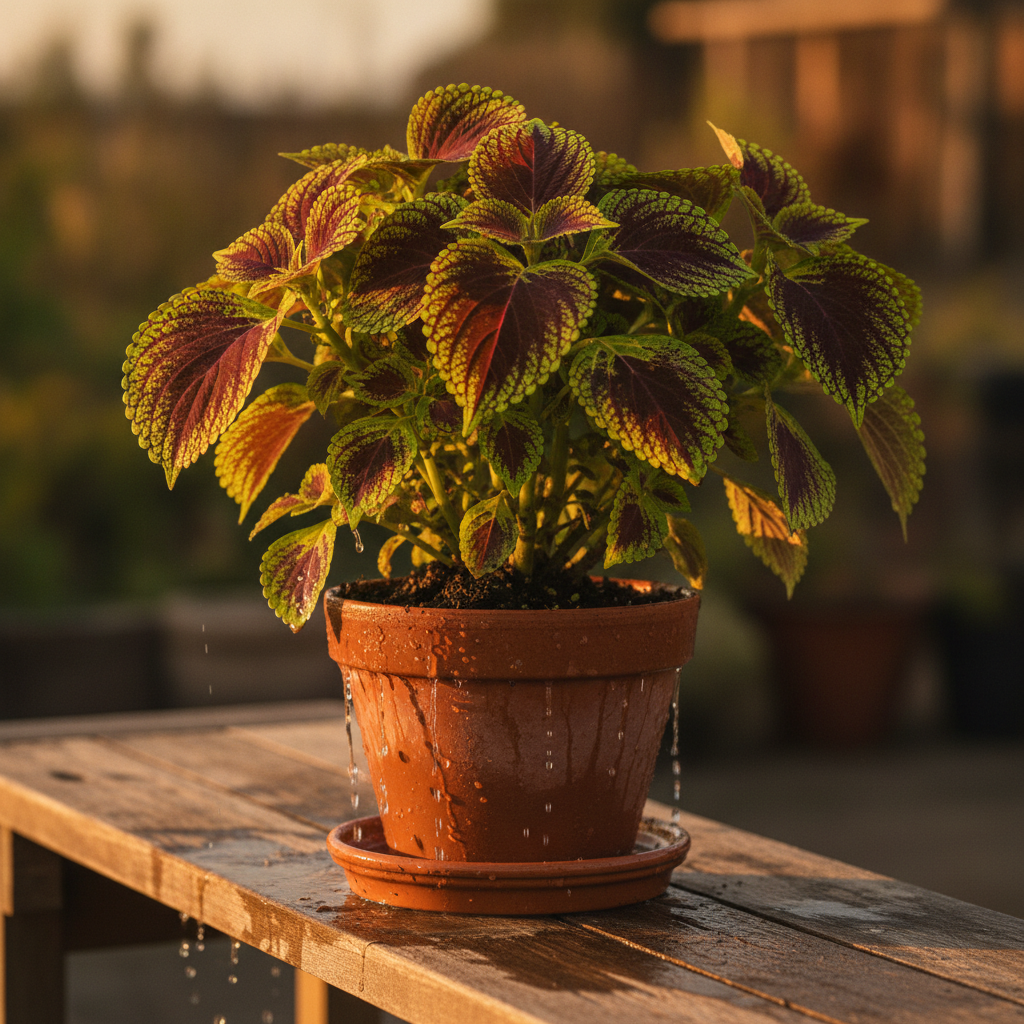
Ideal Soil Composition
Start with a quality peat-free multipurpose or houseplant compost as the base, then add material to improve aeration and drainage. The aim is a mix that feels moist and springy after watering but never sodden, giving the fine coleus roots plenty of oxygen while keeping water within easy reach.
| Component | Proportion | Function |
|---|---|---|
| Peat-free houseplant compost | Around 60 per cent | Holds moisture and nutrients, the bulk of the mix |
| Perlite or pumice | Around 25 per cent | Opens the mix for drainage and root aeration |
| Coco coir or fine bark | Around 15 per cent | Retains moisture while keeping structure open |
| Worm castings (optional) | A small handful | Adds gentle, slow-release nutrition |
Kong coleus prefers a slightly acidic to neutral soil, roughly pH 6.0 to 7.0, which most standard composts fall within naturally. There is rarely any need to adjust pH for this plant, and a fresh, good-quality compost each time you repot keeps the root zone in the right range.
Pro Tip — Quick Mix Recipe: For a fast, reliable blend, combine four parts peat-free houseplant compost, two parts perlite and one part coco coir, with a small handful of worm castings stirred through. It drains well, holds moisture, and suits almost any leafy houseplant, not just coleus.
Choosing the Right Pot
Because a Kong coleus grows fast and drinks heavily, pot choice affects how often you water and how well the roots breathe. The pot needs to hold enough compost to buffer the plant against drying out, while still draining freely.
Drainage holes are non-negotiable. A pot without drainage will hold water at the base and rot the roots of a moisture-loving plant like this alarmingly fast. If you love a decorative cover pot that has no holes, keep the coleus in a plain plastic nursery pot inside it and lift it out to water and drain.
Pot material: Plastic and glazed ceramic hold moisture longer, which suits this thirsty plant and reduces watering frequency. Unglazed terracotta breathes and dries faster, which can be an advantage if you tend to overwater, but expect to water more often in a clay pot, especially in summer.
Pot size: Choose a pot only 2 to 4cm (1 to 1.5in) wider than the current root ball. An oversized pot holds a large volume of wet compost around a small root system, which invites root rot. Because Kong coleus grows so quickly, you will simply move up a size more often rather than starting large.
When to Repot
A vigorous Kong coleus can fill its pot with roots in a single growing season, sometimes in just a few months. Tell-tale signs that it needs repotting include roots emerging from the drainage holes, water running straight through without wetting the compost, and growth that slows or wilting that returns unusually fast after watering. Spring is the natural time to pot on, giving the plant a full season to grow into fresh compost, though a fast grower can be repotted at almost any point in the warm months.
How to Repot: Step-by-Step
- Water the plant a day ahead so the root ball is moist and holds together.
- Ease the plant out by tipping the pot and supporting the base of the stems, rather than pulling on the foliage.
- Gently tease apart any tightly circling roots to encourage them to grow outward.
- Add a layer of fresh compost to a pot one size larger, then set the plant so the top of the root ball sits a little below the rim.
- Fill around the sides with fresh mix, firming lightly to remove air pockets without compacting the compost.
- Water thoroughly and let it drain, then top up with a little more compost if the level has settled.
- Keep the freshly potted plant out of strong sun for a week while it settles in.
Warning — Transplant Shock: A Kong coleus may wilt for a day or two after repotting as its roots re-establish. Resist the urge to fix this with extra water, which only saturates the fresh compost; keep it warm, out of direct sun, and lightly moist, and it will perk up on its own.
Fertilising
Kong coleus grows fast and grows big, and that pace has to be fuelled. A plant putting out large, richly coloured leaves in quick succession is a heavy feeder by houseplant standards, and regular fertilising during the growing season is what keeps the display lush rather than thin and pale.
That said, more is not better. Coleus responds well to steady, moderate feeding and can be scorched or pushed into weak, floppy growth by excessive nitrogen. The reliable approach is a balanced feed given little and often through spring and summer, tapering off as growth slows in autumn.
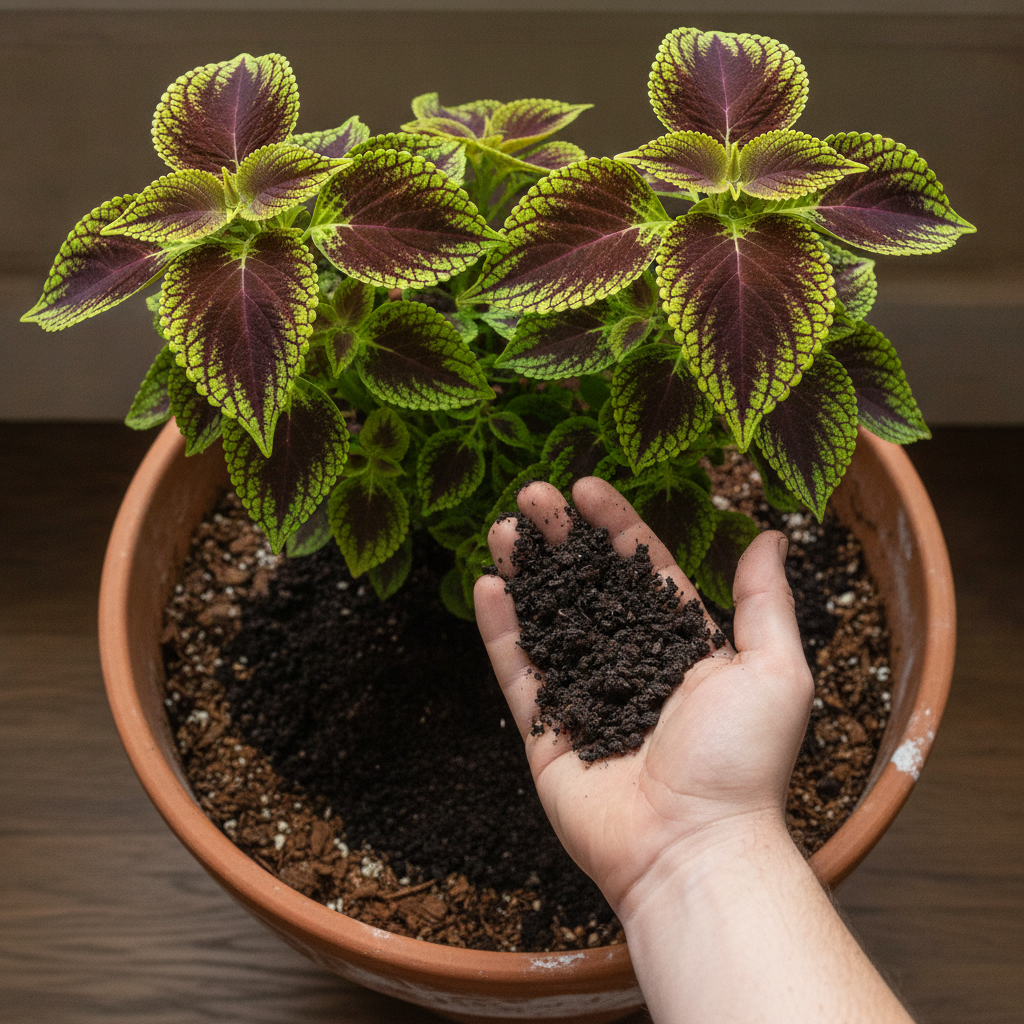
Understanding Plant Nutrients
Fertilisers are labelled with an NPK ratio, showing the proportion of nitrogen, phosphorus and potassium. Nitrogen drives leafy growth, which matters most for a foliage plant like coleus; phosphorus supports roots and flowering; and potassium underpins overall vigour and stress resistance. A balanced feed supplies all three, along with the secondary and trace elements that keep leaves richly coloured.
| Nutrient | Symbol | Primary Function | Deficiency Symptoms |
|---|---|---|---|
| Nitrogen | N | Leaf and stem growth, green pigment | Pale, yellowing older leaves; slow growth |
| Phosphorus | P | Root development and energy transfer | Stunted growth, dull or purplish leaves |
| Potassium | K | Overall vigour and water regulation | Browning, scorched leaf edges |
| Calcium | Ca | Cell wall strength, new growth | Distorted or weak new leaves |
| Magnesium | Mg | Core of the chlorophyll molecule | Yellowing between the veins of older leaves |
| Iron | Fe | Chlorophyll formation | Yellowing between veins on new leaves |
Types of Fertiliser
Liquid fertilisers: The easiest and most controllable option for coleus. Diluted in the watering can, a balanced liquid feed delivers nutrients evenly and lets you dial the strength up or down. This is the recommended mainstay for Kong coleus during the growing season.
Slow-release granular: Coated prills that release nutrients gradually over several months. Convenient for those who forget to feed, though they offer less control and can over-supply a fast grower if applied too heavily. Use at the lower end of the recommended rate.
Organic fertilisers: Worm castings, seaweed extract and diluted organic feeds nourish the plant while supporting soil life. They release nutrients gently, which reduces the risk of overfeeding, and pair well with an occasional top-dressing of castings for steady background nutrition.
Feeding Schedule
Through spring and summer, feed with a balanced liquid fertiliser at half the label strength every two to four weeks. A fast-growing plant in bright light can take the more frequent end of that range, while a plant in more modest light needs less. As the days shorten and growth slows in autumn, reduce feeding, and stop altogether in winter when the plant is barely growing and cannot use the nutrients.
Pro Tip — Feed at Half Strength: Coleus does better on frequent weak feeds than occasional strong ones. Mixing liquid fertiliser at half the recommended concentration and feeding a little more often gives steadier growth and avoids the fertiliser burn that shows as scorched leaf tips.
How to Fertilise
- Water the plant lightly first if the compost is very dry, so the feed does not hit dry roots.
- Mix a balanced liquid fertiliser at half the recommended strength in your watering can.
- Apply evenly to the compost until it is moist throughout, avoiding splashing the leaves.
- Let any excess drain away, and empty the saucer so nutrients do not concentrate at the base.
- Flush the pot with plain water every couple of months to wash out accumulated mineral salts.
Warning — Salt Build-Up: Regular feeding leaves mineral salts in the compost, which show as a white crust on the surface or pot rim and can scorch the roots over time. Flushing the pot thoroughly with plain water every couple of months clears the build-up and keeps the root zone healthy.
Propagation
If there is one thing Kong coleus does even more readily than grow, it is root. Stem cuttings take with almost comical ease, often producing roots in a glass of water within a week or two, which makes coleus one of the best plants of all for learning propagation or for multiplying a favourite colour endlessly.
Propagation also serves a practical purpose. Coleus plants naturally grow leggy and lose their looks over time, and rather than nurse an old, woody specimen it is often better to root fresh cuttings and start again. Many growers keep a colour going for years this way, taking new cuttings each season so they always have young, vigorous plants.
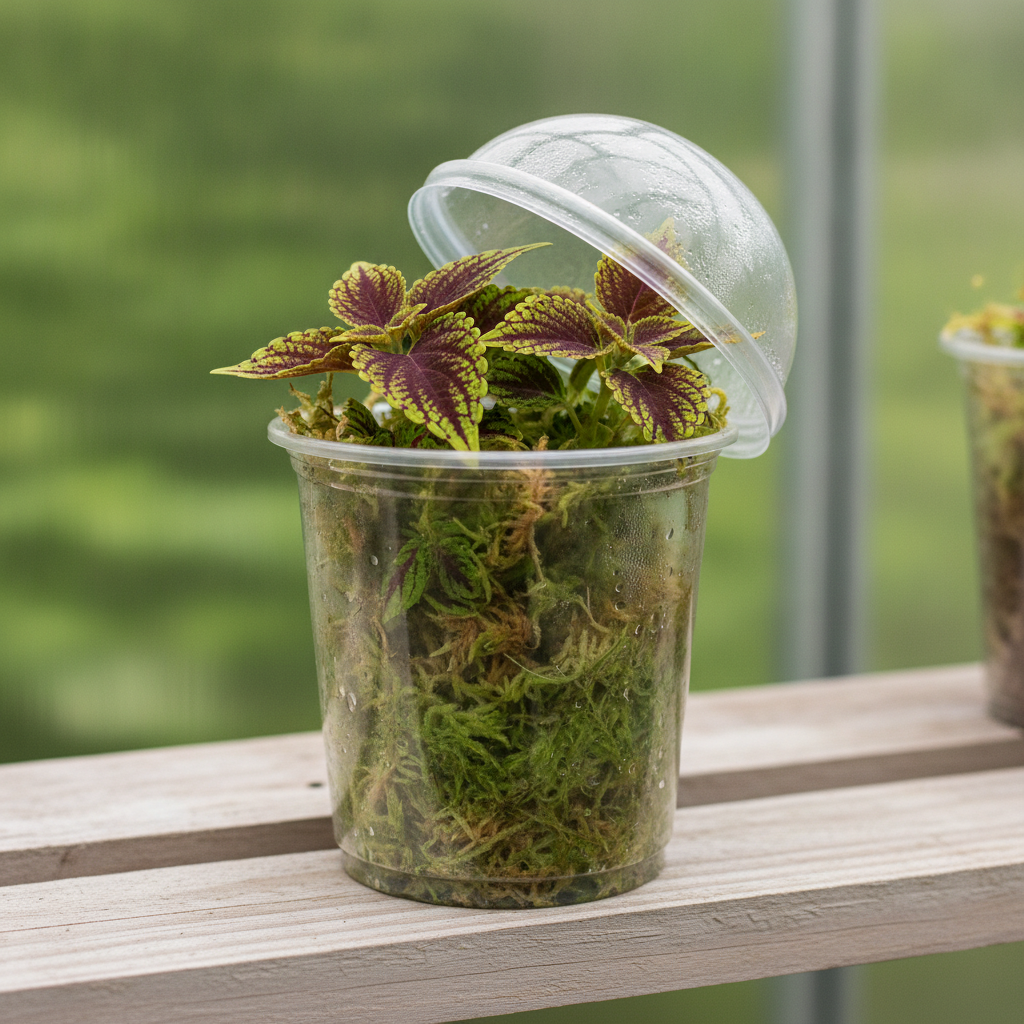
Understanding Nodes
The key to propagating coleus is the node, the point on the stem where leaves and side shoots emerge. Roots form most readily from nodes, so every successful cutting needs at least one, and ideally two, buried in the rooting medium. Coleus stems are square in cross-section, a trait of the mint family, and the nodes sit at each pair of opposite leaves, making them easy to find. Strip the leaves from the lower nodes before rooting, since any leaf left below the water or soil line will simply rot.
Water Propagation: Step-by-Step
Water rooting is the simplest method and lets you watch the roots develop, which is part of the appeal. It works so reliably with coleus that it is the natural place to start.
- Choose a healthy, non-flowering shoot and cut just below a node, taking a piece 8 to 12cm (3 to 5in) long.
- Remove the leaves from the lower half of the cutting, leaving two or three at the top.
- Stand the cutting in a glass of clean, room-temperature water so at least one bare node is submerged.
- Place it in bright, indirect light and refresh the water every few days to keep it clear and oxygenated.
- Watch for white roots within one to two weeks; once they reach 3 to 5cm (1 to 2in), pot the cutting into moist compost.
- Keep the newly potted cutting a little more humid and shaded for its first week while it adjusts to soil.
Pro Tip — Pot Sooner Rather Than Later: Cuttings that sit too long in water form water roots that struggle to adapt to soil. Move coleus cuttings into compost as soon as the roots are a few centimetres long, and they will transition with barely a check in growth.
Soil Propagation: Step-by-Step
Rooting directly in compost skips the water-to-soil transition and often produces sturdier plants. It is just as easy with coleus and is the better choice if you want several new plants at once.
- Take a cutting 8 to 12cm (3 to 5in) long, cutting just below a node and removing the lower leaves.
- Dip the cut end in rooting hormone if you have it, though coleus roots readily without.
- Insert the cutting into a small pot of moist, free-draining compost so at least one node is buried.
- Firm the compost gently around the stem and water lightly to settle it.
- Cover with a clear bag or propagator lid to hold humidity, keeping it out of direct sun.
- After two to three weeks, tug gently; resistance means roots have formed and the cover can come off.
Troubleshooting Propagation
| Problem | Likely Cause | Solution |
|---|---|---|
| Cutting rots at the base | Leaves left below the water or soil line | Strip lower leaves; refresh water more often |
| Cutting wilts and collapses | Too much light or too little humidity | Move to indirect light; cover to raise humidity |
| No roots after several weeks | No node submerged, or conditions too cold | Ensure a node is buried; keep warm, above 18°C (64°F) |
| Roots form but plant stalls in soil | Water roots struggling to adapt to compost | Pot up sooner; keep humid while it establishes |
Pests & Diseases
The same soft, sappy leaves that make Kong coleus so lush also make it appealing to sap-sucking insects. Kept in good health, a coleus shrugs off most problems, but the plant is worth checking regularly because pests can multiply quickly on its fast, tender growth.
Prevention is far easier than cure. A well-watered, well-fed plant in good light and moderate humidity resists pests better, and a quick inspection each time you water catches infestations while they are still small and easy to deal with.

Common Pests
Mealybugs (Pseudococcus species)
Mealybugs appear as small, white, cottony blobs tucked into leaf axils and along stems, where they suck sap and weaken the plant, leaving sticky honeydew behind. They are among the most common coleus pests indoors.
Treatment: Dab individual insects with a cotton bud dipped in isopropyl alcohol, then treat the whole plant with insecticidal soap or neem oil, repeating weekly until no new bugs appear. Isolate the plant while treating to protect your other houseplants.
Aphids (Aphidoidea)
Aphids are tiny green, black or pink insects that cluster on soft new shoots and the undersides of young leaves, causing distortion and leaving sticky honeydew that can turn to sooty mould. Coleus, with its abundant tender growth, is a favourite target.
Treatment: Rinse them off with a firm jet of water, then apply insecticidal soap or neem oil to the growing tips, checking every few days as aphids reproduce rapidly. A small infestation is easy to clear if caught early.
Whiteflies (Trialeurodes vaporariorum)
Whiteflies are tiny white moth-like insects that rise in a cloud when the plant is disturbed. They feed on the undersides of leaves and, like other sap-suckers, secrete honeydew that leads to sooty mould and weakened growth.
Treatment: Hang yellow sticky traps to catch the adults and treat the leaf undersides with insecticidal soap or neem oil, repeating regularly to break the breeding cycle. Persistence is key, as whiteflies are hard to eliminate in one pass.
Spider mites (Tetranychus urticae)
Spider mites thrive in warm, dry air and show as fine stippling or speckling on the leaves, sometimes with delicate webbing between stems and foliage. They are easy to miss until numbers are high because the mites themselves are barely visible.
Treatment: Raise humidity, which mites dislike, and treat the plant thoroughly with neem oil or a miticide, covering the undersides of leaves where they gather. Repeat treatments are needed to catch newly hatched mites.
Common Diseases
Downy mildew (Peronospora species)
Downy mildew is the most serious disease of coleus, showing as leaf distortion, yellowing, and a grey to purplish fuzz on the undersides of leaves, followed by leaf drop. It spreads in cool, damp, still conditions and can move quickly.
Treatment: Remove and destroy affected leaves, improve air circulation, and reduce leaf wetness by watering the soil rather than the foliage. Severely affected plants are best replaced with fresh cuttings taken from healthy growth.
Root rot (Pythium and Rhizoctonia species)
Root rot follows persistently waterlogged compost, causing the roots to turn brown and mushy and the plant to wilt and yellow despite wet soil. Because coleus likes moisture, the line between well watered and waterlogged is easy to cross.
Treatment: Remove the plant from its pot, cut away all soft, dark roots, and repot into fresh, free-draining compost, then water more sparingly. Taking a few healthy cuttings as insurance is wise if the rot is advanced.
Pest and Disease Summary
| Pest / Disease | Identification | Treatment |
|---|---|---|
| Mealybugs | White cottony clusters in leaf axils | Alcohol swab, then insecticidal soap or neem |
| Aphids | Clusters on new shoots, sticky honeydew | Rinse off, then insecticidal soap or neem |
| Whiteflies | Tiny white flies rising when disturbed | Yellow sticky traps and neem on leaf undersides |
| Spider mites | Fine stippling and webbing on leaves | Raise humidity, treat with neem or miticide |
| Downy mildew | Grey-purple fuzz under distorted leaves | Remove leaves, improve airflow, water the soil |
| Root rot | Wilting with wet soil, mushy dark roots | Trim roots, repot in fresh mix, water less |
Prevention Strategies
The best defence is a healthy plant and a regular eye. Inspect the leaves, especially the undersides and the joints where they meet the stem, each time you water, and act on the first sign of trouble rather than waiting. Good air circulation, careful watering that keeps the foliage dry, and quarantining any new plant for a couple of weeks before it joins your collection all prevent problems from taking hold.
Keep the plant clean, removing fallen or yellowing leaves promptly, since decaying material harbours both pests and fungal spores. A plant kept in the right light, watered attentively and fed in moderation is far less inviting to pests than a stressed one, so consistent good care is itself the most effective prevention.
Pro Tip — Neem as Routine: A light neem oil spray every couple of weeks during the warmer months acts as a preventive, deterring the soft-bodied pests coleus attracts before they establish. Apply in the evening or out of direct sun to avoid leaf marking.
Popular Varieties
The Kong series is itself a family of cultivars, all sharing the trademark oversized leaves and shade tolerance but differing in colour and pattern. Bred by Ball Horticultural, the range was designed to bring the boldest possible foliage to shaded spots, and the individual varieties let you choose a colour scheme to suit your room.
Beyond the classic Kong types, newer introductions such as the more sun-tolerant Kong Empire and the compact Kong Junior extend the series for different situations. The varieties below are the most widely grown and the easiest to find at garden centres and specialist nurseries.
| Variety | Leaf Appearance | Light Needs | Growth Rate | Availability |
|---|---|---|---|---|
| Kong Rose | Rose-pink centres over maroon, green edge | Partial shade | Fast | Common |
| Kong Scarlet | Vivid scarlet centres, broad green margin | Partial shade | Fast | Common |
| Kong Red | Deep red centres with dark veining | Partial shade | Fast | Common |
| Kong Mosaic | Marbled red, green and cream patchwork | Partial shade | Fast | Frequent |
| Kong Green | Lime-green leaves with a fine dark edge | Partial shade | Fast | Frequent |
| Kong Lime Sprite | Chartreuse with a rich maroon central blotch | Partial shade | Fast | Occasional |
| Kong Empire | Bold colours, bred for more sun tolerance | Sun to part shade | Fast | Newer |
| Kong Junior | Kong colours on a more compact plant | Partial shade | Moderate | Occasional |
Featured Varieties
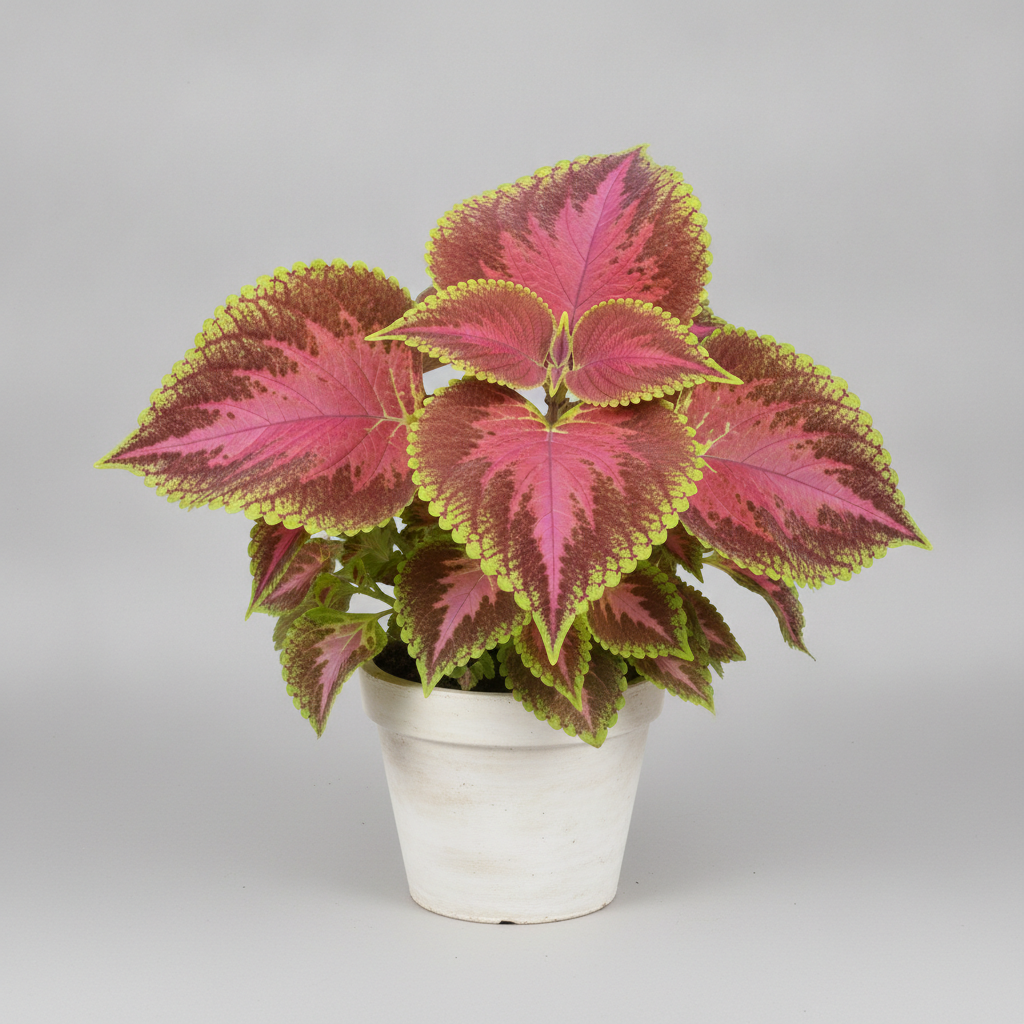
Kong Rose
Perhaps the most recognisable of the series, Kong Rose carries enormous leaves with soft rose-pink and magenta centres marbled over deep maroon veining, framed by a serrated green edge. The pink glows in bright indirect light and softens gracefully in shade, making it a versatile centrepiece.
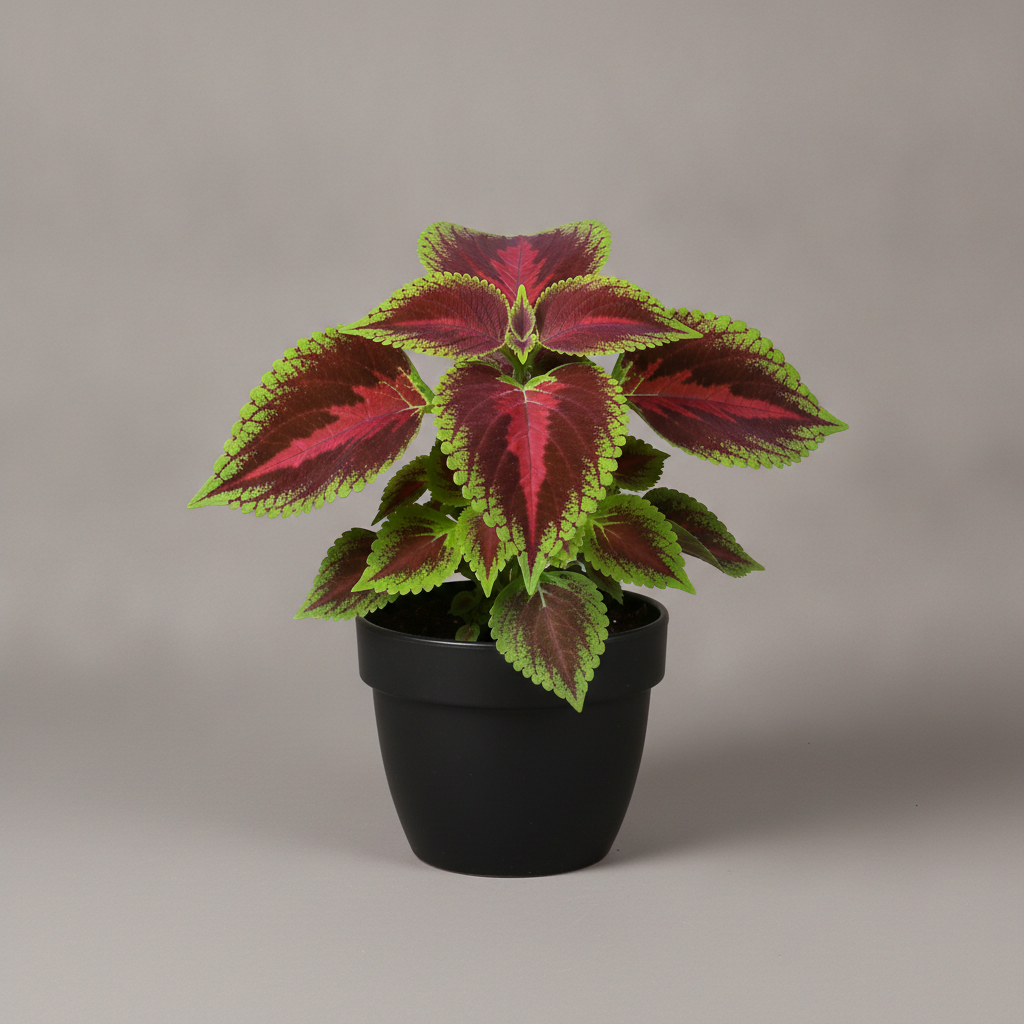
Kong Scarlet
Kong Scarlet is the boldest of the group, with massive velvety leaves whose vivid scarlet-red centres meet a broad emerald-green margin in high contrast. It makes a dramatic single specimen and holds its saturated colour reliably in the partial shade the Kong series prefers.
Variety Profiles in Detail
Kong Mosaic (Coleus scutellarioides ‘Kong Mosaic’)
Kong Mosaic lives up to its name with a patchwork of red, green and cream splashed unpredictably across each oversized leaf, so no two plants look quite alike. It brings movement and complexity to a display and pairs well with plainer green foliage that lets its busy pattern stand out.
Kong Green (Coleus scutellarioides ‘Kong Green’)
For those who want the Kong scale without the riot of colour, Kong Green offers huge lime-green leaves edged with a fine dark line. It is a surprisingly elegant choice, reading almost as a tropical foliage plant, and its brightness lifts a shaded corner without competing with more colourful neighbours.
Kong Empire (Coleus scutellarioides ‘Kong Empire’)
A newer development, Kong Empire keeps the large leaves and strong colouring of the classic series but was bred to tolerate more sun, making it a better fit for a bright window or a spot outdoors in summer. If your only bright position gets direct light, Empire is the Kong to reach for.
Choosing the Right Variety for Your Space
Match the variety to your light and your colour scheme. For a shaded room, any of the classic Kong types will hold their colour beautifully, with Kong Rose and Kong Scarlet giving the most drama and Kong Green offering a calmer look. If your brightest spot receives direct sun, choose the sun-tolerant Kong Empire, and if space is tight, the compact Kong Junior delivers the same striking foliage on a smaller plant. Whichever you pick, the care is identical across the series, so you can grow a mixed collection with a single routine.
Frequently Asked Questions
Why is my Kong coleus losing its colour and turning green?
Fading toward plain green is almost always a sign of too little light. In dim conditions the plant produces more chlorophyll to capture what light there is, which masks the coloured pigments. Move it to a brighter spot with plenty of indirect light and the new growth should return to its proper colouring within a few weeks.
Should I let my Kong coleus flower?
Most growers pinch out the flower spikes as they appear. The small blue or white flowers are unremarkable, and letting the plant bloom diverts energy from foliage and can trigger a decline in leaf quality. Removing the spikes keeps the plant bushy and focused on the leaves you grow it for.
Why does my coleus keep wilting even though I water it?
Coleus wilts when both too dry and too wet, so the cause depends on the soil. If the compost is dry, the plant simply needs more frequent watering. If the compost is wet and the plant still wilts, suspect root rot from waterlogging, and check the roots before adding any more water.
How do I keep my Kong coleus bushy instead of leggy?
Pinch out the growing tips regularly, especially while the plant is young. Removing the tip of a shoot encourages the plant to branch from the nodes below, producing a fuller, denser habit. Combined with good light, regular pinching keeps a Kong coleus compact and full rather than stretched.
Is Kong coleus safe around pets?
No. Coleus is toxic to cats, dogs and horses, and eating it can cause vomiting, diarrhoea, drooling and loss of appetite. The sap can also irritate human skin. Keep the plant out of reach of pets and children, and wear gloves when taking cuttings if your skin is sensitive.
Can I grow Kong coleus outdoors in summer?
Yes, in warm weather it makes an excellent patio or shade-border plant, but acclimatise it gradually to outdoor conditions and keep it out of harsh midday sun, since the classic Kong types prefer shade. Bring it back indoors, or take cuttings, well before the first cold nights, as coleus is damaged by temperatures below about 10°C (50°F).
How long does a Kong coleus live?
As a tender perennial, coleus can live for several years, but it tends to grow woody and leggy with age and lose its looks. Rather than nurse an old plant, most growers take fresh cuttings each year, which root in days and quickly replace the parent with young, vigorous growth in the same colour.
Why are the edges of my Kong coleus leaves turning brown?
Brown, crisp leaf edges usually point to low humidity, inconsistent watering, or a build-up of fertiliser salts in the compost. Check that you are keeping the soil evenly moist, raise the humidity around the plant if your home is dry, and flush the pot with plain water to clear any accumulated salts.






