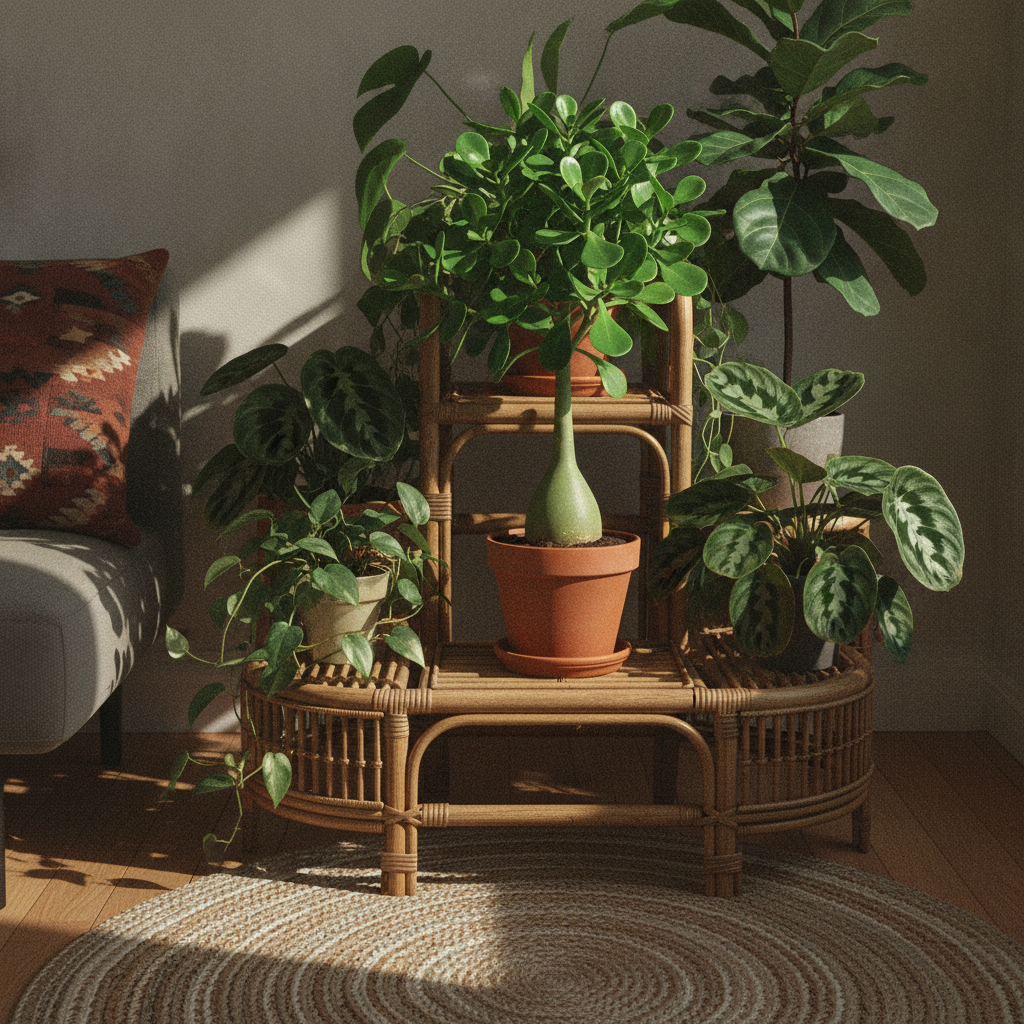
Few houseplants carry a story quite like the Hawaiian palm. Despite the name it sells under, Brighamia insignis is not a palm at all but a succulent member of the bellflower family, a survivor from the windswept sea cliffs of Kauaʻi and Niʻihau that has become one of the most poignant conservation stories in horticulture. Its swollen, bottle-shaped stem and neat rosette of glossy leaves make it look like a cartoonist’s idea of a palm tree, which is why it also answers to “volcano plant” and, less flatteringly, “cabbage on a stick”. Growing one on a windowsill is a small act of preservation for a species that is, for all practical purposes, extinct in the wild.
Quick Reference
Use the table below as an at-a-glance summary, then read the sections that follow for the reasoning behind each recommendation. The jump links let you skip to whatever you need.
| Factor | Requirement |
|---|---|
| Botanical name | Brighamia insignis |
| Family | Campanulaceae (bellflower family) |
| Common names | Hawaiian palm, volcano plant, cabbage on a stick, ʻŌlulu, ālula |
| Light | Bright indirect light with some gentle direct sun; a south or west aspect indoors |
| Water | Water thoroughly when the top few centimetres of mix dry out; much less in winter |
| Soil | Gritty, sharply draining succulent or cactus mix |
| Temperature | 18 to 24 °C (64 to 75 °F); never below about 10 °C (50 °F) |
| Humidity | Average room humidity is fine; tolerates 40 to 60 per cent |
| Feeding | Dilute feed monthly in spring and summer only |
| Growth habit | Single succulent stem to roughly 1 to 2 metres (3 to 6 feet) indoors |
| Propagation | By seed only, following hand pollination |
| Toxicity | Best treated as mildly toxic; keep the milky sap away from mouths and eyes |
| Difficulty | Intermediate; unforgiving of overwatering and cold |
- Why grow a Hawaiian palm as a houseplant
- Light
- Watering
- Soil and potting
- Fertilising
- Propagation
- Pests and problems
- Varieties and relatives
- Frequently asked questions
Why Grow a Hawaiian Palm as a Houseplant
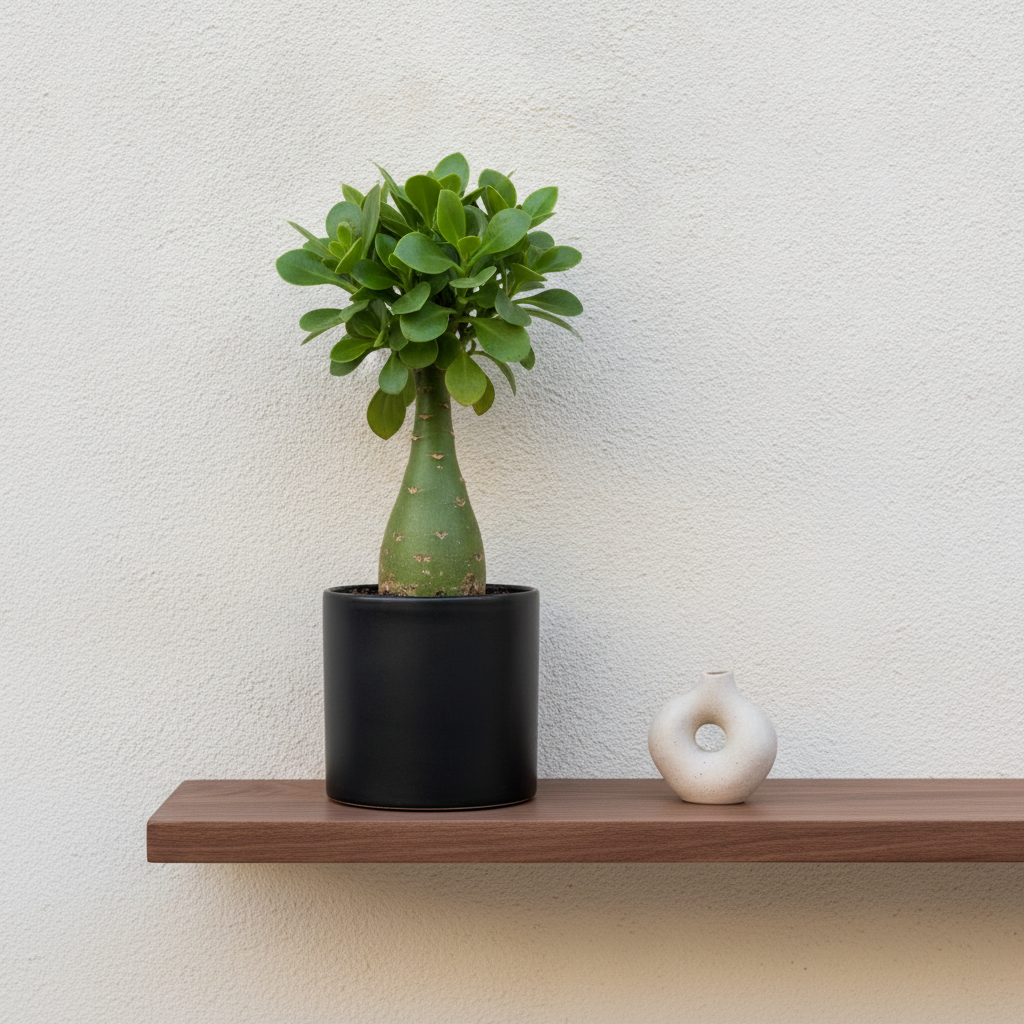
To understand how to care for Brighamia insignis, it helps to know where it comes from. The plant is a Hawaiian lobelioid, part of a spectacular island radiation of bellflower relatives found nowhere else on Earth. It evolved on near-vertical basalt sea cliffs, clinging to thin pockets of soil where salt spray, relentless wind and long dry spells are the norm. That harsh cradle shaped everything about it. The thick, tapering stem is a water store, a caudex that lets the plant ride out drought, and the waxy leaves resist both sun and salt. In cultivation those same adaptations translate into a plant that forgives neglect far better than it forgives fuss.
The conservation backstory is what makes this plant genuinely remarkable. In its native range the species was pollinated by a specific long-tongued hawkmoth that is now believed to be extinct, which left the plant unable to set seed on its own. For decades botanists rappelled down the Kauaʻi cliffs with paintbrushes to hand pollinate the last wild individuals and collect their seed. Those seeds seeded a global insurance population, and the tidy nursery specimens sold across Europe today are descended from that effort. Buying and keeping one alive is, in a modest way, participation in an ongoing rescue.
As a houseplant it earns its place on looks alone. A mature specimen reads like living sculpture: a smooth, pale, swollen trunk rising to a symmetrical crown of shining spoon-shaped leaves. In autumn a well-grown plant may reward you with clusters of tubular, creamy-yellow flowers that carry a genuine honeysuckle fragrance in the evening, an unexpected bonus from a plant grown mainly for its silhouette. The trade-off for all this character is that the Hawaiian palm has opinions. Get the light and the watering rhythm right and it is undemanding; get them wrong and it will sulk, drop leaves and rot with disheartening speed.
Pro Tip — Read the stem: The caudex is your best diagnostic tool. A firm, plump trunk means the plant is well hydrated and healthy. A trunk that feels soft, wrinkled or spongy is telling you something is wrong, usually too much water at the roots rather than too little.
Light
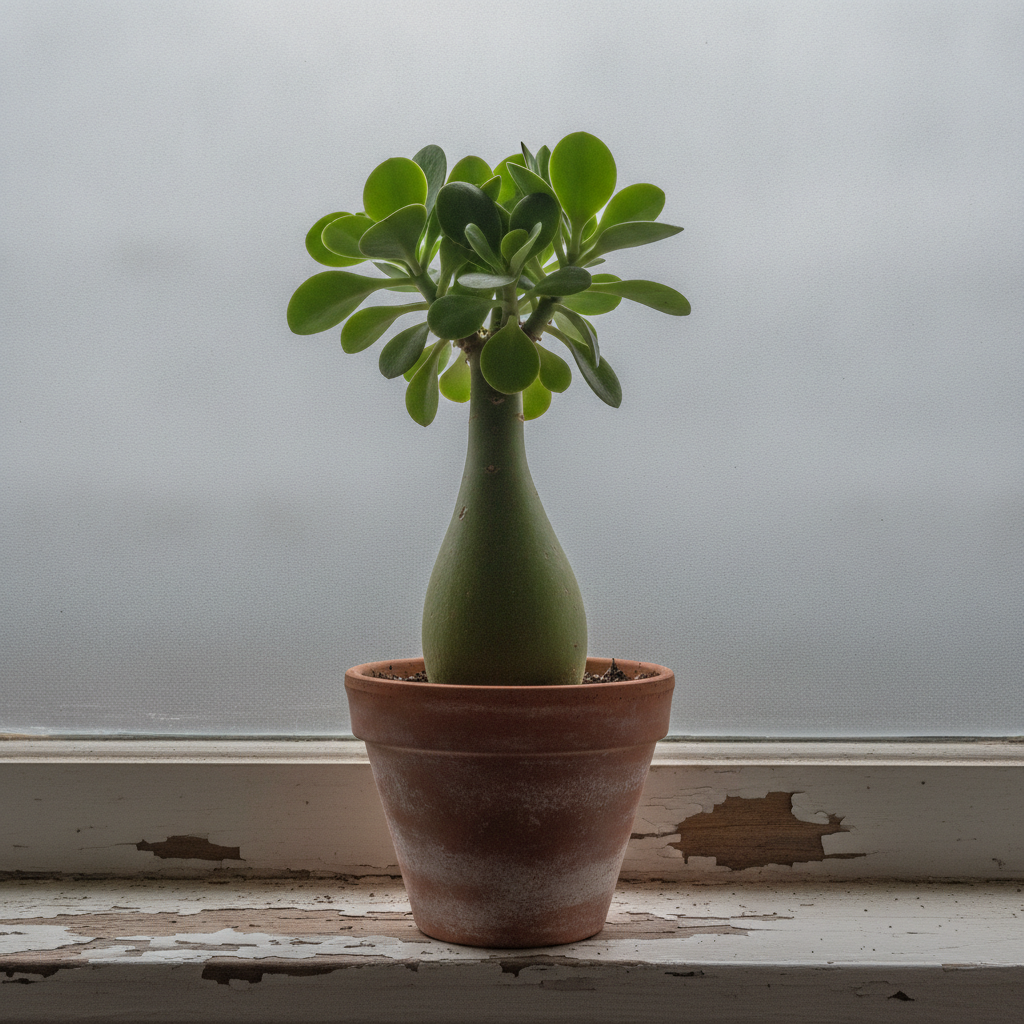
Light is the single factor that most separates a Hawaiian palm that merely survives from one that thrives. This is a cliff plant from a subtropical archipelago, and it wants as much brightness as your home can offer. The sweet spot indoors is bright, mostly indirect light with a few hours of gentle direct sun each day. A position at or near a south-facing or west-facing window is ideal in temperate climates. In a north-facing room the plant will hang on, but it will stretch, its new leaves will be smaller and paler, and flowering becomes unlikely.
Direct sun is welcome, with one caveat. A plant that has spent months in a shop or a shady spot has thin, unhardened leaves that can scorch if moved abruptly into strong midday glare behind glass, which magnifies heat. Acclimatise a new arrival over a week or two, giving it morning sun first and building up its exposure. Once adapted, a Hawaiian palm handles considerable direct light happily, and the extra energy shows in a stouter trunk and a fuller crown.
Because the leaves all sit in a single rosette facing the light, the plant will lean toward its brightest side over time. Give the pot a quarter turn every week or two to keep the crown balanced and the stem growing upright rather than curving. Through the darkest winter months, when many specimens shed part of their crown and rest, move the plant to your brightest available window and consider a full-spectrum grow light if your winters are long and grey. Supplementary light in winter is often the difference between a plant that holds its leaves and one that drops most of them.
Pro Tip — Watch the new leaves: The size and colour of freshly unfurled leaves are a reliable light meter. Large, deep-green, closely spaced leaves mean the light is right. Small, pale leaves on an increasingly bare, elongating stem mean the plant needs to move somewhere brighter.
Watering
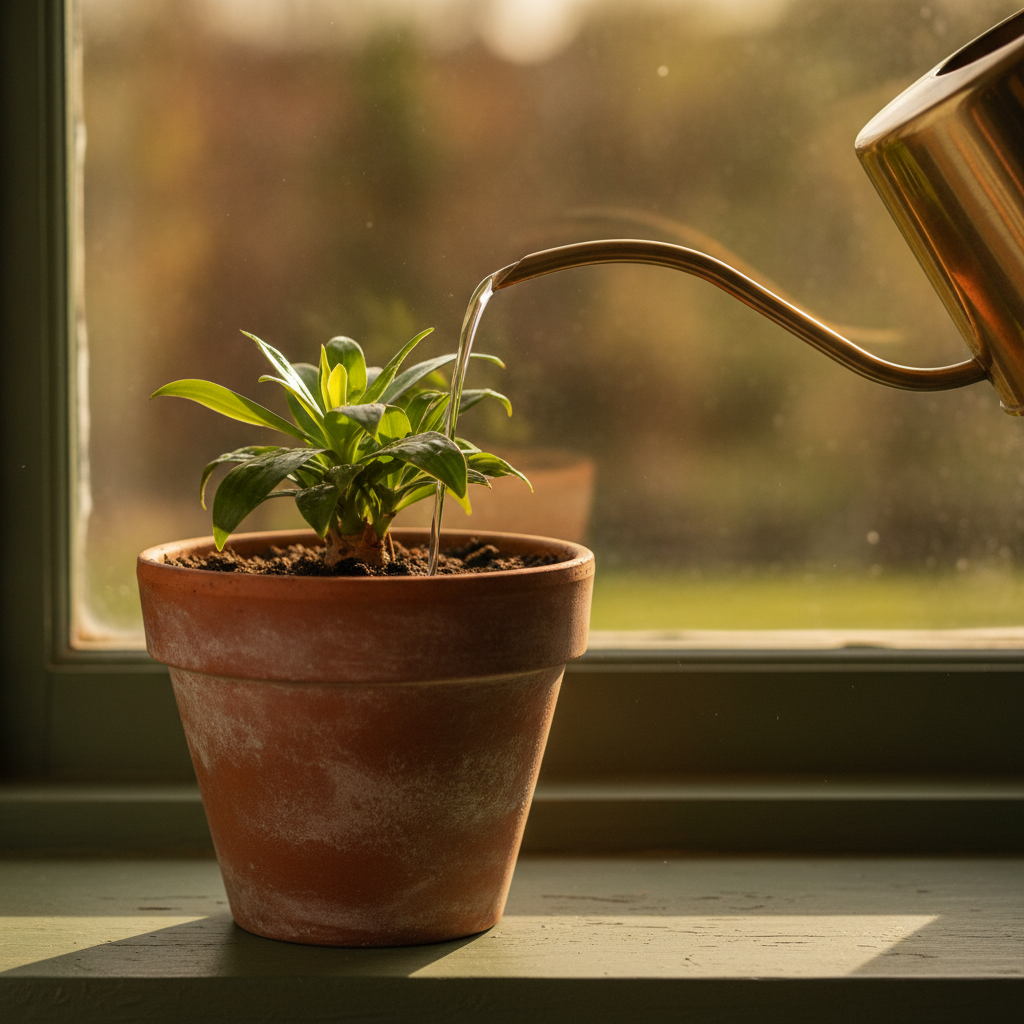
If light is where most people underserve the Hawaiian palm, watering is where they kill it. Treat this plant as the succulent it is. That thick stem exists precisely so the plant can go without water, and its greatest vulnerability indoors is a pot that stays wet. The goal is a cycle of thorough soaking followed by real drying, never a state of constant moisture.
During the active growing season, roughly spring through early autumn, water generously when the top three to four centimetres (about one and a half inches) of mix feel dry, letting water run freely from the drainage holes, and then empty the saucer so the roots never sit in standing water. Depending on your light, warmth and pot size, that might mean watering once a week or once a fortnight. Do not water on a fixed schedule; check the mix and the weight of the pot each time and let the plant tell you when it is ready.
Winter changes the rules completely. As light fades the plant slows down or goes fully dormant, often dropping many of its leaves in the process, which is normal and not a cause for alarm. A dormant, largely leafless plant needs very little water, perhaps just enough every few weeks to stop the stem shrivelling. Watering a cold, resting Hawaiian palm as though it were in full summer growth is the classic route to a soft, collapsing trunk and root rot. When in doubt in winter, wait.
Water quality matters less than technique, but these plants appreciate not being overwatered with hard, cold tap water. Room-temperature water is kinder to the roots, and if your tap water is very hard, the occasional use of rainwater or filtered water will keep mineral crust off the soil surface. Whatever you use, the principle holds: soak well, drain completely, then wait.
Warning — Soft stem, act fast: If the trunk turns soft or you see darkening at the base, stop watering immediately. Slide the plant out of its pot, inspect the roots, cut away any that are brown and mushy, and repot into fresh dry gritty mix. A firm-stemmed plant can wait for water; a rotting one cannot wait for you to notice.
Soil and Potting
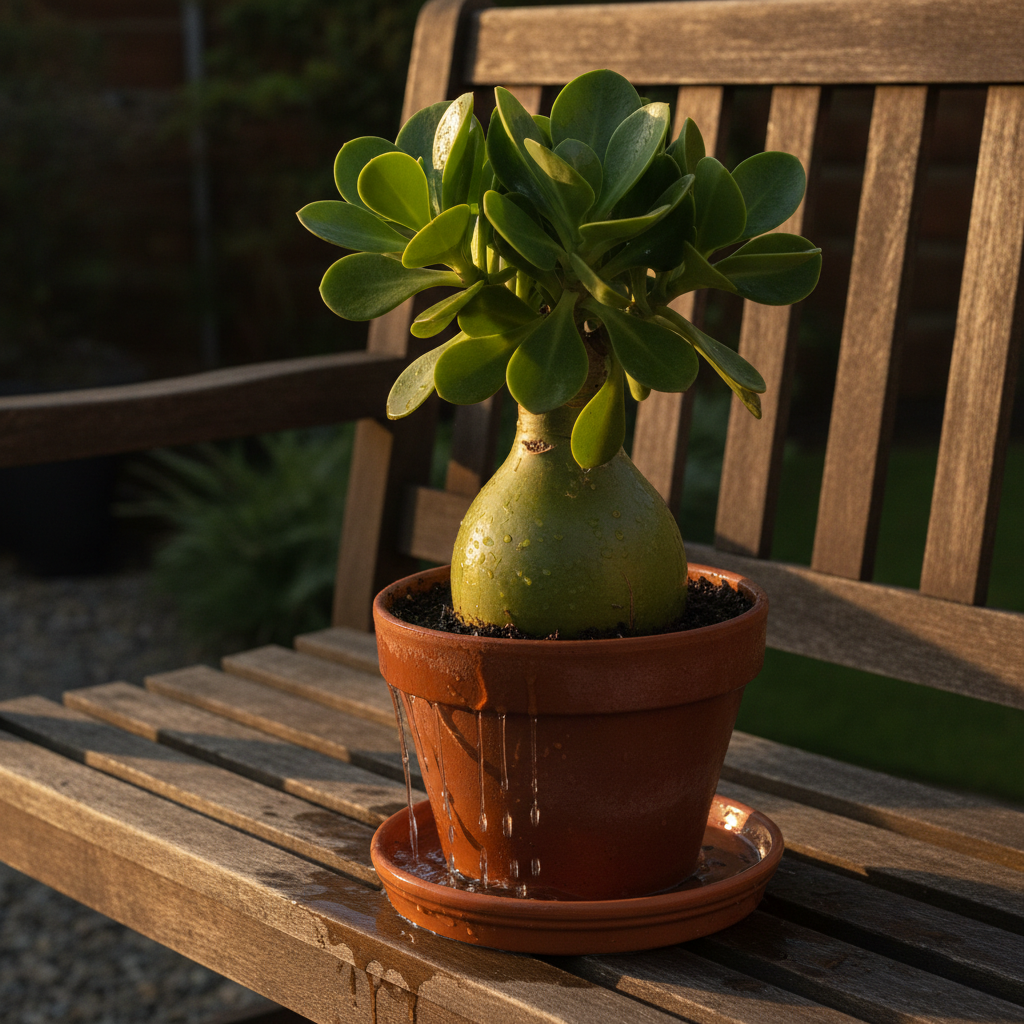
Everything about watering a Hawaiian palm depends on the medium it sits in, so the potting mix is worth getting right. The plant needs a substrate that holds a little moisture but drains fast and stays airy, mimicking the thin, gritty pockets of cliff soil it evolved in. A quality cactus or succulent compost is the easiest starting point. Better still, sharpen a standard succulent mix by adding extra coarse material so that at least a third of the total volume is grit, perlite, pumice or fine bark. The finished mix should feel open and crumbly, not dense.
The pot matters as much as the mix. Always choose a container with drainage holes, and lean toward terracotta rather than plastic or glazed ceramic. Unglazed clay breathes and wicks moisture away from the rootball between waterings, which suits a plant this sensitive to wet feet. Size up only modestly when you repot; a pot that is too large holds a reservoir of damp mix around the roots that the plant cannot use quickly enough, and that lingering moisture invites rot. The roots are relatively small for the size of the plant, so err on the snug side.
Repot only every two to three years, and only when the plant is in active growth in spring or early summer, never during winter dormancy. Handle the caudex gently and avoid burying it deeper than it sat before, since a stem sunk too low into damp mix can rot at the collar. After repotting, resist the urge to water straight away. Waiting a few days lets any roots nicked in the process callus over, greatly reducing the chance of infection.
Pro Tip — Top-dress with grit: A one-centimetre layer of coarse grit or fine gravel over the soil surface keeps the base of the stem dry, deters fungus gnats and gives the plant a clean, finished look that suits its sculptural form.
Fertilising
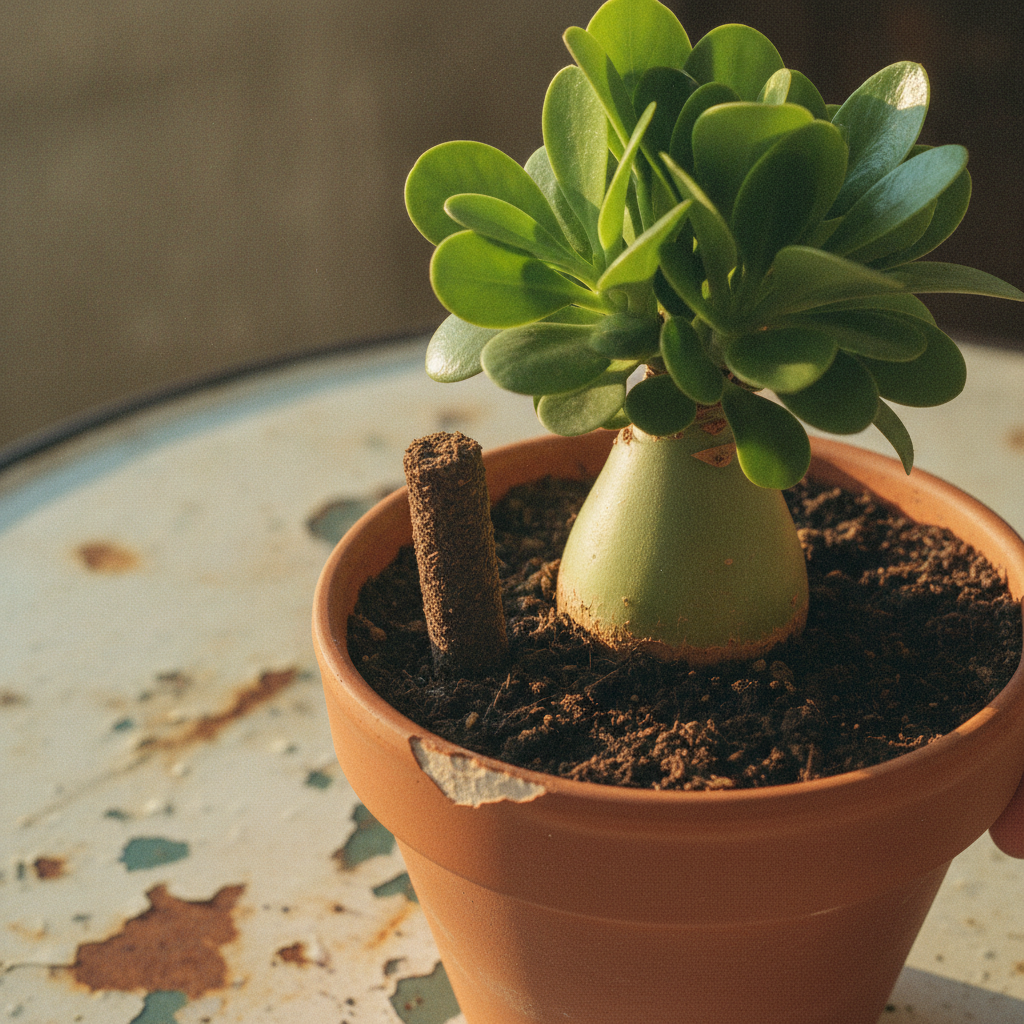
The Hawaiian palm is not a heavy feeder, and a modest, well-timed feeding routine serves it far better than an ambitious one. In its native habitat it drew a trickle of nutrients from lean cliff soil, so it is adapted to scarcity rather than plenty. Overfeeding produces weak, sappy growth that is more prone to pests and rot, and can scorch the roots outright.
Feed only during the active growing season, from spring to late summer. A balanced liquid houseplant fertiliser diluted to half the recommended strength, applied roughly once a month, is plenty. Some growers prefer a fertiliser formulated for cacti and succulents, which is lower in nitrogen and encourages sturdy growth over leggy foliage, and that is a sensible choice for this plant. Whichever you use, always feed onto already-moist soil rather than a bone-dry rootball, as fertiliser applied to dry roots can burn them.
Stop feeding entirely in autumn and through winter. A dormant or semi-dormant plant cannot use the nutrients, and salts simply accumulate in the mix where they can damage the roots. If you notice a white crust building on the soil surface or the pot rim, flush the mix thoroughly with plain water a couple of times to leach out the excess before resuming feeding the following spring.
Pro Tip — Less is more: When you are unsure whether to feed, don’t. A slightly underfed Hawaiian palm stays compact and tough, which is exactly what you want. An overfed one grows soft and vulnerable, and there is no easy way to reverse that once it starts.
Propagation
Propagation is where the Hawaiian palm departs from almost every other succulent houseplant. It cannot be grown from leaf or stem cuttings in any reliable way, unlike the echeverias and jades it superficially resembles. The plant reproduces from seed, and setting that seed is the whole challenge, because Brighamia insignis is self-incompatible. A single plant cannot fertilise itself, and even two plants must be genetically distinct individuals for pollination to take.
If you are fortunate enough to have two unrelated plants flowering at the same time, you can play the role that the extinct hawkmoth once did. When the fragrant tubular flowers open, use a fine, soft brush to transfer pollen from the blooms of one plant to the blooms of the other, and back again, repeating over several days while the flowers are fresh. Successful pollination is followed by the development of seed capsules that ripen and eventually split to release many small seeds.
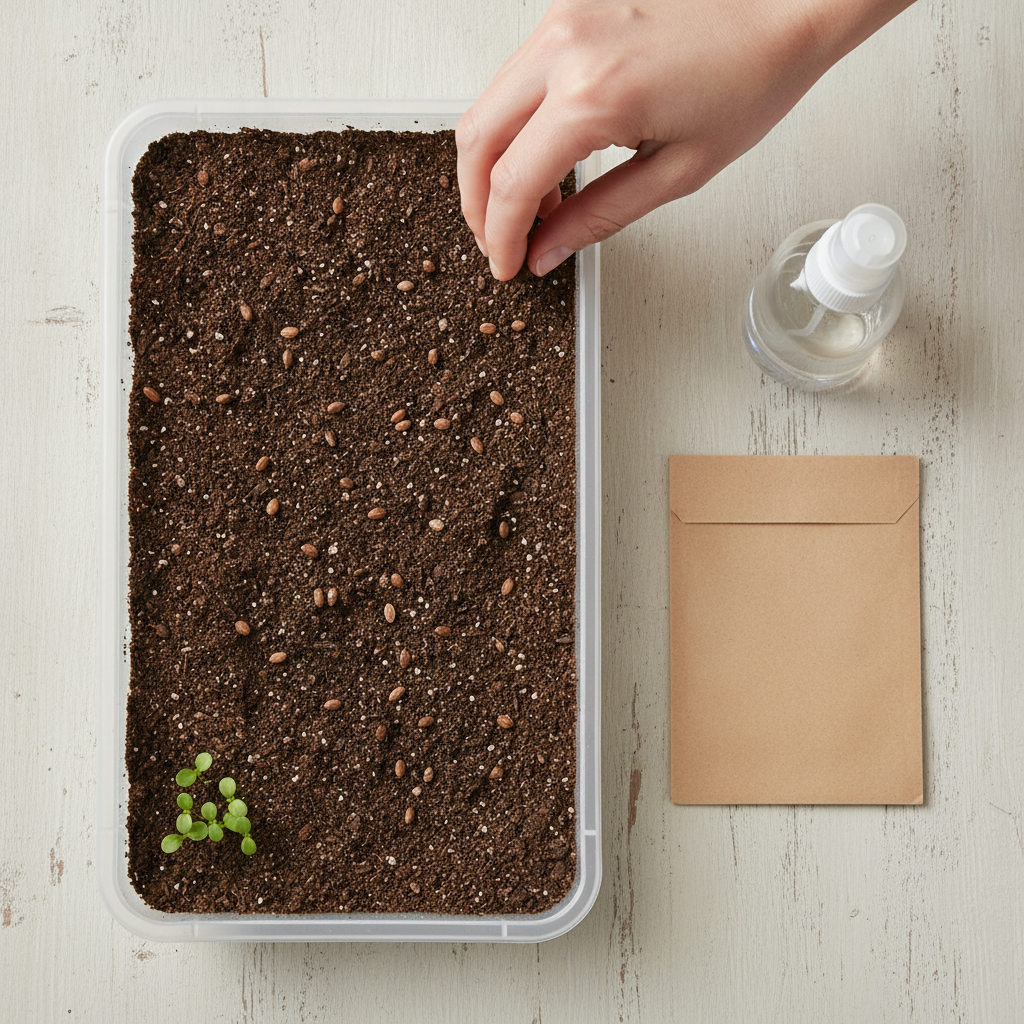
Sow fresh seed for the best germination. The steps are straightforward once you have viable seed in hand.
- Fill a shallow tray or small pots with a fine, free-draining seed-starting mix and moisten it evenly.
- Scatter the seed thinly across the surface and press it in lightly; do not bury it deeply, as these seeds benefit from surface warmth and light.
- Keep the mix consistently warm, around 20 to 24 °C (68 to 75 °F), and lightly humid by covering the tray with a clear lid or propagator dome.
- Provide bright, indirect light and mist the surface if it begins to dry, aiming for damp but never waterlogged.
- Expect germination over a few weeks; once seedlings have their first true leaves, ventilate gradually and let the surface dry a little more between mistings to harden them off.
- Prick out and pot on individually into gritty succulent mix once the little plants are large enough to handle.
For most people, buying a nursery-grown seedling is far more practical than raising your own from seed, and it directly supports the propagation programmes that keep the species going. If you do want to try seed, source it from a reputable specialist and sow it as soon as it arrives.
Pro Tip — Timing the brush: Hawaiian palm flowers are most receptive and most fragrant in the evening, a legacy of their moth-pollinated past. If you are hand pollinating, work in the late afternoon or evening when the flowers are freshest for the best chance of setting seed.
Pests and Problems
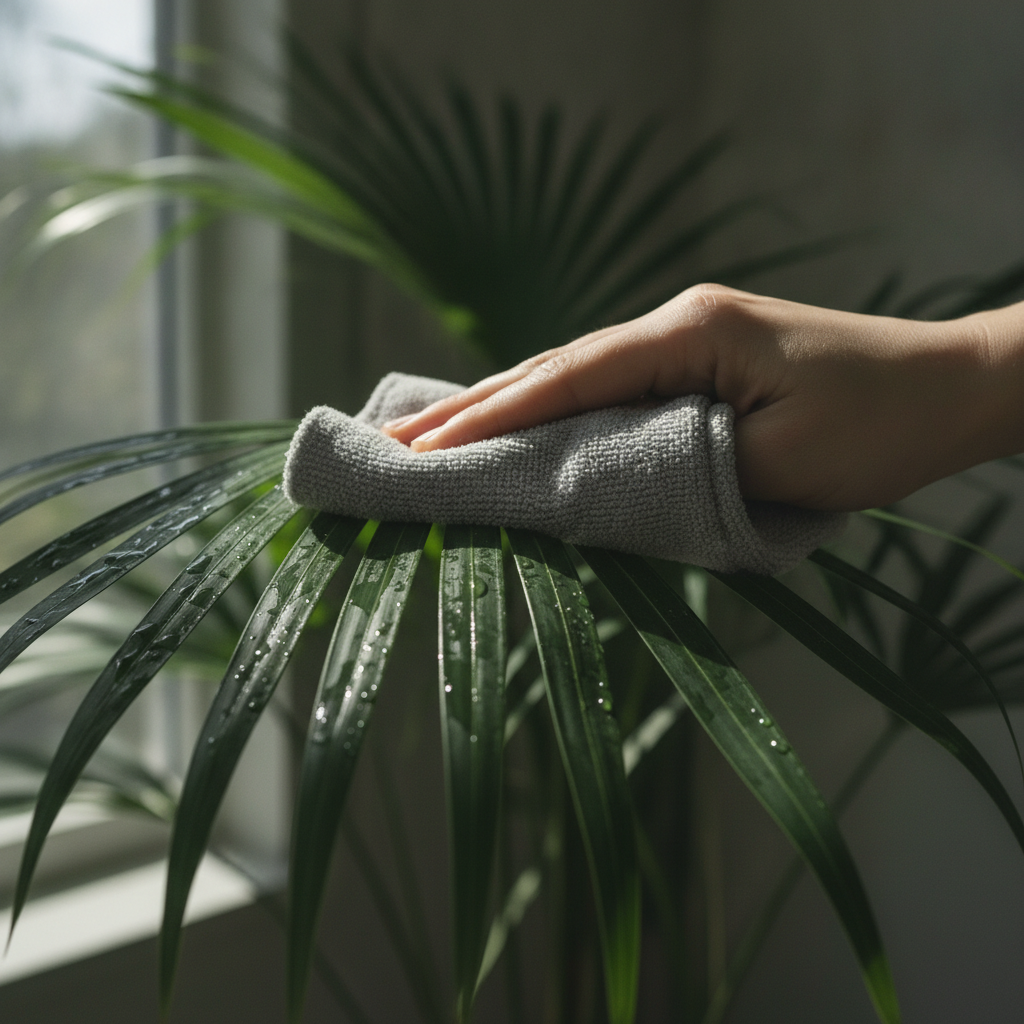
Indoors the Hawaiian palm is troubled by the usual cast of sap-sucking pests, and its glossy leaves and tucked-in growing point give them plenty of places to hide. Vigilance is the best defence. Wipe the leaves every week or two with a damp cloth, which both keeps them clean and gives you a routine chance to inspect the undersides and the leaf axils where problems begin.
Spider mites are the most common nuisance, especially in warm, dry rooms with still air. They are tiny and easy to miss until you spot fine stippling on the leaves or delicate webbing between them. Mealybugs, which appear as small white cottony tufts nestled in the crown and leaf joints, are the next most likely visitor, followed by aphids on soft new growth and the occasional scale insect stuck fast to a stem. For light infestations, wipe the pests off with a cotton bud dipped in diluted isopropyl alcohol, then follow up with an insecticidal soap or a diluted neem oil spray, repeating every week or so until the population is gone.
Most of the serious trouble with this plant, though, is not a pest but a cultural mistake. Leaf drop is the symptom people worry about most, and its meaning depends on the season. In autumn and winter, shedding leaves is a normal part of dormancy and nothing to fear. Sudden leaf loss in the growing season, on the other hand, signals stress, most often from overwatering, a cold draught, or an abrupt change in position. A soft, discoloured or shrivelling stem points to root rot from a mix that has stayed too wet, which is the most dangerous condition of all and needs immediate action: unpot, cut away rot, and replant into dry, gritty mix. Yellowing lower leaves usually mean too much water, while a stretched, sparse crown means too little light.
| Symptom | Likely cause | What to do |
|---|---|---|
| Leaf drop in autumn or winter | Normal dormancy | Reduce watering and wait; growth resumes in spring |
| Sudden leaf drop in summer | Overwatering, cold draught or shock | Check roots, stabilise position and temperature |
| Soft, wrinkled or darkening stem | Root rot from wet mix | Unpot, remove rot, replant in dry gritty mix |
| Fine webbing and stippled leaves | Spider mites | Raise humidity, wipe leaves, treat with soap or neem |
| White cottony tufts in the crown | Mealybugs | Dab with alcohol, then treat with insecticidal soap |
| Pale, stretched, sparse growth | Insufficient light | Move to a brighter spot or add a grow light |
Warning — Mind the sap: Like many of its bellflower relatives, the Hawaiian palm exudes a milky latex when cut or damaged. Treat it as mildly toxic and an irritant. Wash your hands after pruning or repotting, keep the sap out of your eyes, and site the plant where curious pets and children are not tempted to chew it.
Varieties and Relatives
The genus Brighamia is tiny, containing just two species, and there are no cultivated colour forms or fancy variegated selections to collect. What variation exists is at the species level, between Brighamia insignis and its rarer white-flowered cousin. Both share the same distinctive succulent architecture and the same care needs, so knowing them apart is more about appreciation than horticulture.
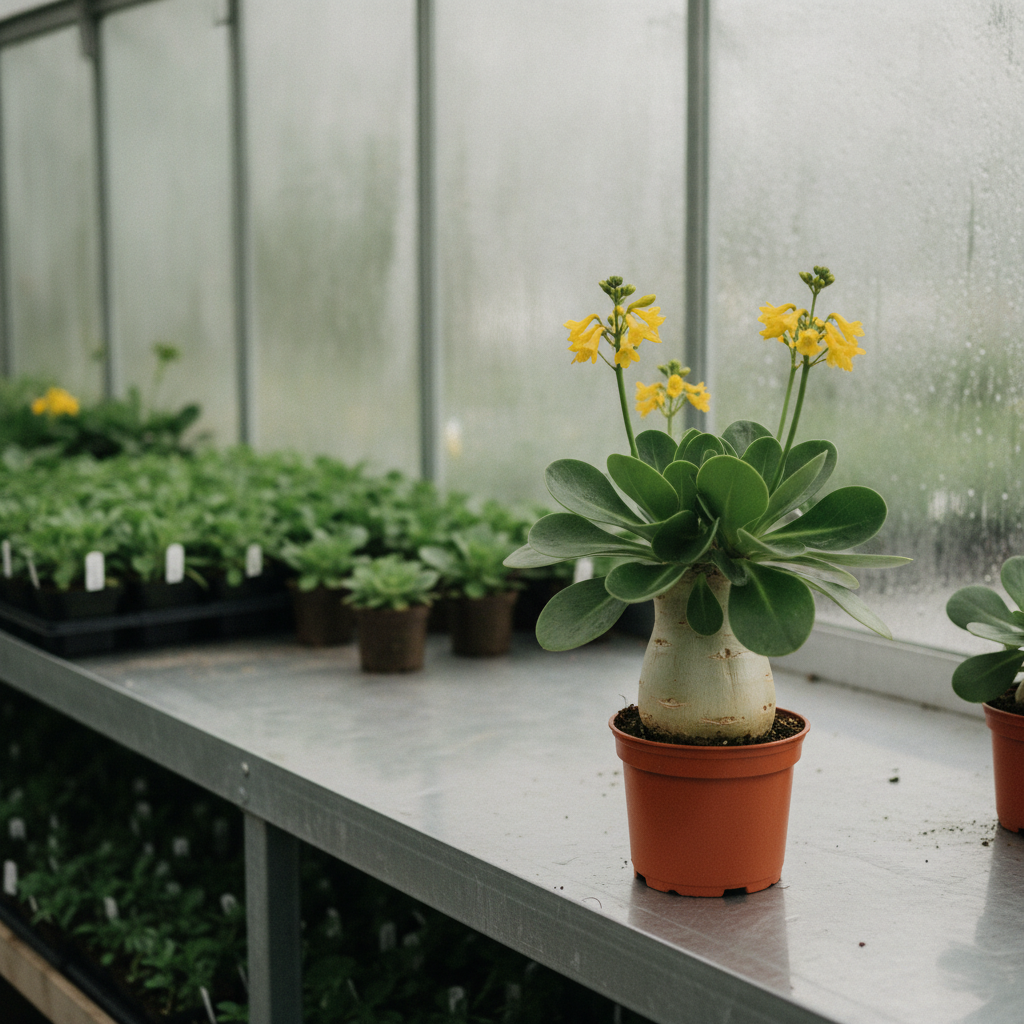
Brighamia insignis (ʻŌlulu)
The plant almost always sold as the Hawaiian palm. It carries a fat, pale-green caudex topped with a symmetrical rosette of shiny, spoon-shaped leaves, and produces clusters of fragrant, creamy-yellow tubular flowers in autumn. Native to Kauaʻi and Niʻihau, it is the species at the heart of the cliff-pollination rescue effort and the one you are most likely to bring home.
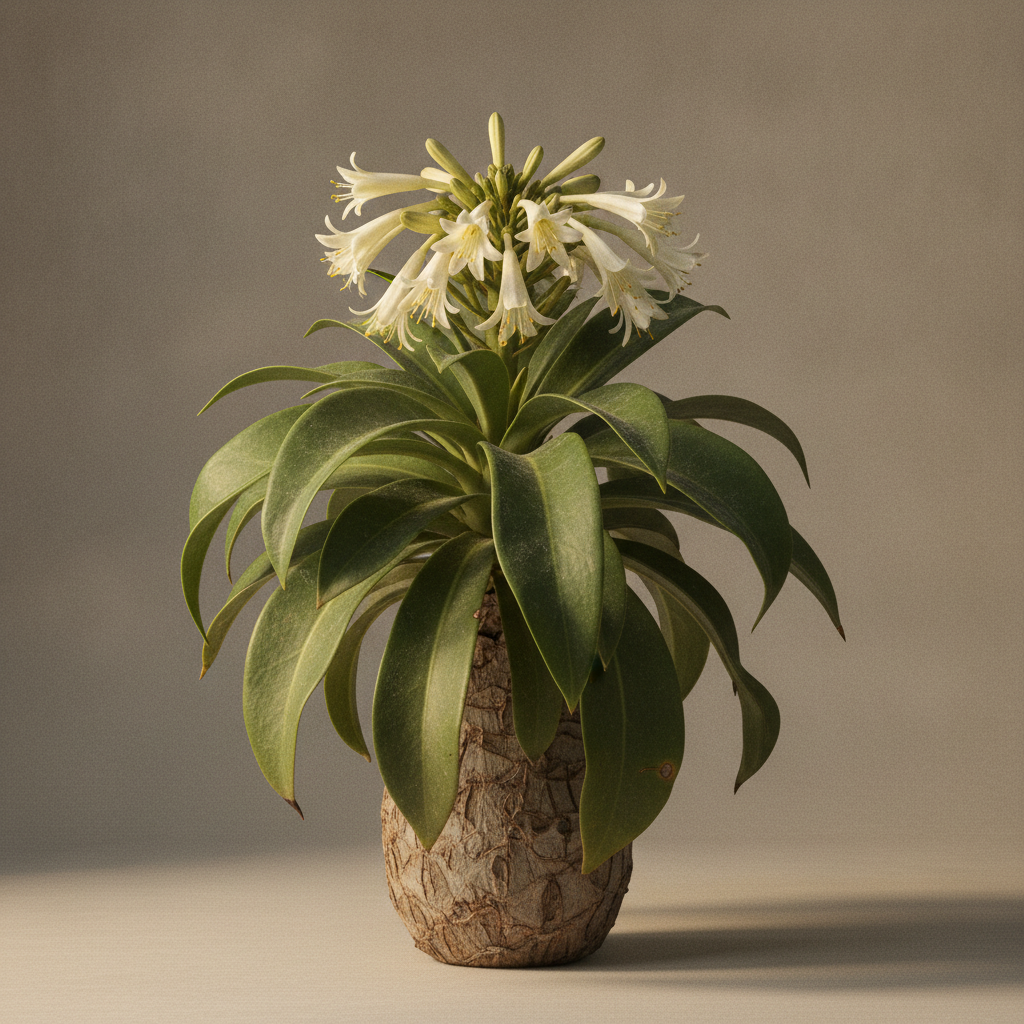
Brighamia rockii (pua ʻala)
The rarer relative, endemic to Molokaʻi and even more endangered in the wild. It has a similar swollen trunk but slightly broader, more matte leaves and, most distinctively, white rather than yellow tubular flowers. It is seldom offered in the houseplant trade, so an established rockii is a real prize for a collector, and its care is identical to that of insignis.
Frequently Asked Questions
Is the Hawaiian palm actually a palm?
No. Despite the name and the palm-like silhouette, Brighamia insignis belongs to the bellflower family, Campanulaceae, and is a succulent Hawaiian lobelioid. The resemblance to a palm is entirely superficial, produced by its bare, tapering stem and tuft of leaves at the top.
Why is my Hawaiian palm dropping all its leaves?
Timing tells you whether to worry. In autumn and winter, dropping much of the crown is normal seasonal dormancy, and the plant will releaf in spring. In the growing season, sudden leaf loss usually points to overwatering, a cold draught or a recent move. Check that the stem is still firm and that the mix is drying between waterings, and stabilise the plant’s position and temperature.
How often should I water it?
There is no fixed schedule. Water thoroughly only when the top three to four centimetres of mix have dried out, which might be weekly in bright summer warmth and only every few weeks in winter. Always drain off excess and never let the pot stand in water. When unsure, wait, because this plant tolerates drought far better than sogginess.
Can I grow a Hawaiian palm from a cutting?
Not reliably. Unlike most succulents, it does not root from leaf or stem cuttings, and it is propagated almost exclusively from seed. Producing that seed requires hand pollination between two genetically distinct plants, so for most growers buying a nursery-raised seedling is the only realistic way to acquire another.
Is the Hawaiian palm toxic to pets?
It is best treated with caution. The plant produces a milky sap typical of its family that can irritate skin and is not meant to be eaten, so keep it out of reach of pets and children and wash your hands after handling cut stems. If an animal or child does chew the plant, contact your vet or doctor for advice.
Will it flower indoors?
It can. A healthy, mature plant grown in strong light often produces clusters of fragrant, creamy-yellow tubular flowers in autumn. Bright light through the growing season is the key trigger, so a plant kept in a dim spot is unlikely to bloom even if it is otherwise healthy.
Grown well, the Hawaiian palm is a conversation piece with genuine substance: a sculptural succulent, an evening-scented bloomer and a living emblem of one of botany’s more hopeful rescue stories. Give it bright light, a gritty mix and a disciplined hand with the watering can, respect its winter rest, and this cliff-dweller will reward you with years of quiet, characterful growth.