
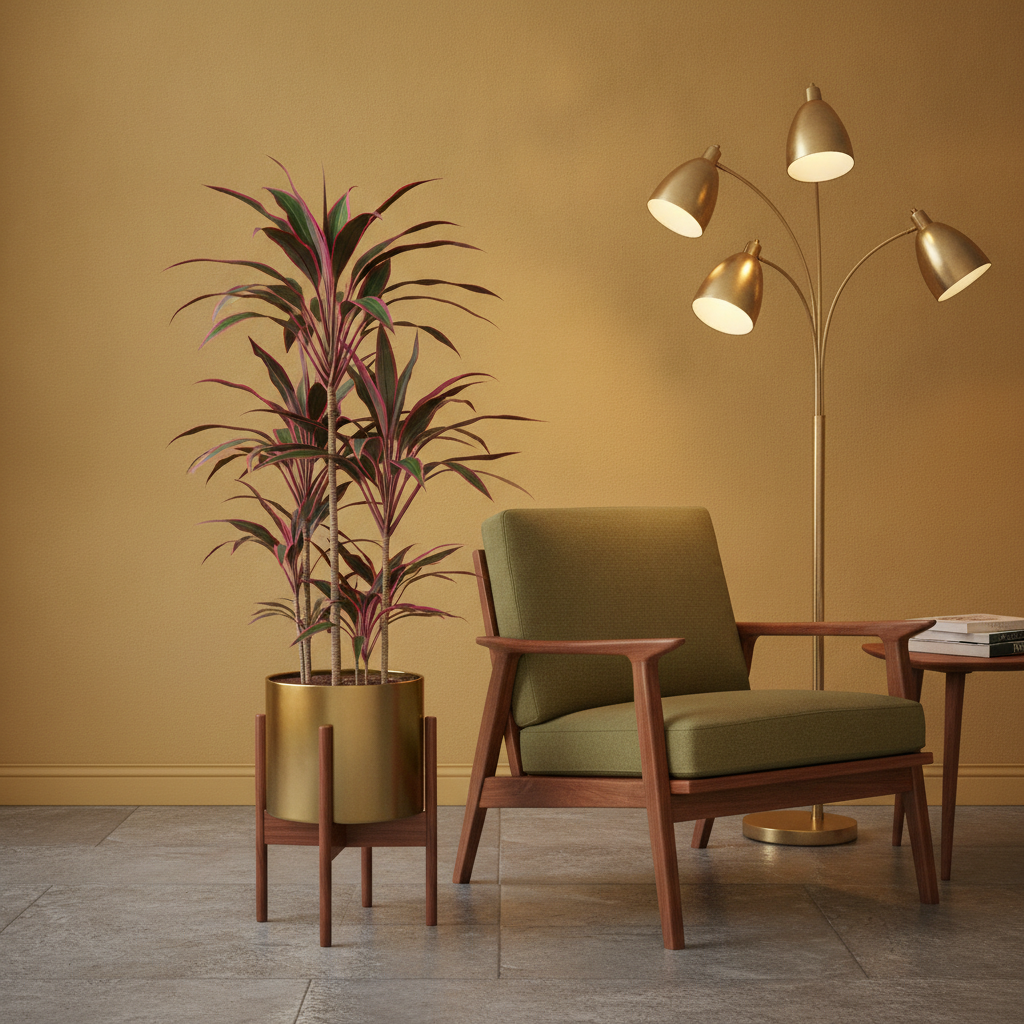
Few houseplants bring colour indoors quite like the Red Edge Cordyline, a striking tropical shrub whose upright canes carry fountains of glossy, sword-shaped leaves brushed with green, burgundy and vivid pink margins. Known botanically as Cordyline terminalis (a name now widely treated as synonymous with Cordyline fruticosa), it belongs to the asparagus family and traces its origins to the humid forests and island coasts stretching from Southeast Asia through Papua New Guinea and out across the Pacific. Polynesian voyagers carried it from island to island for centuries, using it for food, medicine, clothing and ceremony, and today its ornamental cultivars are among the most recognisable of all the “Ti plants”.
As a houseplant, the Red Edge Cordyline has a reputation for being demanding, and there is some truth to that: it wants warmth, steady moisture, bright light and clean water, and it will sulk conspicuously if any of those slip. Yet almost every one of its complaints is preventable once you understand what it is asking for. This guide draws a clear line between merely keeping the plant alive and helping it truly thrive, walking through light, watering, soil, feeding, propagation and pest control in enough detail that you can diagnose problems before they cost you leaves.
Contents
- Quick Reference
- Why Red Edge Cordyline Makes a Rewarding Houseplant
- Light Requirements
- Watering & Humidity
- Soil, Potting & Repotting
- Fertilising
- Propagation
- Pests & Diseases
- Popular Varieties
- Frequently Asked Questions
Quick Reference: Red Edge Cordyline at a Glance
| Light | Bright indirect light with a few hours of gentle direct sun; more light means deeper leaf colour |
| Watering | Keep the mix evenly moist, never waterlogged; water when the top 2 to 3 cm (1 in) feels dry |
| Temperature | 18 to 27 degrees C (65 to 80 degrees F); avoid anything below 10 degrees C (50 degrees F) |
| Humidity | High, ideally 60 percent or more; struggles below 40 percent |
| Fertiliser | Balanced liquid feed at half strength every 4 to 6 weeks in spring and summer |
| Toxicity | Toxic to cats and dogs; keep away from pets that chew foliage |
Why Red Edge Cordyline Makes a Rewarding Houseplant
The immediate appeal of the Red Edge Cordyline is its colour. Where most foliage plants offer variations on green, this cordyline delivers a living painting of magenta, wine-red and cream that shifts as new leaves emerge and mature. A well-grown specimen forms a slender, palm-like silhouette, with a bare lower cane topped by a dense whorl of arching leaves, making it an excellent vertical accent in a room that needs height without bulk. It reads as tropical and exotic while staying narrow enough for a corner, a hallway or a spot beside a sofa.
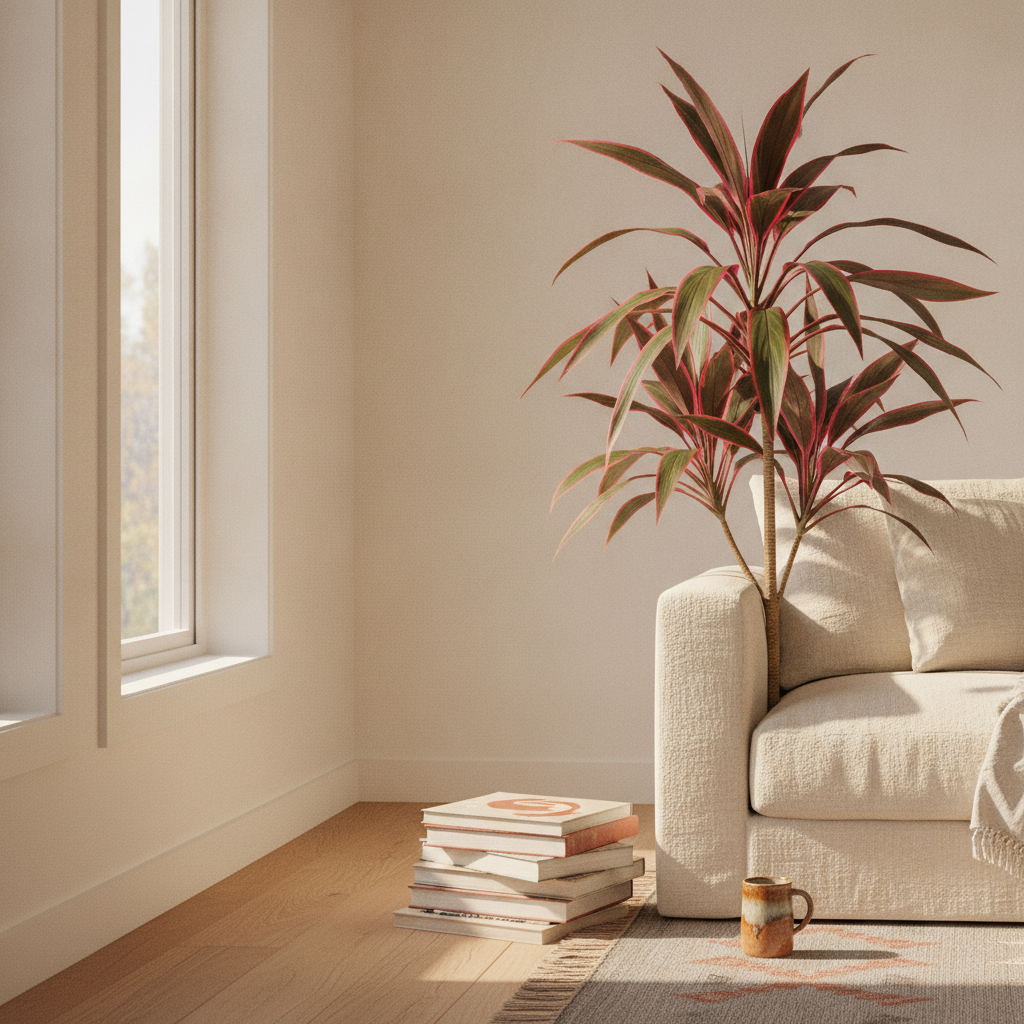
Beyond looks, the plant rewards attention in a way that suits growers who enjoy being involved with their plants rather than ignoring them. It responds quickly and visibly to good care, pushing out brightly coloured new growth when it is happy, and its problems tend to announce themselves clearly through leaf tips and colour rather than dying quietly out of sight. It is also long-lived and easy to propagate, so a single plant can become a cluster of gifts or a fuller pot over the years. The trade-off for that responsiveness is that it will not tolerate neglect the way a snake plant or a ZZ plant does, which makes it a poor choice for someone who forgets to water for weeks but a genuinely satisfying one for an engaged plant keeper.
Important — Toxicity: All parts of the Red Edge Cordyline contain saponins that are toxic to cats and dogs, and chewing the leaves can cause drooling, vomiting, loss of appetite and, in cats, dilated pupils. While the plant is not considered dangerously poisonous to humans, it should not be eaten, and it is safest to position it out of reach of pets and small children who might be tempted to nibble the colourful foliage.
Light Requirements
Light is the single most important factor in growing a colourful cordyline, because the red and pink pigments that make this plant worth owning are directly tied to how much light it receives. In dim conditions the plant survives but reverts towards plain green, loses the vivid margins and stretches awkwardly towards the nearest window. In good light it colours up, holds its leaves densely and keeps a compact, upright habit.
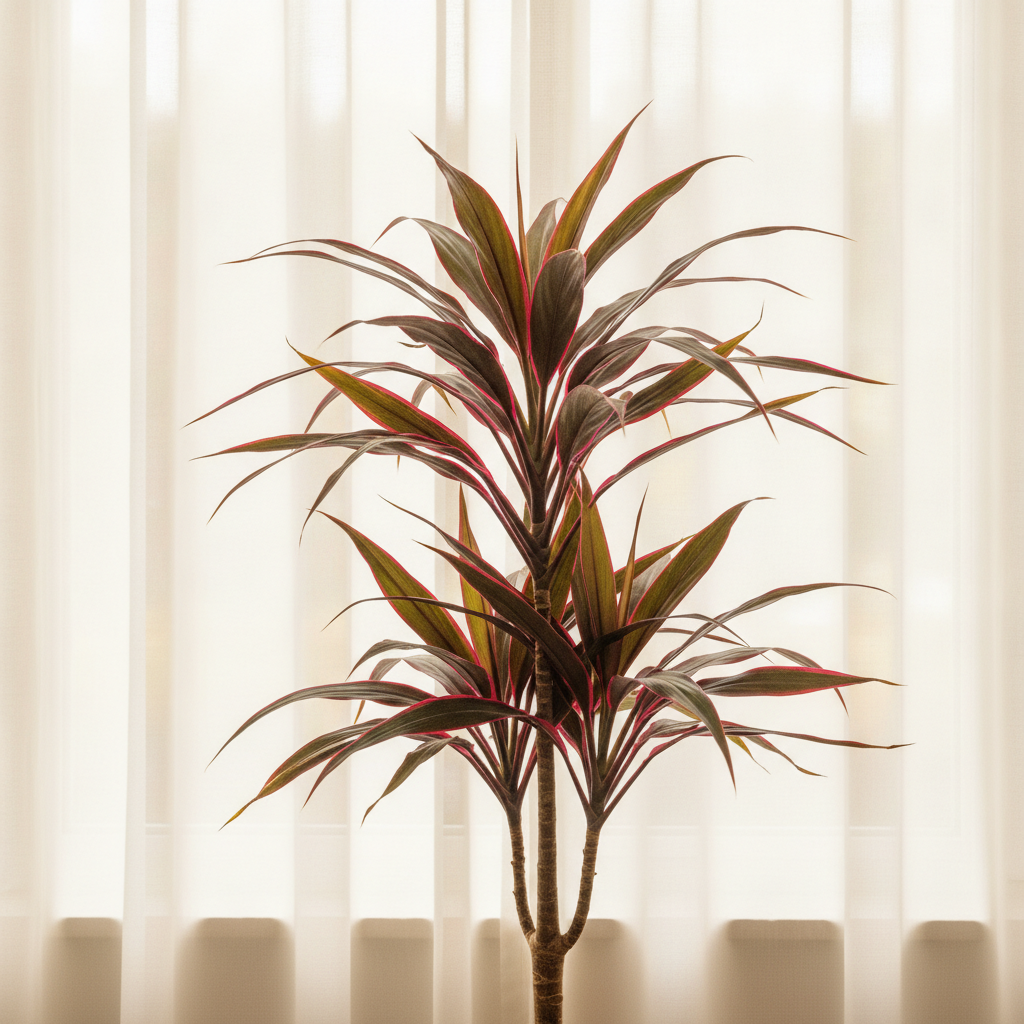
The ideal is bright, indirect light for most of the day with a couple of hours of gentle direct sun, such as the low light of early morning or late afternoon. A position within a metre or two of a bright window, or directly in an east-facing window, tends to hit the sweet spot: enough intensity to drive strong colour without the fierce midday rays that can scorch the thin leaves.
Light Levels Explained
Because “bright light” means different things in different homes, it helps to translate the categories into rough measurements and everyday locations. The table below sets out how the Red Edge Cordyline responds across the range.
| Light Category | Approx. Level | Typical Location | Outcome |
|---|---|---|---|
| Direct sun | Over 50,000 lux | Unshaded south window in summer | Risk of scorch and faded, bleached patches |
| Bright indirect | 15,000 to 40,000 lux | Near an east or filtered south window | Best colour, dense growth, compact habit |
| Medium | 7,000 to 15,000 lux | A metre or two back from a bright window | Acceptable growth, slightly muted colour |
| Low | 2,000 to 7,000 lux | North window or interior wall | Colours fade to green, weak stretched stems |
| Very low | Under 2,000 lux | Hallway or far corner | Gradual decline, leaf drop, poor colour |
Window Orientation and Placement
South-facing window: Offers the most light and can produce superb colour, but the direct midday sun in spring and summer is strong enough to scorch the leaves. Set the plant back from the glass or diffuse the light with a sheer curtain rather than placing it right against the pane.
East-facing window: Often the best all-round choice. The plant receives bright, gentle direct light in the morning and comfortable indirect light for the rest of the day, which suits both colour and habit without much risk of burning.
West-facing window: A good option too, though the afternoon sun is more intense than morning light. Watch for scorching during heatwaves and pull the plant back slightly if you see pale, dry patches developing on the sun-facing leaves.
North-facing window: Usually too dim to maintain strong colour. The plant will survive here for a while but tends to fade towards green, grow leggy and lose its lower leaves. If a north window is your only option, supplement with a grow light.
Pro Tip — Rotate for Even Growth: Cordylines lean noticeably towards their light source. Give the pot a quarter turn every week or two so all sides receive similar light, which keeps the crown balanced and prevents the cane from bending permanently towards the window.
How Light Affects Leaf Colour
The pink and red pigments in cordyline leaves are anthocyanins, and the plant produces more of them in response to higher light. This is why the same plant can look almost entirely green in a shady room and blaze with magenta margins a few weeks after moving to a brighter spot. New leaves emerging in good light show the most saturated colour, while leaves that developed in shade never fully colour up even if you brighten conditions later. If your plant has faded, the fix is more light, introduced gradually so the leaves are not shocked, and patience while fresh growth comes through in its proper colours.
Warning — Direct Sunlight: Moving a plant straight from indoor light into strong, unfiltered sun almost always causes sunscald, appearing as pale, papery or bleached patches that never recover. Acclimatise any plant to brighter light over a week or two, and avoid harsh midday sun through unshaded south or west glass in summer.
Artificial Lighting
Where natural light falls short, a full-spectrum LED grow light does an excellent job of maintaining cordyline colour, particularly through the darker months. Position the light around 30 to 45 cm (12 to 18 in) above the crown and run it for roughly 10 to 12 hours a day on a timer. Because colour depends so heavily on light, growers in dim rooms often find a grow light is the difference between a green, sulking plant and a vivid one.
Seasonal Adjustments
Light intensity indoors drops sharply between summer and winter, so a spot that was perfect in July may be too dim in January. Move the plant closer to the window as the days shorten, and clean the leaves and the glass so that no available light is wasted. In summer, be ready to pull the plant back or add a sheer layer if the sun becomes strong enough to scorch, then return it to its brighter winter position when the season turns.
Watering & Humidity
Watering is where most Red Edge Cordylines succeed or fail, because the plant wants a genuinely tricky balance: consistently moist soil that never becomes waterlogged, delivered with water that is clean and free of the fluoride and salts it cannot tolerate. Get the rhythm right and the plant is untroubled; get it wrong in either direction and the leaves react within days.
When to Water
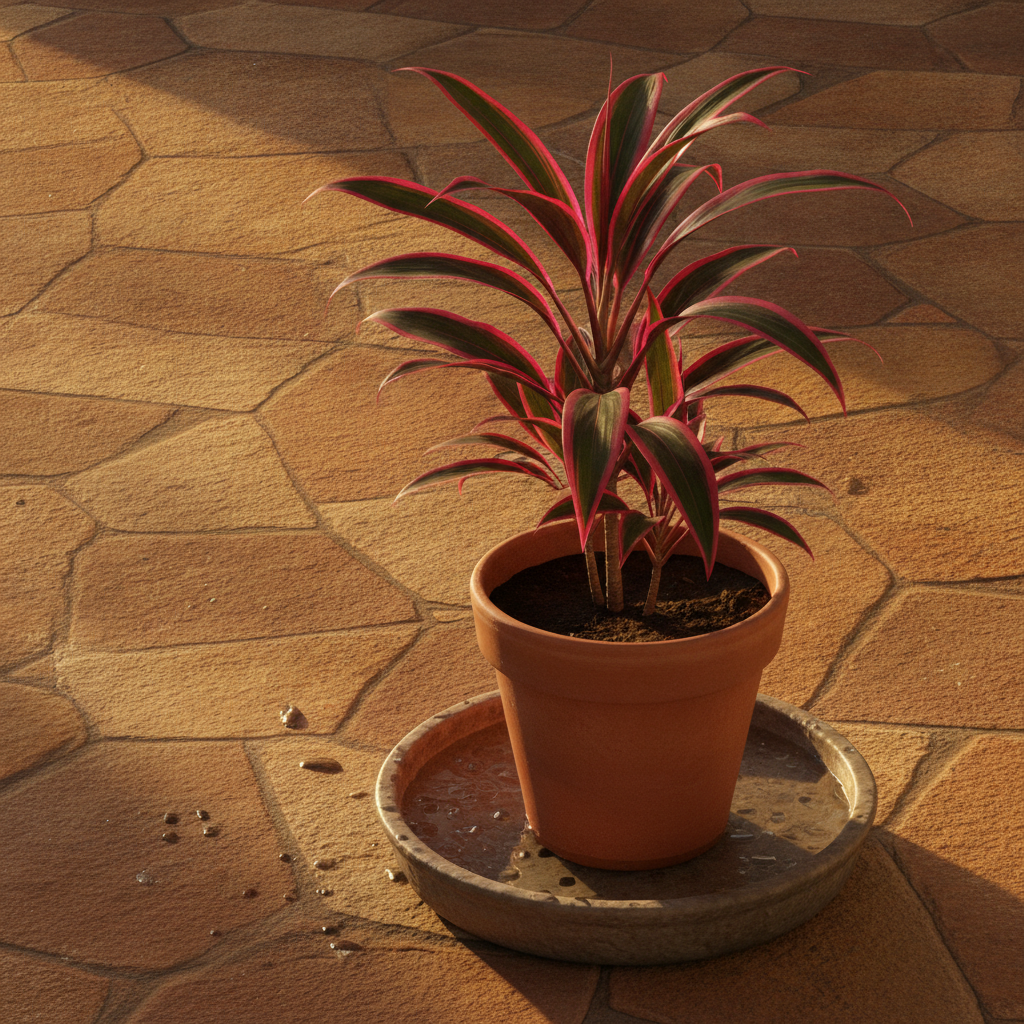
Aim to water when the top 2 to 3 cm (about 1 in) of the mix has dried but the layer below is still lightly moist. Unlike a succulent, the cordyline should not dry out completely between waterings, and letting it do so repeatedly leads to brown, crispy leaf tips and dropped lower leaves. Push a finger into the soil to check rather than relying on the surface, which dries far faster than the root zone.
Frequency depends on light, warmth and the time of year. In the bright, warm conditions of spring and summer an actively growing plant might need watering every four to seven days, while in the cool, dim months that can stretch to every ten days or more. Never water on a fixed calendar alone; check the soil each time and let its actual moisture guide you, since overwatering in winter is one of the commonest ways to kill this plant.
Pro Tip — Skip the Tap: Cordylines are notably sensitive to fluoride and chlorine in tap water, which show up as scorched brown leaf tips over time. Water with rainwater, distilled water or filtered water where you can, or at the very least leave tap water to stand uncovered overnight so some chlorine can dissipate before use.
How to Water Correctly
- Check the soil first, watering only once the top 2 to 3 cm (1 in) has dried but the deeper mix remains lightly moist.
- Use room-temperature rainwater, distilled or filtered water rather than cold, freshly drawn tap water.
- Pour slowly and evenly across the whole surface until water flows freely from the drainage holes.
- Let the pot drain completely for several minutes so the roots are never left sitting in water.
- Empty the saucer or cover pot of any collected water; standing water is a direct route to root rot.
- Every month or two, water heavily to flush accumulated salts, or bottom-water and then top-flush to keep the mix clean.
Signs of Overwatering vs. Underwatering
| Symptom | Overwatering | Underwatering |
|---|---|---|
| Leaf colour | Yellowing lower leaves, dull tone | Browning tips and margins, faded look |
| Leaf texture | Soft, limp, sometimes translucent | Dry, crispy, curling at the edges |
| Soil | Stays wet for many days, sour smell | Pulls away from the pot, bone dry |
| Roots | Brown, mushy, dark and foul-smelling | Dry, brittle and pale |
| Stem base | Soft or spongy, may darken | Firm but the whole plant looks tired |
Warning — Root Rot: Persistently soggy soil suffocates the roots and invites rot, which is far harder to reverse than drought. If the stem base feels soft or the soil smells sour, unpot the plant at once, cut away any brown mushy roots with clean tools, and repot into fresh, well-draining mix in a clean pot.
Humidity Requirements
As a plant of tropical forests and coasts, the Red Edge Cordyline loves humid air and does best when relative humidity sits at 60 percent or higher. Average household air, especially in heated rooms in winter, often falls well below that, and dry air is one of the leading causes of the crispy brown leaf tips that plague this species.
The clearest sign that humidity is too low is browning that begins at the very tips and edges of the leaves while the rest of the leaf stays healthy. This is easy to confuse with fluoride damage or underwatering, so consider all three causes together; often dry air and mineral-laden tap water are compounding each other.
To raise humidity, group the cordyline with other plants so they share moisture, stand the pot on a wide tray of pebbles topped up with water (keeping the pot base above the waterline), or run a small humidifier nearby, which is by far the most reliable method. Bathrooms and kitchens with good light also tend to be naturally more humid than living rooms. Misting offers only a brief lift and is not a substitute for genuinely more humid air.
Water Quality
It is worth restating because it matters so much: water quality is not a minor detail for this plant but a core part of its care. Fluoride, added to many municipal water supplies, accumulates in the leaf tips and causes the brown, dead margins that are the cordyline’s signature complaint. Chlorine and general salt build-up add to the problem. Rainwater is ideal and free; distilled or reverse-osmosis water is excellent; filtered water is a reasonable compromise. If you can only use tap water, flush the soil thoroughly every few weeks to keep minerals from concentrating in the root zone.
Soil, Potting & Repotting
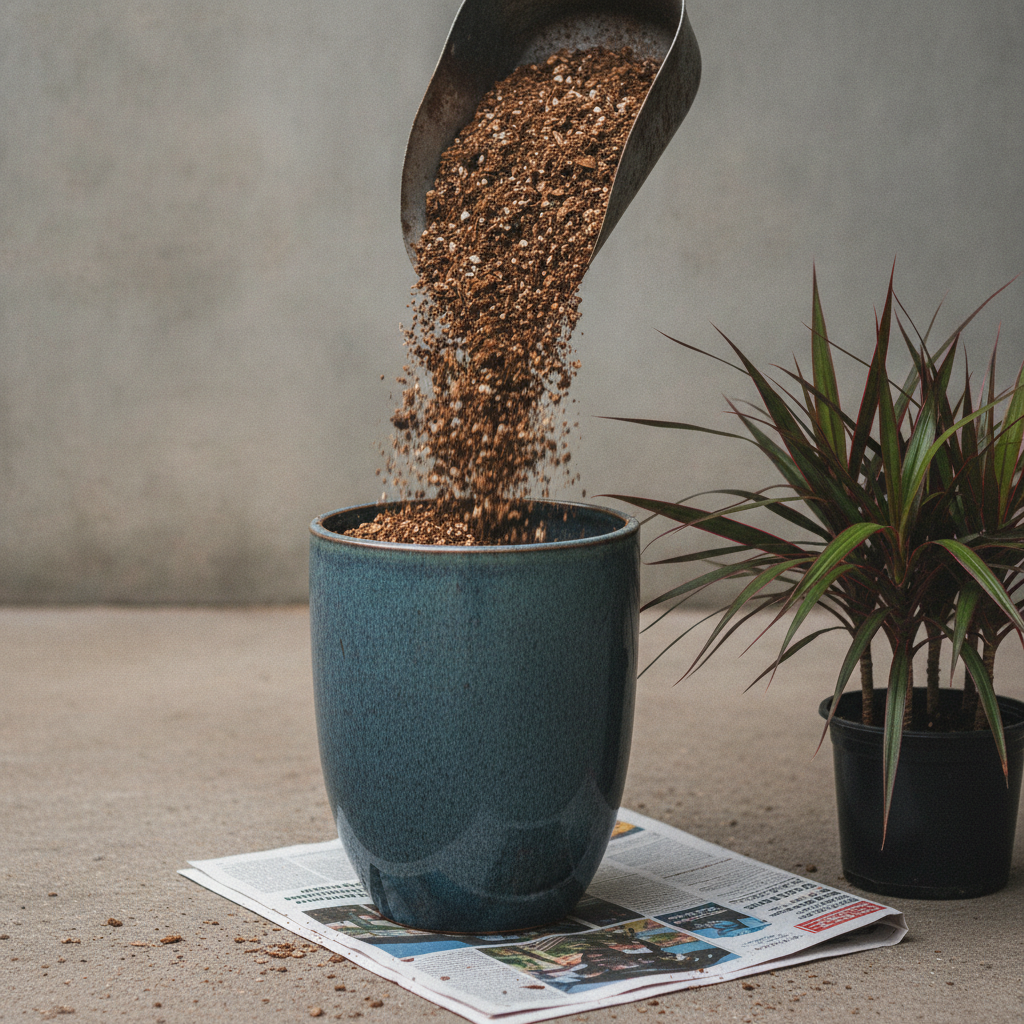
The Red Edge Cordyline needs a growing medium that threads the needle between holding moisture and draining freely, since the plant likes to stay evenly damp but rots quickly in stagnant, airless soil. A quality mix also anchors the tall, sometimes top-heavy cane and keeps the fine roots aerated.
Ideal Soil Composition
Start with a good peat-free houseplant compost as the base and open it up with materials that improve drainage and aeration. A blend built around quality potting soil, bark and coarse grit or sand gives the moisture retention the plant wants while ensuring excess water drains away. Because cordylines are fluoride-sensitive, it is worth being cautious with perlite and heavy superphosphate-based composts, which can be sources of fluoride; horticultural grit, pumice or coarse bark make safer aerating additions.
| Component | Proportion | Function |
|---|---|---|
| Peat-free houseplant compost | 50 percent | Base structure, moisture and nutrient retention |
| Fine orchid or composted bark | 25 percent | Air pockets, drainage, prevents compaction |
| Coarse grit or pumice | 15 percent | Sharp drainage and weight to steady the cane |
| Coco coir or worm castings | 10 percent | Holds moisture and adds gentle fertility |
Cordylines prefer a slightly acidic to neutral root environment, roughly pH 6.0 to 6.5, which most peat-free houseplant composts sit close to. There is rarely any need to adjust pH deliberately; simply avoid strongly alkaline tap water and limestone-based grits, which can nudge conditions the wrong way over time.
Pro Tip — Quick Mix Recipe: For a fast, reliable blend, combine two parts peat-free houseplant compost, one part fine bark and one part coarse grit or pumice, with a handful of worm castings stirred through. It drains well, stays lightly moist and steadies the plant’s height.
Choosing the Right Pot
The right container supports both drainage and stability, which matters for a plant that can grow tall and top-heavy on a slender cane. A pot only slightly larger than the root ball is better than a very large one, which holds more water than the roots can use.
Drainage holes are non-negotiable. Whatever the material or style, the pot must have holes so excess water can escape. Decorative covers without drainage are fine only if you lift the inner nursery pot out to water and drain it, then return it once it has stopped dripping.
Pot material: Terracotta breathes and dries faster, which helps guard against overwatering but means you will water more often. Glazed ceramic and plastic hold moisture longer and suit the cordyline’s love of consistent dampness, provided you do not overwater. A heavier ceramic pot also lends useful ballast to a tall plant.
Pot size: Move up just one size, roughly 2 to 4 cm (1 to 2 in) more in diameter, when repotting. Oversized pots leave large volumes of wet soil around the roots and raise the risk of rot, so resist the urge to give the plant lots of room at once.
When to Repot
The Red Edge Cordyline is not a fast grower and does not need frequent repotting, usually every two to three years, or when you see roots emerging from the drainage holes, water running straight through without wetting the mix, or growth slowing noticeably. Early spring, as the plant enters its active season, is the best time, giving it the whole growing period to settle and recover.
How to Repot: Step-by-Step
- Water the plant a day before repotting so the root ball is hydrated and holds together.
- Ease the plant out by tipping the pot and supporting the cane, rather than pulling on the leaves.
- Gently tease apart circling roots and brush away some of the old, spent mix from the outer root ball.
- Inspect the roots, trimming any that are brown, soft or rotten with clean, sharp tools.
- Set the plant in a pot one size larger over a layer of fresh mix, keeping it at its previous depth.
- Fill around the roots with fresh mix, firming lightly to remove air gaps and steady the cane.
- Water thoroughly with clean water and return the plant to bright, indirect light while it re-establishes.
Warning — Transplant Shock: Some leaf droop or a pause in growth after repotting is normal. Do not compound it by fertilising straight away or moving the plant into stronger light; keep conditions stable, water carefully and wait three to four weeks before resuming feeding.
Fertilising
Feeding supports the steady production of new, brightly coloured leaves, but the Red Edge Cordyline is easily over-fed and sensitive to the salts that fertilisers leave behind. The guiding principle is little and often at reduced strength, rather than heavy doses that risk scorching the fluoride-sensitive foliage.
Feed only during the active growing season of spring and summer, when the plant can actually use the nutrients. In autumn and winter growth slows or stops, and fertiliser applied then simply accumulates as salt in the soil, contributing to the very leaf-tip burn you are trying to avoid.
Understanding Plant Nutrients
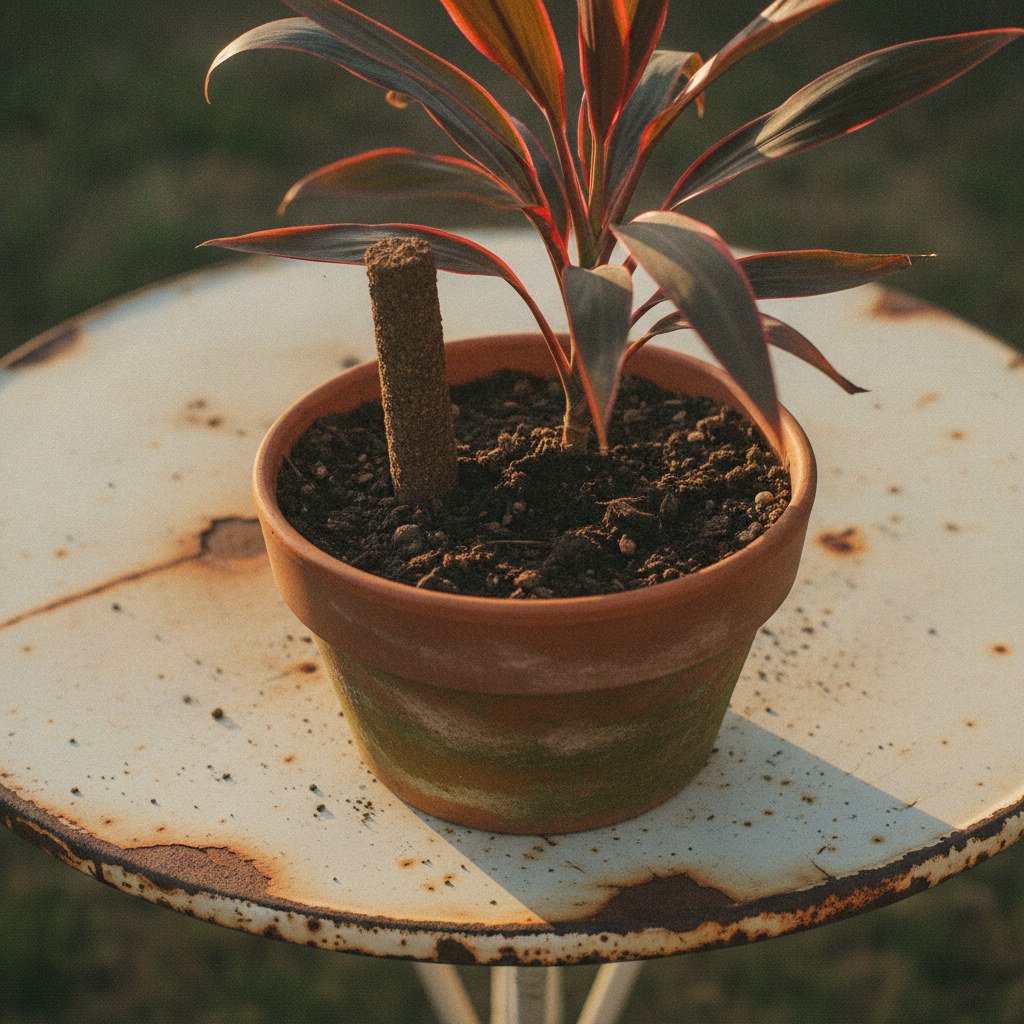
Fertilisers are labelled with an N-P-K ratio showing the percentages of nitrogen, phosphorus and potassium, the three nutrients plants use in the largest amounts. For a foliage plant grown for its leaves, a balanced or slightly nitrogen-forward formula works well. Alongside these, a handful of secondary and trace nutrients keep the plant healthy, and their absence shows up as characteristic patterns of yellowing or discolouration.
| Nutrient | Symbol | Primary Function | Deficiency Symptoms |
|---|---|---|---|
| Nitrogen | N | Leaf and stem growth, green pigment | Pale, yellowing older leaves, slow growth |
| Phosphorus | P | Root development and energy transfer | Dull leaves, weak roots, stunted growth |
| Potassium | K | Overall vigour and water regulation | Yellow or brown leaf margins |
| Calcium | Ca | Cell wall strength, new growth | Distorted, hooked or weak new leaves |
| Magnesium | Mg | Core of the chlorophyll molecule | Yellowing between the veins of older leaves |
| Iron | Fe | Chlorophyll formation in new growth | Yellowing between veins on young leaves |
Types of Fertiliser
Liquid fertilisers: The easiest to control and the best match for this plant. Diluted to half the recommended strength and applied to already-moist soil, they deliver nutrients evenly and let you stop instantly in autumn.
Slow-release granular: Convenient but harder to regulate, releasing nutrients whenever the soil is warm and moist. If you use them, choose a gentle formulation and use less than the label suggests, since it is easy to over-supply a plant this sensitive.
Organic fertilisers: Worm castings, diluted seaweed and other organic feeds release nutrients slowly and gently, improve the soil and carry little risk of scorching. They are a good fit for cautious feeding and pair well with a light hand on synthetic feeds.
Feeding Schedule
Through spring and summer, feed with a balanced liquid fertiliser at half strength roughly every four to six weeks. That is usually enough to keep colourful new leaves coming without building up salts. As light fades in autumn, taper off and then stop entirely for winter, resuming only when you see fresh growth restart in spring.
Pro Tip — Half Strength, Moist Soil: Always dilute to half the label rate and apply to soil that is already damp. Feeding concentrated fertiliser onto dry roots is the fastest way to scorch a cordyline’s leaf tips, so water first, then feed.
How to Fertilise
- Water the plant first, or feed a day after a normal watering, so the roots are never dry.
- Dilute a balanced liquid fertiliser to half the recommended strength in clean water.
- Pour the solution evenly over the soil until it just begins to drain from the base.
- Avoid splashing fertiliser onto the leaves, wiping off any that lands to prevent marking.
- Flush the pot with plain water every couple of months to wash out accumulated salts.
Warning — Salt Build-Up: A white crust on the soil surface or pot rim, together with worsening brown leaf tips, signals fertiliser salts accumulating in the mix. Leach the pot by running plenty of clean water through it, and cut back on feeding frequency and strength.
Propagation
One of the great pleasures of the Red Edge Cordyline is how readily it propagates. A single tall or leggy plant can be turned into several, and the same cuts that renew an overgrown specimen also give you new plants for free, which makes propagation both a tidying job and a way to expand your collection.
The plant propagates from stem and tip cuttings rather than from single leaves, and the best time to do it is spring or early summer when warmth and light drive quick rooting. Because cordylines can regrow from sections of bare cane, an old plant that has lost its lower leaves can be cut into pieces and each piece coaxed into a fresh, well-clothed plant.
Understanding Nodes and Cane Sections
Along every cordyline cane are growth points, or nodes, from which new shoots and roots can emerge. This is what allows a bare length of stem, sometimes sold as a “ti log”, to sprout fresh growth: kept warm and moist, dormant buds at the nodes wake up and push out shoots. Understanding this makes propagation intuitive, because any piece of cane with at least one node has the potential to become a whole new plant.
Tip Cuttings: Step-by-Step
Tip cuttings, taken from the leafy crown of the plant, are the quickest route to a good-looking new cordyline because they already carry a rosette of coloured leaves. This method also usefully lowers the height of a plant that has grown too tall.
- Using clean, sharp secateurs, cut the top 10 to 15 cm (4 to 6 in) of a stem just below the leafy crown.
- Remove the lowest one or two leaves to expose a short length of bare stem with a node.
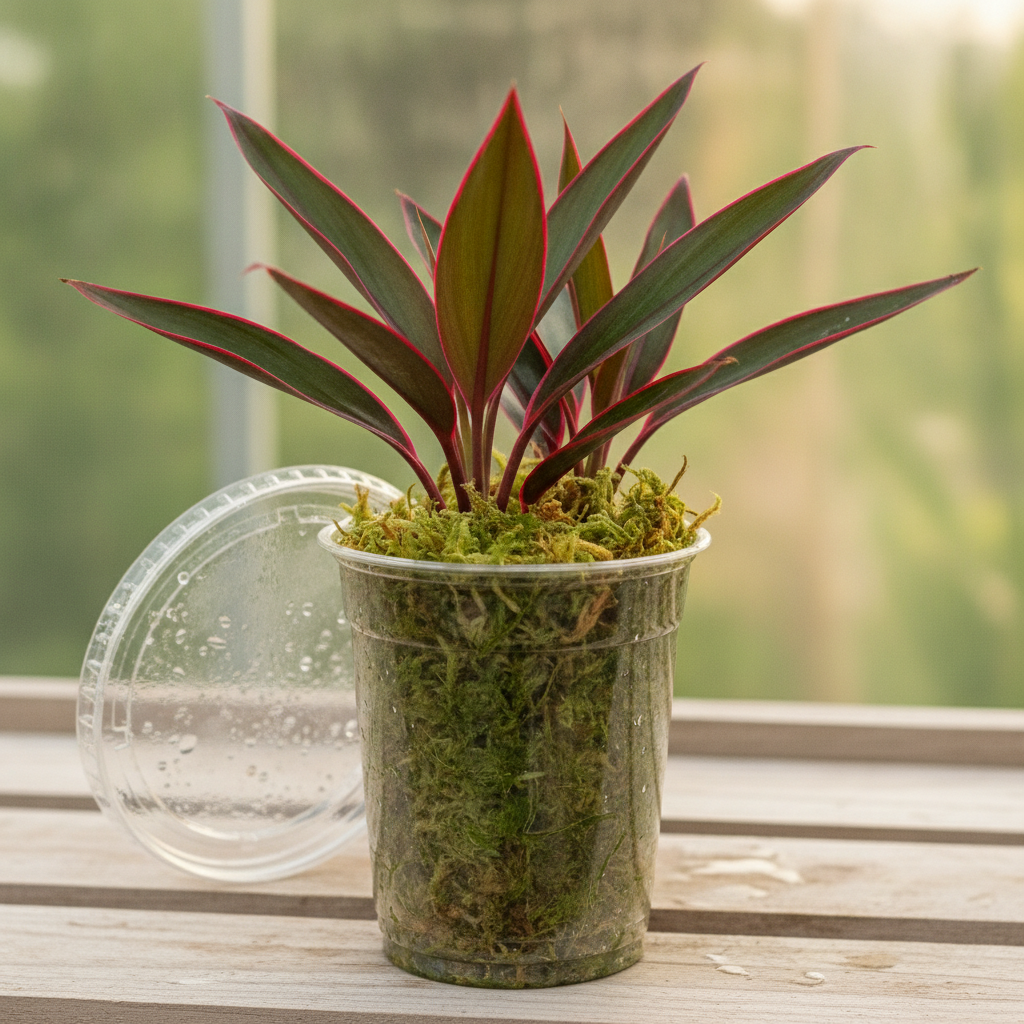
- Insert the cutting into damp sphagnum moss or a light, moist propagation mix, or stand it in clean water.
- Cover with a clear bag or place in a humidity dome or deli cup to keep the air around it moist.
- Keep warm, at 21 to 27 degrees C (70 to 80 degrees F), in bright indirect light, refreshing water or misting the moss as needed.
- Roots usually form within three to six weeks; once they are a few centimetres long, pot the cutting into normal mix.
Pro Tip — Bottom Heat Speeds Rooting: Cordyline cuttings root markedly faster with gentle warmth at the base. A heat mat set to around 24 degrees C (75 degrees F), or simply a warm spot on top of a cabinet, can cut rooting time significantly compared with a cold windowsill.
Cane Cuttings: Step-by-Step
Cane, or stem, cuttings make use of the bare length of trunk left after you take a tip cutting, so nothing is wasted. Each section with a node can sprout new shoots, though it is slower and less predictable than a tip cutting.
- Cut the remaining bare cane into sections 5 to 8 cm (2 to 3 in) long, each containing at least one visible node.
- Note which end was uppermost, since sections must be planted the right way up to shoot correctly.
- Lay sections horizontally half-buried in moist mix, or stand them upright with the lower end in the soil.
- Keep the mix lightly moist and warm in bright indirect light, covering to maintain humidity.
- New shoots emerge from the nodes over several weeks to a couple of months; pot each rooted section on once it is growing strongly.
Troubleshooting Propagation
| Problem | Likely Cause | Solution |
|---|---|---|
| Cutting rots at the base | Too wet, dirty water or unsterile tools | Use clean tools and fresh water, and avoid waterlogged mix |
| No roots after many weeks | Too cold or too dark | Add bottom heat and move to brighter indirect light |
| Leaves shrivel on the cutting | Humidity too low around the cutting | Cover with a dome or bag to trap moisture |
| Cane section fails to shoot | Planted upside down or node damaged | Replant the right way up with an intact node |
Pests & Diseases
A Red Edge Cordyline grown in bright light, humid air and clean water is fairly resilient, but stressed plants, and especially those in dry winter rooms, do attract a familiar cast of houseplant pests. Catching them early is far easier than clearing an established infestation, so make a habit of checking the leaves, particularly their undersides and the leaf axils, whenever you water.
Many of this plant’s troubles are not living pests at all but disorders caused by its environment, chiefly fluoride and salt in the water and dry air. Learning to tell a physiological brown tip from a pest problem saves a great deal of unnecessary spraying and points you towards the real fix.

Common Pests
Spider Mites (Tetranychus urticae)
The most common and most damaging pest of indoor cordylines, spider mites thrive in warm, dry air. They are tiny and hard to see, but their fine webbing between leaves and the pale stippling or speckling they leave on the foliage give them away, often after the plant has already been weakened by low humidity.
Treatment: Rinse the plant thoroughly, raise humidity, and treat with insecticidal soap or neem oil, repeating every five to seven days until clear. Because mites explode in dry conditions, fixing the humidity is as important as the treatment itself.
Mealybugs (Pseudococcus species)
Mealybugs appear as small, white, cottony tufts tucked into leaf axils and along the stem. They feed on sap, weaken the plant and excrete sticky honeydew that can lead to sooty mould.
Treatment: Dab each insect with a cotton bud dipped in isopropyl alcohol, then follow up with insecticidal soap or neem oil. Inspect the plant weekly, since mealybugs hide well and tend to return from missed pockets.
Scale Insects (Coccidae family)
Scale look like small brown or tan bumps stuck to stems and the undersides of leaves, and their hard shells make them easy to overlook. Like mealybugs they suck sap and produce honeydew, gradually sapping the plant’s vigour.
Treatment: Scrape or wipe them off with an alcohol-dampened cloth, then treat with neem oil or horticultural oil to smother any young crawlers, repeating until no new scale appear.
Common Diseases
Root Rot (Pythium and Phytophthora species)
Root rot follows persistently soggy soil and poor drainage, with the roots turning brown and mushy while the plant above wilts, yellows and softens at the base despite wet soil. Left unchecked it is usually fatal.
Treatment: Unpot the plant, cut away all rotten roots with sterile tools, and repot into fresh, free-draining mix in a clean pot. Water more carefully thereafter and make sure the pot drains freely.
Leaf Spot (fungal and bacterial pathogens)
Leaf spot shows as brown or black spots, sometimes with a yellow halo, and spreads in wet, still conditions or when water is left sitting in the crown. It is more a nuisance than a killer but can disfigure the foliage.
Treatment: Remove affected leaves, improve air circulation, avoid wetting the foliage, and keep water out of the crown. A copper-based fungicide can help in stubborn cases.
Fluoride Toxicity (physiological disorder)
Not a disease in the infectious sense but the cordyline’s signature complaint, fluoride toxicity produces dead brown tips and margins on otherwise healthy leaves, caused by fluoride in tap water and certain fertilisers accumulating in the leaf edges.
Treatment: Switch to rainwater, distilled or filtered water, flush the soil to remove built-up salts, and avoid superphosphate fertilisers and perlite. Trim the dead tips for appearance, following the natural leaf shape.
Pest and Disease Summary
| Pest / Disease | Identification | Treatment |
|---|---|---|
| Spider mites | Fine webbing, pale stippling on leaves | Rinse, raise humidity, neem or insecticidal soap |
| Mealybugs | White cottony tufts in leaf axils | Alcohol swabs, then neem or soap |
| Scale | Brown bumps on stems and leaf undersides | Scrape off, treat with horticultural oil |
| Root rot | Mushy brown roots, wilting in wet soil | Trim roots, repot in fresh mix, water less |
| Leaf spot | Brown or black spots with yellow halos | Remove leaves, improve airflow, keep foliage dry |
| Fluoride toxicity | Brown tips and margins on healthy leaves | Use clean water, flush salts, avoid perlite |
Prevention Strategies
The best defence is a plant grown well in the first place. Bright light, humidity above 50 percent, clean water and careful watering keep the cordyline vigorous enough to shrug off most problems, while the same conditions deny spider mites the hot, dry air they need to multiply. Quarantine any new plant for a couple of weeks before it joins your others, and inspect the leaves each time you water so that anything arriving is caught while it is still a handful of insects rather than a colony.
Good hygiene rounds out the picture. Wipe the leaves occasionally to remove dust and let you spot early pests, clear away fallen debris that can harbour fungi, and use clean tools when you prune or propagate. A plant checked regularly and kept in the right conditions rarely faces a serious outbreak.
Pro Tip — Neem as Routine Defence: A light monthly spray of diluted neem oil on the leaves, tops and undersides, during the growing season works as a gentle preventative against mites and scale. Apply it in the evening or out of direct sun so the treated leaves do not scorch.
Popular Varieties
The Red Edge Cordyline is one selection within an enormous and colourful group of Cordyline fruticosa cultivars, bred and named over generations for their leaf colour, size and patterning. Because the parent species is so variable, growers can choose from forms in every shade from near-black burgundy to bright pink, cream-striped green and multicoloured blends.
Care is essentially the same across the group, so choosing between them is mostly a matter of colour and eventual size. The table and profiles below cover some of the most widely available and rewarding named forms.
| Variety | Leaf Appearance | Light Needs | Growth Rate | Availability |
|---|---|---|---|---|
| Red Edge | Green leaves with bold pink-red margins | Bright indirect | Moderate | Common |
| Red Sister | Magenta-pink new growth over burgundy | Bright indirect | Moderate | Common |
| Kiwi | Green striped chartreuse and cream, pink edge | Bright indirect | Moderate | Common |
| Rubra | Deep maroon and green broad leaves | Bright indirect | Moderate | Common |
| Chocolate Queen | Chocolate-brown flushed with pink | Bright indirect | Slow to moderate | Occasional |
| Electric Pink | Near-black leaves with vivid pink margins | Bright indirect | Moderate | Occasional |
| Florica | Narrow leaves with fine pink-red edges | Bright indirect | Moderate | Occasional |
Featured Varieties
Red Sister
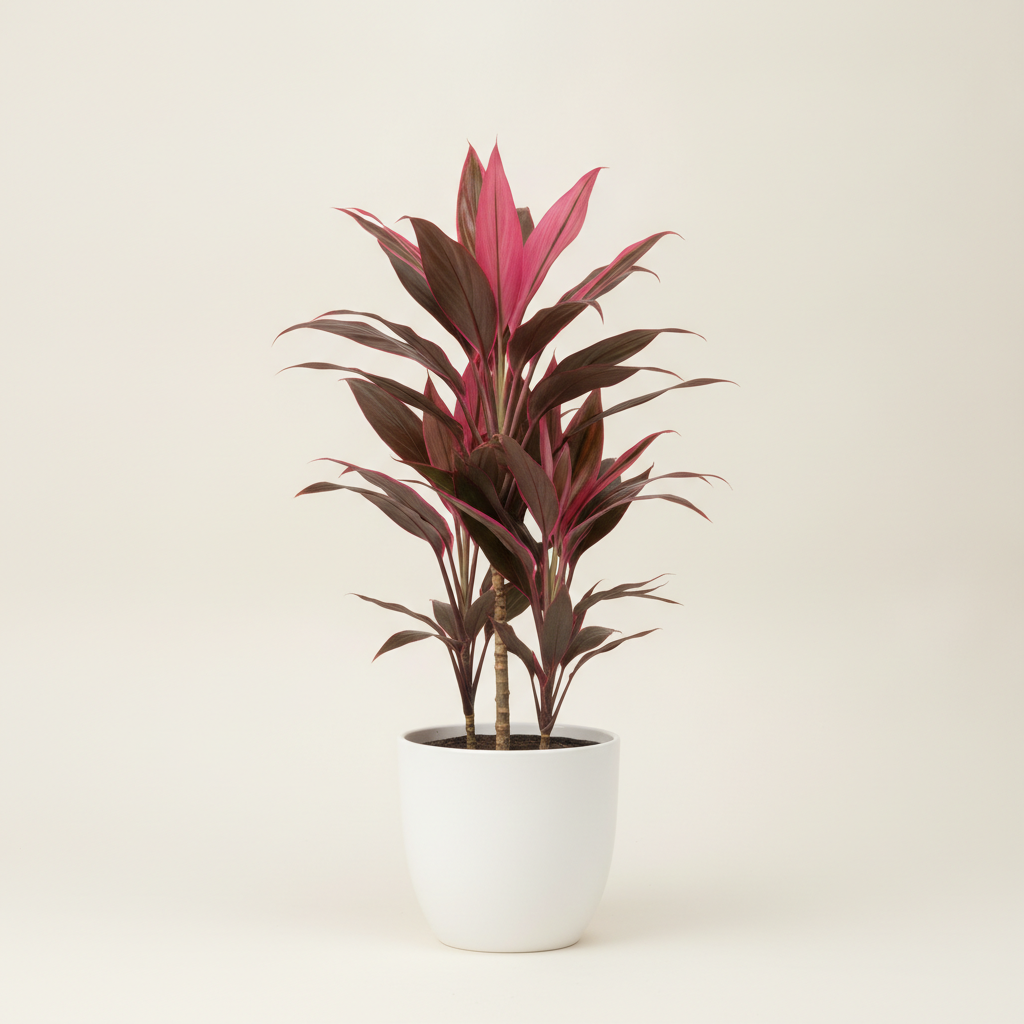
Perhaps the most striking of the group, ‘Red Sister’ pushes out bright magenta-pink new leaves that deepen to rich burgundy as they age, giving the whole plant a glowing, two-tone crown. It colours best in strong indirect light and is widely sold as a bold, upright accent plant.
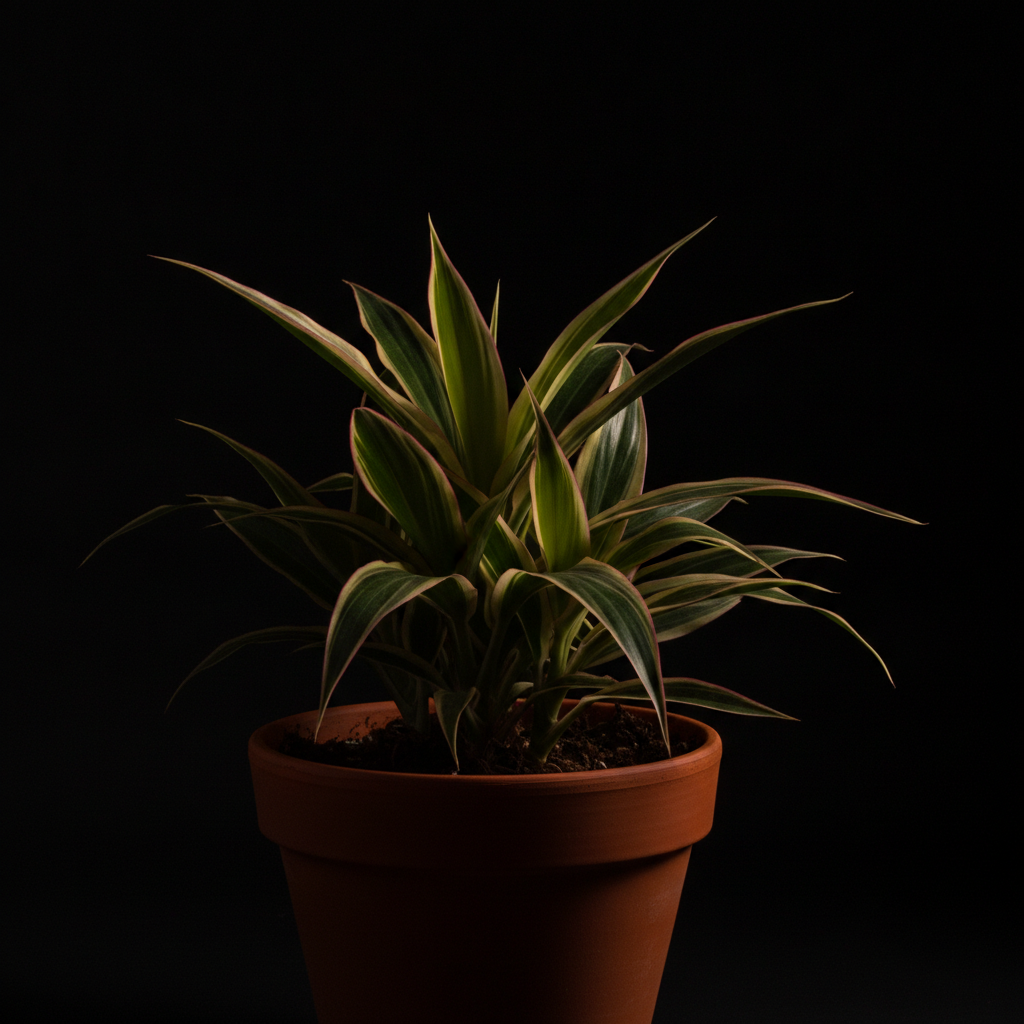
Kiwi
A softer, more layered look, ‘Kiwi’ has broad green leaves streaked with chartreuse and cream and finished with a thin pink-red margin. It is a little more forgiving of slightly lower light than the darkest forms, though its pink edging still brightens with more sun.
Variety Profiles in Detail
Red Edge (Cordyline fruticosa ‘Red Edge’)
The classic compact form, ‘Red Edge’ pairs deep green leaf centres with clean pink-to-red margins, staying smaller and denser than many of its relatives. That combination of manageable size and reliable colour is exactly why it is such a popular starting point for growers new to cordylines.
Rubra (Cordyline fruticosa ‘Rubra’)
An old and dependable cultivar, ‘Rubra’ carries broad leaves in deep maroon and green that hold their colour well in good light. It tends to grow a little more robustly than the finer pink forms and makes a substantial, dramatic floor plant over time.
Electric Pink (Cordyline fruticosa ‘Electric Pink’)
For the boldest colour contrast, ‘Electric Pink’ sets almost black leaves against searing pink margins, a combination that needs strong light to develop fully. It is more of a collector’s choice and rewards the extra attention with some of the most vivid foliage in the group.
Choosing the Right Variety for Your Space
Match the variety to your light before anything else, since the darkest and pinkest forms such as ‘Electric Pink’ and ‘Red Sister’ demand the brightest positions to look their best, while gently variegated types like ‘Kiwi’ cope a touch better with moderate light. Think too about eventual size and habit: compact forms such as ‘Red Edge’ suit tabletops and narrow corners, whereas robust cultivars like ‘Rubra’ become impressive floor-standing specimens. Whichever you choose, the care is the same, so pick the colour you love and give it the light, humidity and clean water it needs to shine.
Frequently Asked Questions
Why are the tips of my cordyline turning brown?
Brown leaf tips are the most common cordyline complaint and usually point to one of three causes: fluoride or salts in tap water, low humidity, or the soil being allowed to dry out too much. Switch to rainwater, distilled or filtered water, raise the humidity above 50 percent, and keep the mix evenly moist. Trim the dead tips to the natural leaf shape for appearance while the fresh growth comes through clean.
Why is my Red Edge Cordyline losing its colour?
Fading to green almost always means not enough light. The pink and red pigments depend on bright conditions, so a plant in a dim spot reverts towards plain green. Move it to a brighter position, introduced gradually, or add a grow light, and wait for new leaves to emerge in their proper colours, since already-faded leaves will not re-colour.
Is the Red Edge Cordyline toxic to pets?
Yes. The plant contains saponins that are toxic to cats and dogs, and chewing it can cause vomiting, drooling and loss of appetite, along with dilated pupils in cats. It is not considered seriously poisonous to humans but should not be eaten. Position it where curious pets and small children cannot reach the leaves.
How often should I water my cordyline?
Water when the top 2 to 3 cm (1 in) of soil has dried but the mix below is still lightly moist, which in warm bright conditions often means every four to seven days, stretching to ten days or more in winter. Always check the soil rather than following a fixed schedule, and never leave the plant standing in water.
Why are the lower leaves falling off?
Losing the occasional old lower leaf is normal as a cordyline grows and forms a bare cane. Rapid or widespread loss, though, usually signals a problem such as underwatering, cold draughts, low humidity or root rot. Review those conditions, and remember that a plant that has become leggy from natural leaf loss can be cut back and propagated to make a fuller specimen.
Can I grow a Red Edge Cordyline outdoors?
Only in warm, frost-free climates. The plant is tender and suffers below about 10 degrees C (50 degrees F), so in cool temperate regions it is grown as a houseplant or moved outdoors only for the warmest months. If you summer it outside, acclimatise it to brighter light gradually and bring it back in well before nights turn cold.
Why is my cordyline not growing?
Cordylines naturally slow or stop growing in autumn and winter, which is normal. If growth stalls during spring and summer, the usual culprits are insufficient light, underfeeding, being pot-bound or stress from poor water quality. Ensure bright light, resume half-strength feeding in the growing season, and check whether it needs repotting.
Should I mist my cordyline to raise humidity?
Misting gives only a brief lift in humidity and does little on its own, while leaving water sitting in the crown can encourage leaf spot. For a lasting improvement, use a humidifier, group plants together or stand the pot on a pebble tray of water, all of which raise the ambient humidity the plant actually benefits from.
How big does a Red Edge Cordyline get indoors?
Indoors it typically reaches around 1 to 1.5 metres (3 to 5 ft) tall over several years, forming a slender cane topped with a crown of leaves. You can keep it shorter and bushier by taking tip cuttings, which lowers the height and encourages the cut cane to branch.






