
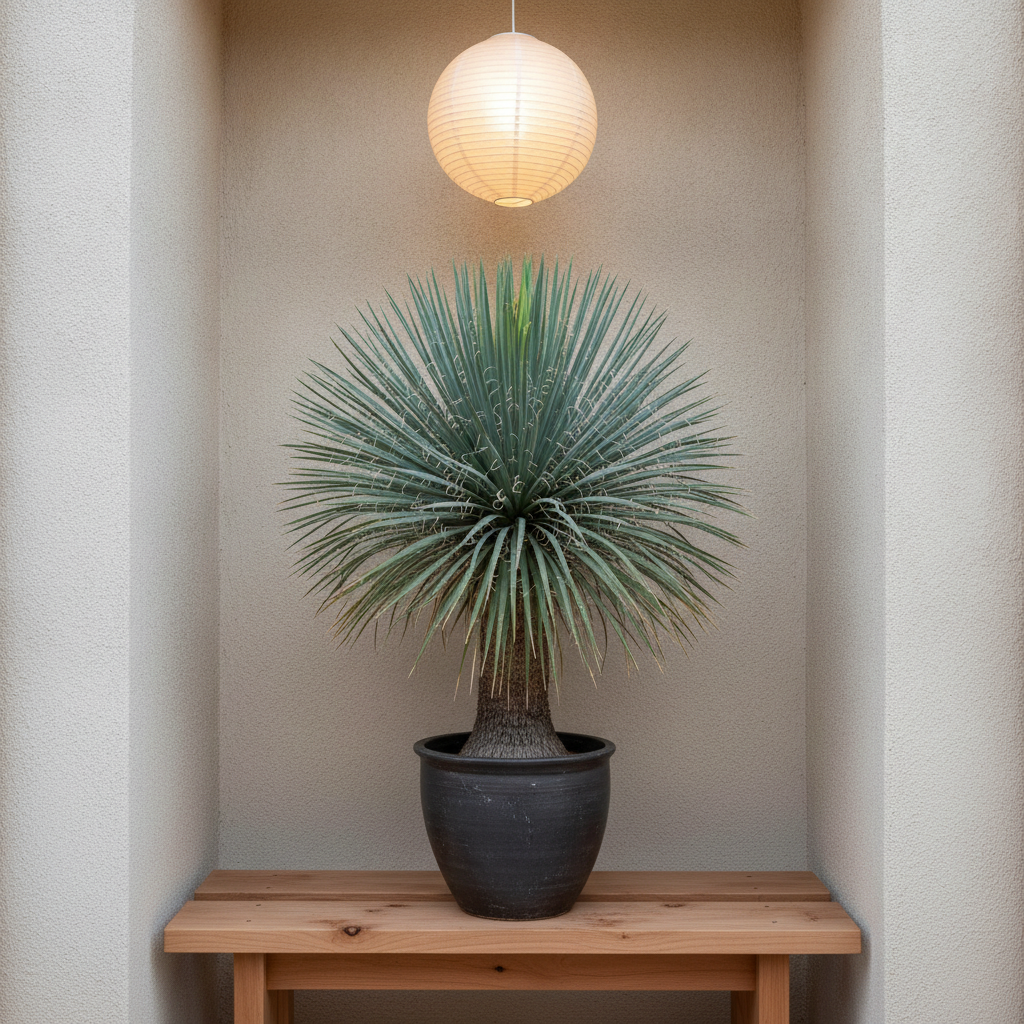
Few houseplants look quite so much like a piece of living sculpture as the ponytail yucca. Atop a slow-thickening woody trunk sits an almost perfect sphere of hundreds of slender, powder-blue leaves, each one radiating outward like a firework frozen at the moment it bursts. Known botanically as Yucca rostrata and often sold under its other common name, the beaked yucca, it comes from the sun-baked limestone slopes of the Chihuahuan Desert, and it carries that austere, mineral toughness with it into the home. This is a plant that thrives on neglect and resents fuss, which makes it one of the most rewarding architectural specimens you can grow, provided you understand the handful of things it genuinely cares about.
A quick word on names before we go further, because the word “ponytail” causes real confusion. The ponytail palm, Beaucarnea recurvata, is a completely different plant with soft, strappy, arching leaves and a swollen bottle-like base. The ponytail yucca described here is a true yucca with stiff, sharp-tipped blue foliage. If you came looking for the soft-leaved bottle-trunk plant, this is not it, though the two are often muddled on shop labels.
On this page
- Quick reference
- Why grow a ponytail yucca
- Light
- Watering
- Soil and potting
- Fertilising
- Propagation
- Pests and problems
- Varieties
- Frequently asked questions
Quick reference
| Botanical name | Yucca rostrata |
| Common names | Ponytail yucca, beaked yucca, big bend yucca |
| Family | Asparagaceae |
| Origin | Chihuahuan Desert of west Texas and northern Mexico |
| Light | Bright direct sun, the more the better |
| Water | Sparingly, only once the mix is bone dry |
| Soil | Sharp, gritty, fast-draining cactus mix |
| Temperature | 18 to 30 degrees C (64 to 86 degrees F) indoors; hardy outdoors to around minus 18 degrees C (0 degrees F) |
| Humidity | Low; dry indoor air is ideal |
| Feeding | Lightly, once or twice in spring and summer |
| Mature size indoors | Typically 1 to 1.5 metres (3 to 5 feet) in a pot over many years |
| Growth rate | Very slow |
| Toxicity | Mildly toxic to cats and dogs; sharp leaf tips are the greater hazard |
| Difficulty | Easy, as long as you resist the urge to overwater |
Why grow a ponytail yucca as a houseplant
The appeal of Yucca rostrata is largely a matter of form and colour. Where most yuccas throw up coarse green swords, this species produces a fine-textured, almost feathery globe of blue. Each leaf is narrow, no more than a centimetre across, stiffened along its length yet flexible enough at the tip to avoid the brutal rigidity of an agave, and finished with a fine, curling filament along the margin. Gathered together in their hundreds, these leaves catch light like brushed metal, shifting from grey-green in shade to a distinct sapphire cast in strong sun. Set on a bare grey trunk, the effect is closer to modern sculpture than to a typical potted plant.
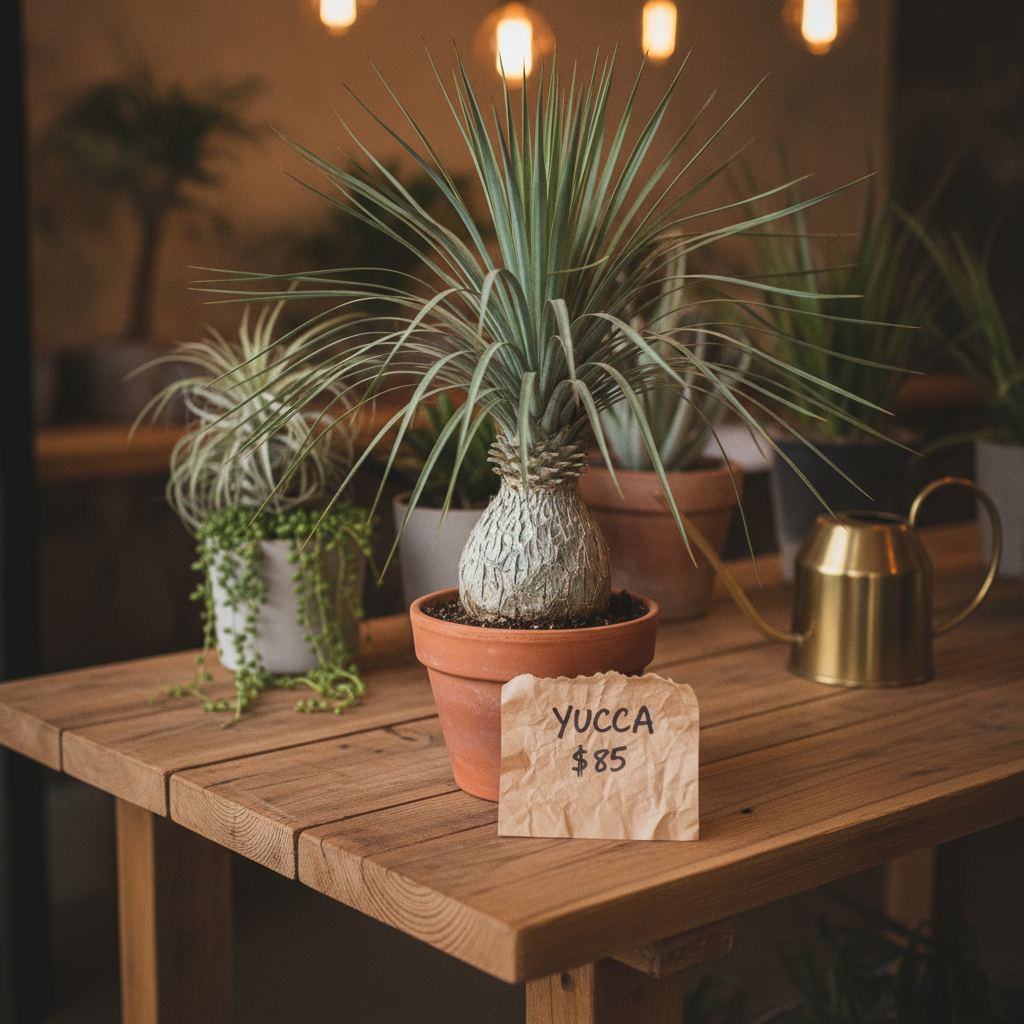
Beyond looks, the practical case for this plant rests on its toughness. It evolved on exposed desert slopes where rain is scarce and unpredictable, soils are thin and stony, and winter nights can be genuinely cold. That heritage translates into a houseplant that forgives forgetfulness, tolerates the dry air of a centrally heated room without complaint, and shrugs off the kind of bright, baking windowsill that would scorch a fern or a calathea. For anyone who travels, works long hours, or has simply killed one too many thirsty tropicals, the ponytail yucca offers architectural drama with a maintenance schedule that can be measured in weeks rather than days.
It is also worth knowing that Yucca rostrata is among the most cold-hardy of all the trunk-forming yuccas, comfortably surviving temperatures well below freezing once established. Indoors this hardly matters, but it means the plant can spend summers out on a balcony or patio and, in milder regions, even be grown permanently outside. That flexibility is unusual for a plant with such an exotic, desert-modern appearance, and it is part of why the species has become a fixture of contemporary garden and interior design alike.
Light
Light is the single factor that separates a ponytail yucca that merely survives from one that truly thrives, and there is no ambiguity about what it wants: as much direct sun as you can give it. In its native range the plant sits in the open with nothing between it and the sky, so the challenge indoors is almost never too much light but too little. Aim to place it directly in front of your brightest window, ideally one that faces south, where it can soak up several hours of unfiltered sun each day. An unobstructed west-facing window is a solid second choice, and an east window will keep it alive though the head may loosen over time.
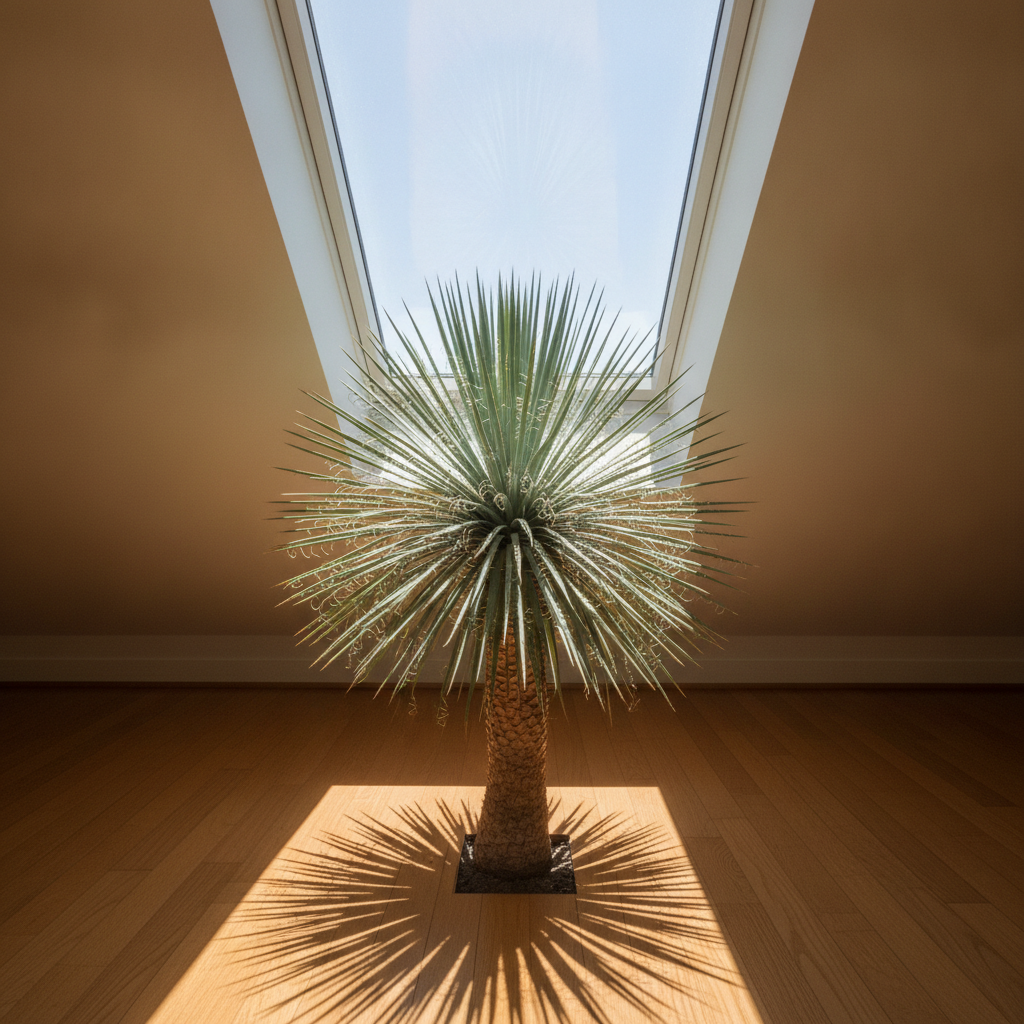
The plant will tell you clearly when it is not getting enough. In good light the leaves stay short, stiff and densely packed, and the characteristic blue bloom deepens. In insufficient light the new growth stretches, the leaves flop rather than radiate crisply, the whole head loosens and opens, and the colour drifts back towards a dull green. This etiolation is difficult to reverse, so it is far better to err on the side of more sun from the outset. If your home is genuinely short of bright windows, a full-spectrum LED grow light suspended above the plant for ten to twelve hours a day will keep it compact and coloured through the darkest months.
One caution applies when moving a plant that has been indoors, or freshly bought from a shaded greenhouse, straight out into fierce summer sun. Even a sun-lover can scorch if the transition is abrupt, because its current leaves are acclimatised to lower light. Move it outdoors gradually over a week or two, starting in a spot with morning sun and afternoon shade, before committing it to a full-day exposure. Once hardened off, it will bask happily in conditions that would flatten most other houseplants.
Pro Tip — Rotate for symmetry: Because the plant grows towards the light, a specimen left facing a window will gradually lean and lopside its otherwise perfect globe. Give the pot a quarter turn every couple of weeks to keep the head balanced and even on all sides.
Watering
If light is where you should be generous, water is where you must be disciplined. The ponytail yucca stores moisture in its trunk and fleshy roots and is built to endure long droughts, which means the fastest way to kill one is kindness with the watering can. The guiding principle is simple: water thoroughly, then wait until the potting mix has dried out completely before watering again. Push a finger deep into the soil, or lift the pot to feel its weight; only when the mix is bone dry from top to bottom should you water once more.
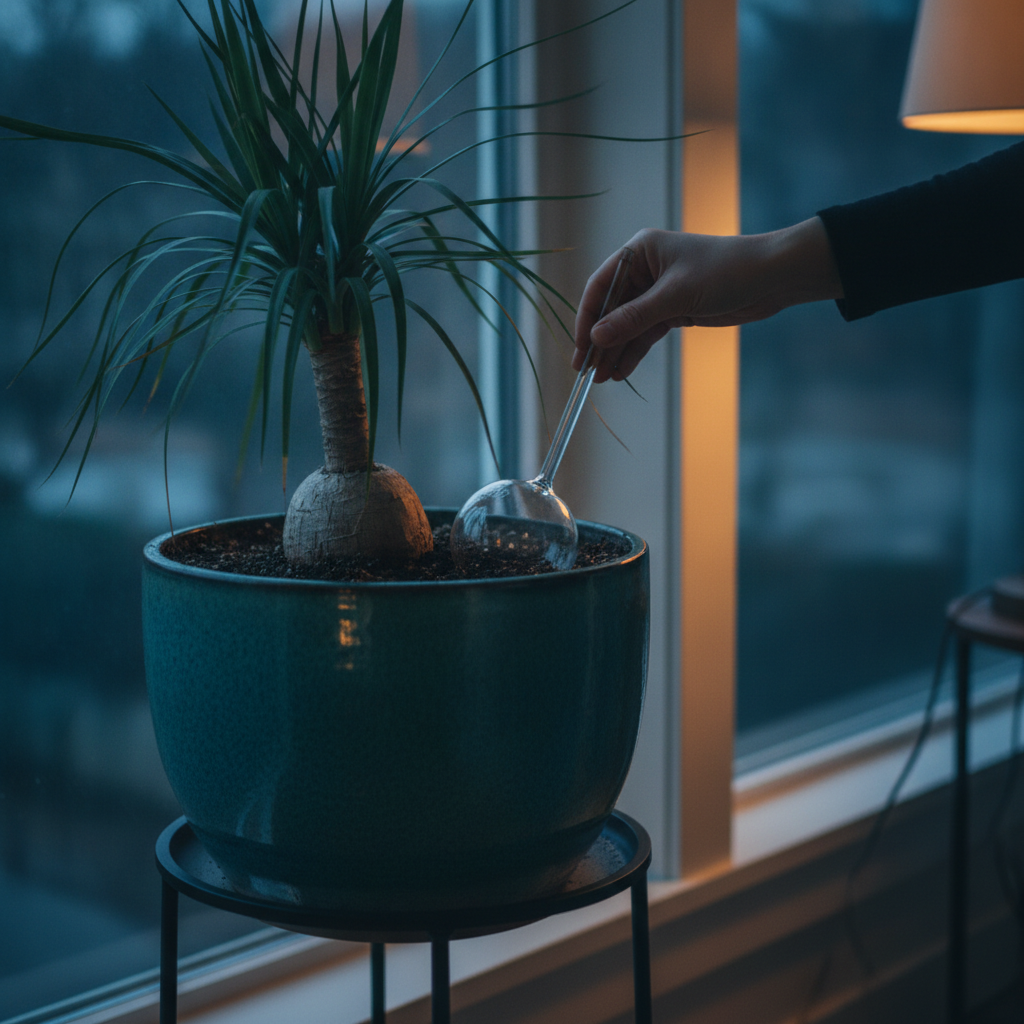
When you do water, do it properly. Take the plant to the sink and let water run through until it pours freely from the drainage holes, flushing the whole root ball, then allow every drop to drain away. Never let the pot sit in a saucer of standing water, as roots left soaking are the classic route to rot. In practice this rhythm means watering roughly every two to three weeks through the warm growing months, and far less often in winter, perhaps once every four to six weeks or even less if the plant is cool and resting. These are starting points rather than rules; the true schedule is dictated by how quickly your particular mix, pot and position dry out.
Learn to read the plant rather than the calendar. Slight wrinkling or a soft dullness in the leaves usually signals genuine thirst and is quickly corrected. Yellowing lower leaves, a mushy or darkening trunk base, or a sour smell from the soil point the other way, to overwatering and the beginnings of rot, and call for immediate action: stop watering, and if the trunk feels soft, unpot the plant to inspect and trim any blackened roots before repotting into fresh dry mix. Cool water sitting in soggy soil is the enemy here, so when in doubt, wait another few days.
Warning — Winter rot risk: A yucca that is cold and wet at the same time will almost certainly rot. In winter, keep the plant on the dry side and never water a specimen sitting in a chilly room or by a draughty window, when growth has slowed and the soil stays damp for far longer.
Soil and potting
Everything about watering a ponytail yucca becomes easier if the soil is right, because the correct mix does half the work of drainage for you. This plant demands a substrate that is sharp, gritty and free-draining, one that holds a little moisture briefly and then lets the rest run straight through. A standard peat-based houseplant compost, which stays wet for days, is exactly wrong and will keep the roots dangerously damp. Instead, start with a proprietary cactus and succulent compost and open it up further with generous additions of grit.
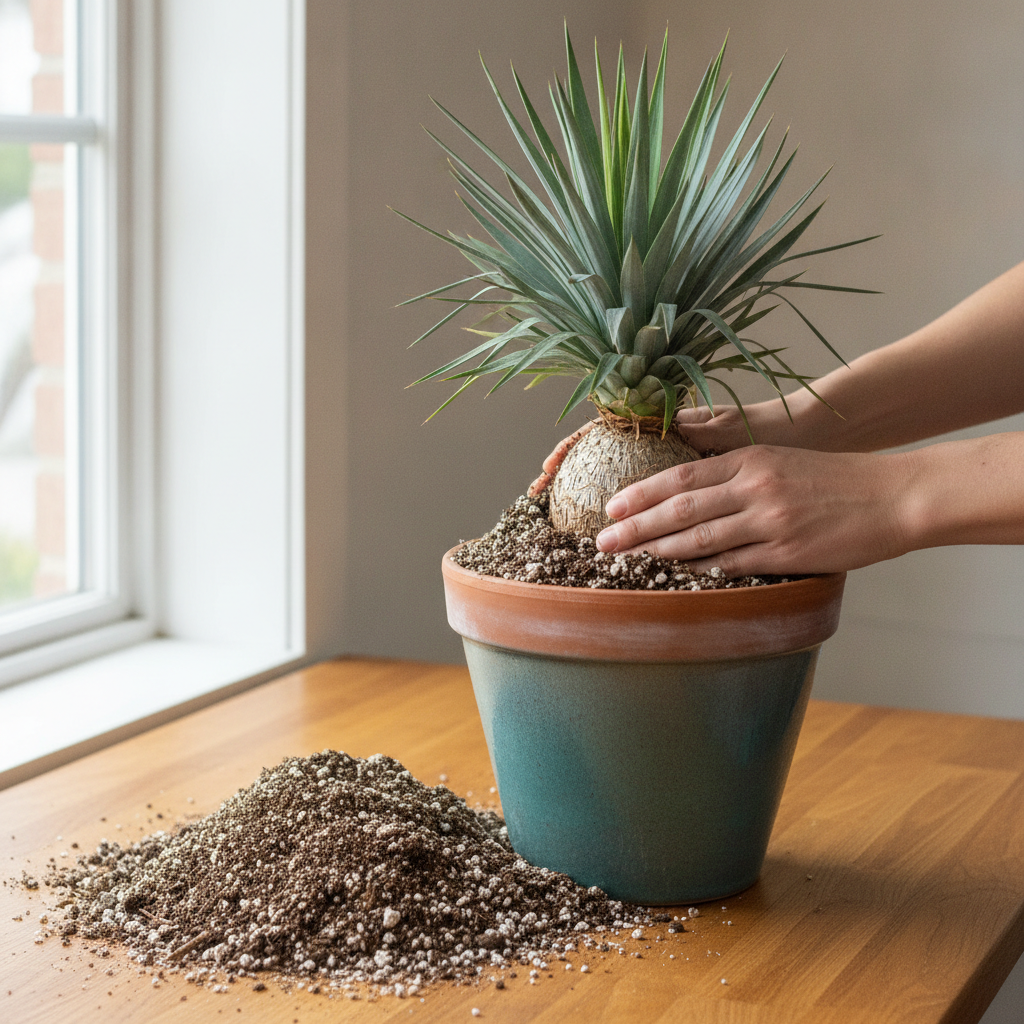
A reliable blend is roughly two parts cactus compost to one part coarse material such as pumice, perlite or horticultural grit, plus a handful of coarse sand. The aim is a mix through which water disappears almost instantly and which never packs down into a dense, airless mass. Some growers add a little coco coir or a small amount of loam for structure, which is fine, but keep the emphasis firmly on drainage. If in doubt, make the mix grittier rather than richer.
The pot matters as much as its contents. Choose a container with generous drainage holes, and favour unglazed terracotta over plastic or glazed ceramic. Terracotta breathes, wicking moisture out through its walls and helping the root ball dry between waterings, which suits a desert plant perfectly. Do not be tempted to pot into something far too large in the hope of saving future work; a vast volume of soil around a modest root system stays wet for too long. Pot on only when the plant is genuinely root-bound, stepping up by a single size, and do so in spring. Given how slowly Yucca rostrata grows, you may only need to repot every three or four years. When you do, handle the leaves with care, as the tips are sharp enough to prick, and settle the trunk at the same depth it sat before, never deeper.
Fertilising
A plant adapted to poor desert soils has modest appetites, and the ponytail yucca needs very little feeding to stay healthy. In the wild it draws a slow trickle of nutrients from thin, stony ground, so heavy or frequent fertilising does more harm than good, pushing soft, weak growth and risking a build-up of mineral salts in the pot. Think of feeding as a light seasonal supplement rather than a regular part of the routine.
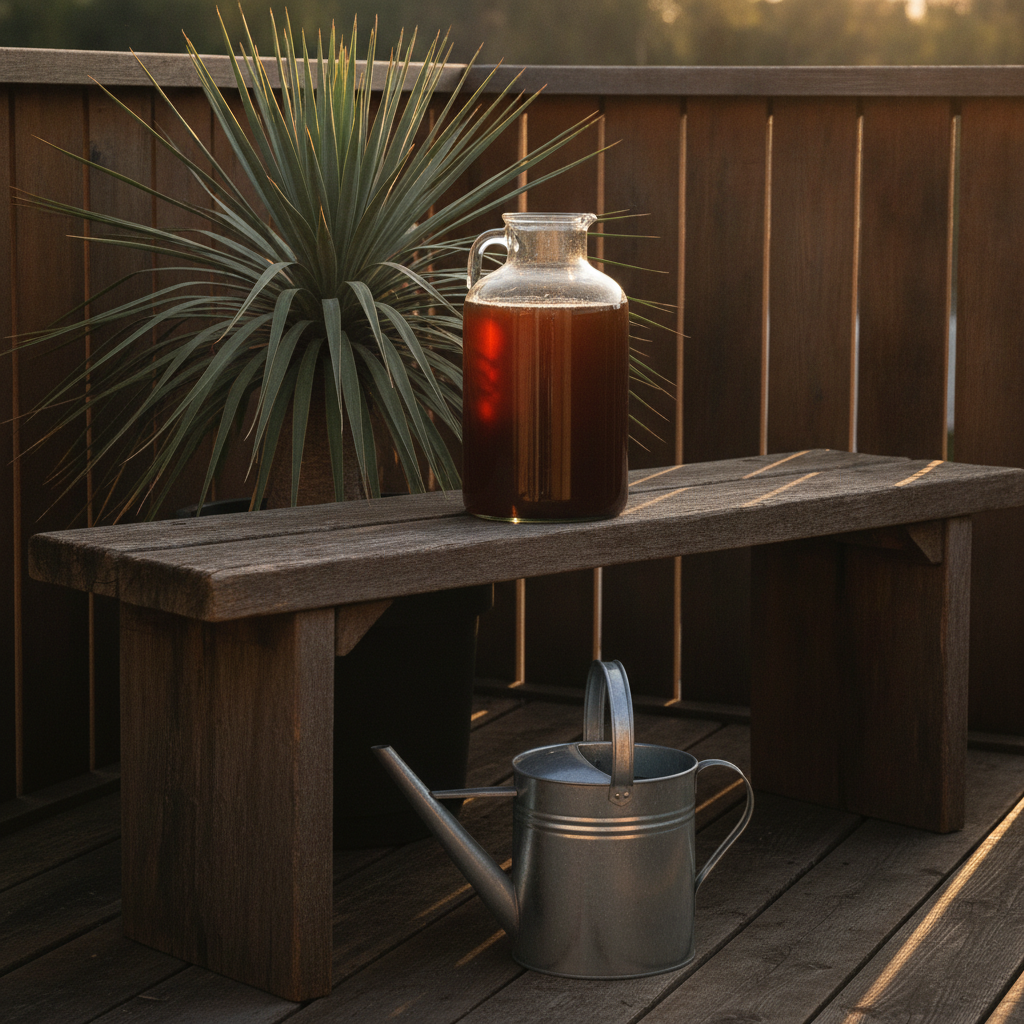
During the active growing season of spring and summer, feed once or at most twice with a balanced or low-nitrogen fertiliser formulated for cacti and succulents, diluted to half the strength recommended on the label. Apply it to already-moist soil rather than a dry root ball, so the diluted feed spreads evenly and does not scorch the roots. Withhold all fertiliser from autumn through winter, when the plant is resting and cannot make use of the nutrients; feeding a dormant yucca simply loads the soil with salts it will not absorb.
Watch for the signs of overfeeding, which include a white crust of salts on the soil surface or pot rim and browning, scorched leaf tips. If you see them, flush the pot thoroughly with plain water to leach out the excess and then ease right back on feeding. In truth, a ponytail yucca that is given fresh gritty mix every few years and good light will grow perfectly well on almost no supplementary feed at all, so when it comes to fertiliser, less really is more.
Propagation
Propagating Yucca rostrata is a test of patience more than of skill, because this is a slow plant whatever route you take. Unlike the clumping yuccas that throw up a ready supply of offsets, the ponytail yucca is naturally solitary, forming a single trunk topped by a single head, so easy vegetative division is rarely on offer. The three realistic methods, in rough order of how commonly they succeed, are growing from seed, separating any offsets that do appear, and taking a cutting from the trunk.
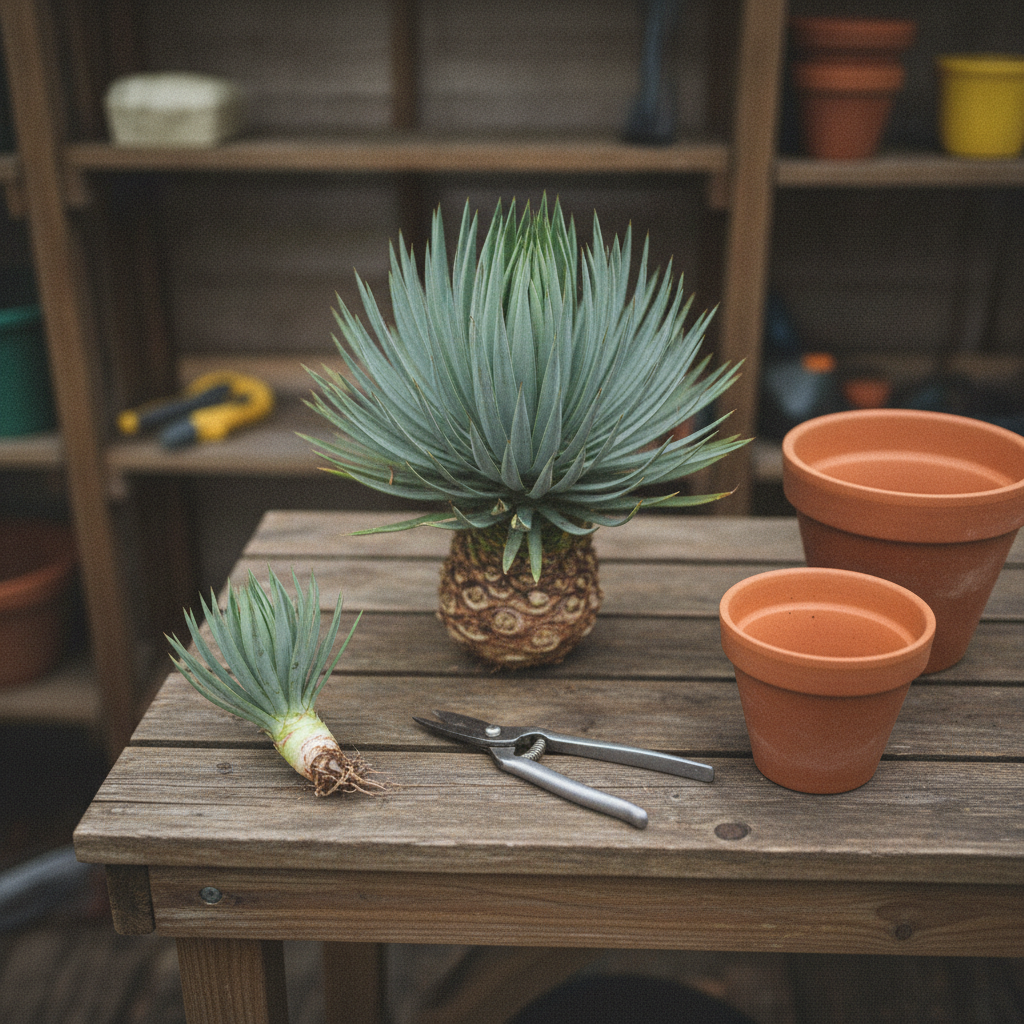
Seed is how the species is most often multiplied commercially, and it is entirely achievable at home if you can source fresh seed. The main hurdle is time, as seedlings take several years to develop even a short trunk. To raise them, follow these steps.
- Sow fresh seed on the surface of a moist, gritty seed mix and cover lightly, no more than a few millimetres deep.
- Keep the tray warm, around 20 to 25 degrees C (68 to 77 degrees F), and in bright light.
- Maintain slight, even moisture until germination, which can take from a few weeks to a couple of months.
- Once seedlings have their first few leaves, let the surface dry between waterings and begin treating them like miniature adults.
- Pot on individually as they grow, keeping the mix sharp and the light strong.
Occasionally a mature or stressed plant will produce an offset, either a pup at the base or a side branch after the growing tip has been damaged. Where a basal pup has formed its own roots, it can be cut cleanly away from the parent with a sterilised knife, left for a day or two so the cut surface calluses over, and then potted into the same gritty mix and kept barely moist until it establishes. The same callus-and-plant principle applies if you behead a leggy trunk to force branching: the severed top can be rooted as a large cutting, though this is slow and best reserved for plants that have outgrown their space. Whichever method you choose, resist the urge to overwater freshly propagated material, since soft new tissue rots even more readily than an adult plant.
Pests and problems
The good news is that a healthy ponytail yucca is remarkably resistant to pests and disease, and the overwhelming majority of problems it does suffer are self-inflicted through overwatering rather than caused by any invader. That said, indoor plants under stress can attract a few of the usual sap-sucking suspects, so it pays to know what to look for.
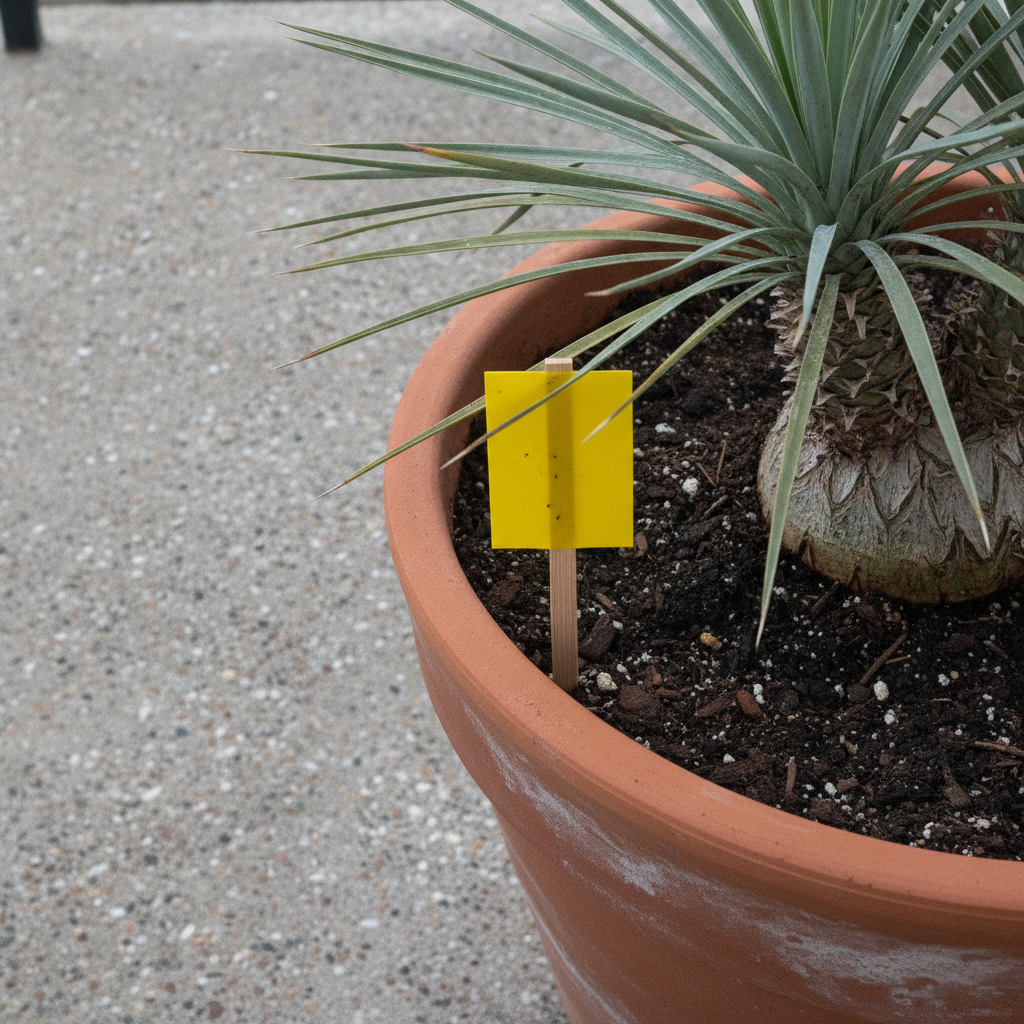
Scale insects are the pest most likely to trouble a yucca indoors, appearing as small brown, limpet-like bumps clustered along the leaves and stem where they feed on sap. Mealybugs, which look like tiny tufts of white cotton wool tucked into the leaf bases, are the next most common, and in very warm, dry conditions spider mites may set up home, betraying themselves with fine webbing and a stippled, faded look to the foliage. All three are best dealt with early. Wipe off light infestations with a cotton bud or cloth dipped in diluted isopropyl alcohol, treat more stubborn cases with a horticultural soap or neem oil spray, and repeat every week or so until the pests are gone. Isolate an affected plant from its neighbours while you work, and inspect the tight leaf axils closely, as these are the spots pests love to hide.
Most of the other complaints people bring to a yucca trace straight back to moisture and light. A soft, darkening or foul-smelling trunk base is root or crown rot from excess water, and it is the single most serious threat to the plant; the response is to cut away all affected tissue, dry the plant out and repot into fresh gritty mix, watering only sparingly thereafter. Brown, crispy leaf tips usually indicate a build-up of fertiliser salts or, occasionally, extreme dryness, while a loose, floppy, greening head is the signature of too little light. Address the underlying cause rather than trimming symptoms, and the plant will right itself over the following seasons.
Warning — Sharp leaf tips: The needle-fine points of a ponytail yucca can pierce skin and are at eye level on a tall specimen. Site the plant away from walkways and seating, keep it clear of small children, and be aware that all parts are mildly toxic to cats and dogs if chewed.
Varieties
The wild species is beautiful enough that most plants sold are simply Yucca rostrata itself, but a small number of selected cultivars have been named for the intensity or habit of their foliage. Two in particular are worth seeking out if you want the very best of the blue colour.
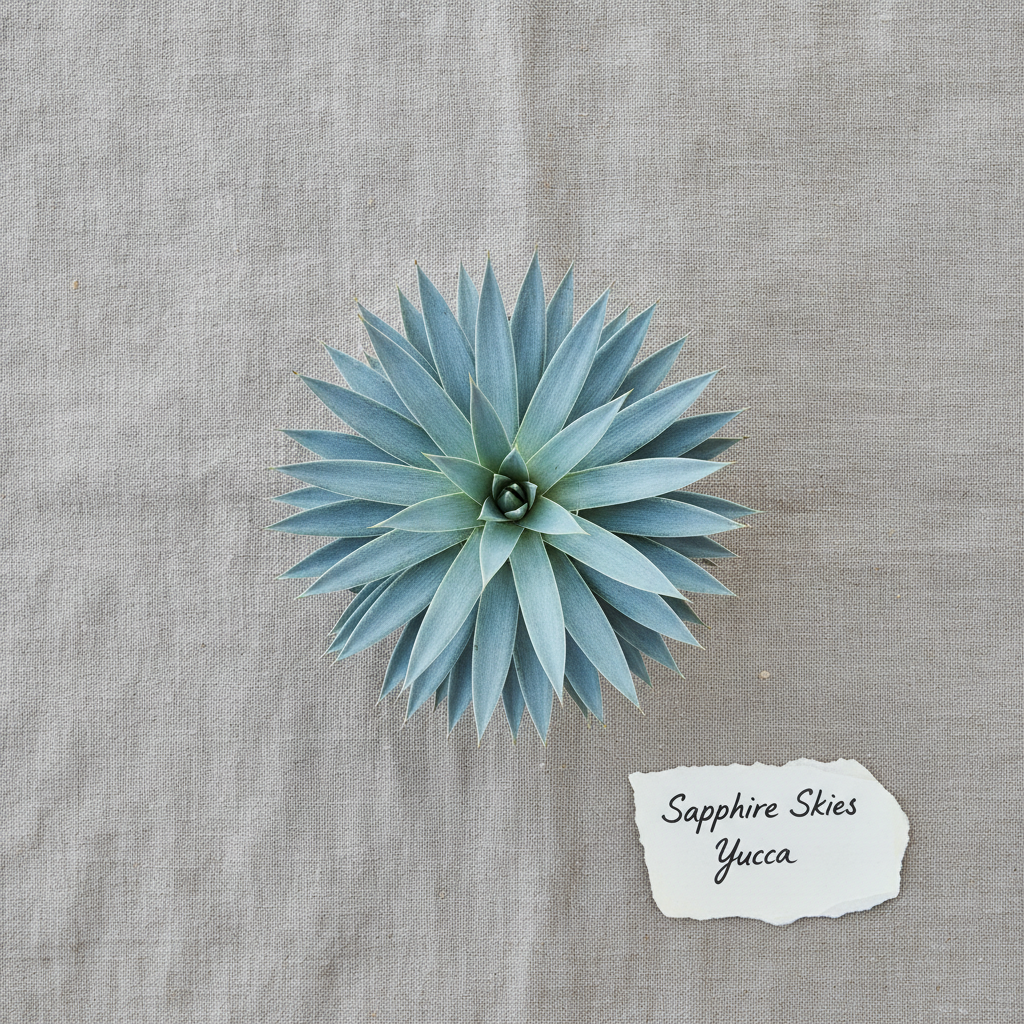
‘Sapphire Skies’ is the cultivar to reach for when colour is the priority. Selected for an unusually intense, powder-blue cast, it carries broad, silvery-blue leaves that form an almost perfectly symmetrical globe. Under strong light the whole head takes on a striking metallic blue that outshines the ordinary species, making it a favourite for contemporary planting schemes where that cool tone is the whole point.
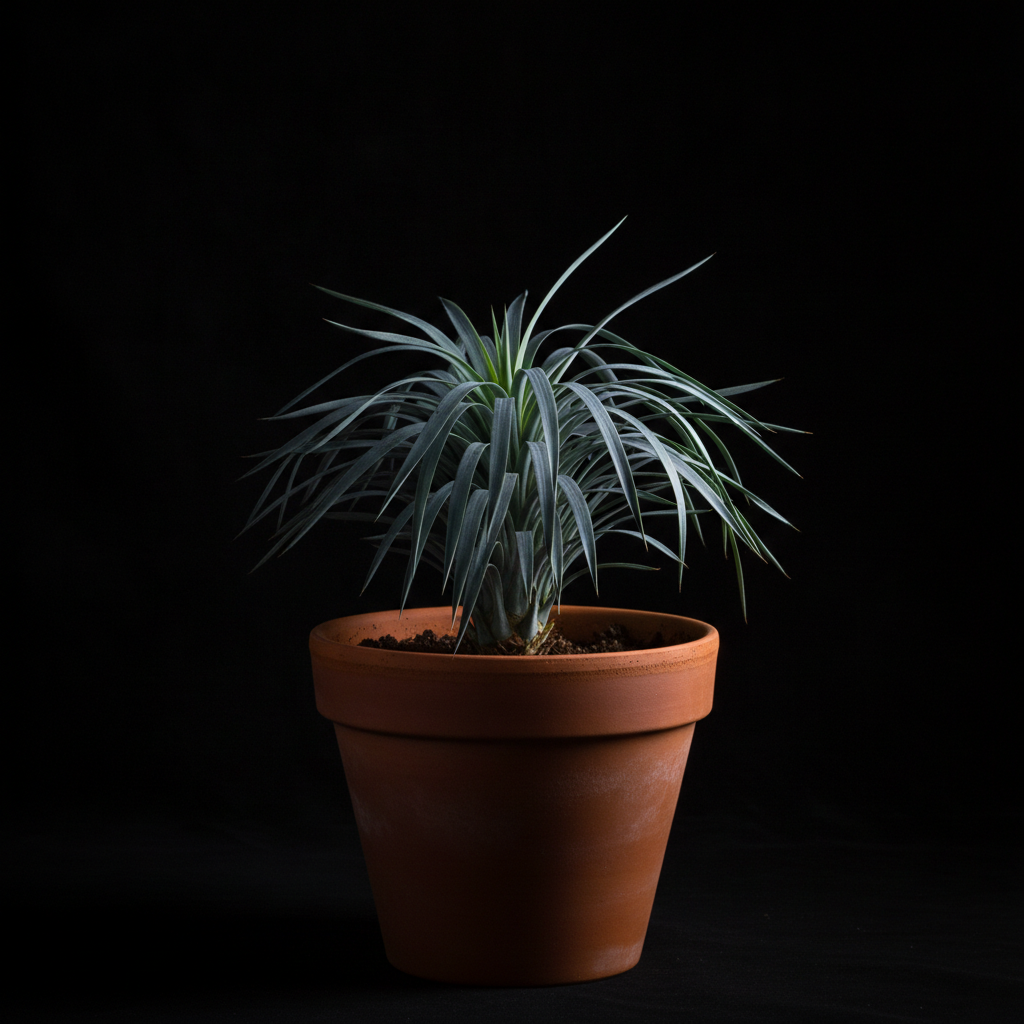
‘Blue Swan’ is a softer, more graceful selection. Its steel-blue leaves are a little more flexible than the species and arch into a gently weeping, rounded silhouette rather than a rigid sphere, giving the plant a more fluid, relaxed presence. The colour is still cool and blue, but the overall effect is calmer, which suits it to settings where a softer form is wanted without losing the desert character.
Beyond these named forms, the ponytail yucca is sometimes confused in the trade with its close relatives, particularly Yucca rigida, which has stiffer, broader blue leaves, and the various green-leaved yuccas. If the fine-textured, blue, near-spherical head is what draws you, make sure the label reads Yucca rostrata, since the related species have a coarser look and different growth habits.
Frequently asked questions
Is the ponytail yucca the same as a ponytail palm?
No, and the two are easy to mix up because of the shared name. The ponytail palm is Beaucarnea recurvata, a plant with soft, arching, strap-like green leaves and a swollen bottle-shaped base. The ponytail yucca is Yucca rostrata, with stiff, sharp, blue needle-like leaves on a slender woody trunk. They are unrelated in appearance and care, so always check the botanical name on the label.
How often should I water my ponytail yucca?
Only when the potting mix has dried out completely, which typically means every two to three weeks in the warm growing season and considerably less in winter, perhaps once a month or less. Rather than following a fixed schedule, check that the soil is bone dry before watering, then drench thoroughly and let all excess drain away.
Why is my yucca turning yellow or going soft?
Yellowing lower leaves together with a soft, darkening trunk base almost always mean overwatering and the onset of rot. Stop watering immediately, and if the trunk feels mushy, unpot the plant, cut away any blackened roots or tissue, and repot into fresh, dry, gritty mix. Going forward, water far less often and make sure the pot drains freely.
Can a ponytail yucca live outdoors?
Yes, more readily than most exotic-looking plants. Yucca rostrata is very cold hardy, tolerating temperatures down to around minus 18 degrees C (0 degrees F) once established, so in milder climates it can be grown outside year round in a sunny, sharply drained spot. Even where winters are harsher, it makes an excellent patio plant for the warm months and can be moved under cover before hard frost.
How big does it get and how fast does it grow?
In the wild it can eventually reach several metres tall over many decades, but growth is very slow, especially in a container. As a houseplant you can expect it to stay in the region of 1 to 1.5 metres (3 to 5 feet) for years, gaining only a little height and trunk each season, which makes it easy to accommodate long term.
Is the ponytail yucca toxic to pets?
It is mildly toxic to cats and dogs, as yuccas contain saponins that can cause vomiting or drooling if the foliage is chewed. In practice the bigger everyday hazard is the sharp, pointed leaf tips, which can injure curious pets and people alike, so position the plant thoughtfully and keep it out of reach of animals inclined to nibble.






