

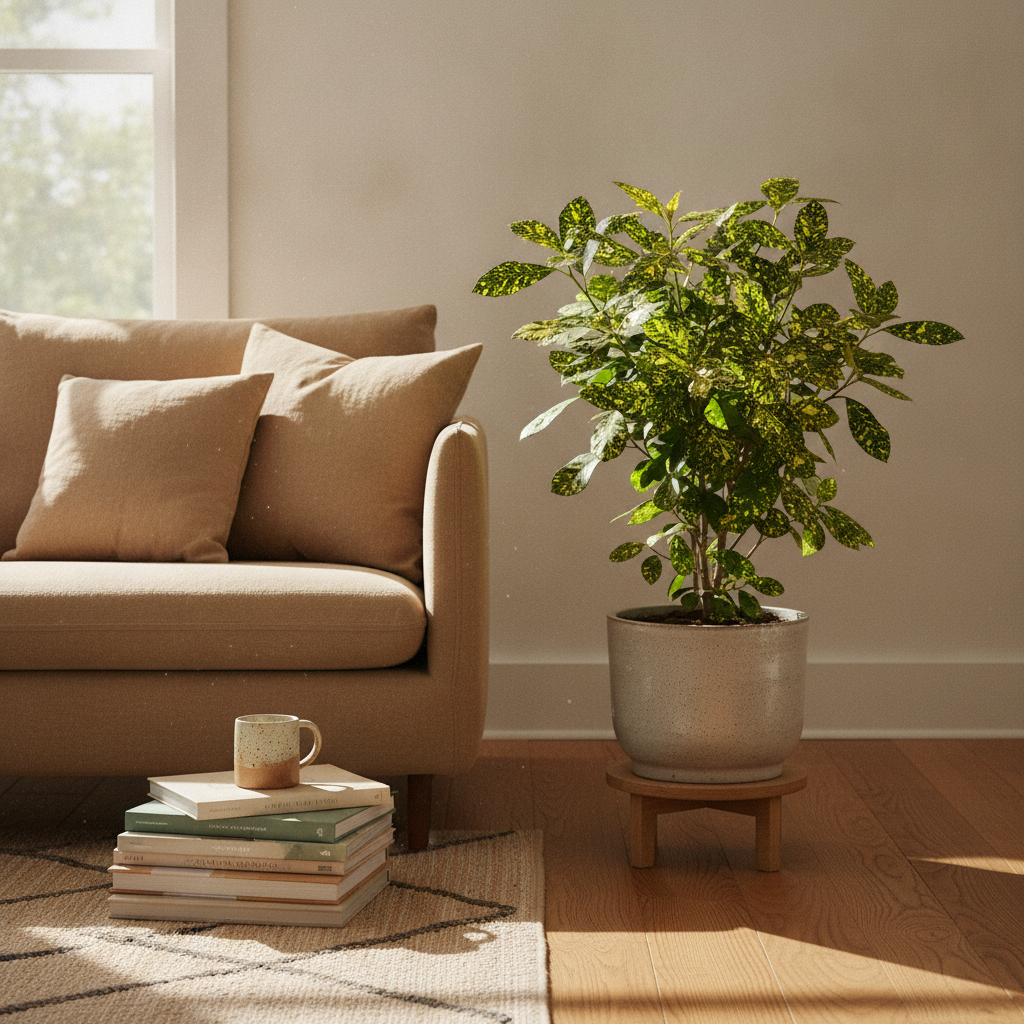
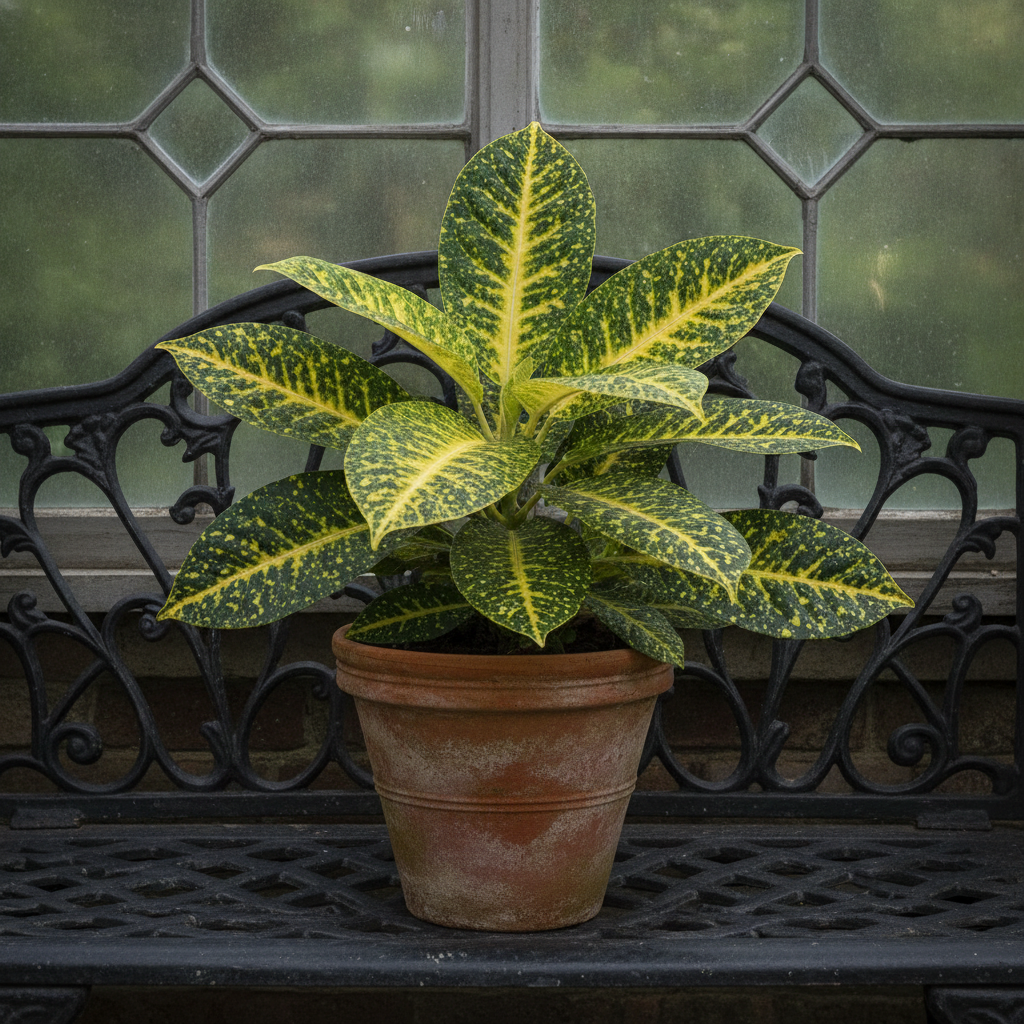
Few houseplants wear their name as literally as the gold dust plant. Look closely at a mature leaf of Aucuba japonica and it appears that someone has flicked a loaded paintbrush across the surface, scattering flecks of bright yellow gold over a background of deep, glossy green. It is a plant built for the difficult corners of a home, the shaded landing, the north-facing room, the hallway that never sees direct sun, and it repays that neglect with an unfussy, almost shrubby presence that many more glamorous plants cannot match.
Native to the moist woodland floors of Japan, Korea and China, the gold dust plant has spent millions of years learning to live in low light beneath a forest canopy. That heritage is the single most useful thing to understand about it. Where most variegated plants demand bright light to hold their colour, Aucuba japonica keeps its golden speckling in conditions that would leave a fiddle leaf fig sulking and bare. Growing one well is less about lavishing attention and more about restraint: cool air, steady moisture, protection from harsh sun, and the patience to let a naturally slow grower take its time.
Quick Reference
The table below is a snapshot of what an established gold dust plant needs indoors. Use it as an at-a-glance summary, but read the sections that follow for the reasoning behind each figure, because the difference between a plant that merely survives and one that genuinely thrives usually lies in the detail.
| Common name | Gold dust plant, spotted laurel, Japanese laurel, Japanese aucuba |
| Botanical name | Aucuba japonica |
| Family | Garryaceae (formerly Cornaceae) |
| Light | Low to medium indirect light; tolerates deep shade, dislikes direct sun |
| Water | Keep evenly moist in growth, allow the top 2 to 3 cm (1 in) to dry between waterings |
| Humidity | Average room humidity, 40 to 60 per cent; tolerant but appreciates fresh air |
| Temperature | 10 to 21 degrees C (50 to 70 degrees F); prefers cool rooms, hates dry heat |
| Soil | Rich, free-draining potting mix, slightly acidic to neutral |
| Feeding | Light feeder; balanced liquid feed monthly in spring and summer only |
| Growth rate | Slow to moderate; 0.6 to 1.5 m (2 to 5 ft) indoors over many years |
| Propagation | Semi-hardwood stem cuttings or air layering |
| Toxicity | Mildly toxic to pets and people if the leaves or berries are eaten |
Why the Gold Dust Plant Makes a Rewarding Houseplant
The case for growing Aucuba japonica indoors rests on one quality above all others: tolerance. This is a plant that forgives the conditions most houseplants punish you for. It grows happily in cool rooms that would chill a tropical calathea, it accepts low light that would starve a croton of its colour, and it shrugs off the occasional forgotten watering with a stoicism that suits busy or first-time plant keepers. In the Victorian era it earned a reputation as one of the few plants that could survive the gloom and coal smoke of a parlour, and that hardiness has carried through to the centrally heated homes of today.
Beyond resilience there is real beauty here. The leaves are large, broad and leathery, with a high-gloss finish that catches what little light reaches them, and the golden variegation adds warmth to shaded spaces that can otherwise feel flat and green. Because the plant is naturally shrubby rather than vining or rosette-forming, a well-grown specimen develops a satisfying density and structure, filling a corner the way a small indoor tree might, without the height or the light demands. Female plants, given a male partner nearby, can even produce clusters of bright red berries that persist through winter, an unusual bonus among foliage houseplants.
It is worth being honest about the trade-off. The gold dust plant grows slowly, so anyone hoping for a fast-filling statement piece will need patience or a larger nursery specimen to begin with. It also genuinely dislikes the hot, dry air of a radiator-warmed room, which is the one condition that will reliably cause it trouble indoors. Understand those two limits and the plant becomes one of the most dependable green companions you can keep.
Pro Tip — Think of it as a shade shrub, not a tropical: Most care advice for glossy-leaved houseplants assumes a warmth-loving jungle native. The gold dust plant is the opposite, a temperate woodland shrub. When a care decision is unclear, choose the cooler, shadier, airier option and you will almost always be right.
Light
If the gold dust plant has a superpower, it is shade tolerance. This is one of the genuinely reliable choices for a room that receives no direct sunlight at all, and it will hold its variegation in conditions where a golden pothos or a variegated rubber plant would fade to plain green or drop leaves entirely. In its native woodland it grows in the dappled gloom of the understorey, so the low, indirect light of a north-facing window or an interior corner a few metres from a brighter window suits it perfectly.
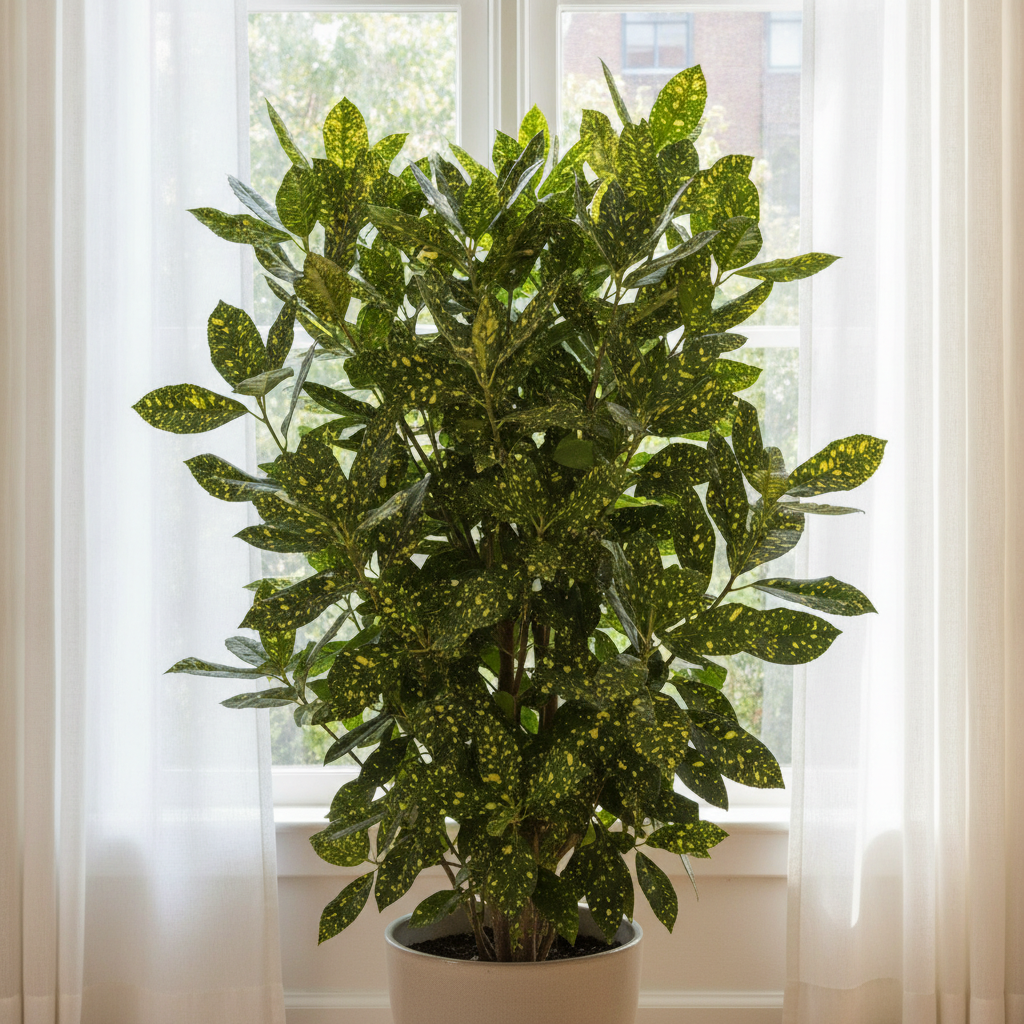
To survive, the plant needs almost nothing: enough ambient daylight to read a book by is sufficient to keep it alive for years. To thrive and to keep that speckling as bright and dense as possible, aim for medium, indirect light. A position near an east or north window, or set back from a brighter south or west window behind a sheer curtain, gives the plant the gentle brightness it enjoys without the one thing it cannot tolerate: harsh, direct sun. Strong midday rays fall on those glossy leaves and scorch them, bleaching the green to a sickly pale yellow and burning brown or blackened patches into the tissue. This sun sensitivity is the mirror image of most variegated plants and catches many growers out.
Watch the plant for feedback. Leaves that are darkening, losing their gold flecks and stretching towards the window are asking for a little more light. Leaves developing bleached, crispy or black-edged patches are getting too much direct sun and should be moved back. Rotating the pot a quarter turn every couple of weeks keeps growth even and stops the shrub leaning permanently towards the light source.
Watering
Watering is where the woodland origins of the gold dust plant show most clearly. On a forest floor the soil stays cool and evenly moist without ever becoming waterlogged, and that is exactly the balance to recreate in a pot. The aim is steady, moderate moisture during the growing season, never the swampy sogginess that rots roots nor the bone-dry neglect that shrivels leaf edges.
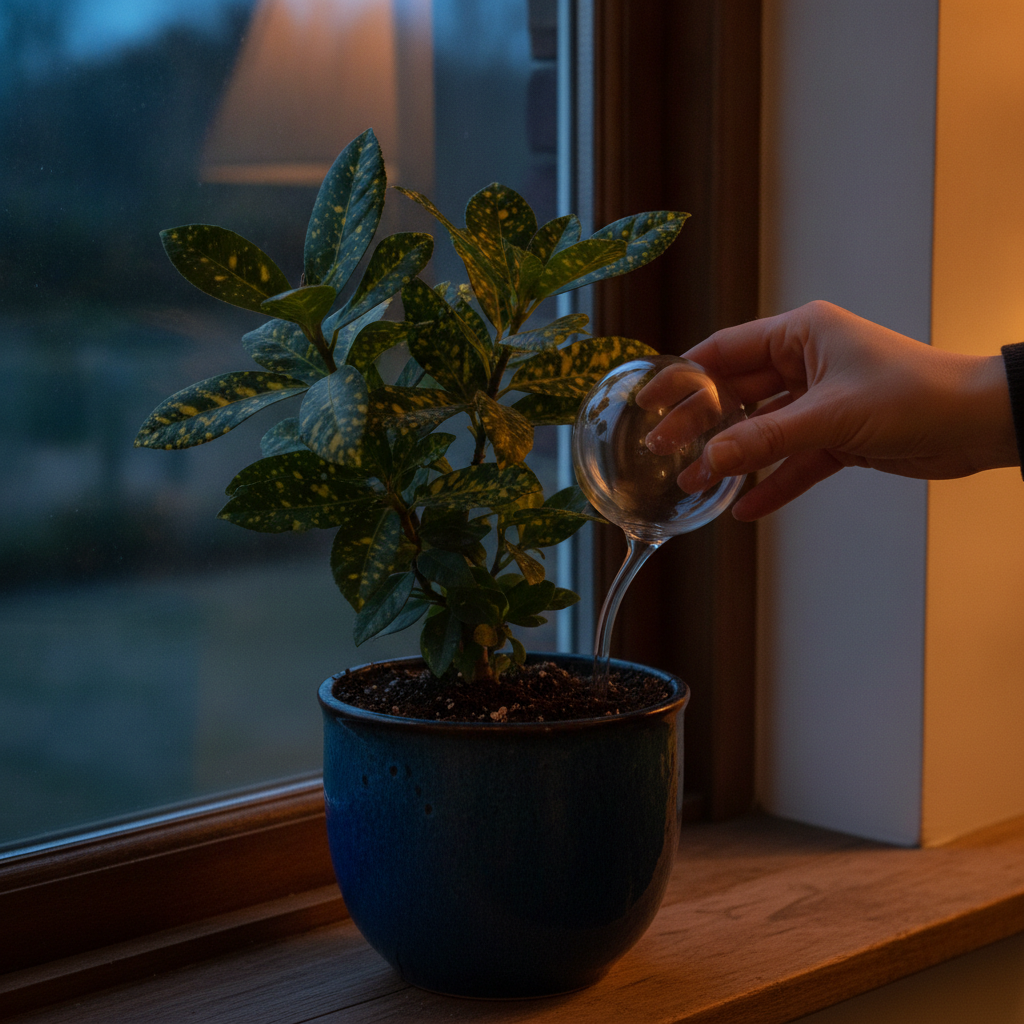
The simplest reliable method is to water thoroughly when the top 2 to 3 cm (about 1 in) of the mix has dried out, letting water run freely from the drainage holes and then emptying the saucer so the pot never stands in a puddle. In spring and summer, when the plant is in active growth, this might mean watering once or twice a week depending on the warmth and dryness of the room. In autumn and winter, as growth slows and the days shorten, cut back considerably and let the surface dry a little deeper between drinks. Cool, damp compost in a dark, cold room during winter is the classic recipe for root rot, so err on the drier side in the colder months.
An established gold dust plant is more drought-tolerant than most glossy-leaved houseplants and will forgive the occasional missed watering, but consistent extremes cause visible damage. Chronic overwatering shows as yellowing lower leaves, a sour smell from the soil and, eventually, soft blackened roots. Prolonged drought causes leaf edges to brown and crisp, and in severe cases whole leaves drop. Between the two, overwatering is by far the more common and more dangerous mistake indoors.
Warning — Black leaves are a distress signal: Blackening patches on the foliage are the plant’s most common complaint, and they point to one of three things: cold draughts, scorching direct sun, or waterlogged roots. Check those three conditions in that order before doing anything else, because more watering is rarely the answer and often makes it worse.
Soil and Potting
The gold dust plant is not fussy about soil chemistry, but it is particular about drainage. In the wild it roots into leaf-rich woodland earth that holds moisture yet drains freely after rain, and a good potting mix should do the same. A quality general-purpose houseplant compost forms a fine base, improved with a couple of handfuls of perlite or horticultural grit to keep the structure open, plus a little composted bark or leaf mould to add the humus the plant enjoys. A slightly acidic to neutral pH suits it best, though it tolerates a wide range.
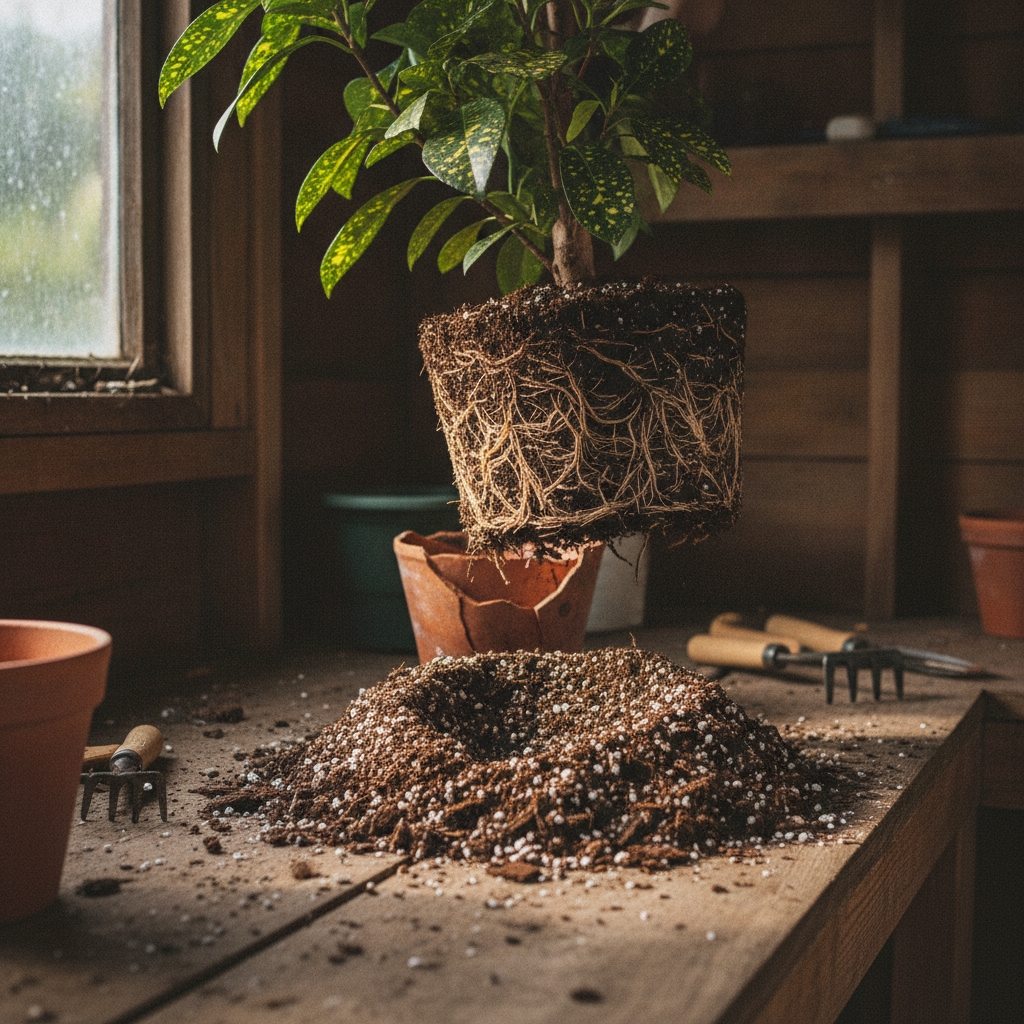
Because it grows slowly, the gold dust plant does not need frequent repotting, and it actually prefers to be a little snug in its container. Plan to move it up a pot size only every two or three years, ideally in spring as new growth begins, and only when roots are clearly circling the base or emerging from the drainage holes. Choose the next pot up rather than a dramatically larger one; a vast pot holds a reservoir of wet compost around the roots that the modest root system cannot use, and that lingering moisture invites rot. A drainage hole is not optional. Whatever the vessel, water must be able to escape.
When repotting, tease the roots gently free of the old mix, settle the plant at the same depth it grew before, and firm fresh compost around the root ball without compacting it into a dense, airless block. Water it in and then let it settle in a shaded spot for a week or two, holding back on feeding until you see signs of fresh growth. In years when you do not repot, refreshing the top few centimetres of compost each spring gives the plant a modest nutrient boost with far less disturbance.
Fertilising
As a slow grower adapted to nutrient-recycling woodland soils, the gold dust plant is a light feeder that is far easier to overfeed than to starve. It does not need the rich diet that fast-growing tropicals crave, and pushing it with heavy fertiliser produces weak, sappy growth and a build-up of mineral salts in the pot rather than a fuller, more colourful plant.
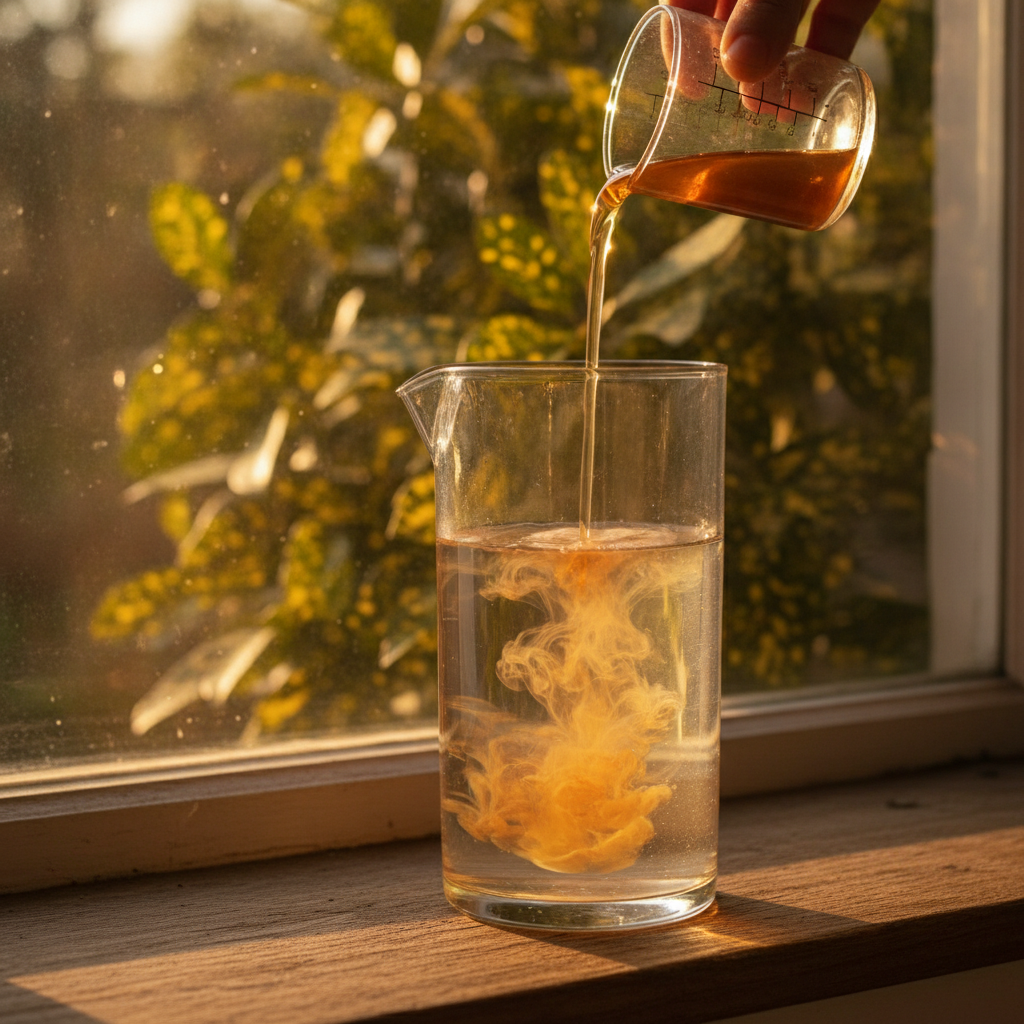
A simple, effective routine is to feed with a balanced liquid houseplant fertiliser diluted to half the recommended strength, applied roughly once a month through spring and summer only. That gentle rhythm supplies enough nutrients to support steady growth and keep the variegation strong, without overwhelming the modest root system. Always feed onto already-moist soil rather than dry compost, because concentrated feed drawn into dry roots can scorch them. Stop feeding entirely in autumn and winter, when the plant is resting and cannot use the extra nutrients; feeding a dormant plant simply leaves salts to accumulate in the mix.
If you notice a white crust forming on the soil surface or around the pot rim, that is a sign of salt build-up from feeding or hard tap water. Flushing the pot occasionally, by running plenty of plain water through it and letting it drain fully, clears the excess and keeps the root zone sweet. A plant showing pale, yellowing new leaves despite good light may genuinely be hungry, but check watering and root health first, as those problems mimic nutrient deficiency far more often than a true shortage of food.
Propagation
The gold dust plant is a woody shrub, so it does not propagate from a single leaf the way many soft-stemmed houseplants do. Instead it is grown from stem cuttings or, for a larger plant more quickly, by air layering. Both methods are straightforward, though this is a plant that rewards patience: roots form slowly, and a new plant takes time to build into a substantial specimen.
The most reliable method for the home grower is the semi-hardwood cutting, taken in mid to late summer when the current season’s growth has begun to firm up. To take one:
- Choose a healthy, non-flowering shoot and cut a length of 10 to 15 cm (4 to 6 in) just below a leaf node using clean, sharp secateurs.
- Remove the leaves from the lower half of the cutting, leaving two or three leaves at the top; if those leaves are large, halve them to reduce moisture loss.
- Dip the cut end in rooting hormone to improve your success rate, then insert it into a small pot of moist, gritty cutting compost or a perlite-heavy mix.
- Cover the pot loosely with a clear plastic bag or place it in a propagator to hold humidity, and keep it in warm, bright shade, out of direct sun.
- Keep the mix lightly moist and be patient; roots typically take six to ten weeks to form. A gentle tug that meets resistance tells you they have taken hold.
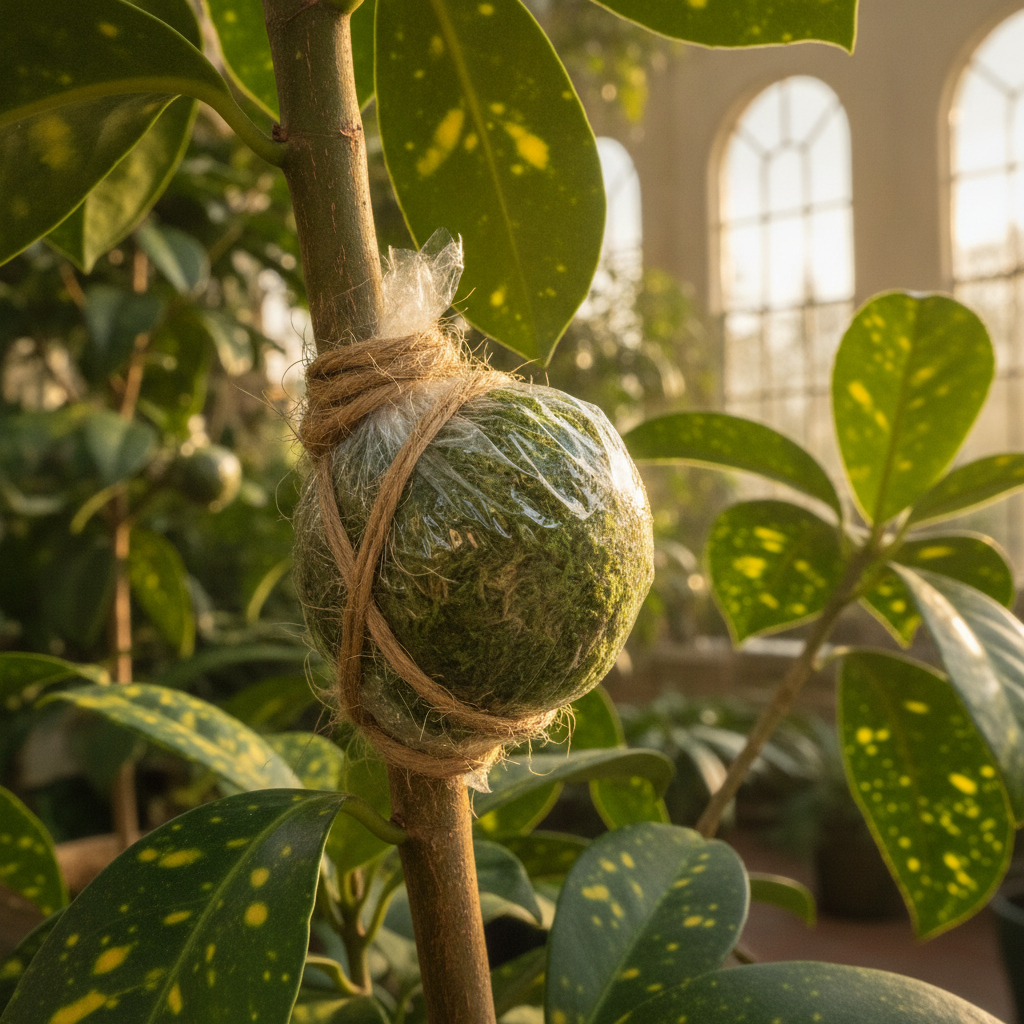
Air layering suits anyone wanting a larger plant sooner. Wound a healthy stem lightly, wrap the point in a fist-sized ball of damp sphagnum moss, enclose it in clear film to hold moisture, and secure both ends. Roots grow into the moss over a couple of months while the stem is still fed by the parent, at which point you cut below the new root ball and pot it up. Because the young plant never has to survive on its own until it is already rooted, air layering is close to foolproof, if a little slow.
Pro Tip — Mind the male and female question: The gold dust plant is dioecious, meaning individual plants are either male or female. A cutting is a clone, so it will always be the same sex as its parent. If you are propagating in the hope of berries, remember that only female plants fruit, and only when a male plant is nearby to pollinate them.
Pests and Problems
One of the quiet pleasures of the gold dust plant is how rarely it falls prey to pests. Its tough, leathery leaves are unappealing to many of the insects that plague softer foliage, and a healthy specimen grown in cool, airy conditions is largely trouble-free. When problems do arise, they are usually the result of stress, most often the hot, dry, stagnant air of an overheated room, which is precisely the environment this plant likes least.
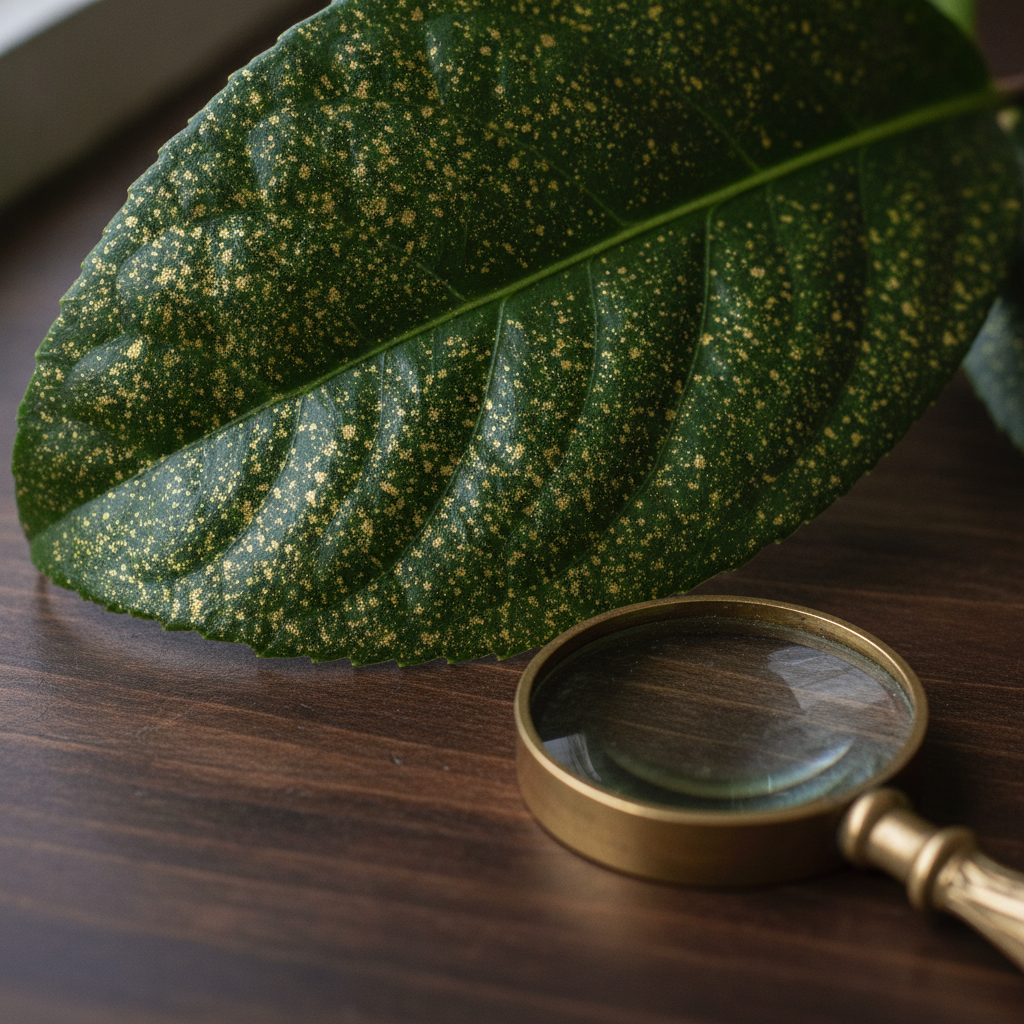
The pests most likely to appear indoors are scale insects, mealybugs and, in very dry air, spider mites. Scale show up as small, limpet-like brown bumps along the stems and leaf undersides; mealybugs as white, cottony tufts tucked into leaf joints; and spider mites as fine webbing and a stippled, dusty look to the foliage. Catching any of them early makes control simple. Wipe scale and mealybugs off with a cloth or a cotton bud dipped in diluted isopropyl alcohol, and treat wider infestations with insecticidal soap or a horticultural oil, repeating every week or two until the population is gone. Spider mites, which thrive in dry heat, are best discouraged by improving air circulation and nudging up the humidity around the plant.
Most complaints about a gold dust plant, however, are not pests at all but the visible signs of poor conditions. The single most common issue is blackening leaves. Large black blotches or wholesale leaf blackening are usually caused by cold draughts, sudden temperature swings, sunburn from direct light, or waterlogged roots, and the cure is to correct the underlying condition rather than to reach for a spray. Brown, crispy leaf tips point to dry air or under-watering; bleached, pale patches point to too much sun; and yellowing lower leaves usually point to soil that has stayed too wet for too long. Read the leaves as a report on the plant’s environment and the fix almost always follows.
Varieties to Know
Although the plain green wild form of Aucuba japonica is handsome in its own right, it is the variegated cultivars that have made the plant a household name. Breeders have selected forms that vary the pattern, density and placement of the gold, as well as the leaf shape and, in a few cases, the plant’s ability to fruit without a partner. The two below are among the most widely grown and best loved.
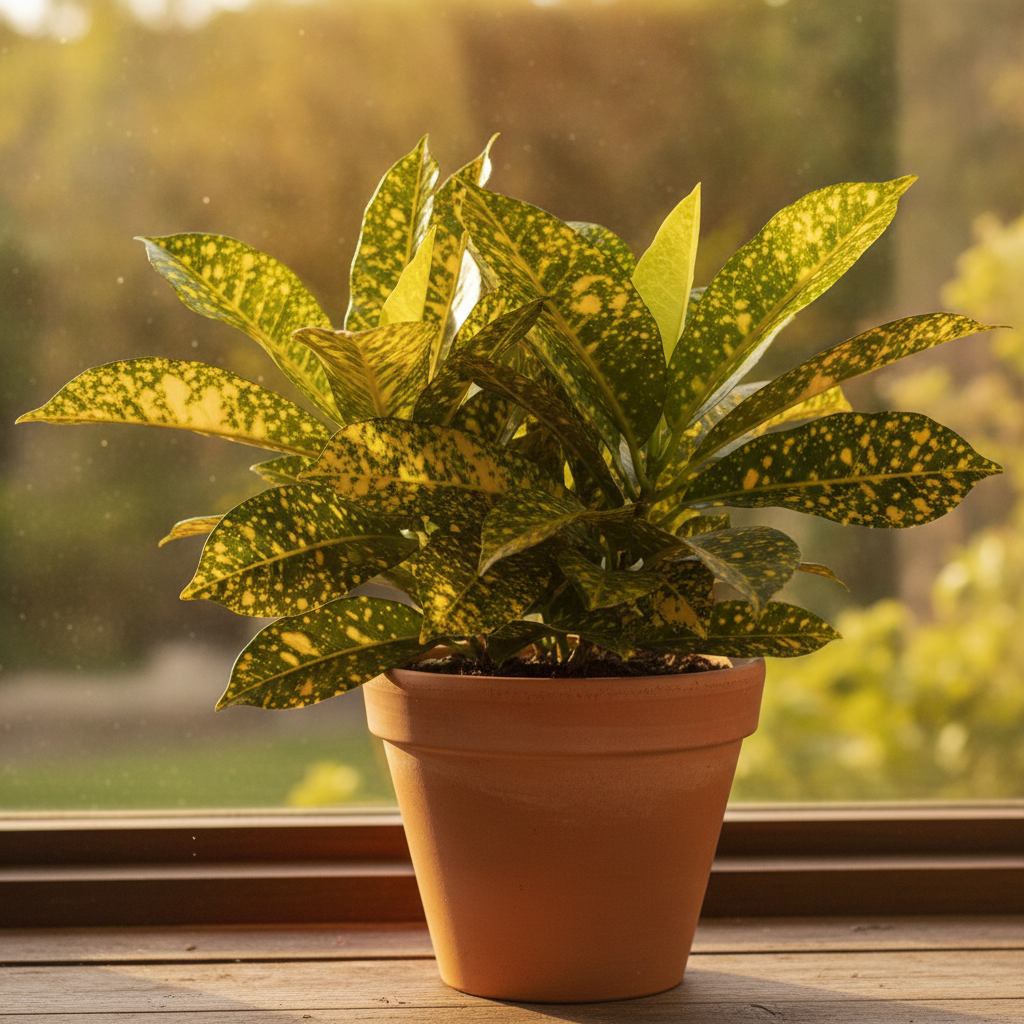
Aucuba japonica ‘Crotonifolia’
The archetypal gold dust plant and the one most people picture. Its broad, glossy leaves are densely flecked and mottled all over with bright golden-yellow, giving the richest, most even speckling of the popular cultivars. Available in both male and female forms, it is vigorous by aucuba standards and holds its variegation well even in shade, making it the safest first choice.
Aucuba japonica ‘Picturata’
A striking reversal of the usual pattern. Instead of scattered flecks, each leaf carries a bold golden-yellow central blotch ringed by a deep green margin with fine yellow speckling. The effect is dramatic and more sculptural than ‘Crotonifolia’. It can revert to plainer green if grown in too little light, so ‘Picturata’ rewards a slightly brighter, though still indirect, position.
Beyond these two, look out for ‘Variegata’, the original spotted laurel and a reliable female form; ‘Rozannie’, a compact, self-fertile cultivar with glossy plain green leaves that produces bright red berries without needing a separate male plant; and the narrow-leaved ‘Salicifolia’, grown for its willow-like foliage and heavy fruiting. Between them these cultivars cover almost every combination of leaf shape, variegation and fruiting habit a grower might want.
Frequently Asked Questions
Why are the leaves on my gold dust plant turning black?
Blackening leaves are the most common complaint and almost always point to the environment rather than a disease. The usual culprits are cold draughts or a sudden chill, scorching direct sunlight, or roots sitting in waterlogged compost. Check those three in turn: move the plant away from cold windows and doors, out of direct sun, and make sure its pot drains freely and is not standing in water. Correcting the underlying condition stops new damage, though existing black patches will not recover and can be trimmed away.
Is the gold dust plant safe around pets and children?
It is considered mildly toxic. The leaves and especially the bright red berries contain compounds that can cause stomach upset, nausea and vomiting if eaten in quantity by cats, dogs or children. It is not among the most dangerous houseplants, but it is wise to site it out of reach of curious pets and small children, and to discourage anyone from sampling the attractive berries.
How much light does a gold dust plant really need?
Remarkably little, which is its greatest strength. It tolerates deep shade better than almost any other variegated houseplant and will survive in a spot with no direct sun at all. For the best colour and steady growth, though, give it medium, indirect light near a north or east window, or set back from a brighter window. The one thing to avoid is direct sun, which scorches and bleaches the foliage.
Why won’t my gold dust plant produce berries?
Because the species is dioecious, only female plants bear the well-known red berries, and they will only do so if a male plant is close enough to pollinate the flowers. If your plant is male it will never fruit, and if it is an isolated female it will flower but set no berries. The self-fertile cultivar ‘Rozannie’ is the exception, producing fruit without a partner, and is worth seeking out if berries are the goal.
How fast does a gold dust plant grow indoors?
Slowly. This is a plant to grow for the long term rather than for quick impact. Expect modest new growth each spring and summer and very little in the cooler months. Over several years it can build into a dense shrub of 1 to 1.5 m (3 to 5 ft) in a pot, but it will not race there. If you want a substantial plant sooner, start with a larger nursery specimen rather than trying to hurry a small one.
Can I grow my gold dust plant outdoors?
Yes, in a mild climate it makes an excellent hardy shade shrub for the garden, tolerating cold down to around minus 5 to minus 10 degrees C (14 to 23 degrees F) once established. Many growers move potted plants outdoors to a shaded, sheltered spot for the summer and bring them back in before hard frosts. If you do, acclimatise the plant gradually in both directions and keep it out of direct sun, which is just as damaging outdoors as in.
Grown with an understanding of its woodland roots, the gold dust plant asks very little and gives a great deal. Keep it cool, shaded and evenly watered, spare it the dry heat and harsh sun it dislikes, and it will light up the dim corners of a home with its scattered gold for many years, a quietly dependable shrub in a world of demanding tropicals.






