
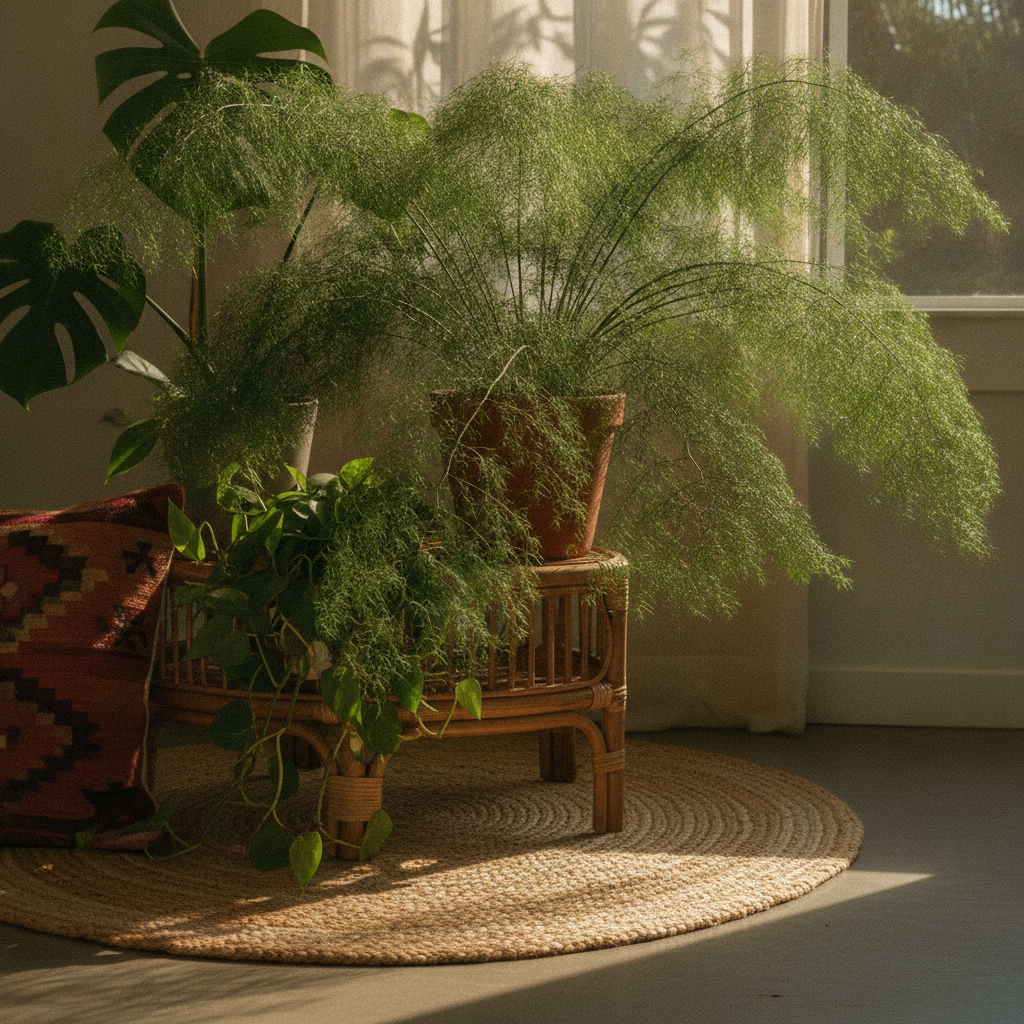
Few houseplants soften a room quite like the Ming Fern, a cloud of fine, feathery green held aloft on slender, zig-zagging stems. Despite the name, it is not a fern at all. Asparagus retrofractus belongs to the asparagus family (Asparagaceae) and is a close relative of the vegetable on your dinner plate, native to the dry scrub and rocky slopes of southern Africa. What look like delicate needles are not true leaves but cladodes, flattened stem structures that took over the job of photosynthesis, an adaptation that helps the plant conserve moisture in its arid homeland. Gardeners also know it as the pom-pom asparagus, zig-zag shrub or Ming asparagus fern.
The Ming Fern has a reputation as an easy, forgiving plant, and for the most part that is deserved. It shrugs off the occasional missed watering thanks to fleshy, tuberous roots that bank water underground, and it is rarely troubled by pests. Yet there is a meaningful gap between a Ming Fern that merely survives, sitting sparse and yellowing in a dim corner, and one that truly thrives, sending up dense, arching plumes of rich green year after year. This guide covers everything that separates the two: light, watering, humidity, soil, feeding, propagation, pests and the handful of related varieties you are likely to meet.
Contents
- Quick Reference
- Why Ming Fern Makes a Distinctive Houseplant
- Light Requirements
- Watering & Humidity
- Soil, Potting & Repotting
- Fertilising
- Propagation
- Pests & Diseases
- Popular Varieties
- Frequently Asked Questions
Quick Reference: Ming Fern at a Glance
| Light | Bright, indirect light; tolerates a little direct morning sun |
| Watering | Let the top 2 to 4 cm (1 to 1.5 in) of soil dry out; water thoroughly, then drain |
| Temperature | 16 to 24 degrees C (61 to 75 degrees F); protect from anything below 10 degrees C (50 degrees F) |
| Humidity | Moderate, 40 to 60 percent; benefits from a little extra in dry rooms |
| Fertiliser | Balanced liquid feed at half strength, monthly in spring and summer |
| Toxicity | Toxic to cats, dogs and humans if berries are eaten; sap and spines can irritate skin |
Why Ming Fern Makes a Distinctive Houseplant
The appeal of the Ming Fern is textural. In a collection dominated by broad, glossy aroid leaves, its finely divided, almost weightless foliage reads as a breath of air, a green haze rather than a solid mass. The stems grow in a characteristic zig-zag, changing direction at each node, and along them sit rounded tufts of needle-like cladodes that give the plant its pom-pom nickname. Mature specimens can reach 1 to 2 metres (3 to 6 feet) indoors, developing an airy, shrubby silhouette that works as a floor plant or a generous tabletop feature.
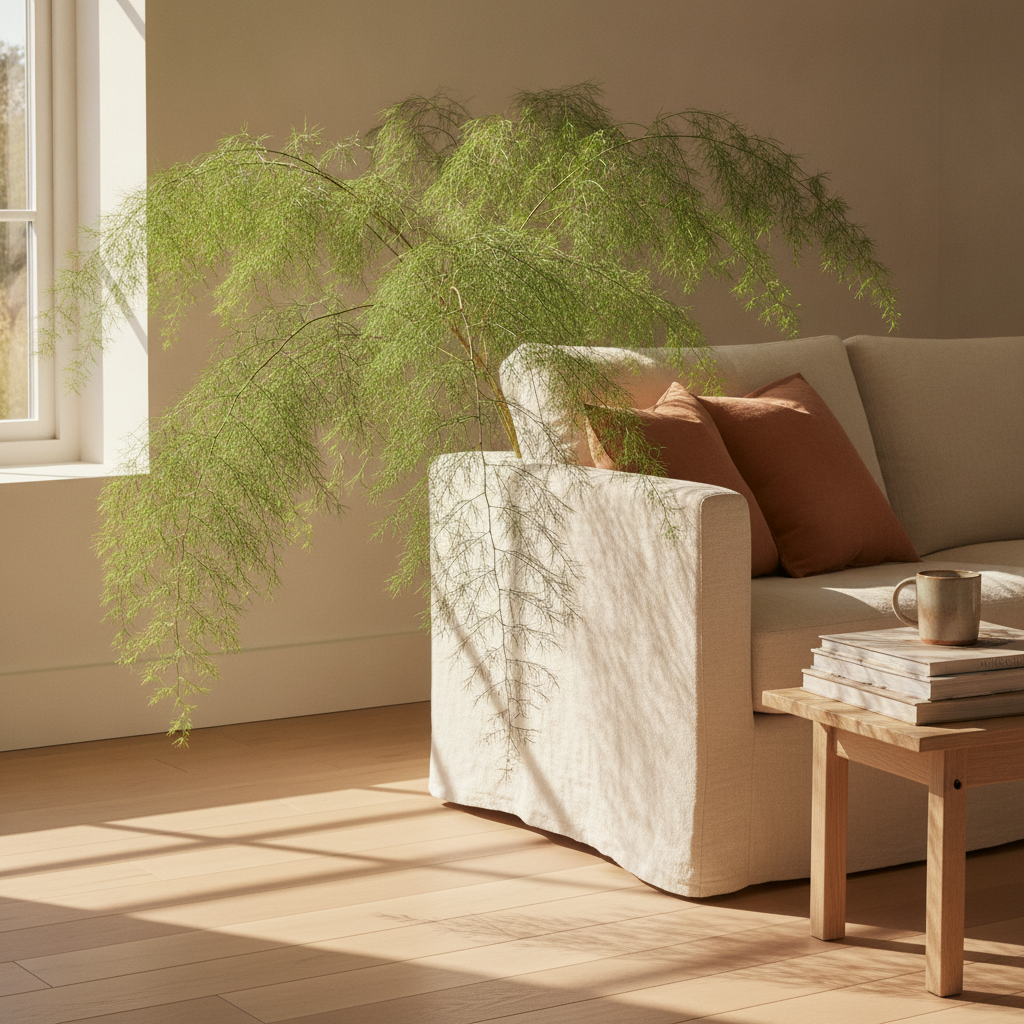
Beyond looks, it earns its keep by being genuinely low-maintenance. The tuberous root system stores water and nutrients, making the plant far more tolerant of neglect than its delicate appearance suggests, and it is not fussy about being pot-bound. In good conditions it may even reward you with small, sweetly scented white flowers followed by orange-red berries. The trade-off is that those berries, and the whole plant, are toxic, and the woody stems carry small recurved spines that can catch on skin, so it is worth siting thoughtfully in homes with pets or small children.
Important – Toxicity: All parts of Asparagus retrofractus contain steroidal saponins and are considered toxic. The berries are the main hazard if eaten, causing vomiting and abdominal upset in cats, dogs and people, and the sap can cause skin irritation on contact. Handle with care, keep berries away from pets and children, and wear gloves if you are sensitive.
Light Requirements
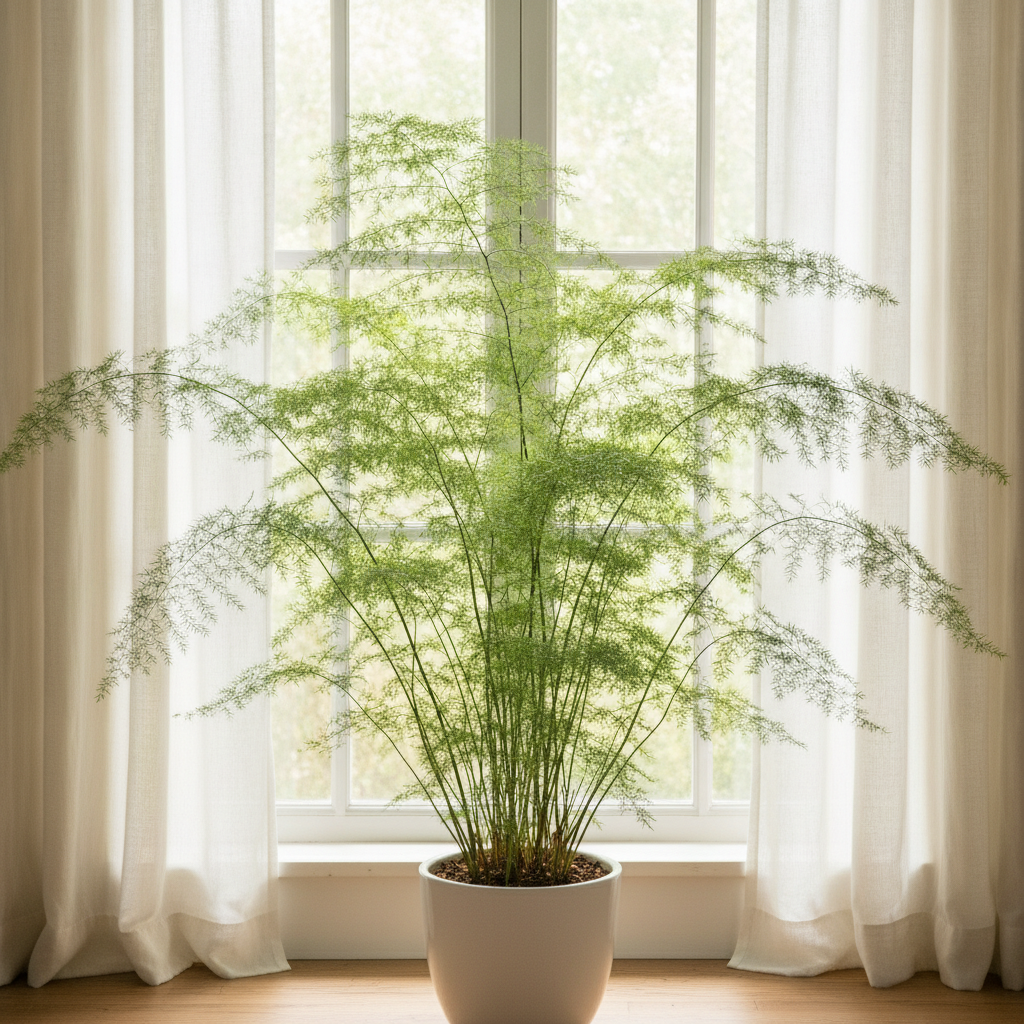
Light is the single biggest lever you have over how full and healthy a Ming Fern looks. In its native habitat it grows in open, sunny scrub, so it is happiest in bright conditions and quickly grows sparse and leggy in gloom. The ideal is bright, indirect light for most of the day, with perhaps an hour or two of gentle direct sun in the morning.
Given enough light, the plant produces dense, closely spaced tufts and a compact, well-branched habit. Starved of it, the internodes stretch, the pom-poms thin out and older cladodes yellow and drop, leaving bare, whip-like stems. If your plant is thinning from the base or reaching noticeably towards the window, insufficient light is almost always the cause.
Light Levels Explained
Understanding how indoor light is categorised makes it easier to find the right spot. The figures below are approximate and measured in lux, the unit most plant light meters and phone apps report.
| Light Category | Approx. Level | Typical Location | Outcome |
|---|---|---|---|
| Direct sun | Over 50,000 lux | On a south-facing sill in summer | Tolerated in the morning; harsh midday sun can scorch |
| Bright indirect | 10,000 to 25,000 lux | Near an east or filtered south window | Ideal; dense, compact growth |
| Medium | 5,000 to 10,000 lux | A metre or two back from a bright window | Acceptable; growth slower and slightly looser |
| Low | 1,000 to 5,000 lux | A north window or a shaded interior | Poor; stretching, thinning and yellowing |
| Very low | Under 1,000 lux | A hallway or windowless room | Unsuitable; steady decline |
Window Orientation and Placement
South-facing window: An excellent choice in most homes, provided you diffuse the fiercest midday rays with a sheer curtain or set the plant slightly back. The Ming Fern enjoys the brightness and will grow densely here.
East-facing window: Arguably the sweet spot. Cool, gentle morning sun followed by bright indirect light for the rest of the day suits the plant perfectly, with little risk of scorch.
West-facing window: Also very good. Afternoon light is stronger, so a light curtain during the hottest months keeps the foliage from browning at the tips.
North-facing window: The most challenging. In summer a north window may just about sustain the plant, but in winter you will likely need to move it to a brighter spot or add supplementary lighting to prevent thinning.
Pro Tip – Turn for Symmetry: Because the Ming Fern grows strongly towards light, give the pot a quarter turn every week or two. This keeps the plumes even on all sides rather than leaning, and stops the shaded side from going bare.
How Light Affects Density and Colour
The Ming Fern has no variegation to protect, but light still shapes its appearance in a big way. In strong, even light the cladodes are a deep, saturated green and packed tightly into full pom-poms. In weaker light the colour pales towards a washed-out lime and the tufts space out, so the plant looks gauzy and see-through rather than lush. If you want that classic dense, sculptural look, err on the side of more light rather than less.
Warning – Direct Sunlight: A plant grown in low light and then moved abruptly into full sun can scorch, showing bleached or crispy brown patches. Acclimatise it over a week or two, increasing exposure gradually, rather than relocating it in one step.
Artificial Lighting
The Ming Fern responds well to supplementary lighting, which is useful in darker homes or through short winter days. A full-spectrum LED grow light positioned 30 to 45 cm (12 to 18 in) above the plant and run for 10 to 12 hours a day will keep growth compact. Ordinary room lighting is far too weak to make any difference, so choose a fixture designed for plants.
Seasonal Adjustments
As daylight fades in autumn, consider moving your Ming Fern closer to the window or to a brighter room to compensate for the weaker, shorter days. In spring, watch for signs of too much direct sun as the light intensifies, and reintroduce a diffusing curtain if the tips begin to brown. A plant that coasted through winter on a north sill will often need relocating come summer, and vice versa.
Watering & Humidity
Watering is where most Ming Fern problems begin, almost always through overwatering. The plant’s tuberous roots are built to store moisture and see it through dry spells, which means the soil should be allowed to dry appreciably between drinks. Treat it a little like a robust, thirsty succulent rather than a moisture-loving true fern, and you will avoid the most common cause of decline.
When to Water
Wait until the top 2 to 4 cm (1 to 1.5 in) of soil feels dry to the touch before watering again. In a bright, warm spot during spring and summer this might mean watering once a week, while in the low light and cool temperatures of winter it can stretch to every two or three weeks. Rather than following a rigid schedule, check the soil with your finger or a moisture meter and let the plant’s actual needs guide you.
The tuberous roots buy you a margin of error on the dry side. A Ming Fern that is slightly underwatered will recover quickly once watered, whereas one sitting in constantly wet soil will rot from the roots up, often before you notice anything wrong above the surface. When in doubt, wait a day.
Pro Tip – Lift the Pot: The quickest way to judge watering is by weight. Lift the pot just after a thorough watering to learn its heavy weight, then again a few days later. When it feels light, it is time to water. This is far more reliable than guessing from the surface alone.
How to Water Correctly
- Check that the top few centimetres of soil are dry before you begin.
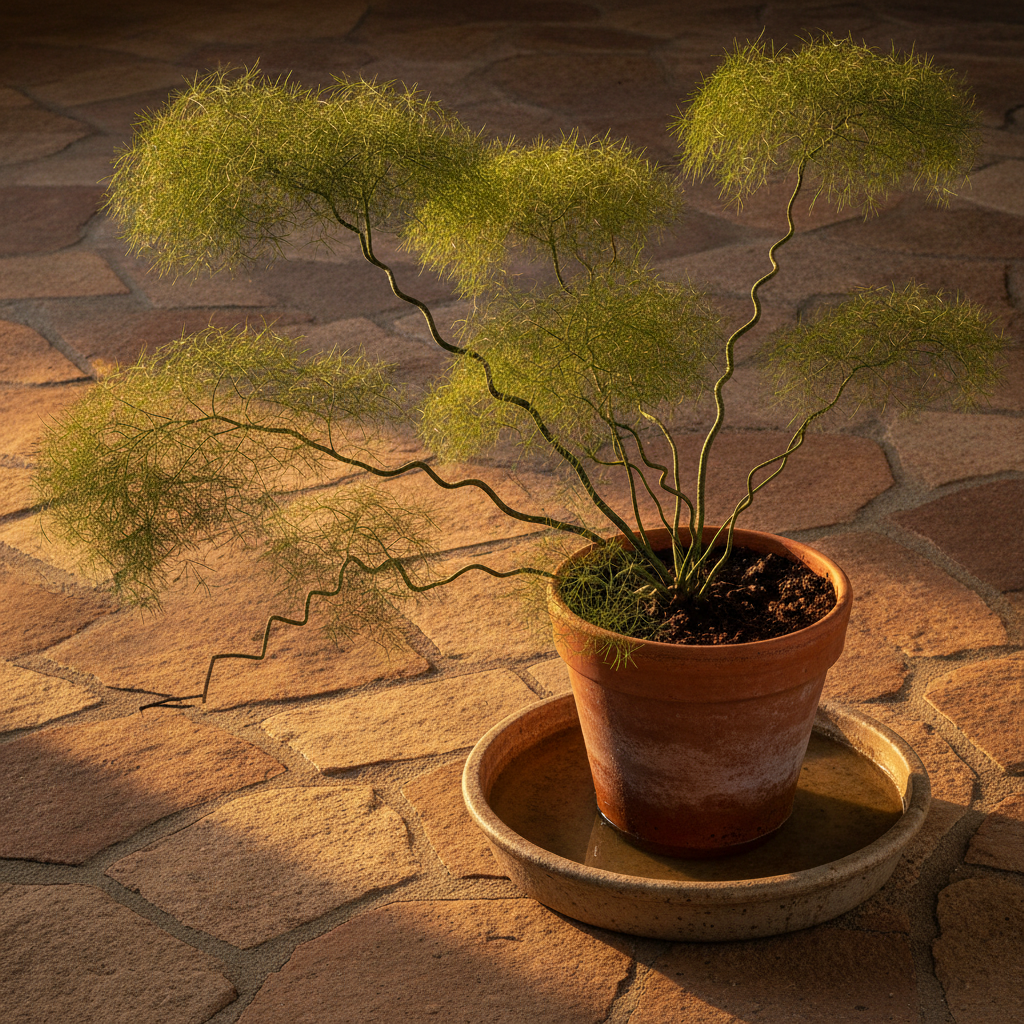
- Water thoroughly, either from the top until it runs freely from the drainage holes, or by standing the pot in a tray of water for 15 to 20 minutes so the roots draw moisture up from below.
- Let the pot drain completely; never leave it standing in collected water.
- Tip away any water remaining in the saucer or cachepot after half an hour.
- Empty and return the plant to its spot, and do not water again until the soil has dried to the correct depth.
Signs of Overwatering vs. Underwatering
| Symptom | Overwatering | Underwatering |
|---|---|---|
| Foliage colour | Yellowing across whole stems, often from the base | Pale, then browning at the needle tips |
| Foliage texture | Soft, limp, dropping in clumps | Dry, brittle, shedding fine needles |
| Soil | Stays wet for days, may smell sour | Bone dry, pulling away from the pot edge |
| Roots | Brown, mushy, foul-smelling tubers | Firm but shrivelled tubers |
| Stem base | Soft or blackened at soil level | Firm but the plant looks generally tired |
Warning – Root Rot: If you detect a sour smell, persistently soggy soil or blackened tubers, act at once. Remove the plant, cut away all soft, dark roots with sterilised scissors, and repot into fresh, free-draining mix in a clean pot. Withhold water for several days afterwards to let the cut roots callus over.
Humidity Requirements
The Ming Fern is more adaptable to humidity than true ferns, coping happily with the 40 to 60 percent found in most homes. It is not a bog plant and does not demand a terrarium. That said, in very dry air, such as beside a running radiator in winter, the fine cladodes can brown and shed more readily.
Excessive needle drop, crispy tips and a generally parched look, especially in a heated room, often point to air that is too dry rather than soil that is too dry. Distinguishing the two comes down to checking the soil: if it is still moist yet the foliage is browning, humidity is the more likely culprit.
To raise humidity, group the Ming Fern with other plants so they share the moisture they transpire, stand the pot on a tray of damp pebbles, or run a small humidifier nearby during the driest months. Misting offers only fleeting relief and, on such fine foliage, can encourage fungal problems, so it is not the best long-term answer.
Water Quality
The Ming Fern is not especially fussy about water, but it can be sensitive to a build-up of salts and fluoride over time, which may show as browning tips. If your tap water is very hard or heavily treated, using rainwater, filtered water or tap water left to stand overnight will keep the foliage looking its best. Flushing the pot thoroughly every few months also helps rinse accumulated minerals from the soil.
Soil, Potting & Repotting
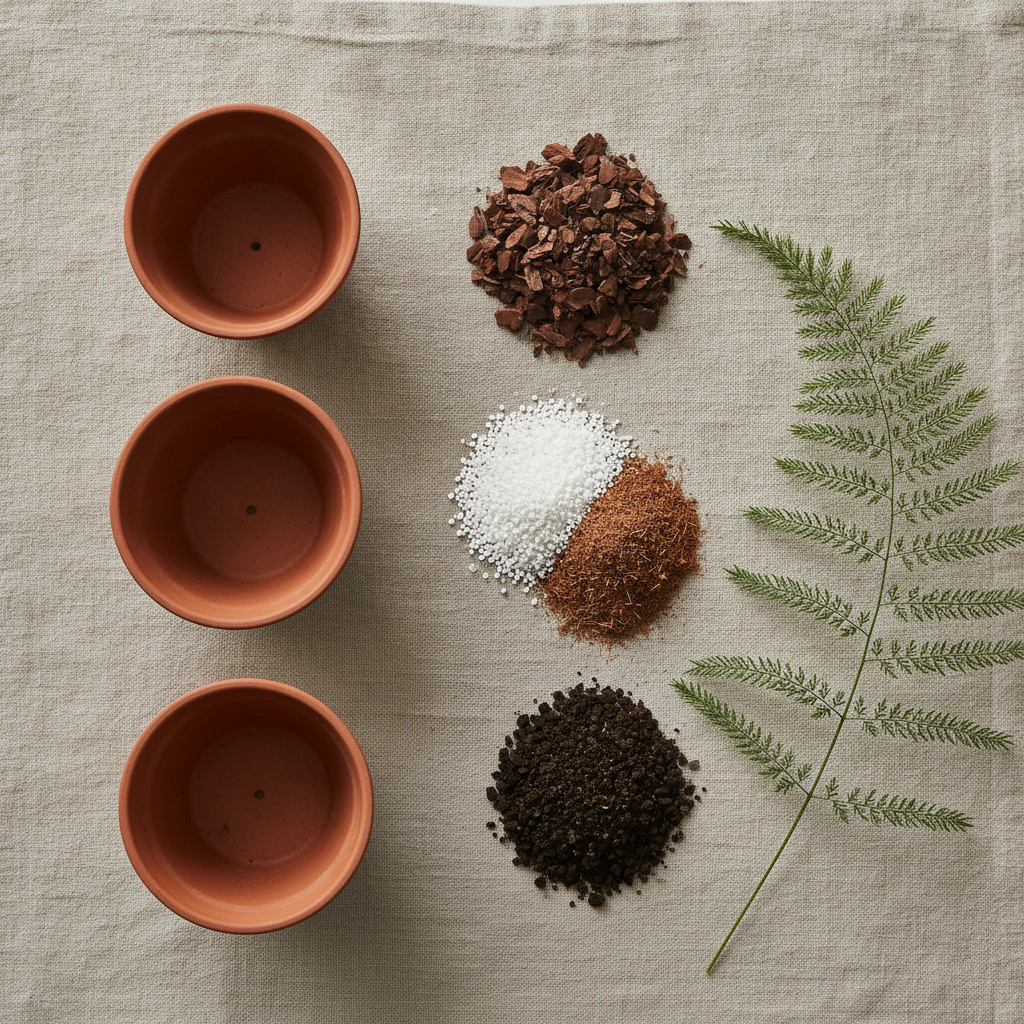
Because overwatering is the chief risk, the right soil is one that holds enough moisture to satisfy the tubers while draining quickly enough that the roots never sit in water. A loose, aerated mix based on quality potting compost, lightened with plenty of drainage material, ticks both boxes.
Ideal Soil Composition
A good starting point is a general-purpose houseplant compost amended with roughly one third drainage material. The aim is a mix that feels open and crumbly rather than dense and claggy.
| Component | Proportion | Function |
|---|---|---|
| Peat-free potting compost | Two parts | Holds moisture and nutrients, the base of the mix |
| Perlite or pumice | One part | Opens the structure and improves drainage and aeration |
| Fine orchid bark | Half a part | Adds air pockets and stops the mix compacting |
| Worm castings | A small handful | Provides a gentle, slow release of nutrients |
The Ming Fern prefers a slightly acidic to neutral soil, in the range of about pH 6.0 to 6.5, which most standard composts already provide. There is no need to test or adjust this in practice, provided you avoid very alkaline or heavily limed mixes.
Pro Tip – Quick Mix Recipe: If you want a simple, reliable blend, combine two handfuls of peat-free houseplant compost with one handful of perlite and a small scoop of orchid bark. It drains freely, resists compaction and suits the tuberous roots without any fuss.
Choosing the Right Pot
The Ming Fern develops a vigorous, fleshy root system that can be surprisingly powerful, so the container matters more than you might expect for such an airy plant.
Drainage holes are non-negotiable. Whatever material or style you choose, the pot must have holes at the base so excess water can escape. Without them, water pools around the tubers and rot is almost inevitable, however careful you are with the watering can.
Pot material: Terracotta is a good match because its porous walls let the soil breathe and dry more evenly, which suits a plant that dislikes wet feet. Plastic and glazed ceramic retain moisture longer, so if you use them, be even more disciplined about letting the soil dry.
Pot size: Choose a pot only 2 to 4 cm (1 to 2 in) wider than the current one. Oversized containers hold a large volume of slow-drying soil, which raises the risk of rot. The Ming Fern is quite content slightly pot-bound, and the strong tubers have been known to crack thin plastic pots, so a sturdy container is wise.
When to Repot
Repot every two to three years, or when you see roots and pale tubers crowding the surface, growth slowing markedly, or water running straight through without wetting the soil. Spring, at the start of the active growing season, is the ideal time, as the plant recovers fastest then. Because the roots are so vigorous, do not be surprised to find the pot packed solid with tubers when you tip it out.
How to Repot: Step-by-Step
- Water the plant a day or two beforehand so the rootball is moist and holds together.
- Wearing gloves to guard against the spines, ease the plant out by squeezing the pot and supporting the base of the stems.
- Gently tease away some of the old soil and inspect the tubers, trimming any that are soft, brown or damaged with sterilised scissors.
- Add a layer of fresh, free-draining mix to the new pot and set the plant at the same depth it grew before.
- Fill around the rootball with fresh mix, firming lightly to remove large air gaps without compacting it.
- Water thoroughly, let it drain, and top up the soil level if it settles.
- Return the plant to bright, indirect light and hold off feeding for four to six weeks.
Warning – Transplant Shock: Some needle drop after repotting is normal as the plant adjusts. Keep conditions stable, avoid fertilising straight away, and do not overwater in an attempt to help it recover, as soggy soil around freshly disturbed roots is the fastest route to rot.
Fertilising
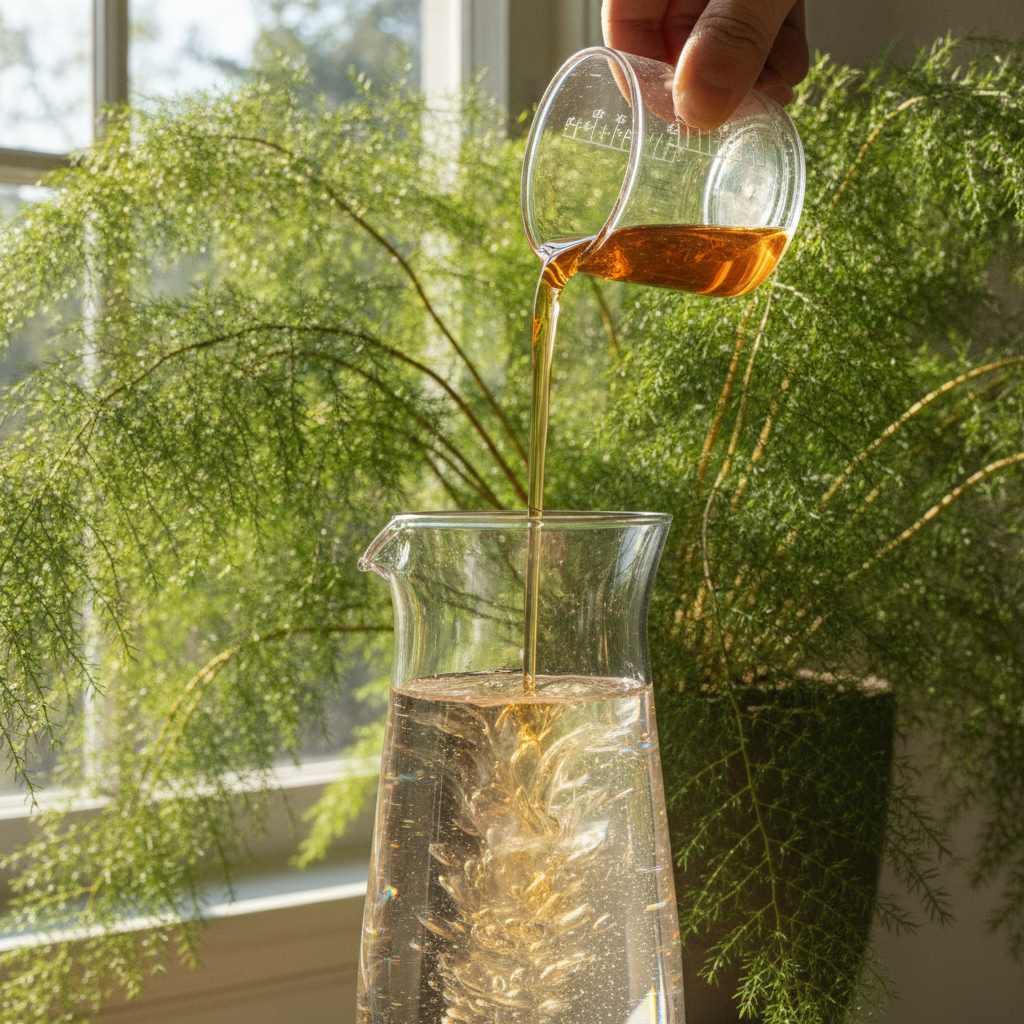
The Ming Fern is not a heavy feeder, but a modest supply of nutrients through the growing season keeps its foliage dense and richly coloured. The tuberous roots make the plant efficient at storing what it takes up, so a little, applied regularly, goes a long way.
The golden rule is restraint. Too much fertiliser scorches the fine roots and leaves a crust of mineral salts in the soil, which shows up as brown, crispy tips, exactly the symptom people often misread as a watering fault.
Understanding Plant Nutrients
Fertilisers are labelled with an NPK ratio, the proportions of nitrogen, phosphorus and potassium, the three nutrients plants use in the largest quantities. A balanced formulation covers the Ming Fern’s needs, but it helps to know what each element does and how a shortage shows itself.
| Nutrient | Symbol | Primary Function | Deficiency Symptoms |
|---|---|---|---|
| Nitrogen | N | Drives lush, green foliage and stem growth | Overall paling and yellowing, weak growth |
| Phosphorus | P | Supports root development and energy transfer | Stunted growth, dull or purplish tinge |
| Potassium | K | Regulates water use and overall vigour | Yellow or browning margins on older growth |
| Calcium | Ca | Builds strong cell walls and new tissue | Distorted or weak new growth |
| Magnesium | Mg | Central to chlorophyll and photosynthesis | Yellowing between veins on older cladodes |
| Iron | Fe | Needed for chlorophyll production | Yellowing on the newest growth first |
Types of Fertiliser
Liquid fertilisers: The easiest and most controllable option for the Ming Fern. Diluted into the watering can, they give you precise control over strength and timing, and are simple to skip in winter when the plant rests.
Slow-release granular: Pellets mixed into the soil release nutrients gradually over several months. Convenient, but harder to hold back if the plant slows down, so use a light hand and choose a formulation intended for houseplants.
Organic fertilisers: Worm castings, diluted seaweed and similar gentle feeds nourish the plant and improve soil life while making fertiliser burn far less likely. They are a forgiving choice for anyone nervous about overfeeding.
Feeding Schedule
Feed roughly once a month during spring and summer with a balanced liquid houseplant fertiliser diluted to half the recommended strength. As growth slows in autumn, taper off, and stop altogether through winter when the plant is barely growing and cannot make use of the extra nutrients. Resume in spring once you see fresh plumes emerging.
Pro Tip – Half Strength, Every Time: The Ming Fern’s fine roots are easily overwhelmed. Diluting to half the label rate, and always feeding onto already-moist soil rather than a bone-dry pot, dramatically reduces the risk of scorching the roots.
How to Fertilise
- Water the plant lightly first, or feed shortly after a normal watering, so the soil is already moist.
- Dilute a balanced liquid fertiliser to half the recommended strength in your watering can.
- Apply evenly to the soil until it just begins to drain, avoiding the foliage.
- Let the pot drain fully and discard any run-off, then return the plant to its spot.
Warning – Salt Build-Up: Over time, fertiliser salts accumulate in the soil and can burn the roots, showing as browning tips and a white crust on the surface or pot rim. Flush the pot thoroughly with plain water every couple of months, letting plenty run through, to rinse these salts away.
Propagation
The Ming Fern cannot be propagated from stem cuttings, a point that trips up many growers who assume it behaves like a trailing houseplant. The cut stems simply will not root. Instead, the two reliable methods are division of the tuberous root system and, more slowly, growing from seed collected from the berries.
Division is by far the most practical route for the home grower, giving you an instant new plant, and it doubles as a way to rejuvenate a specimen that has outgrown its pot. It is best done in spring, ideally combined with a scheduled repotting.
Understanding the Tuberous Roots
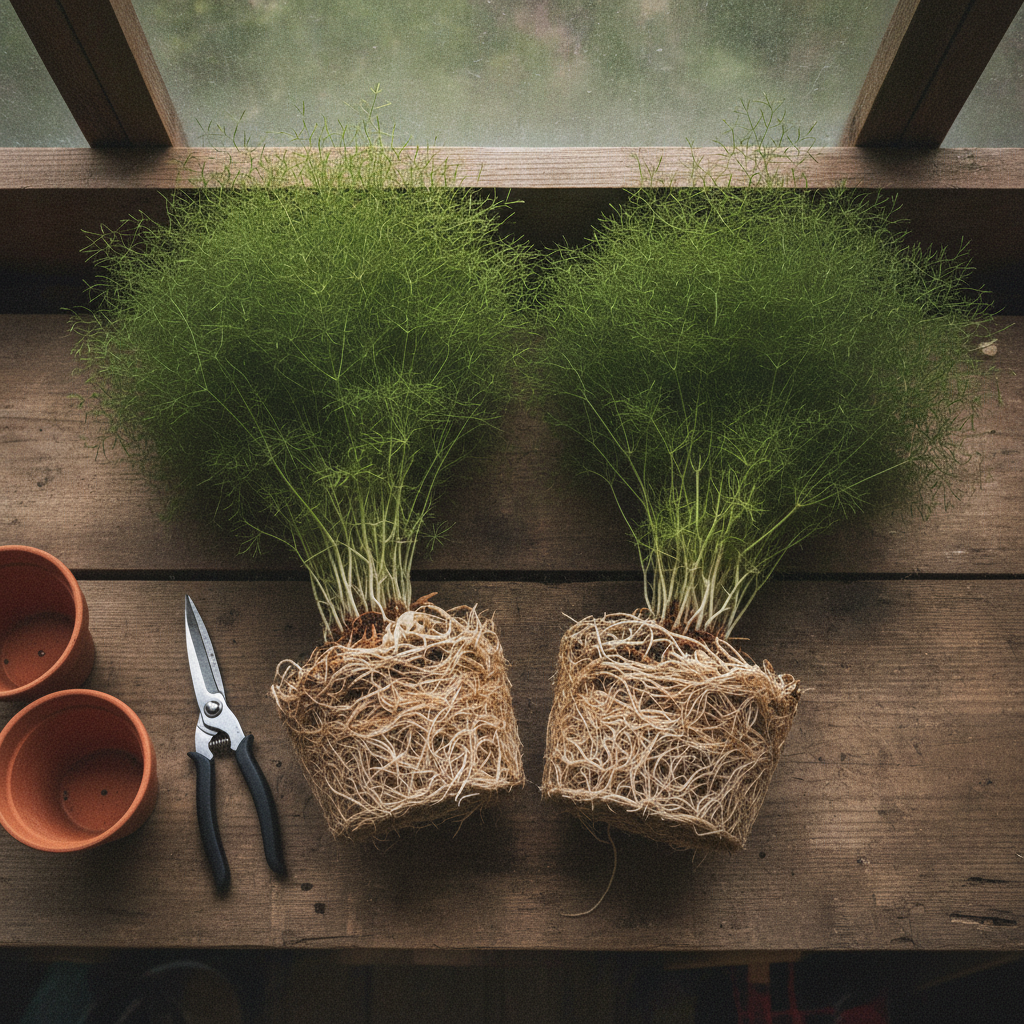
The key to successful division is understanding what lies beneath the soil. The Ming Fern grows from a dense mass of fleshy, water-storing tubers connected to the crown, from which the stems arise. When you divide, you are separating this mass into self-contained sections, each with its own portion of tubers, roots and top growth. Provided every division has all three, it can survive independently.
Division: Step-by-Step
Dividing a Ming Fern is straightforward but physical, as the root mass is tough and tightly packed. A clean, sharp knife is often needed to cut through it.
- Water the plant a day before so the roots are hydrated and easier to work with.
- Wearing gloves, remove the plant from its pot and shake or tease off some of the loose soil to expose the crown and tubers.
- Identify natural divisions in the clump, aiming for sections that each carry a good share of stems and tubers.
- Cut cleanly through the root mass with a sterilised sharp knife, separating it into two or more sections.
- Pot each division into its own container of fresh, free-draining mix at the depth it grew before.
- Water in well, let the pots drain, then keep them in bright, indirect light.
- Hold back on feeding for four to six weeks while the divisions settle and root out.
Pro Tip – Do Not Overwater New Divisions: Freshly cut roots are vulnerable to rot, so resist the urge to keep divisions constantly moist. Water when the top of the soil dries, and expect a little needle drop while each section establishes; new growth signals success.
Growing from Seed: Step-by-Step
If your Ming Fern flowers and sets its orange-red berries, you can raise new plants from the seed inside, though it is a slower and less certain process than division. Remember that the berries are toxic, so handle them with care and keep them away from pets and children.
- Let the berries ripen fully to a deep orange-red, then pick them and squeeze out the hard black seeds.
- Clean the pulp from the seeds and soak them in warm water for 24 hours to soften the coat.
- Sow onto the surface of a moist, free-draining seed mix and cover very lightly.
- Keep warm, around 20 to 24 degrees C (68 to 75 degrees F), in bright, indirect light, and maintain even, light moisture.
- Be patient, as germination can take several weeks to a couple of months and is often uneven.
- Pot on the seedlings once they are large enough to handle and growing steadily.
Troubleshooting Propagation
| Problem | Likely Cause | Solution |
|---|---|---|
| Division wilts and declines | Too few roots or tubers on the section, or rot from overwatering | Divide into fewer, larger sections and keep the mix only lightly moist |
| Heavy needle drop after division | Normal transplant stress | Keep conditions stable and wait for new growth; do not overwater |
| Seeds fail to germinate | Old seed, hard coat, or soil too cool or dry | Use fresh seed, soak before sowing and keep warm and evenly moist |
| New growth is thin and pale | Insufficient light | Move to a brighter spot or add a grow light |
Pests & Diseases
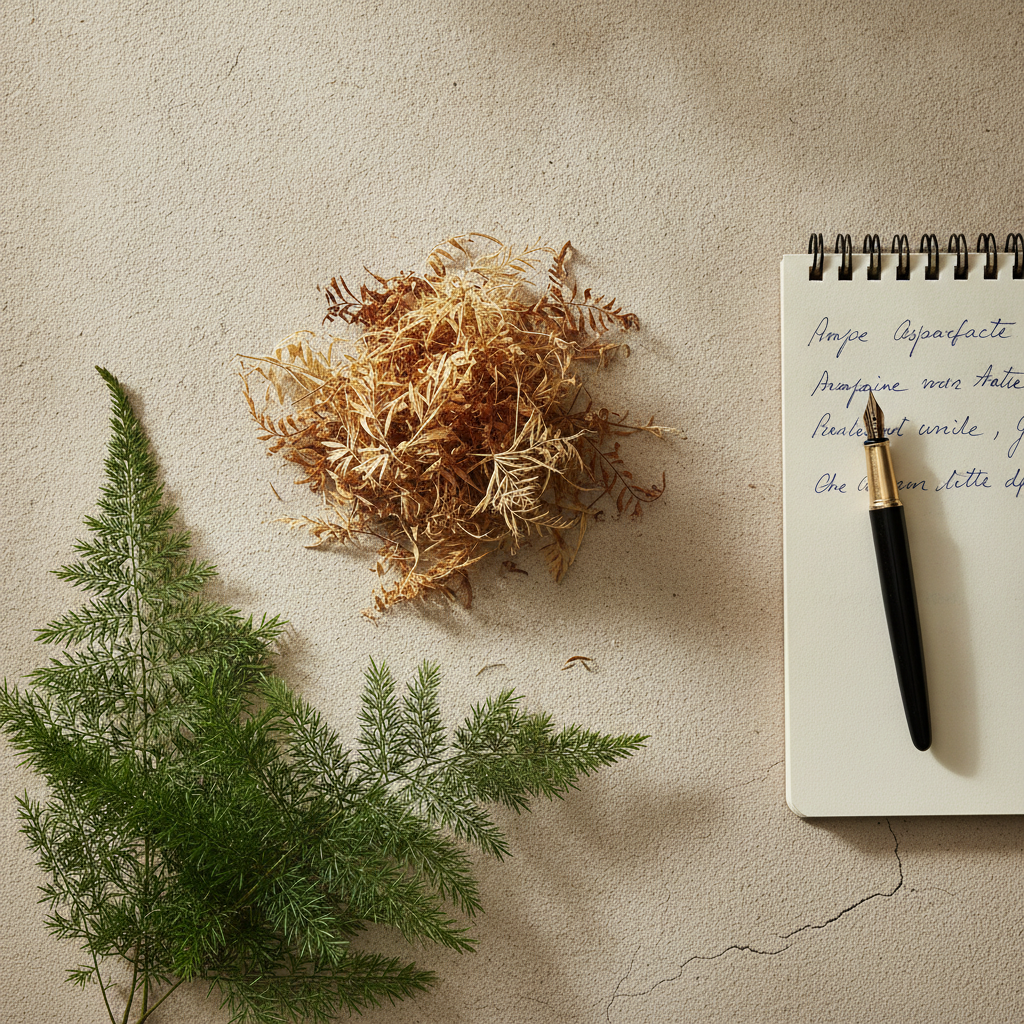
The Ming Fern is generally robust and not a magnet for pests, but no houseplant is entirely immune. The fine, densely packed foliage can shelter a few common sap-suckers, and the plant’s chief vulnerability, root rot, comes not from any pest but from overwatering.
Regular inspection is your best defence. Because the tufts are so intricate, small infestations can go unnoticed until they build up, so it pays to part the foliage and check the stems and undersides now and then, particularly on new plants brought into the home.
Common Pests
Spider Mites (Tetranychus urticae)
The most likely nuisance, especially in warm, dry rooms. These tiny mites cause a fine, dusty stippling and a pale, washed-out look, and in bad cases spin delicate webbing between the cladodes. The intricate foliage of the Ming Fern gives them plenty of cover.
Treatment: Rinse the plant under a gentle shower to knock mites off, raise the humidity, and treat with insecticidal soap or diluted neem oil every few days until they are gone. Isolate the plant while you deal with them.
Mealybugs (Pseudococcus species)
Small, soft insects coated in white, cottony wax that gather in the leaf axils and along the stems, sucking sap and weakening the plant. They can be hard to spot deep within the tufts.
Treatment: Dab individual bugs with a cotton bud dipped in isopropyl alcohol, then follow up with insecticidal soap or neem oil. Repeat weekly until no new insects appear.
Scale (Coccus species)
Small, immobile brown bumps clinging to the woody stems, scale insects feed on sap and excrete sticky honeydew that can lead to sooty mould. Their hard coating makes them stubborn.
Treatment: Scrape off what you can by hand or with a soft brush, then treat with neem oil or a systemic insecticide, repeating until the stems stay clear.
Common Diseases
Root Rot (Pythium and Phytophthora species)
By far the most serious threat to a Ming Fern, root rot follows from waterlogged soil. The tubers turn brown and mushy, the stems yellow and collapse, and the soil often smells sour. Left unchecked it is usually fatal.
Treatment: Unpot the plant, cut away all soft, dark roots with sterilised scissors, and repot into fresh, free-draining mix in a clean pot. Water sparingly afterwards and correct the watering habits that caused it.
Leaf and Stem Fungal Spots (various fungi)
Less common, these show as brown or blackened patches on the cladodes and stems, usually where air is stagnant and the foliage stays wet for long periods.
Treatment: Remove affected growth, improve air circulation, avoid wetting the foliage when watering, and reduce humidity if it is very high. A fungicide is rarely needed if conditions are corrected.
Pest and Disease Summary
| Pest / Disease | Identification | Treatment |
|---|---|---|
| Spider mites | Fine stippling, dusty look, faint webbing | Rinse, raise humidity, neem oil or insecticidal soap |
| Mealybugs | White cottony clusters in axils and stems | Alcohol on a cotton bud, then neem oil |
| Scale | Brown bumps on stems, sticky honeydew | Scrape off, then neem oil or systemic insecticide |
| Root rot | Mushy brown tubers, yellowing, sour smell | Trim rotten roots, repot in fresh mix, water less |
| Fungal spots | Brown or black patches on foliage and stems | Remove growth, improve airflow, keep foliage dry |
Prevention Strategies
Prevention comes down to good routine care. A plant grown in bright light, watered only when it needs it and given decent airflow is far less likely to succumb to either pests or disease. Quarantine any new plant for a couple of weeks before it joins your collection, and wipe down nearby surfaces if you do find an infestation.
Inspect the Ming Fern regularly, paying attention to the dense inner foliage and the stems where pests like to hide. Catching a problem early, when only a few insects are present, makes it enormously easier to control than tackling a full-blown outbreak.
Pro Tip – Neem as Routine: A light monthly spray of diluted neem oil, applied in the evening out of direct sun, works as a gentle deterrent that keeps most sap-suckers from ever gaining a foothold. Test on a small area first, as the fine foliage can be sensitive.
Popular Varieties
The name Ming Fern is used loosely in the plant trade, and several ornamental asparagus species are sold under it or confused with it. True Asparagus retrofractus has few named cultivars of its own, so the plants you are most likely to encounter alongside it are its close relatives in the genus, each with a slightly different texture and habit.
Knowing these relatives helps you buy the look you actually want, since a florist labelling a stem as Ming fern may mean any of several species. All share the same easy, drought-tolerant nature and similar care, so choosing between them is largely a matter of form.
| Variety | Leaf Appearance | Light Needs | Growth Rate | Availability |
|---|---|---|---|---|
| Ming Fern (species) | Zig-zag stems with airy pom-pom tufts | Bright indirect | Moderate | Common |
| Ming Asparagus Fern | Dense, rounded pom-pom puffs | Bright indirect | Moderate | Common in florist trade |
| Foxtail Fern | Upright, dense plume-like fronds | Bright indirect to some sun | Moderate | Very common |
| Sprenger’s Asparagus Fern | Arching, trailing feathery stems | Bright indirect | Fast | Very common |
| Lace or Common Asparagus Fern | Flat, frond-like, very fine texture | Bright indirect | Fast | Common |
Featured Varieties
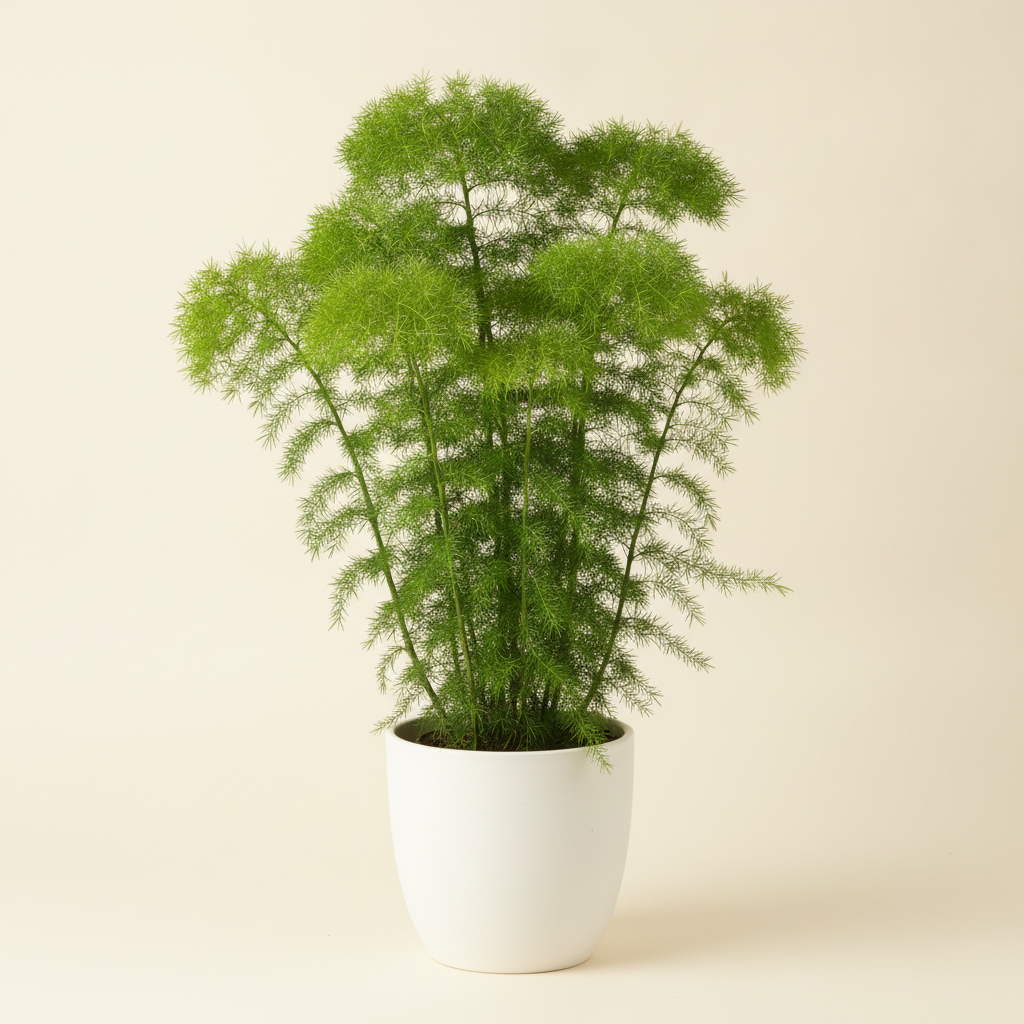
Ming Asparagus Fern
Often sold simply as Ming fern, this form (frequently Asparagus macowanii) carries fuller, more rounded pom-pom puffs on upright stems, giving a cloud-like, sculptural look prized by florists.
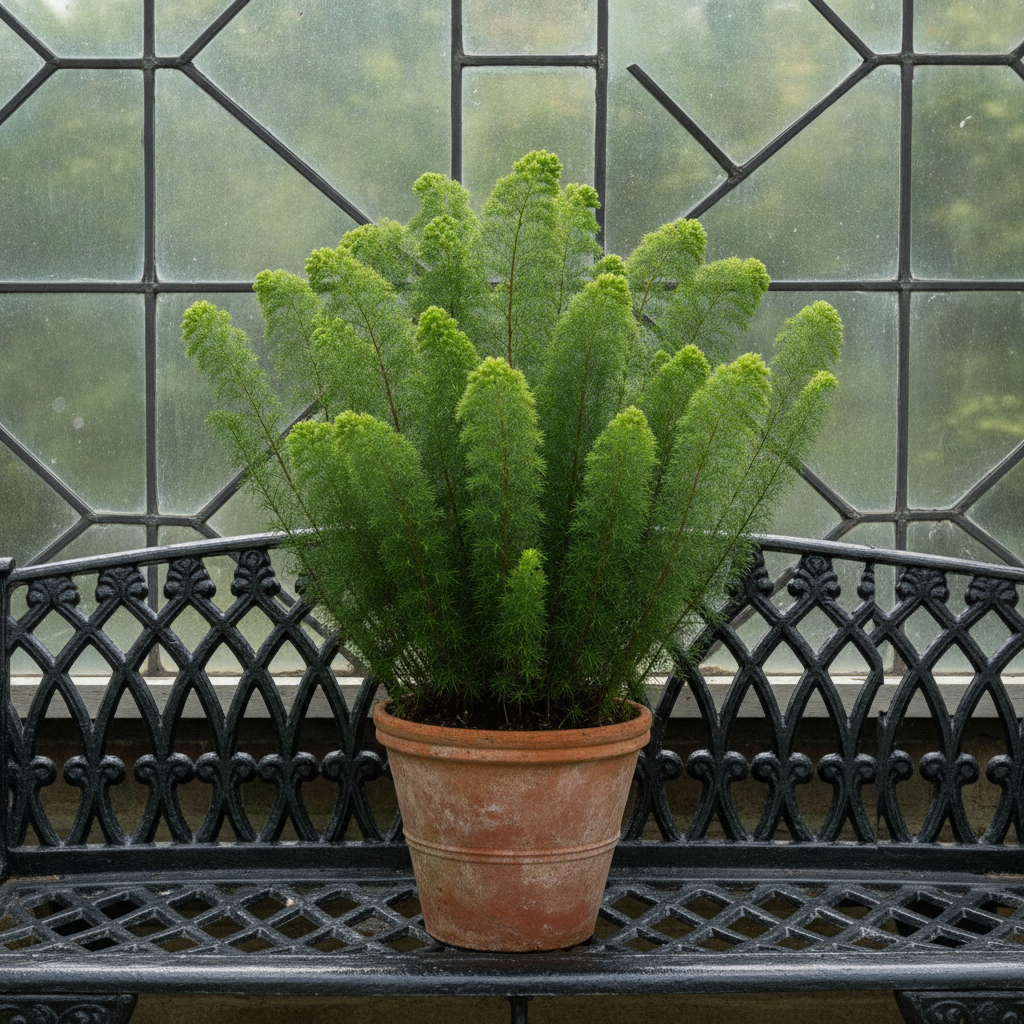
Foxtail Fern
The foxtail fern (Asparagus densiflorus ‘Myersii’) sends up dense, upright plumes shaped like bushy fox tails, forming a neat, symmetrical fountain that makes a bolder statement than the airy species.
Variety Profiles in Detail
Ming Asparagus Fern (Asparagus macowanii)
Very similar to true Asparagus retrofractus and routinely sold under the same common name, this species is grown for its dense, spherical tufts and long-lasting cut stems. It shares the same bright-light, dry-between-waterings care and makes an equally graceful houseplant.
Foxtail Fern (Asparagus densiflorus ‘Myersii’)
Perhaps the most popular ornamental asparagus, the foxtail fern is instantly recognisable for its stiff, upright plumes. It is more architectural than the Ming Fern and tolerates a touch more direct sun, making it a favourite for bright windowsills and outdoor use in mild climates.
Sprenger’s Asparagus Fern (Asparagus densiflorus ‘Sprengeri’)
A looser, more trailing relative with arching, feathery stems that spill attractively over the edge of a pot or hanging basket. Fast-growing and forgiving, it is a good choice where you want cascading rather than upright foliage.
Common Asparagus Fern (Asparagus setaceus)
Also called lace fern, this species has flat, triangular, extremely fine fronds that resemble a green lace doily. It climbs as it matures and needs the same bright, indirect light, though it appreciates slightly higher humidity than the Ming Fern.
Choosing the Right Variety for Your Space
If you love the light, sculptural cloud of green, the true Ming Fern or its close cousin Asparagus macowanii is what you want. For a bolder, upright accent choose the foxtail fern, for a trailing display in a hanging basket pick Sprenger’s, and for the finest, most lace-like texture look to the common asparagus fern. All are similarly easy, so let the shape and habit that suits your space guide the choice.
Frequently Asked Questions
Is the Ming Fern actually a fern?
No. Despite the name and the feathery look, Asparagus retrofractus is not a fern but a flowering plant in the asparagus family. It reproduces by seed and division rather than spores, and its needle-like foliage is made up of modified stems called cladodes, not true leaves.
Why is my Ming Fern turning yellow and dropping needles?
The usual causes are overwatering, too little light or very dry air. Check the soil first: if it is soggy, ease off watering and improve drainage. If the light is poor, move it somewhere brighter. A modest amount of needle drop is also normal, especially after a move or repotting.
How often should I water a Ming Fern?
Water when the top 2 to 4 cm (1 to 1.5 in) of soil has dried out, which is often about once a week in spring and summer and every two to three weeks in winter. The tuberous roots store water, so it is far safer to err on the dry side than to keep the soil constantly moist.
Is the Ming Fern toxic to cats and dogs?
Yes. The plant contains steroidal saponins, and the berries in particular can cause vomiting and stomach upset if eaten by cats, dogs or people. The sap may also irritate skin. Keep it out of reach of curious pets and children, and remove any berries that form.
Can I propagate a Ming Fern from a cutting?
No, stem cuttings will not root. The only reliable methods are dividing the tuberous root mass, which is quick and easy, or growing from seed collected from ripe berries, which is slower. Division in spring is the recommended approach for most home growers.
Why does my Ming Fern have thorns?
The woody stems carry small, recurved spines, which is entirely normal for the species and reflected in its name, retrofractus. They are not a sign of any problem, but they can catch on skin, so it is sensible to wear gloves when handling or repotting the plant.
How big does a Ming Fern get?
Indoors it typically reaches 1 to 2 metres (3 to 6 feet) tall over time, forming an airy, shrubby shape. It is slow to moderate in pace and easily kept smaller by growing it in a modest pot and pruning back the longest stems.
Can I put my Ming Fern outside in summer?
Yes, it enjoys a spell outdoors in warm weather, in a bright but sheltered spot out of harsh midday sun. Acclimatise it gradually to avoid scorch, and bring it back inside well before temperatures drop below about 10 degrees C (50 degrees F), as it is not frost hardy.






