

Few houseplants deliver the architectural drama of a tree fern in a form small enough for a living room, but the silver lady fern manages exactly that. Known botanically as Blechnum gibbum, it produces a near-perfect shuttlecock rosette of arching, glossy, finely divided fronds and, given a few years, lifts that rosette aloft on a slender fibrous black trunk that mimics the towering tree ferns of New Caledonia and the wider south-west Pacific where the species originates. It is sometimes sold as the dwarf tree fern, and both names describe it well.
The silver lady fern has a reputation for being a touch more demanding than tougher ferns such as the bird’s nest, mostly because it insists on steady moisture and reasonable humidity. In truth it is far from difficult once its handful of preferences are met, and the gap between a plant that merely survives and one that truly thrives comes down to a few consistent habits rather than any special skill. This guide walks through light, watering, humidity, soil, feeding, propagation and pest control in detail, so you can grow a specimen that keeps its lush symmetry year after year.
Contents
- Quick Reference
- Why the Silver Lady Fern Makes a Rewarding Houseplant
- Light Requirements
- Watering & Humidity
- Soil, Potting & Repotting
- Fertilising
- Propagation
- Pests & Diseases
- Popular Varieties
- Frequently Asked Questions
Quick Reference: Silver Lady Fern at a Glance
| Light | Bright indirect to medium light; no direct midday sun |
| Watering | Keep the soil evenly moist at all times; never let it dry out fully or sit waterlogged |
| Temperature | 16 to 24 degrees Celsius (61 to 75 degrees Fahrenheit); avoid below 10 degrees Celsius (50 degrees Fahrenheit) |
| Humidity | High, ideally 60 percent or more; struggles below 40 percent |
| Fertiliser | Dilute balanced feed monthly through spring and summer |
| Toxicity | Non-toxic to cats, dogs and humans |
Why the Silver Lady Fern Makes a Rewarding Houseplant
The appeal of Blechnum gibbum begins with its symmetry. New fronds unfurl from a central crown in an orderly spiral, each one arching outward at the same graceful angle, so a well-grown plant forms a living rosette with the balance of a piece of sculpture. The fronds themselves are pinnate, divided into many narrow leaflets along a central rib, and carry a fresh, slightly glossy green that reads as vibrant even in a shaded corner. This combination of order and softness is unusual among houseplants, most of which grow either stiffly upright or in a loose tumble.

The second reason to grow one is the promise of the trunk. Although it is marketed as a compact plant, a mature silver lady fern slowly builds a slim, dark, fibre-covered stem that can reach 60 centimetres to a full metre (24 to 39 inches) over many years, turning a tabletop fern into a miniature tree. Growth is unhurried, which suits smaller homes, and because the plant is non-toxic it can share a room with curious pets and children without concern. What it asks in return is consistency: moisture, humidity and shelter from harsh sun. Meet those and it rewards you with year-round greenery and steadily expanding form.
Important — Toxicity: The silver lady fern is considered non-toxic to cats, dogs and people, and no part of it is known to cause poisoning if nibbled. That said, no plant is a food, and a pet that eats a large quantity of fibrous frond may still suffer mild stomach upset, so it is sensible to discourage grazing.
Light Requirements
In the wild, the silver lady fern grows on the floor and lower slopes of humid subtropical forest, where sunlight arrives already filtered through a canopy overhead. That heritage sets its indoor preference precisely: it wants bright but indirect light, the kind that fills a room without any beam of sun falling directly on the foliage. This is the single most useful thing to understand about placing the plant, because both extremes cause visible harm.
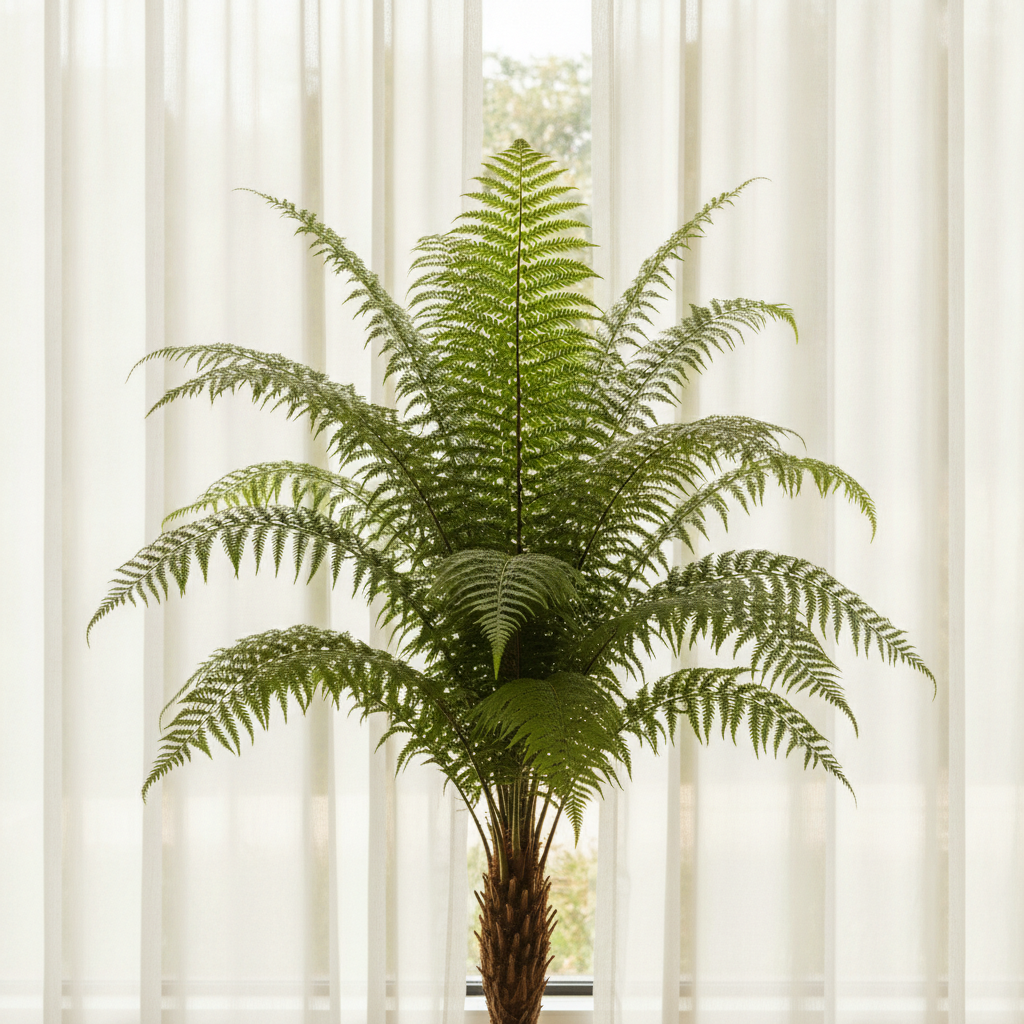
Ideal placement is a position that stays luminous through the day yet keeps the plant out of any direct ray. A spot a metre or two back from a bright window, or immediately beside a window that faces away from the midday sun, usually gets it right. The fronds should cast only a soft, diffuse shadow; if they throw a hard, crisp shadow, the light is too strong for comfort.
Light Levels Explained
Because terms like bright and low are used loosely, the table below translates them into rough illumination levels and typical positions in a home, along with the outcome you can expect for a silver lady fern in each.
| Light Category | Approx. Level | Typical Location | Outcome |
|---|---|---|---|
| Direct sun | Over 50,000 lux | On a south or west sill in summer | Fronds scorch, bleach and crisp; avoid |
| Bright indirect | 10,000 to 25,000 lux | Near a bright window, out of the sun’s path | Best growth, dense and richly coloured |
| Medium | 5,000 to 10,000 lux | A metre or two into a bright room | Reliable, slightly slower growth |
| Low | 1,000 to 5,000 lux | A dim corner or north aspect | Survives but grows sparse and leggy |
| Very low | Under 1,000 lux | Interior room with little daylight | Decline over time; not recommended |
Window Orientation and Placement
South-facing window: The brightest aspect in the northern hemisphere and usually too intense at the glass. Set the fern well back from the window, or diffuse the light with a sheer curtain, so the foliage never sits in a direct beam.
East-facing window: An excellent choice. The gentle morning sun is rarely strong enough to burn, and the room stays bright afterwards, giving the plant the steady, filtered light it likes.
West-facing window: Workable, but the afternoon sun can be fierce in summer. Position the fern to one side of the window rather than dead centre, or shield it during the hottest hours.
North-facing window: A safe, gentle aspect that suits the plant’s shade tolerance, though a north room can be dim in winter. Place the fern close to the glass here to gather as much light as possible.
Pro Tip — Rotate for Symmetry: The silver lady fern’s greatest asset is its even rosette, and fronds lean towards the light. Give the pot a quarter turn every week or two so the crown develops evenly rather than growing lopsided towards the window.
How Light Affects Frond Quality
Light governs not just the speed of growth but the look of each frond. In good bright indirect light the leaflets emerge broad, closely spaced and deeply green, and the plant fills out into a full rosette. As light drops towards the low end, new fronds tend to stretch, the leaflets space out along a longer rib, and the whole plant takes on a thinner, reaching appearance as it hunts for brightness. Restoring stronger light will not fix stretched fronds already formed, but it will ensure the next flush grows compact again.
Warning — Direct Sunlight: A single afternoon of unfiltered summer sun through glass can scorch a silver lady fern, leaving pale, papery patches that never recover. Damaged fronds do not heal, so err towards too little direct light rather than too much.
Artificial Lighting
The silver lady fern responds well to supplementary lighting, which makes it a good candidate for darker rooms or for the short days of winter. A full-spectrum LED grow light positioned 30 to 45 centimetres (12 to 18 inches) above the crown, run for around 10 to 12 hours a day, provides ample energy without the heat that would dry the foliage. Because the plant does not need intense light, a modest fixture is usually enough.
Seasonal Adjustments
Daylight weakens considerably from autumn into winter, so a fern that thrived a metre back from a window in summer may need to move closer to the glass in the darker months. Reverse the move in spring as the sun climbs and strengthens, watching for any sign that the light has become too direct. Adjusting position with the seasons keeps growth steady rather than lurching between fast summer flushes and stalled winter stretches.
Watering & Humidity
Watering is where the silver lady fern is most particular, and where most problems begin. Unlike a succulent or even a forgiving pothos, this fern has fine roots that dislike both drought and stagnation. The goal is soil that stays consistently moist, damp like a wrung-out sponge, without ever drying to the point of crumbling or turning so wet that it becomes airless. Learning to read that middle ground is the key to a healthy plant.
When to Water
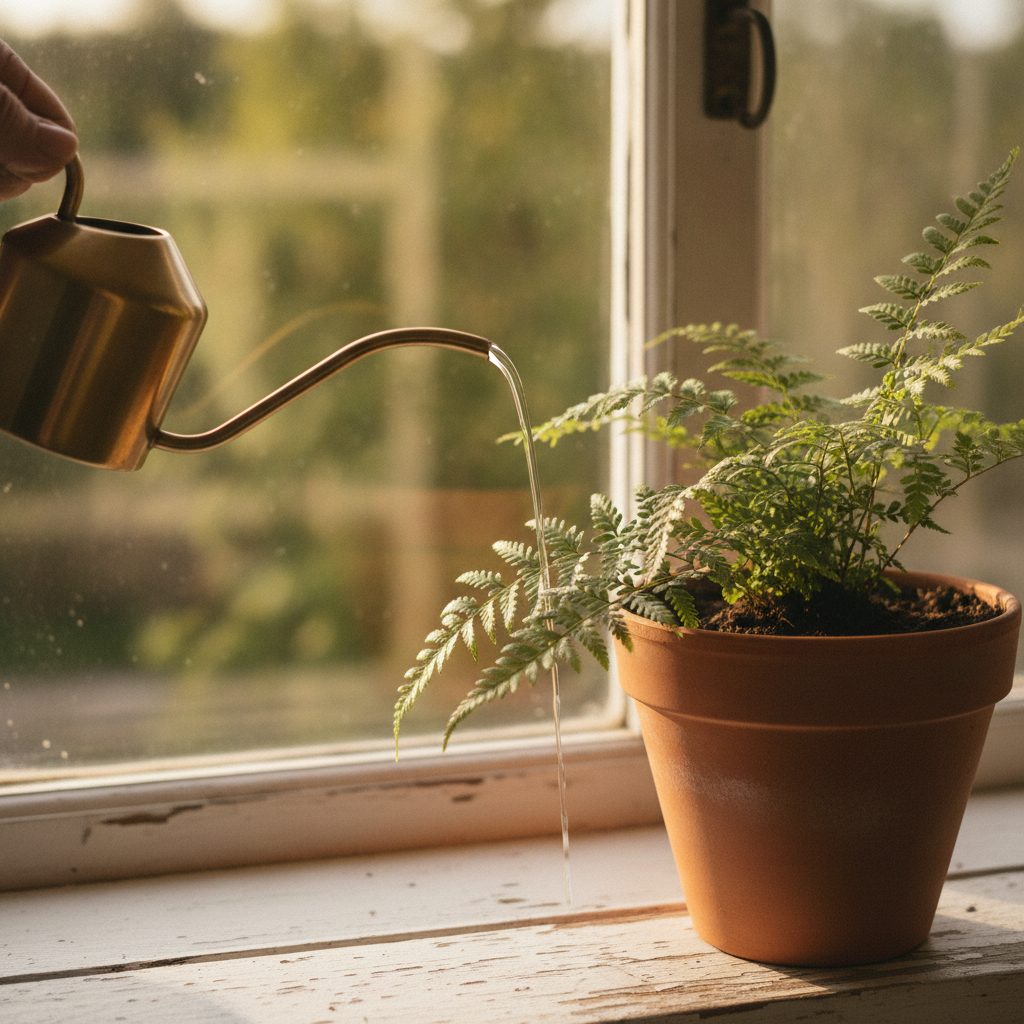
Check the plant every couple of days by pressing a finger into the top centimetre or two of compost. For a silver lady fern you are aiming to water when that surface layer has just begun to feel less wet, while the compost below remains damp. This is earlier than you would water most houseplants, because allowing the whole rootball to dry, even once, tends to brown the frond tips and can kill fine feeder roots.
Frequency depends on warmth, light and pot size, so treat any schedule as a starting point rather than a rule. In a bright, warm room during summer you may water two or three times a week, while in a cool, dim winter spell the same plant might need topping up only once every seven to ten days. The plant’s needs, not the calendar, decide the interval.
Pro Tip — The Weight Test: Lift the pot just after watering to learn how heavy a well-hydrated fern feels, then lift it again over the following days. As the compost dries the pot grows noticeably lighter, giving you a reliable cue to water again before the soil ever dries out completely.
How to Water Correctly
- Water at the soil surface, directing the flow onto the compost around the crown rather than over the centre of the rosette, which can encourage rot.
- Add water slowly and evenly until it begins to run from the drainage holes, ensuring the whole rootball is moistened.
- Let the pot drain fully for several minutes so no excess remains at the base.
- Tip away any water that collects in the saucer or cachepot; the fern likes moisture but not standing water.
- Use room-temperature water where possible, as very cold water can shock the roots.
Signs of Overwatering vs. Underwatering
| Symptom | Overwatering | Underwatering |
|---|---|---|
| Frond colour | Yellowing from the base, whole fronds fading | Browning and crisping at the tips and edges |
| Frond texture | Soft, limp, sometimes translucent | Dry, brittle and papery |
| Soil | Persistently wet, sour-smelling, may grow mould | Pulls away from the pot, hard to re-wet |
| Roots | Brown, mushy and foul-smelling | Dry, thin and shrivelled |
| Crown base | Blackened, soft or collapsing | Firm but with dying outer fronds |
Warning — Root Rot: A silver lady fern left in waterlogged compost will develop root rot quickly, and once the crown begins to blacken and soften the plant is often beyond saving. If you catch it early, remove the plant from its pot, cut away all mushy roots, and repot into fresh, airy compost, then water more sparingly while it recovers.
Humidity Requirements
Humidity matters almost as much as watering for this species. Coming from moist forest air, the silver lady fern is happiest at 60 percent relative humidity or above, and it begins to suffer below about 40 percent. Central heating and air conditioning both strip moisture from indoor air, so the average living room is drier than the plant would choose, particularly in winter.
The clearest symptom of air that is too dry is browning along the tips and margins of otherwise healthy fronds, sometimes accompanied by a general crisping of the finest leaflets. Because these fronds cannot repair themselves, prevention is far better than cure, and it is worth raising humidity before the damage appears rather than after.
Several approaches help, and combining them works best. A room humidifier is the most effective and consistent option, especially if placed near the plant. Grouping the fern with other plants raises the local humidity as they all transpire, and standing the pot on a wide tray of pebbles topped up with water lifts the moisture in the air immediately around the foliage. A steamy bathroom or kitchen, provided it has enough light, also makes an ideal home. Misting offers only brief relief and can invite fungal spots if fronds stay wet, so it is the weakest of the options.
Water Quality
Ferns are more sensitive to water quality than many houseplants, and the silver lady fern is no exception. Hard tap water heavy in minerals, or water treated with high levels of chlorine and fluoride, can gradually brown the frond tips over time. If your tap water is very hard, or if tip browning persists despite good humidity and moisture, switch to filtered water, cooled boiled water or collected rainwater, which the plant will appreciate.
Soil, Potting & Repotting
The right compost lets a silver lady fern hold the steady moisture it craves while still allowing air to reach the roots, and getting this balance right removes much of the difficulty from watering. The plant wants a medium that is rich in organic matter, slightly acidic and open in structure, so it stays damp without turning to sludge.
Ideal Soil Composition
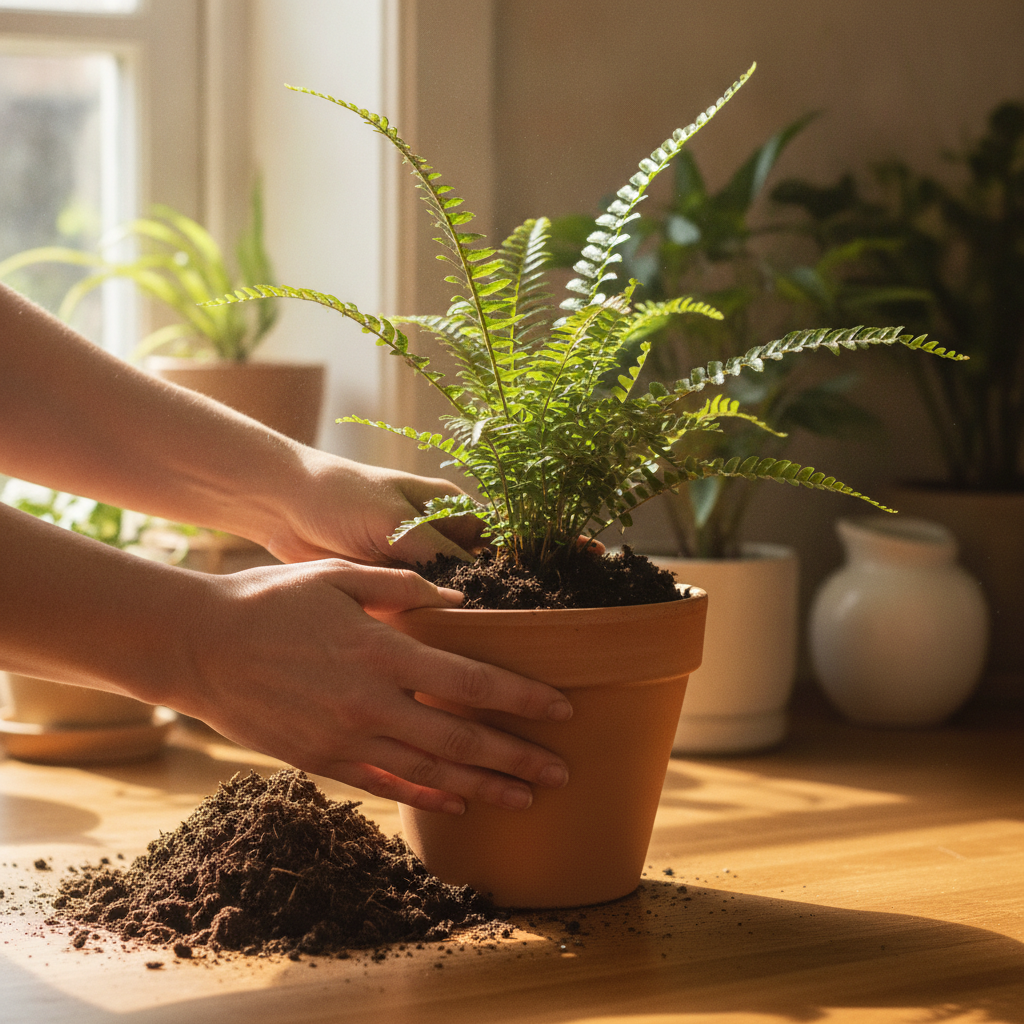
A good starting point is a quality peat-free houseplant compost lightened with additions that improve both drainage and moisture retention. The aim is a mix that feels spongy and holds water yet never compacts into a dense, airless block. Leaf mould or fine composted bark supplies the humus this forest-floor plant expects, while perlite keeps the whole thing porous.
| Component | Proportion | Function |
|---|---|---|
| Peat-free houseplant compost | Half | Base medium holding nutrients and moisture |
| Leaf mould or fine composted bark | One quarter | Adds humus and an open, forest-floor texture |
| Perlite | One quarter | Improves drainage and keeps the mix aerated |
| Coir (optional) | A handful | Boosts moisture retention in dry rooms |
The silver lady fern prefers a slightly acidic root zone, roughly pH 5.5 to 6.5, which most peat-free composts sit close to. Avoid mixes heavily amended with lime or those formulated for cacti, as the first pushes the pH too high and the second drains far too fast to keep the roots damp.
Pro Tip — Quick Mix Recipe: For a reliable blend, combine two handfuls of peat-free compost with one handful of fine bark or leaf mould and one handful of perlite. It holds moisture like the fern wants yet drains freely enough to keep root rot at bay.
Choosing the Right Pot
Pot choice affects how the compost behaves between waterings, so it is worth a moment’s thought rather than simply reaching for whatever is nearest.
Drainage holes are non-negotiable. Whatever container you choose must let excess water escape freely, because even a moisture-loving fern will rot if its roots sit in standing water. If you love a decorative pot without holes, use it as a cachepot with a plain plastic grower’s pot inside that you can lift out to drain.
Pot material: Plastic and glazed ceramic both retain moisture well and suit this thirsty fern. Unglazed terracotta wicks water away through its walls and dries the compost faster, which means more frequent watering; it can work, but only if you are attentive.
Pot size: Choose a pot only slightly larger than the rootball. An oversized pot holds a large volume of compost that stays wet long after the roots have drunk their fill, raising the risk of rot, so step up gradually rather than in big jumps.
When to Repot
The silver lady fern grows at a measured pace and dislikes disturbance, so it needs repotting only every two to three years, or when roots begin to circle the base and emerge from the drainage holes. Spring, as growth accelerates, is the best time, giving the plant a full active season to settle into fresh compost. Signs that a repot is due include water running straight through without wetting the compost, roots visible at the surface, and growth that has slowed despite good care.
How to Repot: Step-by-Step
- Water the fern a day beforehand so the rootball is hydrated and holds together during the move.
- Ease the plant out by supporting the crown and tipping the pot, rather than pulling on the fronds, which snap easily.
- Gently tease a few of the outer roots loose and remove any that are brown or mushy, keeping the pale healthy roots intact.
- Add a layer of fresh compost to the new pot, then set the fern so its crown sits at the same depth it grew before, never buried.
- Fill around the rootball with fresh mix, firming lightly to remove large air pockets without compacting the compost.
- Water thoroughly to settle the compost and close any gaps around the roots.
- Return the plant to its usual spot and keep humidity high for a couple of weeks while it re-establishes.
Warning — Transplant Shock: The silver lady fern resents root disturbance and may sulk after repotting, dropping or browning a few outer fronds as it adjusts. Keep it warm, humid and evenly moist, hold off on fertiliser for a month, and it will usually push fresh growth from the crown within a few weeks.
Fertilising
Ferns are naturally light feeders, and the silver lady fern is no exception. In the forest it draws modest nutrition from slowly decomposing leaf litter, so it neither needs nor tolerates heavy feeding. A gentle, regular supply through the growing season keeps the fronds green and the plant expanding without the risk of fertiliser burn.
The most common feeding mistake is generosity. Because the roots are fine and sensitive, a full-strength dose can scorch them and brown the delicate frond tips, so restraint serves this plant far better than abundance.
Understanding Plant Nutrients
Most balanced fertilisers list three headline nutrients as an NPK ratio, standing for nitrogen, phosphorus and potassium, alongside smaller amounts of secondary nutrients and trace elements. For a foliage plant like the silver lady fern, nitrogen is the most important of the three, as it drives the lush green growth that is the whole point of the plant.
| Nutrient | Symbol | Primary Function | Deficiency Symptoms |
|---|---|---|---|
| Nitrogen | N | Leafy green growth and overall vigour | Pale, yellowing older fronds; slow growth |
| Phosphorus | P | Root development and energy transfer | Stunted growth, dull foliage |
| Potassium | K | General health and stress resistance | Browning frond edges, weak fronds |
| Magnesium | Mg | Central component of chlorophyll | Yellowing between leaflet veins |
| Iron | Fe | Chlorophyll formation in new growth | Pale new fronds with greener veins |
Types of Fertiliser
Liquid fertilisers: The easiest option for a fern, because they are simple to dilute to the weak concentration it prefers and to withhold entirely in winter. A balanced liquid houseplant feed at half strength or less is ideal.
Slow-release granular: Convenient but harder to control, as the prills release nutrients whenever the compost is warm and moist, which for this constantly damp plant is most of the time. If you use them, apply at half the recommended rate.
Organic fertilisers: Gentle feeds such as diluted worm-casting tea or a mild seaweed extract suit the fern’s forest-floor palate and are very unlikely to burn, making them a safe, forgiving choice for the cautious grower.
Feeding Schedule
Feed once a month through the active growing season of spring and summer, using a balanced liquid fertiliser diluted to half strength or weaker. As growth slows in autumn, taper off, and stop feeding altogether in winter when the plant is resting and cannot use the nutrients. Resuming too early in the year risks a build-up of unused salts in the compost.
Pro Tip — Feed a Damp Plant: Always apply liquid feed to compost that is already moist, never to a dry rootball. Fertilising dry soil concentrates the salts against thirsty roots and can burn them, whereas feeding into damp compost spreads the nutrients gently and safely.
How to Fertilise
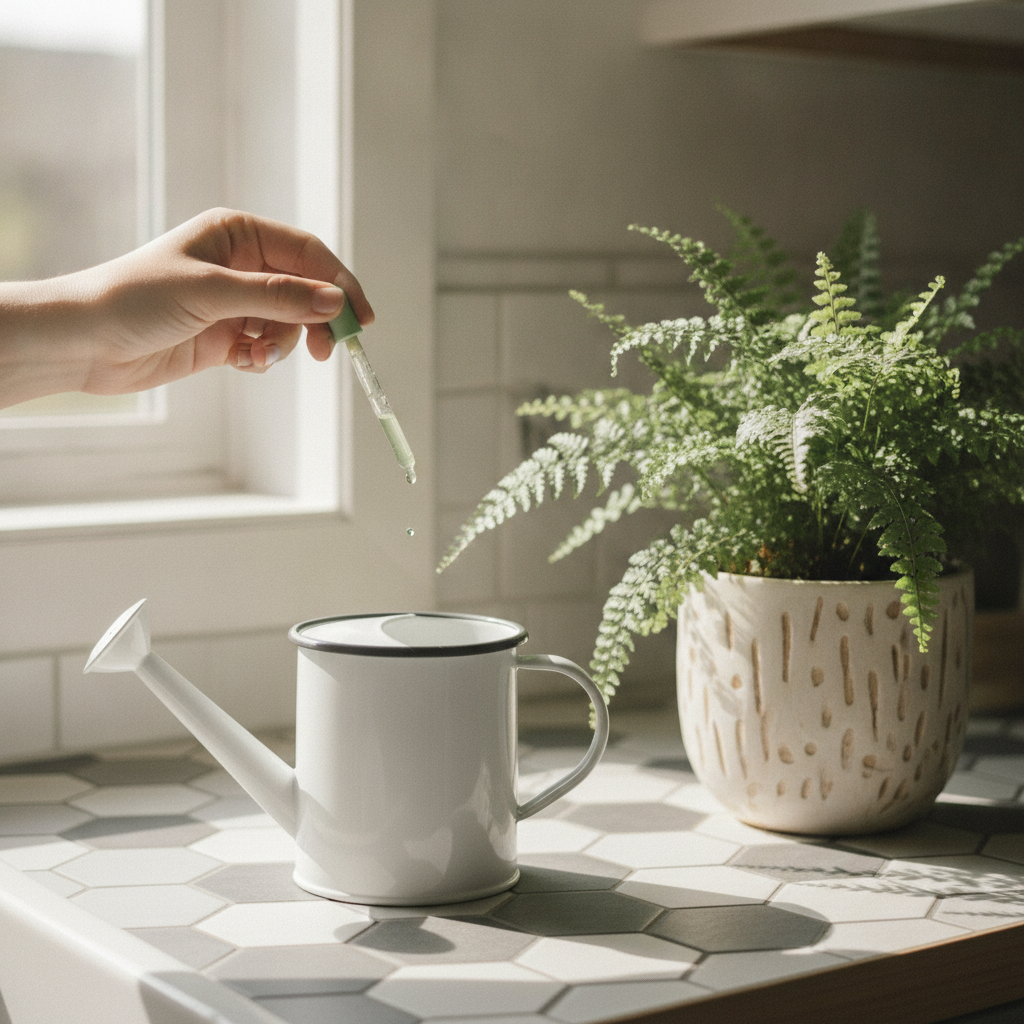
- Dilute a balanced liquid fertiliser to half the label strength, or weaker, in a watering can.
- Water the plant with plain water first if the compost has dried at all, so the roots are damp.
- Apply the diluted feed evenly across the compost surface until it moistens the whole rootball.
- Every few months, flush the pot with plain water to wash out any accumulated mineral salts.
Warning — Salt Build-Up: A white crust on the compost surface or around the pot rim signals a build-up of fertiliser salts, which browns frond tips and stresses the roots. Flush the pot thoroughly with plain water until it runs freely from the base, and cut back on both the strength and frequency of feeding.
Propagation
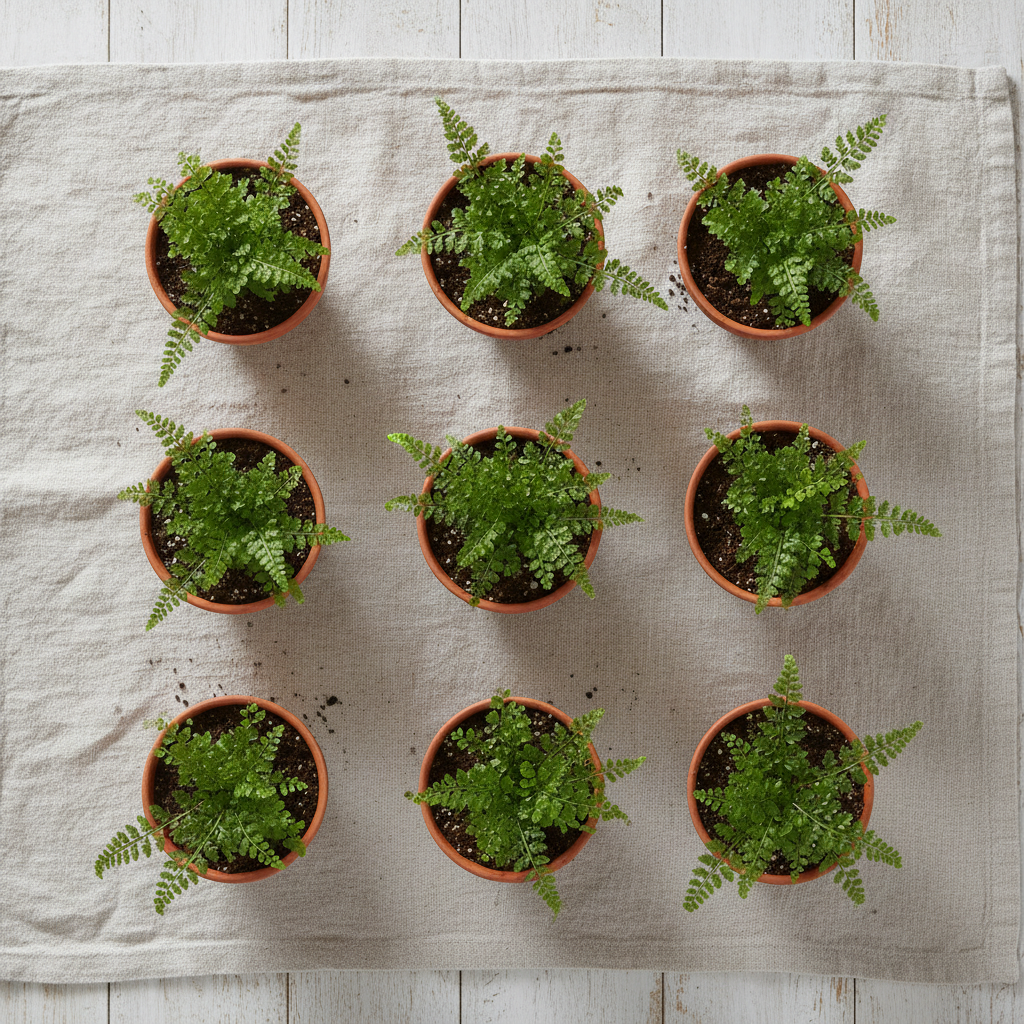
Propagating a silver lady fern is a slower, more patient business than rooting a cutting from a vine, because ferns do not grow from stem or leaf cuttings at all. Instead, there are two realistic routes: dividing the offsets that form around the base of an established plant, and raising new plants from spores. The first is quick and reliable, the second slow but fascinating.
It is worth understanding this limitation before you begin, because attempts to root a detached frond in water or compost will only ever rot. The plant simply does not reproduce that way, and knowing which methods actually work saves a good deal of wasted effort.
Understanding Offsets and Spores
A mature silver lady fern occasionally produces small offsets, sometimes called pups, from the base of its trunk or crown, each a miniature version of the parent with its own developing roots. On the undersides of fertile fronds, meanwhile, the plant forms neat rows of spore cases that ripen from green to brown and release dust-fine spores, the fern equivalent of seed. Offsets carry the parent’s exact character and grow away fastest, while spores are produced in vast numbers but demand sterile, humid conditions and months of patience.
Division of Offsets: Step-by-Step
This is by far the more dependable method for the home grower, best carried out in spring when the plant is entering active growth and can recover quickly.
- Water the parent plant the day before, then slide it out of its pot so you can see the base clearly.
- Identify a healthy offset that has formed a few fronds of its own and some visible roots.
- Using a clean, sharp knife, cut the offset away from the parent with as much of its own root as possible.
- Pot the offset into a small container of the same moist, humus-rich mix used for the parent.
- Water it in gently and place it somewhere warm, bright and shaded from direct sun.
- Cover loosely with a clear bag or place in a propagator for the first two to three weeks to hold humidity high while roots establish.
Pro Tip — Keep the Air Humid: A freshly divided offset has few roots and loses water easily, so high humidity around it during establishment is the single biggest factor in success. A covered propagator or a loose clear bag makes the difference between a division that takes and one that crisps away.
Growing from Spores: Step-by-Step
Raising ferns from spores is a rewarding project for the patient, though it can take many months to produce a recognisable young plant.
- Cut a frond whose undersides carry ripe, brown spore cases and lay it spore-side down on a sheet of clean paper for a day or two to collect the released spores.
- Sprinkle the fine spores thinly over the surface of sterilised, moist compost in a clean, covered container.
- Do not bury the spores; they need light and surface contact to germinate.
- Keep the container covered, warm and in bright indirect light, and mist with cooled boiled water if the surface dries.
- Wait patiently, as a green film of early growth appears over several weeks, from which tiny fronds slowly develop.
- Once young plants are large enough to handle, prick them out into individual small pots and grow on with high humidity.
Troubleshooting Propagation
| Problem | Likely Cause | Solution |
|---|---|---|
| Divided offset wilts and browns | Humidity too low while roots establish | Cover with a bag or propagator and keep warm |
| Offset rots at the base | Compost kept too wet or crown buried | Ease off watering and replant at the correct depth |
| Spores fail to germinate | Spores buried, or surface allowed to dry | Sow on the surface and keep constantly moist |
| Green film but no fronds develop | Insufficient light or warmth | Move to brighter indirect light and keep warm |
Pests & Diseases
A healthy, well-watered silver lady fern is reasonably resistant to trouble, but the warm, humid conditions it enjoys can also suit certain pests, and its fine fronds show damage quickly. Regular inspection, particularly of the frond undersides and the leaf axils near the crown, catches most problems while they are still easy to manage.
One important caution sets ferns apart from sturdier houseplants: their delicate foliage is easily damaged by the very sprays used to treat pests. Chemical insecticides, and even some oil-based remedies, can scorch fern fronds, so always treat gently, test on a small area first, and favour physical removal wherever you can.
Common Pests
Scale Insects (Coccidae)
Scale are among the most frequent visitors to ferns, appearing as small, flat brown discs clustered along the frond ribs and undersides. They suck sap, weakening the plant and leaving a sticky residue, and their protective shells make them stubborn.
Treatment: Scrape or pick the scales off by hand, or dab each one with a cotton bud lightly moistened with diluted alcohol, taking care not to soak the frond. Repeat every few days until no new scales appear, and isolate the plant while you work.
Mealybugs (Pseudococcidae)
Mealybugs look like tiny tufts of white cotton wool tucked into the crown and along the frond bases. Like scale they feed on sap and multiply quickly in warm, humid rooms, so an early infestation can escalate fast.
Treatment: Remove visible bugs with a cotton bud dampened with diluted alcohol, then rinse the plant gently. Check weekly for survivors, as mealybugs hide deep in the crown and often reappear after a first treatment.
Fungus Gnats (Sciaridae)
These small black flies are drawn to the constantly moist compost this fern requires, and their larvae feed on organic matter and fine roots in the soil. The adults are more of a nuisance than a danger, but heavy larval numbers can harm a young plant.
Treatment: Let the very top of the compost dry a little between waterings to discourage egg-laying, cover the surface with a thin layer of grit, and hang yellow sticky traps to catch the adults. A biological control of beneficial nematodes tackles the larvae without harming the fern.
Common Diseases
Root and Crown Rot (Pythium and Phytophthora)
The most serious threat to a silver lady fern, root and crown rot follow persistently waterlogged compost. The roots turn brown and mushy, the base of the crown blackens and softens, and fronds collapse from the centre outward.
Treatment: Act early. Remove the plant, cut away all rotten roots and any blackened crown tissue with a clean blade, and repot into fresh, airy compost. Water more sparingly afterwards and improve drainage; a badly rotted crown, sadly, cannot be saved.
Leaf Spot (various fungi)
Fungal leaf spots show as small brown or blackish blotches, sometimes with a yellow halo, and appear most often when fronds are left wet in still, cool air, or when the plant is misted too enthusiastically.
Treatment: Snip off affected fronds, improve air circulation around the plant, and water at the compost rather than over the foliage so the fronds stay dry. Avoid crowding the fern tightly against others while it recovers.
Pest and Disease Summary
| Pest / Disease | Identification | Treatment |
|---|---|---|
| Scale insects | Flat brown discs on ribs and undersides | Scrape off, dab with diluted alcohol |
| Mealybugs | White cottony tufts in the crown | Remove with alcohol-dampened cotton bud |
| Fungus gnats | Small black flies over the soil | Dry the surface, sticky traps, nematodes |
| Root and crown rot | Mushy roots, blackened soft crown | Cut away rot, repot, water less |
| Leaf spot | Brown blotches on fronds | Remove fronds, keep foliage dry |
Prevention Strategies
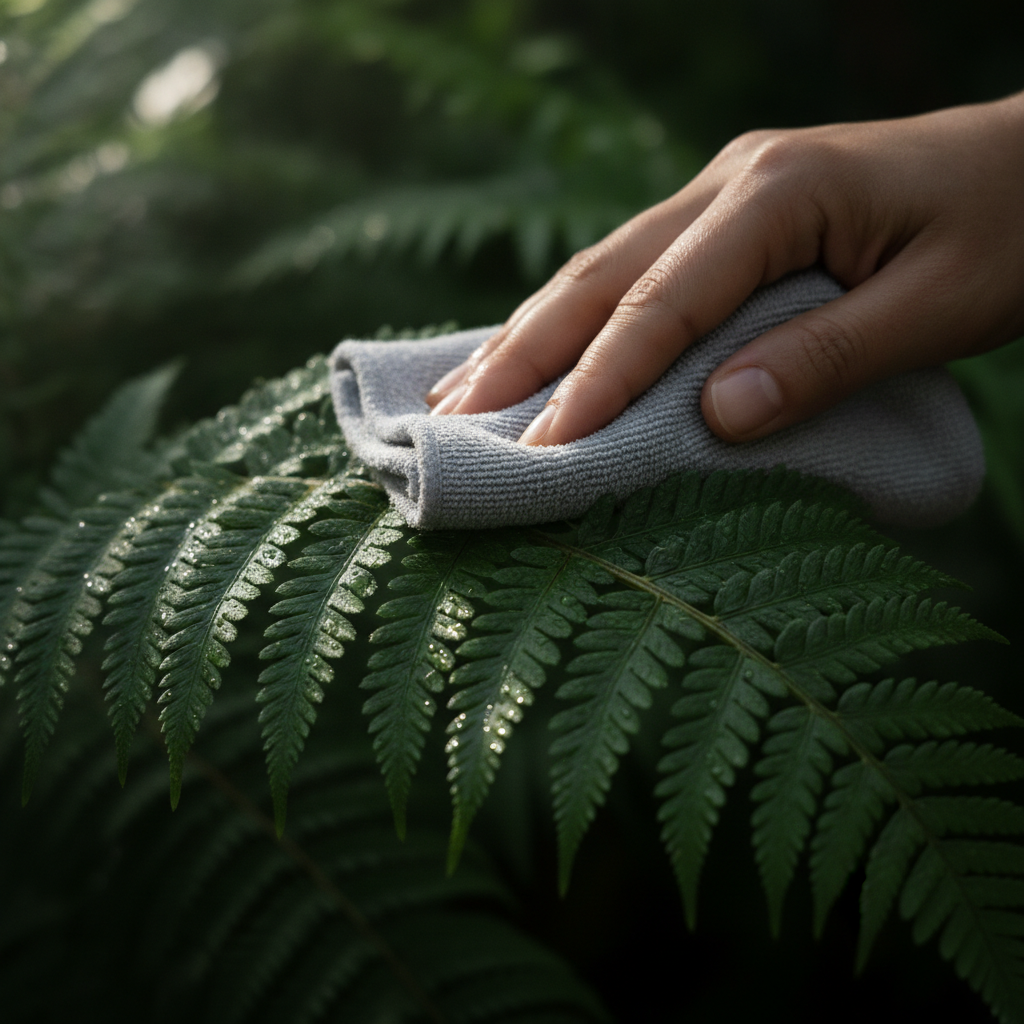
Prevention with this fern is largely a matter of good routine. Inspect the fronds and crown whenever you water, so any pest is spotted while numbers are low, and quarantine every new plant for a fortnight before it joins your collection. Keep the foliage clean by wiping it occasionally with a damp cloth, which both removes dust and reveals early infestations.
Because most serious problems trace back to watering, getting the moisture balance right prevents more trouble than any treatment cures. Steady dampness without waterlogging keeps the roots and crown healthy, while good air circulation and dry foliage discourage the fungal spots that thrive in stagnant, humid corners.
Pro Tip — Treat Ferns Gently: Before spraying any product on a silver lady fern, test it on a single frond and wait a few days, because ferns are far more sensitive to insecticides and oils than most houseplants. Whenever possible, remove pests physically rather than reaching for a spray.
Popular Varieties
The silver lady fern itself is fairly uniform, with the plant sold in most shops being the straight species Blechnum gibbum, sometimes under the trade name Silver Lady. Where variety comes in is through its close relatives in the genus Blechnum and the wider hard-fern group, several of which are grown as houseplants and offer different sizes, colours and habits for the collector.
Because these ferns share broadly similar care, learning to grow one opens the door to the rest. The table and profiles below gather the most widely available forms and relatives you are likely to encounter.
| Variety | Frond Appearance | Light Needs | Growth Rate | Availability |
|---|---|---|---|---|
| Silver Lady (Blechnum gibbum) | Neat green shuttlecock rosette | Bright indirect | Slow to moderate | Common |
| Volcano (Blechnum brasiliense) | Coppery-red new fronds, bolder rosette | Bright indirect | Moderate | Occasional |
| Hard Fern (Blechnum spicant) | Ladder-like dark evergreen fronds | Medium to shade | Slow | Occasional |
| Hammock Fern (Blechnum occidentale) | Spreading, softer pinkish new growth | Medium to bright indirect | Moderate | Uncommon |
| Dwarf Silver Lady | More compact, tight rosette | Bright indirect | Slow | Uncommon |
Featured Varieties
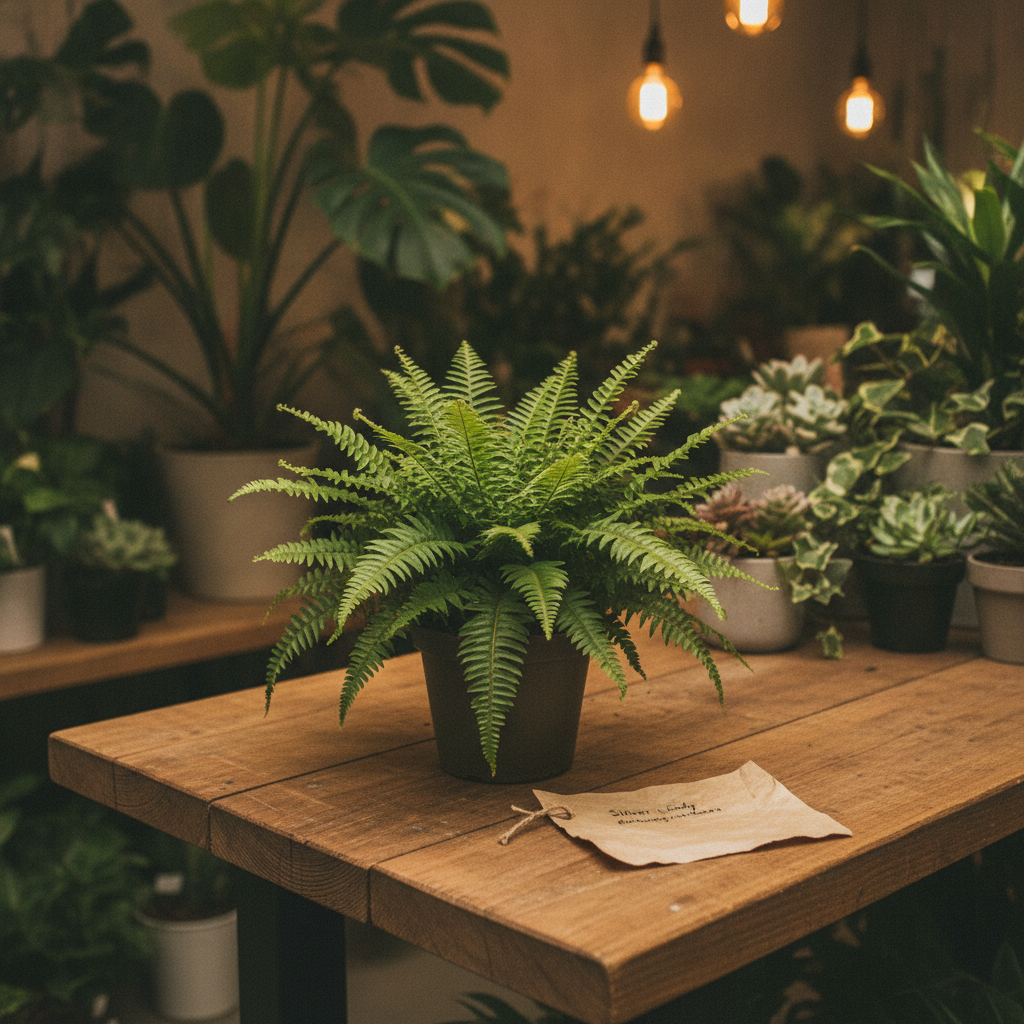
Silver Lady
The standard and most widely sold form of Blechnum gibbum, prized for its dense, symmetrical rosette of finely divided bright green fronds and its slow build towards a slender trunk.
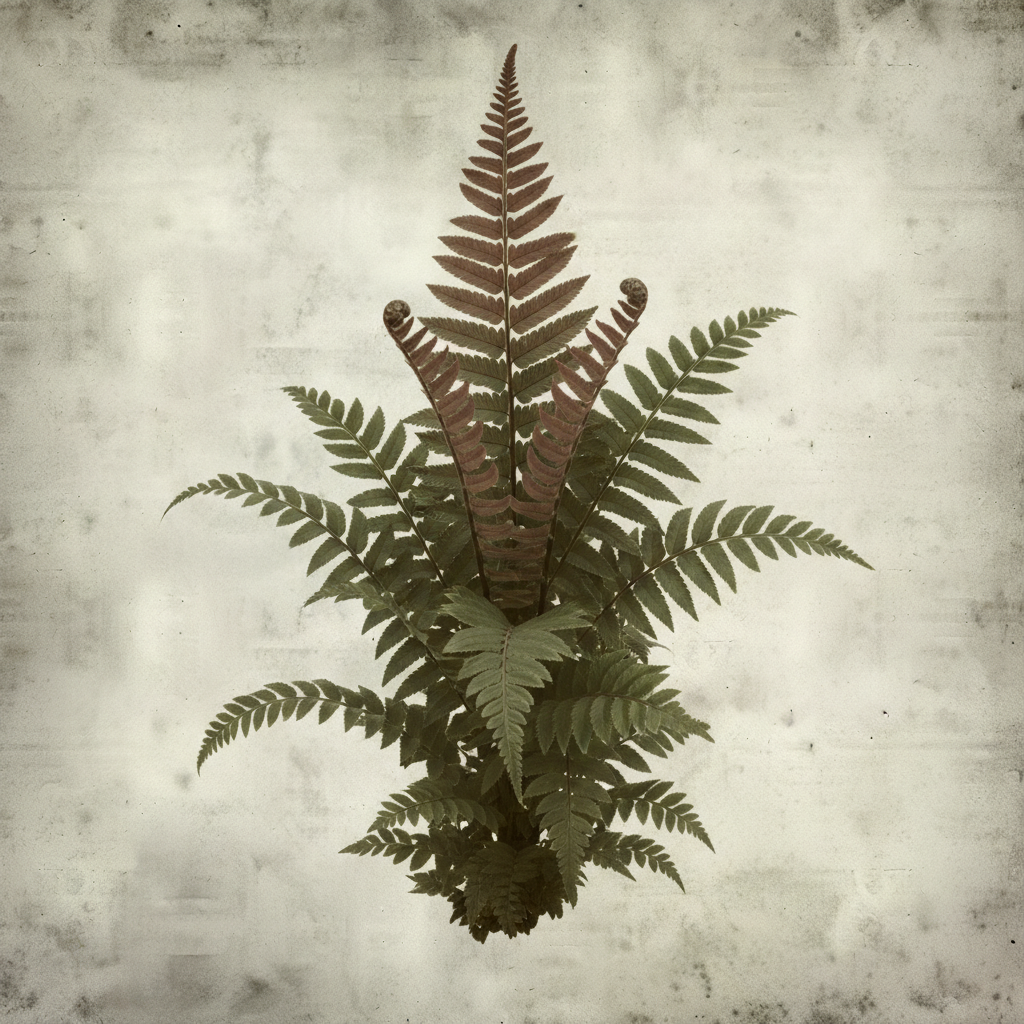
Volcano (Blechnum brasiliense)
A close relative whose fresh fronds emerge a striking coppery-red before hardening to deep green, forming a bolder, more upright rosette that makes a fiery counterpoint to the calmer Silver Lady.
Variety Profiles in Detail
Hard Fern (Blechnum spicant)
A hardy relative native to Europe and North America, the hard fern carries stiff, ladder-like evergreen fronds in a low rosette. It tolerates cooler, shadier positions than the silver lady fern and makes an excellent, undemanding companion for a shaded windowsill or a cool porch.
Hammock Fern (Blechnum occidentale)
This spreading species from the Americas produces softer fronds that often flush an appealing pink or bronze as they unfurl before maturing green. It grows outward rather than into a tidy shuttlecock, giving it a looser, more informal look well suited to a wide, shallow pot.
Choosing the Right Variety for Your Space
For a neat, sculptural specimen on a table or plant stand, the classic Silver Lady is hard to beat, and its slow build towards a trunk rewards long-term care. If you want a splash of colour, the coppery new growth of the Volcano fern earns its place, while cooler or shadier homes may suit the tougher hard fern better. Whichever you choose, the core needs of steady moisture, high humidity and shelter from direct sun remain the same, so the growing habits you learn with one will carry across the whole group.
Frequently Asked Questions
Why are the tips of my silver lady fern turning brown?
Brown, crispy frond tips almost always point to air that is too dry or compost that has been allowed to dry out, sometimes both. Raise the humidity around the plant with a humidifier or pebble tray, keep the soil evenly moist, and consider switching to filtered or rainwater if your tap water is very hard, as mineral build-up can also brown the tips.
How often should I water a silver lady fern?
Often enough to keep the compost consistently damp, which in a warm, bright room may mean two or three times a week and in cool winter conditions once every week or so. Rather than following a fixed schedule, check the top of the compost every couple of days and water as soon as it starts to feel less wet, never letting the rootball dry out fully.
Is the silver lady fern safe for cats and dogs?
Yes. Blechnum gibbum is considered non-toxic to cats, dogs and people, so it is a sensible choice for a home with pets. Even so, no plant is meant to be eaten, and a pet that chews a large amount of fibrous frond may get a mild stomach upset, so it is best to keep grazing to a minimum.
Can I grow a silver lady fern in the bathroom?
A bathroom is often an ideal spot, because the regular steam from showers and baths keeps humidity high, which this fern loves. The only requirement is enough light, so a bathroom with a reasonably bright window suits it well, whereas a windowless one would leave the plant too dark to thrive.
Will my silver lady fern really grow a trunk?
In time, yes. Although sold as a compact plant, a well-cared-for specimen slowly forms a slim, dark, fibre-covered trunk that can reach up to a metre (39 inches) over many years, lifting the rosette of fronds into a miniature tree-fern shape. The process is gradual and depends on steady, uninterrupted growth, so patience and consistent care are essential.
Why is my fern dropping or yellowing older fronds?
Losing the odd older frond from the base is normal as the plant renews itself, especially after a move or a repot. If many fronds yellow and soften at once, though, suspect overwatering and check that the compost is not waterlogged and the crown is not rotting. Adjust your watering so the soil stays damp rather than saturated.
What temperature does a silver lady fern need?
It grows best in normal room warmth of 16 to 24 degrees Celsius (61 to 75 degrees Fahrenheit) and dislikes the cold, so keep it above 10 degrees Celsius (50 degrees Fahrenheit) at all times. Protect it from cold draughts, from the drying blast of radiators, and from sudden swings in temperature, all of which can stress the delicate fronds.
Can I propagate a silver lady fern from a cutting?
No. Ferns cannot be grown from leaf or stem cuttings, so a detached frond placed in water or soil will simply rot. The two methods that work are dividing the offsets that form at the base of a mature plant, which is quick and reliable, and sowing the dust-fine spores from beneath fertile fronds, which is slow but rewarding.






