

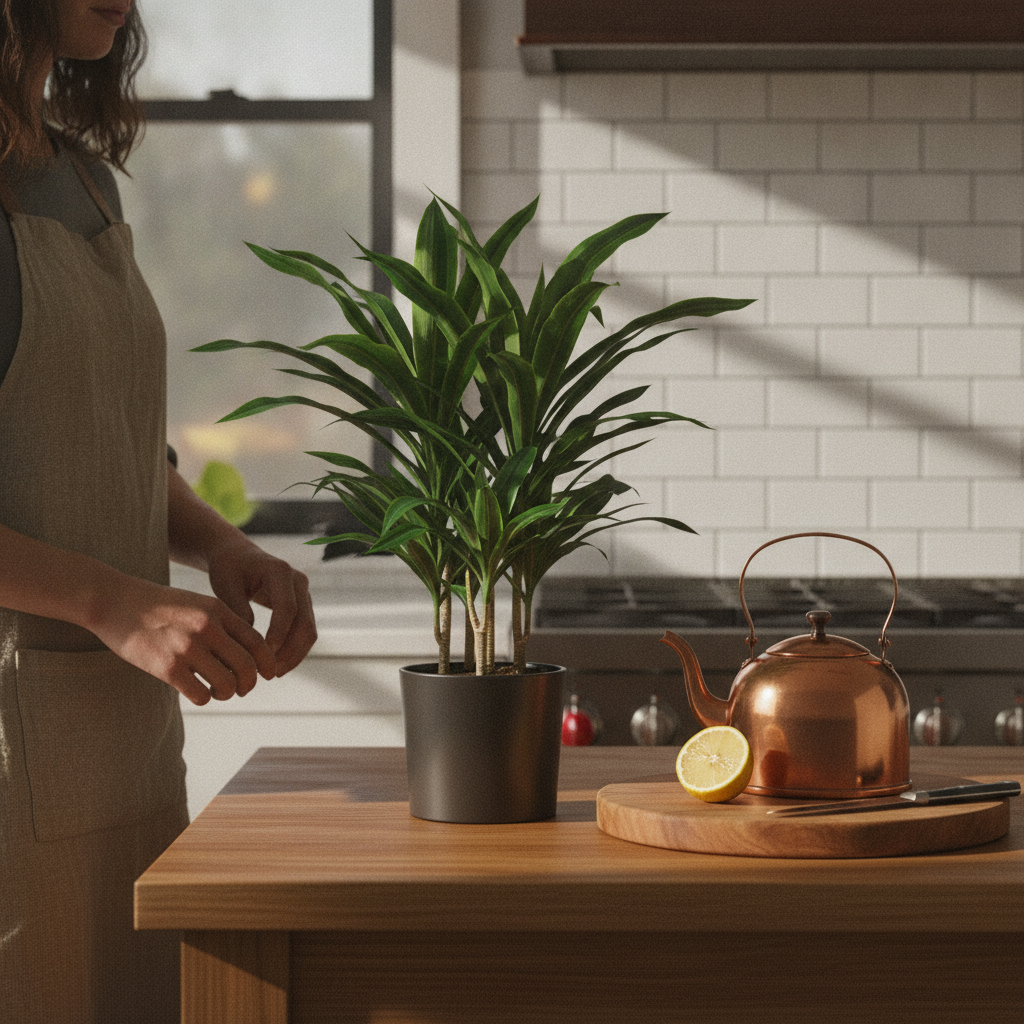
Few houseplants forgive a forgetful owner as gracefully as the Janet Lind Dracaena. A compact, densely leafed selection of Dracaena fragrans, it carries the same glossy, sword-shaped foliage that made its cousin Janet Craig a fixture of shopping malls and office lobbies, but on a tidier frame better suited to a shelf, desk or narrow corner. What sets it apart from the crowd of undemanding foliage plants is the depth of its colour: leaves so darkly green they read almost black in a shaded room, holding their sheen for years with only occasional attention.
This guide covers everything needed to move the plant from simply surviving in a dim hallway to genuinely thriving: the light levels that keep it dense rather than leggy, the watering rhythm that avoids both rot and the tell-tale brown leaf tips, and the small adjustments to soil, feeding and humidity that separate a healthy specimen from a struggling one. Whether this is a first houseplant or an addition to a growing collection, the Janet Lind rewards a light touch.
Quick Reference
The table below distils the plant’s core needs into an at-a-glance summary. Treat these as sensible starting points rather than rigid rules, since the right watering interval or light position always depends on the specific conditions of a given home.
| Requirement | Details |
|---|---|
| Botanical name | Dracaena fragrans ‘Janet Lind’ |
| Common names | Janet Lind Dracaena, Janet Craig Compact |
| Light | Medium to bright indirect; tolerates low light |
| Water | When the top 3 to 5 cm (1 to 2 in) of soil is dry |
| Soil | Free-draining, peat-based or coir mix with perlite |
| Temperature | 18 to 27°C (65 to 80°F) |
| Humidity | Average room humidity; happier above 40% |
| Feeding | Diluted balanced feed monthly in spring and summer |
| Mature size | 0.9 to 1.5 m (3 to 5 ft) indoors |
| Toxicity | Toxic to cats and dogs if eaten |
| Difficulty | Easy, beginner-friendly |
Contents
- Quick Reference
- Why the Janet Lind Dracaena Is a Great Houseplant
- Light
- Watering
- Soil
- Fertilising
- Propagation
- Pests and Problems
- Varieties
- Frequently Asked Questions
Why the Janet Lind Dracaena Is a Great Houseplant
The genus Dracaena has quietly furnished interiors for well over a century, and the fragrans group in particular built its reputation on sheer resilience. Native to the tropical forests of East and Central Africa, these plants evolved in the dappled understorey beneath a dense canopy, which is precisely why they cope so well with the modest, indirect light most homes offer. The Janet Lind is a compact sport within this group, closely allied to the well-known Janet Craig, and it inherits all of that toughness while staying more manageable in scale.
Its appeal begins with the foliage. Each leaf is broad, glossy and a saturated forest green, arching outward from a short central stem to form a full, layered rosette. Unlike variegated dracaenas that need brighter light to hold their patterning, the Janet Lind has no markings to lose, so it keeps its uniform colour even in shaded positions where other plants fade or stretch. That reliability makes it a designer’s favourite for grounding a room with a block of calm, dark green.
There is a practical case for the plant too. Like many dracaenas it was among the species studied for its capacity to process common indoor air compounds, and while the real-world effect in a ventilated room is modest, the plant’s genuine value lies in how little it asks in return for its steady presence. It grows slowly, needs repotting only every few years, and tolerates the dry air, irregular watering and low light that defeat more delicate foliage plants. For anyone who wants greenery without a maintenance schedule, it is close to ideal.
Pro Tip — Read the room first: Before choosing a spot, watch how light moves through the space over a day. The Janet Lind will survive almost anywhere, but it grows densest and keeps its lower leaves longest where it receives a few hours of gentle, filtered brightness.
Light
Light is where the difference between surviving and thriving shows most clearly. The Janet Lind Dracaena will persist in genuinely low light, a corner several metres from a window, a north-facing room, an interior hallway, but persistence is not the same as good health. In dim conditions it grows slowly, spaces its new leaves further apart and gradually sheds the older ones at the base, leaving a thinner, more bare-stemmed plant over time. It is doing its best with what it has, not flourishing.
The sweet spot is medium to bright indirect light: a position near an east or north window, or set back a metre or two from a brighter south or west aspect where the sheer curtain or the room’s depth softens the sun. In this range the plant produces closely spaced leaves, holds its lower foliage and keeps that deep, glossy colour. What it cannot take is prolonged direct sun through glass, which scorches the leaf surface into bleached, papery patches that never recover.
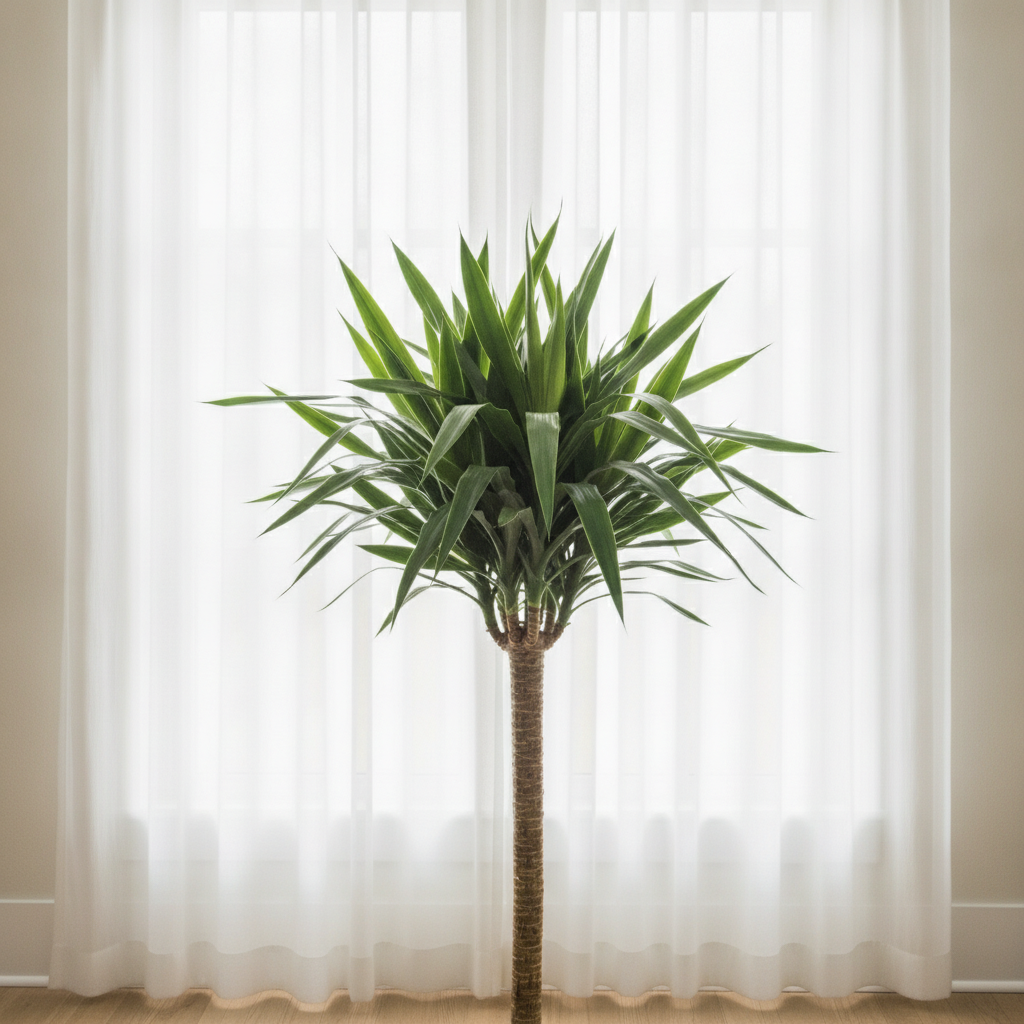
Because the plant grows toward its light source, it pays to rotate the pot a quarter turn every couple of weeks so the rosette develops evenly rather than leaning. If a naturally dim spot is the only option, a simple full-spectrum grow light on a timer for eight to ten hours a day will more than make up the difference and keep growth compact. As a rough guide, if there is enough light to read a book comfortably without a lamp, there is enough for the Janet Lind to hold its own.
Watering
More Janet Lind Dracaenas are killed by kindness than by neglect. The plant stores a reserve of moisture in its stem and roots and strongly prefers to dry out partway between drinks. The reliable method is to feel the soil: water thoroughly only once the top 3 to 5 cm (1 to 2 in) has dried out. In a bright, warm room this may mean watering every week or so, while in a cool or shaded position the interval can stretch to two or three weeks. Chasing a fixed calendar day rather than the actual state of the soil is the most common route to trouble.
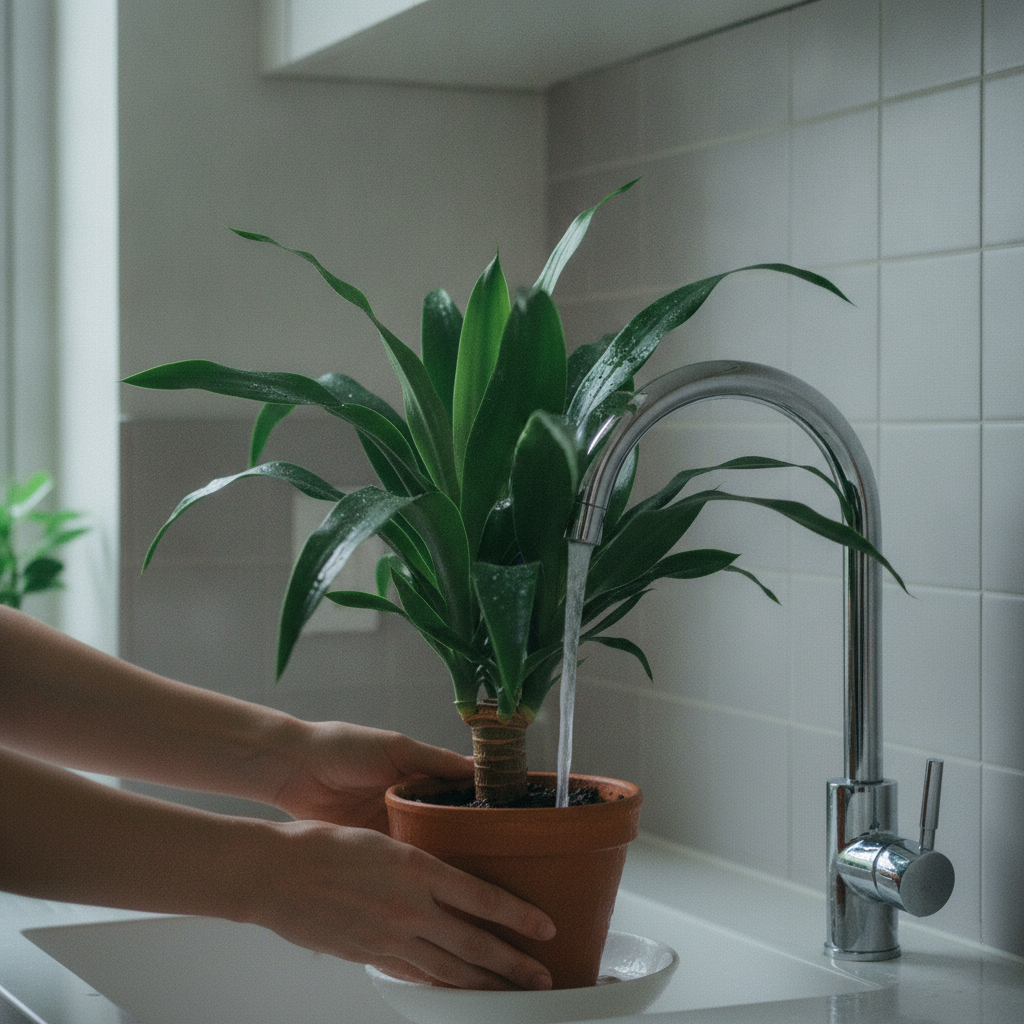
When it is time to water, do it properly. Take the plant to a sink and let water run through until it flows freely from the drainage holes, which flushes the whole root ball and carries away accumulated mineral salts. Let it drain completely before returning it to any decorative cover pot, and never leave the base sitting in a saucer of standing water. Soggy, airless soil is the direct cause of root rot, which shows first as yellowing lower leaves and a soft, sometimes sour-smelling base.
This species carries one particular quirk worth knowing. Dracaenas are unusually sensitive to fluoride and to the salts found in some tap water and cheap fertilisers, and the classic symptom is brown, scorched tips and margins on otherwise healthy leaves. If tap water is heavily treated, letting it stand overnight before use helps, and rainwater or filtered water sidesteps the problem entirely. Occasional tip browning is cosmetic and can be trimmed away with clean scissors, following the natural leaf shape.
Warning — Watch the water quality: Persistent brown leaf tips are usually a sign of fluoride or salt build-up rather than dryness. Switching to rainwater or filtered water, and flushing the soil well each time, prevents the damage from spreading across the plant.
Soil
The right growing medium does quiet but important work: it holds enough moisture to keep the plant hydrated between waterings while draining freely enough that the roots never sit wet. For the Janet Lind, a good general-purpose houseplant compost forms the base, ideally a peat-free coir mix, lightened with a generous handful of perlite or fine bark to open up the structure and let air reach the roots.
A simple, reliable blend is roughly two parts quality potting compost to one part perlite, with a little coco coir or composted bark stirred through for extra structure. This mix stays lightly moist without becoming dense or waterlogged, which is exactly what the plant’s fine roots prefer. Avoid heavy, water-retentive soils sold for garden borders, since they compact in a pot and smother the roots. Whatever the recipe, the pot itself must have drainage holes; no soil blend can compensate for a container that traps water at the bottom.
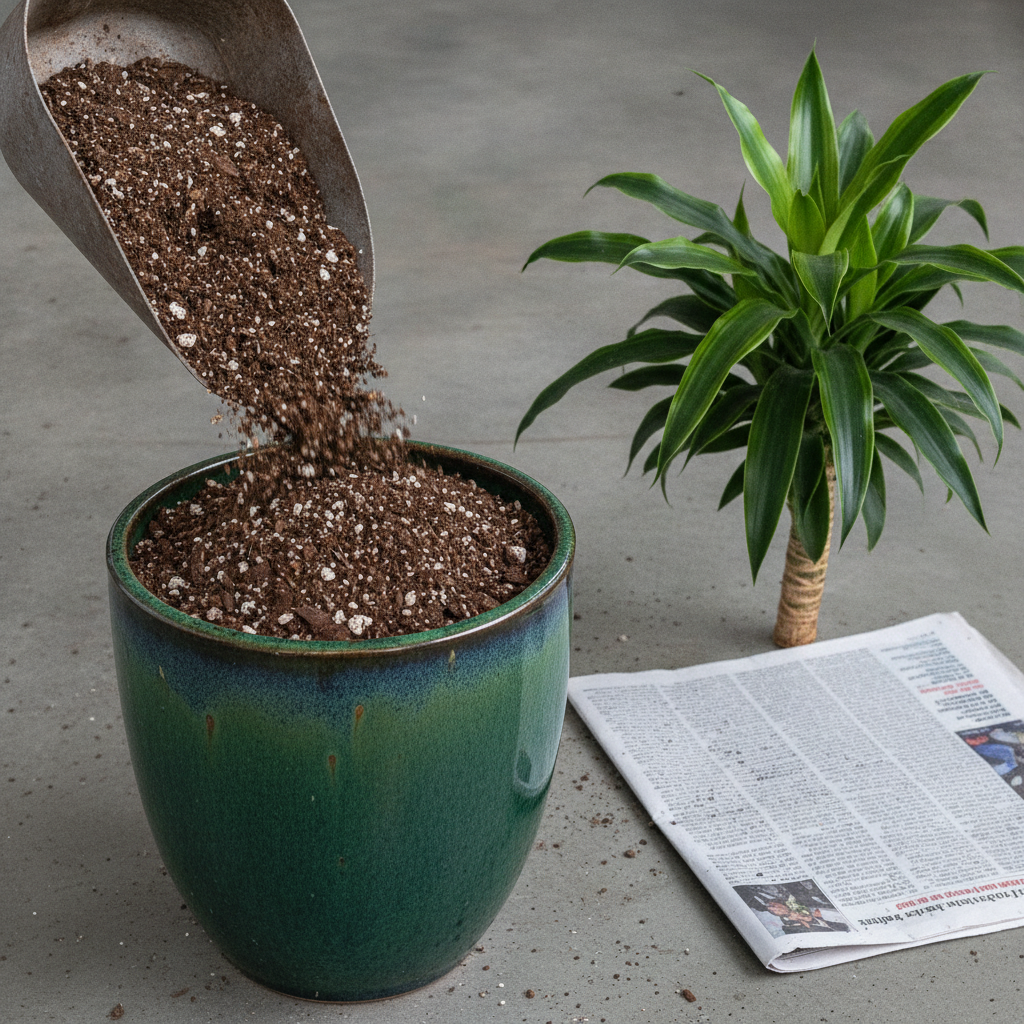
The Janet Lind grows slowly and is quite content to be a little root-bound, so repotting is an occasional task rather than an annual one. Every two to three years, or when roots begin to circle the base or push out of the drainage holes, move it up to a pot just one size larger, no more. An oversized pot holds a reservoir of damp soil the roots cannot reach, and that lingering moisture is a common trigger for rot. Spring is the ideal moment to repot, as the plant is entering its active season and recovers quickly.
Fertilising
As a naturally slow grower, the Janet Lind Dracaena is a light feeder and needs far less fertiliser than most people assume. Through the active growing months of spring and summer, a balanced liquid houseplant feed diluted to roughly half the strength on the label, applied once a month, is ample. This gentle rhythm supports steady new growth without pushing the plant faster than it wants to go. In autumn and winter, when growth naturally slows or pauses, stop feeding altogether and resume only when the days lengthen again.
Restraint matters here more than generosity. Because dracaenas are sensitive to the mineral salts in fertiliser, over-feeding does not produce a lusher plant; it produces a crust of salts in the soil and worsens the brown leaf tips the species is already prone to. If a white crust appears on the soil surface or around the pot rim, flush the soil thoroughly with plain water two or three times to leach the excess away, and ease off the feeding.
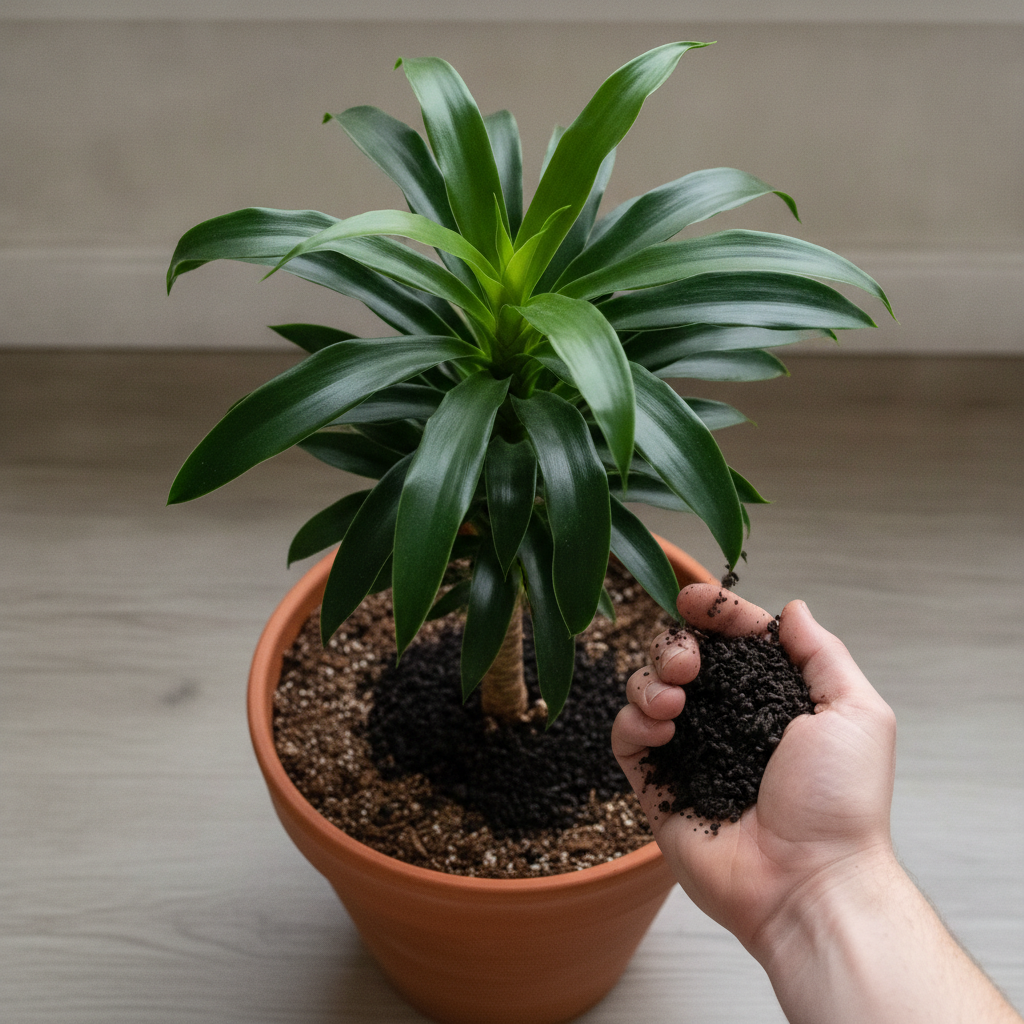
Gardeners who prefer a gentler approach can skip liquid feed entirely and top-dress with a thin layer of worm castings or a mild organic compost once in spring. This releases nutrients slowly, carries no risk of salt burn and improves the soil structure at the same time. Whichever route is chosen, always apply feed to already-moist soil, never to a bone-dry root ball, as concentrated nutrients against dry roots can scorch them.
Propagation
Propagating a Janet Lind Dracaena is straightforward and doubles neatly as a way to rejuvenate a plant that has grown tall and leggy at the base. Unlike rosette succulents that divide, dracaenas are propagated from stem or cane cuttings, and the same woody stem that looks bare and awkward on an old plant is exactly what roots most readily. The best time is late spring or early summer, when warmth and lengthening days speed rooting.
The method rewards patience more than skill. Work through the following steps:
- With a clean, sharp knife or secateurs, cut a healthy section of stem 10 to 20 cm (4 to 8 in) long. A leafy top section and bare mid-cane pieces will both root, so an old plant can yield several cuttings at once.
- Note which end was lower on the plant; that is the end that goes down. Let the cut surfaces dry and callus for an hour or two to reduce the risk of rot.
- Insert the base into a glass of clean water, or nestle it into damp sphagnum moss or a light, free-draining mix. Water and moss both work well; water simply lets you watch the roots form.
- Place the cutting in warm, bright indirect light and keep the moss or water fresh. Refresh water every few days to keep it clear.
- After several weeks, roots and eventually a fresh cluster of leaves will emerge. Once roots reach 3 to 5 cm (1 to 2 in), pot the cutting into a small container of standard mix and treat it as a young plant.
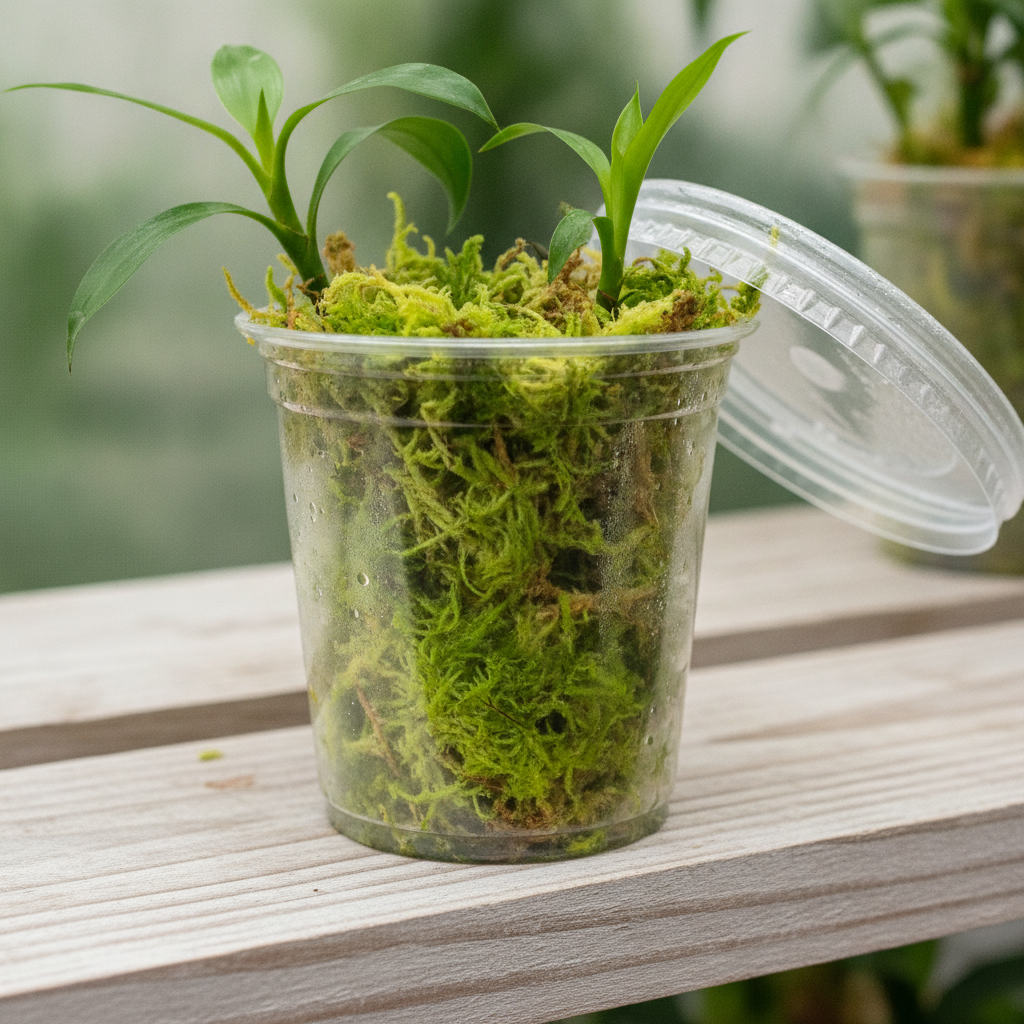
A useful bonus of cane propagation is what happens to the parent. The stump left behind on the original plant will usually sprout one or more new shoots just below the cut, growing back bushier than before. In effect, a single leggy plant can be turned into a full parent and several new plants in one afternoon’s work, with nothing wasted.
Pests and Problems
The Janet Lind Dracaena is not especially prone to pests, but the dry indoor air it otherwise tolerates so well can occasionally invite trouble. The usual suspects are spider mites, which thrive in warm, dry conditions and leave fine webbing and a faint stippling on the leaves, along with mealybugs, which appear as small white cottony tufts tucked into the leaf axils. Scale insects, seen as flat brown discs along the stems, turn up less often but are worth checking for.
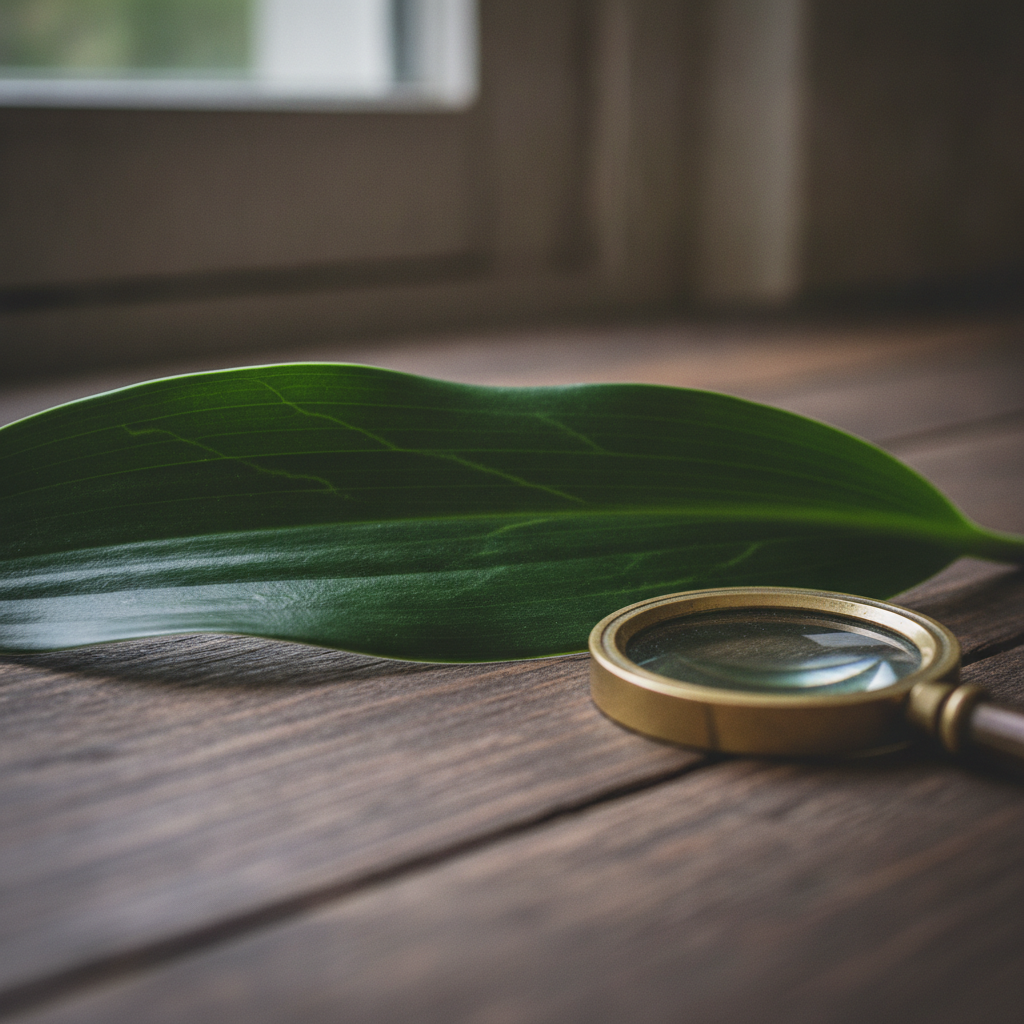
The best defence is early detection. Look over the plant when watering, paying attention to the leaf undersides and the crevices where leaves meet the stem. A minor outbreak can be wiped away with a cloth dipped in soapy water or dabbed with a cotton bud moistened in diluted isopropyl alcohol. For anything more persistent, an insecticidal soap or neem oil spray, repeated weekly until the problem clears, brings it under control. Wiping the leaves clean every few weeks also removes the dust that dulls their sheen and gives mites somewhere to hide.
Most complaints about this plant, though, are not pests at all but responses to care. Brown leaf tips point to fluoride, salt build-up or dry air; yellowing lower leaves usually mean overwatering, though the loss of the occasional old leaf at the base is simply natural ageing. Pale, bleached patches indicate too much direct sun, while a leaning, sparse habit signals too little light. Reading these signals correctly, rather than reaching straight for a spray bottle, resolves the great majority of issues.
Warning — Keep it away from pets: Like all dracaenas, the Janet Lind is toxic to cats and dogs if the foliage is chewed, causing vomiting, drooling and loss of appetite. Position the plant out of reach of curious pets, and contact a vet if ingestion is suspected.
Varieties
The Janet Lind belongs to the wider Dracaena fragrans family, a group rich in cultivars that range from the deepest solid green to bright chartreuse and boldly striped forms. If the compact, dark-leaved look appeals, the two cultivars below are its closest and most widely available relatives, each offering a slightly different take on the same easy-going plant.
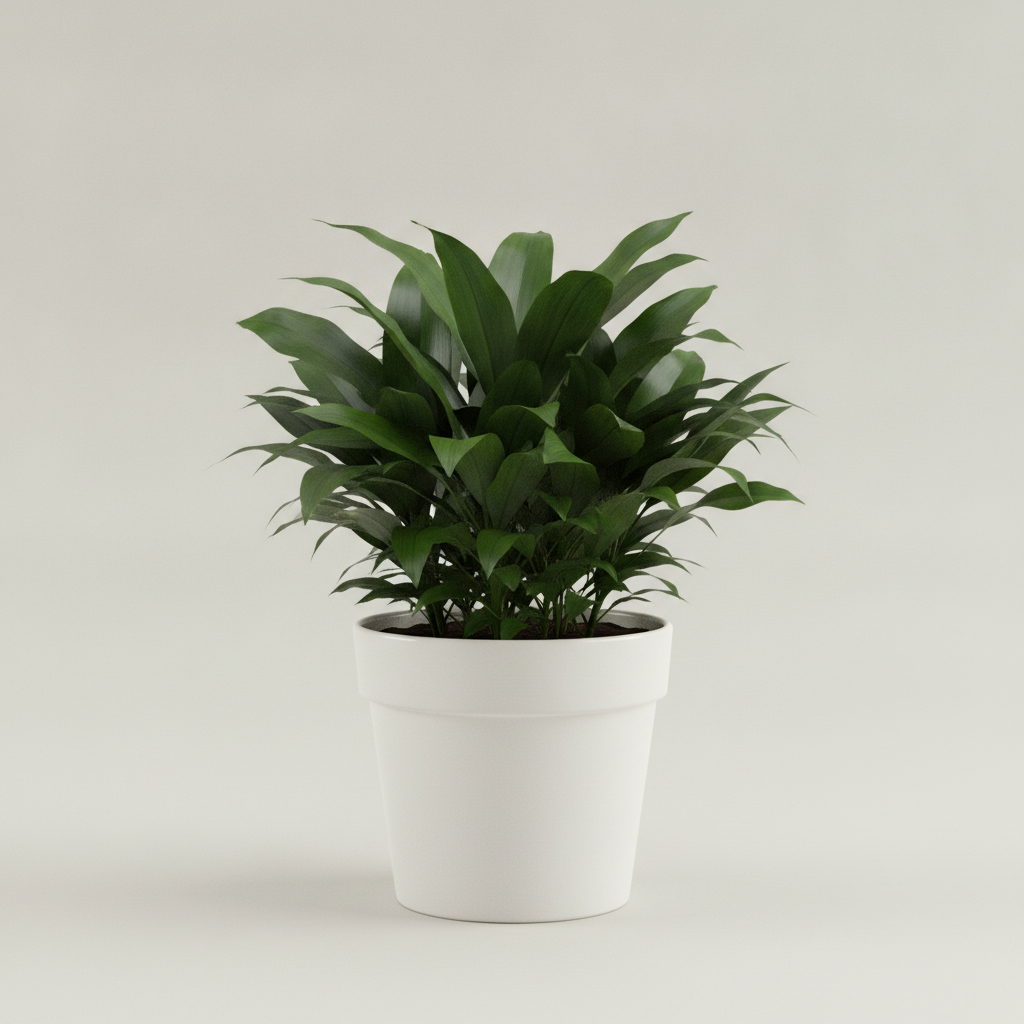
Janet Craig
The direct forebear of the Janet Lind, Janet Craig carries the same solid, deep glossy green leaves but on a larger, more upright frame that can reach well over a metre indoors. It is the classic floor-standing dracaena of offices and lobbies, valued for the same tolerance of low light and irregular watering. Choose it where a taller, more architectural specimen is wanted.
Lemon Lime
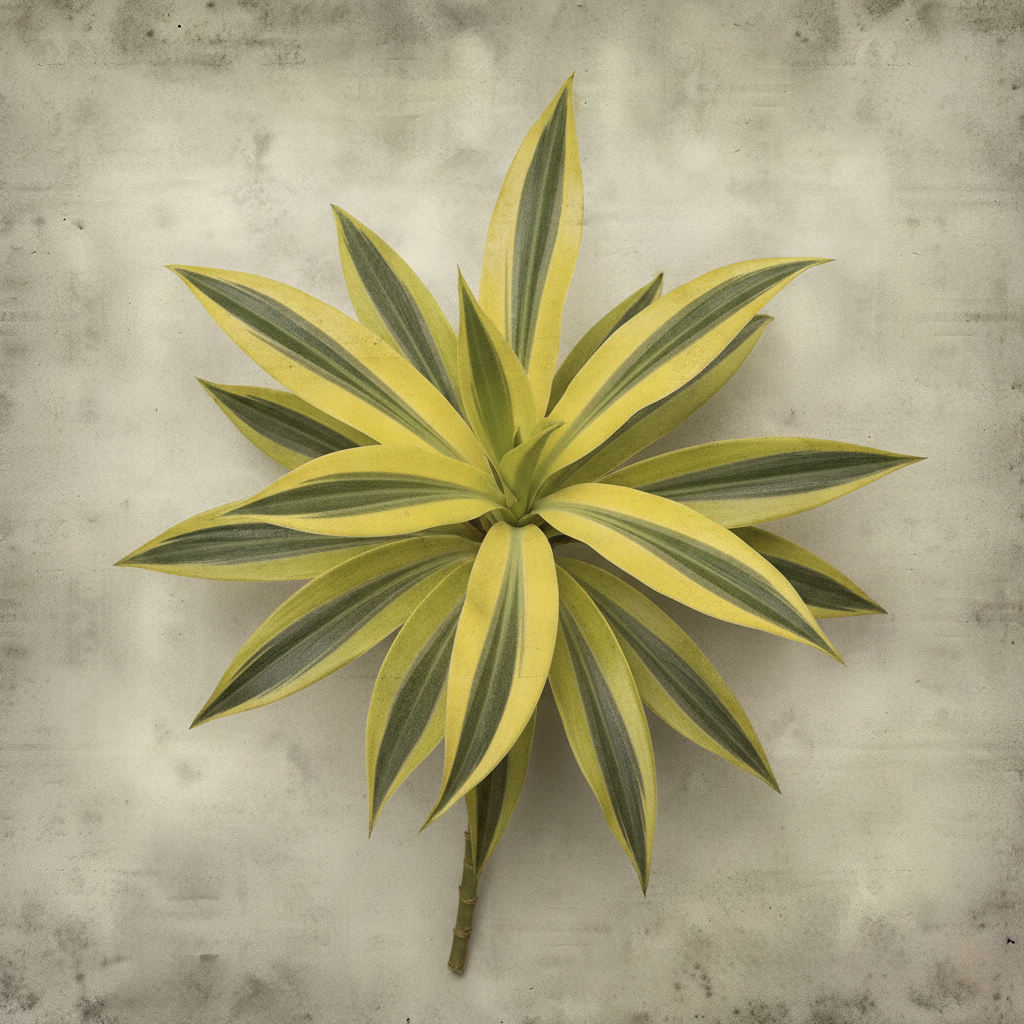
For anyone wanting brightness rather than depth, Lemon Lime offers vivid chartreuse-yellow leaves striped and edged with bands of grey-green. The variegation genuinely lifts a dim corner in a way the solid green forms cannot. It shares the same care, though it holds its colour best with a touch more indirect light to keep the yellow tones singing.
Frequently Asked Questions
Why does my Janet Lind Dracaena have brown leaf tips?
Brown tips are the plant’s signature complaint and almost always trace back to water quality or dry air rather than thirst. Dracaenas are sensitive to fluoride and to salts from tap water and fertiliser, which accumulate in the soil and scorch the leaf edges. Switch to rainwater or filtered water, flush the soil thoroughly each time you water, and ease off feeding. Existing brown tips can be trimmed to shape but will not turn green again.
How often should I water it?
There is no fixed schedule, because the right interval depends on light, warmth and pot size. Water only when the top 3 to 5 cm (1 to 2 in) of soil has dried out, which typically falls somewhere between once a week and once every two or three weeks. When in doubt, wait, since this plant tolerates a little dryness far better than constantly wet feet.
Can it really survive in a low-light room?
Yes, it is one of the most shade-tolerant foliage plants available and will hold on in genuinely dim spots. It will simply grow more slowly and eventually thin out at the base. For the fullest, healthiest plant, give it medium to bright indirect light, or supplement a dark corner with a small grow light.
Is the Janet Lind Dracaena safe around cats and dogs?
No. Like all dracaenas it is toxic to cats and dogs, and chewing the leaves can cause vomiting, drooling and loss of appetite. It is not considered dangerous to humans, but the plant is best kept out of reach of pets, and a vet should be contacted if a pet has eaten any.
My plant has grown tall and bare at the bottom. What can I do?
This is a natural habit as the plant ages, and it is easily fixed. Cut the top section off with a clean blade and root it as a cutting, then keep the bare stump watered; it will usually sprout new shoots below the cut and grow back bushier. In one step you rejuvenate the parent and gain a new plant.
Steady, forgiving and quietly handsome, the Janet Lind Dracaena is the kind of plant that fits into a life rather than demanding one be rearranged around it. Give it a spot with reasonable light, water only when the soil dries, use clean water and feed sparingly, and it will hold its deep green presence for many years with barely a second thought.






