
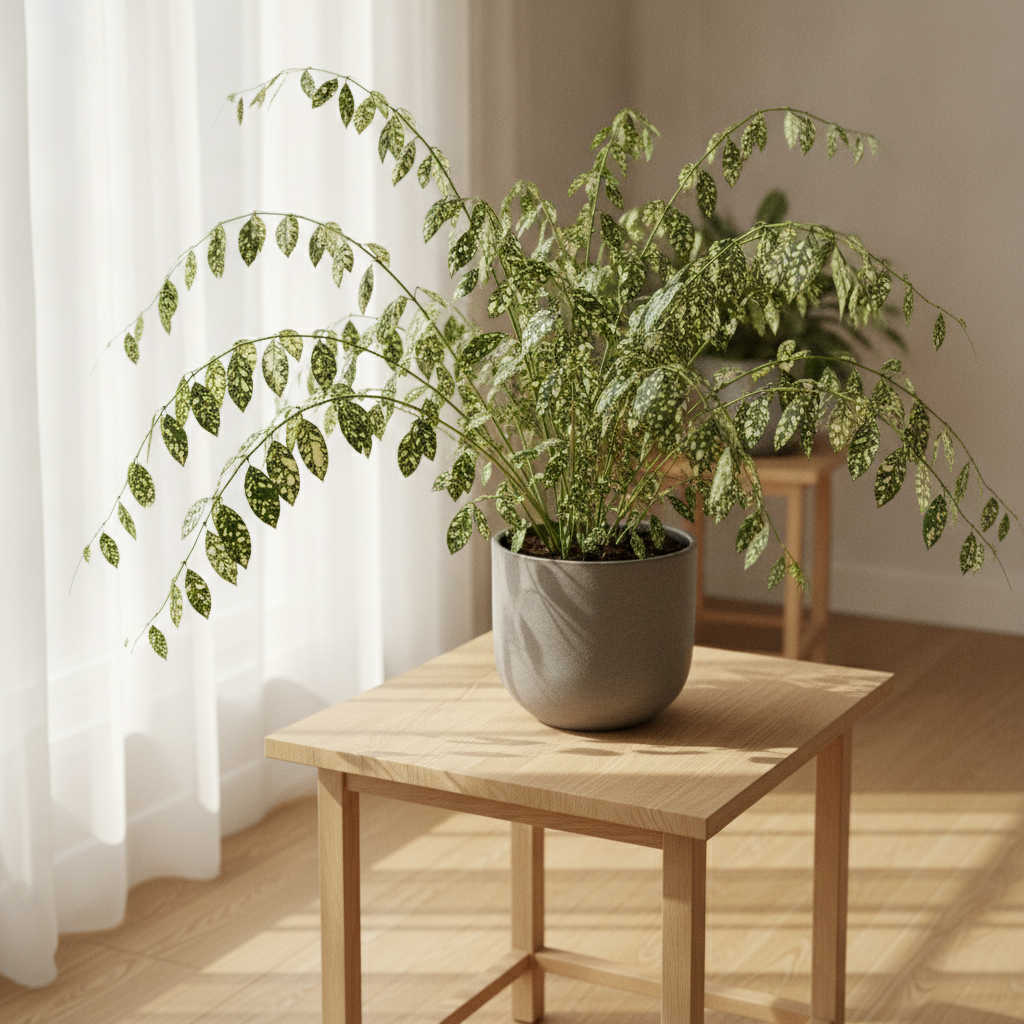
Few houseplants look as though someone has flicked a paintbrush loaded with cream and gold across their leaves, yet that is precisely the effect of the Florida Beauty dracaena (Dracaena surculosa). Native to the tropical understorey of West Africa, from Guinea through Nigeria and into the Congo basin, it breaks almost every expectation people hold about the genus. Where most cultivated dracaenas grow as upright canes topped with strap-shaped foliage, this species is a slender, branching shrub whose thin, wiry, almost bamboo-like stems carry oval leaves arranged in loose whorls. Older botanical labels still call it Dracaena godseffiana, and the trade names Gold Dust Dracaena and Spotted Dracaena describe the same freckled plant.
Its reputation sits somewhere between easy and temperamental, which is exactly why a proper guide helps. The Florida Beauty forgives low light and irregular watering far better than a calathea ever will, but it sulks over fluoridated tap water, browns at the leaf tips when the air turns dry, and loses its trademark spotting if starved of light. This guide walks through everything that separates a plant that merely survives on a shadowed shelf from one that thrives into a full, glossy, well-freckled specimen: light, watering and humidity, soil and repotting, feeding, propagation, and the handful of pests and diseases worth watching for.
Contents
- Quick Reference
- Why the Florida Beauty Dracaena Makes a Rewarding Houseplant
- Light Requirements
- Watering & Humidity
- Soil, Potting & Repotting
- Fertilising
- Propagation
- Pests & Diseases
- Popular Varieties
- Frequently Asked Questions
Quick Reference: Florida Beauty Dracaena at a Glance
| Light | Bright, indirect light for the best spotting; tolerates medium light, but avoid harsh direct midday sun |
| Watering | Water when the top 2 to 3cm (1in) of soil dries; keep lightly moist in growth, drier in winter |
| Temperature | 18 to 27C (64 to 81F); keep above 13C (55F) and away from cold draughts |
| Humidity | Prefers 50 to 60%; tolerates average room humidity but browns at the tips in very dry air |
| Fertiliser | Balanced feed at half strength monthly through spring and summer; none in winter |
| Toxicity | Toxic to cats and dogs if eaten; mildly irritating to humans. Keep out of reach of pets and children |
Why the Florida Beauty Dracaena Makes a Rewarding Houseplant
The appeal begins with the foliage. Each leaf is a small, pointed oval, roughly 5 to 10cm (2 to 4in) long, and every one is dusted with irregular cream and yellow spots that can be so dense on the classic form that the green almost disappears. Because the plant branches rather than growing as a single cane, a mature specimen builds into a rounded, layered shrub that reads as texture from across a room and as fine detail up close. That dual scale of interest is unusual in a plant that stays comfortably tabletop-sized.
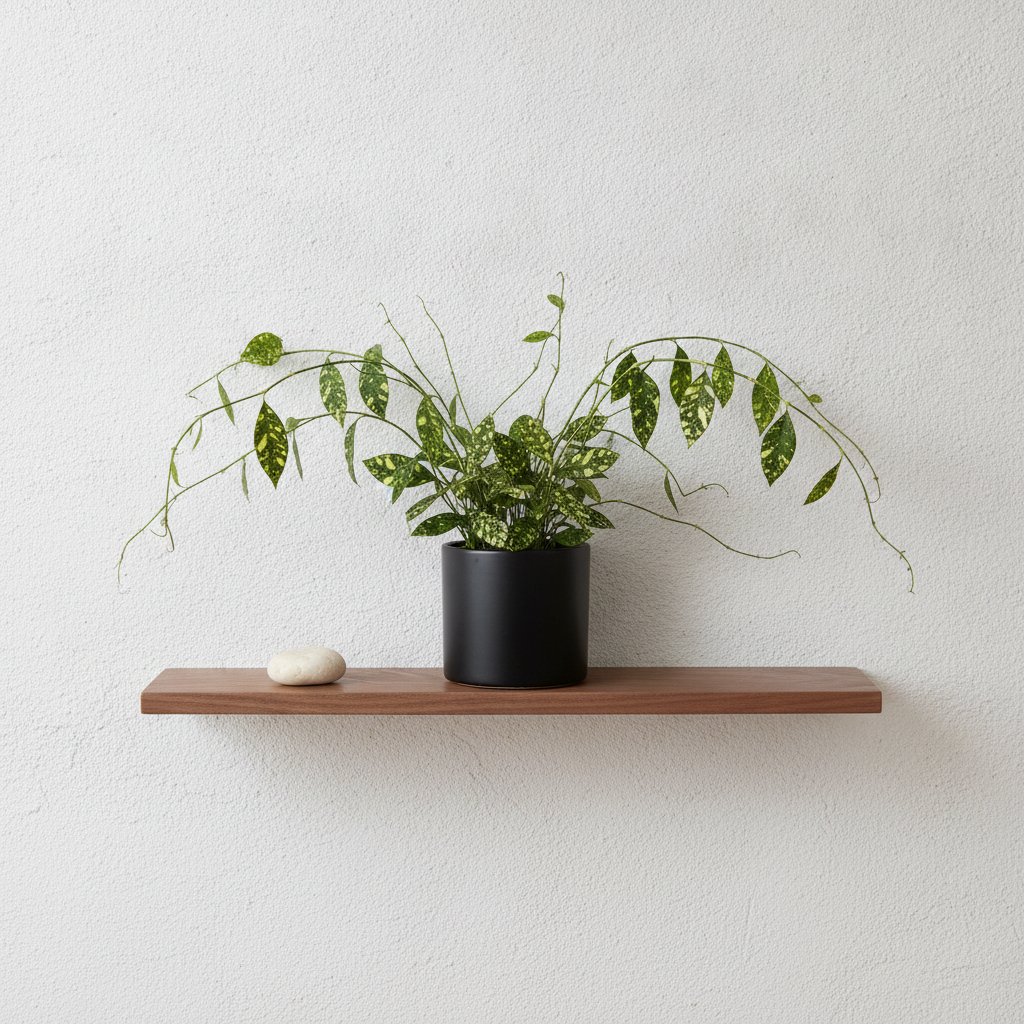
Beyond looks, this is a genuinely practical plant. It is slow growing, so it rarely outgrows its spot or demands frequent repotting, and it holds its shape without staking or training. It copes with the medium light of a typical living room, handles the occasional missed watering thanks to a modest tolerance for drought, and reaches only about 60cm (24in) indoors in most homes, occasionally stretching towards 90cm (35in) over many years. For anyone who wants the variegated drama of a prayer plant without the fuss, the Florida Beauty offers a far more forgiving route to the same visual reward.
Important — Toxicity: Like other members of its genus, Dracaena surculosa contains saponins that are toxic to cats and dogs, causing vomiting, drooling, loss of appetite and, in cats, dilated pupils if the foliage is chewed. It is only mildly irritating to humans, but the sap can bother sensitive skin. Position the plant where curious pets and small children cannot reach the leaves, and wash your hands after pruning.
Light Requirements
Light is the single biggest lever you have over how a Florida Beauty looks. In its native habitat it grows in the dappled shade of the forest floor, receiving bright but filtered light through the canopy above. Recreating that indoors means bright, indirect light: enough brightness to keep the cream spotting vivid and the growth compact, but not the scorching, unfiltered sun that would bleach and burn the thin leaves.
The ideal position is a few steps back from a bright window, or directly in front of one screened by a sheer curtain. In good light the new leaves emerge densely freckled and the internodes stay short, giving that full, bushy silhouette. Push the plant into a dim corner and it will keep living, but the spots fade towards plain green, the stems stretch as they reach for the window, and the whole plant grows leggy and sparse. The difference between surviving and thriving here is almost entirely a matter of a metre or two of placement.
Light Levels Explained
Because “bright indirect” means different things to different people, the table below translates the common indoor light categories into approximate light levels and the outcome you can expect from each. The Florida Beauty performs best in the bright indirect band and merely coasts in medium to low light.
| Light Category | Approx. Level | Typical Location | Outcome |
|---|---|---|---|
| Direct sun | Over 50,000 lux | On an unscreened south sill | Leaf scorch, bleached spots, crisp edges |
| Bright indirect | 10,000 to 20,000 lux | Near an east or curtained south window | Dense spotting, compact bushy growth |
| Medium | 5,000 to 10,000 lux | A metre or two from a bright window | Healthy but slower, slightly looser growth |
| Low | 1,000 to 5,000 lux | A north window or shaded interior | Survives, fading spots, leggy stems |
| Very low | Under 1,000 lux | An interior hallway or corner | Slow decline, leaf drop over time |
Window Orientation and Placement
South-facing window: The brightest exposure in the northern hemisphere, and too intense directly on the glass. Set the plant back a metre or diffuse the light with a sheer curtain, and a south window becomes one of the best positions available.
East-facing window: Often the sweet spot. Gentle morning sun followed by bright ambient light for the rest of the day suits the Florida Beauty perfectly, with little risk of scorch.
West-facing window: Workable, but the harsher afternoon sun can catch the leaves in summer. A light curtain or a slight setback keeps the exposure safe.
North-facing window: The dimmest orientation. The plant will hold on here, but expect muted spotting and slower, looser growth. Consider supplementing with a grow light through the darker months.
Pro Tip — Rotate for Even Growth: Give the pot a quarter turn each time you water. Because the stems lean towards the light, rotating keeps the shrub growing evenly on all sides instead of flattening itself against the window.
How Light Affects Variegation
The cream and gold spotting is not just decorative; it is the visible record of how much light the plant is receiving. Variegated tissue holds less chlorophyll, so the plant produces its boldest markings only when overall light is generous enough to power the green areas that do the photosynthesising. In strong indirect light the spots stay crisp and plentiful. As light drops, the plant compensates by producing greener leaves with fewer, smaller spots, quietly trading its looks for survival. If your Florida Beauty is turning plain, more light is almost always the answer.
Warning — Direct Sunlight: The thin, spotted leaves scorch quickly under unfiltered sun. Bleached pale patches or dry, brown crisping along the edges are signs of too much direct light. Move the plant back from the glass or add a diffusing curtain, and avoid sudden jumps from a shady spot straight into full sun.
Artificial Lighting
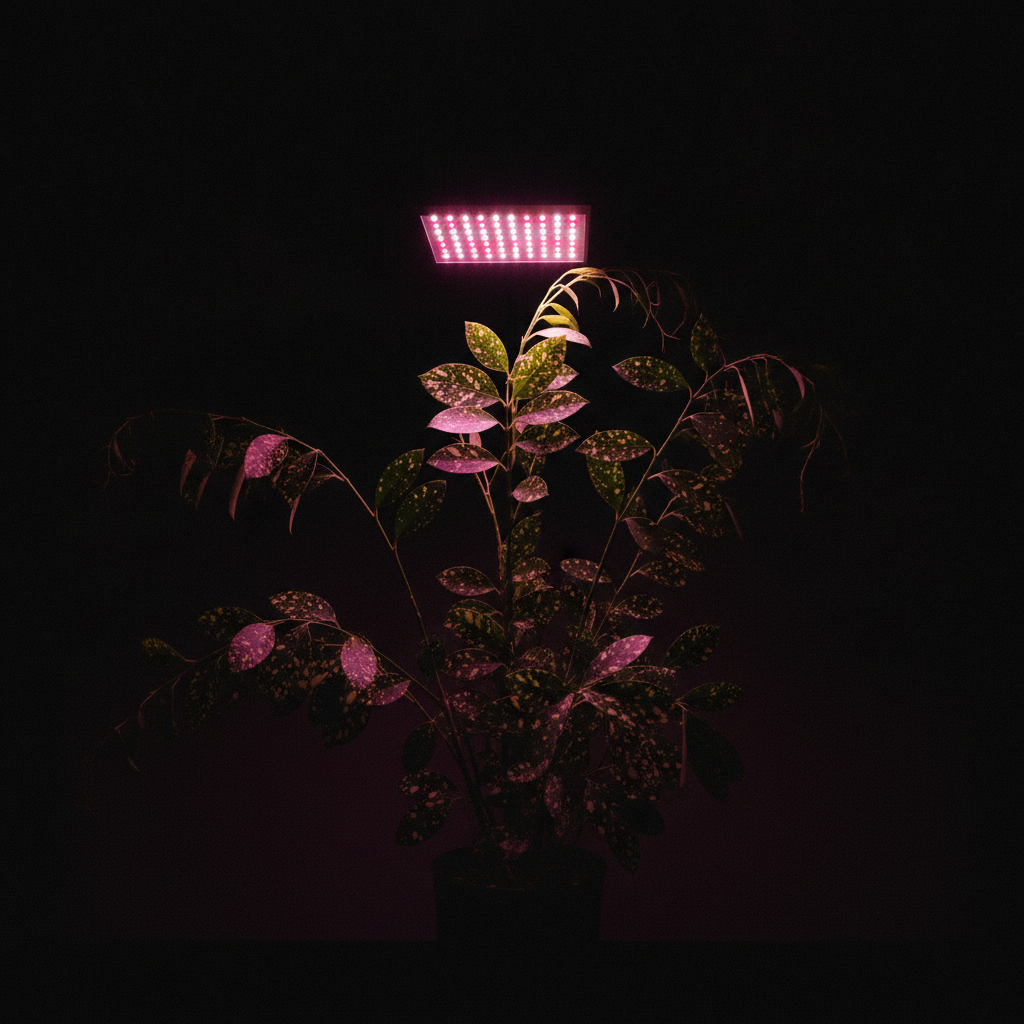
The Florida Beauty responds well to supplementary lighting, which makes it a good candidate for rooms with few windows. A full-spectrum LED grow light positioned 30 to 45cm (12 to 18in) above the plant and run for 10 to 12 hours a day will maintain vivid spotting and steady growth even in a dim interior. During short northern winters, a few hours of supplemental light each day can be the difference between a plant that coasts and one that keeps producing well-marked new leaves.
Seasonal Adjustments
Light intensity indoors can fall by more than half between summer and midwinter, even in the same spot. As the days shorten, move the plant closer to its window to compensate, and clean the glass so nothing steals the little light on offer. Come spring, watch for scorch as the sun climbs higher and strengthens, and ease the plant back to its warm-weather position. These small seasonal shifts keep the light steady from the plant’s point of view even as the world outside swings.
Watering & Humidity
Watering is where most Florida Beauty problems begin, and nearly always because of too much rather than too little. The species carries a modest reserve of moisture in its fleshy stems and roots, so it copes with brief dry spells but resents sitting in soggy soil. The goal is simple: keep the mix lightly moist during active growth, let the top layer dry between waterings, and never leave the roots standing in water.
When to Water
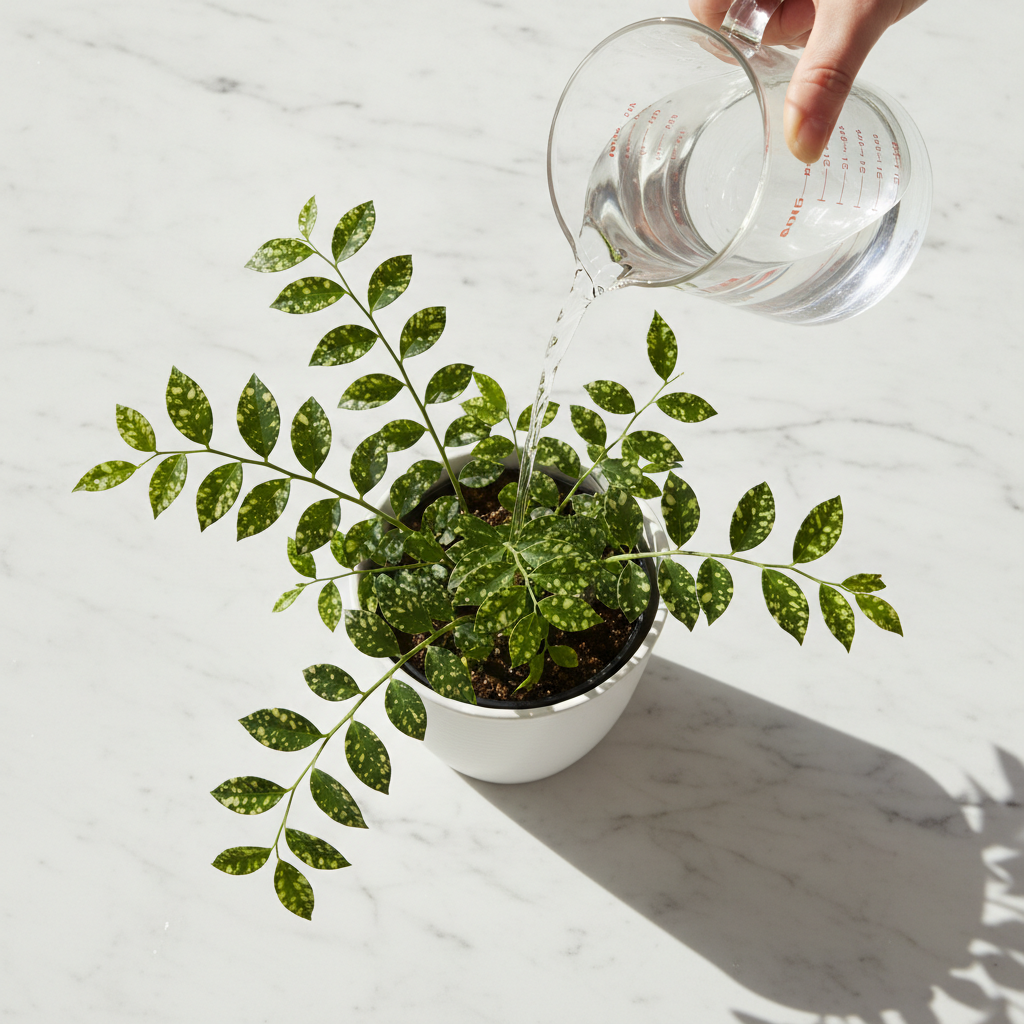
Rather than watering on a fixed calendar, let the soil tell you when. Push a finger into the mix; when the top 2 to 3cm (about 1in) feels dry, it is time to water. In a bright, warm spot during spring and summer this might mean watering once a week, while in a cooler or dimmer position it could stretch to once a fortnight. The plant’s needs shift with light, temperature and season, so checking the soil beats guessing every time.
Through autumn and winter, growth slows and water use drops sharply. Allow the mix to dry a little more deeply between waterings during these months, testing to a depth of 4 to 5cm before you reach for the watering can. Cold, wet compost in winter is the fastest route to root rot, so err firmly on the dry side when the plant is resting.
Pro Tip — Weight Test: Lift the pot just after watering and again a few days later to learn its full and empty weights. A pot that feels light for its size is ready for water, a trick that works even when the surface is misleading.
How to Water Correctly
- Check the soil first, watering only once the top 2 to 3cm has dried out.
- Use room-temperature water, ideally filtered, rainwater or tap water left to stand overnight.
- Pour slowly and evenly across the surface until water runs freely from the drainage holes.
- Let the pot drain fully for several minutes so no excess is trapped at the base.
- Empty the saucer or cachepot; never let the plant sit in collected water.
- Wait until the surface layer dries again before repeating.
Signs of Overwatering vs. Underwatering
| Symptom | Overwatering | Underwatering |
|---|---|---|
| Leaf colour | Yellowing, often starting from lower leaves | Dull green fading to brown, tips first |
| Leaf texture | Soft, limp, sometimes translucent | Dry, papery, curling inward |
| Soil | Constantly wet, may smell sour | Bone dry, pulling away from the pot sides |
| Roots | Brown, mushy, foul-smelling | Dry and brittle but still pale |
| Stem base | Soft or blackened near the soil line | Firm but wrinkled or slightly shrivelled |
Warning — Root Rot: Persistently wet soil suffocates the roots and invites fungal rot, the most common killer of this plant. If the stem base turns soft or the soil smells sour, unpot immediately, trim away any brown mushy roots with sterile scissors, and repot into fresh, barely moist, free-draining mix. Withhold water until new growth signals recovery.
Humidity Requirements
As a plant of the humid tropical understorey, the Florida Beauty is happiest at around 50 to 60% relative humidity. It will tolerate the average 40% or so found in most homes, but very dry air, especially near radiators or in winter-heated rooms, tends to show up as brown, crisp leaf tips. It is more forgiving than a fern or a calathea, yet a little attention to humidity keeps the foliage looking its best.
The clearest sign that the air is too dry is browning that begins at the very tips and edges of the leaves rather than as spots or yellowing across the blade. If several leaves start to crisp at once, particularly through a heated winter, low humidity is the likely culprit, sometimes compounded by mineral build-up from tap water.
Raising humidity need not be complicated. Grouping plants together creates a shared pocket of moister air, a pebble tray with a little water beneath the pot lifts local humidity as it evaporates, and a small room humidifier is the most reliable option of all in a dry home. Bathrooms and kitchens with good light also tend to offer naturally higher humidity. Misting gives only a brief lift and can encourage fungal spotting if the foliage stays wet, so it is the least effective of the options.
Water Quality
Dracaenas as a group are notably sensitive to fluoride and other salts, and the Florida Beauty is no exception. Fluoridated or heavily chlorinated tap water is a frequent cause of brown leaf tips and dark necrotic patches. Where possible, water with rainwater, filtered water, or tap water that has been left to stand uncovered overnight so the chlorine can dissipate. Avoid softened water, which is high in sodium, and flush the soil thoroughly with plain water every couple of months to wash out accumulated minerals.
Soil, Potting & Repotting
The right growing medium does much of the watering work for you. Because root rot is the Florida Beauty’s chief vulnerability, the priority is a mix that holds enough moisture to keep the plant lightly hydrated while draining fast enough that the roots are never waterlogged. A standard peat-heavy houseplant compost used straight from the bag holds too much water; it needs opening up with coarser material.
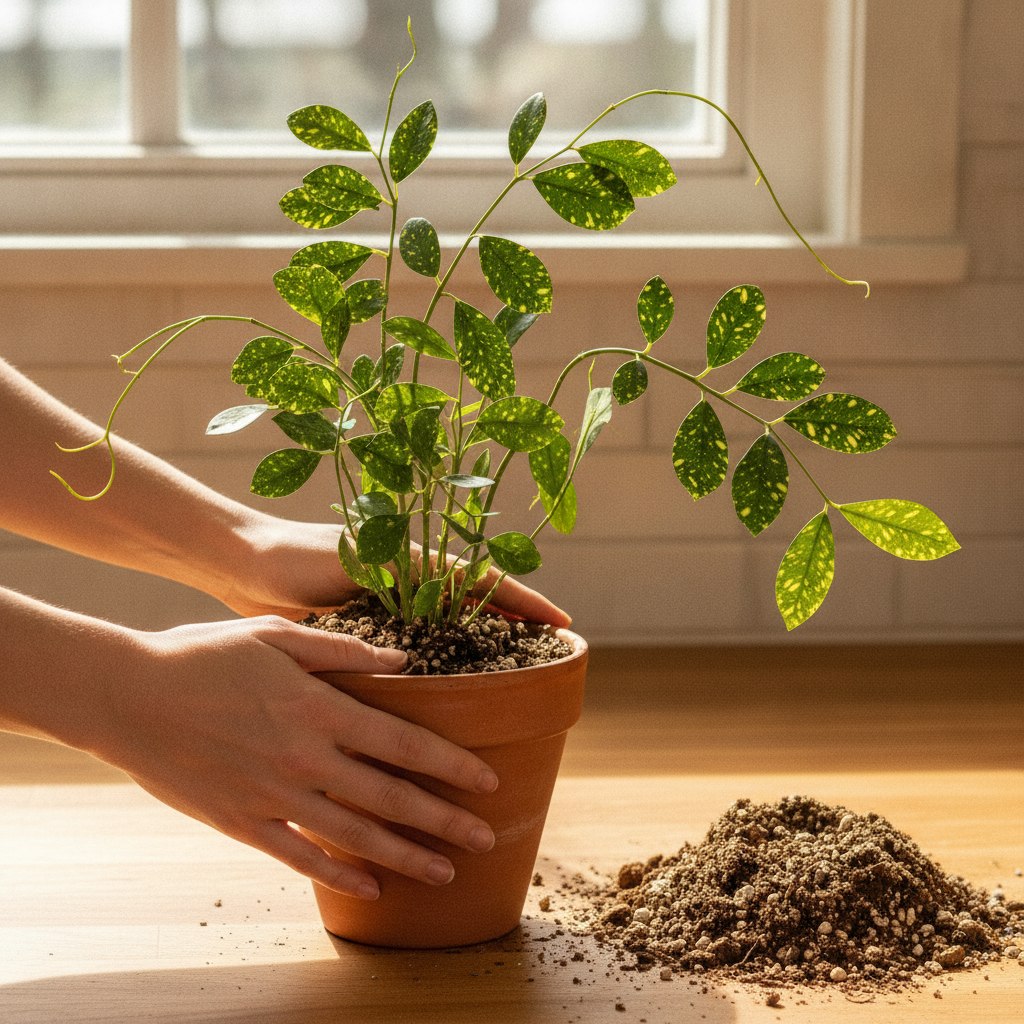
Ideal Soil Composition
Aim for a light, airy, free-draining blend built on a quality peat-free houseplant compost, then amended for drainage and structure. The components below combine moisture retention with the air pockets that healthy roots depend on.
| Component | Proportion | Function |
|---|---|---|
| Peat-free houseplant compost | 2 parts | Base medium holding moisture and nutrients |
| Perlite or pumice | 1 part | Opens the mix and improves drainage and aeration |
| Orchid bark or coco chips | 1 part | Adds structure and air pockets around the roots |
| Worm castings or compost | Small handful | Gentle, slow-release nutrition |
The Florida Beauty prefers a slightly acidic to neutral soil, roughly pH 6.0 to 6.5, which most peat-free houseplant composts fall within naturally. There is rarely any need to adjust pH deliberately; a good-quality base mix and clean water will keep it in the right range.
Pro Tip — Quick Mix Recipe: For a fast, reliable blend, combine two handfuls of peat-free houseplant compost with one handful of perlite and one of fine orchid bark. It drains freely, holds just enough moisture, and suits the Florida Beauty far better than compost straight from the bag.
Choosing the Right Pot
Because this is a slow-growing, shallow-rooted plant, pot choice leans towards restraint. A snug container that the roots can fill comfortably keeps the soil from staying wet in unused corners, which is exactly the condition that leads to rot.
Drainage holes are non-negotiable. Whatever the material or style, the pot must have holes at the base so excess water can escape. Decorative cachepots without drainage are fine as outer covers, but only if you lift the inner nursery pot out to water and drain it, or the roots will sit in trapped runoff.
Pot material: Terracotta is a safe choice because its porous walls wick away excess moisture and make overwatering harder. Glazed ceramic and plastic hold water longer, which suits drier homes or forgetful waterers, but calls for more caution with the watering can. Match the material to your own habits.
Pot size: Move up by only one size at a time, typically 2 to 4cm (1 to 2in) wider in diameter. An oversized pot holds a reservoir of damp soil the small root system cannot use, and that lingering moisture is the enemy here.
When to Repot
The Florida Beauty is slow enough that it needs repotting only every two to three years, and it flowers and grows best when a little pot-bound. The signs that it is ready are roots creeping out of the drainage holes or circling visibly at the surface, water running straight through without wetting the mix, or growth that has stalled despite good care. Spring, as the plant enters its active season, is the best time to repot so it can recover quickly into new growth.
How to Repot: Step-by-Step
- Water the plant a day beforehand so the root ball is hydrated and holds together.
- Ease the plant out by tipping the pot and supporting the base of the stems; avoid pulling on the foliage.
- Gently tease apart the outer roots and brush away loose old soil, inspecting for any brown, mushy sections.
- Trim away damaged or rotten roots with clean, sharp scissors.
- Add a layer of fresh mix to the new pot, then position the plant at the same depth as before.
- Backfill around the roots with fresh mix, firming gently to remove large air gaps without compacting.
- Water lightly to settle the soil, then return the plant to bright indirect light.
Warning — Transplant Shock: Expect a short pause in growth and perhaps a little leaf droop after repotting. Do not fertilise for four to six weeks while new roots establish, keep the plant out of direct sun, and water sparingly. Resist the urge to “help” with extra feed or water, which only stresses recovering roots.
Fertilising
The Florida Beauty is not a heavy feeder, and its slow growth means it draws on nutrients gradually. A light, regular feed through the growing season keeps the foliage well coloured and the plant steadily productive, but overfeeding does far more harm than a modest deficit ever would.
Feeding matters most from spring through early autumn, when the plant is actively pushing out new spotted leaves. Through the darker, cooler months growth all but stops, and the roots cannot use extra nutrients, so feeding then simply loads the soil with unused salts.
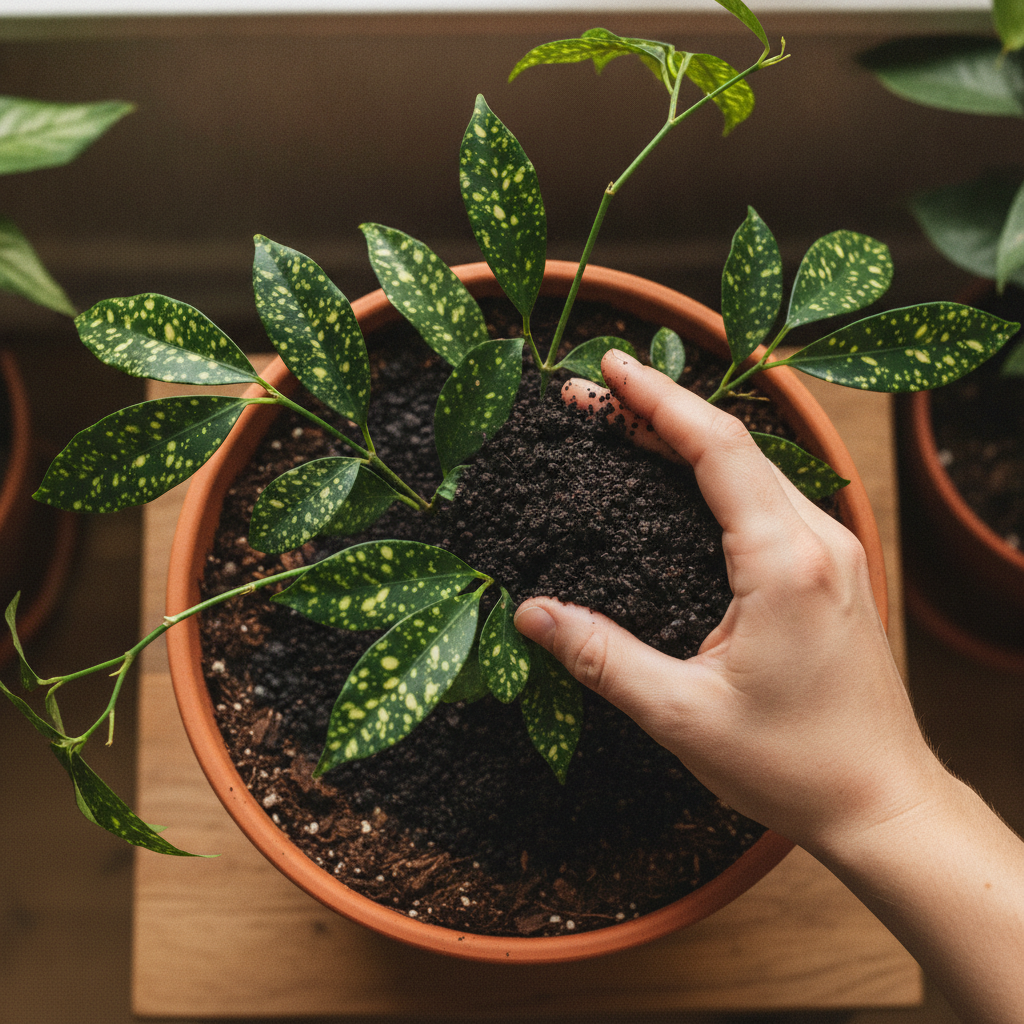
Understanding Plant Nutrients
Most houseplant fertilisers are labelled with an NPK ratio, the proportions of nitrogen, phosphorus and potassium they supply. A balanced feed provides these three in roughly equal measure alongside the secondary nutrients and trace elements plants need. Knowing what each does helps you read the plant when something is off.
| Nutrient | Symbol | Primary Function | Deficiency Symptoms |
|---|---|---|---|
| Nitrogen | N | Leaf and stem growth, green colour | Pale, yellowing older leaves, weak growth |
| Phosphorus | P | Root development and energy transfer | Stunted growth, dull or purplish leaves |
| Potassium | K | Overall vigour and water regulation | Yellowing or browning leaf margins |
| Calcium | Ca | Cell wall structure and new growth | Distorted or hooked new leaves |
| Magnesium | Mg | Core of the chlorophyll molecule | Yellowing between the veins of older leaves |
| Iron | Fe | Chlorophyll production in new growth | Yellowing between veins of the youngest leaves |
Types of Fertiliser
Liquid fertilisers: The easiest to control and the best match for this plant. Diluted into the watering can, they deliver nutrients evenly and let you dial the strength down to suit a light feeder. Use a balanced houseplant feed at half the recommended strength.
Slow-release granular: Prilled fertilisers release nutrients gradually over months and suit growers who prefer a hands-off routine. Use them at the lower end of the recommended rate, as the Florida Beauty needs little, and remember they keep feeding into autumn when the plant no longer wants it.
Organic fertilisers: Worm castings, diluted seaweed and other organic options feed gently and improve soil life, making them hard to overdo. A thin top-dressing of worm castings in spring is an easy, forgiving way to nourish the plant across the season.
Feeding Schedule
Through spring and summer, feed once a month with a balanced liquid fertiliser at half strength. That modest cadence is plenty for a slow grower and avoids the salt build-up that stresses the roots. Stop feeding entirely from mid-autumn through winter, resuming only when new growth appears in spring. Always apply fertiliser to already-moist soil, never to a dry root ball.
Pro Tip — Less Is More: When in doubt, underfeed. This species shows fertiliser burn, seen as brown, scorched leaf tips, far sooner than it shows a hunger for more. Half strength once a month is a safe ceiling for most homes.
How to Fertilise
- Water the plant first, or feed on already-moist soil, to protect the roots from concentrated salts.
- Dilute a balanced liquid fertiliser to half the label strength in room-temperature water.
- Pour the solution evenly across the soil until it just begins to drain from the base.
- Empty any runoff from the saucer so nutrients do not concentrate at the roots.
- Flush the soil with plain water every couple of months to clear accumulated minerals.
Warning — Salt Build-Up: A white crust on the soil surface or around the pot rim signals accumulated fertiliser and mineral salts, which scorch roots and brown leaf tips. Flush the pot thoroughly with plain water until it runs clear from the base, and cut back on feeding.
Propagation
One of the quiet pleasures of the Florida Beauty is how readily it propagates. Unlike some dracaenas that resist multiplying, this species roots easily from stem cuttings, so a single plant can become several with little effort and no special equipment.
Propagation also doubles as maintenance. Taking cuttings from tall or leggy stems encourages the parent plant to branch and bush out from below, so pruning for shape and propagating for new plants are really the same task. Spring and early summer, during active growth, give the fastest and most reliable rooting.
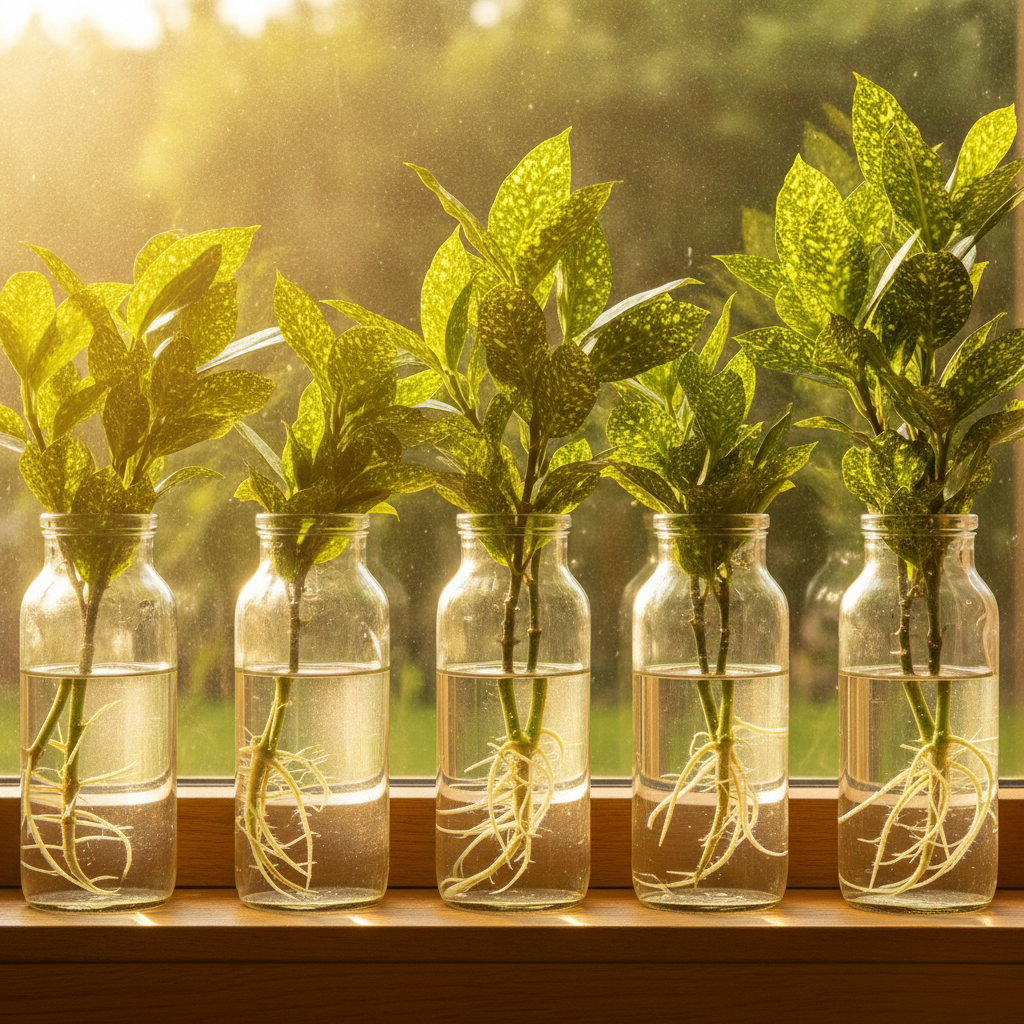
Understanding Nodes
Successful propagation hinges on the node, the slightly swollen point on a stem where leaves emerge and where dormant root and shoot cells wait. Every viable cutting must include at least one node, because that is where new roots will form. The lengths of stem between nodes, the internodes, cannot produce roots on their own. Look for the joints along the wiry stems, and make your cuts with those in mind.
Water Propagation: Step-by-Step
Water rooting is the simplest method and lets you watch the roots develop, which makes it especially satisfying for beginners. Tip cuttings taken from the ends of the stems root most quickly.
- Select a healthy stem and cut a 10 to 15cm (4 to 6in) length just below a node using clean, sharp secateurs.
- Remove the lower leaves so that at least one bare node will sit below the waterline.
- Place the cutting in a clear jar of room-temperature water, keeping the remaining leaves above the surface.
- Set the jar in bright, indirect light and refresh the water every three to four days to keep it oxygenated.
- Watch for white roots emerging from the node, usually within three to six weeks.
- Once the roots reach 3 to 5cm long, pot the cutting into a small container of free-draining mix and keep it lightly moist while it settles.
Pro Tip — Take Several Cuttings: Root three or four cuttings together and pot them into a single container. A cluster of young stems fills out into a fuller, bushier plant far faster than a lone cutting ever will.
Soil Propagation: Step-by-Step
Rooting directly in soil skips the transplant step and often produces sturdier roots better adapted to potting mix, though you cannot see progress along the way. It suits growers who prefer to disturb the cutting as little as possible.
- Take a 10 to 15cm (4 to 6in) cutting just below a node, removing the lower leaves.
- Optionally dip the cut end in rooting hormone to speed things along.
- Insert the node into a small pot of moist, free-draining mix, firming gently around the stem.
- Cover loosely with a clear bag or propagator lid to hold humidity, leaving a gap for airflow.
- Keep the mix lightly moist, never soggy, in bright indirect light and warmth.
- After four to six weeks, a gentle tug that meets resistance shows roots have formed; remove the cover and grow on as normal.
Troubleshooting Propagation
| Problem | Likely Cause | Solution |
|---|---|---|
| Cutting rots in water | Stale water or too much leaf submerged | Refresh water often; keep only a bare node below the surface |
| No roots after many weeks | No node included, or cold, dim conditions | Recut below a node; provide warmth and bright indirect light |
| Cutting wilts in soil | Mix too dry or humidity too low | Keep lightly moist and cover to raise humidity while rooting |
| Roots form but growth stalls after potting | Transplant shock or overwatering | Keep warm, water sparingly, and be patient as roots adjust |
Pests & Diseases
The Florida Beauty is reasonably resilient, but like any indoor plant it can attract sap-sucking pests, especially when the air is dry or the plant is stressed. Most infestations are easy to defeat if caught early, which is the best argument for a regular, close inspection of the foliage.
Make a habit of turning a few leaves over each time you water and running your eye along the leaf axils and stem joints, the sheltered spots where pests first gather. Early detection turns a potential crisis into a five-minute chore.
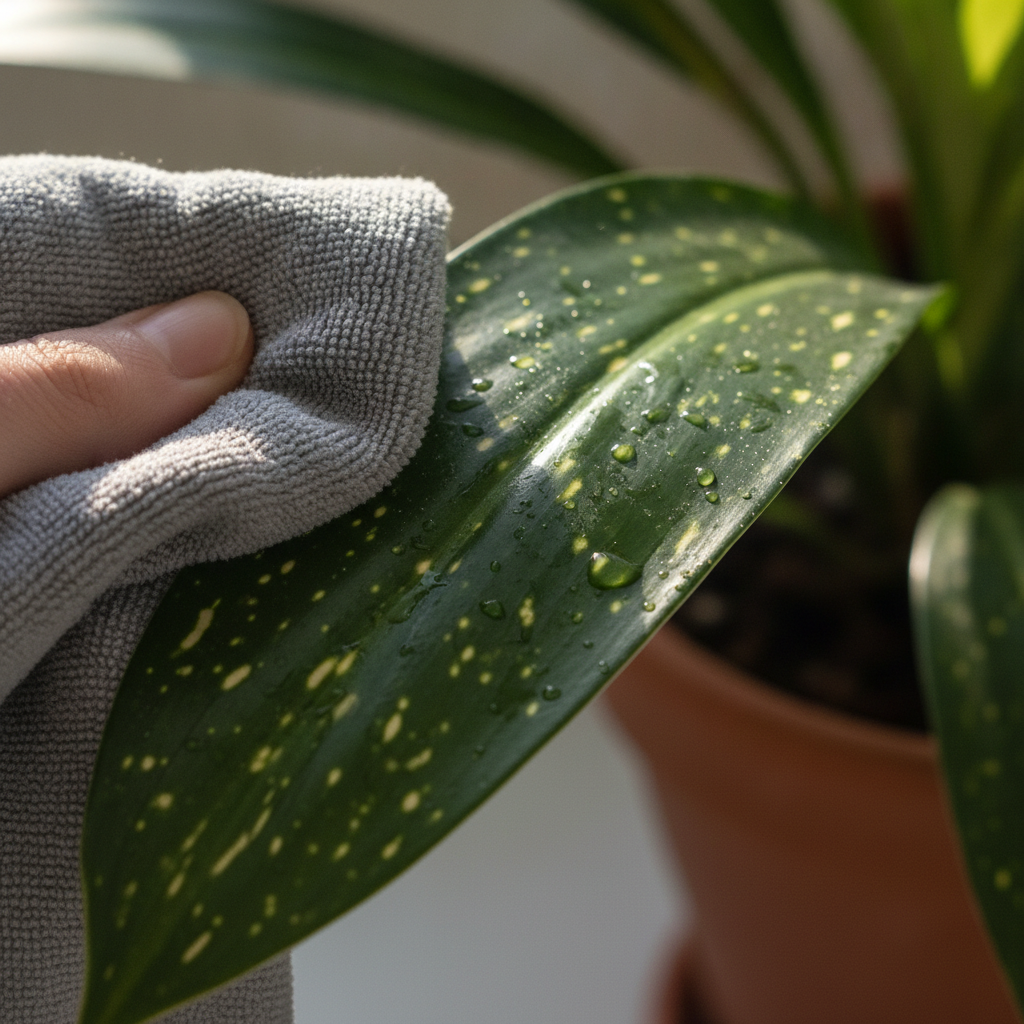
Common Pests
Mealybugs (Pseudococcus species)
The most frequent nuisance on this plant, mealybugs appear as small, white, cottony tufts tucked into leaf axils and along the stems. They suck sap, weaken growth, and leave sticky honeydew that can turn sooty and black. Their preference for the spotted leaf joints makes them easy to overlook against the cream markings.
Treatment: Dab each insect with a cotton bud dipped in diluted isopropyl alcohol, then wipe the area clean. For wider infestations, spray with insecticidal soap or diluted neem oil every seven days until they are gone, and isolate the plant while you treat it.
Spider Mites (Tetranychus urticae)
These tiny arachnids thrive in dry, warm air, exactly the conditions of a heated winter room. They cause fine pale stippling across the leaves and, in bad cases, delicate webbing between stems and foliage. Because they are barely visible, the stippling is usually the first clue.
Treatment: Rinse the plant thoroughly, including the leaf undersides, then treat with neem oil or insecticidal soap at weekly intervals. Raising humidity makes the environment far less hospitable and helps prevent their return.
Scale (Coccus species)
Scale insects show up as small, brown, immobile bumps clinging to stems and the undersides of leaves. Protected by their waxy shells, they sap the plant’s vigour and, like mealybugs, excrete sticky honeydew. They are easily mistaken for part of the plant until you try to rub one off.
Treatment: Scrape off what you can with a fingernail or an alcohol-dipped cotton bud, then apply neem oil or a horticultural oil to smother the rest. Repeat every one to two weeks, as the young crawlers hatch in waves.
Common Diseases
Root Rot (Pythium and Fusarium species)
By far the most serious threat to the Florida Beauty, root rot follows from waterlogged soil that starves the roots of oxygen and lets fungi take hold. Above ground it shows as yellowing, wilting foliage and a soft, darkened stem base, while the roots below turn brown and mushy.
Treatment: Unpot the plant, cut away all rotten roots with sterile scissors, and repot into fresh, free-draining mix in a clean pot. Water sparingly afterwards, and correct the watering habits or drainage that caused the problem in the first place.
Leaf Spot (Colletotrichum and bacterial pathogens)
Fungal or bacterial leaf spot produces brown or black lesions, sometimes ringed with yellow, that can be hard to distinguish from the plant’s natural cream markings until they spread. It is usually triggered by foliage that stays wet too long, from misting or splashing.
Treatment: Remove affected leaves, improve air circulation, and keep water off the foliage. Avoid misting, and water at the soil level so the leaves stay dry.
Pest and Disease Summary
| Pest / Disease | Identification | Treatment |
|---|---|---|
| Mealybugs | White cottony tufts in leaf axils | Alcohol swab, insecticidal soap or neem oil |
| Spider mites | Fine stippling and faint webbing | Rinse, neem oil, raise humidity |
| Scale | Brown immobile bumps on stems | Scrape off, apply horticultural oil |
| Root rot | Yellowing leaves, soft dark stem base | Trim rotten roots, repot, reduce watering |
| Leaf spot | Brown or black lesions on leaves | Remove leaves, keep foliage dry, improve airflow |
Prevention Strategies
Prevention costs far less effort than a cure. Quarantine any new plant for a couple of weeks before it joins your collection, inspect the foliage regularly, and wipe the leaves clean now and then to remove dust and any pests before they establish. A healthy, well-watered plant in good light naturally resists trouble that would overwhelm a stressed one.
Good cultural habits underpin everything: correct watering, sensible humidity, decent airflow around the plant, and clean tools when you prune or propagate. Most pest and disease outbreaks trace back to a stressed plant or wet, stagnant conditions, so getting the basics right is the best defence you have.
Pro Tip — Neem as Routine: A monthly wipe or light spray with diluted neem oil during the growing season keeps sap-suckers from ever gaining a foothold. Apply it in the evening or out of direct sun so the treated leaves do not scorch.
Popular Varieties
Although the classic Florida Beauty is the form most often sold, Dracaena surculosa has given rise to several named selections that differ chiefly in how their spotting is arranged. Some carry dense, all-over freckling, while others concentrate their variegation into bold central splashes or bands.
All share the same easy-going nature and shrubby habit, so choosing between them is really a matter of the leaf pattern you find most striking. The table and profiles below cover the varieties you are most likely to encounter.
| Variety | Leaf Appearance | Light Needs | Growth Rate | Availability |
|---|---|---|---|---|
| Florida Beauty | Dense cream and gold spots, often merging | Bright indirect | Slow | Common |
| Milky Way | Broad creamy-white central splash, fine spots | Bright indirect | Slow | Fairly common |
| Juanita | Larger leaves with lighter, scattered spotting | Bright indirect | Slow to moderate | Occasional |
| Kelleri | Thicker leaves, sparse fine speckling | Bright indirect | Slow | Uncommon |
| Punctulata | Small, delicate, evenly dotted leaves | Bright indirect | Slow | Rare |
Featured Varieties
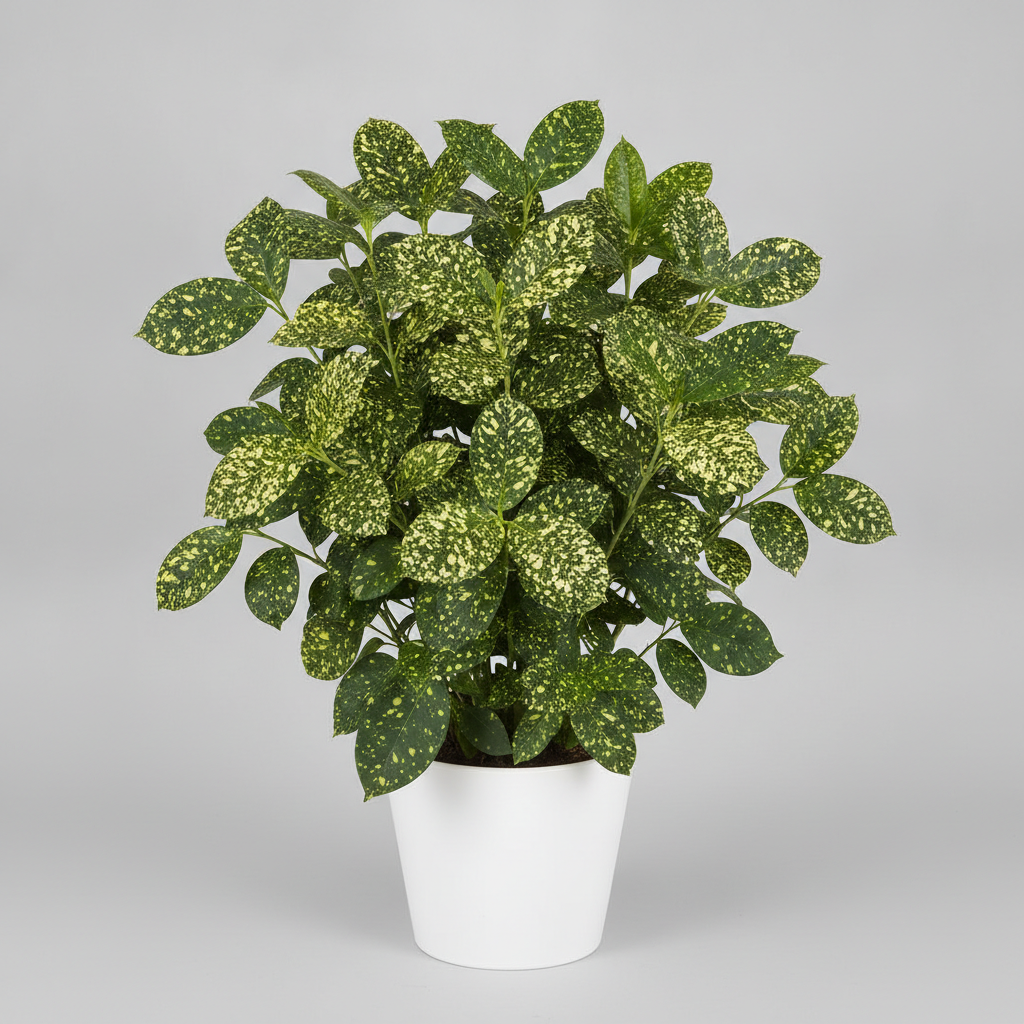
Florida Beauty
The archetype of the species, prized for dark green leaves so densely freckled with cream and gold that the spots often merge into pale blotches. The heaviest variegation of any common form, and the reason for the Gold Dust nickname.
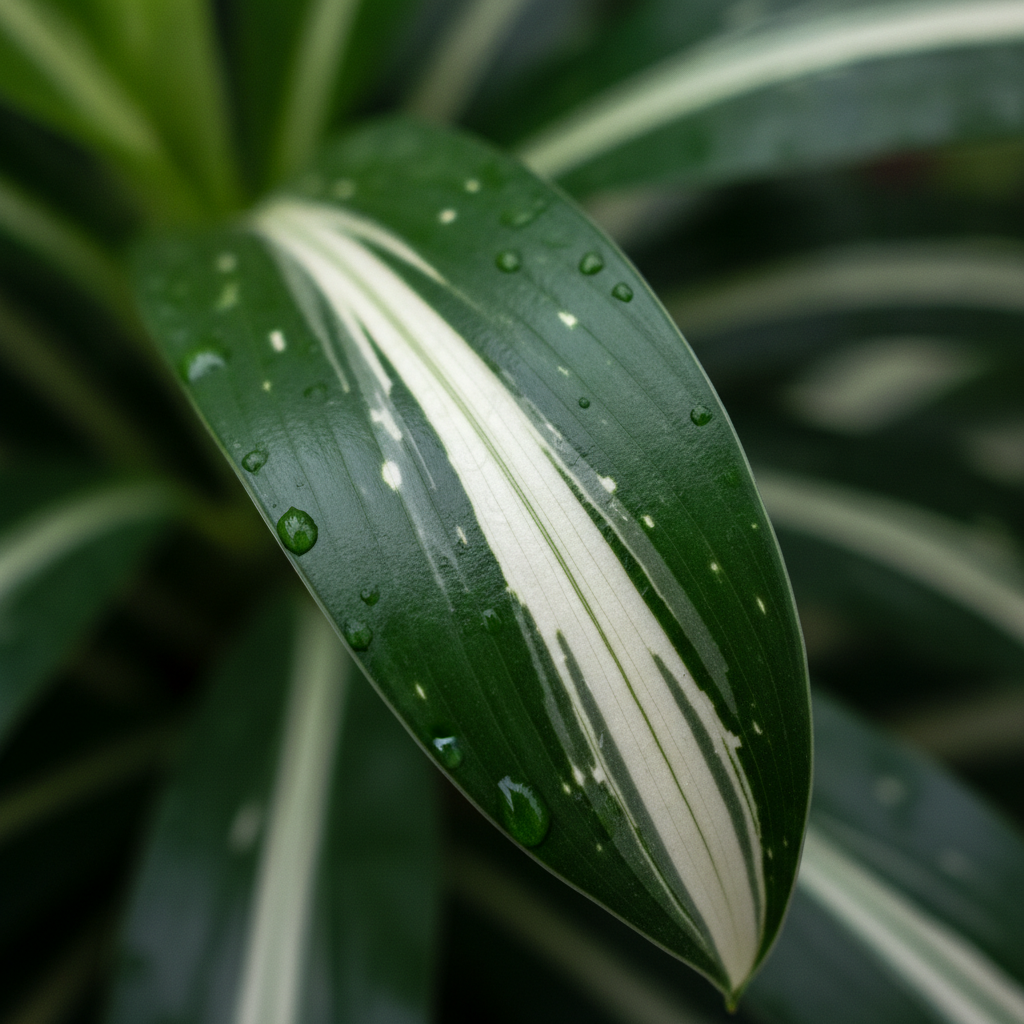
Milky Way
A more refined selection whose glossy leaves carry a broad creamy-white splash down the centre, flanked by scattered fine white spots. The cleaner, more graphic pattern makes it a favourite among collectors who find the classic form too busy.
Variety Profiles in Detail
Florida Beauty (Dracaena surculosa ‘Florida Beauty’)
This is the plant most people picture when they hear the name. Its heavily spotted leaves make it the showiest of the group, and it is also the most widely available, turning up in garden centres and houseplant shops far more often than its relatives. Give it the brightest indirect light you can offer to keep that dense freckling at its peak.
Milky Way (Dracaena surculosa ‘Milky Way’)
Where the classic form scatters its variegation everywhere, Milky Way gathers it into a bold central band, giving each leaf a cleaner, more sculptural look. It tends to have slightly larger, glossier leaves and rewards the same bright indirect light. For a modern interior it often reads as the more elegant choice.
Juanita (Dracaena surculosa ‘Juanita’)
A larger-leaved selection with lighter, more scattered spotting, Juanita brings a slightly bolder presence and can grow a touch faster than the classic form. It is less commonly sold but worth seeking out if you want the same freckled character on a bigger, looser plant.
Choosing the Right Variety for Your Space
For maximum impact and easiest availability, the classic Florida Beauty is the obvious pick, its dense spotting reading beautifully even from a distance. If your taste runs cleaner and more graphic, Milky Way’s central splash suits contemporary rooms, while Juanita offers a bigger, bolder plant for those with a little more space. Whichever you choose, all want the same care: bright indirect light, a free-draining mix, careful watering and clean water, so you can select on looks alone and know the growing will be the same.
Frequently Asked Questions
Why are the leaf tips on my Florida Beauty turning brown?
Brown, crisp leaf tips usually point to one of three things: dry air, fluoride or salts in tap water, or over-fertilising. Raise the humidity around the plant, switch to filtered or stood tap water, and cut back on feeding. Because dracaenas are especially fluoride-sensitive, water quality is the most common cause worth ruling out first.
Why is my Florida Beauty losing its spots and turning plain green?
Fading variegation is almost always a light problem. In dim conditions the plant produces greener leaves to maximise photosynthesis, sacrificing its spotting to survive. Move it to a brighter spot with strong indirect light, or add a grow light, and new growth should return to its well-freckled self.
How big does a Florida Beauty dracaena get?
Indoors it is a slow-growing, tabletop-sized plant, typically reaching about 60cm (24in) and occasionally stretching towards 90cm (35in) over many years. It stays a compact, branching shrub rather than a tall cane, which makes it easy to place on a shelf, side table or desk.
Is the Florida Beauty dracaena toxic to cats and dogs?
Yes. Like all dracaenas it contains saponins that are toxic to cats and dogs if eaten, causing vomiting, drooling and loss of appetite, with dilated pupils in cats. It is only mildly irritating to humans. Keep it out of reach of pets and children, and contact a vet if you suspect an animal has chewed the leaves.
How often should I water my Florida Beauty?
Water when the top 2 to 3cm (1in) of soil has dried, which often works out to roughly once a week in the growing season and less in winter. Rather than following a fixed schedule, check the soil each time, since watering frequency depends on light, warmth and the season.
Can I grow a Florida Beauty in low light?
It will tolerate medium to low light and keep living there, but it will not thrive. Expect fading spots, leggy stems and slow growth in dim conditions. For the compact, well-marked plant most people want, give it bright indirect light or supplement with a grow light.
Why are the lower leaves turning yellow and dropping?
An occasional yellowing lower leaf is normal ageing. If several lower leaves yellow at once, though, overwatering is the usual cause. Check that the soil is not staying wet, that the pot drains freely, and that the plant is not sitting in runoff, then adjust your watering accordingly.
How do I make my Florida Beauty bushier?
Prune the tallest or leggiest stems back to just above a node, which prompts the plant to branch below the cut. Bright light keeps new growth compact, and the stem tips you remove can be rooted as cuttings and potted back in with the parent for an even fuller display.






