
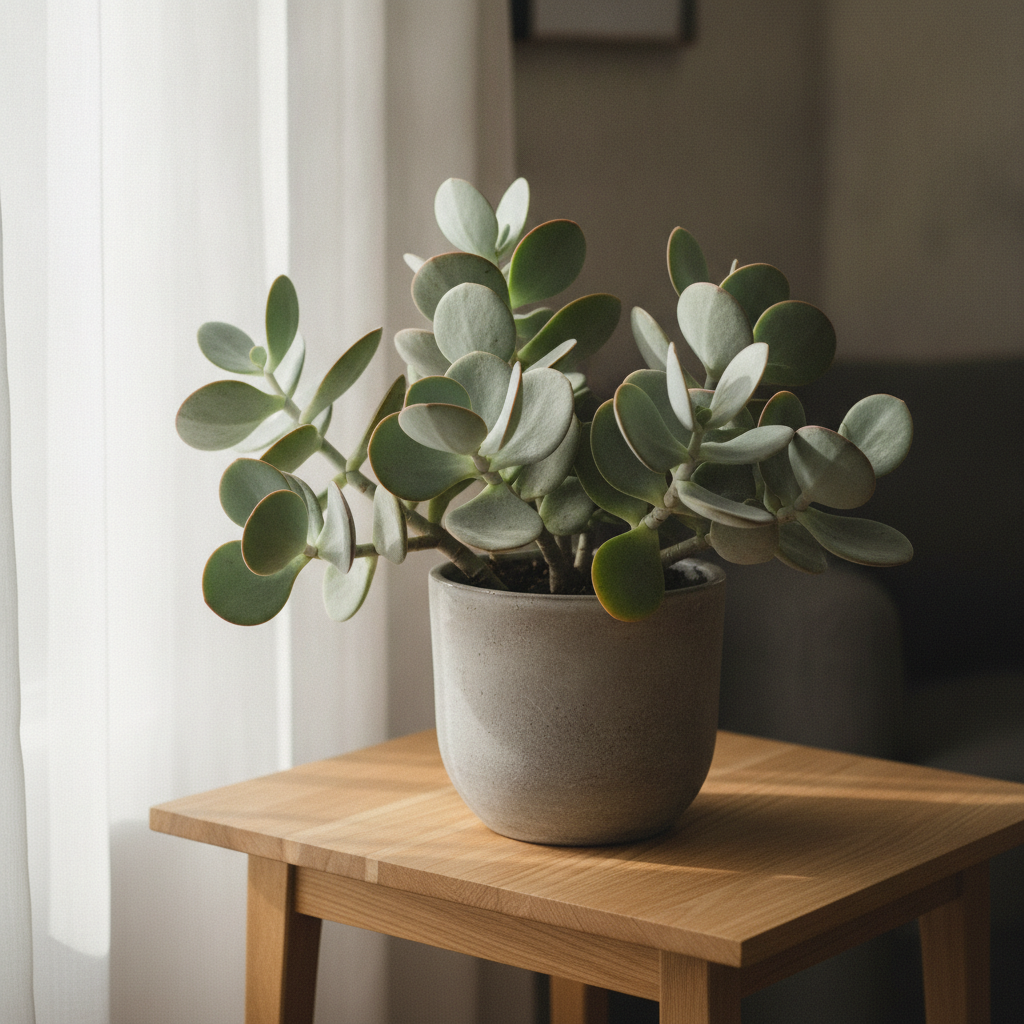
Few succulents carry themselves with the calm, sculptural confidence of the pig’s ear plant. Its rounded, paddle-shaped leaves sit in tidy opposite pairs, each one dusted with a chalky white bloom and often finished with a thin line of red along the rim, as though someone had traced the edge with a fine brush. Known botanically as Cotyledon orbiculata, this South African native has spent millions of years learning to store water and shrug off drought, which is precisely why it makes such a forgiving houseplant. Give it light and sharp drainage, then mostly leave it alone, and it will reward you for years.
This guide walks through everything that separates a pig’s ear plant that merely survives from one that genuinely thrives, from the quality of light on your windowsill to the grit in your potting mix and the restraint in your watering can.
In this guide
- Quick reference
- Why grow a pig’s ear plant
- Light
- Watering
- Soil and potting
- Fertilising
- Propagation
- Pests and problems
- Varieties to know
- Frequently asked questions
Quick reference
The table below distils the essentials into a single snapshot. Everything here is expanded, with reasoning, in the sections that follow.
| Common names | Pig’s ear, round-leaf navelwort, pig’s ear succulent |
| Botanical name | Cotyledon orbiculata |
| Family | Crassulaceae |
| Native range | South Africa and Namibia |
| Light | Bright direct sun to bright indirect light |
| Watering | Soak thoroughly, then let the soil dry out completely; minimal in winter |
| Humidity | Low; ordinary room air is ideal |
| Temperature | 18 to 27 degrees C (64 to 81 degrees F); protect below 5 degrees C (41 degrees F) |
| Soil | Gritty, fast-draining cactus and succulent mix |
| Fertiliser | Diluted low-nitrogen feed, roughly monthly in spring and summer only |
| Mature size | 0.5 to 1.3 metres (1.6 to 4.3 feet) tall indoors |
| Toxicity | Toxic to pets, livestock and people if eaten |
| Difficulty | Easy |
Why grow a pig’s ear plant

Cotyledon orbiculata belongs to the Crassulaceae, the same family as jade plants, echeverias and kalanchoes, and it shares their most useful trait: it treats water as something to be banked rather than sipped. In its natural habitat across the arid scrub of the Western and Eastern Cape and into Namibia, it endures long rainless stretches by hoarding moisture in swollen leaves and stems. That biology is the whole reason it forgives forgetful owners. A missed watering does not register as a crisis to a plant built for months of drought.
The signature feature is the powdery coating on the leaves, known as farina or pruinose bloom. This waxy layer is not decorative in origin, though it is undeniably beautiful. It functions as a living sunscreen, reflecting harsh light and reducing water loss, which is why the leaves take on that soft, ghostly blue-grey cast. Handle the plant roughly and you will leave fingerprints in the bloom that do not grow back until that leaf is replaced, so this is a plant best admired rather than fussed over.
Given enough light and maturity, a pig’s ear plant sends up tall arching stalks topped with clusters of pendulous, bell-shaped flowers in shades of orange, coral and red, usually through the warmer months. The blooms nod on stems that can rise well above the foliage, and they are a genuine bonus rather than the reason most people grow the plant. For the majority of the year the appeal is purely architectural: neat pairs of rounded leaves climbing a thickening stem, slowly building into a small shrub.
Warning — Toxic in every part: Cotyledon orbiculata contains cardiac glycosides that are poisonous to cats, dogs, grazing livestock and people if any part is chewed or swallowed. In its native range it is a well-documented cause of poisoning in sheep and goats. Keep it out of reach of curious pets and children, and wash your hands after handling cut stems.
Light
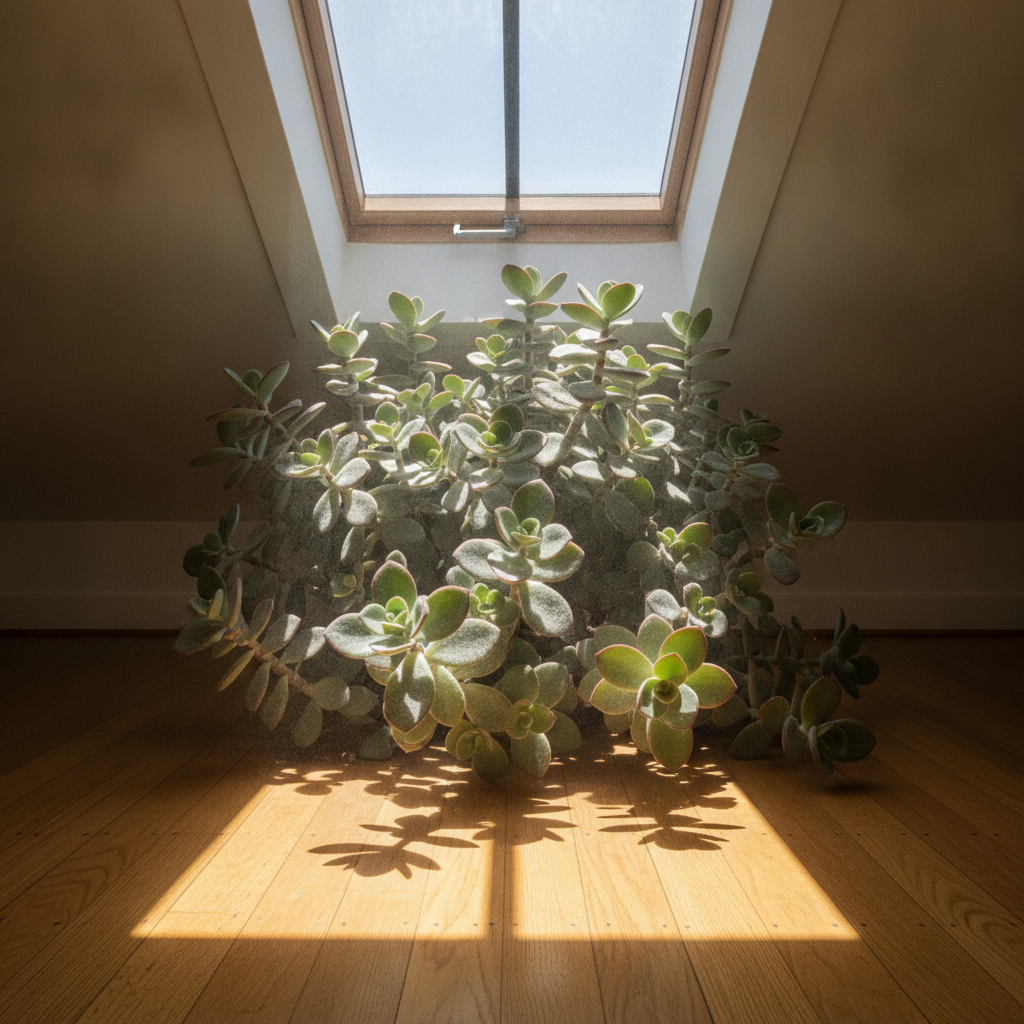
Light is the single factor that most clearly separates a thriving pig’s ear plant from a merely living one. This is a full-sun succulent by nature, and indoors it wants the brightest position you can offer. A south or west-facing window is close to ideal, where the plant can bask in several hours of direct sun each day. In that kind of light the leaves stay plump and closely spaced, the grey bloom develops fully, and those coveted red margins deepen into a rich, defined line.
Deprive the plant of light and it will tell you quickly. The clearest symptom is etiolation, where the stem stretches and the gaps between leaf pairs widen as the plant reaches for a brighter source. Leaves grown in shade also tend to be larger, thinner, greener and floppier, with the red edges fading to nothing. Etiolated growth cannot be reversed once it has happened, so the aim is to catch the stretch early and move the plant somewhere brighter before it becomes leggy and top-heavy.
There is one caveat worth respecting. A plant that has spent the winter in weaker light, or one just brought home from a shaded shop bench, can scorch if moved abruptly into fierce summer sun. The bloom offers real protection, but sudden changes still cause pale, bleached patches or crisp brown scars. Introduce strong light over a week or two, giving the plant a little more exposure each day, and it will harden off without damage. If you have the option, a spell outdoors in a sheltered, sunny spot through summer will produce the most compact, colourful growth of all.
Pro Tip — Rotate for even growth: A plant lit strongly from one side will lean towards the window over time. Give the pot a quarter turn each week so all sides receive their share of light and the plant grows upright and balanced.
Watering
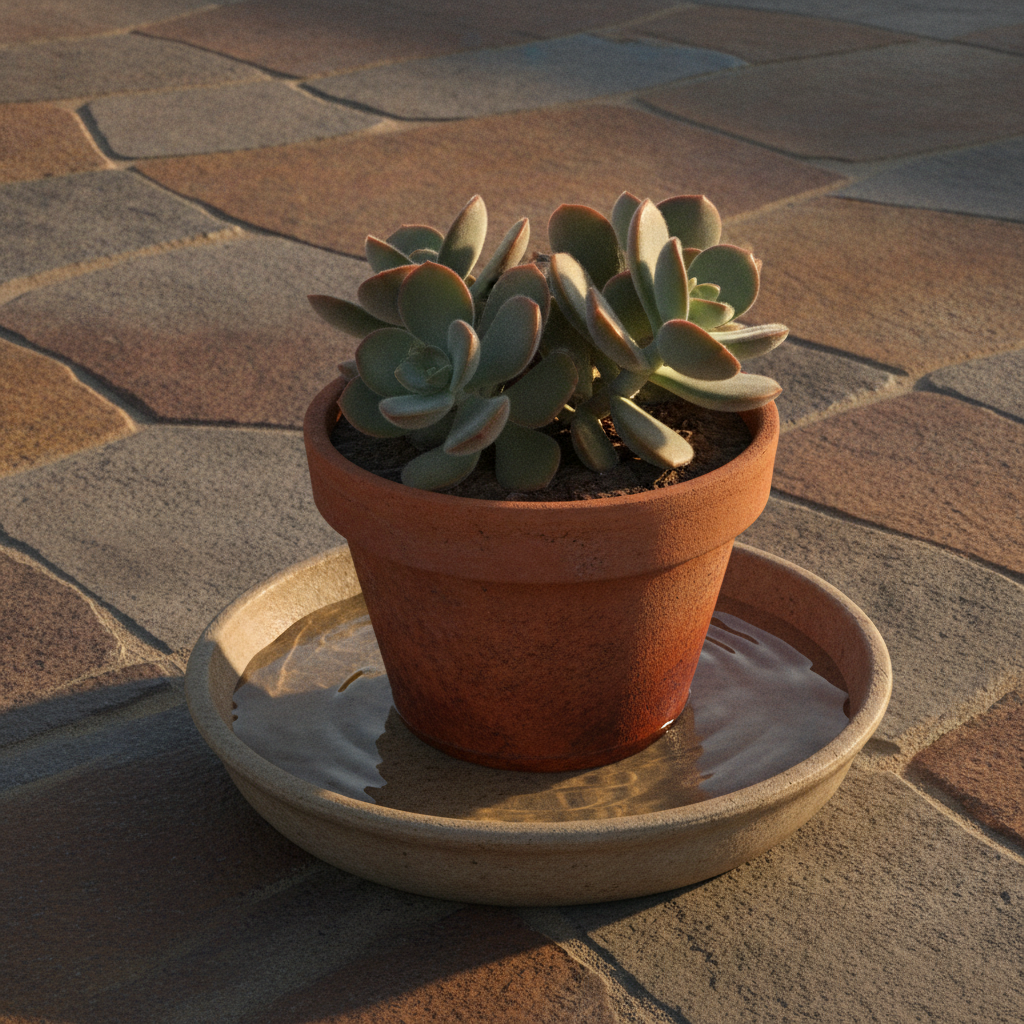
If there is one skill that guarantees success with a pig’s ear plant, it is learning to underwater with confidence. Almost every serious problem this succulent suffers indoors traces back to too much water rather than too little. The correct rhythm is the soak-and-dry method: water thoroughly until it runs freely from the drainage holes, then withhold water entirely until the potting mix has dried out completely from top to bottom. Only then does the plant get another drink.
How long that dry interval lasts depends on the season, the light and the pot. Through the active growing months of spring and summer, a plant in bright light might need watering every one to two weeks. In the low light and cool temperatures of winter, that same plant may go a month or more between waterings, and this reduced schedule is not neglect but essential care. A soggy pot in cold, dark conditions is the single fastest route to root rot. The reliable test is your finger or a wooden skewer pushed to the bottom of the pot: if there is any dampness or cool soil clinging to it, wait.
The leaves themselves are a useful gauge. A well-hydrated pig’s ear plant has firm, taut leaves. When they begin to feel slightly soft or look faintly wrinkled, the plant is drawing on its reserves and is ready for water. This is a far safer signal to act on than a calendar, because it reflects what the plant is actually experiencing. Always water the soil directly rather than over the foliage, since water pooling in the leaf crevices, combined with that delicate bloom, invites rot and marks the surface.
Warning — When in doubt, do not water: A thirsty pig’s ear plant recovers within hours of a good soak. An overwatered one, with roots already turning to mush, is often beyond saving by the time symptoms show above the soil. If you are ever unsure, waiting another few days is always the safer choice.
Soil and potting
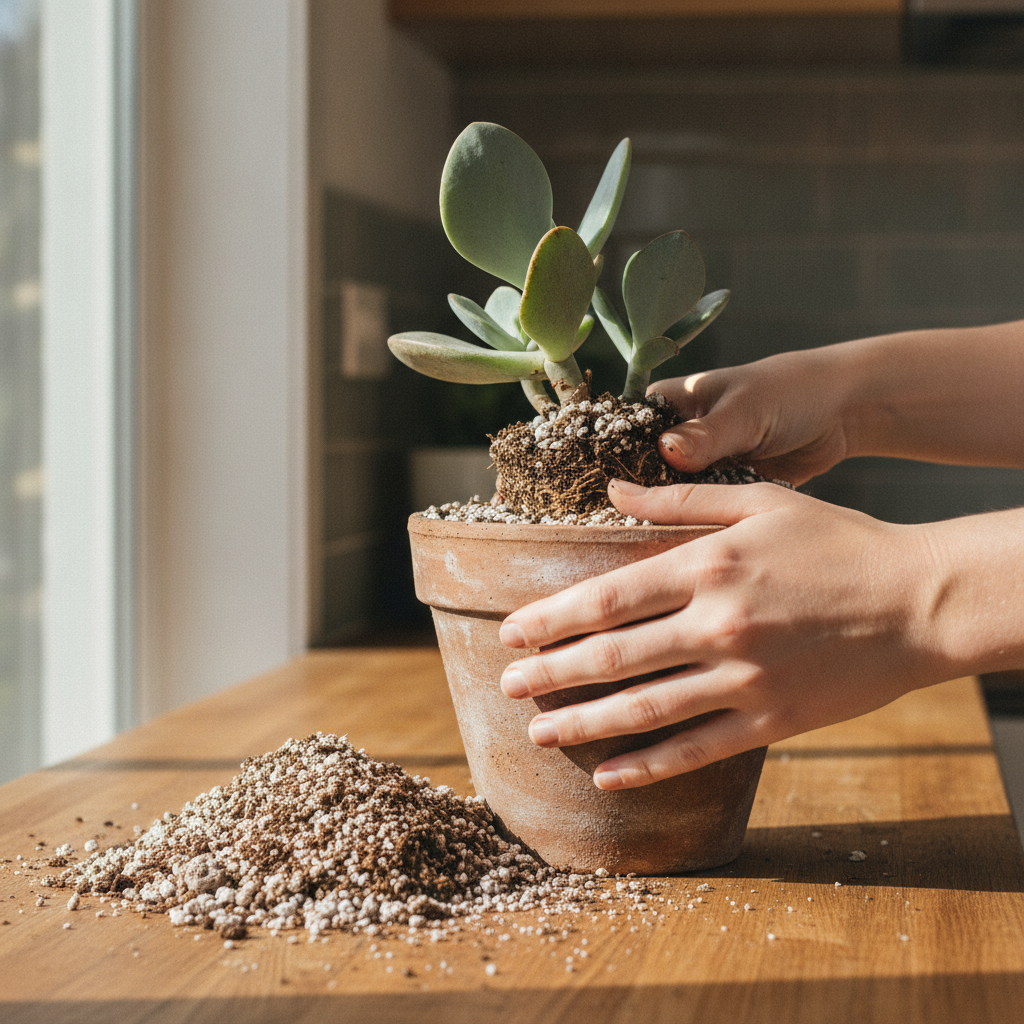
The right soil does half the watering work for you. Because a pig’s ear plant cannot tolerate wet feet, the potting medium must drain fast and hold very little moisture once it has passed through. A standard houseplant compost, which is designed to stay damp, is exactly wrong here and will keep the roots too wet no matter how careful you are with the can.
A purpose-made cactus and succulent mix is the easy starting point, and you can improve almost any of them by cutting in extra grit. A good working blend is roughly two parts of that mix to one part coarse material such as perlite, pumice or fine horticultural grit. The aim is a soil that feels open and chunky, where water rushes through and air can reach the roots between waterings. That air is just as important as the drainage, because succulent roots respire and quickly suffocate in dense, waterlogged compost.
Pot choice matters too. Terracotta is the classic and sensible option because it is porous and wicks moisture out of the soil, helping the mix dry evenly and forgiving the occasional heavy hand. Whatever the material, a generous drainage hole is essential; decorative pots without one are a common cause of quiet, invisible root rot. Do not overpot either. A container only slightly larger than the root ball dries out at a sensible pace, whereas a vast pot of damp soil around a small plant stays wet far too long.
Repotting is an occasional job rather than an annual one. Every two to three years, or when roots begin to escape the drainage holes, move the plant up a single pot size in spring. Let a freshly repotted plant settle for several days before watering, which gives any roots nicked during the move a chance to callus over rather than sitting in damp soil and rotting.
Fertilising
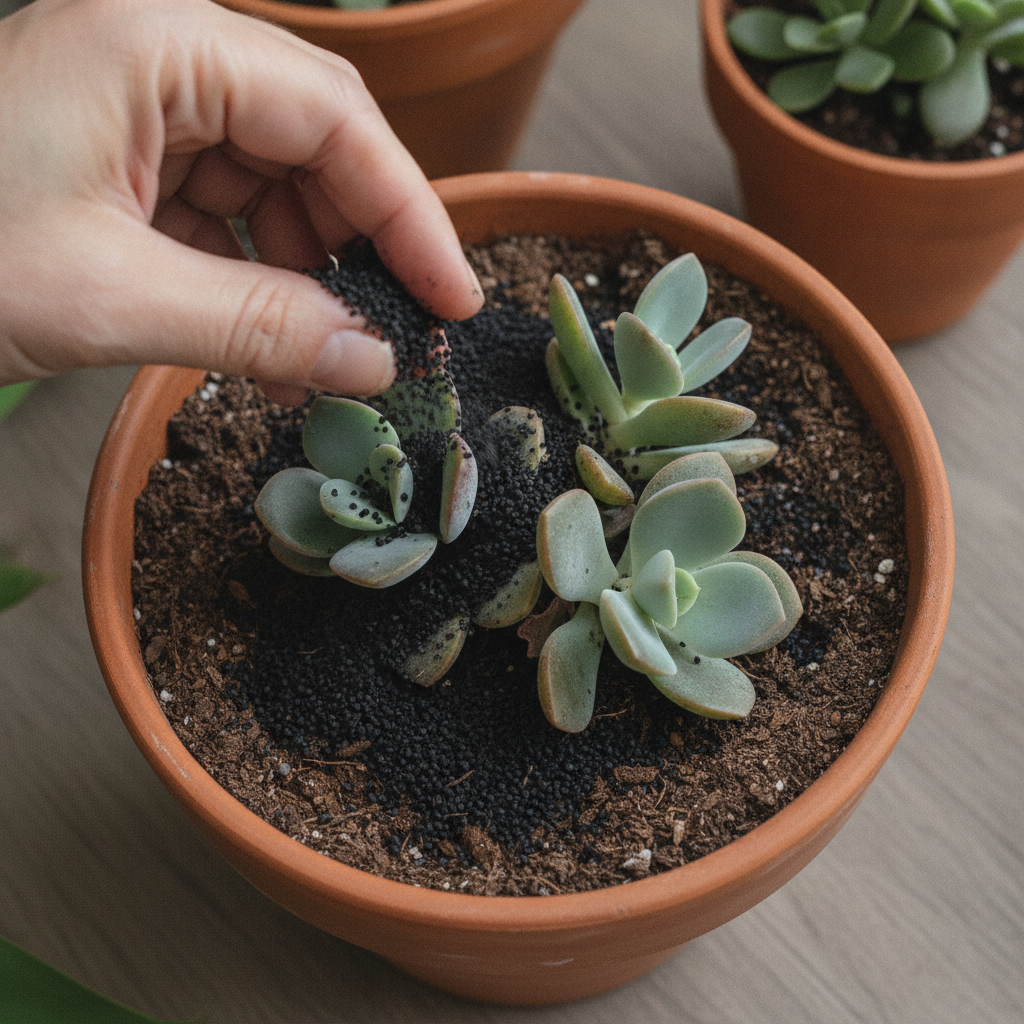
Pig’s ear plants evolved in poor, mineral soils and have modest appetites to match. They do not need heavy feeding, and overdoing it does real harm by forcing soft, sappy growth that flops, loses its compact form and becomes far more attractive to pests. Restraint is the guiding principle throughout.
During the active growing season of spring and summer, a feed roughly once a month is plenty. Use a fertiliser formulated for cacti and succulents, which is typically lower in nitrogen and higher in potassium and phosphorus, and dilute it to half the strength suggested on the label. That gentler dose supports steady growth and encourages flowering without the excess nitrogen that drives leggy, weak foliage. Always apply liquid feed to already-damp soil rather than a bone-dry root ball, since concentrated fertiliser against dry roots can scorch them.
Stop feeding entirely through autumn and winter. Growth slows or halts in the cooler, darker months, and any fertiliser applied then simply accumulates as unused salts in the soil, which can build up and burn the roots over time. If you prefer a slower, more forgiving approach, a light annual top-dressing of worm castings in spring feeds the plant gradually across the season and removes any risk of overdoing a liquid feed.
Propagation
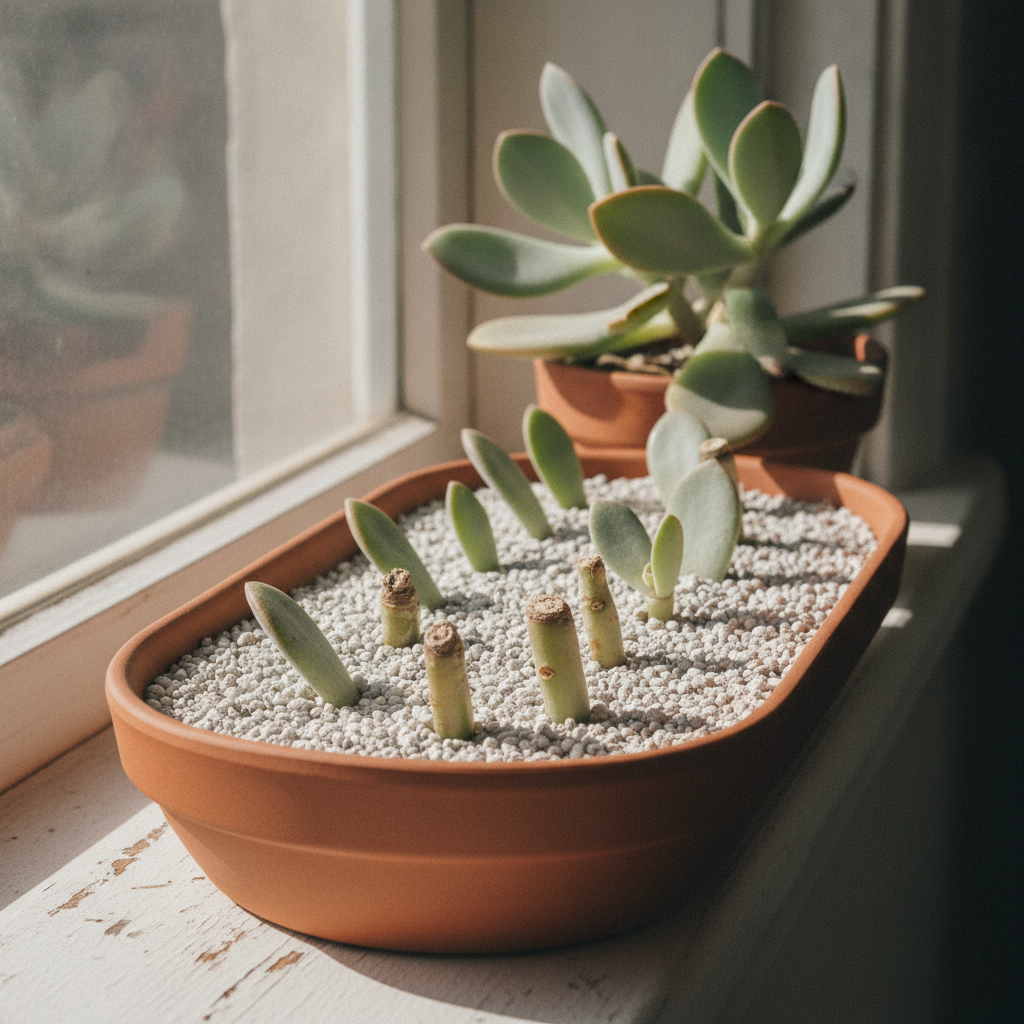
Propagating a pig’s ear plant is straightforward and the most dependable method is the stem cutting. It is best attempted in spring or early summer, when the plant is growing actively and cut surfaces heal quickly. The whole process rewards patience over haste, and the single most important step is the one most people are tempted to skip: letting the cutting callus before it goes anywhere near moisture.
- Using a clean, sharp knife or secateurs, take a healthy stem cutting around 8 to 12 centimetres (3 to 5 inches) long, ideally with a few leaf pairs near the top.
- Gently remove the lowest pair or two of leaves to expose a short length of bare stem that will sit below the soil line.
- Set the cutting aside in a dry, shaded, airy spot for three to seven days until the cut end forms a dry, sealed callus. This barrier is what prevents rot once the cutting is planted.
- Insert the calloused end into a tray or small pot of dry, gritty succulent mix or pure pumice and perlite, deep enough to stand upright on its own.
- Wait about a week before watering lightly, then keep the medium only just barely moist and out of harsh direct sun until roots form, usually within two to four weeks.
- Once you feel resistance to a gentle tug, roots have taken hold. Pot the new plant on into a standard succulent mix and treat it as an adult.
Leaf cuttings are also possible, since a whole leaf removed cleanly from the stem can sometimes be laid on gritty soil to root and produce a tiny plantlet, though this is slower and less reliable than stem cuttings. Mature plants can additionally be grown from seed, but seed is a project for the patient, as seedlings take a long while to reach any size. For nearly everyone, stem cuttings are the fastest and surest route to more plants.
Pro Tip — Callus first, always: The single most common reason cuttings fail is planting them fresh into damp soil, where the open wound simply rots. A few dry days to seal the cut end makes the difference between success and a slimy failure.
Pests and problems

A healthy, well-lit pig’s ear plant is not troubled by much, and the majority of the issues owners encounter are cultural rather than pests. Understanding the difference saves a lot of unnecessary spraying.
The most serious threat, as with all succulents, is root rot brought on by overwatering. The warning signs are leaves that turn soft, yellow or translucent, a stem that becomes squishy or discoloured near the base, and sometimes a faintly sour smell from the soil. Caught early, the remedy is to unpot the plant, cut away any blackened or mushy roots with clean tools, allow it to dry for a day or two, and repot into fresh dry mix. If the rot has climbed into the stem, the surest rescue is to take a healthy cutting from the top and start again.
Among actual pests, mealybugs are the usual culprit. These small, cottony white insects tuck themselves into the leaf joints and the undersides of leaves, where they suck sap and weaken the plant. Dab them off with a cotton bud dipped in diluted isopropyl alcohol, and repeat every few days until they are gone, since a single treatment rarely catches them all. Aphids may appear on flower stalks, and scale insects show up occasionally as small brown bumps on stems, both treated the same way or with an insecticidal soap. If the plant spends summer outdoors, watch for vine weevil grubs in the soil, which chew roots out of sight.
Two cosmetic quirks worry newcomers unnecessarily. The first is marks in the powdery bloom, which are simply where fingers or splashes have wiped away the natural coating; the bloom returns only on new leaves, so the marks are permanent on the leaf but entirely harmless. The second is the loss of the lower leaves as the plant ages and its stem lengthens, which is normal shrubby growth rather than a fault. If a plant becomes tall and bare at the base, it can be cut back hard in spring to encourage bushier regrowth, and the removed top makes an ideal cutting.
Varieties to know
Cotyledon orbiculata is a variable species, and growers have selected a number of distinctive forms over the years. The two below are among the most sought after and show just how different the same species can look depending on leaf shape and bloom.
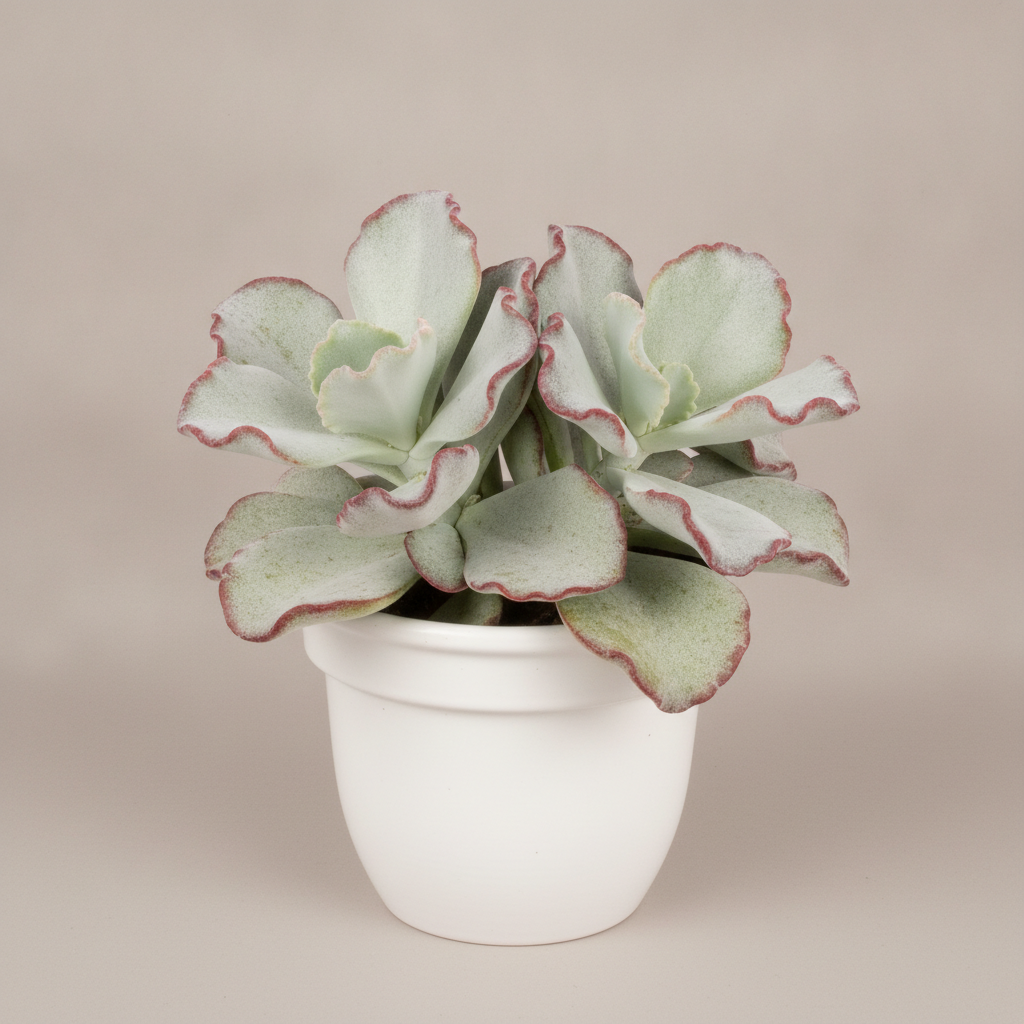
Silver Waves
A showstopper prized for its broad, silvery-white leaves with distinctly wavy, undulating edges finished in crimson. The heavy farina gives it an almost frosted look, and it forms a substantial, eye-catching plant. Care is identical to the species, though the intense bloom means it appreciates especially bright light to hold its colour.
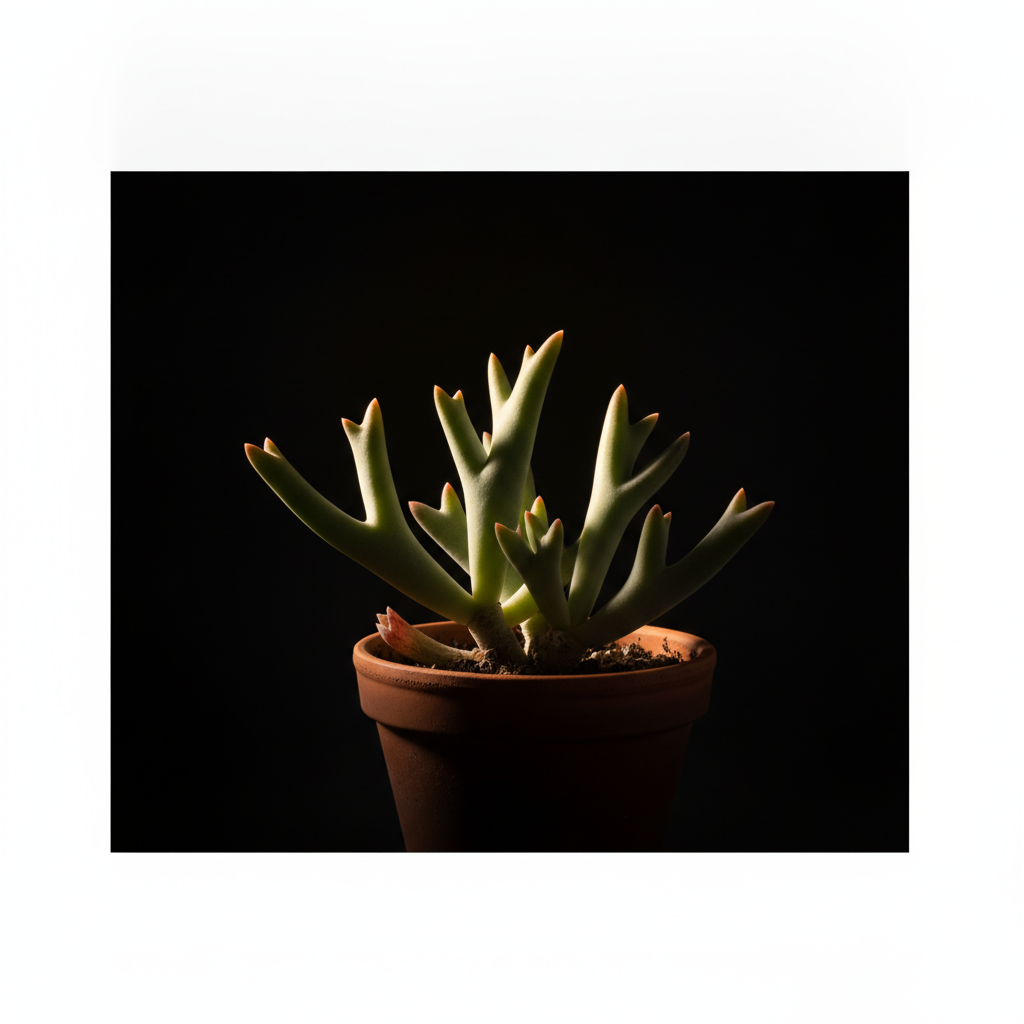
Elk Horns
A striking departure from the rounded type, with narrow, elongated leaves that fork at the tips like antlers, each one tipped in red. Often listed under Cotyledon orbiculata var. oblonga, it brings a spiky, sculptural quality that contrasts beautifully with the paddle-leaved forms. It shares the same easy, sun-loving, drought-tolerant temperament.
Frequently asked questions
Is the pig’s ear plant toxic to cats and dogs?
Yes. Every part of Cotyledon orbiculata contains cardiac glycosides that are toxic to cats, dogs, livestock and people if eaten. It is a notorious cause of poisoning in grazing animals in its native South Africa. Keep it well out of reach of pets and children, and contact a vet or medical professional if any is swallowed.
Why are the leaves on my pig’s ear plant going soft and wrinkly?
Slightly soft, wrinkled leaves usually mean the plant is thirsty and drawing on its stored water, so a good soak should plump them back up within a day or two. If, however, the leaves are soft and also yellowing or translucent, that points to overwatering and possible root rot, which calls for the opposite response of drying out and checking the roots.
Why has my plant become tall and leggy?
Legginess, where the stem stretches and leaf pairs sit far apart, is almost always a sign of insufficient light. Move the plant to the brightest window you have. The existing stretched growth will not tighten up again, but you can cut the plant back hard in spring to encourage bushier regrowth, and root the removed top as a cutting.
Can a pig’s ear plant live outdoors?
In warm, frost-free climates it makes an excellent garden succulent in full sun and sharp-draining soil. In cooler regions it is best grown in a pot that spends summer outdoors and comes inside before the first frost, since it is tender and damaged by prolonged cold much below 5 degrees C (41 degrees F).
Why won’t my pig’s ear plant flower?
The most common reasons are too little light and too much nitrogen. Flowering takes place on mature plants given plenty of direct sun, so a young or shaded plant simply may not be ready. Easing back on high-nitrogen feed and maximising light through spring and summer gives you the best chance of those arching, bell-shaped blooms.
Should I wipe the dust off the leaves?
No. What looks like dust is the plant’s natural farina, a protective waxy bloom that acts as a sunscreen and reduces water loss. Wiping it away leaves permanent marks on that leaf and removes real protection. Simply leave the leaves untouched and let new growth carry the bloom undisturbed.






