
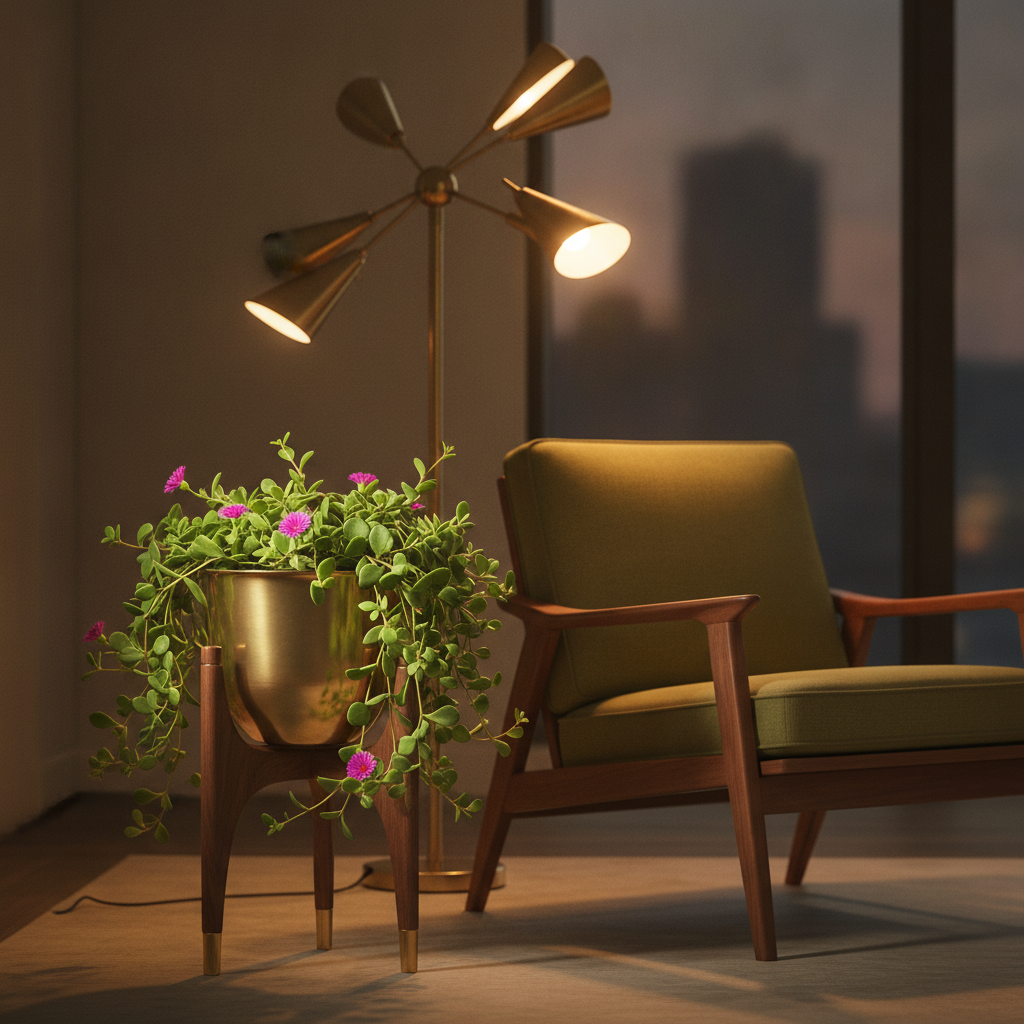
Few succulents are as generous as the baby sun rose. Give it a bright windowsill, a gritty pot and the occasional splash of water, and Aptenia cordifolia answers with a cascade of fleshy, heart-shaped leaves and a scattering of small magenta flowers that fling themselves open the moment the sun hits them. It belongs to the ice plant family, the Aizoaceae, and carries the same tell-tale sparkle: the leaf surface is studded with tiny glistening cells that catch the light like dew, which is why one of its old common names is the dew plant. Native to the coastal thickets of South Africa’s Eastern Cape, it has become a favourite trailing plant for hanging baskets, sunny sills and warm balconies the world over, prized for being almost impossible to kill through neglect and remarkably easy to share as cuttings.
Quick Reference
Before we dig into the detail, here is the plant at a glance. If you remember only one thing, let it be this: the baby sun rose wants more light and less water than almost any other trailing houseplant you are likely to own.
| Botanical name | Aptenia cordifolia (syn. Mesembryanthemum cordifolium) |
| Common names | Baby sun rose, heartleaf ice plant, dew plant, aptenia |
| Family | Aizoaceae (the ice plant family) |
| Origin | Eastern Cape, South Africa |
| Type | Trailing, mat-forming evergreen succulent |
| Mature size | 10 to 15 cm (4 to 6 in) tall, trailing 60 to 120 cm (2 to 4 ft) |
| Light | Full sun to very bright indirect light |
| Water | Low, allow to dry out between waterings |
| Soil | Gritty, fast-draining succulent or cactus mix |
| Temperature | 18 to 27 °C (64 to 81 °F); frost tender below 5 °C (41 °F) |
| Humidity | Low; average or dry room air is ideal |
| Feeding | Light feed once a month in spring and summer |
| Propagation | Stem cuttings (very easy), seed |
| Toxicity | Not known to be toxic; the foliage is even eaten as a leaf vegetable in its native range |
Use the links below to jump to any section of this guide.
- Quick reference
- Why the baby sun rose makes a rewarding houseplant
- Light
- Watering
- Soil and potting
- Fertilising
- Propagation
- Pests and problems
- Varieties
- Frequently asked questions
Why the Baby Sun Rose Makes a Rewarding Houseplant
Most trailing houseplants earn their place through foliage alone, and many of them sulk the moment a room gets too bright or too dry. The baby sun rose is different on both counts. It is a true succulent, so it stores water in its plump leaves and shrugs off the warm, arid conditions that scorch a fern or a calathea. And unlike the majority of indoor trailers, it flowers freely indoors, provided it gets enough sun, dotting its glossy green mat with vivid magenta-pink blooms that open through the middle of the day and close again towards evening. That combination of drought resistance, fast growth and reliable colour is unusual, and it is the reason the plant has quietly become a staple of sunny kitchen windows and bright balcony rails.
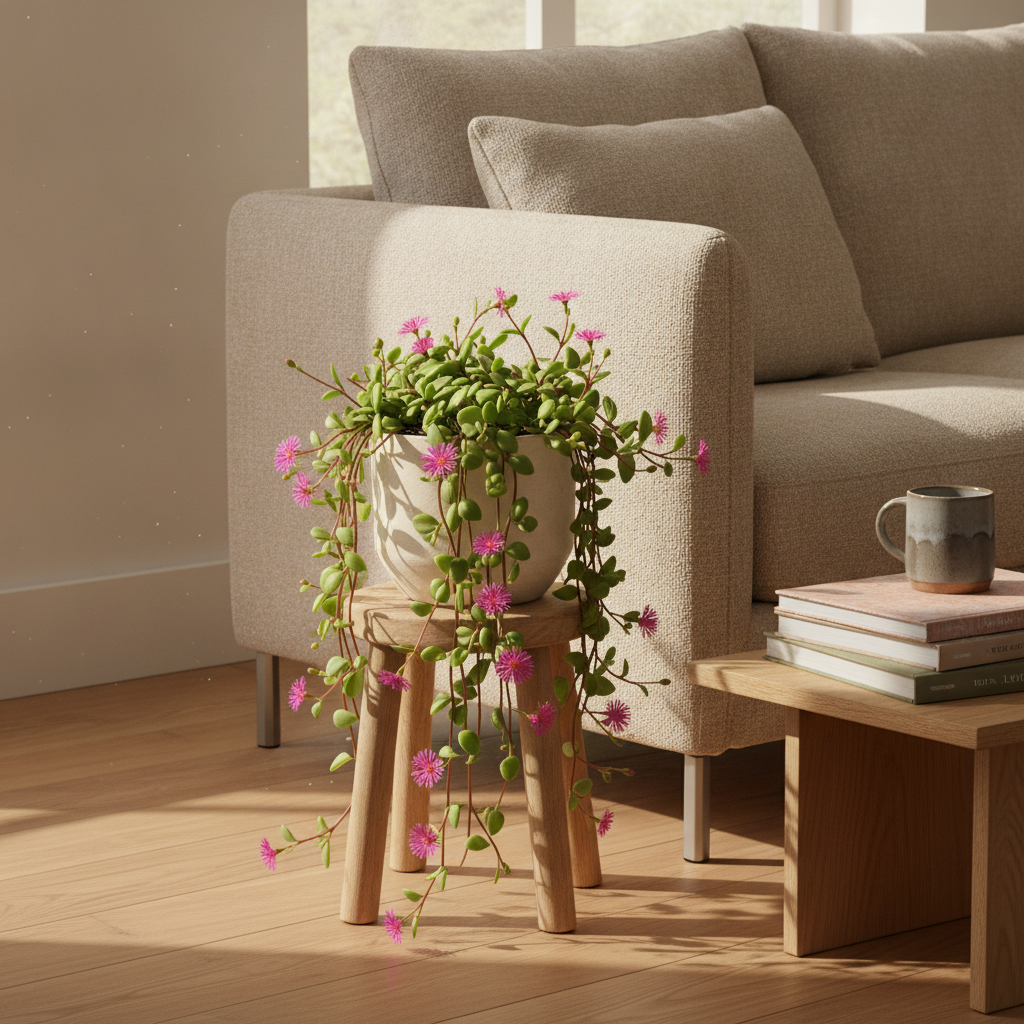
There is a survive-versus-thrive distinction worth drawing early, because it shapes everything that follows. A baby sun rose will survive in a moderately lit room on erratic watering, staying alive but stretching, going leggy and refusing to flower. To make it thrive, so that the growth stays compact and the flowers keep coming, you have to lean into its origins as a coastal groundcover from a hot, sunny, sharply drained habitat. Give it the brightest position you have, a gritty mix that never stays soggy, and the discipline to let it dry out properly between drinks. Do that, and this is one of the most forgiving and floriferous plants you can grow indoors. The rest of this guide is really just an unpacking of those three ideas.
It is worth knowing, too, that the plant is genuinely useful as well as ornamental. In parts of South Africa the fleshy leaves and stems of Aptenia cordifolia are cooked and eaten much as you would spinach, and the plant has a long history in traditional medicine. For the indoor grower that heritage translates into a reassuring practical fact: this is not a plant that will poison a curious pet or child, which sets it apart from many of the glossy aroids it might share a shelf with.
Light
Light is the single most important factor in growing a good baby sun rose, and it is where most disappointing plants go wrong. In the wild this is a sun-baked groundcover, sprawling across open, rocky coastal ground where it receives many hours of direct light every day. Indoors it wants the closest approximation you can offer, which means a south-facing or west-facing window where the leaves sit in genuine direct sun for at least four to six hours. A bright east window will keep the plant healthy but may not coax it into heavy flowering. The further the plant sits from the glass, and the more the light is filtered, the more it will stretch and the fewer flowers you will see.
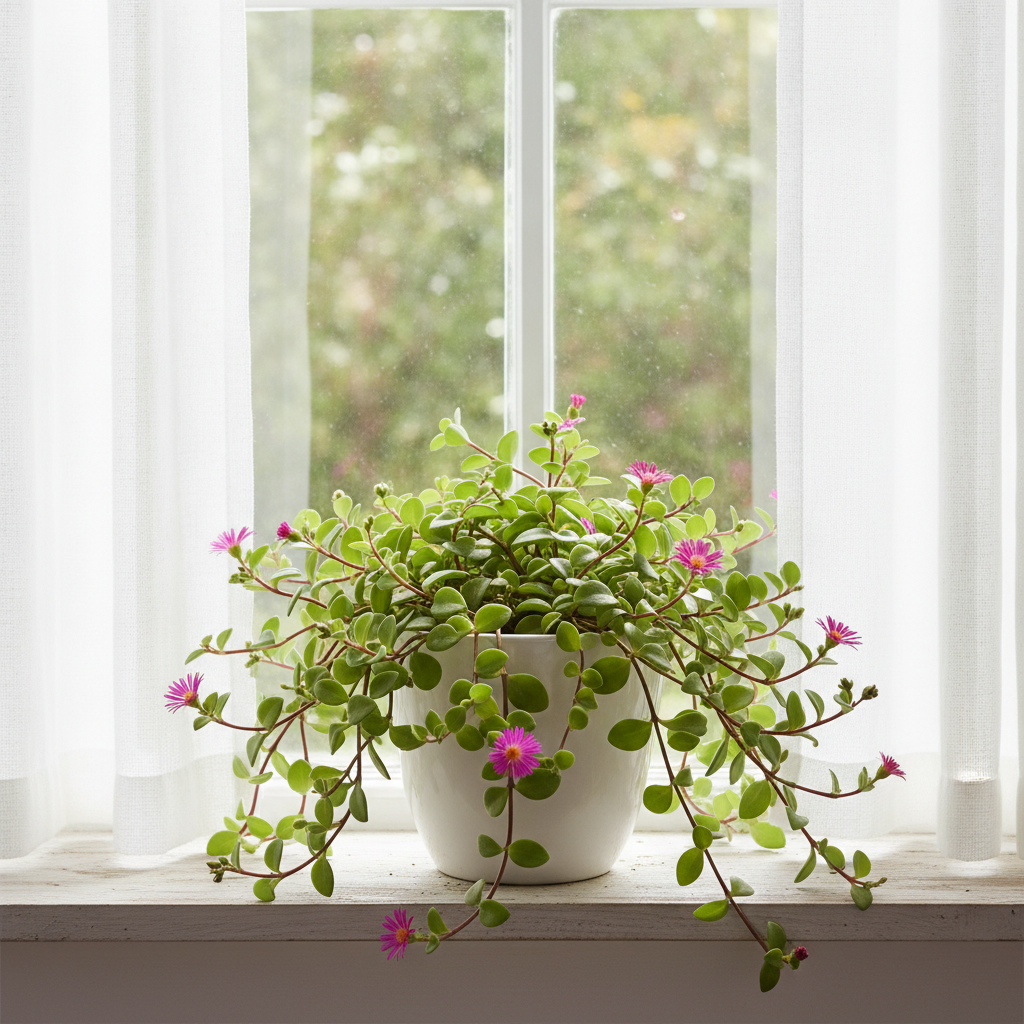
The clearest signal that a baby sun rose is short of light is etiolation, the botanical term for the stretching that succulents do when they are reaching for a stronger source. The gaps between the leaves lengthen, the stems grow pale and thin, and the plant takes on a sparse, straggly look rather than the dense trailing mat you are after. Flowering stops almost entirely, because the plant simply does not have the energy budget to spare. If you see this happening, move the plant closer to the window or to a brighter room; you can also pinch back the leggy stems to encourage bushier regrowth once the light improves.
Because this plant actively enjoys direct sun, the usual houseplant caution about scorching applies only in a limited way. It can take far more intensity than most of your collection. The one situation that calls for care is a sudden change, moving a plant that has spent winter in dim conditions straight out onto a blazing summer balcony, for instance. In that case the soft new growth can burn before it hardens off. Introduce strong light gradually over a week or two and the plant will colour up beautifully rather than bleaching. Outdoors in summer it is happy in full sun in all but the very hottest climates.
Pro Tip — Chase the flowers: If your baby sun rose is healthy but stubbornly refuses to bloom, the answer is almost always more light. The flowers are triggered by strong sun and open only on bright days, so a position that feels "too sunny" for an ordinary houseplant is usually exactly right for this one.
Watering
If light is where people go wrong through too little, water is where they go wrong through too much. The baby sun rose is a succulent that stores moisture in its leaves and stems, and it is adapted to survive long dry spells followed by occasional soaking rain. The watering rhythm that suits it best mimics that pattern: water thoroughly so that the whole rootball is wetted and excess runs from the drainage holes, then wait until the soil has dried out almost completely before watering again. In practice, during the active growing months of spring and summer, that often means a drink once every seven to ten days, though the exact interval depends entirely on your light, warmth and pot size.
The most reliable guide is the soil itself rather than the calendar. Push a finger a few centimetres into the mix, and if it feels even slightly damp, wait. The leaves offer a second, very readable signal: a well-watered baby sun rose has plump, firm leaves, while a thirsty one develops leaves that feel slightly soft and look a little less glossy. That mild softening is your cue to water, and the plant will firm up again within a day. This is a much safer signal to act on than any fixed schedule, because it responds to the plant’s actual condition.
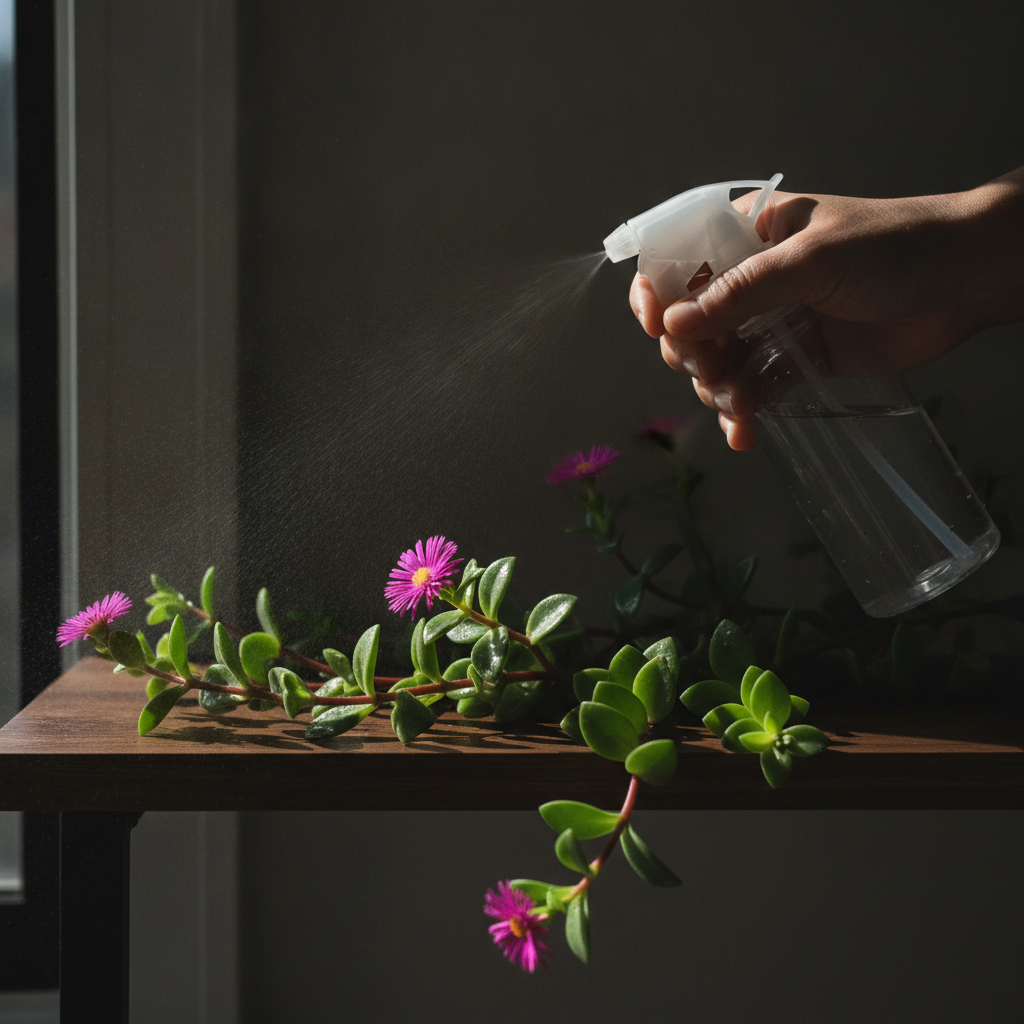
In autumn and winter the plant’s growth slows and its water needs fall away sharply. Cut back to a fraction of the summer routine, letting the soil stay dry for longer stretches, perhaps watering only every two to three weeks or even less in a cool, dim room. Overwatering in winter, when the plant is barely growing and the soil dries slowly, is the classic way to kill a baby sun rose. Cold, wet compost around the roots invites rot, and by the time the collapse shows above the soil the damage is usually done. When in doubt during the cooler months, wait another few days; this plant is far more forgiving of drought than of a soggy pot.
Warning — Root rot: Soft, mushy, yellowing stems near the soil line are the signature of overwatering and root rot. If you see them, ease off water immediately, and if the rot is spreading, take a few healthy cuttings from the tips to start again. Healthy top growth roots so easily that a rotting plant can almost always be saved as cuttings.
Soil and Potting
Everything about watering a baby sun rose becomes easier if the plant is growing in the right medium, because the whole point of a good succulent mix is that it makes overwatering harder to do. What this plant wants is a substrate that drains fast and holds very little standing moisture: sharp, gritty and open rather than rich and water-retentive. A commercial cactus and succulent compost is the simplest option, and it can be improved further by cutting it with additional grit. A useful ratio is roughly two parts of a standard cactus mix to one part coarse material such as perlite, pumice or horticultural grit, which opens up the structure and guarantees that water flows straight through.
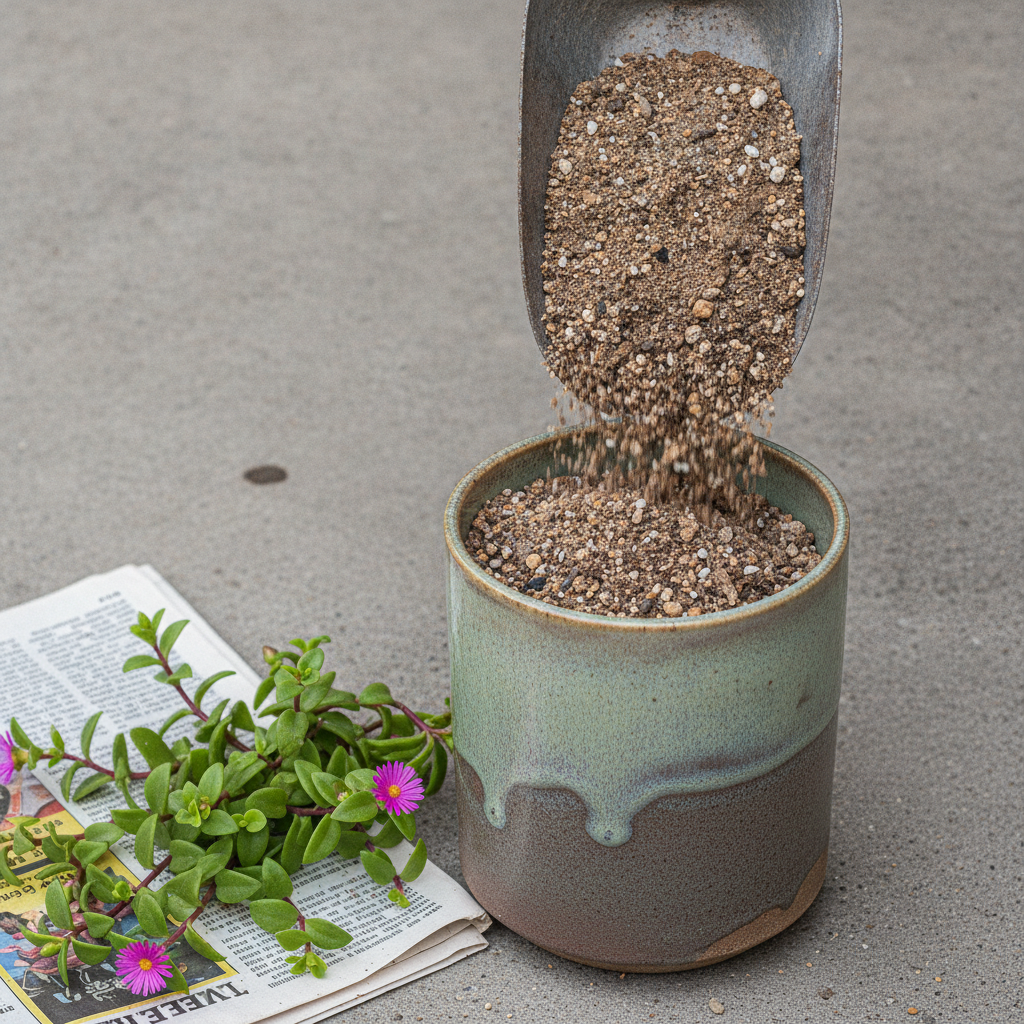
The pot matters almost as much as the mix. A drainage hole is non-negotiable, because without one even the grittiest compost will hold a reservoir of water at the base that the roots sit in. Terracotta is a particularly good choice for this plant, as the porous clay wicks moisture out of the soil and dries the rootball faster than glazed ceramic or plastic. Because the baby sun rose is a trailing plant with a relatively modest root system, it does not need a deep container; a wide, shallow pot or a hanging basket suits its spreading habit better than a tall one, and gives the stems room to cascade over the edge.
Repotting is an occasional job rather than an annual ritual. This is a fast grower, so a vigorous plant may fill its pot in a season or two, at which point you can move it up a size in spring at the start of the growing period. Ease the plant out, tease away as much of the old exhausted compost as comes free without tearing the roots, settle it into fresh gritty mix at the same depth it sat before, and then, crucially, wait a few days before watering. Letting any disturbed or broken roots callous over in dry soil for two or three days sharply reduces the risk of rot taking hold in the freshly repotted plant.
Fertilising
The baby sun rose is not a hungry plant. In its native habitat it grows in poor, sandy coastal soils, and it carries that frugality into cultivation, needing far less feeding than the lush foliage plants many growers are used to. During the active growing season of spring and summer a light feed roughly once a month is ample. Use a fertiliser formulated for cacti and succulents, or a balanced general houseplant feed diluted to half the strength recommended on the label, and always apply it to already-moist soil rather than a bone-dry rootball, where concentrated nutrients can scorch the fine roots.
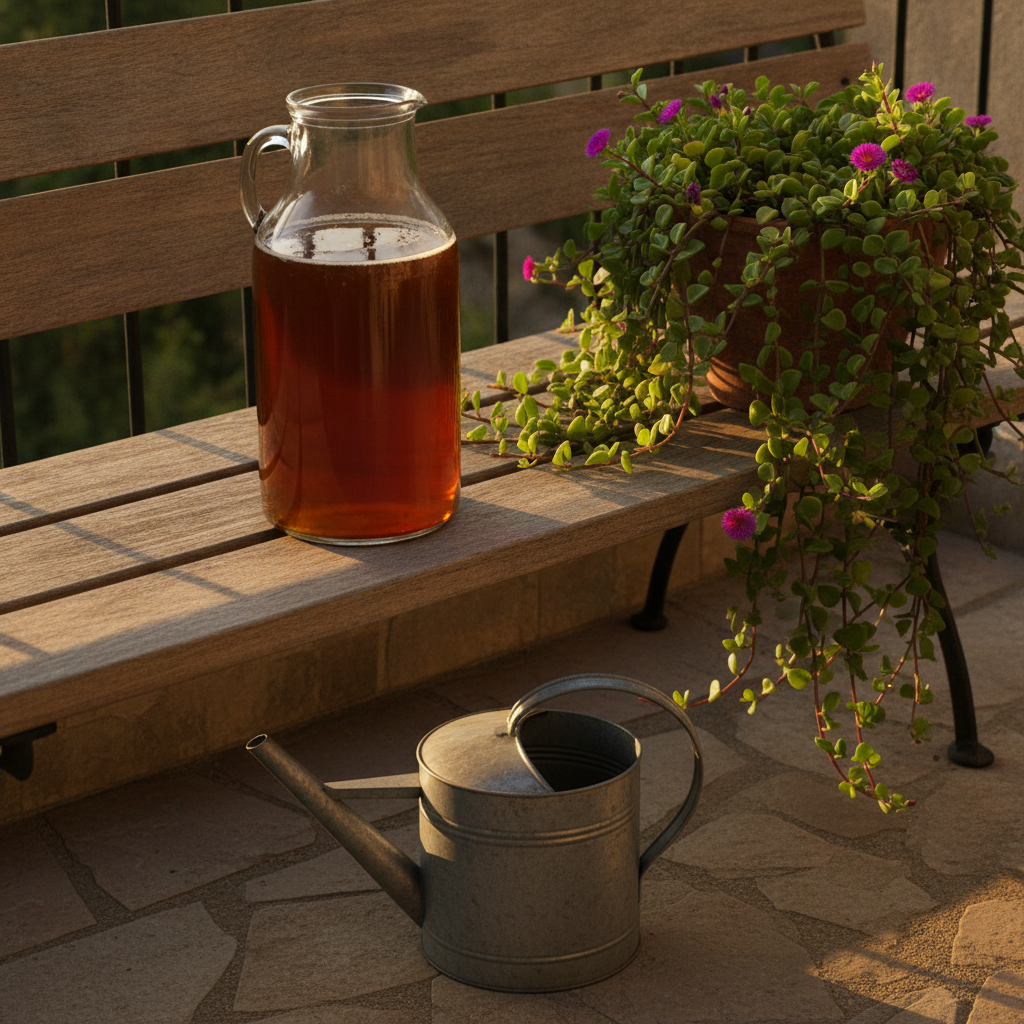
More is emphatically not better here. Overfeeding a succulent tends to produce soft, sappy, oversized growth that stretches between the leaves and flops rather than trailing neatly, and it can discourage flowering by pushing the plant into leaf at the expense of blooms. If you want to nudge a reluctant plant towards flowering, a feed slightly higher in phosphorus and potassium and lower in nitrogen can help, but honestly, correcting the light is almost always the more effective lever. Think of feeding as a gentle top-up rather than an engine of growth.
Through autumn and winter you should stop feeding altogether. The plant’s growth naturally slows or halts in the low light and cooler temperatures of the dormant season, and nutrients applied at that time simply accumulate unused in the soil, raising the salt concentration around the roots to levels that can cause harm. Resume feeding only when you see fresh growth resuming in spring, which is the plant’s own signal that it is ready to make use of the extra nutrition.
Propagation
If there is one thing the baby sun rose does even more readily than flower, it is root. Propagation from stem cuttings is almost absurdly easy, to the point where a single plant can supply cuttings for an entire windowsill of new pots within a season. The trailing stems root at the nodes wherever they touch soil, which is exactly how the plant spreads to form a mat in the wild, and you can harness that same eagerness to multiply your collection or to rejuvenate a plant that has grown leggy and bare at the centre.
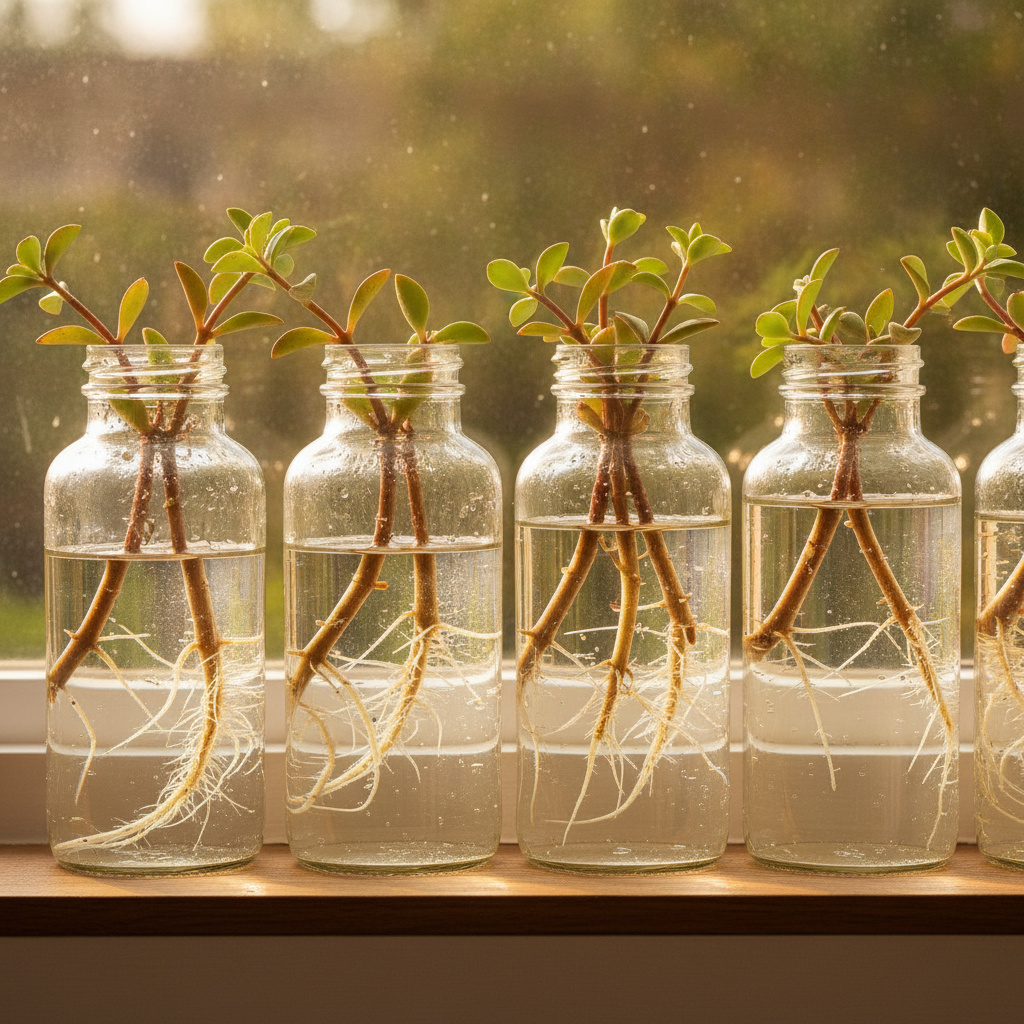
The most reliable method is a straightforward stem cutting taken in the growing season. Here is the whole process from start to finish.
- Choose a healthy trailing stem and cut a section 8 to 12 cm (3 to 5 in) long just below a node, using clean, sharp scissors or secateurs.
- Strip the leaves from the lowest two or three centimetres of the stem, so that the bare nodes will sit in the rooting medium.
- Leave the cutting to dry in the air for a day or so, allowing the cut end to callous over and reducing the risk of rot.
- Insert the calloused end into a small pot of lightly moist, gritty succulent mix, firming it gently so the stem stands upright, or stand it in a jar of water if you prefer to watch the roots form.
- Place the cutting in bright, warm conditions out of harsh midday sun, and keep the mix barely moist rather than wet.
- Expect roots within one to three weeks; a gentle tug that meets resistance tells you the cutting has taken, after which you can treat it as a mature plant.
Water rooting works beautifully with this plant if you would rather see the process, and the white roots emerge quickly from the submerged nodes. The one caveat is that water-formed roots are slightly more brittle and less adapted to soil than roots grown in mix, so pot water-rooted cuttings up gently and keep the soil a touch moister than usual for the first couple of weeks while the roots adjust. Whichever route you take, planting three or four rooted cuttings together in one pot gives you a full, bushy plant much faster than relying on a single cutting to fill the container on its own.
Pests and Problems
A baby sun rose grown in good light and a gritty mix is a robust, largely trouble-free plant, and the great majority of the problems it does run into trace back to culture rather than pests. That said, it is not immune to the usual cast of indoor troublemakers. Mealybugs are the most common, appearing as small white cottony blobs tucked into the leaf axils and along the stems, where they feed on sap and slowly weaken the plant. Aphids can cluster on soft new growth and the flower buds, and in hot, dry conditions spider mites may appear, betraying themselves through fine webbing and a stippled, dull look to the leaves. Scale, seen as small brown limpet-like bumps on the stems, is a less frequent but persistent visitor.
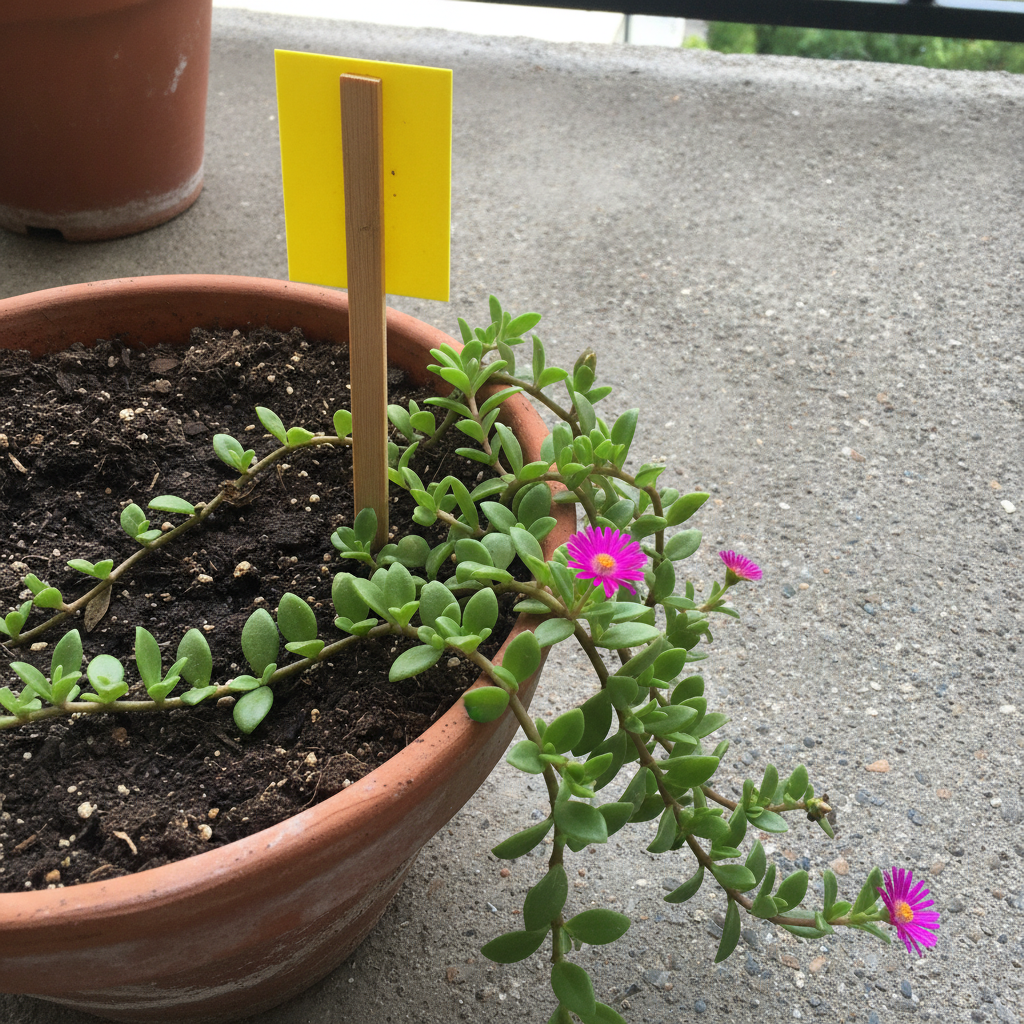
The treatment for all of these follows the same sensible progression. Catch an infestation early and it is trivial to deal with: dab mealybugs and scale directly with a cotton bud dipped in isopropyl alcohol, or rinse aphids and mites off under a gentle stream of water. For anything more established, an insecticidal soap or a diluted neem oil spray, applied to cover the undersides of the leaves and worked into the leaf axils, will bring the population down over a couple of weekly applications. Isolate an affected plant from its neighbours while you treat it, and keep checking for a few weeks afterwards, since eggs and crawlers can hatch after the adults are gone.
The problems that are not pests are worth naming clearly, because they are so much more common. Soft, translucent, yellowing stems point to overwatering and root rot, and the fix is to dry out, cut back on water and, if necessary, restart from cuttings. Long, pale, sparse growth with widely spaced leaves and no flowers points to insufficient light, corrected by moving the plant somewhere brighter. Shrivelled, deflating leaves point the other way, to a plant that has been left too dry for too long, though this is easily reversed with a thorough watering. Read the plant’s signals against these three culprits, light, water and drainage, and you will diagnose almost everything that ever goes wrong.
Varieties
The plain species is lovely in its own right, but a couple of cultivated forms are widely grown and worth seeking out. The two below are the ones you are most likely to encounter, and both are grown in exactly the same way as the species described throughout this guide.
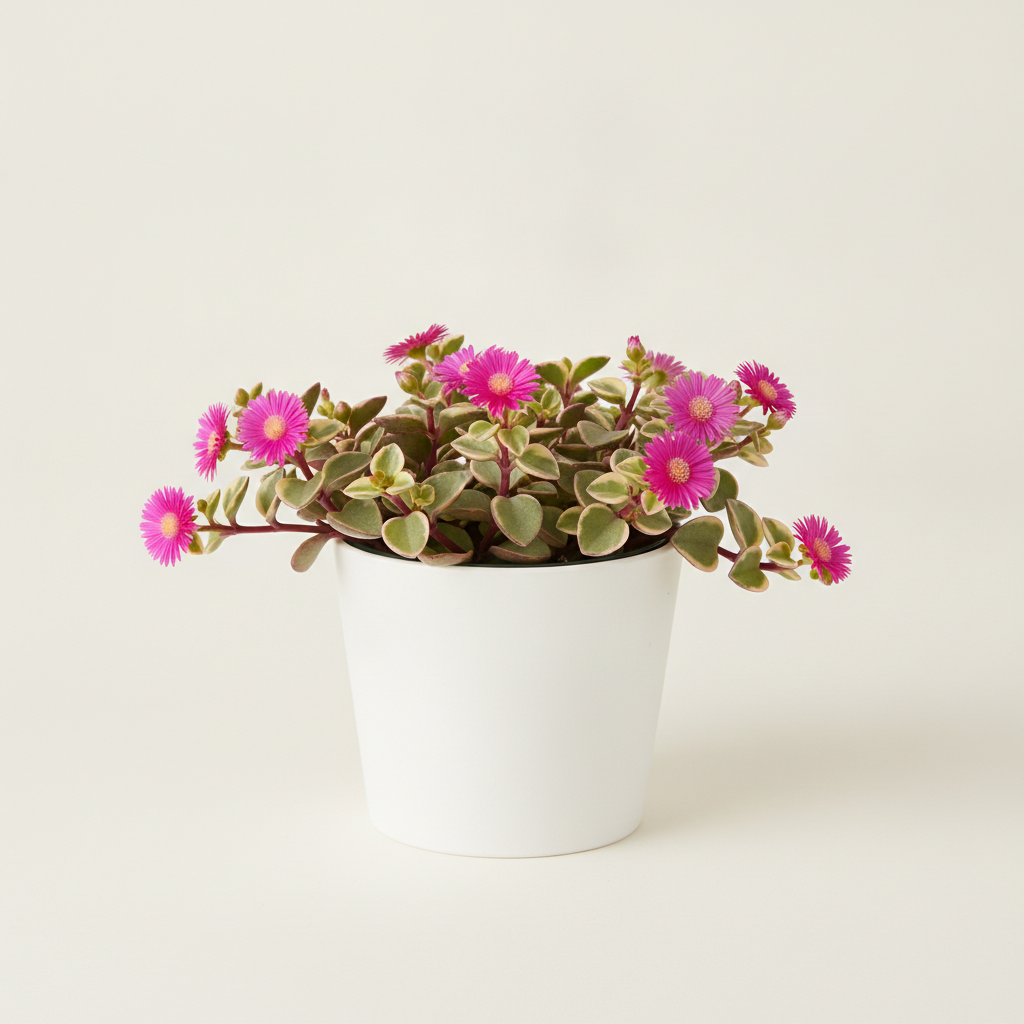
Variegata
The variegated baby sun rose carries the same fleshy heart-shaped leaves as the species, but each is edged with a broad, irregular margin of creamy white. The effect is bright and cool, especially against the reddish trailing stems, and the magenta flowers stand out all the more vividly for it. As with most variegated succulents it grows a little more slowly than the plain green form and appreciates strong light to keep the pale margins crisp, but it is otherwise identical in its needs.
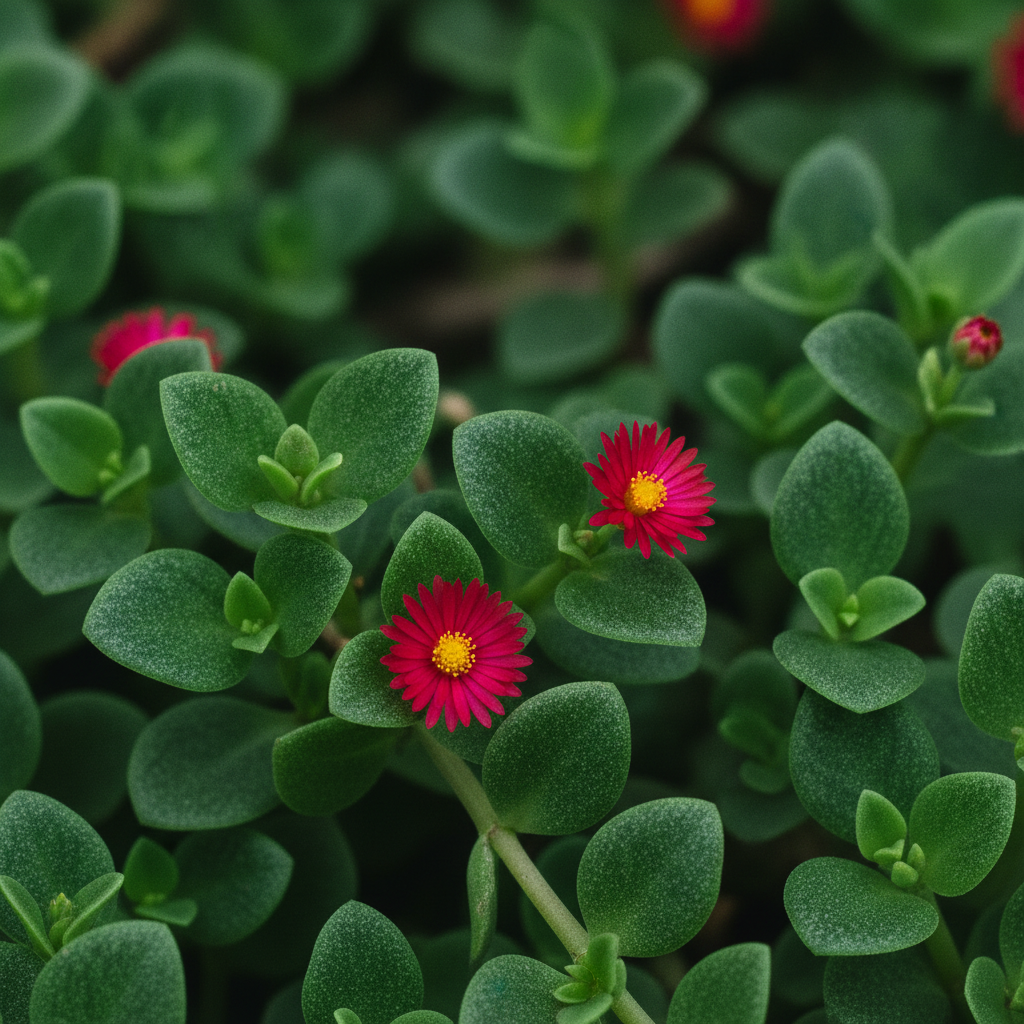
Red Apple
Red Apple is a vigorous hybrid grown for its deeper green, slightly larger foliage and its striking ruby-red flowers, a warmer, richer colour than the magenta of the species. It is a robust and fast-spreading plant, often used as a flowering groundcover in warm-climate gardens, and it brings the same easy-going temperament indoors. If you love the habit of the baby sun rose but want a bolder flower colour, this is the form to look for.
Frequently Asked Questions
Why won’t my baby sun rose flower?
The answer is nearly always light. The flowers are triggered by strong, direct sun and open only on bright days, so a plant that is healthy but not blooming almost certainly needs a sunnier position. Move it to your brightest south or west window, or grow it outdoors in full sun through the summer, and the flowers should follow. A feed slightly higher in phosphorus and potassium can help as a secondary nudge, but light does the heavy lifting.
Is the baby sun rose toxic to cats and dogs?
Aptenia cordifolia is not known to be toxic to pets, and its leaves are in fact eaten as a leaf vegetable in its native South Africa, which makes it a reassuring choice for homes with animals. As with any plant, it is still sensible to discourage pets from making a habit of chewing it, since even non-toxic greenery can cause a mild stomach upset if a lot is eaten.
Can I grow it outdoors?
Yes, and it thrives outdoors in warm weather, making an excellent flowering groundcover or trailing container plant for a sunny spot. The limit is cold: the baby sun rose is frost tender and will be damaged below about 5 °C (41 °F), so in temperate climates it is grown outdoors only through the frost-free months and brought inside, or taken as cuttings, before the first frost of autumn.
How often should I water it?
Water thoroughly and then wait until the soil has dried out almost completely before watering again, which in summer often works out to roughly once every seven to ten days and much less in winter. Rather than following a fixed schedule, check the soil with a finger and watch the leaves: firm, plump leaves mean the plant is well hydrated, while slightly soft leaves are your signal to water.
Why is my plant growing long and leggy?
Leggy, stretched growth with long gaps between the leaves is etiolation, a classic sign that the plant is not getting enough light and is reaching for a stronger source. Move it somewhere brighter and pinch back the straggly stems to encourage denser, bushier regrowth; the pieces you remove will root easily as cuttings, so nothing need be wasted.
Grown with plenty of sun, a gritty pot and a restrained hand on the watering can, the baby sun rose is about as rewarding as an indoor succulent gets: fast, forgiving, freely flowering and endlessly easy to share. Get those three fundamentals right and it will spill colour over the edge of its pot for years.






