
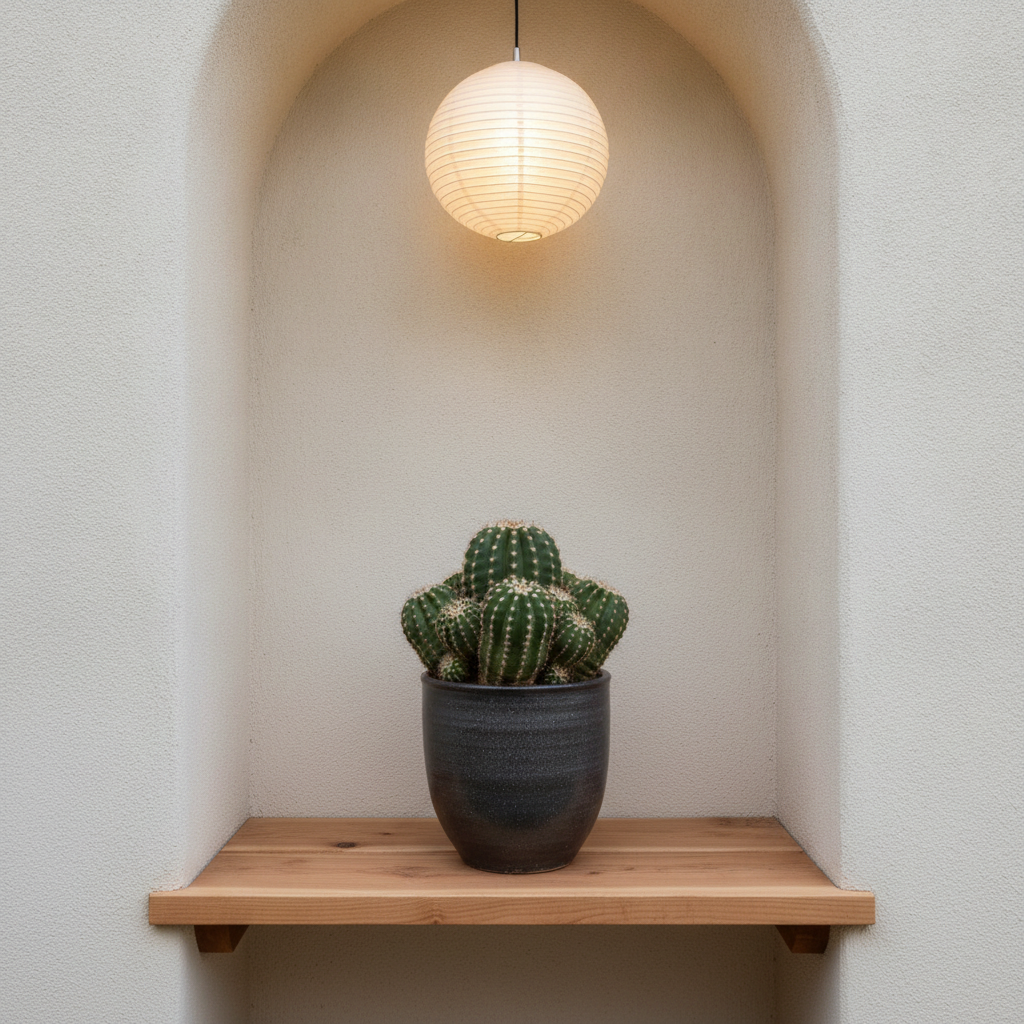
Few small cacti reward a windowsill grower as generously as the lace cactus, known botanically as Echinopsis eyriesii. For most of the year it sits as a modest, dark green globe ribbed like a tiny pumpkin and studded with neat clusters of short spines, but on a warm evening in late spring it can unfurl a single, pure white trumpet flower longer than the plant is tall, releasing a sweet nocturnal fragrance across an entire room. Native to the subtropical grasslands and rocky outcrops of southern Brazil, Uruguay and northern Argentina, this species has been passed hand to hand between gardeners for well over a century, which is why it also travels under names such as Easter lily cactus and sea urchin cactus.
The lace cactus has earned a reputation as one of the most forgiving flowering cacti you can keep indoors, and that reputation is deserved. It tolerates neglect, offsets freely into shareable clumps, and asks for very little beyond sun and sharp drainage. Yet there is a real difference between a plant that merely survives on a shelf and one that thrives and blooms year after year, and that difference comes down to a handful of specific habits around light, the soak-and-dry watering rhythm, and a genuine winter rest. This guide walks through every one of those factors in detail so you can move your lace cactus from surviving to reliably flowering.
Contents
- Quick Reference
- Why Lace Cactus Makes a Rewarding Houseplant
- Light Requirements
- Watering & Humidity
- Soil, Potting & Repotting
- Fertilising
- Propagation
- Pests & Diseases
- Popular Varieties
- Frequently Asked Questions
Quick Reference: Lace Cactus at a Glance
| Light | Bright light with several hours of direct sun; a south or west window indoors |
| Watering | Soak thoroughly, then let the mix dry out completely; keep almost dry in winter |
| Temperature | 18 to 27 degrees Celsius (64 to 81 Fahrenheit) in growth; a cool winter rest at 5 to 10 degrees Celsius (41 to 50 Fahrenheit) |
| Humidity | Low; ordinary dry room air is ideal, no misting required |
| Fertiliser | Low-nitrogen cactus feed monthly from spring to late summer only |
| Toxicity | Non-toxic to cats, dogs and people; the sharp spines are the only real hazard |
Why Lace Cactus Makes a Rewarding Houseplant
The appeal of Echinopsis eyriesii rests on a rare combination of toughness and drama. Structurally it is a compact plant, starting life as a rounded globe roughly the size of a golf ball and slowly becoming a short cylinder of 15 centimetres (6 inches) or so across many years, rarely outgrowing a small pot. That restraint makes it ideal for people with limited space, sunny sills and a tendency to forget the watering can. It stores water in its thick, ribbed body, so a missed week or even a missed month does no harm, and its dense clustering habit means a single plant gradually becomes a generous colony of offsets you can pot up or give away.
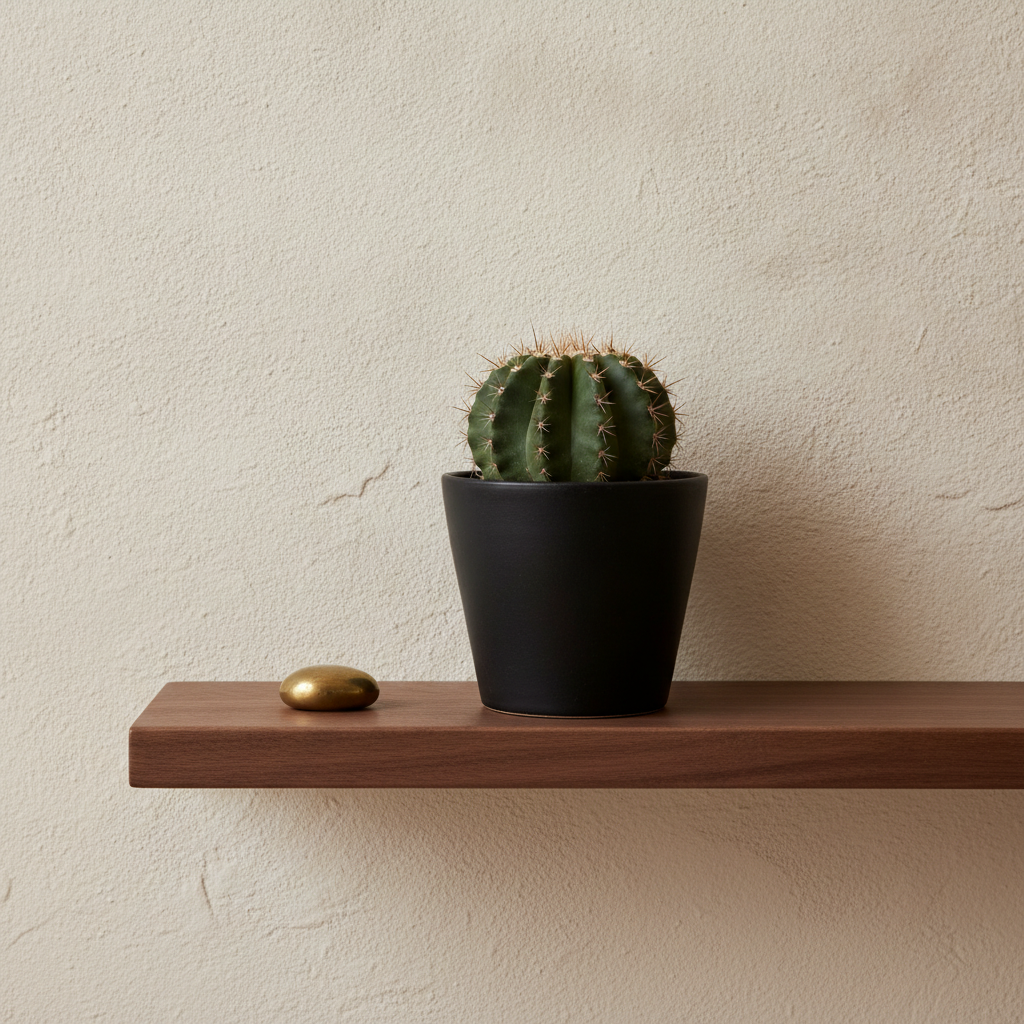
Then there is the flower, which is the reason most people fall for this species. Given the right cool, dry winter, a well-grown lace cactus produces enormous funnel-shaped blooms up to 20 to 25 centimetres (8 to 10 inches) long, borne on a slender woolly tube that emerges from the side of the body. The flowers are usually pure white with a faint green or pink flush outside, they open in the evening, and they carry a heady sweet perfume that is designed to attract night-flying moths. Each bloom lasts only a day or two, but a happy plant can throw several across late spring and early summer, turning an unassuming green globe into the centrepiece of the room. Because the plant is small and slow, it also makes an excellent long-term companion, quite capable of outliving the shelf it sits on.
Important – Toxicity: The lace cactus is not toxic to cats, dogs or humans, and it is not among the plants flagged as poisonous by the ASPCA. The genuine risk is physical rather than chemical: the clustered spines are sharp enough to lodge in skin and paws, so site the plant out of reach of curious pets and children and handle it with folded newspaper or thick gloves.
Light Requirements
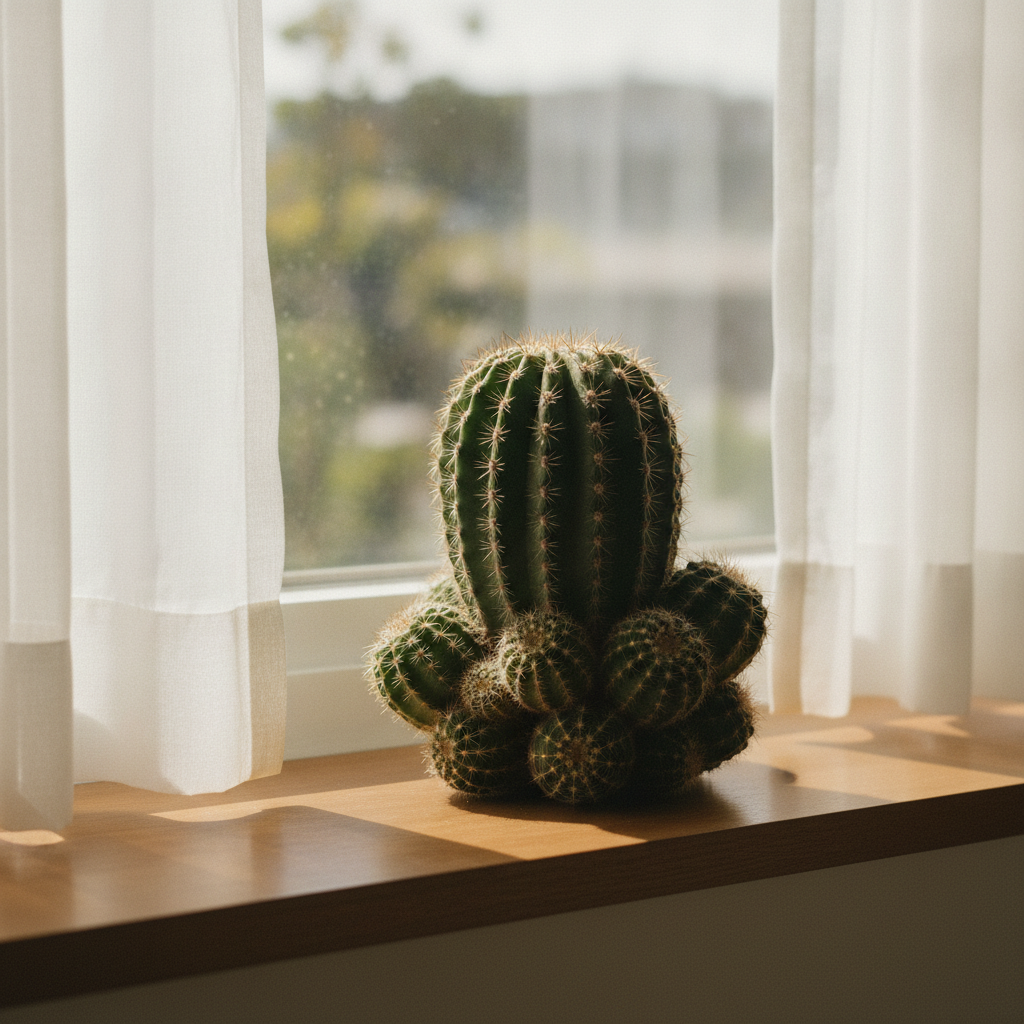
Light is the single most important factor separating a lace cactus that flowers from one that simply persists. In its native range this species grows fully exposed on open grassland and rock, soaking up intense subtropical sun for most of the day, and it carries that appetite for brightness indoors. As a general rule it wants the sunniest position you can offer, with a minimum of four to six hours of direct sun to build the strength it needs to bloom.
That said, glass concentrates heat, and a plant that has spent a dim winter indoors can scorch if it is suddenly thrust against hot summer glass. The ideal is bright, direct light that the plant has been eased into gradually, giving it firm, deep green growth and a compact shape rather than the pale, stretched, leaning column that signals a cactus reaching desperately toward a distant window.
Light Levels Explained
Understanding how growers categorise indoor light helps you place this plant with confidence. The values below are approximate but give a useful sense of where a lace cactus sits on the spectrum, which is firmly at the bright end.
| Light Category | Approx. Level | Typical Location | Outcome |
|---|---|---|---|
| Direct sun | Over 50,000 lux | On a south or west sill against the glass | Ideal; compact growth and flowering |
| Bright indirect | 10,000 to 25,000 lux | Just back from a sunny window | Acceptable; steady growth, blooms less reliably |
| Medium | 5,000 to 10,000 lux | An east window or a bright room interior | Survives but stretches; flowering unlikely |
| Low | 1,000 to 5,000 lux | A north window or a dim corner | Poor; etiolation and slow decline |
| Very low | Under 1,000 lux | Interior wall away from windows | Unsuitable; the plant will fail over time |
Window Orientation and Placement
South-facing window: In the northern hemisphere this is the prime position for a lace cactus, delivering the long hours of strong light it craves. Sit the pot right against the glass and, in the fiercest weeks of summer, a very thin voile can take the edge off midday heat without meaningfully reducing brightness.
East-facing window: A workable second choice. Morning sun is gentler and less likely to scorch, but the shorter dose of direct light often means slower growth and fewer flowers than a southern exposure.
West-facing window: Nearly as good as south, offering strong afternoon sun. The main caution is that west light arrives when the day is already hot, so watch for any pale bleaching on the sun-facing flank and pull the plant back slightly if you see it.
North-facing window: Generally too dim to keep this species in good order. A lace cactus on a north sill will slowly etiolate, growing a narrow, pale, leaning tip, and it is very unlikely to flower. If a north window is your only option, plan to supplement with a grow light.
Pro Tip – Rotate for Symmetry: A cactus grows toward its light source, so a plant left in one position will lean and develop a lopsided body over time. Give the pot a quarter turn every week or two to keep the globe growing evenly and upright. Stop rotating once flower buds appear, because moving a budding cactus can cause it to abort the buds.
How Light Affects Flowering and Form
Beyond keeping the body firm and green, ample light directly governs whether the plant blooms. Flower buds form on well-fed, sun-hardened tissue, so a season of strong summer light builds the reserves the plant draws on to flower the following spring. Insufficient light shows first as etiolation, a thin, pale, elongated new growth at the crown that never fully firms up, and such stretched growth almost never produces flowers. If you notice the top of your cactus narrowing and paling, treat it as an early warning to increase light rather than a cosmetic quirk.
Warning – Direct Sunlight: Although this species loves sun, a plant moved abruptly from low winter light into blazing summer glass can suffer sunscald, which appears as a permanent bleached or corky yellow-brown patch on the exposed side. Scald cannot be reversed. Acclimatise the plant over two to three weeks each spring, increasing its sun exposure gradually rather than all at once.
Artificial Lighting
Where natural light falls short, a full-spectrum LED grow light is an effective substitute and can be the difference between a stretched plant and a compact, flowering one. Position the light 20 to 30 centimetres (8 to 12 inches) above the crown and run it for 10 to 12 hours a day during the growing season. Because cacti demand high light intensity, a general low-output plant bulb rarely suffices; choose a dedicated grow light with a meaningful output. To preserve the seasonal cues that trigger blooming, reduce the daily hours and intensity through winter rather than keeping the light on a constant summer schedule.
Seasonal Adjustments
Light management is not static across the year. Through spring and summer, give the plant everything it can take, easing it into the strongest position as the sun intensifies. In autumn, as day length shortens, the plant naturally slows, and this is the moment to begin the cool, dry, bright winter rest that primes it for flowering. Keep it in good light through winter even as you withhold water, because a dark dormancy produces a weak, unproductive plant, whereas a bright but cold and dry rest sets the stage for a spectacular spring.
Watering & Humidity
Watering is where most lace cactus problems begin and end. This is a plant built to endure drought and to resent standing moisture, so the guiding principle is simple: water generously but infrequently, and never let the roots sit in wet mix. Get the rhythm right and the plant is close to indestructible; get it wrong and root rot can claim it within weeks.
When to Water
The soak-and-dry method is the whole game. During the active growing months of spring and summer, water thoroughly and then wait until the potting mix has dried out completely before watering again. In a warm, sunny spot this often works out to roughly once every one to two weeks, but calendars lie and pots vary, so judge by the mix rather than the date. Push a finger or a wooden skewer to the bottom of the pot; if it comes out clean and dry, it is time to water, and if any damp mix clings to it, wait longer.
Winter is entirely different and is the key to flowering. From late autumn until early spring, move the plant somewhere cool and bright and cut water back drastically, giving only a small drink every four to six weeks, or in a genuinely cold rest, none at all. This dry, cool dormancy signals the plant to set flower buds. Resume normal watering gradually in spring as new growth and buds appear, and the reward is often a flush of those enormous white trumpets.
Pro Tip – The Dry Winter Trigger: If your lace cactus grows well but never flowers, an overly warm and moist winter is the usual culprit. Give it a distinct cool spell at 5 to 10 degrees Celsius (41 to 50 Fahrenheit) with almost no water from November to February, and you dramatically improve your odds of blooms the following spring.
How to Water Correctly
- Wait until the potting mix is bone dry all the way through before you begin.
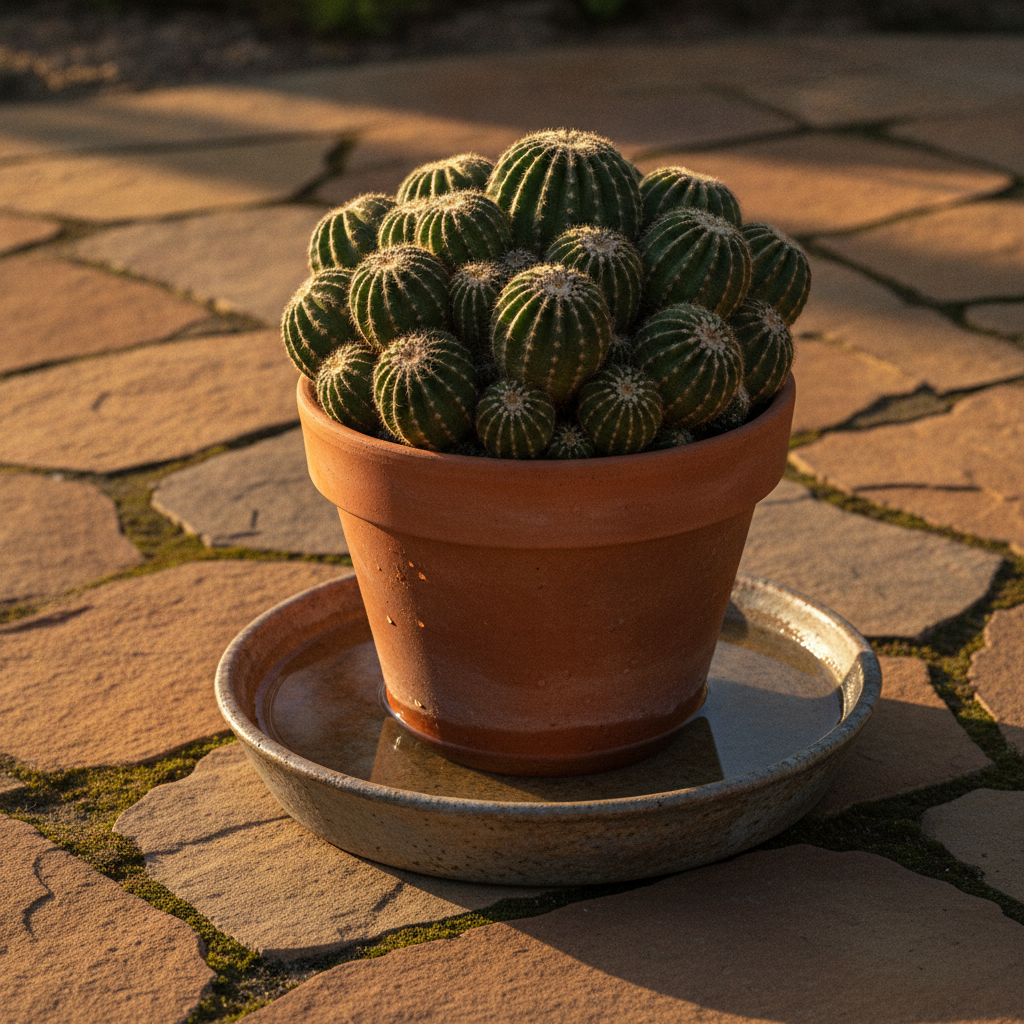
- Water at the soil level, either from the top or by standing the pot in a dish of water, and avoid pooling water in the ribbed crown where it can cause rot.
- If watering from the top, add water slowly until it runs freely from the drainage holes, which ensures the whole root ball is moistened.
- If bottom watering, leave the pot in the dish for 15 to 30 minutes until the surface of the mix feels damp, then lift it out.
- Let the pot drain completely and never leave it standing in a saucer of water.
- Empty the saucer or cache pot and do not water again until the mix has dried out entirely.
Signs of Overwatering vs. Underwatering
| Symptom | Overwatering | Underwatering |
|---|---|---|
| Body colour | Yellowing, then translucent or brown patches | Dull greyish-green, loss of vivid colour |
| Body texture | Soft, mushy, sunken areas, especially at the base | Shrunken, wrinkled ribs that look deflated |
| Soil | Stays wet for many days, may smell sour | Bone dry, pulling away from the pot edge |
| Roots | Blackened, slimy, foul-smelling | Dry and papery but generally intact |
| Base of stem | Brown, collapsing, rotting from the soil up | Firm but the whole body feels light and shrivelled |
The reassuring news is that an underwatered lace cactus recovers quickly. A wrinkled, thirsty plant plumps back up within a day or two of a thorough soak. An overwatered one is far harder to save, which is why erring on the dry side is always the safer mistake with this species.
Warning – Root Rot: Soft, brown, mushy tissue at the base is the signature of root rot and it spreads fast. If you catch it early, unpot the plant immediately, cut away all blackened roots and rotten tissue with a sterilised blade back to firm green flesh, let the cut surfaces callus in the air for several days, and replant in fresh dry mix. Do not water for at least a week afterward.
Humidity Requirements
Unlike the tropical foliage plants that share our shelves, the lace cactus wants nothing to do with high humidity. It is adapted to dry, open air and thrives in the ordinary low-humidity conditions of a centrally heated home. Average indoor humidity of 30 to 50 percent is perfectly comfortable, and the plant is untroubled by the dry air that stresses ferns and calatheas.
Problems associated with humidity for this cactus almost always come from too much moisture rather than too little. Stagnant, damp, poorly ventilated air encourages fungal rot on the body, particularly if water lingers in the ribs, so good airflow matters more than any humidity target.
For that reason you should never mist a lace cactus. Misting does nothing useful for a desert plant and simply leaves droplets sitting in the crevices between ribs where they invite fungal spotting. If anything, aim to keep the plant in a bright, airy spot with gentle air movement, which helps the surface dry quickly after watering.
Water Quality
Lace cactus is not fussy about water quality and ordinary tap water is fine in most areas. In regions with very hard water, mineral salts can build up over time and leave chalky deposits on the soil surface or the base of the body. If you notice this, switch to rainwater or filtered water periodically, and flush the pot thoroughly now and then by watering generously and letting it drain fully to wash accumulated salts out through the drainage holes.
Soil, Potting & Repotting
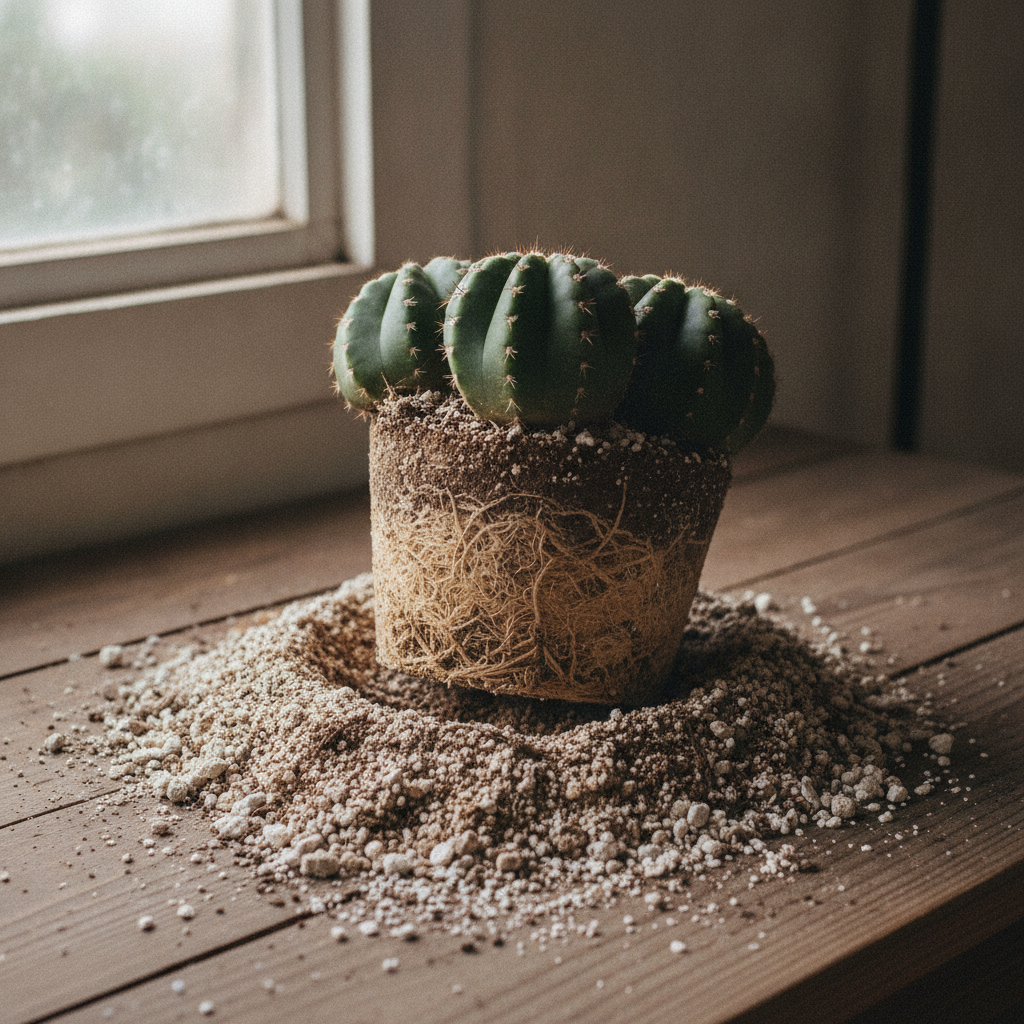
If watering rhythm is the first pillar of lace cactus care, the growing medium is the second, and the two work together. Even a careful waterer will lose a cactus planted in dense, moisture-retentive potting soil, because the roots simply cannot dry out fast enough. The goal is a gritty, fast-draining mix that holds just enough moisture to feed the plant and then sheds the rest.
Ideal Soil Composition
A good lace cactus mix is roughly half mineral grit and half organic matter, which gives sharp drainage while retaining a little nutrition. You can buy a commercial cactus and succulent compost and improve it by cutting in extra grit, or blend your own from the components below. The exact proportions are forgiving, so long as the finished mix drains freely and never stays soggy.
| Component | Proportion | Function |
|---|---|---|
| Cactus or general potting compost | 40 to 50 percent | Holds moisture and nutrients, gives the roots something to grip |
| Coarse grit or pumice | 25 to 30 percent | Creates air gaps and speeds drainage |
| Perlite | 20 to 25 percent | Lightens the mix and prevents compaction |
| Coarse sand (horticultural) | up to 10 percent | Adds weight and mineral texture; never use fine builder’s sand |
The lace cactus prefers a slightly acidic to neutral pH in the range of about 6.0 to 7.0, which most standard cactus and potting composts already provide, so pH is rarely something you need to adjust deliberately. Far more important is the physical structure of the mix and its ability to drain.
Pro Tip – Quick Mix Recipe: For a reliable, no-fuss blend, combine two parts of a shop-bought cactus compost with one part perlite and one part coarse grit or pumice. When you squeeze a handful of the moistened mix it should crumble apart rather than hold together in a ball, which tells you it will drain the way a cactus needs.
Choosing the Right Pot
Pot choice has a real influence on how easy this plant is to keep alive, because it affects both drainage and how quickly the mix dries.
Drainage holes are non-negotiable. Never plant a lace cactus in a container without drainage. A decorative pot with no hole traps water at the base and guarantees rot no matter how carefully you water, so if you love a particular cache pot, keep the cactus in a plain plastic or terracotta nursery pot and simply drop it inside.
Pot material: Unglazed terracotta is the classic and arguably the best choice for this plant, because its porous walls wick moisture out of the mix and let it dry faster, which suits a rot-prone cactus perfectly. Glazed ceramic and plastic hold moisture longer, so if you use them, lean even further toward a gritty mix and cautious watering.
Pot size: Choose a pot only slightly larger than the plant itself. A cactus swimming in a large pot sits surrounded by a mass of wet, unused mix that dries slowly and courts rot. A snug container that the roots quickly fill dries out at a healthy pace and keeps the plant happier.
When to Repot
Lace cactus is slow-growing and dislikes disturbance, so it needs repotting only every three to four years, or when the clump of offsets has genuinely filled the pot and is pushing at the rim. The best time is spring, at the start of the growing season, when the plant can recover quickly. Always repot into dry mix and wait about a week before the first watering, which gives any roots damaged in the move time to callus rather than rot.
How to Repot: Step-by-Step
- Let the plant dry out for several days first, as a dry root ball is easier to handle and less prone to damage.
- Protect your hands with folded newspaper wrapped around the body, or thick leather gloves, to avoid the spines.
- Gently ease the plant from its pot, supporting the base rather than pulling on the body.
- Crumble away the old mix from the roots and inspect them, trimming any that are dead, black or mushy with a sterilised blade.
- Settle the plant into fresh dry mix in a pot only a size larger, at the same depth it sat before, and firm the mix gently around the roots.
- Top the surface with a layer of grit if you like, which keeps the base dry and looks tidy.
- Wait about a week before watering to let the roots recover, then resume the normal soak-and-dry routine.
Warning – Transplant Shock: Watering immediately after repotting is the most common way to kill a freshly moved cactus. Any small tears in the roots become entry points for rot when they meet wet soil, so the mandatory dry week afterward is not optional. Resist the urge to water in your newly potted plant.
Fertilising
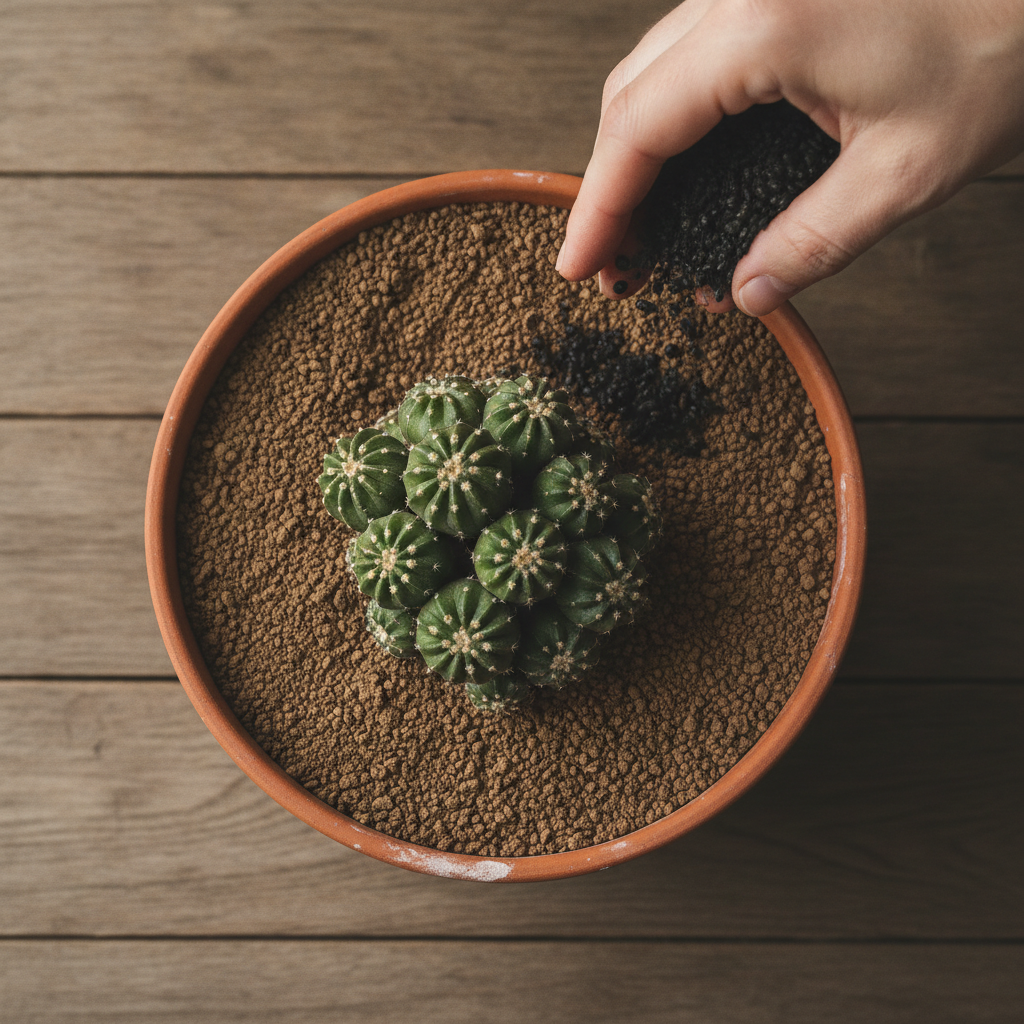
A lace cactus is not a heavy feeder, but a light, well-timed feeding routine in the growing season noticeably improves growth and flowering. In the wild it draws modest nutrition from lean mineral soils, so the aim indoors is to supplement gently rather than to force lush growth, which in a cactus tends to be soft and prone to problems.
The two rules that matter most are to feed only during active growth and to favour a formula that is not high in nitrogen. Too much nitrogen produces weak, bloated tissue and discourages flowering, whereas a balanced or phosphorus-leaning feed supports firm growth and buds.
Understanding Plant Nutrients
Fertiliser labels carry three headline numbers, the NPK ratio, standing for nitrogen, phosphorus and potassium. For a flowering cactus, a formula where the first number is relatively low and the middle and last numbers are equal or higher tends to give the best results. The table below outlines the main nutrients and the symptoms that appear when they run short.
| Nutrient | Symbol | Primary Function | Deficiency Symptoms |
|---|---|---|---|
| Nitrogen | N | Green growth and body tissue | Slow growth, overall paling |
| Phosphorus | P | Root development and flowering | Poor rooting, few or no flowers |
| Potassium | K | Overall vigour and disease resistance | Weak growth, greater susceptibility to rot |
| Calcium | Ca | Cell wall strength | Soft, distorted new growth |
| Magnesium | Mg | Core of the chlorophyll molecule | Yellowing on older tissue |
| Iron | Fe | Chlorophyll production | Yellowing on newest growth |
Types of Fertiliser
Liquid fertilisers: A dilute liquid cactus feed is the easiest and most controllable option. Diluted to half the recommended strength and applied with your normal watering during the growing season, it delivers nutrients evenly and is simple to stop the moment autumn arrives.
Slow-release granular: A small dose of slow-release granules worked into the mix in spring feeds gradually over several months. It is convenient but gives you less control over timing, so use a light hand and choose a low-nitrogen formula.
Organic fertilisers: Gentle organic options such as worm castings top-dressed onto the soil, or a very dilute seaweed feed, release nutrients slowly and carry little risk of burning the roots. They suit the modest appetite of a cactus well.
Feeding Schedule
Feed once a month from spring through to late summer, and then stop entirely. As the plant enters its autumn and winter rest it uses almost no nutrients, and feeding a dormant cactus simply leaves unused salts in the mix. A plant fed lightly across four or five months of active growth has everything it needs to build a strong body and set flowers.
Pro Tip – Half Strength Always: Cacti are easily overfed, and excess fertiliser does more harm than too little. Mixing any feed to half or even a quarter of the label rate protects the roots from salt burn while still supplying plenty for this frugal plant.
How to Fertilise
- Make sure the plant is in active growth, which for this species means spring through late summer.
- Water the plant lightly first if the mix is completely dry, as feeding bone-dry roots can scorch them.
- Dilute a liquid cactus feed to half the recommended strength.
- Apply it in place of a normal watering, letting it drain freely from the holes.
- Stop all feeding from early autumn onward and do not resume until the following spring.
Warning – Salt Build-Up: Over time, fertiliser salts can accumulate in the mix and appear as a white crust on the soil or pot, eventually damaging the roots. Flush the pot two or three times a year by watering thoroughly with plain water and letting it drain fully, which carries the excess salts away.
Propagation
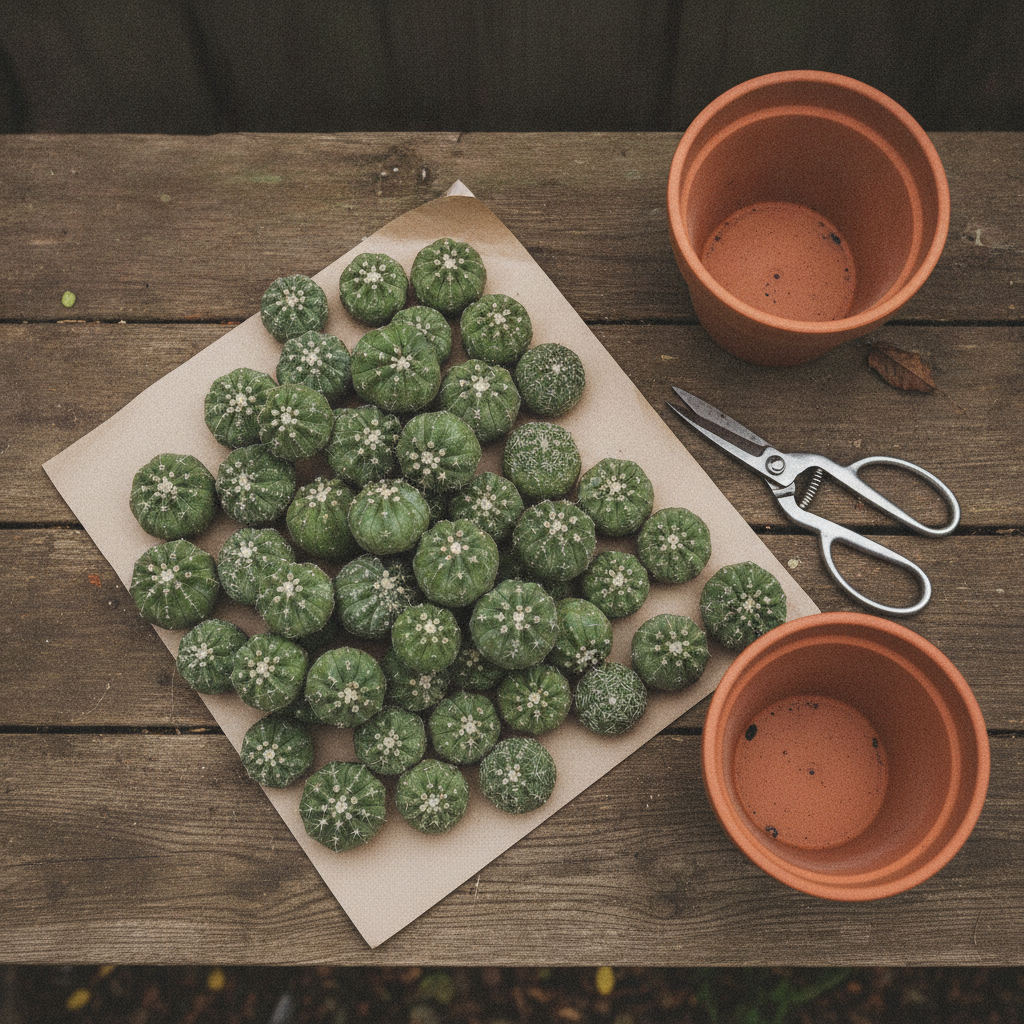
One of the great pleasures of the lace cactus is how readily it multiplies. Unlike many cacti that are slow and reluctant to reproduce, Echinopsis eyriesii throws out offsets, known as pups, prolifically around its base, and each one is a ready-made new plant. This makes it an ideal cactus for beginners taking their first steps into propagation and a generous plant to share with friends.
The two practical routes are dividing off those pups, which is quick and almost foolproof, and growing from seed, which is slower and more of a patience project but rewarding for those who want to raise plants from scratch. For most people, offset division is the method of choice.
Understanding Offsets
An offset is a small clone that the parent plant produces at its base, complete with the genetics of the parent and often with its own beginnings of roots. Because each pup is a fully formed miniature plant rather than a cutting, it establishes far faster and more reliably than a leaf or stem fragment would. Offsets that already show a few roots can be potted straight away, while those pulled clean without roots simply need a short drying period first.
Division of Offsets: Step-by-Step
This is the fastest and most dependable way to make new lace cacti, best done in spring or early summer when the plants are growing actively.
- Choose a healthy, well-developed offset, ideally one that has already formed a few of its own roots at the base.
- Protecting your fingers, gently twist or wiggle the pup away from the parent, or slice it off cleanly at the join with a sterilised knife.
- Set the offset aside in a dry, shaded spot for two to five days so the cut surface can callus over.
- Fill a small pot with dry, gritty cactus mix and settle the base of the pup onto the surface, holding it upright with a little grit if needed.
- Wait about a week, then begin watering very sparingly, keeping the mix only barely moist until roots take hold.
- Once you see firm new growth, switch to the normal soak-and-dry routine.
Pro Tip – Let It Callus: The single most important step is the drying period. Potting a fresh, wet-cut offset straight into damp mix is the surest way to rot it. Giving the cut a few days to form a dry, sealed callus first is what turns a fragile pup into a plant that roots without trouble.
Growing from Seed: Step-by-Step
Seed is the slow route, taking years to produce a flowering-size plant, but it is the only way to raise large batches or new hybrids and it is deeply satisfying.
- Sow fresh seed thinly on the surface of a moist, sterile, gritty seed mix, without burying it, as light aids germination.
- Cover the container with a clear lid or bag to hold humidity and place it somewhere warm and bright but out of harsh direct sun.
- Keep the surface lightly moist and maintain warmth of around 20 to 25 degrees Celsius (68 to 77 Fahrenheit) until tiny green globes appear over the following weeks.
- Once the seedlings are established, gradually ventilate and reduce moisture to harden them off.
- Prick out and pot on the small plants once they are large enough to handle safely, then grow them on with the usual cactus care.
Troubleshooting Propagation
| Problem | Likely Cause | Solution |
|---|---|---|
| Offset rots before rooting | Potted without callusing, or mix kept too wet | Allow a longer dry callus period and keep the mix barely moist |
| Pup shrivels and fails to root | Too dry or too little warmth | Provide gentle warmth and a very light misting of the mix, not the plant |
| No roots after many weeks | Propagating in the cold dormant season | Wait for spring warmth, which spurs faster rooting |
| Seed fails to germinate | Old seed or insufficient warmth and light | Use fresh seed and provide steady warmth with surface light |
Pests & Diseases
A healthy lace cactus grown in good light with careful watering is remarkably trouble-free, and most problems that do arise are cultural rather than infectious, tracing back to overwatering more often than to any invading organism. Still, a few sap-sucking pests target cacti indoors, and a handful of moisture-related diseases can take hold, so it pays to know what to look for.
Regular inspection is your best defence. Because the plant is small and stationary, a quick look over the body and around the base every week or two catches almost any issue while it is still minor and easily dealt with.

Common Pests
Mealybugs (Pseudococcus species)
The most frequent pest of indoor cacti, mealybugs appear as small, soft, white cottony blobs tucked into the ribs, around the areoles and at the base of the spine clusters. They suck sap and slowly weaken the plant, and their waxy coating makes them hard to wet with sprays.
Treatment: Dab each insect directly with a cotton bud dipped in isopropyl alcohol, which dissolves their protective coat on contact. For a wider infestation, follow up with an insecticidal soap or a systemic insecticide, and check the roots too, as a related root mealybug can lurk in the mix.
Spider Mites (Tetranychus urticae)
Thriving in hot, dry conditions, spider mites are almost too small to see, but they leave fine pale stippling or a rusty, bronzed cast on the sun-facing side of the body, and in bad cases a delicate webbing across the crown. They can disfigure a cactus surprisingly fast.
Treatment: Rinse the plant with a gentle stream of water to knock populations back, then treat with a miticide or insecticidal soap. Improving airflow and avoiding a bone-dry, stagnant hot spot discourages their return.
Scale Insects (Coccoidea)
Scale shows up as small, hard, brown or tan bumps stuck fast to the body, often along the ribs. Each is a sap-sucking insect under a protective shell, and because they are immobile they are easy to overlook until they cluster.
Treatment: Scrape or lift them off gently with a fingernail or an alcohol-dipped cotton bud, then treat persistent cases with a systemic insecticide, which the plant takes up and delivers to the feeding insects.
Fungus Gnats (Bradysia species)
Small black flies drifting around the pot signal fungus gnats, whose larvae live in persistently damp soil. They are more a symptom than a serious threat, and their presence usually means the mix is being kept too wet for a cactus.
Treatment: Let the mix dry out fully, which alone breaks their breeding cycle, and use yellow sticky traps to catch the adults. A grittier surface layer that dries quickly discourages them from laying.
Common Diseases
Root and Basal Rot (Fusarium and Phytophthora)
By far the most serious threat to a lace cactus, rot begins in overly wet soil and works up from the roots into the base of the body, which turns soft, brown and mushy. Left unchecked it destroys the plant from the inside.
Treatment: Act at the first sign. Unpot the plant, cut away all affected tissue back to firm, healthy green with a sterilised blade, let the wounds callus in the air for several days, and replant in fresh dry mix. Correct the watering and drainage that caused it, or the problem returns.
Fungal Spotting (various fungi)
Corky or discoloured spots and blotches on the body can result from fungal infection, usually where water has sat in the ribs or where damp, stagnant air lingers around the plant. The marks are often permanent even once the infection is halted.
Treatment: Improve ventilation, avoid wetting the body when watering, and keep the plant drier and airier. A copper-based fungicide can help arrest active spread, though it will not erase existing scars.
Pest and Disease Summary
| Pest / Disease | Identification | Treatment |
|---|---|---|
| Mealybugs | White cottony clumps in ribs and areoles | Alcohol dab, insecticidal soap, systemic if severe |
| Spider mites | Fine stippling, bronzing, faint webbing | Rinse, then miticide or insecticidal soap |
| Scale | Hard brown bumps fixed to the body | Scrape off, then systemic insecticide |
| Fungus gnats | Small black flies around wet soil | Dry the mix out, yellow sticky traps |
| Root and basal rot | Soft, brown, mushy base | Cut back to firm tissue, callus, repot dry |
| Fungal spotting | Corky or discoloured blotches | Improve airflow, keep dry, copper fungicide |
Prevention Strategies
Prevention with this plant is overwhelmingly about getting the basics right, because a lace cactus grown correctly is naturally resistant to most trouble. Sharp drainage, restrained watering, strong light and good airflow together head off the great majority of both pests and diseases before they can establish.
Quarantine any new cactus for a few weeks before it joins your others, since new arrivals are the commonest way pests enter a collection. Inspect regularly, keep the growing area clean and free of fallen debris, and resist the temptation to overwater, which is the root of most problems this species faces.
Pro Tip – Isopropyl on Hand: Keep a small bottle of isopropyl alcohol and a pack of cotton buds near your plants. Spotting a single mealybug and dabbing it on the spot is far easier than tackling a full infestation later, and this one habit prevents most serious pest outbreaks on cacti.
Popular Varieties
The lace cactus belongs to the genus Echinopsis, a group of South American cacti prized for exactly the kind of huge, showy flowers that make this species famous. Echinopsis eyriesii itself is the classic garden form, but it sits within a rich family of close relatives and cultivated hybrids, many of which share its easy nature while offering flowers in a broader range of colours.
Because Echinopsis species interbreed freely, generations of growers have raised hybrids that combine the toughness of plants like the lace cactus with dramatic new flower colours, and these are well worth seeking out once you have fallen for the species. The table and profiles below cover the forms you are most likely to encounter.
| Variety | Leaf Appearance | Light Needs | Growth Rate | Availability |
|---|---|---|---|---|
| Echinopsis eyriesii (species) | Dark green ribbed globe, short spines, white night flowers | Bright, direct sun | Slow | Common |
| Paramount Hybrids | Green ribbed body, large day-lasting flowers in many colours | Bright, direct sun | Slow to moderate | Widely available |
| Echinopsis oxygona | Larger clustering globe, pink to lilac trumpet flowers | Bright, direct sun | Slow | Common |
| Echinopsis subdenudata | Near-spineless green body, white flowers, the domino cactus | Bright, direct sun | Slow | Common |
| Echinopsis ‘Flying Saucer’ | Very large flat-faced flowers, often bicoloured | Bright, direct sun | Moderate | Specialist |
| Echinopsis ‘Los Angeles’ | Vivid deep pink to red flowers | Bright, direct sun | Moderate | Specialist |
Featured Varieties
Echinopsis eyriesii, Species Form
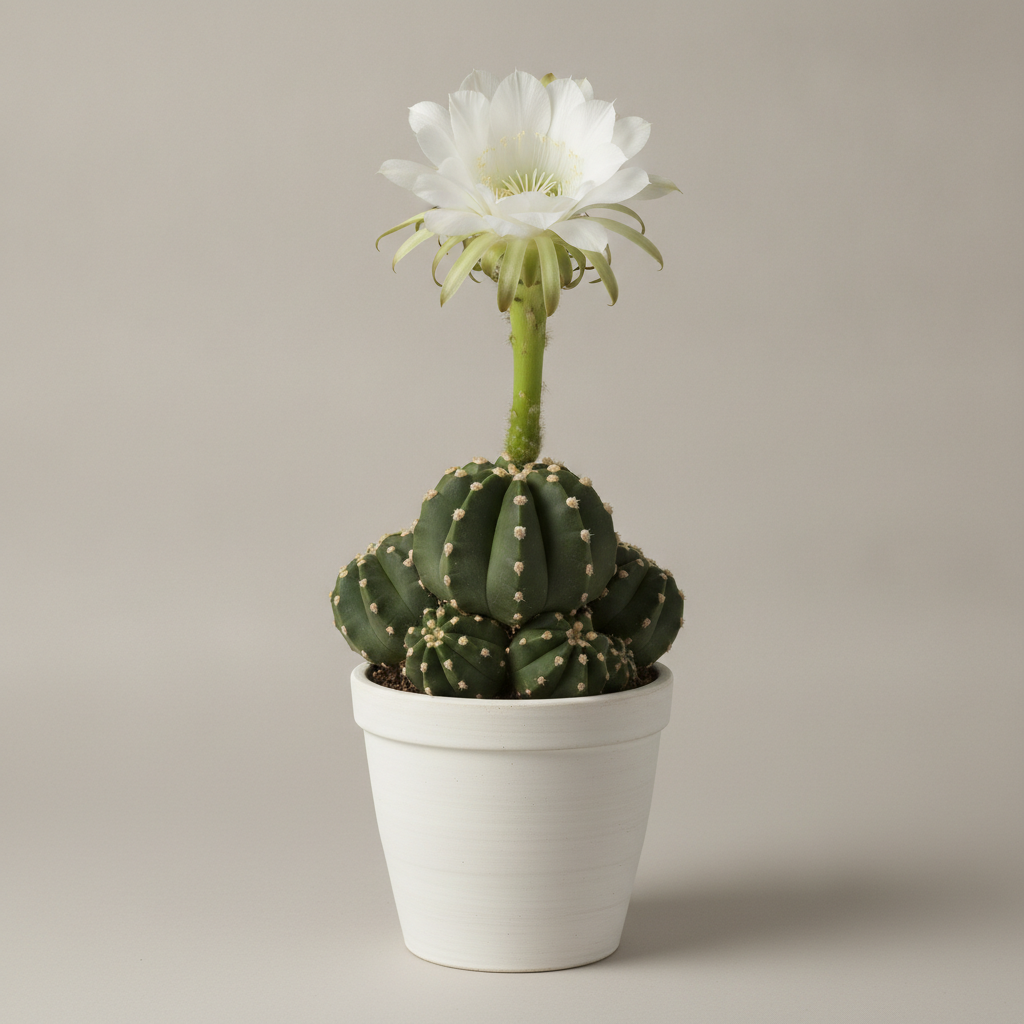
The original lace cactus, a dark green clustering globe with neat short spines that opens enormous, fragrant, pure white trumpet flowers on long tubes in the evenings of late spring. Tough, generous with offsets and utterly reliable, it is the benchmark against which the hybrids are measured.
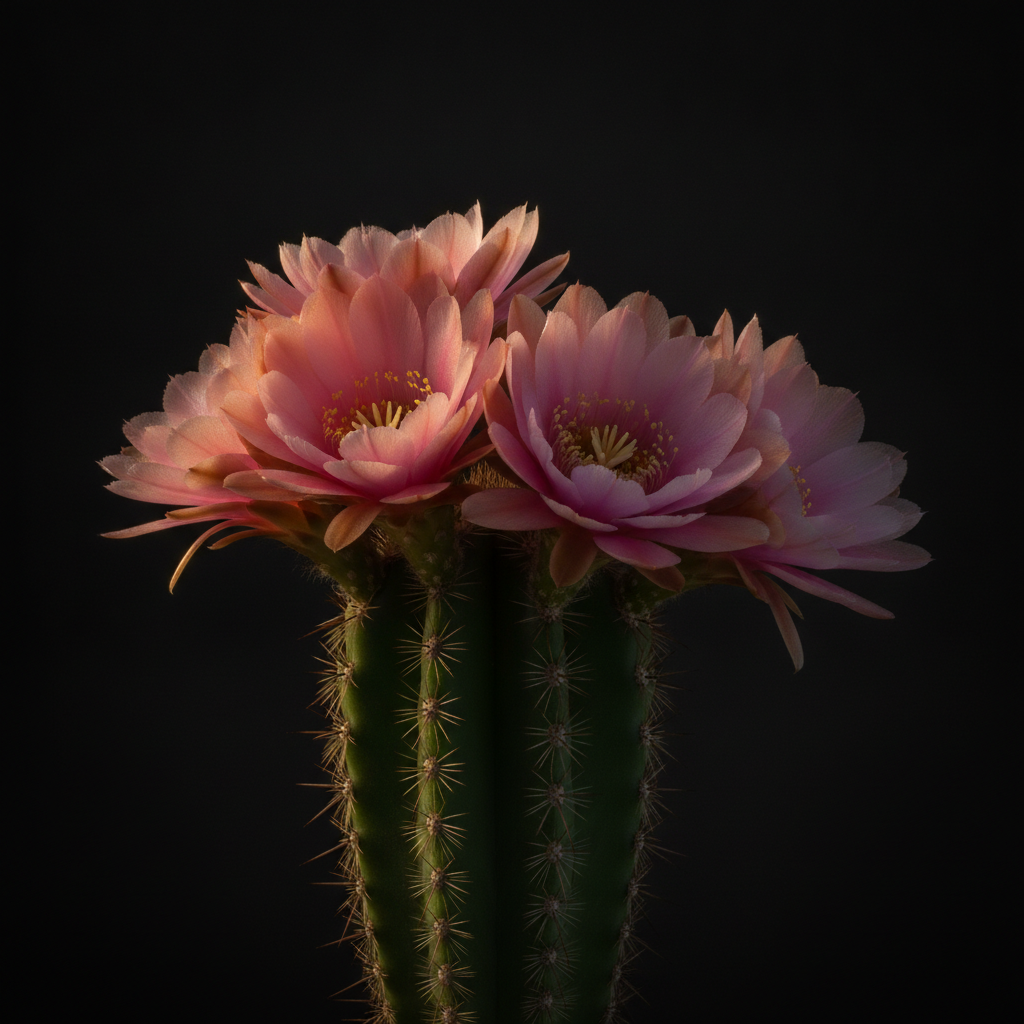
Paramount Hybrids
Bred in large part from Echinopsis eyriesii and its relatives, the Paramount hybrids keep the sturdy, easy-going body of the species but trade the white nocturnal bloom for spectacular large flowers that last through the day in shades of pink, rose, orange, red and lavender. They are the natural next step for anyone hooked on the species.
Variety Profiles in Detail
Domino Cactus (Echinopsis subdenudata)
A close relative often sold alongside the lace cactus, the domino cactus is a smooth, almost spineless green globe dotted with tiny white areoles, giving it a clean, sculptural look. It shares the same care and produces similar large white nocturnal flowers, making it an easy companion plant.
Easter Lily Cactus (Echinopsis oxygona)
Sometimes confused with eyriesii and sharing the Easter lily name, this species forms larger clustering mounds and tends toward pink or lilac flowers rather than white. It is just as forgiving and equally happy on a sunny sill.
Choosing the Right Variety for Your Space
All of these plants want the same thing, a bright, sunny position and sharp drainage, so your choice comes down to flowers and habit rather than care. If you love the romance of a giant white bloom that opens at dusk and perfumes the room, the species lace cactus is the one to grow. If you would rather enjoy your flowers by daylight and in colour, reach for a Paramount hybrid or one of the named cultivars. For a smaller, tidier plant with a modern look, the near-spineless domino cactus is hard to beat. Whichever you choose, the growing routine set out in this guide applies equally well.
Frequently Asked Questions
Why won’t my lace cactus flower?
The two usual reasons are too little light and the absence of a proper winter rest. To flower, this cactus needs a season of strong direct sun followed by a cool, dry, bright dormancy at 5 to 10 degrees Celsius (41 to 50 Fahrenheit) with almost no water from late autumn to early spring. A plant kept warm and watered all winter rarely blooms, however healthy it looks.
How often should I water a lace cactus?
Water only when the mix has dried out completely, which in a warm, sunny spot usually means roughly every one to two weeks in spring and summer. In winter, cut back drastically to a small drink every four to six weeks or none at all. Always judge by the dryness of the mix rather than by a fixed schedule.
Is the lace cactus toxic to cats and dogs?
No, Echinopsis eyriesii is not chemically toxic to cats, dogs or people. The only hazard is mechanical, as the sharp spines can injure paws, mouths and skin, so it is still wise to keep the plant out of reach of pets and children.
How big does a lace cactus get?
It stays small. An individual body reaches around 15 centimetres (6 inches) across and a similar height over many years, though the plant clusters freely, so an old specimen forms a wider mound of offsets. Its slow growth and compact size are part of why it suits windowsills so well.
How long do the flowers last?
Each individual flower is short-lived, opening in the evening and lasting only a day or two before fading. A well-rested plant, however, can produce several blooms in succession across late spring and early summer, so the overall flowering display extends well beyond any single flower.
Why is my cactus growing tall and thin?
Thin, pale, elongated growth at the top is etiolation, and it means the plant is not getting enough light. Move it to the brightest, sunniest position you can offer, or add a grow light. The stretched growth will not revert, but new growth in better light will return to the plant’s proper compact form.
Can I grow a lace cactus outdoors?
In warm, frost-free climates it grows happily outdoors in a sunny, sharply drained spot, and even in cooler regions it enjoys a summer holiday outside. It tolerates a little cold if kept bone dry, but it should be brought in or protected before hard frost, as a wet, freezing root ball is fatal.
My lace cactus is wrinkled and shrivelled. What’s wrong?
Wrinkling usually signals thirst, especially if the mix is bone dry, and a good soak will plump the plant up within a day or two. If the mix is wet yet the plant still looks shrunken and the base feels soft, suspect root rot instead, which requires unpotting, cutting back to healthy tissue and repotting in dry mix.






