
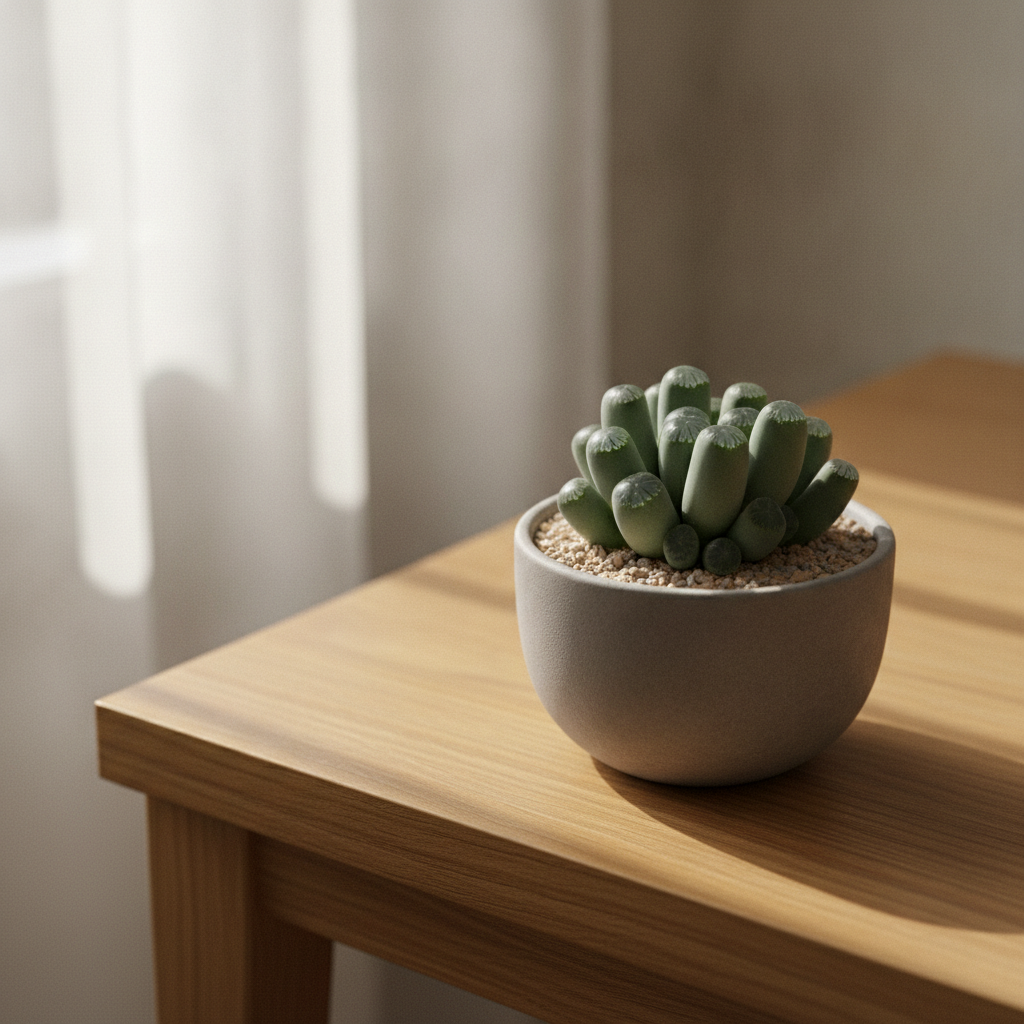
Few succulents pack as much strangeness into so small a footprint as the fairy elephant feet (Frithia pulchra), a diminutive South African curiosity whose stubby, club-shaped leaves look exactly like a tiny herd of grey elephant toes pressed up out of the gravel. Each leaf is capped with a flattened, semi-transparent panel, a true “window” that lets light filter down into the plant’s interior, and in the wild the whole rosette sits buried almost to those windows in coarse quartz grit. It belongs to the ice plant family, Aizoaceae, and is one of the classic “mesembs” or mesembryanthemums beloved by collectors of living stones and other mimicry succulents.
The fairy elephant feet has a reputation for being tricky, but that reputation is only half deserved. It is not difficult in the way a fussy fern is difficult; it asks for very little attention and almost no water. What it demands instead is discipline, because nearly every way people kill this plant comes down to kindness in the form of a watering can. Get the growing medium sharp enough, the light bright enough, and the watering restrained enough, and it becomes remarkably undemanding. This guide covers everything from the plant’s unusual biology to watering rhythm, soil recipes, propagation from seed and division, and the handful of pests that trouble it, so you can move past merely keeping it alive and into the territory where it flowers freely and clumps up into a proper colony.
Contents
- Quick Reference
- Why Fairy Elephant Feet Makes a Rewarding Houseplant
- Light Requirements
- Watering & Humidity
- Soil, Potting & Repotting
- Fertilising
- Propagation
- Pests & Diseases
- Popular Varieties
- Frequently Asked Questions
Quick Reference: Fairy Elephant Feet at a Glance
| Light | Very bright light with several hours of direct sun; the brightest windowsill you can offer |
| Watering | Sparingly in spring to autumn when the mix is bone dry; almost nothing in winter |
| Temperature | 18 to 27 C (64 to 81 F) in growth; keep above 5 C (41 F) and frost free |
| Humidity | Low; ordinary dry room air is ideal, high humidity is a risk |
| Fertiliser | Very dilute low-nitrogen feed once or twice during the growing season |
| Toxicity | Generally considered non-toxic to cats, dogs and people, though not a food plant |
Why Fairy Elephant Feet Makes a Rewarding Houseplant
The appeal of the fairy elephant feet begins with its sheer improbability. A mature clump occupies a pot no wider than a coffee mug, yet within that small space sit a dozen or more fat, upright, finger-like leaves, each one grey-green and topped with a glassy translucent window. Those windows are not decorative; they are a genuine adaptation. In its native highveld, the plant grows almost entirely underground, buried in quartzitic gravel with only the flat leaf tips level with the soil surface. Light enters through the windows and travels down into the leaf body where the chlorophyll sits, letting the plant photosynthesise while hiding most of its tissue from the fierce sun and the mouths of grazing animals. Owning one is like keeping a working piece of desert engineering on your windowsill.

Beyond the novelty, this is a genuinely low-maintenance plant for anyone who can resist the urge to fuss. It needs no misting, no repotting for years at a stretch, and no feeding regime worth the name. Its water requirement over a whole month can be less than a single generous drink for a fern. For collectors of small succulents it offers an added reward: given enough light it produces surprisingly large, magenta-pink daisy-like flowers with pale centres that open around midday and can nearly cover the whole plant. The gap between merely surviving and truly thriving with this species is unusually wide, and it is almost entirely down to light and drainage. A neglected plant on a dim shelf will sulk, stretch and eventually rot; the same plant in a blazing window with a gritty mix will flower and multiply for decades.
Important — Toxicity: The fairy elephant feet and its mesemb relatives are generally regarded as non-toxic to cats, dogs and humans, and no serious poisoning is associated with the genus. That said, no succulent is a snack, and a curious pet that chews on the fleshy leaves may suffer mild stomach upset. Keep it out of reach of determined nibblers, mostly for the plant’s sake rather than theirs.
Light Requirements
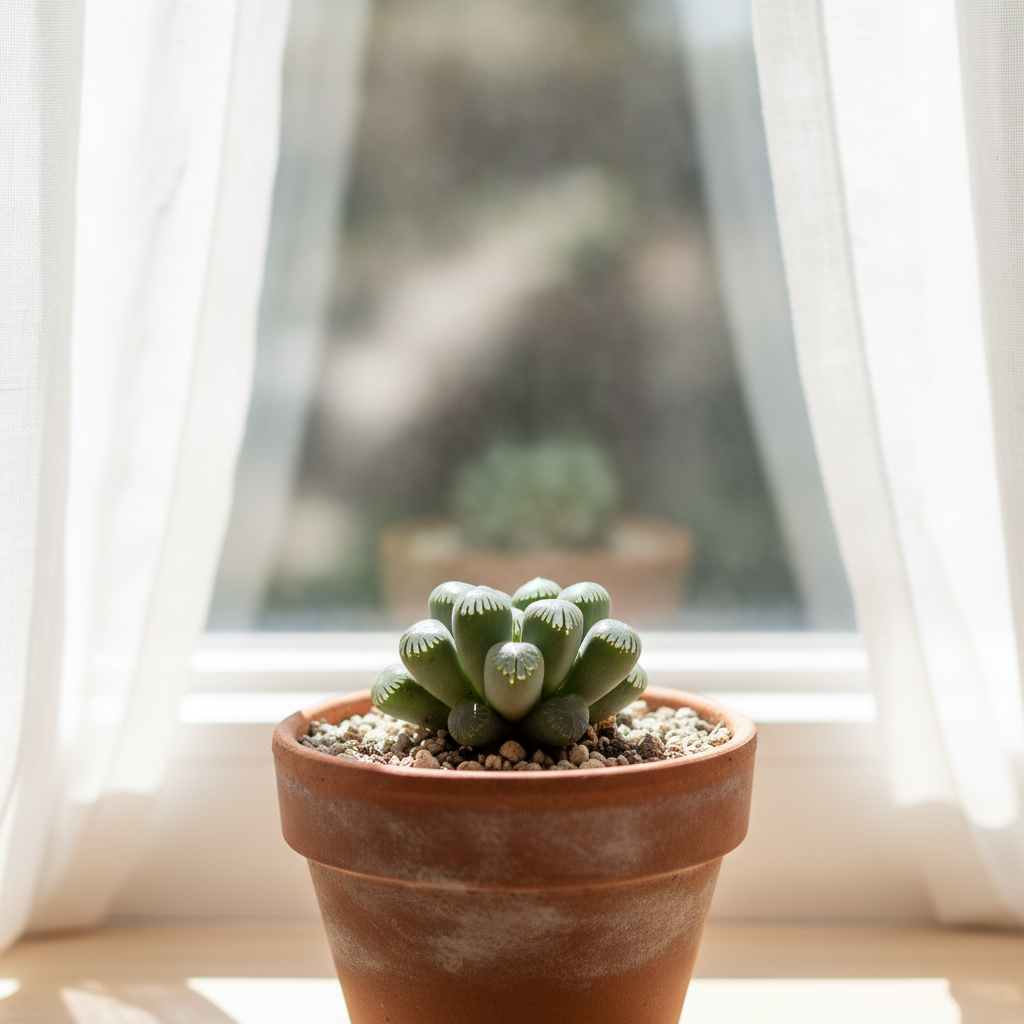
Light is the single most important factor in growing the fairy elephant feet well, and it separates this species from many other window-leaved succulents. Living stones and baby toes are often grown half-buried and shaded, but Frithia pulchra comes from open, exposed grassland where it receives strong, direct sunlight for much of the summer day. Indoors it wants the brightest position you can find, with at least three to four hours of direct sun and bright light for the rest of the day. Skimp on light and the plant will not die immediately, but it will slowly tell you it is unhappy.
The ideal spot is an unobstructed windowsill that catches direct sun for a good part of the day. In the northern hemisphere that usually means a south-facing or south-west-facing window; in the southern hemisphere, a north-facing one. A conservatory, sunroom or bright porch is even better. If your only bright window still leaves the plant reaching, a small full-spectrum grow light will make up the difference and is often the difference between a compact, flowering clump and a stretched, pallid one.
Light Levels Explained
The table below translates the usual houseplant light categories into what they mean for this particular sun-lover. Note that the categories most other foliage plants prefer are, for the fairy elephant feet, the ones to avoid.
| Light Category | Approx. Level | Typical Location | Outcome |
|---|---|---|---|
| Direct sun | Over 50,000 lux | On a south-facing sill against the glass | Ideal; compact growth and flowering |
| Bright indirect | 10,000 to 25,000 lux | Just back from a sunny window | Acceptable; may lack flowers |
| Medium | 5,000 to 10,000 lux | An east or north window | Poor; leaves stretch and soften |
| Low | 1,000 to 5,000 lux | Interior shelf, several feet from a window | Unsustainable; etiolation and rot |
| Very low | Under 1,000 lux | Hallway or windowless room | Fatal within a season |
Window Orientation and Placement
South-facing window: The best possible position in the northern hemisphere. It delivers the long hours of direct sun this plant evolved with. Place the pot right against the glass, and in high summer simply keep the leaves clear of steamy, trapped heat by allowing a little air movement.
West-facing window: A strong second choice, offering intense afternoon sun. The plant will grow well here, though the hottest summer afternoons behind glass can occasionally scorch a leaf window, so watch for pale bleaching.
East-facing window: Usable but marginal. The gentle morning sun is rarely enough on its own to keep growth compact, and plants here often stretch by late summer. Supplement with a grow light if this is your only option.
North-facing window: Not recommended in the northern hemisphere. The light is too weak and too diffuse, and the plant will steadily elongate, lose its stubby character and become far more prone to rot.
Pro Tip — Read the Leaves: The fairy elephant feet is its own light meter. Short, fat, tightly clustered leaves with clear windows mean the light is right. Leaves that grow tall, soft and spaced apart, with the windows sitting higher and the body of the leaf lengthening, are begging for more sun. Act on that signal before the stretched growth softens into rot.
How Light Affects Growth and Flowering
Strong light does more than keep the plant compact. It is the trigger for the plant’s most spectacular feature, its flowers. A well-lit fairy elephant feet will throw up bright magenta-pink blooms through the summer, each one opening in the middle of the day when the sun is highest and closing again towards evening. Under insufficient light the plant diverts its energy into desperate vertical growth instead, the windows lose their crispness, and flowering simply does not happen. Adequate light also deepens the grey-green colour of the leaves and keeps the translucent tips looking polished rather than dull.
Warning — Sudden Sun: A plant that has spent months in weak light or has just arrived from a shaded shop shelf can scorch if moved straight into blazing direct sun. The exposed leaf windows are especially vulnerable, bleaching to a papery white that never recovers. Acclimatise it over two to three weeks, increasing exposure gradually, rather than shocking it in a single move.
Artificial Lighting
Because so few homes offer truly strong light, this is one succulent where a grow light genuinely earns its keep. A modest full-spectrum LED positioned 15 to 25 cm (6 to 10 inches) above the plant, running for 10 to 12 hours a day, will keep growth tight and can coax flowering even in a dim flat. Aim for a light with a high output rather than a token desk lamp, and raise or lower it based on how the plant responds. Grow lights are also useful for carrying the plant through the short, dark days of a northern winter, though bear in mind that this species prefers a cooler, drier winter rest, so bright light in winter should not be paired with extra water.
Seasonal Adjustments
As a summer-growing mesemb, the fairy elephant feet does most of its living from spring through autumn, and this is when it most needs and best uses strong light. In winter, growth slows or stops and the plant rests. It still appreciates a bright position through the cold months to keep it from stretching, but the intensity matters less because the plant is not actively building new tissue. Turn the pot occasionally so all sides receive even light and the clump grows symmetrically rather than leaning towards the glass.
Watering & Humidity
If light is what makes the fairy elephant feet thrive, water is what kills it. This is the aspect of its care that trips up the most people, because the instinct to water a plant that looks a little shrivelled is exactly the wrong one here. The plant stores water in its fat leaves and can go weeks without a drink, and its native soil drains so fast that its roots are almost never sitting in moisture for long. The guiding principle is simple: when in doubt, do not water.
When to Water
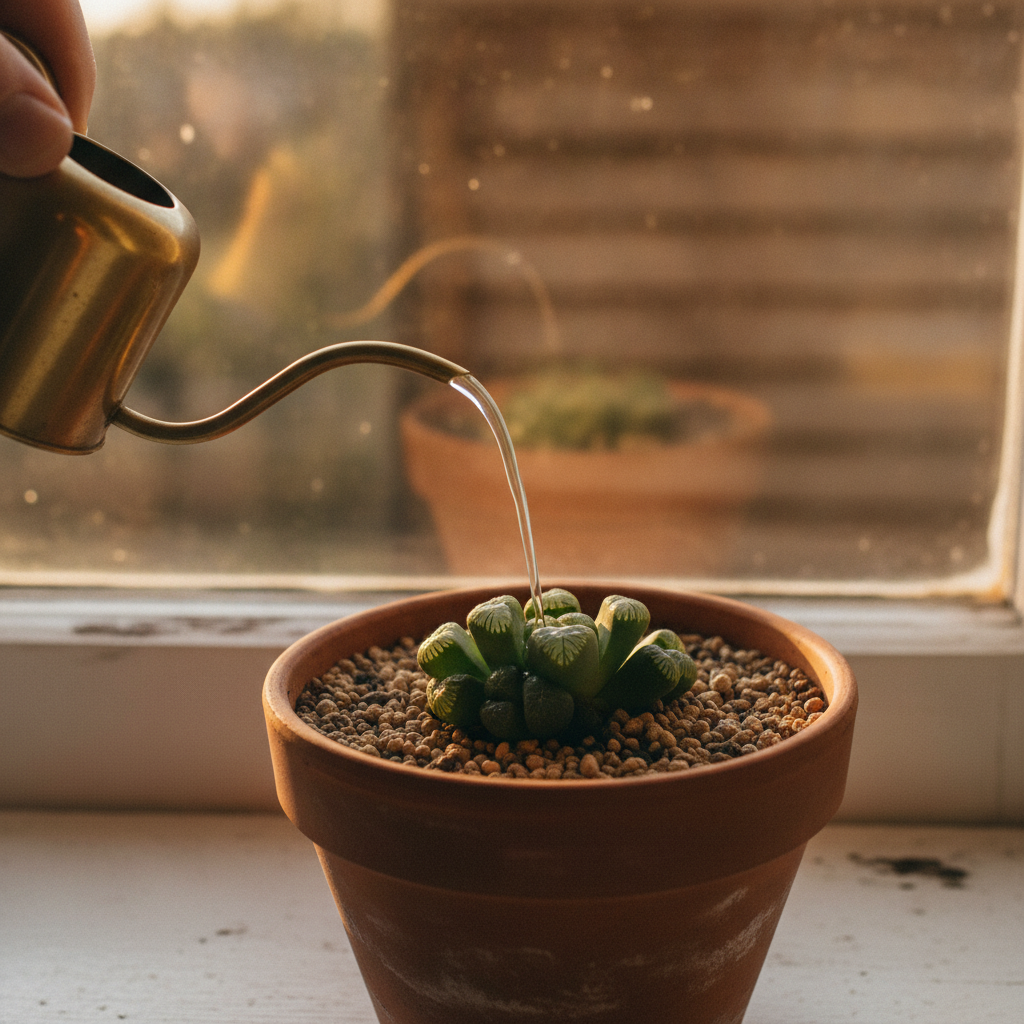
During the active growing season, roughly spring through to early autumn, water only when the potting mix has been completely dry for several days and the leaves have lost a touch of their firm plumpness. In practice this often means a thorough soaking every two to three weeks, though the exact interval depends on your light, warmth and pot size. Always let the mix dry out fully between waterings. A moisture meter is of limited use in such a gritty medium; your finger, the weight of the pot, and the feel of the leaves are better guides.
Winter is different and this is where the species most rewards restraint. As a summer grower it takes a genuine rest through the cold months, and during this period it wants to stay almost completely dry. From late autumn through winter, withhold water entirely or offer only the barest sip once or twice across the whole season if the leaves look severely shrunken. Cold, wet soil in a dormant plant is the classic recipe for a mushy, collapsed rosette. The plant also naturally sheds its old outer leaves and produces new ones from within, a moulting habit shared with living stones, and this renewal happens best on the dry side.
Pro Tip — The Wrinkle Test: A slightly wrinkled, softly deflated leaf is not an emergency; it is the plant telling you it has drawn on its reserves and can safely take a drink. A plump, firm leaf means the tank is full and watering now only risks rot. Learn to wait for that faint wrinkle before reaching for the water, and you will almost never overwater.
How to Water Correctly
- Check that the mix is bone dry throughout and that the leaves show a faint wrinkle before you begin.
- Water at the soil surface, directing the flow around the base of the clump rather than over the leaf windows.
- Soak the mix thoroughly until water runs freely from the drainage holes, wetting the entire root zone.
- Let all excess drain away completely, and never leave the pot standing in a saucer of water.
- Return the plant to its bright spot and then leave it strictly alone until the mix has been fully dry for several days.
Signs of Overwatering vs. Underwatering
| Symptom | Overwatering | Underwatering |
|---|---|---|
| Leaf colour | Yellowing, translucent or blackened patches | Duller grey, slightly faded |
| Leaf texture | Soft, mushy, splitting or bursting | Wrinkled, deflated but still firm-skinned |
| Soil | Stays damp for days, may smell sour | Bone dry, pulling away from the pot |
| Roots | Brown, slimy and disintegrating | Dry and thin but intact |
| Base of plant | Softening and collapsing at soil level | Whole clump shrinks evenly, recovers on watering |
Warning — Root Rot: Root and stem rot from excess moisture is by far the most common cause of death in this species, and it moves fast. A leaf that turns translucent and squishy at the base is often past saving. If you catch rot early, unpot the plant at once, cut away every soft or discoloured section with a sterile blade, let the wounds dry for a few days, and replant the firm remainder in fresh dry grit. Prevention through sparse watering is far easier than cure.
Humidity Requirements
Unlike the tropical foliage plants that crave a humid atmosphere, the fairy elephant feet is an arid-land plant that is perfectly content in ordinary, even dry, room air. It needs no misting, no pebble trays and no humidifier. In fact, persistently high humidity works against it by slowing evaporation from the soil and encouraging fungal problems on the fleshy leaves.
Signs that humidity is too high rarely appear on their own; they show up as the same soft, rotting symptoms that overwatering causes, because damp air and damp soil compound one another. If you grow the plant in a naturally humid room, such as a bathroom or a crowded terrarium, compensate by watering even less and ensuring plenty of air movement around the pot.
Good airflow is genuinely beneficial. A gentle circulation of air helps the soil surface dry quickly after watering and keeps fungal spores from settling. An open, breezy windowsill suits this plant far better than a closed, stagnant corner, and it is one reason the species does so well in a ventilated greenhouse or conservatory.
Water Quality
The fairy elephant feet is not especially fussy about water quality, but because it is watered so seldom, any dissolved minerals it does receive are concentrated over time. Rainwater or filtered water is ideal and helps avoid the pale mineral crust that hard tap water can leave on the gritty surface. If you use tap water, letting it stand overnight before use is a sensible habit. More important than the water source is simply the volume and frequency: even perfect rainwater applied too often will rot this plant, while ordinary tap water applied correctly will keep it thriving.
Soil, Potting & Repotting
The right soil is not a nice-to-have for the fairy elephant feet; it is the foundation on which everything else rests. Because the plant is watered so rarely and rots so easily, the mix must drain almost instantly and hold very little moisture. Ordinary houseplant compost, even bagged “cactus and succulent” mixes straight off the shelf, is usually far too rich and water-retentive on its own. Think of the soil less as a sponge and more as a stable, breathable anchor made mostly of grit.

Ideal Soil Composition
A good mix for this plant is dominated by inorganic, gritty material with only a modest fraction of organic matter to hold a little moisture and nutrition. The goal is a medium that wets thoroughly when watered but dries out within a couple of days. Coarse mineral grit provides the fast drainage and the physical support that keeps the buried-in-gravel plant stable and upright.
| Component | Proportion | Function |
|---|---|---|
| Coarse sand or fine gravel | Around 40% | Sharp drainage and mineral bulk |
| Pumice or perlite | Around 30% | Aeration and light water buffering |
| Sifted cactus compost | Around 30% | Modest moisture and nutrient store |
In terms of chemistry the plant is easygoing, tolerating a slightly acidic to neutral range around pH 6.0 to 7.0. What matters far more than the precise pH is the physical structure. A top dressing of coarse quartz grit or fine gravel over the surface mimics the plant’s natural habitat, keeps the vulnerable neck of the plant dry, and looks handsome into the bargain.
Pro Tip — Quick Mix Recipe: If you want a fast, reliable blend, combine two parts pumice or perlite, two parts coarse horticultural sand or fine gravel, and one part sifted succulent compost. Add a generous handful of grit on top as a mulch. This errs firmly on the mineral side, which is exactly where you want to be with a plant this rot-prone.
Choosing the Right Pot
Pot choice interacts directly with watering, so it is worth thinking about carefully. Because the fairy elephant feet is small and shallow-rooted, it does not need depth, but it does need a container that helps the soil dry quickly and that never traps water at the roots.
Drainage holes are non-negotiable. A pot without drainage is a death sentence for this species. Water must be able to run straight through and out; any that collects at the bottom will sit against the roots and start rot within days. If you love a particular decorative cachepot, plant into a plain plastic or terracotta pot with holes and drop that inside the ornamental one, removing it to water.
Pot material: Terracotta is an excellent choice because its porous walls wick moisture out of the mix and let it evaporate, hastening the dry-out the plant needs. Glazed ceramic and plastic hold moisture longer, so if you use them, lean even harder towards a gritty mix and cautious watering.
Pot size: Choose a small, snug pot rather than a generous one. A large volume of mix around a small root system stays wet far too long. A pot only slightly wider than the clump, with a little room to spread, is ideal, and a shallow pan suits the plant’s shallow roots better than a deep pot.
When to Repot
The fairy elephant feet is slow-growing and resents disturbance, so it needs repotting only rarely, perhaps every three to four years or when a clump has genuinely outgrown its pot. The best time is at the start of the growing season in spring, when the plant is gearing up to grow and can recover quickly. Repot into dry mix and, crucially, wait a week or so before the first watering to let any disturbed roots callus over rather than rot.
How to Repot: Step-by-Step
- Wait until the mix is completely dry, which makes the root ball easier to handle and less likely to tear.
- Gently ease the plant out of its pot, supporting the clump from below rather than pulling on the leaves.
- Crumble away most of the old mix from the roots and inspect them, trimming off any that are dead, brown or soft.
- Settle the plant into fresh dry gritty mix in a snug pot, at the same depth it grew before, with the leaf necks at soil level.
- Firm the mix lightly and add a top dressing of grit around the base of the leaves.
- Place the plant in bright light and wait about seven days before watering to let the roots recover.
Warning — Transplant Shock: Watering immediately after repotting is the most common repotting mistake with succulents. Freshly disturbed or trimmed roots have open wounds, and moisture on those wounds invites rot before the plant can seal them. Always give the plant a dry settling-in period of several days to a week before that first cautious drink.
Fertilising
The fairy elephant feet evolved in nutrient-poor mineral gravel, and its feeding needs reflect that spartan origin. This is emphatically not a plant that responds to generous feeding with lush growth; overfeeding instead produces soft, swollen, rot-prone tissue and can burn the sensitive roots. A very light hand is the rule.
For most growers, the tiny amount of nutrition in a fresh gritty mix, topped up every few years at repotting, is close to sufficient. Any additional feeding should be treated as a small, occasional supplement rather than a routine, and it should always be dilute and timed to the growing season.

Understanding Plant Nutrients
Fertilisers are labelled with three numbers giving the ratio of nitrogen (N), phosphorus (P) and potassium (K). For succulents like this one, a formula that is low in nitrogen and relatively higher in phosphorus and potassium is preferable, because excess nitrogen drives exactly the soft, sappy growth you want to avoid. The table below summarises the main nutrients and what their shortage looks like, though true deficiencies are rare in this undemanding plant.
| Nutrient | Symbol | Primary Function | Deficiency Symptoms |
|---|---|---|---|
| Nitrogen | N | Leaf and general growth | Pale, stalled growth (rare here) |
| Phosphorus | P | Roots and flowering | Poor flowering, weak roots |
| Potassium | K | Overall vigour and hardiness | Soft growth, low stress tolerance |
| Calcium | Ca | Cell wall strength | Distorted new growth |
| Magnesium | Mg | Chlorophyll production | Yellowing between leaf tissue |
| Iron | Fe | Green pigment formation | Pale new leaves |
Types of Fertiliser
Liquid fertilisers: The easiest option for a plant fed so infrequently. A liquid succulent or cactus feed, diluted to a quarter or half the recommended strength, can be added to the water once or at most twice across the whole growing season. Liquid feeds give you precise control over dose and timing, which matters a great deal here.
Slow-release granular: Generally best avoided for this species. Slow-release prills keep delivering nutrients regardless of whether the plant is in growth or dormancy, and they are hard to dose precisely for such a small, frugal plant, making accidental overfeeding likely.
Organic fertilisers: Mild organic options such as a very dilute worm-casting tea can be used, but they offer little advantage over a controlled liquid feed and carry a slightly higher risk of encouraging fungal activity in the mix. If you prefer organic methods, keep the dose minimal and the mix well aerated.
Feeding Schedule
Feed only during the active growing season, from late spring through summer, and only once or twice in total across those months. Never feed a dormant plant in winter, and never feed a plant that is dry at the roots, as concentrated fertiliser on dry roots can scorch them. Skip feeding entirely in the year you repot into fresh mix, since the new medium already supplies what little the plant needs.
Pro Tip — Less Is More: When it comes to feeding the fairy elephant feet, the safest error is to underdo it. A plant that is never fed at all will grow perfectly well for years on a fresh mineral mix, whereas an overfed one becomes bloated, weak and prone to collapse. If you are unsure whether to feed, do not.
How to Fertilise
- Choose a low-nitrogen liquid succulent feed and dilute it to a quarter or half of the label strength.
- Water the plant lightly with plain water first if the mix is completely dry, so the feed does not hit bare, dry roots.
- Apply the dilute feed to the soil during a normal growing-season watering, not over the leaves.
- Let the pot drain fully, then return to the usual dry-out routine.
- Record the date so you do not accidentally feed again too soon; once or twice a season is the ceiling.
Warning — Salt Build-Up: Because the plant is watered so seldom, fertiliser salts and hard-water minerals can accumulate in the mix rather than being flushed away. Over time this build-up can burn the roots and leave a crust on the grit. Every year or two, water more thoroughly than usual with plain rainwater to leach the accumulated salts through and out of the pot.
Propagation
Propagating the fairy elephant feet is a slow but satisfying business, and it works quite differently from the leaf-and-stem cuttings that multiply many other succulents. This plant does not root from a single detached leaf the way an echeveria does. Instead it is increased chiefly from seed, and secondarily by dividing established clumps that have produced multiple heads.
Which method you choose depends on your patience and what you have to start with. Division gives you an instant, sizeable plant but depends on already owning a clumping specimen. Seed is the way to raise many plants from scratch and is how the species is produced commercially, but it demands time and a careful hand with moisture in the delicate early weeks.

Understanding Clumps and Seed
Over time a healthy fairy elephant feet forms a cluster of individual heads, each a small rosette of windowed leaves with its own share of the shared root system. These separate crowns are what make division possible. Flowering, meanwhile, leads to seed capsules that open in response to moisture, scattering dust-fine seed, and it is this seed that yields the largest numbers of new plants. Understanding both routes lets you match the method to your situation.
Division: Step-by-Step
Division is the quickest way to make new plants and is best done in spring at the start of the growing season, when the plant will recover fastest. Choose a clump that has clearly formed several separate heads.
- Let the plant dry out fully, then lift the whole clump gently from its pot.
- Brush away the loose mix so you can see where the individual heads meet and how the roots are shared.
- Tease or cut the clump into sections, making sure each piece keeps a portion of healthy root.
- Set the divisions aside in a dry, shaded spot for a few days so any cut surfaces can callus over.
- Pot each division into its own small pot of dry gritty mix at the same depth it grew before.
- Wait about a week before watering lightly, then resume normal sparse care.
Pro Tip — Callus First: Whether you divide a clump or trim rot from a rescue plant, never rush a freshly cut surface back into damp soil. Give every wound a few dry days to seal over first. A callused cut resists rot; a fresh wet one invites it. This single habit saves more mesembs than any other.
Growing from Seed: Step-by-Step
Seed is the traditional and most productive way to raise the fairy elephant feet, and sowing is best done in spring or early summer so the seedlings have a full warm season to establish. The seed is tiny, so handle it over a sheet of paper and sow on the surface.
- Fill a shallow pot or tray with a fine, gritty, well-draining mix and firm the surface level.
- Scatter the fine seed thinly across the surface without burying it, then dust with the barest sprinkle of fine grit.
- Moisten from below by standing the pot briefly in water, then cover with a clear lid or bag to hold humidity for germination.
- Keep the tray warm and brightly lit but out of scorching direct sun, and keep the surface just barely moist.
- Once seedlings appear over the following weeks, gradually increase ventilation to harden them off.
- Grow the tiny seedlings on undisturbed for many months, easing towards drier, brighter adult conditions before potting them individually.
Troubleshooting Propagation
| Problem | Likely Cause | Solution |
|---|---|---|
| Divisions rot after potting | Watered before cuts callused | Allow dry callusing days and delay watering |
| Seed fails to germinate | Old seed or surface dried out | Use fresh seed, keep surface just moist and warm |
| Seedlings damp off | Too wet, too humid, poor airflow | Increase ventilation, ease off moisture |
| Seedlings stretch and topple | Insufficient light | Provide brighter light as they establish |
Pests & Diseases
The good news is that the fairy elephant feet is not especially prone to pests, and the greatest threats to its health are cultural rather than biological. The overwhelming majority of losses come from overwatering and rot rather than from insects. That said, a handful of common succulent pests can find their way onto the plant, particularly on a weakened specimen, and the enclosed, gritty conditions it likes can occasionally harbour a few nuisances.
Vigilance is easy with a plant this small: a quick look each time you water is usually enough to catch trouble early. Because the plant is compact and slow-growing, an infestation that would be lost in a large leafy plant is quickly spotted and dealt with here.
Common Pests
Mealybugs (Pseudococcus species)
Mealybugs are the most likely pest to trouble this plant, appearing as small, soft, white cottony blobs tucked between the leaves or, more insidiously, on the roots below the soil. They suck sap and weaken the plant, and root mealybugs in particular can go unnoticed until growth stalls.
Treatment: Dab visible mealybugs with a cotton bud dipped in diluted isopropyl alcohol. For root mealybugs, unpot the plant, wash the roots clean, and repot into fresh mix. Repeat checks over several weeks, as eggs can hatch after the first treatment.
Fungus Gnats (Bradysia species)
Small dark flies drifting around the pot are fungus gnats, whose larvae live in persistently damp soil and can nibble fine roots. Their presence is as much a warning sign as a pest problem, because they only thrive when the mix is staying too wet for this plant’s good.
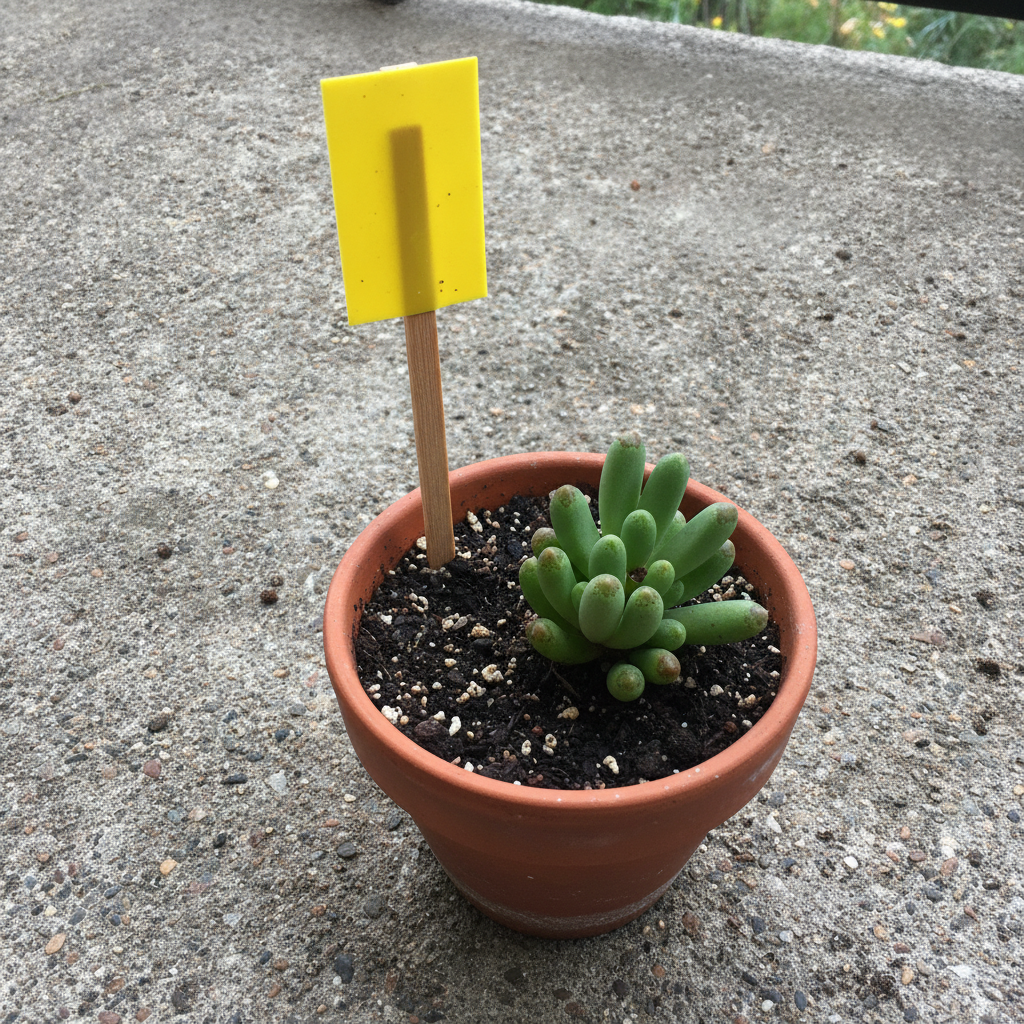
Treatment: Let the mix dry out fully, which alone breaks the larvae’s life cycle, and set yellow sticky traps to catch the adults. A gritty top dressing further discourages them from laying eggs at the surface.
Spider Mites (Tetranychus urticae)
Spider mites are uncommon on this species but can appear in hot, dry, still conditions. They are tiny and hard to see, betrayed mainly by fine webbing and a stippled, dulled look to the leaf surface.
Treatment: Isolate the plant, wipe the affected areas, and treat with a suitable miticide or insecticidal soap if needed. Improving air circulation helps prevent recurrence.
Common Diseases
Root and Stem Rot (Fusarium and Pythium species)
By far the most serious threat, rot is a fungal and bacterial breakdown of the tissue caused by too much moisture. It usually starts at the roots or the base of the leaves and works outward, turning the affected parts soft, translucent and eventually black. It can destroy a plant within days.
Treatment: Act immediately. Unpot the plant, cut away all soft or discoloured tissue with a sterile blade, let the healthy remainder dry and callus for several days, and replant in fresh dry grit. Prevent recurrence with sparser watering and a sharper mix.
Fungal Leaf Spot (various fungi)
Occasionally, damp and stagnant conditions lead to discoloured spots or blemishes on the leaf surface. This is far less common than root rot but can occur where humidity is high and airflow poor.
Treatment: Improve ventilation, reduce moisture, and remove badly affected leaves. Keeping water off the leaf windows when watering greatly reduces the risk.
Pest and Disease Summary
| Pest / Disease | Identification | Treatment |
|---|---|---|
| Mealybugs | White cottony blobs on leaves or roots | Alcohol swab; wash and repot for root types |
| Fungus gnats | Small flies around damp soil | Dry out mix; sticky traps; grit top dressing |
| Spider mites | Fine webbing, stippled dull leaves | Wipe, insecticidal soap, improve airflow |
| Root and stem rot | Soft, translucent, blackening tissue | Cut out rot, callus, replant dry |
| Fungal leaf spot | Discoloured blemishes on leaves | Ventilate, reduce moisture, remove leaves |
Prevention Strategies
Prevention for this plant is really just good culture. A sharp, gritty mix, a snug pot with drainage, restrained watering and plenty of light together head off almost every problem before it starts. A plant grown correctly is rarely bothered by pests, because it is never weakened by the soggy, stressed conditions that pests and diseases exploit.
Quarantine any new succulent for a couple of weeks before setting it near your other plants, as mealybugs in particular hitchhike in on new arrivals. Inspect the plant briefly each time you water, keep the growing area airy, and clear away any shed leaves or debris where pests could shelter. These small habits cost nothing and prevent nearly all trouble.
Pro Tip — Dry Is Your Defence: Nearly every pest and disease that troubles the fairy elephant feet depends on excess moisture, from rot fungi to fungus gnats. Keeping the plant lean and dry is therefore not just good for growth, it is your best pest control. A dry, sun-drenched plant in gritty soil simply does not offer the conditions most of its enemies need.
Popular Varieties
The fairy elephant feet is not a plant with a long list of named cultivars in the way that showier succulents are. The genus Frithia is small, containing just two closely related species, and it is these two, along with a naturally occurring smaller form, that make up almost everything you will encounter under the fairy elephant feet name. What variation exists is subtle, seen mainly in size and flower colour rather than in dramatic leaf patterning.
For most collectors the distinction that matters is between the classic, vividly magenta-flowered Frithia pulchra and its daintier, paler-flowered relative Frithia humilis. Both share the same charming windowed leaves and the same care needs, so choosing between them is a matter of taste and availability rather than difficulty.
| Variety | Leaf Appearance | Light Needs | Growth Rate | Availability |
|---|---|---|---|---|
| Frithia pulchra | Stubby grey-green clubs with clear windows | Very bright, direct sun | Slow | Common in succulent nurseries |
| Frithia pulchra var. minor | As the type but smaller and more compact | Very bright, direct sun | Slow | Occasional, specialist growers |
| Frithia humilis | Smaller, shorter grey windowed leaves | Very bright, direct sun | Slow | Less common, specialist growers |
Featured Varieties
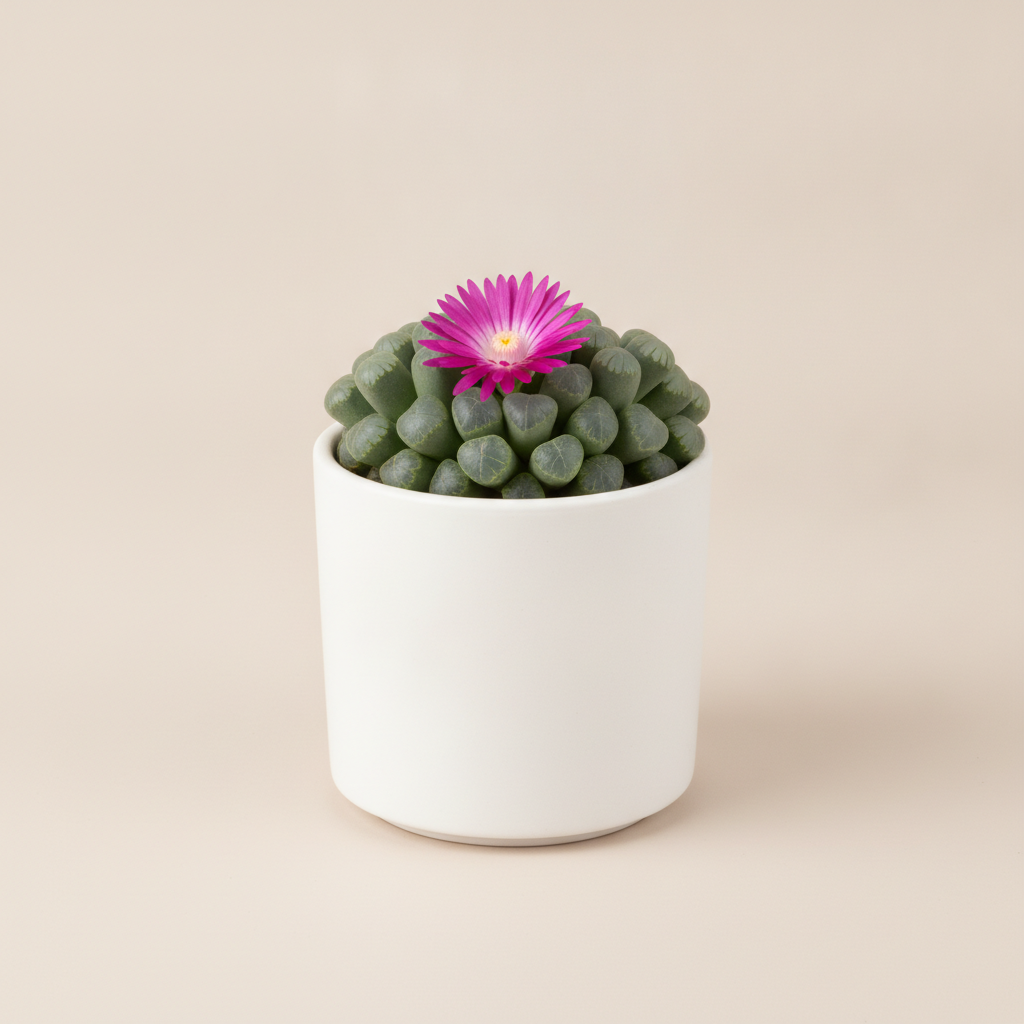
Frithia pulchra
The classic fairy elephant feet, with plump grey-green windowed clubs and, given enough sun, large magenta-pink daisy flowers with pale centres that open around midday. This is the form most often sold and the one most people picture when they hear the common name.
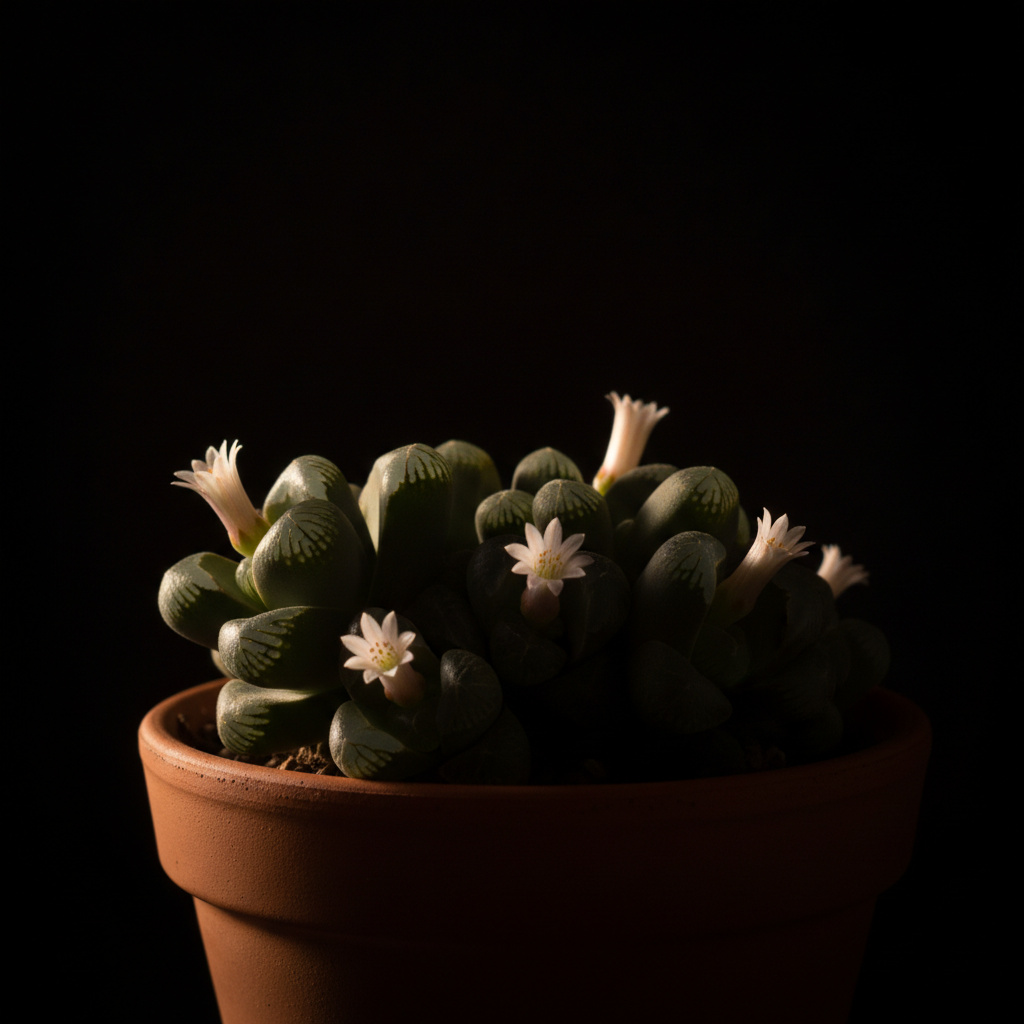
Frithia humilis
A smaller, more retiring relative with shorter windowed leaves and pale creamy-white to soft pink flowers rather than vivid magenta. Rarer in cultivation and prized by mesemb enthusiasts, it wants the same bright, dry, gritty conditions as the type.
Variety Profiles in Detail
Frithia pulchra (Frithia pulchra)
The type species and the plant almost everyone means by fairy elephant feet. Native to a small area of quartzite grassland in South Africa, it forms tight clusters of stubby, grey-green, club-shaped leaves each tipped with a translucent window. In strong light it flowers generously in summer, producing showy magenta-pink blooms that can nearly hide the leaves. It is the most widely available and the most reliable choice for a first fairy elephant feet.
Frithia humilis (Frithia humilis)
A separate, more localised species that is smaller in every respect, with daintier leaves and flowers in gentler shades of white to pale pink. It is considered a plant of conservation concern in the wild, and in cultivation it is something of a collector’s item. Its care is identical to that of the type, but its subtler charm and greater rarity make it a rewarding second plant for anyone who has mastered the commoner form.
Choosing the Right Variety for Your Space
For nearly everyone, the standard Frithia pulchra is the right place to start. It is the easiest to find, the most vigorous, and the most spectacular in flower, and its care is the template for the whole genus. Once you have learned to read its leaves and time its watering, seeking out the smaller Frithia humilis or the compact variety minor becomes a natural next step. Since all of them share the same appetite for bright light, sharp drainage and minimal water, a collection of the whole genus can share one sunny windowsill and one watering routine.
Frequently Asked Questions
Why are the leaves on my fairy elephant feet stretching and growing tall?
Stretched, elongated leaves are the classic sign of too little light, a condition called etiolation. The plant is straining upward to reach brighter conditions. Move it to the sunniest window you have or add a grow light. Existing stretched leaves will not shrink back, but new growth will be compact again once the light is adequate.
How often should I really water it?
In the growing season, roughly every two to three weeks, and only once the mix is completely dry and the leaves show a faint wrinkle. In winter, water almost never. There is no fixed schedule that fits every home, so rely on the dryness of the soil and the firmness of the leaves rather than the calendar.
My plant looks wrinkled and shrivelled. Is it dying?
Probably not. A little wrinkling means the plant has been using its stored water and is simply ready for a drink, which is exactly when you should water. Panic-watering a plant that is actually mushy and soft, rather than firm and wrinkled, is a different matter and points to rot. Check whether the leaves are firm-skinned but deflated, in which case water, or soft and squishy, in which case suspect rot.
Why won’t my fairy elephant feet flower?
Almost always the answer is not enough light. This plant needs strong, direct sun to bloom, and a specimen kept in merely bright indirect light will grow but rarely flower. Give it the brightest position you can and, if flowering still eludes you, supplement with a grow light through the growing season.
Is the fairy elephant feet safe around pets and children?
The plant is generally regarded as non-toxic, and no serious poisoning is linked to the genus. It is not a food, however, and a pet that chews the fleshy leaves might get a mild stomach upset. Keep it out of reach mainly to protect the small, slow-growing plant from damage.
Can I grow it in a closed terrarium?
No. A closed terrarium traps exactly the humid, stagnant, moist conditions that rot this plant. The fairy elephant feet needs bright light, dry air and free-draining grit, which is the opposite of a sealed terrarium environment. An open, airy dish garden of other arid succulents is fine; a closed jungle terrarium is not.
What is the white or translucent window on top of each leaf for?
The window is a light-admitting panel of translucent tissue. In the wild the plant grows buried in gravel with only these windows at the surface, so light can pass through them into the leaf interior where photosynthesis happens, while the rest of the plant stays hidden from sun and grazers. It is one of the most elegant adaptations in the succulent world.
Why is my plant shedding its outer leaves?
Like living stones, the fairy elephant feet renews itself by drawing resources from its old outer leaves into new ones, so some shrivelling and shedding of the oldest leaves is normal, especially during the dry rest period. As long as the new central growth is healthy and firm, this is nothing to worry about. Keep the plant dry while it moults.
How big does the fairy elephant feet get?
It stays very small. Individual leaves reach only around two centimetres tall, and even a mature, well-clumped plant occupies a pot just a few centimetres across. This permanent compactness is part of its appeal and makes it ideal for a sunny windowsill where space is limited.
Does it need a winter rest?
Yes. As a summer-growing species it naturally slows down and rests through the cold months. During this time it wants to stay cool, bright and almost completely dry. Respecting this dry winter rest is one of the keys to long-term success and to encouraging good flowering the following summer.






